




Abstract
Objectives:
To build on the success of wastewater surveillance during the COVID-19 pandemic, jurisdictions funded under the Centers for Disease Control and Prevention National Wastewater Surveillance System are looking to expand their wastewater programs to detect more pathogens. However, many public health agencies do not know how to use the collected wastewater data to formulate public health responses, underscoring a need for guidance. To address this knowledge gap, the Houston Health Department (HHD) developed a novel response framework that outlines an internal action plan that is tailored by pathogen type after detection of various pathogens in wastewater.
Materials and Methods:
In July 2023, HHD met with subject matter experts (eg, bureau chiefs, program managers) in internal departments, including epidemiology, immunization, and health education, to discuss the general outline of the response framework and each department’s anticipated role after pathogen detection.
Results:
The internal framework established a flow for notifications and the actions to be taken by departments in HHD, with the goals of (1) ensuring timely and efficient responses to pathogen detections, (2) creating accountability within departments for taking their assigned actions, and (3) making certain that HHD was prepared for intervention implementation when a new pathogen was detected.
Practice Implications:
As more public health agencies expand their wastewater surveillance programs to target additional pathogens, development of internal action plans tailored to departmental capacity and programs is an important step for public health agencies. The information compiled in this response framework can be a model for other public health agencies to adopt when expanding the scope of their wastewater monitoring systems.
Keywords
Since the first report of detection of SARS-CoV-2 in wastewater in March 2020, wastewater surveillance has emerged as a tool used by public health agencies to monitor the spread and prevalence of COVID-19 disease in communities in the United States and around the world.1 -3 As the critical level of the COVID-19 threat abates, the Centers for Disease Control and Prevention (CDC) is working to expand the capacity of its National Wastewater Surveillance System to monitor other pathogens of public health interest.4,5 However, deciding the most effective use for wastewater data generated by multiple pathogen targets is an inherently complicated process. Not all pathogens are the same—they cause diseases that range from mild to deadly and have different treatment and prevention options. Furthermore, the sampling location where a pathogen is detected can affect the public health response. For example, a positive detection of Candida auris (an emerging fungal pathogen) at a large urban wastewater treatment plant might trigger no special action by a public health agency, whereas the same detection in a manhole dedicated to a nursing home, with residents who are at high risk for this pathogen, might trigger actions such as a notification to the facility’s point of contact, a site visit, and an agency-sponsored education event at the facility. 6 These factors affect timelines for communicating pathogen detection to subdivisions or departments in a public health agency and the interventions that public health agencies might use in response to that detection; a comprehensive internal response plan could thus serve as a roadmap for translation of pathogen-specific wastewater data into action. The National Academies of Sciences, Engineering, and Medicine has indicated that public health agencies should know how to use collected wastewater data to formulate public health responses, 2 underscoring a growing need for guidance as entities with wastewater surveillance capabilities add pathogens to their monitoring programs.
To address the gap in knowledge on how public health agencies should respond to pathogens in wastewater, the Houston Health Department (HHD)—in collaboration with Houston Center of Excellence partners and drawing on experience from the COVID-19 pandemic—developed a novel framework that outlines an internal action plan for HHD to implement when responding to the detection of pathogens in wastewater. 7 The framework incorporates responses that are tailored to reflect the timeliness and appropriateness of actions for individual pathogen detection, which is based on the severity of pathogen threat, the urgency of intervention, the sensitivity needs for handling internal and external communications, and the overall effect on public health. The internal framework establishes a flow for notifications and the actions to be taken by departments within HHD, with the goals of (1) ensuring timely and efficient responses to pathogen detections, (2) creating accountability within departments for taking their assigned actions, and (3) making certain that HHD is not unprepared for intervention implementation when a new pathogen is detected.
Methods
As first steps in the process of developing a framework for responding to the detection of multiple pathogens, HHD determined which pathogens to prioritize for wastewater surveillance and where to sample for those pathogens. To complete these steps, HHD conducted a survey of infectious disease physicians in Houston, Texas. HHD asked infectious disease physicians to rank 74 pathogens in terms of public health importance and actionability for public health interventions (the survey did not address the feasibility of detecting the pathogens by laboratory means). HHD obtained the pathogen list from the HHD Houston Electronic Disease Surveillance System, a local iteration of the Massachusetts Virtual Epidemiologic Network, which tracks reportable diseases and conditions in Houston.8,9 Respondents indicated the appropriate levels and locations of sampling for each target pathogen—citywide, schools (kindergarten through grade 12), and/or congregate living facilities (nursing homes, jails and detention centers, and homeless shelters).
HHD shared survey results with a committee of infectious disease physicians and public health specialists that provides advisory support to HHD. With guidance from the committee, HHD added 29 potential pathogens to its existing wastewater surveillance target list to form the expanded target pathogen list; up to that point, the list had included SARS-CoV-2, influenza A and B, and respiratory syncytial virus. In the expanded list, HHD included recommendations from CDC on additional pathogen targets and certain pathogens of national interest for potential sampling in the future, such as poliovirus. HHD then categorized each target pathogen by sampling location (or locations). 10
Members of HHD’s wastewater team used the expanded target pathogen list and the sampling locations from the survey as a starting point to develop the response framework. The wastewater team then met with subject matter experts in the following HHD departments to discuss the general outline of the response framework and each department’s anticipated role in responding to the detection of pathogens on the expanded list: epidemiology, internal laboratory, data services, data sciences, HIV/sexually transmitted infection prevention, outbreak management unit, health care–associated infections, consumer health, emergency management, immunization, mobile vaccination unit, area of operations support, health education services, communications, and Office of Performance Management. The wastewater team and subject matter experts discussed the following topics:
• How to group pathogens into categories within the response framework based on pathogen type (eg, respiratory vs gastrointestinal); characteristics (eg, vaccine preventable vs not); and similarity of anticipated response timelines, actions, and interventions
• How to communicate pathogen detections to departments (eg, notification timelines, methods of communication)
• Identification of appropriate department-specific actions and interventions based on pathogen type
• Processes for tracking and reporting on the effectiveness of interventions
The wastewater team then met with the director of HHD and the chief medical officer for the City of Houston to review the proposed pathogen categories, notification timelines, and key department-level interventions. After incorporating input, the wastewater team finalized 2 versions of a response framework that grouped pathogens from the expanded target pathogen list, established timelines and methods of communication to HHD departments, listed specific actions to be taken by each department, and provided a mechanism for tracking interventions. The wastewater team prepared abbreviated and full versions of internal response plans for pathogens monitored at a citywide level (the citywide response framework) and abbreviated and full versions of internal response plans for pathogens monitored at the facility level (the facility-level response framework), which included pathogen groups, key departments, and appropriate departmental actions.
This project did not involve human data or participants; therefore, per the guidelines of the Rice University Institutional Review Board, HHD determined that assessment by the institutional review board was not necessary.
Results
Although the citywide framework (Figure 1, abbreviated version; eFigure 1 in Supplemental Material, full version) and the facility-level response framework (Figure 2, abbreviated version; eFigure 2, full version) were somewhat different, both followed the same basic structure.
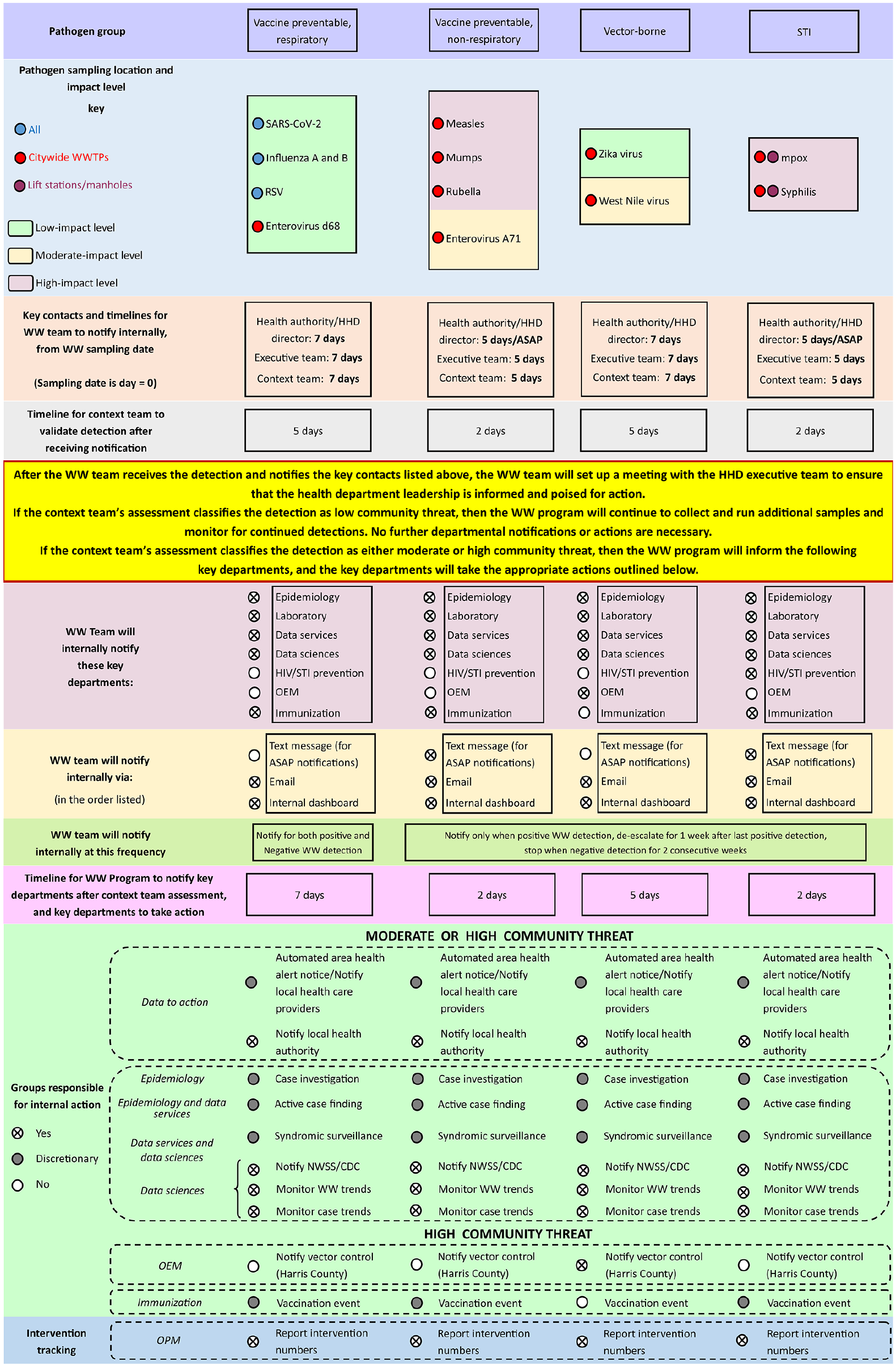
Abbreviated framework for citywide response to detection of pathogens in wastewater (WW) by the Houston Health Department (HHD), with pathogen groups, impact levels, contacts and timelines for notification, and specified departmental actions. Abbreviations: ASAP, as soon as possible; CDC, Centers for Disease Control and Prevention; mpox, monkeypox; NWSS, National Wastewater Surveillance System; OEM, Office of Emergency Management; OPM, Office of Performance Management; RSV, respiratory syncytial virus; STI, sexually transmitted infection; WWTP, wastewater treatment plant.
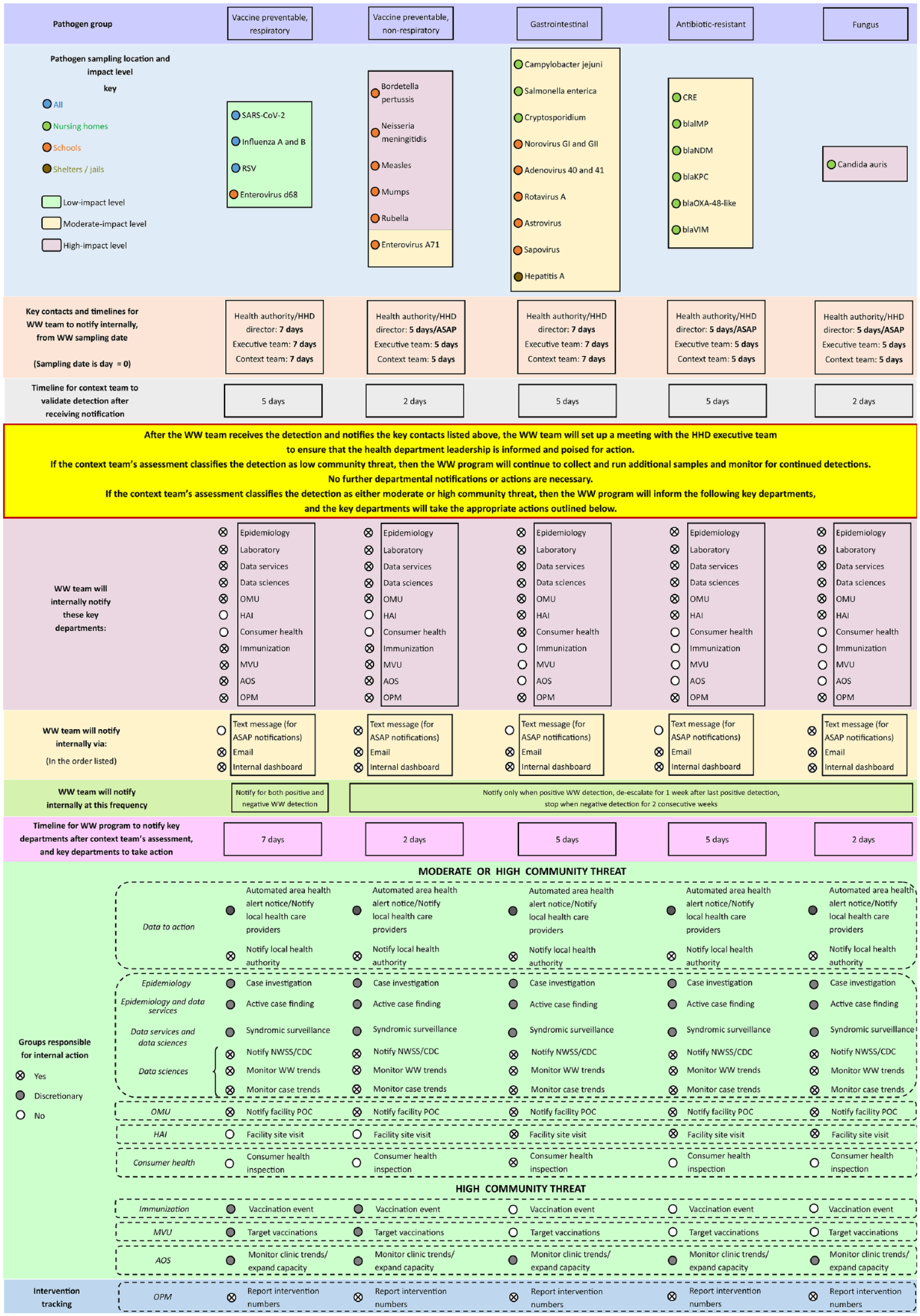
Abbreviated framework for facility-level response to detection of wastewater (WW) pathogens by the Houston Health Department (HHD), with pathogen groups, impact levels, contacts and timelines for notification, and specified departmental actions. Abbreviations: AOS, area of operations support; ASAP, as soon as possible; bla, antibiotic-resistant genes; CDC, Centers for Disease Control and Prevention; CRE, carbapenem-resistant Enterobacterales; GI, gastrointestinal; GII, gastrointestinal illness; HAI, health care–associated infection; MVU, mobile vaccination unit; NWSS, National Wastewater Surveillance System; OMU, outbreak management unit; OPM, Office of Performance Management; POC, point of contact; RSV, respiratory syncytial virus; WW, wastewater.
Pathogen Groups
The first section of each response framework lists the following broad categories to which pathogens on the expanded target pathogen list were assigned: vaccine preventable–respiratory, vaccine preventable–nonrespiratory, vector-borne, gastrointestinal, antibiotic resistance, sexually transmitted infections, fungus, and respiratory. The broad categories were based on pathogen type and then defined according to response and intervention options that were appropriate and available for the responding HHD department (eg, vaccine-preventable pathogens would require actions centered on vaccinations; gastrointestinal pathogens would require actions centered on facility inspections). Although certain pathogens may be of the same type, pathogens were assigned to different categories because of differing response needs among departments. We grouped pathogens to simplify a complicated response structure.
Pathogen Sampling Location and Impact Level
The next section of each response framework lists the specific pathogens assigned to each pathogen group and the location where each pathogen may be sampled. In the citywide response framework, wastewater sampling locations include citywide wastewater treatment plants and/or lift stations or manholes. In the facility-level response framework, sampling locations include nursing homes, schools, and homeless shelters and jails.
Each pathogen was assigned a “public health sensitivity impact level” (hereinafter, “impact level”; low, moderate, or high), which indicates the overall public health sensitivity of a pathogen. Within HHD, impact levels were determined by the epidemiology department and infectious disease experts. Three factors were considered when the impact level was assigned: the level of the public health threat posed by a pathogen (eg, severity of disease, infectiousness), the required urgency of the intervention response within HHD, and whether internal and/or external communications associated with a pathogen detection require special handling or routine reporting. For example, because influenza A is prevalent during influenza season, detection of influenza A does not constitute a new or unexpected public health threat or trigger any privacy concerns related to low case counts; therefore, influenza A can be reported through routine channels. In addition, a vaccine is available to mitigate the severity of the disease caused by influenza A. Together, these factors make it a low-impact pathogen. In contrast, detection of measles in wastewater sampled from a school constitutes a serious public health threat that requires immediate notification to certain key departments in HHD and special handling when communicating the results to the point of contact at the school. In this case, measles is a high-impact pathogen.
Detection of a low-impact pathogen triggers routine results reporting. Detection of a moderate-impact pathogen requires some special handling and urgency in reporting. Detection of a high-impact pathogen poses a public health threat and requires a high degree of sensitivity and urgency when reported. Assignments of impact level should undergo regular assessment and be adjusted when deviations from baseline levels of pathogen detection are observed. For example, in the event of a spike in the detection level or an outbreak of disease caused by a pathogen, the level can be raised to moderate or high, reflecting the need for a more urgent response by HHD.
Notification of Key Contacts
A pathogen detection triggers a first round of notifications to key contacts in HHD—the HHD director, the chief medical officer for the City of Houston, HHD’s executive team (deputy director, division managers, assistant directors, bureau chiefs, and key departmental program managers), and a team from the epidemiology department and other subject matter experts selected to assess and determine the level of community threat for all pathogen detections for situational awareness (the context team). The timelines for these notifications are governed by a pathogen’s impact level (ie, a high-impact pathogen requires more rapid notifications than a low-impact pathogen). After the wastewater team receives a report of a detection and notifies the key contacts, the team sets up a meeting with HHD’s executive team to ensure that leadership in the public health agency is informed and poised for action.
Timeline for Context Team to Assess Detection
Once notified of a detection, the context team has 2-5 days (depending on the pathogen) to assess the level of community threat for that pathogen and issue a “situational awareness” report. This assessment is based on a number of factors: whether the detection can be corroborated by current and/or historical clinical data (eg, historical seasonality of clinical cases for each pathogen), syndromic surveillance data collected across various databases that may be available to HHD (eg, emergency medical services, emergency departments, poison centers), vaccination coverage, citizen reports of potential outbreaks made to the public hotline in the HHD epidemiology department, CDC reports of national outbreaks or food recalls, and whether any large events have recently occurred in the affected area (Box). Some assessment criteria may be unique to a particular pathogen (eg, reported food recalls are relevant only for assessment of gastrointestinal pathogens). The context team then classifies the detection as a low, moderate, or high level of community threat and identifies the criteria used to make this determination.
Community factors for consideration by the Houston Health Department’s context team in a situational awareness report for wastewater pathogen detection a
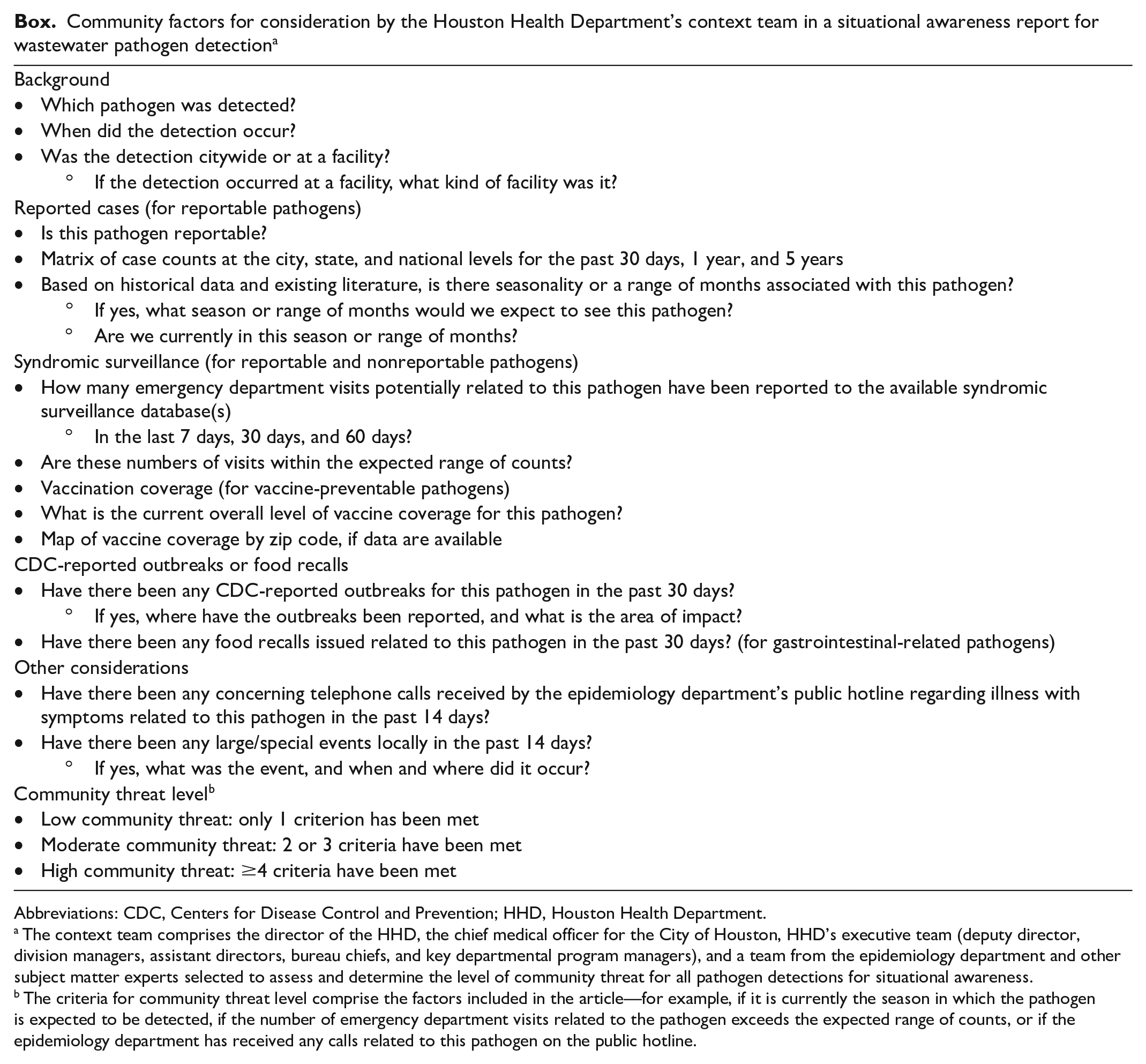
Abbreviations: CDC, Centers for Disease Control and Prevention; HHD, Houston Health Department.
The context team comprises the director of the HHD, the chief medical officer for the City of Houston, HHD’s executive team (deputy director, division managers, assistant directors, bureau chiefs, and key departmental program managers), and a team from the epidemiology department and other subject matter experts selected to assess and determine the level of community threat for all pathogen detections for situational awareness.
The criteria for community threat level comprise the factors included in the article—for example, if it is currently the season in which the pathogen is expected to be detected, if the number of emergency department visits related to the pathogen exceeds the expected range of counts, or if the epidemiology department has received any calls related to this pathogen on the public hotline.
If the context team determines that a wastewater detection is associated with a low community threat, no further departmental notifications or actions are necessary. However, the wastewater team continues to collect and run additional samples and monitor wastewater for detections, and the context team regularly updates the situational awareness report to ensure that no new threats have been identified. If the pathogen detection is assigned a moderate level of community threat, only some internal departments are notified of the detection, and some actions are taken. When a pathogen detection is assigned a high level of community threat, all key departments must be notified, and all assigned actions must be taken.
Notification of Key Departments
A pathogen detection that is assigned a moderate or high level of community threat triggers a second round of notifications to key HHD departments associated with the relevant pathogen group. The most urgent notifications are sent by text message. All other notifications are sent by email or posted to an internal dashboard (under development). The response framework specifies the timeline and frequency for these notifications (also based on pathogen group). Unless otherwise noted on the framework, notifications occur only for positive detections; notifications are de-escalated for 1 week after the week of last positive detection. After 2 consecutive weeks of no detection, notifications are stopped.
Groups Responsible for Internal Action
The next section of the framework lists the internal departments responsible for acting in response to a pathogen detection that has been assigned a moderate or high level of community threat. After detection of a pathogen, each department is assigned mandatory actions and optional actions. Optional actions are based on a department’s internal guidelines (eg, certain criteria must be met before the communications department issues a press release, so the decision for action is based on the department’s discretion). Actions are specific to the department and the pathogen group.
Intervention Tracking
HHD’s Office of Performance Management tracks all interventions associated with pathogen detections that are assigned a moderate or high level of community threat.
Sample Scenarios of Framework in Action
To illustrate the response framework in action, HHD outlined sample scenarios for anticipated internal responses to detection of C auris in a citywide wastewater sample (Figure 3) and a facility-level wastewater sample (Figure 4). Although the response frameworks show similar activities, the action plan for facility-level C auris detection requires additional intervention activities, such as notifying the facility’s point of contact, conducting a facility site visit, and monitoring clinical trends to determine the need for expanded support.
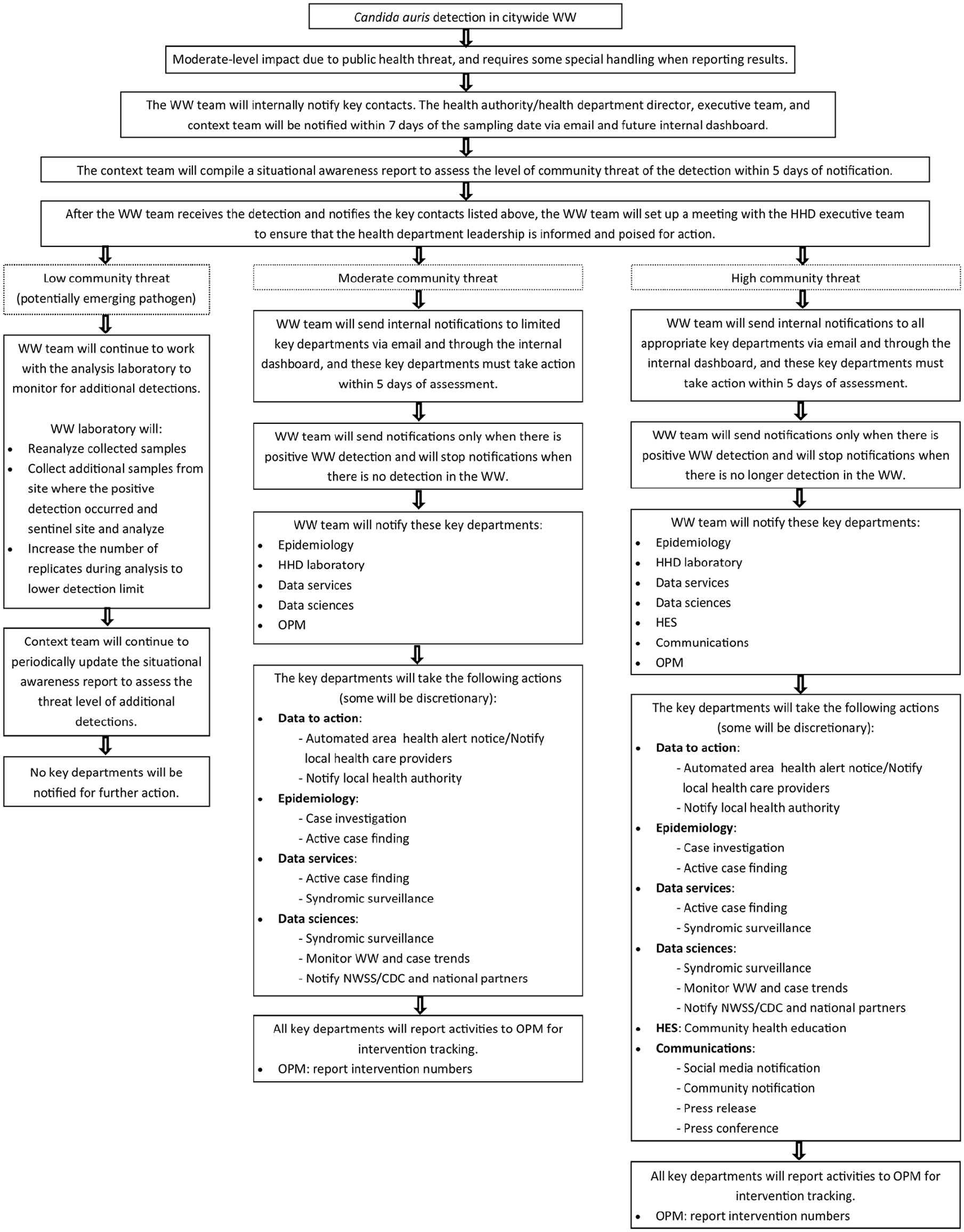
Sample action plan from the Houston Health Department (HHD) for citywide detection of Candida auris in wastewater (WW). Abbreviations: CDC, Centers for Disease Control and Prevention; HES, health education services; NWSS, National Wastewater Surveillance System; OPM, Office of Performance Management.
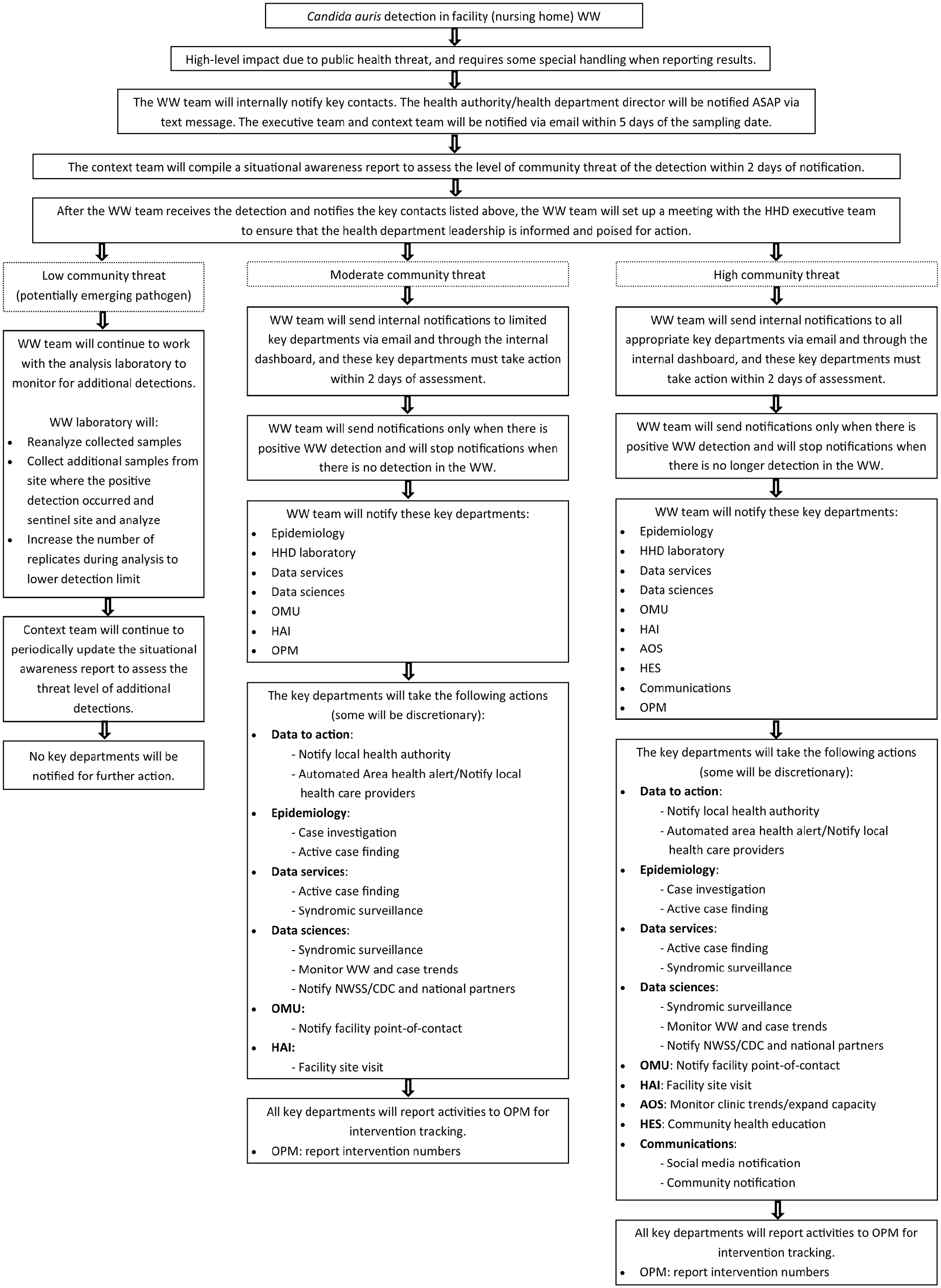
Sample action plan from the Houston Health Department (HHD) for facility (nursing home) detection of Candida auris in wastewater (WW). Abbreviations: AOS, area operations support; ASAP, as soon as possible; CDC, Centers for Disease Control and Prevention; HAI, health care–associated infection; HES, health education services; NWSS, National Wastewater Surveillance System; OMU, outbreak management unit; OPM, Office of Performance Management.
Discussion
The COVID-19 pandemic hastened the adoption of wastewater surveillance technology by public health agencies and public utility systems throughout the United States and around the globe. The next logical step in this process is to expand the target lists of existing wastewater monitoring systems to include other pathogens of epidemiologic importance. To this end, HHD’s partners at Rice University are currently developing assays to evaluate the feasibility of detecting the proposed pathogens in wastewater samples. Once the partners have confirmed that detection of the pathogen is feasible, HHD will officially add the pathogen to the expanded wastewater monitoring system. Multiple-pathogen targeting will enable public health agencies to gather critical information about diseases that are not always captured by traditional surveillance systems—particularly, diseases that infect some people asymptomatically; diseases with nonspecific symptoms (eg, influenza, viral gastroenteritis); and diseases for which clinical testing is inadequate, hard to access, or expensive.11,12 Collected data will not only provide situational awareness of the various pathogens circulating in a given community but will also provide early warnings of new or emerging threats. 11
Although wastewater monitoring emerged as a critical surveillance tool during the COVID-19 pandemic for early alerts of disease spread in communities, the technology for analyzing and interpreting wastewater data is still novel, and public health agencies must remain acutely aware that interventions and recommendations developed from these data need to be reliable to maintain public trust in the system and the public health agency. Public health agencies need to conscientiously weigh the consequences of moving forward with interventions after pathogen detection. Furthermore, public health agencies should establish plans of action before pathogen detection so that cohesive responses can be implemented after pathogen detection. Any recall in action or uncertainty in recommendations from public health agencies may fracture public trust; thus, various complexities must be proactively addressed by public health agencies during the development of dynamic action plans so that sound decisions are made about appropriate actions and interventions in response to pathogen detection in wastewater.
Practice Implications
As more public health agencies expand their wastewater surveillance programs to include additional target pathogens, the development of an internal action plan tailored to a public health agency’s capacity and programs is an important step. Such action plans should incorporate input from all departments in a public health agency that will be involved in response efforts, and they should include a mechanism for tracking interventions in real time so that action plans can be evaluated for effectiveness on a regular basis.
The citywide and facility-level response frameworks presented in our study can serve as a model for other public health agencies to adopt when expanding the scope of their wastewater monitoring systems. Our proposed frameworks reduce uncertainty about (1) what actions and interventions a public health agency should take when responding to a pathogen detection, (2) which departments in the public health agency are responsible for taking those actions, and (3) when those actions need to be taken—thereby creating accountability and maximizing efficiency. Most importantly, our frameworks are highly adaptable. Public health agencies can use the frameworks as templates to develop action plans customized for local conditions and available resources. Once adopted, the action plans can be modified at any time to reflect changes in the public health landscape (eg, an outbreak of a disease) and improvements in wastewater surveillance technology (eg, greater sensitivity in analyses of wastewater samples, which leads to more targeted public health interventions).
Supplemental Material
sj-docx-1-phr-10.1177_00333549241253787 – Supplemental material for A Novel Framework for Internal Responses to Detection of Pathogens in Wastewater by Public Health Agencies
Supplemental material, sj-docx-1-phr-10.1177_00333549241253787 for A Novel Framework for Internal Responses to Detection of Pathogens in Wastewater by Public Health Agencies by Komal Sheth, Kirstin Short, Lauren Stadler, Katherine B. Ensor, Catherine D. Johnson, Stephen L. Williams, David Persse and Loren Hopkins in Public Health Reports
Footnotes
Declaration of Conflicting Interests
The authors declared no potential conflicts of interest with respect to the research, authorship, and/or publication of this article.
Funding
The authors received no financial support for the research, authorship, and/or publication of this article.

Supplemental Material
Supplemental material for this article is available online. The authors have provided these supplemental materials to give readers additional information about their work. These materials have not been edited or formatted by Public Health Reports’s scientific editors and, thus, may not conform to the guidelines of the AMA Manual of Style, 11th Edition.
References
Supplementary Material
Please find the following supplemental material available below.
For Open Access articles published under a Creative Commons License, all supplemental material carries the same license as the article it is associated with.
For non-Open Access articles published, all supplemental material carries a non-exclusive license, and permission requests for re-use of supplemental material or any part of supplemental material shall be sent directly to the copyright owner as specified in the copyright notice associated with the article.
