




Abstract
Objectives:
COVID-19 caused stark increases in food insecurity. To maintain food provision, policy changes to the National School Lunch Program (NSLP) and Supplemental Nutrition Assistance Program (SNAP) were instated. This longitudinal study examined (1) food security patterns across the timeline of COVID-19; (2) the relationship among food security patterns, NSLP/SNAP use, and parent feeding practices; and (3) parent perceptions of NSLP/SNAP policy changes.
Methods:
A total of 333 US parents completed online surveys during the COVID-19 pandemic: May 2020 (T1), September 2020 (T2), and May 2021 (T3). Food security and parent feeding practices were reported at each time point; pre–COVID-19 behaviors were retrospectively reported at T1. Use and perceptions of NSLP/SNAP policy changes were reported at T3. We examined associations between food security and parent feeding practices using repeated-measures mixed models.
Results:
The percentage of parents with very low food security increased from pre–COVID-19 (9.6%) to T1 (29.1%) and remained elevated at T3 (16.8%). One-third (31.2%) of families fluctuated between food security and food insecurity, with 27.0% remaining food insecure at T3. Thirty percent of consistently food-insecure families reported not receiving school-provided meals, and 45% did not receive SNAP benefits. Most parents reported that pickup school meal sites (71.4%), Pandemic Electronic Benefit Transfer cards (51.4%), and increased SNAP benefits (79.6%) were beneficial. Initial changes in parent feeding practices reported at T1 returned to pre–COVID-19 levels by T3, yet concern for child overweight remained significantly elevated.
Conclusion:
Continued policy efforts to support food-insecure families via expanded food access in NSLP/SNAP are critical.
Keywords
The COVID-19 pandemic resulted in severe increases in food insecurity. Data showed an initial 20% increase in very low food security in May 2020, 1 and other sources reported similar nationwide increases.2 -7 As the pandemic persists, families are experiencing social, economic, and environmental changes and large increases in parental stress 8 ; yet, few studies have tracked within-family changes in food security over time. Initial longitudinal data from May through September 2020 revealed that some families transitioned in or out of food insecurity, while others remained consistent across these months. 9 Since September 2020, economic stimulus bills have been passed, 10 nutrition assistance benefits have been expanded, 11 and more schools have resumed in-person learning. 12 Given these evolving factors and the transient nature of food security,13,14 continued tracking is needed to identify whether food insecurity has decreased or additional supports are needed.
Because of increased food insecurity, federal nutrition assistance programs made substantial changes to enhance food access. The National School Lunch Program (NSLP) issued novel flexibilities/waivers to provide food access in the absence of in-person school meals (eg, pickup meal sites, Pandemic Electronic Benefit Transfer [P-EBT] cards). 15 Similar flexibilities/waivers have been implemented for the Supplemental Nutrition Assistance Program (SNAP; eg, increased benefits, online purchasing). 16 A need exists to evaluate how parents perceived these pandemic-related policy changes to build an evidence base to support maintaining policies that strengthen our nutrition safety net.
A need also exists to examine how economic changes relate to parent feeding practices, given the robust influence of parenting on child feeding behaviors. 17 Controlling feeding practices—such as restricting foods or pressuring children to eat—are associated with suboptimal regulation of energy intake, child weight, and adiposity.17 -22 During the initial months of COVID-19, initial changes in parent feeding practices were observed.1,9,23 -25 Because relative changes in food insecurity can have indirect effects on child feeding practices, 26 it is important to quantify within-family patterns of food security during the COVID-19 pandemic and examine whether transient versus stable trajectories relate to corresponding changes in parent feeding practices. Moreover, evaluating whether changes in parent feeding practices are transient or sustained is important given potential implications on child weight.
This study included a sample of US parents to obtain follow-up data on food insecurity, nutrition supports, and parent feeding practices across a full year of COVID-19. Previous data were collected with 2 surveys at the peak of government stay-at-home orders and school closures (May 2020) and when virtual/in-person schooling resumed (September 2020).1,9 A third survey was administered in May 2021 to (1) quantify longitudinal patterns of food security and parent feeding practices from pre–COVID-19 (retrospective report) to COVID-19 (May 2020, September 2020, and May 2021); (2) describe which NSLP and SNAP flexibilities/waivers were perceived as beneficial and whether use of programs differed by patterns of food security throughout the COVID-19 pandemic; and (3) examine whether longitudinal patterns of parent feeding practices differed by whether families experienced stability or fluctuations in food security status throughout the pandemic.
Methods
Study Design and Participants
This longitudinal, observational study consisted of 3 online surveys during COVID-19. The first survey was in May 2020 (T1), where parents reported on food security and parent feeding practices pre–COVID-19 (retrospective) and currently at that time. In second and third surveys sent in September 2020 (T2) and May 2021 (T3), respectively, parents reported on food security and parent feeding practices at that time. This design permitted longitudinal assessment from pre–COVID-19 through 3 time points during the pandemic.
Primary recruitment methods included social media advertisements that targeted a nationwide sample from racially minoritized backgrounds, with low educational attainment, who were living in low-income zip codes in the United States. Additional recruitment methods were conducted by emailing study information to partners in academic settings nationwide and to local health care and community sectors (eg, nonprofit organizations, schools) in central Virginia. Recruitment details are described elsewhere. 1 Our recruited sample represented diverse geographic locations; according to US Census regions, 22% lived in the West, 21% in the Midwest, 41% in the South, and 16% in the Northeast. 27
Advertisements directed parents to a secure Qualtrics platform to screen for eligibility and, if eligible, complete the survey. Parents had to be aged ≥18 years, live in the United States, and have ≥1 child, adolescent, or young adult aged 5-18 years. Parents with >1 child in this age range completed surveys on the child whose weight most concerned them. Parents who completed the first survey (n = 584) were recontacted at T2 and T3 and invited to complete follow-up surveys (Figure 1). At T2, 433 parents (74.1% retention) completed the second survey. 9 At T3, 333 parents (57.0% retention) completed all 3 surveys and composed the sample in these analyses. The Virginia Commonwealth University Institutional Review Board approved the study procedures.
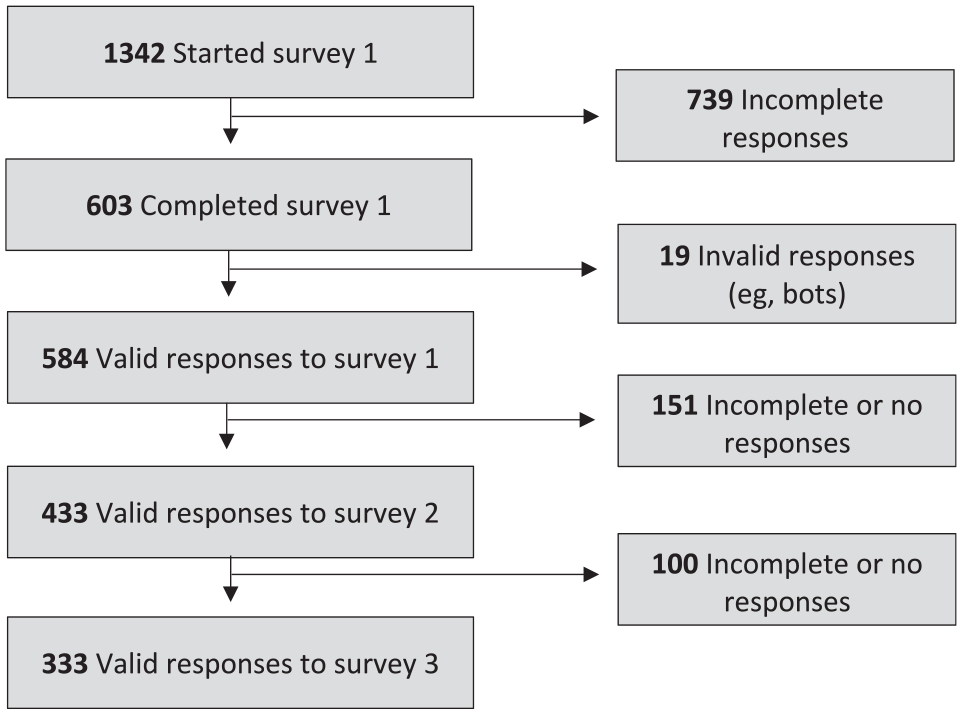
Flowchart illustrating responses from a nationwide sample of US parents to surveys on food security, parent feeding practices, and use of federal nutrition assistance programs conducted during the COVID-19 pandemic at 3 time points, 2020-2021. Survey 1 was administered in May 2020, survey 2 in September 2020, and survey 3 in May 2021.
Survey Measures
Food insecurity
The 6-item US Department of Agriculture Household Food Security Module measured household food security.28,29 One question (ie, number of days that parents cut/skipped meals) used a 30-day reference period in accordance with scoring guidelines. 29 Responses ≥3 days were considered affirmative. Affirmative responses were summed, and families were categorized by level of food security at each time point: high (score, 0 or 1), low (2-4), or very low (5 or 6).
We created 3 categories based on food security scores across the 3 time points: steadily food secure (ie, high food security at all time points), steadily food insecure (ie, low or very low food security at all time points), and fluctuations in food security (ie, varying high, low, and/or very low food security across all time points).
Parent feeding practices
The Child Feeding Questionnaire (CFQ) quantified parents’ feeding practices. 30 The CFQ is a widely used and validated scale to assess beliefs, attitudes, and practices of child feeding.31,32 Four subscales were used: (1) parents’ concern for child overweight (3 items; eg, “How concerned are you about your child becoming overweight?”), (2) restricting children’s access to foods (8 items; eg, “I intentionally keep some foods out of my child’s reach”), (3) pressuring children to eat more food (4 items; eg, “My child should always eat all the food on her plate”), and (4) monitoring children’s eating (4 items; eg, “How much do you keep track of the high fat foods that your child eats?”). Parents rated each item on a 5-point Likert scale (eg, 1 = disagree and 5 = agree); items in each subscale were averaged to yield an overall score (range, 1-5).
Child nutrition support
At T3, families indicated whether they received free school-provided meals and/or SNAP benefits during the past year, whether they received these benefits prior to COVID-19, and which policies were most helpful. Response options consisted of key policies active at the time of data collection. For school-provided meals, policies included P-EBT cards for missed school meals, pickup meal sites, neighborhood delivery meals, receiving multiple days of meals at one time, waiving the requirement for children to be present at meal pickup, and flexible times of day that children could receive school meals. 15 Response options for SNAP included increased SNAP benefits, simpler recertification process, extended certification periods, and ability to use SNAP benefits for online purchasing. 16 These policies were passed starting in March 2020, yet states adopted these policies at varying rates.
Demographic characteristics and COVID-19–related questions
Demographic characteristics (reported at T1) included parent and child age, sex, and race and ethnicity; parent education and marital status; annual household income; and health insurance status. At T3, parents cited family member diagnoses of COVID-19, family member furloughs or layoffs, receipt of unemployment benefits, and changes in family income.
Statistical Analysis
We used descriptive statistics (eg, frequencies, percentages) to describe demographic variables, use of federal nutrition assistance programs, and perceived benefits of COVID-19 policies for these programs. We used the χ2 test of independence to examine demographic differences in this sample of 333 parents and those lost to follow-up, with P < .05 considered significant. Frequencies were used to quantify patterns in food security categories (food secure, low food security, very low food security) by time point (pre–COVID-19, T1, T2, T3) and over time (always food secure, always food insecure, fluctuations in food security) by use of federal nutrition assistance programs (SNAP and/or school-provided meals). Repeated-measures analysis of variance models with PROC MIXED, a command in SAS (SAS Institute Inc), examined patterns of parent feeding practices over time. The main effect of time was tested on each CFQ subscale in separate models. Tukey post hoc comparisons examined differences between time points. Pre–COVID-19 was the reference group.
We examined differences in patterns of parent feeding practices by food security status with repeated-measures mixed models, as described previously. These models included an interaction term, time × food security status, where food security status had 3 levels: steadily food secure, steadily food insecure, fluctuations in food security. Dependent variables were the 4 CFQ subscales. In the presence of a significant interaction, we used Tukey post hoc comparisons to examine differences between time points, with pre–COVID-19 as the referent category. In the absence of a significant interaction, we did not examine comparisons across time points. Values are presented as adjusted means and 95% CIs. We conducted analyses in SAS Studio version 3.8 (SAS Institute Inc). We defined significance as P < .05.
Results
Demographic Characteristics and COVID-19–Related Factors
The mean (SD) age of parents was 40.3 (7.4) years, and most of the 333 parents were female (n = 316, 94.9%), White (n = 282, 84.7%), not Hispanic/Latinx (n = 300, 90.1%), and married (n = 234, 70.3%). About 15% (n = 50) did not attend college, 30.9% (n = 103) attended some college or received an associate’s degree, and 54.1% (n = 180) had at least a bachelor’s degree. Fewer than half (n = 150, 45.0%) earned ≤$50 000 per year, 34.2% (n = 114) received Medicaid, and 59.8% (n = 199) had private health insurance. The mean (SD) age of children, adolescents, and young adults was 9.3 (3.7) years; 49.8% (n = 166) were female, 84.7% (n = 282) were White, and 86.5% (n = 288) were not Hispanic/Latinx. Parents lost to follow-up were significantly more likely to be Hispanic/Latinx (P = .002), have lower educational attainment (P = .006), and be food insecure at T1 (P = .04) than parents who were retained for the full study duration.
Longitudinal Patterns of Food Security
The percentage of families with very low food security increased from pre–COVID-19 (9.6%) to T1 (29.1%) and declined steadily over time (Figure 2); yet, at T3, values had not returned to pre–COVID-19 levels (16.8%). The percentage of families with food security decreased from pre–COVID-19 (65.2%) to T1 (49.9%) and then increased over time. By T3, values returned to pre–COVID-19 levels (64.6%). About 1 in 4 (27.0%) families were steadily food insecure, while 41.7% were steadily food secure and 31.2% fluctuated between food security and food insecurity across all time points.
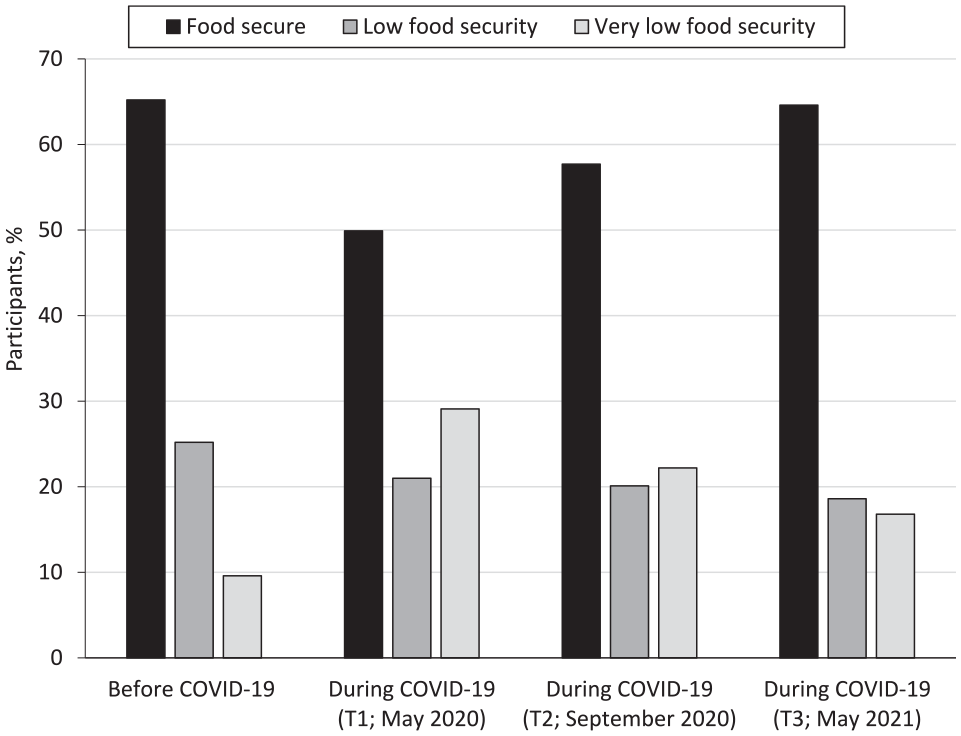
Distribution of families experiencing varying levels of food security in a nationwide sample of parents with a child aged 5-18 years (N = 333) who responded to surveys on food security, parent feeding practices, and use of federal nutrition assistance programs before and during the COVID-19 pandemic, United States, 2020-2021. Food security was defined according to the US Department of Agriculture Household Food Security Module.28,29
We found a pattern of decreased low food security across time. Among 70 families with low food security at T1, 47.1% (n = 33) became food secure at T2, while 22.9% (n = 16) became very low food secure and 30.0% (n = 21) remained at low food security. Similarly, 55.7% (n = 39) of families with low food security at T1 became food secure at T3, 14.3% (n = 10) became very low food secure, and 30.0% (n = 21) remained at low food security.
Food Insecurity and Federal Nutrition Support
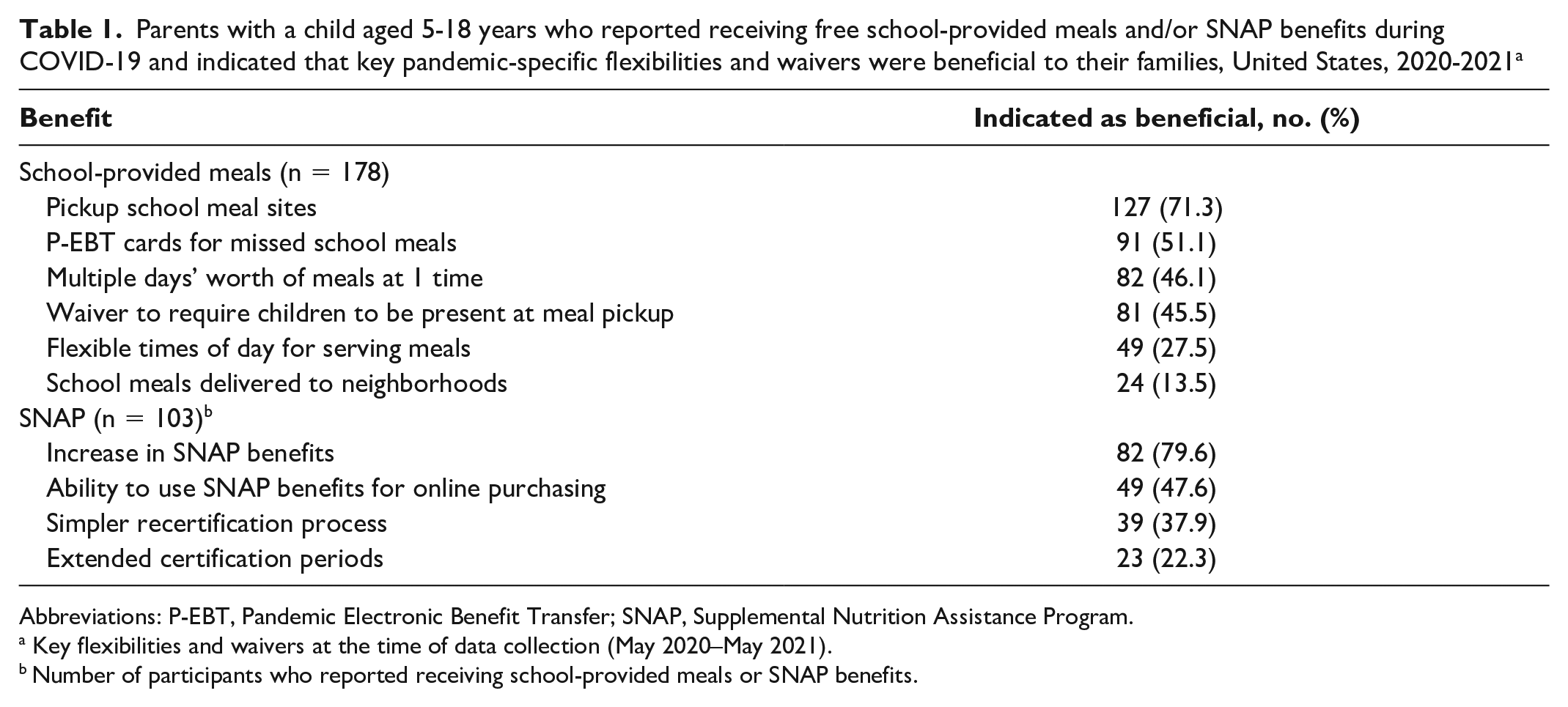
More than half (54.1%, 178 of 329) of families received free school-provided meals from May 2020 through May 2021; 46.6% (83 of 178) of these families had not received free school-provided meals pre–COVID-19. Most parents reported that pickup meal sites (71.3%, 127 of 178) and P-EBT cards (51.4%, 91 of 177) were most beneficial (Table 1). About one-third (31.3%, 103 of 329) received SNAP benefits during COVID-19; 34.0% (35 of 103) were new recipients. Most parents stated that increased SNAP benefits (79.6%, 82 of 103) and online purchasing (48.0%, 49 of 102) were beneficial.
Parents with a child aged 5-18 years who reported receiving free school-provided meals and/or SNAP benefits during COVID-19 and indicated that key pandemic-specific flexibilities and waivers were beneficial to their families, United States, 2020-2021 a
Abbreviations: P-EBT, Pandemic Electronic Benefit Transfer; SNAP, Supplemental Nutrition Assistance Program.
Key flexibilities and waivers at the time of data collection (May 2020–May 2021).
Number of participants who reported receiving school-provided meals or SNAP benefits.
Of 90 families that were consistently food insecure, 70.0% (n = 63) received free school-provided meals, 54.4% (n = 49) received SNAP benefits, and 14.4% (n = 13) received neither (Figure 3). Of 102 families that fluctuated in food security, 58.8% (n = 60) received free school-provided meals, 39.2% (n = 40) received SNAP benefits, and 27.5% (n = 28) received neither during COVID-19.
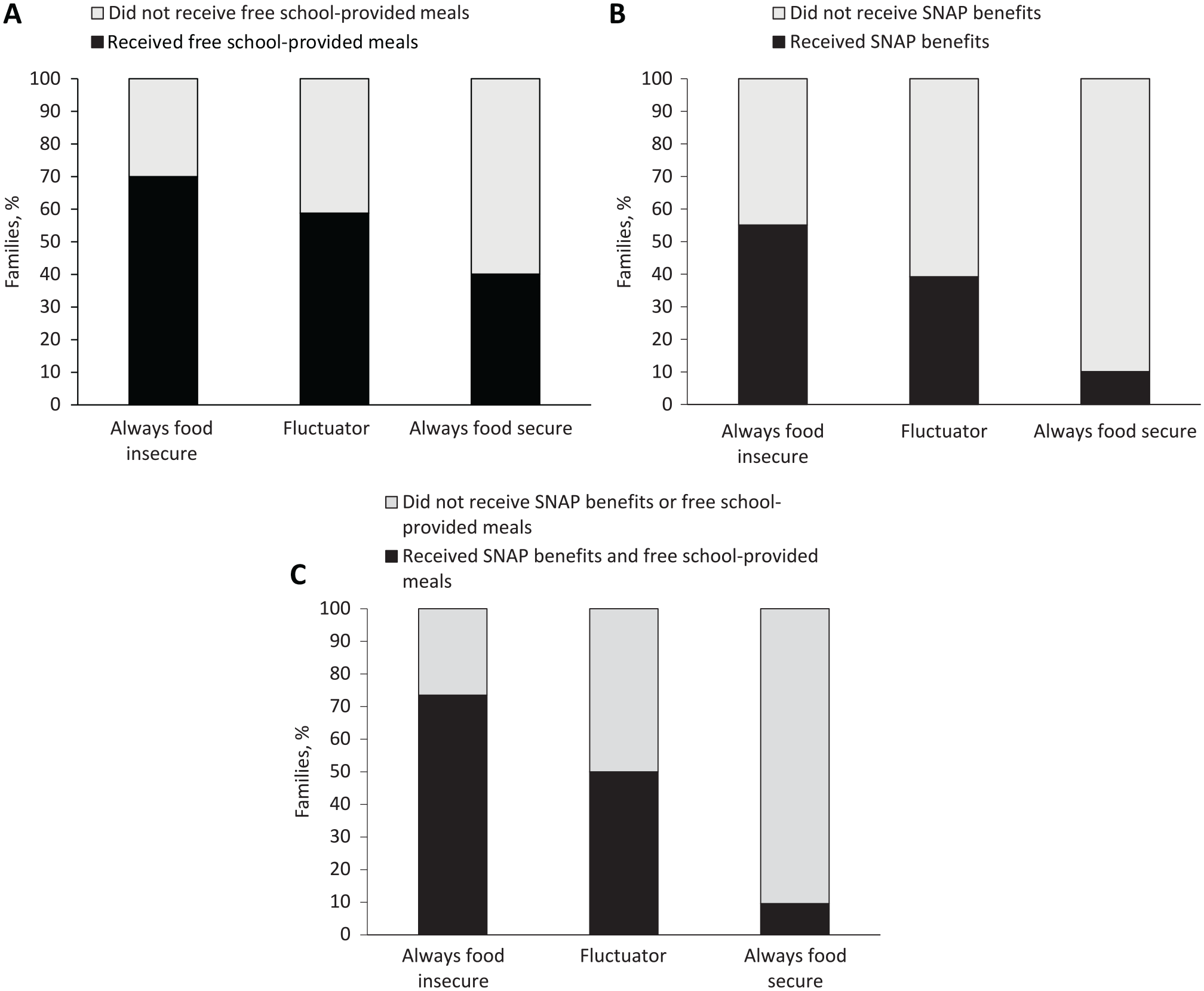
Percentage of families who did or did not receive (A) free school-provided meals, (B) SNAP benefits, and (C) free school-provided meals and SNAP benefits during the COVID-19 pandemic, by food security status, United States, 2020-2021. Household food security status was categorized as “always food secure” or “always food insecure,” indicating stability in food security status over time, or “fluctuator,” indicating instability in changing between food security and food insecurity over time, when measured longitudinally from May 2020 through May 2021. Data for graphs A and B are from 333 parents with a child, adolescent, or young adult aged 5-18 years. Data for graph C are for a subset of 188 parents who received either, both, or neither benefit.Abbreviation: SNAP, Supplemental Nutrition Assistance Program.
Patterns of Parent Feeding Practices by Stability Versus Fluctuations in Food Security
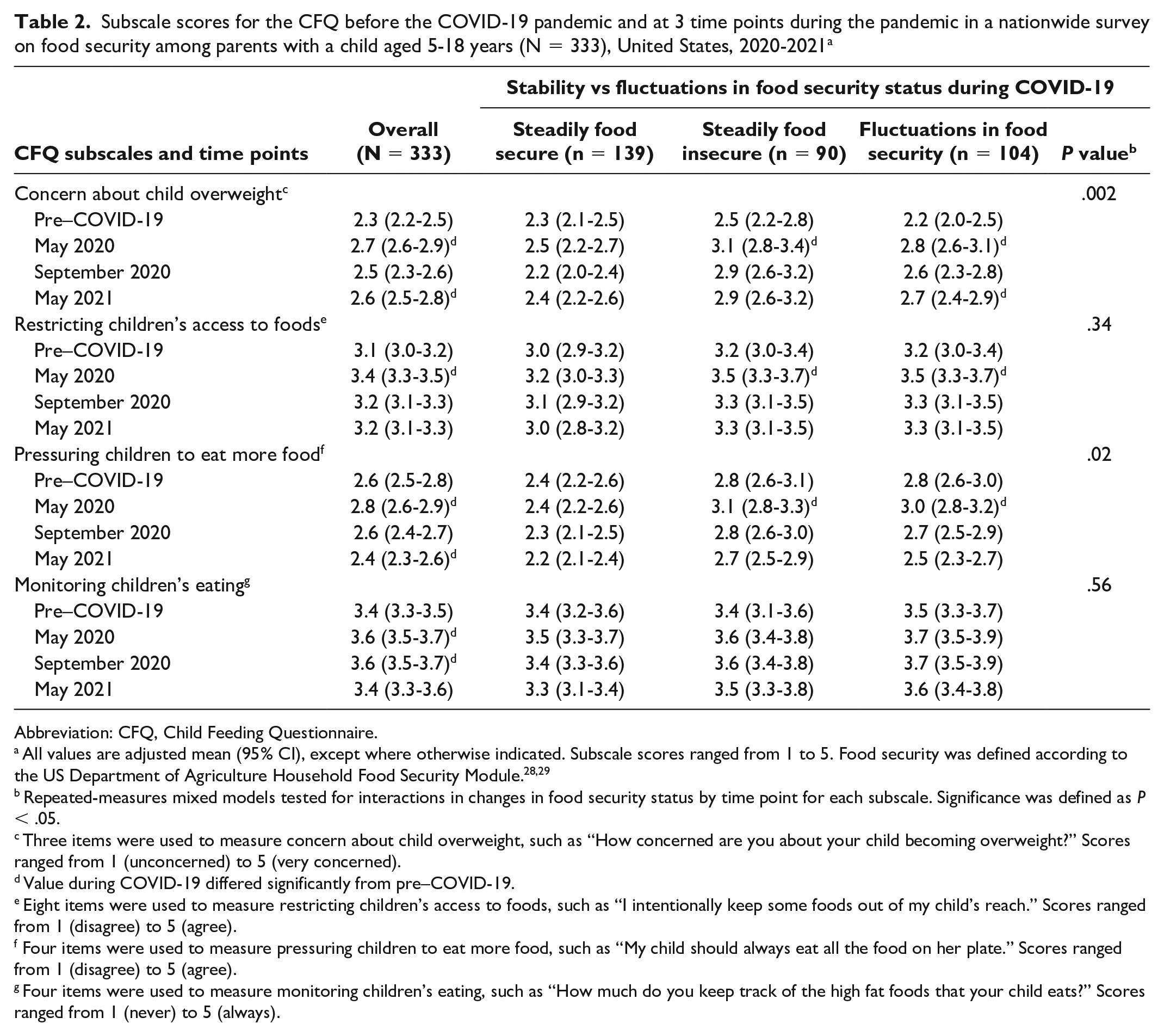
Parents’ concern about child overweight increased from pre–COVID-19 to T1 and remained elevated at T3 (Table 2). Parents’ use of restriction, pressure to eat, and monitoring feeding practices increased from pre–COVID-19 to T1 and returned to or went below pre–COVID-19 values by T3. We observed significant interactions by food security status for parents’ concern for child overweight (P = .001) and pressure to eat (P = .01) but not for restriction (P = .19) or monitoring (P = .20). Households that fluctuated in food security cited increased concern in child overweight from pre–COVID-19 to T1; concern remained elevated at all subsequent time points. Households with fluctuations in food security felt elevated pressure to eat from pre–COVID-19 to T1, which returned to pre–COVID-19 values by T3, while households with consistent food security or insecurity indicated more stable use of pressure to eat over time.
Subscale scores for the CFQ before the COVID-19 pandemic and at 3 time points during the pandemic in a nationwide survey on food security among parents with a child aged 5-18 years (N = 333), United States, 2020-2021 a
Abbreviation: CFQ, Child Feeding Questionnaire.
All values are adjusted mean (95% CI), except where otherwise indicated. Subscale scores ranged from 1 to 5. Food security was defined according to the US Department of Agriculture Household Food Security Module.28,29
Repeated-measures mixed models tested for interactions in changes in food security status by time point for each subscale. Significance was defined as P < .05.
Three items were used to measure concern about child overweight, such as “How concerned are you about your child becoming overweight?” Scores ranged from 1 (unconcerned) to 5 (very concerned).
Value during COVID-19 differed significantly from pre–COVID-19.
Eight items were used to measure restricting children’s access to foods, such as “I intentionally keep some foods out of my child’s reach.” Scores ranged from 1 (disagree) to 5 (agree).
Four items were used to measure pressuring children to eat more food, such as “My child should always eat all the food on her plate.” Scores ranged from 1 (disagree) to 5 (agree).
Four items were used to measure monitoring children’s eating, such as “How much do you keep track of the high fat foods that your child eats?” Scores ranged from 1 (never) to 5 (always).
Discussion
We found that elevated rates of very low food security were sustained across 1 year of the COVID-19 pandemic, while almost one-third of families fluctuated in food security throughout the year. Federal nutrition policies perceived as most helpful included pickup school meal sites, P-EBT cards, and increased SNAP benefits. Initial pandemic-related changes in parent feeding practices returned to pre–COVID-19 levels by May 2021; yet, concern for child overweight remained elevated. Given the persistent course of this pandemic, these patterns provide valuable insight to inform policies for providing child nutrition support across COVID-19.
The pandemic onset led to drastic increases in food insecurity.1 -7 More than 1 year after onset, unemployment rates declined, 33 some schools reopened, 12 and nutrition assistance benefits were expanded. 34 Data from this study indicated that the percentage of families with low food security declined slightly, while the percentage of families with very low food security initially spiked and remained higher than pre–COVID-19 levels. This finding signifies that the pandemic likely primarily affected families with very low food security, which raises concern, because very low food security is marked by disrupted eating patterns, reduced food intake, and multiple markers of poor health.35,36 Nationally representative data show that millions of families still do not have enough food to eat 5 ; thus, ongoing efforts to support families must continue. A unique aspect of this study was the ability to quantify temporal patterns in food security, where almost one-third of families experienced fluctuations at various time points during COVID-19, while one-quarter had stable patterns across all time points. This distinction is important because transient patterns of food insecurity have been linked to less optimal child development37,38 and child feeding practices. 26
To support families with food insecurity, NSLP and SNAP provide critical assistance to millions of families. Throughout COVID-19, NSLP and SNAP instituted novel waivers/flexibilities for creative solutions to feeding families during unprecedented challenges.15,16 As shown in our study, in the face of in-person school closures, most families reported that pickup school meals and P-EBT cards were beneficial, and increased monthly SNAP benefits were beneficial to 80% of SNAP households. Pandemic flexibilities/waivers hold important relevance to circumstances beyond COVID-19, and findings from our study can inform decisions about policy maintenance. For example, data that most parents perceived increased SNAP benefits as beneficial can inform advocacy and legislative decisions to institute similar benefit increases during other crises, similar to COVID-19. Parents’ perceptions that pickup school meals and P-EBT cards were beneficial can inform decisions to restore these methods in other circumstances (eg, natural disasters, summer vacation) in which schools are closed. In contrast, fewer families stated that neighborhood delivery meals were beneficial; thus, allocating resources toward this method may be less impactful. Collectively, changes in federal nutrition assistance programs during COVID-19 were helpful in mitigating larger increases in food insecurity; yet, unless the most influential flexibilities/waivers are maintained, national rates of food insecurity are not likely to decrease in the long term. 39 Some policies have been extended (eg, increased SNAP benefits, effective October 1, 2021), 40 while others (eg, neighborhood delivery) are set to expire. Research on the most effective pandemic-related policies and advocacy for maintaining these policy changes are needed for lasting impacts on reducing food insecurity.
The essential value of NSLP and SNAP has been highlighted during COVID-19, providing an opportunity to strengthen these programs through ongoing legislation, such as the 2021 Child Nutrition Reauthorization Act. 41 In our study, 30% of consistently food-insecure families reported not receiving school-provided meals. National estimates show that many children with food insufficiency still do not receive school food assistance benefits. 5 A lack of transportation to pickup meal sites, short staff, fear of virus exposure, and/or perceived stigma are potential barriers.42,43 Nonetheless, these data demonstrate the importance of universal policies that remove barriers and increase food access. Most notably, universal free meals were provided to all children in the 2021-2022 academic year, 44 but this benefit was not extended into the 2022-2023 school year. Now that children have transitioned back to in-person learning, research is needed to quantify the impacts of free school meal access on children’s nutritional security. For SNAP, similar patterns showed that 45% of consistently food-insecure families did not receive SNAP benefits, a finding that is supported by other data showing high levels of food insecurity among SNAP participants during COVID-19.5,45,46 SNAP is the cornerstone of nutrition assistance programs 47 and reduces food insecurity among those enrolled. 48 Barriers to SNAP enrollment were a lack of information on program eligibility, concerns about participation (eg, stigma, immigration), and obstacles when applying, which may have limited enrollment among eligible food-insecure families. 49 Collectively, these data contribute to growing evidence on the need for continued efforts to reach families experiencing food insecurity.
We previously cited an increase in controlling feeding practices (eg, restricting foods, pressure to eat) during the initial months of COVID-19, 1 and others reported increased permissive, 23 nonnutritive, 24 and reward-based 25 feeding practices, particularly for parents who had more COVID-19 changes and stress than other parents.24,25 These cross-sectional studies were administered in May–June 2020, when strict lockdowns were in place.1,23 -25 Thus, longitudinal data from the present study build upon previous findings1,9 and provide data indicating that increased use of restriction, pressure, and monitoring feeding practices returned to pre–COVID-19 values or lower, regardless of food security patterns during the past year. This finding suggests that initial changes at the height of the pandemic have subsided as families have adapted and life has resembled prepandemic normalcy. Sudden and drastic life disruptions in May–June 2020 may have prompted initial changes in child feeding practices that have since returned to prepandemic feeding practices. However, parents’ concern with child overweight remained, complementing other data indicating that children experienced accelerated weight gain during the pandemic.50,51 In particular, families that fluctuated between food security and food insecurity across the year experienced elevated levels of concern, while consistently food-secure and food-insecure families returned to pre–COVID-19 levels. Associations between food insecurity and child overweight remain mixed, 52 yet evidence indicates that children in food-insecure households are more likely to consume more nutrient-poor foods than children in food-secure households. 53 The instability of fluctuating between food security and food insecurity during COVID-19 may have elicited new feelings of uncertainty and, thus, greater concern for how these eating patterns would impact child weight. Screening is needed to identify families experiencing transient food insecurity, followed by referrals for resources and support, in conjunction with policies and public health strategies to ensure nutrient-rich food consumption and the prevention of weight gain during and after COVID-19.
Limitations
This study had several limitations. First, it used a convenience sample with limited racial and ethnic diversity, thus limiting the generalizability of the findings. Second, parents had school-aged children; as such, our findings are not representative of parents with younger children (ie, aged <5 years). Third, if parents had >1 child, they responded according to the child whose weight most concerned them, likely elevating the findings related to parents’ concern for child overweight. Fourth, parents lost to follow-up were more likely than parents retained in our study to be Hispanic/Latinx, with lower educational attainment and very low food security at the time of the first survey, thereby resulting in a smaller magnitude of food insecurity than what would be expected in diverse populations disproportionately impacted by COVID-19. 54 Fifth, all measures were parent reported, and responses to the pre–COVID-19 survey were retrospectively reported, therefore permitting recall and response biases. Sixth, for food insecurity, errors in retrospective reports 55 tend to overestimate food insecurity pre–COVID-19; thus, we may have underestimated the increase in very low food security across the timeline of COVID-19. Lastly, parents were recruited nationwide, where local and state policies likely differed (eg, timing and adoption of NSLP and SNAP waivers/flexibilities). Despite these limitations, our study was strengthened by the longitudinal design during COVID-19, thereby extending our current knowledge on these factors as they evolved.
Conclusion
The effects of COVID-19 are far from over. Families are still experiencing elevated rates of very low food security, and many food-insecure families lack access to NSLP and SNAP food assistance benefits. Findings from this study indicate the resumption of prepandemic parent feeding practices and highlight NSLP and SNAP policies that parents found beneficial. Coordinated efforts to increase food access and to support families in feeding children and addressing concern about child weight must remain public health priorities.
Footnotes
Declaration of Conflicting Interests
The authors declared no potential conflicts of interest with respect to the research, authorship, and/or publication of this article.
Funding
The authors received the following financial support for the research, authorship, and/or publication of this article: This study was funded by the Virginia Commonwealth University COVID-19 Rapid Research Funding program. This work was also supported by the National Institutes of Health (2T32CA093423) for Elizabeth L. Adams’s postdoctoral effort and the Children’s Hospital Foundation.
