



Abstract
Objectives:
Despite the well-established health benefits of regular participation in physical activity, most adults do not meet recommended exercise guidelines. In rural communities, limited local resources and geographic dispersion make engaging in regular activity particularly difficult. Web-based solutions offer a potential solution for addressing physical activity disparities between rural and urban areas.
Methods:
This study examined the physical activity logs of users (n = 6695) of a web-based platform called Walk Georgia, comparing residents of metropolitan and nonmetropolitan areas. We tabulated descriptive statistics for variables of interest, cross-tabulated for metropolitan and nonmetropolitan groups. We then used independent-samples t tests to compare logged activity between metropolitan and nonmetropolitan residing user groups.
Results:
In the analysis of group type (n = 6654), users were more likely to enroll in the program as part of a group than as individuals (n = 4391; 65.9%), particularly for users in metropolitan areas (3558 of 5192; 68.5%). Although the groups shared certain activities, nonmetropolitan residents were more likely than metropolitan residents to engage in maintenance-based activities. Nonmetropolitan residents earned fewer program points for their activity than metropolitan users (P = .007), largely because of lower average exercise difficulty (P < .001).
Conclusions:
The web-based platform was effective in helping individuals track physical activity. Despite engaging in similar amounts of physical activity by time, on average, users in nonmetropolitan areas engaged in less rigorous and more maintenance-based tasks than users in metropolitan areas. One strategy for increasing physical activity among rural populations may be to leverage social support provided by group enrollment in such programming.
The importance of regular physical activity (PA) to maintain overall health is well documented.1-3 PA is important in the prevention and management of multiple chronic conditions (eg, heart disease, diabetes, arthritis, certain cancers) and is associated with increased longevity.4-6 Regular participation in PA is also related to improved mental health (eg, reduced anxiety and depression symptomology).7-9 Importantly, with its benefits nearly universal, engaging in regular, appropriate, and safe PA has positive health impacts for almost all individuals across the population.
As such, governmental health agencies have developed guidelines encouraging regular PA participation across the life span.10-12 For adults, US Department of Health and Human Services guidelines recommend at least 150 minutes of moderate-intensity or 75 minutes of vigorous PA per week or a combination. 12 Furthermore, adults are encouraged to engage in muscle-strengthening activities at least twice per week. 12 However, despite the importance of PA, most US adults do not meet recommended guidelines.11,13,14 According to Centers for Disease Control and Prevention (CDC) data, just 24% of US adults meet both aerobic and muscle-strengthening guidelines. 15 Conversely, roughly one-quarter (25.4%) of adults report being physically inactive, engaging in no leisure-time PA. 15
These guidelines do not mandate specific activities or exercise programs; rather, they offer flexibility in the type of activity in which an individual chooses to engage. Such flexibility is an important feature designed to maximize the likelihood of long-term adherence, as enjoyment of an activity is related to both activity initiation and habit formation.16-18 Thus, individuals who choose and enjoy the activity they engage in are more likely than individuals who do not enjoy their chosen activity to incorporate PA into their regular routines. Furthermore, this flexibility allows individuals to engage in preferred activities given their setting and available resources.
Rural communities face a number of health disparities when compared with their urban counterparts.19-21 These disparities are related to geographic dispersion, low socioeconomic status, reduced access to health care, and other cultural factors.22,23 Compared with urban residents, rural residents have higher incidence rates of disease, lower life expectancy, increased mortality rates by condition, and higher rates of mental health conditions.20,22,24 As such, public health initiatives encouraging regular engagement in PA are needed, particularly initiatives with the capacity to engage people residing in rural communities. 19
Prior research has found higher rates of obesity and physical inactivity among rural residents than among urban residents. 25 In addition, researchers have identified variation in PA within nonmetropolitan areas, with micropolitan (ie, towns with <50 000 residents) areas having lower levels of PA than smaller rural areas, 26 suggesting nuances within nonmetropolitan areas. A smaller, single-state study of rural towns identified the existence and awareness of walking trails as being associated with meeting PA guidelines. 27 Thus, variations in activity-friendly infrastructure may play a role in encouraging adequate levels of PA but may not be available in all settings. When compounded with other health inequities, rural residents may be especially at risk for physical inactivity and thereby serve as the focus for PA interventions.
Mobile and technology-based solutions offer a promising opportunity for engaging in and increasing adherence to PA.28,29 The proliferation of mobile technology and network access has enabled similar growth in PA-related mobile applications (apps) and wearable tracking devices. 30 Early research suggests technology-based solutions may be a particularly effective means of promoting PA for less active subsets of the population.28-30 Mobile tools may also be particularly useful for rural residents, given the difficulty of accessing in-person PA programming caused by geographic dispersion. CDC currently supports multiple projects designed to leverage technology-based solutions to address health disparities faced by rural residents, providing programming related to the prevention and management of multiple chronic conditions (eg, cardiac rehabilitation, diabetes management, tobacco cessation). 31 Thus, web-based platforms offer an opportunity for addressing health disparities among rural residents by encouraging increased PA adherence.
This study aimed to explore the use of a web-based PA platform, Walk Georgia, by rural and urban residents. The objective of this study was twofold: (1) to describe group settings and commonly engaged activities for both groups and (2) to compare key PA adherence metrics (eg, total time engaged in PA, average intensity, number of sessions logged) between rural and urban residents.
Methods
Program Setting
Walk Georgia is a free, web-based PA-tracking platform offered through the University of Georgia Cooperative Extension Service. Website users record, track, and share their PA as a means of encouraging exercise. Users can further personalize goals, join groups to share their activity with others, compare results, and engage in special web-based challenges. Aside from tracking PA, users can access relevant health information (eg, nutritious recipes, local PA events, nearby parks) through the program website, newsletter, and social media. A full description of the program, along with screenshots of site features, is available elsewhere. 32
Originally launched in 2008 as an 8-week intervention, the Walk Georgia online platform grew and was available year-round from 2015 to 2020. Unfortunately, because of information technology security and other administrative concerns, the tracking features of the Walk Georgia site were discontinued in 2021. Previously, users created a profile and established PA goals, which they tracked via the mobile-friendly website. The site included a virtual map of the state of Georgia used as a tracking feature. When users first accessed the map, it was mostly “locked.” However, this feature encouraged continued use of the platform, as users could progressively “unlock” each of the 159 counties in the state by earning points, which were the program’s internal virtual currency. Users could share results to social media (eg, Facebook, Twitter). Groups could be formed based on various social affiliations (eg, friends, clubs), organizational affiliations (eg, work groups, faith-based groups), or geographic area (eg, towns, counties). As an example, the Georgia State Department of Public Health incorporated Walk Georgia as part of its employee worksite wellness program, in which group enrollment campaigns are organized by health districts.
The program recruited users through targeted outreach to both individuals and groups. Program representatives regularly attended events (eg, health fairs, 5K walks/runs) and engaged local services (eg, county health departments) to promote the program. There was no specific programming for users to attend; users simply accessed the website, logged in, and began tracking their progress.
Measures
For this study, we extracted data from the Walk Georgia system to assess its use across a more than 2-year period, from February 1, 2015, through June 21, 2017. Data were made available to university researchers based on their development of the Walk Georgia platform and evaluation roles for this university-driven initiative. Specifically, we collected data on user type, group type, activities logged, and various PA-tracking information. The institutional review board at the University of Georgia approved all research procedures.
User type
We classified users into 1 of 2 groups (ie, metropolitan or nonmetropolitan) for this analysis based on their county of residence defined during site enrollment. We coded addresses using 2013 rural–urban continuum codes (RUCCs), which classify counties from 1 (most urban/metropolitan) to 9 (completely rural), based on population size, degree of urbanization, and adjacency to metropolitan areas. 33 In the RUCC scheme, counties with codes >4 are classified as nonmetropolitan (or rural for the purposes of this study). RUCCs further classify nonmetropolitan areas by adjacency to a metropolitan area, which we adopted to distinguish users in this study (Figure).
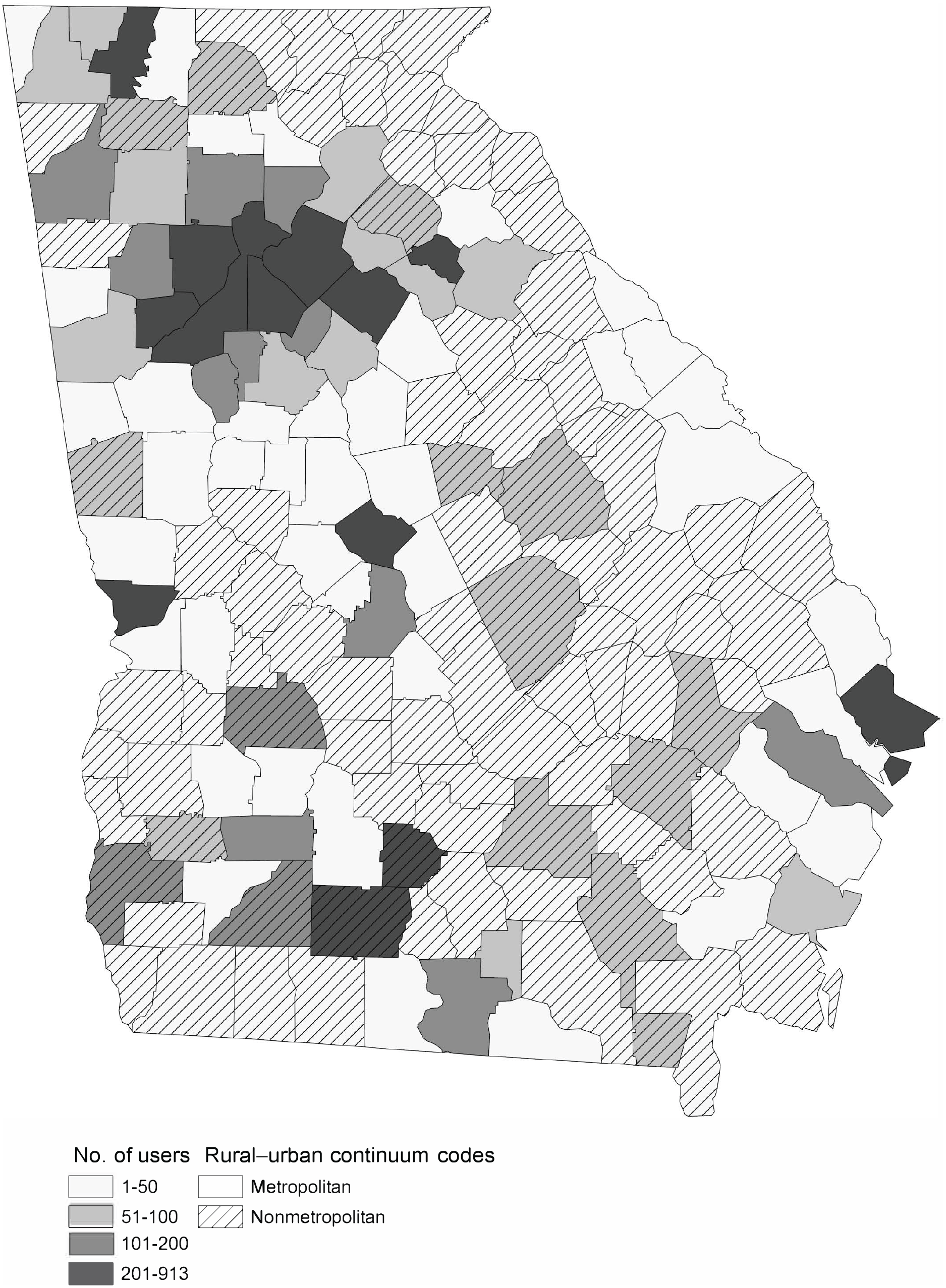
Counties in Georgia classified as metropolitan or nonmetropolitan according to rural–urban continuum codes 33 and by number of users (N = 6995) of Walk Georgia, a free, web-based physical activity tracking platform offered through the University of Georgia Cooperative Extension Service. 32 Data were collected from February 1, 2015, through June 21, 2017.
Group type
We further sought to describe the typology of user groups found among both metropolitan and nonmetropolitan–residing users. For this study, we classified user groups into 1 of 7 general types (city, community, county, faith-based, school, work, or other). We defined city and county groups as those associated with workplace wellness among local elected officials and municipal employees. We categorized local community groups as those affiliated with nongovernmental organizations, including senior centers and recreation facilities (eg, YMCA). Faith-based groups were organized through churches and other religious organizations. Some groups were organized through local K-12 schools (public and private) and included teachers, staff members, parents, and students. We further identified workplace groups affiliated with a place of employment, which often included workers, customers, and other related interested parties. Finally, we observed a small number of other groups, which we categorized into a miscellaneous grouping (eg, families, support groups, social clubs).
Activities logged
To better understand relevant PA activities for metropolitan and nonmetropolitan–residing groups, we tracked the top 10 activities in each group.
PA tracking
Users log several facets of PA, including type of activity, duration, distance traveled (if applicable), and perceived difficulty. Users choose a type of activity from more than 70 options, including aerobic exercise (eg, walking, running), sports (eg, tennis, basketball), and active leisure (eg, gardening, yardwork). Activities in the Walk Georgia platform aligned with the 2011 Compendium of Physical Activities. 34 We measured duration in minutes and distance (if appropriate) in miles. Finally, we measured perceived difficulty using a Likert-type item, anchored from 1 (easy) to 5 (difficult). The Walk Georgia platform awards points to users based on a mathematical formula, which is a function of duration, difficulty, and metabolic equivalence of a task, because not all activities in the system are distance based. Further details on point scoring can be found elsewhere. 32 For this analysis, we tracked total user miles and points, average miles and points, total number of activity episodes logged, and mean difficulty of logged activities.
Analyses
The total sample included 6695 unique users. Data on group type were missing for 41 users; the analysis of group type included 6654 users. To address our first research aim, we tabulated descriptive statistics for variables of interest, cross-tabulated for metropolitan and nonmetropolitan groups. We then used independent samples t tests, with a critical significance level of P < .05, to compare logged activity between metropolitan and nonmetropolitan–residing user groups.
Results
Consistent with state population statistics, the sample was predominantly metropolitan based (78.1%; 5229 of 6695). Of the 6654 participants with data on group type, most (66.0%, n = 4391) were associated with a group, which was true for both nonmetropolitan (57.0%; 833 of 1462) and metropolitan (68.5%; 3558 of 5192) users. Among metropolitan users, the 3 most common group types were workplaces, schools, and counties (Table 1). The same 3 categories were most common in nonmetropolitan areas; however, after workplaces, counties were the second most common group, followed by schools.
Types of physical activity groups found among a sample of 6654 users of Walk Georgia, February 1, 2015, through June 21, 2017 a
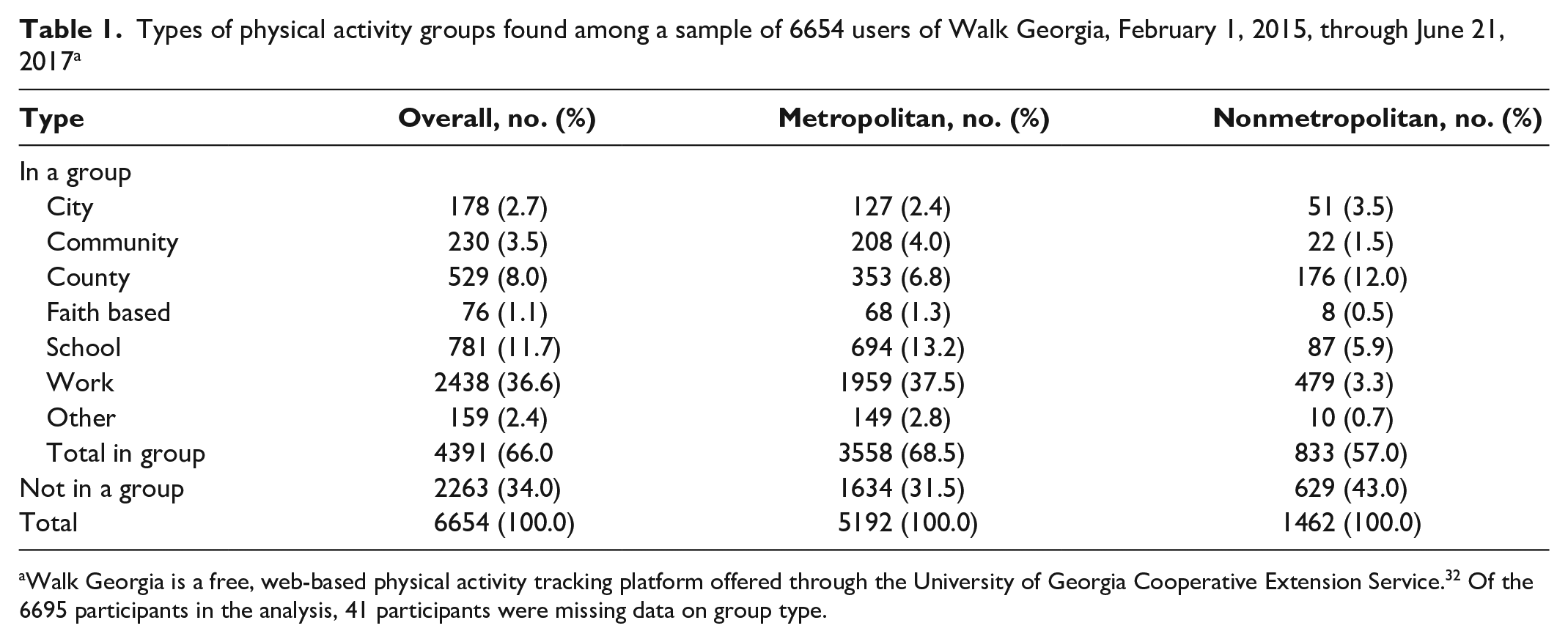
Walk Georgia is a free, web-based physical activity tracking platform offered through the University of Georgia Cooperative Extension Service. 32 Of the 6695 participants in the analysis, 41 participants were missing data on group type.
We found the highest concentration of users in and around the Atlanta metropolitan area (Figure). Walk Georgia participants resided in every county in the state, but counties with a high number of users generally corresponded with metropolitan areas. However, we found outliers, including 2 nonmetropolitan areas in the southern part of the state with high concentrations of users. Generally, platform use largely matched population density, with some exceptions.
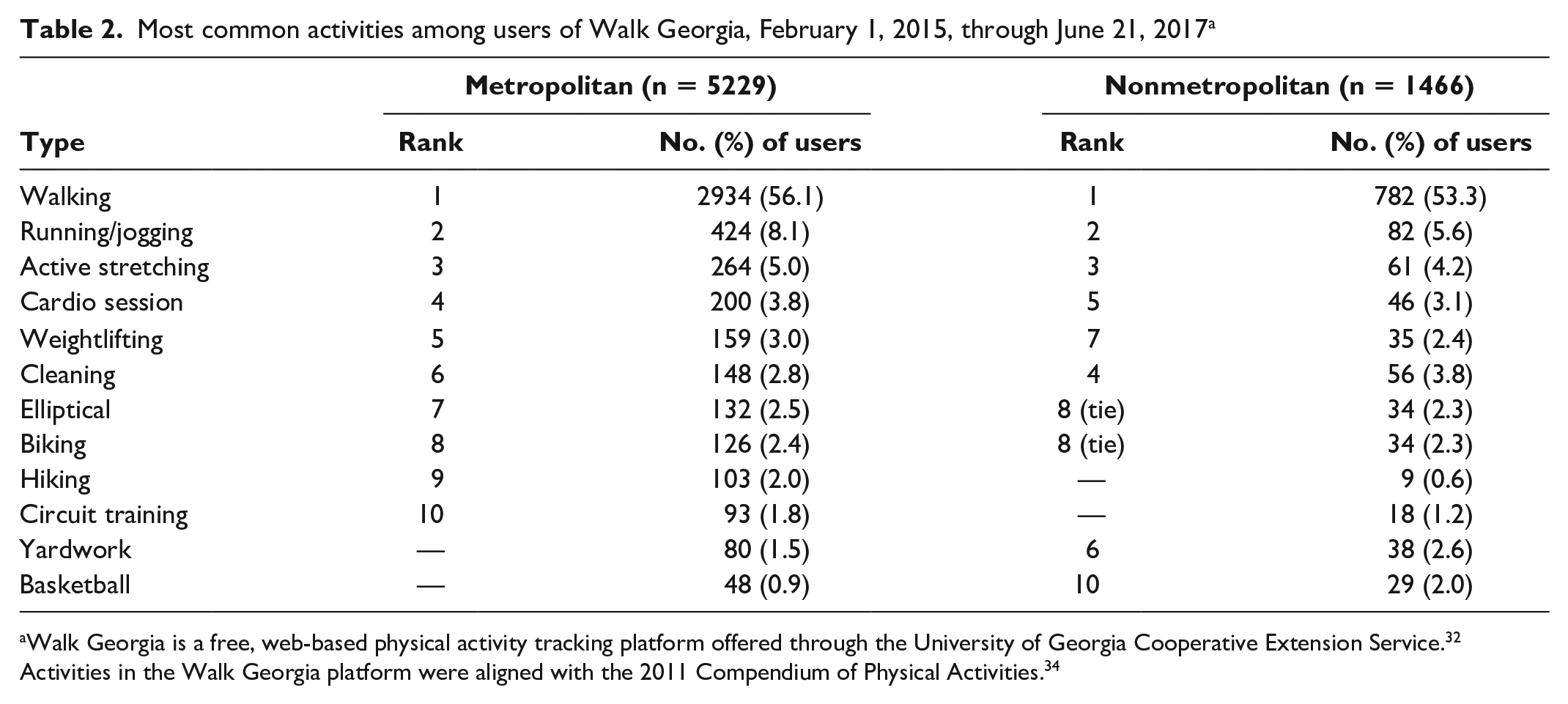
The 10 most common activities in each group reflected the wide variety of PA in which users engaged. Among both metropolitan and nonmetropolitan users, the 3 most common activities were walking, running/jogging, and active stretching. Metropolitan users indicated participating in a wider variety of activities than nonmetropolitan users, representative of the larger number of options available to them (Table 2).
Most common activities among users of Walk Georgia, February 1, 2015, through June 21, 2017 a
We observed significant differences between metropolitan users and nonmetropolitan users in total points earned, average difficulty of activity, and total number of activities logged. Metropolitan users earned more total points, logged a greater average difficulty of activity, and reported a greater number of total activities logged than nonmetropolitan users did (Table 3). However, we found no significant differences across the remaining 5 metrics (ie, total minutes, total miles, average minutes, average miles, and average points).
Descriptive statistics and comparison of metropolitan and nonmetropolitan users of Walk Georgia, February 1, 2015, through June 21, 2017 a
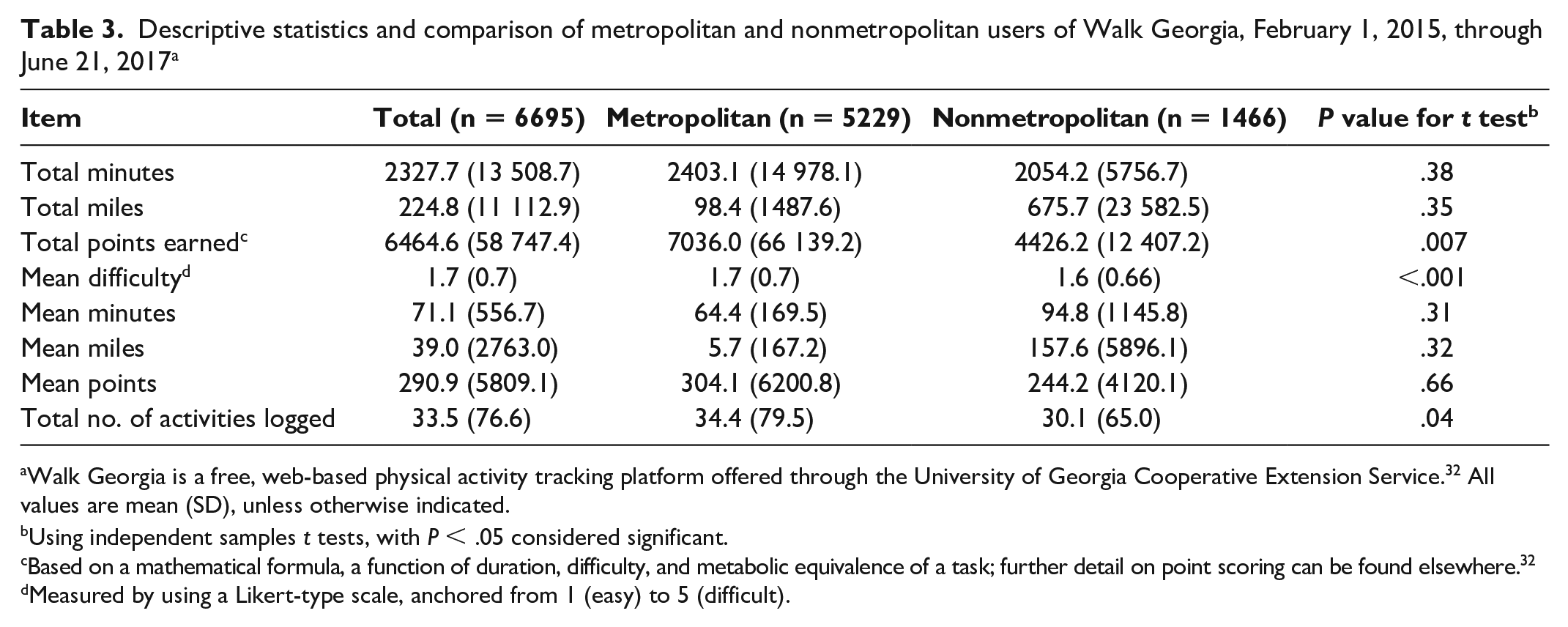
Walk Georgia is a free, web-based physical activity tracking platform offered through the University of Georgia Cooperative Extension Service. 32 All values are mean (SD), unless otherwise indicated.
Using independent samples t tests, with P < .05 considered significant.
Based on a mathematical formula, a function of duration, difficulty, and metabolic equivalence of a task; further detail on point scoring can be found elsewhere. 32
Measured by using a Likert-type scale, anchored from 1 (easy) to 5 (difficult).
Discussion
Our findings show the web-based Walk Georgia platform was adopted by both metropolitan and nonmetropolitan users, each at rates roughly equivalent to the metropolitan/nonmetropolitan classification of state population. Users self-reported a substantial amount of PA, with users averaging more than 33 logged individual instances of activity. Perhaps more importantly, users logged an average of 71.1 minutes of PA. Given that 28.5% of adults in the state are physically inactive (ie, engage in no leisure-time PA), these overall findings are important. 15 However, we were further interested in describing and understanding differences between metropolitan and nonmetropolitan users with respect to group affiliation, activity typology, and logged PA in the Walk Georgia platform.
Most users, in both metropolitan and nonmetropolitan areas, enrolled in the program as part of a group, which is consistent with earlier studies related to Walk Georgia. 32 Increased use aligned with targeted enrollment campaigns, largely fueled by minigrants to increase awareness, formalize recruitment strategies, identify champions, and increase the number of community events. 35 Efficacy of these recruitment efforts is encouraging, given that group affiliation is an important predictor of adherence to PA. 32 Generally, PA groups provide social support (eg, encouragement, sense of community), logistical support (eg, meeting location, equipment), and accountability, all of which contribute to long-term, regular participation.6,36,37 Regardless of county classification, the most common types of groups were fairly similar, with most users engaging through workplace, county, or school-based wellness programs. Because of their ubiquity, such settings represent opportunities for further expansion of the program, along with other municipal (eg, cities), nongovernmental recreation (eg, YMCA), and faith-based organizations. Using multipurpose spaces is important in nonmetropolitan areas, where commercial exercise facilities and other resources are particularly scarce. 38 Although most nonmetropolitan users engaged in the program through a group, the proportion was lower than that of metropolitan users. Given the importance of participant groups in sustained adherence, emphasis should be placed on further recruiting and promoting participant groups.
Users tracked a wide variety of activities through the platform. The overall most common activities were again relatively similar for metropolitan and nonmetropolitan users. Walking, running/jogging, and active stretching were the 3 most popular activities across both groups. Two important dynamics emerged in our review of the activities engaged in by each community type. First, we found a somewhat wider variety of activities reported by metropolitan residents (70 unique activities) than nonmetropolitan residents (60 unique activities). Second, few activities were more commonly reported by nonmetropolitan users than their metropolitan counterparts, including walking, cleaning, lawn care, and basketball.
Finally, we compared metropolitan and nonmetropolitan users’ logged activities to better understand differences in PA patterns between the 2 groups. Our findings suggest the Walk Georgia web-based platform may be a useful tool, among others, for public health professionals and organizations seeking to reduce PA disparities among nonmetropolitan residents. We observed no significant differences between metropolitan and nonmetropolitan users in total minutes of activity recorded, total miles in distance-based activities, average minutes of activity, average miles, or average points earned. However, we found significant differences in average total user points, level of difficulty of an activity, and number of activities logged, all of which are likely related. Total user points is a summative measure of the total PA caloric exertion by a user across the life of his or her program engagement. That is, the platform’s formula for awarding points is a function of total time engaged in activity and perceived difficulty. Given that nonmetropolitan users logged fewer incidences of activity, with a lower average intensity, it follows that their total points earned was also lower. As such, despite the flexibility and ease of access afforded by this entirely web-based platform, metropolitan users still outperformed nonmetropolitan users. When considered in conjunction with the lower likelihood of nonmetropolitan users to be part of a PA group and the fewer PA options available, this finding is not surprising. Unfortunately, offering greater choice and flexibility by increasing the number of activities available to nonmetropolitan populations (ie, building facilities) may be cost prohibitive and not immediately feasible. Therefore, we suggest future work begin by focusing effort on the formation of rural PA groups and recruitment of affiliated participants. Rural participation and promotion of the Walk Georgia program may also be encouraged by collaborations between local University of Georgia Cooperative Extension Service offices and community-based organization(s) participating in community wellness/weight-loss programs.
Limitations
Our study had several limitations. First, the Walk Georgia platform relies entirely on self-reported data, putting the onus on users to accurately track their PA. Recording data on the online platform requires internet access, which is less readily available in rural communities than in urban communities. 39 Therefore, it is possible certain users were inconsistent about recording or otherwise underreported their activity. However, users need internet access only when logging their activity, which may be preferable to other programs that require constant online tracking. Second, users may overreport PA as a form of positive response bias, particularly when results are shared with a peer group. Thus, future work should use objective measures of PA (eg, accelerometers) to explore such differences. 40 Third, although users create a custom program profile, the program does not track users’ demographic data. Therefore, we were unable to make comparisons across dimensions known to affect PA (eg, age, sex, gender, race, socioeconomic status).41,42 Fourth, given that the platform is elective, self-selection bias may have been introduced, whereby individuals who are already likely to engage in regular PA are also more likely to join. Finally, a concern among PA researchers is the undertheorizing of rural typologies. 21 Georgia has a wide variety of rural communities, evidenced by nonmetropolitan RUCCs ranging from 4 to 9. We used a binary measure of rurality with only metropolitan and nonmetropolitan categories. Further stratification within nonmetropolitan areas may allow for added insights, identifying variation within our broadly defined nonmetropolitan category.
Conclusion
This study examined 2 years of usage data to explore differences in activity level related to the rurality of users’ communities. Overall, users logged a substantial amount of PA. However, we observed differences between metropolitan and nonmetropolitan users. Although all users were more likely to enroll in the program as part of a group than as an individual, metropolitan users represented a higher overall percentage of users. Furthermore, limitations related to the digital divide may reduce the efficacy of web-based interventions in rural communities, given that nonmetropolitan users face barriers in accessing home broadband and have lower rates of smartphone ownership than urban users do.39,43 As such, internet accessibility is an important consideration for organizations seeking to implement similar web-based PA promotion programs. Furthermore, although the most common activities were similar between groups, metropolitan users reported a wider variety of activities than nonmetropolitan users. We observed no differences between metropolitan and nonmetropolitan users across many indicators tested (eg, average minutes of PA). However, this success was mixed: nonmetropolitan users logged fewer bouts of activity and reported a lower overall intensity of exercise. As such, nonmetropolitan users also earned fewer total activity points than their metropolitan counterparts. Future work should examine best practices for leveraging web-based tools to promote the formation of PA groups in nonmetropolitan areas.
Footnotes
Acknowledgements
The authors thank the numerous county extension faculty, staff members, schools, and worksites that launched localized Walk Georgia campaigns across the state. We thank the state Walk Georgia Task Force, who drove the implementation process, provided input, and helped develop strategies for successful partnerships, program promotion, incentives, and collaborations statewide. Special thanks is given to Deborah Murray, EdD, and Bryan McCullick, PhD, for their leadership during this evaluation. Thanks to Benjamin Whetstone, Matthew Downing, Gabe Benson, Isaac Kriser, and Aaron McCoy for their efforts to develop, maintain, and enhance the platform over time, and thanks to Supriya Venigalla and Bridget Thompson for their dedication to promoting and supporting this initiative in Georgia. We also thank The Coca-Cola Foundation for supporting Walk Georgia with the goal of helping Georgians become more physically active. Unfortunately, the tracking features of the Walk Georgia platform were retired in 2021. We are fortunate to have used this tool to learn about participant engagement with web-based data tracking platforms, which are becoming increasingly prevalent and available.
Declaration of Conflicting Interests
The authors declared no potential conflicts of interest with respect to the research, authorship, and/or publication of this article.
Funding
The authors received no financial support for the research, authorship, and/or publication of this article.
