




Abstract
Objectives:
Given the call for more interdisciplinary research in public health, the objectives of this study were to (1) examine the correlates of interdisciplinary dissertation completion and (2) identify secondary fields most common among interdisciplinary public health graduates.
Methods:
We analyzed pooled cross-sectional data from 11 120 doctoral graduates in the Survey of Earned Doctorates, 2003-2015. The primary outcome was interdisciplinary dissertation completion. Covariates included primary public health field, sociodemographic characteristics, and institutional attributes.
Results:
From 2003 to 2015, a total of 4005 of 11 120 (36.0%) doctoral graduates in public health reported interdisciplinary dissertations, with significant increases observed in recent years. Compared with general public health graduates, graduates of environmental health (odds ratio [OR] = 1.74; P < .001) and health services administration (OR = 1.38; P < .001) doctoral programs were significantly more likely to report completing interdisciplinary dissertation work, whereas graduates from biostatistics (OR = 0.51; P < .001) and epidemiology (OR = 0.76; P < .001) were less likely to do so. Completing an interdisciplinary dissertation was associated with being male, a non-US citizen, a graduate of a private institution, and a graduate of an institution with high but not the highest level of research activity. Many secondary dissertation fields reported by interdisciplinary graduates included other public health fields.
Conclusion:
Although interdisciplinary dissertation research among doctoral graduates in public health has increased in recent years, such work is bounded in certain fields of public health and certain types of graduates and institutions. Academic administrators and other stakeholders may use these results to inform greater interdisciplinary activity during doctoral training and to evaluate current and future collaborations across departments or schools.
Public health issues are rarely solved or fully understood from a single disciplinary perspective. Addressing the complex social, behavioral, and biological phenomena that influence health requires the application of perspectives from seemingly disparate disciplines. 1 -4 Calls for interdisciplinary work in public health are increasingly vocal, and the notion has evolved from a buzzword 5,6 to an explicit priority of agenda-setting bodies, such as the National Institutes of Health 7 and the National Science Foundation. 4,8 Although various definitions of interdisciplinary research exist, 8,9 it is broadly conceptualized as an approach that integrates “two or more disciplines or bodies of specialized knowledge to advance fundamental understanding or to solve problems whose solutions are beyond the scope of a single discipline or area of research practice.” 4 If future public health research is to take advantage of interdisciplinary potential, enthusiasm for such work must start with doctoral training—a critical developmental period 10 for emerging researchers. 10 -14
At the trainee level, graduates of life sciences doctoral programs (including public health) compared with other domains, such as information sciences, mathematics, and psychology, account for the largest proportion of interdisciplinary dissertations. 15 However, interdisciplinary work at an early career stage nevertheless may be perceived as professionally risky and not advantageous in securing funding and tenure-track positions. 16 -19 A critical review of the literature on interdisciplinary research across a range of disciplines 8 found that most empirical work in this area comes from a management sciences perspective. 20 -26 Within public health, much has been written broadly on the value of and best practices for transdisciplinary research collaborations. 27 -35 Such work supplies an understanding of process factors that facilitate or deter interdisciplinary collaborations but fails to identify trends in interdisciplinary activity within and among specific fields. Despite increasing interest in interdisciplinary approaches to public health research, 4,7,10 little is known about the extent to which the field’s doctoral trainees have been and are pursuing such work.
We examined trends in the reporting of interdisciplinary dissertations among public health doctoral graduates from the 5 core public health disciplines: biostatistics, epidemiology, environmental health sciences, health services administration, and the social and behavioral sciences. We were particularly interested in the proportion of graduates who engaged in interdisciplinary dissertation research, how this proportion changed over time, which secondary disciplines (eg, genetics, economics) were most common among those reporting interdisciplinary doctoral research in public health, and differences across the core public health disciplines. Last, we explored the individual and institutional attributes of graduates most likely to conduct interdisciplinary dissertations. Because completing an interdisciplinary dissertation may be an early career indicator of future interdisciplinary work, 10 we believe this study will be of interest to academic administrators and other public health stakeholders, including funding agencies, who are interested in interdisciplinary research to address public health problems.
Methods
We used pooled cross-sectional secondary survey data from 13 years (2003-2015) of the Survey of Earned Doctorates (SED) restricted-use files. The National Science Foundation has administered the SED annually since 1957 to people receiving research doctorates from accredited academic institutions in the United States. The SED collects data on sociodemographic characteristics, field(s) of study, and attributes of the degree-granting institution. The SED is administered each year at or around the time of graduation. Information about the methods used to collect SED data are available elsewhere. 36 The Indiana University–Purdue University Indianapolis Institutional Review Board determined this project not to be human subjects research and considered it exempt.
Respondents to the SED are asked to identify a primary field of study for their doctoral dissertation from a list of 317 predetermined field-of-study codes provided in the survey. Although the SED includes an open-ended item asking respondents to provide the name of the department supervising the respondent’s doctoral program, we used dissertation field of study as the primary measure of degree concentration, because institutions use various names to characterize similar departments. We focused on respondents who reported completion of a dissertation within 1 of the 5 core public health disciplines as conceptualized by the Council on Education for Public Health 37 : biostatistics, epidemiology, and environmental health sciences (each discrete field-of-study code provided as an answer choice by the SED); health services administration; and the social and behavioral sciences. In our analyses, health services administration included those listing SED discipline codes for either “health policy analysis” or “health systems and services administration.” The SED did not specify a code for social and behavioral sciences in public health until the addition of a “health behavior” code in 2014. However, the survey included a discrete code for “public health” (hereinafter referred to as general public health) for all years of the study period. After conducting sensitivity analyses to determine that health behavior largely reflects respondents who would likely have selected public health before the 2014 addition of the health behavior code, we merged the 2 codes to create a fifth category of public health doctoral recipients, “general public health.”
The primary outcome of interest for this analysis was the completion of interdisciplinary dissertation research. We used responses to the question, “If your dissertation was interdisciplinary, list the name and number of your secondary field.” Respondents chose from the same list of 317 predetermined field codes to characterize the discipline that supported their primary discipline in the context of their dissertation research.
Covariates of interest included primary public health field of study; respondent sociodemographic characteristics, including sex, age, race/ethnicity, marital status, and citizenship; and characteristics of the degree-granting institution, including the university’s public, private nonprofit, or private for-profit status and its designation on the Carnegie Classification of Institutes of Higher Education (CCIHE). 38 CCIHE classifies doctorate-granting universities into categories by level of research activity as measured by research expenditures, number of research doctorates awarded, number of research-focused faculty members, and other factors. Based on CCIHE classifications, we used the following categories to capture level of research activity among institutions represented in the survey: highest research activity (R1), higher research activity (R2), moderate research activity (R3), and other colleges and universities (other). CCIHE classifications are based on a research activity index that accounts for an institution’s research and development expenditures, number of research staff members, and number of doctoral conferrals.
Analysis
To analyze these data, we first generated standard descriptive statistics. Next, we used Pearson χ2 tests or Fisher exact tests to identify significant differences between the independent variables of interest and completion of interdisciplinary dissertation research. We also generated frequency counts for the secondary disciplines identified by respondents who completed interdisciplinary dissertation research to identify the most common supporting disciplines among public health doctoral recipients who completed interdisciplinary dissertation research. Next, we used logistic regression with interdisciplinary dissertation research (yes/no) as the dependent variable to identify characteristics of doctoral recipients and their degree-granting institutions associated with this outcome. We analyzed data using SPSS version 24.0, 39 and we considered P < .05 to be significant.
Results
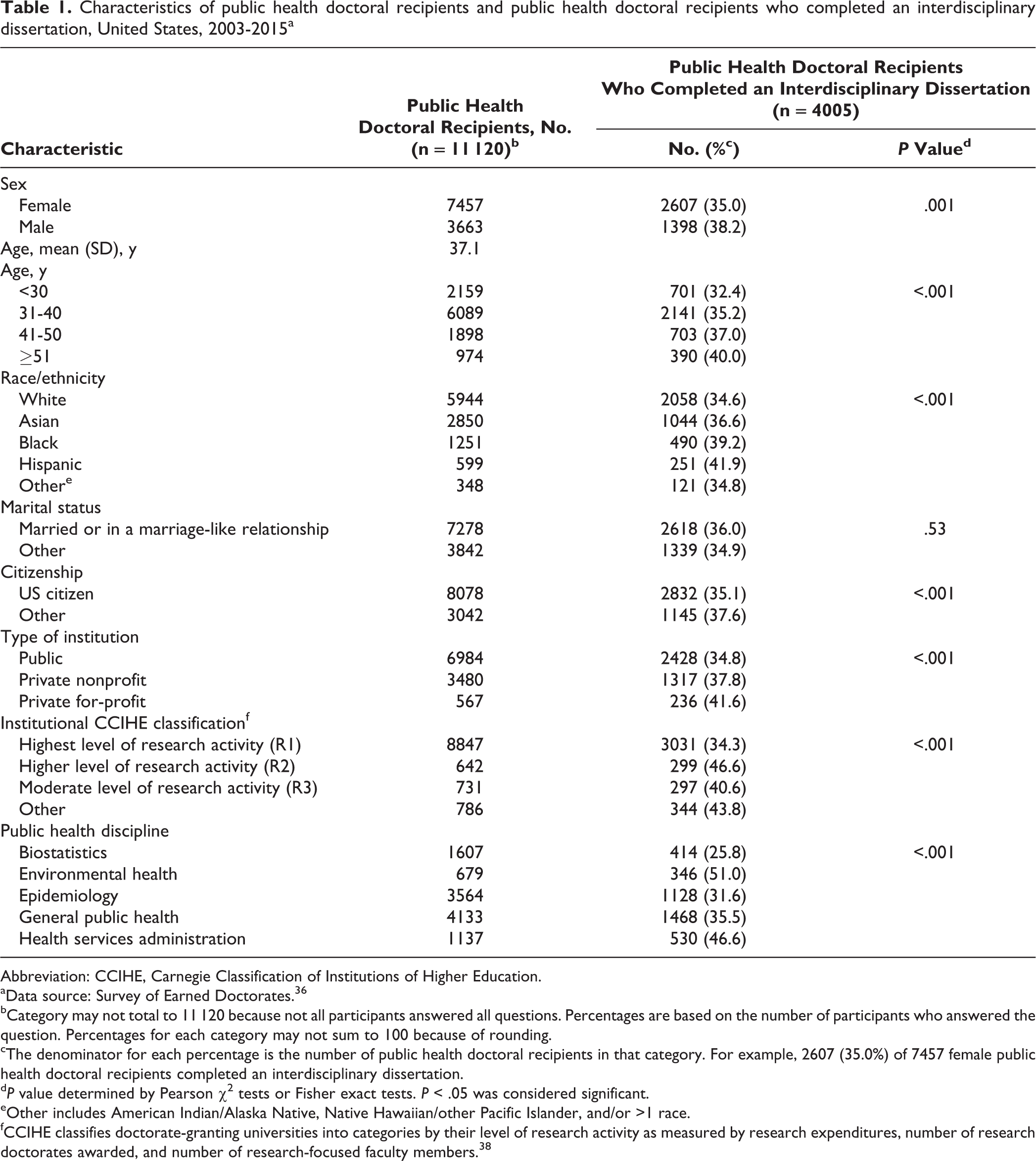
From 2003 to 2015, a total of 11 120 people received a doctoral degree in a public health discipline, of whom 4005 (36.0%) reported completion of interdisciplinary dissertation research. Most public health doctoral recipients received degrees in general public health (n = 4133, 37.2%) and epidemiology (n = 3564, 32.1%); fewer graduates received doctorates in biostatistics (n = 1607, 14.5%), health services administration (n = 1137, 10.2%), and environmental health (n = 679, 6.1%) (Table 1). The proportion of public health doctoral recipients completing interdisciplinary dissertation research was stable from 2003 until 2011 (mean, 0.32), after which it increased to a high of 0.43 before dropping slightly to 0.39 in 2015. However, when we excluded from the numerator public health doctoral recipients who reported another public health field as their secondary discipline, the proportion of interdisciplinary graduates was smaller and more constant over time (Figure 1).
Characteristics of public health doctoral recipients and public health doctoral recipients who completed an interdisciplinary dissertation, United States, 2003-2015a
Abbreviation: CCIHE, Carnegie Classification of Institutions of Higher Education.
aData source: Survey of Earned Doctorates. 36
bCategory may not total to 11 120 because not all participants answered all questions. Percentages are based on the number of participants who answered the question. Percentages for each category may not sum to 100 because of rounding.
cThe denominator for each percentage is the number of public health doctoral recipients in that category. For example, 2607 (35.0%) of 7457 female public health doctoral recipients completed an interdisciplinary dissertation.
d P value determined by Pearson χ2 tests or Fisher exact tests. P < .05 was considered significant.
eOther includes American Indian/Alaska Native, Native Hawaiian/other Pacific Islander, and/or >1 race.
fCCIHE classifies doctorate-granting universities into categories by their level of research activity as measured by research expenditures, number of research doctorates awarded, and number of research-focused faculty members. 38
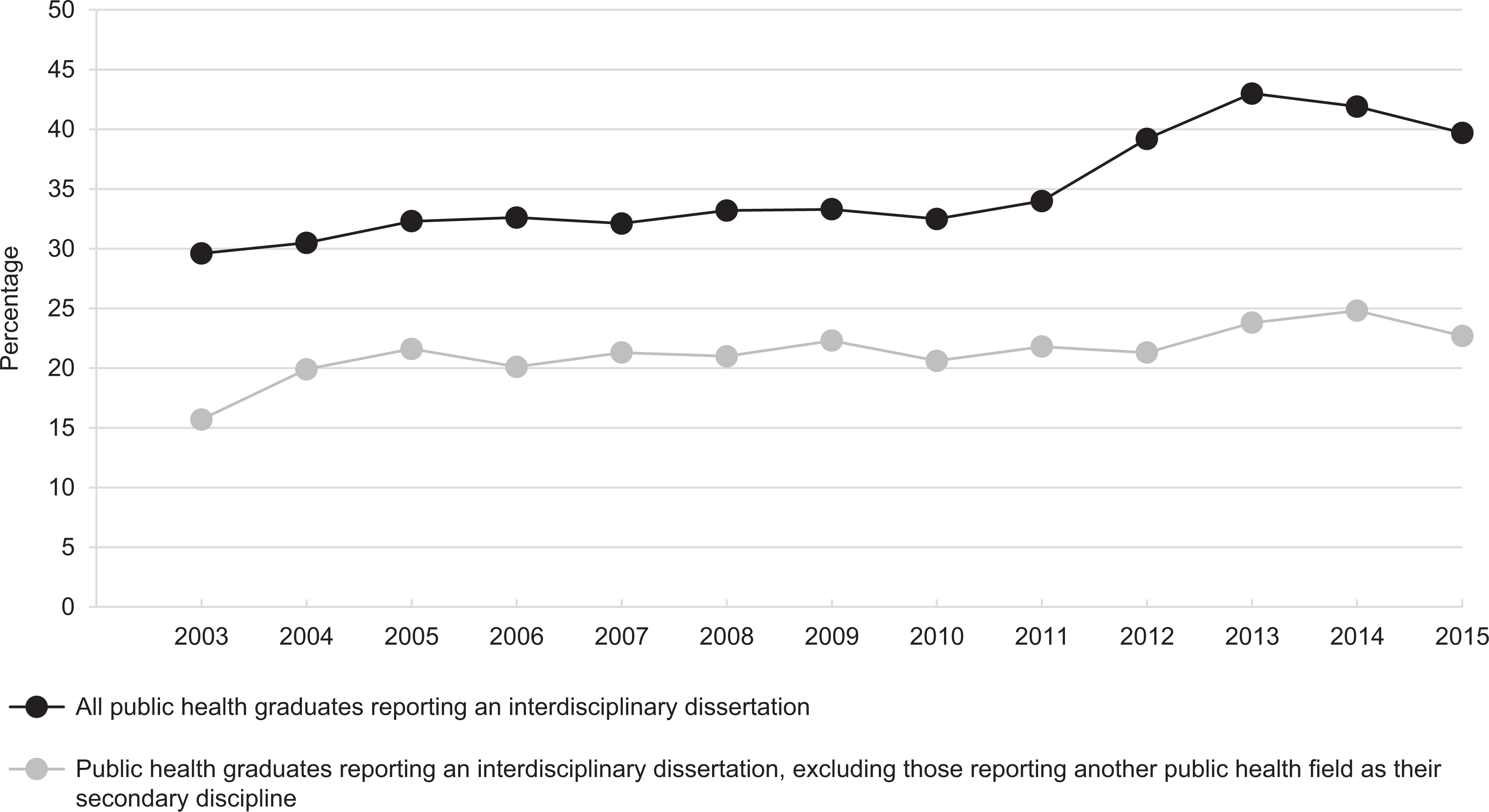
Trends in the proportion of all public health doctoral recipients (n = 11 120) completing interdisciplinary dissertation research, United States, 2003-2015. Data source: Survey of Earned Doctorates. 36
From 2003 to 2015, more men (1398 of 3663, 38.2%) than women (2607 of 7457, 35.0%) completed interdisciplinary dissertations (P = .001). Similarly, non-US citizens, those in racial/ethnic minority groups, and graduates of private, for-profit universities or R2 institutions were more likely than their counterparts to complete an interdisciplinary dissertation (all P < .001). In addition, fewer respondents aged <30 (701 of 2159, 32.5%) or aged 31-40 (2141 of 6089, 35.2%) reported completing an interdisciplinary dissertation compared with those aged 41-50 (703 of 1898, 37.0%) and those aged ≥51 (390 of 974, 40.0%; P < .001 for all) (Table 1).
With the exception of graduates in biostatistics, graduates from the other public health disciplines showed increases in the absolute number of interdisciplinary dissertations over time. For example, 28.2% of epidemiology graduates completed an interdisciplinary dissertation in 2003 compared with 33.0% of graduates in 2015. Graduates with degrees in health services administration (mean, 45.5%) and environmental health (mean, 49.3%), the disciplines with the fewest overall graduates, generally had the highest proportions of interdisciplinary dissertations in any given year (Figure 2).
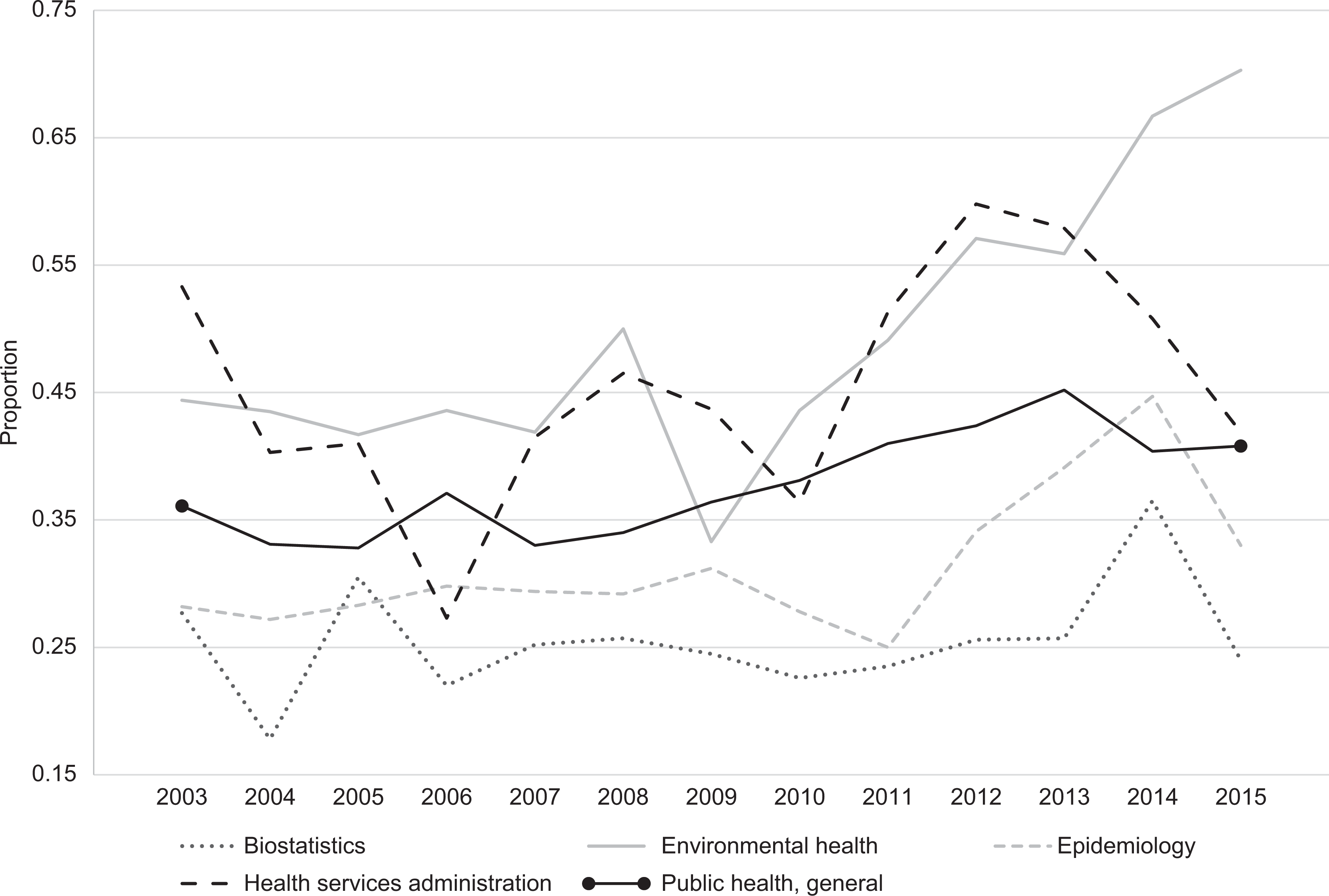
Trends over time in proportion of public health doctoral graduates (n = 11 120) completing interdisciplinary dissertation research, by public health discipline, United States, 2003-2015. Data source: Survey of Earned Doctorates. 36
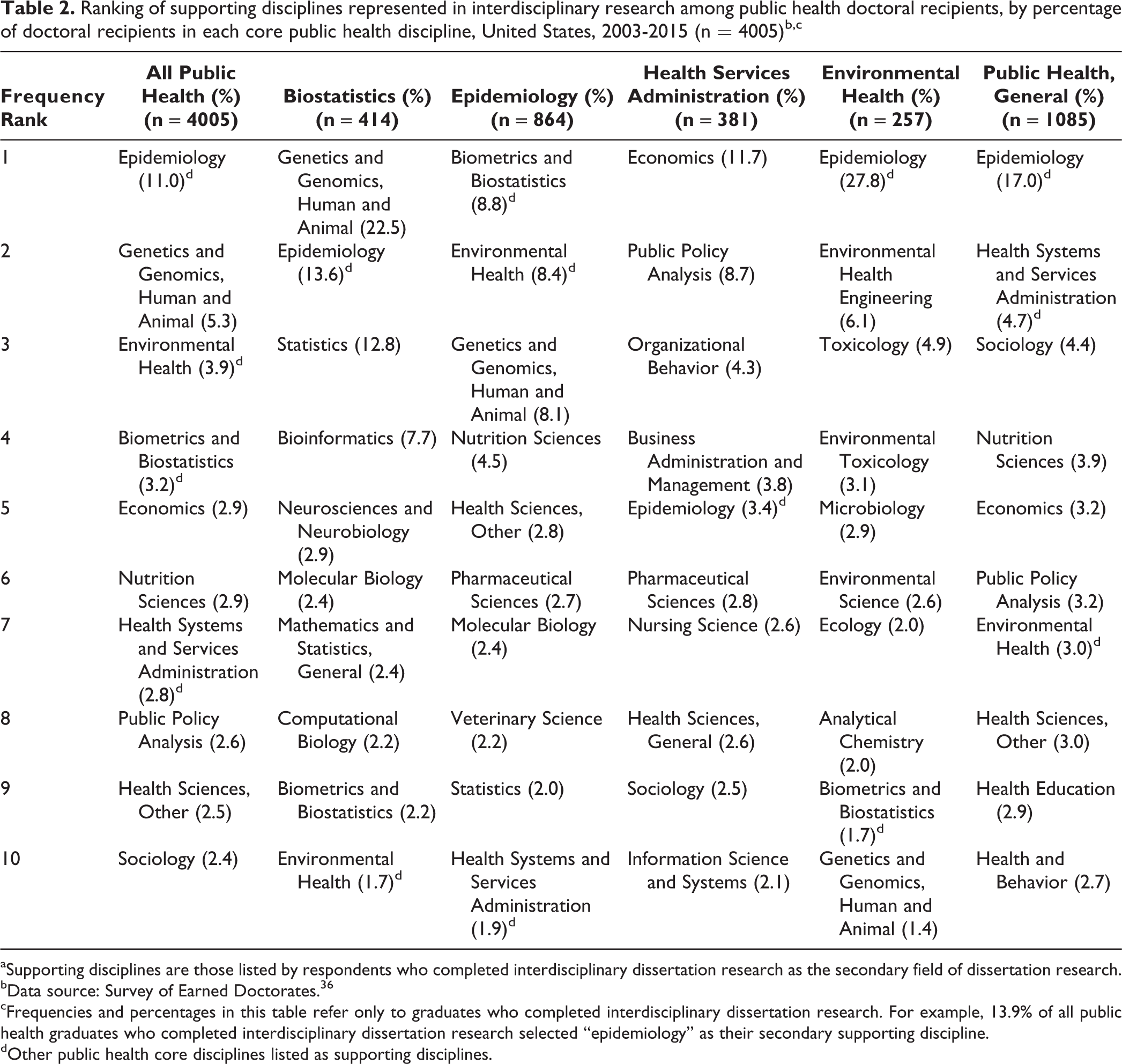
The most common supporting disciplines reported by doctoral recipients who completed interdisciplinary dissertations were other public health core disciplines (eg, an epidemiology doctoral recipient reporting a secondary field in biostatistics). Excluding other core public health disciplines, the most common supporting disciplines by overall frequency across all public health doctoral recipients were genetics and genomics (5.3% of all interdisciplinary dissertations, or 22.5% of biostatistics and 8.1% of epidemiology), economics (2.9% overall, or 11.7% of health services administration), and nutrition sciences (2.9% overall, 4.5% of epidemiology, and 3.9% of general public health) (Table 2).
Ranking of supporting disciplines represented in interdisciplinary research among public health doctoral recipients, by percentage of doctoral recipients in each core public health discipline, United States, 2003-2015 (n = 4005)b,c
aSupporting disciplines are those listed by respondents who completed interdisciplinary dissertation research as the secondary field of dissertation research.
bData source: Survey of Earned Doctorates. 36
cFrequencies and percentages in this table refer only to graduates who completed interdisciplinary dissertation research. For example, 13.9% of all public health graduates who completed interdisciplinary dissertation research selected “epidemiology” as their secondary supporting discipline.
dOther public health core disciplines listed as supporting disciplines.
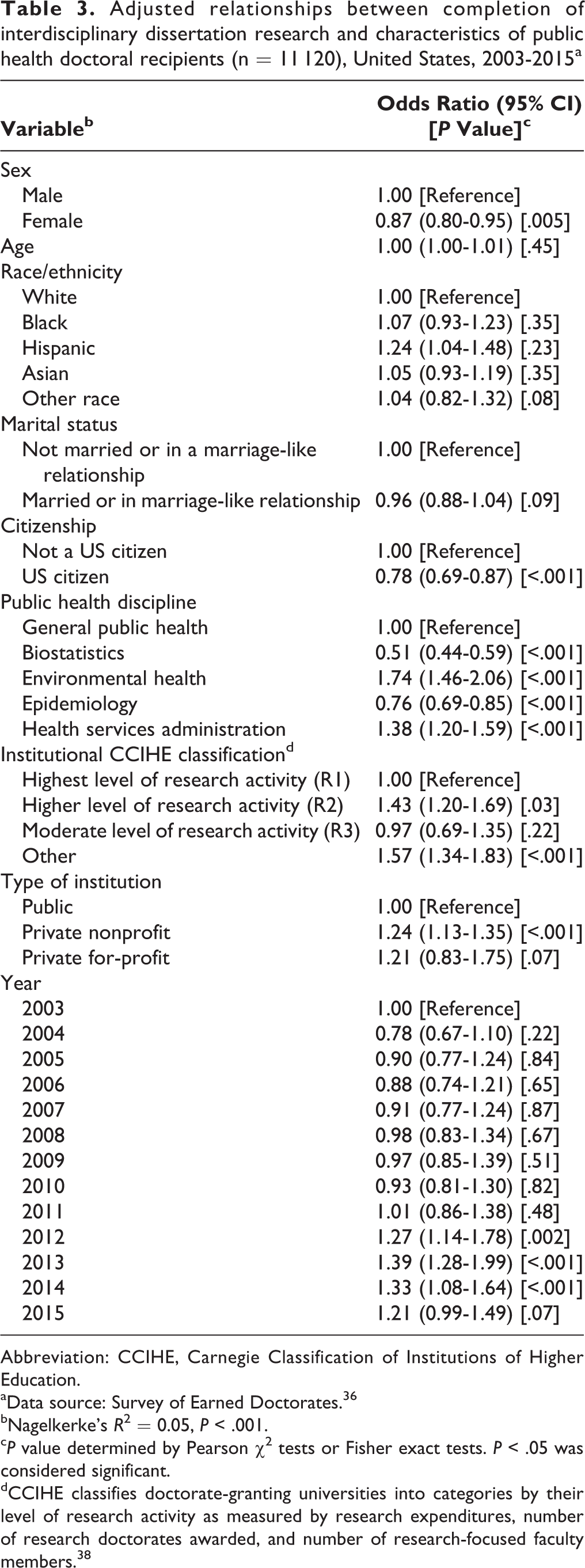
In regression analyses, we identified several characteristics associated with completion of an interdisciplinary dissertation (Table 3). Being female (odds ratio [OR] = 0.87; P = .003) and a US citizen (OR = 0.78; P < .001) were significantly negatively associated with completion of interdisciplinary dissertation research. Public health doctoral recipients from R2 institutions (OR = 1.43; P < .001) and other institutions not otherwise included in R1, R2, or R3 categories (OR = 1.57; P < .001) were more likely to complete interdisciplinary dissertation research than public health doctoral recipients from R1 institutions. In addition, doctoral graduates of private nonprofit universities (OR = 1.24; P < .001) were significantly more likely than graduates of public institutions to complete interdisciplinary dissertation research.
Adjusted relationships between completion of interdisciplinary dissertation research and characteristics of public health doctoral recipients (n = 11 120), United States, 2003-2015a
Abbreviation: CCIHE, Carnegie Classification of Institutions of Higher Education.
aData source: Survey of Earned Doctorates. 36
bNagelkerke’s R 2 = 0.05, P < .001.
c P value determined by Pearson χ2 tests or Fisher exact tests. P < .05 was considered significant.
dCCIHE classifies doctorate-granting universities into categories by their level of research activity as measured by research expenditures, number of research doctorates awarded, and number of research-focused faculty members. 38
Compared with graduates of doctoral programs in general public health, graduates of doctoral programs in environmental health (OR = 1.74; P < .001) and health services administration (OR = 1.38; P < .001) were significantly more likely to report an interdisciplinary dissertation, whereas recipients of doctoral degrees in biostatistics (OR = 0.51; P < .001) and epidemiology (OR = 0.76; P < .001) were significantly less likely to complete interdisciplinary dissertation research. Last, when examining trends over time using 2003 as the reference category, interdisciplinary dissertations were significantly more common in 2012 (OR = 1.27; P = .03), 2013 (OR = 1.39; P = .002), and 2014 (OR = 1.33; P = .009). Interaction terms for public health discipline by year were not significant.
Discussion
Our main finding was that a small but growing proportion of public health doctoral recipients reported completion of interdisciplinary dissertation research. Furthermore, many interdisciplinary dissertations involved 2 core public health disciplines. On the one hand, this modest proportion may undercut the potential for interdisciplinary research to address the increasingly complex public health issues facing society. 40 On the other hand, increasing interest in interdisciplinary dissertation research by doctoral students may have resulted from explicit calls (beginning in 2005) from key funding agencies (eg, National Institutes of Health, National Science Foundation) to promote and fund interdisciplinary research. 2,6 We found a significant increase in interdisciplinary dissertations in 2011, a lag in response possibly attributable to the time necessary to fully disseminate messages encouraging interdisciplinary work and the amount of time it takes to complete a doctorate. The extent to which the increasing trend of interdisciplinary dissertations among public health doctoral graduates continues will warrant further study, including its impact on the research trajectory of doctoral recipients later in their careers. Interestingly, the rate of graduates reporting interdisciplinary dissertations dropped slightly in 2015, the final year for which data were available. Future assessments should examine the extent to which the trends we identified persist.
Another key finding stems from the observation that graduates from health services administration and environmental health—the 2 smallest public health core disciplines in terms of overall doctoral trainees during this period—were most likely to report interdisciplinary dissertation research. As a result, the upward trend seen in recent years in these data may not reflect growing interdisciplinary research throughout all public health fields. In addition, compared with doctoral trainees in the fields of health services administration or environmental health, doctoral trainees in the fields of biostatistics and/or epidemiology may be less likely to seek out interdisciplinary research because of native differences among public health disciplines. For example, research in inherently crosscutting disciplines such as health services administration and environmental health may place greater emphasis on interactions between health and social factors than on other public health disciplines, driving more interdisciplinary research activity in these areas.
We also found that many doctoral recipients listed another public health discipline as the secondary field of their dissertation research (eg, 13.6% of biostatistics graduates who completed interdisciplinary dissertation research reported epidemiology as their secondary dissertation field). Although this level of collaboration among public health disciplines is likely to yield valuable scientific insights, the overall gains of interdisciplinary work may be attenuated because public health disciplines share many common theories, methods, and worldviews, resulting in a reduced influx of scientific variability into the field. Interdisciplinary work in public health may diminish some of the potential benefits of interdisciplinary training, because public health disciplines are more likely to be similar to each other than to disciplines outside of public health. In line with the National Institutes of Health and other funding bodies in the field, 4,7 we believe that many public health problems can be better solved through further diversification of scientific thought from a broader number of supporting disciplines. For example, the current understanding of complex population health concerns such as obesity has been enhanced by perspectives from seemingly distal fields such as demography and endocrinology. 41
More research needs to focus on how to attract and retain collaborations with additional disciplines that are not traditionally part of public health. In addition, interdisciplinary work within some core public health disciplines (eg, epidemiology and biostatistics) is commonly enriched by secondary fields in biomedical disciplines (eg, neuroscience or genetics), whereas others (eg, health services administration) tend to draw more heavily from the social sciences (eg, economics and sociology). Although it was beyond the scope of our study to examine which type of interdisciplinary interactions would be most effective in addressing public health phenomena, it would be an important avenue to pursue for future research stemming from our work. In the area of global health, for example, tactics such as increased research collaboration and dual-degree programs have been proposed to bring together disparate areas of inquiry, such as international affairs, law, and health sciences, for the common goal of improving health. 42 Related research in the field of neuroscience has studied implementation issues around interdisciplinary programs. 43 Given the efforts of these and other disciplines to cultivate interdisciplinary work, public health could explore similar strategies.
Last, we identified several individual and organizational correlates of interdisciplinary dissertation research. We found that male doctoral graduates were more likely than female doctoral graduates to report completing interdisciplinary dissertation research. This finding diverges from previous data indicating that women were slightly more likely than men to seek out interdisciplinary work in the sciences 44 ; however, the present analysis controlled for primary field of study and, therefore, the notion that male students may be more likely to pursue less interdisciplinary fields in the first place. Proponents of reducing the sex differential in science, technology, engineering, and math fields suggest interdisciplinary or team science as a way to attract more women to these fields, but they caution that pursuing an interdisciplinary path may ultimately be deleterious for female graduates seeking tenure-track positions. 45 Further study is warranted to better understand differences in the pursuit of interdisciplinary research in public health by sex.
Organizationally, public universities and those classified in the highest research category by CCIHE were less likely than their counterparts to graduate trainees who completed an interdisciplinary dissertation research. Although we found no consistent pattern between completion of interdisciplinary dissertation research and research activity of the degree-granting institution, our finding that institutions with the highest research output were less likely to graduate students who completed interdisciplinary dissertation work may reflect the fact that promotion and tenure cultures at the most research-intensive institutions tend to value disciplinary achievements (rather than interdisciplinary collaborations). 12,25 As a result, faculty at such organizations are likely to inculcate doctoral students into the same culture. Notably, public institutions and those classified as having the highest research productivity by CCIHE graduate the most doctoral recipients in public health. An additional explanation for this finding may be a function of differences in departmental capacities among institutions in each CCIHE category. At more research-intensive institutions, individual departments may have sufficient faculty breadth and depth to support the in-house production of dissertations requiring expertise from multiple research domains, whereas departments in less research-intensive schools may have to work across departmental boundaries to support students conducting interdisciplinary work. Regardless, if external stakeholders, including funding agencies, have an interest in furthering interdisciplinary work, a better understanding of how certain university cultures and structural factors affect doctoral training in public health is warranted.
Limitations
This study had several limitations. First, the analysis was limited to a single indicator of interdisciplinary work, and the SED’s question about interdisciplinary dissertation completion may be subject to interpretation. Perceptions at the individual and institutional levels of what constitutes interdisciplinary may have influenced individuals’ responses to this question. Nevertheless, Millar 44 found that although doctoral recipients furnished various definitions of interdisciplinary in qualitative interviews, the survey item from the SED was a reasonable indicator of interdisciplinary research because most responses to the item were consistent with individuals’ descriptions of their own research as interdisciplinary or not. A second limitation was that the data were cross-sectional, which prevented us from observing activity after graduation. Therefore, we based our measure of interdisciplinary training on the outcome (ie, production of an interdisciplinary dissertation) rather than the process or experience of doctoral training. Further insights in this area may be generated by using longitudinal data on public health doctoral recipients after graduation, as well as qualitative explorations with doctoral recipients and other relevant stakeholders. Finally, these data may have been limited by the exclusion of other areas in public health, such as global health, which has a strong tradition in interdisciplinary work. 42
Conclusions
This study can help academic administrators and other public health stakeholders, including funding agencies, who are interested in interdisciplinary research to address public health problems. For example, administrators could use these findings to inform greater interdisciplinary activity during doctoral training and to evaluate current and future collaborations across departments or schools. Given indications that recent growth in interdisciplinary work has not been distributed equally across all areas of public health and has largely been driven by dissertations completed in public health secondary fields, doctoral trainees may benefit from greater exposure to novel areas of study within and outside public health, in the interest of receiving training that incorporates the complexities inherent in many public health issues. Further research is needed to determine the link between completion of interdisciplinary research and its continuity into later stages of one’s career, as well as barriers or facilitators to the continuity of interdisciplinary research that these graduates encounter after graduation.
Footnotes
Declaration of Conflicting Interests
The authors declared no potential conflicts of interest with respect to the research, authorship, and/or publication of this article.
Funding
The authors received no financial support for the research, authorship, and/or publication of this article.