




Abstract
Objective:
Increases in the frequency and length of military deployments have raised concerns about the well-being of military families. We examined the relationship between a military parent’s deployment and (1) adolescent academic and social–behavioral maladjustment and (2) parental psychological well-being.
Methods:
We collected data from April 2013 through January 2014 from 1021 families of enlisted US Army personnel with children aged 12 or 13 during the Military Teenagers’ Environments, Exercise, and Nutrition Study. Through online parent surveys, we collected data on deployment, adolescent academic and social–behavioral maladjustment, and parental psychological well-being. We estimated adjusted logistic and linear regression models for adolescents (all, boys, girls), military parents (all, fathers, mothers), and civilian parents.
Results:
Compared with no or short deployments, long deployments (>180 days in the past 3 years) were associated with significantly higher odds of decreases in adolescent academic performance (adjusted odds ratio [AOR] = 1.54), independence (AOR = 2.04), and being responsible (AOR = 1.95). These associations were also significant for boys but not for girls. Among parents, long deployments were associated with significantly higher odds of being depressed (AOR = 2.58), even when controlling for adolescent maladjustment (AOR = 2.54). These associations did not differ significantly between military and civilian parents and were significant for military fathers but not military mothers. Recent deployment (in the past 12 months) was not associated with either adolescent or parent outcomes.
Conclusion:
Long deployments are associated with adolescents’ academic and social–behavioral maladjustments and diminished parental well-being, especially among boys and military fathers.
Increases in the frequency and length of military deployments in the past decade have magnified concerns that the effects of deployment might extend beyond military personnel to their spouses and children. 1 –3 Nearly 2 million children are in military families, and many of them have experienced at least 1 parental deployment. The US Army accounts for most deployments. Nearly three-fourths of active duty US Army soldiers deployed to Afghanistan or Iraq from September 2001 to December 2011. Among those deployed, nearly two-thirds were deployed for >1 year. 4
Deployments can influence children in positive and negative ways. 3 Deployments may increase children’s resilience, responsibility, and maturity, but they may also negatively affect children by creating the absence of a primary caregiver. Adolescents may be especially vulnerable to the negative consequences of deployment 5 because adolescence involves many physical, cognitive, and emotional changes, including puberty, learning to think abstractly, forming a distinct identity, and becoming more independent and autonomous. 6 Additionally, adolescents are old enough to understand the dangers associated with deployments and may be exposed to opinions about war from the news media and peers. 3
The empirical literature on the relationship of deployment with adolescent social–behavioral adjustment is ambiguous. For example, one meta-analysis concluded that parental deployment had a negligible association with maladjustment among children <12 years of age. 2 However, another study reported that many adolescents experienced psychological distress and school problems related to deployment. 7 Large state surveys of civilian and military populations have found that parental deployment is associated with a spectrum of adverse adolescent outcomes, such as worse mental health among boys in Washington State 8 and higher likelihood of substance use among young people in California. 9 Smaller studies have connected deployment to increased blood pressure, heart rate, self-perceived stress, 10 and adverse dietary behaviors (the latter among girls). 11 Studies based on qualitative methods (eg, focus groups) have suggested negative social and behavioral consequences. For example, school staff members reported difficulties with social and emotional functioning among middle and high school students because of parental deployment. 12 Sex differences in these associations might be more pronounced among adolescents, although evidence is mixed on whether girls or boys are more affected. 7,8,13,14 The inconsistencies may be due, in part, to reliance on small or geographically limited samples (eg, single-state surveys, students at a single high school, camp attendees), reliance on relatively long recall, inconsistent definitions of deployment, and differences between younger and older adolescents. Given the inconsistent findings, additional empirical studies are needed, especially studies with larger and more geographically dispersed samples.
Moreover, previous research has mostly focused on whether parental responses to deployment mediate the relationship between deployment and child and adolescent maladjustment, 15 but research is also needed on whether child and adolescent maladjustments during parental deployment influence how parents cope with deployment. 5,16
The objective of this study was to use a large and geographically dispersed sample of adolescents in military families to study the relationship between deployments—especially the longer deployments that have become increasingly common—and adolescent academic and social–behavioral maladjustment as well as parental psychological well-being. Our hypothesis was that deployments were likely to be associated with adolescent social–behavioral maladjustments and diminished parental psychological well-being. We also examined whether these relationships varied by adolescent sex and parent’s military status and sex.
Methods
Data Source
We analyzed data collected during the Military Teenagers’ Environments, Exercise, and Nutrition Study (M-TEENS). 17 The study surveyed military families located primarily at 12 US Army installations in all 4 US Census regions: West (Joint Base Lewis-McChord and Fort Carson), Northeast (Fort Drum), South (Fort Benning, Fort Bliss, Fort Bragg, Fort Campbell, Fort Hood, Fort Polk, Fort Sill, and Fort Stewart), and Midwest (Fort Riley). M-TEENS was primarily designed to investigate the dietary and activity factors that influence adolescents’ health and well-being. However, this study focused on parental deployments, the psychological well-being of military parents, and the academic, social, and behavioral maladjustments of adolescents.
Participants
To compensate for the frequent relocation of military families, errors in personnel records, and historically low survey response rates among military populations, we contacted a large number (8545) of US Army enlisted personnel. These personnel had been located at the 12 US Army installations for at least 18 months and had at least 1 child aged 12 or 13 as of March 31, 2013. We obtained contact information from the US Army’s personnel records in the Defense Manpower Data Center and sent recruitment letters to service members’ military email addresses and via US mail to their home addresses between March and December 2013.
Families were eligible to participate according to 3 conditions: (1) the service member did not intend to leave the military in the coming year, (2) the 12- or 13-year-old child resided with the enlisted parent at least half-time, and (3) the 12- or 13-year-old child was enrolled in a public or US Department of Defense Education Activity school.
Of the 8545 families sent recruiting materials, 2106 (25%) completed the eligibility screener. Of those screened, 1794 (85%) were eligible, and of those eligible, 1188 (66%) consented to participate. One parent from each of 1021 families completed an online survey from April 2013 through January 2014.
Outcomes
Adolescent Academic and Social–Behavioral Maladjustment During Most Recent Deployment
Parents reported changes in the adolescent’s behavior during the most recent deployment by answering a question from the 2008 Defense Manpower Data Center’s Survey of Active-Duty Spouses 18 : “Did your child experience any of the following behavior changes during a parent’s or guardian’s most recent deployment?” The adolescent adjustment outcomes included 5 positive outcomes (academic performance, independence, being responsible, closeness to family members, and closeness to friends) and 4 negative outcomes (problem behavior at school, problem behavior at home, fear/anxiety, and anger about parent’s military requirements). The 5 response options were as follows: increased a lot, increased a little, no change, decreased a little, and decreased a lot.
We then recoded these 9 adolescent adjustment outcomes into dichotomous outcomes that indicated maladjustments. For the positive behaviors, we coded whether the outcome had decreased a little or a lot as 1 (and 0 otherwise), and for the negative behaviors we coded whether the outcome had increased a little or a lot as 1 (and 0 otherwise). As a result, odds ratios >1 indicated higher odds of a maladjustment (ie, decrease in positive behavior or increase in negative behavior).
Parental Psychological Well-being
Parents completed a 12-item version of the Center for Epidemiologic Studies Depression Scale. 19 This version had been fielded in the Early Childhood Longitudinal Study cohorts to assess the psychological well-being of parents. 20,21 The survey asked parents, “For each statement below, please indicate how often in the past week you felt or behaved this way.” The items asked, for example, if the parent felt bothered by things that he or she is not usually bothered by, felt depressed, or felt sad. The 5 response options were as follows: don’t know (no code), never (coded as 0), some of the time (coded as 1), a moderate amount of time (coded as 2), and most of the time (coded as 3). We aggregated responses only for parents who responded to all 12 items to create a total score, which could range from 0 to 36. Higher scores suggested diminished psychological well-being. We defined severe depression as a total score ≥15, according to guidelines suggested by the Early Childhood Longitudinal Study 20 ; this cut point has been used in previous studies. 21 We then recoded the total score into a dichotomous outcome for parental psychological well-being: depressed (score ≥15) or not depressed (score ≤14).
Deployment
We constructed measures of the length and recency of deployment using questions from the parent survey. First, the survey asked parents, “How many days have you (other parent/guardian) been deployed in the last 3 years?” The 5 response options were as follows: none (not deployed in the last 3 years), deployed <30 days, deployed 31-90 days, deployed 91-180 days, or deployed >180 days. If both parents were in the military (<5% of the sample), we used the response for the parent with the longer deployment. We recoded the responses into a dichotomous outcome for length of deployment: >180 days or otherwise. Second, the survey asked, “When was this child’s most recent experience with a parent/guardian’s deployment?” There were 4 response options: in the past 12 months, 1-2 years ago, >2 years ago, and never. We recoded these responses into a dichotomous outcome on recency of deployment: recent deployment (within the last 12 months) or otherwise.
Statistical Analyses
We used a logistic regression model to estimate the association between each of the 9 parent-reported adolescent maladjustment outcomes during the most recent deployment and both the length of deployment and the recency of deployment, adjusting for adolescent and family covariates. These models were estimated for all adolescents as well as separately by adolescent sex and responding parent’s military status. We used a linear regression model to estimate the association between parental psychological scale score and the length and recency of deployment, adjusting for adolescent and family covariates. In addition, we used a logistic regression model to estimate the association between the dichotomous indicator for depression in parents and the length and recency of deployment, after adjusting for adolescent and family covariates. These associations were estimated for all parents and separately for civilian parents, military parents, military fathers, and military mothers. Finally, we used linear and logistic regression models to estimate the relationship between parental psychological well-being and (1) the length and recency of deployment and (2) adolescent and family covariates, while controlling for all adolescent behavior maladjustments. These models allowed us to assess whether adolescent maladjustments during parental deployment affected the psychological well-being of parents and whether maladjustments mediated the relationship between long deployments and parental psychological well-being.
Our models controlled for the following adolescent and family covariates: adolescent race/ethnicity and sex, responding parent’s sex and education, other parent’s education, military parent’s rank, household income, and the number of children and adults in the household. These covariates were chosen because of their theoretical and established empirical links with adolescent and parental well-being. 3,13,17 Covariates in the parent outcome regressions were the same as those in the adolescent regressions but with the addition of an indicator for whether the family’s current residence was on the installation (on post) or off post, to account for the potential support that parents may receive by living among peers. The on-post variable was less relevant for adolescent outcomes because they were retrospective and because adolescent peers are more likely to be school based rather than neighborhood based.
All analyses were conducted with Stata version 12.2. 22 We considered P ≤ .05 to be significant. The study was approved by the institutional review boards at RAND, the University of Southern California, and the US Army’s Human Research Protection Office.
Results
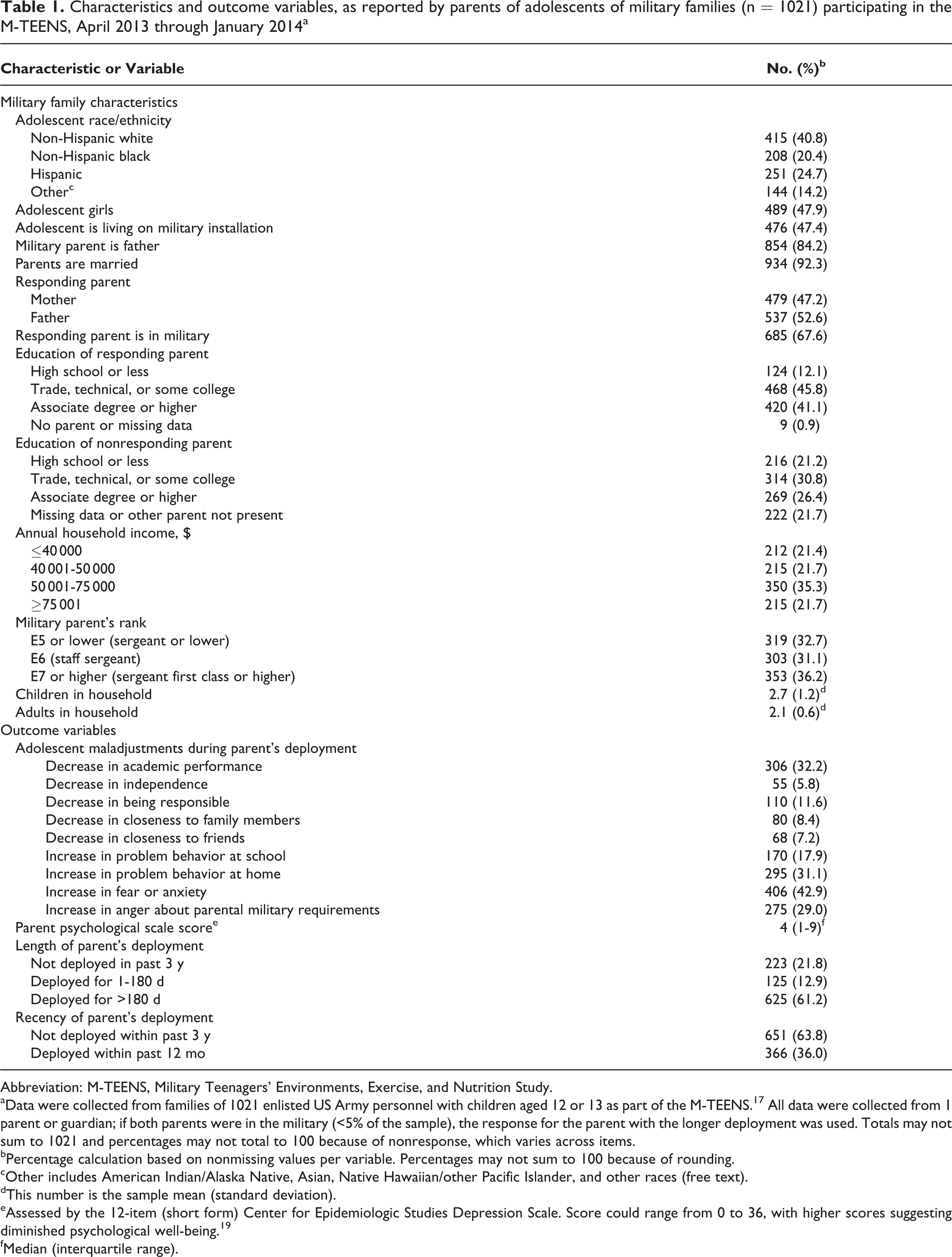
Of the 1021 adolescents in our sample, 489 (47.9%) were girls, and 476 (47.4%) lived on post. Nearly all (934, 92.3%) adolescents lived with married parents, and the average household consisted of 2.1 adults and 2.7 children (Table 1). More than half of responding parents were the military parent (685, 67.6%) and the father (537, 52.6%).
Characteristics and outcome variables, as reported by parents of adolescents of military families (n = 1021) participating in the M-TEENS, April 2013 through January 2014a
Abbreviation: M-TEENS, Military Teenagers’ Environments, Exercise, and Nutrition Study.
aData were collected from families of 1021 enlisted US Army personnel with children aged 12 or 13 as part of the M-TEENS. 17 All data were collected from 1 parent or guardian; if both parents were in the military (<5% of the sample), the response for the parent with the longer deployment was used. Totals may not sum to 1021 and percentages may not total to 100 because of nonresponse, which varies across items.
bPercentage calculation based on nonmissing values per variable. Percentages may not sum to 100 because of rounding.
cOther includes American Indian/Alaska Native, Asian, Native Hawaiian/other Pacific Islander, and other races (free text).
dThis number is the sample mean (standard deviation).
eAssessed by the 12-item (short form) Center for Epidemiologic Studies Depression Scale. Score could range from 0 to 36, with higher scores suggesting diminished psychological well-being. 19
fMedian (interquartile range).
The incidence of adolescent maladjustments during deployment varied from 55 (5.8%) adolescents with a decrease in independence to 406 (42.9%) with an increase in fear or anxiety (Table 1). The pattern was similar for military and civilian parent respondents for 7 of 9 measures. The median Center for Epidemiologic Studies Depression Scale score was 4 (interquartile range, 1-9); 103 (10.9%) parents had a total score ≥15. For length and recency of deployment, 625 (64.2%) families had experienced a long deployment, and 366 (36.0%) had experienced a recent deployment.
Adolescent Maladjustments
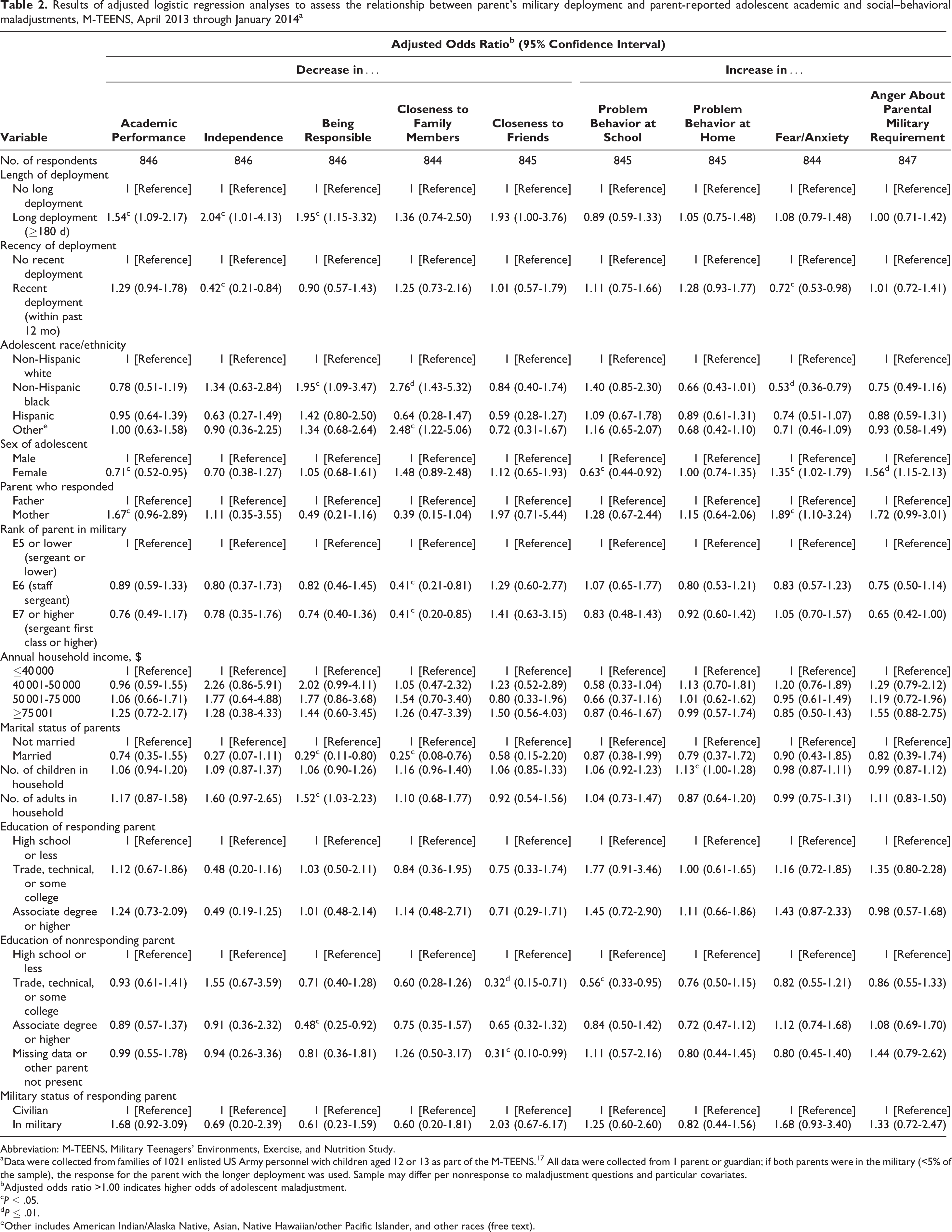
Compared with no deployment or a short deployment, a long deployment was associated with significantly higher odds of a decrease in adolescent academic performance (adjusted odds ratio [AOR] = 1.54; 95% confidence interval [CI], 1.09-2.17), independence (AOR = 2.04; 95% CI, 1.01-4.13), and being responsible (AOR = 1.95; 95% CI, 1.15-3.32). Compared with no deployment in the past 12 months, a recent deployment was associated with significantly lower odds of a decrease in adolescent independence (AOR = 0.42; 95% CI, 0.21-0.84) and fear or anxiety (AOR = 0.72; 95% CI, 0.53-0.98) but not with higher odds of other maladjustments (Table 2).
Results of adjusted logistic regression analyses to assess the relationship between parent’s military deployment and parent-reported adolescent academic and social–behavioral maladjustments, M-TEENS, April 2013 through January 2014a
Abbreviation: M-TEENS, Military Teenagers’ Environments, Exercise, and Nutrition Study.
aData were collected from families of 1021 enlisted US Army personnel with children aged 12 or 13 as part of the M-TEENS. 17 All data were collected from 1 parent or guardian; if both parents were in the military (<5% of the sample), the response for the parent with the longer deployment was used. Sample may differ per nonresponse to maladjustment questions and particular covariates.
bAdjusted odds ratio >1.00 indicates higher odds of adolescent maladjustment.
c P ≤ .05.
d P ≤ .01.
eOther includes American Indian/Alaska Native, Asian, Native Hawaiian/other Pacific Islander, and other races (free text).
Some covariates were also significantly associated with adolescent maladjustments. Compared with non-Hispanic white adolescents, non-Hispanic black adolescents had significantly lower odds of increased fear or anxiety (AOR = 0.53; 95% CI, 0.36-0.79) but significantly higher odds of a decrease in being responsible (AOR = 1.95; 95% CI, 1.09-3.47) and closeness to friends (AOR = 2.76; 95% CI, 1.43-5.32). Compared with boys, girls had significantly lower odds of a decrease in academic performance (AOR = 0.71; 95% CI, 0.52-0.95) and behavior problems at school (AOR = 0.63; 95% CI, 0.44-0.92) but significantly higher odds of increased fear or anxiety (AOR = 1.35; 95% CI, 1.02-1.79) and increased anger about parental military requirements (AOR = 1.56; 95% CI, 1.15-2.13). Compared with adolescents whose parents were not married, adolescents with married parents had significantly lower odds of a decrease in being responsible (AOR = 0.29; 95% CI, 0.11-0.80) and closeness to family members (AOR = 0.25; 95% CI, 0.08-0.76; Table 2).
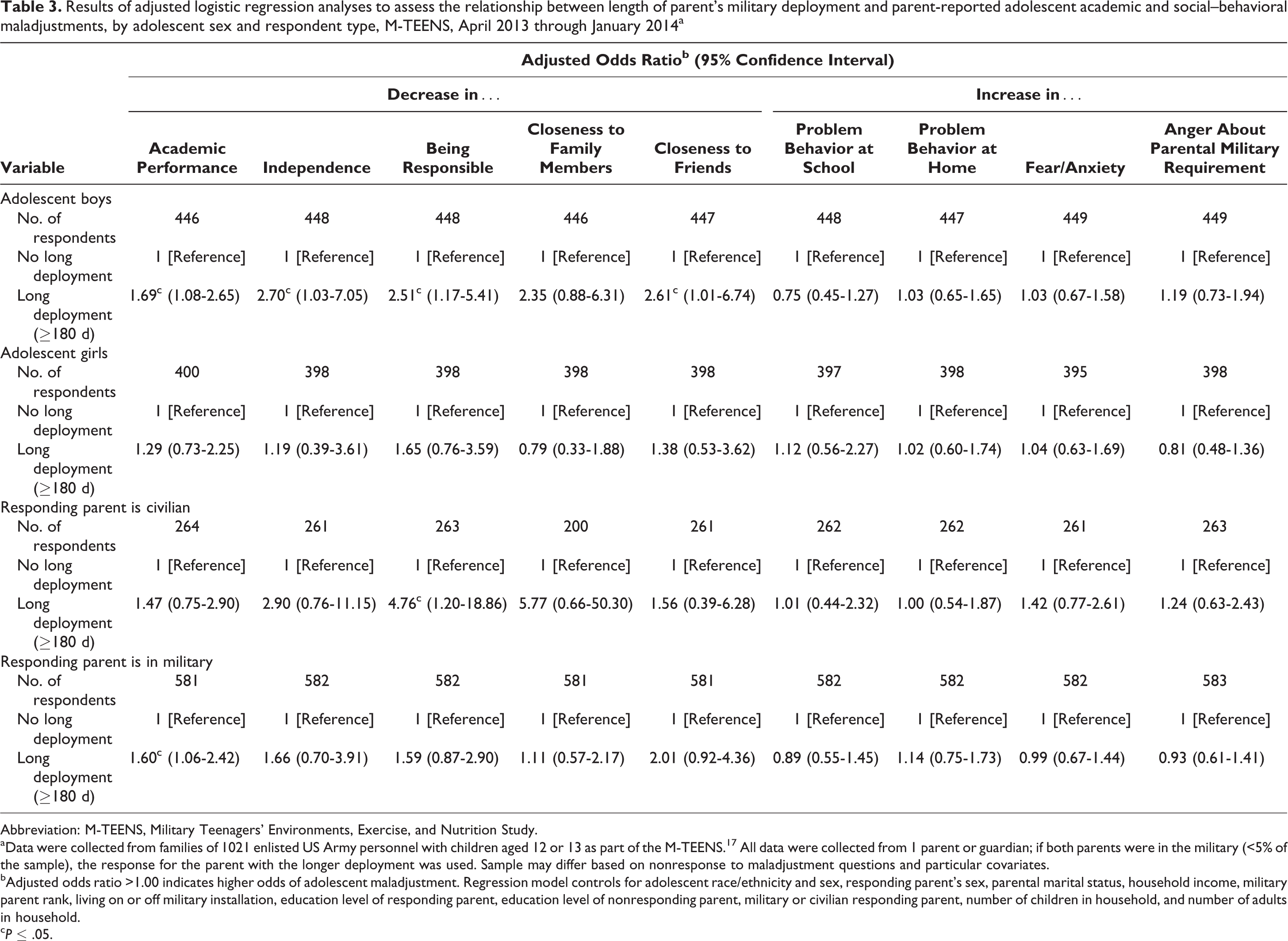
Adolescent maladjustment results were also stratified by adolescent sex and parental military status. Compared with boys who did not experience a long deployment, boys who experienced a long deployment were significantly more likely to show a decrease in academic performance (AOR = 1.69; 95% CI, 1.08-2.65), independence (AOR = 2.70; 95% CI, 1.03-7.05), being responsible (AOR = 2.51; 95% CI, 1.17-5.41), and closeness to friends (AOR = 2.61; 95% CI, 1.01-6.74). However, long deployment was not significantly associated with adolescent maladjustment among girls. In addition, compared with no long deployment, long deployment was associated with higher odds of a decrease in being responsible when the responding parent was a civilian (AOR = 4.76; 95% CI, 1.20-18.86) and with higher odds of a decrease in academic performance when the responding parent was in the military (AOR = 1.60; 95% CI, 1.06-2.42; Table 3).
Results of adjusted logistic regression analyses to assess the relationship between length of parent’s military deployment and parent-reported adolescent academic and social–behavioral maladjustments, by adolescent sex and respondent type, M-TEENS, April 2013 through January 2014a
Abbreviation: M-TEENS, Military Teenagers’ Environments, Exercise, and Nutrition Study.
aData were collected from families of 1021 enlisted US Army personnel with children aged 12 or 13 as part of the M-TEENS. 17 All data were collected from 1 parent or guardian; if both parents were in the military (<5% of the sample), the response for the parent with the longer deployment was used. Sample may differ based on nonresponse to maladjustment questions and particular covariates.
bAdjusted odds ratio >1.00 indicates higher odds of adolescent maladjustment. Regression model controls for adolescent race/ethnicity and sex, responding parent’s sex, parental marital status, household income, military parent rank, living on or off military installation, education level of responding parent, education level of nonresponding parent, military or civilian responding parent, number of children in household, and number of adults in household.
c P ≤ .05.
Parental Psychological Well-being
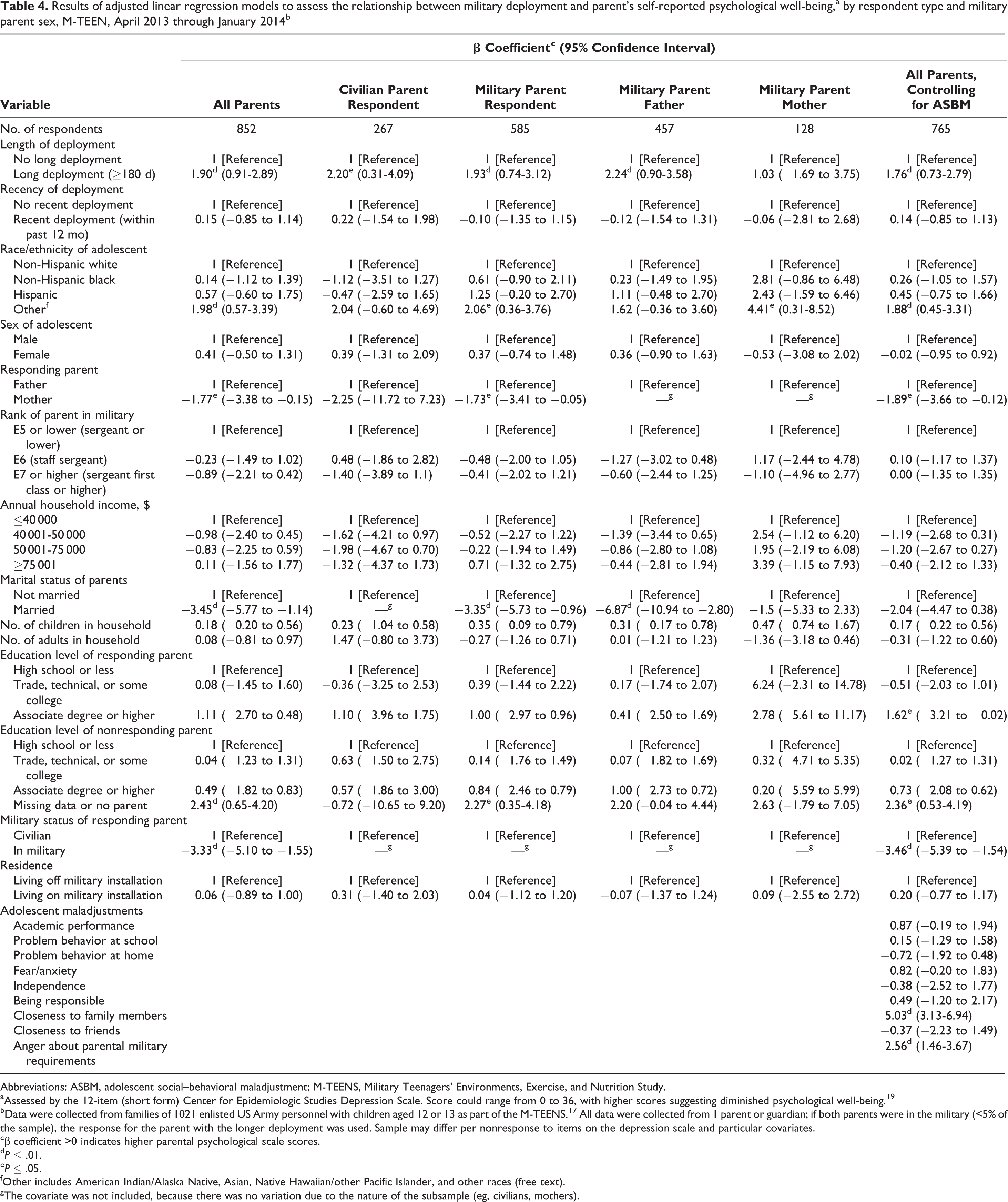
Parents in families that experienced a long deployment reported higher psychological scale scores (β = 1.90; 95% CI, 0.91-2.89) when compared with parents in families that did not experience a long deployment, indicating diminished psychological well-being. The relationship between parental psychological scores and long deployment was similar whether the responding parent was in the military (AOR = 1.93; 95% CI, 0.74-3.12) or not (AOR = 2.20; 95% CI, 0.31-4.09). This association was significant for military fathers (AOR = 2.24; 95% CI, 0.90-3.58) but not for military mothers. Finally, the association between parental psychological scores and long deployment remained significant even after controlling for adolescent maladjustment (AOR = 1.76; 95% CI, 0.73-2.79; Table 4).
Results of adjusted linear regression models to assess the relationship between military deployment and parent’s self-reported psychological well-being,a by respondent type and military parent sex, M-TEEN, April 2013 through January 2014b
Abbreviations: ASBM, adolescent social–behavioral maladjustment; M-TEENS, Military Teenagers’ Environments, Exercise, and Nutrition Study.
aAssessed by the 12-item (short form) Center for Epidemiologic Studies Depression Scale. Score could range from 0 to 36, with higher scores suggesting diminished psychological well-being. 19
bData were collected from families of 1021 enlisted US Army personnel with children aged 12 or 13 as part of the M-TEENS. 17 All data were collected from 1 parent or guardian; if both parents were in the military (<5% of the sample), the response for the parent with the longer deployment was used. Sample may differ per nonresponse to items on the depression scale and particular covariates.
cβ coefficient >0 indicates higher parental psychological scale scores.
d P ≤ .01.
e P ≤ .05.
fOther includes American Indian/Alaska Native, Asian, Native Hawaiian/other Pacific Islander, and other races (free text).
gThe covariate was not included, because there was no variation due to the nature of the subsample (eg, civilians, mothers).
In contrast with results for long deployment, parents who experienced a recent deployment did not have significantly higher psychological scale scores than parents who had not experienced a recent deployment. Mothers (β = −1.77; 95% CI, −3.38 to −0.15), married parents (β = −3.45; 95% CI, −5.77 to −1.14), and military parents (β = −3.33; 95% CI, −5.10 to −1.55) had lower psychological scores, indicating better psychological well-being, relative to fathers, unmarried parents, and civilian parents, respectively (Table 4).
When we analyzed psychological scale scores as dichotomous outcomes, long deployment was associated with significantly higher odds of being depressed for all parents (AOR = 2.58; 95% CI, 1.45-4.61) compared with no long deployment. This relationship persisted even when the models controlled for adolescent behavioral outcomes. The finding was similar regardless of whether the civilian (AOR = 2.90; 95% CI, 1.03-8.15) or military parent (AOR = 2.57; 95% CI, 1.25-5.29) responded to the survey. The association was also significant for military fathers (AOR = 2.89; 95% CI, 1.28-6.54) but not for military mothers (Table 5).
Results of adjusted logistic regression analyses to assess the relationship between parent-reported depressiona and military deployment, by respondent type and military parent sex, M-TEENS, April 2013 through January 2014b
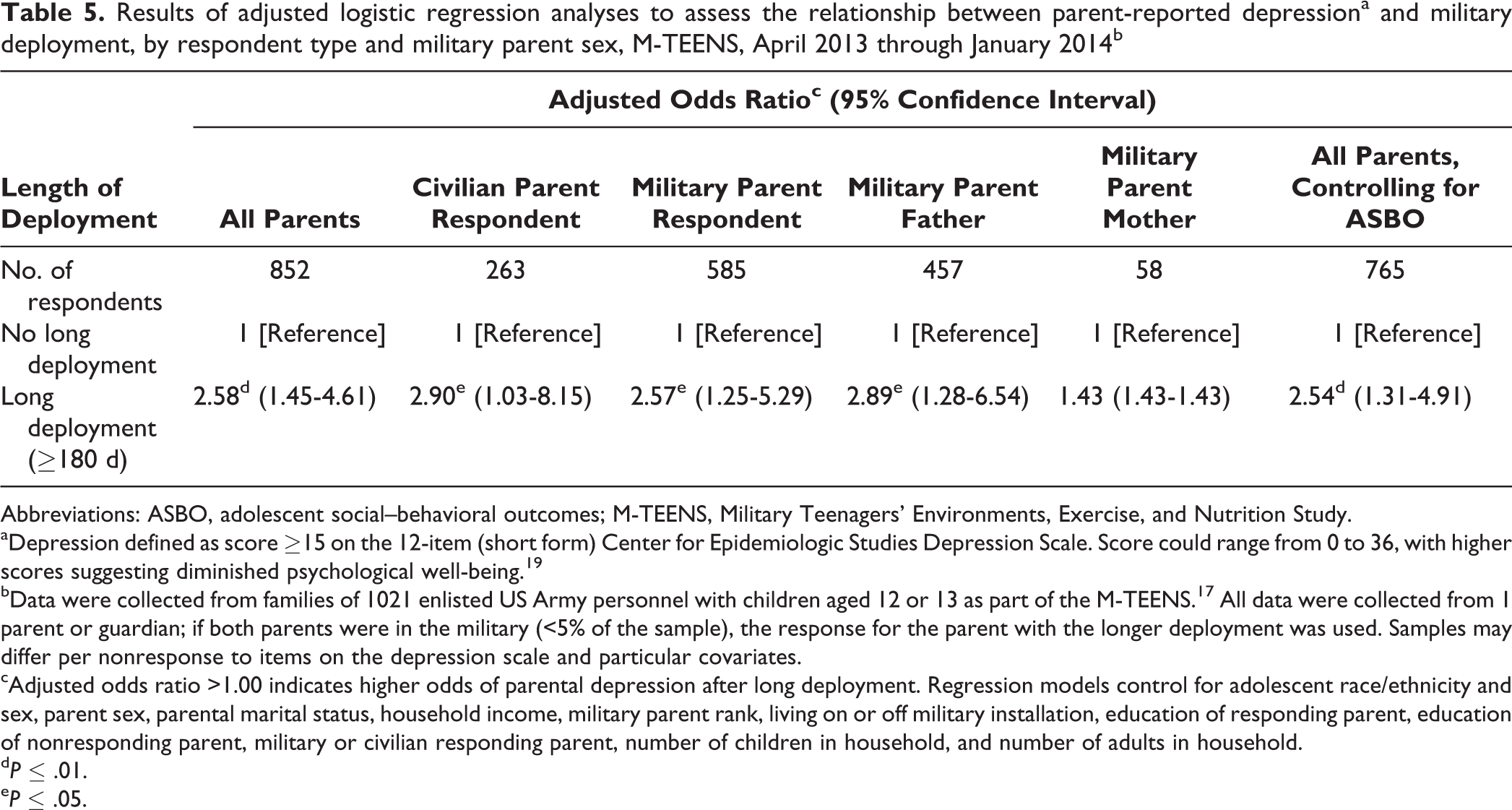
Abbreviations: ASBO, adolescent social–behavioral outcomes; M-TEENS, Military Teenagers’ Environments, Exercise, and Nutrition Study.
aDepression defined as score ≥15 on the 12-item (short form) Center for Epidemiologic Studies Depression Scale. Score could range from 0 to 36, with higher scores suggesting diminished psychological well-being. 19
bData were collected from families of 1021 enlisted US Army personnel with children aged 12 or 13 as part of the M-TEENS. 17 All data were collected from 1 parent or guardian; if both parents were in the military (<5% of the sample), the response for the parent with the longer deployment was used. Samples may differ per nonresponse to items on the depression scale and particular covariates.
cAdjusted odds ratio >1.00 indicates higher odds of parental depression after long deployment. Regression models control for adolescent race/ethnicity and sex, parent sex, parental marital status, household income, military parent rank, living on or off military installation, education of responding parent, education of nonresponding parent, military or civilian responding parent, number of children in household, and number of adults in household.
d P ≤ .01.
e P ≤ .05.
Discussion
Our results add to the growing evidence that deployments have significant and substantial implications for parents and adolescents in military families. In particular, consistent with recent evidence, 23 –25 we found that long deployments can increase the risk for negative adolescent and parental outcomes relative to short deployment or no deployment, but recent deployments do not seem to increase the risk for these negative outcomes.
We also found that long deployments were associated with maladjustments among boys but less so among girls. This finding is consistent with previous research suggesting that deployment length has differential effects on boys and girls, although no consistent pattern has emerged. 7,8,13,14 Given that nearly 70% of the deployed parents in our sample were fathers, the absence of a male figure may have been more keenly felt by boys during adolescence, 26 although more research would be required to determine if this absence is the primary explanation for these differences.
Our finding that parents in families that experienced long deployments were more likely to be depressed, regardless of whether the responding parent was civilian or military, is consistent with other studies indicating that psychological challenges for both parents may be exacerbated by the increased length and frequency of deployments. 1,7 However, although this finding was true for fathers serving in the military, it was not true for mothers serving in the military. These findings and those for adolescent boys and girls add to the growing body of literature suggesting that long deployments may be harder psychologically for military fathers and adolescent boys than for military mothers and adolescent girls.
Our study also sheds light on how adolescents’ adjustment during deployment influences the well-being of parents. Previous studies have examined how military parental coping with deployment affects adolescent children, 15 and other studies have suggested that the emotional and behavioral health of family members back home may affect the psychological functioning of military personnel during and after deployment. 16 Although the role of children’s well-being in influencing parental well-being has been analyzed in other fields (eg, autism), 27 it is largely unexplored in military families. Our study adds to this literature. We found that adolescent maladjustment during deployment was associated with diminished parental psychological well-being, but it did not fully explain why long deployment diminished parental psychological well-being. In fact, long deployment was independently associated with, and potentially responsible for, diminished parental psychological well-being.
Limitations
Our study had several limitations. First, although our sample size was larger than other studies, the initial response rate (25%) was low, possibly leading to some bias in our results. Second, the sample population consisted of families of active duty US Army enlisted personnel, so the results and conclusions may not be generalizable to the families of all US military service members. Third, our data did not indicate whether deployment was ongoing, involved combat, or involved a single episode or multiple episodes, all of which could have influenced our results. Fourth, some deployments occurred up to 3 years before the survey, which may have caused some recall issues, but 3 years was not nearly as long as the time frames used in related studies. 8,9
Fifth, the adolescent outcomes were reported by parents rather than the adolescents themselves, which may have introduced some subjective bias. Previous reports suggested that parental perceptions of adolescent behavior tend to be more optimistic than adolescent perceptions of their own behavior. 28 However, parents may have been more likely to report poor adolescent behavior when they themselves were experiencing more psychological distress, which could have resulted in bias in the other direction. Sixth, allowing actively deployed military parents who were away from home to respond to the survey may have reduced the accuracy of responses on adolescent behavior. However, deployed military personnel typically have weekly contact with their children. 3 More important, our data showed no significant differences between military and civilian parents in responses to questions about the behavior of their adolescent children. Finally, the cross-sectional design of our study did not allow us to infer causation.
Conclusion
Long deployments are associated with academic and social–behavioral maladjustments among adolescents and diminished psychological well-being among parents. Military fathers and adolescent boys may be more strongly affected by long deployments than military mothers and adolescent girls. These findings can inform the design of programs for supporting military families during and after deployments.
Footnotes
Acknowledgments
We gratefully acknowledge the Department of the US Army for facilitating data collection for this study and the M-TEENS families for their participation.
Declaration of Conflicting Interests
The authors declared no potential conflicts of interest with respect to the research, authorship, and/or publication of this article.
Funding
The authors disclosed receipt of the following financial support for the research, authorship, and/or publication of this article: This research was supported by a grant from the National Institute for Child Health and Human Development (R01HD067536).