




Abstract
This study aims to examine the indirect role of mindfulness in the relationship between meaningful work and well-being, as well as between meaningful work and burnout, in a sample of 175 teachers working with children with disabilities in Romania. Participants were recruited through convenience and snowball sampling from schools and educational networks, and were aged between 22 and 65 years (M = 42.78, SD = 11.10), with 91.4% identifying as women. Data were collected using validated self-report measures and analyzed using Structural Equation Modeling (SEM) with maximum likelihood estimation. The SEM model reveals optimal model fit indicators. The main findings indicate that mindfulness exerts an indirect effect on both relationships, even when controlling for age. The present paper highlights the critical role of mindfulness in the professional experience of teachers working with children with disabilities. Theoretical and practical implications are discussed.
Introduction
Burnout is defined as a psychological phenomenon that reflects a dysfunctional and prolonged response to interpersonal, emotional and situational stressors in the workplace (Curelaru et al., 2026; Edú-Valsania et al., 2022; Einav et al., 2024; Maslach & Leiter, 2016; Nápoles, 2022). Burnout occurs when chronic stress exceeds an individual’s coping resources for effectively managing demanding situations (Maslach, 2003; Maslach & Leiter, 2017) and manifests in three core dimensions: emotional exhaustion, depersonalization, and reduced personal accomplishment (Maslach et al., 2001; Maslach & Leiter, 2017).
Regarding professional burnout among teachers, the experience of emotional exhaustion is characterized by a chronic sense of fatigue, a lack of energy to provide support to students, and the ongoing effort to cope with the emotional and professional demands inherent in the teaching profession (Curelaru et al., 2026; Madigan et al., 2023; Robinson et al., 2019). Depersonalization may manifest through disengagement from teaching activities, a reduction in interactions with students, and a diminished ability to recognize the emotions, needs, and challenges faced by students (Madigan et al., 2023). Depersonalization may take the form of social withdrawal and a negative attitude toward work and students (Robinson et al., 2019; Stathopoulou et al., 2022). A low sense of personal accomplishment among teachers reflects a negative perception of their own competencies and effectiveness, as well as of the contribution they make to students’ development, thereby impacting their professional identity (Madigan et al., 2023).
In the case of teachers, burnout is primarily associated with the stressors inherent in the teaching profession (Curelaru et al., 2026; Li et al., 2024; Zhou et al., 2024). For example, being a teacher also involves daily exposure to social stressors, such as direct interaction with students and their behaviour (Li et al., 2024), pressure from their parents, and often, the unrealistic expectations of society (Arvidsson et al., 2019), which require teachers to meet high standards in student performance (Arvidsson et al., 2019; Bedir, 2023; Madigan & Kim, 2021). Time pressure for lesson planning (Li et al., 2024; Manasia et al., 2020; Taylor et al., 2021), classroom management—including the emotional climate, teacher-student relationships, and interpersonal conflicts with students, parents, or colleagues (Jovanovic et al., 2021), work overload (Hazan-Liran & Karni-Vizer, 2024; Turner & Garvis, 2023), and the mismatch between professional demands and available resources (Madigan & Kim, 2021) are additional aspects of the teaching profession. Other sources of stress, such as ensuring a healthy balance between professional and personal life (McDonough et al., 2020), lack of support from colleagues and administration (Bedir, 2023) and managing students’ emotional and behavioral challenges (Agyapong et al., 2022) can affect teachers, contributing to the development of professional burnout.
Furthermore, it is essential to recognize that burnout can have negative effects not only on teachers and their personal lives but also on student well-being and the educational process (Aslan Gördesli̇, 2022). Emotional exhaustion is correlated with increased levels of stress, anxiety (Pyhältö et al., 2021) and depressive symptoms of the teachers (Martínez et al., 2020), while a decreased sense of personal accomplishment may negatively impact job satisfaction and amplify thoughts of leaving the profession (Madigan & Kim, 2021; Pyhältö et al., 2021).
Although these stressors occur across all educational settings (Curelaru et al., 2026), they are experienced more intensely by teachers working with students who have diverse developmental needs. In the context of disability, teachers’ responsibility to integrate children with special needs into their classrooms (Pellerone et al., 2020) can be a source of burnout, especially for teachers in inclusive schools who have not received proper training for this role (Hazan-Liran & Karni-Vizer, 2024). For special education teachers, increasing levels of burnout are primarily associated with challenging behaviors exhibited by children with special needs (Gilmour et al., 2023; Mulyani et al., 2021; Taylor et al., 2024), work-life imbalance (Mulyani et al., 2021), and the multiple roles they must fulfill, including case management, individualized instruction, and co-teaching (Robinson et al., 2019). Previous research has demonstrated that special education teachers are more susceptible to burnout compared to general education teachers who do not work with children with disabilities (Hester et al., 2020; Jackson & Parker, 2023; Jovanović et al., 2019), as the educational activity carried out with these students requires specific skills, additional effort, and time (Alamdarloo & Mohsenifar, 2023). The heightened levels of burnout among special education teachers can also be explained by the fact that they face, on a daily basis, behavioral crises and the highly diverse needs of their students (Hanif et al., 2025) as well as by their implicit fear of verbal or physical abuse from students with special needs (Ramdan et al., 2020). Special education teachers face heightened emotional demands, as their role involves instructional duties, managing maladaptive behaviors, offering emotional support, and promoting social inclusion (Kasim & Rathakrishnan, 2025). Moreover, these teachers face challenges such as role ambiguity, overload, the dynamic nature of students’ disorders, as well as a lack of adequate training in behavioral management, which amplifies their level of burnout (Alamdarloo & Mohsenifar, 2023). Teachers working with students with diverse disabilities must adapt their teaching methods and learning strategies to meet these students’ needs, which requires additional emotional and psychological effort (Kasim & Rathakrishnan, 2025; Skura & Świderska, 2022). Moreover, special education teachers may experience social stigmatization, which further exacerbates their challenges and level of exhaustion, as those working with students with special needs are often underappreciated due to prevailing stereotypes about students with disabilities (Kasim & Rathakrishnan, 2025).
Given the negative consequences, it is important to study burnout among teachers who have students with special educational needs in their classrooms, as teacher overload may hinder students’ access to adequate education, thereby affecting their motivation, performance, and overall well-being (Agyapong et al., 2022; Nguyen & Springer, 2023; Tikkanen et al., 2021). At the same time, occupational stress, dissatisfaction, and the challenges encountered may hinder the effective implementation of inclusion policies, thereby widening the gap between intended policy goals and the realities of the classroom (Robellos et al., 2024).
Teachers Working With Children With Disabilities in Romania
Regarding the Romanian educational system, the vulnerability of the inclusive education process is evident and still requires improvements (Gherguţ, 2020; Pachița & Gherguț, 2021). This is highlighted by the high levels of insecurity and discomfort among teachers concerning the integration of children with special needs, due to issues related to human resources, lack of consistent methodological training, and significant difficulties in managing classrooms where students with disabilities are included (Gherguţ, 2020; Karner-Huțuleac & Huțul, 2023).
In Romania, teachers do not benefit from sufficient training to support them in interacting with students with disabilities and managing behaviors as they arise, with the study conducted by Jurca et al. (2023), demonstrating that the primary need of teachers, as well as the main predictor of an inclusive attitude, is training in special education. Teachers working with students with disabilities often face feelings of inadequacy and a lack of control in implementing inclusive practices, due to the complexity of the disabilities they encounter in the classroom and the absence of adequate training (Jurca et al., 2023). Thus, teachers who do not receive adequate training exhibit lower levels of resilience, which in turn leads to increased mental health difficulties (Zhang et al., 2020). In such a challenging national context, where external resources and professional training are often insufficient, personal psychological resources—particularly the sense of meaning teachers find in their work—become essential for their mental health and the prevention of burnout.
Meaningful Work and Burnout
Meaningful work refers to the subjective perception of one’s work as important and valuable to the individual (Rosso et al., 2010). Work can derive its meaning from various sources: the self (one’s values, motivations, and beliefs), others (colleagues, leaders, groups, and communities), the work context (task organization, mission, financial conditions), and spiritual life (spirituality, sacred callings) (Rosso et al., 2010). When individuals perceive their work as meaningful, they develop greater resilience in the face of challenges, viewing difficulties as opportunities for growth and development rather than as barriers or obstacles (Batuchina et al., 2025).
Martela and Pessi (2018) identified three components of meaningful work: significance, broader purpose, and self-realization. Significance refers to the intrinsic value attributed to work and the belief that one’s work is important and worth doing (Lepisto & Pratt, 2017). Broader purpose involves a focus on something greater than personal interests and is associated with the idea that one’s work should contribute to the common good beyond individual benefits (Martela & Pessi, 2018). Purposeful work means believing that everything you do can contribute positively to the world (Martela & Ryan, 2016). Self-realization refers to the extent to which individuals see themselves reflected in their work and the opportunity to express and fulfill themselves through their professional activity (Martela & Pessi, 2018). The meaning and purpose of work remain important resources, yet they are challenged for teachers in special education settings, where behavioral difficulties and slow academic progress impact educational success (Adigun et al., 2021; Pines, 2002).
Teachers working with children with special educational needs are responsible for optimizing students’ learning progress while simultaneously managing excessive behavioral manifestations such as impulsivity, hyperactivity, aggression, and anxiety, which may hinder the effective unfolding of the learning process (Adigun et al., 2021). Considering the challenges encountered, a discrepancy can be observed between teachers’ potential and capacity to bring positive changes to the lives of students with disabilities and the emotionally and physically taxing reality of their daily work (Buzzai et al., 2024; Hemati Alamdarloo & Moradi, 2021). Thus, meaningful work may be undermined, as these teachers often perceive that their efforts do not yield tangible changes, with children with disabilities showing poorer educational outcomes and slow progress frequently marked by setbacks (Pines, 2002). For instance, according to Strnadová et al. (2024), students with disabilities exhibit both poorer academic outcomes and impaired social and emotional results compared to their non-disabled peers. As a consequence, teachers’ negative perception of their impact on students with special educational needs may undermine the meaningfulness of their work, which in turn diminishes teacher motivation and engagement, thereby contributing to the development of burnout (Lavy, 2022). Thus, it is important to highlight the role of work meaning in preventing teacher burnout (Sözer-Boz et al., 2024).
Previous research indicates that meaningful work can serve as a protective factor against teacher burnout (Lavy, 2022; Mulyana et al., 2024; Sözer-Boz et al., 2024; Suyatno et al., 2022). According to Lavy (2022) and Suyatno et al. (2022), a teacher’s meaningful work constitutes a vital and valuable psychological resource that not only helps reduce the risk of professional burnout, but also enhances their engagement, energy, focus on tasks, enthusiasm, and overall commitment to work. Teachers who perceive their work as meaningful tend to develop a sense of inner coherence and show greater resilience in the face of challenges (Mulyana et al., 2024). Moreover, they experience an increased sense of professional fulfillment, which reduces the occurrence of existential emptiness (Puspitarani & Masykur, 2020). In contrast, teachers who do not find meaning in their work are more likely to experience symptoms of burnout and emotional or physical exhaustion, which negatively impacts their productivity and professional effectiveness (Majeed & Javaid, 2021).
Meaningful Work, Mindfulness and Well-Being
It is well established that meaningful work has multiple benefits, one of which is well-being, a multidimensional construct that encompasses not only mental well-being and physical health, as well as subjective, psychological, and social well-being (Kumar, 2022; Ng & Fisher, 2013), but also the conscious effort to live in harmony, to build healthy and fulfilling relationships with others, to pursue a purpose, and to bring meaning and value to one’s life (Cansoy et al., 2020; Seligman, 2011).
In the conceptualization and study of teacher well-being, the majority of previous research has utilized either the concept of subjective well-being (Diener, 2000, 2021), which can be defined as an umbrella concept that includes both a reflective cognitive evaluation of life satisfaction and positive or negative emotional reactions to daily experiences (Diener et al., 2018). In the educational context, the study of teacher well-being has increased over the past decade (Hascher et al., 2021; Hascher & Waber, 2021). This growing interest can be explained by the increasing rate of teacher attrition (Gilmour & Wehby, 2020) and, consequently, the need to identify solutions that enhance job satisfaction, reduce burnout, and ultimately sustain optimal levels of well-being (Dreer, 2023). In understanding teacher well-being, particular attention should be given to the emotions experienced throughout the professional journey, as well as the associated job satisfaction (Forster et al., 2022). Teacher well-being can be defined by the balance between personal resources and professional demands (Bakker et al., 2008; Corbett et al., 2022) as well as by teachers’ responses to the cognitive, emotional, and social challenges and conditions associated with their teaching activities (Viac & Fraser, 2020). Teachers often face various stressful situations that can negatively impact their workplace well-being (Fu et al., 2021; Hester et al., 2020). Special education teachers work with students who have diverse learning needs, which requires a high level of empathy, patience, and the ability to adapt to each student’s individual needs (Azwar et al., 2021). In such a demanding work environment, the risk of burnout and stress is elevated, highlighting the essential role of well-being among this group of teachers (Masuka, 2024). Thus, Fu et al. (2022) reported lower levels of well-being among special education teachers compared to general education teachers. One possible explanation is that special education teachers experience a diminished sense of professional accomplishment and happiness, as despite engaging in intensive, individualized work with each student with disabilities, their effectiveness is often constrained by the specific learning and behavioral characteristics of students with special educational needs (Fu et al., 2022).
Mindfulness involves grounding oneself in the present moment and attentively observing thoughts and emotions without judgment, enabling the individual to achieve balance and develop awareness of their lived experience (Barnard & Curry, 2011; Brown et al., 2007; Brown & Ryan, 2003; Kabat-Zinn, 2003).
In the field of education, the practice of mindfulness supports teachers in managing professional stress and mobilizing the personal resources necessary to cope with emotional demands (Çetin et al., 2025). Furthermore, mindfulness in teaching can be understood through its two distinct dimensions: intrapersonal mindfulness and interpersonal mindfulness (Frank et al., 2016). The intrapersonal dimension of mindfulness explores teachers’ ability to be attentive to and accept the present moment during teaching activities, characterized by receptivity and non-judgment. Interpersonal mindfulness refers to teacher-student interactions and the teacher’s ability to remain attentive and open to students’ needs as well as to the relationship they build with them (Barata-Gonçalves et al., 2024). Teachers who practice mindfulness exhibit a calm and stable demeanor as well as high emotional regulation when faced with challenges related to student behavior or teaching methods (Henriksen & Gruber, 2024). During instruction, these teachers demonstrate empathy and openness toward students’ experiences (Liberman et al., 2024; Maoz et al., 2025; Norton & Griffith, 2020), successfully creating a positive educational climate and strengthening interpersonal connections (Maoz et al., 2025).
In another vein, the dominant perspective in the literature suggests that mindfulness is a predictor of meaningful work (Leroy et al., 2013; Singh & Bamel, 2020). However, we argue that there are several reasons why the reverse causal relationship—from meaningful work to mindfulness—should also be considered.
First, meaningful work is associated with positive emotions such as joy and vitality (Singh & Bamel, 2020). These emotional states functionally align with the cognitive-affective characteristics of mindfulness, particularly with regard to attentional focus and present-moment awareness (Davis & Hayes, 2011). In this respect, positive emotions have been shown to broaden cognitive resources and may facilitate a more mindful orientation toward one’s experiences (Fredrickson, 2001). This suggests that individuals who perceive their work as meaningful may be more inclined to engage mindfully in their daily activities. Second, meaningful work can foster a deeper integration of professional roles into one’s personal identity (Rosso et al., 2010). This integration encourages individuals to be more present and intentional in their everyday activities—traits that are consistent with a mindful approach to work and life, thereby potentially facilitating the development of mindfulness. Third, Singh and Bamel (2020) report that meaningful work partially mediates the relationship between mindfulness and transcendence. This partial mediation indicates the presence of complex, potentially bidirectional dynamics between mindfulness and meaningful work. Rather than a strictly unidirectional influence from mindfulness to meaningful work, a reciprocal relationship may offer a more accurate representation, wherein meaningful work not only results from mindfulness but also contributes to its development. Such a feedback loop is consistent with theoretical frameworks of reciprocal determinism (Bandura, 1986), suggesting that meaning and awareness may mutually reinforce one another over time. This bidirectional dynamic forms the basis of our model and suggests that, under conditions of chronic stress, meaningful work acts as a catalyst that promotes a state of conscious presence.
Taken together, these arguments underscore the plausibility of meaningful work as an antecedent to mindfulness. This perspective invites further empirical investigation and encourages the development of integrative models that acknowledge the dynamic interplay between meaning and conscious experience in organizational contexts.
Mindfulness, Well-Being and Burnout
In the teaching profession, where emotional demands and stressors are high, cultivating and practicing mindfulness becomes an important resource for teachers (Sun et al., 2019). Mindfulness is associated with improvements in mental and physical health, as well as reductions in stress, anxiety, and depressive symptoms (Corthorn et al., 2024; Fabbro et al., 2020; Keesman et al., 2020). In education, it plays an important role both in reducing teacher burnout (Aslan Gördesli̇, 2022; Liu & Du, 2024; Sun et al., 2019) and in enhancing teachers’ overall well-being (Aslan Gördesli̇, 2022; Hanif et al., 2025; Jennings & DeMauro, 2017). Mindfulness enables teachers to observe their emotional experiences, strengths, weaknesses, and challenges without reacting impulsively. This attitude fosters resilience and reduces the likelihood that teachers will remain focused on dysfunctional aspects and negative emotions, thereby preventing emotional exhaustion (Hülsheger et al., 2013; Liu & Du, 2024). The practice of mindfulness by teachers in the school environment provides them with valuable means to cope with the emotional demands inherent to their profession (Liu & Du, 2024). This promotes an increased sense of self-efficacy and a reduction in teacher burnout (Aslan Gördesli̇, 2022).
In the case of special education teachers, practicing mindfulness helps teachers demonstrate greater empathy and kindness toward the needs of children with special educational requirements, while remaining calmer in the face of challenges, thereby contributing to the enhancement of teachers’ well-being (Paris et al., 2021). Moreover, awareness of the present experience helps them to observe the progress made by children with special needs and to focus less on dysfunctional aspects. This contributes to teachers’ positive perception of their contribution to the development of students with disabilities and leads to the effective management of students’ problematic behaviors when they arise (Singh et al., 2013).
The Mediating Role of Mindfulness
The specialized literature suggests that an important factor in enhancing well-being is the set of strategies available to teachers, one of which is mindfulness (Avola et al., 2025). Mindfulness has the potential to act as a protective factor against burnout among teachers, by reducing physical and emotional fatigue and fostering positive adaptation to the challenges inherent in the teaching profession (Madigan et al., 2023; Robinson et al., 2019).
A substantial body of research has explored the mediating role of mindfulness, yielding promising results and highlighting its significance in the direct relationship between meaningful work and burnout (Lavy, 2022; Mulyana et al., 2024; Sözer-Boz et al., 2024; Suyatno et al., 2022), as well as between meaningful work and well-being (Lei, 2024; Minkkinen et al., 2020). Thus, it is emphasized that mindfulness plays an essential role in understanding how the attribution of meaning to work is connected not only to teachers’ exhaustion but also to the joy and effectiveness of teaching, which constitute their overall well-being. When teachers perceive their work as important and as having a valuable impact on students, they demonstrate greater capacities to cope with emotional stressors, often drawing on strategies such as mindfulness (Liu & Du, 2024; Mansfield et al., 2016). As a result, teachers tend to focus more on the present moment, becoming more receptive and empathetic toward students’ emotional and learning needs, as well as toward their own experiences, which they acknowledge with self-compassion and non-judgment (Hülsheger et al., 2013; Liu & Du, 2024). Furthermore, a high level of mindfulness helps teachers to focus less on the negative aspects encountered in the educational process and to develop greater confidence in their own abilities (Aslan Gördesli̇, 2022; Singh et al., 2013), thereby contributing both to the reduction of burnout (Fabbro et al., 2020) and to the enhancement of well-being and the sense of professional fulfillment (Minkkinen et al., 2020).
Within the proposed model, mindfulness is conceptualized as a mediating variable that explains the relationship between meaningful work and burnout, as well as teachers’ well-being. More specifically, perceiving work as meaningful fosters the development of mindfulness, which, in turn, contributes to reduced exhaustion and enhanced well-being. Thus, mindfulness provides an explanatory framework for understanding how the meaningfulness of work is reflected in teachers’ professional and psychological functioning.
The Present Study
Based on the literature, the present study aimed to investigate the role of mindfulness in reducing burnout and enhancing the well-being of teachers working with students with disabilities in Romania. To achieve this objective, the study tested the potential mediating effect of mindfulness in teaching on the direct relationships between (1) meaningful work and burnout and (2) meaningful work and teacher well-being.
The novelty of the present research lies in the development of a distinct mediation model that, to our knowledge, has not been previously examined in the existing literature. Additionally, its originality resides in the potential to enrich the literature with findings derived from this specific context. Moreover, the study addresses a significant research gap by focusing on a Romanian sample—an underrepresented population in current studies—thus contributing valuable insights to cross-cultural understandings of teacher well-being.
Hypotheses
There are significant associations between meaningful work, mindfulness, well-being, and burnout. We expect meaningful work to be significantly and positively associated with mindfulness and well-being. We also expect mindfulness to be significantly and positively associated with well-being. In addition, we expect burnout to be significantly and negatively associated with mindfulness, meaningful work, and well-being.
There is an indirect effect of mindfulness on the relationship between meaningful work and well-being, as well as between meaningful work and burnout, while controlling for age.
The proposed model can be observed in Figure 1. The proposed model
Method
Participants and Procedure
To determine the minimum required sample size, we conducted an a priori power analysis using G*Power 3.1.9.4 (Faul et al., 2009). Assuming a medium effect size (f2 = 0.15), a significance level of α = 0.05, and a desired power of 0.95, the analysis indicated that a minimum of 107 participants was required to detect the hypothesized mediation effect. Our final sample consisted of 175 participants, exceeding this threshold and thus ensuring adequate statistical power for the analysis.
Sample Characteristics
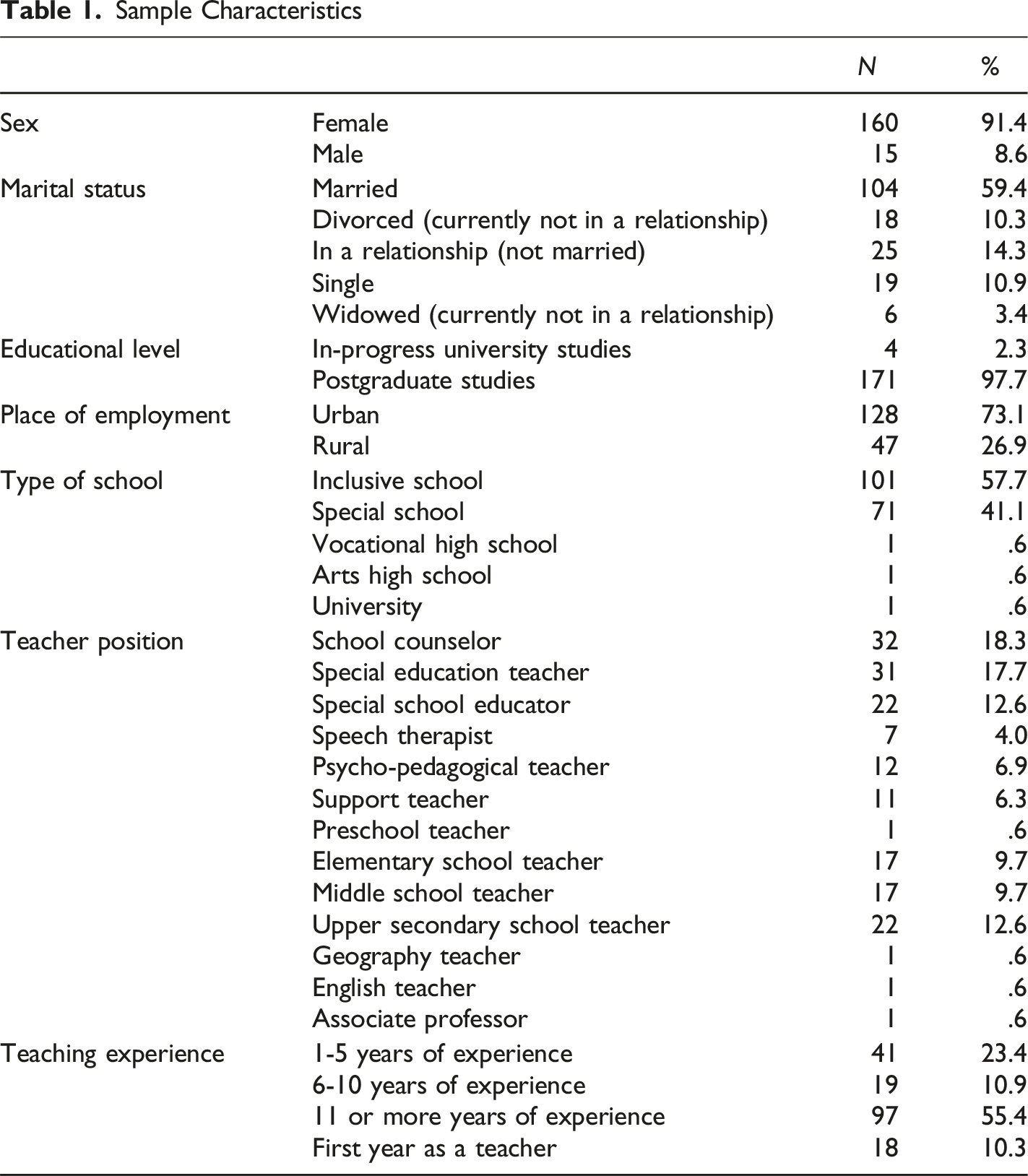
Additionally, the present research employed snowball sampling and convenience sampling strategies. Furthermore, before completing the questionnaires, participants received a message in which they had to confirm that they had read the informed consent. Here, the volunteers reviewed the necessary information regarding data confidentiality, as well as the fact that they could withdraw from the study at any time without any consequences. At the end of the questionnaire, participants were thanked for their involvement and were invited, only if they wished, to share our survey with other individuals. The data collection period took place between 31 May 2025 and June 29, 2025. Before constructing the final dataset for data analysis, the authors conducted a manual review process of the responses to identify potential automated answers generated by software or to detect possible “mischievous respondents,” as indicated in the literature (Lawrence et al., 2023). No such responses were identified, nor were there responses submitted in an unusually short amount of time (e.g., in less than 5 min). This approach has also been used in other studies involving the Romanian population (Ciobanu et al., 2025), being in line with recommendations in the literature (Golds, 2023).
The study was conducted in accordance with the ethical standards of the American Psychological Association (APA) regarding the treatment of human participants. Additionally, this research complies with the principles of the Declaration of Helsinki (1995), as revised in Edinburgh in 2000. The study was approved by the Ethics Committee of the Faculty where the authors are affiliated (Approval No. 2069/14.10.2024).
Measures
The tools were translated from English into Romanian using the Backward method. Recommendations for translation and adaptation of the scales were made according to protocol (Maneesriwongul & Dixon, 2004; Sousa & Rojjanasrirat, 2011).
Burnout
To measure burnout, we used Romanian Short Version of Burnout Assessment Tool (Oprea et al., 2021). This questionnaire consists of 22 items, which were measured on a 5-point Likert scale, where 1 means “never” and 5 means “always.” The responses to this questionnaire assess two major domains, each encompassing several subordinate dimensions. The first domain refers to the core symptoms of burnout and includes four dimensions, each comprising three items. These four dimensions are: exhaustion (e.g., “At work, I feel mentally exhausted.”), mental distance (e.g.,“I struggle to find the motivation for my work.”), impaired cognitive control (e.g., “At work, I have difficulty staying focused on tasks.”), and impaired emotional control (e.g.,“At work, I feel unable to regulate my emotions.”). The second domain refers to the secondary symptoms of burnout and includes two dimensions, each comprising five items. These two dimensions are psychological distress (e.g., “I feel tense and stressed.”) and psychosomatic symptoms (e.g., “I frequently experience illness.”). An Alpha Cronbach of α = .78 was obtained.
Well-Being
To measure well-being, we used the Teacher Subjective Well-being Questionnaire (TWSQ; Renshaw et al., 2015). This questionnaire consists of 12 items, which were measured on a 4-point Likert scale, where 1 means “almost never” and 4 means “almost always.” The questionnaire consists of three dimensions, each comprising four items. These three dimensions are school connectedness (e.g., “I feel like I belong at this school.”), joy of teaching (e.g., “I really enjoy working with students.”) and teaching efficacy (e.g., “I am a successful teacher.”). An Alpha Cronbach of α = .90 was obtained.
Meaningful Work
To measure meaningful work, we used Work as Meaning Inventory (WAMI; Steger et al., 2012). This questionnaire consists of 10 items, which were measured on a 5-point Likert scale, where 1 means “completely untrue” and 5 means “completely true.” These items are distributed across three dimensions. The first dimension is positive meaning and is composed of four items (e.g., “I have found a meaningful career.”). The second dimension, meaning-making through work is composed of three items. (e.g., “I view my work as contributing to my personal growth.”). Greater good motivations is the third dimension and consists of three items, one of which is reverse-scored (e.g., “My work really makes no difference to the world.”). An Alpha Cronbach of α = .82 was obtained.
Mindfulness in Teaching
To measure mindfulness in teaching, we used the Mindfulness in Teaching Scale (MTS; Frank et al., 2016). This questionnaire consists of 14 items, which were measured on a 5-point Likert scale, where 1 means “never” and 5 means “always.” The questionnaire consists of two dimensions. The first dimension is Teacher Intrapersonal Mindfulness and is composed of nine items, all of which are reverse-scored (e.g., “When I am in the classroom I have difficulty staying focused on what is happening in the present.”). The second dimension, Teacher Interpersonal Mindfulness is composed of five items (e.g., “I am aware of how my moods affect the way I treat my students.”). An Alpha Cronbach of α = .89 was obtained.
Socio-Demographic Data
Participants provided the following information: sex, age, place of origin, marital status, educational level, professional experience, workplace, teaching position, number of typical children and number of children with disabilities, type of disabilities they work with.
Overview of the Statistical Analysis
We verified the normality of data distribution and the association between the main concepts of the research. Statistical analyses were performed using the SPSS program, version 26 (George & Mallery, 2019).
Then, to evaluate the indirect effect of mindfulness on the relationship between meaningful work and well-being, as well as between meaningful work and burnout, while controlling for age, we conducted a structural equation model (SEM) using observed variables, estimated with maximum likelihood in IBM AMOS 20. Following the standards adopted in the literature (Hu & Bentler, 1999; Kline & Little, 2023), goodness of fit was assessed using the following criteria: CFI, and AGFI values greater than .90, GFI and TLI values greater than .95, RMSEA value lower than .08 (with an associated p > .05), and SRMR value lower than .08.
Results
Preliminary Data Analyses
Descriptive Statistics and the Association Between Research Variables

Note. *p < .05; **p < .001.
Association Between Variables
The results of the Pearson correlation analysis indicated that meaningful work is significantly and positively associated with mindfulness and well-being, and negatively associated with burnout. Mindfulness is significantly and positively associated with well-being and age, and negatively associated with burnout. Age is significantly and negatively associated with burnout, and positively associated with well-being.
Path Analysis
Results of the path analysis for proposed model indicated good fit values. χ2(2) = 1.89; p = .15; CFI = .99; GFI = .99; AGFI = .93; TLI = .953; RMSEA = .07; upper CI = .18; p = .27; SRMR = .02.
Indirect effects were examined to test the mediating role of mindfulness. The results showed that mindfulness significantly mediated the relationship between meaningful work and both outcomes. Specifically, the indirect effect of meaningful work on burnout through mindfulness was β = −.18, and on well-being it was β = .08. The total effects of meaningful work were substantial for both well-being (β = .627) and burnout (β = −.365).
To further confirm the mediation effects, Sobel tests were conducted. The indirect path from meaningful work to well-being via mindfulness was statistically significant (z = 2.74, p = .006), supporting the hypothesis that mindfulness mediates the positive relationship between meaningful work and well-being. Similarly, the indirect path from meaningful work to burnout via mindfulness was also significant (z = −4.30, p < .001), indicating that mindfulness acts as a mechanism through which meaningful work contributes to lower burnout (Figure 2). The path analysis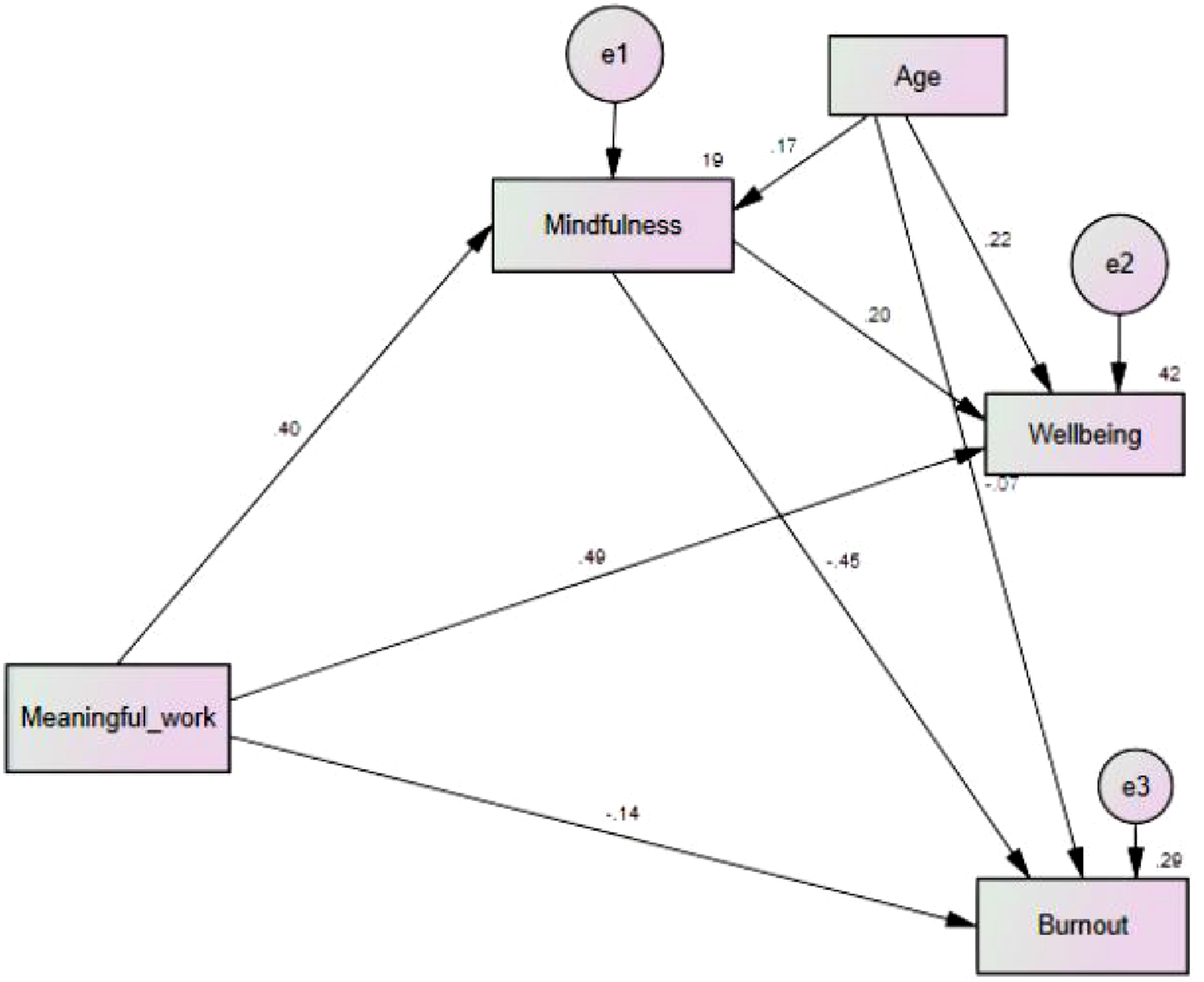
Discussions
Teaching is a highly demanding profession that requires not only specialized knowledge but also unlimited psychological resources to achieve educational objectives and to cope with the multiple emotional demands involved (Kariou et al., 2021). All the more so, for special education teachers or those working with students with disabilities, the demands and challenges can be significantly greater due to the specific needs of these students. Depending on the specific disabilities or challenges, the teacher must adapt to the students’ needs by adopting various teaching and learning strategies to support the students and prepare them for social life (Skura & Świderska, 2022). Given that teacher burnout represents one of the most significant challenges faced by educators worldwide (García-Carmona et al., 2019), and that the teaching profession has been recognized as one of the most stressful and demanding within the human services sector (Schonert-Reichl, 2017; Zagni et al., 2025), we considered it important to focus attention on this population group and to analyze the factors that could improve their well-being.
The results of the present study have highlighted a series of significant findings regarding insights into well-being and burnout among teachers working with students with special educational needs. First and foremost, our findings indicate that meaningful work is a significant and negative predictor of teacher burnout. Our results are consistent with the literature, which has shown similar findings (Lavy, 2022; Mulyana et al., 2024; Sözer-Boz et al., 2024; Suyatno et al., 2022). A potential explanation for this result is that when teachers perceive their work as meaningful and having a positive impact on student development, they tend to be more enthusiastic, engage more deeply in their activities, and overcome challenges more effectively and healthily (Mulyana et al., 2024; Suyatno et al., 2022; Yasin Ghadi et al., 2013). Perceiving work as meaningful enhances the experience of positive emotions and contributes to strengthening the sense of self-efficacy and professional fulfilment (Lee, 2015; Sözer-Boz et al., 2024). As a result, teachers will experience lower levels of burnout because they perceive their work as transcending the role of a mere job, contributing to the development of individuals and the education of the community (Anggraheni et al., 2025; Lavy, 2022). Additionally, meaningful work was identified by our results as a significant predictor of teachers’ well-being. This finding aligns with previous studies that have demonstrated the positive impact of meaningful work on well-being (Jurčec et al., 2021; Lei, 2024; Minkkinen et al., 2020). This relationship may be explained by the buffering role of meaningful work, acting as a protective factor for teachers’ mental health (Minkkinen et al., 2020). When teachers perceive their work as meaningful, their resilience tends to increase, while feelings of fatigue resulting from multiple responsibilities such as classroom management, planning and teaching, behavior management, and crisis intervention tend to decrease (Hagaman & Casey, 2018; Minkkinen et al., 2020; Mulyana et al., 2024), thereby contributing to teachers’ well-being. Our findings should be interpreted within the Romanian context and in other similar contexts; more specifically, teachers in Romania, as shown by previous works as well, regularly report the lack of consistent methodological training in the field of special education, limited institutional support, and substantial difficulties in managing classrooms that include students with disabilities (Gherguţ, 2020; Jurca et al., 2023; Karner-Huțuleac & Huțul, 2023; Pachița & Gherguț, 2021). In such a context, perceiving one’s own work as meaningful can be transformed into a crucial psychological resource that may subsequently mitigate insufficient preparation (Jurca et al., 2023; Zhang et al., 2020). Moreover, when teachers feel that their efforts can make a real difference for students with disabilities, this sense of meaningfulness can counterbalance negative feelings such as inadequacy or loss of control that typically arise in inclusive and special educational environments. At the same time, although meaningful work may function as a compensatory psychological resource in contexts characterized by limited institutional support, such as Romania, its effectiveness is greater when it is supported by adequate organizational resources. Studies indicate that personal resources can reduce teachers’ vulnerability to burnout; however, insufficient training and lack of institutional support maintain an elevated risk of emotional overload and burnout (Brady et al., 2023; Wang, 2024). Accordingly, our findings support the importance of individual psychological resources, such as meaningful work, and highlight the need to complement these with institutional-level interventions aimed at sustaining the professional activity of teachers working with students with disabilities.
Also, our findings have indicated that mindfulness in teaching played a mediating role in the relationship between meaningful work and burnout, this finding is consistent with previous studies (Lavy, 2022; Liu & Du, 2024; Mulyana et al., 2024). A possible explanation is that perceiving work as meaningful promotes the experience of positive emotions, which support concentration and present-moment focus, thereby facilitating the adoption of a mindful attitude in daily activities (Davis & Hayes, 2011; Fredrickson, 2001; Rosso et al., 2010). Thus, teachers who maintain a satisfactory level of mindfulness during school activities are more attentive to their own emotions, as well as to their interactions with students and the challenges they encounter, thereby identifying effective solutions for managing them (Aslan Gördesli̇, 2022). As a result, the sense of personal accomplishment and positive perception of one’s own competencies tend to increase, while feelings of fatigue and depersonalization tend to decrease, thereby regulating the level of burnout (Madigan et al., 2023). From a critical perspective, it is important to emphasize that, although meaningful work constitutes a vital psychological resource, in high-stress contexts such as special education it may paradoxically entail the risk of over-identification with the professional role (Blustein et al., 2023). Strong engagement in one’s professional role can thus lead to personal sacrifices and difficulties in maintaining personal boundaries, thereby increasing vulnerability to burnout (Blustein et al., 2023). At this juncture, mindfulness plays an essential role in self-regulation, facilitating the recognition of signs of overload and contributing to the protection of teachers’ psychological health and the prevention of burnout (Maslach & Leiter, 2016; Tikkanen et al., 2021).
On another note, from a broader theoretical perspective, we must mention that our findings are in line with the view that teachers’ well-being represents a dynamic balance between personal resources and professional demands (Bakker et al., 2008; Corbett et al., 2022; Viac & Fraser, 2020). In our theoretical model proposed, meaningful work and mindfulness can be viewed as critical personal resources for teachers by virtue of helping them cope with the emotional, behavioral, and cognitive demands associated with what working with students with disabilities entails (Adigun et al., 2021; Kasim & Rathakrishnan, 2025; Skura & Świderska, 2022). Thus, meaningful work can subsequently support both motivation and engagement when facing aspects such as challenging behaviors, slow progress, or, in some cases, even the frequent failures of students (Buzzai et al., 2024; Pines, 2002; Skura & Świderska, 2022).
Similarly, and in line with previous research findings, we identified that mindfulness can have a positive and significant impact on teachers’ well-being, acting as a mediator in the direct relationship between meaningful work and well-being (Aslan Gördesli̇, 2022; Hanif et al., 2025; Lei, 2024; Minkkinen et al., 2020). Thus, a high level of mindfulness can act not only as a protective factor against burnout but also contribute to enhancing teachers’ well-being. Teachers who practice mindfulness are more likely to remain relaxed and calm when facing challenges, which contributes both to reducing the level of stress experienced by teachers and to increasing their capacity to attend to students’ needs (Hwang et al., 2017). Teachers with higher levels of mindfulness demonstrate greater gentleness, empathy, and acceptance toward students with challenging behaviors, which positively impacts both the students and the teachers’ mental health (Hwang et al., 2017; Paris et al., 2021).
In conclusion, the present study underscores the significant role of mindfulness both in the relationship between meaningful work and burnout, and between meaningful work and well-being. Our findings indicate that both the direct effect of meaningful work and the indirect effect mediated by mindfulness contribute to teachers’ well-being and the reduction of burnout. These results highlight the interconnectedness of psychological resources in mitigating the challenges faced by teachers in the educational context. While acknowledging certain limitations, this study provides valuable insights into the factors shaping the well-being of teachers working with students with special educational needs. At the same time, the study’s findings highlight the need to move beyond purely organizational interventions toward programs aimed at developing internal resources, which can support long-term resilience in special and inclusive educational environments.
Limitations and Future Directions
Even though our study has numerous strengths, we must also acknowledge a significant set of limitations. One limitation of the present study is its cross-sectional design, which restricts the ability to draw causal inferences. A longitudinal study could provide a more robust understanding of the relationships between meaningful work and burnout or well-being, thereby facilitating causal interpretations. Additionally, the current study employed self-report measures, which involve a high degree of subjectivity during scale completion, potentially exposing the data to recall bias and responses influenced by social desirability (Adams et al., 1999). A further methodological limitation lies in the use of a non-probability sampling strategy (convenience and snowball sampling). Consequently, the sample is subject to self-selection and sampling bias, and the findings cannot be generalized to the broader population of teachers working with children with disabilities. Therefore, the results should be interpreted as exploratory and indicative, being limited to the characteristics of the participants included in this study. As a result, certain subgroups of teachers (e.g., those more motivated or more interested in psychological topics) may be overrepresented in the sample, which should be considered when interpreting the findings. Moreover, although age was included as a control variable, an important limitation of the present study is that numerous contextual and individual factors that may influence teachers’ work, well-being, and fatigue (e.g., workload, organizational support, classroom composition, prior training in special education, school climate, and teaching tenure) were not included in the analyses. These unmeasured factors may have influenced the observed associations and should be incorporated in future studies with larger samples and more comprehensive measurement models.
Another limitation of the study is the absence of comparative analyses based on the type of disability with which teachers work. This omission may result in the loss of relevant insights into how the specific nature of the disability may shape the relationships between variables and ultimately affect levels of burnout and well-being. Future studies could expand on our findings by performing comparative investigations among teachers working with students who present different types of disabilities. Such research may yield more nuanced understandings and perspectives regarding the particular challenges experienced by teachers in special education contexts.
Furthermore, we believe that future research should strive to obtain a more balanced gender ratio than that observed in our sample and should explore in greater depth other intrapsychic variables associated with burnout and well-being, such as resilience, work-life balance, emotional intelligence, or factors related to the barriers encountered in teaching. It is important to note that the gender imbalance in our sample may restrict the generalizability of the findings, and addressing this issue in future investigations could strengthen the validity of the conclusions. The predominance of female participants in our study can be attributed to the fact that, in Romania, the teaching profession is largely occupied by women. Additionally, although our sample included teachers from multiple regions of Romania, the sampling was non-probabilistic and based on voluntary participation. Therefore, we do not claim national representativeness, and the findings should be interpreted with caution regarding their generalizability to all teachers in Romania. Future studies employing stratified or probabilistic sampling strategies could improve the representativeness of the sample and enhance the external validity of the results. It is also necessary to acknowledge another limitation of the study, namely that participant recruitment was conducted through snowball sampling on social media platforms, which may constrain the generalizability of the findings due to potential sampling biases and a lack of representativeness.
Theoretical and Practical Implications
From a theoretical perspective, the present study enhances the existing body of knowledge by examining the mediating role of mindfulness in teaching in relation to the direct relationships between (1) meaningful work and burnout and (2) meaningful work and well-being. The study also offers a novel contribution by enriching current theoretical frameworks, demonstrating that mindfulness not only predicts positive psychological outcomes but can also emerge as a result of perceiving meaning in one’s work. This finding suggests a reciprocal relationship between meaningful work and mindfulness, which warrants further integration into complex theoretical models (e.g., models of meaningful work).
Additionally, a notable strength of the study is that it was conducted within an underexplored cultural and professional context. The research contributes to the international literature by validating the associations among meaningful work, mindfulness, and burnout in a distinct population—Romanian teachers working with children with disabilities.
Regarding practical implications, based on the study’s findings, psychotherapeutic interventions grounded in mindfulness can be recommended for educators working with children with disabilities. Psychotherapeutic interventions have been previously discussed in relation to interactions with individuals with disabilities (Huțul et al., 2022). One such evidence-based intervention is Mindfulness-Based Stress Reduction (MBSR), adapted for educators, which has been shown to effectively reduce stress, anxiety, and burnout, while also enhancing psychological well-being and classroom functioning (Emerson et al., 2017; Flook et al., 2013).
Furthermore, the results of the study can inform institutional policies aimed not only at improving the specialized training of educators but also at developing and providing workshops, courses, and training programs focused on emotional balance and the experience of meaning in work, as part of broader burnout prevention strategies. Thus, the findings may serve as a foundation for the design of preventive and intervention strategies through psychoeducation and psychological support, tailored to the specific demands of the educational context.
Footnotes

Ethical Considerations
The study protocol was designed in accordance with the ethical requirements specific to the Faculty of Psychology and Education Sciences, Alexandru Ioan Cuza University of Iaşi, Romania, and received institutional approval prior to the start of the study (Approval No. 2069/14.10.2024). All participants voluntarily took part in the study and provided written informed consent, in accordance with Romanian national laws on the ethical conduct of scientific research, technological development, and innovation. No animal studies are presented in this manuscript
Consent for Publication
All authors have read and approved the manuscript, and gave explicit consent to submit the manuscript in the current form.
Author Contributions
Lucia Patricia Bişog, Tudor-Daniel Huțul, and Adina Karner-Huțuleac contributed equally to conceptualization, methodology, supervision, writing-original draft, writing-review editing, and data curation.
Funding
The authors received no financial support for the research, authorship, and/or publication of this article.
Declaration of Conflicting Interests
The authors declared no potential conflicts of interest with respect to the research, authorship, and/or publication of this article.
Data Availability Statement
The data supporting the findings of this research are available from the corresponding author upon reasonable request.