




Abstract
Self-compassion is the ability to demonstrate consideration for one’s own well-being. Self-compassion has demonstrated strong ties to goal-setting behaviors, such as the adoption of achievement goal orientations. Although research largely suggests self-compassion supports adaptive goal-setting tendencies, a small but growing body of literature indicates that elevated self-compassion may, in some cases, undermine goal striving and promote passivity. The present study seeks to clarify the relationship between self-compassion and achievement goals by examining potential curvilinear relationships between these factors. Three hundred fifty-seven university students completed an online self-report questionnaire evaluating self-compassion and achievement goal type. Generalized additive modeling was utilized to explore potential nonlinear relationships. The results revealed a significant, near-linear negative relationship between self-compassion and both mastery avoidance and performance achievement goals. Notably, the relationship involving mastery approach goals was threshold-like, such that self-compassion scores above 3.0 were associated with increased endorsement of mastery approach goals. The results suggest that the benefits of self-compassion for mastery approach goals may only appear when learners cross a critical threshold.
Self-compassion is a protective factor that allows individuals to engage in supportive self-evaluation when confronted with challenging situations (Allen & Leary, 2010; Neff, 2011; Yarnell & Neff, 2013). The proposed role of self-attitude and evaluation in goal striving has led researchers to explore the impact of self-compassion on goal-setting tendencies and goal regulation across a variety of disciplines (Assar et al., 2022; Kotera & Ting, 2021; Moffitt et al., 2018; Rahimi-Ardabili et al., 2020). Within academic settings, self-compassion has been shown to encourage achievement goal orientations focused on task mastery and personal growth (e.g., mastery goals) and to discourage goal striving focused on outperforming (i.e., performance approach goals) or underperforming relative to peers (i.e., performance avoidance goals; Neff et al., 2005).
Although extensive evidence exists linking self-compassion to adaptive goal-related outcomes, a growing body of research suggests that in certain situations, self-compassion may undermine goal striving and promote academic passivity. For instance, Thomas and colleagues (2024) found that self-compassion shared statistically significant, negative relationships with all approach and avoidance goal dimensions outlined in the 3 × 2 achievement goal model. These findings raise the possibility that self-compassion may not exert a uniformly positive influence on motivational outcomes. Consistent with this notion, recent studies highlight the potential nonlinear impact of self-compassion on motivational constructs. For instance, Chang et al. (2025) observed that self-compassion was positively related to work engagement in a sample of nurses up to a certain threshold. Beyond that threshold, self-compassion began to exert a negative - though non-significant – influence on engagement. We believe these findings highlight the importance of further examining the potential nonlinear impacts of self-compassion in other contexts – such as goal setting and striving. Thus, the primary aim of the current study is to investigate the existence of nonlinear relationships between self-compassion and achievement goals in a sample of university students using generalized additive modeling.
Self-Compassion and Achievement Goals
Self-compassion is commonly conceptualized as a dispositional trait that facilitates adaptive self-referential processing when confronted with negative cognitions and affective responses (Neff, 2003, 2023). Neff’s (2023) influential model suggests self-compassion is comprised of distinct subcomponents, each representing one end of a continuum of self-compassionate and uncompassionate responding (i.e., self-kindness vs. self-judgment, common humanity vs. isolation, mindfulness vs. overidentification). Self-kindness refers to an individual’s ability to demonstrate concern and care for their own distress, whereas self-judgment is an individual’s tendency to meet challenges and perceived failure with harsh criticism and self-blame (Neff, 2023). Higher levels of self-kindness reduce instances of self-judgment (or self-criticism) to improve overall discomfort. Common humanity refers to an individual’s ability to feel connected to others and recognize failure as a part of being human (Neff, 2023). Individuals who are higher in common humanity are less likely to face feelings of isolation and unfairly attribute perceived failures as a factor that sets one apart from others. Finally, mindfulness refers to a moment-to-moment awareness of distressing thoughts and emotions. Importantly, self-compassionate individuals can experience potential discomfort without becoming fixated on perceived difficulties (i.e., overidentification). The empirical literature suggests self-compassion is associated with positive outcomes across numerous domains, including elevated well-being and self-esteem, increased use of adaptive coping strategies, increased resilience to negative academic feedback, and fulfilling interpersonal relationships (Ewert et al., 2021; Fong et al., 2023; Neff, 2023; Neff & Dahm, 2015).
These self-referential processes are particularly relevant in academic contexts, where individuals must navigate challenges, setbacks, and consider personal standards of success. As a result, researchers have devoted time and effort to exploring how self-compassion influences achievement goals. Achievement goals broadly refer to the reasons driving students’ decisions to complete academic activities and the standards they use to determine progress toward goal attainment (Elliot & Hulleman, 2018).
Early theoretical orientations proposed that achievement goals can be categorized into two broad domains, including performance and mastery goals. The primary aim of performance-oriented students is to demonstrate competence relative to peers, whereas the primary aim of mastery-oriented students is to demonstrate task mastery and personal growth (Senko, 2019). Subsequent revisions to achievement goal theory (i.e., the trichotomous and 2 × 2 models) proposed that mastery and performance goals can be further subdivided by considering if students are motivated to achieve favorable outcomes (i.e., the approach dimension) or prevent negative outcomes (the avoidance dimension; Elliot & McGregor, 2001). The incorporation of the approach-avoidance distinction results in four distinct goal orientations, including mastery approach (i.e., emphasizing content mastery and intrapersonal growth), mastery avoidance (i.e., avoiding incompetence and reductions in performance), performance approach (i.e., displaying their competence and outperforming others), and performance avoidance goals (i.e., avoiding displays of incompetence and underperforming compared to their peers; Elliot & Hulleman, 2018; Elliot & McGregor, 2001). Finally, the 3 × 2 model proposes that mastery-oriented goals should be bifurcated to account for students who are motivated primarily by absolute task expectations (i.e., task-approach/avoidance) and those that are driven by intrapersonal standards (self-approach/avoidance; Elliot et al., 2011). Regardless of the overarching theoretical orientation, empirical work has shown that the adoption of achievement goals emphasizing personal growth and task mastery is associated with positive outcomes, including enhanced motivation, increased academic performance, and the experience of positive achievement emotions (Bieg et al., 2017; Huang, 2011).
Prior work has provided evidence that self-compassion supports the adoption of adaptive achievement goals. For instance, in an investigation guided by the trichotomous achievement goal model, Neff et al. (2005) demonstrated that overall levels of self-compassion were positively related to mastery goals and negatively related to performance approach and avoidance goals in a sample of United States university students using multiple regression analyses. Critically, Neff and colleagues (2005) found that these associations were partially driven by self-compassion’s influence on fear of failure and learners' competence judgments. In another example, Ahmet (2008) showed that the positively oriented subdimensions of self-compassion (i.e., self-kindness, common humanity, and mindfulness) supported the adoption of mastery approach goals, while the negatively oriented subdimensions (i.e., self-judgment, isolation, and overidentification) were shown to increase mastery avoidance, performance approach, and performance avoidance.
However, more recent investigations have reported mixed findings, including both non-significant and negative associations between self-compassion and achievement goals. For instance, Thomas et al. (2024) demonstrated that self-compassion was negatively associated with task approach/avoidance, self-approach/avoidance, and other approach/avoidance goals using path analysis. In another example, Williams and colleagues (2008) found that individuals with low, moderate, and high levels of self-compassion did not significantly differ in their endorsement of mastery approach/avoidance and performance approach/avoidance goals. These findings suggest that while self-compassion may support adaptive goal orientations in some contexts, it may also be unrelated to — or even inversely related to — goal striving under certain conditions.
The Current Study
Although prior research has often linked self-compassion to adaptive achievement goals, recent findings suggest that this relationship may be more complex than previously assumed. Recent work by Chang and colleagues (2025) demonstrating the nonlinear impact of self-compassion on engagement raises the possibility that self-compassion may share similarly complex relationships with achievement goals. The existence of nonlinear relationships between self-compassion and achievement goals may help explain the mixed findings noted in the literature. Thus, the primary aim of the current investigation was to explore potential nonlinear relationships between self-compassion, mastery approach, mastery avoidance, performance approach, and performance avoidance goals using generalized additive modeling.
Method
Participants
Participants were 357 undergraduate and graduate students attending a public higher education institution located in East Texas. The average age of participants was 28.2 years (SD = 9.74), with 30 individuals electing not to disclose. The reported gender composition of participants was 11.2% male (n = 39), 88.3% female (n = 308), and 0.6% non-binary (n = 2), with 8 electing not to disclose. Participant ethnicity was reported as 69.5% White (n = 244), 18.8% Hispanic (n = 66), 7.4% African American (n = 26), 2.3% Asian (n = 8), 0.3% Native American (n = 1), and 1.7% Biracial (n = 6), with 6 electing not to disclose.
Measures
Achievement Goals
We utilized an adapted version of the Achievement Goal Questionnaire developed by Elliot and McGregor (2001) to assess participants’ achievement goal orientations. The Achievement Goal Questionnaire is a 12-item self-report questionnaire that assesses four achievement goal constructs including mastery approach goals (3 items; e.g., “I want to learn as much as possible from my courses”), mastery avoidance goals (3 items; e.g., “I worry that I may not learn all that I possibly could in my courses”), performance approach goals (3 items; e.g., “It is important to me to do well compared to others in my courses”), and performance avoidance goals (3 items; e.g., “My goal in my courses is to avoid performing poorly”). Participants answered items on a 7-point Likert-type scale (1 = Not at all true of me to 7 = Very true of me). The mastery approach (α = .87), mastery avoidance (α = .81), performance approach (α = .91), and performance avoidance (α = .77) subscales demonstrated acceptable internal consistency within our sample.
Self-Compassion Short Form
We utilized the scale originally developed by Neff (Raes et al., 2011) to assess self-compassion. The Self-Compassion Short Form scale is a 12-item self-report questionnaire that assesses six core dimensions of the construct: self-kindness (2 items; e.g., “When I’m going through a very hard time, I give myself the caring tenderness I need”), common humanity (2 items; e.g., “When I feel inadequate in some way, I try to remind myself that feelings of inadequacy are shared by most people”), mindfulness (2 items; e.g., “When something upsets me, I try to keep my emotions in balance”), self-judgment (2 items; e.g., “I’m disapproving and judgmental about my own flaws and inadequacies”), isolation (2 items; e.g., “When I fail at something that’s important to me, I tend to feel alone in my failure”), and overidentification (2 items; e.g., “When I’m feeling down I tend to obsess and fixate on everything that’s wrong”). Participants answered items on a 5-point Likert scale (1 = Almost never to 5 = Almost always). Psychometric investigations using confirmatory factor analysis and exploratory structural equation modeling techniques have provided evidence supporting the viability of a total score derived from items assessing the unique self-compassion dimensions (Neff et al., 2021; Raes et al., 2011). Negatively valenced items (e.g., self-judgment items) were reverse-scored prior to calculating the total self-compassion score. This scale demonstrated acceptable internal consistency within our sample (α = .76).
Procedure
Students were invited to participate in the present study through their involvement in a departmental research pool. Specifically, students are able to contribute to research being conducted by departmental faculty in exchange for partial course credit. The research opportunities associated with the departmental research pool are advertised using Sona Systems (https://www.sona-systems.com). Participants completed an online survey consisting of self-compassion and achievement goal items using the Qualtrics online survey platform. The data used in this investigation are part of a larger study on the associations among self-compassion, goal striving, and achievement emotions. The study was approved by the University of Texas at Tyler Institutional Review Board (Protocol Number: 2022-040).
Analytic Plan
Our initial analyses involved calculating descriptive statistics and correlations to explore the distribution and associations among the variables of interest. Next, we conducted a series of generalized additive models to explore if self-compassion exerts a nonlinear influence on students’ achievement goals. Generalized additive modeling is an extension of general linear modeling that utilizes smooth functions (i.e., penalized regression splines) to estimate complex nonlinear relationships (Hastie & Tibshirani, 1990). One of the primary advantages of generalized additive modeling compared to linear regression and structural equation modeling is that it does not require researchers to specify the hypothesized nature of the nonlinear effect in advance (e.g., by including polynomial terms in the model). Thus, generalized additive modeling is well-suited for situations in which little prior evidence is available to support a priori predictions, as was the case in the present investigation (Finch, 2015).
The generalized additive models were estimated using the restricted maximum likelihood (REML) method. The basis dimension (i.e., k) was set to 5 for each model. This value was selected to reduce the risk of overfitting and is based on prior research suggesting that k = 5 may be appropriate when only mild nonlinearity is expected (Clark & Wells, 2023). Additionally, we evaluated residual diagnostic plots for evidence of non-normality and heteroscedasticity. All generalized additive modeling was performed using R version 4.4.2 (R Core Team, 2024) and the mgcv R package (Wood, 2025).
Although generalized additive modeling is effective in detecting the existence of nonlinear relationships, the estimation approach makes it difficult to directly identify breakpoints or knots – points in the data where the relationship between two variables “bends” or changes direction. Therefore, when our generalized additive model provided evidence of nonlinear relationships, we utilized segmented regression to identify specific points at which the relationship between self-compassion and the outcomes of interest changed significantly. Like generalized additive modeling, segmented regression is an analytic approach designed to test for the presence of nonlinear effects. However, instead of relying on smooth functions, segmented regression utilizes a piecewise linear approach. Specifically, this technique tests whether the relationship between variables is better represented by a continuous line of best fit or multiple linear segments that reflect differences in the direction and magnitude of the relationship (Ulm, 1991). The segmented regression analyses were conducted using R version 4.4.2 (R Core Team, 2024) and the segmented package (Muggeo, 2008). Finally, missing data were handled using listwise deletion across all analyses. Approximately 1% of the data were missing across the primary variables of interest (i.e., self-compassion, mastery approach, mastery avoidance, performance approach, and performance avoidance goals), resulting in a final analytic sample of 352 participants. Participants were not excluded from analyses for other screening or response quality issues.
Results
Descriptive Statistics and Correlational Analysis
Descriptive Statistics for the Variables of Interest
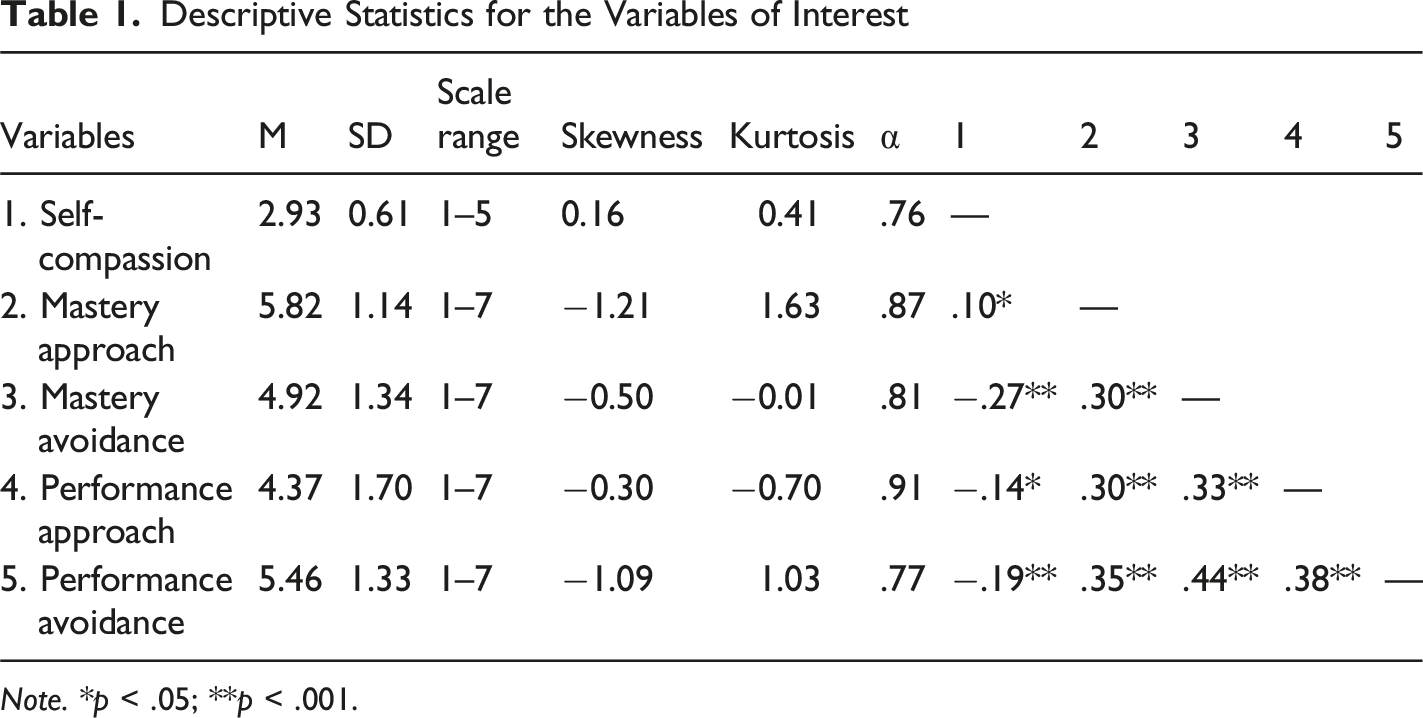
Note. *p < .05; **p < .001.
Generalized Additive Models
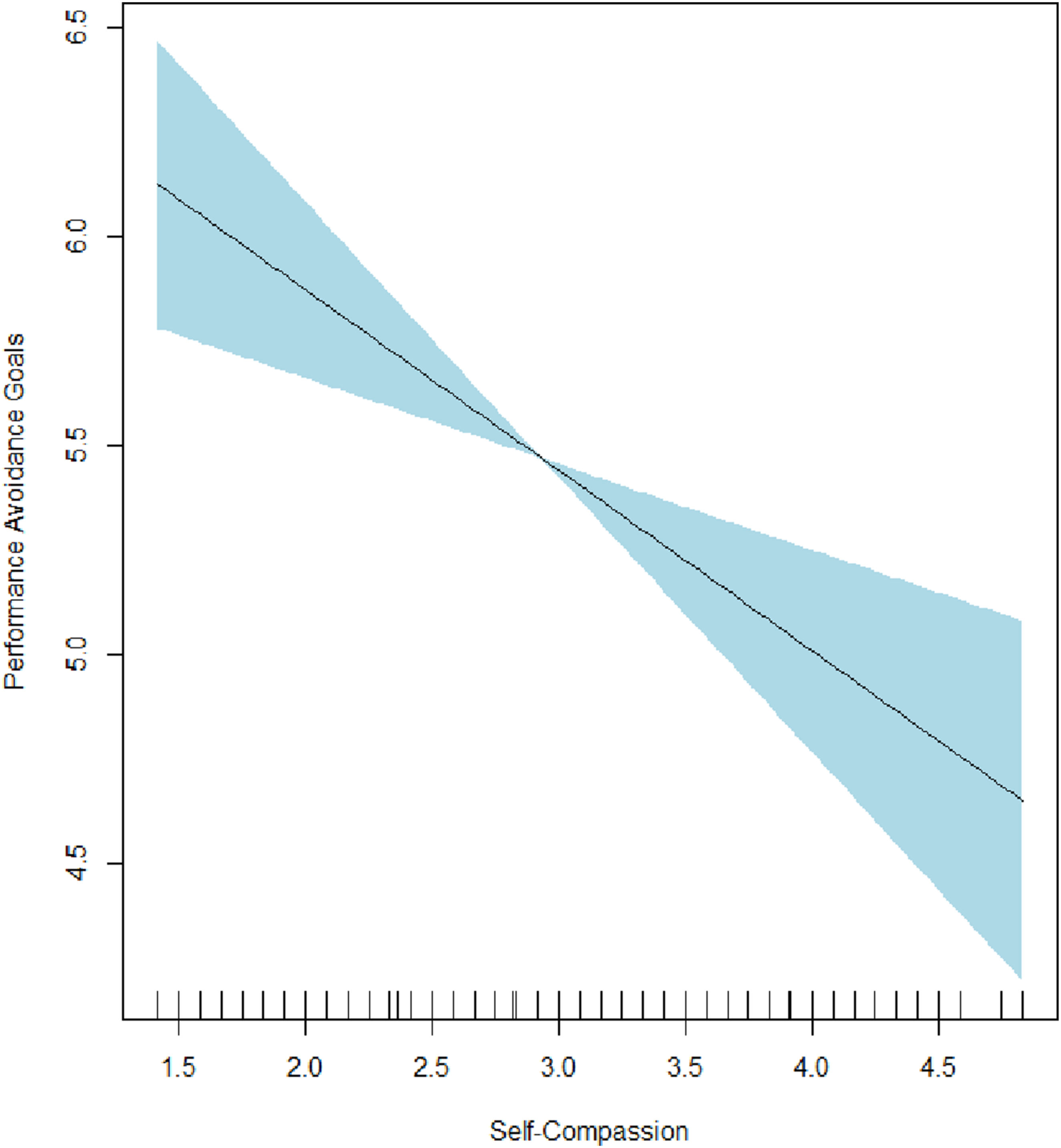
Review of residual diagnostic plots indicated potential non-normality in the mastery approach model and potential heteroscedasticity in the mastery approach and mastery avoidance models (See Figures S1 – S4). Generalized additive modeling results revealed a statistically significant nonlinear relationship between self-compassion and mastery approach goals, with F(edf = 2.46, ref.df = 2.98) = 4.04, p = .007, R
2
adj
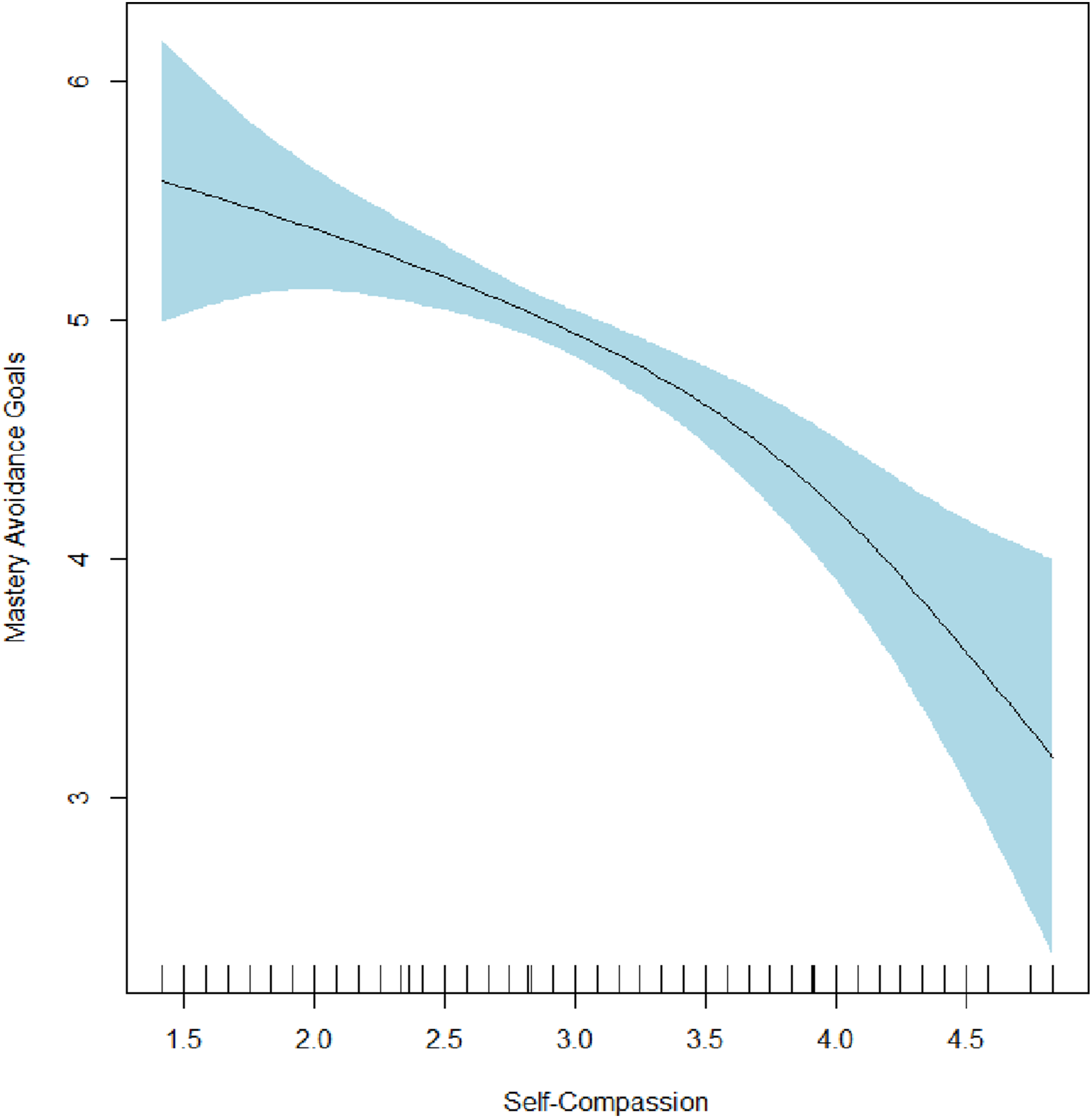
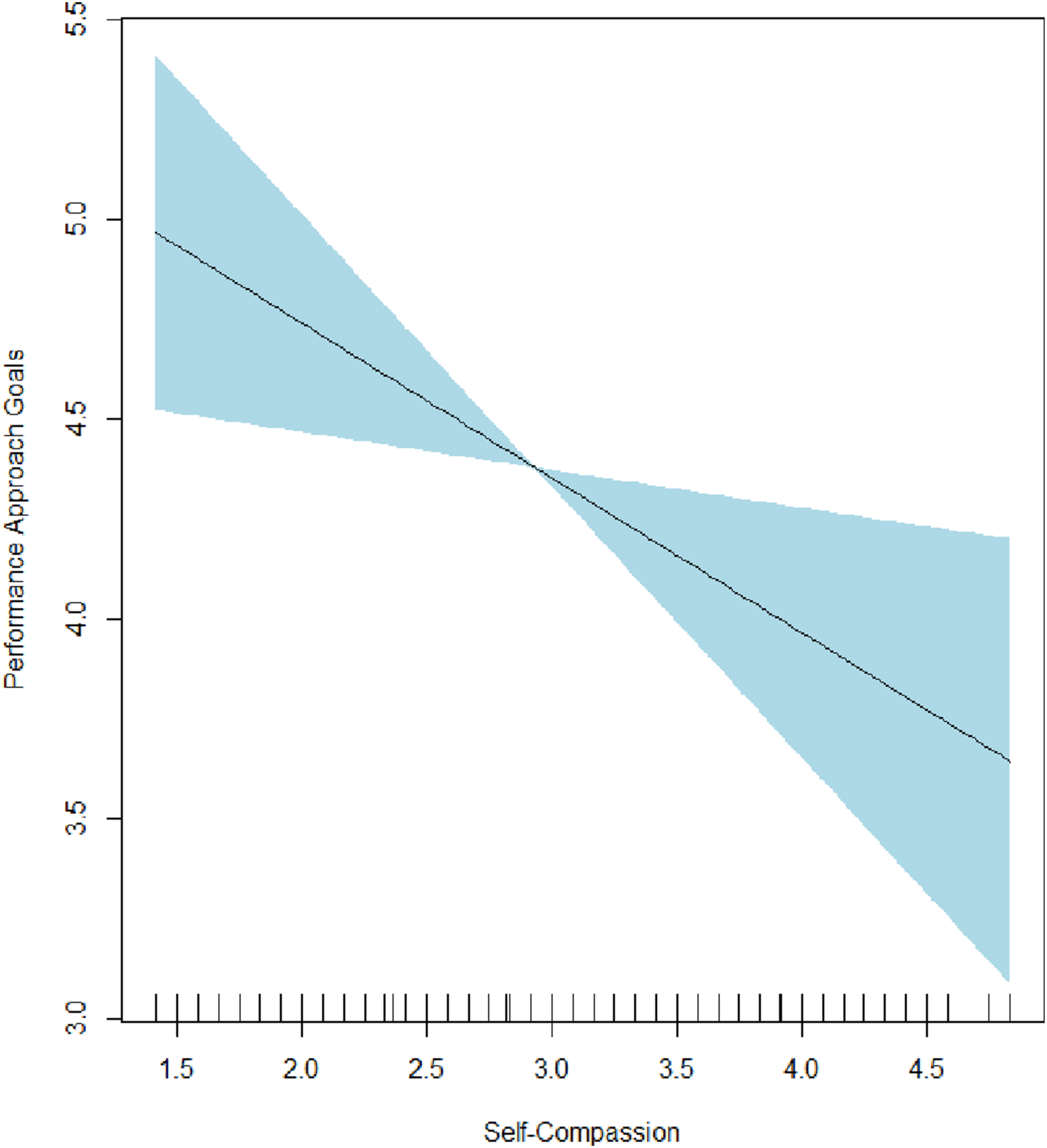
= .03. A plot of the smooth function revealed a threshold-like pattern, such that self-compassion exhibited a slight negative relationship with mastery approach goals until an inflection point was reached. Beyond this threshold, increases in self-compassion were associated with greater endorsement of mastery approach goals (see Figure 1). The GAM smooth terms were also statistically significant for the relationships between self-compassion and mastery avoidance, performance approach, and performance avoidance goals, with F(edf = 2.22, ref.df = 2.73) = 11.14, p < .001, R
2
adj
= .08, F(edf = 1.00, ref.df = 1.00) = 6.97, p = .008, R
2
adj
= .01, and F(edf = 1.00, ref.df = 1.00) = 14.50, p < .001, R
2
adj
= .03, respectively. The estimated degrees of freedom for performance approach and performance avoidance (both edf = 1.00) indicated that these relationships were effectively linear. The mastery avoidance model (edf = 2.22) suggested a modest departure from linearity. However, a visual inspection of the smooth terms indicated that the relationship between the variables followed an approximately linear negative trend. Specifically, students with higher levels of self-compassion reported lower endorsement of mastery avoidance, performance approach, and performance avoidance goals (see Figures 2–4). Relationship between self-compassion and mastery approach goals. Relationship between self-compassion and mastery avoidance goals. Relationship between self-compassion and performance approach goals. Relationship between self-compassion and performance avoidance goals.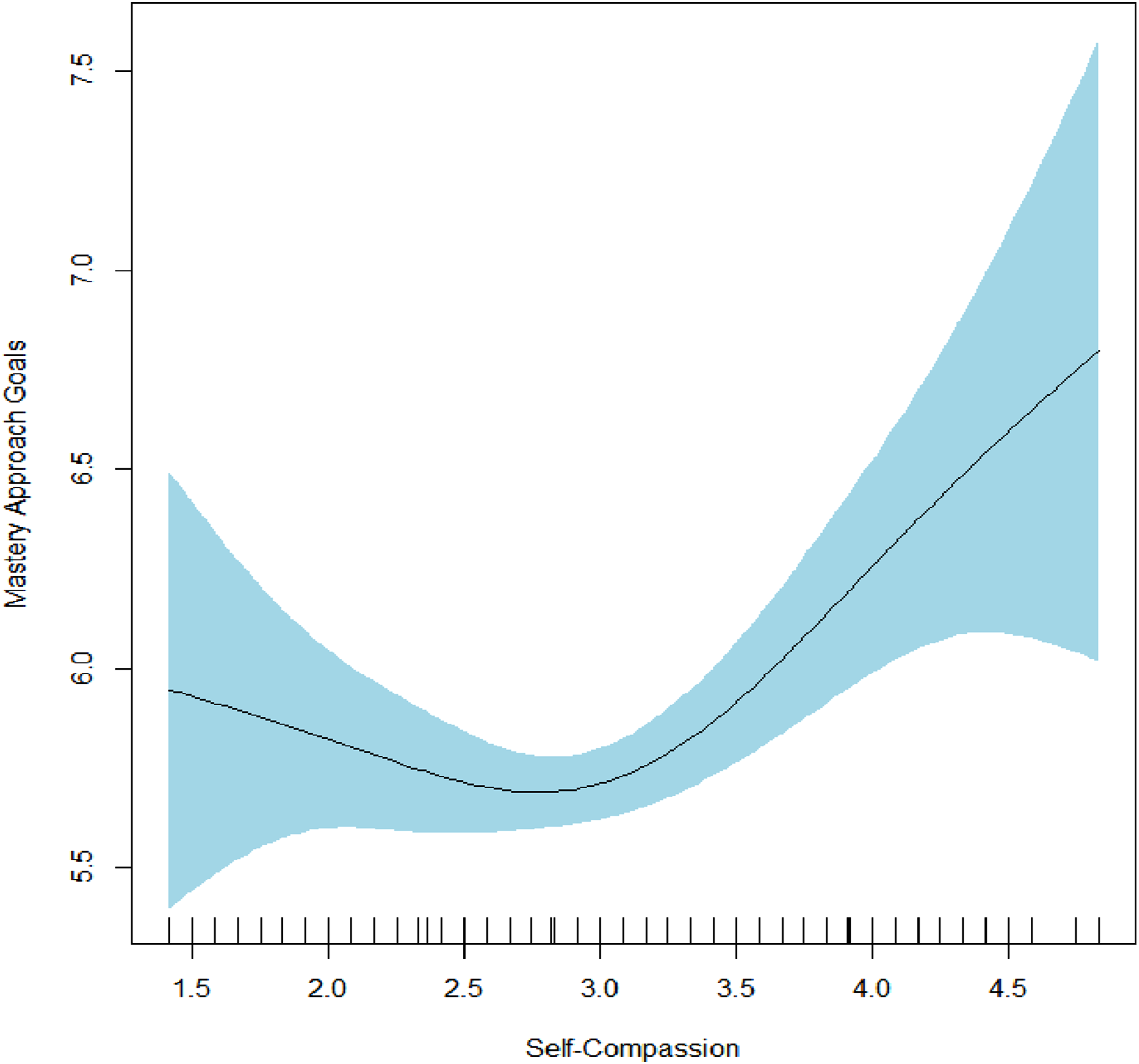
Sensitivity Checks
We re-estimated the mastery approach GAM using standardized values (i.e., z-scores) for both the predictor and outcomes to address potential concerns that the observed nonlinear relationship between these constructs may be an artifact of the response anchors of the self-report instruments. The results were identical to the primary analyses, suggesting that the nonlinear pattern is not an artifact of response options of the instruments (see Figure S5).
The relatively large gender imbalance raises the possibility that the findings may primarily reflect the relationship between self-compassion and achievement goals among female students. Thus, we estimated additional generalized additive models with gender included as a covariate to evaluate the robustness of the nonlinear and linear trends observed in the primary analyses. Our findings again revealed a nonlinear relationship between self-compassion and mastery approach goals, consistent with the threshold-like pattern described above, after accounting for the influence of gender, F(edf = 2.52, ref.df = 3.05) = 4.41, p = .004, R2adj = .04. The results also revealed approximately linear negative relationships between self-compassion and mastery avoidance, performance approach, and performance avoidance goals, F(edf = 2.20, ref.df = 2.71) = 11.08, p < .001, R 2 adj = .08; F(edf = 1.00, ref.df = 1.00) = 6.98, p = .008, R2 adj = .01; and F(edf = 1.00, ref.df = 1.00) = 15.16, p < .001, R2 adj = .05, respectively.
Segmented Regression
A segmented regression analysis was conducted to identify breakpoints in the nonlinear relationships observed between self-compassion and mastery approach goals. The results of the segmented regression model identified a single breakpoint located at “3” on the self-compassion scale. Below this threshold, self-compassion shared a negative relationship with mastery approach goals (estimate = −0.29, SE = 0.18). However, above this score, the association became positive (estimate = 0.73, SE = 0.23). According to interpretive guidelines provided by Neff (n.d.), scores between 2.5 and 3.5 represent a moderate level of self-compassion, suggesting that the shift in the relationship occurs as individuals move from low to moderate self-compassion. In the sample, 180 participants had a self-compassion score below the breakpoint, and 173 participants had a self-compassion score above the breakpoint.
Discussion
The primary aim of the current investigation was to explore potential nonlinear associations between self-compassion and achievement goals (i.e., mastery approach/avoidance and performance approach/avoidance) using generalized additive modeling and segmented regression. Our results provided evidence of approximately linear, negative relationships between self-compassion and performance approach, performance avoidance, and mastery avoidance goals. These findings are consistent with prior work noting that learners high in self-compassion are less likely to adopt goal orientations focused on normative performance comparisons and the avoidance of self-perceived incompetence or performance decline (Ahmet, 2008; Neff et al., 2005). Prior investigations have provided evidence that the adoption of performance approach/avoidance and mastery avoidance goals is driven in part by learners’ fears, including fear of failure, fear of negative social evaluation, and fear of loss of self-esteem (Neff et al., 2005; Urdan & Mestas, 2006). Thus, one potential explanation for the negative associations described above is the contribution of self-compassion to effective emotion regulation (Neff, 2023) and adaptive beliefs about the experience of failure (Miyagawa et al., 2020).
The mastery approach goal orientation demonstrated a more complex relationship with self-compassion compared to the other achievement goals. Specifically, our results show that self-compassion is a negative predictor of mastery approach goals until self-compassion scores reach 3, which is generally representative of moderate levels of self-compassion. Past scores of 3, self-compassion was associated with increased adoption of mastery approach goals. The nature of the nonlinear relationship suggests that self-compassion may reduce adaptive academic goal setting until a critical level is achieved, after which self-compassion may support goal adoption focused on mastery and growth. These findings are inconsistent with research that has identified strong positive associations between mastery approach and self-compassion (Ahmet, 2008; Neff et al., 2005). However, this nonlinear relationship aligns well with recent work noting that self-compassion may not exert a universally positive influence on achievement goals (Thomas et al., 2024) or other adaptive outcomes such as work engagement (Chang et al., 2025).
One potential explanation for the curvilinear relationship is the connection between self-compassion, emotional experience, and academic motivation. Fredrickson’s (2001) Broaden and Build Theory suggests that positive emotions promote behaviors and cognitions that drive individuals to explore their environment, increase openness to new information, and enhance self-judgments. Within the academic realm, positive emotions have been shown to enhance elements critical to adaptive motivation, including students’ beliefs in their ability to navigate common academic situations and the notion that learning is the result of sustained effort (Low et al., 2016; Mega et al., 2014). Interestingly, self-compassion has been shown to facilitate emotion regulation and emotional clarity and, by extension, the experience of positive emotions. Thus, self-compassion might serve as a catalyst for positive emotionality that supports adaptive academic motivation. However, the threshold-like pattern observed in the present study suggests that these benefits may not accrue linearly. Specifically, the benefits of self-compassion in relation to mastery approach goals might only appear among those with levels sufficient to reliably support adaptive emotion regulation, thereby broadening attention, encouraging persistence, and strengthening confidence in one’s capacity to learn through difficulty. Although plausible, additional research is needed to clarify the conditions under which, and the mechanisms through which, self-compassion may exert a nonlinear influence on mastery approach goals.
We believe the results of the current investigation may help inform hypotheses about how universities might support student motivation. However, given the cross-sectional design and modest effect sizes, the patterns observed here should be interpreted as associational and best viewed as boundary conditions that future intervention research could test. Given the negative association between self-compassion and performance-oriented and mastery avoidance goals, there may be value in institutionally guided efforts to support students’ sense of common humanity, self-kindness, and mindfulness. Recent meta-analytic work suggests that the effectiveness of self-compassion interventions is maximized when provided in a group setting and when participants are exposed to intervention content over an extended period of time (Ferrari et al., 2019; Wakelin et al., 2022). Therefore, future work could investigate whether incorporating self-compassion-based content into student success-oriented seminars enhances self-compassionate behaviors and cognitions and mastery-goal adoption.
Limitations
Although the current study added to our understanding of the association between achievement goals and self-compassion, there are several important limitations that should be considered. First, participants were recruited from a single department at a university located in the Southern United States, potentially limiting the generalizability of the findings. Thus, we encourage others to replicate our work across additional higher education settings to evaluate the robustness of the curvilinear effects observed between self-compassion and mastery approach goals. Second, our sample had a large gender imbalance and consisted primarily of female respondents. Therefore, additional work is needed to determine how well the findings generalize to settings with more gender representation. Third, the study relied on cross-sectional data and as such, we cannot make definitive statements about causal relationships between self-compassion and achievement goal outcomes. Fourth, it is important to acknowledge that model diagnostic information revealed potential issues related to residual normality and homoscedasticity in the mastery approach and mastery avoidance models. Thus, future work should seek to replicate our findings to ensure the observed patterns are not being distorted by distributional issues. Fifth, it is important to acknowledge the relatively high mean value for the mastery approach goal construct paired with elevated negative skewness, which raises the possibility that the observed patterns were influenced by ceiling constraints. However, we believe this is unlikely given that we would expect the curve to flatten as predicted values of mastery approach goals approached the scale maximum. Nonetheless, future work should replicate the nonlinear pattern observed between mastery approach goals and self-compassion using samples with greater distributional variability across the full scoring range. Finally, although empirical work supports using the Self-Compassion Short Form to derive a global self-compassion score, individual dimensions may have distinct nonlinear relationships with achievement goals. Therefore, we encourage future research to examine self-compassion subscales when investigating these nonlinear associations.
Conclusion
The primary purpose of the current study was to use generalized additive modeling and segmented regression to investigate potential nonlinear relationships between self-compassion and achievement goals. We found significant linear and curvilinear relationships between achievement goal types and self-compassion. Specifically, our analyses showed that self-compassion shared a negative relationship with performance approach, performance avoidance, and mastery avoidance goals, which is largely consistent with previous literature. Interestingly, we found that self-compassion and mastery approach goals shared a nonlinear relationship such that initial increases in self-compassion are associated with reductions in mastery approach goals. However, once a critical threshold is reached, self-compassion increases the adoption of mastery approach goals.
Supplemental Material
Supplemental Material - Self-Compassion and Achievement Goals: A Curvilinear Examination Using Generalized Additive Modeling
Supplemental Material for Self-Compassion and Achievement Goals: A Curvilinear Examination Using Generalized Additive Modeling by Sarah Way and Christopher L. Thomas in Psychological Reports
Footnotes

Funding
The authors received no financial support for the research, authorship, and/or publication of this article.
Declaration of Conflicting Interests
The authors declared no potential conflicts of interest with respect to the research, authorship, and/or publication of this article.
Data Availability Statement
Please note that the data associated with this manuscript are not publicly available due to restrictions imposed by the Institutional Review Board at The University of Texas at Tyler.
Generative AI in Scientific Writing
During the preparation of this work the author(s) used Open AI’s ChatGPT generative AI tool in order to proofread the manuscript and improve readability. After using this tool/service, the author(s) reviewed and edited the content as needed and take(s) full responsibility for the content of the published article.
Supplemental Material
Supplemental material for this article is available online.
Author Biographies
References
Supplementary Material
Please find the following supplemental material available below.
For Open Access articles published under a Creative Commons License, all supplemental material carries the same license as the article it is associated with.
For non-Open Access articles published, all supplemental material carries a non-exclusive license, and permission requests for re-use of supplemental material or any part of supplemental material shall be sent directly to the copyright owner as specified in the copyright notice associated with the article.
