




Abstract
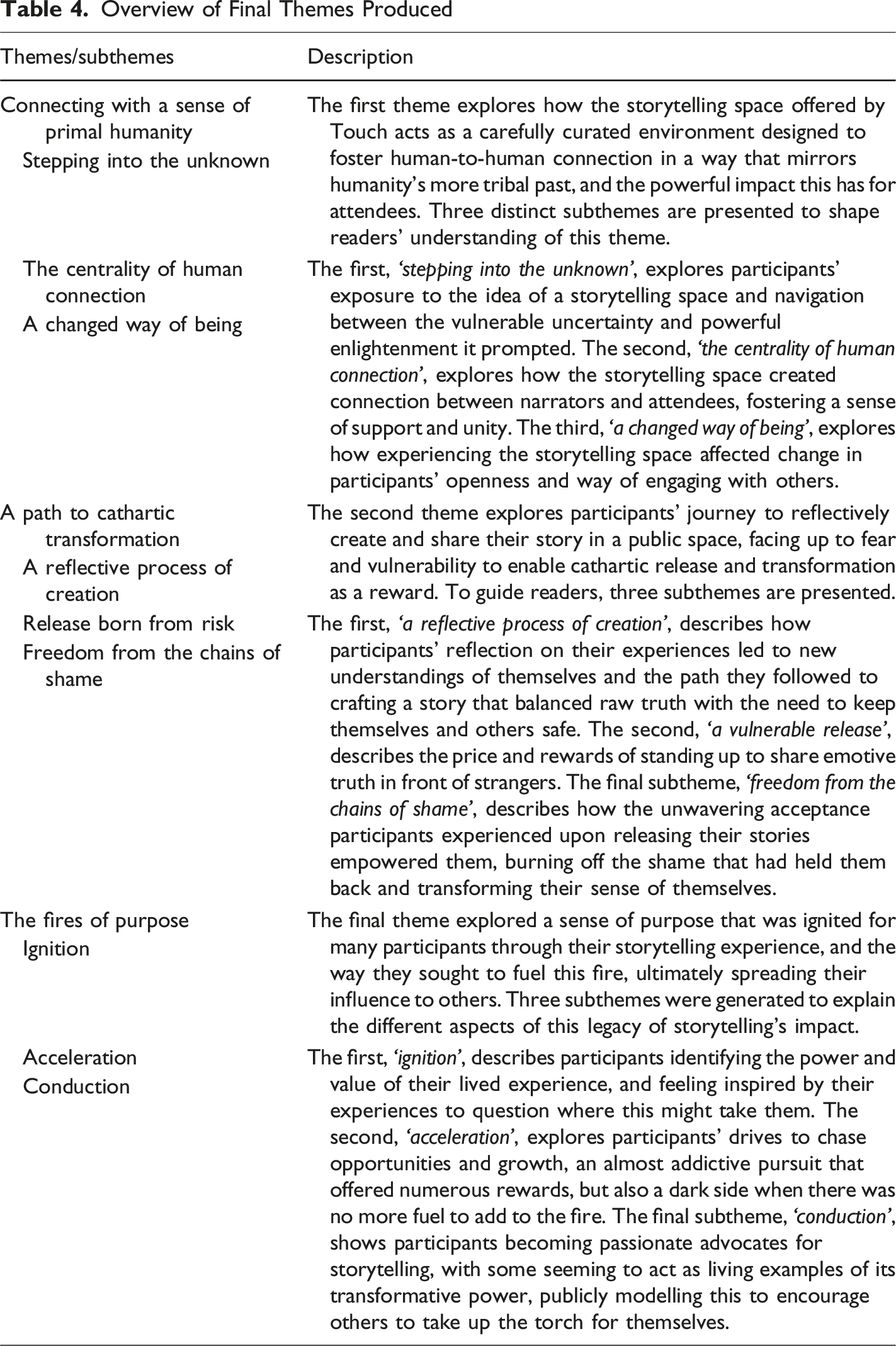
Building on a growing body of evidence addressing the impact of hearing lived experience stories, this study explored the experiences of individuals sharing stories at live storytelling events. The central aim was to better understand speakers’ experiences and to consider what, if any, impact taking part in such events might have on their lives. The project benefited from a co-produced study design, following an interpretative phenomenological analysis framework. Eight participants shared their experiences in semi-structured interviews. Three superordinate themes were developed to explain their experiences: ‘connecting with a sense of primal humanity’, ‘a path to cathartic transformation’, and ‘the fires of purpose’. These themes outlined experiences of connection with others, unburdening from shame, transforming sense of self, reframing experiences, and connecting with a newfound sense of purpose. Parallels are drawn with similar research, suggesting how this paper can extend current understanding of the experience and impact of storytelling. This includes identifying links between storytelling and trauma therapies, with conclusions drawn about storytelling events’ potential to kick-start post-traumatic growth for speakers. This prompts consideration of the potential that community programmes and partnerships might have for affecting positive change.
Storytelling is a phenomenon that predates written language, appearing in pre-historic art going back thousands of years (Aubert et al., 2019). It has been used for centuries across cultures to share vital information, reflect on history and experiences, and bring communities together. The process of storytelling also provides a direct channel to a storyteller’s internal personal world, illuminating aspects of their personality and identity. This can create dual opportunities for both speaker and listeners to consider new perspectives (Davis et al., 2021; Donaldson-Andersen, 2017; Hall, 2011). While not a new phenomenon, some researchers have recently turned their focus to better understanding storytelling and associated narrative practices. In doing so, they have begun a process of more formally situating humanity within the idea of a story-shaped world, an ontological position that sees human life as storied, and identities as narratively constructed (Barani, 2019).
Storytelling exists within this ontological position as a sense-making process that contributes to the formation of healthy identities, and as a tool to convert destructive ways of thinking into healthy and constructive ones (Barani, 2019). Beliefs about oneself, events and experiences are linked to the onset and maintenance of psychological difficulties through the way these are crafted into life stories and the meaning made of them. Harmful beliefs, like those seen in the aftermath of trauma/adversity, can disrupt and distort life stories, leading to struggles with self-acceptance (Georgieva & Georgiev, 2019). As such, narrative approaches emphasise the importance of forming new and meaningful ways of storying negative beliefs and experiences to re-integrate them into life stories in a more beneficial manner, placing this at the heart of their understanding of recovery from mental distress (Kerr et al., 2020).
Storytelling can therefore be seen as a mechanism for people to regain coherence within their life story by integrating aspects of previous disrupted or distorted narratives with new experiences, perspectives and insight (D’Cruz et al., 2019), enabling reconstruction of self-identity in a way that arguably parallels psychotherapy. When identity reconstruction takes root, Chin et al. (2023) and others hypothesise that positive change, including post-traumatic growth (PTG), may follow. Kerr et al.’s (2020) findings of increased agency and meaning appearing in individual’s life stories prior to noted improvement in their mental wellbeing acts as evidence of this. Given these supposed links to PTG and Hamby et al.’s (2022) conclusion that increased levels of PTG foster better mental health outcomes than reduced post-traumatic symptoms, it is unsurprising that researchers are now exploring the benefits that storytelling might offer.
To date, researchers have explored group-based storytelling for disease management (Gucciardi et al., 2021), creative arts approaches to reduce mental health stigma (Kosyluk et al., 2018, 2021), storytelling courses in mental health recovery colleges (Nurser et al., 2018) and more. Each study has found positive benefits for those hearing the stories told, and some also note benefits for the speakers. It is perhaps because of this that stories are increasingly being used as tools within health and social care training/professional development (de Jager et al., 2017; Erogul et al., 2022; Ingram, 2021; Voronka & Grant, 2021) as well as service improvement projects (Salter & Newkirk, 2019).
Predominantly, research has focused on digital storytelling; a method that captures and presents 3-5-minute-long stories overlayed with pictures, which can be kept and shared in private or public forums (de Jager et al., 2017). Findings from research using digital storytelling approaches have been promising, noting the ability of recorded narratives to spread hope and understanding, increase feelings of connection, reduce stigma, and aid as a tool in recipients’ mental health recovery journeys (Laing et al., 2017; Ng et al., 2022; Rennick-Egglestone, Morgan, et al., 2019; Rennick-Egglestone, Ramsay, et al., 2019; Slade et al., 2021).
While the impact for recipients is clear, findings related to the experiences of narrators (those telling their own stories) are more limited, across all forms of storytelling research. What is known is that both positive and negative experiences are possible, with negatives often relating to the brevity of narratives created through digital storytelling, or the misuse of power by organisational providers. This is explained through the need to omit and edit content to achieve an ‘acceptable’ story or product, one that can face expectations of becoming more aligned to organisational rather than individual purposes (Costa et al., 2012; de Jager et al., 2017; Llewellyn-Beardsley et al., 2019, 2022; O’Donnell et al., 2019; Sunderland & Matthews, 2022).
Positive findings, on the other hand, link to the ability to challenge and change official stories told by professionals about narrators (Grant et al., 2015) and/or a form of therapeutic benefit gained from sharing one’s story. The nature of this therapeutic benefit has yet to be defined, but it has been tentatively related to the affirming experience of being invested in and listened to, as well as the positive relationships, enhanced sense of agency, and new perspectives gained through the process of sharing a lived experience story (D’Cruz et al., 2019; de Vecchi et al., 2016; Ferrari et al., 2015; Lenette et al., 2019; Nurser et al., 2018).
While current research can offer some insight into the experiences of narrators, a clear picture of how the phenomenon of storytelling is felt and understood by them, and what its impact might be, remains lacking. Llewellyn-Beardsley et al. (2022) therefore call for more research into the experience of narrators to better understand both the possibilities and problems associated with storytelling. It is believed that increased understanding of how storytellers experience the act of storytelling, and any consequences this has, could prove beneficial for mental health practitioners, policy makers and researchers. Specifically, it could improve understanding of the complications, considerations and consequences that may exist for individuals asked, or asking, to tell lived experience stories.
To best answer Llewellyn-Beardsley et al.’s (2022) call, a focus on live experiences, rather than recorded narratives, may be warranted, due to the supposed increased vulnerability and authenticity of raw, live narrations when compared with written or prepared stories (Erogul et al., 2022). This may enable greater visibility of, and insight into, the process of storytelling. This study has therefore been designed and centred upon the core research question: ‘What is it like to share a story of surviving/overcoming/recovering from adversity through a public storytelling event for the first time, and what, if any, impact does this have on narrators’ lives?’
Materials and Methods
Design
This project was approached and designed from a critical realist perspective, combining a positivist/realist ontology (meaning there is a true reality to discover) with a constructivist/relativistic epistemology (meaning people will experience and understand things, including that reality, in different ways; Stutchbury, 2021). This shaped the project’s approach and execution, underpinning the selection of an interpretative phenomenological analysis (IPA) design using semi-structured interviews, as IPA is a broadly contextualist approach (Larkin et al., 2006), falling between the opposing poles of constructionism and positivism and aligning well with a critical realist position (Braun & Clarke, 2013; Grace & Priest, 2015).
IPA is based on phenomenology (the investigation of subjective experiences), idiography (a focus on individuals) and hermeneutics (the theory and methodology of interpretation). It focuses on building an understanding of unique perspectives on a specific phenomenon (Howitt, 2019; Larkin et al., 2019) with participants’, rather than researchers’, perspectives holding the greatest weight (Smith & Eatough, 2007). This puts participants’ voices at the forefront of research, personalising both the collection and representation of data, a key strength of the approach (Larkin et al., 2006), and one that aligned well with this study’s aims, and its lead researcher’s stance.
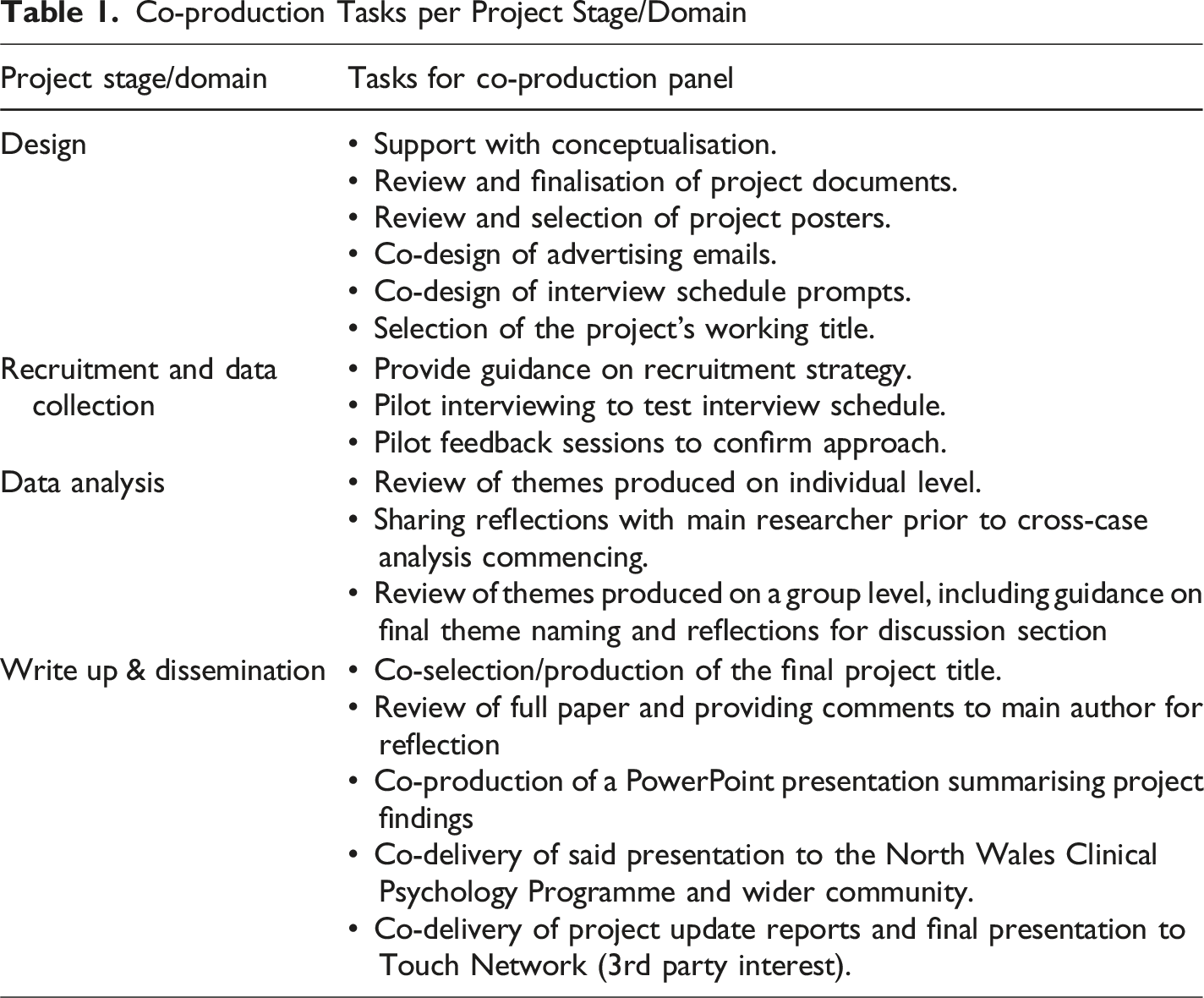
Co-production Tasks per Project Stage/Domain
Participants, Recruitment and Ethical Approval
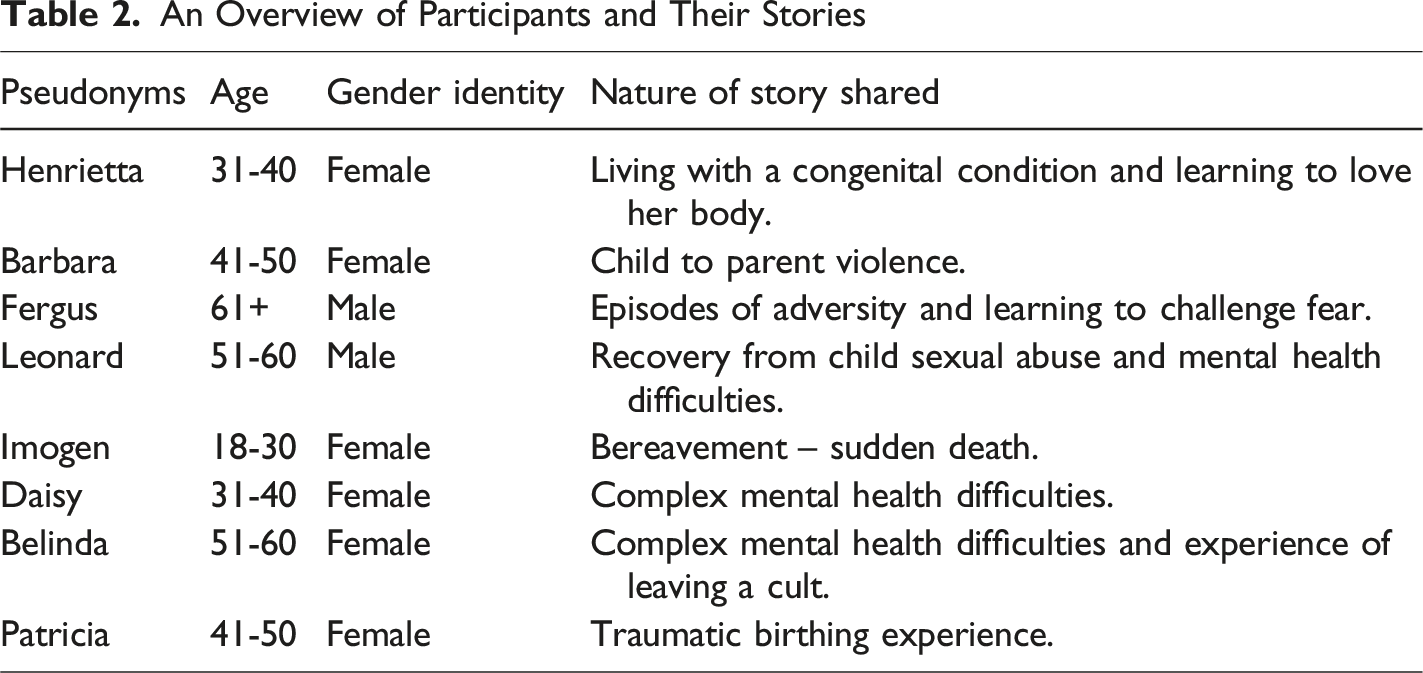
The study was conducted in line with relevant ethical standards (British Psychological Society, 2021a; 2021b) and ethical approval was granted by the Bangor University School of Psychology and Sport Science Research Ethics Committee (reference 2024-0320) prior to recruitment commencing. The sample consisted of individuals who had shared a story related to an experience of adversity in a public forum. To recruit participants, a partnership was formed with Touch Network CIC (Touch), an organisation that specialised in ethical storytelling, ensuring narrators' and audiences’ wellbeing was safeguarded throughout the process of sharing/hearing potentially emotionally challenging stories (see Appendix C). Emails announcing Touch’s partnership with this project and advertising its recruitment poster were sent to their database of storytellers, enabling participants to access information about the study and provide consent to take part, before a screening process began.
An Overview of Participants and Their Stories
Data Collection and Analysis
Once initial consent to be contacted was received, and screening indicated that an individual met inclusion criteria, a pre-interview meeting was scheduled. This offered a secondary step in confirming suitability and the opportunity to answer any questions they had about taking part. After the meeting, participants documented written informed consent for the study before proceeding. The study offered £20 shopping vouchers as payment for interviews, which were completed online, recorded and transcribed between July and September 2024. Interview duration ranged from 45 minutes to 1 hour 16 minutes (M = 63 minutes). Interviews were conducted flexibly, using a co-designed interview schedule as prompts to enable reflection and discussion. Care was taken to allow participants to express and share what they felt was most relevant to their experiences, and after the interview they were given a debrief form and the opportunity to withdraw their data prior to analysis.
Data analysis in IPA is designed to provide detailed descriptions and interpretations of individuals’ accounts of their experiences (Smith & Eatough, 2007). This idiographic focus remains even when exploring group-level themes, with the convergence and divergence of participants’ experiences of each theme explored in depth. IPA data analysis efforts are seen as a double-hermeneutic process with both an insider and outsider’s stance (Smith & Eatough, 2007). This means that participants’ experiences are not just passed over in their entirety to the researcher (Willig, 2013), as the researcher’s own conceptions are required to make sense of the person, world and topic under study (Chapman & Smith, 2002). In practice, this meant conducting descriptive as well as conceptual analysis on transcripts. This allowed analysis to remain as close to participants’ experiences as possible, while ensuring the researcher did not take their words at face value and considered possible underlying meanings and allegories behind them.
More specifically, the process for analysis involved reviewing each transcript individually and then summarising the researcher’s thoughts at that stage. Next, comments were made about the content in the left-hand margin of each transcript while initial ideas on themes were documented in the right-hand margins. This aided in generating a list of potential themes, which could then be clustered, abstracted, contextualised and subsumed to produce a set of subordinate and superordinate themes for each transcript, following best practice guidelines (Smith et al., 2009; Smith & Osborn, 2015). Once completed, feedback sessions took place with participants to share findings, collaborate on finalisation of theme tables (see Appendix D) and confirm the acceptability of randomised pseudonyms to avoid any undue distress caused by unpredictable negative connotations. A £10 shopping voucher was offered to encourage engaging in this optional process and all participants took up the opportunity. After individual analysis concluded, and following guidance from the project’s co-production panel, cross-case analysis began to identify the final superordinate themes, which are presented narratively in the ‘Results’ section below, with verbatim quotations included to support the interpretations outlined.
Methodological Rigour and Quality Assurance
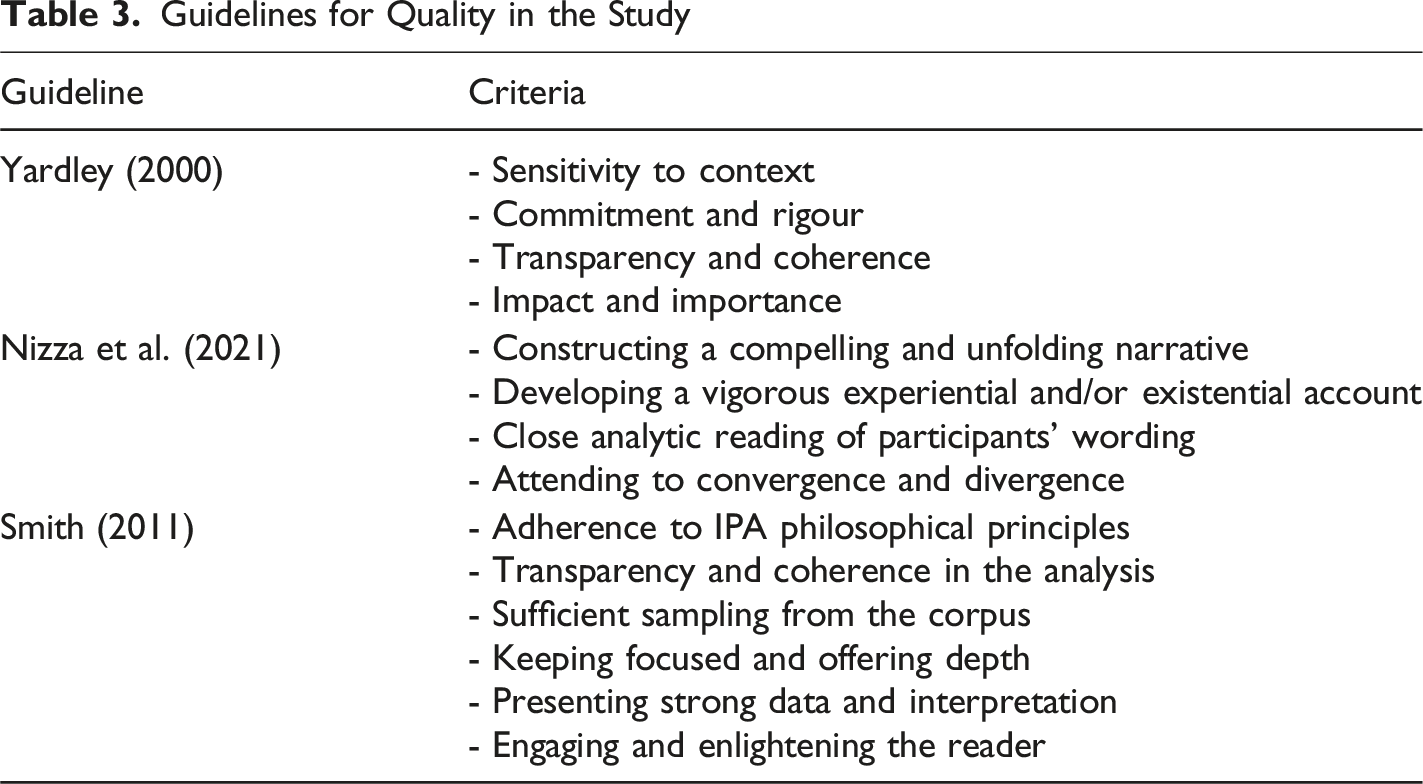
To ensure methodological rigour, it was important to practice bracketing, a process of actively setting aside one’s own beliefs and assumptions, to minimise the impact on analysis of any preconceptions the researcher held, as well as emerging themes from individual cases (Dörfler & Stierand, 2021; Goldspink & Engward, 2019; Peat et al., 2019). Bracketing in IPA is, however, only partially possible, as its double-hermeneutic process relies on the researcher’s conceptions in the sense-making process inherent in interpretation (Chapman & Smith, 2002; Smith et al., 2009; Willig, 2013). To find the right balance and avoid undue influence, relevant guidelines were consulted on how to approach self-reflectivity, which emphasised the role of transparency and vigilance about pre-existing beliefs and perspectives (Peat et al., 2019; Smith et al., 2009; Starks & Brown-Trinidad, 2007). This included ensuring the creation of a reflexive/position statement prior to the project commencing (see Appendix B), and a log that could be kept throughout to illuminate how the researcher’s position might develop.
Guidelines for Quality in the Study
Results
Overview of Final Themes Produced
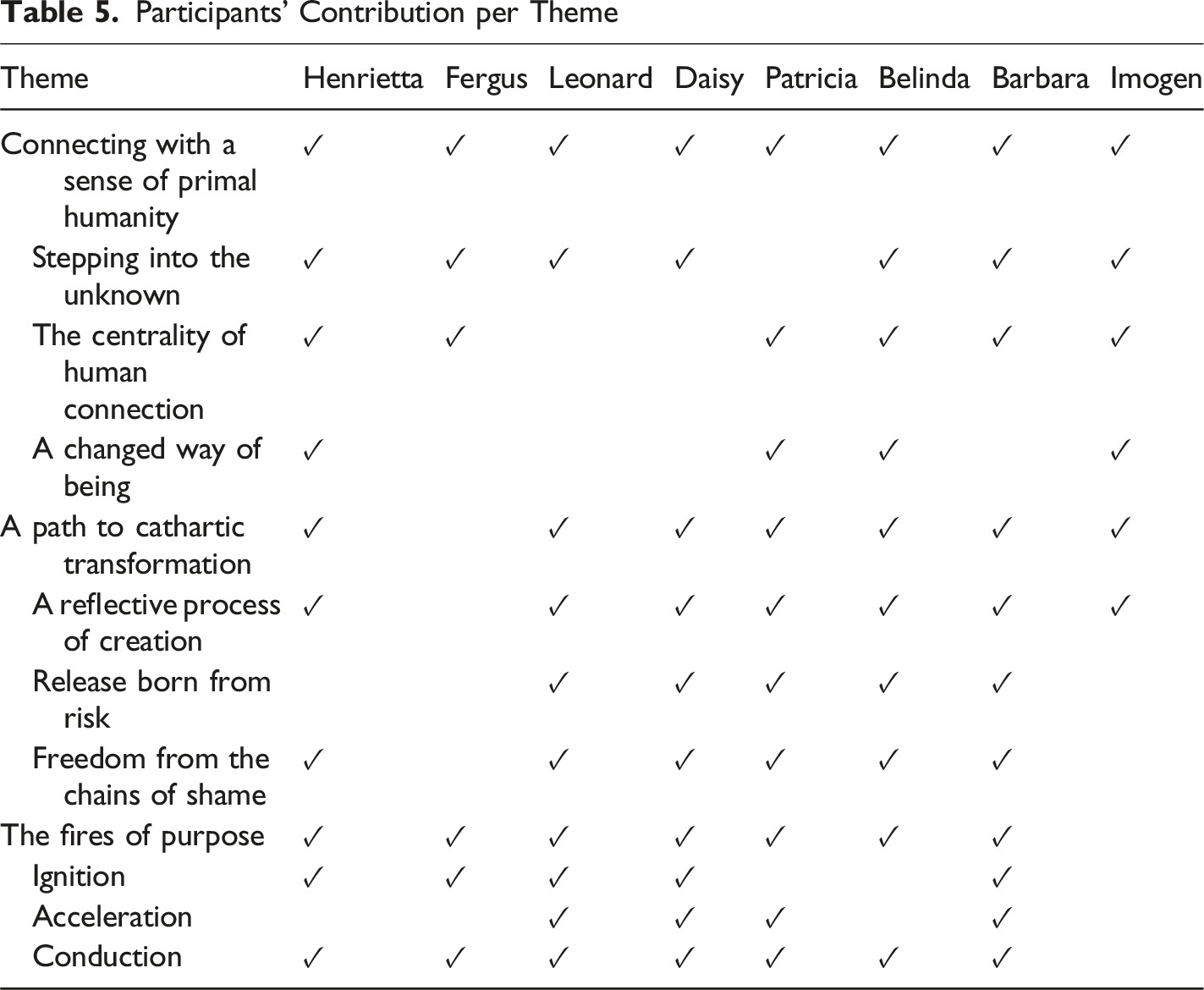
Participants’ Contribution per Theme
Theme 1: Connecting With a Sense of Primal Humanity
Stepping Into the Unknown
For many participants, the idea of a storytelling event acted as a form of confrontation with the unknown. Exposure, however, sparked something, with Fergus learning to recognise storytelling as a potentially useful “coping mechanism” for isolation and pain, while Daisy and Leonard’s exposure to others’ stories led to surges of intrigue as to whether people might want to listen to theirs as well. Their experiences of intrigue upon discovering storytelling practices are mirrored across the sample, including for those who had shared aspects of their lived experience in a different way prior to their introduction to storytelling.
The nature of storytelling as fundamentally different from previous experiences with public speaking, performances and/or sharing of lived experience, strongly stands out from this sample’s accounts. Across experiences, a mediator of vulnerability becomes apparent in explaining how the difference was felt, with some linking this to sharing the content of their stories for the first time, while others tied their sense of vulnerability as much to the medium of delivery as to the content: I think it makes me feel more vulnerable because I’m being real and […] I can’t just rely on the ego that comes out and does [SINGS] or singing, dancing, you know. And you know, I had to be real (Belinda). The performance side of standing up in front of people isn’t the scary bit. The scary bit is the content (Daisy).
By entering this vulnerable space and following through with their intention of sharing their stories, participants were exposed to the power this had for affecting emotional change. This included experiences of acceptance and recognition of the struggles they had endured, as well as noting how far they had come since: This is really powerful, this shows how difficult things were, what I’ve put in place and what change has come from it. And I think that’s where that power was to share with everyone else (Barbara).
Others like Fergus and Daisy, however, were left questioning why they had not done this before, reflecting not only the value storytelling had to offer, but also its lost nature within modern lives. Contrary to more ancient times, when human-to-human storytelling likely served as a central part of tribal culture, within their lives it seemed an almost alien concept. Stepping into the unknown to engage with this forgotten practice therefore appears to have been an enlightening process that offered numerous benefits they might never have experienced had this unusual opportunity not presented itself.
The Centrality of Human Connection
Contrasting with experiences many participants had had growing up, the environment provided for storytelling offered something unique; a space that fostered a humanising experience and promoted connection. This was particularly clear for Patricia and Fergus who offered insights into this connection from both an audience’s and narrator’s perspective: I just felt that they’re there to listen to me and I'm grateful that they have given their time up. You know, because time is…time is the thing, and they're giving their time to sit and listen to my story. So the gratitude in that moment was immense already, even before I'd opened my mouth (Patricia). There was kind of an empathy, but when…you could see in the storytellers’ eyes that things had affected them quite deeply and when they were troubled and […] when you look around, you can see […] that majority of people in the room wanted to be there. They wanted to listen to people's stories (Fergus).
The role of human-to-human support in nurturing narrators through difficult sharing experiences, as well as in maintaining the connective power of the space, appeared to have a central role in many participants’ accounts. Touch therefore seems to have offered a space supported and mediated by connection between narrator and audience that offered the reward of enabling stories to land on willing ears. The impact of this was noted differently across the sample, but undertones of enabling personal resonance, fostering togetherness, and combating stigma by normalising emotive conversations appeared throughout: When you’ve told your story, you want it helpfully to sit with people just for a little while, you know, for maybe for the rest of the session of that, just so that they can, you know, relate it to their own story (Belinda). And I think it does bring people together in that moment and if someone tells someone about, oh yeah, I saw this thing the other day and they talked about this and it made me think about, I could talk about this because someone else did (Imogen). That’s where the magic is because you can then have those conversations with other people and give them hope as well (Barbara).
For Patricia, this experience went deeper, with her recognising how the environment enabled her to not only feel safe and supported, but fundamentally part of something special while sharing her story. She alludes to a tribal feeling of connection and unity throughout her experience, highlighting how the echoes of humanity’s distant past can still ring loud in modern times: I always remember our ancestors all sitting around the fire. Like even when I grew up and went to Cub Camp and run the fire and that togetherness, that sharing that it was kind of that feeling but without the campfire. […] You feel you’re part of something. You feel you're part of a community […] you’ve got your tribe (Patricia).
A Changed Way of Being
Touch appears to have offered a carefully curated and contained environment that promoted togetherness and helped connect attendees and narrators with a more primal sense of humanity. This elucidated for some participants the lost nature of having ‘real’ conversations and truly connecting with others, an experience they had not typically found within modern society. Imogen, for example, describes feeling a sense of belongingness from telling her story, and how vital she felt this could be for enabling difficult conversations to flow more freely: That’s what Touch and sharing stories is all about, is that having that connection with people and hopefully resonating and by talking about things that might make talking to your loved one about like death for example feel OK to talk about (Imogen).
She and others, like Henrietta, reflected on how they experienced environments in their home lives, and across wider British society, where emotional conversations were not the norm, and often appeared unwelcome. Sharing stories therefore represented unusual, but exciting, endeavours that prompted a drive to change their way of being with themselves and others beyond the storytelling space by recognising the value of reflecting and sharing emotive truth in everyday life: We live in such a culture of, you know, don't air your dirty laundry. Stiff upper lip and all of that. And I think it's made me kind of go, no balls to that […] it’s made me really kind of disconnect from that narrative and just go, no, absolutely let's share our dirty laundry. Let’s talk about it. (Henrietta).
Patricia, on the other hand, connected with using this forgotten practice to prepare for future sharing of her complex history with her children through the art of stories. She also sought opportunities to apply her learning from her event to deal with everyday stressors. By applying and building skill with speaking and engaging with others in a more open and connected way she went on to experience significant benefits, highlighting a taste of the powerful ripples that connecting with primal humanity can birth: It’s bizarre actually, because then I’m knowing to speak up in the moment. It made me speak up at the job centre, which then led on to these other programmes, which are networks of supporting people through emotions and what have you. So […] it has these stepping stones of kind of like…if that wouldn't happen, I wouldn't have known how to speak up in at this time of my life…so there’s, there’s definitely been a knock-on effect and impact (Patricia).
Theme 2: A Path to Cathartic Transformation
A Reflective Process of Creation
Central to the experience of telling a story is that of crafting it and deciding what to include and what not to. Many participants describe this exercise as evoking deep personal reflection. Revisiting the past, re-evaluating experiences and identifying new connections between them appear across accounts, suggesting they represent a core part of this process for these individuals: It was the first time, I think, that I had probably really understood and certainly stitched together all of those different experiences [...] to see kind of a common narrative (Henrietta). Revisiting some of those things gives us strength and actually the power to see how far we’ve come (Barbara).
The reflection inherent in this process enabled many to recognise triggers in their stories. This prompted a dilemma of finding a suitable balance between the delivery of raw truth and keeping narrators and listeners safe throughout the event: It was really important that I, I didn't put any trigger words in there [...] I wanted to be able to word it that whatever I visualise can let me carry on through the flow, not break my flow, or drop something in somebody else's visual box (Belinda). I didn't want to traumatise people, but at the same time [...] I felt that I have to have to give them a little bit of like, a little bit of trauma, [...] that’s what makes it a little bit more real for me (Leonard).
The crafting process was experienced by many participants as the genesis of healing, with themes of self-acceptance and recognition of personal progress seen throughout the sample. For some, hope for further healing through expression of the story was then born in the aftermath, predicated upon the learning from the experience thus far: I want to tell my story because actually I felt so alone and frightened in that whole experience that talking it out will actually help me heal from it, because I was still holding on to it […] and…I just thought it's a healing process and talking can help me heal (Patricia).
Release Born From Risk
The notion of “talking it out”, as explored by Patricia, lends well to the idea of storytelling as a ‘release’, which matches other participants’ experiences of the event as well. Imogen, for example, describes sharing her story as lifting a weight off her shoulders, while Henrietta depicted her experience as “really cathartic”. Despite the value that this release offered participants though, it was clear that it came at a price, with public vulnerability appearing to serve as currency: I think in the middle, I’ll admit a wobble and a tear came down because, you know, I thought, oh, God, […] this is about me, isn't it? You know, it was like, OK, yeah, this really did happen (Belinda). You hear the gasps, you see the different people's faces changing every time you look up, you see someone go [SHOCKED NOISE] to what we were going through. So yeah, I think that that brings that emotion up front more (Barbara).
Participants were therefore prompted to consider the price of storytelling, as whilst some like Imogen recognised the power of “sitting with discomfort”, others knew they needed to ensure that the risks inherent in sharing did not overshadow the potential rewards: That information going out into the world scared me because it could ruin everything […] it was a massive risk telling my story because when I turned up to the evening I did, I didn’t know who's going to be there, I didn’t know who knows who (Daisy). I think the most important thing as well, […] I didn’t want to just sit there and sound like the victim, even though there is a trauma in there, I wanted to kind of show that there’s life beyond…something awful that could happen (Belinda).
Once paid, the price of vulnerability appears to have funded more than just the release that Patricia and others had sought. Leonard exemplifies this by sharing how transformative it had been to share his feared and shame-inducing truth in a public space: I'm taking the power out of everything in the past that’s hindered me. You know, all of my fears. Yeah, putting that out there […] It completely takes the power out of everything. That’s been in…. that’s been holding me back in the past…and gives me more power (Leonard).
Freedom From the Chains of Shame
The essence of storytelling as transformative is mirrored across most participants’ accounts and appears to centre on a new relationship with self. Perhaps shaped by the nature of the environment in which their stories were told, self-worth and self-acceptance appear to have skyrocketed across accounts, marking new ground for participants in feeling able to be their true and authentic selves: The feeling of being unapologetically myself, was the most alien but empowering feeling I have felt in a very, very long time. Alien…but overwhelmingly empowering (Daisy). I was so frightened of using that word; cult, you know, but I’m not now […] that's what the story's done. It's gave me that, it's like a second coming out […] it's freed me up to be honest about myself (Belinda).
It seems for many participants that this improved sense of self was linked to breaking free from the restrictive chains of shame. By sharing their vulnerable truth so openly, they exposed themselves to the burning light of social judgement through a metaphorical trial by their peers and found perceptions of themselves and their stories to be different than expected. This enabled the event to act as a form of transformational ceremony, marking the end of shame’s reign over their self-perception: I think it's helped to raise the roof on that…blame and guilt and shaming that I sometimes do about myself. Past tense, I used to live in it, or I used to live in the world of blame, shame, guilt. Right now, it just comes and goes like flux and waves. (Belinda). It's almost put a marker in like this is just a positive story to tell now […] when I was younger, I used to have all these negative emotions around this topic, but now it feels like […] a source of empowerment now rather than a source of shame. And I think telling that story was the thing that switched the dial (Henrietta).
The impact of this transformation was seen through ripples of empowerment that transcended the storytelling arena. This included lifting some participants out of crisis states, improving their mental wellbeing, as well as creating a sense of both increased ownership, and closure, to the topics of their stories: I can close that door and start moving forward. I don't have to live in this constant area of suffering. […] This is a new chapter, you know? You can close, close the page to that side of things and you know move forward (Patricia).
Theme 3: Sparking the Fires of Purpose
Ignition
Within this sample, storytelling appears to link with a sense of purpose. The journey to discovering this began for most participants with the recognition that they had a story ‘worth telling’ and/or that telling their story could affect positive change for others: I guess realising I have something to say and something to share and that […] my experiences, particularly experiences that I've often felt ashamed of actually are…are really useful and really productive and really inspiring for other people (Henrietta). There was a number of things in my life where I found inspiration, and I thought if, if my way of looking at things has helped me find solutions, maybe I can help other people (Fergus).
Once connected with the desire to follow this purposeful journey, reality came sharply screaming up to let some participants know how far out of their comfort zone this might take them. Leonard, for example, describes how paralysed he initially felt after committing to this path, but also a surge of bravery to try anyway, because of his idea that “if I can get up and do that, I could get up and do pretty much anything”. He went on to experience the truth of that statement, and a sense of delight in finding his voice, a powerful experience that ignited a spark of inspiration whispering possibilities to his very receptive ears, and he was not alone in this. Others felt similarly inspired by the moment of finding their voices and the value their lived experience could offer, beginning a process of considering both the power of this skill and where fuelling these first sparks of purpose might take them: It's proved to me that my ability of speaking up and using my voice […] actually can work and […] it gave me that professional curiosity, you could say in…hang on a minute where could I go with this? (Daisy). What I can give to another family from what I've learned and what I've had to put in place…is more powerful than any professional ever standing in front of a parent and telling them to do something different. That's through my own experience, I've learnt that (Barbara).
Acceleration
Emboldened and excited by their exposure to this new sense of purpose, several participants began seeking ways to add fuel to this burgeoning flame by actively chasing opportunities to share their experience again. This led to entering art exhibitions, additional storytelling events, health and social care training at universities, joining co-production teams and more. The more that participants did, the more this seemed to reinforce their connection to this new path, creating for some a desire to use storytelling as a profession in and of itself: If the opportunity came up where someone said, look, you don't have to work, all you can do is you could just travel around and just talk to people. I would absolutely love it. Yeah, I would that for that that to me and that's completely the opposite of before I did my first talk (Leonard).
In following this process of fuelling the flames of purpose, several participants also describe the sensation of storytelling as an almost addictive form of “adrenaline rush” (Patricia). This prompts the question as to whether chasing this high acts as an additional factor behind participants’ motivational drives for repetition: It made me go and find as many other opportunities that I could to get that buzz back and get that feeling…like it felt similar to coming off of stage when I’ve danced […] and I hadn’t found that buzz in anything else in my life before other than dancing. So I wanted more of it (Daisy).
When faced with circumstances where there was no more fuel to add, however, a flame-out effect was seen. For some, this appeared to mark the end of a journey, and arrival at a place where they could be happy and content with their progress. For others, despite recognition of the positive change they had seen in their lives, losing momentum evoked frustration and a need to seek support to relight their fire in search of further progress. While possible and having the potential to escalate beyond the initial flame and into a roaring inferno for some, others were not so fortunate. Patricia, for example, noted how the stop-start nature of her engagement in purpose-driven activities enabled the echoes of old negative thinking patterns to resurface again and again, prompting an image of never quite being able to burn free of them.
Conduction
Recognising the power of their voices, and the sense of purpose this afforded, led to significant change for many participants. It also appears to have served as an act of conduction, spreading their passion and learning to others so they might follow a similar path: I think that gives other people a voice as well. So yeah, just sort of them saying, oh, I didn't know I could do that […] is again being able to help other parents and give them some strength and hope behind what we said (Barbara). When you hear of somebody else's story […] it gives other people permission then to share their story (Belinda).
Many participants also actively sought to spread awareness of what storytelling has to offer. Fergus, for example, is seen to strongly advocate the sharing of lived experience, both in formalised and everyday ways, highlighting his belief in the power this process can offer those in pain. He also reflects on the added benefit storytelling might offer in contrast to traditional therapies, an idea conceptually mirrored by Henrietta’s interpretation of storytelling as a “turbo form of therapy”.
For Barbara, Daisy and Leonard, however, the essence of conduction appears to manifest in the form of legacies forged through fires of purpose. Each of them had embraced a new understanding of themselves and a new connection with their lived experience in the aftermath of their storytelling events. Daisy’s journey led to her becoming “the person I never knew I needed” during her darkest times and to a new career using her lived experience to help people. Similarly, Barbara became a “parent practitioner” promoting better ways of working with families experiencing child-to-parent violence, while Leonard became a symbol of inspiration for health professionals, prompting offers to speak to mental health inpatients to spread hope for recovery.
Reframing their understanding of their lived experience in such a public way therefore appears to have acted as a lightning rod for positive change, as they can now use the power of their voices to affect change for others in everyday life, while simultaneously demonstrating the transformative power storytelling has had for their own lives. The transformation embodied by each of them may also act as a subtle call to action for those they encounter to consider what change might be possible within their own lives should they follow similar paths. In this sense, Barbara, Daisy and Leonard can be seen to be active agents of conduction, spreading the fires of purpose to others simply by the way they live their lives.
Discussion
This IPA study into the experience and impact of public storytelling on topics of adversity resulted in the generation of three superordinate themes: ‘connecting with a sense of primal humanity’, ‘a cathartic path to transformation’, and ‘the fires of purpose.’ Each was supported by the presence of three subordinate themes, with majority of participants contributing to the creation of each, albeit to differing degrees.
When comparing this paper’s findings with those seen in similar studies, parallels appear. D’Cruz et al.’s (2020) grounded theory review of people with acquired brain injuries who had engaged in storytelling workshops, for example, noted findings centred on themes of ‘sharing and helping’ (with subthemes related to feeling heard and releasing emotions) and ‘revisiting my story’ (with subthemes related to reflecting and learning). Their findings are mirrored within this paper, with crossovers noted in themes of emotional release, reflective learning, the sense of purpose in using one’s story to help others, as well as the drive to share again. Nurser et al.’s (2018) IPA study considering experiences of taking part in a storytelling course through a recovery college also echo similar findings. Particularly poignant among their identified themes were those related to cathartic liberation of emotion, the need for safety in disclosure, the emotionally demanding nature of storytelling, and a renewed sense of self. The current study can therefore be seen to extend the findings of existing literature exploring the experiences of narrators, adding greater weight to their conclusions.
Focusing upon this study specifically, the findings seem to spotlight and explore the therapeutic nature of storytelling. This is particularly apparent within ‘a path to cathartic transformation’, which begins with ‘a reflective process of creation’ where parallels with therapeutic writing are easily drawn. Within therapy, writing is used to aid reflection and processing and has a growing evidence base for its efficacy in affecting emotional change (Deveney & Lawson, 2022; Garisch et al., 2024; Pavlacic et al., 2019). By crafting their experiences into a story, participants underwent a similar process, whether they wrote out the story or not. By its nature, the act of shaping their experiences into stories involved applying a structure with a beginning, middle, and end. This enforced reflection and processing, regardless of whether a written or oral narrative was created. The need to revisit and reprocess experiences throughout this crafting process also presents parallels with evidence-based trauma therapy techniques, and so participants’ conceptualisation of the process as therapeutic is unsurprising (Gofman et al., 2021; Resick et al., 2024; Schauer et al., 2011; Zayfert & Black Becker, 2020).
Trauma therapies present an intriguing comparison point for considering storytelling, as their role in facilitating healing from adversity certainly appears to be mirrored by the effects seen in participants’ storytelling journeys. In addition, and as an aid, to processing memories and emotions, trauma therapies rest upon exposure to difficult memories, places and feelings to affect change (McLean et al., 2022; Racz et al., 2024). This is also seen in storytelling, with exposure to emotive memories, public speaking, public vulnerability and more. In ‘release born from risk’ and ‘freedom from the chains of shame’, participants describe facing their fears, processing difficult experiences, and being able to re-evaluate their understanding of themselves and their stories as a result. It could be argued, therefore, that storytelling events combine narrative processing with exposure work in a similar way to Narrative Exposure Therapy, an approach that draws upon the creation of a complete narrative of a person’s life to process and contextualise traumatic experiences to affect emotional change (Schauer et al., 2011).
Beyond what can happen in a therapy room, storytelling offers another element in that new understandings of self can be presented to the world, enabling the opportunity to cement them and foster growth and change beyond just closure from past adversity. Kerr et al. (2020) share that increased agency often appears in self-stories before mental health improves, which can be likened to people putting out a new version of their story and living their way into it. In this way, storytelling events arguably also replicate the effects of ‘Outsider Witness’ practices from Narrative Therapy; definitional ceremonies where experiences and new understandings of self are shared with select people, typically within a therapy space (Walther & Fox, 2012). The events facilitated by Touch, however, offer the ability to do this on a much larger scale, and to share the experience with other speakers, adding an additional community aspect and broadening one’s social world.
The impact of adding a community aspect to experiences typically confined to the therapy room appears to be profound. In ‘connecting with a sense of primal humanity’, participants alluded to a multi-layered sense of curation within the space, experienced as togetherness nurtured through both the sharing of palatable, emotive stories, and the presence of a willing and eager audience. This unusual experience highlights something arguably missing for many in the digital age; true human-to-human connection. It also spotlights the practical application of the principles of ‘common humanity’, a term used in Compassion Focused Therapy that involves contextualising one’s suffering as being part of the human condition, rather than something uniquely born by the individual alone (Gilbert, 2014). In modelling these principles openly, a contagious force of compassion is created, spreading from person to person within the space and adding to that sense of more primal community outlined in participants’ accounts. The ability to continually foster this, and enable inclusivity within it, represents laudable success for Touch’s mission within the community. It also prompts reflection on the power community projects hold for affecting change beyond the therapy room and offers strong incentive for therapeutic agencies and healthcare providers to explore community partnerships.
The emphasis on community and connection as a central force within participants’ transformative experiences is clear from this study’s findings. It is also unsurprising, as research has continually shown a positive correlation between social connection and mental wellbeing (e.g. Holt-Lunstad, 2024; Martino et al., 2015; Wickramaratne et al., 2022). Within events like those hosted by Touch, this community aspect goes beyond connection, however, as their public nature also enables social shaping of self-identity for storytellers, mediated by the responses of others (McLean et al., 2007). Participants describe experiencing a “wave of acceptance” (Daisy) from the audience in response to exposing their vulnerable truths and authentic selves. In doing so, the audience become part of a dual process with the storyteller in shaping and cementing a new understanding of self, wherein the speaker can cast aside old understandings and transform their relationship with themselves and the world. The impact of this varied across the sample, but the sense of change throughout prompts consideration of other papers’ conclusions linking storytelling with PTG (e.g. Chin et al., 2023).
Within this study, a review of participants’ accounts shows common demonstration of three of the five domains of PTG: ‘personal strength’, ‘new possibilities’, and ‘relating to others’ (Tedeschi & Calhoun, 1996). For ‘personal strength’, ‘a path to cathartic transformation’ references how the reflective nature of the process enabled consideration of how far participants had come, and the strength they held within not only to survive their experiences but also to open themselves up to public vulnerability. Emboldened by connection with this newfound sense of inner strength and more positive self-perception, many then found their way of engaging with the world had changed, linking with the domain of ‘new possibilities’. In ‘the fires of purpose’, Leonard, Daisy, Patricia and others provided examples of chasing and securing additional storytelling events, co-production activities, art exhibitions and even job roles related to their lived experience in the aftermath of their individual Touch events. This marks similarity with findings from other research, where alongside improved relationships with self and others, personal growth and the drive to share again stand out as common experiences in the afterglow of storytelling, reinforcing the connection with these two domains of PTG (D’Cruz et al., 2019, 2020; Hurst et al., 2022; Lenette et al., 2019; Nurser et al., 2018; Salter & Newkirk, 2019).
The PTG domain of ‘relating to others’ (Tedeschi & Calhoun, 1996) appears clearest across this study, likely due to the mediating factor of the connective environment curated by Touch and outlined in ‘connecting with a sense of primal humanity’. Participants describe feelings of belongingness, engaging with new ways of speaking and sharing beyond the event, as well as a newfound understanding of community, which all appeared to be deeply valued and impactful. This resonates with Sultani et al.’s (2023) systematic review of PTG among refugees. They found that sharing and listening to stories helped to re-establish a sense of community, strengthening belongingness and social connection through shared lived experience. This togetherness was then posited as the catalyst behind a shift towards predominant feelings of empowerment over original sadness and/or anger. This suggests that community and environment serve as significant factors within experiences of emotional processing and identity reconstruction, which are linked to the onset of PTG (Chin et al., 2023). If true, then by coupling the reflective process inherent in crafting a story with a carefully curated connective environment, storytelling events may hold many of the base materials required to jump-start PTG and transform lives. This highlights important links between the three themes explored in this paper, as well as the power they hold when brought together in events like those hosted by Touch. Consideration of further opportunities for maintaining this growth may be key, however, given the ‘flame-out’ effect noted in some participants’ journeys.
Applications
By considering the experiences of narrators, this study adds weight to growing evidence about the efficacy of narrative practices in transforming the lives of people who have experienced significant adversity. The links to three of the domains of PTG particularly highlight the potential for storytelling interventions with individuals in recovery from periods of mental distress related to trauma. The study’s findings also suggest a role for community initiatives in facilitating spaces for fostering common humanity alongside adverse life experiences. Investment in such programmes could lead to broader societal change by reducing loneliness, enabling increased access to methods of alleviating suffering, and promoting resilience and growth beyond the therapy room.
Limitations and Future Research
The study’s starkest limitation is seen in the absence of negative or neutral experiences among its participants. Previous research has shown that some individuals have had difficult and challenging experiences of public storytelling, with very aversive outcomes, often mediated through misuse of power (de Jager et al., 2017; Llewellyn-Beardsley et al., 2019, 2022). This study did not seek to exclude those voices, but by restricting recruitment to Touch’s mailing list, a potential bias may have been created, as individuals who experienced storytelling negatively were less likely to see recruitment advertisements.
Future research might therefore benefit from recruiting on a larger scale, across multiple storytelling providers, perhaps through independent social media channels. Recruiting more broadly might also address a secondary limitation imposed by the partnership with Touch, as any social demand characteristics born out of loyalty to the Touch brand could be avoided. Consideration could also be given in a larger scale project to exploring the impact of different styles of audience, as within this project, experiences appeared to significantly relate to the benefits derived from an audience already primed for being receptive listeners.
Conclusion
Facilitating change for individuals beyond the therapy room remains an important area for research and reflection. This study’s findings add weight to a growing body of evidence about the transformative power of storytelling, and the potential community resources and projects can have to affect change in people’s lives. Given the significance of the impact seen within this study, there is an inherent call to other researchers to further contribute to this field of study to hopefully replicate its findings and thereby magnify their application in clinical practice.
Supplemental Material
Supplemental Material - “A Turbo Form of Therapy”: A Co-produced Investigation of Lived Experience Storytelling
Supplemental Material for “A Turbo Form of Therapy”: A Co-produced Investigation of Lived Experience Storytelling by Christopher Thorpe, Rachel Bickerton, Nick Horn, Becky Leonard-Dixon, Michael Peters, and Lucy Piggin in Psychological Reports.
Footnotes
Acknowledgements
Thank you to Dr. Nic Edwards2 for her support and guidance, and to Touch Network for providing access to participants.
Ethical Considerations
The study was conducted in line with relevant ethical standards (British Psychological Society, 2021a;  ) and ethical approval was granted by the Bangor University School of Psychology and Sport Science Research Ethics Committee (reference 2024-0320) prior to recruitment commencing.
Consent to Participate
Informed consent was obtained from all individual participants included in the study.
Consent to Publication
No identifiable data is included.
Author Contributions
All authors contributed to the study conception and design. Data collection and individual transcript analysis was performed by Christopher Thorpe. Becky Leonard-Dixon and Michael Peters joined Christopher Thorpe to complete cross-case analysis, with Nick Horn and Lucy Piggin providing supervisory oversight. The first draft of the manuscript was written by Christopher Thorpe and all authors commented on previous versions of the manuscript. All authors read and approved the final manuscript.
Funding
The authors disclosed receipt of the following financial support for the research, authorship, and/or publication of this article: Funding was provided by the North Wales Clinical Psychology Programme (NWCPP), Bangor University. NWCPP are funded by Health Education and Improvement Wales (HEIW), part of NHS Wales. HEIW have no role in the design or review of trainee research.
Declaration of Conflicting Interests
The authors declared no potential conflicts of interest with respect to the research, authorship, and/or publication of this article.
Data Availability Statement
Data not available for ethical reasons.
Supplemental Material
Supplemental material for this article is available online.
Author Biographies
References
Supplementary Material
Please find the following supplemental material available below.
For Open Access articles published under a Creative Commons License, all supplemental material carries the same license as the article it is associated with.
For non-Open Access articles published, all supplemental material carries a non-exclusive license, and permission requests for re-use of supplemental material or any part of supplemental material shall be sent directly to the copyright owner as specified in the copyright notice associated with the article.
