




Abstract
There is abundant research on the nature and content of mind wandering (MW) in neurotypical individuals, yet little research in these areas on individuals high in autistic traits. The current study explored the relationship between autistic traits and several aspects of MW: themes, intentionality, temporal dimensions, and attitudes towards MW. A total of 1,477 participants completed measures of autistic traits, MW, and stress. Autistic trait level was positively correlated with the MW theme of guilt and fear of failure (GFF), spontaneous MW (MW-S), poor attentional control (PAC), and stress, and negatively correlated with appreciation for MW’s benefits. Participants were then divided into two groups based on their autistic trait level. Those scoring six and above on the AQ-10 were placed in the “high” group, and those scoring five and below in the “low” group. Significant group differences emerged for GFF, MW-S, PAC, stress, and appreciation of MW. These results add to a small but growing body of research exploring the internal experiences of individuals high in autistic traits and how their MW patterns may relate to common challenges associated with autism. However, because all participants were neurotypical university students, the findings may not generalize to Autistic individuals or to more diverse samples. Taken together, these results suggest that MW content and frequency offer insight into challenges with sustained attention, daily stress, and anxious thought patterns. Future research should explore whether encouraging the benefits of MW (i.e., creativity, planning, and mood regulation) could support skill development and emotional well-being in individuals high in autistic traits.
Introduction
Imagine you are listening to your boss during a meeting. At some point, you no longer notice what he is saying because you have started thinking about what to make for dinner. This attentional switch from being “on-task” (paying attention to your boss) to “off-task” (thinking about dinner) is known as mind wandering (MW), and typically involves thoughts related to planning, self-reflection, personal concerns, and goals (Baird et al., 2011; Girardeau et al., 2022; Smallwood & Schooler, 2006).
Autism is a neurodevelopmental condition that shapes sensory perception, communication preferences, and social communication styles and may be associated with highly focused interests or repetitive behaviors (American Psychiatric Association, 2013). Individuals exhibiting the broad autism phenotype (BAP) display autism-related traits without meeting criteria for an autism diagnosis. Although their traits fall outside diagnostic thresholds, people with the BAP can nonetheless experience differences in social interactions (Baron-Cohen et al., 2001; Bernier et al., 2012; De Groot & Van Strien, 2017), theory of mind (ToM; Camodeca, 2022; Eyuboglu et al., 2018; Gokcen et al., 2009; Green et al., 2020; Stewart et al., 2020), patterns of intense or focused interests (Bernier et al., 2012), and higher levels of depression and anxiety symptoms (Kulasinghe et al., 2021; Kurtz et al., 2023) often reported in Autistic populations.
Much of the existing literature on MW and autism focuses on ToM tasks (Andreou & Skrimpa, 2020; Atherton & Cross, 2019; Burnside et al., 2017; Gao et al., 2023; Zalla et al., 2015) and the activity and connectivity of the default mode network (DMN), the network associated with MW (Cherkassky et al., 2006; Guo et al., 2024; Kennedy et al., 2006; Lau-Zhu et al., 2019; O’Reilly et al., 2017; Padmanabhan et al., 2017; Wang et al., 2021). It has been suggested that MW may be less frequent or qualitatively different in Autistic individuals. However, such speculation is based on observed differences between Autistic and non-Autistic individuals in their DMN activation or connectivity (Cherkassky et al., 2006; Kennedy et al., 2006). In contrast, there has been relatively little research on the actual content of MW in Autistic individuals or those with BAP traits.
The present study builds on this limited work by asking participants directly about their MW experiences. One of the few investigations to take a similar approach, exploring potential relationships between autism and internal experiences, was carried out by Hurlburt et al. (1994) and included three participants with Asperger’s syndrome. The study found that the three participants were mentally engaged in problem-solving, planning tasks, and thoughts about past events, but unlike the neurotypical (NT) participants, they had almost no thoughts related to inner speech, emotions, or bodily sensations (Hurlburt et al., 1994). Additionally, unlike NTs, the Autistic individuals thought mostly in a visual rather than verbal form, which was supported in later reports (Grandin, 2009; Kana, 2006; Koshino et al., 2005). In contrast, a recent study with NTs found that autistic traits were positively correlated with thinking in words, but only in participants with high connectivity between the left lingual gyrus and left motor cortex (Turnbull et al., 2020). A subsequent study conducted by Simpraga et al. (2021) found that Autistic participants thought less in images compared to NTs, however, this difference did not remain significant after false discovery rate correction. Relative to NTs, Autistic individuals also thought less about other people and had more difficulty holding onto their thoughts (Simpraga et al., 2021). Extending this work to NTs high in autistic traits, Forby et al. (2025) recently found that autistic traits were unrelated to perspective-taking, visual thoughts, or verbal thoughts, but negatively correlated with thinking about other people.
Given the limited research on how autistic traits might impact MW, there is still much to learn. Investigations into MW patterns and content in high autistic trait individuals will have multiple benefits. Allowing high autistic trait individuals to share their MW experiences will help determine whether these are similar to NT experiences. As stated previously, the types of thoughts engaged in when MW can include future goals, problem-solving, and current concerns, and may also serve to boost creativity (Baird et al., 2011; Mooneyham & Schooler, 2013; Peng et al., 2017; Seli et al., 2017), all of which tap into planning and imagination, two areas that can be challenging for Autistic people (Crespi et al., 2016; Olde Dubbelink & Geurts, 2017). Uncovering a lack of awareness of the benefits of MW in high autistic trait individuals may provide a link to their difficulty with planning and imagination.
Additionally, the lifetime prevalence of depression and anxiety in Autistic people is 37% and 42%, respectively, compared to roughly 16% and 1%–12% in the general population (Hollocks et al., 2019; Kessler et al., 2003, 2012). Individuals with BAP traits also experience higher rates of depression and anxiety relative to NTs (Kulasinghe et al., 2021; Kurtz et al., 2023). Despite being common co-occurring conditions of autism and the BAP, anxiety and depression remain difficult to diagnose in Autistic individuals. In NTs, investigations into thought content correlated with anxiety and depression have revealed that depressive thoughts are associated with MW to the past (Klinger, 1996; Poerio et al., 2013; Smallwood & O’Connor, 2011), while anxious thoughts were associated with MW to the future (Klinger, 1996; Poerio et al., 2013), and increased MW rates overall (Fell et al., 2023). Identifying temporal patterns of MW in high autistic trait individuals may provide a baseline for spotting unusual spikes of past- or future-focused thoughts, which may help clinicians and caregivers identify depression and anxiety. Having a baseline for common themes in high autistic trait individuals’ MW may also help identify unusual or recurring instances, and whether such episodes are focused on passing rather than persistent worries.
Investigations into MW in high autistic trait individuals could also uncover the intentionality in their MW episodes (i.e., to what extent they intentionally or unintentionally engage in MW). Autistic people and those exhibiting the BAP can have difficulty with various aspects of attention (divided: Boxhoorn et al., 2018; shift: Camodeca, 2022; sustained: Chien et al., 2014; Chien et al., 2015). Understanding whether, and to what extent, these lapses of attention are deliberate (intentional shifts to off-task thought) or spontaneous (unintentional off-task thought) could help develop more effective supports for high autistic trait individuals in the classroom, workplace, or other environments where attention is required. For example, the context regulation hypothesis (CRH; Smallwood & Andrews-Hanna, 2013) proposes that it might be possible to teach individuals how to maximize the benefits of MW while also minimizing its costs. This can be done by helping them recognize which MW topics lift their mood and the optimal times to engage in MW. Understanding the intentionality of high autistic trait individuals’ MW may help target interventions (such as CRH) and supports to help them thrive in real-world settings.
The current study builds on the limited previous work by asking individuals high in autistic traits directly about the themes, movement, intentionality, and temporal aspects of their MW. To do so, we recruited participants from a North American university. As autistic traits have been found in varying levels across the general population (Constantino & Todd, 2003; De Groot & Van Strien, 2017), we anticipated that recruiting from a large student body would likely include individuals with a broad range of traits shared with Autistic people. Additionally, by investigating the effects of autistic traits in a neurotypical sample, our results will be relevant beyond clinical populations. Given the limited existing research on the nature of MW in high autistic trait individuals, much of the current study is exploratory. However, based on data from other areas of autism research, we make the following speculative predictions: (1) (2) (3)
As discussed previously, high autistic trait individuals are prone to experiencing anxiety and depression, both of which have been linked to particular types of MW patterns (Fell et al., 2023; Poerio et al., 2013; Smallwood & O’Connor, 2011). On one hand, higher rates of anxiety might lead individuals high in autistic traits to report more future-oriented MW. On the other hand, their increased likelihood of depression may be linked to more past-oriented MW. Building on prior work with NTs that linked internal states such as anxiety and depression to specific temporal patterns in MW, we anticipate that, relative to low autistic trait individuals, high trait individuals will report a greater tendency to think about the past and the future.
Methods
Participants
A total of 1,572 individuals (1,238 women, 332 men, 2 prefer not to answer) aged between 18 and 51 years (M = 20.6, SD = 3.0), were recruited from the undergraduate Human Subject Pool at the University of British Columbia (UBC). Consent forms detailing participants’ rights were provided for review to all interested individuals prior to the start of the experiment. Individuals who then consented to the study were granted course credit for participation.
During the data cleaning process, response outliers were identified and removed. Outliers were defined as data that fell ±2.5 standard deviations from the mean for each of the variables of interest (PC, GFF, PAC, MW-S, MW-D, Past, Present, and PSS-4). Based on this criterion, the data for 95 individuals were removed. The final number of participants was 1,477 (1,163 women, 312 men, 2 prefer not to answer) aged between 18 and 51 (M = 20.5, SD = 2.9). The study was approved by UBC’s Behavioural Research Ethics Board.
Measures
10-Item Autism Quotient
All participants completed the 10-item Autism Quotient (AQ-10; Allison et al., 2012). The AQ-10 is a self-report questionnaire that was developed to be a quicker screening tool for autism. It performs comparably (Booth et al., 2013; Murray et al., 2017) to the full Autism Quotient (Baron-Cohen et al., 2001), and scores reliably in sensitivity (0.88), specificity (0.91), and positive predictive value (0.85; Allison et al., 2012). The AQ-10 has also been used in previous research to identify individuals high in autistic traits (Bargiela et al., 2016; Forby et al., 2024; Pazhoohi et al., 2021; Stanyon et al., 2022). Based on the AQ-10’s cut-off score of six (Allison et al., 2012), participants in the current study were assigned to either the “high” (six or higher) or “low” (five or lower) trait group, where high scores reflect more autistic traits. We did not screen for autism and therefore could not determine whether any participants had a clinical diagnosis. While our participants in the “high” group met or exceeded the AQ-10’s cut-off score of six for referring individuals for a clinical assessment, we caution that our results should not be applied to individuals with an autism diagnosis.
Deliberate and Spontaneous Mind Wandering Scales
As our study focused on the intentionality of participants’ MW, we used the Deliberate (MW-D) and Spontaneous (MW-S) Mind Wandering scales (Carriere et al., 2013) to assess intentional and unintentional off-task thought. These scales have been used previously to distinguish deliberate and spontaneous MW (Agnoli et al., 2018; Golchert et al., 2017; Seli et al., 2013, 2015). For MW-D, the scale’s four items consist of “I allow my thoughts to wander on purpose”, “I enjoy mind-wandering”, “I find mind-wandering is a good way to cope with boredom”, and “I allow myself to get absorbed in pleasant fantasy”. Response options for items one, two, and four range from 1 (“Rarely”) to 7 (“A lot”); for item three, the response options range from 1 (“Not at all true”) to 7 (“Very true”). For MW-D, the higher the score, the greater the tendency for an individual to engage in intentional MW.
The four items on the MW-S include “I find my thoughts wandering spontaneously”, “When I mind-wander, my thoughts tend to be pulled from topic to topic”, “It feels like I don’t have control over when my mind wanders”, and “I mind-wander even when I’m supposed to be doing something else”. Items one, two, and four are rated using the same 7-point Likert scale used for MW-D, ranging from 1 (“Rarely”) to 7 (“A lot”), whereas response options ranging from 1 (“Not at all true”) to 7 (“Very true”) are used for item three. For MW-S, higher scores indicate a greater tendency to experience spontaneous MW.
Imaginal Processes Inventory
The Imaginal Processes Inventory (IPI; Singer & Antrobus, 1980) is a comprehensive measure that contains 28 scales and a total of 344 items measuring different aspects of daydreaming (e.g., frequency, acceptance of daydreaming, visual imagery, etc.). Given the extensive time that would be required to complete the IPI, we chose the condensed version of the IPI, The Short Imaginal Processes Inventory (see below for details). To address our research question related to the temporal aspects of their MW, we asked participants to complete only the IPI Past (PAST) and IPI Present (PRESENT) scales, which probe temporal aspects of an individual’s MW. Items on the PAST scale include, “Events from my childhood recur to me very clearly and with many details,” and “I think a lot about the past”. The PRESENT scale includes items such as, “My thoughts are never on things far removed from present-day problems,” and “My daydreams always relate to events current in my life”. Participants rate all statements using five response options ranging from “Definitely untrue or strongly uncharacteristic of me”, to “Very true or strongly characteristic of me”.
Short Imaginal Processes Inventory
The Short Imaginal Processes Inventory (SIPI; Huba et al., 1982) was designed to assess features of MW more efficiently and includes 45 items from the full IPI to measure three subscales: Positive-Constructive Daydreaming (PC), Guilt and Fear of Failure (GFF), and the Poor Attentional Control (PAC) subscales. High scores on the PC scale indicate a greater positive attitude towards daydreaming, such as believing daydreaming is useful for problem-solving, boosting creativity, and providing positive and warm feelings. The PC also probes to what extent MW episodes include visual thinking. For the GFF scale, higher scores indicate a greater tendency to have daydreams about guilt and fear of failure. Topics for GFF items include imagining one is an expert at something, failing loved ones, or fantasies about getting angry or even with others. Higher PAC scores indicate a greater tendency to mind wander, become bored, or get distracted easily. Response options for the items on the SIPI range from “Definitely untrue or strongly uncharacteristic of me”, to “Very true or strongly characteristic of me”. Although the SIPI includes three statements that address temporal aspects of MW, we included the Past and Present subscales of the IPI in the current study in order to get a more detailed report on when participants mind wandered to.
The Short Form Perceived Stress Scale
The Short Form Perceived Stress Scale (PSS-4; Warttig et al., 2013) contains four items from the Perceived Stress Scale (Cohen et al., 1983) and was chosen to keep the survey brief for participants. Like the original, the PSS-4 measures an individual’s perceived stress level in the past month. Participants use a 5-point Likert scale ranging from 0 (“never”) to 4 (“very often”) to rate the following items: “In the last month how often have you felt you were unable to control the important things in your life?”, and “In the last month how often have you felt difficulties were piling up so high that you could not overcome them?”. The PSS-4 also includes the reverse scored questions, “In the last month how often have you felt confident about your ability to handle your personal problems?”, “In the last month how often have you felt that things were going your way?” Higher scores on the PSS-4 indicate an individual experiences greater stress.
Procedure
Participants completed all questionnaires online. Measures were randomized and participants were given no time limit to respond to each item.
Results
Correlations Between AQ-10, Features of Mind Wandering, and Stress (N = 1,477)
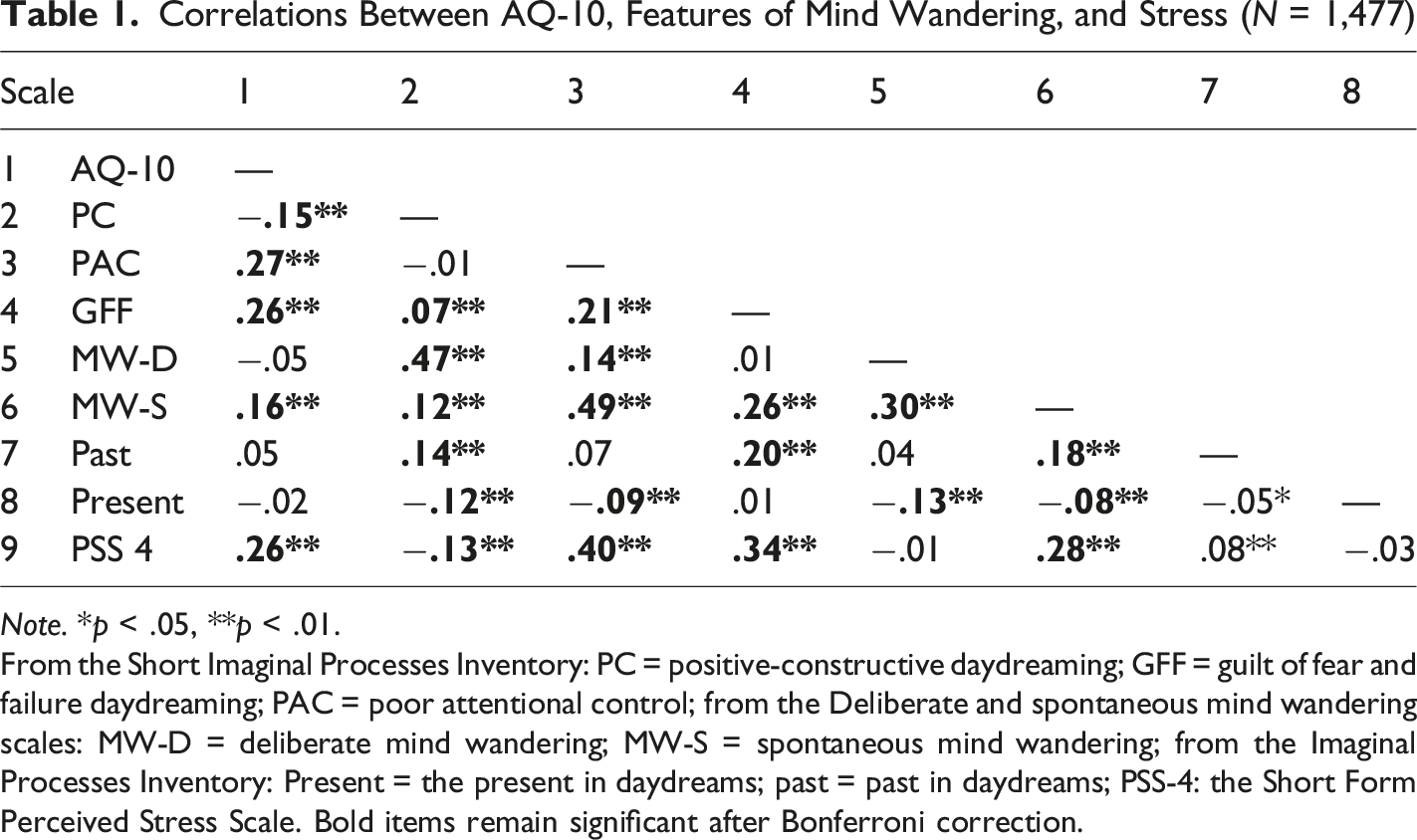
Note. *p < .05, **p < .01.
From the Short Imaginal Processes Inventory: PC = positive-constructive daydreaming; GFF = guilt of fear and failure daydreaming; PAC = poor attentional control; from the Deliberate and spontaneous mind wandering scales: MW-D = deliberate mind wandering; MW-S = spontaneous mind wandering; from the Imaginal Processes Inventory: Present = the present in daydreams; past = past in daydreams; PSS-4: the Short Form Perceived Stress Scale. Bold items remain significant after Bonferroni correction.
To further investigate the effects of autistic traits on MW, participants were divided into two groups based on the AQ-10’s cut-off score of six (Allison et al., 2012): a “high” group (HAQ; scores ≥6) and “low” group (LAQ; scores ≤5). Individuals who score six or higher on the AQ-10 are typically referred for an autism diagnostic assessment (Allison et al., 2012).
A total of 372 participants (273 women, 99 men) qualified as high scorers in the current sample. A subsample of 372 low scorers (273 women, 99 men) was randomly selected to be used in the subsequent analyses. An independent samples t-test showed that AQ-10 scores were significantly higher for HAQ (M = 7.1, SD = 1.1) than for LAQ (M = 3.0, SD = 1.3, t (728.79) = 49.35, p < .001, d = 3.37).
Mind Wandering and Stress in HAQ and LAQ (n = 744)
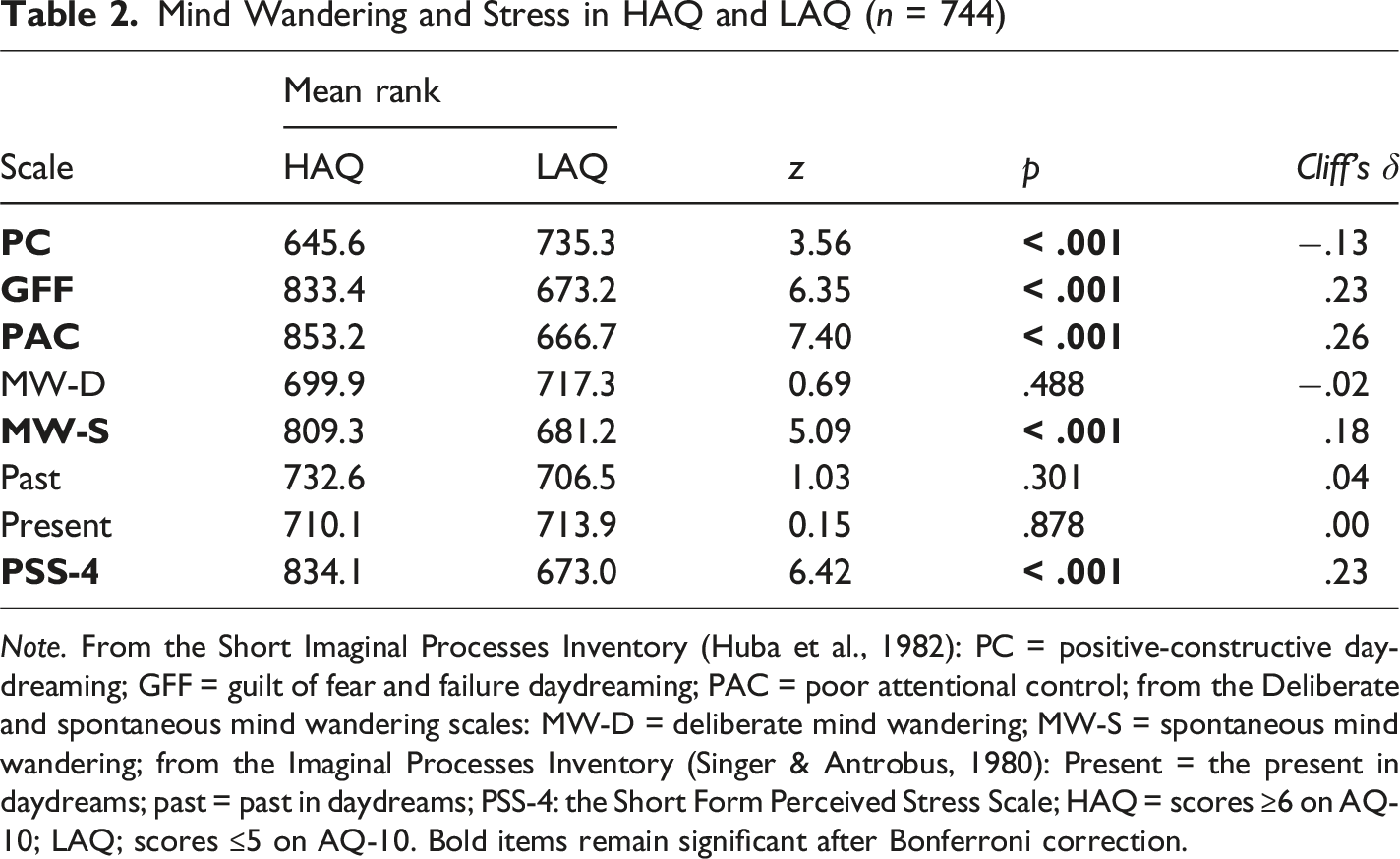
Note. From the Short Imaginal Processes Inventory (Huba et al., 1982): PC = positive-constructive daydreaming; GFF = guilt of fear and failure daydreaming; PAC = poor attentional control; from the Deliberate and spontaneous mind wandering scales: MW-D = deliberate mind wandering; MW-S = spontaneous mind wandering; from the Imaginal Processes Inventory (Singer & Antrobus, 1980): Present = the present in daydreams; past = past in daydreams; PSS-4: the Short Form Perceived Stress Scale; HAQ = scores ≥6 on AQ-10; LAQ; scores ≤5 on AQ-10. Bold items remain significant after Bonferroni correction.
Positive-Constructive Daydreaming: Comparisons Between HAQ and LAQ (n = 744)
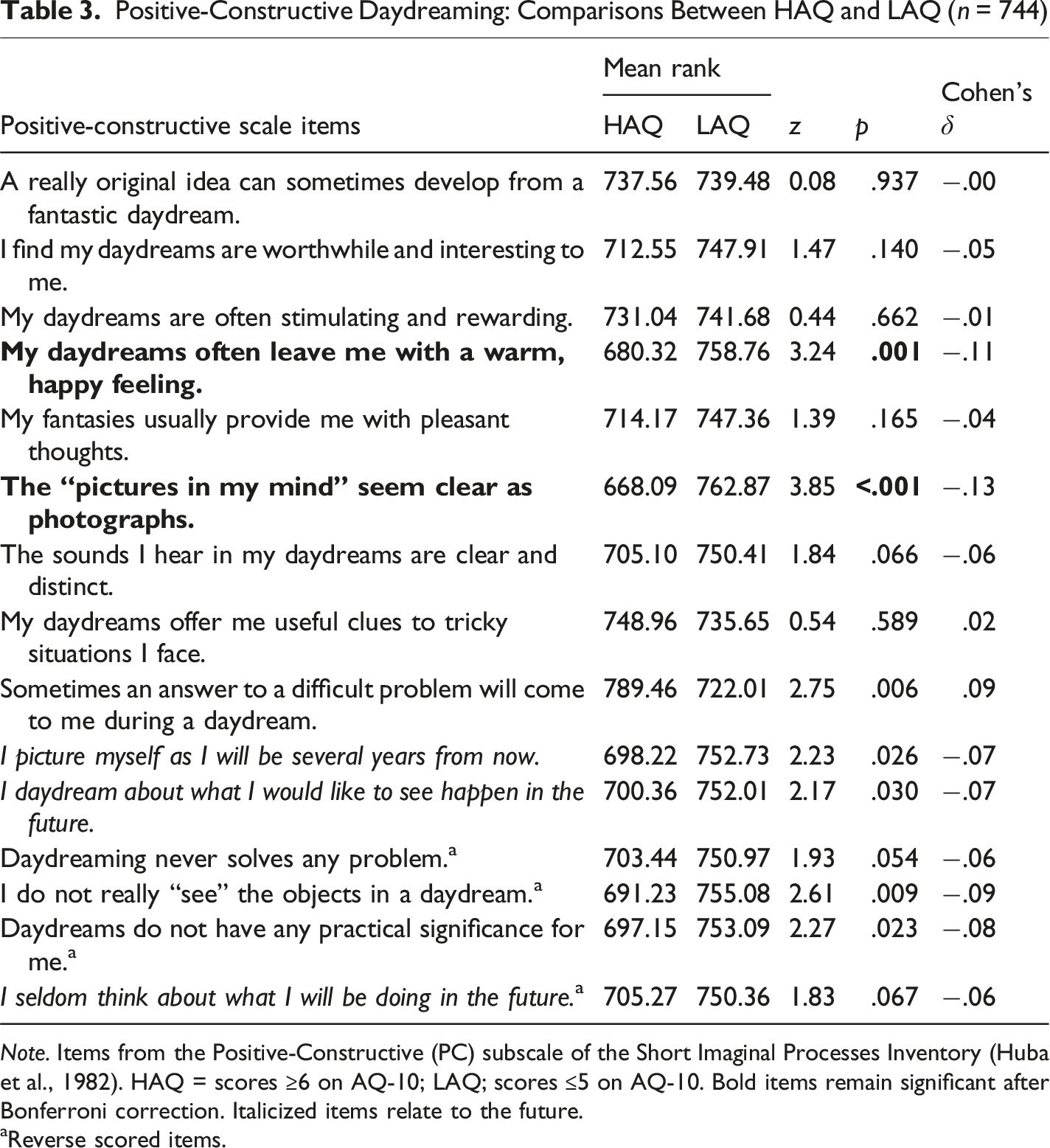
Note. Items from the Positive-Constructive (PC) subscale of the Short Imaginal Processes Inventory (Huba et al., 1982). HAQ = scores ≥6 on AQ-10; LAQ; scores ≤5 on AQ-10. Bold items remain significant after Bonferroni correction. Italicized items relate to the future.
aReverse scored items.
Mind Wandering - Spontaneous Scale: Comparing HAQ and LAQ (n = 744)
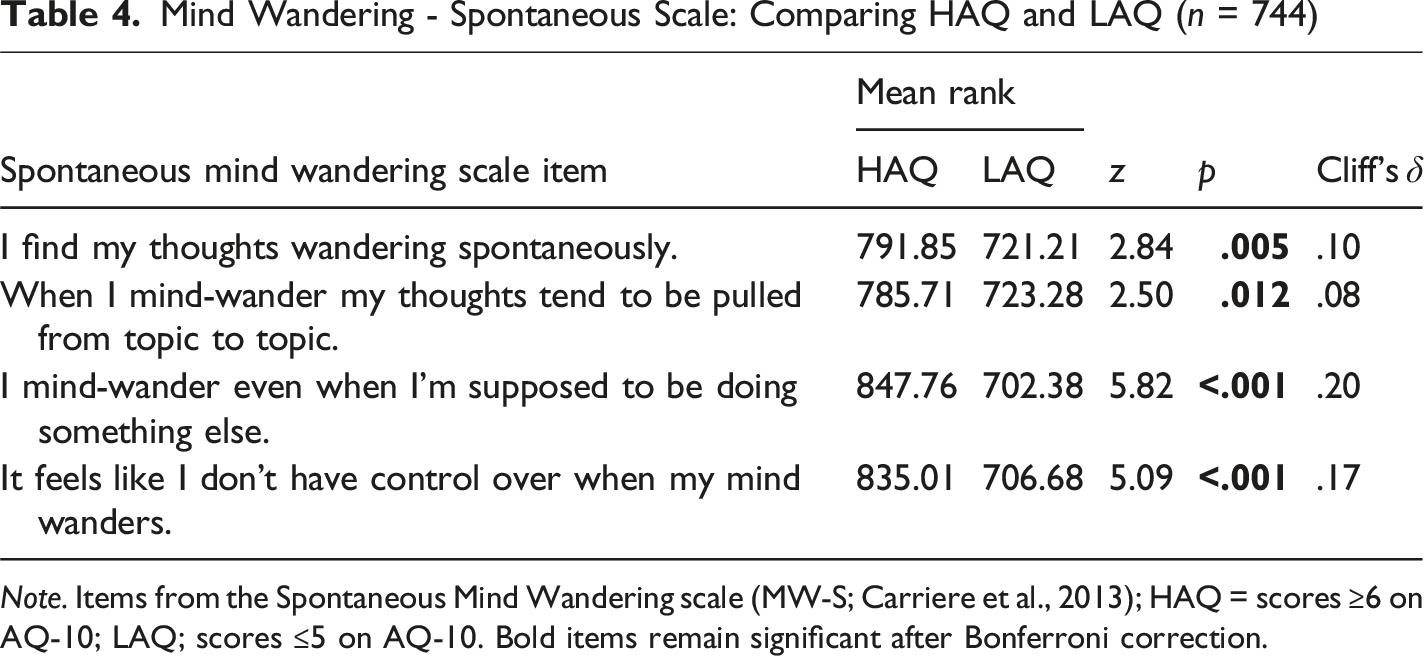
Note. Items from the Spontaneous Mind Wandering scale (MW-S; Carriere et al., 2013); HAQ = scores ≥6 on AQ-10; LAQ; scores ≤5 on AQ-10. Bold items remain significant after Bonferroni correction.
Short Form Perceived Stress Scale: Comparing HAQ and LAQ (n = 744)
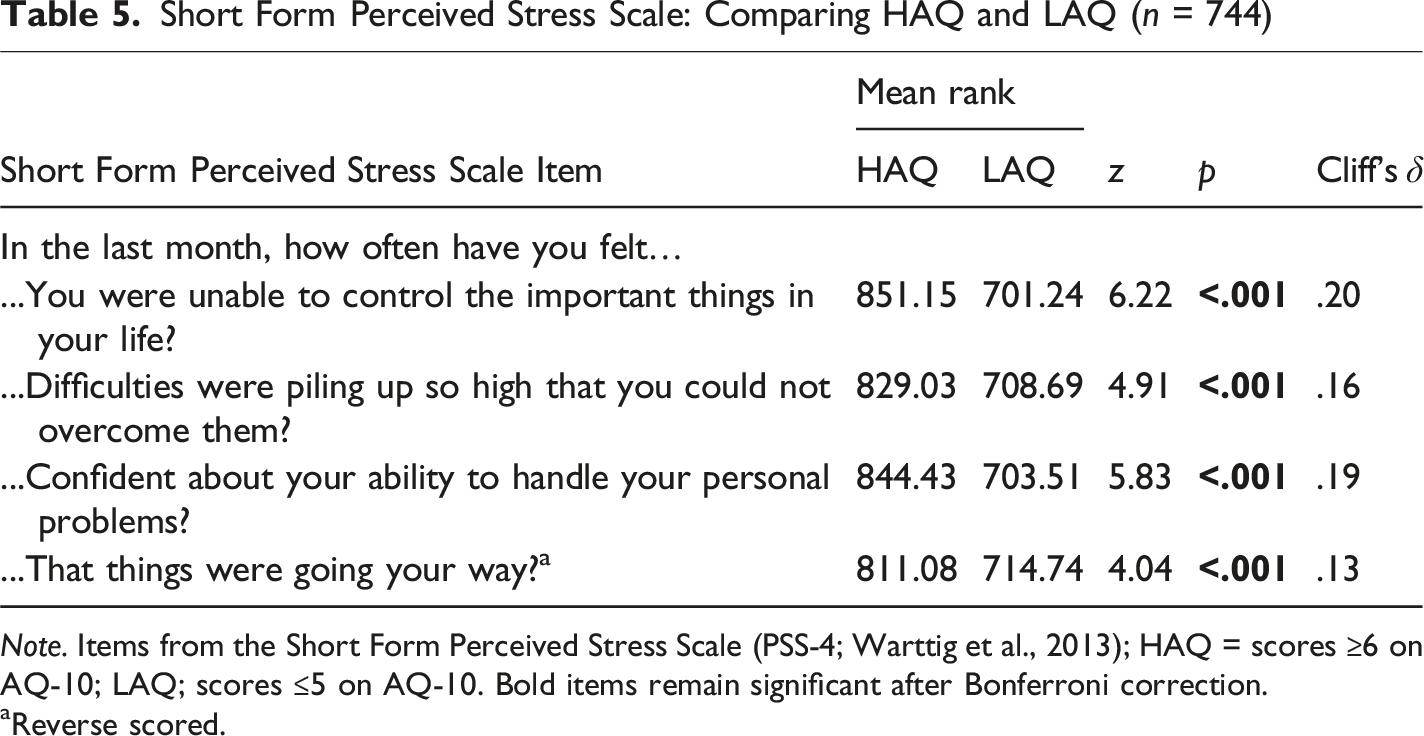
Note. Items from the Short Form Perceived Stress Scale (PSS-4; Warttig et al., 2013); HAQ = scores ≥6 on AQ-10; LAQ; scores ≤5 on AQ-10. Bold items remain significant after Bonferroni correction.
aReverse scored.
No significant differences between the two groups were found on the MW-D, Past, and Present scales.
Discussion
The current study explored the effects of autistic traits on the nature of mind wandering (MW), based on participants’ self-reported experiences. To do so, we analyzed participant responses on the Positive-Constructive Daydreaming (PC), Guilt and Fear of Failure (GFF), and the Poor Attentional Control (PAC), subscales of the Short Imaginal Processes Inventory (SIPI). We also analyzed the relationship between autistic traits and the Deliberate (MW-D) and Spontaneous (MW-S) Mind Wandering scales, the Past and Present subscales of the Imaginal Processes Inventory (IPI), and the Short Form Perceived Stress Scale (PSS-4). As our sample consisted of university students and we did not screen for autism, we highlight that these findings may not be generalizable to individuals with a formal autism diagnosis.
The results of our analyses showed a significant positive correlation between AQ-10 score and scores on the GFF and PAC scales, as well as with scores on the MW-S and PSS-4. Further, after dividing participants into groups based on their AQ-10 score (HAQ participants scored six or higher, LAQ participants scored five or lower) we found that HAQ had significantly higher scores than LAQ on the GFF, PAC, MW-S, and PSS-4. These associations may reflect that individuals higher in autistic traits experience more MW related to feelings of guilt and failure, have more difficulty controlling their attention, experience higher rates of spontaneous MW, and higher levels of stress about their daily lives. Results from our analysis also showed a significant negative correlation between the AQ-10 and the PC scale, suggesting that individuals higher in autistic traits find fewer benefits in engaging in MW. There were no significant relationships found between autistic traits and MW-D, or the IPI Past and Present scales. Results are discussed in detail below.
Positive Correlations Between GFF, PAC, MW-S, PSS-4 and Autistic Traits
Our results showed a positive correlation between AQ-10 scores and scores on the GFF, and that HAQ GFF scores were significantly higher than LAQ GFF scores. Together these results indicate that the more autistic traits an individual endorses, the more likely they are to have MW episodes related to guilt or fear of failure.
The GFF scale includes several statements designed to detect if an individual’s MW episodes contain themes of guilt, feelings related to not meeting responsibilities, or appearing as a failure in the eyes of others (“In my daydreams, I am always afraid of being caught doing something wrong”, “I imagine myself not being able to finish a job I am required to do”, and “I imagine myself failing those I love”). Despite a general consensus in the literature that ToM abilities are reduced in autism, some studies have shown that Autistic individuals and those displaying the BAP can pass tests of ToM (Bowler, 1992; Ozonoff et al., 1991; Rajendran & Mitchell, 2007). Our findings suggest that the GFF may be capturing high trait individuals’ worries about appearing as a failure to others or not meeting personal or familial responsibilities, and how they might affect those around them. These results align with Autistic individuals’ anecdotal reports of recognizing they can sometimes cause frustration in others (Grandin, 2009; Higashida, 2013; Mukhopadhyay, 2011). The significant correlation we found between scores on the GFF and PSS-4 may help explain why stress levels in families with an Autistic member are high (Begum & Mamin, 2019).
AQ-10 scores were also positively correlated with the PAC and MW-S. Further, HAQ scores were significantly higher than LAQ on the PAC and on all items on the MW-S scales. This indicates that as autistic traits increase, so does the likelihood of experiencing greater difficulty in controlling attention and engaging in spontaneous MW. The MW-S includes items such as “I mind-wander even when I’m supposed to be doing something else” and “It feels like I don’t have control over when my mind wanders”. The PAC includes statements such as “No matter how hard I try to concentrate, thoughts unrelated to my work always creep in” and “I tend to be easily bored”. That participants higher in autistic traits scored higher than low trait individuals on the PAC and MW-S supports previous research suggesting that Autistic individuals and those with the BAP have difficulty with attention (Boxhoorn et al., 2018; Camodeca, 2022; Chien et al., 2014, 2015). However, other possible reasons for HAQ’s higher scores in PAC and MW-S relative to LAQ could be that HAQ experienced more thoughts related to sensory sensitivities or their preferred interests, both of which are characteristics of autism (American Psychiatric Association, 2013; Jones et al., 2020). Previous research has found that Autistic people and those exhibiting the BAP engage in their preferred interests to help ease anxiety, during social interactions, or for simple enjoyment of learning (Laber-Warren, 2021; Morrison et al., 2018; Patten Koenig & Hough Williams, 2017). Interestingly, our results showed no significant difference between HAQ and LAQ on the MW-D scale, suggesting that in this sample, the tendency to engage in deliberate mental topic jumping was comparable across both groups. Taking the PAC and MW-S results together, our findings suggest that while HAQ’s thoughts may have jumped from one idea to the next, they may not necessarily have been revisiting the same topics deliberately. In order to establish common themes and patterns, future studies could ask participants for details on the topics they jump between (deliberately or spontaneously) while MW. Such insights could guide the development of supports aimed at helping Autistic individuals and those exhibiting the BAP, particularly in settings requiring sustained attention.
As predicted, our results showed a significant positive correlation between scores on the AQ-10 and the PSS-4, and that PSS-4 scores were significantly higher for HAQ than LAQ. This suggests that, compared to low autistic trait individuals, high autistic trait individuals experience stress about their daily lives more frequently than low trait individuals do. The PSS-4 includes questions related to an individual’s ability to cope with difficulties (“In the last month how often have you felt difficulties were piling up so high that you could not overcome them?”, “In the last month how often have you felt confident about your ability to handle your personal problems?”, “In the last month how often have you felt you were unable to control the important things in your life?”), and an individual’s outlook on the current state of their life (“In the last month how often have you felt that things were going your way?”). Possible explanations for our findings may be that these results speak to a preference for routine in autism (American Psychiatric Association, 2013), or reflect the higher rates of obsessive-compulsive disorder (Leyfer et al., 2006) among Autistic individuals. Given that GFF scores increased as scores on the AQ-10 increased, another possible explanation for higher PSS-4 scores in HAQ is that the guilt or fear of letting others down may be a source of stress in higher trait individuals’ daily lives. Future research could investigate whether, and to what extent, these feelings are rooted in perceived personal failure, obsessive-compulsive tendencies, or social expectations, and could help inform targeted supports for those experiencing stress or anxiety. Additionally, further insights may help develop more personalized approaches to interpersonal skill building for individuals high in autistic traits.
These results also imply that increased stress and worry may shape the MW experiences of high autistic trait individuals. That is, themes of worry and guilt may have links to higher stress levels, while reduced ability to sustain attention may increase the likelihood of spontaneous MW. Taken together, these patterns suggest that, in individuals higher in autistic traits, stress and worry may reinforce difficulties with attention control.
Negative Correlation Between PC and Autistic Traits
The current study also found a negative relationship between AQ-10 score and scores on the PC, which measures an individual’s attitude towards MW. As stated previously, MW can also help boost mood, imagination, planning, and problem solving (Baird et al., 2012; Franklin et al., 2013; Mooneyham & Schooler, 2013; Peng et al., 2017). Our results indicate that participants with higher AQ-10 scores were less likely to endorse the benefits or usefulness of MW. These results may be linked to previous findings that Autistic individuals and those exhibiting the BAP can experience difficulty with problem-solving, flexible thinking, lower mood, and imagination (Crespi et al., 2016; Kulasinghe et al., 2021). For example, if one finds that MW is often filled with negative thoughts or thoughts about failing others, as appeared to be the case with our HAQ participants, one might be less inclined to MW. Indeed, HAQ’s responses for the PC statement “My daydreams often leave me with a warm, happy feeling” were significantly lower than LAQ’s. Similarly, if one does not believe MW has any benefits, one is less likely to engage in MW long enough to engage in thoughts related to problem-solving. Another possible explanation for the current results may be related to the difficulties often seen in organization and planning in Autistic individuals (American Psychiatric Association, 2013; Olde Dubbelink & Geurts, 2017). A large proportion of MW in NTs is typically prospective, involving planning and goal setting (Baird et al., 2011; Girardeau et al., 2022; Seli et al., 2017; Smallwood & Schooler, 2006). Thus, lower PC scores for HAQ in the current study may reflect reduced ability to organize or plan actions.
In a recent study, parents and teachers of Autistic students reported improvements in academics and concentration after the students received eight weeks of targeted attention training (Spaniol et al., 2021). Similarly, the context regulation hypothesis (Smallwood & Andrews-Hanna, 2013) proposes that teaching individuals when and what to MW about could help individuals maximize the benefits of MW and minimize its cost. Further research into the patterns and attitudes of MW in high autistic trait individuals may help determine if less-positive attitudes towards MW are the result or driver of their difficulties with low mood, rigid thinking, planning, or problem-solving skills. Such knowledge could subsequently guide future interventions aimed at helping high autistic trait individuals in these areas.
Looking at the PC statements related to the future, we initially found that HAQ scored lower than LAQ on all three PC items. However, these differences did not remain significant after Bonferroni correction. We also found no significant relationship between AQ-10 scores and MW to the past or the present. Based on prior links to anxiety (Fell et al., 2023; Poerio et al., 2013; Smallwood et al., 2009) and depression (Klinger, 1996; Poerio et al., 2013; Smallwood & O’Connor, 2011), and given the higher rates of anxiety and depression in high autistic trait individuals (American Psychiatric Association, 2013; Gerdts & Bernier, 2011; Hollocks et al., 2019; Howlin et al., 2015), we anticipated significant differences between HAQ and LAQ in the temporal aspects of MW, however, we did not observe such a pattern in this sample.
One possible explanation for the current results may be that as we did not screen for anxiety or depression, we cannot confirm if any of the participants were experiencing either. If few participants were experiencing anxiety or depression, that likely would have limited their impact on MW direction. Taken together, the findings from the PC, Past, and Present scales indicate that while individuals higher in autistic traits experience more stress than individuals lower in autistic traits, the stress does not appear to impact the degree to which they mind wander to the past or present. Future studies that include clinical measures of anxiety and depression may help clarify whether temporal aspects of MW differ in individuals higher in autistic traits.
Although our sample included nearly 1,500 participants, all were recruited from a single North American university. Because university students are typically young and may experience unique academic stressors, these findings may not generalize beyond this setting. Additionally, approximately 79% of the overall sample identified as women. Although HAQ and LAQ were equal in sample size, each group remained 73% women. Future work should explore whether these patterns extend to more diverse samples, including greater variation in age, gender, and socioeconomic background.
Overall, the current results can be viewed through the lens of existing cognitive and neurocognitive models of MW. For example, the context regulation hypothesis (Smallwood & Andrews-Hanna, 2013) proposes that recognizing when and what to MW about is the sign of a cognitive system that adapts to current conditions to maximize the benefits of MW and minimize its cost. Our findings of associations between autistic traits, spontaneous MW, difficulties with attentional control, and lower appreciation for MW’s benefits are consistent with this account and point to the possibility that individuals higher in autistic traits may have difficulty regulating the content and timing of their MW and recognizing that it can be fruitful. Additionally, MW has been associated with the default mode network (DMN) and other control networks (Andrews-Hanna et al., 2010; Christoff et al., 2016; Raichle et al., 2001). That HAQ reported greater difficulty with controlling content and spontaneous MW may reflect differences in how the DMN and executive and attentional systems in individuals higher in autistic traits interact, a possibility that could be explored in future research.
Conclusion
This study explored the effects of autistic traits on the themes, intentionality, temporal aspects (past, present, future), and perceived benefits of mind wandering. Relative to those lower in autistic traits, individuals higher in autistic traits reported more guilt- and failure-related mind wandering, greater difficulty maintaining attention, more spontaneous episodes, and higher levels of daily stress. They were also less likely to recognize that engaging in mind wandering can be beneficial.
While much of the existing research on mind wandering in autism has focused on neural correlates, particularly the default mode network (DMN), far less attention has been paid to the lived, internal experiences of people with autistic or BAP traits. The present study complements DMN-based research by exploring the relationship between mind wandering and autistic traits directly from the participant’s perspective.
These subjective experiences offer insight into attentional challenges, daily stress, and difficulty working through worries reported by Autistic people and those exhibiting the BAP, particularly in real-world settings such as classrooms and workplaces. Additionally, their reduced recognition of the potential benefits of mind wandering point to an opportunity for targeted support. Helping high autistic trait individuals tap into the adaptive aspects of mind wandering such as imagination, mood boosting, and problem-solving might help them strengthen abilities in planning, mood regulation, and creative thinking.
Supplemental Material
Supplemental Material - Autistic Traits and Mind Wandering: A Correlational Study of Themes, Intentionality, and Temporal Focus
Supplemental Material for Autistic Traits and Mind Wandering: A Correlational Study of Themes, Intentionality, and Temporal Focus by Leilani Forby, Farid Pazhoohi, Alan Kingstone in Psychological Reports.
Footnotes

Ethical Considerations
Approval for this study (H22-00572) was obtained by the Behavioural Research Ethics Board at the University of British Columbia.
Consent to Participate
All participants provided informed consent prior to taking part in the experiment.
Funding
The authors disclosed receipt of the following financial support for the research, authorship, and/or publication of this article: This research was supported by a Discovery grant to A.K. from the Natural Sciences and Engineering Research Council of Canada (NSERC) (RGPIN-2022-03079).
Declaration of Conflicting Interests
The authors declared no potential conflicts of interest with respect to the research, authorship, and/or publication of this article.
Data Availability Statement
The underlying data will be made available upon request.
Supplemental Material
Supplemental material for this article is available online.
Author Biographies
References
Supplementary Material
Please find the following supplemental material available below.
For Open Access articles published under a Creative Commons License, all supplemental material carries the same license as the article it is associated with.
For non-Open Access articles published, all supplemental material carries a non-exclusive license, and permission requests for re-use of supplemental material or any part of supplemental material shall be sent directly to the copyright owner as specified in the copyright notice associated with the article.
