




Abstract
Procrastination is a phenomenon that is particularly prevalent in the academic context, with prevalence rates as high as 70%–95%. The literature suggests that motivation and self-efficacy are associated with success in academic settings, whereas procrastination seems to decrease students’ academic performance. However, the nature of the associations between motivation and procrastination among PhD students remain unclear. Therefore, this study aimed to examine whether self-efficacy is involved in the associations between five different types of regulation (intrinsic, integrated, identified, introjected, and external), conceptualized within the self-determination theory, and academic procrastination in a sample of PhD students. This cross-sectional study consisted of a sample of 522 PhD students of different specialties who completed self-reported measures of motivation (Motivation for PhD Studies Scale), self-efficacy (General Self-Efficacy Scale) and procrastination (Irrational Procrastination Scale). Our results indicated that higher intrinsic, integrated, and identified regulation, as well as higher self-efficacy, were associated with lower levels of procrastination. Self-efficacy was a significant mediator of the associations between intrinsic, integrated, identified, and introjected regulation and procrastination. These results suggest that different types of regulation and academic procrastination, among PhD students, may be linked through perceived self-efficacy. These findings highlight the importance of self-efficacy in academic contexts and suggest the integration of strategies to increase self-efficacy into current interventions, such as cognitive‒behavioral therapy or acceptance and commitment therapy, to reduce doctoral students’ procrastination and promote their engagement in academic/scientific tasks, thereby facilitating the successful progression and completion of their doctoral studies.
Introduction
Procrastination is a widespread phenomenon that affects various domains of life, with academic settings being particularly susceptible to this behavior (Steel, 2007). Despite being aware of the potential negative consequences, students across all education levels often delay academic tasks, which has been shown to impair both academic performance and well-being (Grunschel et al., 2013; Kim & Seo, 2015; Klingsieck et al., 2013). While most studies have focused on undergraduate students, academic procrastination is also prevalent at the doctoral level. PhD students face unique academic demands, such as conducting independent research and producing scientific output in a highly autonomous environment (Litalien et al., 2015). These challenges, coupled with their increased psychological vulnerability, make it crucial to better understand the mechanisms underlying academic procrastination in this population (Levecque et al., 2017). Psychological variables such as motivation and self-efficacy have been identified as important predictors of academic procrastination (Bozgun & Baytemir, 2022; Malkoç & Mutlu, 2018; Özbay et al., 2025). However, research exploring these psychological factors, especially among PhD students, remains scare. The present study aims to contribute to the understanding of academic procrastination in PhD students by exploring how different types of regulation relate to procrastination, and whether self-efficacy mediates these associations.
Literature Review
Academic Procrastination
Procrastination, defined by Steel (2012) as “an irrational delay, whereby we voluntary put off tasks until later despite expecting to be worse off for the decision” (p. 61), is a highly prevalent phenomenon, particularly in academic settings (Steel, 2007). A specific form of this behavior, academic procrastination, is a type of procrastination restricted to study or learning-related tasks and activities. While general procrastination affects approximately 20% to 30% of the adult population in everyday tasks (Ferrari et al., 2007; Hammer & Ferrari, 2002; Zabelina et al., 2018), its prevalence in academic settings is substantially higher, with estimates ranging from 70% to 95% (Ellis & Knaus, 1979; He, 2017). Nearly 50% of students consistently engage in problematic procrastination behaviors (Klingsieck, 2013; Solomon & Rothblum, 1984; Steel, 2007), which poses a risk to their academic motivation and success (Malkoç & Mutlu, 2018).
Academic procrastination has been associated with numerous deleterious consequences, such as lower grades, difficulties in completing coursework, higher work accumulation, absenteeism, and course withdrawal (Kim & Seo, 2015). In addition to these negative academic outcomes, research suggested that subjective well-being is also affected, with studies reporting high levels of mental stress, anxiety, sleep-related problems, and fatigue (Grunschel et al., 2013; Klingsieck et al., 2013). Despite these well-established consequences, the underlying dynamics that cause procrastination are yet to be found (Wilson & Nguyen, 2012; Zacks & Hen, 2018).
Academic Procrastination Among PhD Students
Although academic procrastination has been widely studied among undergraduate students, research involving PhD students remains scarce. This is particularly relevant because this population faces distinct academic demands and must invest a considerable amount of time in their studies and research, with doctoral programs offering less structured environments, requiring more independence, involving more complex tasks, and entailing heavier workloads (such as research and scientific writing) than other education levels do (Litalien et al., 2015). Furthermore, PhD students constitute a population that is particularly vulnerable to mental health difficulties. Indeed, according to pivotal work conducted by Levecque et al. (2017), PhD students have a greater prevalence of mental health problems than the highly educated general population, highly educated employees and higher education students, with one in two experiencing significant psychological distress.
Self-Determination Theory and Motivation
Different theories have sought to explain motivational correlates, with self-determination theory (SDT; Deci & Ryan, 1985) standing out as one of the most prominent. SDT primarily distinguishes types of motivation along a continuum that includes amotivation (i.e., lack of motivation), controlled motivation (i.e., driven by external pressures, rewards, or punishments), and autonomous motivation (i.e., self-driven). Second, SDT distinguishes intrinsic motivation from extrinsic motivation. Intrinsic motivation refers to activities that are performed because they are inherently interesting, satisfying, or enjoyable (e.g., a student deciding to pursue a PhD out of genuine interest in a specific topic). Extrinsic motivation, on the other hand, involves activities pursued because they lead to separable outcomes. According to Deci and Ryan (2000), extrinsic motivation encompasses four different types of regulation – external, introjected, identified, and integrated – that vary in the extent to which they are autonomous and represent self-determination, or controlled motivation, as shown in Figure 1. Motivation in Self-Determination Theory. This figure is a Representation of the Self-Determination Continuum Showing Amotivation, the Types of Extrinsic Motivation, and Intrinsic Motivation. The Nature of the Regulation for Each Type of Motivation and Its Placement Along the Continuum are Also Displayed (Adapted With Permission From Howard et al., 2017)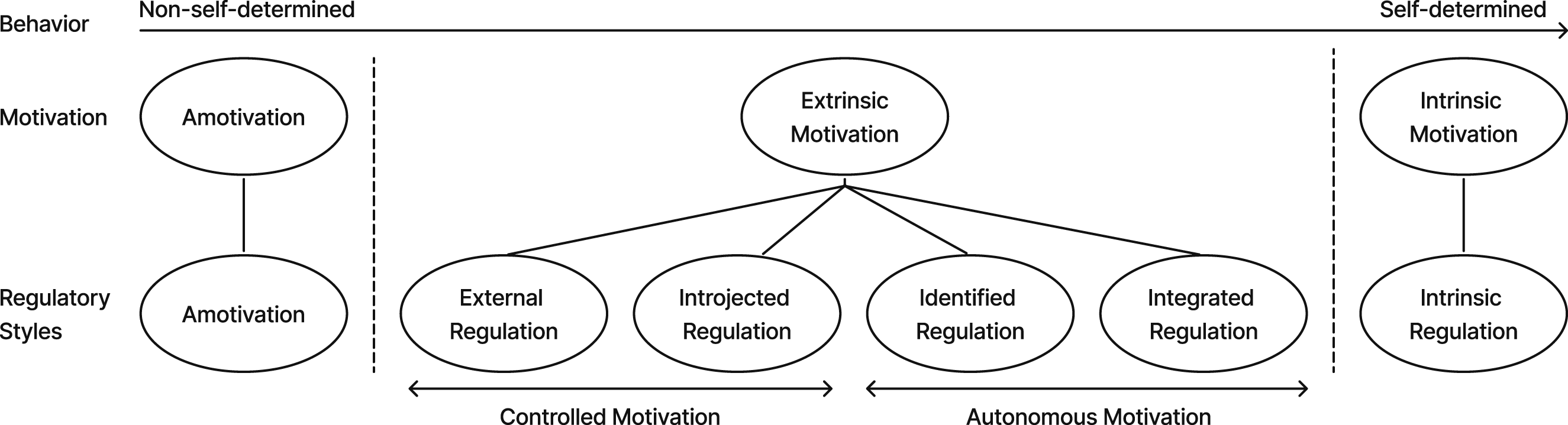
External regulation, the most controlled form of extrinsic motivation, occurs when behaviors are driven by external demands, rewards or punishments (e.g., a student deciding to pursue a PhD because of the associated prestige; Deci & Ryan, 2000). In introjected regulation, behaviors are not experienced as fully part of the self; people act to avoid guilt, shame, or anxiety; or to enhance or maintain self-esteem and self-worth (e.g., students working on their thesis because they do not want to be perceived as a quitter). Identified regulation occurs when an individual recognizes the personal significance of a behavior and consequently accepts its regulation as their own (e.g., students deciding to pursue a PhD because they want to improve their skills in their field of study; Ryan & Deci, 2000). The most autonomous form of extrinsic motivation is integrated regulation. This type occurs when identified regulations become completely assimilated into the self through self-examination and aligning new regulations with one’s values and needs (e.g., a student deciding to pursue a PhD because it meets his or her goals and objectives in life). Autonomous motivation – including intrinsic, integrated, and identified regulation – is linked to greater engagement and persistence (Ratelle et al., 2007).
Self-Efficacy
According to Bandura (1997), “perceived self-efficacy refers to beliefs in one’s capabilities to organize and execute the courses of action required to produce given attainments” (p. 3). In the context of education, academic self-efficacy relates to students’ beliefs in their ability to successfully complete tasks, activities or assignments while effectively managing challenges that may arise (Bandura, 1997; Wigfield & Eccles, 2002). Self-efficacy theory suggests that people’s beliefs in their efficacy influence their actions, the level of effort they exert, and their perseverance and resilience when faced with difficulties or failures (Bandura, 1997). Thus, students with higher levels of self-efficacy tend to engage more easily in academic tasks, use deeper and more strategic approaches, persist longer, and achieve higher grades than those with lower self-efficacy do (Gilman et al., 2009; Seo, 2008).
Motivation, Academic Procrastination and Self-Efficacy
One of the most extensively studied topics in the literature is the association between academic motivation and procrastination (Oram & Rogers, 2022). Students’ type of motivation has been shown to predict emotions and behaviors linked to their academic experience, including students’ emotions during academic tasks, their perceived competence, concentration, grades, and persistence (Katz et al., 2014; Ryan & Deci, 2000; Vallerand & Blssonnette, 1992). Students with autonomous forms of motivation tend to establish more meaningful goals and enjoy performance for its own sake, which leads to lower levels of procrastination (Cerino, 2014; Katz et al., 2014; Mouratidis et al., 2017). In contrast, amotivation has been consistently associated with higher levels of procrastination (Oram & Rogers, 2022).
Evidence also suggests that self-efficacy plays a crucial role as a motivational factor affecting choices, effort, persistence, and achievement (Schunk & DiBenedetto, 2021). Student’s self-efficacy influences their learning and behavior within achievement situations (Ariff et al., 2022; Prat-Sala & Redford, 2010; Seo, 2008). The literature is consistent and suggests a strong positive association between academic motivation and self-efficacy (e.g., Ariff et al., 2022; Bedel, 2016).
The literature also identifies self-efficacy as a variable in explaining academic procrastination (Katz et al., 2014; Klassen et al., 2008), with numerous studies indicating a significant and negative correlation between these variables (Bozgun & Baytemir, 2022; Seo, 2008; Tripathi et al., 2015). These results suggest that students with lower perceived self-efficacy may be less likely to engage in academic tasks, ultimately leading to increased procrastination. Thus, one way of reducing procrastination for a task may be by increasing students’ self-efficacy (Seo, 2008). Although motivation and self-efficacy have both been associated with academic performance, few studies have examined how these constructs are jointly related to academic procrastination (e.g., Bozgun & Baytemir, 2022; Cerino, 2014; Katz et al., 2014; Malkoç & Mutlu, 2018). The present study seeks to address this gap in the literature.
The Current Study
The purpose of this study was to explore the mediating role of self-efficacy in the associations between different types of regulation (intrinsic, integrated, identified, introjected, and external) and academic procrastination among PhD students. On the basis of the reviewed literature, it was expected that higher levels of intrinsic motivation would be associated with lower levels of procrastination (Bozgun & Baytemir, 2022) and that autonomous forms of motivation (i.e., intrinsic, integrated, and identified) would also be negatively associated with procrastination (Katz et al., 2014; Oram & Rogers, 2022). Furthermore, we hypothesized that higher levels of self-efficacy would be associated with lower levels of engagement in procrastination behaviors (Bozgun & Baytemir, 2022; Katz et al., 2014; Seo, 2008). Given the lack of literature regarding the studied model, hypotheses for indirect effects were not defined.
Methods
Participants
A total of 522 PhD students aged between 23 and 66 years (Mage = 31.96; SDage = 7.15) participated in this cross-sectional study. The majority were female (77%), single (42%), and Portuguese (98.9%), with the remaining participants identifying as Brazilian (n = 3) or Italian (n = 1). Most participants were pursuing their PhD at a public institution (92.7%). Social sciences were the most common field of study (31.8%), followed by medical and health sciences (23.4%), natural sciences (14.6%), humanities (10.5%), engineering sciences and technologies (10.2%), exact sciences (7.5%), and agricultural sciences (2.1%). With respect to mental health-related information, 38.3% of the doctoral students reported having a current psychological problem, and 30.1% were receiving psychological and/or psychiatric care.
Measures
Sociodemographic information (e.g., gender, age, nationality, marital status) and PhD data (e.g., private/public institution, scientific area) were collected through a self-report questionnaire developed by the researchers.
Motivation for PhD Studies Scale (MPhD)
The MPhD (Litalien et al., 2015) is a self-report scale that assesses each type of regulation toward PhD studies proposed within the SDT framework. The MPhD is a 15-item scale with five 3-item subscales: intrinsic regulation (e.g., “For the satisfaction I have in facing challenges in my studies”); integrated regulation (e.g., “Because my doctoral studies meet my goals and my objectives in life”); identified regulation (e.g., “Because I want to improve my skills in my field of study”); introjected regulation (e.g., “Because I do not want to be perceived as a quitter”); and external regulation (e.g., “For the prestige associated with a PhD”). The items are answered on a five-point response scale ranging from 1 (does not correspond at all) to 5 (corresponds exactly). In the present study, Cronbach’s alphas ranged from .68 (for introjected regulation) to .82 (for intrinsic regulation).
General Self-Efficacy Scale (GSE)
The GSE (Schwarzer & Jerusalem, 1995) is a unidimensional self-report scale that assesses a general sense of perceived self-efficacy. The scale has 10 items (e.g., “I can usually handle whatever comes my way”) that are rated on a four-point response scale ranging from 1 (not at all true) to 4 (exactly true), with higher scores indicating higher levels of self-efficacy. In the current sample, the scale demonstrated very good reliability (α = .88).
Irrational Procrastination Scale (IPS)
The IPS (Steel, 2010) is a one-dimensional self-report scale based on the concept of procrastination as an irrational delay. The scale has nine items (e.g., “I spend my time wisely”) that are rated on a five-point response scale ranging from 1 (very seldom, or not true of me) to 5 (very often true, or true of me), with higher scores denoting higher levels of procrastination. In this study, the scale revealed high internal consistency (α = .93).
Procedures
This study is part of a wider research project entitled “Mental health in PhD trajectory: A gender-based study on the prevalence of psychopathological symptomatology and associated factors”. Through a convenience sampling method, the data used in this study were collected online between June 2022 and December 2023. The survey link was disclosed through social networks and groups related to PhD students, as well as through Portuguese universities and research centers. The survey was available in Portuguese. The roles of participants and researchers, along with the ethical considerations underlying the research project, including confidentiality and anonymity rules, were outlined on the first page of the survey. To participate in this study and access the research protocol, participants were required to provide their informed consent (by clicking “Yes” on the option “I have read and understood the informed consent.”).
This study was approved by the Ethics Committee of the hosting institution. All procedures involved in the present study considered the ethical standards underlying human research (e.g., the Declaration of Helsinki and the Deontological Code of the Portuguese Board of Psychologists). No compensation was given to the participants.
Data Analyses
Statistical analyses were performed via IBM SPSS Statistics, version 27.0, and the PROCESS macro for IBM SPSS (Hayes, 2018). First, descriptive statistics (e.g., means, standard deviations, frequencies) were computed for characterization of the sociodemographic and PhD-related variables. Cronbach’s coefficient alpha (α) was used as an indicator of the internal consistency of the measures. According to DeVellis (1991), reliability coefficient values ≥.65 were considered minimally acceptable; values ≥.70 were considered respectable; and values ≥.80 were considered very good. Pearson’s correlations (or point-biserial correlations when applicable) were computed to assess the associations between all the study variables. Correlation coefficients close to ±.10 were classified as weak, those ≥ ± .30 were classified as moderate, and those ≥ ± .50 were classified as strong (Cohen, 1988). The results of the mediation analyses were estimated via Model 4 of the PROCESS macro for SPSS (Hayes, 2018) to examine whether motivation for obtaining a PhD was associated with academic procrastination through self-efficacy. To test the significance of the indirect effects, bootstrap procedures were used with 10,000 samples and a CI of 95% (bias-corrected 95% CI). Indirect effects were considered significant when the CI did not include zero (Preacher & Hayes, 2008). Effect sizes were based on R2 values and interpreted as small (R2 ≥ .02), medium (R2 ≥ .13) or large (R 2 ≥ .26; Cohen, 1992).
Results
Preliminary Analysis
Descriptive Statistics and Pearson Bivariate Correlations Between the Study Variables
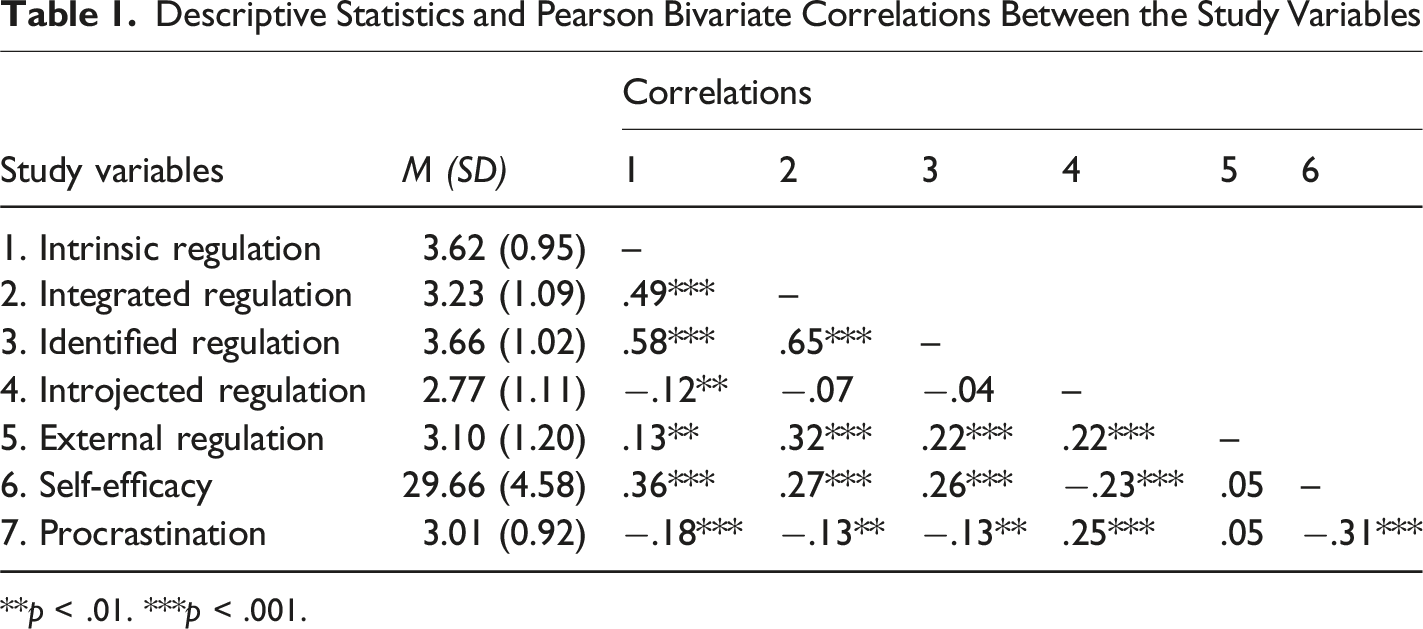
**p < .01. ***p < .001.
Correlations with sociodemographic variables revealed that greater age was significantly associated with increased self-efficacy (r = .15, p < .001), and gender (0 = male; 1 = female) exhibited a weak negative correlation with self-efficacy (r pb = −.12, p = .006). Furthermore, current psychiatric/psychological problems (0 = no; 1 = yes) showed a weak negative correlation with self-efficacy (r pb = −.26, p < .001) and a weak positive correlation with procrastination (r pb = .22, p < .001). Currently receiving psychological/psychiatric treatment (0 = no; 1 = yes) was also weakly negatively correlated with self-efficacy (rpb = −.13, p < .01) and weakly positively correlated with procrastination (rpb = .14, p < .001). Considering these associations, age, gender, current psychiatric/psychological problems, and currently receiving psychological/psychiatric treatment were included in the mediation models as covariates.
Mediation Analysis
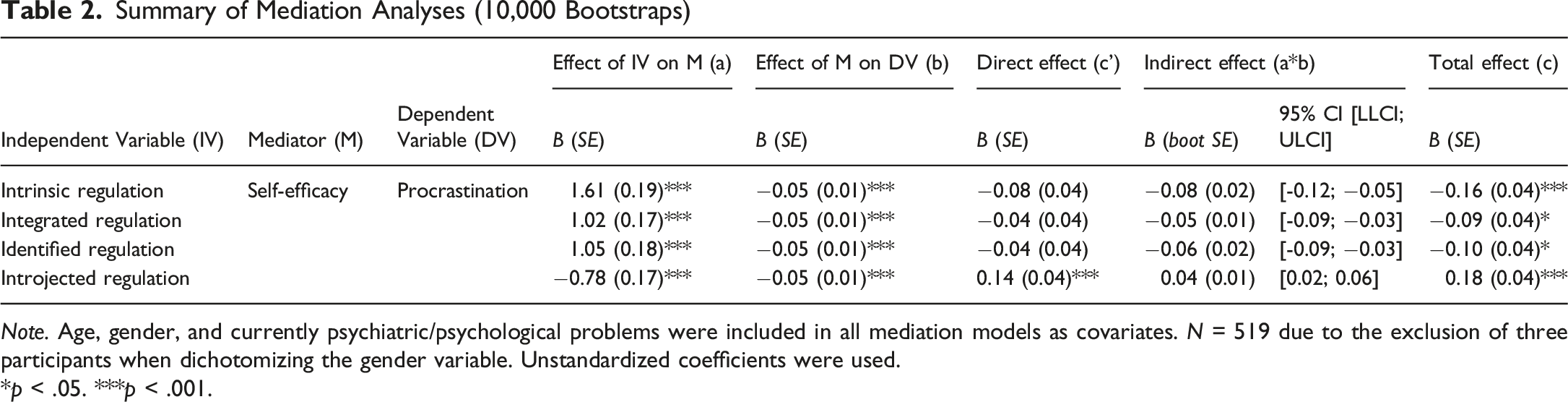
Four mediation models were computed to assess the mediating role of self-efficacy in the associations between each type of regulation (intrinsic, integrated, identified, and introjected) and procrastination. Given that external regulation did not exhibit statistically significant correlations with procrastination, it was not included in these analyses. The results of the mediation models are presented in Figure 2 and Table 2. Simple Mediation Models Analyzing the Associations Between Different Types of Regulation (Intrinsic [A], Integrated [B], Identified [C], and Introjected [D]) and Procrastination Through Self-Efficacy. The Values Shown on the Arrows Represent the Standardized Regression Coefficients. In the Paths, the Value Outside the Parentheses Represents the Total Effect of the Type of Regulation on Procrastination. The Value Inside the Parentheses Refers to the Direct Effect after the Inclusion of the Mediating Variable. Covariates Were Omitted to Facilitate Reading. *p < .05. ***p < .001 Summary of Mediation Analyses (10,000 Bootstraps) Note. Age, gender, and currently psychiatric/psychological problems were included in all mediation models as covariates. N = 519 due to the exclusion of three participants when dichotomizing the gender variable. Unstandardized coefficients were used. *p < .05. ***p < .001.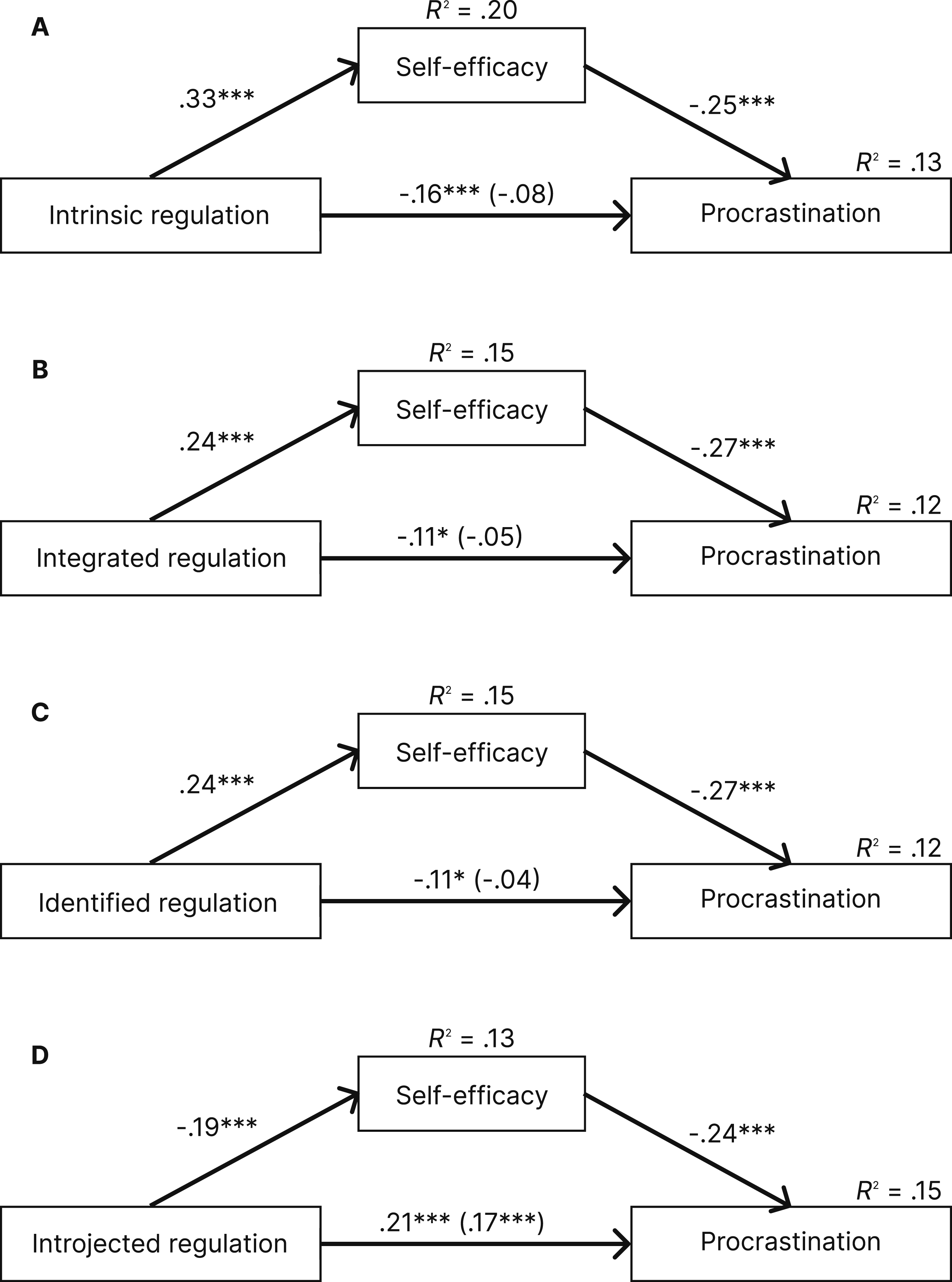
Mediation Model for Intrinsic Regulation
Intrinsic regulation was positively and significantly associated with self-efficacy (p < .001, 95% CI = [1.23, 1.98]) and explained 20.14% of its variance, F(5, 513) = 25.88, p < .001. Self-efficacy was negatively and significantly associated with procrastination (p < .001, 95% CI = [−0.07, −0.03]). Intrinsic regulation and self-efficacy explained 12.52% of the variance in procrastination, F(6, 512) = 12.21, p < .001. The total effect of intrinsic regulation on procrastination was significant (p < .001, 95% CI = [−0.24, −0.08]), whereas the direct effect was not significant (p = .081, 95% CI = [−0.16, 0.01]). The indirect effect of intrinsic regulation on procrastination through self-efficacy was significant.
Mediation Model for Integrated Regulation
Integrated regulation was positively and significantly associated with self-efficacy (p < .001, 95% CI = [0.68, 1.35]) and explained 14.85% of its variance, F(5, 513) = 17.89, p < .001. Self-efficacy was negatively and significantly associated with procrastination (p < .001, 95% CI = [−0.07, −0.04]). Integrated regulation and self-efficacy explained 12.19% of the variance in procrastination, F(6, 512) = 11.84, p < .001. The total effect of integrated regulation on procrastination was significant (p = .011, 95% CI = [−0.16, −0.02]), whereas the direct effect was not significant (p = .296, 95% CI = [−0.11, 0.03]). The indirect effect of integrated regulation on procrastination through self-efficacy was significant.
Mediation Model for Identified Regulation
Regarding identified regulation, the results indicated a positive and significant association with self-efficacy (p < .001, 95% CI = [0.69, 1.42]), which explained 14.55% of its variance, F(5, 513) = 17.47, p < .001. Self-efficacy was negatively and significantly associated with procrastination (p < .001, 95% CI = [−0.07, −0.04]). Identified regulation and self-efficacy explained 12.18% of the variance in procrastination, F(6, 512) = 11.83, p < .001. The total effect of identified regulation on procrastination was significant (p = .014, 95% CI = [−0.17, −0.02]), whereas the direct effect was not significant (p = .306, 95% CI = [−0.12, 0.04]). The indirect effect of identified regulation on procrastination through self-efficacy was significant.
Mediation Model for Introjected Regulation
The results concerning introjected regulation showed a negative and significant association with self-efficacy (p < .001, 95% CI = [−1.12, −0.44]), which accounted for 12.51% of its variance, F(5, 513) = 14.67, p < .001. Self-efficacy was negatively and significantly associated with procrastination (p < .001, 95% CI = [−0.07, −0.03]). Introjected regulation and self-efficacy explained 14.63% of the variance in procrastination, F(6, 512) = 14.62, p < .001. Both the total effect (p < .001, 95% CI = [0.11, 0.25]) and the direct effect (p < .001, 95% CI = [0.07, 0.21]) of introjected regulation on procrastination were significant. The indirect effect of introjected regulation on procrastination through self-efficacy was also significant.
Discussion
To our knowledge, this is the first study to explore the role of self-efficacy in the associations between different types of regulation, conceptualized within SDT, and academic procrastination among PhD students. The main findings of this study suggest that self-efficacy may play an indirect role in the association between different forms of motivation, especially related to doctoral studies, and academic procrastination.
Our findings indicate that higher levels of intrinsic, integrated, and identified regulation are associated with lower levels of procrastination. This finding aligns with the literature that shows that more autonomous forms of motivation (i.e., intrinsic, integrated, and identified) are linked to more adaptive outcomes, including greater engagement in academic tasks and lower levels of procrastination (Cerino, 2014; Mouratidis et al., 2017; Oram & Rogers, 2022). Research has demonstrated that intrinsically motivated students tend to pursue academic tasks out of genuine interest and satisfaction, which likely reduces their tendency to procrastinate. Likewise, students with integrated and identified regulation align their academic tasks with personal goals, reducing procrastination (Katz et al., 2014; Oram & Rogers, 2022; Ryan & Deci, 2000). Conversely, introjected regulation was related to higher levels of procrastination in our study. These results are also consistent with the literature suggesting that controlled forms of motivation can lead to maladaptive outcomes such as procrastination (Cerino, 2014; Mouratidis et al., 2017; Oram & Rogers, 2022). Doctoral students driven by introjected regulation may procrastinate to cope with negative emotions related to the demanding nature of their academic and scientific tasks, such as constant research deadlines and publishing pressures (articles and theses).
Although external regulation was not included in the mediation analysis due to its non-significant correlation with procrastination, this result merits further consideration. According to SDT, controlled forms of motivation, such as external regulation, are typically associated with lower quality engagement and may lead to maladaptive academic behaviors, including procrastination (Bozgun & Baytemir, 2022). In our study, however, the absence of such an association could be attributed to the measure itself (Litalien et al., 2015) or sample-specific characteristics or the potential overlap between external regulation and other controlled forms (e.g., introjected regulation), which may have diluted the effect. Indeed, it is possible that doctoral students, due to their advanced stage of academic development, may be less responsive to purely external motivators, such as those assessed by this scale (e.g., the prestige associated with a PhD; find a job with good working conditions after graduation), which may help explain the non-significant association between external regulation and academic procrastination in this study.
Our results also revealed significant associations between the different types of regulation and self-efficacy among PhD students. Our findings show that higher levels of intrinsic, integrated, and identified regulation are associated with increased perceived self-efficacy. In contrast, introjected regulation is negatively correlated with self-efficacy. This suggests that regulations driven by the avoidance of negative emotions, for example, are associated with lower levels of self-efficacy among students pursuing their PhD. Overall, these findings highlight the importance of self-efficacy as a component in understanding the motivational dynamics of PhD students (Schunk & DiBenedetto, 2021).
Our results demonstrate that self-efficacy is negatively associated with academic procrastination. PhD students with lower perceived self-efficacy, who perceive themselves as less capable of effectively managing and completing academic and scientific tasks, are more likely to engage in procrastination behaviors. These results corroborate the literature that identifies self-efficacy as a consistent predictor of academic procrastination among elementary and college school students (Katz et al., 2014; Klassen et al., 2008; Seo, 2008; Özbay et al., 2025).
Mediation analyses show that self-efficacy is a significant mediator of the associations between intrinsic, integrated, identified, and introjected regulation and procrastination. Specifically, we found that intrinsic, integrated, and identified regulation are associated with higher perceived self-efficacy, which, in turn, is linked to reduced procrastination. Conversely, we also found that introjected regulation is associated with lower levels of perceived self-efficacy, which in turn is linked to higher levels of procrastination. In particular, our results clearly demonstrate that self-efficacy fully mediated all forms of autonomous motivation (intrinsic, integrated, and identified), as the direct effect of regulation on procrastination was not significant. This seems to underscore the pivotal role of self-efficacy in reducing procrastination, indicating that autonomous forms of motivation are linked to procrastination primarily through perceived self-efficacy. PhD students who report these forms of motivation tend to perceive themselves as more efficacious, which may lead them to engage more in their PhD-related tasks, expend greater effort, persist longer, and therefore engage less in procrastination behaviors (Schunk & DiBenedetto, 2021). When students are more autonomously motivated for doctoral studies, they may perceive themselves as more self-efficacious and thus choose behaviors that align with successful academic progression and completion. In contrast, the results of the mediation involving introjected regulation, which is considered a more controlled and less self-determined form of motivation, highlight a distinct pattern. The direct effect of introjected regulation on procrastination remained significant even when self-efficacy was considered. One potential explanation may be that introjected regulation involves self-conscious emotions such as guilt and shame, which may independently contribute to procrastination. Thus, it is possible that in the case of introjected regulation, low self-efficacy and shame-based avoidance may operate in parallel, jointly increasing the likelihood of engaging in procrastination behaviors. Future studies should further examine the interplay between self-efficacy and self-conscious emotions in explaining procrastination dynamics.
Since SDT has demonstrated its added value and validity in the context of education (Ryan & Deci, 2009), this study used an SDT-based scale, known as the Motivation for PhD Studies scale (MPhD; Litalien et al., 2015), to assess motivation for PhD studies. This scale captures specific SDT-based regulations for PhD studies, offering a more nuanced understanding of motivation in this population, which has not been previously studied. These results also contribute to increasing knowledge of potentially underlying causes and variables specifically linked to academic procrastination among PhD students. Indeed, high levels of procrastination among PhD students can adversely impact scientific development across disciplines. Their pivotal role in scientific progress as well as in most of the research conducted in academia is undoubted (Barry et al., 2018; Leveque et al., 2017), which makes crucial the understanding and addressing of this issue.
Limitations
This study has several limitations that should be considered. First, the cross-sectional design does not allow causal inferences to be established between the study variables or the determination of the direction of associations. Future studies with longitudinal designs would be valuable, so that could be possible to determine the direction of causality with greater certainty. Second, this study was based on a relatively homogenous sample of PhD students, which was also imbalanced in terms of gender. Although the sample size is relevant, it consisted predominantly of self-defined females, which limits the generalizability of the findings. Specifically with respect to gender, previous research has identified gender differences in self-efficacy and procrastination. A meta-analysis by Huang (2013) found that gender differences in academic self-efficacy were statistically significant but small, though these small effects may still hold practical importance. In line with these findings, our study also revealed a weak but significant correlation between gender and self-efficacy, indicating that male students reported slightly higher levels of self-efficacy compared to female students. There is also evidence that male students tend to procrastinate more than female students (Kassim et al., 2022). In the present study, however, gender was not significantly associated with procrastination. Hence, these results must be interpreted with caution. Subsequent studies should strive for more diverse, balanced and representative samples to enhance the external validity of the results. Third, this study relied on self-report measures, which are susceptible to social desirability biases. However, conducting the study through an online survey, which offers greater anonymity, may have reduced this bias to some extent. Given the complexity and multidimensional nature of the concept of procrastination, future research could employ multiple methods, such as semistructured interviews or a multidimensional measure (e.g., the Pure Procrastination Scale; Steel, 2010), to gain a more comprehensive understanding of procrastination dynamics. Fourth, the sample was recruited through nonprobabilistic online methods (self-selected), potentially introducing selection bias. Furthermore, no validity questions were embedded in the online survey; therefore, we could not screen out participants who were inattentive or who responded randomly.
Implications
Despite these limitations, this study represents a relevant and innovative contribution to the understanding of procrastination in academic and scientific contexts and has relevant practical implications. Our results suggest that self-efficacy may be a variable through which different types of regulation are associated with procrastination behaviors, which highlights the importance of developing intervention programs that specifically target self-efficacy and its promotion. This aligns with previous research that underscored the protective role of self-efficacy against procrastination (Seo, 2008). Additionally, although procrastination is undoubtedly a self-regulation failure (Pychyl & Flett, 2012), viewing it solely as a self-regulation difficulty overlooks a broader set of causes. Accordingly, our results suggest that interventions designed to decrease students’ procrastination might be more successful if they also focus on increasing students’ sense of self-efficacy. For example, strategies to enhance self-efficacy through mastery experiences, social modeling, and verbal encouragement could help students tackle academic tasks without delay (Bandura, 1997; Seo, 2008). These strategies could be integrated into current interventions, such as cognitive‒behavioral therapy (CBT), which has already been shown to be effective in reducing procrastination (Van Eerde & Klingsieck, 2018). Such integration may help reduce PhD students’ procrastination and promote their engagement in academic and scientific tasks, thereby facilitating the successful progress and completion of their doctoral studies. Since procrastination can also be understood as an avoidance mechanism, strategies for promoting self-efficacy can also be integrated into interventions based on acceptance and commitment therapy (ACT; Zacks & Hen, 2018). According to Wang et al. (2017), both CBT and ACT are effective psychological interventions for procrastination despite having different therapeutic mechanisms. As procrastination encompasses more than just poor time management and study habits (Solomon & Rothblum, 1984), interventions that focus solely on setting goals, time management, self-monitoring, and self-rewards may be missing a significant part of the picture (Wang et al., 2017).
Conclusion
In summary, the results of this study allow us to understand the importance of the role of motivation for doctoral studies and self-efficacy in mitigating procrastination behaviors. The correlation results obtained in the present study corroborate the literature but also emphasize the need for further exploration into predictors of procrastination in academic and scientific settings to better inform the development of targeted interventions. While our study contributes to this area, continued investigations into additional potential mediators and moderators, such as personality traits, emotional regulation difficulties, and environmental/organizational factors, could provide deeper insights into the factors associated with procrastination of PhD students and other early career researchers in academia.
Footnotes
Ethical Considerations
This project was approved by the Ethics Committee of the Faculty of Psychology and Educational Sciences of the University of Coimbra.
Consent to Participate
Informed consent was obtained from all participants of this study (by clicking “Yes” on the option “I have read and understood the informed consent.”).
Author Contributions
Ângela Santos: Methodology, Formal analysis, Investigation, Writing - Original Draft. Catarina Cardoso: Conceptualization, Methodology, Formal analysis, Investigation, Writing - Original Draft, Project administration. Marco Pereira: Conceptualization, Methodology, Formal analysis, Writing - Original Draft, Writing - Review & Editing, Supervision, Project Administration. All authors have read and approved the final version of the manuscript.
Funding
The authors disclosed receipt of the following financial support for the research, authorship, and/or publication of this article: This work was supported by the Portuguese Foundation for Science and Technology, through a PhD Research Grant attributed to Catarina Cardoso (Reference: 2021.07830.BD).
Declaration of Conflicting Interests
The author declared no potential conflicts of interest with respect to the research, authorship, and/or publication of this article.
Data Availability Statement
The data that support the findings of this study are available upon request.
Author Biographies
 ). Her research interests focus on mental health in academia, motivation, gender differences, psychological processes, and transdiagnostic dimensions in mental health disorders.