




Abstract
This study makes a significant contribution by identifying the importance of the positive cognitive triad (PCT) in the relationship between Big Five personality traits and well-being. Using Structural Equation Modeling, we investigated two perspectives on well-being: hedonic (subjective) and eudaimonic (psychological) (N = 935). Negative emotionality strongly predicted both subjective and psychological well-being, but its impact was more pronounced for subjective well-being. Extraversion and conscientiousness had no direct effects on subjective well-being, whereas their indirect effects through PCT were significant, suggesting that their influence on well-being is primarily cognitive. In contrast, conscientiousness and open-mindedness predicted psychological well-being, indicating that these traits contribute more substantially to psychological flourishing than to hedonic well-being. PCT predictive power was stronger for psychological well-being, reinforcing the idea that cognitive appraisals are central to eudaimonic well-being. The results emphasize the importance of addressing cognitive factors in personality and well-being research.
Starting Point
Decades of research have proved that personality traits are predictors of well-being (WB). The relationship between personality traits and WB is intricate and multifaceted. Personality shapes individuals’ perceptions, interactions, and responses to their surroundings, affecting their well-being. Still, we know little about the positive cognitive triad (PCT) and how it influences well-being or the impact of personality traits on PCT, as PCT is an understudied concept. There is an absence of researches that describe the path from personality to well-being through PCT. The present study aims to test the effects of Big Five personality traits on WB and PCT. Personality influences not only how people perceive and process information, but also how they build their beliefs. The integration of PCT may offer a promising avenue for exploring how fostering positive self-views, optimism about the future, and a balanced worldview can contribute to flourishing.
The current research adopts a multidimensional approach to well-being by employing two complementary measures: subjective well-being and psychological well-being, integrating hedonic and eudaimonic perspectives. Both types of well-being impact the immunological, endocrine, and cardiovascular systems and people with higher levels of subjective well-being are likely to be healthier and live longer (Diener et al., 2018). Instead of concentrating exclusively on disorder prevention and treatment, we can also look at increasing our well-being levels.
This analysis also addresses the shortage of research on well-being in Eastern European nations with a collectivist culture. How people experience happiness differs between collectivist and individualist cultures. Emotions play a superior role in individualist countries (Axelsson & Dahlberg, 2024) while in collectivist ones, people focus on honor and meeting social duty over their happiness (Ahuvia, 2002). The United States and developed Western European countries with individualist cultures are at the forefront of well-being research, with the most widely used language on the well-being scales being English (Zhang et al., 2024). The US covers over one-third of the global production of publications and five countries (the US, The United Kingdom, Australia, China, and Canada) cover two-thirds of the output (Yiğit & Çakmak, 2024). This approach aligns with the global trend toward a more inclusive and culturally aware science of well-being.
Advances in the Field
Well-Being: A Theoretical Perspective
Well-being is a complex construct reflecting subjective and objective experiences: people are content with their existence insofar as they possess sufficient intellectual, spiritual, material, or relational resources to satisfy their desires and meet their goals (Diener et al., 2018). Definitions of well-being acknowledge that it is not the absence of ill-being that defines it, but it should be interpreted as a multi-dimensional concept. When it comes to understanding and studying well-being, two primary, traditional streams complete each other: the hedonic approach operationalized as subjective well-being (Deci & Ryan, 2008; Diener, 1984), and the eudaimonic perspective defined as psychological well-being (Ryff, 1989, 2013). Ed Diener is the most cited author regarding subjective well-being (Huang et al., 2022), while Carol Diane Ryff with 51 publications is the most prolific author writing about psychological well-being (Yiğit & Çakmak, 2024).
Subjective well-being (hedonic approach) has an affective component (more positive emotions and fewer negative affects) and a cognitive component (satisfaction with life) (Diener, 1984; Diener et al., 2009). Mindfulness and enjoyment through attention to different emotions, things, and ideas, enhance positive experiences of emotions and reduce negative ones (Diener et al., 2018). People who feel greater life satisfaction report more frequently positive affect than negative affect (Busseri & Erb, 2023). Subjective well-being is not merely a reaction to sensory experiences but cognitive processes deeply influence it. The ability to mindfully engage with emotions and interpret experiences positively plays a crucial role in fostering greater life satisfaction and emotional balance. In contrast to bodily sensations, to manifest, emotions need cognitive evaluations or meaning judgments (Fredrickson, 2004). Positive emotions frequently arise without outward physical sensation, while pleasure depends on bodily stimulation. Unlike positive emotions, pleasure is easily induced by altering the physical surroundings. Emotions are about a personally significant situation, they have a topic, are typically temporary, and take up the forefront of consciousness (Fredrickson, 2004). The Broaden-and-Build Theory of Positive Emotions (Fredrickson, 2004) states that positive emotions expand individual cognitive and behavioral skills and help people build enduring personal resources including social connections, resilience, and problem-solving abilities. Positive emotions have the power to generate positive thoughts, which in turn can generate more positive emotions. They broaden thinking and build resources, increasing well-being.
The other perspective of well-being is the eudaimonic one. As opposed to subjective well-being, psychological well-being is a multidimensional concept based on individual self-realization (Ryff, 1989, 2013) and leading a meaningful life (Seligman, 2002), a six-factor model that encompasses autonomy, personal growth, environmental mastery, self-acceptance, positive relations, and purpose in life (Ryff, 1989, 2013). Psychological well-being is stable over time, and it acts as a defense against mental psychopathology and disorders, according to longitudinal research (Weiss et al., 2016). WB is determined by innate predispositions and its time-stable components are hereditary (Diener et al., 2003). Weiss et al. (2008) consider subjective WB a heritable phenomenon according to twin research. Genetic influences account for about 40% of the variance in individual differences in subjective well-being (Røysamb & Nes, 2018), the rest of about 60% can be attributed to environmental factors. Lyubomirsky (2010) talks about „hedonic adaptation”, also known as the set-point theory, a phenomenon describing that WB returns to the initial state, after experiencing important events, as it is stable over time, individuals having their own biologically established set-points to which they come back (Diener et al., 2018). On the other hand, Diener and colleagues (2018) remind us that the setpoint theory has been disputed despite the undeniable genetic influence on subjective well-being since research has shown that some people who have gone through adverse experiences do not always return to their initial state. So, situations and surroundings can impact and alter a person’s well-being. A person’s happiness is closely related to how they view the circumstance. According to Hsee and colleagues’ Hedonomics theory, how information is presented influences people’s happiness (Hsee & Zhang, 2010). For example, depending on the standard and point of comparison, people who earn the same amount of money will have varying levels of satisfaction with their income. This clarifies seemingly contradictory results, such as the fact that the residents of wealthy neighbourhoods report lower levels of happiness than the residents in impoverished neighbourhoods (Hsee & Zhang, 2010).
Psychological well-being and subjective well-being are interconnected, yet distinct aspects of the same big concept: well-being and they are influenced by both internal and external factors. Environmental influences, life experiences, and intentional practices can further enhance the hereditary aspects of well-being, highlighting the dynamic interplay between nature and nurture in shaping human happiness.
Understanding Well-Being Through the Lens of Personality
One of the most widely used models to explore the relationship between well-being and personality is the Big Five personality traits model, encompassing extraversion, neuroticism, agreeableness, conscientiousness, and openness (Costa & McCrae, 1980; Goldberg, 1990). Personality is a relatively stable set of behaviors (tendencies to behave in one way rather than another), dispositions (Ones et al., 2005), patterns of thoughts, and affects. Personality is a unique combination of cognitions, emotions, and behaviors (Matthews et al., 2009), defined as consistent action and experience patterns evident in multiple life circumstances (Allport, 1961). A personality trait is a distinctive way of doing, thinking, or feeling that tends to be genuine throughout time and in significant contexts (Allport, 1961). Personality traits are stable characteristics and robust predictors of well-being, with strong correlations between extraversion, neuroticism, conscientiousness, and well-being (Lyubomirsky et al., 2011; Steel et al., 2008). In two meta-analyses, extraversion and emotional stability or neuroticism are the strongest correlations (extraversion correlating positively and neuroticism negatively) and the most significant personality traits that predict well-being (Anglim et al., 2020; Steel et al., 2008). People high in extraversion tend to experience life satisfaction and higher levels of positive affect, while neuroticism, defined by susceptibility to negative emotions and emotional instability, correlates negatively with well-being (Anglim et al., 2020). The subjective well-being heritability can be explained by happy personalities, extroverts being happier (Diener et al., 2018). High neuroticism is linked to lower life satisfaction, greater negative affect, and a predisposition to mental health issues Soto (2015). Extroverts tend to have greater agreeableness, conscientiousness, and openness, in addition to being less neurotic; very agreeable people have greater higher conscientiousness and openness along with reduced neuroticism; very conscientious people have greater levels of openness and reduced neuroticism; open people tend to have reduced levels of neuroticism (Busseri & Erb, 2023). Conscientiousness is a significant predictor of both subjective well-being and psychological well-being, being positively associated with positive affect and satisfaction with life (Anglim et al., 2020; Busseri & Erb, 2023), suggesting that people high in conscientiousness are more likely to engage in health-promoting behaviors and achieve personal goals, contributing to greater life satisfaction. People with high agreeableness and openness tend to experience positive affect frequently and are more satisfied with their lives (Soto, 2015), yet agreeableness and openness correlate weakly with well-being (Busseri & Erb, 2023). Agreeableness leads to better relationships and conscientiousness contributes to better goal-related accomplishments, resulting in higher levels of subjective well-being (Steel et al., 2008). Openness does not correlate with life satisfaction (Abdullahi, 2020) but correlates moderately with positive affect and weakly with negative affect (Busseri & Erb, 2023).
In a longitudinal study, conducted on an Australian nationally representative group of 16.367 persons, Soto (2015) finds evidence that well-being and personality traits influence each other reciprocally. This relationship suggests that interventions that modify personality traits could have lasting effects on WB, and vice versa. The findings from longitudinal and meta-analytical research suggest that personality traits, particularly extraversion and neuroticism, play a crucial role in shaping well-being over time. Furthermore, the evidence that well-being can also influence personality traits highlights the potential for targeted interventions to foster positive personality changes, ultimately enhancing overall well-being. These insights reinforce the importance of considering both stable personality dispositions and modifiable psychological factors when developing strategies to promote mental health and well-being.
The Positive Cognitive Triad
The intricate relationship between well-being and personality extends beyond stable traits, as cognitive processes play a crucial role in shaping well-being by influencing how individuals interpret and respond to life experiences. The Hedonomics theory (Hsee & Zhang, 2010) suggests utilizing cognitive biases to enhance happiness. Similar ideas also contend that a person’s interpretation of a specific experience impacts their level of happiness (Diener & Biswas-Diener, 2008). Dispositional habits may cause affective experiences toward thinking in particular ways, as demonstrated by neuroticism and extraversion (Costa & McCrae, 1980). The researchers discovered that the relationship between well-being and personality traits agreeableness and conscientiousness was partially mediated by an orientation toward meaning in life; that is people who seek purpose and significance in their experiences tend to foster better social relationships and, consequently, enhanced well-being (Xu et al., 2023). A meta-analysis published in 2023 explored the tendency of individuals with a higher need for cognition, who enjoy engaging in effortful cognitive activities, to experience lower levels of negative emotionality, anxiety, negative affect, and depression (Zerna et al., 2024). Conversely, these individuals reported higher levels of positive affect, and overall life satisfaction. These findings suggest that a proclivity for deep thinking and reflection not only shapes one’s personality but also contributes significantly to mental health and well-being (Zerna et al., 2024).
Research by Mak et al. (2011), replicated for the first time, in the USA, by Mehta et al. (2019) confirmed that the positive cognitive triad (PCT) contributes to well-being (the satisfaction with life concept). PCT consisting of three elements: the view of self, the view of world, and the view of future, appeared for the first time, in an article, written by Mak and colleagues (2011), and was opposed to the concept presented by Beck (1987) while studying the theory of depression (Mak et al., 2011; Mehta et al., 2019). Beck’s theory posits that negative automatic thoughts, which form the negative cognitive triad, have a significant role in the onset and persistence of depression (Pössell & Thomas, 2011). To measure the cognitive triad, the authors used the Cognitive Triad Inventory - CTI (Corcoran & Fischer, 2000). PCT implies increased self-esteem, a positive view of oneself, the individual seeing himself as valuable, with a high level of self-efficacy and self-confidence. The positive outlook also rubs off on others and the world. People with a positive perspective on themselves and the world also have hope for a good future, being able to better withstand stress and have an optimistic view of the future (Mak et al., 2011). Individuals with a positive outlook on the world are better able to see opportunities in difficult situations and find solutions to problems (Puia et al., 2025). At the same time, they see situations as less threatening, are more willing to ask for help and enjoy better subjective well-being. People with a positive view of themselves, the world, and the future use PCT, which protects them from depression, making them happier. This is valid for the people living in the Republic of China (Mak et al., 2011), Germany (Pössell, 2009), Poland (Śliwerski, 2014), Turkey (Erarslan & Işikli, 2019) and the USA (Mehta et al., 2019).
Fostering positive cognitive patterns can enhance well-being by strengthening resilience (Puia et al., 2025). To put it in other words, positive cognitions increase flourishing which can, in turn, reduce common mental problems. People are likely to be happier and more satisfied with life if they have more positive schemas, that is prevalent themes (emotions, thoughts, physical sensations, and neurobiological responses) formed during childhood about oneself and the world (Chi et al., 2022). Improving and cultivating positive schemas may serve as beneficial psychological tools, protect against psychopathological consequences in the future, and improve prognosis. Mental health professionals may consider positive thoughts, particularly those about oneself, as a protective factor for their patients.
Aims and Ambitions
This paper examines the relationship between well-being, Big Five personality traits, and PCT, to discover their dynamic interplay and implications, in maintaining and improving well-being. We developed a well-being model that considers the role of PCT with its three components the positive view of self, view of world, and view of future, in the relationship between personality traits and well-being, in an adult population, a subject currently underexplored. Depending on the personality type, PCT’s role can be more or less important, because personality influences how individuals see themselves, experience the world, and view future perspectives. PCT also plays an important role in achieving well-being. We investigate the impact PCT has on well-being on a person with a specific personality, as literature has proved that personality traits are predictors of well-being (Anglim et al., 2020). Years of research have shown that well-being is related to the Big Five personality traits; namely, extraversion, neuroticism, and conscientiousness hold the biggest share in predicting well-being (Anglim et al., 2020).
By researching the factors mentioned above that contribute to well-being, we also contrast and investigate two aspects of well-being. The study investigates subjective well-being (hedonic approach) with its three distinctive components: positive and negative affects (affective component) and satisfaction with life (cognitive component) (Deci & Ryan, 2008; Diener, 1984) and psychological well-being centered on the individual development and self-realization (Ryff, 1989, 2013), following the true self (daimon) and living a life with meaning (eudaimonic WB) (Seligman, 2002).
In our model, PCT is the cognitive pathway through which personality dispositions map onto well-being. Rather than assuming direct trait-to-outcome links alone, we tested whether traits shape these appraisals, which in turn shape both subjective and psychological well-being. Guided by this rationale, we formulated two models testing two hypotheses. The first SEM model tested whether Big Five personality traits indirectly influence psychological well-being through PC. The second SEM model tested whether Big Five personality traits indirectly influence subjective well-being through PCT. These hypotheses formalize the mechanism tested in our SEM framework and align with the mediation specification reported in the Results.
To investigate ways to re-educate thinking away from the negative and protect well-being, we are studying PCT, to understand how to attend to the positive and expect the best. PCT focuses on a positive self-evaluation, an optimistic image of the world, and a hopeful future. The negative cognitive triad has been much studied in connection with depression, starting with Beck (1987), while the effects of the PCT are understudied, and this includes the effects on well-being, too. Within the context of mental health, the importance of interventions targeting PCT and well-being is increasing. Research into well-being is as important as the study of mental illnesses. To prioritize positivity is an attempt to prevent mental diseases by promoting and protecting well-being among normal adults (Catalino et al., 2014). We contribute to the literature by exploring the effects of PCT, on the relationship between personality traits and well-being in the general population (Figure 1). Conceptual Model Personality Traits ⇒ PCT ⇒ Well-Being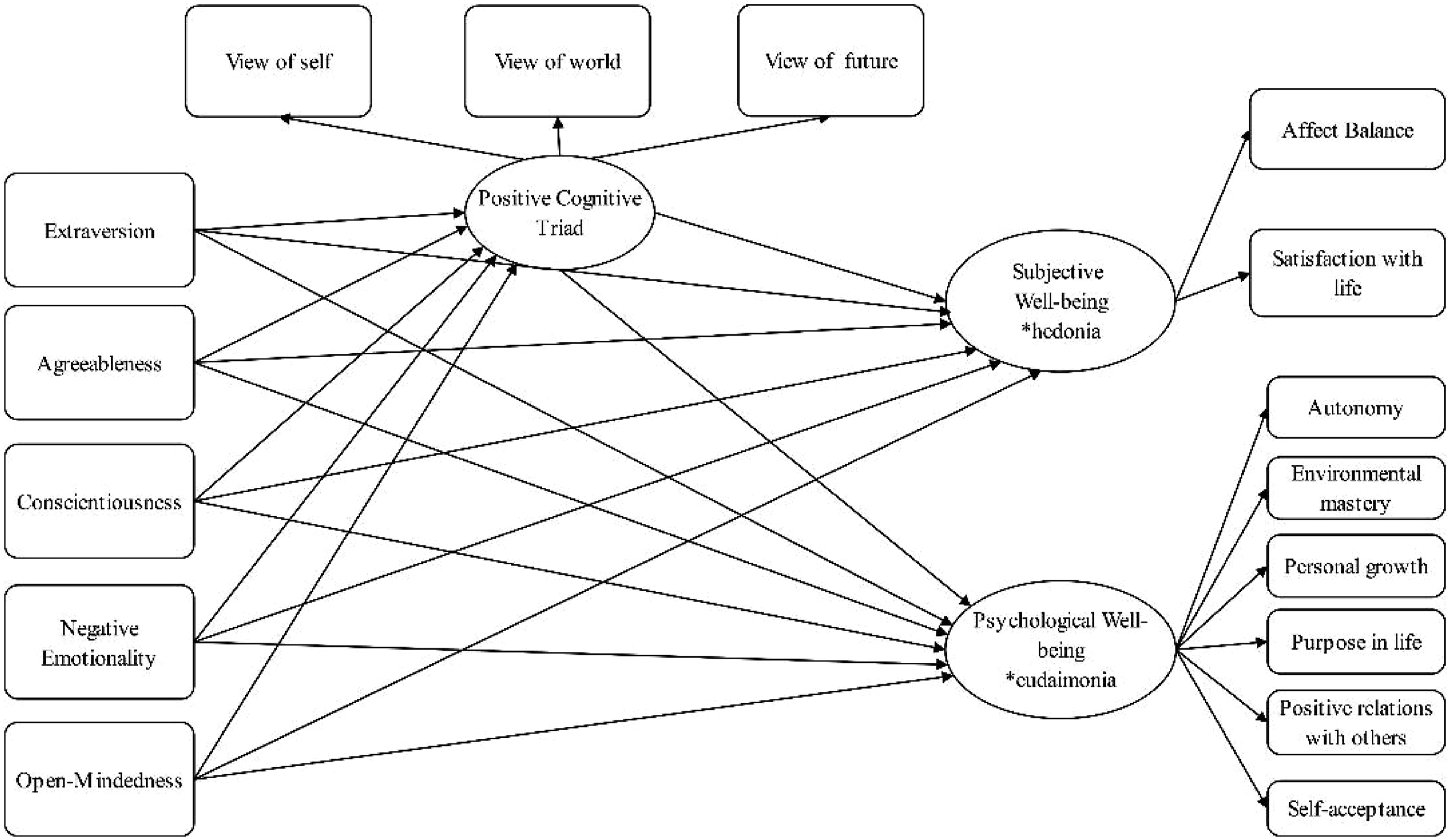
Method
Sample/Participants
The present study was carried out on a Romanian adult sample that was selected based on availability and proximity. Data was collected using a non-probabilistic method from 935 participants, between 18 and 75 years old (M = 37.303 SD = 11.632), with women overrepresented (79%).
According to Faul and colleagues (2009) and Soper (2025), regarding the convenience lot size, for SEM analysis with a minimum statistical power of .80, a probability of error (p) of .05, a medium anticipated effect size .30 and 14 observed variables and three latent variables, the minimum sample size to validate the model structure is 119.
Procedure
A cross-sectional design was employed to capture data at a single point in time, allowing for an efficient assessment of the relationships between variables. This design was chosen for its practicality to provide a snapshot of the participants’ current experiences and perceptions. Over six months, Google Forms was used to administer the questionnaire scale. The purpose and usefulness of the study were explained to participants via a personalized email or social media message that included a link to the questionnaire. Online data collection followed deontological guidelines. All participants were assured of confidentiality and anonymity, and informed consent was obtained before proceeding with the questionnaire. Participants were also informed of their right to withdraw from the study at any time without penalty. Data was securely stored, with access limited to the authorized research team members. Ethical approval for the study was obtained, ensuring compliance with relevant research ethics standards.
Measures
The study employed well-established scales to evaluate the concepts, ensuring robust and multidimensional assessment, that allows for a deeper understanding. The comprehensive methodology offers insights that can inform interventions and policies enhancing quality of life. Furthermore, using culturally validated scales ensures that findings are reliable and applicable to the target population, adding value to the broader field of well-being research.
Personality was assessed using The Big Five Inventory – 2: Short Form (BFI-2-S) with 30 items, developed by Soto and John (2017). The inventory measures the Big Five personality traits: extraversion (containing facets of assertiveness, sociability, energy level), agreeableness (respectfulness, compassion, trust), conscientiousness (productiveness, organization responsibility), negative emotionality (depression, anxiety, emotional volatility), and open-mindedness (intellectual curiosity, aesthetic sensitivity, creative imagination), each containing six items. The five components of the scale had very good reliability. McDonald’s ω = .85, 95% CI [.82–.86] for extraversion, McDonald’s ω = .76, 95% CI [.72–.81] for agreeableness, McDonald’s ω = .86, 95% CI [.83–.89] for conscientiousness, McDonald’s ω = .86, 95% CI [.84–.89] for negative emotionality and McDonald’s ω = .82, 95% CI [.79–.86] for open-mindedness.
Ryff Carol’s (1989) Scale of Psychological Well–Being (SPWB) was used to evaluate psychological well-being (eudaimonic perspective) and the extent to which individuals perceive themselves as thriving in meaningful and self-fulfilling ways. The scale of 42 items provided insights into the eudaimonic aspect of well-being by examining six dimensions - autonomy, environmental control, personal development, positive relationships with others, purpose in life, and self-acceptance. Each dimension represents an essential component of psychological flourishing. The Romanian version of the scale, previously validated in studies by Miron and colleagues (2011) and Tudorel and colleagues (2013), ensures cultural and linguistic relevance for the sample under investigation. The reliability of the six factors in the current sample was high, with very good internal consistency: McDonald’s ω = .78, 95% CI [.76–.82] for autonomy, McDonald’s ω = .86, 95% CI [.85–.89] for environmental mastery, McDonald’s ω = .81, 95% CI [.77–.83] for personal growth, McDonald’s ω = .85, 95% CI [.82–.87] for positive relations, McDonald’s ω = .82, 95% CI [.80–.86] for purpose in life, McDonald’s ω = .88, 95% CI [.87–.90] for self-acceptance.
This study employed two distinct and validated measures, one for each of the affective and cognitive components, to comprehensively evaluate subjective well-being (hedonic perspective).
The Scale of Positive and Negative Experience (SPANE), developed by Diener et al. (2009), was used to measure the frequency of both positive and negative affects, capturing opposing experiences. The scale has 12 items, six of them measure positive affects and six assess negative affects. The affect balance is calculated by subtracting the negative affect score from the positive affect score. A positive score indicates that positive affect predominates over negative affect, and a negative score suggests that negative affect predominates over positive affect. Affect balance is more effective than one-dimensional assessments of positive and negative affect because it accounts for extreme biases. The flexibility and simplicity of SPANE make it an ideal tool for evaluating affects across diverse populations. The reliability of the two factors was excellent: McDonald’s ω = .90, 95% CI [.89–.93] for positive affect, and McDonald’s ω = .93, 95% CI [.93–.95] for negative affects.
Satisfaction with Life Scale (SWLS) by Diener et al. (1985), with 5 items was used to evaluate life satisfaction, the cognitive aspect of well-being. This tool is widely used in well-being research due to its brevity, reliability, and ability to provide a clear picture of satisfaction with life. The reliability of the overall scale is very high, showing excellent internal consistency: McDonald’s ω = .91, 95% CI [.90–.93] for satisfaction with life.
The PCT was assessed with the Cognitive Triad Inventory (CTI) by Beckham et al. (1986), which contains 30 items and three subscales each with 10 items, measuring cognitions about the self, the world, and the future (hope). CTI has three factors: the view of self, the view of future, the view of world. The view of self subscale evaluates individuals’ beliefs and perceptions about themselves, including their self-worth, competence, and personal value. View of the world subscale examines perceptions of the external environment. View of future (hope) subscale assesses expectations and attitudes toward the future, including the presence or absence of hope and optimism (Corcoran & Fischer, 2000). The scale’s robust structure and well-established reliability make it a valuable instrument in research settings. The three components of the scale had excellent internal consistency: McDonald’s ω = .90, 95% CI [.89–.92] for view of self, McDonald’s ω = .92, 95% CI [.91–.93] for view of world, and McDonald’s ω = .85, 95% CI [.84–.87] for view of future. A high score is indicative of positive cognition.
Statistical Examination
Data was analyzed using Structural Equation Modeling (SEM) in R Studio (version 4.4.2) which assesses the fit between a hypothesized model and the observed model. To ensure a robust model fit, the diagonally weighted least squares (DWLS) estimation was applied, a method particularly advantageous for handling ordinal and non-normally distributed data, as it provides more accurate estimates of interfactor correlations and factor loadings compared to the maximum likelihood (ML) method. Additionally, structural coefficient estimates derived from DWLS are higher than those obtained using ML (Cheng-Hsien, 2016). The indirect effects were assessed using the beta values, the standardized coefficients from the regression model for mediation analyses. These values were used to evaluate the mediating pathways within the structural model. A significance threshold of p < .05 was adopted for all statistical analyses, ensuring the identification of meaningful relationships within the data.
Goodness-of-fit indices were used to evaluate the adequacy of the proposed structural model. These included the comparative normed fit index (CFI) and Tucker-Lewis index (TLI) for incremental fit, the root mean square error of approximation (RMSEA) for absolute fit, the standardized root mean square residual (SRMR) for the parsiminius fit. Thresholds for acceptable fit were based on established criteria, with CFI and TLI values ≥0.95, RMSEA ≤0.08, and SRMR ≤0.08 considered indicative of a well-fitting model (Hancock et al., 2019).
Results and Key Insights
Descriptive Statistics and Spearman Correlations Among Variables
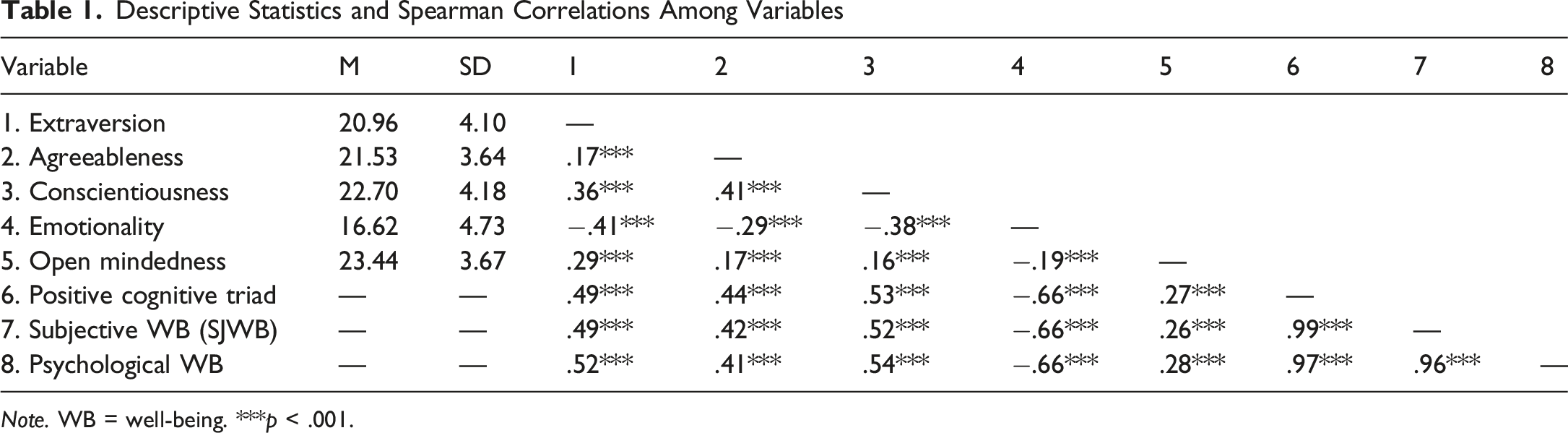
Note. WB = well-being. ***p < .001.
Shapiro-Wilk Normality Test
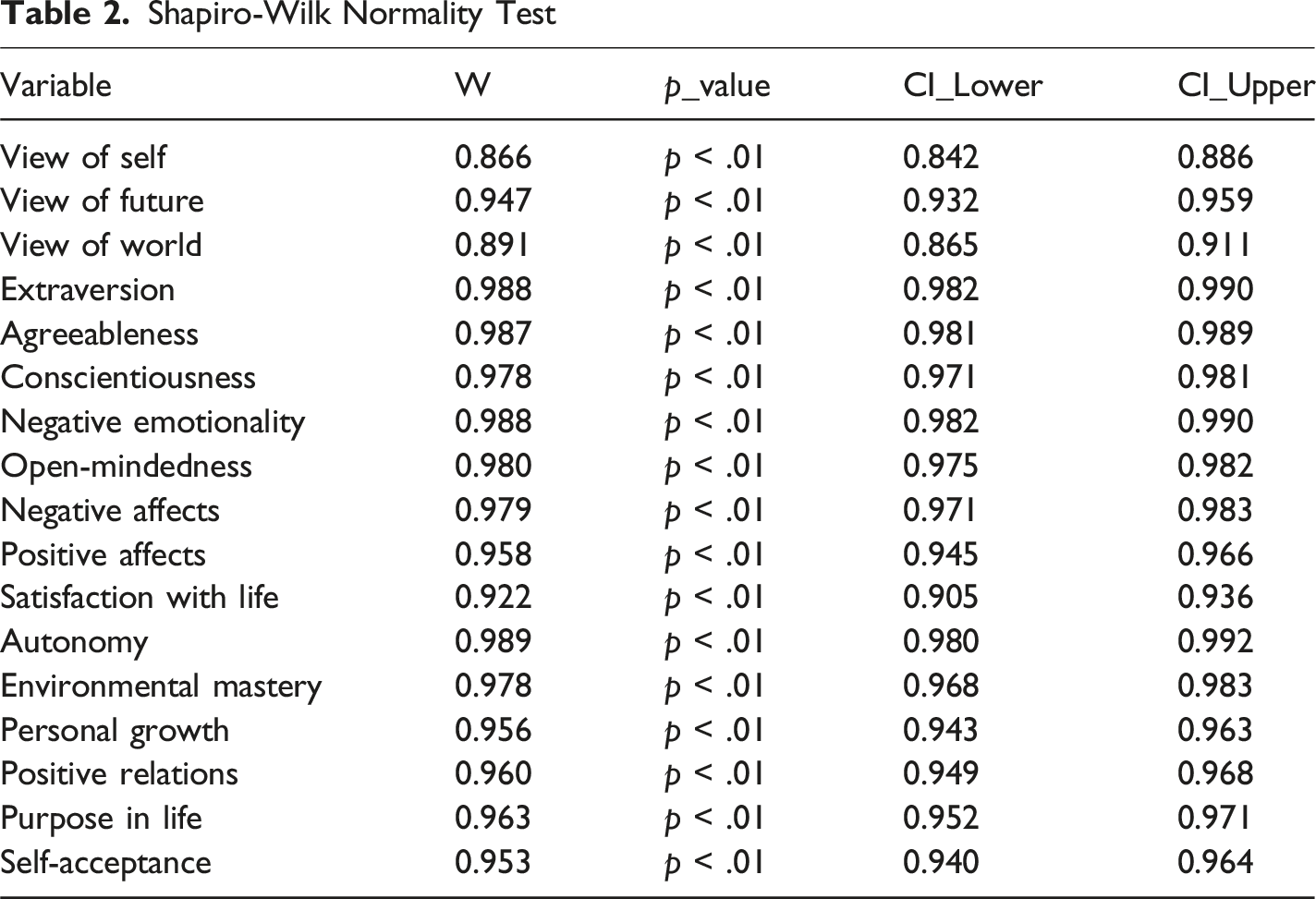
All multi-item measures were modeled via confirmatory factor analysis (CFA) using DWLS on polychoric correlation matrices. We report for each instrument its CFA specification and global fit indices (CFI, TLI, RMSEA with 90% CI, SRMR) in Supplemental Table S1 (Hancock et al., 2019; Schumacker & Lomax, 2016).
We examined how Big Five personality traits (extraversion, agreeableness, conscientiousness, negative emotionality, and open-mindedness), and the two well-being perspectives (psychological and subjective) are interrelated, with the tripartite view of self, world, and future (PCT) as a potential mediator. In this mediation framework, we posit that personality traits directly influence well-being. Still, these effects may be partially or fully channeled through individuals’ perceptions of themselves, their surroundings, and their future. Statistically, we tested whether PCT explains or mediates the relationship between personality traits and well-being outcomes. Figure 2 shows how personality traits and the two well-being perspectives are related, with PCT (view of the self/world/future) as a mediator. Results: Personality Traits ⇒ PCT (View of the Self/World/Future) ⇒ Well-Being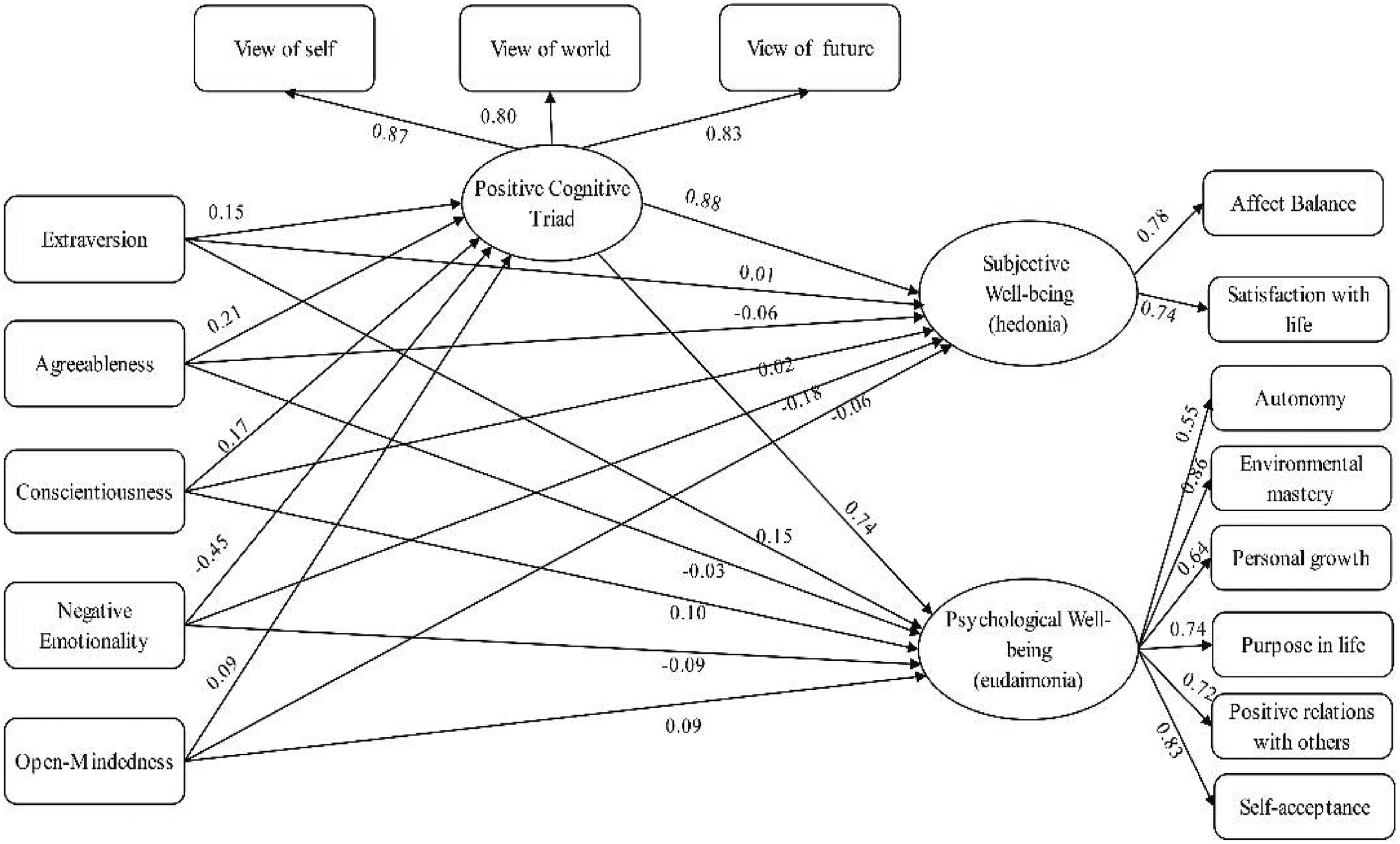
The first SEM model we tested aimed to assess whether PCT mediated the relationship between personality traits and psychological well-being. The SEM analysis used the DWLS estimator, and it revealed fit indices for a very good model fit: chi-square (N = 935) = 663.87, p < .01, RMSEA = 0.06, 90% CI [0.05–0.06], SRMR = 0.05, TLI = 0.98, CFI = 0.99. The chi-square test is highly sensitive to large sample sizes (N = 935), leading to highly significant results, which is common in SEM studies. For interpretation, researchers typically rely on other fit indices that provide a more practical assessment. The RMSEA value of 0.06, close to the cut-off of 0.05, indicated a good fit (Hancock et al., 2019). The confidence interval of 90% CI [0.05– 0.06] is narrow, suggesting a precise estimate of model fit. RMSEA values between 0.05-0.08 are generally considered a reasonable fit (Hancock et al., 2019). The SRMR measures the average discrepancy between observed and predicted covariances. A value of 0.05 is within the acceptable range (<0.08), supporting a very good model fit. The TLI and CFI are above the conventional thresholds for a very good fit (CFI ≥0.95, TLI ≥0.95), indicating that the model supports very well, the data validity (Hancock et al., 2019; Schumacker & Lomax, 2016). These values suggest the model adequately represents the data’s covariance structure. TLI and CFI indicate the model meets the criteria for a very good fit, RMSEA suggests a good approximation error, while SRMR indicates low residuals, supporting model fit. The model was parsimonious, explaining the relationships efficiently.
PCT Mediates the Association Between Big Five Personality Traits and Psychological Well-Being -Estimates’ Calculation for the Mediation Path
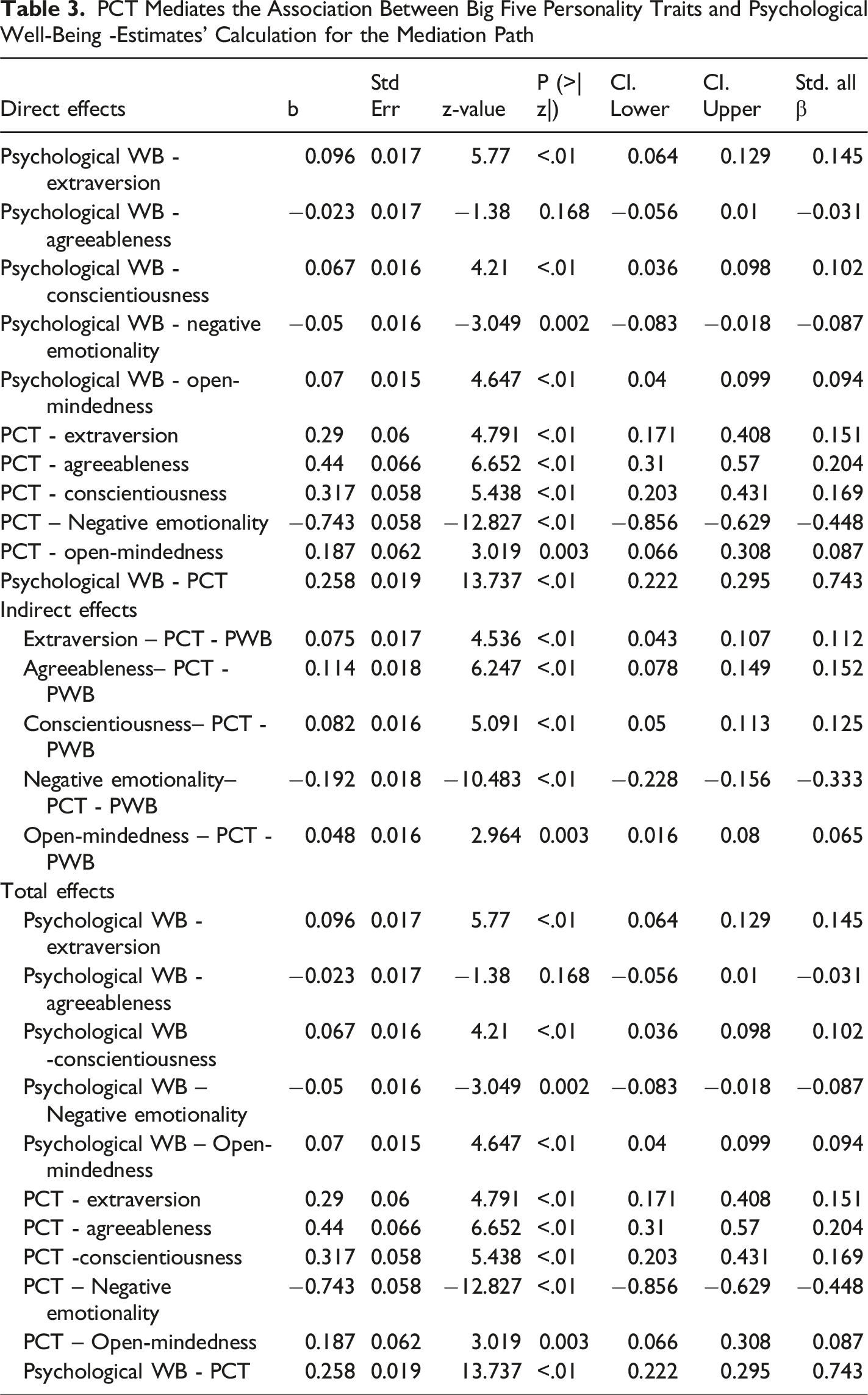
Direct effects revealed that extraversion (β = 0.145, p < .01), conscientiousness (β = 0.102, p < .01), and open-mindedness (β = 0.094, p < .01) positively influenced psychological well-being, while negative emotionality negatively influenced it (β = −0.087, p = .002). There was no significant direct effect of agreeableness on psychological well-being (β = −0.031, p = 0.168). On the other hand, extraversion (β = 0.151, p < .01), agreeableness (β = 0.204, p < .01), conscientiousness (β = 0.169, p < .01), and open-mindedness (β = 0.087, p = .003) positively influenced PCT, while negative emotionality exhibited a strong negative effect on PCT (β = −0.448, p < .01). PCT positively impacts psychological well-being (β = 0.743, p < .01), suggesting that individuals with more positive cognitions tend to experience greater well-being.
Mediation analyses through indirect effects revealed that PCT partially mediated the relationship between four of the five personality traits and psychological well-being. Specifically, extraversion (β = 0.112, p < .01), conscientiousness (β = 0.125, p < .01), and open-mindedness (β = 0.065, p = .003) had a significant indirect effect on psychological well-being through PCT. Agreeableness influenced psychological well-being primarily indirectly through PCT (β = 0.152, p < .01), rather than directly, and SEM analysis revealed a total mediation.
In contrast, negative emotionality had a strong negative indirect effect on psychological well-being (β = −0.333, p < .01), highlighting its impact on well-being through PCT.
The results indicate an indirect relationship between Big Five personality traits and psychological well-being, mediated by PCT. This means personality traits influence PCT, which in turn affects psychological well-being. This suggests that PCT plays a role in explaining how personality traits relate to well-being.
The second SEM model we tested revealed that Big Five personality traits indirectly influence subjective well-being through PCT. In other words, PCT is a mediator in the pathway from personality to well-being, the fit indices indicating good model fit: chi-square (N = 935) = 106.74, p < .01, RMSEA = 0.03, 90% CI [0.03–0.04], SRMR = 0.03, TLI = 0.99, CFI = 0.99. The chi-square test is significant, common with large sample sizes (N = 935). RMSEA values below 0.05 are considered good. In the present sample, 0.03 is considered a very good fit (Hancock et al., 2019). The SRMR value of 0.03 also indicates a very good fit, meaning the model’s residuals (differences between observed and predicted covariance) are relatively small. Both TLI and CFI values exceed the conventional threshold of 0.95 for a very good fit, indicating that the model captured very well, the data’s covariance structure and accurately reflected the relationships among variables (Hancock et al., 2019; Schumacker & Lomax, 2016). The significant p-value and the narrow confidence interval confirmed the fit is robust. The SEM was parsimonious, efficiently explaining the data. The evidence of an indirect effect (mediation by PCT) and the strong fit indices collectively support the model’s validity and theoretical implications regarding how personality traits influence subjective well-being through PCT.
PCT Mediates the Relationship Between Big Five Personality Traits and Subjective Well-Being - Estimates Calculation for the Mediation Path
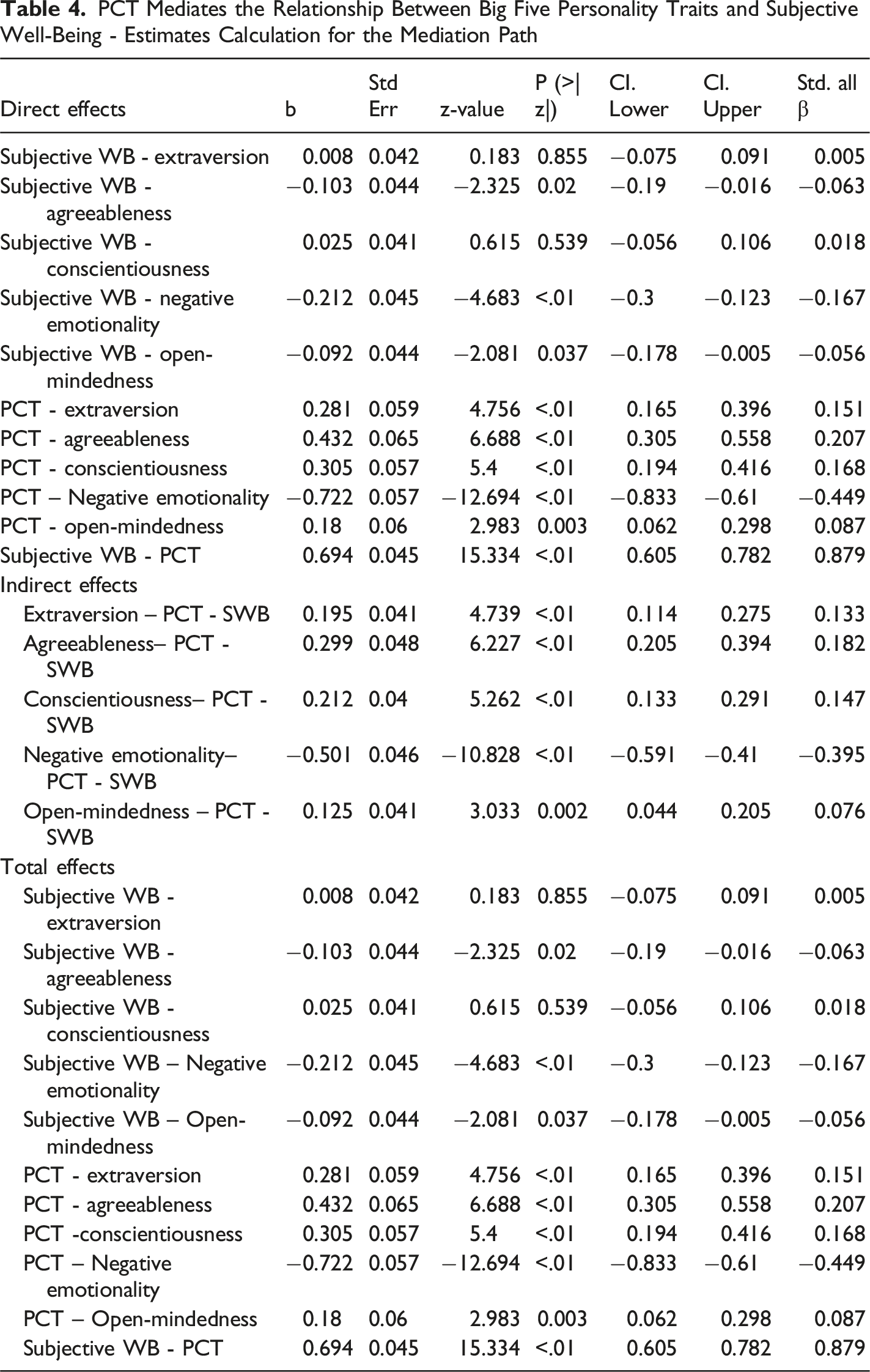
Analyzing the direct effects, we observed that extraversion did not have a significant effect on subjective well-being (β = 0.005, p = 0.855), suggesting that its influence on well-being may operate primarily through indirect mechanisms. Agreeableness showed a significant negative direct effect on subjective well-being (β = −0.063, p = 0.02), Similarly, open-mindedness negatively impacted subjective well-being (β = −0.056, p = 0.037). These negative values strengthen the PCT mediating role, through the indirect path. Conscientiousness did not exhibit a significant direct effect on subjective well-being (β = 0.018, p = 0.539), whereas negative emotionality negatively influences subjective well-being (β = −0.167, p < .01).
Extraversion (β = 0.151, p < .01), agreeableness (β = 0.207, p < .01), conscientiousness (β = 0.168, p < .01), and open-mindedness (β = 0.087, p = 0.003) positively influenced PCT, while negative emotionality had a strong negative effect on PCT (β = −0.449, p < .01). PCT positively influences subjective well-being (β = 0.879, p < .01), indicating that individuals with positive self-views, and optimistic future expectations about the world reported greater levels of subjective well-being.
The indirect effects revealed that PCT played a significant mediation role in linking personality traits to subjective well-being. Extraversion (β = 0.133, p < .01), agreeableness (β = 0.182, p < .01), conscientiousness (β = 0.147, p < .01), and open-mindedness (β = 0.076, p = 0.002) had significant positive indirect effects on subjective well-being, through PCT. Negative emotionality exerted a strong negative indirect effect on subjective well-being through PCT (β = −0.395, p < .01), reinforcing its impact on well-being through cognitive mechanisms.
Extraversion (β = 0.005, p = 0.855) and conscientiousness (β = 0.018, p = 0.539) were non-significant predictors of subjective well-being. Agreeableness (β = −0.063, p = 0.02) and open-mindedness (β = −0.056, p = 0.037) had negative total effects on subjective well-being, suggesting that their influence is complex and may depend on other factors. Negative emotionality remained a strong negative predictor of subjective well-being (β = −0.167, p < .01).
We evaluated three theoretically motivated alternatives to validate the retained specification: M0 (direct-only), M1 (partial mediation), and M2 (full mediation). M1 showed superior fit relative to M0 and M2 and is therefore used for inference (fit indices in Supplemental Table S2). This supports the hypothesized mediating role of PCT alongside residual direct effects.
The results underscore the critical role of PCT in mediating the relationship between Big Five personality traits and subjective well-being. While extraversion and conscientiousness did not show significant direct effects on subjective well-being, their indirect pathways through PCT suggest that fostering positive cognitive patterns may enhance well-being. The strong negative effect of negative emotionality on both PCT and subjective well-being highlights the importance of interventions targeting maladaptive cognitive processes in emotionally vulnerable individuals. These results contribute to a growing understanding of the cognitive mechanisms underlying the personality traits - well-being relationship.
Discussions and Evaluation of Findings
The results highlight that Big Five personality traits exert direct and indirect effects on well-being, with PCT as a significant mediator. Notably, extraversion, agreeableness, conscientiousness, and open-mindedness positively influenced psychological well-being through their impact on cognitive constructs, whereas negative emotionality exhibited a strong negative indirect effect through PCT. The significant impact of PCT on psychological well-being suggests that fostering a positive cognitive framework—characterized by the positive perception of the self, world, and future—can be a critical protective factor against distress and psychological maladjustment. Contrary to expectations, extraversion and conscientiousness did not have significant direct effects on subjective well-being, suggesting that their influence may be indirect through cognitive processes as Gomez and colleagues (2012) indicated.
Extraverted individuals tend to construct positive perspectives on themselves, perceive the world more favorably, and maintain a more hopeful outlook on the future, which in turn enhances their well-being. Given that extraversion is linked to higher levels of social engagement, optimism, and positive affect (Steel et al., 2008), these results align with prior research emphasizing the buffering effect of extraversion against distress and its role in promoting resilience (Schmidt, 2024).
People with higher negative emotionality are at a greater risk of experiencing lower well-being due to reduced engagement in positive cognitive transformation processes. They tend to develop more negative self-concepts, perceive the world as threatening, and maintain a pessimistic view of the future. These cognitive distortions, in turn, significantly impair well-being. This finding aligns with prior research linking neuroticism to maladaptive cognitive patterns, excessive worry, emotional instability (heightened emotional reactivity), and increased vulnerability to mental distress (Soto, 2015; Widiger & Oltmanns, 2017). Notably, PCT has a strong negative mediation effect between negative emotionality and subjective well-being, implying that individuals with high negative emotionality may experience reduced well-being and fewer positive cognitions.
These insights have important implications for psychological interventions, particularly those fostering cognitive strategies that enhance well-being among individuals with high negative emotionality. Cognitive interventions targeting maladaptive PCT constructs could be particularly effective in mitigating the negative impact of neuroticism on well-being.
Agreeableness did not exhibit a significant direct effect on psychological well-being, and it showed a significant negative direct effect on subjective well-being but it had a significant indirect effect through PCT in both cases. This suggests that the influence of agreeableness on well-being may be largely cognitive, reinforcing the idea that interpersonal warmth and prosocial tendencies contribute to well-being by shaping positive cognitive evaluations rather than through direct emotional benefits. Individuals high in agreeableness tend to experience more positive cognitions, they construct trusting, compassionate, and positive perspectives of the world, which, in turn, enhance psychological well-being. The prosocial and cooperative tendencies of agreeable individuals may lead them to perceive interpersonal relationships and the broader social environment more favorably, fostering an optimistic and benevolent cognitive framework that supports well-being.
Conscientious individuals benefit from PCT to a lesser extent. The conscientiousness effects on PCT may exert a more indirect influence on well-being through behavioral rather than cognitive pathways (DeYoung, 2015). Self-discipline, goal-directed behavior, and a sense of responsibility of conscientious people promote structured and stable cognitive representations of the self, world, and future. Conscientious individuals may internalize a sense of control over their lives, reinforcing positive cognitive frameworks that protect against uncertainty and distress.
Individuals more open to experiences are more likely to have positive cognitions (PCT), leading to an enhanced level of well-being. Open-minded individuals high in intellectual curiosity, creativity, and cognitive flexibility develop broader, more adaptable, and optimistic cognitive constructs, which contribute to well-being. These individuals may be more likely to reinterpret challenges as opportunities for growth, fostering an adaptive outlook on life that supports psychological health.
The findings provide empirical support for the hypothesized models, highlighting the complex interplay between Big Five personality traits, positive cognitions, and well-being. From a theoretical standpoint, the study underscores the importance of cognitive frameworks in understanding individual differences in well-being. Personality traits influence well-being not only through behavioral tendencies but also through stable cognitive structures that shape interpretations of life experiences. From a clinical perspective, the results suggest that interventions aimed at enhancing positive cognitive constructs related to self-perception, worldview, and future expectations could significantly improve well-being. This is particularly relevant for individuals high in negative emotionality, who may benefit from cognitive restructuring techniques, such as those used in Cognitive-Behavioral Therapy (CBT), to challenge and modify maladaptive cognitive patterns. Additionally, interventions tailored to personality profiles could maximize therapeutic effectiveness. Extroverted individuals may benefit from positive reinforcement strategies that further strengthen their optimistic cognitive patterns. Agreeable individuals could engage in compassion-based interventions to enhance positive worldviews. Highly conscientious individuals may respond well to goal-setting interventions that reinforce their sense of control and agency.
A key contribution of this study is the identification of PCT as a significant mediator in the relationship between Big Five personality traits and well-being. The findings focus on the critical role of cognitive appraisals in mediating the impact of personality traits on well-being, contributing to the growing body of literature on personality and well-being. By fostering positive cognitive patterns and leveraging personality strengths, individuals may enhance their overall well-being and resilience in adversity. The results support cognitive theories of well-being, which propose that individuals with optimistic, positive cognitive frameworks are better equipped to maintain higher life satisfaction and well-being (Kardas et al., 2019; Taherkhani et al., 2023). The indirect effects further reveal that personality traits influence well-being largely through their ability to shape cognitive patterns. This suggests that interventions aimed at modifying cognitive appraisals, such as cognitive-behavioral strategies, may be particularly beneficial for enhancing well-being, especially in individuals high in negative emotionality.
Future Challenges and Opportunities
The results of this study have implications for clinical practice, addressing cognitive components regarding self-esteem, world, and hope. By integrating these insights into therapeutic interventions, mental health professionals can develop more targeted and effective strategies to enhance clients’ well-being, positive cognitions, and overall mental health. Future research could strive to obtain larger, more diverse, and nationally representative samples to generalize findings to broader populations. It could also explore the existence of additional positive cognitive structures that play a role in shaping individuals’ well-being. A valuable future direction would be to conduct a longitudinal study to assess how well-being evolves. Such a study could involve pre- and post-intervention measurements within both a control group and an intervention group, providing more robust evidence on a long-term basis. This approach would help determine the causal impact of cognitive restructuring on well-being and mental health outcomes. Additionally, incorporating qualitative research methods, such as in-depth interviews or focus groups, could offer deeper insights into subjective experiences. Overcoming desirability and recall bias may require integrating objective behavioral measures, such as physiological markers of stress and well-being, or using experience sampling methods to collect real-time data. Future studies could also consider the cultural context in which personality and positive cognitive structures operate, such as social norms, historical influences, and linguistic nuances that may shape how individuals process and express their well-being. Cross-cultural comparisons could further validate the universality or specificity of these cognitive components in psychological health.
These findings emphasize the importance of addressing cognitive factors in personality and well-being research. While personality traits provide a stable foundation for individual differences, cognitive patterns appear to play a crucial role in shaping well-being outcomes. Future studies should explore potential moderating factors, such as life stressors or social support, to further understand how these relationships evolve over time.
Research Limitations
This study’s findings are subject to several constraints that affect its generalizability and validity. First, non-probabilistic sampling methods constrain the external validity and representativeness of the research. These methods may introduce sampling bias due to the sample’s asymmetry in sociodemographic characteristics. The results are not representative of broader populations beyond the sampled group, the asymmetry in sociodemographic traits limits the ability to generalize results to different social and economic groups. Financial and temporal constraints prevented researchers from accessing a nationally representative sample, further limiting the study’s applicability. Another limitation is the cross-sectional design. The study also relied on self-report measures which have a few limitations. The responses’ subjectivity may compromise data reliability as responses may be influenced by the participants’ moods or circumstances when reporting. Social desirability bias may lead individuals to present themselves in a more favorable light. For instance, participants might overstate their happiness due to societal expectations or cultural norms that discourage openly acknowledging distress. The reliance on self-report data introduces recall bias, with participants sometimes, inaccurately recalling past experiences.
Cultural and linguistic factors may influence how participants interpret and answer the questions. When using psychological scales developed in Western cultures, to assess individuals from Eastern European populations, cultural variations can affect both validity and interpretation. For example, in Romanian culture, there is an emphasis on collective well-being and family obligations, which may shape how individuals define their happiness. Romania’s socio-political history, including periods of economic hardship and political instability, may foster a pessimistic outlook which could influence responses, particularly those related to PCT. Understanding how collective memory and cultural narratives shape individual well-being could offer a more comprehensive interpretation of the findings. The lingering effects of Romania’s communist past may also shape attitudes towards happiness, with survival and pragmatism often taking precedence over well-being. Moreover, linguistic differences can affect the way questions are understood and answered. Some psychological constructs may not have direct equivalents in the Romanian language, potentially leading to subtle variations in interpretation.
Recognizing and addressing these challenges in future studies can enhance the robustness and generalizability of findings. Expanding research efforts to include diverse, nationally representative samples and incorporating objective measures alongside self-reports will further strengthen the reliability and validity of future studies. Collaborating with neuroscientists, sociologists, and data scientists can provide a more holistic perspective on the relationship between personality, cognition, and well-being. Despite the challenges posed by sampling limitations, cultural differences, and methodological constraints, future research has exciting opportunities to refine psychological assessments and contribute to a deeper, more culturally inclusive understanding of well-being. By embracing innovative research methods, interdisciplinary collaboration, and digital health solutions, the field can advance toward effective and universally applicable mental health strategies.
Supplemental Material
Supplemental Material - Bridging Personality and Well-Being Through the Positive Cognitive Triad
Supplemental Material for Bridging Personality and Well-Being Through the Positive Cognitive Triad by Anca-Monica Puia, Violeta Ștefania Rotărescu, and Alexandru Mihalcea in Psychological Reports
Footnotes
Acknowledgments
We thank Dan Cristian Opariuc whose expertise and guidance were instrumental in shaping this study.
Ethical Considerations
Ethical clearance was received from the
Consent to Participate
Informed consent was obtained from all individual participants included in the study.
Author Contributions
Anca - Monica Puia: Conceptualization, Design, Writing – review & editing, Writing – original draft, Visualization, Validation, Supervision, Software, Resources, Project administration, Methodology, Investigation, Formal analysis, Data curation. Violeta Ștefania Rotărescu: Conceptualization, Design, Visualization, Validation, Supervision, Project administration. Alexandru Mihalcea: Conceptualization, Design, Visualization, Validation, Software, Methodology, Formal analysis, Data curation. All authors read and approved the final manuscript.
Funding
The authors received no financial support for the research, authorship, and/or publication of this article.
Declaration of Conflicting Interests
The authors declared no potential conflicts of interest with respect to the research, authorship, and/or publication of this article.
Data Availability Statement
The datasets analyzed during the current study are available from the corresponding author upon request. All relevant data supporting the conclusions of this study have been included within the article and its supplementary information files. Additional datasets, including raw data, are available from the corresponding author upon reasonable request. The data, methods used in the analysis, code, and materials used to conduct the research will be made available to any researcher for purposes of reproducing the results or replicating the procedure. The data are not publicly available because they contain sensitive information that could compromise the privacy of research participants. “The code used to generate results reported in this paper can be accessed in the OSF repository or it is available from the corresponding author upon request. osf.io/sg3r6 and also, Registration DOI, OSF Preregistration: https://doi.org/10.17605/OSF.IO/4MVJ8” (Puia et al., 2024a,  )
)
Supplemental Material
Supplemental material for this article is available online.
Author Biographies
References
Supplementary Material
Please find the following supplemental material available below.
For Open Access articles published under a Creative Commons License, all supplemental material carries the same license as the article it is associated with.
For non-Open Access articles published, all supplemental material carries a non-exclusive license, and permission requests for re-use of supplemental material or any part of supplemental material shall be sent directly to the copyright owner as specified in the copyright notice associated with the article.
