



Abstract
This research explores the experience and meaning of compassion for ethnically diverse individuals who reported having experienced childhood trauma. Seven self-identified women living in Scotland were recruited via purposive and snowball sampling. Multimodal data collection included drawings, semi-structured interviews, and attention to participants’ felt-sense. Using interpretative phenomenological analysis, three superordinate themes emerged: “The interpersonal experience of compassion”; “The intrapersonal experience of compassion”; “The felt-experience of compassion”. Participants conceptualised compassion as a multidimensional embodied phenomenon embedded in their relational context, exposing self-to-other and self-to-self dynamics. Methodological limitations are considered regarding the research design. Findings are discussed in the context of trauma literature on relational development, emotion regulation and ethnocultural considerations. Future research should build evidence on the meaningfulness of compassion within underrepresented populations. Clinical implications consider the relevance of compassion to culturally sensitive therapy.
Practitioner Points
• This study provides a nuanced understanding of how compassion is experienced by ethnically diverse individuals through data that involves interviews and drawings. • Practitioners are encouraged to explore ‘culturally attuned’ compassion in the therapeutic relationship. • This study puts forward compassion as a construct to interrogate psychological theories while charting its relevance to ethnically diverse communities.
Introduction
Background and rationale
This study explores the meaning of compassion for ethnically diverse individuals who reported having experienced childhood trauma. Within Western, Educated, Industrialized, Rich, and Democratic ([WEIRD]) societies (Kotera et al., 2024), compassion has been defined as feeling for the other’s suffering, its recognition and understanding, with a desire to alleviate this, which entails distress tolerance (Strauss et al., 2016). In the psychotherapeutic literature, childhood trauma has been defined as harmful experiences that are prolonged and repeated, within relationships, and when the brain is developing, as in childhood and adolescence (Amari & Mahoney, 2022; Schore, 2013). Thus, childhood trauma includes threats to and breaches of safety, security and trust harming children and/or affecting their environment (Burke, 2024). Clinically, compassion is a worthwhile therapeutic target due to its link to neural networks involved in emotion regulation and the parasympathetic nervous system associated with safeness (Gilbert, 2015; Porges, 2017). Conversely, fears, resistance and blocks to compassion are linked to self-criticism, shame, depression, loneliness and reduced moral expensiveness, which considers what is worthy of moral concern, with repercussions on issues such as diversity (Best et al., 2021; Crimston et al., 2022).
Developmentally, attachment theory (Ainsworth, 1989; Bowlby, 1969) provides a framework to understand the relevance of compassion in the context of childhood trauma. By facilitating the functioning of the caregiving system, secure attachment fosters compassion towards others (Roeser et al., 2018). Conversely, childhood trauma disrupts attachment security insofar as the world and others are perceived as unsafe, leading to difficulties with compassion towards self/others and affect regulation (Zhang et al., 2023). To account for their experience of childhood trauma, attachment theory suggests that individuals may resist compassion as incompatible with the internalisation of negative self/other beliefs (Varley et al., 2024). Systemically, the social determinants of mental health highlight the embeddedness of compassion in sociocultural and political conditions (Gilbert, 2021). Perpetuating inequalities, experiences of social exclusion and discrimination can negatively affect health outcomes and reinforce the associations of compassion with unsafety (Munjee & MacPherson, 2023). Thus, both childhood and societal trauma can result in cognitions around worthlessness and unlovability and manifest in fear of compassion, which increases vulnerability to mental health difficulties and hinders recovery (Kirby et al., 2019).
Despite the mediating role of compassion in the relationship between childhood trauma and mental health outcomes (Rooney, 2020), a systematic review exploring compassion and attachment in individuals with mental health difficulties has identified an ethnocentric bias (Amari et al., 2022). Restricting the experience of compassion to an intrapersonal process, research has primarily concentrated on self-compassion, evidencing its protective function against difficulties associated with a diagnosis of post-traumatic stress disorder (Winders et al., 2020), borderline personality disorder (Pohl et al., 2021), depression (Tao et al., 2021), eating disorders (Kopland et al., 2023) as well as transdiagnostic emotion regulation (Scoglio et al., 2018). To the exclusion of self-other dynamics, focusing on an individual’s diagnosis risks overlooking interpersonal, systemic or ecological factors that may contribute to their distress (Amari, 2021). Akin to the impact of an invalidating childhood environment on the development of compassion (Misurya et al., 2025; Pohl et al., 2021), an invalidating societal environment perpetuates exposure to unsafety, resulting in trauma, including racial trauma (Williams et al., 2021). As an experience of dehumanising otherness, racial trauma denies diversity (Williams et al., 2021). Furthermore, racism also affects those who are ‘privileged’ by severing shared humanity in societal systems with discriminatory policies (Yong, 2020).
As ethnicity can be defined as referring to sociocultural features within a group, the intersection with ethnic diversity may shape the understanding of compassion (Singh et al., 2018). In contrast with race, which is a social construct imposed to categorise people hierarchically, ethnicity affirms diversity by acknowledging individuals’ self-assigned identity and belongingness to social groups (American Psychological Association [APA], 2020). Within the Scottish context of this study, ethnic diversity refers to ethnic groups excluding the White British group but including White underrepresented White groups, such as Irish Traveller, Roma and Gypsy groups (Office for National Statistics ([ONS]), 2015). Emphasising the common humanity underlying mental health experiences, the National Health System ([NHS]) Constitution stipulates that healthcare must be provided compassionately (Department of Health, 2021). Similarly, service users’ movements advocate compassion in service delivery whilst policy makers have been urged to provide compassionate environments for recovery (Spandler & Stickley, 2011). In Scotland, ethnically diverse individuals currently represent almost the thirteen percent of the population (Scottish Government [SG], 2024a). As practitioners and clients’ shared understanding of compassion leads to therapeutic benefits (McEwan & Minou, 2023), exploring the meaning of compassion for ethnically diverse individuals is necessary to advance socially just practice and provide culturally affirmative care (Gilbert, 2021).
Defining compassion within a WEIRD-centric bias denies its culturally shaped meaning. Despite the importance of compassion in cross-cultural care, a systematic review on ethnically diverse populations highlighted how studies adopted a predetermined definition of compassion (Singh et al., 2018). As ignoring societal and epistemic power dynamics perpetuates exclusion, embedding compassion as a moral compass into practice means including ethnically diverse individuals (Amari, 2021; Zhou, 2025). By acknowledging their experiences, compassion research on childhood trauma can be actualised into affirmative care when working with diversity (Rooney, 2020). Furthermore, the experience of compassion is defined by individuals within ethnically diverse populations, making an idiosyncratic approach the most appropriate for its exploration (Singh et al., 2018). Therefore, this research endeavours to orientate towards further investigation for the actualisation of compassion into affirmative trauma-informed interventions.
To explore the experience of compassion, interpretative phenomenological analysis ([IPA], Smith et al., 2009) has been employed in the literature as the most appropriate approach to prioritise idiosyncratic meaning-making. Participant-generated understanding associated compassion with kindness (Pauley & McPherson, 2010), emotional connection, empathy, need prioritisation (Fagan et al., 2022), acceptance and togetherness in the face of suffering (Sutherland et al., 2014; Waite et al., 2015). While acknowledging the importance of compassion, studies emphasised challenges due to participants’ mental health difficulties (Fagan et al., 2022; Lawrence & Lee, 2014; Pauley & McPherson, 2010; Waite et al., 2015). Despite overshadowing the experience of compassion with unworthiness, self-criticism and shame (Bayir & Lomas, 2016; Fagan et al., 2022; Lawrence & Lee, 2014; Waite et al., 2015), a history of childhood trauma has not yet been the focus of investigation. Exposing a dynamic of cultural erasure in psychology, the aforementioned studies have not included the experiences of ethnically diverse individuals. Although the meaning of compassion has been encapsulated across cultural traditions, its understanding may be shaped by the intersection with ethnicity (Singh et al., 2018). Working with a diverse population requires practitioners to develop a ‘culturally responsive compassion’, thus marrying the commitment to alleviate suffering and culturally appropriate interventions (Papadopoulos, 2018)
Whereas mental health research in the United Kingdom has overlooked ethnically diverse populations (Department of Health [DH], 2017), socially just research has the obligation to undo their underrepresentation (Paquin et al., 2019). Resonating with anti-discriminatory practice, an intersectional-informed IPA approach is an act of social justice to affirm individuals as holding constellations of identities that may be vulnerable to multiple forms of oppressions (Weng et al., 2020). Recognising the multi-ethnic societal context, the Scottish Report on Racial Inequality and Mental Health appeals practitioners to include individuals’ experiences (Mental Welfare Commission for Scotland [MWCS], 2021). Similarly, the Scottish Migrant and Ethnic Health Research Strategy Group (Public Health Scotland [PHS], 2020) underscores the obligation to acknowledge ethnic diversity and the Race Equality Framework for Scotland 2016–2030 has called for evidence to support culturally sensitive healthcare systems (SG, 2016). Clinically, assessment should consider how trauma-related difficulties prevent ethnically diverse individuals from accessing mental health services and formulation should be based on a shared understanding of compassion to foster engagement (Brill & Nahmani, 2017; McEwan & Minou, 2023). Practically, understanding the meaning of compassion for ethnically diverse populations who report having experienced childhood trauma can inform culturally responsive interventions (Spears & Ochester, 2025). Therefore, this research investigates the experience and meaning of compassion for ethnically diverse individuals with a history of childhood trauma.
Aims and Objectives
The study aims to address the aforementioned gap in compassion research by focusing on an ethnically diverse population. This study employs a descriptive exploratory qualitative research design to prioritise idiographic accounts. The research question is: • How is compassion experienced by ethnically diverse individuals who have reported childhood trauma?
Methodology
This study adopts a qualitative methodology. In line with the aims, IPA (Smith et al., 2009) was chosen as an approach to generate idiographic narratives. Ontologically, IPA posits that reality is socially co-constructed by relationally embedded individuals (Smith et al., 2009). Epistemologically, IPA is informed by symbolic interactionism in the meaning-making of polysemantic phenomena (Sutherland et al., 2014). Phenomenologically, IPA recognises idiosyncrasies in the exploration of embodied experiences (Boden & Eatough, 2014). Hermeneutically, IPA acknowledges how interpretative activity is inextricable from the researcher’s subjectivity in the ‘double-hermeneutic’ of making meaning of participants’ sense-making (Smith et al., 2009). To elicit a fuller understanding of compassion through felt-sense, imagery and language (Boden & Eatough, 2014), this study adopts a descriptive design.
Limitations of IPA include small sample sizes, replicability, because of the phenomenological focus and the disappearance of participants’ subjectivities, which would be overshadowed by the researcher’s interpretations (Giorgi, 2011). As opposed to generalisability, which indicates external validity to other settings, this study aims for transferability to illuminate shared humanity while acknowledging experiences as context-dependent (Drisko, 2025). Whereas replicability highlights the importance of obtaining the same results based on methodology, this study prizes the uniqueness of the researcher-participant encounter (Smith et al., 2009). Counteracting biases, IPA anchors analysis into participants’ accounts while reflexivity elucidates the researcher’s stance (Smith et al., 2009). Having been employed to understand compassion (Fagan et al., 2022), childhood trauma (Sheridan & Carr, 2020) and ethnic diversity (Bradbury & Van Nieuwerburgh, 2023), IPA is applicable to examine their intersection.
Participants
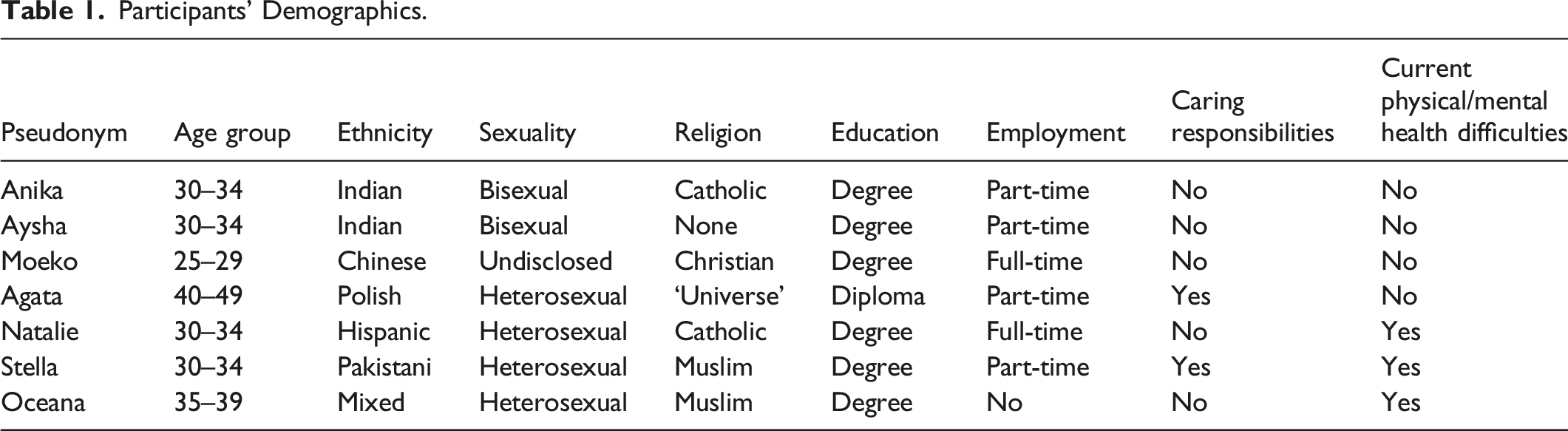
Consistent with IPA literature to allow in-depth analysis (Smith et al., 2009), the sample included seven individuals self-identifying as women. The inclusion criteria were for participants to (1) identify as ethnically diverse, (2) live in Scotland and (3) report having experienced traumas in their childhood. These included physical, emotional, sexual abuse, neglect, racial trauma and bullying. While ethnic diversity and childhood trauma were conceptualised as per aforementioned definitions (ONS, 2015; Schore, 2013), self-identification was a criterion to affirm participants’ experiences (Smith et al., 2009). Acknowledging resilience and a non-pathological understanding of human nature, level of current psychological distress was not an exclusion criterion as individuals do not automatically experience negative outcomes following childhood trauma (Sheridan & Carr, 2020). While the study looked at ethnically diverse adults because less is known about their experiences, the sample was reasonably homogenous considering the inclusion criteria and the relevance of the research question to participants as their understanding of compassion was linked to their shared experience of being minoritised in Scotland.
Participants’ Demographics.
Recruitment
Recruitment occurred through a non-probability purposive and snowball sampling (Smith et al., 2009). Mental health organisations working with ethnically diverse populations were approached as gatekeepers to disseminate the research advertisement. Interested participants contacted the researcher directly. As per IPA literature recommendations (Smith et al., 2009), recruitment stopped when sufficient data were collected for rich multisensory accounts and in-depth analysis, with no new emergent themes (Boden & Eatough, 2014).
Governance
This study was approved by the University Ethics Committee and followed British Psychological Society research ethics guidelines ([BPS], 2021). As per participants’ preference, interviews were conducted through an online video platform complying with General Data Protection Regulation (Information Commissioner’s Office, 2018). An information sheet, consent form detailing the study and limits of confidentiality and debrief were provided (BPS, 2021). To maximise transferability, participants completed a demographic form adapted from the Scottish Government Candidate Diversity Questionnaire (SG, 2022). Drawing from compassion research (Pauley & McPherson, 2010), a semi-structured interview schedule included open-ended questions to elicit first-person narratives. To ensure appropriateness, the schedule was reviewed by the researcher’s supervisor.
Data were collected in 2023 in Scotland. To ensure safety, participants were asked to not recount their traumatic history and a multimodal data approach was chosen as appropriate with participants with trauma histories (Mootz et al., 2019). Interviews up to one hour were audio-recorded. For secure data disposal, password-protected audio copies were made and drawings were photographed with the researcher’s smartphone (BPS, 2021). Verbatim transcripts and drawings were anonymised before analysis (BPS, 2021).
Procedure
Interviews were conducted by the main author who has prior and published experience of conducting IPA analyses. Participants were made aware that the focus of the interview was on how their ethnic diversity and experience of childhood trauma impacted their understanding of compassion. Participants’ felt-sense was invited through ‘Clearing a Space’ (Gendlin, 1981), a Focusing practice aimed at accessing a bodily state of intuition. Participants were guided to focus on their body sensations and ask themselves the question ‘What is it like to experience compassion?’. Visual imagery was evoked with a drawing composed by participants while the researcher took reflexive notes (Boden et al., 2019). Participants were prompted to use pencils, crayons, an eraser and a sketch pad as they so wished as their drawing skills were not being judged, and then to reflect on their drawing (Boden & Eatough, 2014). Verbal expression was elicited through semi-structured interviews which touched on compassion towards others, self and from others (Pauley & McPherson, 2010). An iterative process of clarification was utilised via follow-up questions to ask participants how their ethnicity and childhood trauma history related to their experience of compassion. This also involved circling back to the participants to ascertain if they could ‘see’ themselves in the researcher’s reflections (Smith et al., 2009).
Data analysis
Analyses were conducted by the first author while the second author acted independently as auditor. Analysis focused on interview transcripts, drawings, and their thematic integration. Transcript analysis followed the six steps detailed by Smith et al. (2009), enhanced by an additional step to aid reflexivity (Goldspink & Engward, 2019). First, notes were made as recordings were listened to, and transcripts were read multiple times, considering descriptive, conceptual, aesthetic, linguistic qualities and the drawings (Boden et al., 2019). Second, linguistic features related to compassion were identified. Third, emergent themes were inferred to maintain complexity while reducing data volume. The additional step noted reflexive echoes as indicating the researcher’s resonance with participants’ experience (Goldspink & Engward, 2019). Fourth, master themes were identified to capture meaningfulness, similarities and frequencies of emergent themes corroborated by participants’ quotes. Fifth, the aforementioned steps were repeated with every transcript to preserve an idiographic focus. Sixth, superordinate themes were identified as present in at least four participants, attending to individual and shared experiences. Drawing analysis followed the three steps detailed by Boden and Eatough (2014) with an analytic procedure which included a dialogue with participants. First, production considered speed, pressure, colour, expression, mood, emotion, gestures, absorption and hesitancy. Second, examination concerned balance, colour, content, composition, depth, distraction, dynamics, empathic reaction, focus, geometry, materials, text, texture, symbolism and style. Third, the researcher’s bodily resonance with participants’ drawings was noted. Thematic integration analysis wove together drawings and themes with a validity check about the themes with the research participants (Boden & Eatough, 2014). For quality assurance, analysis was discussed with the supervisor who reviewed a full transcript. As per coherence principle in qualitative research (Elliott et al., 1999), superordinate and subordinate themes were chosen as reflecting the research aims and were supported with extracts and drawings from four participants for in-depth analysis (Smith et al., 2009). There was agreement between the main author and the second author on themes identified.
Reflexivity
The researcher identifies as ethnically diverse, which may have shaped the understanding of this identity in the context of being societally ‘minoritised’. Exploring compassion has been the focus of the researcher’s personal, academic and clinical training in psychology to understand its psychotherapeutic advantages, which may have influenced interpretation. A journal was kept to maintain the researcher’s dual perspective as part of and apart from the study in a ‘reflexive embodied empathy’ (Finlay, 2005).
Results
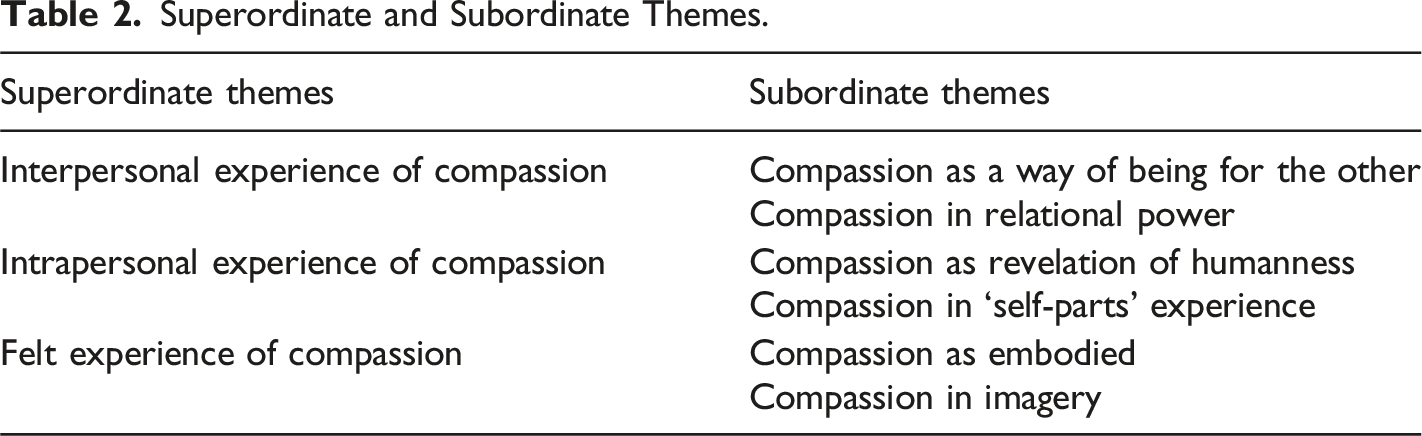
Superordinate and Subordinate Themes.
The Interpersonal Experience of Compassion
The first superordinate theme illustrates compassion as exposing self-other dynamics. Participants seemed to understand compassion as other-oriented and influenced by sociocultural experiences.
Compassion as a way of being for the other
The interpersonal flow of compassion emerges in Natalie’s drawing (Figure 1):
I’ve got it [compassion] in me and the dots in blue are people […]. It felt like a both ways thing, I need their compassion but I want to give them the same thing. […] And the lines are […] a flow […], the rest of the world. I felt like putting some words: love, patience, understanding, touch, wisdom, children, innocence and then… Yeah, I guess that vulnerability of compassion. (Natalie)
The Flow (Natalie’s Drawing).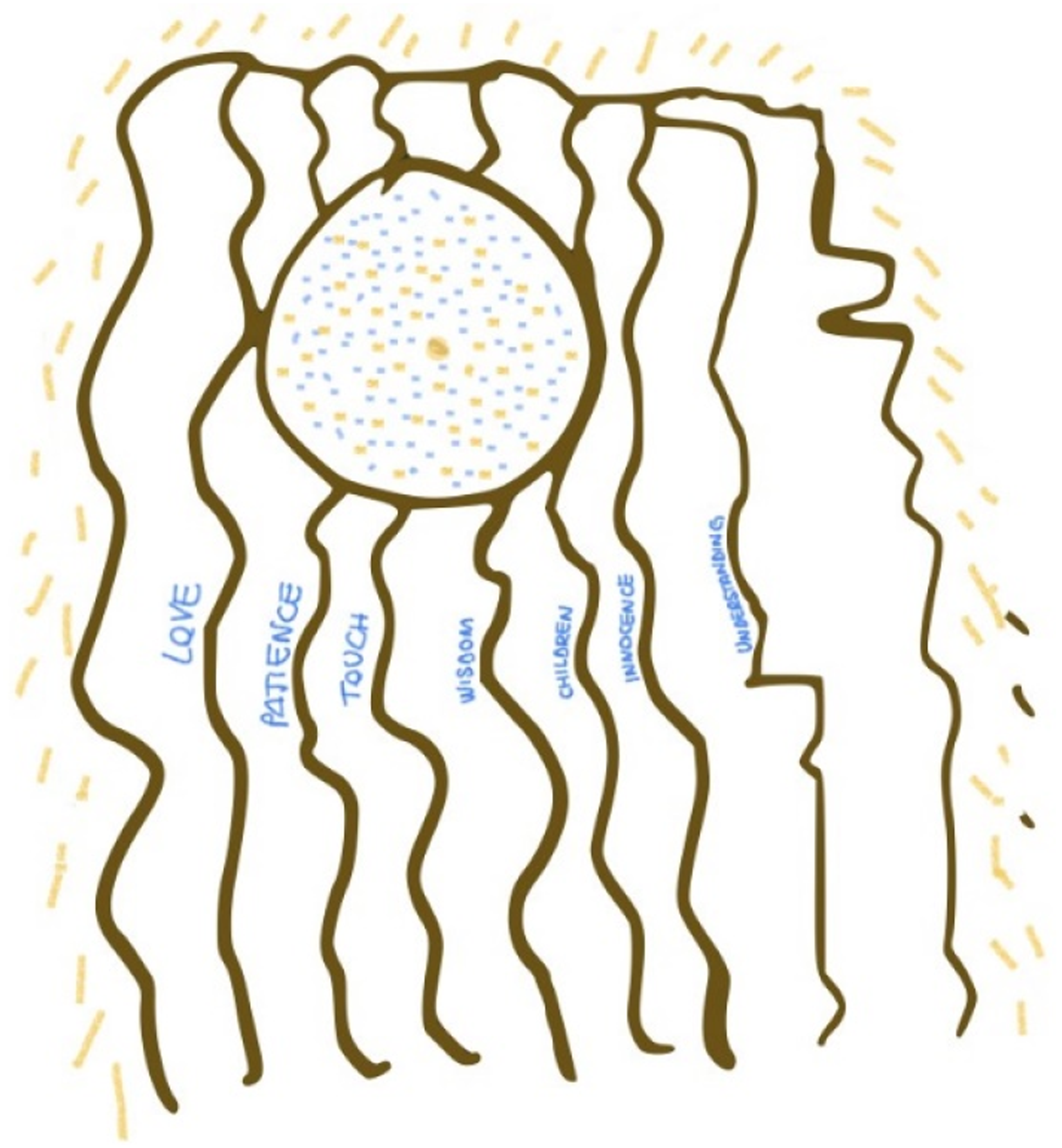
Natalie appears to identify compassion as inherent in herself, while voicing a need for reciprocity. She explained that the added words express what she values in herself and others. Her association is ‘flow’, represented by a rectangularly shaped cascade of water. Within her ‘bubble’ are people she knows separated by unknown others. Her drawing visually represents ecological systems, with degrees of relational separation, as reflected by the colours:
[Blue] is a cold colour and that’s how I identify anything that’s out of me. I chose the gold because it’s a warmer colour and something I identify more with. (Natalie)
While identifying herself with compassion, Natalie arguably experiences others as deprived from warmth, as residue of her traumatic learning, suggesting she may not expect her relational needs to be met. Natalie shared how the colour differentiation also reflected her sense of alienation in a society where she belongs to an underrepresented ethnic group. Perhaps, the other’s coldness is what motivates her to offer compassion. Experienced as a finite resource, the exchange of compassion makes her vulnerable to losing it. Although ‘anything’ suggests a binary self-other differentiation, her drawing is predominantly gold, indicating interpersonal trust.
The relationship with the other becomes the focus of Anika’s definition:
Being understanding of what they are feeling or going through, being empathetic, being loving when they’re in pain, acknowledging where someone is at, being with that, and not trying to do anything. (Anika)
Anika’s words resonate with participants as they capture a way of being with the other whose suffering evokes compassion. The progression of ‘understanding’, ‘empathetic’ and ‘loving’ suggests a deepening of the experience which parallels the awareness of what the other is ‘feeling’. Echoing other participants, this other-oriented awareness appears to have been developed in the context of traumatic childhood experiences. While the verb choice indicates how compassion is unfolding, the other’s pain seems static as if it were an existential given. The presence of compassion (‘being with’) arguably means connectedness whereas purposefulness might interfere with togetherness. The iteration of ‘being’ underscores how compassion seems to be the expression of a relational self where one’s suffering needs the other’s recognition. Relatedness appears to require differentiation where the other is acknowledged as separate. Anika focuses on the other’s experience as opposed to their personhood as if inseparable from their pain.
Compassion in relational power
Without the acknowledgement of suffering, ‘caring’-related feelings might disappear. The following is felt by Moeko:
A lot of hate and jealousy for those people who are at the top, thinking they are the best, why does it need to be them? Why were they chosen? What did I do wrong to be born in the wrong race? (Moeko)
With a louder tone and pressured speech indicative of emerging anger, Moeko denounces the dark side of the interpersonal experience of compassion tainted by societal discrimination that does not recognise her suffering. Her questions seem to describe a hierarchy of mankind according to ethnic diversity, which resonates with participants connecting the experience of receiving compassion from others with a transactional power dynamic. While questioning this ranking, Moeko is seemingly expressing internalised xenophobia whereby the compassion towards herself appears to be dependent on the other’s recognition. When her need for compassion from others is unmet, Moeko describes a binary morality, whereby a ‘wrong race’ presumes a ‘right race’. Perhaps assimilating a destructive force where common humanity is denied, Moeko clarified that her hatred indicates a desire for a different order where she can belong to the ‘right race’. Similarly, she explained how her jealousy expresses her wish to be the ‘chosen one’ holding power, which arguably reinforces a power dynamic in which the one offering compassion is experienced as a superior other.
Linking her difficulties with receiving compassion from others to her trauma history, Aysha voices how she resists it:
It’s sort of this
deep-
seated
mistrust in like other people and even if they tell me, ‘Oh, I just wanted to do this for you’, I am like ‘but why?’ […]. I wanted to sit in her compassion […] but man…! I couldn’t take it. (Aysha)
Aysha clarified how her childhood trauma resulted in mistrusting others and how mistrust had been reinforced by her experience of racial discrimination. Questioning their motives, Aysha assumes these are malevolent. In receiving compassion, she fears the relational closeness that was traumatic in her childhood. While her sombre expression, when explaining, suggested a painful longing, her withdrawal would fit with a trauma response evoked by the offer of compassion. Instead of ‘being with’ as per Anika’s definition, Aysha cannot ‘sit’ in the other’s compassion. Akin to Moeko’s ‘other-to-self’ shift, Aysha sounds self-critical while depriving herself of something she wants. The stillness of being present with compassion is incompatible with the restlessness of anxiety driven by a lack of safety which featured her childhood experiences. Taking presumes giving and questions the possibility of sharing. The proclaimed selflessness of the offer of compassion is incompatible with Aysha’s internalised trauma-derived self-other beliefs. Her wanting yet resisting compassion is the counterpart of Moeko wanting but not receiving compassion. Both are dependent on what the other gives and what the self is lacking, replicating traumatic power dynamics.
Aysha’s words resonate with participants’ need for control over the interpersonal experience of compassion, which was reportedly missing in their childhood traumatic experiences. Agata elaborates:
It’s my level of acceptance, openness to it. Not everyone can offer me compassion because I will not allow it to happen. If I offer my compassion, it’s quite a vulnerable state, there is a risk to offer compassion to people that might hurt you back. […] offering compassion is offering yourself and it’s a vulnerable place to be, but if compassion is accepted, that’s lovely. (Agata)
Taking her power back, Agata explains how she controls whether she receives compassion. ‘Level’ indicates a spectrum of responses across an ‘acceptance-rejection’ continuum. As a giver, Agata expresses the vulnerability in exposing herself to rejection as residue to traumatic relationships. Giver and taker of compassion are in a power struggle where compassion becomes weaponised. If people can hurt ‘back’, the implication is that offering compassion can hurt, which resonates with participants’ emotional ‘backdraft’ following compassion. Reminded of painful feelings, the receiver of compassion can harm the other by rejecting them. This rejection replicates what belongs to participants’ history childhood trauma. ‘Risk’ echoes Aysha’s mistrust. As Agata speaks from her personal experience, she seemingly assumes that others will respond similarly, questioning self-other differentiation. Like Anika identifies the other with their pain, Agata identifies herself with compassion so that what is being rejected is the person. This poses the questions of why Agata would reject the other. There may be a resonance with Moeko’s hatred; alternatively, the authenticity of compassion is what is being questioned as per Aysha’s mistrust. From a trauma lens, Agata underscores how compassion should not be imposed onto her without her choice. The identification with oneself emphasises the relational nature of compassion, which differs depending on who is the ‘self’ offering it. Such uniqueness accounts for the uncertainty surrounding the exchange of compassion in the lack of epistemic trust as the other remains unknown. If accepting compassion means receiving the other into oneself, it becomes an intimate act that gives birth to togetherness. However, this intimacy raises the issue of togetherness becoming enmeshment. Implicitly, there is a risk of being defined by the other as participants reported in the experience of racial discrimination.
Overall, participants highlighted how, in the interpersonal experience of compassion, both rejection and acceptance are possible outcomes. The exchange of compassion becomes a power dynamic where trust tips the balance. Therefore, relational vulnerability becomes a requirement for compassion to emerge.
The Intrapersonal Experience of Compassion
The second superordinate theme depicts compassion as encapsulating a constellation of feelings. Participants’ experience of compassion was shaped by their self-understanding.
Compassion as revelation of humanness
To illustrate compassion, Stella draws an open eye, tears and a heart with a plaster (Figure 2). Her associations are with sadness, humanness, support and control.
What came up was sadness… To show compassion, to be at the receiving end of compassion […], drops of blood […], a sign of […] remembering that they are human but also sometimes that in these states of sadness... you often forget that we are human. […] a limited amount because too much can be overwhelming, it’s a matter of letting go just enough to move on in life, […] your eyes can show sincerity…They can show if you genuinely mean how you say you are. (Stella)
Untitled (Stella’s Drawing).
Stella clarifies that the eye is looking inwards, giving insight into her inner emotional experience. She explains that compassion recognises suffering as a testament to someone’s humanity. Thus, as the tears from the open eye are bigger, the drops become a symbolisation of humanness, connecting external (eye) with internal (heart) experience. Noticing the limited number of tears, Stella underscores the importance of managing emotions as there may be a risk of becoming overwhelmed or ‘bleeding out’. Alluding to a history of self-harm to manage trauma-derived feelings, Stella confirms how suffering with no compassion evokes the reality of aloneness while the reference to blood may forebode death. Perhaps hinting at emotion co-regulation and relational boundaries, ‘just enough’ suffering must be shared for life to continue. ‘Letting go’ of tears arguably contrasts with ‘holding onto’ them, which prevents suffering from being seen, shared and met with compassion.
The crying eye shows sincerity as it signals a heart wounded by childhood trauma. Referring to the plaster, Stella explains:
I want to try and help people build themselves up again so that those sad eyes change to one of just being neutral, not necessarily happy but no longer sad. (Stella)
Contradicting Anika ‘staying with’, Stella intends to change the other’s suffering, betraying a discomfort with sadness. The representation of compassion is ‘naked’ as the viewer can see Stella’s heart without bodily protection. Due to their developmental experience of others as unsafe, the authenticity of compassion was important to participants. Choosing how and what to express empowers them to control an experience of vulnerability while exposing themselves to the other’s eye.
Referring to her tears while receiving compassion, Oceana elaborates on how she feels compared to how she felt in her childhood:
I feel seen, like I exist, like I matter, I am deserving of love. I think it’s grief and frustration and anger, you know [louder pitch]! I haven’t always experienced that. (Oceana)
Compassion illuminates Oceana’s self away from the existential invisibility that featured her childhood neglect. Her words are a progression of self-affirmation which links to her reported experience of personal recovery. From being seen, which makes her the object of the other’s gaze, Oceana asserts that she is inherently lovable. Similar to the twofold experience of vulnerability and acceptance described by Agata, compassion stretches Oceana’s capacity to hold conflicting feelings. Love, grief and anger are encompassed by compassion, which reminds Oceana of her traumatic past while anchoring her into her present. Her grief for the lack of compassion in her childhood resonates with Moeko’s:
I’ve missed so much my whole life. [Lower tone, teary] It makes me feel very, very, very sad. Just thinking about it makes me want to tear up.
(Moeko)
Whereas Oceana shifts into anger, maybe because her grief for what she did not receive while growing up is too painful to be felt, Moeko deepens her experience of grief. Perhaps, Moeko’s tears indicate that she is letting go of her suffering to separate what belongs to her traumatic past from her present. As in Stella’s drawing, compassion has a ‘reminding’ quality. Echoing other participants, Moeko speaks about unmet developmental needs. Her sense of self may have been shaped accordingly, indicating that compassion cannot undo childhood and racial trauma.
Compassion in the ‘self part’ experience
Resonating with Moeko, Natalie shares her experience of offering compassion:
[Tearful] It’s weird, because it’s a mix of feelings... I feel good about myself that I understand, but in some other ways, why do I need to? Just sadness, really, really, really sad for not for me right now, but for that child. (Natalie)
Despite understanding others gives her a positive sense of self, Natalie questions why the latter should depend on the former. Her fear is that not feeling compassion confirms the internalised ‘badness’ from her childhood traumas. Natalie may presume it is expected of her to feel only one emotion, identifying with her experience, as suggested by the use of ‘I’. Her emotional conflict dissolves into sadness. Like ‘very sad’ Moeko, the iteration of ‘really’ and her tears underscore the depth of Natalie’s sadness. Although felt in the present, sadness is evoked by participants’ traumatic past. From understanding the other, Natalie shifts into understanding her ‘child self’ and the suffering she endured. Whereas her ‘present self’ values compassion, her ‘past self’ does not want this to become a condition of worth. Echoing Anika’s words about the interpersonal experience of compassion, Natalie expresses an intrapersonal differentiation by acknowledging her ‘child self’ as separate from her ‘present self’. In this intrapsychic dialogue, Natalie validates the reality of her past experiences. As in Stella’s and Oceana’s experience, remembrance and mourning colour compassion, bringing past and present selves alive.
The dialogue between present and past self becomes a ‘trilogue’ for Aysha:
[Offering compassion] makes me feel good, like I am doing something with my existence. The
little-
me
says there’s no place for it, the
adult-
me
is like, if you don’t find a place for it, how are you going to survive, how is there ever going to be a me? (Aysha)
Like Natalie, Aysha feels good about herself when experiencing compassion, which gives her present life meaning. Aysha discussed how she learned to survive her childhood trauma in the absence of receiving compassion, which perhaps makes her existence worthwhile only if she is the giver. The conflict emerges as she explains how her trauma-experienced ‘child-self’ could not see any space for it whereas her ‘adult-self’ sees compassion as necessary for survival. The ‘adult self’ addresses both ‘child-self’ and ‘present-Aysha’ in her plead with the ‘you’ who may not survive. The presence of the ‘adult-self’ implies that space for compassion has been found and that the ‘child-self’ is arguably denying this to avoid the pain of longing for it. Her final question seems to recognise the survival value of compassion, which is required for the fullness of the self to emerge.
Overall, experiencing compassion was a painful reminder of its present or past absence. Participants voiced different ‘self-parts’ associated with affective responses, which challenged their emotional capacity.
The Felt-Experience of Compassion
The third superordinate theme considers the felt-experience of compassion. Participants’ accounts were characterised by self-checking, indicating how they accessed ‘embodied wisdom’ as they underscored the somatic experience of compassion.
Compassion as embodied
While attending to her felt-sense, Oceana advises how her choice of colour was due to the visualisation of a green flow from her guts, through her heart, and out to the world (Figure 3). The
Referring to the guts, Oceana explains:
It’s usually where I feel things. I am aware that I’ve got things suppressed in my gut, like compassion for myself, so that’s where I feel like it needs to get released from; otherwise, I cannot give anyone else compassion. If it’s not from the heart, then it doesn’t have any meaning. Otherwise, I may as well be dead. (Oceana)
As Oceana represents a visceral experience of compassion, her associations go to nurturing, peace and loved ones. Despite self-compassion being a condition for compassion towards others, her drawing shows how the green flow is dispersing. Perhaps, Oceana’s meaning-making is influenced by her thinking whereas her felt-experience is suggesting otherwise. Echoing Aysha’s understanding of compassion, Oceana explains that inauthentic compassion cannot be trusted and has no purpose. Like in other participants’ drawing, the heart is essential to compassion while the reference to death, as in Stella’s drawing, hints at its role for survival.
Compassion in imagery
To convey the experience of compassion, participants resorted to metaphorical language. In Aysha’s illustration:
[Offering compassion] feels light and warm, like a summer breeze. (Aysha)
Elaborating on the warmth of offering compassion, Agata shares:
It’s like a sunset feeling, a beautiful, romantic warmth. Something about calm, gratitude, sunset, being happy within. It’s a natural way of being, in the moment. Nobody can stop the sunset from happening, it’s a daily thing and it’s never the same. (Agata)
Similar to Natalie’s ‘golden flow’, Agata’s warmth acquires relational qualities. Becoming the sunset, compassion is Agata’s ‘natural way of being’. While offering compassion, Agata is presumably grateful for those who are feeling seen, as mentioned by Oceana. ‘Calm’ alludes to emotion regulation as Agata’s happiness is coming from within herself, like Oceana’s ‘visceral compassion’. As in her interpersonal experience of compassion, Agata’s offer is independent from the other’s acceptance. Depending on the changing nature of oneself or the receiver, the offer of compassion is idiosyncratic.
When receiving compassion, Anika feels:
A sunset type of heat, but not [mentioning a Scottish place], proper [mentioning her birth country]. It’s warmer but it’s not hotter, like a nice, nice warmth. (Anika)
The similarities are striking as Anika is at the receiving end of the ‘sunset-feeling’ mentioned by Agata. Anika describes a warmth attuned to her need for a comfortable ‘temperature’. ‘Nice’ indicates familiarity with her birth country. Implicitly, the offer of compassion may be culture-dependent.
Elaborating on receiving compassion, Aysha comments:
It’s feeling this beautiful, like, just melting of this metal ball and it’s like, ah...calm [sighing], full of love. But then, this metal ball gets reformed and it’s not really its choice, it’s me not wanting it to melt, I want it there. (Aysha)
The metal ball refers to Aysha’s drawing, a metallic ball between her ribcage and stomach, which represents her anxiety and melts when she feels compassion (Figure 4). Safety (Aysha’s Drawing).
Aysha describes how this melting results from the safety provided by compassion as a regulating feeling. Her sighing signals the activation of her parasympathetic nervous system, subsiding anxiety. Her resistance to the ‘warmth’ of compassion resonates with the coldness in Natalie’s drawing. Without identifying with her anxiety, Aysha wants it as a protection because of traumatic experiences of unsafety, which led to mistrust. As indicated by the change from elaborating on her feelings to describing the ball reforming, staying with compassion is anxiety provoking, which may stem from her childhood trauma history. Perhaps, this explains why her drawing depicts the ball as opposed to its melting.
Safety, which is the title of Aysha’s drawing, is mentioned in Stella’s description of self-compassion:
Doing what I need to do to make myself feel safe, at ease. I was going to say comfortable but not necessarily, so that I can take a breath easily. Then, it becomes very difficult to regulate the breathing. It gets sore physically, kind of strange inside. (Stella)
Stella’s experience of regulation resembles a sympathetic activation and contrasts with Aysha’s sighing. While for Oceana it was the gut to be restricted, Stella notices her breathing is obstructed. Arguably, offering herself compassion is threatening Stella’s trauma-related self-beliefs about her worthiness. Perhaps, this activation is her body’s learned response to maintain safety in the face of a traumatic environment. Both Aysha and Stella describe physiological responses, resonating with participants’ somatic illustrations of compassion.
Overall, participants expressed embodied experiences of compassion, evoked through metaphors of lightness and warmth, while challenging their safety. Therefore, their felt-sense of compassion enshrined what transcended their verbal accounts.
Discussion
The results highlighted compassion as a multifaceted phenomenon emerging in participants’ relationship with others, themselves and felt-sense.
From an interpersonal perspective, compassion elicited awareness of a ‘relational self’. As ‘givers’, participants described a positive self-view, matched by the recognition of compassion as ego-syntonic. Self-other differentiation seemingly dissolved in the acknowledgement of shared humanity (Cha et al., 2023). As ‘receivers’, participants voiced negative self/other beliefs, exposing unmet needs and an untrustworthy other withholding or forcing compassion onto them. Within attachment theory (Bowlby, 1969), findings suggest how the absence of compassion influences internal working models shaped by developmental experiences based on negative expectations of others’ availability. Furthermore, results can be interpreted within Bowen’s (1978) family systems theory, where interpersonal differentiation is the ability to negotiate intimacy and autonomy. Whereas offering compassion elicited a degree of self/other fusion, receiving compassion exacerbated separateness (Hainlen et al., 2016). However, participants’ ethnic diversity cautions against the univocal interpretations of WEIRD psychological theories. Cultural attachment theory (Hong et al., 2013) can explain how the lack of compassion stemming from racial discrimination prevents underrepresented ethnic groups from finding a ‘societal safe haven’. Outside WEIRD systemic patterns of relatedness, the exchange of compassion is positioned within an individualist-collectivist continuum (McDowell et al., 2022). If offering compassion aligns with collectivist values, receiving compassion can evoke cultural dissonance (Hart & Sriprakash, 2018). The need for compassion located participants in a power dynamic with others. Intersectionally, this mirrors inequality where perceptions of ethnic likeness and difference determine whether compassion translates into a commitment to alleviate suffering (Lim & DeSteno, 2016). As participants were self-identifying women, feminist theories inform findings of individuals’ situatedness within gender hierarchies and internalisation of oppressed subjectivities (Pedwell & Whitehead, 2012). Due to the negative impact of childhood and racial trauma on self-other beliefs (Williams et al., 2021), findings propose that the direction of compassion, towards others versus self, may shift both individual and social identity appraisal (Garcia-Prieto & Scherer, 2016).
From an intrapersonal perspective, participants experienced compassion as ‘multi-emotional’. Intrapersonal differentiation (Bowen, 1978) emerged in their ability to discern compassion-related cognitions and feelings. Although self-compassion is a therapeutic target for emotion regulation (Inwood & Ferrari, 2018), mixed feelings challenged participants’ affective capacity. Findings suggest that compassion can be dysregulating if experienced outside relational security (Mikulincer & Shaver, 2005). Echoing trauma literature on self-fragmentation (Fisher, 2017), participants voiced different ‘self-parts’. Their reconciliation was prevented by the contradictory experience of presence and absence of compassion (Fisher, 2017). Findings problematise the relationship between compassion and identity integration without a ‘mirroring other’ (Lacan, 2014). Such absence resonates with literature on invisibility syndrome insofar as ethnically diverse individuals feel unseen in the context of racial trauma (Kirkinis et al., 2021).
From a felt-sense perspective, participants underscored the embodied experience of compassion. In line with the evolutionary development of compassion (Khoury, 2019), participants described ‘physiological signatures’ that helped them recognise compassion. Their experiences corroborate the hypothesis of neurobiological underpinnings of compassion (Khoury, 2019). Although compassion has been linked to autonomic regulation (Porges, 2017), participants reported sympathetic activation. This response fits with the disruption of childhood trauma on interoceptive processes, which undermine emotion regulation (Schmitz et al., 2023). As participants’ safeness was evoked by nature-related metaphors, findings resonate with the value of guided imagery (Lee et al., 2021) and embodied practices (Bell et al., 2020) to enhance compassion in trauma work. Overall, the study provides an understanding of compassion as including affective, cognitive and somatosensory dimensions, with interpersonal and intrapersonal processes embedded in participants’ experiences.
Limitations
By including service providers’ experiences, a multi-perspective design could have expanded the systemic dimension of the research question (Larkin et al., 2019). Although around ninety percent of Scotland’s population has internet access (SG, 2024b), digital poverty may have limited participation (Engward et al., 2022). When applicable, conducting interviews in participants’ native language could have revealed cultural nuances (Bayir & Lomas, 2016). Furthermore, a pilot interview could have been conducted to refine questions and maximise sensitiveness. Although demographics were collected and safety was prioritised to avoid re-traumatisation through the recollection of traumatic material, focusing on one single ethnic group or one kind of traumatic experience and exploring the impact that traumas had on participants’ lives through an assessment of psychological distress could have enhanced transferability and generalisability (Cho et al., 2013).
Strengths
To the author(s)’ knowledge, this is the first study exploring compassion within an ethnically diverse sample who reported having experienced childhood trauma. To evidence quality, this research followed Yardley’s (2000) principles. First, sensitivity to context is illustrated by attention to relevant literature and participants’ sociocultural setting. While accessing pre-reflective understanding, the use of Focusing and drawing helped circumvent acquiescence bias (Boden et al., 2019). Second, commitment and rigour are demonstrated in the methodology and analysis. Multidata collection overcame participants’ ‘digital state’ of linear thinking and elicited their ‘analog state’ of intuitive processing (Boden & Eatough, 2014). Third, coherence and transparency are evident in the intersectional-informed approach to IPA (Weng et al., 2020). Drawings and paraverbal communication augmented the delivery of participants’ message (Donovan et al., 2016). By eliciting imagery and felt-expressions, findings contribute to the endeavour to capture person-centred communication within trauma literature (Seng & Group, 2019).
Conclusions
Future Directions
This study shows the heuristic potential of including diverse samples to break psychological theory and research free from WEIRD confinement. Due to increased vulnerability to mental health difficulties (SG, 2016), this study advocates the inclusion of people of colour and ‘clinical’ samples. Diversity in participants’ background and variations in the types of childhood trauma could influence experiences of compassion, requiring further investigation. Beyond the focus on self-compassion (Inwood & Ferrari, 2018), studies could discriminate when compassion for/from others promotes a positive sense of self and emotion regulation. This research confirms the value of investigating the physiological manifestation of compassion (Khoury, 2019). Participants’ resonance with felt-sense experiences contributes to the rationale for investigating virtual reality interventions to enhance the embodiment of compassion by augmenting imagery abilities (Cebolla et al., 2019).
Clinical Implications
As culturally and trauma sensitive ways to engage ethnically diverse clients relationally and enhance empathic understanding (Boden et al., 2019), psychological assessments and formulations can be enriched by Focusing and drawings. Assessment can consider compassion as influencing clients’ self/other beliefs in different relational domains, while formulations can contextualise how clients’ understanding of compassion has been shaped by their sociocultural experiences (Gilbert, 2021). Within the ‘interethnic therapeutic relationship’ (Koopmann-Holm et al., 2024), compassion may be a ‘relational threat’. To foster safety, practitioners can explore clients’ responses to dyadic moments of sociocultural attunement, while acknowledging racial inequality (Pandit et al., 2015). To avoid unrepaired therapeutic ruptures, making culturally given preunderstandings explicit can help practitioners navigate clients’ compassion in the encounter of their intersectional identities (Karnaze et al., 2023). For clients to experience practitioners’ therapeutic presence (Geller, 2021), this study calls for the development of cultural humility (Zhang et al., 2022). By emphasising the other’s genuineness, findings underscore the intercultural dimension of the ‘real relationship’ to improve therapy outcomes (Vaz et al., 2024). Thus, this study argues for the necessity of cultivating ‘culturally attuned’ compassion in therapy.
To conclude, this is the first study to investigate the meaning of compassion for ethnically diverse adults who reported having experienced childhood trauma. It adds to the literature by adopting an intersectional and experiential-informed approach to research. It highlights compassion as a multifaceted phenomenon with interpersonal, intrapersonal and felt-sense dimensions. Finally, this study advocates a paradigm shift towards humanistic-oriented research that honours the embodied and socio-culturally embedded phenomenology of otherness as an act of epistemic justice.
Footnotes
Declaration of conflicting interests
The author(s) declared no potential conflicts of interest with respect to the research, authorship, and/or publication of this article.
Funding
The author(s) received no financial support for the research, authorship, and/or publication of this article.

Data Availability Statement
The datasets generated during and/or analyzed during the current study are available from the corresponding author on reasonable request.