



Abstract
It has been suggested that avoiding choice represents an anxiety-avoidance strategy, which has not been investigated in the context of social media. To this end, the current study explored the relationship between social media dependency and a preference for ‘forced’ choice, along with its association with anxiety, intolerance of uncertainty, and experiential avoidance. The sample comprised 151 volunteer participants (18–32 years) who completed a psychometric test battery, including: the Bergen Social Media Addiction Scale; Spielberger Trait Anxiety Inventory; Intolerance of Uncertainty Scale; and Brief Experiential Avoidance Questionnaire. They also undertook a behavioural assessment based on a paradigm developed for pigeons, in which they selected either a situation with a free choice of alternatives, and one with a forced choice. Intolerance of uncertainty mediated the relationship between social media dependency and anxiety. In addition, those with lower social media dependency preferred being able to choose the contingency they worked on, while those with higher scores exhibited no such preference. This partly confirmed that social media dependency is associated with a reduced preference for freedom, but does not suggest social media dependency actively produced a preference for a lack of freedom. The speed of decision making was also faster in those with high social media dependency scores, in line with previous findings that they show higher levels of impulsive behaviours. The results suggest that anxiety and social media dependency are related, and fear of uncertainty and is linked with digital experiential avoidance.
Keywords
It has been suggested that avoiding situations involving the need to make a choice represents an anxiety-avoidance strategy, sometimes referred to as ‘escape from freedom’ (Fromm, 1941; Yang, 2021). It has further been suggested that excessive use of social media may represent such an anxiety-avoidance strategy (Hsu, 2017; Sheridan, 1993). However, this latter suggestion has not been directly behaviourally tested. Given this, the current study explored the relationship between psychometrically-measured social media dependency, a range of aspects of anxiety implicated in social media overuse (e.g., intolerance of uncertainty, experiential avoidance), and behavioural choice between ‘free’ and ‘forced’ options, using an experimental paradigm derived from the instrumental conditioning literature (Catania, 1975; see also Catania & Sagvolden, 1980; Hayes et al., 1981).
Research has established an association between problematic social media use and anxiety (Dhir et al., 2018; Dobrean & Păsărelu, 2016; Shensa et al., 2018). Problematic use of digital technology, in general, has been suggested as a means by which to reduce or avoid stress (Kırcaburun & Griffiths, 2019; Reed et al., 2017; Romano et al., 2017; Vannucci et al., 2017). Additionally, a range of anxiety-related factors may be involved in the development and expression of the association between anxiety and digital dependency (Borkovec et al., 2004; Brown & Medcalf-Bell, 2022). In particular, ‘intolerance of uncertainty’, and ‘experiential avoidance’ are implicated in mediating this relationship (Bong & Kim, 2017; Gu et al., 2020). Given this, the present study aimed to explore the relationship between anxiety and social media dependency, specifically, by examining whether key avoidance-related factors, such as experiential avoidance and intolerance of uncertainty, mediated this relationship. In turn, these relationships may be important for the observation of behaviourally-established ‘escape from freedom’.
Experiential avoidance refers to avoiding distressing emotions, thoughts, memories, and physical sensations that generate discomfort (Hayes et al., 1996). It is associated with impulsive choices (Sadeh & Bredemeier, 2021), and many behavioural disorders (Hayes et al., 1996; Kingston et al., 2010; Minami et al., 2015), including digital dependence (Bong & Kim, 2017; Garcia-Oliva & Piqueras, 2016). Intolerance of uncertainty influences individuals to view situations involving multiple alternatives as unacceptable (Carleton et al., 2007). Higher intolerance of uncertainty has been associated with impulsive choices (Garami et al., 2017; Luhmann et al., 2011), and a range of dependencies (Garami et al., 2017; Radell et al., 2018), including social media dependency (Mari, de Zúñiga, Suerdem, Hanke, Brown, Vilar, Boer, & Bilewicz, 2021; Rozgonjuk et al., 2019). It may be that, when experiential avoidance and intolerance of uncertainty are high, social media can be used to reduce anxiety, suggesting that experiential avoidance and intolerance of uncertainty may mediate the relationship between anxiety and social media use (see Gu et al., 2020; Sadeh & Bredemeier, 2021).
In addition to extending the psychometric investigation of these relationships, the current study also employed a direct behavioural test of choice avoidance in relation to social media use. The ‘escape from freedom’ paradigm (Catania, 1975; Catania & Sagvolden, 1980; Hayes et al., 1981) was used to explore preference for environments in which the relationship between behaviour and outcome is fixed by the experimenter (‘forced’), or environments where participants choose the relationship between behaviour and outcome (‘free’). The former may be preferred by those seeking to avoid experience or uncertainty, which resonates with a proposed psychodynamic defence mechanism for anxiety generated by uncertain situations in which personal responsibility is needed to control outcomes, labelled ‘escape from freedom’ (Fromm, 1941). The hypothesis is that those using social media more often are engaging in an ‘escape from freedom’ (Hsu, 2017; Sheridan, 1993), or choice avoidance (Gu et al., 2020; Sadeh & Bredemeier, 2021), and it is predicted that those displaying higher levels of social media dependency would show a preference for the ‘forced’ rather than the ‘free’ outcomes.
The behavioural procedure to test such ‘escape from freedom’ (or ‘choosing not to choose’) hypotheses was developed for pigeons (Catania, 1975), but has not been tested on humans. This task comprises a concurrent chain schedule contingency, with an initial component, and a terminal component. In the initial component, subjects respond to two simultaneously available keys, each associated with the same contingency for completion. Depending on which of the two initial components is completed, different schedules are presented in the terminal link. Completion of one of the initial components leads to a terminal component that has only one ‘forced’ contingency available to complete for reinforcement. Completion of the of other initial component leads to a terminal component in which there are two equally-valued available ways of obtaining an outcome that can be chosen (‘free’ component). In two studies, pigeons demonstrated a preference for the ‘free’ terminal link (Catania, 1975; Catania & Sagvolden, 1980), which was not replicated in the third study (Hayes et al., 1981), which used different terminal link schedules to the first two reports. However, what would happen with humans is unknown, as is the relationship between social media dependency and choice for forced and free outcomes.
Thus, the present study employed both psychometric scales and a behavioural test to explore the relationship between social media dependency, choice, anxiety, and avoidance. The first hypothesis was that anxiety and social media dependency will have significant positive relationships with one another, and with both experiential avoidance and intolerance of uncertainty. The latter two variables may mediate the association between social media and anxiety. The second hypothesis is that higher social media dependency will be associated with a preference for ‘forced’ rather than ‘free’ outcomes, mirroring an avoidance of experience and uncertainty. It may also be the case that choices are made more rapidly by those with higher social media dependency, resulting from avoidance of choice situations and/or impulsivity.
Method
Participants
Participants volunteered through the participant pool in addition to responding to social media posts. All participant recruitment occurred via an internet link, which led them to the online task. The present study recruited 327 participants, but due to not completing the experimental task (which was somewhat arduous), or not meeting the age requirement of 18–35, data from 176 participants were excluded, leaving 151 participants in the study. G-Power calculations suggested that for a medium effect size (.3), with a rejection criterion of p < .05, and 90% power, then 88 participants would be needed to identify significant associations between variables, and 82 participants would be needed for a 2 × 4 two-factor mixed-model analysis of variance, with moderate correlation between variables. Ethical approval was granted by the Swansea University Ethics Committee.
There were 151 participants (94 female, 56 male, one non-binary) who completed the task. The mean age of the participants was 23.85 (SD ± 2.91 range = 18–32) years, and 126 (83%) identified their ethnicity as white. The level of daily social media use was checked by gaining a screen shot of the participants time on social media over the last week. These data showed that 12 (8%) participants used social media less than 1 hour a day; 46 (31%) used social media 1–2 hours a day; 47 (31%) used it 2–3 hours a day; and 48 (31%) used it more than 3 hours a day. In terms of daily checks, 14 (9%) participants checked less than 5 times a day, 41 (27%) checked 5–9 times a day, 48 (32%) checked 10–14 times a day, and 47 (31%) checked 15 times or more a day. Of the participants, 64 (42%) identified Instagram as their preferred platform, 53 (35%) identified Facebook, 8 (5%) identified Snapchat, 6 (4%) identified Twitter, and the rest identified a range of other platforms.
Materials
Bergen Social Media Addiction Scale
(BSMAS; Andreassen et al., 2012) is a 6-item self-report measure of social media use involving core aspects of addiction. Each item is scored on a 5-point Likert scale (1 = ‘Not at all’ to 5 = ‘Very often’). The BSMAS had a high internal reliability (Cronbach’s α = .834) within this sample.
Spielberger Trait Anxiety Inventory for Adults
(STAIS-AD; Spielberger et al., 1971) is a 40-item self-report measure of anxiety. Each item is scored on a 4-point Likert scale (1 = ‘Almost never’ to 4 = ‘Almost Always’), with higher scores indicating anxiety, with a cut-off value of 39. The STAI-T had an internal reliability (Cronbach’s α) for trait anxiety (.876) within this sample.
Intolerance of Uncertainty Scale
(IUS-12; Carleton et al., 2007) is a 12-item self-report measure of intolerance of uncertainty. Each item is scored on a 5-point Likert scale (1 = ‘Not characteristic of me at all’ to 5 = ‘Entirely characteristic of me’). The IUS had an acceptable internal reliability (Cronbach’s α) of .836 within this sample.
Brief Experiential Avoidance Questionnaire
(BEAQ; Gámez et al., 2014) is a 15-item self-report measure of avoidance of sensations, situations, emotions, and memories. Each item is scored on a 6-point Likert-scale (1 = ‘Strongly disagree’ to 6 = ‘Strongly agree’), with higher scores indicating more avoidance. The BEAQ had a high internal reliability (Cronbach’s α) of .885 within this sample.
Procedure
After participants followed the link to the experimental task, where they were shown a task instruction sheet that explained general guidelines before continuing to the experimental task and the psychometric scales. After consenting, the participants were first exposed to the experimental task.
The experimental task comprised of eight trials, which required between 5–10 min to complete. A small number of trials was chosen, as pilot studies with 20 or 40 trials produced an attrition rate of 80–90%, and choices for the initial component had stabilised after a relatively small number of exposures. Participants began the task with 100 points, which were visible at the top of the screen. They could increase these points by earning rewards (100 points) by clicking symbols displayed on the screen with the mouse. Each response made by the participant during the task resulted in the deduction of one point from the overall total, to maintain attention to the responses.
In the initial part of each trial, two 3 × 3 cm squares (one pink and one blue) were presented, equally distant from one another, toward to the top of the screen. The left-right presentation of coloured squares was random from trial to trial. A concurrent random ratio (RR) eight schedule was in operation, meaning each response to each square had a 1/8 probability of ending the initial part of the trial. The only constraint on this was that the first response never ended the contingency. One coloured square was always associated with the subsequent ‘forced’ terminal link, and the other was always associated with the presentation of the subsequent ‘free’ terminal component. The colour of the square associated with access to each of the terminal links was randomly determined for each participant. Following completion of the initial link, the two squares disappeared from the screen, and the terminal part of the trial commenced.
The terminal link involved the presentation of one of two possible contingencies, depending on which initial component symbol was completed. The ‘forced’ terminal link was an orange circle, presented centrally at the bottom of the screen. This component operated a fixed interval (FI) 15 s schedule, and completion was followed by the presentation of a reward (the addition of 100 points to the total), and the word ‘success’ being displayed on the screen. The ‘free’ component in the terminal part had two simultaneously available circles (yellow and blue, presented randomly from trial to trial with respect to their left-right orientation), presented equally distant from one another toward the bottom of the screen. During this link both schedules operated an FI 15 s schedule, the first response to either symbol following 15 s would end the component. Reward was 100 points, and the word ‘success’ being displayed on the screen. There was a 5 s inter trial interval, and then the initial link was presented again.
Following the experimental part of the study, participants were asked to report their daily social media usage, and completed some demographic questions, and the psychometric scales.
Results
Sample Mean (Standard Deviation) for Social Media Dependency (BSMAS), Anxiety (STAI), Intolerance of Uncertainty (IOU), and Experiential Avoidance (BEAQ), and the Pearson Correlations Between Them.
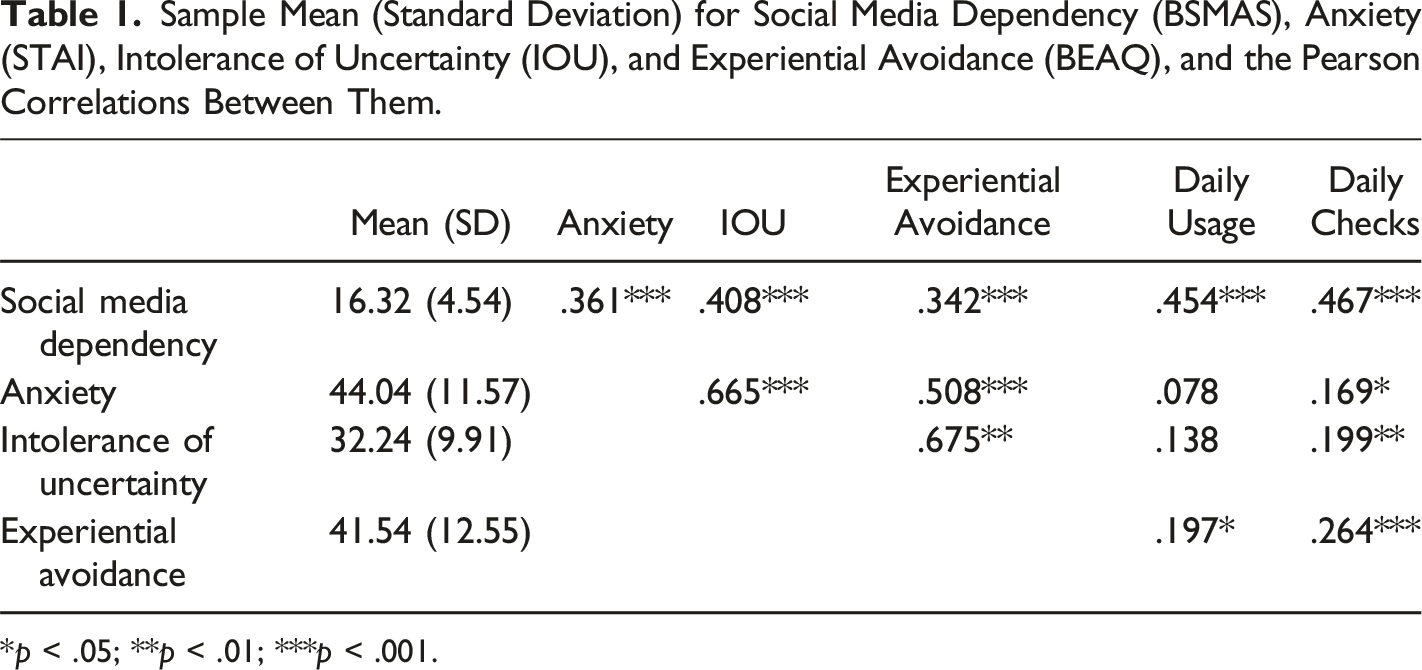
*p < .05; **p < .01; ***p < .001.
Figure 1 shows that the relationship between anxiety (STASI) and social media dependency (BSMAS) was mediated by intolerance of uncertainty (IUS). The mediation analysis was conducted using the PROCESS technique for SPPS v26 (Hayes, 2017). This revealed a significant overall model, R
2
= .186, F (3,147) = 11.19, p < .001. Unstandardised effects were computed for 5,000 bootstrapped samples, and the 95% confidence interval was computed by determining the effects at the 2.5th and 97.5th percentiles for all relationships. The coefficient between anxiety and social media dependency was not statistically significant (β = .059, t < 1, LL:UL: −.018:.137), but the coefficients between anxiety and intolerance of uncertainty (β = .570, t = 2.88, .466:.674), and anxiety and experiential avoidance (β = .551, t = 4.82, .400:.704, were both significant. However, while the coefficient between intolerance of uncertainty and social media addiction was significant (β = .106, t = 1.98, −001:.212), that between experiential avoidance and social media dependency was not (β = .039, t = 1.06, −.033:.111. As a result, the direct effect of anxiety on social media addiction was not significant (effect = .059, t = 1.51, −.018:.137), but the indirect mediated effect was significant (β = .082, .029:.140) as a result of the impact of intolerance of uncertainty (effect = .061, .002:.125), but not experiential avoidance (effect = .021, −.017:.068). Relationship between anxiety, intolerance of uncertainty, experiential avoidance, and social media dependency.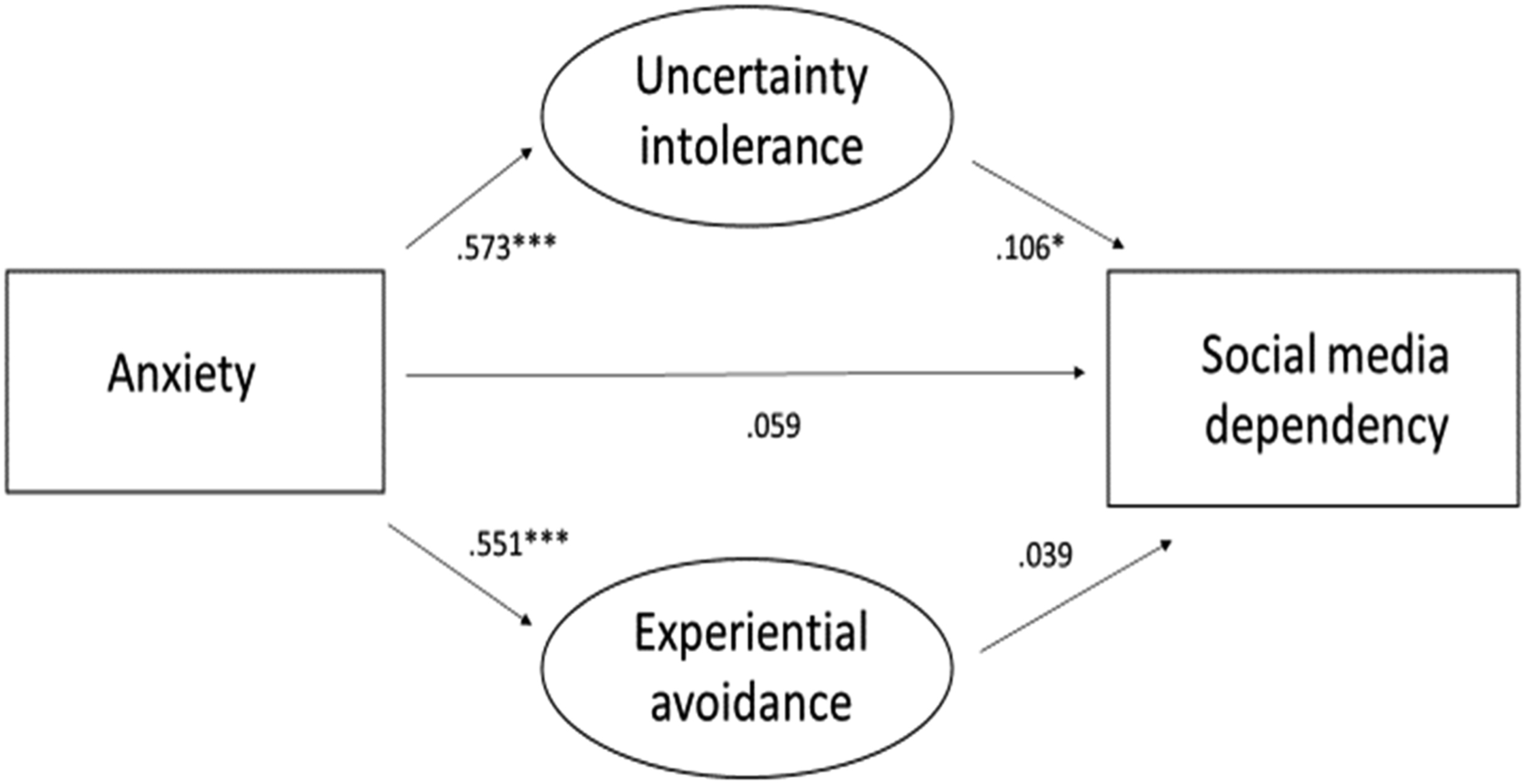
To facilitate subsequent analysis the sample was split above and below the mean for social media addiction (BSMAS) to create a lower social media addiction group (n = 81, mean = 12.90 ± 2.02; range = 10–16), and a higher social media addiction group (n = 70, mean = 20.60 ± 3.79; range = 17–27). The top panel of Figure 2 shows the mean percentage choices for the ‘free’ option, over the four 2-trial blocks for the lower and higher social media addiction groups. Inspection of these data shows that the lower social media addiction group increasingly selected the ‘free’ option over training, but the choice for the higher social media addiction group remained indifferent between the two options. A two-factor mixed-model ANOVA, with group as a between-subject factor, and block as a within-subject factor, conducted on these data revealed a significant main effect of group, F (1,149) = 19.99, p < .001, Top panel = mean percentage choices for the ‘free’ option over the four 2-trial blocks for the lower and higher SMA groups (error bars = standard error). Bottom panel = percentage of individuals more often choosing the free option, being indifferent, and choosing the forced option both over the entire training period and on the last block of training.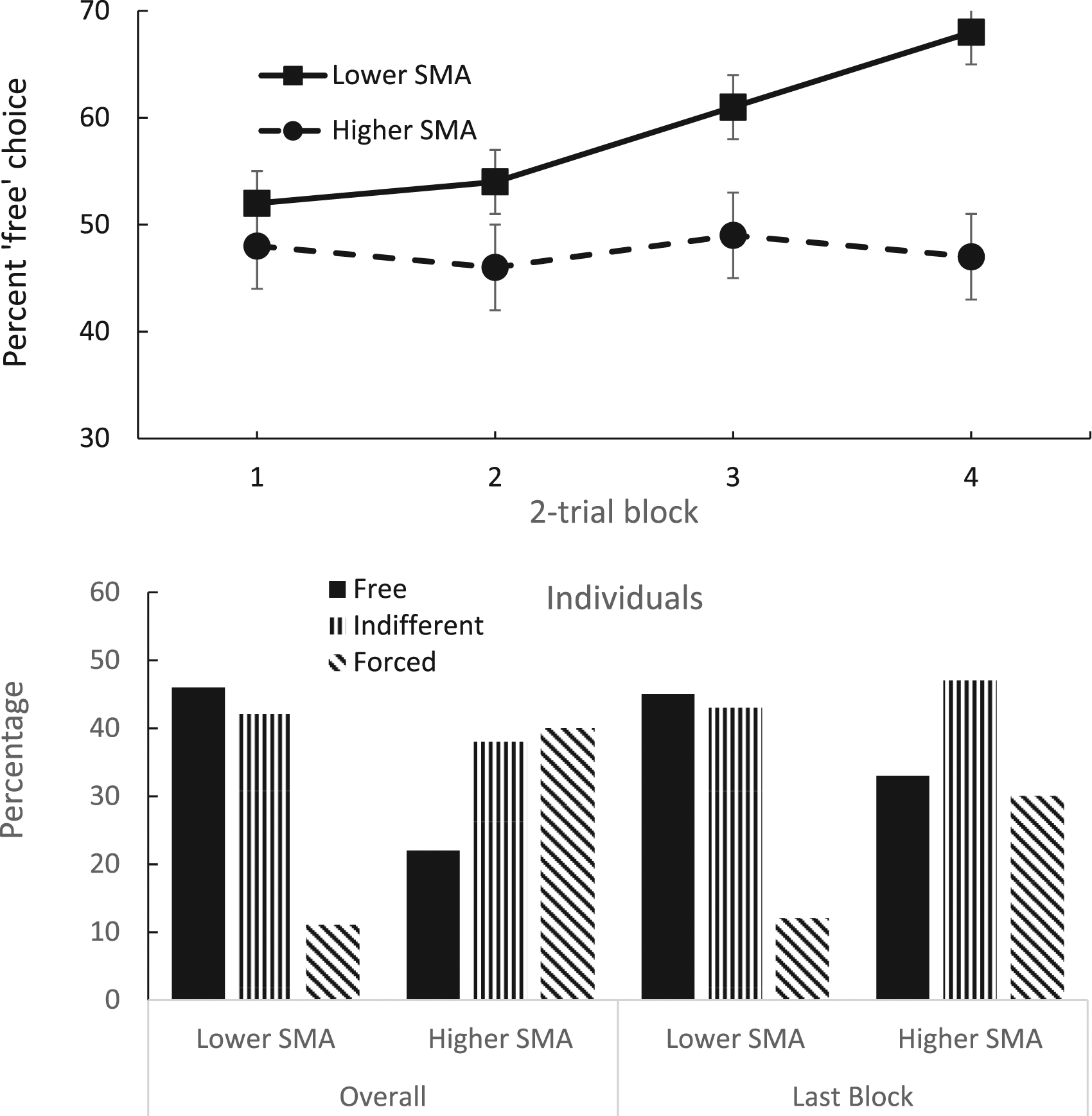
The bottom panel of Figure 2 shows the percentage of individuals more often choosing the ‘free’ option, being indifferent, and choosing the ‘forced’ option, over the entire training period of eight blocks, and also on the last block of training. Inspection of the overall data shows that a greater percentage of the higher social media group choose the ‘forced’ option compared to the lower social media addiction group, X2 (2) = 19.086, p < .001, φ = .356. A similar pattern of choice emerged on the last training block, but with a greater percentage of the lower social media addiction group choosing the ‘free’ option compared to the higher social media addiction group, X 2 (2) = 12.444, p = .001, φ = .287.
Figure 3 shows the latency to make a choice (the time to complete the initial link of the schedule) over the four 2-trial blocks of training for both groups. These data show that choice latency increased for the lower social media addiction group, but remained shorter (indicating a speedier choice) for the higher social media addiction group. Consistent with this description, a two-factor mixed-model ANOVA (group × block) revealed significant main effects of group, F (1,149) = 11.14, p < .001, Mean latency to make a choice (to complete the initial link of the schedule) over the four 2-trial blocks of training for both groups. Error bars = standard error.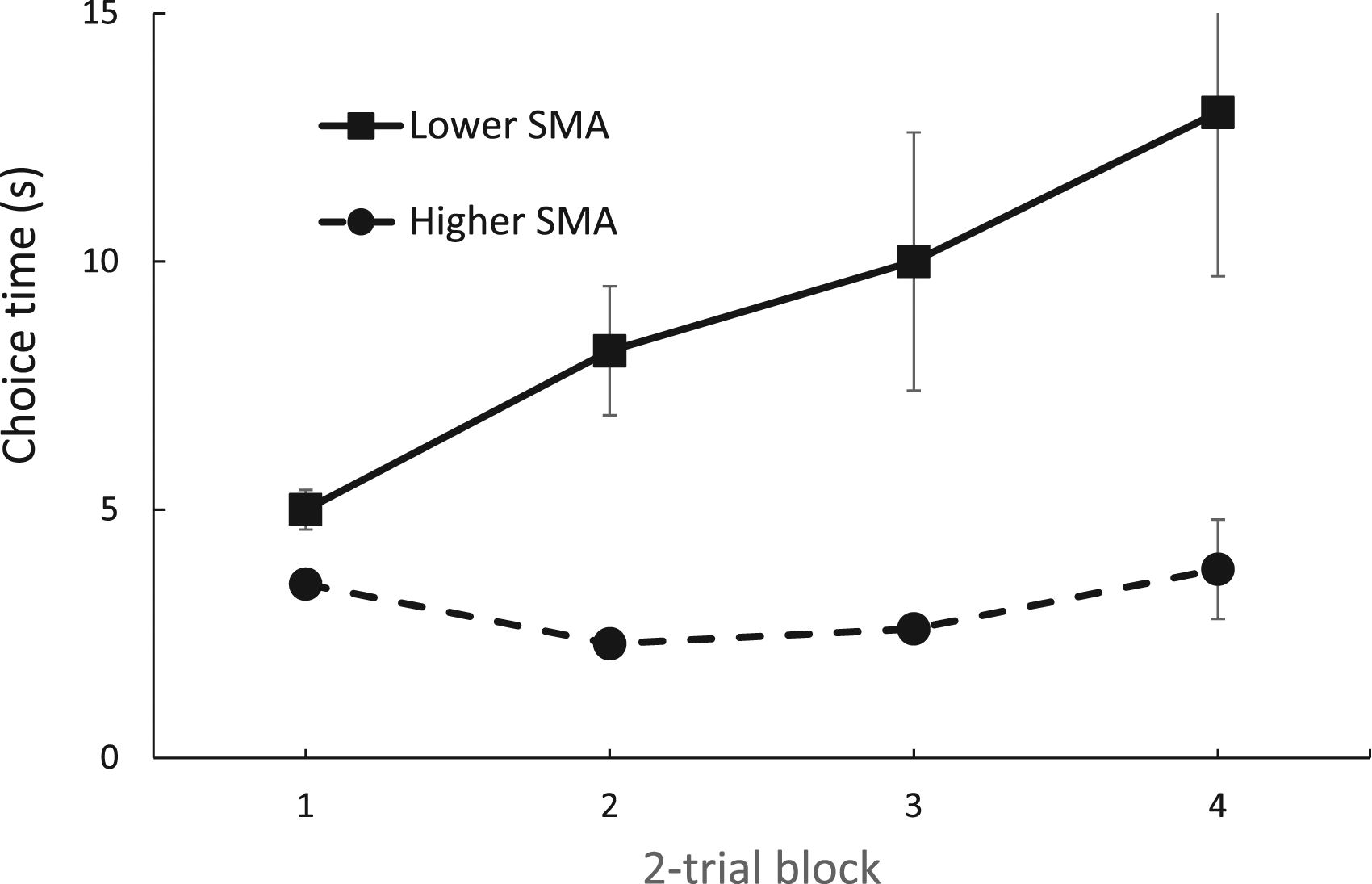
Correlations Between for Social Media Dependency (BSMAS), Anxiety (STAI), Intolerance of Uncertainty (IOU), Experiential Avoidance (BEAQ), and Percentage Free Choice and Latency to Choose, as Well as the Difference Between these Correlations.
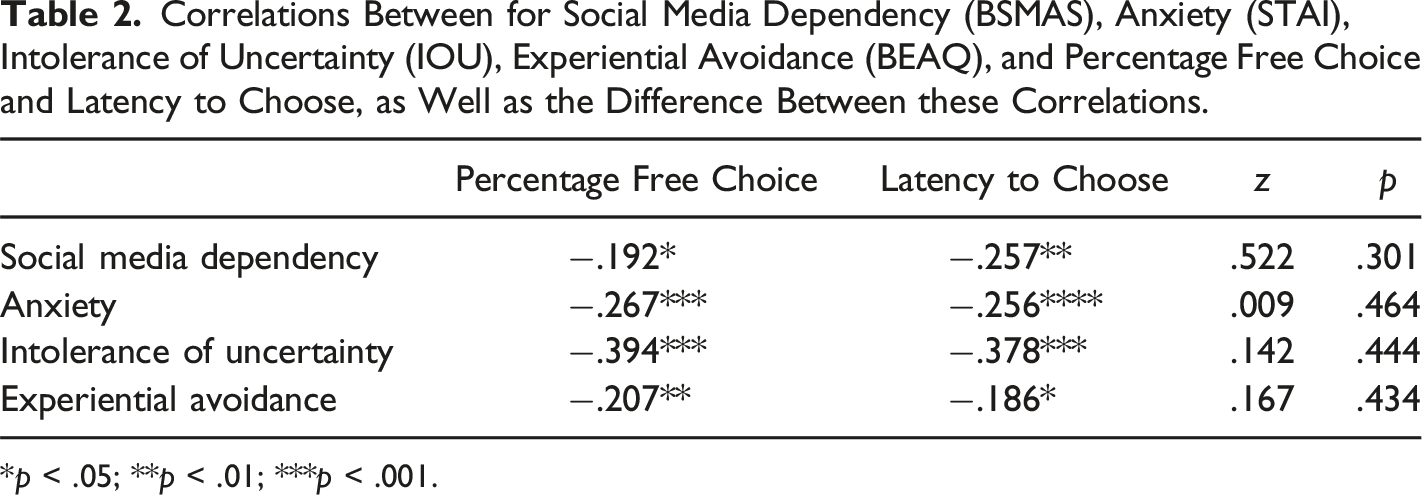
*p < .05; **p < .01; ***p < .001.
Discussion
This study explored the previously uninvestigated relationship between social media use and avoidance of situations involving the need to make a behavioural choice (Hsu, 2017; Lau & Hiemisch, 2017; Sheridan, 1993). This possibility was suggested by previously established psychometric relationships between social media use and anxiety (Dhir et al., 2018; Dobrean & Păsărelu, 2016), which appear to be mediated by intolerance of uncertainty and experiential avoidance (Gu et al., 2020; Sadeh & Bredemeier, 2021). In turn, these relationships may be important for the observation of behaviourally-established ‘escape from freedom’ (Fromm, 1941; Lau & Hiemisch, 2017; Yang, 2021).
The results noted that the relationship between social media dependency (Bergen Social Media Addiction Scale) and anxiety (Spielberger Trait Anxiety Inventory for Adults) was mediated by intolerance of uncertainty (Intolerance of Uncertainty Scale). This confirmed the importance of anxiety in understanding social media dependency (Dhir et al., 2018; Dobrean & Păsărelu, 2016), and corroborated the suggestion that this may be related by intolerance or uncertainty avoidance (Gu et al., 2020; Sadeh & Bredemeier, 2021). A completely novel finding that is consistent with the above psychometric relationships was that, while those with lower social media dependency preferred being able to choose the contingency that they worked on during the behavioural task, those with higher scores exhibited no such preference. This partly confirmed the suggestion that social media dependency is associated with a reduced preference for freedom (Lau & Hiemisch, 2017; Yang, 2021), linked to uncertainty intolerance (Mari et al., 2021; Rozgonjuk et al., 2019), but does not suggest social media dependency actively produced a preference for a lack of freedom (Hsu, 2017; Sheridan, 1993). Finally, the speed of decision making was faster in those with high social media dependency scores, in line with previous findings that show higher levels of impulsive behaviours for those with social media dependency (Reed, 2023).
Overall, participant behaviour revealed a preference for the ‘free’ choice option, supporting, with human participants, previous research with pigeons (Catania, 1975; Catania & Sagvolden, 1980). Clearly, additional research is needed to understand the causes influencing this preference for ‘free’ choice (see Hayes et al., 1981). However, in line with suggestions that use of digital media may impair this tendency (Hsu, 2017; Sheridan, 1993), those with higher levels of social media dependency did not display such a preference for a ‘free’ choice situation. One concept which may be useful in theoretically conceptualising these effects is the ‘escape from freedom’ hypothesis (Fromm, 1941; Yang, 2021). This view suggests that choice promotes anxiety, which some people find unpleasant, leading to avoidance of situations in which a choice occurs. It may be that individuals who are anxious attempt to reduce this anxiety, or avoid its sources (Hayes et al., 1996), and use of social media may represent one way of removing the uncertainties of the real world (Hsu, 2017; Sheridan, 1993). The behavioural results show high social media dependency is associated with a reduced preferred for choice, and also with anxiety and intolerance of uncertainty. Theoretically, these results highlight the role of anxiety in social media dependency (Dhir et al., 2018; Dobrean & Păsărelu, 2016). They imply social media dependency is associated with a reduced preference for freedom (Lau & Hiemisch, 2017; Yang, 2021), associated with intolerance or uncertainty avoidance (Mari et al., 2021; Rozgonjuk et al., 2019), and may represent an escape from an uncertain real-world environment into a digital environment that is perceived to be more under the individual’s own control. These findings also suggest these apparently diverse set of behaviours may result from the same psychological source.
These theoretical speculations are supported by the strong and clear relationships between the psychometric variables, in accordance with some, but not all, past findings (cf. Dobrean & Păsărelu, 2016; Kırcaburun & Griffiths, 2019; Vannucci et al., 2017). In the current study, individuals displaying social media dependency reported higher levels of anxiety (Dhir et al., 2018; Shensa et al., 2018). In addition, the current results align with previous findings that those with higher IOU display social media dependency (Bong & Kim, 2017; Garcia-Oliva & Piqueras, 2016), and that those with higher IOU experience higher levels of anxiety (Buhr & Dugas, 2012; Garami et al., 2017). Similarly, experiential avoidance was related to social media dependency (Rozgonjuk et al., 2019), as well as to anxiety (Buhr & Dugas, 2012; Gu et al., 2020). In fact, intolerance of uncertainty was noted to mediate the relationship between anxiety and social media use. These psychometric scores were associated with a tendency to choose the ‘free’ option less often, suggesting that an intolerance of uncertainty may drive both anxiety and the avoidance of freedom.
Participants were also noted to make such a choice faster, which could indicate their association with impulsivity (Garami et al., 2017; Luhmann et al., 2011; Reed, 2023; Sadeh & Bredemeier, 2021). The current results expand on this previously established relationship between social media dependency and increased impulsivity (Reed, 2023). It may be that the observed impulsive behaviour in those with high levels of social media dependency (Garami et al., 2017; Sadeh & Bredemeier, 2021) may be less of a psychological trait, than an adaptive response to reduce exposure time to unpleasant situations—that is, those involving multiple options (Fromm, 1941; Yang, 2021). For example, IOU was particularly strongly associated with both choice for the ‘forced’ option, and shorter latencies to make this choice. The fast, or impulsive, responses seen in situations involving social media may be avoidance responses from aversive situations, from which social media allows escape.
It should be noted that the aim of this research was not to validate theories on escaping from freedom (Fromm, 1941), or of the recently proposed model on functional freedom (Lau & Hiemisch, 2017). However, the interaction between this theoretical framework and the findings and methodology of the present research may inform future investigative efforts into the relationship between social media dependency and anxiety-related concepts. Nevertheless, there are limitations to the current work that require acknowledgement. Firstly, the study was conducted with a UK-based population of largely white participants. Their orientation to constructs such as freedom, and whether this provokes anxiety, may not be similar to those from other backgrounds (see Mari et al., 2021). There was also a limited exposure to the training contingencies, which was much shorter than that previously used with pigeons (Catania, 1975; Catania & Sagvolden, 1980). This adjustment was made in response to very high attrition rates when greater numbers of trials were employed. In a laboratory setting, participants would not encounter the distractions that may have led to this attrition rate. The mode of data collection was online, and the lack of control around the environmental conditions during the study completion makes full understanding of the effects of the contingencies difficult. Participants followed an online link in the convenience of their own homes through their mobile devices or laptops. Even though the main goal was achieved in this study, the original data collection strategy to use computer laboratory would have controlled for any background distractions while directing the participants’ attention solely towards the experimental task.
In conclusion, this study contributes to the evidence base supporting links between an individual’s anxiety and social media dependency, and corroborates the existence of relationships with fear of uncertainty and experiential avoidance. Future research exploring this relationship would further illuminate the role of freedom in the decision-making process as well as its behavioural links with social media use. This exploration aimed to unpack the potential relationships between these variables, develop data that may illuminate theory relating to behaviours seen in social media dependency, and integrate a previously disparate set of findings from different theoretical backgrounds.
Footnotes
Declaration of Conflicting Interests
The author(s) declared no potential conflicts of interest with respect to the research, authorship, and/or publication of this article.
Funding
The author(s) received no financial support for the research, authorship, and/or publication of this article.
Ethical Approval
Ethical approval was granted by the University Department of Psychology, Ethics Committee.
Consent to Participate
All participants gave informed consent to participate.
Data Availability
Data is available on request.
