



Abstract
The Mother-to-Infant Bonding Scale (MIBS) is among the most popular measurement tools to evaluate caregiver-infant attachment. We carried out a meta-analysis study to explore the generalizability of the reliability coefficients for the MIBS in different studies. The literature review yielded a total of 702 studies investigating caregiver-infant attachment. After removing duplicate studies, we also excluded compilations, meta-analyses, qualitative studies, those using different measurement tools, studies published in a language other than English, citations, and those whose full texts could not be accessed. Eventually, we considered a total of 26 studies with 33 Cronbach’s alpha coefficients that satisfied the inclusion criteria. We normalized the alpha coefficients using Bonett’s transformation, and the analyses were performed using a 95% confidence interval. The findings revealed a Cronbach’s alpha (n = 33) coefficient of 0.73 (CI = 0.68–0.77); hence, the present reliability generalization study provides evidence that the reliability scores produced after measurements with the MIBS in previous studies are acceptable across samples. Overall, further studies may reliably utilize the MIBS to evaluate mother-infant attachment.
Introduction
An infant’s interest in and attachment to a human figure, particularly their mother as a primary caregiver, occurs when the mother satisfies their physiological needs, which leads the infant to perceive their mother as a source of satisfaction (Bowlby, 1958). According to Bowlby, infants’ experience with their primary caregivers leads to generalized expectations and beliefs (working model) about the self, the world, and relationships (Bowlby, 1973, 1980). In other words, infants inevitably learn what to expect from their caregivers based on repeated mutual interactions and can regulate their behavior accordingly (Hazan & Shaver, 1994), which is conceived of as “attachment.” Maternal emotional involvement with the baby in the perinatal period is recognized and called “bonding” (Yoshida et al., 2012), which is a process in which the infant “attaches” to their mother. An early, positive mother-newborn relationship is considered to be essential in the mother’s establishing unconditional love toward the infant, as well as the infant’s developing security and trust in the mother. In the subsequent stages of development, bonding also initiates friendship and trust (APA, 2022). In general, attachment is a kind of emotional bond with caregivers developed throughout infancy. The quality and timing of attachment are more likely to govern the quality of later development (Malekpour, 2007). The previous research already clarified the importance of the quality of mother-infant attachment in development and psychological well-being (Deans et al., 2016; Fuchs et al., 2016; Karakaş & Dağlı, 2019; Malekpour, 2007; Winston & Chicot, 2016; Young, 2013).
The mother-infant attachment is always under the spotlight (Brockington et al., 2001) since diverse factors may affect the secure mother-infant attachment (Tichelman et al., 2019). Therefore, to investigate their attachment types, 12-24 month-old infants are often recruited to the “Strange Situation Test” by exploring their separation from and reunion with their primary caregivers (Ainsworth et al., 1981). Apart from this experimental method, several measurement tools have been developed with different features and reliability so far to evaluate mother-infant attachment (Brockington et al., 2001, 2006; Condon & Corkindale, 1998; Fleming et al., 1988; Kumar, 1997; Mathews et al., 2019; Nagata et al., 2000; Perrelli et al., 2014; Taylor et al., 2005; Yoshida et al., 2012; Zeanah & Benoit, 1995). Ensuring the validity and reliability of such instruments in different countries may help uncover mother-infant attachment issues, design early interventions for such problems, and compare the results between studies (Garcia-Esteve et al., 2016).
The Mother-to-Infant Bonding Scale (MIBS) (Taylor et al., 2005) is a practical tool that aims to measure mother-infant bonding through self-report postpartum feelings toward the baby with one-word descriptors. It is often administered at regular intervals from the first days after delivery and has been utilized by many studies so far. The four-point Likert-type scale consists of 8 items, is convenient to use, and shows links with early mood. It may aid future research into the causes and consequences of the mother’s failure to bond with her child (Taylor et al., 2005). The scale was developed primarily based on the utterances “absent affection, sometimes hate, rejection, neglect or impulses to harm,” emerging in a qualitative study by Kumar (1997). Kumar (1997) described them as evidence of a disorder of mother-to-infant bonding (Taylor et al., 2005). Taylor et al. (2005) used the term “bonding” when developing the MIBS to describe how the mother feels toward her infant and indicated that bonding includes the infant’s behavior toward the mother, which differentiates it from attachment. The scale was also used to evaluate father-infant attachment in research on fathers’ involvement in the delivery and postpartum processes and their sense of parenthood (Brandao & Figueiredo, 2012; Suchy et al., 2020). In the relevant literature, the scale was administered to mothers (Coktay & Turk, 2020; Eapen et al., 2014; Ertan et al., 2021; Escasa, 2012; Handelzalts et al., 2016; Horsch et al., 2017; Lim, 2013; López-Fernández et al., 2021; Mayopoulos et al., 2021; Mendelson et al., 2018; Roth et al., 2021; Shreffler et al., 2021; Tichelman et al., 2021; Wittkowski et al., 2007) fathers (Shorey et al., 2019; Stuijfzand et al., 2020; Suchy et al., 2020), and caregivers (Foli et al., 2012; South et al., 2012) in the prenatal and postnatal periods. In addition, the scale has already been adapted into different cultures in several countries (e.g., the United States, the United Kingdom, the Netherlands, France, Switzerland, Australia, Singapore, Turkey, Indonesia, and Israel) (Karakulak & Alparslan, 2016; Mörelius et al., 2021; Ohara et al., 2016; Wiguna & Ismail, 2019). A review study, covering the Mother-Child Bonding Assessment Tools, pointed out various measurement tools designed to assess the variable, yet some require cultural adaptation (Perrelli et al., 2014). In addition, it is noteworthy that scholars recommend performing cross-cultural studies using the same scale to close the gap in the literature (Wiguna & Ismail, 2019). In this context, the frequent utilization of the MIBS on different groups in different countries calls forth a need to generalize the reliability coefficients calculated for the scale.
Reliability generalization (RG) is a psychometric, meta-analytic method that integrates the reliability coefficients of a scale calculated in different studies into different samples and attempts to suggest whether the reliability of the scale can be generalized for different situations, contexts, and populations (Sánchez-Meca et al., 2013). In this way, RG provides a solid basis for comparing reliability between different measurements and can be utilized as an argument for using and evaluating a test in various situations (Greco et al., 2018). RG studies often focus on the reliability of measurements in different studies and samples rather than the reliability of a single measurement using the target scale (Şen, 2021). The MIBS is an instrument utilized in different studies with diverse samples. Its user-friendly nature makes it a practical tool and widely adopted. Thus, a meta-analytic, general reliability finding to be extracted from the results of different measurements with the MIBS is more likely to be robust evidence for prospective researchers to use the MIBS. Ultimately, we aimed to create a pool of research utilizing the MIBS and explore the findings related to its reliability in these studies through the RG method (Vacha-Haase, 1998). In this study, we sought an answer to the question, “How reliable is the MIBS for assessing mother-infant bonding?” Accordingly, we aimed to review studies using the MIBS and reporting its Cronbach’s alpha coefficients. In this context, we first defined “bonding” and emphasized its key role in early childhood.
Method
We resorted to two different guidelines to generalize the reliability results of the MIBS in different studies: the updated version of the PRISMA (Preferred Reporting Items for Systematic Reviews and Meta-Analyses) (Moher et al., 2009; Page et al. 2021), which is a systematic guideline for meta-analysis studies, and the REGEMA Checklist, a customized manual for RG. The REGEMA (Reliability Generalization Meta-Analysis) Checklist is a 30-item checklist created for the benefit of researchers, reviewers, and editors in RG studies (Sánchez-Meca et al., 2021). The REGEMA can be used by: (a) meta-analysts conducting RG meta-analyses and aiming to improve the reporting quality, (b) consumers of the RG meta-analyses desiring to be informed about critical appraisals of their reporting quality, and (c) reviewers and editors considering submissions for publication purposes. The REGEMA checklist can be considered a valid tool to improve the reporting quality of RG meta-analyses, as its elaboration was based on other widely accepted guidelines and checklists proposed in the meta-analytic literature (PRISMA, MOOSE, AMSTAR, AMSTAR 2, MARS), as well as on methodological papers on RG meta-analysis and measurement (Sánchez-Meca et al., 2021).
Selection Criteria, Search Strategies, and Data Extraction
The initial inclusion criteria were using the MIBS and reporting its Cronbach’s alpha reliability coefficient. The present research included empirical studies published only in the English language. Moreover, since the MIBS was introduced in 2005, we covered studies meeting the inclusion criteria and published in 2005–2021.
We scanned the specified studies using the phrase “mother-to-infant bonding scale” in the Web of Science, Scopus, Pubmed, and Proquest databases. In addition, we examined the citations of the original study, “A new Mother-to-Infant Bonding Scale: Links with early maternal mood” (Taylor et al., 2005). In addition, we search gray literature (OpenSIGLE-the System for Information on Grey Literature in Europe) and it yielded no further studies. Overall, we reviewed the databases and went through the results adhering to the criteria specified above. As a result, we collected a total of 702 studies.
First, we excluded 437 duplicate studies. Next, among the remaining 265 studies, we eliminated (a) compilations, meta-analyses, and qualitative studies, (b) studies using different measurement tools, (c) studies published in a language other than English, (d) citations, and (e) those without accessible full texts. Then, among those with full texts, we also excluded studies neither calculating nor reporting any reliability coefficients (the authors of these studies were kindly requested reliability findings via email but did not respond to our e-mails or want to share the relevant results.) (n = 93). Yet, we did not consider the variables, such as place, sample, age, and gender (mother-father), to be exclusion criteria. Separate alpha coefficients reported for different samples/times within the same study were included, and these studies were indicated with independent citations (e.g., Wittkowski et al. 2007_1 and Wittkowski et al. 2007_2). Figure 1 presents the workflow regarding the review and evaluation process of the selected studies. Workflow chart of the review and evaluation process of the selected studies.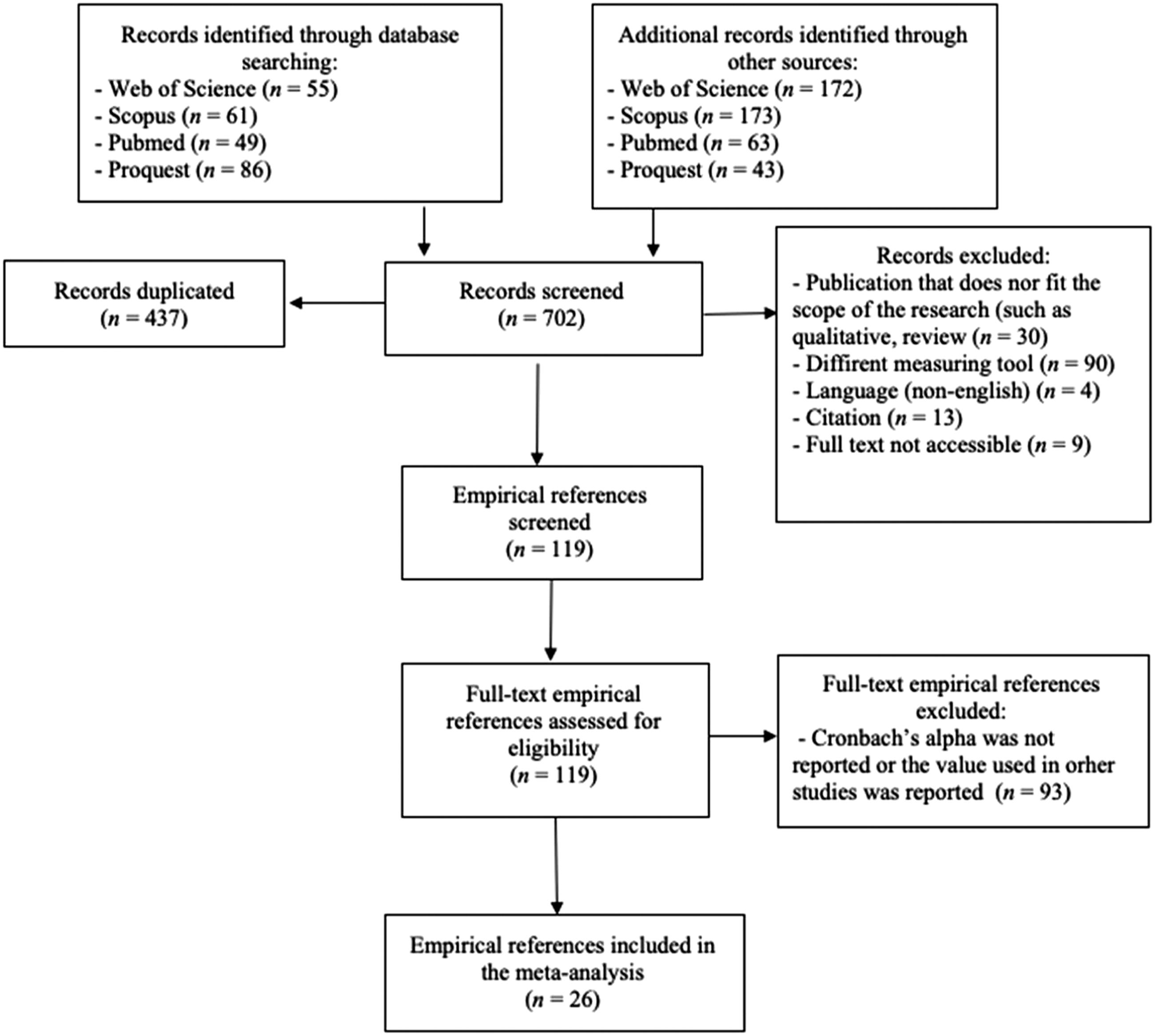
Coding
We, as the first and second authors of this study, independently coded the selected studies by (a) type of publication, (b) year of publication, (c) sample, (d) sample size, (e) number of items, (f) standard deviation and mean (if reported), (g) country, and (h) place of publication. We calculated the interrater reliability with the agreement index and the interrater agreement was determined as 95%. Afterwards, we discussed and arranged the conflicts. Although the coding that we all agreed as interrater agreement on was shortlisted, we sought an expert opinion on the conflicted coding from a researcher specializing in child development and assessment and evaluation. Thus, the interrater agreement was ensured. Finally, we included a total of 33 Cronbach’s alpha values from 26 independent studies in the analysis.
Statistical Analysis
In the study, we considered only studies reporting Cronbach’s alpha coefficients. Since there may be skewness in the distribution of Cronbach’s alpha values or the distribution of alpha coefficients may deviate from a normal distribution (Beretvas & Pastor, 2003), we performed Bonett’s transformation on the alpha values. Hence, the reliability coefficients were normalized using Bonett’s transformation formula (1-|α|) (Bonett, 2002) to meet the assumption of normality, considering the number of studies and sample sizes (Sánchez-Meca et al., 2013).
Fixed-effects and random-effects models are frequently used in meta-analysis studies. Although the fixed-effects model accepts the variances as equal, possible minor omissions may affect the model (Bonett, 2010). The random-effects model, on the other hand, assumes that the studies and samples to be included in RG research are randomly selected (Sánchez-Meca et al., 2013). Eventually, we performed statistical analyses on the transformed alpha values using the random-effects model. Moreover, we determined heterogeneity using Cochran’s Q test and I2 test on the transformed alpha values. Finally, we utilized the Fail-Safe N test, Egger’s Regression test, and Kendall’s Tau test to investigate possible publication bias. All statistical analyses were performed on the MAJOR package of Jamovi 1.6.15.
Findings
In this study, we aimed to explore the generalizability of the reliability coefficients of the MIBS reported in different studies.
Characteristics of the Selected Studies
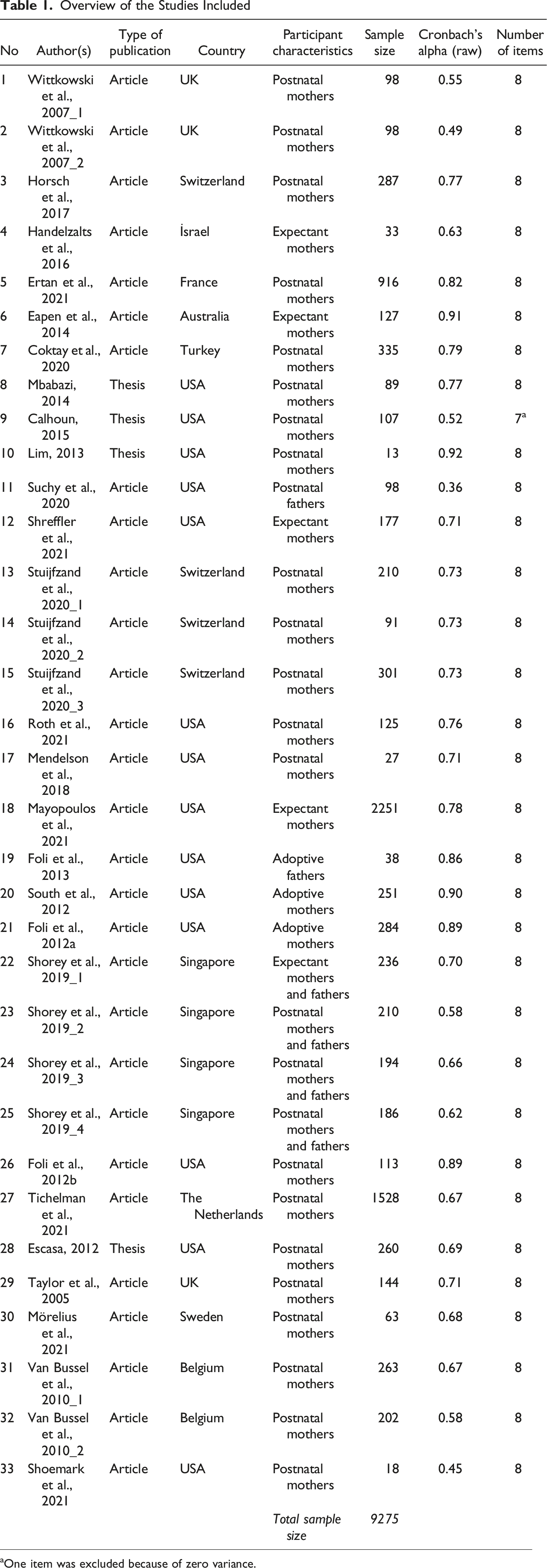
Overview of the Studies Included
aOne item was excluded because of zero variance.
As in Table 1, while thesis studies reported 4 alpha values, this number was 29 in the articles. We found that 14 studies were carried out in the United States of America, 3 in the United Kingdom, 4 in Singapore, 4 in Switzerland, 2 in Belgium, and one study each in the Netherlands, France, Australia, Turkey, Sweden, and Israel. Also, 5 studies recruited expectant mothers and fathers, 3 employed adoptive mothers and fathers, and 25 studies were carried out with postnatal mothers and fathers. The samples sizes in the studies ranged from 13 to 1,528 with a cumulative size of 9,275 people. Finally, Cronbach’s alpha values were found to vary between 0.36 and 0.91.
Heterogeneity
Heterogeneity was sought using Cochran’s Q and I2 tests on the transformed alpha values. We obtained a significant result from the Cochran’s Q test (df (32) = 584, 8126; p < .01), while the I2 test yielded a high level of heterogeneity (96.34%).
Publication Bias
We ran the Fail-Safe N test, Egger’s Regression test, and Kendall’s Tau test to reveal any possible publication bias. While the Fail-Safe N test yielded a value of 65,332.00 (p < .00), the intercept in Egger’s Regression was calculated to be 0.01 (p = .98). Examining the results of Kendall’s Tau test (τ = −0.0418; p = .73) with the funnel plot, we concluded no publication bias. Figure 2 presents the funnel plot created on the transformed alpha values for publication bias. The results show that there is no publication bias. Funnel plot for the transformed alpha coefficients.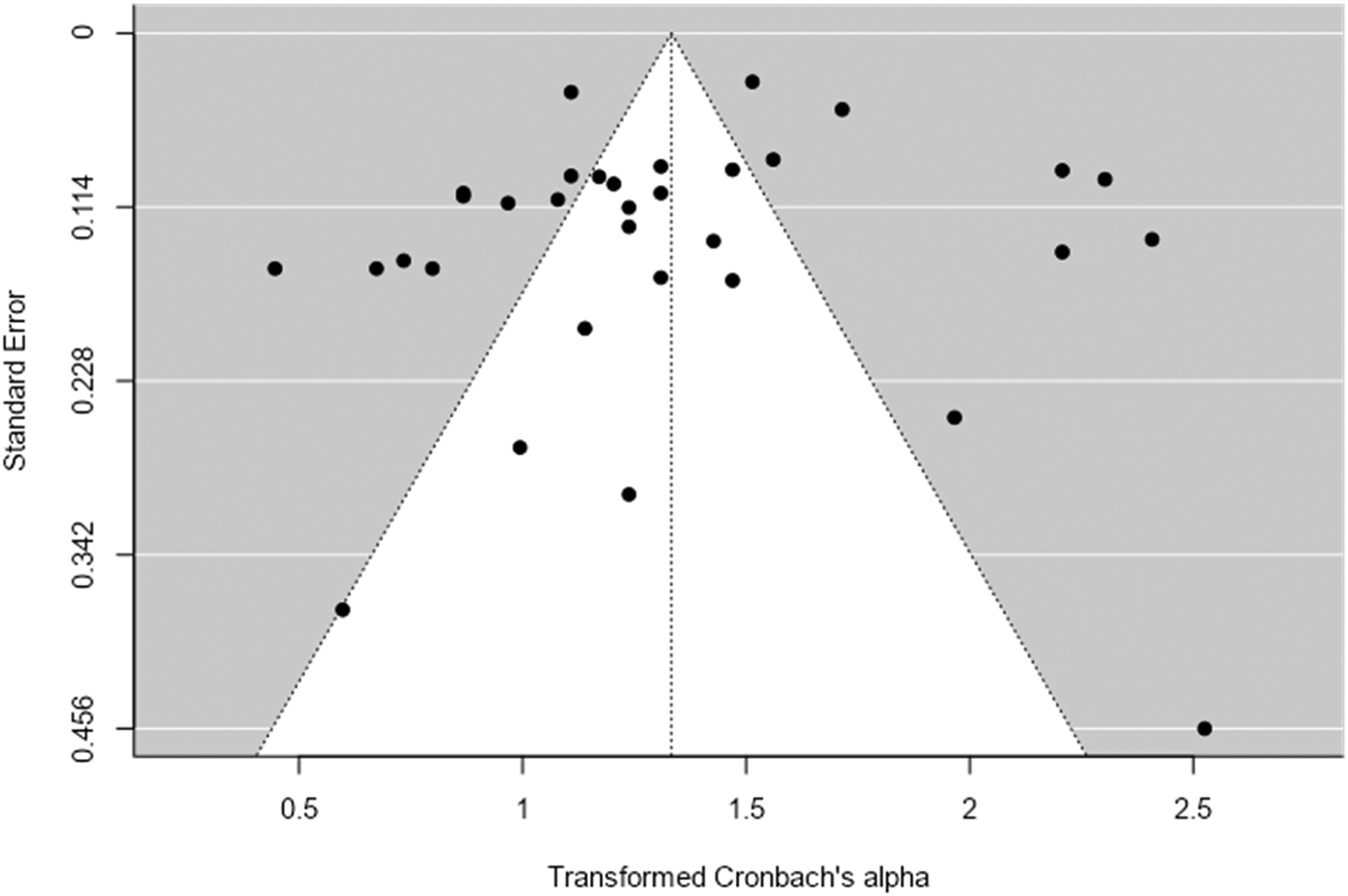
Internal Reliability Analysis
Figure 3 presents the Forest plot for the raw Cronbach’s alpha coefficients reported in the studies. Accordingly, we determined the mean value of 33 raw Cronbach’s alpha coefficients calculated for 9,275 participants to be 0.72 (95% CI = 0.68–0.76). Converting to a raw Cronbach’s alpha coefficient (Bonett’s transformation), the model coefficient was calculated to be 0.73 (95% CI = 0.68–0.77). Forest plot for the raw alpha coefficients.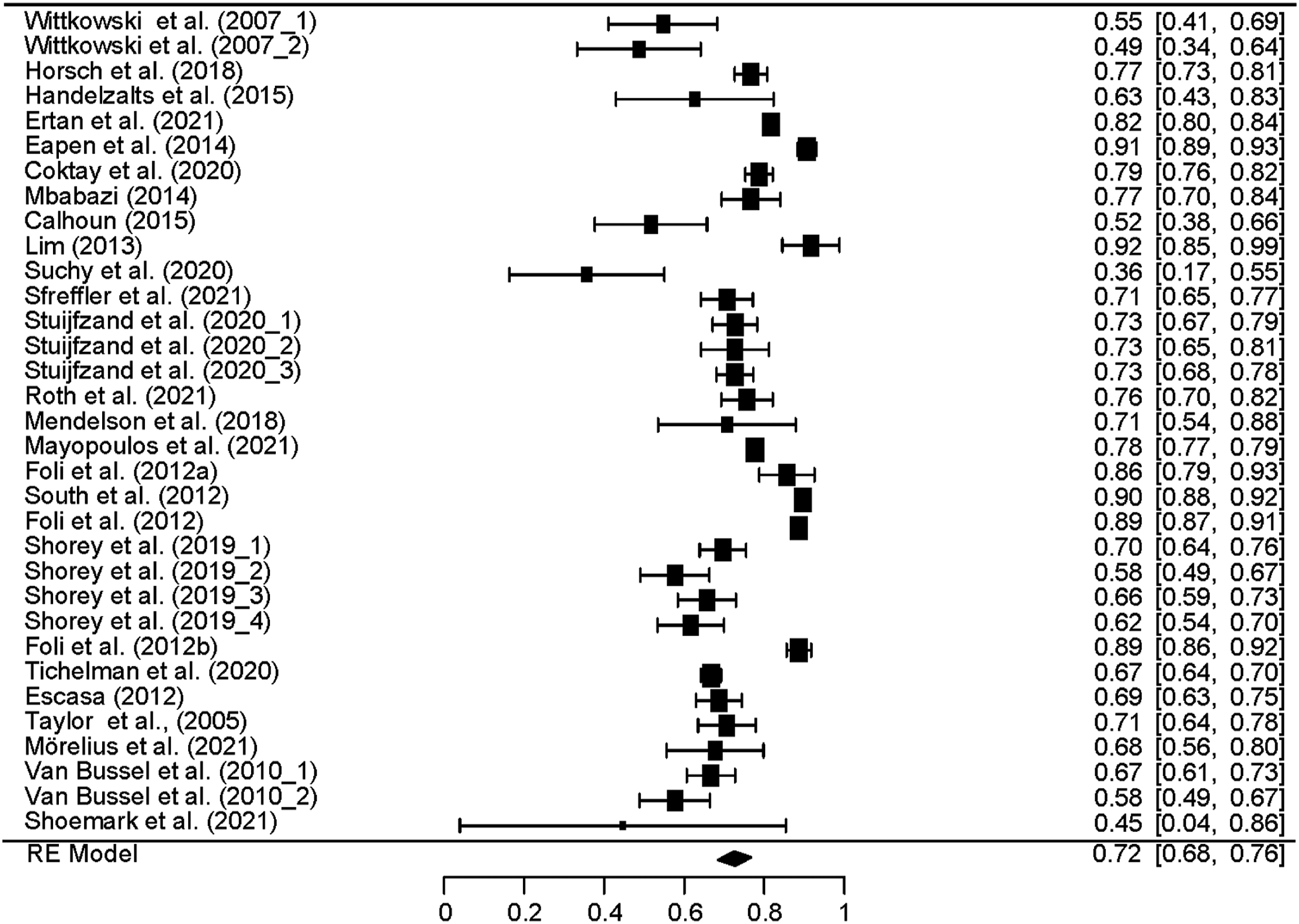
Analysis of Moderator Variables
We carried out the moderator analyses using the mixed-effects model to investigate the reliability value by categorical variables. Accordingly, we accepted the categorical variables as type of publication (thesis, article), participants (mother, father, expectant mother, expectant father, adoptive mothers, adoptive fathers, parents, and expectant parents), data collection period (prenatal and postnatal), country, and year (2005–2021). The findings revealed that the reliability did not significantly change in the studies by type of publication (p = .94), participants (p = .21), data collection period (p = .16), country (p = .17), and year (p = .51).
Discussion
As a result of the reliability generalization analysis, we found that MIBS, which is a measurement tool that evaluates mother-infant bonding, is a reliable measurement tool. As a result of the analyses made within the scope of the study, we determined that the MIBS did not differ according to the type of publication, participants, data collection period, country, and year variables used in the study.
Attachment, as an emotional parent-infant bond (Kennell & McGrath, 2005), is a condition where the mother’s feelings are deemed to have substantial impacts on the infant throughout their life (Branjerdporn et al., 2017; Maunder et al., 2017; Sroufe, 2005). Thus, it is important to evaluate attachment from the early stages and provide mothers with relevant support if needed. In this context, it emerges as a need to explore the MIBS, a measurement tool developed by Taylor et al. (2005) to evaluate the early attachment state among mothers from the first day of delivery, since it is widely adopted in attachment-related studies.
We found that internal consistency coefficients were reported in only 26 studies out of 119 determined in line with the reseach purpose. Other studies either did not report an alpha or reported the one calculated in the secondary studies. Therefore, the relatively high number of studies excluded may have affected RG. However, it is often emphasized that RG research may contribute to raising awareness among scholars to report the reliability values of any psychometric tools they utilize in their research (López-Pina et al., 2015).
The increasing research interest in attachment seems to have led several researchers to use the MIBS on different samples, such as expectant mothers and fathers or adoptive parents. While the authors calculated its reliability coefficient to be 0.71 in the original study, we concluded it to be 0.73 considering the alpha values reported by previous research, indicating that the scale can reliably be administered to different groups. Cicchetti (1994) accepted an alpha coefficient between 0.70–0.80 as moderate, between 0.80–0.90 as good, and above 0.90 as excellent. Our findings showed that, of 33 alphas in 26 studies, 14 were below 0.70, while 22 were reported to be above the threshold value.
While assessing reliability, one needs to consider various factors that may affect reliability (e.g., sample, homogeneity of the group, and context) (López-Pina et al., 2009). Among the studies carried out to adapt the MIBS on postpartum mothers, the lowest Cronbach’s alpha was reported to be 0.45 in the study (Shoemark et al., 2021). When it comes to the detail of this study, we realized that it was carried out with only 18 mothers, which may have accounted for such a low alpha value (Cicchetti, 1994).
Uncovering the level of heterogeneity in meta-analysis studies is accepted as an essential criterion as it affects the model to be selected (Huedo-Medina et al., 2006). In this study, we found high heterogeneity between the reliability coefficients (I2 = 96.34). Heterogeneity hinders the generalizability of scores; therefore, subgroup analyses need to be performed to understand the changes due to heterogeneity. As specified above, the moderator analyses resulted in that type of publication, participants, data collection period, country, and year did not significantly affect reliability in the studies. Considering the country variable, it seems cultural differences did not create any changes to the measurements. Besides, the lack of difference among the moderators did not allow to identify the source of heterogeneity. Hence, we may assert that there is a need for measurement tools considering the roles and delivery time.
Educational and psychological research often uses the term “test reliability” when reporting reliability results (Vacha-Haase, 1998). Nevertheless, it is known that reliability must belong to measurements and that an RG study aims to provide generalizability of the internal consistency coefficients of the same measurements in different groups (Sánchez-Meca et al., 2013). Therefore, generalizing the reliability of measurement tools offers a chance to make generalizations about assessments. In this study, we performed analyses on Cronbach’s alpha coefficients reported by different studies for the MIBS. Further research may consider exploring the RG of test-retest coefficients for the MIBS or utilizing some other measurement tools other than the MIBS.
The literature lacks reliability generalization of the measurement tools designed to measure bonding. According to the findings of our research, considered the first in the literature, the reliability values did not significantly differ by subgroups. Nevertheless, it was found that the studies with mothers after birth reported higher reliability values for the MIBS. On the other hand, lower reliability values in studies with fathers may imply that the scale is more convenient to use with mothers. It also evokes the idea that novel tools are needed to measure the attachment of fathers, which may also be supported by the fact that the lowest Cronbach’s alpha value was obtained in a study with fathers (Suchy et al., 2020). Overall, prospective researchers may be recommended to uncover a generalized reliability level of other measurement tools used in assessing attachment.
Limitations
Our study is not free of a few limitations. First, the study only included those reporting Cronbach’s alpha coefficients as the proof of internal consistency reliability of the MIBS. We did not consider studies reporting other reliability coefficients for the scale (e.g., test-retest reliability coefficient) or alpha values calculated in the secondary sources. The second limitation is that we only reviewed studies written in the English language.
Conclusion
Overall, our RG results suggested that the MIBS is a reliable tool to measure caregiver-infant attachment among mothers, fathers, other caregivers, and expectant parents. Furthermore, it is known that scales highly adopted in different cultures may allow cross-cultural comparisons of diverse results, which may be advantageous for prospective researchers who may consider using the MIBS to measure attachment.
Footnotes
Declaration of Conflicting Interests
The author(s) declared no potential conflicts of interest with respect to the research, authorship, and/or publication of this article.
Funding
The author(s) received no financial support for the research, authorship, and/or publication of this article.
