



Abstract
Introduction
The coronavirus disease outbreak or COVID-19 that first emerged in Wuhan, China, in December 2019, has rapidly become a global threat (Wang et al., 2020; Yi et al., 2020). It was declared a pandemic by the World Health Organization (WHO) in March 2020 and has been considered a public health emergency of international concern ever since (Sohrabi et al., 2020).
COVID-19 is rapidly spreading in the population, primarily affecting patients’ lungs, and causing mild to severe forms of respiratory illnesses, sometimes associated with intensive care unit (ICU) admissions and high mortality (Insider MJ Business, 2020; International Council for Small Business, 2020; Sohrabi et al., 2020; Yi et al., 2020). To curb the spread of the virus and alleviate the burden on the healthcare system, governments across the globe deployed public health responses and imposed containment measures, including social distancing, self-isolation, quarantine, and local and international travel restrictions. On 25 March 2020, an estimated 2.6 billion people (one-third of the human population) were under some form of lockdown (Insider MJ Business, 2020; International Council for Small Business, 2020). As of 17 May 2020, the pandemic resulted in 4,534,731 confirmed cases of COVID-19 infections and 307,537 deaths worldwide (Khan et al., 2020).
Throughout history, epidemics and pandemics have had manifold and profound, long-lasting impacts on mental health and mental well-being (MWB) (Huremović, 2019). COVID-19, in particular, has been described as the “useable and mysterious”, thus triggering anxieties and fear, potentially affecting MWB (Coelho et al., 2020; Labadi et al., 2022). Mental well-being, as described by the World Health Organization (WHO), consists of a state in which “the individual realizes his or her own abilities, can cope with the normal stresses of life, can work productively and fruitfully, and is able to make a contribution to his or her community”. mental well-being includes cognitive, emotional, and behavioral responses at a personal level that should be interpreted in the socio-cultural context of the individual (Khan et al., 2020). Several studies evaluated MWB related to the COVID-19 pandemic, but none considered the economic context (Badahdah et al., 2020; Labadi et al., 2022; Matthes et al., 2021; Sibley et al., 2020; Vindegaard & Benros, 2020; Zsido et al., 2022). Indeed, another impact of COVID-19 is the slowing down of major world economies with a higher risk for developing ones. Containment strategies of flattening the curve most countries adopted to avoid overwhelming the healthcare system induced a global economic slowdown with layoffs and firms exits, generating an abrupt increase in unemployment (International Council for Small Business, 2020; Barcelo & Lopez-Leyva, 2021)
The first COVID-19 positive case in Lebanon was confirmed on 21 February 2020. As of this date, the government implemented stepwise measures to curb the spread of the disease; 1 week after, schools were closed. Other escalating steps ensued until the sanitary lockdown on 15 March (Rossi et al., 2020).
The COVID-19 outbreak coincided with an unprecedented economic crisis in the country. This Middle-Eastern developing country was recently downgraded from a high-income to upper-middle-income country by the World Bank (Arezki et al., 2018). Indeed, Lebanon has been witnessing slow economic growth over the past few years that reached monetary tightening in 2019 (World Health Organization, 2021) and resulted in an unprecedented crisis with massive demonstrations, strikes, and temporary bank closures (The World Bank, 2019a). Since then, banks have become unable to supply depositaries with money, whether Lebanese Pounds or US Dollars, the two currencies used in Lebanon. Furthermore, USD exchange rates have skyrocketed, making the paper money in that currency and other foreign currencies scarce or unavailable (Bloomberg, 2019). This economic frailty is mainly due to its non-productive structure added to corruption, political instability, and jostling, further aggravated by the massive influx of Syrian refugees (World Health Organization, 2021). Given that the COVID-19 pandemic has already affected the major world economies, with some of them heading towards a sharp recession (Baldwin & Weder di Mauro, 2020), it was expected that Lebanon would be no exception, with the health crisis deepening the country’s already collapsing economy, thereby altering MWB in the general population. Studies exploring this facet of the pandemic are lacking.
This study’s hypotheses derive from the biopsychosocial model, which views health and well-being as products of biological characteristics (e.g., immune function, sex, disease vulnerability), behavioral/psychological factors (e.g., stress, coping mechanisms, health beliefs), and social conditions (e.g., cultural influences, family relationships, education, economic status, social support). It was postulated that the general population is at risk of low mental well-being given that many of these conditions are affected, i.e., biological (disease vulnerability and family history of COVID-19), psychological (fear of COVID-19 and stress), and social (economic breakdown) factors. Therefore, this study aimed to examine the combined outcomes of the COVID-19 pandemic and a collapsing economy on the mental well-being of the general Lebanese population.
Material and Methods
Study Design and Sampling
A cross-sectional study was conducted from 10-18 May 2020, using an online-based questionnaire created on Google forms. Due to the government-mandated sanitary lockdown, the survey was distributed to participants through social media platforms and WhatsApp groups, using the snowball sampling technique. All individuals over 18 years of age with access to the Internet were eligible. A total of 502 respondents filled out the questionnaire that required between 15 and 20 minutes to complete. The distribution over the regions was as follows: 16.7% in Beirut (the city capital), 44.2% in Mount Lebanon, 15.9% in the North, 13.8% in the South, and 9.5% in the Beqaa.
Ethics Approval and Consent to Participate
The study protocol was approved by the Institutional Review Board of the American University of Science and Technology approved (IRB application number AUST-IRB-20,200,527–01). The topic was explained to all participants in the introductory section of the survey, and consent to participate was implicit. The anonymity of participants was guaranteed throughout the process of data collection and analysis.
Sample Size Calculation
The minimum sample size was calculated using the G-Power software, version 3.0.10. The calculated effect size was 0.0526, expecting a squared multiple correlation of 0.05 (R2 deviation from 0) related to the Omnibus test of multiple regression. The minimum necessary sample was n = 454, considering an alpha error of 5%, a power of 80%, and allowing 25 predictors to be included in the model.
Questionnaire
The online questionnaire was available in Arabic, the native language in Lebanon (https://forms.gle/WbixEdxb5CFdnBBy6). It consisted of three parts: (1) Sociodemographic features of the participants; (2) Questions related to the combined impact of the COVID-19 pandemic and economic crisis; (3) Outcome measures (mental well-being, fear of COVID). The questionnaire included several measures using validated scales; all were used after obtaining the due permission from their copyright holders when necessary.
Sociodemographic Factors of the Participants
The first part assessed the sociodemographic features of the participants, such as age, gender, marital status, educational level, employment status, region, household size, current household monthly income, and socioeconomic status, assessed using quartiles of individual income (household income divided by the household size). Current household income was divided into five levels, according to the official exchange rate, i.e., no income, low<675,000 LBP (450 USD), moderate 675,000–1,500,000 LBP (450–1000 USD), intermediate 1,500,000–3,000,000 LBP (1000–2000 USD), and high income >3,000,000 LBP (2000 USD). Other questions were related to medical coverage, smoking status, alcohol consumption, self-perception of the financial situation, having been infected or in contact with people infected with COVID-19, and physical activity before and during COVID-19.
This section also included two validated tools, the family APGAR index (Díaz-Cárdenas et al., 2017) and the fear of COVID-19 scale (Ahorsu et al., 2020).
The Family APGAR Index
This short self-reported instrument evaluates the satisfaction with global family function. It consists of five questions, each corresponding to a component of family function, i.e., Adaptation, Partnership, Growth, Affection, and Resolve (APGAR). All items are scored on a 3-point Likert scale: 0 (hardly ever), 1 (some of the time), and 2 (almost always). The total score ranges from 0 to 10. Higher scores indicate higher satisfaction with family function. In this study, αCronbach =0.927 and McDonald’s Omega =0.926 (Dunn et al., 2014).
The Fear of COVID-19 Scale
The fear of COVID-19 scale is a 7-item tool used to measure the extent of fear of COVID-19 in adult people. It is scored on a 5-point Likert scale from 1 (strongly disagree) to 5 (strongly agree). The total score ranges from 1 to 35, with higher scores indicating greater fear of COVID-19. In this study, αCronbach =0.893 and McDonald’s Omega =0.884 (Dunn et al., 2014).
Impact of COVID-19 and Economic Crisis on Employment Status
The second part of the questionnaire addressed working people and those seeking a job and consisted of a set of questions related to current employment and how it was affected by either the economic crisis or the COVID-19. Examples of questions asked: Do you have to go out to make a living despite the sanitary lockdown? Are you able to apply social distancing while working (1.5–2 m safety distance)? Did your company change the working hours because of the economic crisis or the COVID-19 pandemic? Has your salary/income been affected by the economic crisis or the COVID-19 pandemic? Are you worried about the long-term impact of the economic crisis or the COVID-19 pandemic on your business/job? Did the economic crisis or the COVID-19 pandemic result in decreased salaries of employees? Did the economic crisis or the COVID-19 pandemic cause the dismissal of some employees? What were the criteria used to lay off employees?
This section also included the InCharge Financial Distress/Financial Well-Being (IFDFW) validated scale (Prawitz et al., 2006). This 8-item tool measures the perceived financial distress/well-being on a linear scale from 1 to 10). Lower scores reflect higher financial distress and lower well-being In this study, αCronbach =0.925 and McDonald’s Omega =0.923 (Dunn et al., 2014).
Mental Well-Being
Mental well-being was evaluated with one of the most widely used questionnaires assessing subjective psychological well-being, i.e., the self-reported 5-item World Health Organization Well-Being Index (WHO-5) that has been translated into more than 30 languages since its first publication in 1998 and has been used in research studies all over the world (Topp et al., 2015). The version validated in Lebanon (Sibai et al., 2009) was used. It consists of five questions graded from 0 to 5 to evaluate mental well-being in the past month (feeling cheerful and in good spirits, calm and relaxed, active and vigorous, fresh and rested, and daily life filled with things that interest the participant). The total score ranges from 0 to 25; higher scores indicate better mental well-being. In this study, αCronbach =0.796 and McDonald’s Omega =0.709 (Dunn et al., 2014)).
Translation Procedure and Piloting
All the scales used in this paper were translated into Arabic, except for the WHO-5, which was already validated and available in this language. Three authors performed the forward translation, and the other four did the back translation. Discrepancies between original English versions and translated ones were resolved by consensus.
The questionnaire was pilot tested with 10 people unfamiliar with the study to get to the final version; answers were not included in the final dataset.
Statistical Analysis
Data were collected using Google Forms and generated on an Excel sheet, then analyzed on IBM SPSS® software version 23.0. The database was weighted according to gender, age, and region of residence, based on the Central Administration of Statistics (Zhou et al., 2020) before analysis.
For the descriptive analysis, frequencies and percentages were used for categorical variables and means and standard deviation for quantitative variables. For the dependent variable (WHO-5), the median and the interquartile range were also presented for descriptive purposes. The distribution of the WHO-5 variable was considered normal on visual inspection of the histogram, while the skewness and kurtosis were both lower than 1. These conditions are considered compatible with normality in a sample size higher than 300 (Mishra et al., 2019).
For the bivariate analysis of continuous variables, the Student’s T-test was used to compare the means between two groups and ANOVA was used to compare between three groups or more after checking for homogeneity of variances using Levene’s test; when variances were not homogenous, the corrected T-Test and the Kruskal–Wallis test were used, respectively. Post-hoc analyses were conducted, after ANOVA and Kruskal-Wallis comparisons, using Bonferroni adjustment. The McNemar-Bowker test was used to compare categorical variables before and after the beginning of the economic crisis. A Spearman correlation coefficient was used to correlate between scale variables. In all cases, a p-value lower than 0.05 was considered significant.
Regarding the multivariable analysis, a multiple linear regression was conducted to assess the correlates of WHO-5 in the whole sample and adjust for potential confounding after checking the residues normality, linearity of the relationship, absence of multicollinearity, and homoscedasticity assumptions. A stepwise method was used to reach the most parsimonious model. As for the workers/trying to work subgroup analysis, a linear regression using the Generalized Linear Model was used since the additional variables related to work conditions were multinomial. The ENTER method was used to reach the appropriate model with appropriate assumptions. Independent variables included in the models had a p-value lower than 0.1 in the bivariate analysis, considering the allowed maximal number of variables to be included given the sample size. The beta coefficient, its 95% Confidence Interval (CI), and the p-value were reported in both models.
Results
Characteristics of Participants
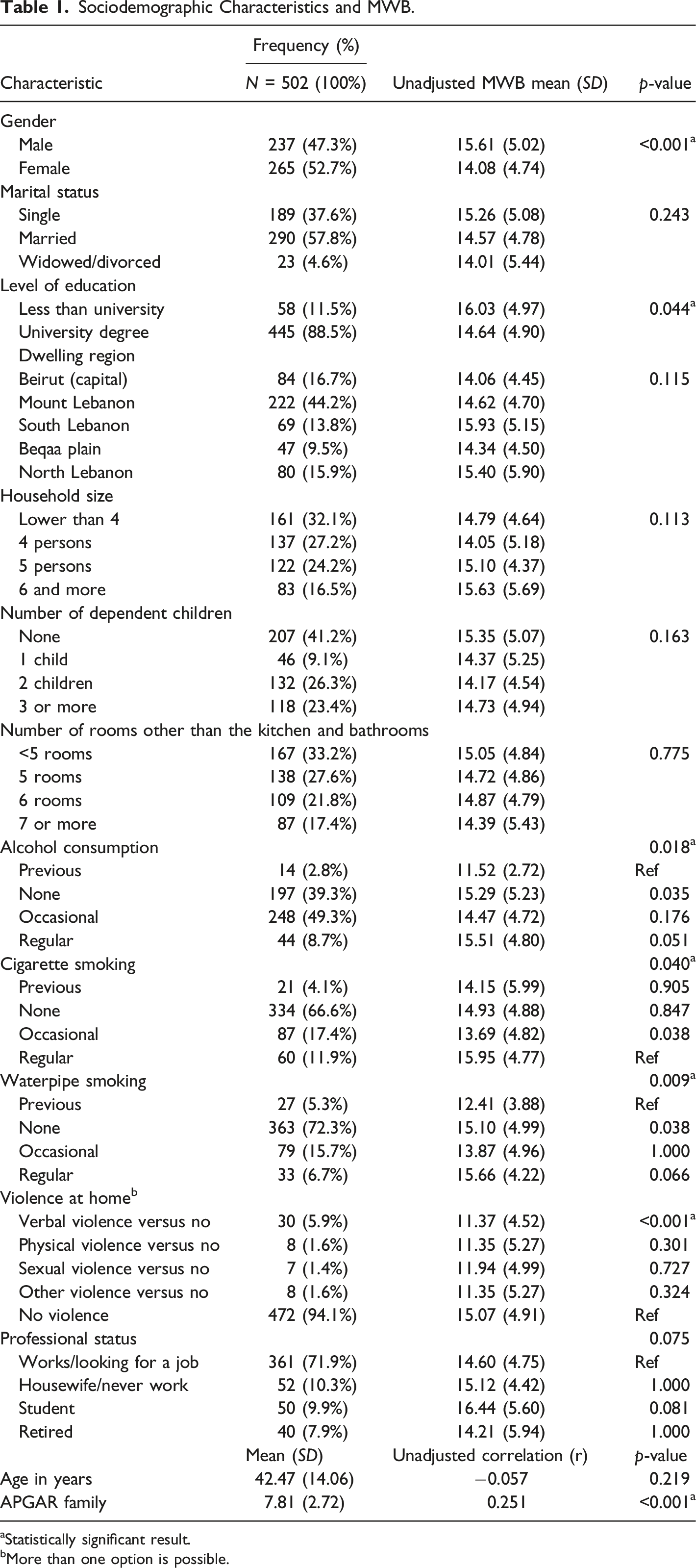
Sociodemographic Characteristics and MWB.
aStatistically significant result.
bMore than one option is possible.
Mental Well-Being Distribution
In this sample of the general Lebanese population, MWB had a mean of 14.80 (SD = 4.93; 95% CI [14.37; 15.24]), a median of 14 (IQR =11; 19), and a range between 2 and 25 (Figure 1). Histogram of quality of life in the lebanese population (n = 502).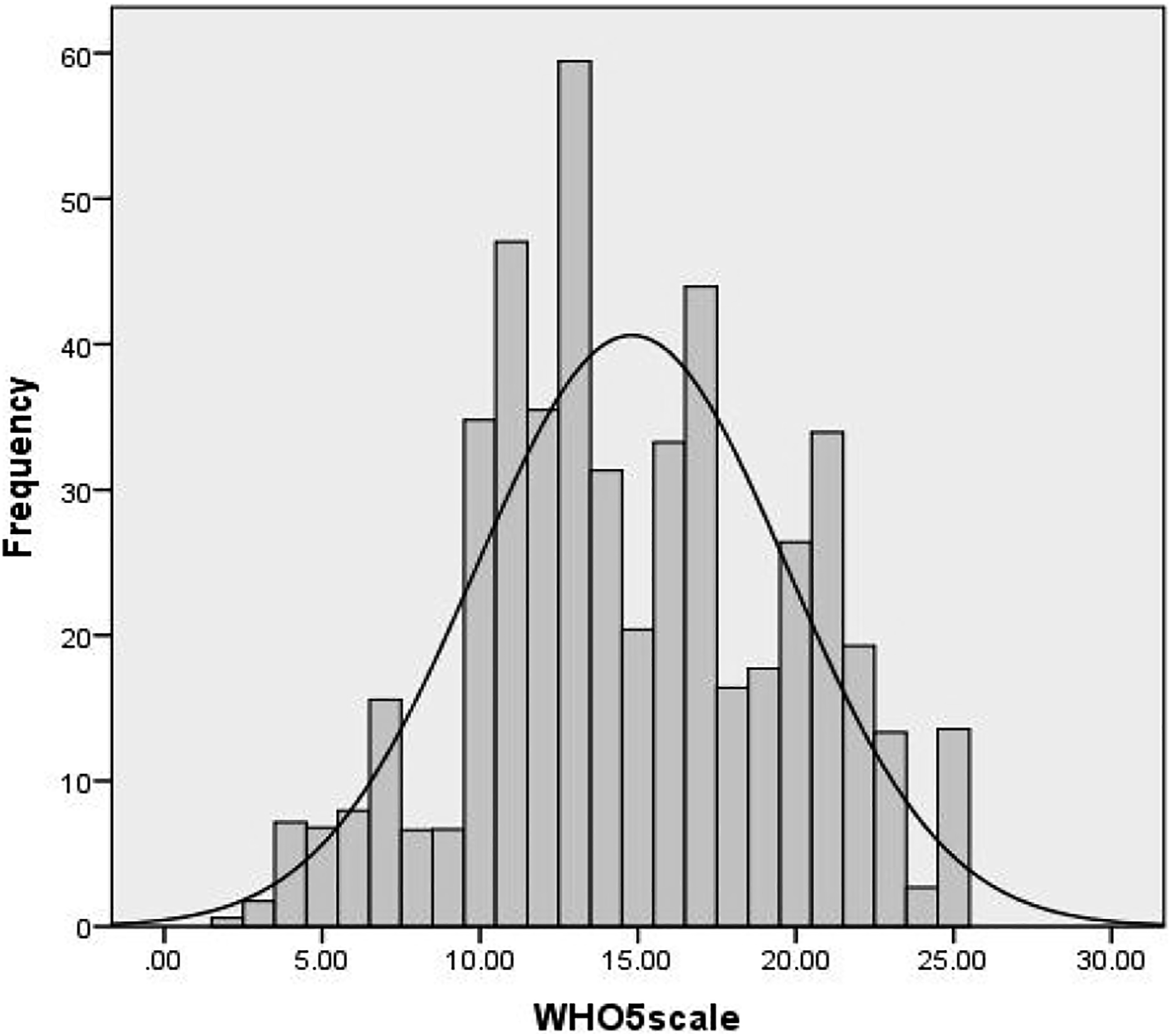
Sociodemographic Characteristics and MWB
A better mean MWB was associated with the male gender (15.61), an education below the university level (16.03), no alcohol consumption (15.29), no waterpipe smoking (15.10), and higher satisfaction with family life (APGAR). Occasional cigarette smokers (13.69) and participants who reported violence in their homes (11.37) had lower mean MWB. Additionally, a significantly positive correlation was found for the APGAR family scale and the WHO-5 (r = 0.251). No significant differences were found for the remaining characteristics (Table 1).
Economic Characteristics and MWB
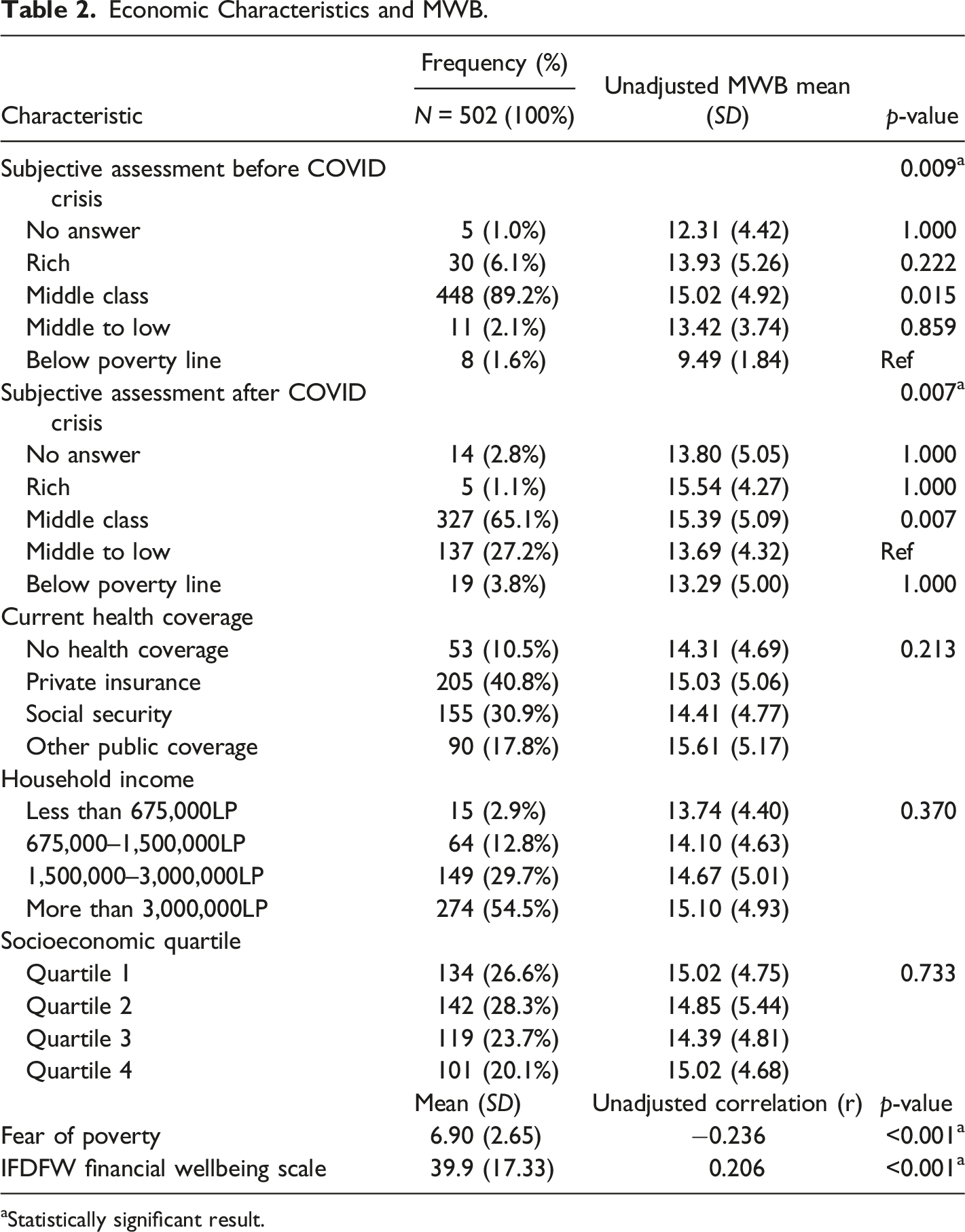
Economic Characteristics and MWB.
aStatistically significant result.
Figure 2 shows the sample’s subjective assessment of the socioeconomic status before and after the COVID-19 pandemic; it revealed a significant decrease (p < 0.001) of wealthy and middle classes self-classification versus a notable increase in low and below poverty categories. Subjective economic status assessment of lebanese population before and after COVID-19 crisis. Percentages are shown; p-value for McNemar-Bowker test <0.001.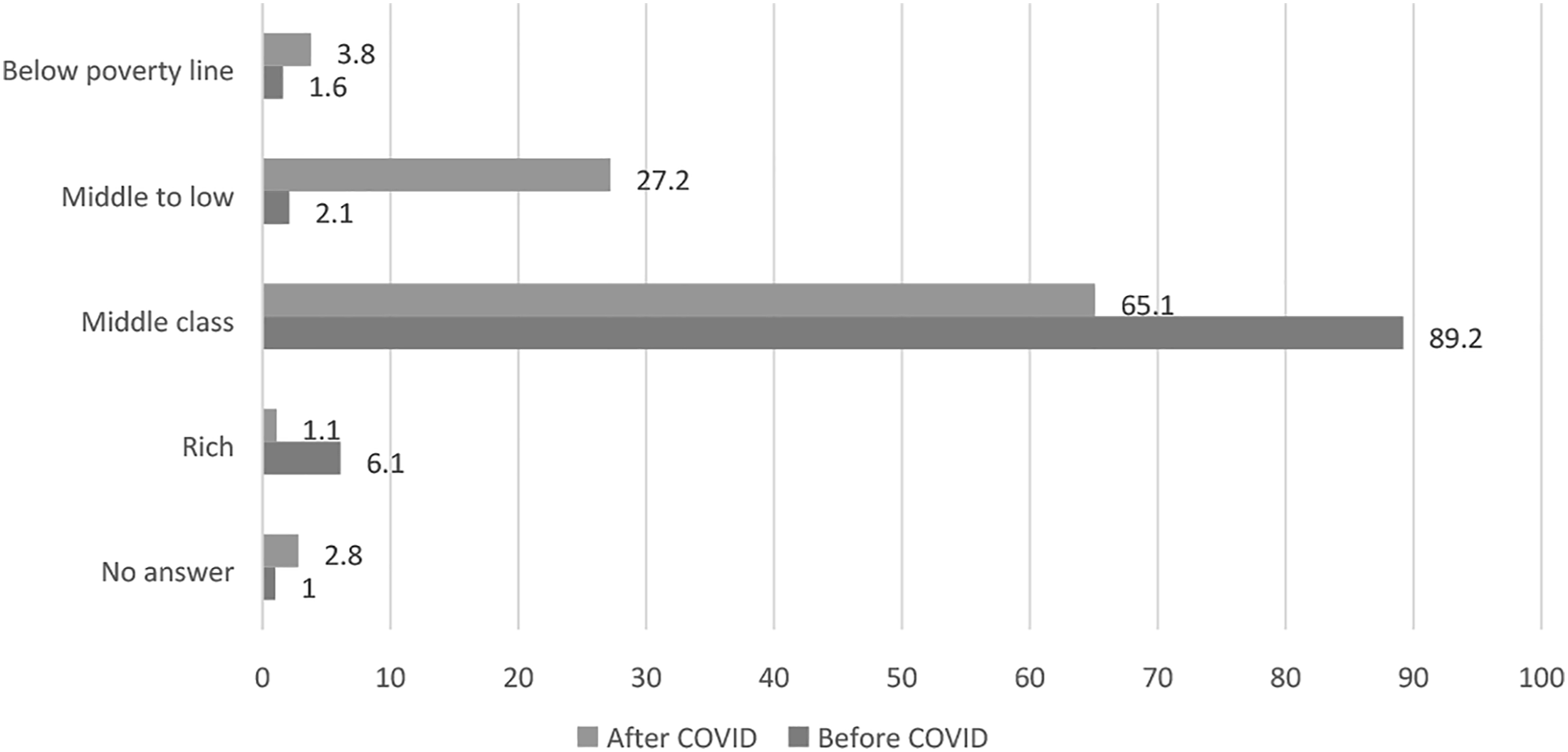
Professional Characteristics and MWB
Professional Characteristics and MWB.
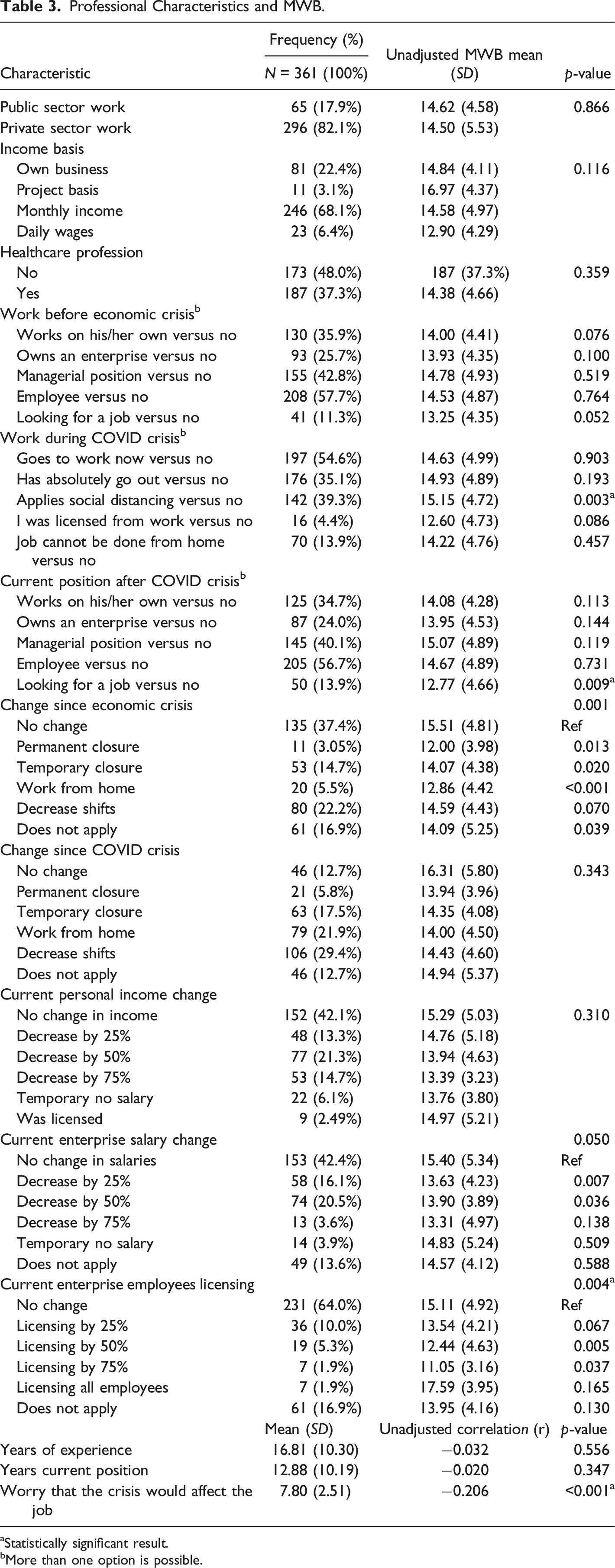
aStatistically significant result.
bMore than one option is possible.
COVID-19 Exposure, Health Characteristics, and MWB
COVID-19 Exposure, Health Characteristics, and MWB.
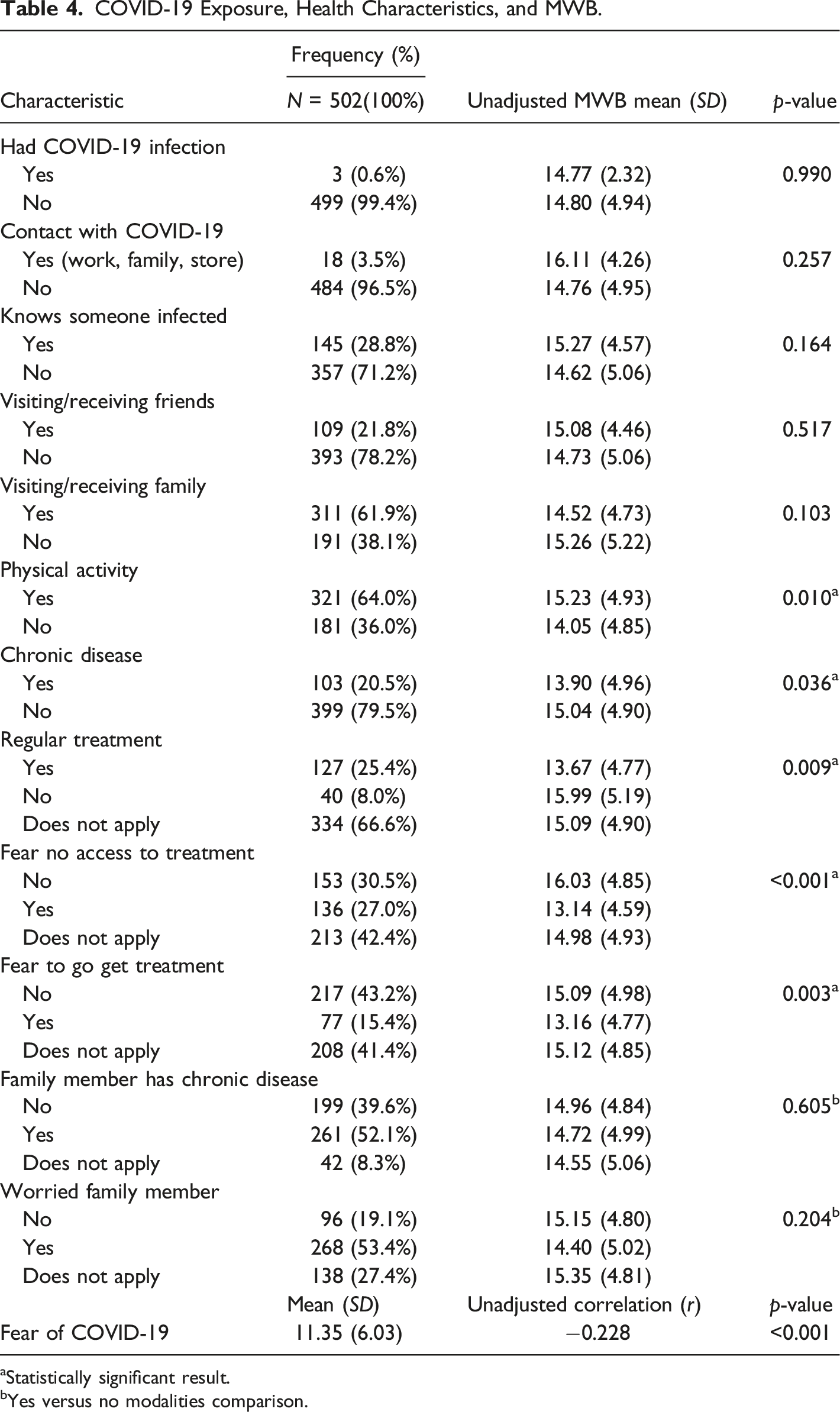
aStatistically significant result.
bYes versus no modalities comparison.
Multivariable Analyses: Correlates of WHO-5
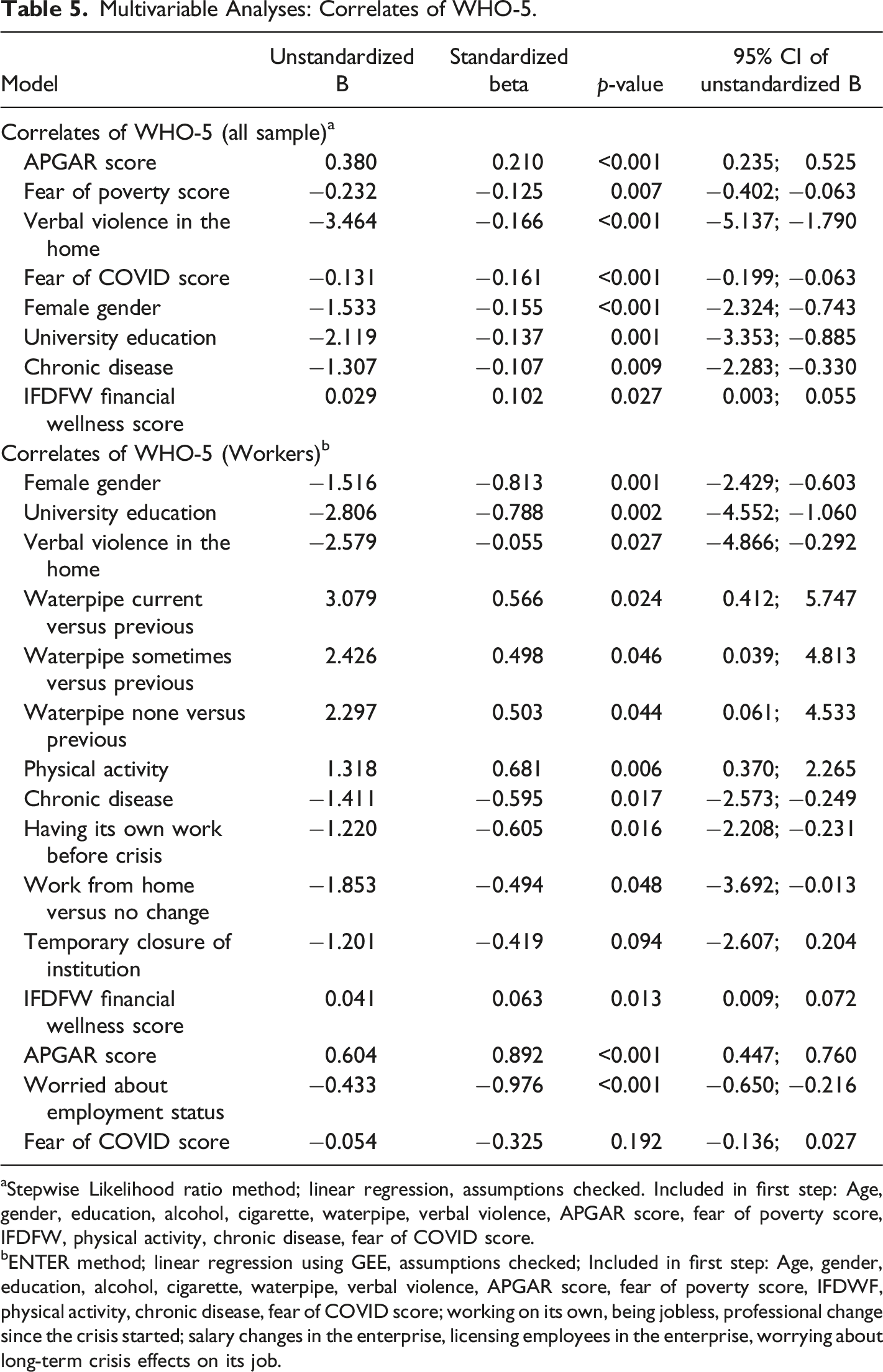
Multivariable Analyses: Correlates of WHO-5.
aStepwise Likelihood ratio method; linear regression, assumptions checked. Included in first step: Age, gender, education, alcohol, cigarette, waterpipe, verbal violence, APGAR score, fear of poverty score, IFDFW, physical activity, chronic disease, fear of COVID score.
bENTER method; linear regression using GEE, assumptions checked; Included in first step: Age, gender, education, alcohol, cigarette, waterpipe, verbal violence, APGAR score, fear of poverty score, IFDWF, physical activity, chronic disease, fear of COVID score; working on its own, being jobless, professional change since the crisis started; salary changes in the enterprise, licensing employees in the enterprise, worrying about long-term crisis effects on its job.
In entire full sample, better satisfaction from family (B=0.380; p < .001) and a better financial situation (B=0.029; p = .027) were significantly correlated with better MWB. However, a lower MWB was significantly different among females (B = −1.533; p < .001), participants who attended university (B = −2.119; p = 0.001), participants who exhibited fear of COVID-19 (B = −0.131; p < 0.001), participants who manifested fear of poverty (B = −0.232; p = .007), participants who reported verbal violence at home (B = −3.464; p < .001), and the ones who had a chronic disease (B = −1.307; p = .009).
When comparing adjusted betas, the APGAR score is the most important positive correlate of MWB, followed by financial well-being. Regarding negative correlates, verbal violence at home, fear of COVID-19, and female gender were the most important (Table 5).
In the subsample of workers/looking for a job, additional factors affected MWB. Waterpipe smoking [current (B = 3.079; p = 0.024) or none (B = 2.297; p = 0.044) versus previous smoking] and physical exercise (B = 1.318; p = .006) were associated with better MWB, while being self-employed before the crisis (B = −1.22; p = .016), working from home since the economic crisis (B = −1.853; p = .048), and worrying about the long-term effect of the crisis on one’s employment status (B = −0.433; p < .001) were associated with a lower MWB. It is noteworthy that closure of the institution yielded a borderline result (B = −1.2; p = .094), while the fear of COVID-19 was not significantly associated with MWB (B = −0.054; p = .192).
When comparing standardized betas among workers, the APGAR scale and physical activity had the highest positive impact on MWB, while being worried about employment, the female gender, and university education seemed to have the highest negative impact on MWB (Table 5).
Discussion
This study shed light on the combined effects of the current economic crisis and COVID-19 pandemic on the MWB in the general population in Lebanon. It showed that, during the pandemic, several factors, directly or indirectly related to COVID-19 and the economic situation, significantly affected the MWB of the general population.
Female gender, university education, fear of COVID-19, fear of poverty, verbal violence at home, and chronic disease were associated with lower MWB. Participants with better family satisfaction (higher APGAR scores) and a more favorable financial status seemed to be at lower risk of being affected by both the pandemic and the economic situation since they exhibited better MWB. Among workers and participants looking for a job, additional factors were identified, mainly related to the employment status and the collapsing Lebanese economy: being self-employed before the crisis, working from home, closure of the institution, and worrying about the long-term effects of the crisis on employment status. Previous waterpipe smoking was also correlated to lower MWB, whereas physical exercise was shown to have the highest positive impact on MWB. Fear of COVID-19 lost its significance in the workers’ group.
Regarding the economic factors, and although “economic damage” can only be assessed when the pandemic subsides (Yamin, 2020), financial loss creates long-lasting socioeconomic distress with anger and anxiety that can last months after the pandemic. A report from The World Bank (2020) pointed out a substantial impact of COVID-19 on the Lebanese economy (11% decrease in GDP in 2019), especially with uncertainties about the duration of the pandemic and the drastic changes in the financial system (Brooks et al., 2020). In such a vulnerable system, workers were highly preoccupied with the wilting economy and outcomes of lockdown on their employment rather than fearing the virus itself. In this context, fear of poverty, illustrated by the subjective economic assessment that shows a significant shift towards low and below poverty classes, would reveal the direct impact of challenging financial situations on the population’s MWB. Prior to the COVID-19 outbreak, the World Bank had forecasted that, by 2020, the proportion of Lebanese below the poverty line would increase from 30 to 50% (The World Bank, 2019b).
Regarding the group of workers, individuals owning their businesses before the crisis, working from home since the beginning of the economic crisis, and worrying about the long-term effect of the crisis on their employment status experienced the worst MWB. The main impact was directly related to worrying about their work: those who worked remotely from home feared a wage cut-down or even dismissal if the situation persisted. Business owners feared a complete collapse in income in the absence of governmental financial support since budgetary policies are lacking in Lebanon (Brooks et al., 2020). Another significant aspect is the level of education. Our results showed that the higher the level of education, the lower the MWB. Expectedly, being unable to plan or face unforeseen expenses or overcome any sudden deterioration in the economic environment affects people’s MWB. Therefore, in our study, participants holding university degrees might have felt deceived, disappointed, and worried about their future in Lebanon due to the current challenging context.
Unlike what was reported by working participants, unemployed respondents (retired, students, and housewives) worried more about contracting the virus. This fear associated with COVID-19 has been widely reported in the literature and might be related to the worry that the healthcare system might be saturated, leading to inadequate management of COVID-19 patients (Coelho et al., 2020; Thombs et al., 2020). It could also be related to their fear of not being able to afford the treatment in difficult financial situations, as is the case in Lebanon.
Besides the economic factors, some sociodemographic features were also identified as predictors of MWB of Lebanese people. Lower MWB was associated with the female gender, having a chronic disease, and experiencing verbal violence at home, whereas better family satisfaction was correlated with a better MWB. These associations can be explained by homeschooling led by mothers (Wenham et al., 2020) and forced confinement with a violent partner (Bradbury-Jones & Isham, 2020; Chandan et al., 2020; Mittal & Singh, 2020), while family support improves MWB (Coelho et al., 2020; Zhang & Ma, 2020). Several studies highlighted that family support was a crucial protective factor associated with well-being, especially among students, since families allowed better coping strategies with detrimental outcomes related to the pandemic (Ellis et al., 2020; Zsido et al., 2022). Furthermore, a systematic review evaluating the impact of the COVID-19 pandemic on mental health outcomes, including MWB, concluded that lower psychological well-being was noted among females and those who self-reported poor health (Vindegaard & Benros, 2020). Vulnerable people, particularly those with chronic illnesses, require special attention. Around 20% of our respondents had a chronic disease and exhibited a lower MWB in the whole group and the workers’ subgroup. Lebanon has high percentages of vulnerable populations considered at higher risk for COVID-19 and lower MWB (Megari, 2013; Vindegaard & Benros, 2020). Reasons in this context could include panic due to unreliable information for patients (Hayek et al., 2020), especially in an era of massive misinformation in the media (Cuan-Baltazar et al., 2020; Park et al., 2020), added to the economic situation itself. Furthermore, the healthcare system in Lebanon is mainly private, while 10.5% of our population reported not having any health coverage. Consequently, patients with chronic diseases might fear not being able to afford medications and medical care, especially with the significant drop in the sizes of the wealthy and middle classes, in favor of a significant increase in poor and below poverty classes, as demonstrated by our results.
Finally, two lifestyle factors were shown to have a significant and positive impact on the general MWB of the population, i.e., smoking status and physical activity, particularly in the subgroup of workers, who reported an increase in the time allocated for exercise (30%). Several reports have been published recently regarding the importance of physical exercise as a therapy to fight the mental and physical consequences of COVID-19 lockdown (Fallon, 2020; Jimenez-Pavon et al., 2020). Physical activity and exercise also help maintain immune system function in the current precarious environment and are particularly recommended in vulnerable populations such as those with chronic diseases (Chen et al., 2020), who had lower MWB scores in our study.
Regarding smoking, current smokers expressed a better MWB versus previous smokers. In Lebanon, behavioral/motivational factors for smoking cessation are mainly driven by health-related issues. Thus, this particular population of “previous smokers” might be at higher risk of vulnerability and chronic diseases (including pulmonary diseases), exposing them to lower MWB scores (Salameh et al., 2008). The positive correlation among current waterpipe smokers (regular and occasional) might seem surprising since tobacco exposure is known to be a prominent risk factor for decreased MWB, particularly in cases of chronic respiratory disease (Salameh et al., 2008). However, smokers might have felt some relief, reducing their stress and anxiety towards hardship, through the already known “self-medication” hypothesis of smoking, postulating that individuals turn towards smoking to cope with stress and alleviate their depression and anxiety symptoms (Bahelah et al., 2019; Chaiton et al., 2009; Fluharty et al., 2017). This reason is added to the specificities of waterpipe smoking (positive and negative reinforcement, social aspect, and conviviality) (Bahelah et al., 2019; Salameh et al., 2008).
Overall, our results are compatible with the biopsychosocial model used to generate the hypotheses and build the questionnaire. Indeed, Lebanese mental well-being was related to biological characteristics (chronic disease and family history of COVID-19), behavioral/psychological factors (health beliefs such as the fear of COVID-19), and social conditions (family relationships, education, economic status, and social support) (Babalola et al., 2017).
Limitations and Strengths
Our study has some limitations. Although our sample was weighted for gender, age, and regions, it mainly consisted of people with a university level of education with high computer literacy; thus, our results might not be generalized to the whole population. This outcome was expected since the survey used was online, and only computer literate people with Internet access were able to participate. However, this selection bias is not expected to affect the associations found in the multivariable analysis since the education factor was taken into account as a potential confounder, and all results were adjusted over the education factor. Moreover, although the questionnaire was piloted to improve its clarity, there is a probability of information bias since the questionnaire was self-administered online, with no possibility to explain confusing questions to respondents, if any; however, the use of an online questionnaire is expected to decrease the subjectivity related to interviews. Furthermore, recalling difficulty and subjectivity bias related to some questions are also plausible. In all cases, the non-differential information bias would drive the results towards the null hypothesis, thus underestimating the real associations. An additional potential bias would be the residual confounding since not all confounders could be measured.
Nevertheless, and despite these limitations, to the best of our knowledge, this is the largest (sample size large enough to account for statistical power of main comparisons) and the first study evaluating the combined effect of the COVID-19 pandemic and the economic crisis on the MWB in the general population. Moreover, a standardized questionnaire with validated scales was used to evaluate MWB, economy or COVID-19-related factors. Finally, our study pilot-tested the validity of the questionnaires, and all used scales have shown very good to excellent reliability.
Conclusion
This study revealed that, during the pandemic, economic and other factors, directly or indirectly related to COVID-19, significantly affected mental well-being. The fear of COVID-19 and fear of poverty mainly impacted the MWB of the general population. However, the fear of COVID-19 lost its significance among workers who reported that factors negatively affecting their MWB are directly related to their employment and the already collapsing economy in Lebanon.
Decision-makers should acknowledge that economic hardship can outweigh the fear of COVID-19 in terms of mental well-being. This finding leads to the hypothesis that people would relieve their stress through economic activity rather than respecting COVID-19 restrictions, which may increase the risk of contracting the infection. Further research is necessary to confirm this paradigm.
Footnotes
Acknowledgments
The authors would like to thank all the persons who helped distribute the questionnaire.
Authors’ Contribution
Hala SACRE: Conceptualization, Writing - Original Draft, Writing - Review and Editing, Project administration. Aline HAJJ: Writing - Original Draft. Danielle A. BADRO: Writing - Original Draft. Carla ABOU SELWAN: Writing - Original Draft, Writing - Review and Editing. Randa AOUN and Chadia HADDAD: Writing - Review and Editing. Pascale SALAMEH: Methodology, Formal analysis, Visualization, Supervision.
Declaration of Conflicting Interests
The author(s) declared no potential conflicts of interest with respect to the research, authorship, and/or publication of this article.
Funding
The author(s) received no financial support for the research, authorship, and/or publication of this article
Ethics Approval
The study protocol was approved by the Institutional Review Board of the American University of Science and Technology approved (IRB application number AUST-IRB-20,200,527–01).
Consent to Participate
The topic was explained to all participants in the introductory section of the survey and consent to participate was implicit. Anonymity of participants was guaranteed throughout the process of data collection and analysis
Availability of Data and Materials
The datasets used and/or analyzed during the current study are available from the corresponding author upon reasonable request.

Author Biographies
In January 2018, she co-founded the INSPECT-LB research group. Since that date, she has been the group biomedical and website editor and coordinator of the “Health Professions” axis. She has more than 130 publications related to health professions, public health, and mental health in Lebanon. As of January 2022, she represents INSPECT-LB on the International Pharmaceutical Federation (FIP) Policy Committee on Continuing Professional Development.