



Abstract
Abusive supervision (AS) is relentless in damaging employees’ personal and professional life. This study examines the underlying mechanism through which AS damages employees’ job and life satisfaction and, most importantly, the boundary conditions that help attenuate the cascading effects of AS. Using a sample of 187 employees from a large public sector organization, this study found that job tension transmits the antagonistic effects of AS to employees’ job and life satisfaction. However, these effects were low for employees who were high rather than low in the personality trait of resilience. The study contributes to the AS literature by explicating job tension as one possible underlying mechanism and resilience as a personality trait that helps diminish the deleterious effects of AS on employees’ job tension and wellbeing. Theoretical contributions and practical implications are discussed.
Introduction
Abusive supervision (AS) is a supervisor’s “sustained display of hostile verbal and non-verbal behaviors, excluding physical contact” (Tepper, 2000, p. 178); for example, publicly ridiculing an employee and loud, angry outbursts (Khan, 2015; Tepper, 2000). Since 2000, empirical investigations of AS’s deleterious effects on employees’ work attitudes, behaviors and general wellbeing have matured to yield a saturation point (Mackey et al., 2017; Martinko et al., 2013; Tepper, 2007; Tepper et al., 2017). Yet, the gamut of studies into AS scholarship has extensively burgeoned to advance the current theorizing of AS in terms of its antecedents (Khan et al., 2018; Kiewitz et al., 2012) and outcomes (Mitchell et al., 2015) by enriching our understanding of its underlying theoretical mechanisms (Martinko et al., 2013; Tepper, 2007). Given the research mentioned above, we at least know the causes, consequences and processes of AS. Regarding this connection, past research has endeavored to examine a wide range of moderators, for example, cultural values, the Big Five personality traits, self-esteem, job embeddedness, positive and negative affect, leader–member exchange differentiation, perceived supervisor power, job autonomy, role ambiguity, abusive-intolerant climate, hostile climate etc. (see, e.g., Fischer et al., 2021). However, empirical research on the moderators of AS, which help diminish the harmful effects of AS on employees’ personal and professional life, is relatively new and emerging. The present study endeavors to deepen our theoretical understanding of the processes that transmit the deleterious effect of AS on employees’ wellbeing and the moderators that help offset the antagonistic effects of AS on employees’ job tension and wellbeing.
In particular, this study develops and tests a moderated-mediation model of AS (see Figure 1) to more fully signify and understand the construct’s underlying theoretical mechanisms—specifically under the condition of employees’ personal resources (such as resilience)—through which it decimates employees’ wellbeing. Indeed, the empirical research on AS’s mediating mechanisms proliferated to mature the current theorizing of AS; however, the prevailing AS research has mostly examined the processes through which it affects employees’ work behaviors but not in combination with the dispositional or workplace contextual factors (Mackey et al., 2017; Martinko et al., 2013), which consequently dissuade the specific conditions that more or less flourish in the face of the effects of AS. To fill this gap in the literature, this study addresses an important question: what underlying mechanisms underpin AS’s impact on employees’ wellbeing? Prevailing AS research (Mackey et al., 2017; Martinko et al., 2013; Tepper, 2007) has already investigated a broad range of underlying theoretical mechanisms to understand AS’s effects on employees’ attitudes and work behaviors. In line with the past research recommendation, this study has examined employees’ job tension—that is, “the psychological reaction of workers to disturbances in the objective or perceived work environment” (Chisholm et al., 1983, p. 387)—as one possible underlying mechanism that facilitates the harmful effects of AS on employees’ wellbeing. Regarding this connection, past research (Harvey et al., 2007; Khan, 2015; McAllister et al., 2018) has already bridged the gap between AS and job tension. For example, Harvey et al. (2007) and Khan (2015) reported a positive relationship between AS and employees’ job tension, which is further validated by McAllister et al. (2018) in their study that AS is directly and indirectly positively associated with job tension via subordinates’ state self-regulation. However, the current AS research has not yet examined the nexus between AS and employees’ wellbeing via job tension (Mackey et al., 2017; Martinko et al., 2013; Tepper, 2007). This is an important insight as it enriches our theoretical understanding of the work-related stressors that can have spillover effects on employees’ personal life. Conceptual framework of ripple effects of abusive supervision.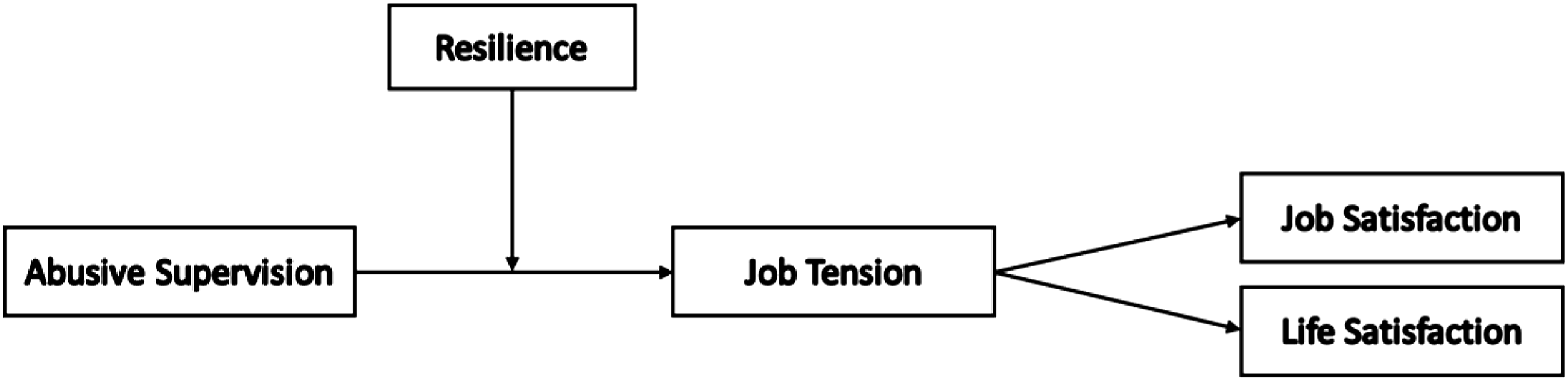
This study addresses the second question: what dispositional factors can help attenuate the effects of AS? This is a valuable insight in that dispositional factors (in particular, employees’ personal abilities such as resilience) play a crucial role not only in shaping their responses to negative workplace events but also in their capacity to recover from setbacks or stress (Smith et al., 2008). Most importantly, resilience may have contagious effects on others by motivating them to recover from a stressful situation (e.g., Martinko et al., 2013; Tepper, 2007). Indeed, researchers have emphasized the importance of dispositional factors in explaining subordinates’ perceptions of AS (Martinko et al., 2013; Martinko, Harvey, Sikora, et al., 2011) and their effects on job attitudes (Mitchell, 1979; Weiss & Adler, 1984). However, the empirical examination of this postulation has not yet matured to saturate AS scholarship (Mackey et al., 2017; Martinko et al., 2013; Tepper, 2007).
Understanding the role of dispositional variables can enrich our theoretical and empirical understanding of the subordinate’s related factors that can help diminish the cascading effects of AS. From a practical viewpoint, such knowledge not only informs organizational leaders on how to tackle AS but also equips subordinates with the required skills to recover quickly from difficulties and bounce back from the experience of AS. Regarding this connection, this study examines one dispositional variable as a moderating variable in the AS–job tension relationship: resilience, defined as employees’ “ability to bounce back or recover from stress” (Smith et al., 2008, p. 194). This is because, from an empirical perspective, the extant AS research is scarce on the moderating effect of resilience (Mackey et al., 2017; Martinko et al., 2013; Tepper, 2007; Tepper et al., 2017). This is an important oversight as identifying and examining these capabilities will inform organizations in developing employee resilience in responding to challenges (Kuntz et al., 2017; Yost, 2016).
The present study has adopted the conservation of resources (COR) theory to advance current theoretical mechanisms underpinning AS’s effects on employees’ wellbeing. The present study’s motivation to choose COR theory, in particular, is based on (a) the theory’s prevalent use in the AS domain (Aryee et al., 2007; Carlson et al., 2012; Chi & Liang, 2013; Khan, 2015; Mitchell & Ambrose, 2007; Whitman et al., 2014); and (b) COR is a major theory in understanding work-related stress, burnout (job tension) and resilience that occur within the work environment and culture (Chen et al., 2015; Hobfoll & Shirom, 1993).
Indeed, in COR terms, AS can be a source of resource loss, thereby negatively impacting employees’ wellbeing. This study focuses on two important factors of employees’ wellbeing, namely (a) job satisfaction, which is “a positive (or negative) evaluative judgment one makes about one’s job or job situation” (Weiss, 2002, p. 175); and (b) life satisfaction, which refers to one’s overall evaluation of one’s life (Diener et al., 1985). Investigating job and life satisfaction simultaneously in a single study not only informs us about the deleterious effects of AS on employees’ negative evaluative judgment of their job but also helps us understand the possible reach of harmful and spillover effects of AS on employees’ personal life (Gabler & Hill, 2015). Past research has largely overlooked the effects of job stress or tension (Erdogan et al., 2012) and other work domains on life satisfaction and has mainly focused on nonwork populations (Erdogan et al., 2012; Hakanen & Schaufeli, 2012), impeding the evolution of the life satisfaction construct. The study includes job tension as an important dimension of employee burnout (Oppenauer & Van De Voorde, 2018; Wright & Cropanzano, 1998), which can be the result of an actual or perceived threat of resource loss in line with COR (Hobfoll, 2001). By integrating COR theory, the study endeavors to provide a novel and central theoretical explanation of how AS relates negatively to employees’ wellbeing and under what conditions this negative impact can be attenuated.
Altogether, the present study’s moderated-mediation model thus provides an explanation for how AS negatively affects employees’ wellbeing; that is, because AS instigates job tension in subordinates, this, in turn, damages employees’ wellbeing (namely, job satisfaction and life satisfaction). In addition, employees’ resilience is instrumental in extenuating the deleterious effects of AS. The study further elucidates these theoretical nexuses in the sections below (see Figure 1).
The present study contributes to AS research in at least three ways. First, the present study extends the AS literature by examining subordinates’ job satisfaction and life satisfaction simultaneously in a single study. This insight is vital for at least two reasons. With the exception of only a few studies (Tepper, 2000; Wu et al., 2012), while past research (i.e., Carlson et al., 2011; Carlson et al., 2012; Courtright et al., 2016; Hoobler & Brass, 2006; Wu et al., 2012) has made some efforts to investigate work–family and family–work conflict caused by AS, these studies have overlooked the spillover effects of AS on the targeted subordinate’s life satisfaction (Mackey et al., 2017; Martinko et al., 2013; Tepper, 2007; Tepper et al., 2017). The present study also informs us that the damaging effects of AS are not limited to the targeted subordinate’s professional life—they can also spill over to ruin their life satisfaction.
Second, the study underlines and examines a novel underlying theoretical mechanism (i.e., job tension) in the relationship between AS and job and life satisfaction. This is a notable departure from past research, which has examined job tension as a direct (Harvey et al., 2007; Khan, 2015; Mackey et al., 2017) and an indirect outcome via subordinates’ state self-regulation (McAllister et al., 2018) of AS. However, extant AS researchers have not yet investigated job tension as a mediator in the relationship between AS and employees’ attitudes, behaviors and wellbeing (for details, see Mackey et al., 2017; Martinko et al., 2013; Tepper, 2007; Tepper et al., 2017). Investigating how AS can be the source of “perceived threat” and/or “actual loss of valued resources” (Hobfoll, 2001, p. 341) is critical in understanding the processes through which it depletes employees’ valued resources. In short, the current study extends our understanding of the underlying theoretical process of the acrimonious effects of AS on targeted subordinates’ wellbeing via job tension.
Third, the study also contributes to the current AS scholarship by incorporating subordinate resilience as a novel moderator of the AS–job tension link. The study claims resilience has not yet been examined in the domain of AS, especially regarding the relationship between AS and job tension (Mackey et al., 2017; Martinko et al., 2013; Tepper, 2007; Tepper et al., 2017). This is an important insight as it helps us understand individuals’ coping strategies during stressful encounters (Hou et al., 2018; Zautra et al., 2010). Most importantly, in COR terms, individuals’ personal characteristics or resources (i.e., resilience) are instrumental in gaining other valued resources (Hobfoll, 2012; Hobfoll et al., 2015). In sum, by examining the moderating effects of resilience, the study broadens our theoretical understanding of subordinates’ personal resources that help attenuate the toxic effects of AS on subordinates’ job tension and wellbeing.
Theory and hypotheses
COR theory
The present study used COR (Hobfoll, 1989, 2001) as an overarching theory. Conservation of resources theory explicates the underlying mechanisms of the stress process in individuals. The central theme of COR is that “individuals strive to obtain, retain, protect, and foster those things that they value” (Hobfoll, 2001, p. 341). Hence, in COR terms, individuals are deeply immersed in the resources gaining and sustaining cycle. This is because, according to COR, “resources are necessary, and stress will occur where resources are threatened, lost, believed to be unstable, or where individuals and groups cannot see a path to the fostering and protection of their resources through their individual or joint efforts” (Hobfoll, 2001, p. 340). Resources are defined as “those objects, personal characteristics, conditions, or energies that are valued by the individual or that serve as a means for attainment of these objects, personal characteristics, conditions, or energies” (Hobfoll, 1989, p. 516). The instrumental (e.g., salary or promotion) and/or symbolic (e.g., power or self-esteem; Garcia et al., 2018) nature of resources—such as attaining and sustaining other valued resources or stockpiling individuals’ resource repertoires—doubles its value, hence fostering individuals to escalate their commitment in hoarding their resource reservoir. In COR terms, individuals are risk-averse, avoiding any situation that can cause or threaten one’s valued resources (Ng & Feldman, 2012). COR theory further states that (a) resource loss proportionally causes more strain than equivalent amounts of resource gain; and (b) gaining, sustaining and recovery from resource loss is an ongoing cycle.
Hence, the present study conceives AS as a workplace stressor that, because of its “sustained display” (Tepper, 2000, p. 178), is a constant threat to employees’ valued resources, produces an actual loss of resources or may also hamper employees’ opportunity to gain resources. For example, AS has been reported to decrease employees’ self-efficacy (Duffy et al., 2006), organizational citizenship behaviors, job satisfaction and organizational commitment (Ashforth, 1994, 1997; Tepper, 2000) and job performance (Nandkeolyar et al., 2014). Hence, this constant threat of AS puts employees in a very vulnerable position and further develops their perception that they might be the next target of AS. Consequently, AS diminishes personal resources (such as “self-efficacy, optimism, and self-esteem”; Hobfoll, 2001, p. 349), which are pertinent for employees’ success (e.g., “status/seniority at work” or “role as a leader”; Hobfoll, 2001, p. 342) in their workgroup and organizations, hence causing a drain on resources from their resource reservoir. This, in turn, may cause job tension. According to COR, people are loathed to lose resources and losing valued resources can cause burnout (i.e., job tension), particularly “following significant resource investment of time, energy, lost opportunity, and borrowing from family time and intimacy to support work” (Hobfoll, 2002, p. 347). In the following sections, based upon COR theory, the study expounds on the proposed relationships in the study model.
The mediating role of job tension
AS and job tension
Conservation of resources proposes a useful framework for understanding how AS may impact employees’ wellbeing and how individuals cope with AS. Conservation of resources specifically argues that “traumatic stress [job tension] occurs when events [AS] threaten and erode the basic resources human beings need for survival or self-integrity” (Hobfoll et al., 2016, p. 65). Given the past research (Mackey et al., 2017; Martinko et al., 2013; Tepper, 2000, 2007), the present study construes AS as an actual loss or threat of loss to employees’ valued resources (Hobfoll, 1989, 2001), thereby causing psychological distress (job tension). Past empirical research (Khan, 2015; Harvey et al., 2007) has confirmed this COR assertion by reporting a positive relationship between AS and job tension.
Taking cues from COR theory and past empirical research, the current study expects AS to promote job tension in individuals. In particular, AS represents a negative workplace event (Atwater et al., 2015; Tepper, 2000) and, by definition, AS is a “sustained display of hostile verbal and non-verbal behaviours” (Tepper, 2000, p. 178), but not a one-off event (Martinko et al., 2013). Abusive supervision diminishes employees’ valued resources for at least three reasons. First, AS is a constant threat to individuals’ valued resources, such as “personal health” and “stable employment” (Hobfoll, 2001, p. 342). Second, AS can obstruct employees’ opportunity to pile up valued resources, for example “advancement in education or job training” (Hobfoll, 2001, p. 342); in COR terms, failure “to gain sufficient resources following significant resource investment” (Hobfoll, 2001, p. 342) is a key source of resource loss for individuals (Hobfoll, 2001, p. 341). Finally, AS is an ongoing display of disrespectful, rude and abusive behaviors which diminish employees’ self-efficacy (e.g., “Feelings that I am accomplishing my goals”; Hobfoll, 2001, p. 342) and other social resources (e.g., “affection from others” (Hobfoll, 2001, p. 342). Hence, following COR, perpetual drainage and diminution of valued resources can provoke employee job tension (psychological reaction; Chisholm et al., 1983; Khan, 2015). In short, based on COR, the study predicts that AS is more likely to engender job tension in employees:
Job tension – job satisfaction and life satisfaction
Following COR, AS is an actual and a constant threat to employees' valued resources. The COR tenant states that resource-depleted employees are motivated to conserve their remaining resources from further damage or drainage. Conservation of resources theory maintains that initial resource loss is likely to result in a loss cycle by generating future losses of other valued resources and ultimately leads to depreciation in employees’ wellbeing (Hobfoll & Shirom, 1993). Therefore, the study assumes that job tension curtails employees’ job and life satisfaction; this is because, in COR terms, job tension is associated with loss spirals (Hobfoll, 1989, 2001). Job satisfaction is the employee’s overall evaluating judgment of their job environment, which represents their level of satisfaction with their job and life. For example, job and life satisfaction are contingent on a great deal of resource investment of time, energy and, above all, compromising on other opportunities (such as free time) and borrowing from family time to fulfill job demands (Hobfoll, 2001). Hence, following COR, employees’ job tension might tax the employee’s satisfaction with their job and life (Grandey & Cropanzano, 1999).
Empirical research has shown strong support for the COR assertion that job tension deteriorates employees’ job and life satisfaction. For example, Lusch and Serpkenci (1990) reported strong negative effects of job tension on managers’ job satisfaction. Similar results were reported by Hollon and Chesser (1976) in a study conducted on academic staff. Further, a multitude of studies (e.g., Flanagan & Flanagan, 2002; Pool, 2000; Redfern et al., 2002) have shown an inverse relationship between job tension and employees’ job satisfaction. Bateman and Strasser (1983) reported reciprocal causation between job tension and overall job satisfaction; however, they further reported that employees’ dissatisfaction with their immediate supervisor resulted in job tension and, subsequently, their job dissatisfaction. Job tension or burnout has the potential to spill over to employees’ general wellbeing (i.e., life satisfaction). As evidenced by past research (Hakanen & Schaufeli, 2012), an inverse relationship exists between burnout (job tension) and employees’ life satisfaction. Given COR theory and empirical research, this study predicts:
Taken together, based on COR, this study conceptualizes AS as a negative workplace event and a source of resource loss that is most likely to develop job tension in employees. This is because, in COR terms, once employees’ valued resources are drained, this will instigate job tension, leading to withholding further investment of resources (such as time, energy and free time; Hobfoll, 2001), which can ultimately diminish employees’ level of job satisfaction and may also spill over to impact their life satisfaction. Empirical research validates the linkage between AS and employees’ job and life satisfaction via job tension. For example, Rogers et al. (1994) reported the mediating effects of job tension in the employee role conflict and job satisfaction relationship. Further, they reported that a reduction in the role conflict faced by employees reduced their level of job tension, which, in turn, increased their level of job satisfaction (Rogers et al., 1994). Thus, based on past empirical research and theoretical reasoning, this study proposes the following hypothesis:
The moderating role of resilience
This study conceptualizes resilience as a first-stage moderator (i.e., resilience moderates the AS–job tension link). In COR terms, resilience may be considered a resource that is instrumental in attaining, nourishing and amassing valued resources, especially when employees are confronted with the situation of resource dwindling and drainage. In such a situation, resilience “generally aid[s] stress resistance” (Hobfoll, 1989, p. 517) and helps to “offset resource loss or to gain resources” (Hobfoll, 1989, p. 517). From this reasoning, we expect resilience to moderate and offset AS’s effects on employees’ job tension. This is because resilience is employees’ positive response to calamities (Kuntz et al., 2017). Hence, employees’ resilience enables them to recuperate and recoup from catastrophes by attaining and accruing a resource repertoire for future growth and success.
The present study expects employees’ job tension (psychological reactions) to AS to be less positive (i.e., the AS–job tension relationship to be weaker) for employees high in resilience, defined as employees’ “ability to bounce back or recover from stress” (Smith et al., 2008, p. 194). Similarly, Luthans (2002, p. 702) defines resilience as “the positive psychological capacity to rebound, to ‘bounce back’ from adversity, uncertainty, conflict, failure or even positive change, progress and increased responsibility”. According to Hobfoll et al. (2015, p. 176), employees’ “resilience is not a static phenomena, it is something that can be built or diminished over time.” This feature is best captured by COR theory in predicting and explaining the resilience process (Chen et al., 2015; Hobfoll & Shirom, 1993). Resilience is an essential factor in understanding employees’ attempts to bounce back and the process through which they break loss spirals (Chen et al., 2015; Hobfoll et al., 2015; Hobfoll et al., 2018). High-resilient individuals, compared with low-resilient individuals, are more emotionally stable and are better equipped with self-regulation (Gallagher et al., 2015; Masten, 2001); they possess the skills and capacity to recover, sustain and gain positive physical and psychological health during stressful encounters (Hou et al., 2018; Zautra et al., 2010), and, most importantly, they have the ability to accept reality and have the aptitude for subtle and astute improvisation (Coutu, 2002). In COR terms, resilience may be a personal resource that is instrumental in nature for gaining other valued resources, thereby attenuating (weakening) AS’s positive effects on employees’ job tension. Past empirical research generally supports these assumptions; for example, Wingo et al. (2010) found that resilience moderates the trauma effects on depression. Similarly, Li et al. (2019) reported that the negative relationship between stressful life events and sleep quality was weaker for individuals who were high rather than low in resilience. Moreover, Salami and Uganda (2010) showed that the positive relationship between exposure to violence and posttraumatic stress disorder was weaker for high-rather than low-resilient adolescents. Resilience also moderates the effects of daily hassles (minor stressors) on psychological distress (Pinquart, 2009). Thus, based on COR reasoning and empirical research, the present study predicts the AS–job tension relationship to be weaker for high-resilient employees:
The moderated-mediation relationship
Taken together, in hypotheses 2 and 3, we expect the moderating effects of resilience on AS and job tension to be further mediated by job tension on employees’ job and life satisfaction. Based on COR (Hobfoll, 1989, 2001), the study proposes that AS is the prime factor of employees’ resource drain, which depletes employees’ valued resources by causing job tension (psychological distress) in employees. However, COR further argues that some resources, such as individuals’ “personal characteristics” (Hobfoll, 1989, p. 517), are instrumental in nature as they help in attaining and stockpiling further valued resources. Based on COR, the study expects that employees’ resilience is instrumental in promoting stress resistance by convalescing from antagonistic and inimical situations that are effectuated by resource loss. Given the past empirical research and COR assumptions, this study construes that employees’ resilience attenuates the detrimental effects of AS on employees’ job and life satisfaction via job tension. Thus, the study predicts the following:
Method
Sample and procedure
Data were collected from employees working in a large public sector broadcasting organization situated in Pakistan. The study participants were approached through the researcher’s personal and professional network, with a “snowball sampling technique” used to contact other participants (e.g., Grant & Mayer, 2009; Mayer et al., 2009; Piccolo et al., 2010). This approach has been widely used in past research (Farh & Chen, 2014; Mawritz et al., 2014; Mawritz et al., 2012; Priesemuth et al., 2014) in large organizations where employees are dispersed in different departments and therefore difficult to approach. Though the study design is cross-sectional in nature, to control for common method variance in participants’ responses (Podsakoff et al., 2003; Podsakoff et al., 2012), the researcher collected data at two different time periods separated by a 1-month interval. At Time 1, data on subordinates’ demographics (age, sex and tenure with supervisor), the independent variable (AS) and the moderating variable (resilience) were collected. At Time 2, the researcher collected data on the mediating variable (job tension) and outcome variables (job and life satisfaction).
Data were collected through an onsite self-administered paper survey from 300 participants. All surveys were accompanied by a letter explaining the study scope, objectives, voluntary nature and confidentiality of the responses and were marked with a unique and non-identifiable number to match Time 1 and Time 2 surveys upon receipt. The researcher received usable data from 217 participants, representing a response rate of 72.33%; however, after removing the missing and mismatched data (between Time 1 and Time 2), the study was left with 187 usable data. The participants were 37% female, the average age was 31 years and their average tenure with their supervisor was 4 years. The sample is reasonably diverse demographically; however, the gender distribution is reflective of the relatively low female participation rate in the Pakistan economy. Our cross-sectional data, comprising 187 employees, had adequate statistical power, being above the recommended threshold of 185 participants to test a medium standardized effect (see Israel, 1992).
Measures
All the study variables were measured with self-reported measures using a 5-point Likert scale with the anchors 1 = strongly disagree, 2 = disagree, 3 = neither disagree/nor agree, 4 = agree, and 5 = strongly agree.
AS
Abusive supervision was assessed with Tepper’s (2000) 15-item scale. Sample items include ‘My supervisor ridicules me’ and ‘My supervisor tells me my thoughts and feelings are stupid.’ The alpha reliability for this study is .98.
Job tension
Job tension was measured using the 7-item subscale of the Anxiety-Stress Questionnaire developed by House and Rizzo (1972). Representative items are ‘I work under a great deal of tension’ and ‘My job tends to directly affect my health.’ The alpha reliability for this study was .95.
Resilience
To measure subordinates’ resilience, the study used six items from Smith et al.’s (2008) Brief Resilience Scale. Items include “I tend to bounce back quickly after hard times” and “I usually come through difficult times with little trouble.” The alpha reliability for this study was .99.
Job satisfaction
The study assessed subordinate’s job satisfaction using a 3-item Overall Job Satisfaction scale from the Michigan Organizational Assessment Questionnaire developed by Cammann et al. (1979). Sample items include “All in all, I am satisfied with my job” and “In general, I don’t like my job.” The negatively worded item was reverse-coded before aggregating the items to develop a composite scale. The alpha reliability for this study was .91.
Life satisfaction
To assess subordinates’ life satisfaction, the study used a 5-item scale developed by Diener et al. (1985). Sample items are “In most ways, my life is close to ideal” and “I am satisfied with my life.” The alpha reliability for this study was .94.
Control variables
Given past research recommendations, the study controlled for subordinates’ age, sex (0 = female and 1 = male) and tenure with supervisor to control for their potential spurious effects (Harvey et al., 2007; Khan, 2015).
Analysis
We conducted a descriptive analysis in Statistical Package for the Social Sciences (SPSS) version 26. However, the study’s main analyses were conducted using Hayes’s (2013) PROCESS macro (Model 1 for moderation analysis, Model 4 for mediation analysis and Model 7 for moderated-mediation analysis). The study estimated standard errors of indirect effects by using the bootstrapping method with 10,000 samples (Holland et al., 2017; Muller et al., 2005; Preacher & Hayes, 2004; Preacher, Rucker, et al., 2007).
Results
Preliminary analyses
Means, standard deviations, correlations, and reliabilities.
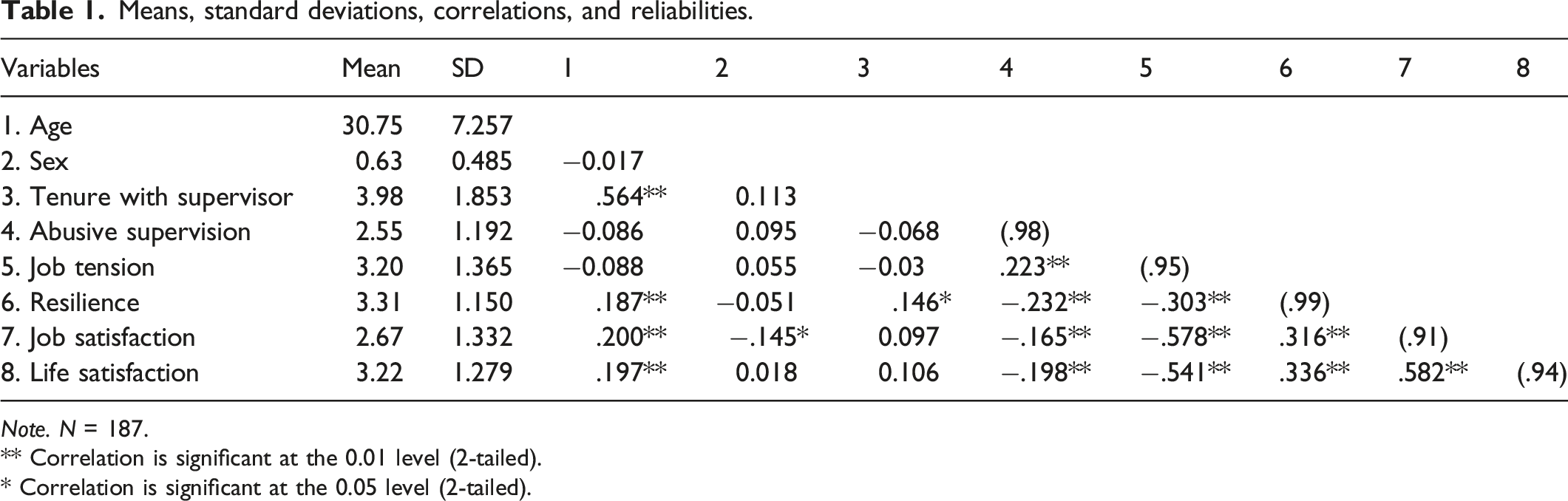
Note. N = 187.
** Correlation is significant at the 0.01 level (2-tailed).
* Correlation is significant at the 0.05 level (2-tailed).
Validity of measures
Confirmatory factor analysis of discriminant validity.
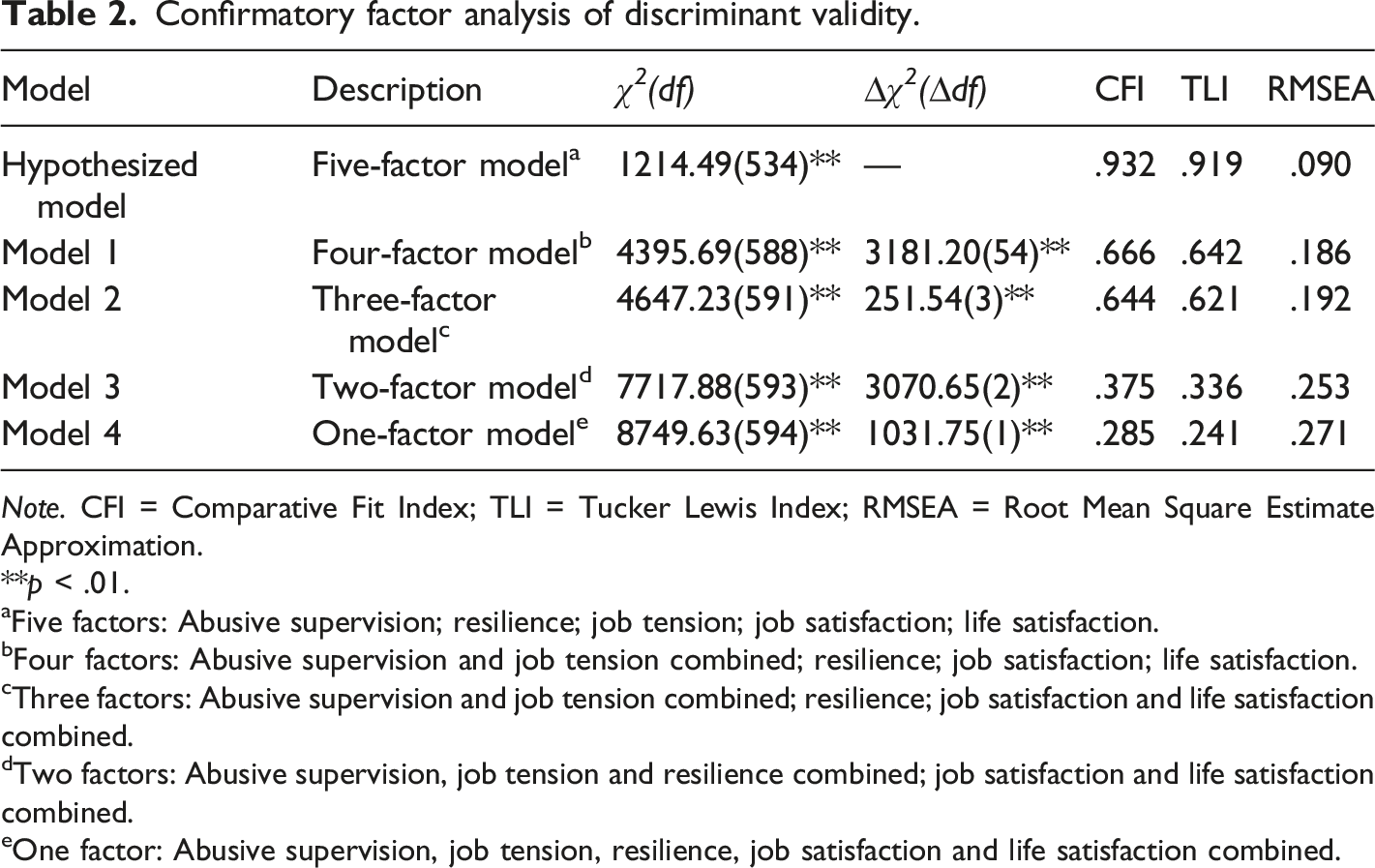
Note. CFI = Comparative Fit Index; TLI = Tucker Lewis Index; RMSEA = Root Mean Square Estimate Approximation.
**p < .01.
aFive factors: Abusive supervision; resilience; job tension; job satisfaction; life satisfaction.
bFour factors: Abusive supervision and job tension combined; resilience; job satisfaction; life satisfaction.
cThree factors: Abusive supervision and job tension combined; resilience; job satisfaction and life satisfaction combined.
dTwo factors: Abusive supervision, job tension and resilience combined; job satisfaction and life satisfaction combined.
eOne factor: Abusive supervision, job tension, resilience, job satisfaction and life satisfaction combined.
Testing for a mediation effect
Results of moderation and mediation analyses.
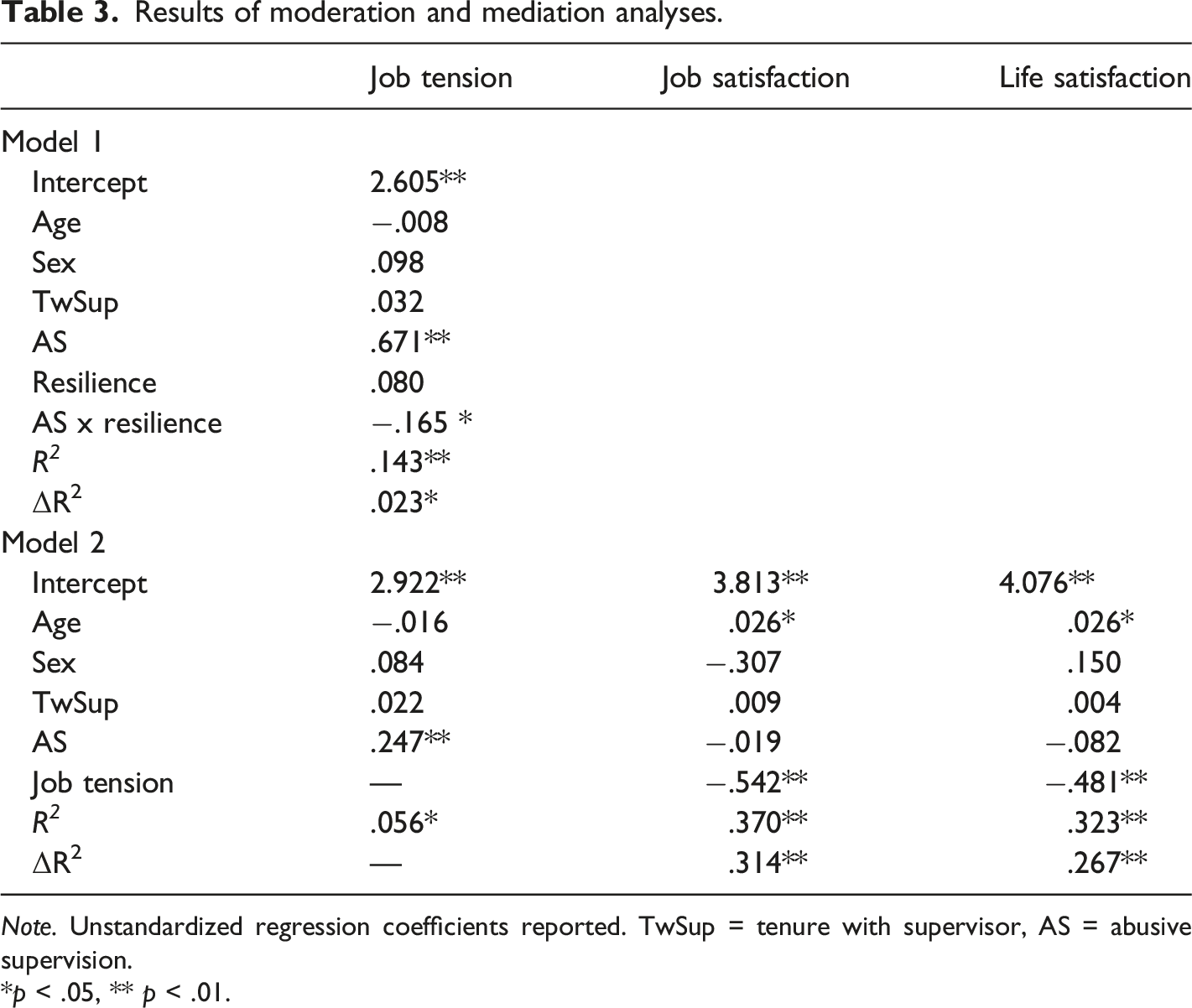
Note. Unstandardized regression coefficients reported. TwSup = tenure with supervisor, AS = abusive supervision.
*p < .05, ** p < .01.
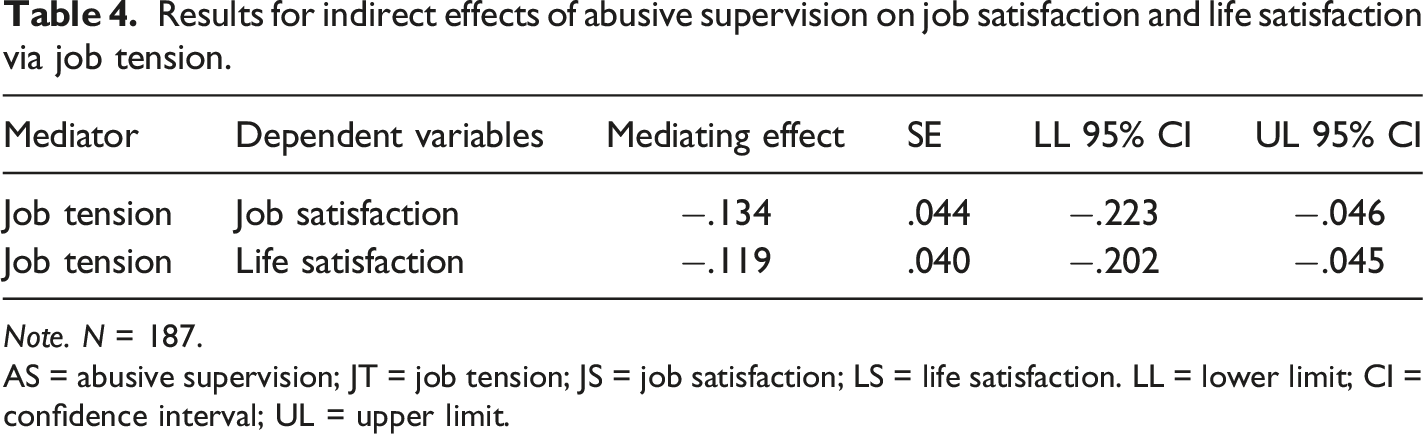
However, the direct relationship between AS and job satisfaction (B = −.019, SE = .068, ns) and life satisfaction (B = −.082, SE = .068, ns), controlling for job tension, was non-significant. Hence, based upon the results revealed by the bias-corrected percentile bootstrap method, it is evident that job tension fully-mediated the indirect relationship between AS and job satisfaction (indirect effect; B = −.134, SE = .044, 95% CI = [−.223, −.046]) and life satisfaction (indirect effect; B = −.119, SE = .040, 95% CI = [−.202, −.045]), hence supporting hypotheses 3a and 3b (see Figure 2 and Table 4). Job tension mediated the relationship between abusive supervision and job and life satisfaction. Note. N = 187. a, b, c, and c′ are regression coefficients. C = total effect of AS on job and life satisfaction; c′ = direct effect of AS on job and life satisfaction. **p < .01. Results for indirect effects of abusive supervision on job satisfaction and life satisfaction via job tension. Note. N = 187. AS = abusive supervision; JT = job tension; JS = job satisfaction; LS = life satisfaction. LL = lower limit; CI = confidence interval; UL = upper limit.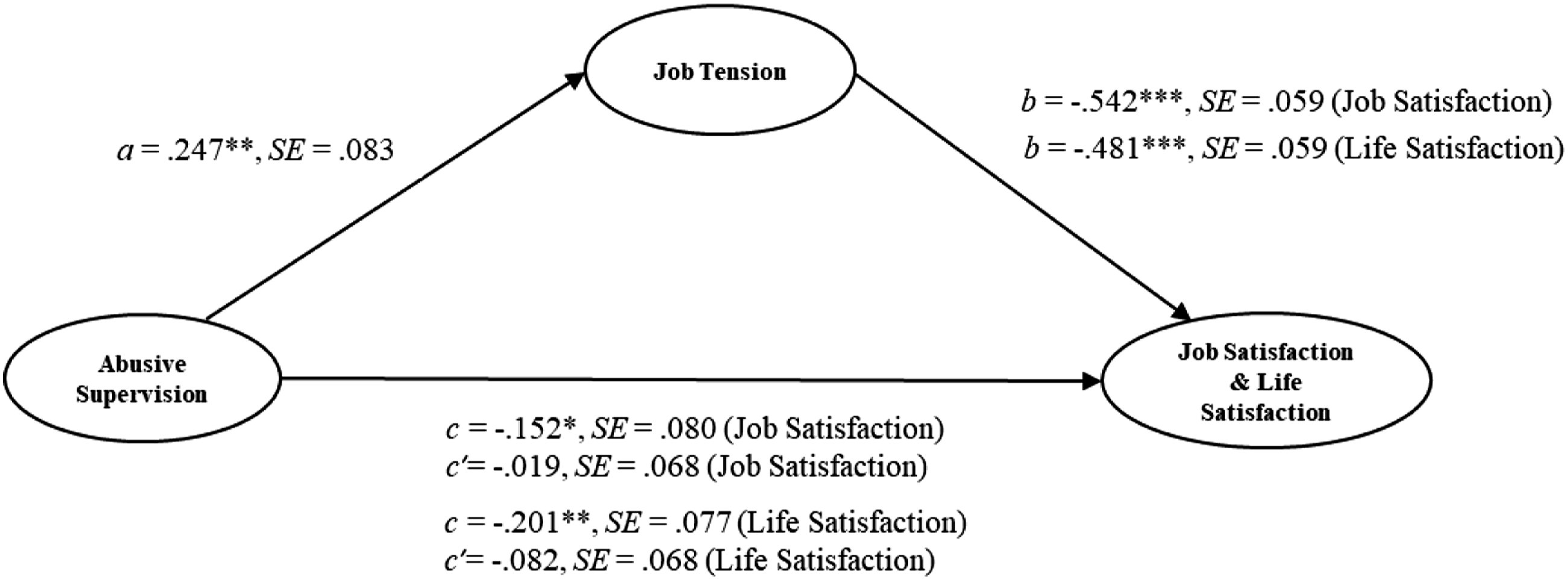
Testing for a moderation effect
Results for conditional effects of abusive supervision on job tension across levels of resilience.
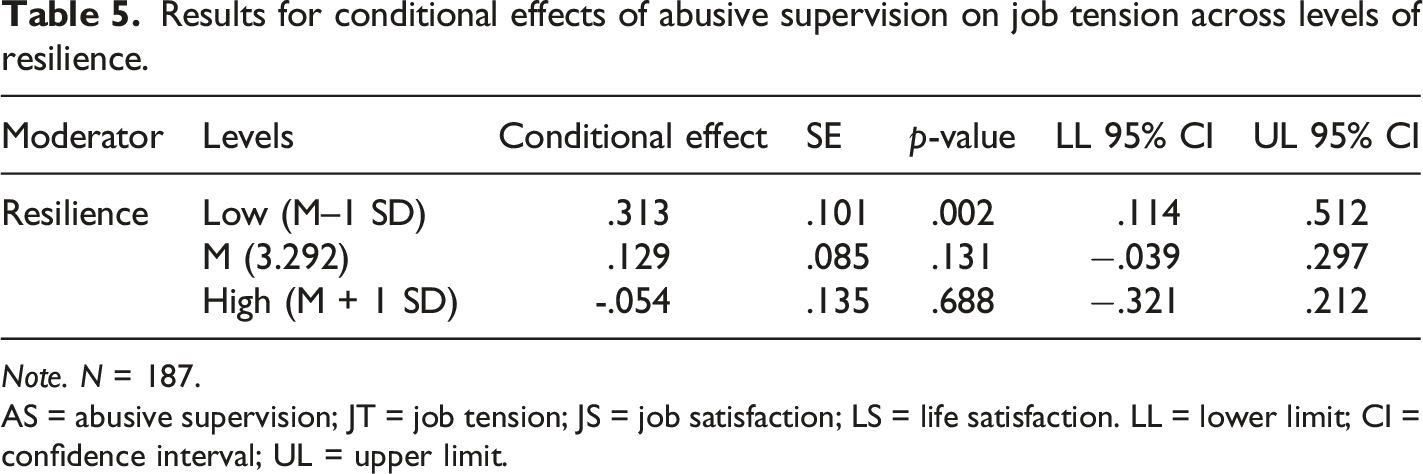
Note. N = 187.
AS = abusive supervision; JT = job tension; JS = job satisfaction; LS = life satisfaction. LL = lower limit; CI = confidence interval; UL = upper limit.
Moreover, to help understand the interaction term, an interaction plot between AS and resilience at high, medium and low levels is presented in Figure 3. As seen in Figure 3, the interaction term explained an additional 2.31% of the variance (F (1, 180) = 4.855, p < .05) in job tension over and above the main effect. Plot of interaction between abusive supervision and resilience on job tension.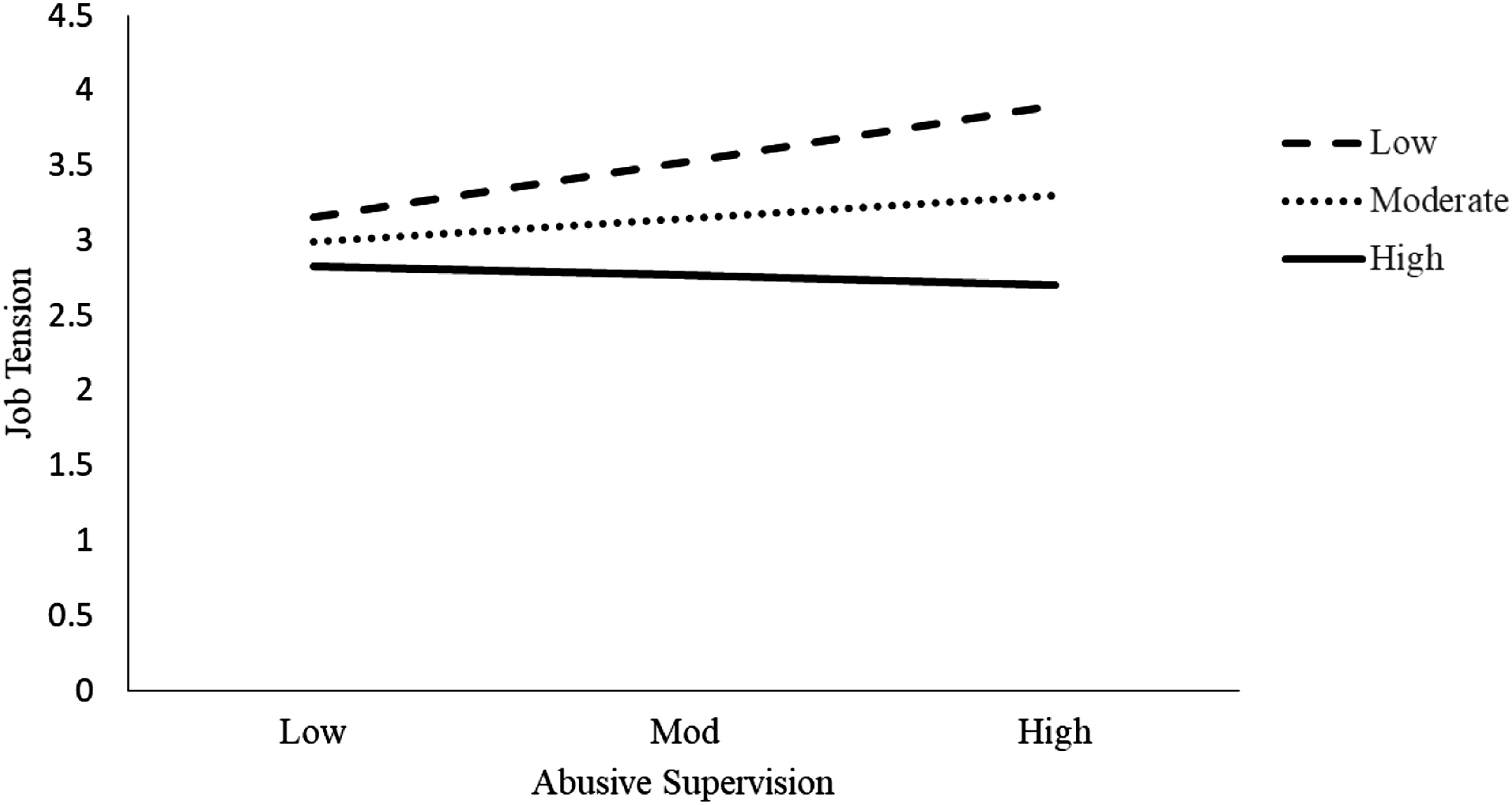
Testing for a moderated-mediation effect
Results for conditional indirect effects of abusive supervision on job satisfaction and life satisfaction via job tension across levels of resilience.
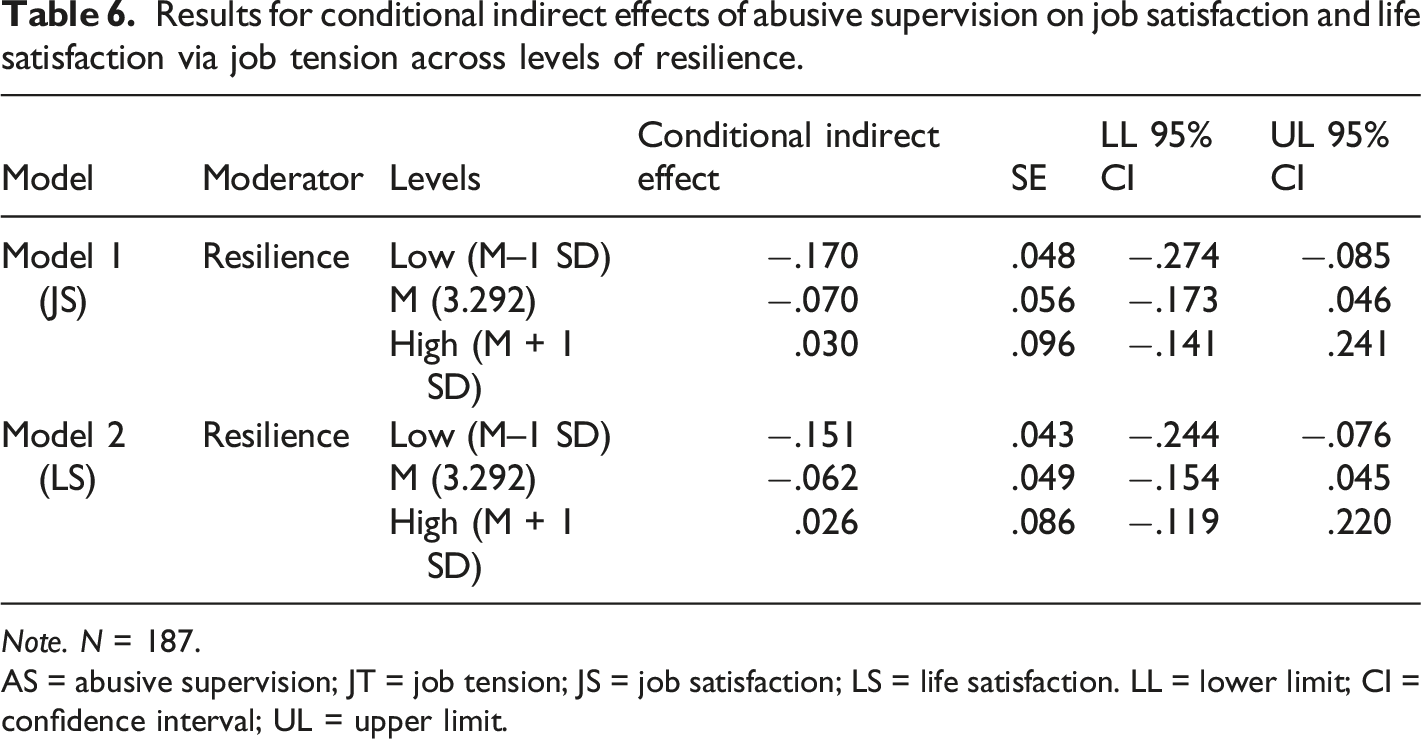
Note. N = 187.
AS = abusive supervision; JT = job tension; JS = job satisfaction; LS = life satisfaction. LL = lower limit; CI = confidence interval; UL = upper limit.
Moreover, the index of moderated mediation (Hayes, 2013) for job satisfaction was .089, and its confidence interval did not include 0 ([.010, .192]); for life satisfaction the index of moderated mediation was .079, and its confidence interval also did not include 0 ([.009, .173]). Overall, these results suggest that resilience offsets the deleterious effects of AS on employees’ job and life satisfaction. Thus, hypotheses 5a and 5b were supported.
Discussion
Based on COR theory, the present study dissected the deleterious effects of AS on employees’ wellbeing through their job tension. The study found full support for the proposed relationships. The study data confirmed that job tension transmits the negative effects of AS on employees’ job and life satisfaction. Furthermore, resilience moderated AS’s relationship with job tension. Finally, job tension mediated the moderating effects of resilience on subordinates’ job and life satisfaction.
A few key contributions are worth mentioning. First, the study results support the hypothesis that the fallout from AS has pernicious effects on victims’ job satisfaction as well as life satisfaction. In COR terms, AS is an actual or a potential threat to an employee’s valued resources on the job (in the form of job satisfaction) and in their personal life (in the form of life satisfaction). Conservation of resources theory contends that individuals are hedonistic in attaining comfort and wellbeing by stockpiling valued resources. Hence, based on COR’s theoretical postulation and the study results, the present study maintains that AS not only intrudes on the victim’s professional life by damaging the employee’s valued resources and causing dissatisfaction in their job, but it also spills over to impact employees’ satisfaction in their general life. Indeed, there is some progress in the domain of work–family and family–work conflict caused by AS (i.e., Carlson et al., 2011; Carlson et al., 2012; Courtright et al., 2016; Hoobler & Brass, 2006; Wu et al., 2012). However, the existing AS research has not yet investigated the harmful effects of AS on targeted employees’ life satisfaction (Mackey et al., 2017; Martinko et al., 2013; Tepper, 2007; Tepper et al., 2017). Thus, the study’s first theoretical contribution is its finding that AS contributes to the experience of job dissatisfaction and spills over into life dissatisfaction. By integrating and testing employee job satisfaction and life satisfaction simultaneously, the present study supplements our understanding and advances COR theory by identifying that an employee’s resource loss can ruin their job as well as life satisfaction.
Second, the findings confirm and support the study hypotheses by depicting the mediating effects of job tension in the relationship between AS and job and life satisfaction. This represents a novel underlying mechanism in the field of AS. The outcome represents a notable departure from past research, especially in illustrating the destructive effects of AS on employees’ job-related outcomes and, more specifically, the spillover effects of AS on employees’ personal life domains. While past research has shown a positive association between AS and job tension (Khan, 2015; Harvey et al., 2007; Mackey et al., 2017), the mediating effects of job tension have not yet been scrutinized in the field of AS (Mackey et al., 2017; Martinko et al., 2013; Tepper, 2007; Tepper et al., 2017). Based on COR, the study underscores job tension as a novel mediator that has not yet been examined, especially in dissecting employees’ job and life satisfaction simultaneously in a single study. Conservation of resources argues explicitly that an actual or potential threat to an individual’s resources may damage those resources, which may provoke job tension in individuals and, in turn, cause dissatisfaction in an individual’s job and life domains. The study enriches our empirical and theoretical understanding of COR’s underlying mechanism by suggesting job tension as a potential mediator in the relationship between AS and employee wellbeing.
Third, the study found support for the moderating effects of subordinates’ resilience on the AS–job tension relationship, such that the positive relationship was stronger at low rather than high levels of resilience. This is further shown by the interaction plot, which demonstrates the AS–job tension strength at low, medium and high levels of resilience. Based on COR, the present study underscored and investigated a novel moderator (i.e., resilience) that has not yet been examined in the domain of AS, especially the relationship between AS and job tension (Mackey et al., 2017; Martinko et al., 2013; Tepper, 2007; Tepper et al., 2017). Indeed, COR theory helps understand the critical role of stress and resilience within the workplace (Chen et al., 2015). It further sheds light on the resilience process by elaborating on an individual’s coping strategies during stressful encounters (Hou et al., 2018; Zautra et al., 2010), which, according to COR, means an individual’s personal characteristics or resources (i.e., resilience) protect them from resource loss and promote resource growth (Hobfoll, 2012; Hobfoll et al., 2015). This is because individuals high in resilience are characterized as emotionally stable (Gallagher et al., 2015; Masten, 2001), skillful and capable of bouncing back and recovering quickly during stressful encounters (Hou et al., 2018; Zautra et al., 2010), being able to accept reality and are self-motivated in garnering their resource reservoirs (Coutu, 2002). Hence, this study advances our current understanding of COR theorizing and AS scholarship alike by suggesting and empirically investigating the moderating effects of subordinate resilience in attenuating the cascading effects of AS on subordinates’ job tension and, subsequently, on their wellbeing.
Practical implications
This study also has important implications for organizations and their managers. First, as evident by the results, highly resilient individuals are more capable of bouncing back and restoring the loss of their valued resources during stressful encounters. Hence, this study informs organizations that well-trained and resilient employees positively respond to and overhaul the loss of their resources (Monnier et al., 2002). Therefore, organizations need to inculcate the characteristics of resilience in employees by helping them acquire the necessary skills and resources up to the level that builds their confidence to survive stressful encounters. For example, this can be done through the organization’s professional development and training programs, by celebrating employee successes and sharing their success stories on the notice board, and also training employees to address challenges/problems as a learning process.
Second, it is evident from the study results and past empirical research (i.e., Carlson et al., 2011; Carlson et al., 2012; Hoobler & Brass, 2006; Wu et al., 2012) that AS’s effects have a devastating impact on targeted subordinates’ personal, professional and family life. This study argues that once AS causes dissatisfaction in a subordinate’s personal life, this dissatisfaction can, in turn, damage the subordinate’s productivity and performance at work (Carlson et al., 2012; Pradhan & Gupta, 2021). To stop the damaging effects of AS on targeted subordinates’ personal life, organizations need to eliminate obstacles and unnecessary stress and strain (Hobfoll et al., 2018) by communicating an unequivocal message to supervisors that abusive and harmful behaviors will not be tolerated.
Limitations and future research directions
Despite its valuable contributions, the present study is not without limitations. First, the present study has examined employee job and life satisfaction simultaneously, which augments our theoretical and empirical cognizance of the pernicious effects of AS in damaging employee job satisfaction and, more specifically, spilling over to devastate employee life satisfaction. However, the present study failed to investigate the victim’s partner’s and other family members’ life satisfaction—this is because of cultural constraints in data collection from the victim’s wife/husband and other family members. This is an important insight because the victim and their immediate family members co-exist in a family environment in which it may be permissive for AS victims to relieve their frustration on the most vulnerable target at home (most likely the victim’s partner and children), damaging other family members’ life satisfaction. This type of displaced aggression by AS victims represents the “kick the dog” metaphor, whereby an aggravated employee goes home and takes out their frustration on the most vulnerable target by kicking ‘the dog’ (Marcus-Newhall et al., 2000). Therefore, we strongly recommend that future research investigate AS victims’ family members’ life satisfaction.
Second, although the present study adopted controls to minimize common method variance (Podsakoff et al., 2003, 2012) by collecting data at two different time points with a 1-month interval, the cross-sectional study design precluded causal deductions and also thwarted the meticulous examination of the spillover and crossover effects of AS on the victim’s immediate family members. Therefore, the present study strongly recommends future researchers incorporate a longitudinal and multi-source research design (such as collecting data from victims’ immediate and extended family members) to scrupulously investigate the crossover and spillover effects of AS on victims’ immediate and extended family members.
Third, the present study underlined and examined an important moderator (i.e., resilience), which is largely overlooked in the existing AS literature and is also closely aligned with COR, rather is a principal ingredient in COR’s resource gain principal (Chen et al., 2015). For example, in COR terms, an individual’s personal resources (i.e., resilience) are instrumental in stockpiling their resource reservoir (Hobfoll, 1989, 2001). However, the study failed to incorporate other important variables that may provide a fertile ground for highly resilient individuals to recover during stressful encounters. For example, resource-rich and stable environments provide a breeding ground for highly resilient individuals to recoup during confronting situations (Hobfoll et al., 2015). Thus, the present study recommends incorporating resilience along with other resource-rich or stable work environments to mitigate the harmful effects of AS on victims' personal and professional life.
Conclusion
Based on COR, this research extends the existing AS scholarship by identifying a novel theoretical mechanism that sheds light on the resource-depletion process and its damaging effects on AS victims’ wellbeing. The study findings support the notion that the toxic effects of AS can spill over beyond the workplace to cause victims’ life dissatisfaction. The study also enriches our theoretical understanding by incorporating and testing resilience as a novel moderator in the relationship between AS and job tension. The findings support the COR assertion that highly resilient individuals are more capable of and better equipped with personal resources to recuperate and bounce back from stressful encounters.
Footnotes
Declaration of Conflicting Interests
The author(s) declared no potential conflicts of interest with respect to the research, authorship, and/or publication of this article.
Funding
The author(s) received no financial support for the research, authorship, and/or publication of this article.
