



Abstract
This research explores the relationship between Decent Work (DW) and Burnout in Portuguese and Brazilian academic personnel. We focus on identifying profiles resulting from the relationship between these variables. Seven hundred twenty-seven participants composed the sample (Portuguese = 334; Brazilian = 393), and data were collected online using the Decent Work Questionnaire (DWQ) and the Personal Burnout subscale from the Copenhagen Burnout Inventory (CBI). Results of multiple linear regressions showed that two DW dimensions were significant and negatively related to Burnout: Fundamental Principles and Values at Work and Adequate Working Time and Workload. We found four profiles by performing a cluster analysis: Low Decent Work; High Decent Work; and two other profiles with DW deficit in at least one DW dimension: Low Fundamental Principles and Values at Work and Low Adequate working time and workload. Moreover, 71% of the total sample showed some decent work deficit. Differences between Burnout and the DW dimensions were analyzed through a MANOVA. In our sample, considering the broad dimensions of DW, Burnout seems to be mainly dependent on the deficit of aspects related to the quality of treatment and interpersonal relationships at work (e.g., perceptions of fairness, participation, non-discrimination) as well as the balance of the workload and the adequacy of the working hours. Interventions aiming at improvements must focus on those two dimensions.
Keywords
Introduction
This study explores the effect of different higher education academic personnel’ perceptions-based profiles of Decent Work (DW) on Burnout, searching to identify different patterns that could emerge from the relationship between these two variables, applying cluster analysis as a main data analysis technique. As far as we know, theoretical and practical interactions between these variables have only just begun to be developed in professional settings.
The changes that have taken place in the world in recent decades, including technological innovations, the significant growth of the services market, and the globalization process itself, have had a substantial impact on the world of work (International Labour Organization, ILO, 2001, 2008, 2015, 2019). Among these changes, we can highlight the increase of informal work and unemployment, poverty and inequalities, and insecurity. The career complexity also increases with diminished worker’s rights and job insecurity worldwide (Guest, 2017; ILO, 2015, 2019; United Nations, 2015). In this context, the protection of workers' fundamental rights became a growing concern, and DW emerges as a guiding proposal for creating more and better work (Ferraro et al., 2016; ILO, 2001).
Literature review
Decent work
Decent work (DW) expresses the rights of all human beings to have decent and productive work in conditions of freedom, equity, security, and dignity (ILO, 1999). Not only the rights to a job that meets workers’ expectations but an employment that also offers fair interpersonal treatment and adequate salaries that allow the wellbeing at work (Grandey et al., 2015). DW gained significant notability when highlighted on Goal 8 of the 2030 Agenda of Sustainable Development (United Nations, 2015), reinforcing its relevance.
The current study follows the Work, Organizational, and Personnel Psychology (WOPP) approach since it has an affinity with work and psychological well-being, healthy working conditions, and quality of life at work. According to Ferraro et al. (2017), DW’s concept on a WOPP approach refers to significant work based on ethical principles that protect human rights at work, guaranteeing fundamental values and principles through social dialogue between the parts involved in the decision-making of the work processes. DW also promotes worker’ professional and personal development through professional opportunities and social security based on care and laws. Previous research (Ferraro et al., 2017, 2018a, 2018b) found seven critical aspects/dimensions: (1) Respect for fundamental principles and values at work; (2) good management of time and workload; (3) the perception of work that is fulfilling and productive; (4) the possibility of receiving remuneration for the work performed that allows workers to exercise their citizenship; (5) social protection; (6) opportunity for personal and professional growth and development, and (7) health and safety at work – together, these aspects represent the defense and promotion of human rights at work. These dimensions that characterize DW from workers' perspectives are described in the “Method” section (below).
The presence of all these facets characterizes a work as worthy. Currently, with the growing concern with work and psychological health and well-being at work, work environments felt as dignified are increasingly valued. Graça et al., 2021, in a study with academic personnel, focused on four DW dimensions, namely Adequate working time and workload, fulfilling and productive work, social protection, and opportunities. The authors found that these four DW dimensions are significant and positively related to dimensions of work engagement (vigor, dedication, and absorption).
Our study focused on the search to promote healthy universities and the promotion of health and well-being for university personnel [as suggested in the study by Innstrand and Christensen (2020) that addresses the concept of healthy universities]. The WOPP approach and, in particular, the study of decent work can contribute to healthy organizations. Our study can shed light and collaborate with different agents to improve the work environment, implementing interventions based on DW to prevent dysfunctions such as Burnout (Bal et al., 2019; Watts & Robertson, 2011).
Burnout
Burnout integrates the World Health Organization (WHO) classification of mental health problems related to the workplace (World Health Organization, 2018). The World Health Organization (2018) defines this syndrome as a result of prolonged workplace stress that an individual cannot effectively manage. Demerouti et al. (2021) claim that burnout has been investigated since the seventies but remains a “contemporary problem because of persistent environmental stressors and challenges for employees and organizations as a whole” (p. 686).
Kristensen et al. (2005) considered that the core of burnout is fatigue and exhaustion, and those individuals who suffer burnout take them to all spheres of their personal lives. They developed the Copenhagen Burnout Inventory, used in this research, differentiating the domains where exhaustion may appear and the different contexts from which the overall concept could be assessed (Lapa et al., 2018): personal, work-related, and patient/client-related burnout.
Burnout syndrome can affect individuals in all professions. However, the literature highlights human service professionals since the human interactions (between the service provider and her/his recipient) could be a significant cause of stress (Maslach & Leiter, 2016). The academic personnel deals daily with these types of interactions.
Among the various antecedents of burnout can be highlighted psychological factors such as individual characteristics, for instance, locus of control, self-esteem, and personality (Bakker et al., 2014; Borritz et al., 2006; Kyriacou, 1987). Rothmann and Barkhuizen (2008) address a growing trend in the literature on burnout: the interaction of individual characteristics (such as gender, age, years of experience) and environmental factors (such as grade taught, type of student) in the development of burnout in the academic context. They found that younger academics experienced higher levels of reduced professional efficacy than their older colleagues. Previously, Byrne (1991) was found that the older faculty are more likely to be involved in graduate teaching than younger faculty members mainly involved with undergraduate teaching. Consequently, the smaller class sizes provide opportunities for meaningful teacher/student dialogue, which leads to higher levels of professional efficacy.
Also, organizational factors such as the way workers feel their work environment like a stressful, tiring, and emotional workplace, job insecurity or lack of job control (Tytherleigh et al., 2005); relationship factors, such as conflicts in the workplace; or low social support from colleagues or leaders (Aronsson et al., 2017; Borritz et al., 2006; European Foundation for the Improvement of Living and Working Conditions (Eurofound), 2018, World Health Organization, 2018; Taris et al., 2005; Xu, 2019; Yslado et al., 2021) and also physical aspects of the work environment, such as noise or an intense workload (European Foundation for the Improvement of Living and Working Conditions (Eurofound), 2018; Maslach et al., 2001).
Considering the teacher-researcher role conflict, Xu (2019) explains that according to the JD-R model, job demands and resources interact to influence employee wellbeing, which means job resources can mitigate the harmful effects of excessive job demands (Bakker et al., 2003). However, extant literature addresses mitigative effects of the individual characteristics, for example, self-efficacy and optimism (Xanthopoulou et al., 2007), or job characteristics such as autonomy (Fernet et al., 2013) and time control (as task resource, Llorens et al., 2007). Nevertheless, the effects of social interaction or organizational support resources in teacher-researcher role conflict and burnout linkage have received little attention. Tytherleigh et al. (2005) found significant differences between staff working at Old versus New universities and by employee category in 14 UK universities and colleges. They defend that their results support “the growing evidence that universities no longer provide the low stress working environments they once did” (p. 41).
Additionally, increasing work environment stressors progressive degradation of working conditions at universities around the world affects the quality of work-life and job satisfaction (Ferraro et al., 2015; Johnsrud, 2002; Kyriacou, 2001; McClenahan et al., 2007; Rosser, 2004; Schaufeli et al., 2009; Skaalvik & Skaalvik, 2009), generating physical and emotional exhaustion among teachers (Collado et al., 2016). Different types of lack of equity, for example: between men and women (Durodoye et al., 2020), could also lead these professionals to suffer a high prevalence of this syndrome (Carlotto, 2004; Kinman, 2001; Maslach, 1999; Rocha et al., 2020; Sestili et al., 2018; Watts & Robertson, 2011; Zhong et al., 2009). Adekola (2010) refers to a significant difference between men and women concerning personal accomplishment. The women of the university staff feel a higher level of reduced personal accomplishment than the man of the staff. According to Cropanzano et al. (2005), the lack of equity may contribute to professional burnout because of the sense of inequity (as the operationalization of distributive justice) and distributive injustice (injustice-stress theory). In addition to the lack of equity, Van Horn et al. (1999) showed that a lack of reciprocity promotes stress among elementary and secondary school teachers.
Decent work and burnout
Research on DW already related this concept with different psychological variables such as work motivation, psychological capital (PsyCap), work engagement, and personal burnout (Ferraro et al., 2017, 2018a, 2018c, 2020; Graça et al., 2021). Ferraro et al. (2020) explored the relationship between DW, work engagement, work motivation, and physicians' burnout. They showed that DW is related to more autonomous types of work motivation and contributes to increasing work engagement and decreasing personal burnout.
It is relevant to understand better the interaction between DW and Burnout in academic personnel (in our study: university teachers that teach and research in Higher Education Institutions, HEIs) since this syndrome brings negative consequences for individuals and organizations (García-Arroyo et al., 2019; Shirom, 2014). Despite being a phenomenon in the work context, burnout affects individuals negatively in their work spheres and their life in general (Ferraro et al., 2017; Goddard et al., 2006; Kristensen et al., 2005), in a spillover phenomenon.
Antecedents of Teacher Burnout corresponding to DW dimensions
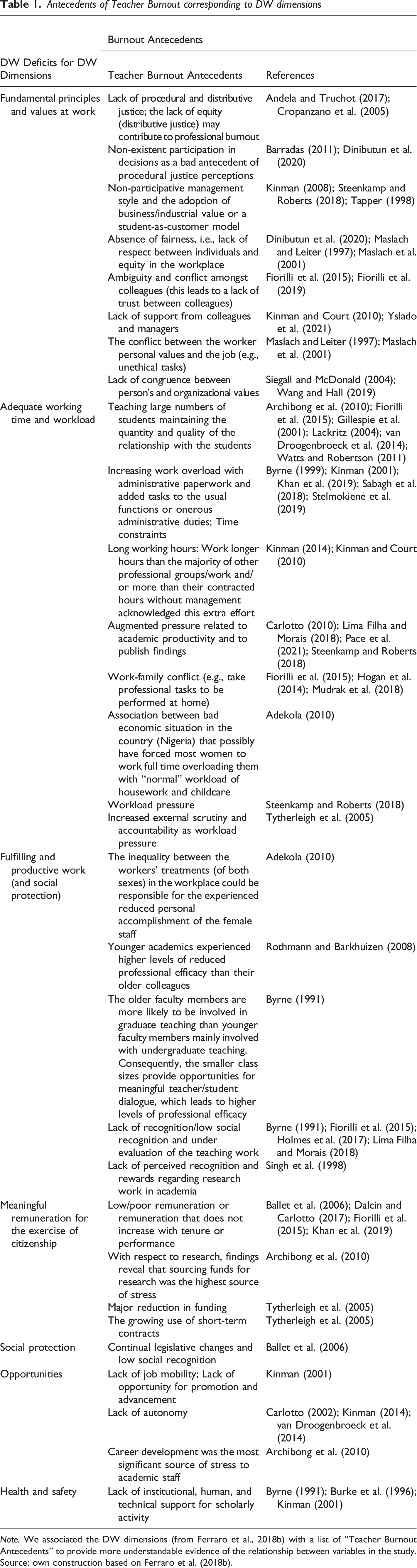
Note. We associated the DW dimensions (from Ferraro et al., 2018b) with a list of “Teacher Burnout Antecedents” to provide more understandable evidence of the relationship between variables in the study.
Source: own construction based on Ferraro et al. (2018b).
Burnout also has consequences, affecting people’s functioning in a negative way (Maslach & Leiter, 2016). It increases job dissatisfaction, intentions of turnover and absenteeism, early retirement, as well as morbidity and mortality (Borritz et al., 2006; Eker et al., 2007; European Foundation for the Improvement of Living and Working Conditions (Eurofound), 2018). It can also decrease performance, motivation, and effectiveness; diminish the opportunity of satisfying experiences at work and organizational commitment (Bakker et al., 2014; Maslach et al., 2001; Maslach & Leiter, 2016).
Teacher burnout can have consequences, such as lowest quality referred to educational offer (Egyed & Short, 2006) and decision making; lower levels of creativity; impaired concentration and memory; and among inter-personal factors: reduced levels of sensitivity, warmth, consideration, altruism, and tolerance (Kinman, 2001); more teachers attrition, teacher health problems and adverse student outcomes (Brunsting et al., 2014; Skaalvik & Skaalvik, 2010). These consequences often contribute to students’ poor academic performance and problem behavior (Fiorilli et al., 2015; Skaalvik & Skaalvik, 2010). A better understanding of teacher burnout is relevant to students, teachers, schools, the community, and society in general (Fernández-Suárez et al., 2021; García-Arroyo et al., 2019; Meredith et al., 2020).
Considering that burnout has adverse effects on individuals and organizations (Borritz et al., 2006; Eker et al., 2007) and being the working environment an essential predictor of this syndrome, it is relevant to study this in the light of an antecedent, such as deficit of DW. It is also interesting to understand how these two variables are related since Ferraro et al. (2020) found DW could be a relevant concept to avoid burnout in a physicians’ sample. Our study has a sample of academic personnel, which brings us insights into how these professionals perceive their work and the prevalence of burnout.
First, we aim to understand if a high DW score will be associated with a low level of burnout and a low DW score would favor burnout, verifying an inverse relationship between these two variables. For that reason, applying a multiple regression, we pose the following Hypothesis: H1: Decent work is negatively and significantly related to burnout in academic personnel
Furthermore, we want to understand better the DW levels of our sample and its association with burnout running a cluster analysis, so we propose the subsequent research questions:
Does the interaction between DW dimensions and Burnout evidence different patterns of higher education academic personnel perceptions?
Can the identification of these different patterns highlight different profiles that clarify the interactions between DW and burnout?
We decided to search for patterns because it will allow us to synthesize the data and also to predict how the relationship between DW and Burnout can unwind in the setting of academic personnel since the use of profiles (identified through cluster analysis) can have a predictive capability (Woo et al., 2018).
Method
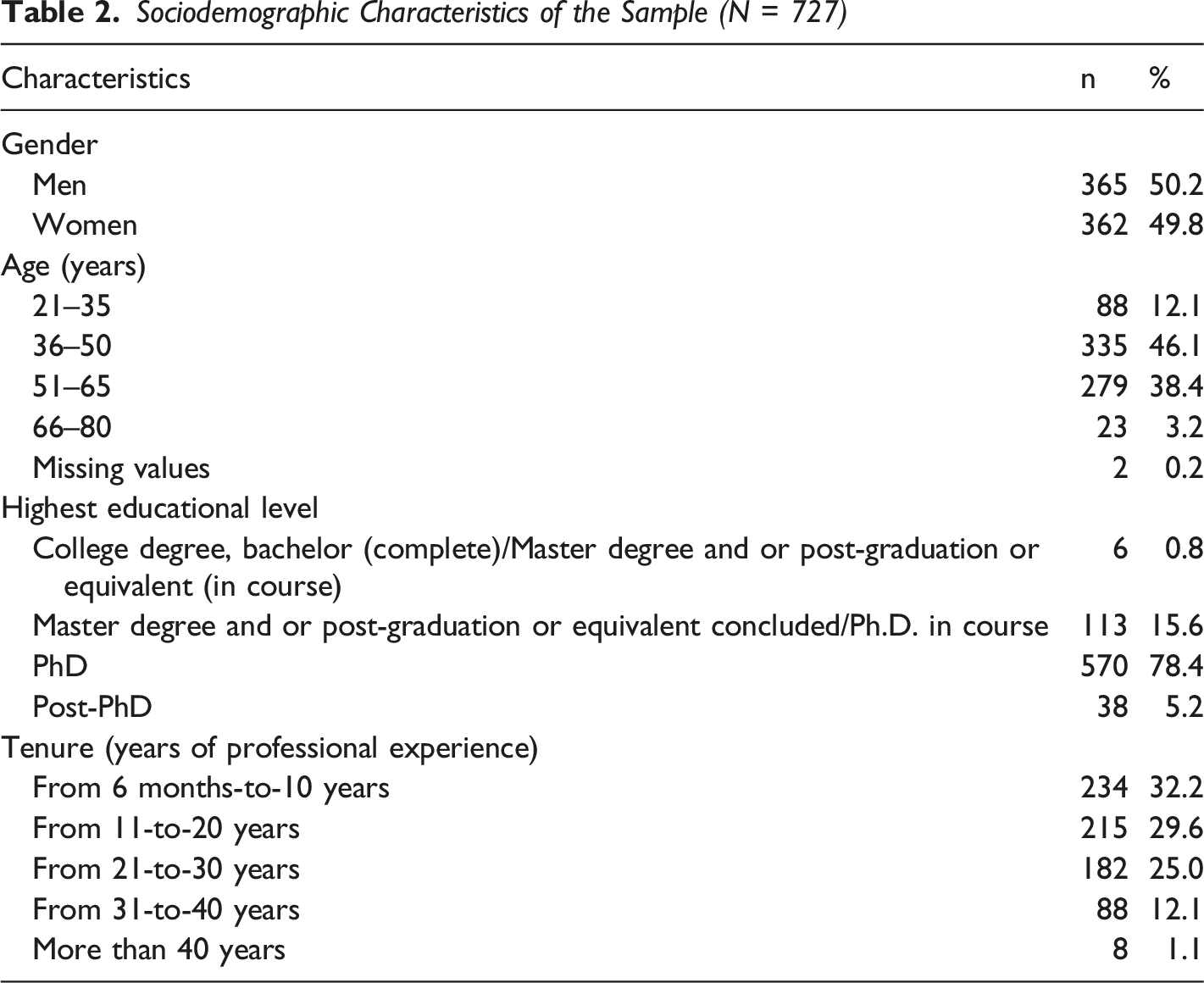
Sample
Sociodemographic Characteristics of the Sample (N = 727)
Procedures
To participate in this study, the respondents needed to be university teachers on HEIs. We collected participants through professional associations or public emails on the websites of HEIs. Participants have received a link with the informed consent that ensured confidentiality and anonymity and pointed to voluntary nature of participation. They were also provided with emails and contacts of the researchers to ask any questions if needed. After deciding to participate, the participants access the online survey form. The task lasted approximately 20 minutes. The project was submitted to an ethical committee and was approved.
Measures
Decent work questionnaire (DWQ)
Descriptive Statistics and Bivariate Correlations between DW dimensions and Personal Burnout using Pearson’s correlation coefficient (N = 727)
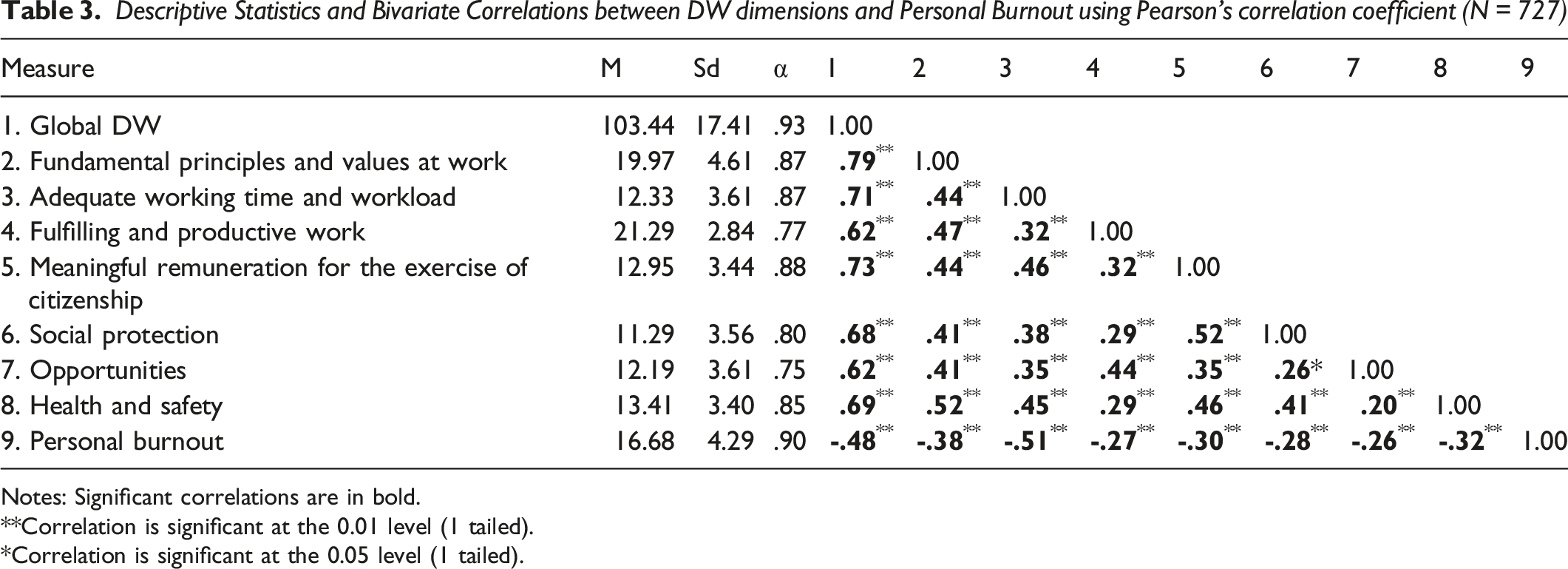
Notes: Significant correlations are in bold.
Correlation is significant at the 0.01 level (1 tailed).
Correlation is significant at the 0.05 level (1 tailed).
Copenhagen Burnout Inventory (CBI)
The CBI has three subscales: Personal-burnout, Work-related burnout, and Client-related burnout (Kristensen et al., 2005). We used the respective CBI versions validated for the Portuguese population (Fonte, 2011) and the Brazilian population (Bonafé et al., 2012; Campos et al., 2013). For this research, only the personal burnout subscale of the CBI was used, which measures the extent to which an individual experiences exhaustion and physical or psychological fatigue. The subscale is rated from 1 ″always or to a very high degree” to 5 ″never/almost never to a very low degree” and has items like “How often do you feel worn out”. In the current study, the Overall Burnout Cronbach’s alpha (α = .89) is significant, giving the scale a good intern consistency.
Data Analysis
The present study has a cross-sectional design based on quantitative data. The statistical program used to analyze the data was the SPSS 22 (International Business Machines Corporation., 2013) to Windows Operative System.
Due to the regression analysis assumptions, we analyzed the outliers of our initial database (N = 733) using the Mahalanobis distance (Meyers et al., 2013). We found six outliers that were removed from the data. We also analyzed all the requirements to run the data analysis of this research.
Two different nationalities of academic personnel existed, and we decided to group them because it would reinforce the analysis of this professional group. To ensure that it could be done, we used the Levene test to see if the two countries had variance homogeneity (Type I error >.05). In the face of the results, we proceeded with merging the two nationalities in the database (Howell, 2013).
Then, the descriptive and correlational analyses were performed. The correlations were classified accordingly Cohen (1988) standard values (weak, moderated, or strong). After the initial steps mentioned above, a multiple linear regression to test the relationship between DW on Burnout was ran (H1; Meyers et al., 2013).
Subsequently, a cluster analysis technique was utilized. This technique has the singularity of being a classification technique, and from a theoretical point of view, it sets a bridge between the nomothetic and idiographic perspectives. This analysis is useful since it can find patterns in a heterogeneous sample, describing how the sample is organized homogeneously (Clatworthy et al., 2005; Woo et al., 2018).
Inside the cluster analysis techniques, we used a hierarchical cluster analysis as an exploratory technique to identify professional profiles based on the DW dimensions that were significantly related to burnout (Bholowalia & Kumar, 2014; Maroco, 2007; Meyers et al., 2013).
The outputs resulting from this procedure gave us relevant information for determining the number of clusters to retain (stopping rules). We intended to use the ‘agglomeration schedule coefficients’ as criterion 1 (that is, the distance between the identified clusters, Aldenderfer & Blashfield, 1984; or as done by Martinent & Ferrand, 2006) and the R square as criterion 2 (that is, measuring how different each cluster is between them; Maroco, 2007; Sharma, 1996).
With the already defined cluster number, the next step was the non-hierarchical procedure: K-means clustering (Maroco, 2007; Meyers et al., 2013). Subsequently, a multivariate variance analysis (MANOVA, through a general linear model) was used to assess the statistically significant differences between the scores of DW and Burnout (Aldenderfer & Blashfield, 1984; Maroco, 2007).
Results
Table 3 shows the descriptive statistics and correlations of all the dimensions. According to these results, the Fulfilling and Productive Work got a higher mean (M = 21.29) contrary to Social Protection that had the lowest mean (M =11.28). All the DW dimensions are positive and significantly correlated between them (p < .05).
The Personal Burnout variable had a mean of 16.68. DW dimensions and Personal Burnout are negative and significantly correlated (p < .001), having a moderate correlation between the global dimensions (r = −.48). The highest correlation found was between Personal Burnout and Adequate working time and workload (r = −.51), which according to Cohen (1998) has a moderate degree, and the lowest was between Personal Burnout and Opportunities (r = −.26), considered has a small effect size (Cohen, 1988). In the measure scales, the standard deviation values did not exceed the value 5.
Regression Analysis Summary for DW Dimensions Predicting Personal Burnout (N = 727)
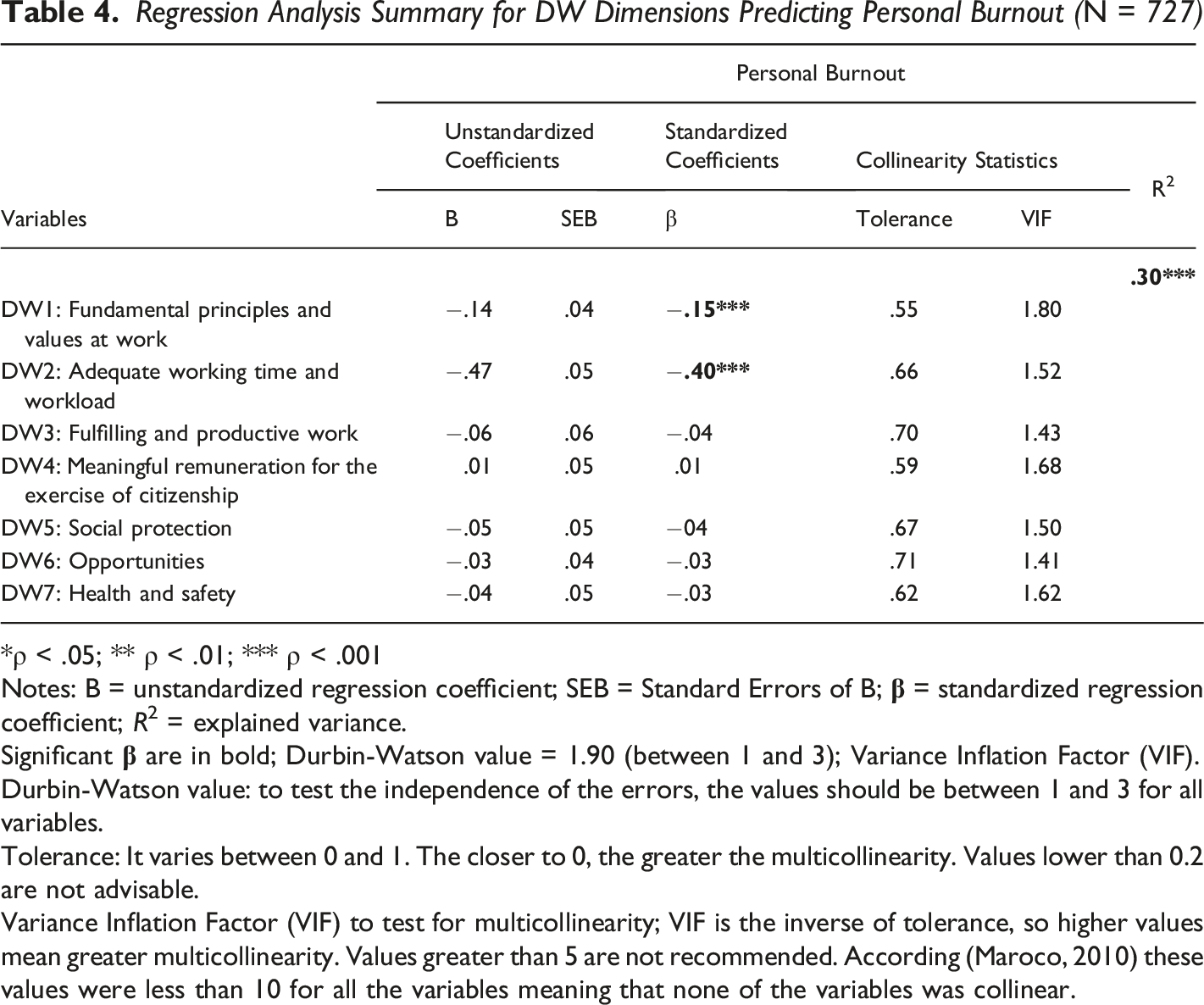
*ρ < .05; ** ρ < .01; *** ρ < .001
Notes: B = unstandardized regression coefficient; SEB = Standard Errors of B;
Significant
Durbin-Watson value: to test the independence of the errors, the values should be between 1 and 3 for all variables.
Tolerance: It varies between 0 and 1. The closer to 0, the greater the multicollinearity. Values lower than 0.2 are not advisable.
Variance Inflation Factor (VIF) to test for multicollinearity; VIF is the inverse of tolerance, so higher values mean greater multicollinearity. Values greater than 5 are not recommended. According (Maroco, 2010) these values were less than 10 for all the variables meaning that none of the variables was collinear.
The multiple regression was carried out through the Enter method to understand what dimensions of DW would be the best predictors of Burnout. Considering the beta’s score, the DW most predictive variables of personal Burnout were Adequate Working Time and Workload (β = −.40) followed by Fundamental Principles and Values at Work (β = −.15).
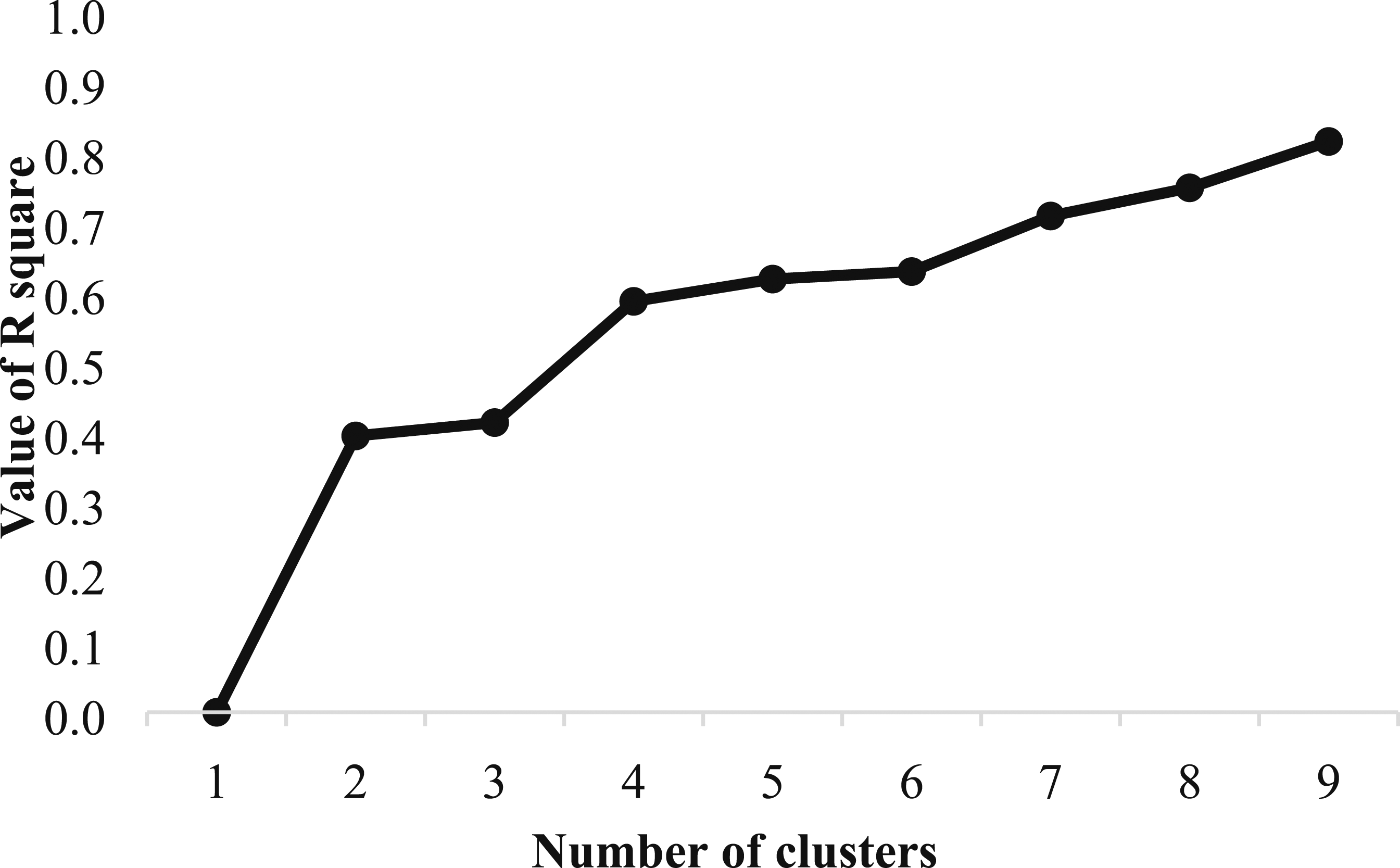
We performed a hierarchical cluster analysis to determine the number of clusters. We used the Agglomeration schedule (Figure 1) and the R Squared (Figure 2) criteria to decide how many clusters should be retained. Agglomeration schedule coefficients R-Square Index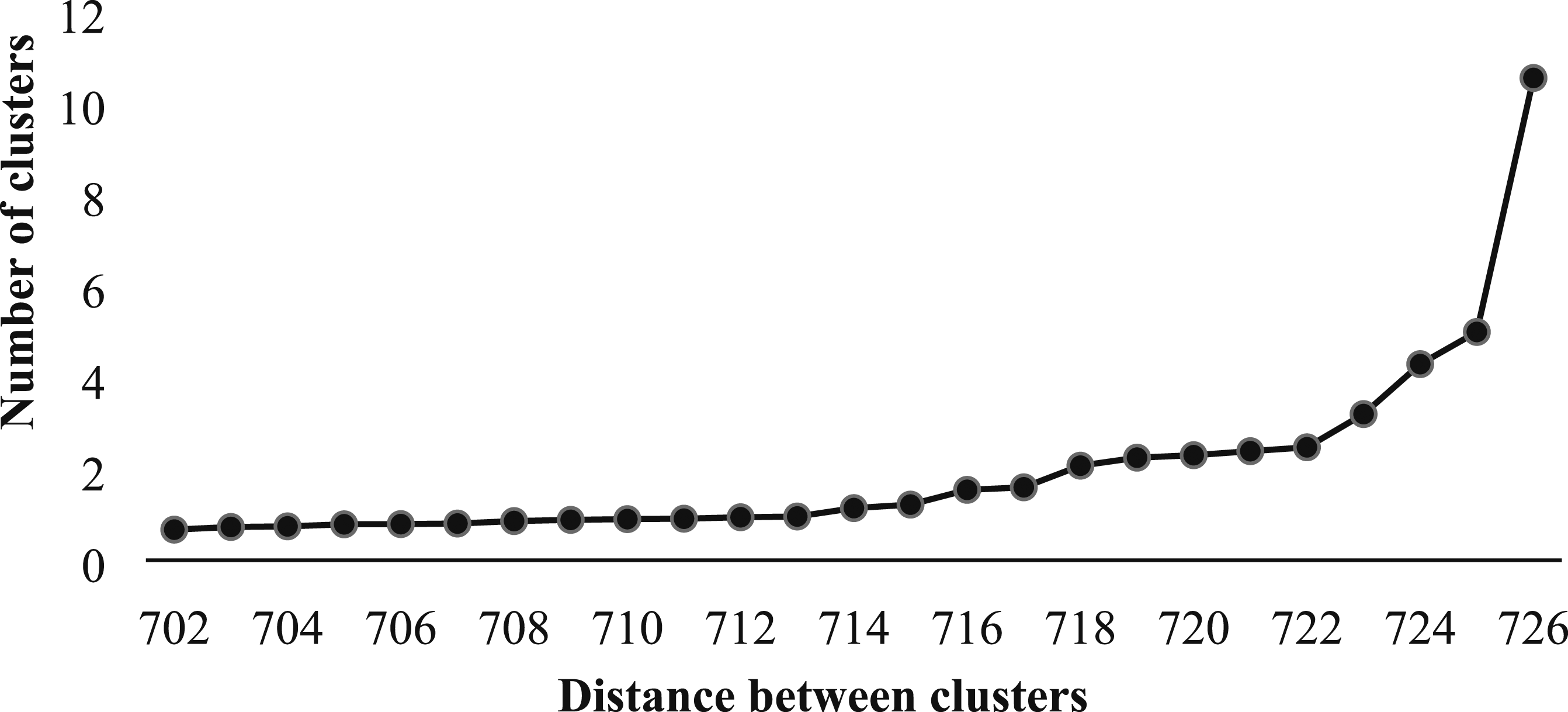
The last coefficients formed the agglomeration schedule graphic (Figure 1), and we can see that the Elbow (the step where the distance coefficients make a higher jump) is in stage 723. Then, the optimal number of clusters should be 727 (N) minus 723 (“elbow stage”), which gives us a four clusters solution.
The R-Squared technique (RS Index) is based on the variability between clusters. It means that the objective is having a number of clusters that can explain a good quantity of variability but avoiding to have the number of clusters that corresponds to the number of respondents. To determine this, we did for each variable the sum of squares of cluster divided by the sum of total squares in a solution of nine clusters. Next, we created a graphic with these values, and as we can see in Figure 2, the explained variability of the solutions does not increase meaningfully after the four cluster solution.
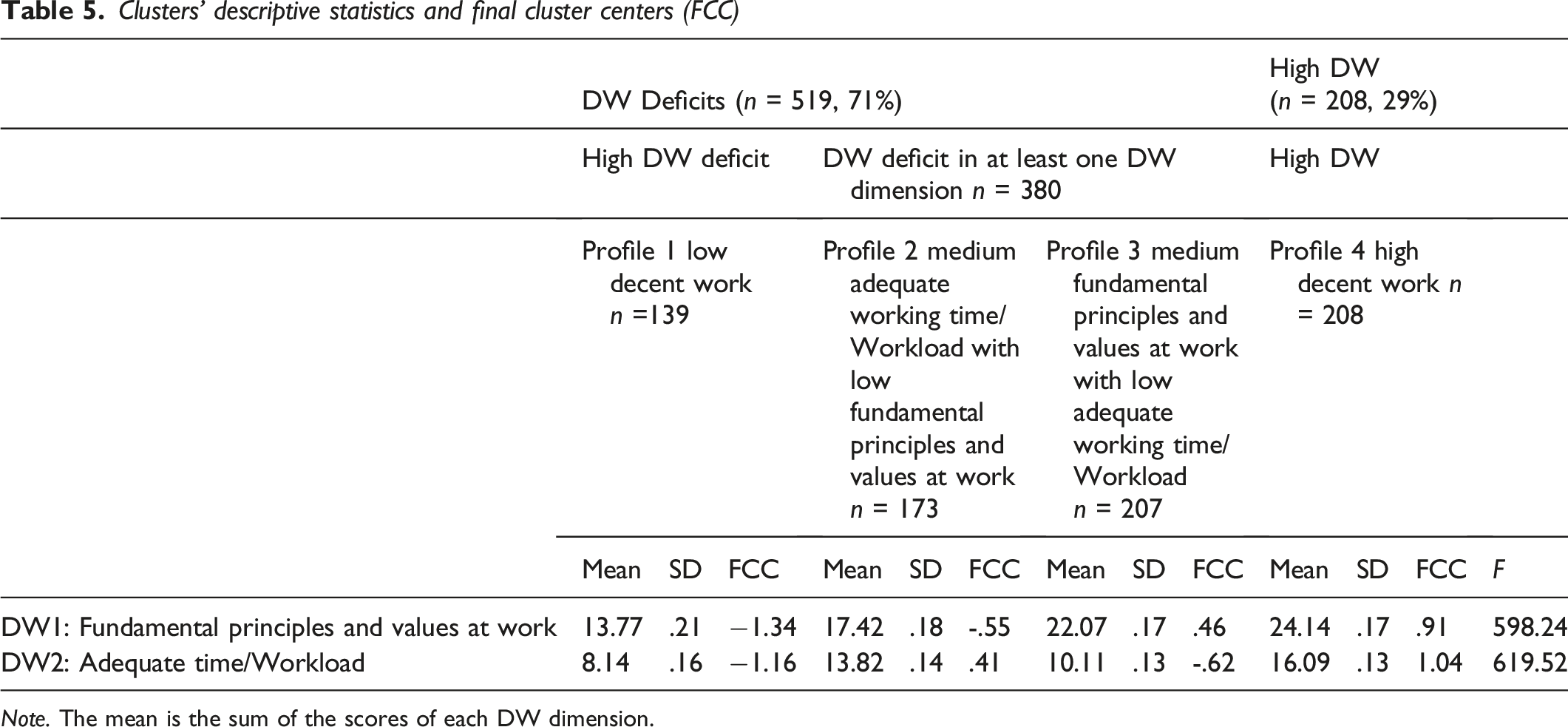
Clusters' descriptive statistics and final cluster centers (FCC)
Note. The mean is the sum of the scores of each DW dimension.
The Low DW with 139 participants is the first profile presented. This one shows the lowest scores in DW dimensions comparing with the other four DW profiles. The High DW profile (N = 208), contrary to the Low DW, contains the subjects that revealed the higher levels of the two DW dimensions. The second (N= 173) and the third (N = 207) profiles were different between them. In contrast, the second profile showed a positive and medium value of Adequate-Time-and-Workload (FCC = .41) and a negative and medium value of Fundamental Principles and Values at Work (FCC = −.55), the third profile showed the opposite with a positive and medium value of Fundamental Principles and Values at Work (FCC = .46) and a negative and medium value of Adequate Time and Workload (FCC = −.62).
Figure 3 shows the DW’s pattern of individual perceptions regarding the specific two dimensions (Adequate Working Time/Workload and Fundamental Principles and Values at Work) in each profile. The standardized values were used to provide an easier understanding of the differences between the profiles. The standardization was done based on the means of each dimension across all profiles. The High DW and Low DW were the clearest ones, and the second and third profiles have opposite means on the dimensions. Decent work’ profiles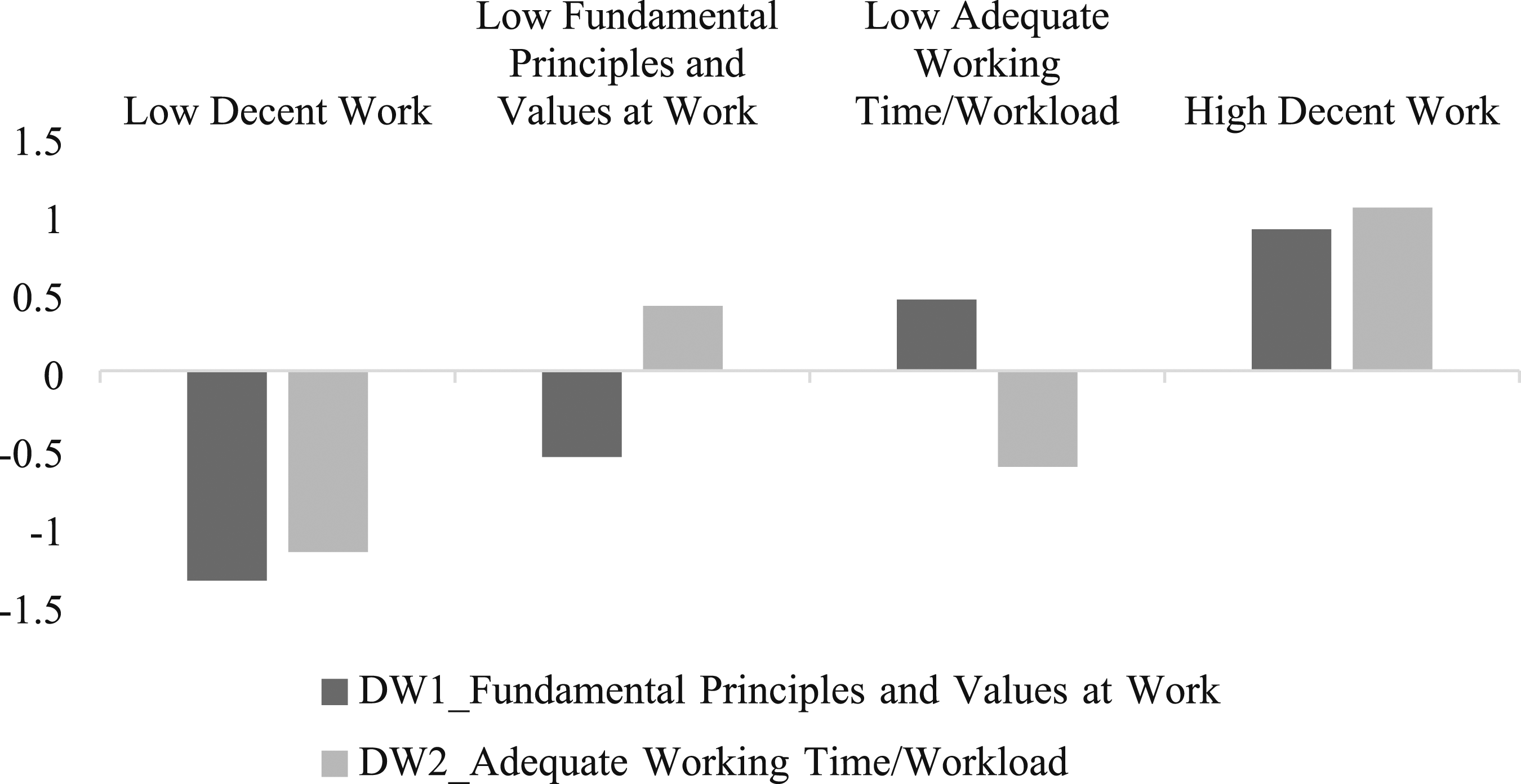
We conducted a MANOVA to test if the profiles were different from each other regarding Burnout and the two dimensions of DW. We obtained a statistically significant MANOVA effect, Wilks’ λ = .099, F (9; 1754.875) = 308.70, p < .001, indicating significant differences between the DW profiles on Burnout.
For personal-Burnout, F (3; 723) = 70.76, p < .001, an effect size (η2p) was estimated at .227, which suggest that 22.7% of the variance in personal Burnout was explained by the DW profiles. For the first DW dimension F (3; 723) = 598.23, p < .001, the effect size (η2p) was estimated at .713, and for the second DW dimension F (3; 723) = 619.51, p < .001, the effect size (η2p) was of .720.
Discussion
DW and Burnout were found to be significantly and negatively related. DW deficit (low scores) can be seen as an antecedent of Burnout, as previously presented in Table 1 (above; e.g., Andela & Truchot, 2017 – fairness relates to the DW dimension 1).
Hypothesis 1 was supported. The multiple regression showed the two dimensions that explained Burnout significantly were Fundamental Principles and Values at Work and Adequate Working Time and Workload. Academic personnel more likely feel burnout when they have a deficit in these two dimensions, which make sense considering the previous literature on Burnout antecedents (showed in Table 1, above).
It seems to fit the previous literature since the deficit of Adequate Working Time and Workload is a common antecedent to predict Burnout (e.g., Byrne, 1999; Gillespie et al., 2001; Khan et al., 2019; Sabagh et al., 2018; Steenkamp & Roberts, 2018; Stelmokienė et al., 2019). Also, the deficit of Fundamental Principles and Values at Work is referred to as being related to Burnout, which makes sense, since in the literature lack of organizational justice, fairness, ethics at work and participation in decision-making processes were found as predictors of this syndrome (e.g., Andela & Truchot, 2017; Barradas, 2011; Dinibutun et al., 2020; Maslach et al., 2001; Wang & Hall, 2019). These variables are connected with the dimension of Fundamental Principles and Values at Work. The link of this dimension with Burnout seems to be an added value to the literature on Burnout, considering that empirical research so far had not confirmed this association.
To answer the research questions, we performed a cluster analysis with these two DW dimensions. We found that the profile of “High DW” (29% of the sample) showed a low level of Burnout.
The second (24%) and third (28%) profiles (defined by at least one low DW dimension), integrate respondents who experienced some DW deficit and, therefore, may develop burnout. The profile “Low DW” showed that 19% of the sample perceived a DW deficit in the two DW dimensions (DW1 and DW2). This deficit is worrying since it expresses a high probability that these individuals are already experiencing burnout. We can take from these results that most respondents (71%, the total sum of 3 first profiles, showed in Table 5) laid on a DW deficit on at least one of the DW dimensions. It is consistent with the literature since academic personnel is confronted with pressure imposed by HEIs, among other antecedents of burnout (Fernández-Suárez et al., 2021; García-Arroyo et al., 2019; Steenkamp & Roberts, 2018, and see Table 1), which can be interpreted in the light of the DW framework.
These results indicate that these participants could be developing burnout. It enriches the literature, revealing that in academic personnel, DW deficit can be an antecedent of burnout mostly on the DW1 and DW2. Therefore, designing interventions that focus on these two aspects can be essential. As suggested by Llorens et al. (2007), some of those interventions can be focused on time management and control to make academic personnel able to prevent burnout conditions. Moreover, to prevent the development of Burnout, those interventions must also address the remaining components of working time and workload and the fundamental principles and values at work, contributing to healthier universities and academic personnel (Innstrand and Christensen, 2020).
Implications
Our study has implications at a theoretical and practical level. From a theoretical point of view, this study helps us to develop the nomological network of DW (Cronbach & Meehl, 1955). Its results show this concept is negatively related to Burnout which seems relevant since DW is an integrative concept (Dos Santos, 2019). Cluster analysis is also important (Woo et al., 2018) to understand how our sample has patterns of DW deficit, encouraging future research.
From a strategic point of view, on a practical level, this study shed light on the advantages of promoting the two DW dimensions that are negatively and significantly related to Burnout (Fundamental Principles and Values at Work; Adequate Working Time and Workload). Therefore, HEIs should improve these two dimensions to decrease burnout levels, and consequently, quit job intentions, absenteeism, and occupational health diseases. It seems to be a significant practical implication. HEIs that decide to intervene in these areas can reduce costs and burnout and promote organizational commitment, job satisfaction (Khan et al., 2019; Kinman, 2001), and educational quality (Brunsting et al., 2014; Egyed & Short, 2006; Meredith et al., 2020; Skaalvik & Skaalvik, 2010; Bakker et al. (2014) explained that “supervisor support, innovativeness, appreciation, and organizational climate were critical job resources that helped teachers cope with demanding interactions with students” (p. 394).
Workplace interventions with employees' involvement can also be the right path for HEIs to reduce burnout and promote workers' wellbeing (Le Blanc & Schaufeli, 2008; Leiter & Maslach, 2019). A good example of research that has contributed to creating healthier workplaces for academic staff is the study reported by Innstrand and Christensen (2020). ARK (ARK is a Norwegian abbreviation for ‘Arbeidsmiljø og klima undersøkelser’, the Norwegian acronym for work environment and climate study) was carried out in 18 universities in Norway and collected data from 15 thousand people. The project had as the theoretical framework the Job Demand Resource (JDR, Demerouti et al., 2001a, 2001b) and was implemented in 5 phases (preparation, screening, action planning, implementation and evaluation). They studied academics' job demands and resources. Then, they created a holistic approach to develop the idea of healthy universities focused on hindrances and opportunities in the university sector. They worked promoting the increased control of academic staff over their health.
On a societal level, understanding how a phenomenon may work in a specific profession can help governments and politicians to take action to prevent a syndrome such as burnout and its consequences to educational quality services. It can be implemented, for instance, through policies that contribute to value academic personnel in their career (e.g., opening public procurements).
In sum, this study will allow renewed human resources management (HRM) practices to the world of work actors, specifically for HRM in higher education institutions.
Limitations and Directions for Future Research
This research came across with some limitations that can give some guidelines for future research. A cross-sectional design brings us the limitation of being cautious in any generalization. Thus in future research, it would be desirable to use a longitudinal design to have a more profound knowledge of the relationship between DW and Burnout at various time intervals (such as Meredith et al., 2020).
Our sample focused on one professional category and two countries. So, in future studies, researchers have to consider other professional types and countries.
This study also did not explore how sociodemographics, situational and environmental characteristics affect this relationship; therefore, future research should further explore this relationship to study those variables.
It is needed to refer that this data was collected and analyzed before the COVID19 pandemic, so it might be relevant to replicate this study with a new sample of academic personnel dealing with this new reality. It changed the work settings and conditions and can bring new stressors and challenges.
Conclusion
The WOPP perspective on DW is an essential tool because it offers an insight into a psychological approach that aims to understand how to improve the work conditions and environmet, bringing research and practices to guide interventions that foster workers' wellbeing (Bal et al., 2019). Furthermore, this perspective has helped fill the gap between practitioners and researchers besides focusing on the psychological view of organizations, work, and human resources practices (Gomes & Antunes, 2011).
Using the individual level of analysis in this area is vital to expand the awareness of workers’ perceptions in different work contexts around the world (Pereira et al., 2019).
This perspective may also provide information to business leaders, employers, and governments on how the workers in different sectors perceive their work to start new practices and policies to increase DW’s level for all. It also enriches the previous knowledge of this theme, offering the means to approximate the DW concept to the workers' day-to-day and opening new opportunities for its operationalization in management (Ferraro et al., 2016, 2017; Pereira et al., 2019).
Having a better understanding of the relationship between Decent Work and Burnout in Higher Education academic personnel can bring us knowledge of how the working conditions affect the workers to help us create new practices to improve the wellbeing for academic personnel and the Education quality.
Footnotes
Acknowledgments
The authors would like to thank Professor Rejina Selvam, Professor Gary Burns and Prof. Jordi Escartin for their kind collaboration in the stages of revisions and reflection of our manuscript.
Declaration of conflicting interests
The author(s) declared no potential conflicts of interest with respect to the research, authorship, and/or publication of this article.
Funding
The author(s) received no financial support for the research, authorship, and/or publication of this article.
Data Availability
The data that support the findings of this study are available from the corresponding author upon reasonable request.
