




Abstract
Recent research has employed measures of either empathy, compassion or mindfulness and linked better face recognition memory to higher scores of identification with all humanity and mindfulness but not empathy or compassion. Additionally, empathy, compassion and mindfulness have been suggested as concepts that intertwine, but research has not yet examined how their respective personality questionnaires map onto latent concepts. We employed these measures together to explore their factor structure and, using structural equation modelling, we investigated if the suggested latent variables predict recognition memory performance for face and non-face stimuli. Attentional notions of mindfulness described a latent factor that predicted face recognition. All self-compassion facets and the non-react mindfulness facet described a latent factor, which predicted false alarms in face recognition. Finally, empathy and compassion-based notions described one latent factor, which did not predict recognition performance. None of the latent variables predicted performance in either object or voice recognition. Collectively, findings indicate attention-based mindfulness to benefit face recognition, prompting further research into the potential of mindfulness to support the face recognition process.
Introduction
There has been growing interest in individual differences in unfamiliar face recognition (see Bruce et al., 2018), and research has actively identified individual characteristics, such as empathy, compassion and mindfulness, to differentially impact unfamiliar face recognition memory (Bate et al., 2010; Giannou et al., 2020). Furthermore, these constructs have been discussed as complementing or enhancing one another; for example, compassion has been discussed as an affective empathic response (e.g., Steffen & Masters, 2005) and has been linked to theories of mindfulness and self-compassion (Grossman & Van Dam, 2011; Neff, 2003b; Wallace, 2006). Research has also explored the factors of the numerous empathy scales (e.g., Baldner & McGinley, 2014; Hall & Schwartz, 2019), and positively related empathy to mindfulness (e.g., Block-Lerner et al., 2007; Dekeyser et al., 2008). Despite these reported associations, measures of empathy, compassion and mindfulness have not yet been employed concurrently to investigate if, and how, these concepts overlap. The present research examined the relationship between these constructs, focusing on the potential for their respective measures to merge into compassion- and mindfulness-based latent concepts that further predict face recognition memory performance. Extending the investigation on the impact of these social interaction skills on face recognition (Giannou et al., 2020; Lander et al., 2018), the present research postulates the potential for compassion- and mindfulness-based practices to be embedded in face recognition processes to practically aid with (in)accurate identifications.
Unfamiliar face recognition memory paradigms present studied (old) faces mixed with distractor (new) faces and ask whether each face is ‘old’ or ‘new’. Unfamiliar face recognition memory has been found to be negatively affected by neuroticism (Bothwell et al., 1987), anxiety (Ready et al., 1997) and social anxiety (Davis et al., 2011). In contrast, extraversion, defined by gregariousness, reportedly linked to better unfamiliar face recognition memory (Li et al., 2010; Arnell & Dube, 2015; Lander & Poyarekar, 2015). Directly relevant to the aims of the present study, Bate et al. (2010) identified individuals high or low on the Empathy Quotient (EQ; Baron-Cohen & Wheelwright, 2004) and found that, compared to low empaths, high empaths performed significantly better on a face recognition memory task. More recently, Giannou et al. (2020), who compared to Bate et al. (2010) looked across the wider range of responses, also explored the relationship between empathy and unfamiliar face recognition memory but extended the investigation to include compassion and mindfulness. Giannou et al. reported higher scores of ‘common humanity’ and ‘mindfulness’, as facets of self-compassion and as independent concepts, to relate to better face recognition memory but no relationship was found between face recognition memory and either empathy or compassion for others. Findings showed mindfulness and its facets ‘acting with awareness’ and ‘describe’, to positively relate to face recognition memory and negatively relate to false alarms. Below, we review the concepts of empathy, compassion and mindfulness in turn and outline our predictions.
Empathy ‘refers to the reactions of one individual to the observed experiences of another’ (Davis, 1983; p. 113), with the Empathy Quotient (EQ; Baron-Cohen & Wheelwright, 2004) and the Interpersonal Reactivity Index (IRI; Davis, 1983) being the most commonly employed empathy measures (Hall & Schwartz, 2019). While the EQ directs to a one-dimensional empathy, the IRI distinguishes four empathy factors; ‘perspective taking’ (i.e., understanding others’ psychological viewpoint), ‘fantasy’ (i.e., identifying with fictitious characters), ‘empathic concern’ (i.e., other-oriented compassion) and ‘personal distress’ (i.e., anxiety triggered by upsetting situations). Lawrence et al., (2004) found EQ to relate positively to IRI’s ‘empathic concern’ and ‘perspective taking’ (see also Melchers et al., 2015) and negatively to ‘personal distress’, indicating the EQ and IRI share ideas, but also measure different notions of empathy. Davis (1983) theorised ‘empathic concern’ as a compassionate stance and altruistic response to eliminate others’ suffering – comparable to ‘positive empathy’ (Morelli et al., 2015). In contrast, ‘personal distress’ refers to emotional exhaustion by accessing similar experiences of distress (Klimecki & Singer, 2011; Jordan et al., 2016), parallelling ‘negative empathy’ (Andreychik & Migliaccio, 2015), and has been proposed to be distinct from empathy (Baldner & McGinley, 2014). These findings suggest varied concepts of empathy and a link between empathy and compassion.
Compassion is an emotional response to the suffering of others that induces a motivation to help, prompting pro-social behaviour to eliminate that suffering (Goetz et al., 2010; Bloom, 2017; Jordan et al., 2016; Klimecki & Singer, 2011); while individuals experience empathy by accessing similar experiences of distress, compassion additionally motivates an active approach to alleviate suffering (Klimecki et al., 2013). Singer and Klimecki (2014) reasoned for a ‘positive’ other-oriented compassion – likened to EQ’s ‘empathic concern’ – which opposes a ‘negative’ self-oriented ‘empathic distress’ that resembles EQ’s ‘personal distress’ (Klimecki et al., 2013; Jordan et al., 2016). Research has reported moderate associations between IRI’s ‘empathic concern’ and compassion (Santa Clara Brief Compassion Scale (SCBSC); Hwang et al., 2008), indicating shared ideas in these measures. In the present research, we explore whether empathy directly relates to compassion and aim to identify the potential underlying notions shared between these different measures of empathy and compassion. Specifically, we expect EQ, IRI’s ‘empathic concern’ and compassion to define a first superordinate concept, detached from IRI’s ‘personal distress’.
Relevant to face recognition, Bate et al. (2010) reported a positive relationship between empathy and face recognition memory, whereas Giannou et al. (2020) did not support these findings nor a relationship between compassion and face recognition, but related self-compassion’s ‘common humanity’ and the concept of Identification of All Humanity (IWAH; McFarland et al., 2013) to better unfamiliar face recognition memory performance. Hence, due to mixed previous findings, the proposed empathy- and compassion-based superordinate concept may or may not predict unfamiliar face recognition ability.
Mindfulness, has a relatively young history as a Western psychological concept, with Langer (1989) pioneering the conceptualization of mindfulness ‘as a general style or mode of functioning through which the individual actively engages in reconstructing the environment through creating new categories or distinctions, thus directing attention to new contextual cures that may be consciously controlled or manipulated as appropriate’ (Langer, 1989, p. 4). In this definition, a state of mindfulness comprises novelty seeking, engagement, novelty producing and flexibility. Similarly, Kabat-Zinn (1994) defined mindfulness as ‘paying attention in a particular way: on purpose, in the present moment, and nonjudgmentally’ (p. 4), suggesting a state of mindfulness can be cultivated through particular methods and repeated practices. In contrast to both Langer (1989) and Kabat-Zinn (1994), who conceptualised mindfulness as a multifaceted concept, Brown and Ryan (2003) proposed mindfulness as a single factor construct of ‘being attentive to and aware of what is taking place in the present’ (p. 822).
In regards to trait measures, the notion of a multifaceted mindfulness is reflected in Baer et al. (2006)’s measure of mindfulness, whose examination of singe factor mindfulness measures showed mindfulness comprising five facets: (a) ‘observing’ internal and external experiences; (b) ‘describing’ internal and external experiences with words; (c) ‘acting with awareness’ of the present moment; (d) ‘non-judging’ of inner thoughts and feelings; (e) ‘non-reacting’ to thoughts and feelings as they come and go. Baer et al.’s (2006) mindfulness conceptualisation incorporates Brown and Ryan’s (2003) theory and corresponding Mindfulness Attention and Awareness (MAAS) scale, with previous research reporting these five facets to relate to Brown and Ryan’s theory of mindfulness (Baer, et al., 2006; Soler et al., 2012); hence, we predict a second mindfulness-based latent concept defined by both theories of mindfulness.
There are several potential routes through which mindfulness could affect unfamiliar face recognition performance. First, trait mindfulness, separate from self-compassion, has been related to lower anxiety, social anxiety and neuroticism levels, and higher extraversion scores (e.g., Brown & Ryan, 2003; Tang et al., 2007; Dekeyser et al., 2008; Giluk, 2009; Rasmussen & Pidgeon, 2011; Freudenthaler et al., 2017); all of which propose mindfulness to mediate the negative and positive predictors of face recognition performance. Second, mindfulness is characterised by engaged and sustained attention to present moment experiences (e.g., Bishop et al., 2004), with high levels of mindfulness related to better performance in sustained attention tasks (e.g., Schmertz et al., 2009). Attention and memory processes are discussed as closely interrelated cognitive functions, with engagement of present moment attention vital for memory processes (e.g., Cowan, 1998). Research has linked being mindful to allocating more attentional resources to target stimuli (e.g., Delgado-Pastor et al., 2013), as opposed to distracting, attention-demanding stimuli (e.g., Slagter et al., 2007; Cahn & Polich, 2009), indicating the potential for mindfulness to be relevant in face recognition.
Consequently, an extensive list of studies has reported on the effectiveness of mindfulness on memory; nevertheless, with mixed findings (see Levi & Rosenstreich, 2019). Specific to recognition memory, research has reported a positive relationship between trait mindfulness and object (Brown et al., 2016) and word (Rosenstreich & Ruderman, 2016) recognition memory, and fewer false memories in word tasks, when mindfulness practices were applied post-encoding (e.g., Lloyd et al., 2016; Calvillo et al., 2018; but see Rosenstreich, 2016). Relevant to face recognition processes, research has reported brief mindfulness-based practices to lead to better memory recall in eyewitness processes (Giannou et al., 2021; Hammond et al., 2006; Wagstaff et al., 2004
To summarise, the present research aims to provide, through a factor analysis, a detailed examination of how measures of empathy, compassion and mindfulness relate and, through structural equation modelling analyses, the potential of the proposed superordinate concepts to predict unfamiliar face recognition memory. Previous research proposes the first predicted superordinate construct to include EQ, IRI’s facets of ‘empathic concern’, ‘perspective taking’ and ‘fantasy’, compassion, common humanity and IWAH; due to mixed previous findings (Bate et al., 2010; Giannou et al., 2020), the investigation of such an empathy- and compassion-based construct in relation to face recognition memory performance is exploratory in nature. The second proposed superordinate construct comprises Brown and Ryan’s (2003) one-dimensional concept of mindfulness and Baer et al.’s (2006) five facets of mindfulness, although we particularly focus on the ‘acting with awareness’ and ‘describe’ facets as they have been specifically linked to better face recognition memory and fewer false alarms (Giannou et al., 2020). We hypothesised this mindfulness-based superordinate construct to predict better face recognition memory performance and fewer false alarms.
A further aim of the present study was to explore if the potential relationships between the outlined personality characteristics and face recognition extend to a different social stimulus (i.e., voices) and a non-social stimulus (i.e., doors); essentially, whether higher levels of these traits link to general recognition memory, or, if they reflect face-specific recognition abilities. Previously, Li et al. (2010) found that extraverts were better at recognising faces but not flowers, and Davis et al. (2011) reported social anxiety to negatively relate to face recognition ability but not car recognition. Based on these findings, we expected the potential relationships between empathy, compassion, mindfulness and face recognition performance to not extend to object (i.e., door) recognition. Yet, Brown et al. (2016) reported a positive relationship between trait mindfulness and object recognition; hence, we expected mindfulness, perhaps indicative of better attentional skills (Schmertz et al., 2009), to predict object recognition. When it comes to voice recognition, there is no research to link voice recognition ability to personality, but perhaps the argument outlined above relating to improved face recognition performance applies to this social stimulus as well. As faces and voices represent social stimuli, findings showing similar effects on both but differing effects on doors would indicate it is the ‘social’ factor driving recognition; whereas, opposing findings on faces and voices would indicate that the effect of the outlined traits indeed reflects face-specific abilities.
Method
Participants
A sample of 200 students and general public participants (124 females) aged between 17 and 41 years (M age = 21.03, SD age = 4.60) were recruited. We recruited undergraduate students in exchange for course credits and postgraduate students and members of the general public with monetary compensation.
According to Comrey and Lee’s (1992) guidelines on sample size (i.e., 50 = very poor; 100 = poor; 200 = fair; 300 = good; 500 = very good; 1000 or more = excellent), the present sample size of 200 is considered ‘fair’ for factor analysis, offering a good ratio of respondents to the 19 variables of at least 10:1 (see also Costello & Osborne, 2005; Hoe, 2008). For structural equation modelling analyses, a sample size of 200 is recommended (Kline, 2011; Wu, 2009). An a priori sample size calculator was also employed (Soper, 2021); the minimum sample size with a moderate effect (0.3), at a power value of 0.8, including 3 latent and 19 observed variables, and with a probability level of 0.05 was calculated at 256. Given the present Structural Equation Modelling (SEM) model was based on the factor analysis outcome, a further calculation suggested a minimum sample size of 123, reflecting a moderate effect (0.3), at a power value of 0.8, including 3 latent and 16 observed variables, and with a probability level of 0.05.
Materials
Recognition Memory Tasks
Face Recognition Memory Task
The images used were obtained from the Glasgow Unfamiliar Face Database (http://www.facevar.com/downloads). Available for each identity are colour images from a video clip and three additional different images. We selected seven female and eight male front-facing face images from the video clip images as the target images. Face images showed a neutral expression. We cropped these images around the face and hairstyle, in a square, to be similar sized to the test images. To avoid showing identical images in the study and test stage (see Burton, 2013), for each identity, we selected one test image from the three additional images (resulting in seven female and eight male front-facing images, all displayed with neutral expressions). Using 15 target faces was based on Giannou et al. (2020), who included 20 target faces driving performance to be low, and a pilot study showing the task was easier with 15 to-be-remembered faces. We selected a further different eight male and different seven female face images from the additional images of the GUFD, as distractor images. Additional images in the GUFD (i.e., our test and distractor images) are shown cropped, showing the face and hairstyle only and placed on a white background. Distractors and targets showed similar features such as hair colour and hairstyle or combinations of these, to avoid the possibility of these external features serving as cues for participants to recognise faces. The images measured 55 cm by 70 cm on the screen and were displayed using two Microsoft PowerPoint presentations; a 15-slide presentation was used in the target presentation stage, and a 30-slide presentation of both target and distractor images was used in the test stage for target recognition.
Object Recognition Memory Task
The images were obtained from the Doors of Memory database (https://www.york.ac.uk/res/doors/index.shtml; Baddeley et al., 2016), which includes images of over 2000 door scenes. We chose 20 green doors to serve as our target images (we used the same image for the target and test stages), and a further 20 green doors to serve as our distractor images. Using 20 target doors was based on a pilot study showing the task was easy with 15 to-be-remembered doors. The door images measured 60 cm x 75 cm on the screen and were placed onto two Microsoft PowerPoint presentations; one was a 20-slide target study presentation, and the other one was a 40-slide test presentation of both target and distractor door images.
Voice Recognition Memory Task
The voices were obtained from the Forensic database of voice recordings of 500+ Australian English speakers (http://databases.forensic-voice-comparison.net/; Morrison et al., 2015). The database contains recordings of 552 Australian English speakers, most recorded in more than one occasion (e.g., casual telephone conversation and pseudo-police-style interview). The police-style interview occasion contained voices saying ‘no comment’ in more than one occasion, so we identified five female and five male voices and chose two ‘no comment’ recordings for each; half to serve as the studied target voices and half to serve as the test target voices. Using 10 target voices was based on a pilot study showing the task was difficult with 15 to-be-remembered voices. A further five female and five male voices, saying ‘no comment’, served as our distractor voices. The voice recordings were placed onto two Microsoft PowerPoint presentations; one was a 10-slide target study presentation, and the other one was a 20-slide test presentation of both target and distractor voices.
Personality Measures
Empathy Quotient
The EQ (Baron-Cohen & Wheelwright, 2004) includes 40 items (e.g., ‘I am good at predicting what someone will do’) and 20 filler items (e.g., ‘I enjoy having discussions about politics’). Responses are given on a 4-point scale (ranging from ‘Strongly Agree’ to ‘Strongly Disagree’), with responses scoring 2, 1 or 0. Scoring between 33–52 reflects ‘average’ empathy levels, while scoring lower than 33 and above 52 reflects ‘low’ and ‘high’ levels of empathy respectively. The EQ reportedly shows good internal reliability (Cronbach’s α = .92; Baron-Cohen & Wheelwright, 2004); similarly, the present study reports good internal reliability for the EQ (Cronbach’s α = .86).
Santa Clara Brief Compassion Scale
The Santa clara brief compassion scale (SCBCS) (Hwang et al., 2008) has been adapted from Sprecher and Fehr’s (2005) Compassionate Love Scale. The SCBCS includes five items (e.g., ‘I tend to feel compassion for people, even though I do not know them’) and assesses compassion towards non-intimate others (i.e., strangers). Responses on the SCBCS range from 1 (‘not at all true of me’) to 7 (‘very true of me’), with overall scores to ranging from 9 to 35 and a typical mean score of 30. Hwang et al. (2008) reported good internal reliability for SCBCS (α = .90). Similarly, for the present study, the SCBSC demonstrated good internal reliability, Cronbach’s α = .87.
Self-Compassion Scale
The self-compassion scale (SCS) (Neff, 2003a) is a 26-item self-report measure comprising subscales of Self-Kindness (e.g., ‘I try to be loving towards myself when I am feeling emotional pain’), Self-Judgment (e.g., ‘When times are really difficult, I tend to be tough on myself’), Common Humanity (e.g., ‘I try to see my failings as part of the human condition’), Isolation (e.g., ‘When I fail at something that’s important to me, I tend to feel alone in my failure’), Mindfulness (e.g., ‘When something upsets me I try to keep my emotions in balance’) and Over-identification (e.g., ‘When something upsets me I get carried away with my feelings’). Responses range from 1 (‘Almost Never’) to 5 (‘Almost Always’) and, after reverse-scoring negative items, mean scores on the subscales are then averaged to create an overall self-compassion score. For the SCS, Neff (2003a) reported good internal reliability (Cronbach’s α = .92) and good test–retest reliability (r = .93) over a three-week interval. In the present study, overall SCS showed good internal reliability (Cronbach’s α = .93); the subscales similarly demonstrated good internal reliability (Common Humanity, α = .73; Mindfulness, α = .74; Self-kindness, α = .83; Self-judgment, α = .79; Isolation, α = .75; Over-identification, α = .75).
The Mindful Attention and Awareness Scale
The Mindful Attention and Awareness Scale (MAAS) (Brown & Ryan, 2003) includes 15 items measuring internal and external mindfulness in everyday activities (e.g., ‘It seems I am “running on automatic,” without much awareness of what I’m doing’). Responses range from 1 (i.e., ‘Almost Always’) to 6 (i.e., ‘Almost Never’), with higher scores indicating higher mindfulness levels. Brown and Ryan (2003) reported good internal reliability for this scale (α = .87). For total MAAS, the present study showed good internal reliability, α = .82.
The Five Facet Mindfulness questionnaire – Short Form
The five facet mindfulness questionnaire – short form (FFMQ-SF) (Bohlmeijer et al., 2011) is the short form of the 39-item FFMQ (Baer, et al., 2006). The FFMQ-SF includes 24 items reflecting five faces of mindfulness: observe (e.g., ‘I notice the smells and aromas of things’), describe (e.g., ‘I’m good at finding words to describe my feelings’), acting with awareness (e.g., ‘I am easily distracted’), non-judge (e.g., ‘I disapprove of myself when I have irrational ideas’) and non-react (e.g., ‘I watch my feelings without getting lost in them’). Item scoring ranges from 1 (‘never or rarely true’) to 5 (‘very often or always true’), with higher scores indicating higher levels of mindfulness. Bohlmeijer et al. reported good subscale reliability; observe, α = .81; describe, α = .87; acting with awareness, α = .83; non-judge, α = .83; non-react, α = .75. The present study showed Cronbach’s α for total FFMQ-SF to be .83, and subscales produced: non-react, α = .76; observe, α = .71; act with awareness, α = .85; describe, α = .82; non-judge, α = .74.
Identification with All Humanity Scale
The Identification with all humanity scale (IWAH) (McFarland et al., 2012) includes nine items (e.g., ‘How close do you feel to each of the following groups?’). For each item, participants specify their degree of identification with (a) their community, (b) nationality, and (c) people all over the world. IWAH scores range from 1 (‘not at all’) to 5 (‘very much’). An overall score for (c) is considered as the total IWAH score and McFarland et al. (2012) report most participants to score an average of 3 (‘somewhat’) in most items. McFarland et al. reported good internal reliability for Community, Nationality and IWAH (α > .80). In the present study, Cronbach’s α for total IWAH was .89.
Interpersonal Reactivity Index
The interpersonal reactivity index (IRI) (Davis, 1980, 1983) is a 28-item questionnaire measuring four dimensions of empathy: fantasy (identifying with fictional characters), perspective taking (assuming the perspective of others), empathic concern (experiencing feelings of concern and compassion for others) and personal distress (feeling anxious and uncomfortable about the distress of others). Each dimension is measured through seven statements, which are scored on a Likert-type scale ranging from 0 (‘does not describe me at all’) to 4 (‘describes me very well’). Final scores are computed by summing the scores on the seven items, with higher scores indicating higher levels of each dimension. In the present study, Cronbach’s α for total IRI was .79, and subscales produced: fantasy, α = .77; perspective taking, α = .71; empathic concern, α = .76; personal distress, α = .79.
Procedure
Participants were recruited through an advertisement placed on a university recruitment system. To ensure participants actively engaged with the tasks of the experiment and responded independently, testing took place in groups of eight or 10 in lecture theatres. All tasks were presented through overhead projectors on large screens (measuring 157 cm by 243 cm). The first row of seats measured approximately 2 m away from the screen and participants were restricted to the first three rows of seats. Each row was separated from the next by approximately 40 cm.
The tasks were conducted in sequence, with the order of the tasks randomised for each session (see Figure 1). Before the study presentation of each of the tasks, participants were instructed to focus on and attempt to memorise the stimuli. Each face and door image was presented for 5 seconds and each voice was presented for the duration of the recording, lasting between 600 and 830 ms. Then, participants completed a brief filler task to ensure any observed effects reflected retrieval from long-term memory and not a memory carry-over. The filler task asked participants to solve simply constructed arithmetic problems (e.g., (6 + 7) − 42) and write down the answer on the sheet provided. Each arithmetic problem was presented for 10 seconds. Participants then progressed to the recognition part of the task. Different images/voices of the studied stimuli were intermixed with previously un-seen/heard distractor stimuli. In the recognition part of the task, each face and door image was presented for 5 seconds and each voice was presented for the duration of the recording, lasting between 600 and 830 milliseconds. Participants were required to make an old/new decision on each presented stimulus before the next stimulus was presented and circle the appropriate response on a response sheet. After the completion of the tasks, participants completed the self-report questionnaires (i.e., EQ, IRI, SCS, SCBCS, MAAS, FFMQ-SF and IWAH). Temporal sequence of experimental design. Face images derived from the Glasgow Unfamiliar Face Database (http://www.facevar.com/downloads); Object images derived from the Doors of Memory database (https://www.york.ac.uk/res/doors/index.shtml; Baddeley et al., 2016; Voice stimuli were obtained from the Forensic database of voice recordings (http://databases.forensic−voice−comparison.net/; Morrison et al., 2015).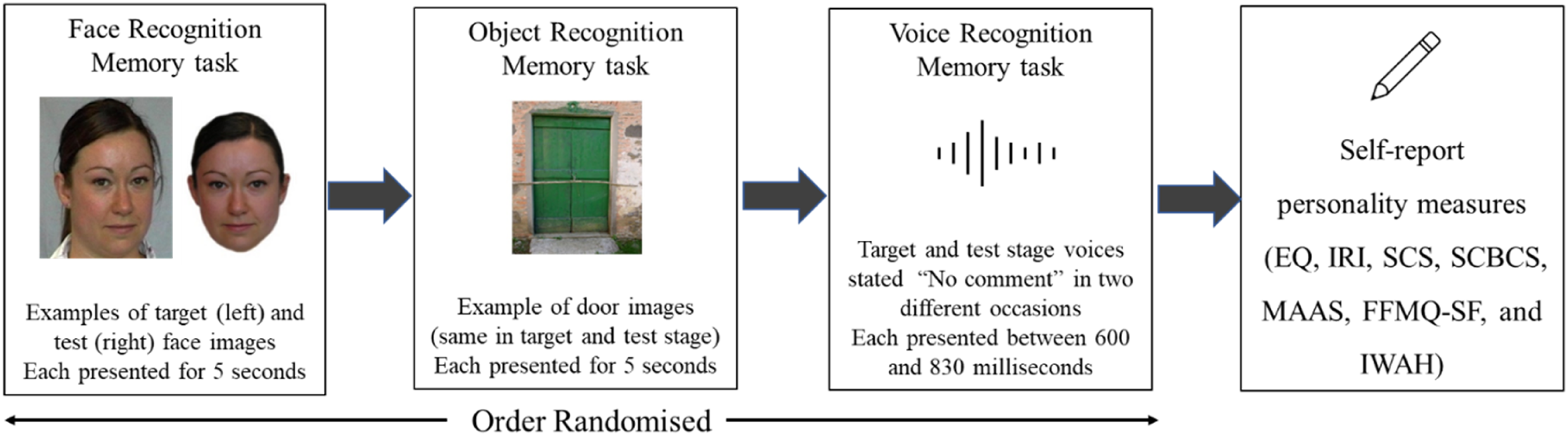
Data Analysis
Recognition Memory Performance
Responses on the recognition memory (RM) tasks were categorised as hits (studied stimulus correctly identified as ‘old’), correct rejections (unstudied stimulus correctly identified as ‘new’), misses (studied stimulus incorrectly called ‘new’) and false alarms (unstudied stimulus incorrectly called ‘old’).
We also calculated a sensitivity index (d prime; d’) to identify participants’ ability to discriminate between old and new stimuli and a response bias (c) to explore participants’ bias towards either ‘old’ or ‘new’ responses. D prime is calculated as the difference between the z score of the hit rate proportion [i.e., hits/(hits + misses)] from the z score of the false alarm rate proportion [i.e., false alarms/(false alarms + correct rejections)], with higher positive values indicating better performance. C is calculated by averaging the hit rate z score and the false alarm rate z score, and multiplying the result by negative one (Macmillan, 1993). Corrections were applied to hit and false alarm rates of 0 and 1; for hit rates, 0.5 was added to the number of hits before being divided by the sum of hits and misses, and, for false alarms, the sum of false alarms and correct rejections were divided by 0.5 (Macmillan & Creelman, 1991). Positive c values correspond to a conservative response bias (i.e., tendency for participants to respond ‘new’), whereas negative c values correspond to a liberal response bias (i.e., tendency for participants to respond ‘old’; Macmillan & Creelman, 1991).
Factor Analysis
An exploratory factor analysis was conducted on IBM SPSS version 23. An initial inspection of the dataset identified no missing data. Next, multivariate normality was assessed through Mahalanobis Distances, where observations with extreme standardized or combinations of scores (i.e., p < .001) were considered univariate or multivariate outliers (Tabachnick & Fidell, 2007). Univariate and multivariate outliers were evaluated for removal or retention in the analysis; we identified 1 outlier case (scoring at p = .0007). Due to the proximity of this outlier case to the cut-off value of p < .001, we tested the impact of this outlier on the analysis, running the exploratory factor analysis with and without the case included. No difference in results was identified. Consequently, the outlier was retained as it did not impact the outcome (Tabachnick et al., 2013).
Moreover, multicollinearity was assessed with reference to correlations (Table 2) and Variance Inflation Factor (VIF; i.e., identifying correlations between one predictor and the other predictors in a regression model) between the variables, conducted in IBM SPSS version 23. An examination of correlations between the measures revealed that correlations between these variables did not exceed r = 0.80, which is considered to meet assumptions of multicollinearity (Katz, 2006; Ho et al., 2009; O’Brien, 2007; Elith et al., 2010; Field, 2013; Wang et al., 2018). As seen in Table 2, two measures showed correlations above r = .70; however, due to the overall number of variables, these were not considered to have a strong impact on multicollinearity (Clough et al., 2019). Furthermore, using a VIF value of .50 or higher is an indicator of high multicollinearity (Menard, 1995; Hair et al., 2010), we examined the VIF values between all variables, revealing all VIF rates to be below .31. Therefore, multicollinearity was not considered to be problematic (Tabachnick et al., 2013).
Structural Equation Modelling
To examine our hypotheses that the factors identified in the factor analysis would predict face recognition memory performance, we performed SEM analyses in IBM AMOS 23, using the maximum likelihood estimation method (Little et al., 2006; Tomarken & Waller, 2005). Through the factor analysis, we asserted that outlier rates (through Mahalanobis distances) and multicollinearity (through variable correlations and VIF) did not impact the analyses. Then, we estimated the measurement model (i.e., confirmatory factor analysis relating measured variables to latent variables) to corroborate that the measured variables effectively represented the latent variables. One factor loading for each latent construct was fixed to 1 and the paths among the latent variables were allowed to correlate. Based on McDonald and Ho (2002), the most commonly reported indices for employing SEM are the χ2 (Chi-square statistic), CFI (Comparative Fit index) and RMSEA (Root Mean Square Error of Approximation). A combination of findings indicating a statistically non-significant chi-square value, a CFI value equal or greater of .90, and an RMSEA value lower than .08 are representative of a good fit (Kline, 2010; Ullman, 2001). Next, the structural model (i.e., relating the latent variables to second-order variables) examined the relation between the latent variables and second-order measured variables (i.e., recognition memory performance measures).
Results
Recognition Memory Performance
Descriptive Statistics
Descriptive statistics of the face, object and voice recognition memory task measures are reported in Table 1. Overall recognition performance (d’) was not equal across the three recognition memory tasks; all paired sample t-tests were statistically significant (p < .001).
Descriptive statistics of performance measures for the face recognition memory task (FRM; 15 old, 15 new trials), the object recognition memory task (ORM; 20 old, 20 new trials) and the voice recognition memory task (VRM; 10 old, 10 new trials).
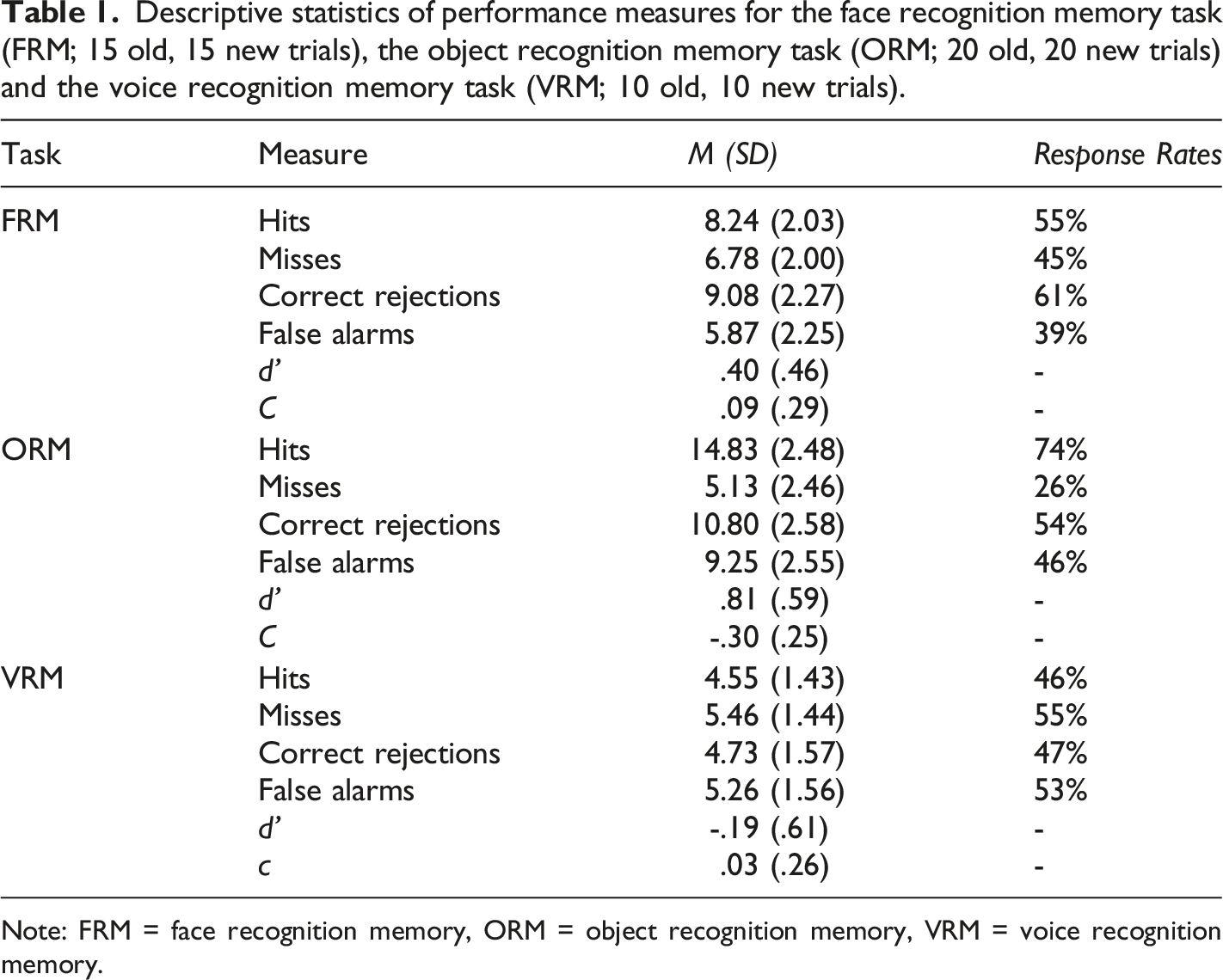
Note: FRM = face recognition memory, ORM = object recognition memory, VRM = voice recognition memory.
Personality Measures
Descriptive Statistics and Correlations
Pearson’s product-moment correlations (r) among the personality variables are presented in Table 2.
Pearson product–moment correlations and descriptive statistics of personality constructs.
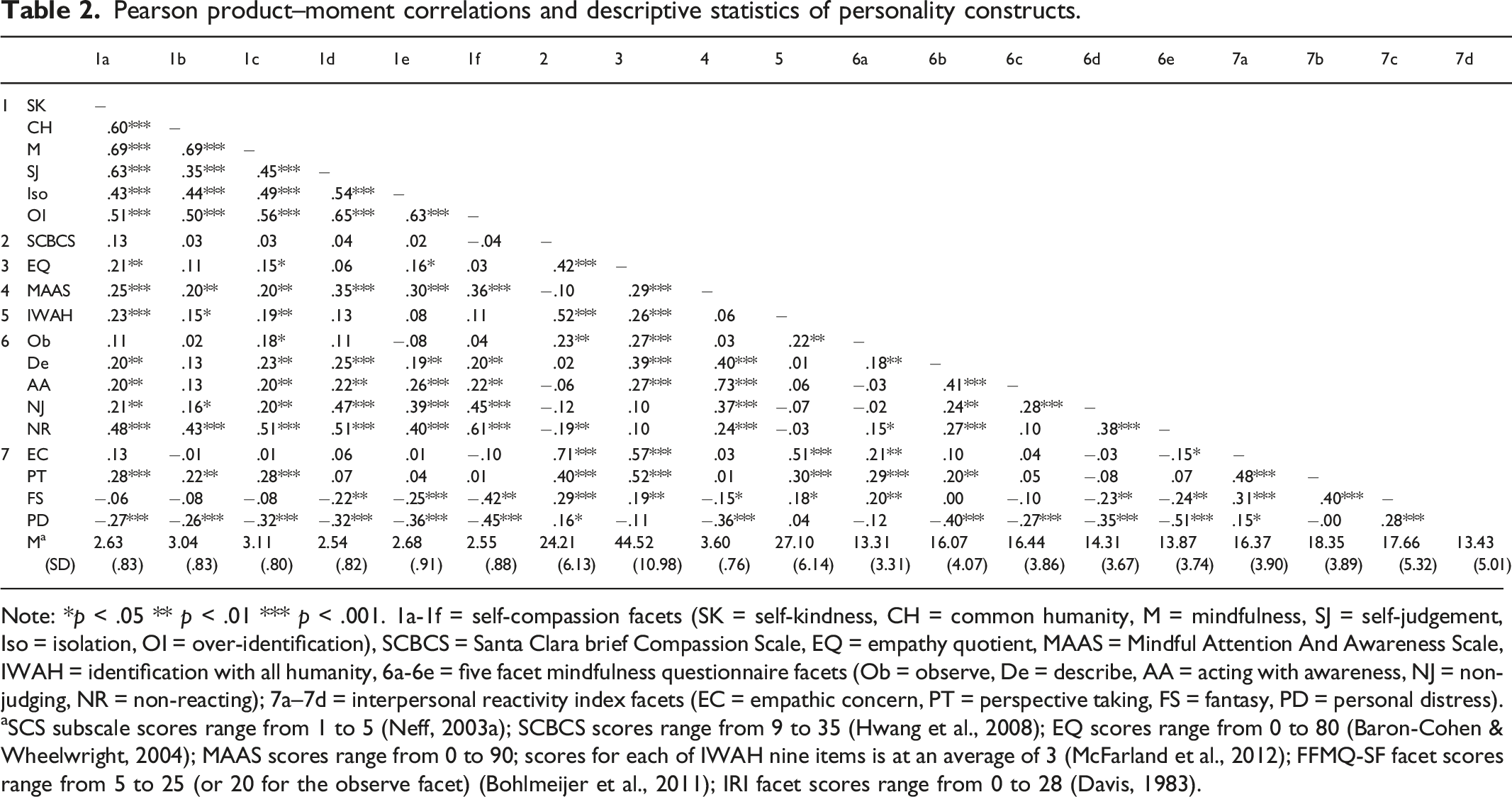
Note: *p < .05 ** p < .01 *** p < .001. 1a-1f = self-compassion facets (SK = self-kindness, CH = common humanity, M = mindfulness, SJ = self-judgement, Iso = isolation, OI = over-identification), SCBCS = Santa Clara brief Compassion Scale, EQ = empathy quotient, MAAS = Mindful Attention And Awareness Scale, IWAH = identification with all humanity, 6a-6e = five facet mindfulness questionnaire facets (Ob = observe, De = describe, AA = acting with awareness, NJ = non-judging, NR = non-reacting); 7a–7d = interpersonal reactivity index facets (EC = empathic concern, PT = perspective taking, FS = fantasy, PD = personal distress).
aSCS subscale scores range from 1 to 5 (Neff, 2003a); SCBCS scores range from 9 to 35 (Hwang et al., 2008); EQ scores range from 0 to 80 (Baron-Cohen & Wheelwright, 2004); MAAS scores range from 0 to 90; scores for each of IWAH nine items is at an average of 3 (McFarland et al., 2012); FFMQ-SF facet scores range from 5 to 25 (or 20 for the observe facet) (Bohlmeijer et al., 2011); IRI facet scores range from 0 to 28 (Davis, 1983).
One-dimensional empathy (measured through the EQ) correlated positively with Compassion for Others (SCBCS) and Identification With All Humanity, the positive facets of multifaceted empathy (Empathic Concern, Perspective Taking and Fantasy), but not the negative empathy concept of Personal Distress, and both measures of mindfulness: MAAS and FFMQ-SF’s facets of Acting with Awareness, Observe and Describe. On average, of the facets of multifaceted empathy (measured though the IRI), Personal Distress negatively related to mindfulness; correlations with the rest of the measures echoed those shown with EQ.
Self-compassion’s facets correlated positively with the mindfulness facet of Non-React and negatively to the empathic notion of Personal Distress but did not correlate with SCBCS. SCBCS correlated positively with IWAH and positive empathic concepts: Empathic Concern, Perspective Taking and Fantasy. MAAS correlated with FFMQ-SF’s Acting with Awareness, Describe, Non-React and Non-Judge, but did not correlate with IWAH. Overall, the pattern of relationships among mindfulness, compassion and empathy were consistent with the research outlined in the introduction.
We further employed the Benjamini and Hochberg (1995) procedure, to minimise the possibility of Type I errors arising due to multiple comparisons (Abdi, 2010; Diz et al., 2011). The procedure accounts for a balance between false positives and false negatives and increases the chances to find true positives (Diz et al., 2011; Glickmann et al., 2014). Similar methodology has been employed in face and attention research (Babaei et al., 2020) and mindfulness research (Strohmaier, 2020; Strohmaier et al., 2020). Using the Benjamini and Hochberg (1995) procedure for multiple comparisons (i.e., for p < .001), the outlined relationships remained significant.
Personality Measures and Recognition Memory
Pearson product–moment correlations (uncorrected) of personality constructs and performance measures for RM.
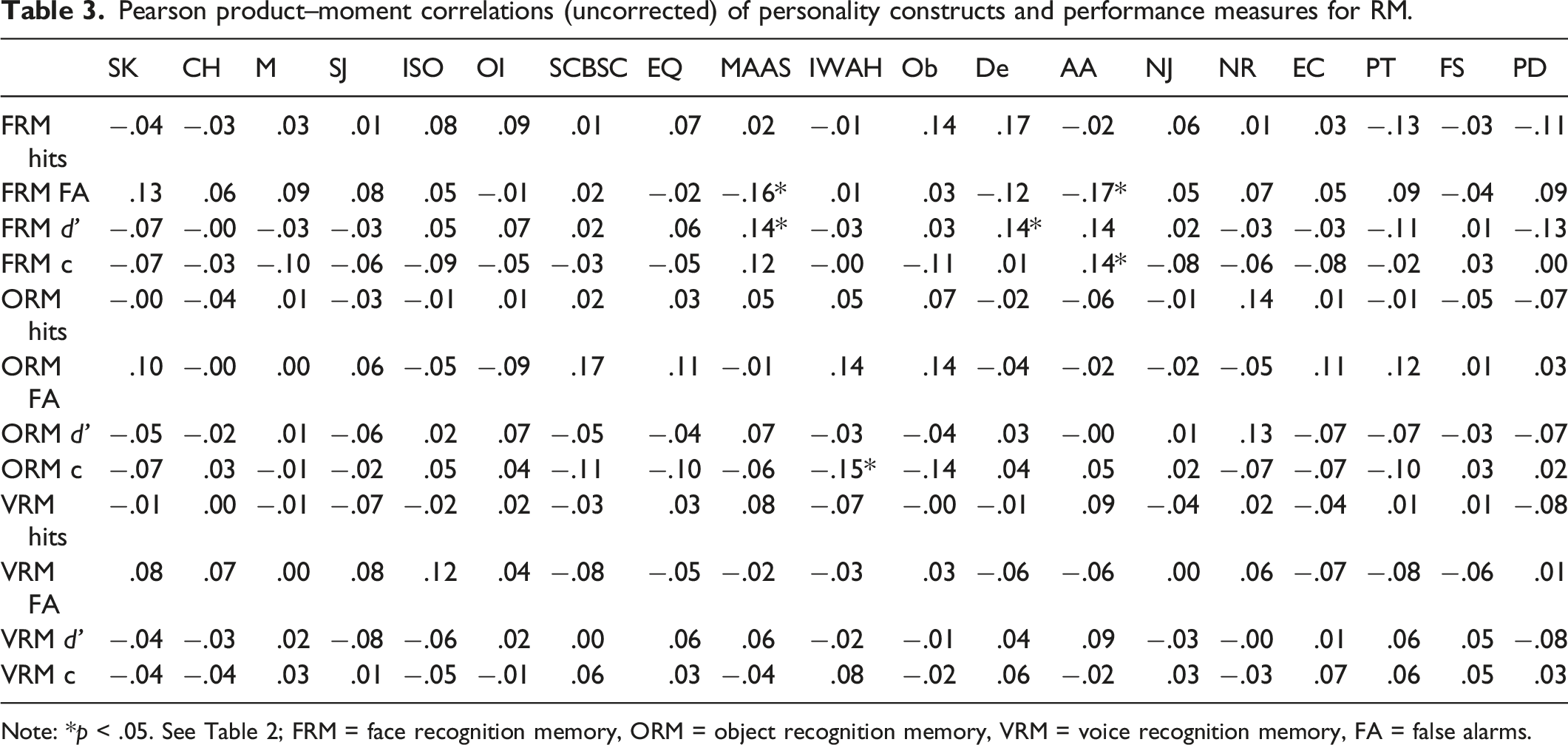
Note: *p < .05. See Table 2; FRM = face recognition memory, ORM = object recognition memory, VRM = voice recognition memory, FA = false alarms.
Overall, face recognition memory performance (FRM d’) positively correlated to mindfulness (as measured by MAAS) and FFMQ-SF’s Describe facet. False alarms in the face recognition memory task negatively related to mindfulness and FFMQ-SF’s Acting with Awareness facet. Moreover, there was positive correlation between FFMQ-SF’s Acting with Awareness facet and participants’ response bias in the face recognition task, indicating that Acting with Awareness related to a conservative response bias (i.e., a tendency to identify faces as ‘new’). Lastly, there was a negative relationship between response bias in the object recognition task and identification with all humanity (IWAH) levels, indicating IWAH was related to a liberal response bias (i.e., a tendency to identify doors as ‘old’). However, correcting for 19 multiple comparisons (between the recognition performance measures and personality constructs) using the Benjamini and Hochberg (1995) procedure, the outlined relationships did not remain significant.
Factor Analysis
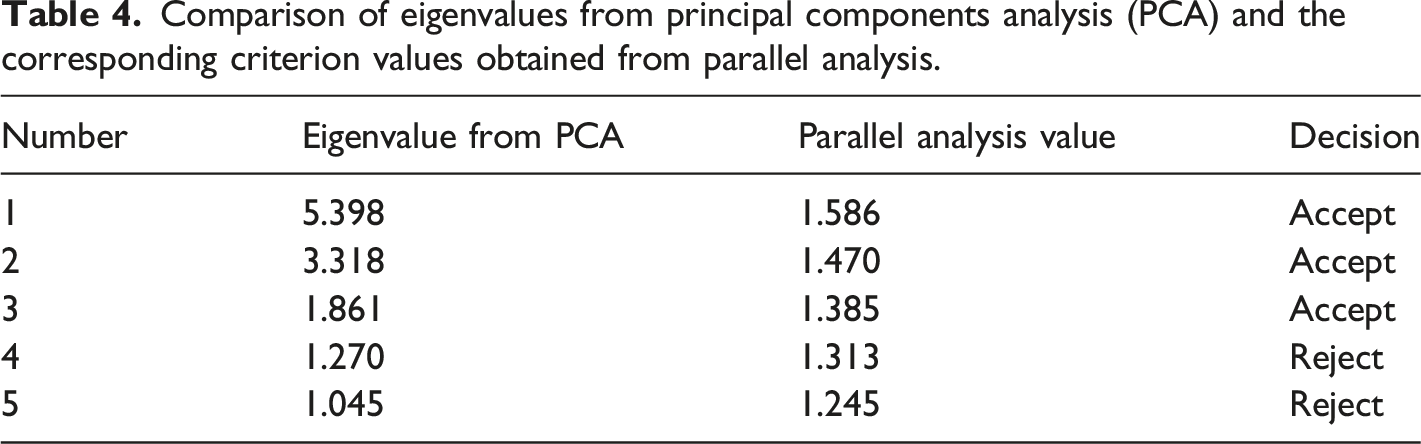
An exploratory factor analysis was conducted on the overall scores of MAAS, IWAH, SCBCS, and EQ and the subscales for the SCS, FFMQ-SF, and the IRI (i.e., excluding the overall scores of these questionnaires), to explore the factor structure of these seven personality measures. The acceptability of the factorial structure and sample was assessed by exploring the Kaiser–Meyer–Olkin (KMO) and the Bartlett’s sphericity test. The Kaiser–Meyer–Olkin measure of sampling adequacy was .82, exceeding the recommended value of .6, and Bartlett’s Test of Sphericity (p < .001) indicated that the assumptions for a factor analysis were met (Hair et al., 2010; Hutcheson & Sofroniou, 1999; Kline, 2011).
Comparison of eigenvalues from principal components analysis (PCA) and the corresponding criterion values obtained from parallel analysis.
Factor loadings for exploratory analysis with oblique rotation of personality measures.
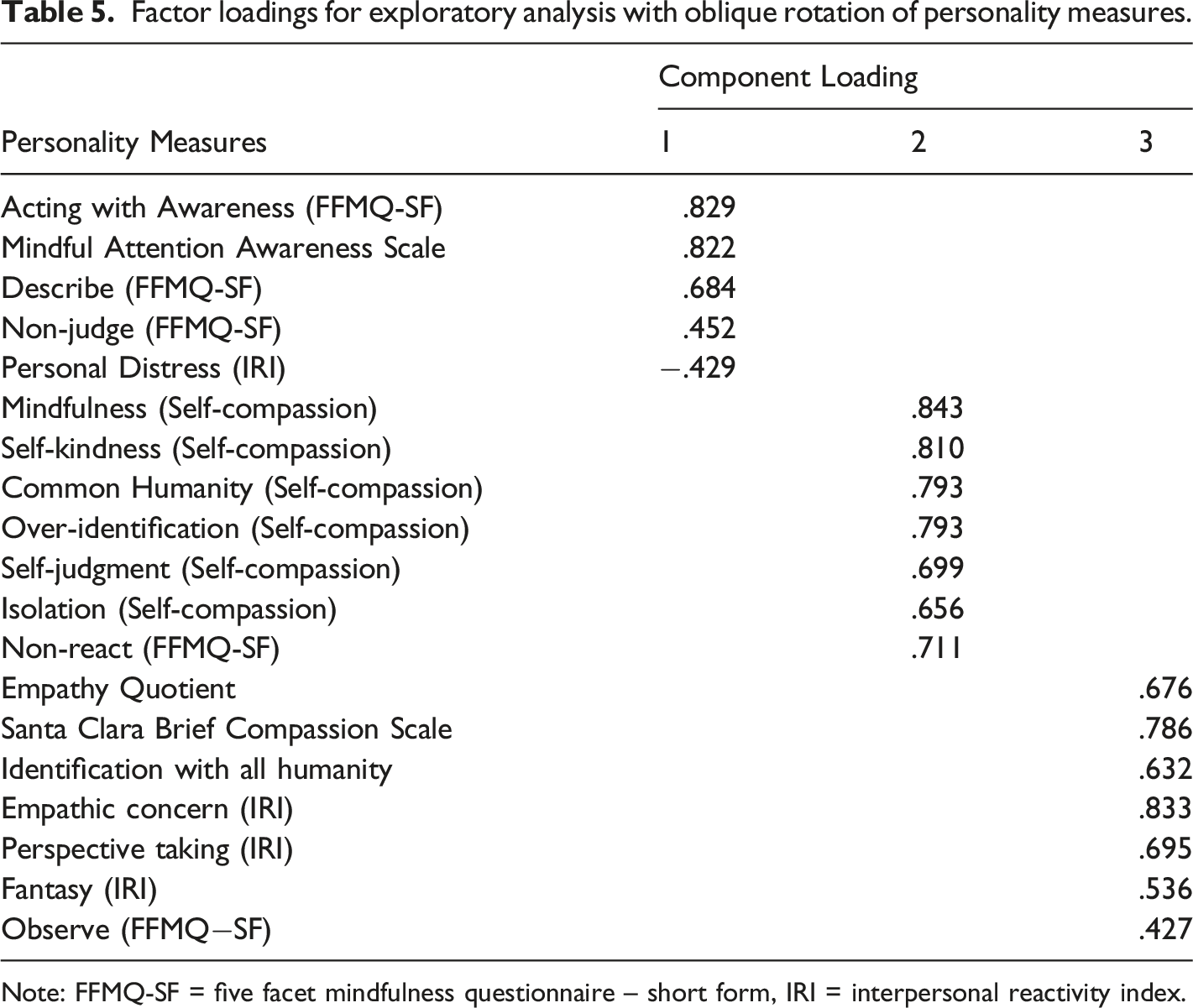
Note: FFMQ-SF = five facet mindfulness questionnaire – short form, IRI = interpersonal reactivity index.
The three component solution explained a total of 55.6% of the variance; all Self-Compassion subscales and the Non-React facet of the FFMQ-SF loaded strongly on Component 1, contributing 28.4% of the variance; EQ, SCBCS, IWAH, IRI’s Empathic Concern, Perspective Taking and Fantasy, and FFMQ’s Observe loaded strongly on Component 2, contributing 17.5% of the variance; MAAS and FFMQ-SF’s Acting with Awareness, Describe and Non-Judge and IRI’s Personal Distress loading strongly on Component 3, contributing 9.8% of the variance. The interpretation of the three components is consistent with previous research and a number of the hypotheses outlined in the introduction.
Structural Equation Modelling
Based on the factor analysis above, and following Comrey and Lee’s (1992) recommendations on factor loadings (i.e., >.71 = excellent, > .63 = very good, > .55 = good, > .45 = fair and >.32 = poor), we retained factors with component loadings in excess of .55 (we retained the Fantasy factor [= .536] due to its proximity to the cut-off value). According to this model, MAAS and FFMQ-SF’s facets of Acting with Awareness and Describe loaded on one latent factor, which we named Attention as it distinguishes attention and awareness experiences of mindfulness from the non-react and non-judge components. All the facets of Self-Compassion, along with FFMQ-SF’s facet of Non-React, loaded on one separate factor that we named Non-reactive Self-compassion. Lastly, EQ, IWAH, SCBCS and IRI’s dimensions of Empathic Concern, Perspective Taking and Fantasy loaded on one factor, which we named Compassionate Empathy. A confirmatory factor analysis was conducted to determine whether the observed mindfulness, compassion and empathy variables were indeed indicators of their corresponding latent variables. Indeed, all loadings on latent factors were statistically significant (p < .001), and most approached or exceeded β = 0.70. Regarding latent factor correlations, only Attention positively related to Non-reactive Self-compassion (β = .40, p < .001). Figure 2 presents the results of the SEM analysis, using maximum likelihood estimations.
For the SEM in Figure 2, the results on these indices were as follows: χ2 (101) = 385.48, p < .001; CFI = .807; RMSEA = .119. The χ2 statistic suggested a poor model fit; however, this test is highly sensitive to sample sizes such that it is relatively uncommon in large sample size psychological research to find a non-significant test value (McDonald & Ho, 2002). Nevertheless, the remaining two indices both also suggested a poor fit of the data to the hypothesized model; specifically, as mentioned above, CFI values greater than .90 and RMSEA values of 0.05–0.08 are considered to reflect adequate fit to the data (McDonald & Ho, 2002; Bollen & Long, 1993).
Given the hypothesised model was suggested to poorly fit the data, we examined the modification indices suggested by AMOS (i.e., correlations between variables) to explore the possibility to improve the model fit. According to Hooper et al. (2008), modification indices should be approached with caution; however, Hooper et al. (2008) posit that error variables can be allowed to correlate in order to improve the model fit, only if the correlated error terms are kept within the same latent variable and are supported theoretically. Therefore, we applied eight of the modification indices (i.e., correlations between error variables) suggested by AMOS, as shown in Figure 3. We retained correlations between error variables of the same latent construct; specifically, we allowed four error correlations between facets of the self-compassion scale and one error correlation between facets of the IRI scale, and three error correlations either between empathy or compassion-based concepts. Structural model (confirmatory factor analysis) depicting how mindfulness, empathy and compassion measures predict the different latent factors. Rectangles contain observed variables and ovals contain latent variables. Coefficients appearing alongside arrowheads are standardized path coefficients.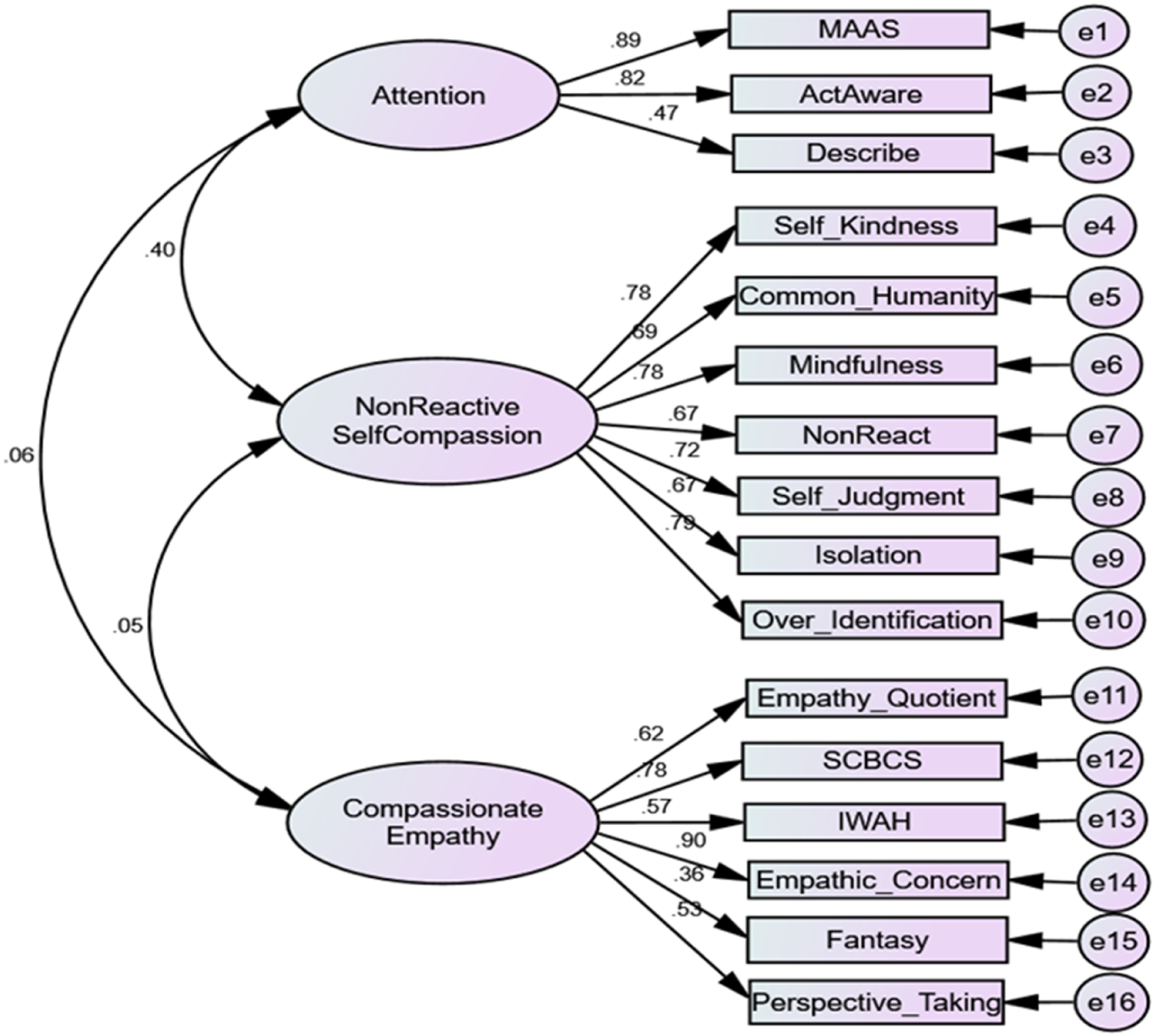
These eight modification indices, outlined in Figure 3, improved the fit of the data to the hypothesised model; χ2 (93) = 228.10, p < .001; CFI = .908; RMSEA = .085. As in Figure 2, the χ2 statistic suggested a poor model fit. However, the CFI value increased beyond the suggested .90 and the RMSEA value was marginally close to the upper limit of 0.08; both these values suggested an acceptable fit of the model to the data (McDonald & Ho, 2002; Bollen & Long, 1993). Structural model with suggested modification indices.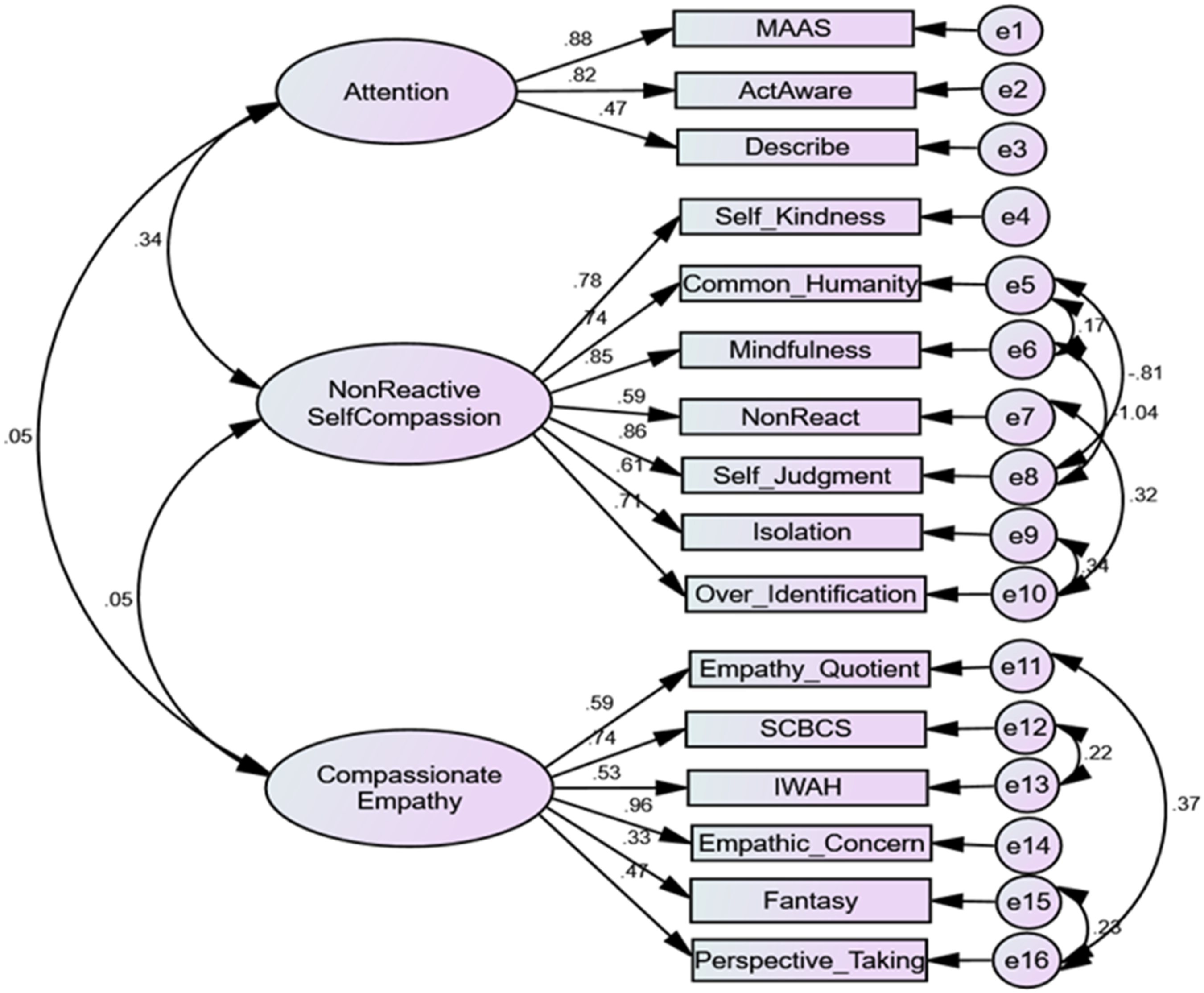
The CFA model in Figure 3 was then tested with three separate second-order (nonlinear) observed factors – face recognition memory performance (FRM d’), object recognition memory performance (ORM d’) and voice recognition memory performance (VRM d’). The model in Figure 4 showed good fit to the data, χ2 (135) = 270.25, p < .001; CFI = .909; RMSEA = .071. According to this model, Attention positively predicted overall recognition memory performance for faces (β = .21, p = .011). As second-order observed factors, object recognition memory performance (ORM d’) or voice recognition memory performance (VRM d’) did not yield any significant results. Structural model depicting overall performance in the recognition memory tasks (Faces: FRM d’; Objects: ORM d’; Voices: VRM d’) as second−order observed factors. Values in bold indicate significant regression results.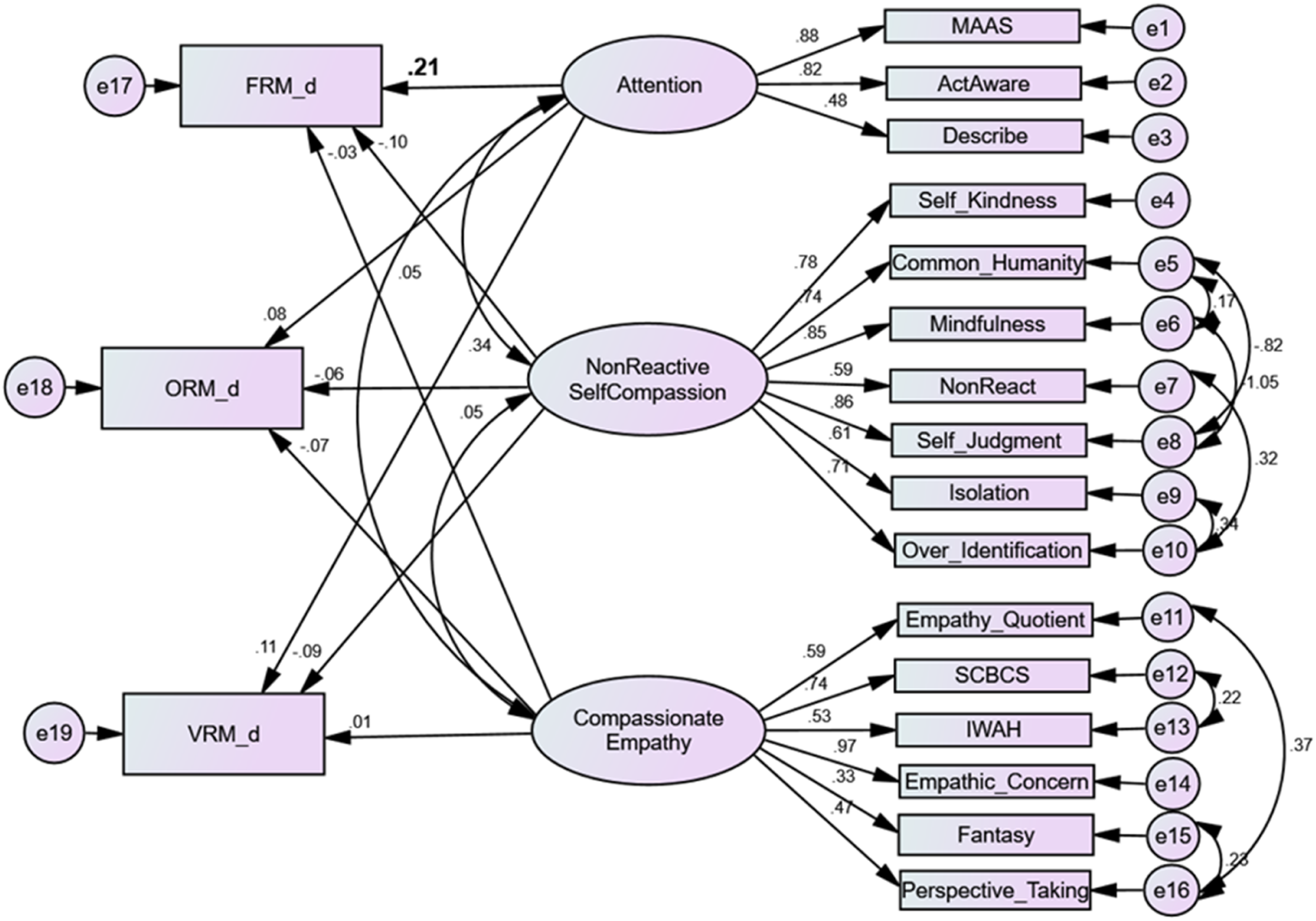
We further tested the model in Figure 4 by replacing overall performance in the recognition memory tasks (d’) with Hits, False Alarms and response bias (c) as second-order observed factors. Testing the model with Hits and c as second-order observed factors did not yield any significant results. However, testing the model with False Alarms as second-order observed factors, shown in Figure 5, suggested a good fit to the data, χ2 (135) = 279.44, p < .001; CFI = .903; RMSEA = .073. According to this model, Attention negatively predicted False Alarms in the face recognition memory task (β = −.27, p < .001), suggesting that the False Alarms results, rather than Hits results, drive the reported changes in overall face recognition performance. Finally, Non-reactive Self-compassion positively predicted Face Recognition False Alarms (β = .19, p = .012). Structural model depicting Face (FRM_FA), Object (ORM_FA) and Voice (VRM_FA) Recognition task False Alarm rates as second−order observed factors. Values in bold indicate significant regression results.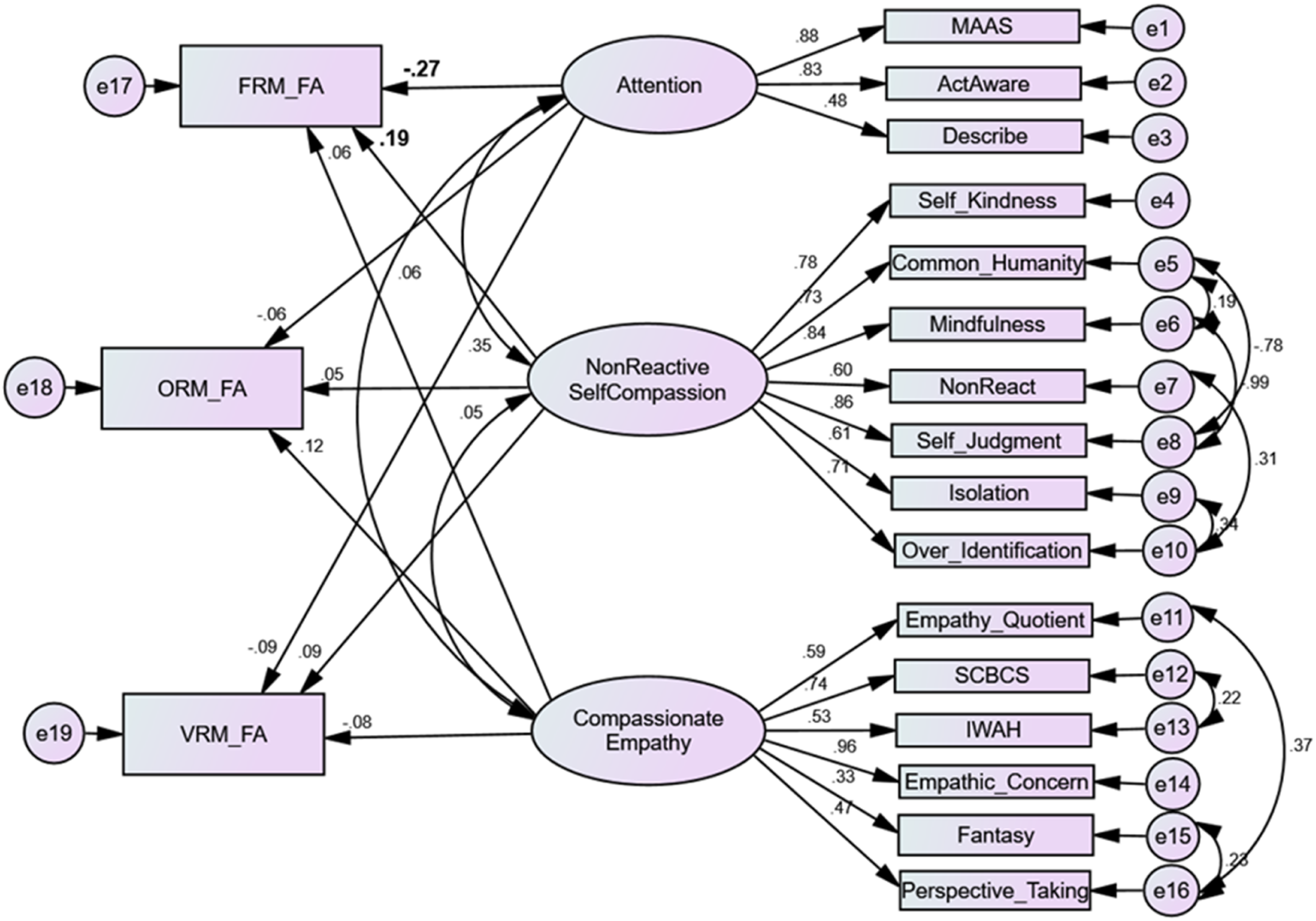
Discussion
In the present study, trait mindfulness, as measured by MAAS and Acting with Awareness and Describe (derived from the FFMQ-SF) loaded on one latent construct, which we named Attention to reflect attention- and awareness-based mindfulness facets rather than non-reactive and non-judgemental stances. Supporting our hypothesis, Attention positively predicted overall face recognition performance and negatively predicted false alarms. All Self-Compassion facets grouped together with FFMQ-SF’s Non-React facet to form a latent factor we named Non-reactive Self-compassion, which positively predicted false alarms. Lastly, confirming our hypothesis, EQ, IWAH, compassion for others (i.e., SCBCS), and IRI’s Empathic Concern, Perspective Taking and Fantasy loaded on one latent construct, which we named Compassionate Empathy. Contrary to Bate et al. (2010), but confirming Giannou et al. (2020), Compassionate Empathy did not predict face recognition memory performance.
Attention, as a latent construct, was defined by MAAS and FFMQ-SF’s Acting with Awareness and Describe facets. According to Brown and Ryan (2003), mindfulness (i.e., MAAS) is a one-dimensional notion of being attentive and aware of what is taking place in the present moment, while Baer et al.’s (2006) FFMQ-SF facet of Acting with Awareness is described as attending to one’s actions rather than being on an automatic pilot; consequently, these two comparable notions linked to describe Attention as a superordinate concept. FFMQ-SF’s Describe facet offers to the depiction of this latent concept, as it involves being able to communicate internal and external experiences (Baer et al., 2006), perhaps as an outcome of being attentive to the present moment. This shared idea of present moment awareness and attention was a significant predictor of better overall unfamiliar face recognition performance and a decline in false alarms, supporting our predictions and replicating previous findings with trait mindfulness (Giannou et al., 2020) and mindfulness training (albeit with word stimuli; Lloyd et al., 2016), but contradicting Brown et al. (2016), who showed the state variant of the MAAS measure (Brown & Ryan, 2003) but not the trait MAAS or Acting with Awareness to relate to object recognition memory performance.
Interestingly, the present findings and the findings in Giannou et al. (2020) indicate the Describe, but not the Observe facet, to add to the description of the Attention latent concept. While the items in the Describe facet summarise the experience of finding the words to express internal experiences, the items in the Observe facet focus on noticing external stimuli, with Baer et al. (2006) further discussing the Observe skill as being a clearer quality of mindfulness with prolonged exposure to mindfulness meditation, offering a potential explanation as to why the Observe facet was not descriptive of the Attention latent construct.
The Non-reactive Self-compassion latent construct was defined by all Self-Compassion facets grouped together, and the FFMQ-SF facet of Non-React, which denotes a non-reactive stance towards inner experiences and is also characteristic of self-compassion (Neff, 2003b). Baer et al. (2006) have previously reported positive correlations between self-compassion and all five facets of mindfulness, with the strongest association found between self-compassion and the non-react facet, supporting the present findings. In contrast, Giannou et al. (2020) showed self-compassion and its facets of Common Humanity’ and Mindfulness to relate to better face recognition performance, while, similar to the present findings, the Non-React facet did not relate to face recognition. The Non-Reactive Self-Compassion latent construct being a positive predictor of false alarms in the face recognition task is a novel and unexpected finding and is perhaps driven by the inclusion of the Non-React facet. Non-reactivity implies resisting automatic judgment and reactivity of inner experiences (Baer et al., 2006), perhaps affecting how individuals responded to their judgement of faces as previously seen or unseen.
Therefore, the present findings indicate better face recognition memory ability to be related to attention- and awareness-relevant mindfulness concepts (see also Brown et al., 2016; Giannou et al., 2020) rather than the mindfulness facets of non-judge and non-react, which have been related to unbiased judgements between ‘old’ and ‘new’ word stimuli (Wilson et al., 2015; Rosenstreich, 2016). The Non-Reactive Self-Compassion, defined by a non-reactive stance, predicted an increase in false alarms, confirming past findings (e.g., Wilson et al., 2015; Rosenstreich & Ruderman, 2016). While adopting a non-judgemental and non-reactive stance is key in sustaining focus and accepting present experiences as they are (e.g., Baer et al., 2006), these qualities appear to interfere with decision making processes. Therefore, further research exploring the relationship between mindfulness and face recognition should step towards a more simplistic description and theory of mindfulness (e.g., Brown & Ryan, 2003), not inclusive of non-judgment (or non-reactivity and self-compassion) and explore mindful attention in isolation.
The Compassionate Empathy latent construct, as predicted, was described by EQ, IRI’s factors of empathic concern, perspective taking and fantasy, compassion (through the SCBCS) and IWAH. Contrary to Bate et al. (2010), but supporting Giannou et al. (2020), Compassionate Empathy did not predict face recognition performance. Personal distress is the only IRI factor not encompassed in Compassionate Empathy, perhaps as the concept is indicative of a negative internalisation of experiences compared to empathic concern, perspective taking and fantasy, which reflect other-oriented, positive approaches (see Davis, 1983). This study offers support to models distinguishing between positive and negative empathy notions (Morelli et al., 2015; Andreychik & Migliaccio, 2015) and associating conceptualisations of empathy with compassion (e.g., Singer & Klimecki, 2014; Bloom, 2017) by being the first study to bring the respective measures together to show how their underlying concepts intertwine. Rather than using the term empathy to describe a variety of different concepts, theorists have long been suggesting theory and research should go beyond a unifying term of empathy (e.g., Batson, 2009; Decety & Cowell, 2014; Bloom, 2017); the present findings corroborate such a proposition.
Finally, we did not support previous findings showing a relationship between Common Humanity and Identification With All Humanity and unfamiliar face recognition memory (see Giannou et al., 2020), and this absence of a relationship extended to object and voice recognition memory. In fact, none of the individual traits outlined above associated to object or voice recognition, corroborating previous findings showing social factors to relate to face recognition memory abilities, but not object recognition memory abilities (Li et al., 2010; Davis et al., 2011); such findings further oppose research showing a positive association between trait mindfulness and object recognition (Brown et al., 2016). However, such outcome should be interpreted with caution as the lack of association could be attributed to relative task difficulty. We reported significant within participant differences in all recognition tasks; average performance in the object task was higher than face recognition performance, with performance in the voice task being the poorest of the three. We propose one reason for the door task being on average easier compared to the face and voice tasks, was the study and test images being identical. Faces and voice stimuli in the study and test stages comprised two different versions of the same identity, as a result making recognising more challenging than in the door task. These task performance variations reflect inevitable processing differences between faces, objects, and voices (e.g., Yarmey, 1995; Duchaine & Nakayama, 2005). Face cognition has been suggested to be a highly specific cognitive ability (see Wilhelm et al., 2010; Wilmer et al., 2010; Hildebrandt et al., 2011; Dennett et al., 2012; Wilmer, 2017); hence, the present findings support mindfulness being related to face recognition but not object recognition (see also Li et al., 2010; Davis et al., 2011). In relation to voice recognition, performance in auditory tasks has been found to be inferior to visual memory performance (e.g., Cohen et al., 2009; Olsson et al., 1998) due to voices being relatively weak in prompting recognition (e.g., Barsics & Brédart, 2011; Olsson et al., 1998). Indeed, overall performance in the present voice task was substantially lower than the face and door task, also signifying the difficulty of the voice task and indicating the findings possibly reflect task difficulty. Thus, future research is essential to identify whether mindfulness relates to recognition of social stimuli in general or whether the association is specific to face recognition ability.
Wilhelm et al. (2007) and Wilhelm et al. (2010) are examples of research investigating individual differences in face recognition; compared to the present study, Wilhelm and colleagues employed a variety of face memory and face perception indices (e.g., accuracy and speed) to produce a structural equation model indicating the individual variability of face recognition performance. Future research should attempt to extend the present findings by similarly employing a variety of face cognition measures, including accuracy and response time. Moreover, a future potential structural equation model could include a social recognition memory latent variable (employing accuracy and speed performance measures in recognition performance for social stimuli), and a non-social recognition memory latent variable (employing accuracy and speed recognition performance for non-social stimuli); this model could explore if the latent variables shown in Figure 2 could predict social or non-social recognition memory.
The present study employed self-report trait measures to investigate individual differences in face recognition memory ability. Although self-report explorations suggested these constructs play a role in unfamiliar face recognition memory (see Giannou et al., 2020), common method variance (i.e., ‘variance that is attributable to the measurement method rather than to the constructs the measures represent’; Podsakoff et al., 2003; p. 879) may have impacted the outcome. Further research could attempt to replicate these findings by comparing the face recognition memory ability of experienced mindfulness and loving-kindness (i.e., compassion) meditators and meditation-naïve individuals. Meditation practices train individuals to develop a trait and state of mindfulness and compassion (e.g., Kristeller & Johnson, 2005; Baer et al., 2008; Carmody & Baer, 2008; Hofmann et al., 2011), offering a unique perspective on the effects of mindfulness on face recognition memory. Moreover, future research utilising experienced meditators would also address the debate on whether self-reported mindfulness measures efficiently quantify mindfulness (e.g., Grossman, 2011; Grossman & Van Dam, 2011).
Furthermore, in the present study, participants completed the recognition memory tasks in groups. Research has linked the presence of observers to poorer performance in cognitive tasks (Eastvold et al., 2012), whereas social settings have been found to have a negative influence on recall and recognition, due to others serving as distractors (Herrewijn & Poels, 2015); these findings suggest that group testing may have adversely affected recognition memory performance. Future research aiming to replicate our findings should test each participant individually, to ensure the presence of others did not interfere with recognition performance.
Caution should also be taken when considering the theoretical and statistical overlap between FFMQ-SF’s Acting with Awareness facet and the MAAS measure; the FFMQ-SF (Baer et al., 2006) was developed by merging the overlapping factors of single factor mindfulness questionnaires, with Acting with Awareness strongly representing the MAAS measure, potentially leading to implications with multicollinearity. Future research aiming to explore the impact of mindfulness on face recognition could utilise the state MAAS questionnaire (Brown & Ryan, 2003), to guarantee separation of the two variables.
In conclusion, this is the first study to simultaneously administer measures of empathy, compassion and mindfulness to examine their interconnectedness in describing distinct latent concepts and investigate whether these concepts predict face and non-face recognition ability. Validating previous research, our results suggest mindfulness-related constructs, as latent notions of attention, to positively predict face recognition memory ability and negatively predict false alarms. Positive empathy and compassion concepts collectively unified to a latent form of these affective concepts, resonating with long standing discussions around the essential reconceptualization of empathy and the link between empathy and compassion. Such a compassion-related latent concept did not predict face recognition, validating previous research. Self-compassion facets and the non-reacting characteristic of mindfulness combined to describe a latent concept, which positively predicted false alarms. Finally, our results show no link between the measured traits and voice and door recognition; although further research is necessary to address relevant task difficulty issues, our findings suggest the reported effects to be face-specific. Collectively, the present research provides sufficient justification to further examine the potential for mindfulness-based practices to support the face recognition process.
Footnotes
Declaration of Conflicting Interests
The author(s) declared no potential conflicts of interest with respect to the research, authorship, and/or publication of this article.
Funding
The author(s) received no financial support for the research, authorship, and/or publication of this article.
