




Abstract
This paper provides a framework for understanding the emotional and behavioral responses of college and university students during the COVID-19 pandemic. It builds on the Substance Abuse and Mental Health Services Administration (SAMHSA) Phases of Disaster Model and Maslow’s Hierarchy of Needs. Additionally, we conceptualize a new phase in the Phases of Disaster Model, which we refer to as the “Sandbar Phase,” to address the unique factors of COVID-19 for college and university students. For each phase, we discuss the expected timeline and the associated emotional reactions, behaviors, and applications of Maslow’s Hierarchy of Needs during COVID-19 for college and university students. Our proposed model aims to reveal short- and long-term effects of COVID-19 on the mental health of college and university students and be a resource in the development of effective mitigation efforts to diminish any psychological deficits as the result of future disasters and/or traumatic events.
Keywords
Today’s college students are known as the “anxious generation” with the increased use of social media and awareness about mental health (Active Minds, 2020). Sadly, 39% of students (i.e., 2 out of 5) in college experience a significant mental health issue and only 28% of those youth with a major depressive episode receive treatment (Active Minds, 2020). Suicide is the 2nd leading cause of death among students nationally (Active Minds, 2020; Centers for Disease Control, 2020). With the current impact of COVID-19, the need to address mental health is even more paramount.
The goal of this paper is to provide a framework for understanding the mental health and emotional responses of college and university students during this unprecedented pandemic. We focus on the specific experiences of students as part of the academic community in order to provide greater understanding, useful insight and practical guidance to college and universities about how their academic community members are personally, academically, and professionally experiencing the impacts of COVID-19.
Our model builds upon the Substance Abuse and Mental Health Services Administration Phases of Disaster Model (DeWolfe, 2000; SAMHSA, 2020) and Maslow’s Hierarchy of Needs (A. H. Maslow, 1943; A. Maslow & Lowery, 1998). The traditional Phases of Disaster Model has been applied to one-time disasters, such as tornadoes, floods, fires, or other community disasters (SAMSHA, 2020). These frameworks were chosen because of their relevance to the observed impact of the pandemic events. The SAMHSA Phases of a Disaster Model provides guidance based on years of disaster response by organizations such as the American Red Cross, and what has been learned about how individuals and communities respond to disasters (SAMSHA, 2020). Similarly, Maslow’s Hierarchy of Needs has been researched for years in community and academic settings and provides a reference point for understanding college and university students’ behaviors and responses experienced during the disaster based on the specific needs that students may be working to meet (A. Maslow & Lowery, 1998; Matthews et al., 2020; Milheim, 2012). Both of these frameworks serve as a starting point and reference for understanding, assessing, and responding to how students and academic communities are navigating their experiences through the COVID-19 pandemic.
We propose a new application of the phases applied to COVID-19 and the emotional and behavioral responses in the context of college and university student experiences. We conceptualize a new phase, which we refer to as the “Sandbar Phase,” to address the unique factors of COVID-19 for college and university students. For each phase of this new model, we discuss the expected timeline and the associated emotional reactions, behaviors, and applications of Maslow’s Hierarchy of Needs during COVID-19. We first begin with a brief overview of Maslow’s Hierarchy of Needs.
Maslow’s hierarchy of needs
Maslow’s Hierarchy of Needs (A. H. Maslow, 1943; A. Maslow & Lowery, 1998), a five-stage theory proposed by Abraham Maslow, posits that people are motivated by five basic categories of needs that include physiological, safety, love and belonging, esteem, and self-actualization, depicted as hierarchical levels within a pyramid. The theory suggests that needs lower in this hierarchical model must be actualized before needs higher up can be addressed. More specifically, the bottom of the pyramid, categorized as our basic needs, includes the physiological needs (food, water, warmth, rest) and safety needs (security, safety). Next, categorized as our psychological needs, are belongingness and love needs (intimate relationships, friends) and esteem needs (prestige and feeling of accomplishment). Finally, at the top of the pyramid, referred to as our self-fulfillment needs, is self-actualization (achieving one’s full potential, including creative ideas). The basic and psychological needs are deficiency needs which must be met before an individual can tend to their self-fulfillment needs. In theory, deficiency needs motivate people’s behavior when they are unmet and the longer they are unmet, the stronger the need becomes. For example, in academic settings, previous research has related Maslow’s Hierarchy of Needs to educational environments, especially in the context of distance and online learning (Milheim, 2012), which has become increasingly prevalent during COVID-19. Matthews et al. (2020) tested Maslow’s Hierarchy during the COVID-19 pandemic by implementing specific interventions in the academic environment to address the unique needs of students on each level, while also demonstrating that the needs of the students operated on multiple levels simultaneously. These needs are particularly relevant during times of a disaster, such as a novel pandemic, because it greatly affects a student’s ability to be successful in the academic setting. Likewise, we are seeing many disparities among our students and those affected by COVID-19, such as racial and socioeconomic disparities affecting their health and well-being and academic success (Vickers, 2020). University and college students can be a particularly vulnerable population for mental health problems due to challenges commonly associated with transitions to adulthood and the frequent economic and material difficulties of this population (Husky et al., 2020). A study assessing stress and anxiety among university students in France during COVID-19 mandatory confinement showed that differences in estimates among university students who relocated versus those who did not suggests that public health crises may magnify inequalities that exist within specific populations, as a function of the individual's financial situation, family resources, or other factors (Husky et al., 2020). These inequalities are risk factors for mental disorder onset and symptom severity (Husky et al., 2020).
Phases of disaster model
The Department of Health and Human Services: Substance Abuse and Mental Health Services Administration phases of disaster model is a longitudinal framework that illustrates the emotional phases of a disaster (DeWolfe, 2000; SAMHSA, 2020). The five phases include Pre-Disaster, Impact, Heroic, Honeymoon, Disillusionment, and Reconstruction. At each phase, there are specific social and behavioral characteristics related to that phase.
Main et al. (2011) examined the relationship of SARS related stressors and coping among Chinese college students’ psychological adjustment during the 2003 Beijing SARS epidemic. Based on their findings, they suggest that university counseling services and effective screening procedures need to be developed to identify students with multiple stressors and those at high risk of developing mental health problems.Intervention efforts targeting coping mechanisms must be adapted to account for the uncontrollability of stressors and cultural preferences for coping. The study findings suggest using a multi-method longitudinal design to assess coping, stressors, and adjustment (Main et al., 2011).
Thus, the SAMHSA Phases of Disaster Model and Maslow’s Hierarchy of Needs can be used to assess the emotional and behavioral variations of college and university students and help provide guidance to colleges and universities in how to offer resources and supports for students during a novel epidemic, or pandemic. It is important to note that in relation to COVID-19, these phases are not expected to be linear, but are likely to fluctuate over time.
Adapting the disaster response model to COVID-19
The following section describes each phase of the Disaster Response as it applies to COVID-19, highlighting similarities, differences, responses, behaviors, and an application of Maslow’s Hierarchy of Needs which can be found in Figure 1.
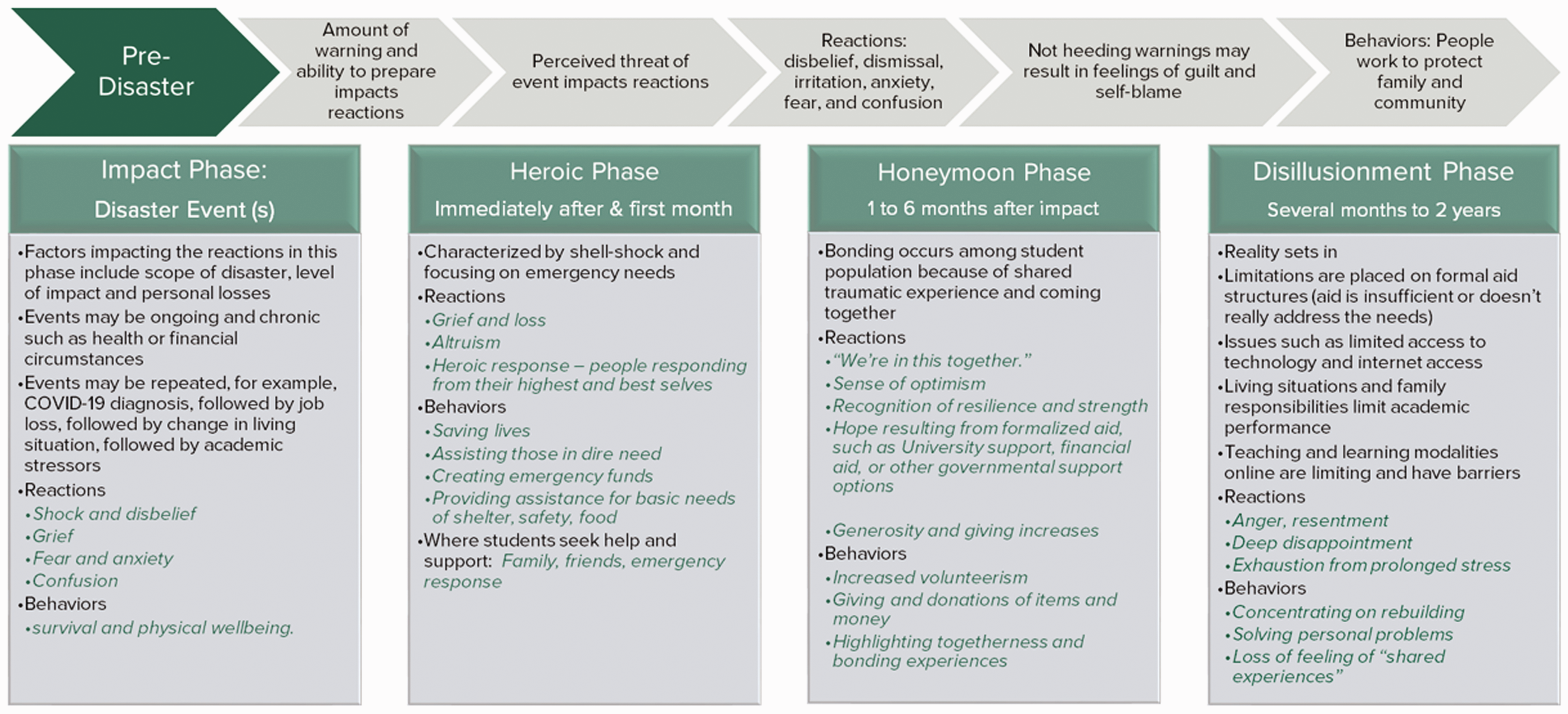
Emotional phases of disaster response model during COVID-19.
Pre-disaster phase
Multiple factors during a Pre-Disaster Phase may impact a college or university student’s emotional response to a disaster. For COVID-19, the global nature of the pandemic allowed many areas of the world to have warning about the illness spreading before students were directly impacted by the disease itself.
The degree to which one can prepare for a disaster is an important factor impacting emotional response. The ability to prepare is influenced by the amount of time one has to prepare and how one perceives the threat of the predicted event impact. Someone’s emotional response may be connected to how well someone is able to take steps toward protecting oneself and one’s family or loved ones against the negative impacts of a disaster. For colleges and universities, and the students in the academic community, preparing for what would become the pandemic was uncharted territory. In February 2020, just weeks before the nation’s colleges and universities sent students home for quarantine, former University of Idaho president Chuck Staben (2020) urged institutions to get ready by beginning to look at public safety, housing and dining plans for infectious conditions, student health and community medical providers management of the contagious illness, and other academic considerations such as exploring plans to move instruction online or address students studying abroad or international students studying in the United States away from their home countries. Universities and colleges, and therefore students did not have much preparation time to respond to a complete lock-down of our nation, which required an essential shut-down of the in-person academic environment, including on-campus residential communities where many students lived. Additionally, students lacked sufficient understanding of the enormity of the impact that would take place when our nation was responding to the COVID-19 pandemic (e.g., closure of schools, businesses, lock-down of communities and campuses) that resulted in immediate and drastic changes in living conditions and locations, ability to access education, jobs, and income sources, to name a few.
The COVID-19 pandemic impact events have not been only one-time occurrences. The events continue to evolve over time and repeat. While the initial impact of COVID-19 was a shock and much more significant than most students were expecting, the chronic nature of the pandemic offers the opportunity to learn how to adapt and respond so that students are better able to prepare for other aspects and impact events of the pandemic. For example, while the spring semester of 2020 was a shocking and abrupt adjustment from in-person to online courses, students were better positioned to be prepared for institutions remaining online, or hybrid (mix of online, remote, and in-person course options), for the subsequent semesters/terms. Students were better able to plan how to manage their academic responsibilities with their family obligations, new living arrangements, and financial challenges. In summary, as the pandemic has progressed, students have become more educated and experienced in how to prepare for anticipated impact events such as how to isolate or quarantine due to COVID-19 exposure or infection and how to plan for graduations or other academic gatherings that could potentially serve as community exposure events.
The common emotional responses of the Phases of Disaster model apply similarly to students during the Pre-Disaster Phase and vary from disbelief, dismissal, irritation, anxiety, fear, and confusion (Figure 1) as students are having to make drastic, unexpected changes without certainty about the upcoming predicted global pandemic event.
Behavior during a Pre-Disaster Phase generally includes efforts to protect the family and the community. As the information spread to colleges and universities regarding the potential impacts of the viral COVID-19 reaching beyond Wuhan, China, the preparation of academic communities and students was similar to that for a winter storm, including plans to remain indoors and shelter in place for an extended period of time. Examples of preparation behaviors for students for COVID-19 included changing one’s traditional campus living, class, study, and work environment and responsibilities to be able to work remotely, acquiring and learning new technologies to be able to work from home, and learning and understanding new policies for remote instruction and study.
During the Pre-Disaster phase, people are most concerned with ensuring that basic needs are met, including food, shelter, safety, and security. The most relevant level of Maslow’s hierarchy of needs that would align with the accompanying behaviors and emotional responses are the physiological needs (food, water, warmth, rest) and safety needs (security, safety). This was reflected by institutions creating policies and making decisions to keep students safe (remote working and online courses).
Impact phase
For disasters, such as tornadoes or earthquakes, the Impact Phase is a one-time, devastating event. Factors impacting the reactions in this phase include the scope of the disaster, including physical destruction of the community, and the range of personal losses. COVID-19 has been distinctly different from common disasters in that
In common disasters, the timeline for the Impact Phase is the Disaster Event itself, which is most commonly a one-time event that may last a few minutes to a few days, but ultimately ends within a short time. Distinct characteristics of the COVID-19 pandemic are unique in the consideration of the timeline of the Impact Phase.
COVID-19 as a global pandemic is occurring in developing phases over an extended amount of time measured. Scientists are continuously developing tests for detection of the virus, conducting trials to develop treatments and vaccines, and testing existing drug regimens in efforts to control the spread of COVID-19 leaving the end point for the pandemic unknown.
The initial impact event and possible future impact events are staggered. For example, the timepoint for when work or school moved from in-person to online/remote was not at a single point in time; rather, it occurred at different times. Staggered impact events cause the collective responses of academic communities, as well as the responses of students individually, to be asynchronous.
It is highly likely that academic communities and students will experience multiple Disaster Events within the COVID-19 pandemic. Disaster events may include leaving school and work (to work remotely), increase in physical and psychological illness, COVID-19 diagnoses for self and/or family, financial events (loss of job, housing, and/or financial security), family caretaking changes (homeschooling, childcare, parental health), and/or encountering barriers to access supports due to economic, health, racial, or social capital disparities (e.g., not being able to pay rent and/or access class due to technology issues). Colleges and universities may feel these repeated impacts on a large scale (loss of tuition, loss of revenue from sporting events) and be forced to cut some parts of their school, such as Furman University ending their baseball team due to financial cuts (Connoly, 2020) or Stanford University terminated 11 varsity sports due to financial cuts (Zhang & Rubin, 2020). The impacts of COVID-19 caused some institutions to go out of business completely (Aspegren, 2021).
The reactions of colleges and universities, and students during the Impact Phase can consist of shock and disbelief, grief over physical and situational losses as well as future losses, fear and anxiety, and confusion (Figure 1). Behaviors that occur during the Impact Phase include those that enable survival and physical well-being. For college and university students, they had to adapt and comply with the academic institution mandates that focused on ensuring that social distancing is possible for the entire campus community, making decisions to move quickly to provide classes online, and allowing all services to be delivered remotely. During this phase, students had to move back home, identify internal and external resources, acquire internet access, address additional barriers to technology, seek new jobs and/or secure their current job, locate new food sources, and determine how to transition to online courses they must complete remotely instead of on-campus and in-person. While students were adapting to the vast changes in their academic instruction, they were also witnessing and being impacted by faculty who were simultaneously learning the new technologies, policies and procedures as well as transitioning their own lives to all of the sudden changes. The shift to remote and online classes has shown to negatively impact the mental wellbeing of students as they fear they are losing a year of academics in the wake of COVID-19 changes (Hasan & Bao, 2020). During the Impact Phase, the most prominent levels of Maslow, for reactions and behaviors, are the physiological and safety needs of individuals.
Heroic phase
A shell-shocked community focusing on emergency needs characterizes the Heroic Phase. During COVID-19, the Heroic Phase included focus on the acquisition of sufficient medical equipment and personal protective equipment (e.g., masks, gloves), and college and university leadership promoting campaigns to “flatten the curve” of impact by educating, encouraging, and ultimately creating enforceable policies to support social distancing, masking, and other public health behaviors. To this point, just one month after the classification of COVID-19 as a pandemic, Greene (2020) recognized the ability of institutions to move from brick and mortar classes and instruction to completely online in a period of days, describing it as heroic.
Reactions during this phase commonly include grief and loss, altruism, and heroic responses where people are responding from the highest versions of themselves (Figure 1). On the one hand, as the timeline of the pandemic extended, losses continued to mount, and often grief was compounded and became more complicated. Further, health disparities became more pronounced (Centers for Disease Control, 2020). On the other hand, as individuals are able to see that their heroic actions and contributions and/or the contributions of others are helping individuals and their community, their sense of hope was often restored.
Behaviors during this phase generally include saving lives and assisting those in dire need. Universities and colleges may be focused on promoting the public health messages of social distancing and addressing the complex needs of their student body. During this phase, students are seeking a sense of safety and security, finding new jobs and sources of income, adjusting to a new living environment after moving away from college, and redefining their research and courses of study. Additionally, students are adjusting to the learning curves of faculty and staff who are quickly converting in-person courses to online education and converting all of the essential support services and co-curricular experiences to a virtual environment to ensure students can remain engaged and connected to the institution. At our university, examples of responses during the Heroic Phase include quickly establishing emergency funds for students and staff to apply for emergency grants, converting on-campus residence hall facilities to house healthcare workers, allowing healthcare workers to use campus recreation showers and facilities, and student health employees converting their service structures to be able to provide continued medical and counseling supports to students, even if students were working remotely.
During the Heroic Phase, responders are focused on the emergency needs of those impacted, particularly those who may be at highest risk, which aligns with the physiological, safety and security needs of Maslow’s hierarchy. The longer individuals are unable to have their basic physiological, safety, and security needs met, the more desperate people may become. Also, once some of the basic needs are met, psychological needs may begin to emerge, including the impact of the sudden changes everyone has experienced.
Honeymoon phase
During the Honeymoon Phase following common disasters, communities and individuals experience a sense of bonding as a result of the shared, traumatic experience that occurred. There is a great sense of coming together and a recognition of shared humanity.
For a common disaster, the Honeymoon Phase lasts from about 1 month to 6 months after the Disaster Event. At the time of the writing of this article, we cannot predict the exact timeline for the Honeymoon Phase because the end of the COVID-19 pandemic is uncertain, although it is likely to extend past 6 months as disaster events continue to unfold.
Reactions of academic communities and students during this phase include a sense of optimism, hope resulting from institutional or formalized structures for aid and support, and a feeling of wanting to give and help others (Figure 1). Additionally, during the Honeymoon Phase, students may experience some relief and respite as they have readjusted to their new situation and moved out of the stress of the Disaster Events; conversely, stress and anxiety may be on the rise as the Disaster Event becomes more chronic and prolonged, and students are unable to utilize their usual coping strategies (such as engaging with friends, activities and service opportunities, and the ability to study and work in their own independent environment). Students may also witness and experience the stress and anxiety of faculty and staff during this time, which may include fear of furloughs, lay-offs, or pay cuts as a result of the long-term financial losses due to the changing enrollment and the costs of institutions responding during COVID-19. Emerging evidence shows concerning data for mental health and coping of college students during the prolonged nature of COVID-19, as students show an increase in solitary substance usage (Groarke et al., 2020).
Behaviors common to the Honeymoon Phase include increased volunteerism and giving of financial resources, time, and/or services. During the Honeymoon Phase of COVID-19, students are utilizing support resources such as counseling services or academic support resources, applying for financial support through more formalized structures available at the institution or by the government, connecting to friends and peers at their institution, and adjusting to taking courses online. Faculty and staff have moved past the initial learning curve of new technology for remote working, are settling into a home office environment, are problem-solving challenges that are occurring in the transition of online and virtual classes and services and are taking care of family.
During the Honeymoon Phase, students may move up the pyramid as more stability is achieved with respect to re-establishing a new normal for safety and security. Many may begin to see the psychological impacts become more apparent as social distancing results in difficulty connecting with others and relationships have shifted. As students are unable to have basic needs met as a result of job loss, changes in housing, lack of access to technology to complete classes, or health and medical concerns, the despair and desperation of not being able to meet their needs may increase, especially as time passes. However, if students are able to have basic needs met, achieve a sense of safety and security, find a “new normal” of connecting through virtual and online methods, and achieve some self-efficacy and comfort in their ability to cope, they may be able to continue to move up the pyramid as they achieve their academic, work, and personal goals.
Disillusionment phase
During the aftermath of a common disaster, a sense of “reality sinking in” occurs when communities and individuals recognize that the ability of formalized structures to provide aid are limited or delayed. During this phase, students may experience unfulfilled promises or observe that systems have failed to deliver the necessary relief to mitigate the impact of the disaster.
For common, one-time disasters, the Disillusionment Phase has been found to begin several months after the disaster event and last up to 2 years. For COVID-19, this timeline may be impacted by some unique factors related to health, economic, social, and racial disparities. If disaster events for students include limitations or barriers to the ability to participate in their education or work responsibilities, it is possible that they would move more quickly into the Disillusionment Phase.
During COVID-19, the inability of colleges and universities to fully meet the needs and expectations of students may result in students experiencing the Disillusionment Phase more quickly than in a common disaster response timeline. For example, colleges and universities quickly mobilized so that students could continue their education and graduate with minimal disruption. However, some students are unable to access the classes due to lack of equipment (adequate computers), lack of access to internet (no coverage in their area, family unable to afford internet access), or lack of environment to study (no place to study, responsibilities of taking care of younger siblings), and the institution or faculty may potentially be unable to make adjustments or provide support for them to overcome these barriers. This discrepancy in what is promised versus how it is delivered may result in disillusionment for students who do not have the ability to access the new formats.
For some campuses, students were informed that they would be unable to return to campus, yet students had belongings in their residence halls. As the country has moved to stricter guidelines on social distancing, students may not have the ability to retrieve their belongings and in some cases, moving companies are packing their belongings. Universities have had to make extremely difficult decisions about how to navigate the large number of individuals whose belongings need to be retrieved after denying students the ability to get their things for public health reasons. Additionally, colleges and universities have experienced tremendous pressure to provide refunds to students in regard to unused services—remaining time in housing, remaining meal plans, and parking that is not utilized. Factors such as effectiveness and transparency of communication, ability to receive refunds, and ability to retrieve personal belongings may impact a student moving into the Disillusionment Phase with the perception that the university is not supporting them, has failed them, or has failed to prioritize their needs as a student.
The college student population of today is widely diverse. Students who may not have had access to higher education 20 years ago may now have the ability to participate in a college education today. Populations such as first-generation students, students with disabilities, racial and ethnic minority students, low-income students, and student veterans are all members of populations that colleges and universities have developed programs and services for to provide additional support to address their need for resources to improve retention and graduation rates. During the COVID-19 pandemic, the disparities have become even more prominent and exposed during this time (Vickers, 2020). Students who belong to populations with commonly known disparities are at greater risk for additional disaster impacts (e.g., inability to access healthcare, inability to access social supports to have basic needs met, inability to access education or work because of lack of technology of equipment). If the university or college is unable to assist in providing support for overcoming and addressing these disparities, students may move more quickly to the Disillusionment Phase.
The National Academies of Sciences, Engineering, and Medicine (2017) define structural health inequities as personal, interpersonal, institutional, and systematic drivers, such as racism, sexism, classism, ableism, xenophobia, and homophobia. The intersectionality of the impact of COVID-19 is an important component to consider when examining health inequities. The racial, economic, health, and social disparities within the college or university setting may be amplified when a disaster occurs. Although the COVID-19 pandemic is affecting everyone to some degree, it is highly prevalent among racial/ethnic minority populations. For instance, racial/ethnic minority populations have higher rates of chronic illnesses, which increase their mortality and morbidity rates (Vickers, 2020). The limitations to healthcare services and economic opportunity has heightened due to the current pandemic. Thus, in addition to physical barriers, increasing psychological conflicts have elevated.
Reactions of those who are in the Disillusionment Phase include anger, resentment, and deep disappointment (Figure 1). Additionally, because of the amount of time that is passing (weeks and months), students may experience exhaustion from prolonged stress and uncertainties.
Behaviors in this phase move away from focusing on a shared humanity rooted in coming together and move more toward concentrating on rebuilding what has been lost up to this point, restricting a “new normal” by solving personal problems, and doing what can be done to establish stability and security.
During the Disillusionment Phase, levels of Maslow’s pyramid that may be most prominent include the basic physiological, safety, and security needs. Additionally, students who may be further up the pyramid may also experience disillusionment if their ability to connect to others has been significantly thwarted by social distancing requirements and because they perceive that the government or other leaders are making decisions that are impeding their ability to cope with the COVID-19 realities in the way that they should. Disillusionment with medical experts, leadership on all levels (faculty; college and university senior leadership; community and government leaders), may occur as expectations and needs of students, faculty, and staff are not being met in the way that was either promised or anticipated.
Getting to the sandbar: A proposed new phase for COVID-19
For the traditional Disaster Response Model, the Reconstruction Phase marks a new beginning after the Disillusionment Phase. Unfortunately, at this point in time, we do not have a timeline for Reconstruction – there is no projected “after the disaster.” That is, we will continue to ebb and flow through the phases of the Disaster. What we are proposing is a new phase—the Sandbar Phase (Figure 2). Miriam-Webster Dictionary defines a sandbar as “a ridge of sand in a river or ocean” (Merriam-Webster, n.d.). The ridge that a sandbar creates in the ocean may provide a place where someone can stand and touch base on solid ground, while the waters are otherwise too deep surrounding the sandbar. We propose that coming to the sandbar during COVID-19 will be a unique phase of this pandemic.
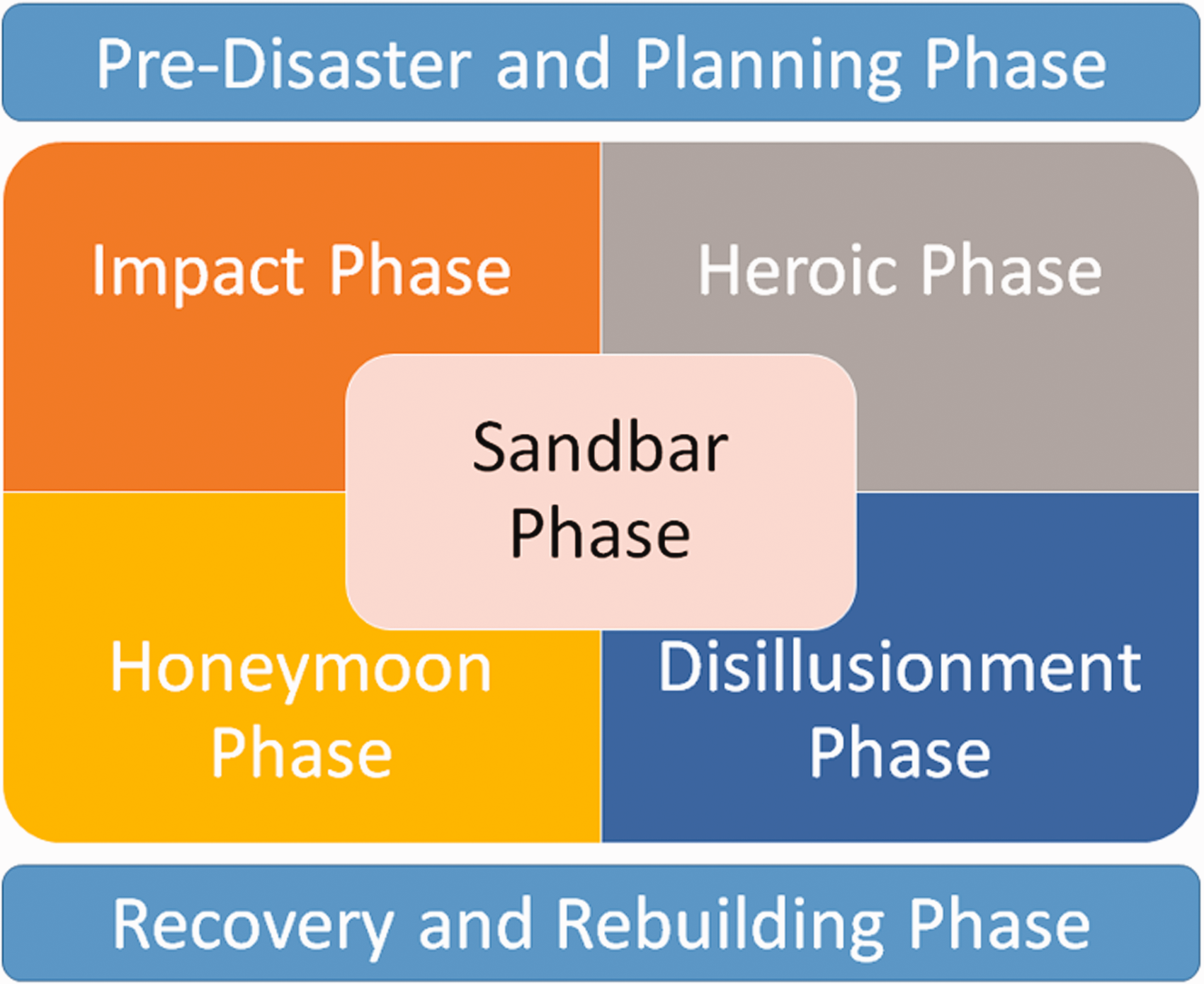
Revised disaster response model for the COVID-19 pandemic.
Clearly, COVID-19 is a unique disaster based on several differentiating factors such as its staggered initial impacts, continued impact, and uncertainty around its ending. While other global pandemics have occurred, the impacts of COVID-19 intersect with technology and learning in unprecedented ways. For example, the SARS epidemic in China in 2003 resulted in closures of schools nationwide and necessitated the use of information and communication technologies for students’ continued education . During this epidemic in China, the United States did not have reason to implement nationwide online learning since SARS did not reach the United States in large numbers. Preparation for the disaster occurred prior to some of the Disaster Events related to COVID-19; it also continues to occur because the Disaster Event is ongoing and has not ended. COVID-19 has an ongoing Impact Phase, with disaster events that are chronic, staggered, and repeated. The uncertainty of when COVID-19 will end, the unknown impact of this global pandemic on our culture, and what living will look like after COVID-19, all contribute to a new dynamic of a disaster. These differentiating factors point to a new phase, which involves a place to land, establishing a “new normal” prior to the end of the disaster. Adjusting to the changes and demands of COVID-19 require transition, adaptation, problem solving, and necessary change in order to live with the new requirements (e.g., social distancing, remote learning, sheltering at home). This experience may be compared with either being thrown into or jumping into the ocean of COVID-19, where everything known about life quickly changed—for some, overnight—as work and education transitioned to an online virtual environment or an in-person environment with unprecedented health behavior requirements to maintain safety (washing hands, social distancing, personal protective equipment, and thorough sanitization). As a university or college, and even as a larger culture, very little information about what to expect, how long it would last, or exactly what the waters would be like is unknown.
Following the Impact Phase and Disaster Events that originally occurred, through the experiences described above in the Heroic and Honeymoon Phases, some may move into a time where the current of the ocean feels different, slower, and they can metaphorically arrive at the sandbar. “Getting to the Sandbar” may occur individually or collectively as families, teams, colleges, universities, and other communities find stable ground.
The COVID-19 sandbar phase
Although the ocean or river may be deep, a sandbar’s ridge is a place where someone can stand or “touch-bottom.” For COVID-19, touching bottom may represent an opportunity to rest and reflect, a slowing of new decisions and policies in order to adapt to the new school and work environments, or an establishment of routine outside the previous circumstances.
Although getting to a sandbar offers the opportunity to touch bottom, breathe, slow down, and stop working so hard in the transition, COVID-19 is ongoing, and the end of it is still uncertain. Weather and elements of the ocean are out of the control of students and academic communities. Nature may turn at any time to bring weather and water changes. Similarly, during COVID-19, many decisions and circumstances are outside of anyone’s control. Medical and research experts, and the government and other leadership are in control of decisions regarding social distancing, returning to “normal” operations, relaxing social distancing or shelter-at-home requirements, and restrictions of who and what businesses are able to work or be open.
Application of the sandbar phase for college and university students
The Sandbar Phase is an important phase to name, understand, and consider because of the extended timeline of COVID-19 and its impact for college and university students. The timeline of getting to the Sandbar Phase will vary because each student’s experience is unique. As students experience repeated events, they may fall off of the sandbar and be swept back into the ocean, and their energy will again be focused on the response and behaviors that are part of the other phases, depending on those additional disaster events.
The vast array of reactions a student may experience when initially reaching the Sandbar Phase include relief, surprise, exhaustion, gratitude, ability to focus on emotions and feelings of what one has gone through, realization of all that one has been through, and grief. As time passes, feelings and reactions while experiencing the Sandbar Phase may shift and include “hitting a wall,” fatigue from social distancing, boredom, prolonged isolation, or sadness. Students, colleges, and universities may also find that they are satisfied, content, and pleased with their ability to be resilient and adjust to a new normal and still be able to serve students and do their jobs.
Behaviors during the Sandbar Phase may include establishing a new routine and developing daily practices that are able to be repeated; learning new hobbies; establishing self-care habits such as regular exercise and a healthy and balanced diet; reflecting on personal opportunities to grow, serve, learn, or give; and looking forward and making plans for the upcoming weeks. If a student reaches the Sandbar Phase, it is expected that they have had their basic physiological and safety needs (shelter, safety, security) met in a way that is not keeping them in the Impact Phase. Individuals at the Sandbar Phase will be able to focus on building and maintaining connections, being productive, and seeking higher levels of learning and self-actualization.
Summary of disaster model and Maslow’s hierarchy of needs
A key factor about Maslow’s Hierarchy of Needs that is essential to consider during COVID-19, is that the needs at the bottom of the pyramid must be met before people can move up. As previously noted, the bottom levels of the pyramid, including physiological, safety and security needs as well as the next level, psychological needs, are referred to as deficiency needs. Deficiency needs are what motivate people’s initial behavioral reactions until they are met. Once these are fulfilled, they no longer provide the same level of motivation and people can move up and address needs higher in the pyramid. Hence, the longer they are not met, the stronger the needs become.
We suggest that during the Impact and Heroic Phases, students are focused on meeting physiological and safety needs, including medical needs and essential health behaviors for survival. The Honeymoon Phase may bring more opportunity to move up the pyramid and address psychological needs. In other words, once basic safety and security needs are met, the need for connection and belonging becomes the focus. Research findings suggest that supportive interventions aimed to improve emotional regulation and social support should prioritize younger people and those with mental health symptoms to reduce the impact of COVID-19 regulations of social distancing, isolation, and quarantine on mental health outcomes (Groarke et al., 2020). Learning and esteem (many goals for higher education) may be delayed, set aside, or not possible until other needs are met. However, for students, education may also be a safety or security need, as it is their job and means to provide for themselves and their future. For students and staff who experience economic, racial, and health disparities, they will focus on basic physiological, safety, and security needs to attempt to overcome the disparities and access the systems and services needed.
Characteristics of model
There are five key characteristics within the proposed model: everyone is in the disaster; events are chronic, staggered, and repeated; exposing racial, economic, health, and social disparities; experiencing multiple phases at once; end of COVID-19 remains unknown. These five elements are illustrated in Figure 3.
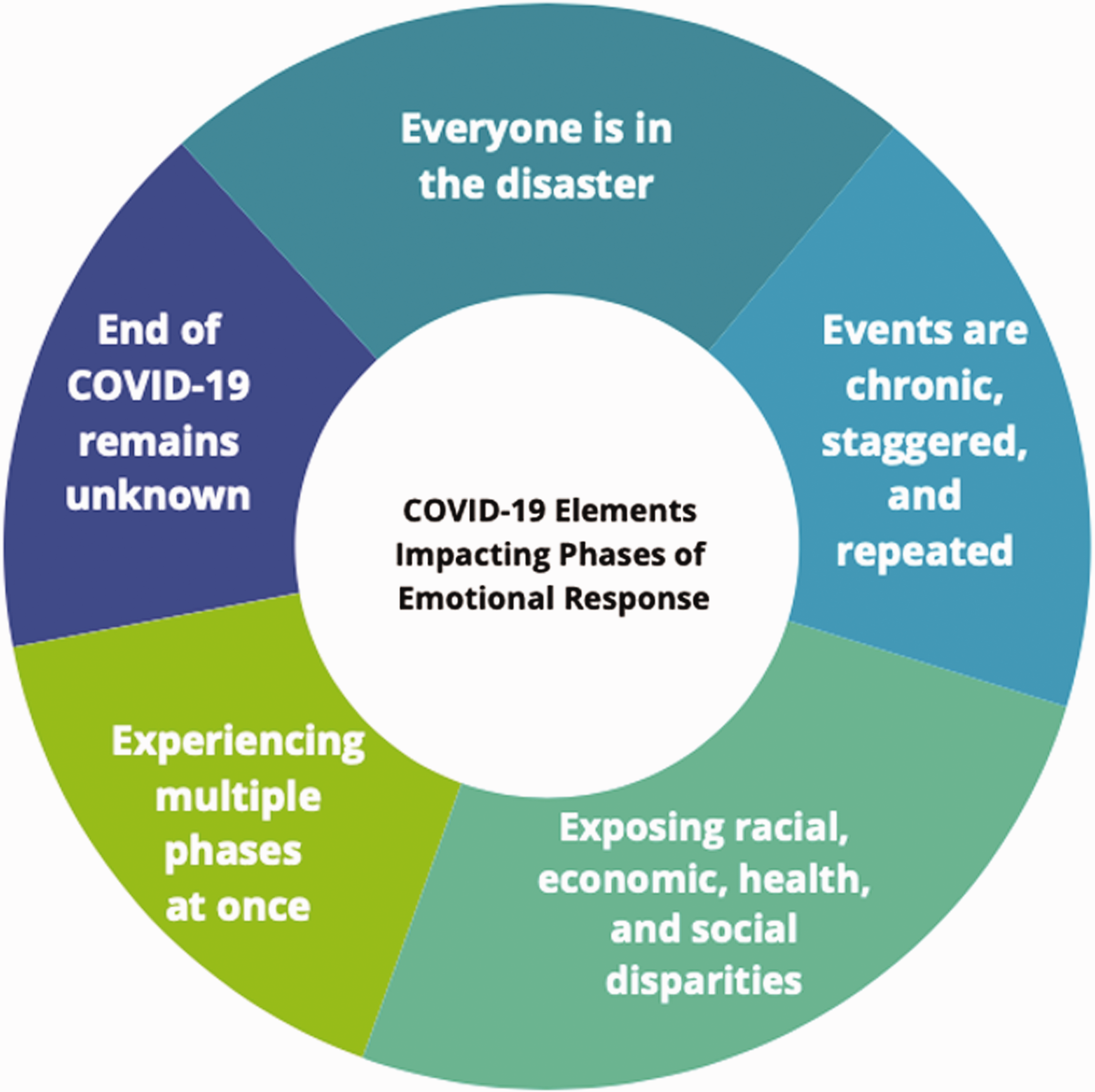
COVID-19 key elements impacting phases of emotional response.
COVID-19 is not a one-time disaster event; instead, it is best defined as a chronic, staggered, and repeated disaster. Students, and their academic communities, have experienced numerous impact events over the entire timeframe of COVID-19. For example, an undergraduate student may have experienced initial events, including having classes move from in-person to online and having to move out of a residence hall and independent living to moving back home with family or friends. Additionally, a student may move home to a community where internet access is spotty and there is no access to computer technology that is sufficient to meet course requirements. For a graduate or professional student, initial events may include having to stop or significantly disrupt mentored research or research plans for a thesis or dissertation or not being able to have their in-person internship.
The impact of the chronic, staggered, and repeated nature of COVID-19 on the mental health and emotional response may include feelings of anxiety, stress, depression, fear, grief, and disbelief. Repeated impacts will likely have a cumulative effect; as more impacts pile on top of the others, reactions of hopelessness and helplessness increase, and reactions intensify. Behaviors may be seen in those experiencing numerous and ongoing impacts include a focus on survival and basic physiological needs as well as behaviors that would lead toward security and safety. Family and emergency resources are especially important during the initial response to impacts, but with repeated impacts, access to emergency or immediate response may become more difficult.
COVID-19 exposed numerous racial, economic, health, and social disparities as they relate to how individuals access resources and manage their lives during COVID-19 (Vickers, 2020). College and university students are vulnerable to the psychological impact of the pandemic due to major changes in their lives and routines. For students who must move off or away from campus, they may sever access to computers, internet, and safe and quiet study spaces. Students who move home may move to communities that do not have adequate medical care for their families. Students who are unable to keep minimum-wage positions due to business closures may find themselves unable to pay for rent or food. First-generation college students may not have the resources or skills required to continue in higher education when moving back home. Students with disabilities may encounter even more barriers to accessing their classes when moving from the traditional in-person classroom environment to the online environment. Individuals with pre-existing mental health concerns may find themselves unable to access the mental health services needed to treat their conditions. In addition, those who have their graduation affected by the pandemic have been significantly associated with increased depression rates (Pedrosa et al., 2020).
The impact of these disparities on mental health and emotional response may result in complicated reactions. Individuals facing disparities may operate in survival mode and be at higher risk for more severe consequences, including death and economic devastation. Reactions may include fear, helplessness, anger, sadness, denial, confusion, shock, and hopelessness. The focus of behaviors may be on survival and include addressing basic physiological, safety and security needs.
While the chronic and ongoing nature of COVID-19 increases the likelihood for students to experience repeated and staggered impacting events, it is highly likely that students will find themselves in multiple phases at once. For instance, someone could be settled into working remotely and adapting to online classes and have moved through to the Honeymoon Phase and even the Sandbar Phase. However, if they encounter a significant event, such as a family death or sudden change in a living situation, they may move back to the Impact Phase and have to figure out a new plan and respond to the immediate situation, while also being able to maintain the routine and “new normal” of a job.
Because students and academic communities may be experiencing multiple phases at once, it is likely that the emotional responses would be unpredictable and varied. It is possible for someone to feel “okay” one day, but the next day experience great anxiety or grief. Emotional responses could be experienced similar to being on a roller coaster, with many ups and downs. Students may feel hope and gratitude for some aspects of life while simultaneously experiencing fear and uncertainty. The ability to manage so many emotions can be tiring and distracting. Behaviors may range from survival in taking care of basic needs to working toward establishing a daily routine and practicing self-care through exercise. The COVID-19 pandemic can intensify psychological disorders or precipitate others, such as anxiety, depression, PTSD, alcohol misuse, obsessive-compulsive behaviors, panic, and paranoia (Pedrosa et al., 2020).
In more common disasters, such as tornadoes, floods, or hurricanes, the disaster is location-specific and although the community is devastated, rescue relief from other areas can be mobilized to provide assistance with rebuilding and recovery. COVID-19 is a global pandemic; therefore, there are no rescue efforts that can come from the “outside” because everyone is involved in the disaster. This has been especially evident with the discussion of medical supplies, hospitals, and healthcare personnel. No one is untouched by the disaster.
The emotional response that is reflected, as a result of recognizing that everyone in the world is involved in this disaster, may be a feeling of deep connection to humanity as well as to the academic community because of universal shared experiences. At our university, a campaign was initiated that focused on how the campus was united, which promoted a shared resilience as part of the academic community where the students, faculty, and staff belong. Conversely, students may also experience despair and sadness because of the great scope of the impact on the world, as well as through their belonging to the academic community where they have witnessed significant loss and change. Behaviors that may occur as a result of this factor may focus on what is needed for supporting the students, faculty, and staff, their families and loved ones, and the campus community through support of local small businesses, giving and volunteering in ways that support the campus community, and a decreased likelihood to travel and focus on other parts of the state, country, or world.
Throughout COVID-19, medical experts and leaders have faced many obstacles in being able to predict the end or even when academic communities would be able to reopen and no longer be required to observe social distancing. Feelings and reactions, including fear, anxiety, uncertainty, insecurity, denial, or confusion, may be experienced as a result of the unknown end of COVID-19. Grief and sadness over plans that are cancelled or unable to be made, and the accompanying anxiety of the future stability of jobs and/or health may also be present. Behaviors that may emerge as a result of the unknown trajectory of COVID-19 may include efforts to control other aspects of life, such as home improvement, focus on family and present-day experiences, or other ways to distract oneself from the inability to plan and predict the future of COVID-19. Even with the inability to predict when society will return to in-person operations and open businesses, entities and systems continue to plan for that time, while also focusing on what they can control, even if those plans must change.
Implications for colleges and universities for support and response
Proper understanding of the proposed new Disaster Model with the inclusion of the Sandbar Phase provides three levels of application for college and universities as they provide support for students (Figure 4).
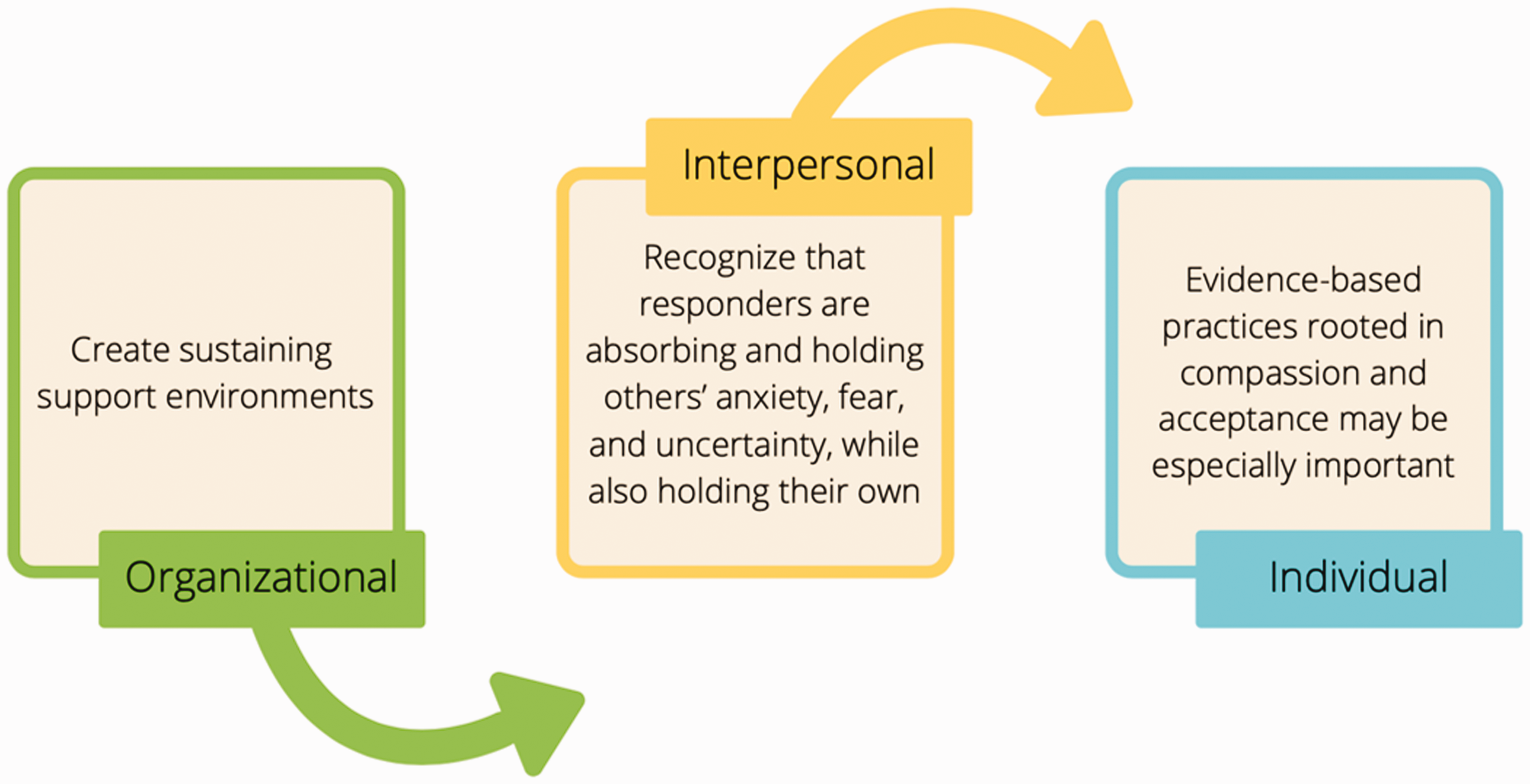
Implications for college and universities for support and response.
At the organizational level, this model can aid in the ability to create sustainable environments for support. Universities or colleges can lean into the new understanding of how people are moving through the phases of the Disaster Model in a new and more informed way and thus, be able to create sustainable efforts of support.
At the interpersonal level, this model provides a clear view into the dual nature of stress that students are facing as they absorb the stress and anxiety from others while dealing with their own stress and anxiety. Administrators, faculty, and staff are also victims of the disaster and are not “outside” the scope of relief, there is a unique situation where individuals are dealing with their own efforts to cope and respond to impacting events in their lives while attempting to support, guide, and direct students in figuring out theirs. In the academic community, first responders include the mental health providers in counseling and health services, employees involved in essential services such as health care, campus dining and housing, student support services, administrators, and faculty. These individuals in the academic community experience high demand by students and difficult decision making (housing, advising, senior leadership); therefore must be able to engage in self-care and self-monitoring activities that are part of the workday to ensure that they are not experiencing emotional and mental fatigue with the ongoing intensity of their work during COVID-19. A lack of vigilant self-care could result in poor decisions or a lapse in judgement that could be harmful. For example, studies during the SARS epidemic demonstrated increases in stress, PTSD, and global psychological distress among both patients and healthcare workers (Husky et al., 2020). This model can aid in establishing expectations, boundaries, self-awareness, coping, and emotional health resources and practices for this group and others like it.
Finally, on the individual level, the model highlights the need for evidence-based practices such as mindfulness, self-compassion (Neff, 2011), gratitude (Emmons, 2008), and positive psychology as important to remain grounded, clear-minded, and emotionally healthy during COVID-19.
The addition of the Sandbar Phase in the Disaster Model highlights the importance of a time of clarity and reflection before acting. This phase of pause can allow for more sustainable and effective interventions to be implemented. Although the reach of this model is currently limited to just the COVID-19 disaster and the college and university setting, developing an understanding of this new model now in the midst of COVID-19 will not only allow for a safe and effective shift from the chaos of the initial disaster but will also provide a solid base of preparedness for any future disasters.
Limitations and future research
We recognize there are limitations of the proposed model including the lack of research to support the strategies and applications offered. We also recognize the debated nature of Maslow’s Hierarchy of Needs. Maslow’s model has faced criticism by some for lack of empirical support due to the nature of the definition of each need while others have found empirical support for the model (Davis-Sharts, 1986; Noltemeyer et al., 2012). By pairing Maslow’s Hierarchy of Needs with the Disaster Phase Model as well as the proposed Sandbar phase, we hope to model the multifaceted nature of college and university students’ responses to the COVID-19 crisis. Future research focused on understanding the complex nature of the emotional response of students and academic communities due to COVID-19 would help further define the distinct phases of this disaster, which has been chronic and occurs over time, rather than as a one-time Disaster Event.
Additionally, this paper offers an application of the model as a framework to understand the reactions and behaviors of students during COVID-19, but we have not explored what kind of responses, services, and support would be most effective and appropriate during each phase of the disaster response model. Further research and development of strategies would help provide much-needed guidance and direction to university leadership about what services, programs, personnel, and support structures will help students and the academic community during COVID-19 and potential future disasters.
Future development of this model can include developing a training program for higher education personnel to understand the model and how it applies to the university and college student population and institutions to acquire skills to respond to the different reactions and behaviors that are experienced during different phases of the model, and to develop effective self-care plans to sustain effective support over the course of COVID-19 and the subsequent return to campus.
Finally, this paper only addresses phases during the COVID-19 pandemic and does not address recovery after returning to campus, in-person classes, and a “normal” environment. This model would benefit from the development of a transition phase and a restoration phase. The unique nature of the COVID-19 pandemic shows the need for transition and restoration planning that will specifically meet the requirements distinct to this disaster, while also adopting previous measures from other common disasters, such as tornadoes, hurricanes, or floods.
Conclusion
We present a framework to understand the emotional response to COVID-19 through multiple phases, including the Preparation Phase, Impact Phase, Heroic Phase, Honeymoon Phase, Disillusionment Phase, and a new Sandbar Phase for college and university students.
Although the disaster response model was developed for common one-time disasters, such as tornadoes, floods, or hurricanes, it may serve as a model to begin understanding responses during the COVID-19 pandemic, several distinguishing factors make it a unique disaster with various possible responses. Since the Impact Events of the COVID-19 pandemic are not one-time, but rather chronic, staggered, and repeated, the responses of students and academic communities will not be linear or fall into a predictable timeframe. Additionally, these factors result in the possibility of students to experience multiple phases at once. Health, economic, social, and racial/ethnic disparities experienced by students may result in rapid movement into the Disillusionment Phase. All of these key elements must be attended to in order to successfully navigate towards the Sandbar Phase and eventually to a restoration phase. We hope this model can serve as a resource in the development of effective mitigation efforts to diminish any psychological deficits as a result of future disasters and/or traumatic events.
Footnotes
Declaration of Conflicting Interests
The author(s) declared no potential conflicts of interest with respect to the research, authorship, and/or publication of this article.
Funding
The author(s) received no financial support for the research, authorship, and/or publication of this article.
