




Abstract
Justice reinvestment and the Justice Reinvestment Initiative (JRI) have been a focal point for criminal justice reform advocates since the enactment of federal legislation in 2010. With 40 states having implemented a JRI reinvestment policy or practice to date, the goal of many reinvestment strategies hinges on reducing prison populations. Pennsylvania was therefore uniquely situated for applying a reinvestment initiative as a state that was incarcerating more individuals per capita in the Northeast compared to neighboring states. This article reviews JRI's overall framework and intended evidence-based interventions utilizing a case study of Pennsylvania initiatives to assess the degree to which JRI strategies affected reform through 2023. Policy recommendations are offered based on the JRI application in Pennsylvania.
Introduction
The United States (U.S.) last six decades of mass incarceration resulted in unprecedented increases in state spending on corrections and related criminal justice practices 1 (Lurigio, 2024). The Justice Reinvestment Initiative (JRI) and its emergent justice reinvestment legislation signal a pivot to an evidence-based approach addressing the rapid increases in incarceration rates and related state correctional expenditures. Since 2006, JRI and related legislation were enacted to focus on both improving public safety and reducing prison populations by redirecting state budget funding to investments in community-based programs through the application of data-driven strategies (Criminal Justice Reinvestment Act of 2009, 2010; Tucker & Cadora, 2003). Prior to the global Covid-19 pandemic, prison and jail populations continued to increase, with state and local budgets expanding to $87 billion nationwide (Buehler, 2021; Criminal Justice Expenditures: Police, Corrections, and Courts, 2024). The justice reinvestment model was introduced as a federal policy aimed at state prison population reduction while also building upon existing programming to increase successful reentry and reduce correctional spending.
JRI grew from the recognition that the U.S. imprisonment trajectory was not sustainable at the state level. The aim was to design an incentivized funding mechanism for states to implement reinvestment policies grounded in evidence-based strategies. From a theoretical aspect, justice reinvestment diverts funding from correctional facility-related expenses into local community program alternatives to incarceration. Introduced as an approach to alleviate the strain on correctional systems and place more resources in the community, specifically within reentry programs, the aim was to reduce rates of recidivism (Tucker & Cadora, 2003). Initially, the concept was met with skepticism, but state legislatures soon adopted the concept of decarceration (Doob & Webster, 2014; Petersilia & Cullen, 2014) as JRI data exposed some of the driving factors leading to increased rates of recidivism and overcrowded jails and prisons (Council of State Governments, 2021b; LaVigne et al., 2013). Many states were experiencing the calls of stakeholders and legislators to reduce correctional and justice-related spending. However, many of these efforts faced resistance and would ultimately be discarded (Cate & HoSang, 2018; Cullen et al., 2011; Fox et al., 2011; Zane et al., 2023). Prisons and jails are a necessary component for administering justice and ensuring public safety, but diverting funds from budget allocations requires social and political support that was often met with mixed backing. Proponents of the reinvestment approach focused on reducing the correctional spending that continued to increase year after year (Austin et al., 2013; Clear, 2011). In contrast, opponents argued that reducing prison populations remains the primary concern (Petersilia & Cullen, 2014).
The Justice Reinvestment Act of 2010 served as a legislative vehicle by providing federal grant support for state legislatures to help identify (a) the growth drivers of each state's correctional populations and (b) the initiatives for implementing change (LaVigne et al., 2013). Under the JRI model, specific working groups were convened to identify the causes of increased correctional spending and to redirect funding to explore programs or policies to reduce the increased spending. It should be noted that each state's convening of a working group with external consultation meant that each set of outcomes could vary greatly across participating states (Bureau of Justice Statistics, 2021).
The Reinvestment Framework
Since 2010, more than 35 states participated in some form of reinvestment legislation or program enactment, and some states implemented multiple waves of reinvestment to address the primary aspects associated with increased recidivism (Bureau of Justice Assistance, 2024; Pew Center on States, 2019). As noted, the purpose of the reinvestment legislation was to increase public safety while redirecting funds that included prison infrastructure improvements, program development, and, in some instances, correctional treatment effectiveness (Monteiro & Frost, 2015; Taxman, 2016; Wentling & Choi, 2021). However, many observers noted the many difficulties in implementing an effective reinvestment strategy due to budget constraints, lack of stakeholders’ support, and fidelity of the proposed programs to more traditional correctional agency models (Dollar, 2023; Sabol & Baumann, 2020; Wong& Christmann, 2016).
Furthermore, many of the states pursuing reinvestment strategies experienced budgetary shortfalls or did not generate the anticipated dollars needed to create the reinvestment fund that facilitated the use of evidence-based programs associated with JRI. Connecticut was the first state to adopt the JRI approach in 2006 as a pilot program with a working group that developed processes to streamline parole hearings and increase the eligibility requirements for earlier release from prison (Council of State Governments, 2021a). As the first state justice reinvestment effort, Connecticut received recognition based on its promising results which then led to federal legislation incentivizing the use of reform policies (“Criminal Justice Reinvestment Act of 2009,” 2010). Other states followed suit, and numerous examples of the application of JRI-funded programs or policies emerged. For example, Nevada pursued enhanced mental health resources while aiming for an estimated $543 million in tax-payer savings through better reentry programs. Similarly, South Carolina estimated approximately $500 million in averted correctional costs (Engel, 2021). Taking another route, Pennsylvania developed a streamlined process for parole hearings and improving community supervision, diverting an estimated $45 million (Council of State Governments, 2021b).
Importantly, since the inception of the justice reinvestment legislative movement and the associated Justice Reinvestment Initiative (JRI), many states incorporated some form of related correctional policy to meet the goals of reducing prison populations (Bureau of Justice Assistance, 2024). Decarceration became the new focal point of state reinvestment, with funds otherwise intended for correctional system application being diverted into evidence-based strategies in community settings. Not surprisingly, many hurdles existed for the effective use and implementation of JRI-related efforts, specifically in neighborhoods with higher rates of crime (Jenkins et al., 2017). As of 2023, the legislative efforts can be summarized into a number of targeted areas of reform: sentencing and pretrial, prison and jail length of stay, community probation and parole supervision, sustainability of reinvestment, alternatives to incarceration, and addressing disparities in sentencing.
These designated targets can be considered front-end or back-end policies that ultimately support and facilitate a successful return to the community through reentry-focused strategies (Bergstrom & Bucklen, 2016; Lin et al., 2010; Malcolm, 2015; Travis, 2007). The front-end policies reflect diversionary efforts to avoid formal processing in the justice system which often lead to diversionary courts or programs that provide alternative dispositions (Jannetta et al., 2018; Kubiak et al., 2006). Back-end policies emphasize reentry efforts and approaches to reduce recidivism by increasing the use of evidence-based practices to support offenders returning to the community after their case is tried and a sentence is served (Lin et al., 2010; Mueller-Smith & Schnepel, 2020). Most states centered their efforts on back-end approaches to fund policies that help curb crime rates and thus reduce the number of those being held in jails and prisons (Bureau of Justice Statistics, 2021). Table 1 is adapted from the Bureau of Justice Assistance (BJA) justice reinvestment initiative website and illustrates the prioritized JRI policies across the states that have engaged in JRI-related initiatives. Sentencing/pretrial, community supervision, and sustainability are the most utilized policies. (For improved readability, only the most often used policies are listed below).
Commonly Used Policies and Practices Within the JRI Framework.
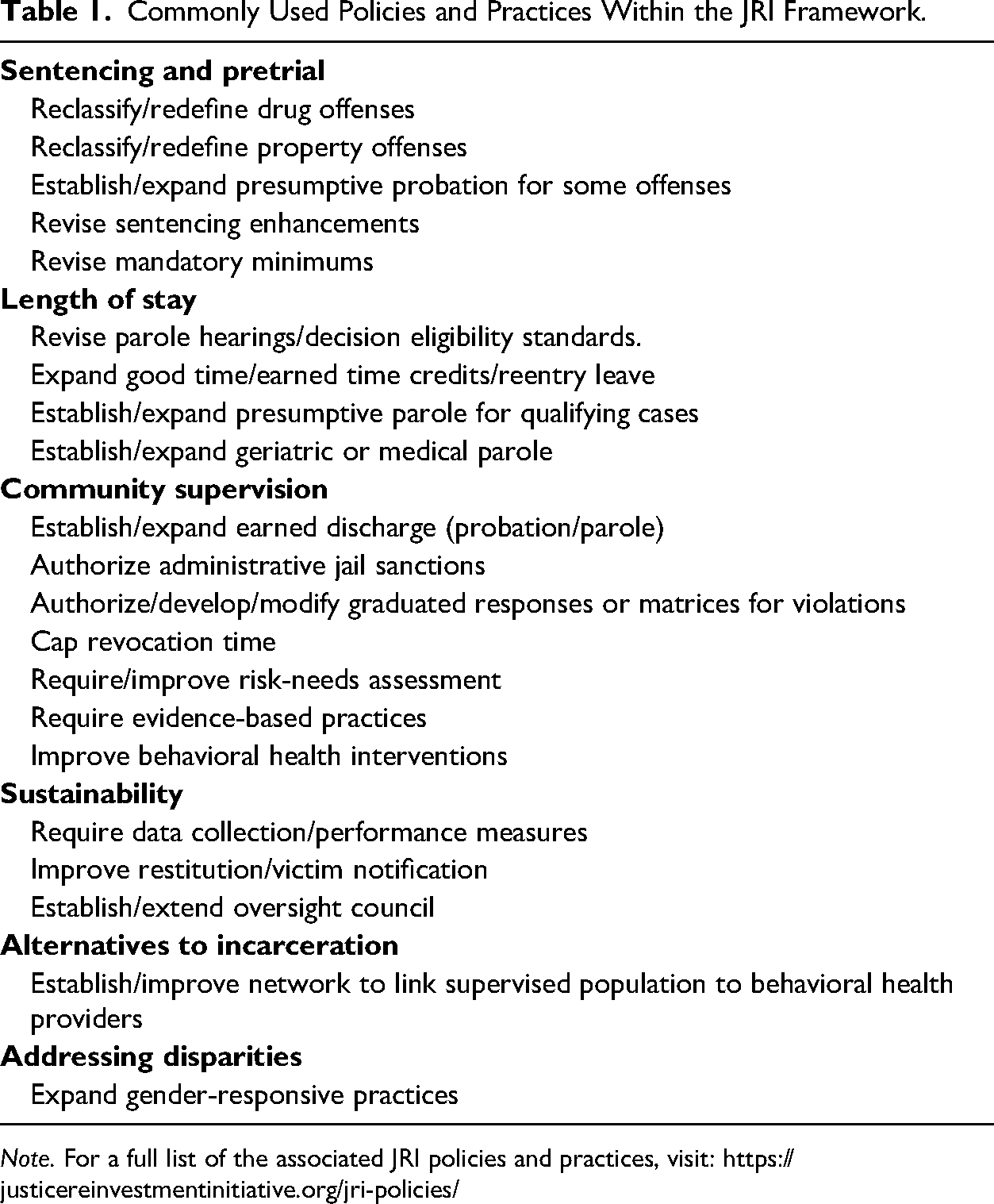
Note. For a full list of the associated JRI policies and practices, visit: https://justicereinvestmentinitiative.org/jri-policies/
Barriers to Decarceration
The term decarceration can be described as the reduction of prison populations to alleviate the financial burden on U.S. state and local carceral systems (Doob & Webster, 2014), particularly following the response to the Covid-19 pandemic. Prior to the Covid-19 epidemic, state prisons found ways to address growing prison populations by increasing parole hearings to effect early releases and creating diversionary programs in lieu of traditional prison sentences (Bergstrom & Bucklen, 2016; Renauer et al., 2023). While decarceration became widely recognized as a fiscally responsible approach to correctional reform, it often fell short of the intended outcomes, even with JRI funding (Cate & HoSang, 2018; Richardson & Walker, 2023). Prison rates began to fall prior to the pandemic, but the legislative response of releasing eligible offenders proved helpful in expediting the reduction of some state prison populations.
In sum, the justice reinvestment legislation was itself uniquely positioned as a mechanism to reduce prison populations through early releases and other legislative actions. However, many states were unable to reach the goals of justice reinvestment through cost-savings and reduced populations. Some of the obstacles included a lack of initial funding from the diverted funds into other support initiatives but there were also other confounding factors. Thus, evidence-based programming associated with reinvestment may be effective in some jurisdictions and with some populations but may not be as successful with other communities or offender profiles.
The Urban Institute has offered guidance on the implementation of justice reinvestment-related programs at the local level, highlighting several key considerations for maintaining the fidelity of JRI-based programs and policies (LaVigne et al., 2013). Identifying a five-step model, LaVigne et al.(2013) noted that an effective JRI model must begin collecting and analyzing justice-specific data, then implementing cost-saving strategies focused on public safety, ultimately arriving at reinvestment strategies. Each of these steps is designed to solicit input and engagement from stakeholders within the justice system, legislature, and community advisory boards. Moving through each phase of the model, justice officials should identify their individual needs and provide a detailed plan addressing their specific justice-related concerns. The guide describes several alternatives for avoiding formal processing within the justice system which may include changing arrest policies, revising pretrial processing and supervision, focusing on reduced sentences for eligible offenders, and enhancing community-based support upon reentry. The Crime and Justice Institute (CJI) offers similar guidelines and a model that emphasizes policy development, implementation, and outcome measurement (Engel, 2021). Other guides, best practices, and lessons learned were developed to support the implementation of the JRI framework. However, these generally show mixed results when considering the intended outcomes (Clear, 2011; Renauer et al., 2023; Sabol & Baumann, 2020).
Pennsylvania and Justice Reinvestment
Pennsylvania initiated the justice reinvestment approach with the formation of a working group charged with identifying the driving factors of incarceration within the state. Like other states, Pennsylvania sought support from the Council of State Governments for technical assistance and the creation of the working group (Council of State Governments, 2021b). Following recommendations for reforming the use of community corrections centers (Latessa et al., 2009), Pennsylvania focused on the back-end efforts by streamlining parole hearings to better align with the new model. The revised approach provided offenders with shorter terms of incarceration with an increased emphasis on rehabilitation in community-based facilities. This tactic afforded a targeted approach to successful reentry, instead of a generalized approach to each offender (Bergstrom & Bucklen, 2016; Latessa et al., 2009). During a time when justice reinvestment was in its initial stages of implementation, the primary goal centered on a core tenet of justice reinvestment, reducing prison populations while maintaining public safety (Tucker & Cadora, 2003). Prior to implementing JRI reforms and policies, Pennsylvania had the highest incarceration rate among Northeastern states (Jenkins et al., 2017; Pennsylvania Commission on Crime and Delinquency, 2021; Widra & Geffen, 2022).
Under Pennsylvania's JRI2 under Act 115, the strategy was to revise sentencing to expedite case processing and the overall wait time for parole hearings (Bureau of Justice Statistics, 2021; Moriarty, 2020). JRI's impact in Pennsylvania shows Pennsylvania's 2023 prison population reached 54,238 across 25 institutions in 2013, before beginning a steady decline to 47,590 in 2019, and ultimately falling to just over 37,000 in 2024, which could be attributed to the application of the reinvestment strategies. Conversely, the large decline in correctional populations could also be a trend related to increased parole approvals and early releases during the beginning stages of the Covid-19 pandemic (Strassle & Berkman, 2020).
Justice Reinvestment in Pennsylvania was most heavily invested in fiscal year (FY) 2016 when 125 total grants were awarded to agencies across the Commonwealth, totaling over $11 million towards evidence-based solutions. The initial reinvestment legislation in Pennsylvania highlighted an increase in victim services while also providing new, innovative policing strategies (Bergstrom & Bucklen, 2016). Another crucial element of the initial reinvestment legislative efforts was greater transparency to build awareness of the reform movement. By incorporating JRI funds, agencies and departments across the Commonwealth created dashboards with open-source criminal justice information repositories. These databases allow for increased accountability of government offices by providing the public with a better sense of justice-related efforts and illustrating how funds were being applied. The Pennsylvania Commission on Crime and Delinquency (PCCD) introduced a grant map 2 to serve as an innovative way to offer public-facing information related to the use of grant-based funding streams (see IUP Researchers Help State Crime Commission, 2021). Although public-facing dashboards and data repositories can better inform the public and meet the goals of the incentivized JRI funding, there is little information or evidence showing the public is aware that these dashboards exist.
Justice reinvestment legislation signed in 2012 (Act 196) provided funding streams to bolster the use of evidence-based practices in the areas of innovative policing and victim services. Since its implementation in Pennsylvania, 164 total awards have been granted, with 134 associated with the Criminal Justice Advisory Committee and 30 with Victim Services according to the Pennsylvania Crime Commission and Delinquency (PCCD) grants map. Given the legislative popularity of the federal initiative, reinvestment funding offered multiple avenues for criminal justice reform which grew to a staggering $11 million in available funds during FY 2016–2017. 3 The available balance plummeted within the next 2 years and fell to $1.2 million, a sum less able to sustain large-scale grants or multiple grant sites as in previous years. Although there were still available funds and grants being awarded through the PCCD, FY 2020 saw only 16 awarded grants totaling $460,244. According to the Pennsylvania Treasury, the JRI funds remained at these low levels until September 2023, when the available balance climbed to just over $3 million. While the availability of funding streams for agencies and departments to address shortcomings or possible deficiencies remains, many of these opportunities are underutilized and not being pursued to the extent that is intended under the legislative guidelines.
Similarly, the total correctional expenditures in Pennsylvania rose from $2,144,108,377 in 2014 to $3,780,327,000 in 2021 (Herman et al., 2023). According to the Pennsylvania Treasury, the JRI fund in 2014 was approximately$19,000, well short of the goals prescribed by the initial legislation implementing the use of the reinvestment strategy (see Act 196). The JRI fund rose to the highest level in the summer of 2016, at $11,661,729 in available funds to be used by grant awardees during the same funding year, and supporting 125 projects or programs equaling $11,289,966 in useable funds.
Pennsylvania's JRI funding experienced a continued decline and was nearly depleted by 2018. The current balance remains below $3.5 million according to the Pennsylvania Treasury. While JRI funding plummeted, the correctional budget in Pennsylvania rose each year from $2,423,992,221 in 2016 to $2,825,237,313 in 2023, an increase of nearly $700 million since 2014. Similarly, Uniform Crime Report (UCR) data for the state show Part 1 offenses reached their highest levels in 2008, with 347,502 recorded offenses carrying an average of 294,772 per year in Pennsylvania. Part 1 offenses remained stable at approximately 300,000 offenses throughout the 2008–2022 period. The fiscal year 2022 produced 311,603 Part 1 offenses. Despite differences in funding, correctional populations saw a drastic decrease in numbers due to pandemic-related policies, such as early release and other policies believed to alleviate the prison population (Powell et al., 2022). When examining parole violations, one of the primary drivers of prison populations throughout the country, there is little evidence to suggest that the reinvestment initiative is having an influence on either of the overarching goals associated with reinvestment strategies. Although there is a reinvestment balance available and funds utilized to develop and implement various programs and policies at the local level, prison populations and associated recidivism rates have not been drastically reduced as a result of these efforts.
Seasonal Variation and its Impact on Reinvestment
Seasonal offending is documented throughout the criminological and sociological research literature as an influencing factor in the rise and fall of crime rates and carceral populations. Clearly, this variable should be considered when assessing the fidelity and efficacy of programs related to reinvestment (Andresen & Malleson, 2013; Hipp et al., 2004). Many of these studies find relationships among the common predictors of victimization and/or offending during certain weather patterns. Adolphe Quetelet (Beirne, 1987) first proposed links between warmer months and increased violence and victimization. Specifically, Quetelet noted that crimes against persons were more likely during summer months and crimes against property were more common during winter months. The seasonal variables in Quetelet's research have been revisited with similar findings (Beirne, 1987; McDowall et al., 2012; Szkola et al., 2021). Understanding the increased risk of violence and victimization during such peak periods or seasons of the year may help to better tailor the community-based programming that meets the two primary goals of JRI: reducing prison populations and increasing public safety. Reinvestment and the JRI model require key stakeholders to identify the drivers of criminal justice policies, but environmental considerations may be overlooked in the legislative decision-making process.
Similarly, there is a risk that implementing these programs in areas that are likely to experience positive outcomes only lessens the impact of the reinvestment approach. Dollar (2023) notes that the reinvestment concept might be co-opted in what can be described as blue washing, where the outcomes are presented in a manner consistent with the overarching goals of JRI, regardless of the processes or evaluations used to measure the programs. This becomes especially important when considering that the original theoretical approach focused on what Tucker and Cadora (2003) described as “million-dollar blocks,” where the majority of urban crimes occurred and produced a disproportionate amount of offenders, becoming a theme commonly found in communities with increased rates of incarceration (Story, 2016). As well, intergenerational offending may be overlooked by stakeholders and working groups along with the possible seasonal shifts in violence and victimization (Flynn et al., 2017). Recognizing there are communities experiencing a disparate amount of direct and vicarious trauma through the continued exposure to justice-related actions toward ethnic and racial minorities increases the likelihood that these same communities will continue the cycle (Pettit and Gutierrez, 2018). Thus, while these high-risk areas may be the most likely to benefit from JRI-related efforts, this provides another example of how JRI's intent to help communities may have fallen short due to not accounting for such variables.
For example, Figure 1 shows the rates of Pennsylvania parole recommitments which are separated by summer (July) and Winter (December) months as reported by the Pennsylvania Department of Corrections. These commitments were obtained from the Pennsylvania Department of Corrections publicly available data and defined as technical violations for the purposes of this research. Similarly, the overall rates of those individuals who are incarcerated in one of Pennsylvania's 23 prisons are shown as a line graph in relation to the parole recommitments (three prisons permanently closed, and one opened during the time frame; see Pennsylvania Department of Corrections, 2024). Notably, the parole recommitments reached their peak in the summer of 2016 with a total of 612 reported recommitments. Winter months illustrate a similar trend, with December 2015 having 599 recommitments which led to higher rates during the summer, albeit only modest increases. Summer recommitments (July) averaged 497 and winter (December) averaged 488. This trend coincides with previous findings that document the rise in crime during summer months compared to winter months (Field, 1992; McDowall et al., 2012) but remains relatively stable across the period.
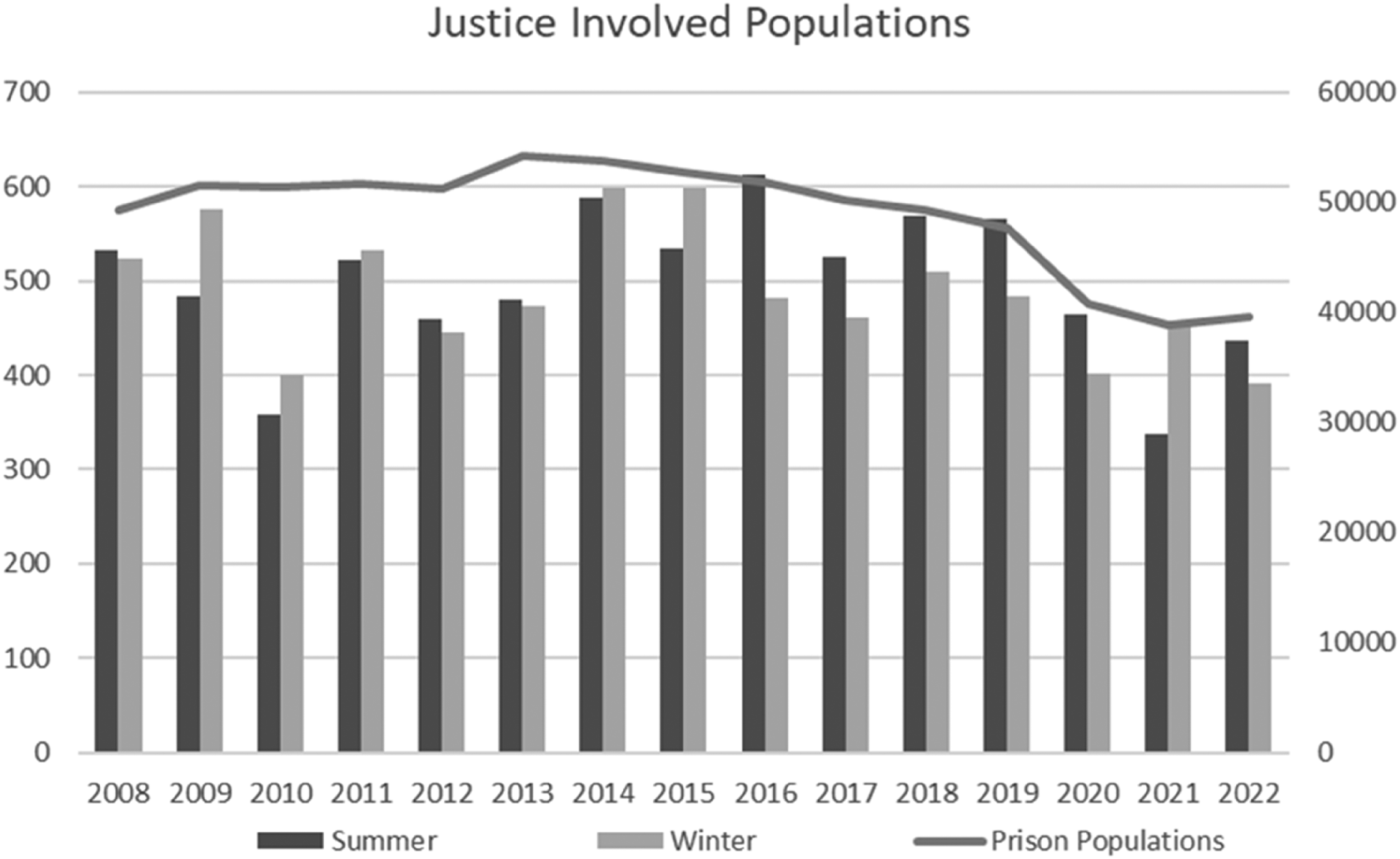
Parole violations and prison populations in Pennsylvania.
Similarly, the distribution of JRI funding tends to more widely occur during summer months—when the state fiscal year budget is announced, along with a new wave of grant funding made available. Thus, with the increased use of JRI funding to increase public safety as outlined by the reinvestment legislation, crime and victimization rates could be hypothesized to decrease. Yet, the data presented in Figure 1 show otherwise. Although seasonal crime trends may be attributed to many factors (Andresen & Malleson, 2013; Hipp et al., 2004; Szkola et al., 2021), there are many avenues of reinvestment which could be introduced to facilitate improved correctional programming and community-driven solutions to reduce recidivism. When graphing the trends of recommitments and associated prison populations, it appears that the reinvestment approach may be falling well short of the intended goals.
A Path Forward
Justice reinvestment has been frequently touted as an approach to add substantive reform to a justice system faced with a myriad of changes leading up to, and following, for example, Covid-19 pandemic-related policies aimed at reducing national jail and prison populations. At the federal level, JRI has been viewed as a mechanism to incentivize and facilitate the use of evidence-based programs or practices. At the state level, state legislatures have the unique opportunity and responsibility to identify the specific reinvestment strategy to realize JRI goals. At the local level, in many communities, this approach produces a positive, yet unintended, consequence of reducing rates of crime and recidivism, ultimately decreasing the burden on the justice system. However, as the data have indicated, there are many areas where improvements are needed in order for JRI objectives to be fully realized.
In 2003, Tucker and Cadora first described the need for reinvestment in high-risk communities to reduce prison populations and increase public safety. Others noted the importance of a more focused approach to community-level policies, seeking specific responses to meet the needs of those living within affected communities (Austin et al., 2013; Bergstrom & Bucklen, 2016; Monteiro & Frost, 2015; Taxman, 2016: Widra, 2024). By enlisting external support from the Council of State Governments, the Bureau of Justice Assistance, Vera Institute, MacArthur Foundation, and similar expert agencies or funding streams to support evidence-based policy, JRI is uniquely situated to create a lasting and impactful change to the justice system. With a focus on areas of highest criminality and victimization, reinvesting in these communities to increase the efficacy of existing programs or establishing new ones meets the intent of the JRI goals. However, a closer examination of Pennsylvania and the direction of these efforts in the Commonwealth finds that many such communities and entire counties that could most benefit from JRI investments have not taken advantage of the federal funding streams.
Specifically, Pennsylvania's rural areas are often in most need of economic development to assist with reducing or preventing crime (Carroll, 2004; Deller & Deller, 2010). Love (2021) notes that many of these impoverished areas lack resources and are prone to higher rates of crime and victimization, which is the crux of the original premise for the reinvestment framework. Another compounding element could be attributed to the ongoing opioid epidemic in Pennsylvania, described as reaching crisis levels in rural areas (Kaynak et al., 2022). To reduce high rates of crime and incarceration associated with such high-risk communities, Love (2021) argues that there are specific variables that can be employed to forecast the likelihood of violence and actually decrease the risk of violence. Specifically, Love is advocating for place-based economic interventions because examining a community or area economic profile uncovers higher rates of inequality in both income and access to resources. These data, along with evidence of environmental barriers that inhibit community-based interactions, can produce higher crime rates. As the critical point of reinvestment lies in the community and its ability to offer offenders front and back-end approaches to justice reform, the identification of these structural barriers is critical for targeting outreach and awareness efforts for procuring JRI funding mechanisms. For rural counties and areas that have experienced economic and population declines and enacted some form of JRI framework, there is a need to provide greater assistance in directing efforts to the high-crime producing areas within their jurisdictions. By shifting the focus of reinvestment, state legislatures should work more closely to identify the real drivers of the justice system and prison populations. Revisiting the original theoretical model, JRI funding could be used as a continued, sustained funding mechanism to improve and restore these high-risk communities.
As illustrated, seasonal offending is another trend where reinvestment strategies could be directed. Recognizing the modest differences in relation to climate and offending, the reinvestment model could allow for a more targeted approach by affording more flexibility for programs to identify key stakeholders in a given community, rather than relying on legal or state actors or policymakers. Although the Pennsylvania recommitment data show a slight change in individuals who are returned to jails and prisons based on seasonal trends, there is a continued and predicted higher risk during the summer months, which corresponds to the JRI funding cycle. Stakeholders and working groups should consider the distribution of grant aid and allow for and incentivize a continuous stream of programming support throughout the year. Additionally, these funding mechanisms could be advertised more widely to local departments and agencies to benefit the most from the JRI funding.
In Pennsylvania, the PCCD maintains and facilitates the JRI funding with monies awarded to agencies or departments based on their grant application. When an award is granted, the dashboard provides transparency through a public lens that identifies both the award amount and the recipient. This approach is an effective way to meet the transparency aspect of JRI, while also ensuring other agencies’ access to information on fund availability and utilization. With each state legislature determining how the federal JRI funding can be used within their respective jurisdiction, there are many “reform” efforts that can be explored with a surprising scarcity of information shared with the public. If states adopt a similar grant tracking mechanism, JRI funding opportunities can be more widely publicized to improve the accessibility of funds to the high-risk communities that are producing higher rates of violence and subsequently, more offenders. Many potential partner agencies are not aware of the funding and thus cannot take advantage of the additional funding and resources provided through the reinvestment strategy (Wentling et al., 2023). Governmental agencies are not likely to advertise the funding streams broadly, so a grassroots movement similar to what Love (2021) described where community networks work to achieve a similar goal, becomes necessary to adequately implement initiatives grounded in reinvestment strategies. Clark-Moorman et al. (2019) found evidence that deterrence-focused supervision strategies rooted in community ties helped to reduce recidivism. Specifically, violent victimization and rates of firearm offenses reduced in frequency, which ultimately created a safer community environment. This same approach could be applied using JRI funding to focus efforts on high-risk communities; ultimately, reducing recidivism as one of the foremost intended goals for reinvestment strategies.
Pertinent to ongoing trends, prison populations in Pennsylvania are experiencing an increase in the average age of those incarcerated, with many requiring additional health care while in custody. Skarupski et al. (2018) found that U.S. jails and prisons are reporting financial and moral difficulties regarding the treatment and care of their aging inmate populations. For many long-term incarcerated individuals, special care is required that is often not feasible or practical in a typical carceral setting, leading to the use of outside medical facilities or costly contracted private medical providers. Both scenarios exacerbate stressors and risks, which can be difficult to mitigate for many professionals in both the prison and healthcare settings. While Pennsylvania maintains a dedicated institution for specialized medical care of individuals who require specific treatment or care, the trend of increased numbers of aging inmates suggests that each of the 23 prisons will need to adapt and develop a healthcare plan specific to each facility's aging inmates (Zane et al., 2023). Although the original justice reinvestment concept diverted funds away from the traditional state budget correctional spending model, given the current aging inmate profile, it may be beneficial to adjust the scope of the funding to allow for increased support for specialized healthcare for elderly inmates. After all, the overarching goals of the reinvestment strategy could be better realized by directing access to adequate care and rehabilitation services for aging incarcerated populations. By providing for the well-being of incarcerated individuals, allowing for appropriate interventions, and ensuring access to programming, the risks of reoffending begin to decrease. The JRI funding could be more successfully used to bolster current healthcare strategies for incarcerated populations, bridging the ever-widening gap between the care that is needed and the care that can be provided.
Conclusion
Justice reinvestment strategy was originally introduced as a method to curb exorbitant state budget spending on corrections. After nearly two decades of implementation, 40 states have enacted some form of reinvestment strategy to re-direct funds into a variety of community-based programs and policies (Bureau of Justice Assistance, 2024). What is unique to the JRI model is that it allows each state legislature the latitude to determine the specific cost drivers in its criminal justice system and the specific areas to target to achieve cost savings. This is arguably the primary factor in determining successes and failures. This article has outlined a number of variables that can impact how effective the JRI initiative is from one jurisdiction to another. The initial goals of justice reinvestment were simple: reduce prison populations and increase public safety through evidence-based strategies (Tucker & Cadora, 2003). Given the current funding mechanisms and applications of JRI-related funds, it appears that there are seemingly an infinite number of ways to achieve this outcome. Perhaps a reinvestment strategy that uses a comprehensive approach focused on community needs might better direct the funding and achieve a closer alignment with JRI goals. Increasing community-based programs such as peer mentors (Nixon, 2020) and community-supported reintegration (Davis et al., 2012) can enhance the goals of the reinvestment approach, but there is a lack of continuity and consistency with the implementation of these models (Kleiman, 2011; Monteiro & Frost, 2015). Maruna (2011) notes that reform advocates must be careful not to overpromise the possible outcomes and work on adjusting community expectations in meeting realistic program or policy objectives. These outcomes must incorporate the key stakeholders and interest groups, a process that becomes difficult to accomplish and track due to the wide-ranging applications of the JRI approach. As illustrated, applying the funding becomes a proverbial tightrope of balancing the requirements of a cost-benefit approach, while also reducing the reliance on jails or prisons.
In sum, the JRI path forward includes identifying the evidence-based initiatives that a state's reinvestment strategy might adopt to accomplish the myriad of justice-related goals. If states continue to utilize the status quo approach for reinvestment strategies, then opportunities for lasting reform dwindle and slip away. In the wake of the criminal justice reforms initiated by the Covid-19 pandemic, states have an opportunity to more fully engage community stakeholders and leaders at local and state levels in an effort to rethink and reimagine the purpose and intended goals of justice reinvestment.
Footnotes
Declaration of Conflicting Interests
The author declared no potential conflicts of interest with respect to the research, authorship, and/or publication of this article.
Funding
The author received no financial support for the research, authorship, and/or publication of this article.
