




Abstract
Prison misconduct refers to any breach of rules and regulations established within correctional institutions to ensure order and safety for both inmates and staff. According to the importation model, younger adults may possess unique developmental characteristics that increase their likelihood of engaging in such behaviors. This study examines prison misconduct among young adults aged 18 to 23, assessing the predictive validity of two risk assessment tools—the OASys and the START:AV. Findings suggest that developmentally tailored risk assessment instruments, like the START:AV, outperform others in predicting various types of prison misconduct among young offenders over a 3-month follow-up period.
Introduction
Institutions for individuals serving custodial sentences operate under strict rules, primarily designed to ensure the safety and wellbeing of both inmates and staff (Bosma et al., 2020). Maintaining order in confined settings is also crucial for correctional administrations, as it supports efficient management and optimizes institutional resources (Bosma et al., 2020; Gendreau et al., 1997). While these rules can sometimes be excessively restrictive, that is, prohibiting behaviors that would be acceptable in less controlled environments (Camp et al., 2003), any infraction is classified as a disciplinary offence (Guidance Document on the European Prison Rules, 2023) or prison misconduct (Butler et al., 2023). Item 57.2 of the European Prison Rules (Rec (2006) 2-Rev, 2020) specifies that the acts or omissions constituting disciplinary offenses are determined by national law, highlighting how prison governance is subject to local jurisdictional frameworks and facility specific conditions. Consequently, while broad patterns and common categories of prison infractions may be identified, direct comparisons across jurisdictions could be challenging due to diverse legal, cultural, and administrative factors that shape prison rules and their enforcement.
Research has typically approached the issue of prison misconduct in two ways: by assessing the total count of rule infractions (Butler et al., 2023; Rocheleau, 2013; Trulson et al., 2011) or by categorizing infractions into distinct types, such as violent misconduct (verbal and physical), property violations (including contraband), drug-related offenses, and disorderly conduct (Blowers & Blevins, 2015; Bosma et al., 2020; Steiner & Wooldredge, 2014; Valentine et al., 2015). Studies indicate that analyzing these categories separately provides nuanced insights, as each type of misconduct can have distinct predictors, patterns, and implications that might be obscured when all infractions are aggregated into a single measure (Camp et al., 2003).
The method of collecting data on prison misconduct impacts the reported rates. Studies have shown that officially recorded misconduct rates are consistently lower than self-reported rates (Bosma et al., 2020; Steiner & Wooldredge, 2014). This discrepancy suggests that official records may capture only a subset of actual misconduct incidents, while self-reported data might reflect either exaggeration or broader interpretations of misconduct behaviors. Additionally, the prevalence of prison misconduct varies significantly depending on the period over which it is assessed. Some studies focus on a brief timeframe, such as a few months (Bosma et al., 2020) while others examine misconduct over the first year of admission (Cunningham & Sorensen, 2006; Valentine et al., 2015), rate per year (Trulson et al., 2011), or throughout the entire duration of incarceration (Butler et al., 2023). This variation can provide different findings, as misconduct types and rates may fluctuate depending on the specific stage of incarceration. Factors such as prisoner adjustment, policies related to confinement conditions, administrative segregation, eligibility for conditional release, access to institutional rehabilitation programs, and individual behavioral changes over time all contribute to fluctuations in prison misconduct rates (Trulson et al., 2010). Shorter observation periods may capture misconduct related to initial acclimatization (Jiang & Fisher-Giorlando, 2002), which also offers a targeted window for correctional interventions and treatment (French & Gendreau, 2006). Conversely, longer periods can reveal sustained offending patterns, suggesting that incarceration often represents a distinct period of continued involvement in misconduct and other problematic behaviors, rather than a time marked by intermittent or reduced offending (Trulson et al., 2011).
One of the theoretical frameworks explaining prison misconduct is the importation model (Irwin & Cressey, 1962). It suggests that prison rule infractions are largely a continuation of preexisting social backgrounds, norms, and belief systems, rather than solely reactions to the constraints and conditions of incarceration. According to this theory, inmates carry their personal histories and socialization patterns into the prison environment, which significantly impact their behavior and capacity to adapt (Irwin & Cressey, 1962). Meta-analysis findings confirm that specific personal characteristics or lack of social support correlate with higher engagement in prison misconduct. Individuals exhibiting more pronounced criminal thinking patterns, psychopathy-related traits, and poor impulse control are at a higher risk of committing violent acts in prison settings (Schenk & Fremouw, 2012). The findings from another meta-analysis reinforce the connection between certain personality traits and prison misconduct (Gardner et al.,2015).
Risk assessment instruments consider factors such as criminal history, psychological features, and social influences—many of which correspond to the characteristics highlighted in Importation theory. While primarily designed to estimate the likelihood of reoffending and support preventive measures (Smeekens et al., 2024), these tools have also demonstrated utility in predicting prison misconduct. Several widely recognized violence risk assessment instruments have been validated as effective in predicting violence within closed institutions. For instance, a study conducted with Swiss prisoners found that the StructuredAssessmentofProtectiveFactorsforViolent Risk (SAPROF), Historical-Clinical-Risk Management—20 (HCR-20), PsychopathyChecklist—revised (PCL-R), and Violence Risk Appraisal Guide (VRAG) reliably differentiated between inmates likely and unlikely to engage in violent misconduct over a 12-month period (Abbiati et al., 2019). Similarly, another study, highlighted that the Historical-Clinical-Risk Management—20 Version 3 (HCR-20V3) and SAPROF significantly predicted institutional violence during a 12-month follow up, with enhanced predictive accuracy when both risk and protective factors were integrated (Persson et al., 2017). When examining broader categories of prison misconduct, beyond violence, Kroner and Mills (2001) demonstrated that the VRAG achieved an AUC of .76 for predicting minor infractions, such as improper dress, disrespect toward officers, and failure to comply with institutional procedures, over an 8-month period. For major infractions, including inciting riots, substance abuse, and assaults, the AUC was .63, indicating moderate predictive validity (Kroner & Mills, 2001). These findings support the importation model, which can explain prison rule infractions as a mediating factor in predicting recidivism; that is, prison misconduct serves as a mechanism that reflects inmates’ prior predispositions and criminal trajectories, representing yet another intermediate step in their ongoing criminal careers (Rodríguez-Menés et al., 2024).
Much research that applies the importation model identifies age as a significant factor in predicting prison misconduct (Horowitz, 2013). Consistent with the classic age-crime curve, prison misconduct tends to decrease as individuals grow older (Augustyn, ten Augustyn et al., 2020; Kuanliang & Sorensen, 2008). Valentine et al. (2015) propose that the heightened propensity for misconduct among late adolescent and young adult inmates stems from their increased vulnerability to victimization in correctional facilities, often prompting violent behavior as self-defense. Furthermore, young inmates may engage in violence to assert toughness, and gain status within the prison hierarchy (Valentine et al., 2015). Others attribute this behavior to the ongoing brain development, particularly in the prefrontal cortex, responsible for a variety of higher-level cognitive functions, including decision making, impulse control, emotional regulation, and social behavior (Arain et al., 2013; Chamberlain & Grant, 2019; Hochberg & Konner, 2020; Salinas & Venta, 2021). The developmental perspective is increasingly influencing the criminal justice system, leading to policies that allow offenders who turn 18 during youth imprisonment to remain in juvenile facilities. Additionally, juvenile risk assessment measures are being more frequently applied to young adults (Schmidt et al., 2021) as research indicates that both juvenile and adult instruments are similarly effective in predicting recidivism risk among young adult offenders (Kleeven et al., 2023).
Present Study
The current study aligns with the importation model, which suggests that younger adult inmates may differ qualitatively from older inmates (beyond mere age), contributing to their elevated risk of engaging in prison misconduct (Trulson, 2007). Risk assessment instruments are primarily designed to predict re-offending. However, the risk and protective factors identified within these frameworks align closely with the psychosocial characteristics described in the importation model. As such, these instruments may also prove valuable for assessing the likelihood of disciplinary infractions in the prison setting. Considering that emerging adulthood is a unique transitional stage between adolescence and adulthood, and incarceration, as a restrictive environment, further impedes the maturation process, it becomes essential to understand which risk assessment tools are more suitable for this population. Specifically, examining the tools designed for adults versus those tailored for adolescents can reveal their respective capacities to identify characteristics that contribute to or protect against prison misconduct in the sample of emerging adults (aged 18–23 years). Two risk assessment instruments—one developed for adults and the other for adolescents—were selected for this study, because they have been translated and validated for use in Lithuanian correctional settings, ensuring their applicability and relevance within this context. A follow-up period of 3 months, was used to evaluate five distinct adverse outcomes: general prison rule infractions, violence, nonviolent offending, substance abuse, and unauthorized activities. The study aims to investigate whether the ratings of risk assessment instruments, designed either for adults or adolescents, predict prison misconduct related to violence, nonviolent offences, drug abuse, and unauthorized activities over a short-term period.
Method
Participants
The study employed a purposive sample of male inmates aged 18 to 23 years, drawn from four prisons located in Lithuania. The prisons’ administration provided a comprehensive list of all inmates within the specified age range who were incarcerated at the time of the study. From the initial pool of 153 young males, 75% (n = 115) were present in the prisons during visits conducted for data collection. Ultimately, out of those invited, 79 individuals consented to join the study, resulting in a participation rate of 68.7%. A comparison of sociodemographic characteristics between participants and nonparticipants revealed that nonparticipants were significantly older, as indicated by a Mann Whitney U test result (U = 531.500, p = .032). However, no significant differences were noted between the two groups regarding the number of convictions, types of crimes committed, duration of imprisonment sentences, or the time already served.
The study sample consisted of 76 individuals, as three cases were excluded from the analysis due to the absence of necessary data; specifically, the OASys assessments, which are conducted routinely, were missing. The average age was 20.74 years (SD = 1.64), with the majority identifying as Lithuanian nationals—accounting for 92.1% of participants. Educational attainment was categorized as follows: 6.7%—junior high school (grade 8); 64%—grades 9 or 10; and 29.3%—graduation from secondary school (grade 12) or vocational training. The sample's index offenses encompassed a variety of criminal activities: violent offenses (e.g., assault and homicide) 31.6%; property offences (e.g., theft and robbery) 39.5%; sexual offences 9.2%; and drug trafficking 19.7%. Among participants, 22.4% were first-time offenders, while the average number of times sentenced for the group was 4.61 (SD = 3.47, range from 1 to 15). On average, these young adults received sentences of 40 months imprisonment (SD = 29.33, range from 5 to 123 months), with an average time already served exceeding 1 year (M = 15.20, SD = 15.66, range from 0 to 74).
It should be noted, that during a 3-month follow-up period, 11 offenders were released from prison, reducing the sample size to 65 participants for whom prison misconduct could be measured.
Measures
Dependent Variables
Prison misconduct was assessed by integrating information from two sources: official records of rule infractions over the past 3 months and interviews with offenders about their behavior during the same period. The data obtained from both sources were re-coded into categories of misconduct, which include: violence (this encompasses physical misconduct (e.g., kicking, stabbing, beating, grabbing, spitting, pushing, or throwing objects at others) and verbal misconduct (e.g., threats and use of insulting, cursing, provocative or racist language), nonviolent offences (e.g., theft, vandalism, possession or trafficking of mobile telephones, drugs), substance abuse, and unauthorized activity (e.g., disobeying orders, failure to attend scheduled services, and treatment dropout). By combining these categories, a single overall prison misconduct variable was created. The misconduct variables were dichotomized as follows: Yes = incidents were identified in either official records, during interviews, or both; No = incidents were identified in neither source.
In this study, two distinct risk assessment instruments were utilized as sets of
START:AV
The START:AV (Viljoen et al., 2014) is a structured professional judgment scheme guiding the assessment of risk of multiple adverse outcomes in adolescents. The Lithuanian version of the START:AV (Viljoen et al., 2018) was utilized in this study. The START:AV consists of 27 items. Each item is rated on the three-point scale (0 = low, 1 = moderate, 2 = high), indicating the level of strengths and vulnerabilities observed during the past 3 months. Also, all the START:AV items fall into three clusters: 12 items are related to individual characteristics of the youth (e.g., Coping, Impulse Control, Emotional State, Attitudes and Social Skills); 10 items reflecting the youth's relationships and environment (e.g., Relationship with Peers and/ or Caregivers, Social Support from Peers, Parenting, and External Triggers), and 5 items concerning the youth's response to intervention (e.g., Insight, Plans, and Treatability). Although these clusters do not represent scales derived from factor analysis (Viljoen et al., 2014), they are important to understand the targets of correctional treatment. In practice, the scores from structured professional judgment tools are typically not summed (Kleeven et al., 2023). However, for the purposes of this research, total scores and the sums for each of the three clusters to both the Strengths and Vulnerabilities of the START:AV were calculated. Items with few ratings, such as Item 23 (“Medical Adherence”) and Item 25 (“Case Specific Items”), were excluded from the analysis. This resulted in the total score for Strengths and Vulnerabilities being adjusted to a range between 0 and 50, while the cluster related to response to intervention ranged from 0 to 6.
After completing the item ratings, final risk estimates for the next 3 months are generated for two types of adverse outcomes: harm to others/rule violations and harm to the individual (Viljoen et al., 2014). Since harm to others—including violence, nonviolent offences, substance abuse and unauthorized absences—more closely reflect prison misconduct, the assessment of this type of adverse outcome was included in this study. The level of risk—low, moderate, and high—was estimated as if the participants were about to be discharged into the community by the evaluator on the basis of the comprehensive assessment of strengths and vulnerabilities and the criteria provided in START:AV User Guide (Viljoen et al., 2018).
OASys
The OASys (Home Office, 2002) is an actuarial risk and needs assessment tool designed to assess the likelihood of general reoffending among adults (18+) offenders. The Lithuanian version of the OASys was used in this study (Ustinavičiūtė et al., 2009). The OASys consists of a comprehensive framework that include 12 individual sections, each corresponding to factors associated with recidivism such as offending history, analysis of offences, accommodation, education and employability, financial management, relationships, lifestyle and associates, alcohol misuse, drug misuse, emotional wellbeing, thinking and behavior, and attitudes. Each section of the OASys assessment contains between 4 to 11 items that require professional judgment. Each item is rated on a scale from 0 to 2, where 0 = no problems, 1 = some problems, and 2 = significant problems. Alternatively, items can also be scored as 0 = no and 2 =yes. In this investigation, the scores from each section of the OASys assessment were summed generating the total score of the OASys. However, it is important to note that the sections vary in their predictive power regarding the risk of re-offending (Debidin, 2009). Consequently, the contribution of each factor to the overall risk score is weighted accordingly. As a result, the final weighted scores are categorized into three risk bands: low, medium, and high.
Procedure
Ethical approval for the study (No. 16/(1.13E)250000-KT-33) was granted by the Psychological Research Ethics Committee at Vilnius University, Lithuania. Participants were enrolled in the study after providing written informed consent, and were informed of their right to withdraw at any time without facing any consequences. The lead author of this article, who has extensive experience in research and conducting risk assessments, was responsible for data collection. She conducted the semistructured interviews (interview length M = 39.53 min, SD = 9.42) and audiorecorded them for the START:AV ratings. Demographic characteristics and criminal history data were collected from case files. The OASys assessments of the sample participants were retrieved from the e-OASys database. These assessments are routinely conducted by prison staff during the intake process and subsequently stored in the database for use in planning and revising the resocialization process. The average period between the START:AV and OASys assessments is M = 2.13 months, SD = 1.92, rage 0 to 6 months.
Statistical Analysis
Data analysis was conducted using IBM SPSS Statistics version 23. Descriptive statistics, including means, variances, and frequencies, were calculated for the study variables. Independent samples t-test was performed to compare the means of the OASys and the START:AV item and risk ratings between groups with and without prison rule infractions observed over a 3-month follow-up period. In the predictive validity analyses, the OASys and START:AV scores, along with the final risk judgments, served as independent variables, while four adverse outcomes—each representing prison misconduct rated as either present or absent—were used as dependent variables. Predictive accuracy was evaluated using the area under receiver operating characteristic (commonly referred to as ROC area or AUC) analysis. According to Rice and Harris (2005), who provided a framework for comparing common effect size measures, AUC values of .56, .64, and .71 correspond to small, medium, and large effect sizes, respectively.
Results
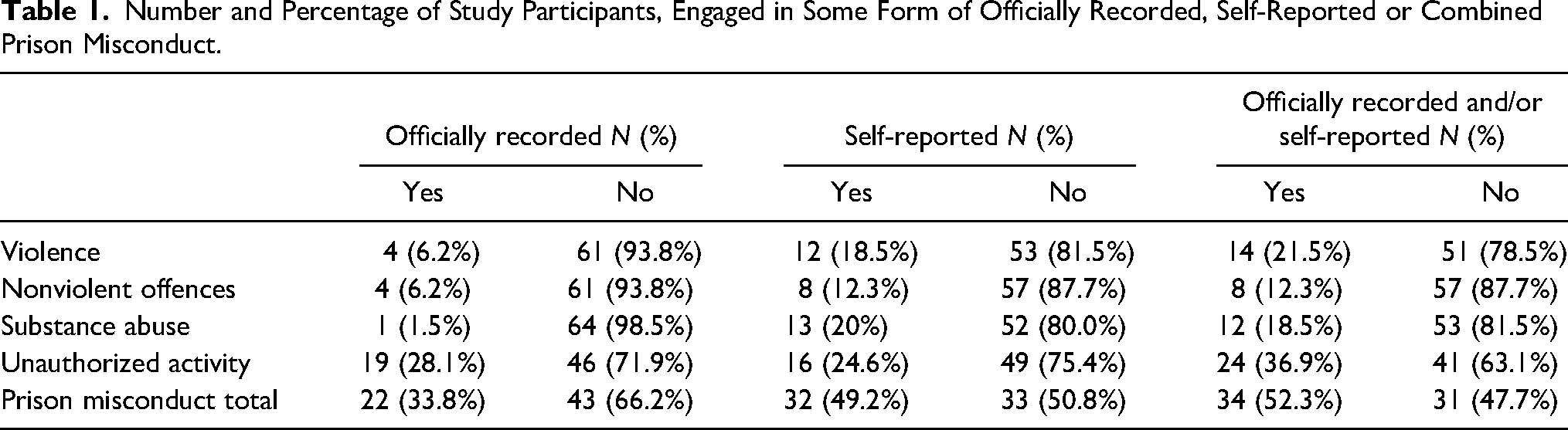
During a 3-month follow-up period, the average number of officially recorded rule infractions among study participants was M = .65(SD = 1.21, range from 0 to 7 incidents). In contrast, the average number of self-reported misconduct incidents was higher, with M = 2.51 (SD = 7.31, range from 0 to 50 incidents). This discrepancy between officially recorded and self-reported number of incidents is statistically significant (t = −2.06, p = 0.04).
The variable combining both officially recorded and self-reported prison misconduct was selected for further analysis. This decision was based on the understanding that relying solely on either officially recorded or self-reported data may capture only a partial view of prison rule infractions. By merging these two types of data, it is expected that the latent information about prison misconduct will be reduced, resulting in more accurate and comprehensive findings. Thirty-four young adults (52.3%) engaged in some form of prison misconduct, either officially recorded, self-reported or both (Table 1). Specific types of misconduct included 14 individuals (21.5%) involved in violent incidents, 8 (12.3%) committing property offenses, 12 (18.5%) engaging in substance abuse, and 24 (36.9%) participating in unauthorized activities.
Number and Percentage of Study Participants, Engaged in Some Form of Officially Recorded, Self-Reported or Combined Prison Misconduct.
Descriptive statistics for the START:AV and OASys variables, including the total sample and the subgroups of individuals who committed any prison misconduct and those who did not, are presented in Table 2. The comparative analysis revealed that prison misconduct differentiates these two groups in terms of their risk assessment items. Young offenders who committed rule infractions during the 3-month period exhibited significantly more vulnerabilities and fewer strengths as assessed by the START:AV. Their risks of adverse outcomes were also rated significantly higher. Additionally, they demonstrated significantly higher OASys risk factors related to the Relationships and patterns of Thinking and Behavior (see Table 2).
Descriptive Statistics and the Comparison of the START:AV and OASys Variables Between Groups of Individuals Who Committed and Did Not Commit Any Prison Misconduct.
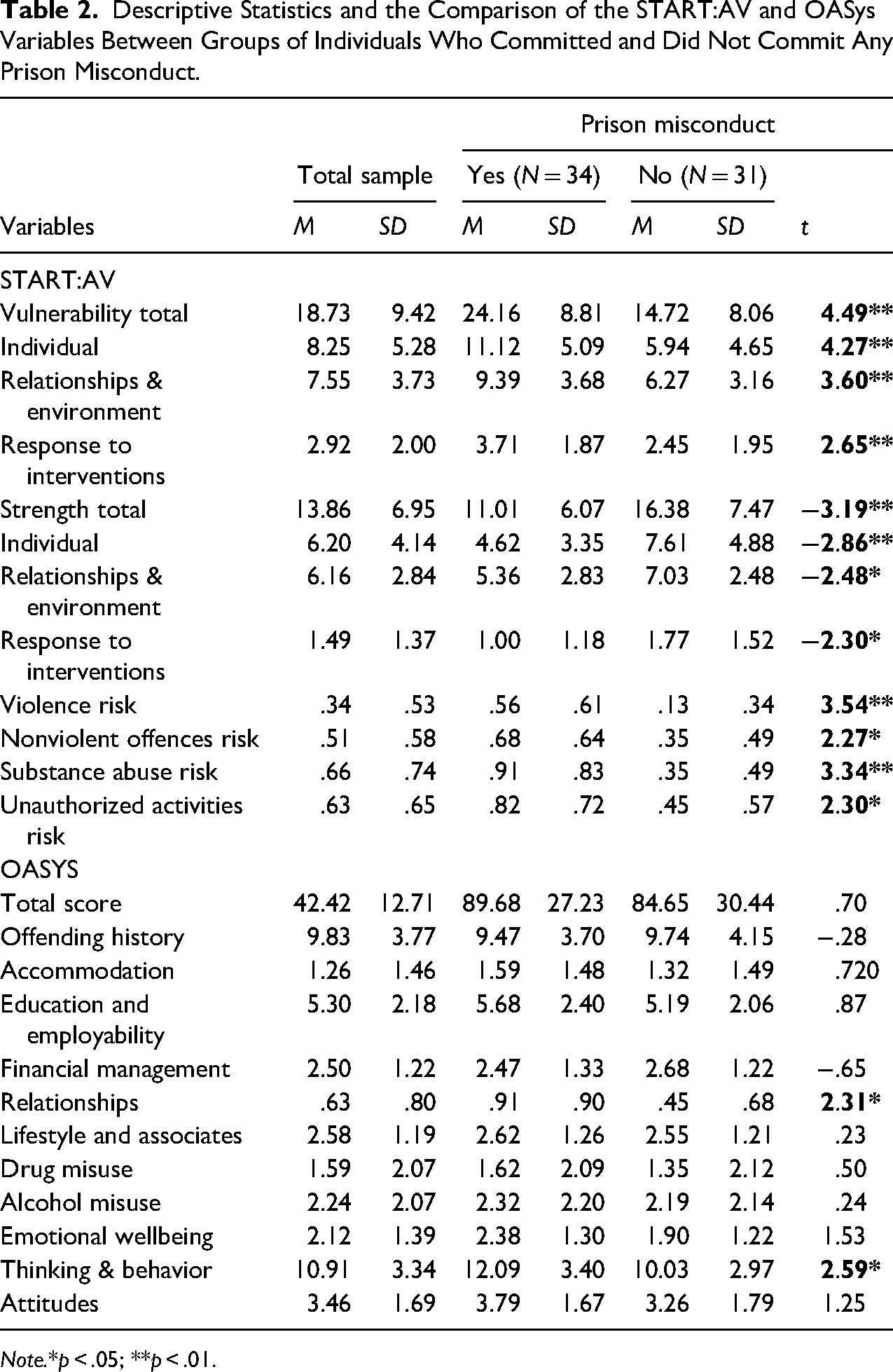
Note.*p < .05; **p < .01.
The AUC values for the START:AV and the OASys items along with risk estimations in predicting four distinct types of prison misconduct are presented in Table 3. The START:AV Vulnerabilities exhibited varying levels of predictive validity, with the Total score of vulnerabilities significantly predicting violence, substance abuse and unauthorized activities, all demonstrating large effect sizes. Vulnerabilities linked to Individual characteristics of young offenders showed consistent predictive accuracy across all types of prison misconduct. Furthermore, Vulnerabilities associated with Relationships and environment demonstrated a large effect size in predicting violence, while those concerning Response to intervention significantly predicted both violence and substance abuse, with moderate effect sizes. The START:AV Strengths, including the Total score, Individual strengths and Strengths associated with Relationships and environment, demonstrated large effect sizes in predicting nonviolent offenses. They were also significant predictors of substance abuse with the effect sizes ranging from moderate (AUC = .68) to large (AUC = .80). The risk estimations showed large effect sizes in predicting respective type of prison misconduct (range of AUC from .74 to 85), except for nonviolent offences (AUC = .67).
Predictive Validity Parameters for the START:AV and the OASys Variables per Types of Prison Misconduct.
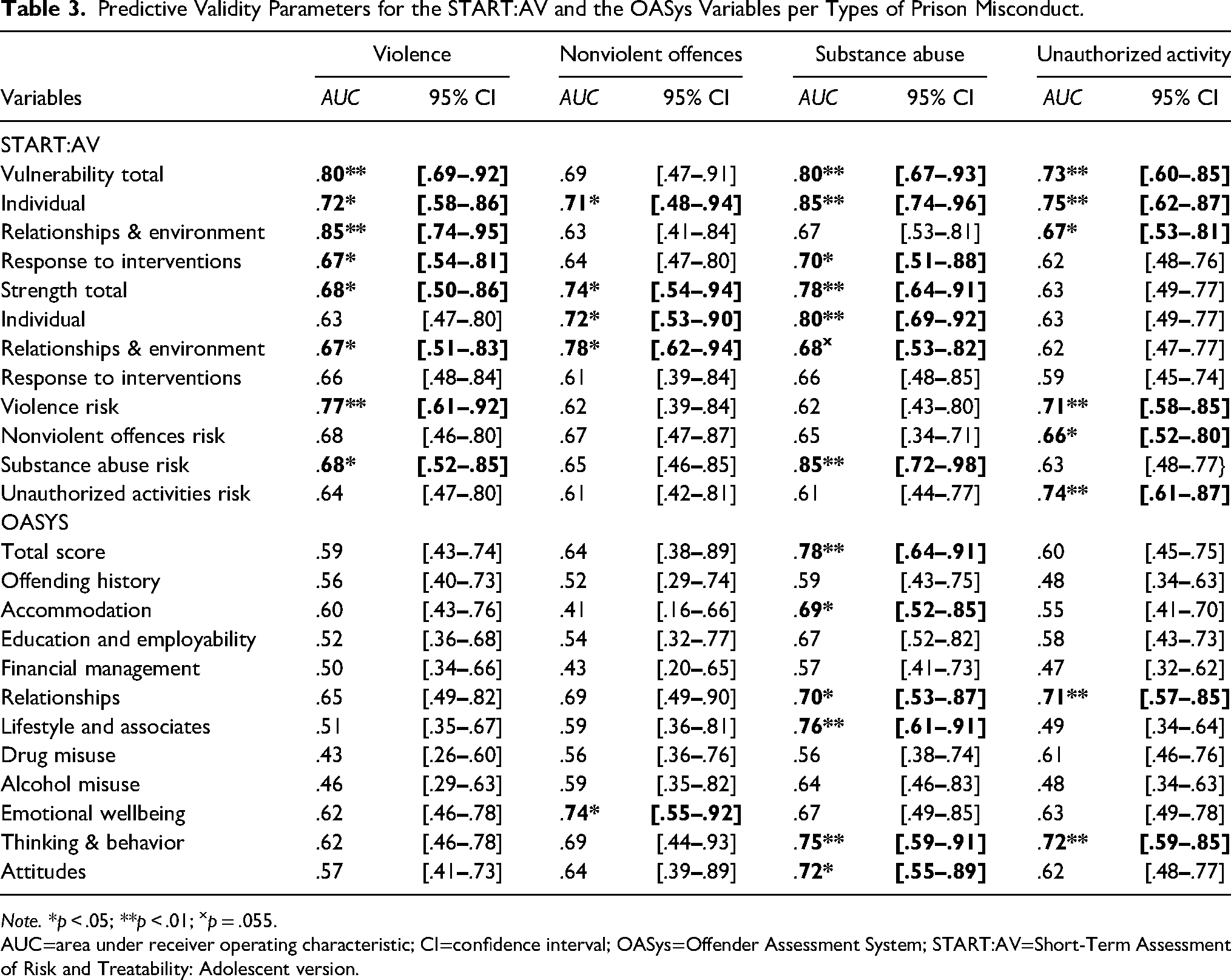
Note. *p < .05; **p < .01; xp = .055.
AUC=area under receiver operating characteristic; CI=confidence interval; OASys=Offender Assessment System; START:AV=Short-Term Assessment of Risk and Treatability: Adolescent version.
Five out of 11 OASys risk factors as well as the total score of the OASys showed significant predictive validity for substance abuse in prison with the effect sizes ranging from medium (Accommodation AUC = .69) to large (Lifestyle and associates AUC = .76; Total OASys score AUC = .78).
Discussion
The aim of the study was to compare two risk assessment instruments, namely, the OASys designed for adults, and the START:AV, designed for adolescents—in their ability to predict prison rule infractions among emerging adults (aged 18–23 years). This research contributes to the limited international literature on applicability of different risk assessment tools in predicting prison misconduct (Abbiati et al., 2019) in general, and within the young adult population (Kleeven et al., 2023) in particular.
The analysis of prison misconduct frequencies revealed its prevalence among young adults, serving their sentences in Lithuanian prisons, with more than half of them committing rule infractions during the 3-month period of incarceration. In contrast, the study on an adult sample (median age 44, range 21–74 years) reported that around 42% engaged in prison misconduct over 1 year, consistent with findings from other research on adult populations (Abbiati et al., 2019). The results of this investigation also differ from those observed in a sample of adolescents placed in medium or high secure treatment units of the residential youth care service in the Netherlands, where institutional adverse outcomes were reported in 99.1% of cases over a 4-month period (De Beuf et al., 2023). The literature suggests that prison misconduct rates may depend on the data collection method (Bosma et al., 2020) or the period over which it is assessed (Butler et al., 2023; Trulson et al., 2010). Additionally, the variability in approaches toward handling prison rule infractions across different countries and correctional settings—ranging from command-to-control cultures to rehabilitative environments (La Vigne, 2024)—may also influence misconduct rates. Nevertheless, the relatively high frequency of misconduct observed among young adults adds to the literature indicating their behavioral similarities with adolescents, as opposed to older adults (Arnett, 2007; Chamberlain & Grant, 2019).
The study supported the importation model by confirming that psychosocial and developmental characteristics of incarcerated young adults are important for their prison rule infractions. Specifically, those engaged in misconduct displayed greater START:AV vulnerabilities and fewer strengths, as well as higher assessed risks of adverse outcomes, compared to their counterparts who refrained from such behavior over a period of three months. In contrast, the OASys ratings did not reveal significant differences between the groups in terms of the total score, risk of re-offending, or separate risk factors, except for Relationships and Thinking & Behavior. Similar patterns emerged when different types of prison misconduct were analyzed as dependent variables. The OASys did not appear to predict violence or nonviolent offences, and its predictive utility for unauthorized activities was limited to the same risk factors that were associated with general misconduct, that is, Relationships and Thinking & Behavior. The only one risk factor, assessed by the OASys—Emotional wellbeing— predicted nonviolent offenses. Meanwhile, the START:AV ratings for Vulnerabilities and Strengths demonstrated predictive validity for multiple types of misconduct. Vulnerability Total score and most of the subscales effectively predicted violence, substance abuse, and unauthorized activities, while Strength Total score and most of the subscales were predictive of violence, nonviolent offenses, and substance abuse. Similar results of the START:AV have been reported in other studies with institutionalized adolescent samples. For example, the Total Strength and Vulnerability scores significantly predicted verbal and physical aggression in medium secure adolescent service in the United Kingdom (Sher et al., 2017). Additionally, these scores were found to predict institutional violations in residential youth care service in the Netherlands (De Beuf et al., 2023).
Although the results indicate that the adolescent-tailored risk assessment instrument demonstrates better predictive power, further exploration of developmental aspects among emerging adults is warranted before drawing definitive conclusions. The observed differences between the two risk assessment tools in predicting prison misconduct may be also attributed to their structural properties. Specifically, the OASys encompasses both static and dynamic risk factors but does not specify the timeframe during which these risk factors were present. In contrast, the START:AV focuses exclusively on dynamic vulnerabilities and strengths, assessed within a defined period of the past 3 months. Moreover, the OASys represents the second generation of risk assessment instruments (Moore, 2015), while the START:AV exemplifies the structured professional judgment (SPJ) approach (Viljoen et al., 2014). The ongoing debate about which type of instrument serves as a superior predictor of outcomes and consistently outperforms others remains unresolved (Abbiati et al., 2019; Smeekens et al., 2024). Therefore, further research is needed to identify the effectiveness of each instrument in the specific context and with the specific population.
Another notable factor, that could influence the findings of the study relates to differences in evaluators. The START:AV assessments were conducted by a researcher with a psychological background and extensive experience in risk assessment, whereas the OASys assessments were carried out by prison officers, who have varying educational backgrounds, levels of training, and experiences in risk assessments. Differences in the accuracy of risk assessment conducted by researchers versus practitioners have been extensively investigated by De Beuf et al. (2021). They suggest that risk assessments performed by practitioners as part of their routine work tend to exhibit weaker interrater reliability compared to those performed in controlled, nonfield studies. This tendency is observed regardless of whether actuarial instruments or structured SPJ approaches are used (De Beuf et al., 2021).
Conclusion
The present study explores the importation model by utilizing two distinct risk assessment tools to predict prison misconduct among young adults. This research contributes to the existing literature on institutional adjustment by emphasizing a developmental perspective and its implications for understanding prison rule infractions. By demonstrating that young adults exhibit psychosocial and behavioral patterns more akin to adolescents, the study underscores the importance of distinguishing this group from the broader adult population in terms of penal execution, risk assessment and intervention strategies.
Footnotes
Declaration of Conflicting Interests
The authors declared no potential conflicts of interest with respect to the research, authorship, and/or publication of this article.
Funding
The authors disclosed receipt of the following financial support for the research, authorship, and/or publication of this article: The research was conducted as part of a postdoctoral fellowship project: The predictors of criminal risk for convicts in emerging adulthood,” funded by the Lithuanian Research Council, No. S-PD-22-101.
