




Abstract
Correctional officers (COs) play a crucial role within prisons. The purpose of this study is to analyze the intercultural sensitivity and individual and organizational well-being perceptions of COs. The participants were 400 COs employed in different prisons in northwestern Italy. Analysis of the results shows that there is a significant relationship between intercultural sensitivity and perceived emotional exhaustion and that this affects life satisfaction and thus the entire organization. More attention needs to be paid to the figure of the CO who interacts with people from different backgrounds often under difficult circumstances.
Introduction
Intercultural competence is defined by Fantini and Tirmizi (2006) as a competence resulting from a complex of skills necessary to behave effectively and appropriately when interacting with linguistically and culturally different others. Chen (1997) defines intercultural awareness (cognitive) as the foundation of intercultural sensitivity (affective), which, in turn, will lead to intercultural competence (behavior). Relative to intercultural sensitivity, the definition proposed by Chen and Starosta in 2000 emphasizes the ability to develop a positive emotion toward understanding and appreciating cultural differences that promotes appropriate and effective behaviors in intercultural communication.
Hammer et al. (2003) then proposed a distinction between intercultural competence, understood as the ability to think and act with intercultural awareness, and intercultural sensitivity, as the ability to distinguish and experience relevant cultural differences.
Research conducted in the social and healthcare context has stressed the importance of intercultural sensitivity. The study carried out by Fantasia et al. (2021) emphasizes the need to pay attention to intercultural care settings and, in particular, the discursive construction in nonnative physician‒patient communication, as it can influence the therapeutic outcomes of the care pathway, which the latter faces. More recently, research conducted by Ahn (2017) found that organizational support is a factor that directly and indirectly impacts cultural competence by reducing intercultural uncertainty and improving coping strategies. Although intercultural skills are recognized as fundamental in care and social settings, this issue is still little explored in the prison context. However, whether or not one possesses the intercultural skills and intercultural sensitivity suitable for being able to establish a positive relationship with the foreign national inmate (FNP) can affect the individual well-being of correctional officers (COs) who work closely with inmates on a daily basis. In fact, one of the major problems experienced by COs, as underlined by Prati and Boldrin (2011) and Viotti (2016), is related to the difficulty of managing the relationship with FNPs, mainly caused by cultural differences and the related communication difficulties.
Correctional Officers and Foreign National Inmates: Between Complexity and Complementarity
Iversen and colleagues (2013) argue that good communication skills are necessary to establish effective relationships between prison officers and inmates. However, language differences are often an insurmountable obstacle, especially in the relationship between a CO and an inmate is referred to as a foreign national. Therefore, inter-lingual and intercultural communication is crucial. In fact, it may happen that precisely because of the difficulty in communication, the prisoner is seen to repeat the message by expressing it aloud. This gesture may be interpreted as a symptom of anger or aggression and thus lead to frustration or the choice to isolate oneself to avoid conflict. Research by Iversen et al. (2013), conducted in a Norwegian prison, underlines how foreign inmates perceive discriminatory attitudes toward them by COs, showing how the latter have reduced intercultural communication skills. The authors bring to light how prejudice and a lack of communication skills can undermine the foreign prisoner-CO relationship, which inherently has a strong imbalance, given the latter's power to control the situation. Therefore, based on the difficulties expressed, Iversen et al. (2013) stated the need to develop greater awareness of cultural differences and acceptance of diversity in addition to language proficiency to improve the relationship and reduce the risk of stigmatization and marginalization of foreign inmates. In this regard, a study conducted by Kruttschnitt et al. (2013) addressed the issue of hostile relationship between COs and minority inmates, emphasizing how this relationship was characterized by dehumanizing attitudes, contempt, and indifference.
In Italy, FNPs make up a high percentage of the prison population, a place of the highest expression of religious, cultural, and dietary linguistic differences. And, they face difficulties that can also be attributed to inadequate prison staff training (Cosentino, 2012). According to the latest data reported by the Ministry of Justice (2022), there are a total of 56.196 inmates in Italy, of whom 17.683 are foreigners, accounting for 31,47% of the prison population. Most of them are of Moroccan origin (20.23%), followed by Romanian inmates (11.71% percent) and Albanian inmates (10.43%) (ISTAT, 2022).
COs and personnel in the treatment area represent the actors in the penal system on which the realization of the penitentiary system's re-educative function largely depends. A survey conducted by Cosentino (2012) shows how prison workers and, in particular, COs interface on a daily basis with problems related to FNPs, including the difficulty in communication due to language differences and the lack of cultural mediators, as well as the reduced possibility of inmates’ maintaining contact with their family members both in person and by telephone. Moreover, language difficulty has also been found to be the cause of misunderstandings between prison workers and FNPs (Ravagnani, 2017). Identified in research carried out by Prati and Boldrin (2011) and Viotti (2016), these difficulties in managing the relationship with FNPs are caused mainly by cultural differences and communication difficulties, fueling high levels of CO stress that can result in burnout.
Although intercultural skills are recognized as fundamental in care and social settings, this issue is still little explored in the prison context. However, whether or not one possesses the intercultural skills and intercultural sensitivity suitable for being able to establish a positive relationship with FNPs can affect the individual well-being of Cos who work closely with inmates on a daily basis. In fact, one of the major problems experienced by COs, as claimed by Prati and Boldrin (2011) and Viotti (2016), is related to the difficulty of managing these relationships, mainly due to cultural differences and related communication difficulties. Again, these difficulties are noted for their risk in creating high levels of CO stress related to burnout.
Correctional Officer Burnout and Job Satisfaction
Burnout represents one of the dimensions that, according to authors in the literature, contributes to capturing different aspects of organizational well-being, understood as “the ability of an organization to promote and maintain the highest degree of physical, psychological and social well-being of workers in all types of employment” (Avallone & Bonaretti, 2003, p. 24). Work overload, role ambiguity, job dangerousness, poverty of communication tools, and lack of recognition of merits are just some of the stressful stimuli (Prati & Boldrin, 2011). These affect workers’ ability to concentrate and perform, and can lead to the development of some pathologies, such as depression and burnout. In particular, COs not feeling up to the tasks assigned to them, mainly due to a lack of adequate training, are constantly subjected to work-related stress risks (Ferrari, 2016). Those who work inside prisons represent the primary actors in the penal system who are directly responsible for implementing new penal policies, having vast discretionary power that impact the inmate's quality of life. Failure to consider their motivations, problems, and perspectives has, therefore, greatly hampered efforts to reform prisons (Crewe et al., 2011).
In addition, some research (Lambert et al., 2012) has mainly emphasized the analysis of factors that can contribute to reducing burnout levels. Social support and trust in the organization were found to be a form of protection from burnout. In particular, where help received from the administration, COs perceive their work more positively. No less important is the emotional closeness of colleagues that enables COs to deal with the challenges associated with the job. This makes work more interesting and meaningful and, therefore, increases the individual's perception of efficiency. Research by Lambert, Hogan et al. (2012), Lambert, Minor et al. (2016) also found that the support COs receive from supervisors and the trust they place in them are protective factors from work demands, affecting both engagement and job satisfaction and reducing levels of burnout. Conversely, lack of trust, in addition to affecting burnout levels, may lead staff to take out their frustrations on others, especially those who lack power, such as inmates, who may be treated insensitively and impersonally (Lambert et al., 2012). Dial et al. (2010) report that a higher level of training of those working in carceral settings affects their professionalism, enabling them to have more positive interactions with supervisors, colleagues, and inmates. This would allow them to deal more effectively with the complexities and ambiguities inherent in their work. The authors also point out that staff members’ perceived job satisfaction correlates with their greater ability to contribute to the goals of the prison system and thus to provide safety, dignity, and rehabilitation.
International research with the aim of studying the causes and effects of burnout in prison officers has advanced, particularly in the last decade. However, as stated by Viotti (2016), Testoni and colleagues (2020) and Coppola & Rania (in press), there are still very few studies in the Italian context, partly due to the difficulty of accessing the prison world (Testoni et al., 2020). Research conducted by Petitta et al. (2009) has further illustrated that a sense of self-efficacy is a significant predictor of burnout. In contrast, Prati and Boldrin (2011) emphasized the role of overcrowding, understaffing, risk of aggression, inmate insults, relationships with hierarchical superiors, and lack of psychological services as the main issues underlying staff burnout. More recently, Castiglione et al. (2017) found that discrepancies between future self-representation and the current role of COs increase levels of burnout. Further, they reported that individual factors are crucial because self-representation drives thoughts, actions, and emotions. Relatedly, Farnese et al. (2017) revealed how the presence of a mentor and socialization are crucial protective factors for young COs.
Viotti (2016), Viotti et al. (2017) and Rania et al. (2020) documented that the relationship with prisoners represents a stressor that negatively affects the physical, cognitive, and, above all, emotional well-being of COs. In addition, the prison officer's guilt and perceived helplessness due to the inability to help inmates are seen as another source of stress (Viotti, 2016). Research by D'Angelo et al. (2018) found that COs perceived themselves as less competent in embracing the culture of punishment aimed at rehabilitating inmates and related work practices based on support, empathy, and emotional intelligence. Study findings from these authors also revealed how lack of competence in managing inmates was perceived as one of the causes contributing to the development of burnout syndrome. Finally, Testoni et al. (2020) reported that 30% of COs exhibited high levels of emotional exhaustion (EE); 60 percent showed high levels of depersonalization (DP), and age affects the perception of exhaustion.
In Italy, there are few investigators (Coppola et al., 2022; Prati & Boldrin, 2011; Viotti, 2016) who have addressed the issue of organizational well-being and the dynamics between FNPs and COs from the latter's perspective. Prati and Boldrin (2011), for example, acknowledged that the CO/foreign inmate relationship is one of the most serious and stressful work issues. Along the same lines is a qualitative study conducted by Viotti (2016) who examined the issue from the perspective of COs, noting how linguistic and cultural diversity complicates daily communication between the two contributes to increased stress levels for the officers. However, despite the key role of COs in prisons and, in particular, in the adaptation process of FNPs, both international and Italian studies have failed to adequately address the issue.
Building on this theoretical framework, the current study conducted in Italy attempts to bridge this gap. In particular, the focus is on COs’ perceptions of their job satisfaction and cultural sensitivity, as they are most often in close contact with foreign national prisoners, with whom complex dynamics are established.
Aims and Hypotheses
The aim of the study is to analyze the intercultural sensitivity of COs and delve into their perceptions of individual and organizational well-being. Another objective is to understand if and how intercultural sensitivity is associated with organizational well-being and perceived life satisfaction.
Drawing on the literature review and study objectives, the following hypotheses were formulated:
The Research Context
In the Northwest, 13,310 people are detained, of whom 43.85% are of foreign origin, and mostly from the African continent (56.85%). The study was conducted in 16 penitentiary institutions in northwestern Italy. Specifically, five prisons were involved, including one high-security and one attenuated-custody house, and 11 correctional houses.
Method and Measures
The study design was quantitative. The protocol consisted of two sections: a first part that explored sociodemographic and contextual aspects (gender, age, marital status, educational qualification, years of experience in the profession); and a second part that investigated psychological constructs related to intercultural sensitivity, perception of organizational well-being and life satisfaction experienced by theCO. Specifically, the protocol consisted of the following measures:
Dependent Variable. Satisfaction with life scale (SWLS; Diener et al., 1985; Italian validation Di Fabio & Palazzeschi, 2012), 5-item, 7-point Likert response scale (1 = strongly disagree and 7 = strongly agree) (α = .85).
Independent variables. The Work-Related Basic Need Satisfaction Scale (W-R-BNS) (Van den Broeck et al., 2010; Italian validation Colledani et al., 2018) includes 18 items measured on a five-point scale (from 1 = completely disagree to 5 = completely agree). The scale consists of three subscales with six items assigned for each basic need: Autonomy (α = .71), Competence (α = .72), and Relatedness (α = .57).
The Maslach Burnout Inventory (MBI) (Maslach & Jackson, 1981) was validated and adapted in Italy by Sirigatti et al. (1988). This questionnaire consists of 22 items that provide a measure of perceived burnout. The frequency response format is used. Items are answered on a 7-point Likert scale ranging from 0 (never) to 6 (all days). The instrument includes three subscales: Personal Accomplishment (PA) (α = .74), EE (α = .88), and DP (α = . 67).
The Intercultural Sensitivity Scale (α = .87), validated by Chen and Starosta (2000) and back translated by the authors with the help of a native English speaker, is a questionnaire consisting of 24 items that aims to assess respondents’ intercultural sensitivity. The scale is divided into five subscales: interaction engagement (α = .63), respect for cultural differences (α = .73), interaction confidence (.65), interaction enjoyment (α = .68) and interaction attentiveness (α = .60). Higher scores indicate a higher level of cross-cultural sensitivity.
Procedure
The study, conducted in 2019, was approved by the Ethics Committee of the Department of Educational Sciences of the University of Genoa. The researchers then contacted the Regional Superintendent of Prison Administration (PRAP, organ of the Ministry of Justice), and the directors of the individual penitentiary institutions in the northwest by e-mail to explain the study and request their willingness to participate. Sixteen of 20 institutions chose to engage, and dates during which the researchers would administer the paper questionnaires were agreed upon. The questionnaire was completed in small groups in a dedicated room, within which the researcher remained available for any questions and/or clarifications.
The process took approximately 20 min, solely on a voluntary basis, with no incentive for participation. Before distributing the questionnaires, the researcher reviewed the objectives of the research and informed participants about the processing of personal data—and the option of withdrawing from the research at any stage. Participants were recruited through random cascade sampling, starting with the directors of individual correctional institutions, who informed employees of the possibility of taking part in the study through a circular letter. Data were collected in accordance with the ethical recommendations of the Declaration of Helsinki and in accordance with the American Psychological Association (APA) standards for the treatment of human volunteers. Only fully completed questionnaires were analyzed. Before completing the questionnaire, participants were asked to sign informed consent and a personal data processing document.
Data Analysis
Descriptive statistics were calculated for sociodemographic characteristics and variable information, consisting of frequencies and percentages. Scores for SWLS, work-related basic need satisfaction, burnout, and intercultural sensitivity were expressed as the means and standard deviations.
To compare gender differences for SWLS, work-related basic need satisfaction, burnout and intercultural sensitivity, t-tests were conducted for independent samples.
Analysis of variance was used to investigate between-group differences (age, marital status, years of work experience) in life satisfaction, work-related basic need satisfaction, burnout, and cross-cultural sensitivity, with Tukey post hoc (for homogeneous variances) or Games-Howell (for non-homogeneous variances) between-group comparisons in the case of a significant overall F value. Appropriate effect size statistics were obtained by calculating Hedges’ g, which fit differences in group sizes for t-tests and η2 for ANOVAs.
To explore the relationship between the scales and the different variables, correlation analyses (Pearson's correlation coefficient r) were conducted.
Multiple linear stepwise regression was conducted to examine the role of independent variables on life satisfaction (dependent variable). All tests were two-tailed, with a significance level of p < .05. Statistical analysis was performed using SPSS Statistic 18.0.
A post hoc power analysis to evaluate the study's power was conducted using G*Power software. A sample size of 400 was used for statistical power analysis, and an equation of six predictor variables was used. The recommended effect sizes used for this evaluation were as follows: small (f2 = 0.02), medium (f2 = 0.15), and large (f2 = 0.35; see Cohen, 1977). The alpha level used for this analysis was p < 0.05.
Participants
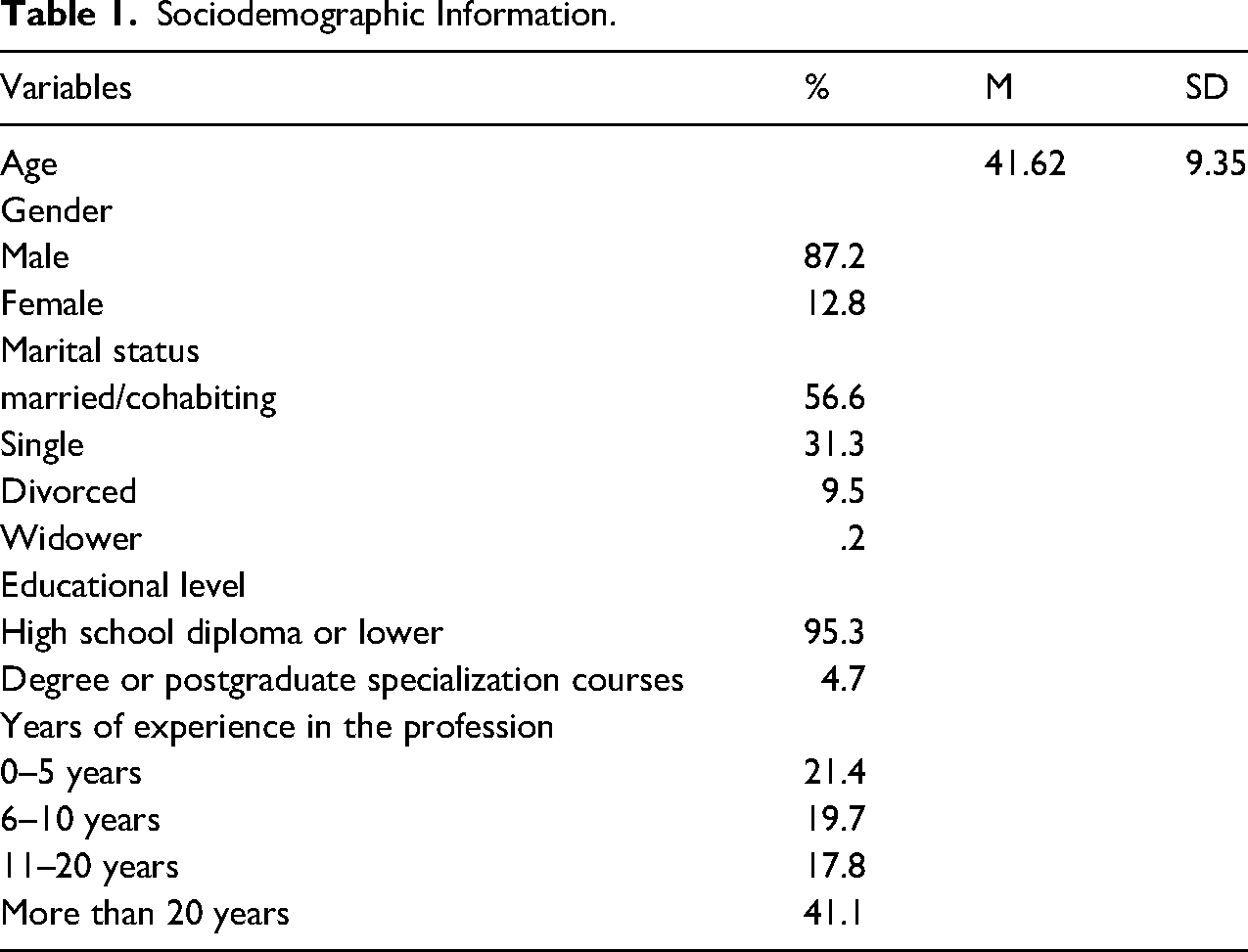
A total of 400 COs currently serving in Italian penal institutions in the northwest took part in the survey. Most were male, with an average age of 41.62 years (SD = 9.35), married/cohabiting (56.6%), and with a high school diploma or less. The majority stated that they had more than 20 years of experience in the profession. More detailed information is given in Table 1.
Sociodemographic Information.
Post hoc analyses revealed that the statistical power of this study was .52 for detecting a small effect size, while the power exceeded .99 for detecting a moderate to large effect size. Thus, there was more than adequate power (.99) at the moderate to large effect size level, but lower statistical power at the small effect size level (Louis, 2009).
Results
Mean Scores for Study Variables
Table 2 shows the averages for the variables analyzed: SWLS, work-related basic need satisfaction, burnout and intercultural sensitivity. With regard to burnout, based on the cutoffs established by Sirigatti and Stefanile (1993), COs were classified with low/moderate/high levels of burnout according to the three dimensions of the questionnaire. The reference cutoffs are shown in Table 2.
Averages and Standard Deviations of the Variables Analyzed and Cutoff MBI by Sirigatti and Stefanile (1993).
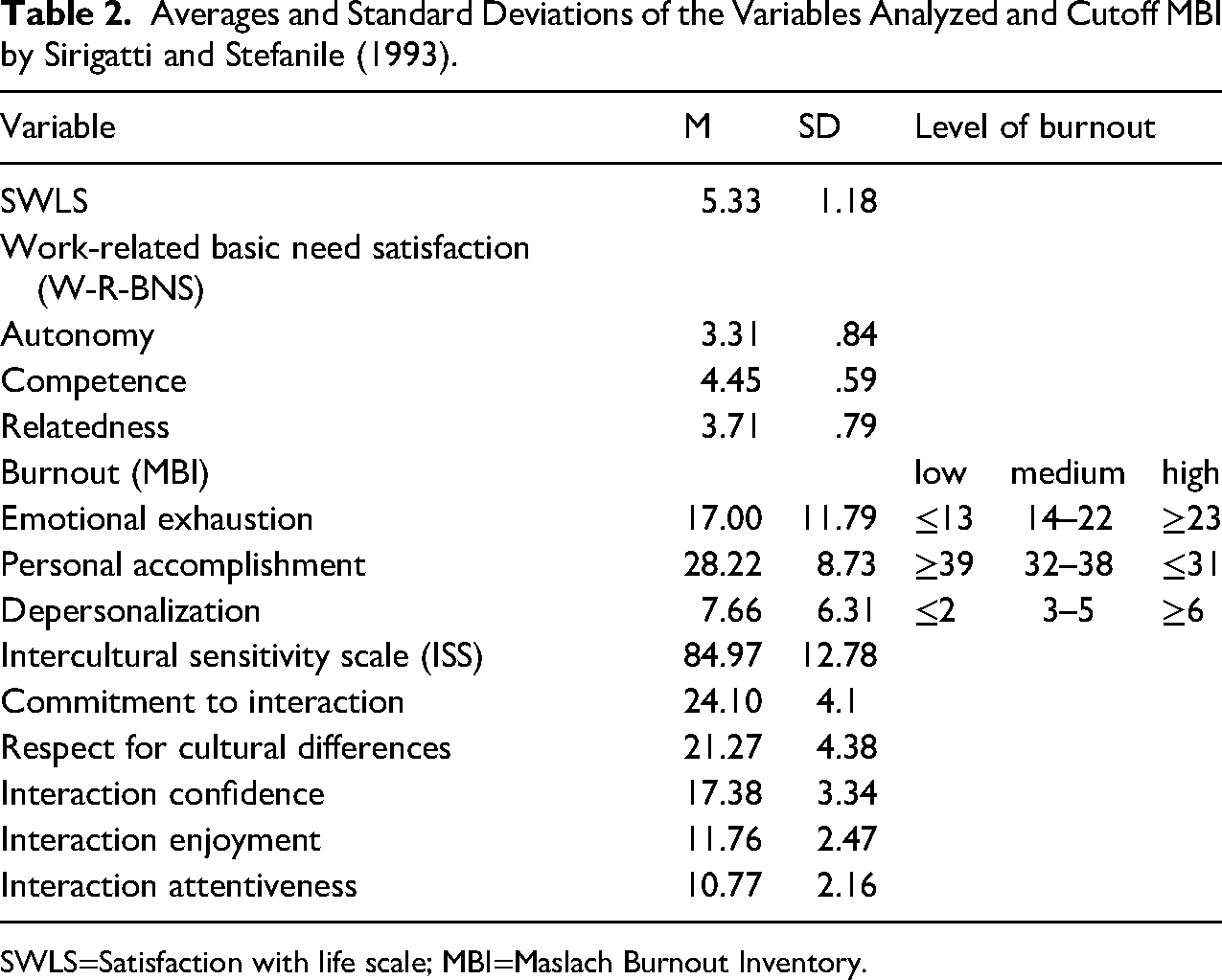
SWLS=Satisfaction with life scale; MBI=Maslach Burnout Inventory.
The study participants reported an average level of burnout with regard to the dimension of EE and a high level of burnout caused by DP and lack of PA: 31.2% of the participants had a high level of EE, 52.2% had a high level of DP, and 23.7% had a high level of burnout caused by low PA.
Finally, regarding the intercultural sensitivity scale, in all sub-dimensions, participants scored above the theoretical average of the scale.
Study Variables and Sociodemographic Variables
Analyzing the sociodemographic variables (gender, marital status, age, and years of experience in the profession) revealed significant differences across the different groups. No significant differences emerged in relation to structural variables (overcrowding, presence of FNPs, and prison size).
Below, for each sociodemographic variable considered, the differences that emerged in each construct investigated will be reported.
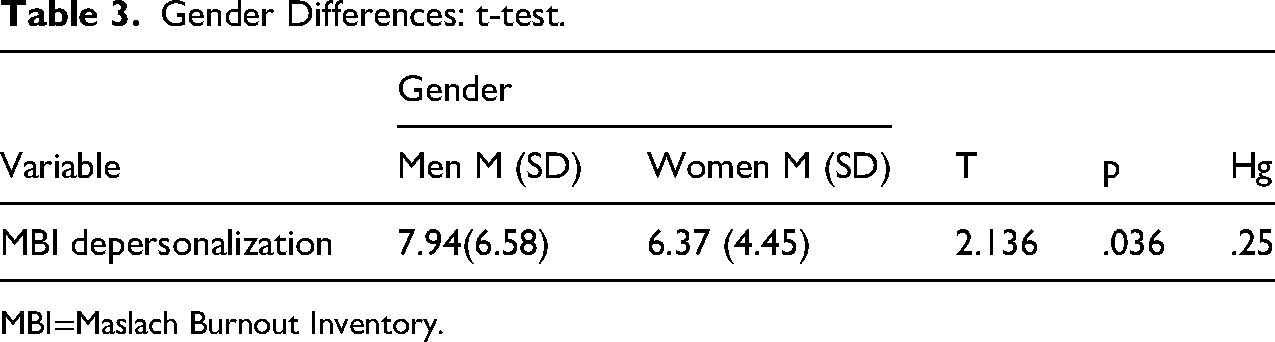
Gender Differences: t-test.
MBI=Maslach Burnout Inventory.
Gender. Data analysis showed no gender-related differences in any of the variables considered, with the exception of DP (sub-dimension of MBI), where men report a higher mean score than women (see Table 3).
Marital status. Regarding life satisfaction and work-related basic need satisfaction, no significant differences emerged between the groups.
As to burnout, a significant difference emerged in the sub-dimension of EE: those who were single reported a lower mean score than those who were married/cohabiting (see Table 4).
Marital status: ANOVA Test.

MBI=Maslach Burnout Inventory.
Finally, regarding intercultural sensitivity, a significant difference emerged from the comparison between the groups. Specifically, those who were single reported a higher score in the Interaction enjoyment sub-dimension than those who were divorced/separated (see Table 4).
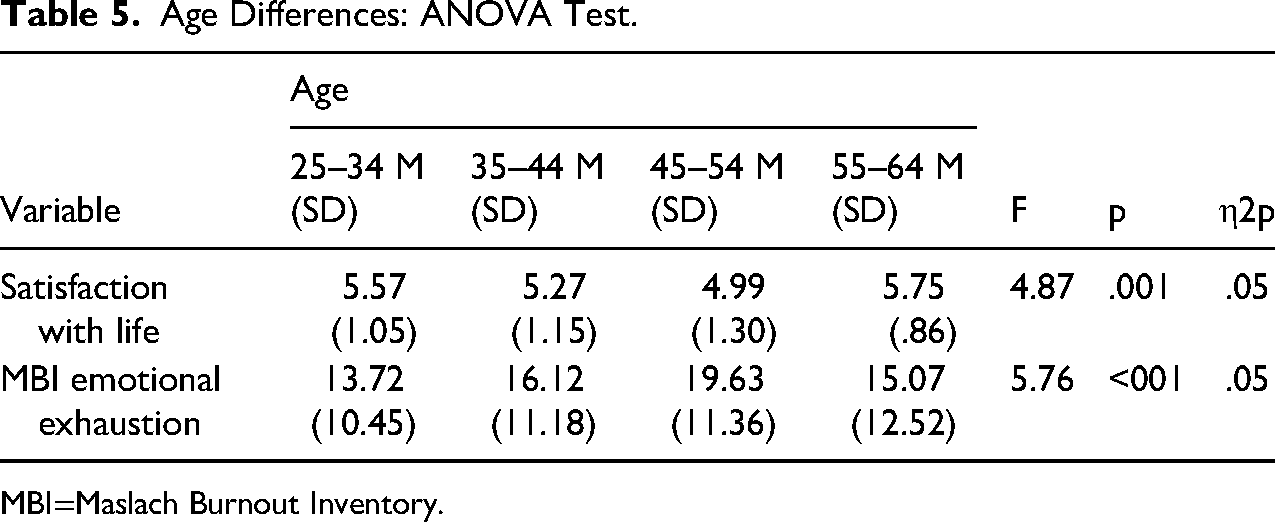
Age. Relative to life satisfaction, a significant difference emerges between groups: those aged 45–54 have lower scores than those aged 25–34 and those aged 55–64 (see Table 5).
Age Differences: ANOVA Test.
MBI=Maslach Burnout Inventory.
No significant differences emerged between groups in relation to work-related basic need satisfaction.
Relative to burnout, a significant difference emerges between groups: those aged 25–34 have lower EE scores than those aged 45–54 (see Table 5).
No significant differences emerged between groups in intercultural sensitivity.
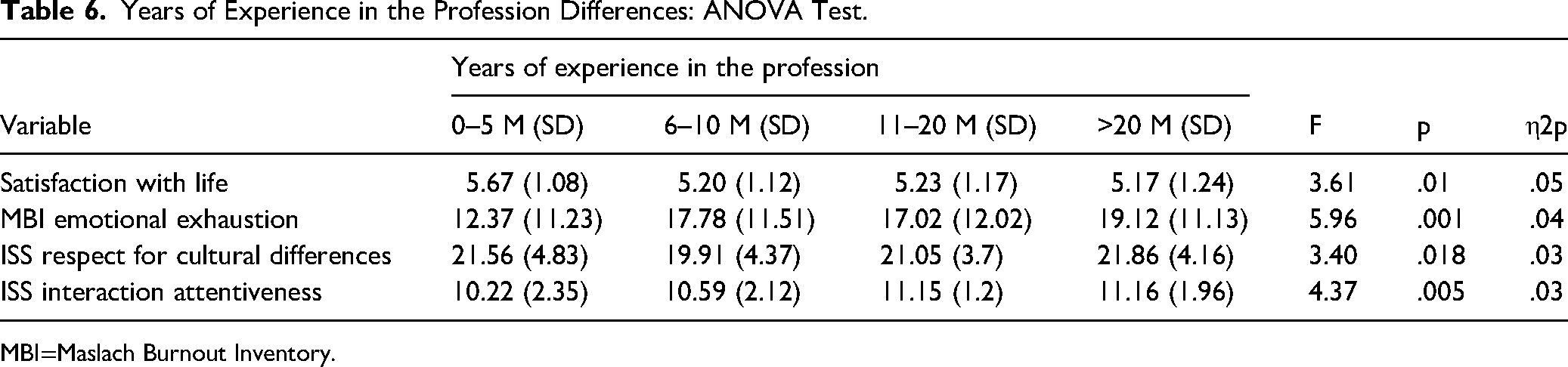
Years of experience in the profession. Relative to life satisfaction, a significant difference emerges between groups: those with between zero and five years of experience in the profession report higher life satisfaction than those with more than 20 years of experience (see Table 6).
Years of Experience in the Profession Differences: ANOVA Test.
MBI=Maslach Burnout Inventory.
No differences emerged between groups related to work-related basic need satisfaction.
A significant between-group difference also emerges regarding the EE dimension of burnout: those with between zero and 5 years of experience have a lower EE score than those with more than 20 years of experience (see Table 6).
Finally, regarding intercultural sensitivity, a significant difference emerges between groups in the dimensions of cultural differences and interaction attentiveness. Those with between 6 and 10 years of experience scored lower with respect to cultural differences than those with more than 20 years of experience. Additionally, regarding interaction attentiveness, participants with 11 and 20 years of experience and those with more than 20 years of experience report higher scores than those with 0–5 years of experience (see Table 6).
Structural Variables
Overcrowding, presence of foreign inmates, and prison size. Analysis of the results shows no significant differences between the different groups in relation to the constructs analyzed.
Correlations for Study Variables
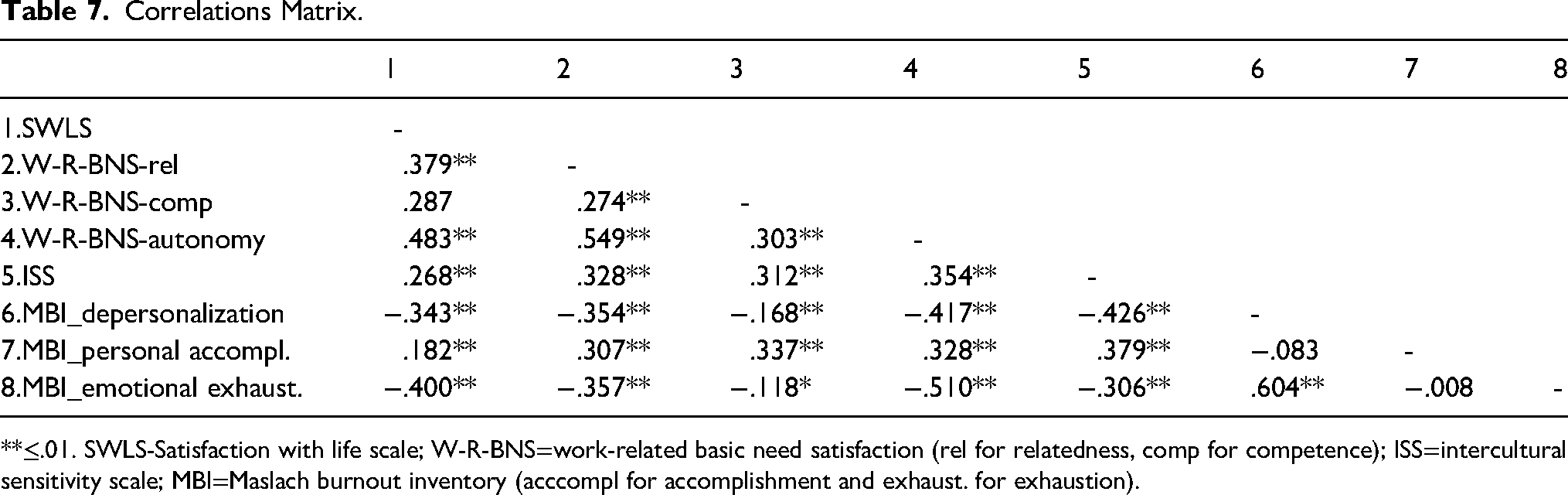
As hypothesized, analysis of the results revealed significant positive correlations between life satisfaction and intercultural sensitivity, need for autonomy and relatedness (see Table 7). Negative correlations, however, emerge between life satisfaction and EE and DP.
Correlations Matrix.
**≤.01. SWLS-Satisfaction with life scale; W-R-BNS=work-related basic need satisfaction (rel for relatedness, comp for competence); ISS=intercultural sensitivity scale; MBI=Maslach burnout inventory (acccompl for accomplishment and exhaust. for exhaustion).
Regarding intercultural sensitivity, significant correlations emerged with PA, need for autonomy, need for competence and relatedness. Negative correlations emerge between intercultural sensitivity and EE and DP.
Finally, with regard to EE, significant negative correlations emerged with the need for autonomy, relatedness, and intercultural sensitivity.
Regression
Life satisfaction. Stepwise regression was used to investigate intercultural sensitivity, work-related basic need satisfaction, and EE (entered as independent variables) on life satisfaction.
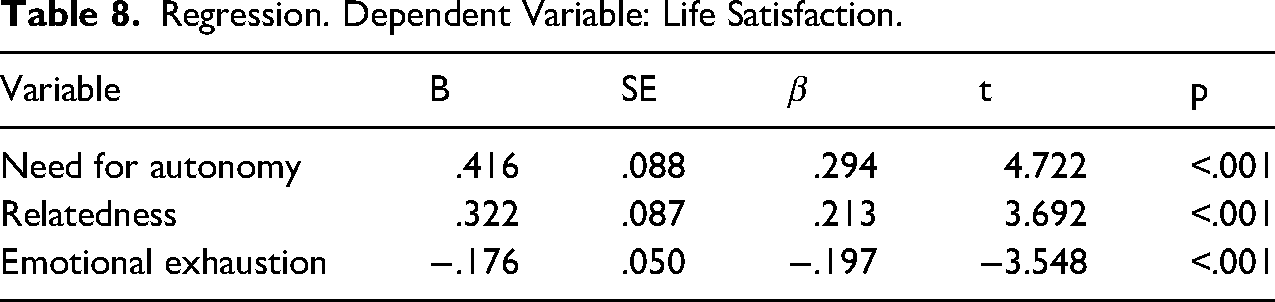
The regression model, shown in Table 8, predicted 33% of the variance. The structural parameters of the model with the intercept were highly significant (p < .001), with an adjusted R2 = 0.326; F = 46.97. As hypothesized, work-related basic need satisfaction related to autonomy and relatedness and EE were significant predictors. Contrary to Hypothesis 5, intercultural sensitivity is not a predictor of life satisfaction.
Regression. Dependent Variable: Life Satisfaction.
Discussion
The study's findings illustrate how sociodemographic variables affect participants’ individual and organizational well-being and intercultural sensitivity. Specifically, in relation to gender, men and women perceive the same level of EE, as also evidenced by previous research in an international context (Carlson et al., 2003; Harizanova & Stoyanova, 2020), and PA.
There is a difference with regard to DP: compared to the research conducted in the past by Carlson et al. (2003), where no significant gender differences were found. The current study revealed that male participants reported higher levels of DP than women. This finding may be related to women correctional staff's developing coping strategies (for example, peer networking and interpersonal communication skills), as pointed out by Carlan and McMullan (2009). Many turn out to have better communication and interpersonal skills and thus, even in this complex environment, are better able to adapt.
Regarding marital status, those who are single/unmarried are less absorbed in their work and take more pleasure in interacting with people from different cultures than those who are divorced/separated; they also report lower scores in the EE dimension than those who are married/cohabiting. This finding may be explained both by the need to balance work and family life and because, as reported by Rania et al. (2020), many COs in Italy live far from their families. Further, when they request a transfer to a work location closer to their residence, the criteria by which this is achieved are not always clear. Therefore, these two factors are a source of stress. Another explanation may be that, as noted in research by Armstrong et al. (2015), work-family tension and conflict are significantly related to both job stress and job satisfaction. Therefore, married/cohabiting respondents may be more prone to family-work conflict and, therefore, experience higher levels of stress.
Relative to age, those between the ages of 45 and 54 perceive lower life satisfaction and a high level of EE than those who are younger. This is likely related to this age group's longer tenure in the profession, affecting their level of perceived EE and thus life satisfaction in general. This finding is in line with Ricciardelli et al. (2022), who point out that prison work is a challenge that often results in stress and compromised well-being. However, the data also show that those between the ages of 45 and 54 perceive lower life satisfaction than their older work colleagues. As suggested by Lambert et al. (2016), this may be explained by the greater number of strategies developed over time “on the job” that enables them to complete work more efficiently. Having interests outside of work can also help to achieve greater life satisfaction, such as engaging in hobbies and other activities.
Finally, regarding years of experience in the profession, the data showed that those with fewer years of service had higher scores in life satisfaction and lower scores in EE than those with more than 20 years of experience. This finding is in line with Viotti (2016) and D'Angelo et al. (2018) on the importance of recognition. Viotti (2016) suggests the discrepancy between invested effort and reward leads to experiencing high levels of EE, emphasizing how the worker, in the absence of other tools, is inclined to distance himself from the inmate for self-protection from the associated unpleasant experiences and DP. However, these results contrast with the findings of Lambert et al. (2016), who state that older workers tend to report higher levels of job satisfaction than younger workers. In addition, it is noteworthy that those with more years of experience report higher scores in intercultural sensitivity and, particularly, with respect to cultural differences and attention to interactions. This may be because their prison work experiences, where the number of FNPs has been increasing, have led more experienced officers to develop greater skills and strategies over time to create relationships with foreign inmates, ones based on greater respect, and attention to different cultures. This finding is echoed in Misis et al. (2013), who cite many past studies showing that older officers show a greater propensity for rehabilitation and a more positive approach toward inmates than younger, more custody-oriented officers. Research conducted by D’Angelo et al. (2018) found that COs perceive themselves as less competent in embracing the culture of punishment aimed at rehabilitating inmates. Subsequent research conducted by Rania et al. (2020) revealed how a lack of competence in managing inmates is perceived as a source of stress. Past research by Lambert et al. (2012) has shown that allowing COs to perceive more control over their work conveys to them the idea of being valued and respected; the perception of greater autonomy also allows them to be more productive. More recently, Maculan (2014) described COs as “imprisoned” in patterns of behavior that leave no room for questioning their work.
The current study's findings may be related to the organizational climate, which determines the goals pursued by the CO- more control-oriented or treatment-oriented and from which the officer derives perceptions of greater or lesser competence. For example, Molleman and Van der Broek (2014) report how an administration that focuses more on order and control will encourage staff to follow that orientation, implementing rules in a rigid manner, at the expense of relationships.
Analysis of the results also shows that most participants perceive a high level of burnout caused mainly by DP and lack of PA. This finding is in line with both the international (Andersen et al., 2017; Lambert et al., 2012) and national (Baudino, 2014; Rania et al., 2020; Viotti, 2016; Viotti et al., 2017) literature, which concludes that working within the prison context leads to high levels of stress and DP (Margi & Rosenbloom, 2021). Lambert et al. (2018) also highlight how work involvement can be a protective factor from developing stress.
As well, analysis of the results revealed significant correlations between the constructs investigated. In particular, it was found that as EE increases, life satisfaction and confidence in interacting with people of different cultures decreases. Furthermore, as intercultural sensitivity increases, life satisfaction and PA increase. This finding is crucial in that it explains how the level of stress experienced within the organization negatively affects one's cultural sensitivity, which is necessary to build an effective relationship with FNPs, with repercussions on life satisfaction in general.
Regression analyses revealed that the most important predictors of life satisfaction are the need for autonomy and relatedness and EE. Indeed, the literature suggests that peer support is an important determinant of job satisfaction (Lambert et al., 2016) and a protective factor from EE (Ellison & Caudill, 2020).
Limitations and Conclusion
Although this study is one of the few carried out in the Italian context, with a quantitative approach, it has some limitations. One main issue is the low percentage of female prison officers participants because women in Italy's prison work staff are still underrepresented (Bourbonnais et al., 2007). As well, in Italy, there are few institutions and sections dedicated to women. Therefore, most female COs are employed in office support roles rather than in contact with the inmate population (Maculan, 2014).
Another limitation is that, as a kind of research on a topic related to the work context where COs currently practice their profession, bias due to social desirability cannot be ruled out. Moreover, the study, being exploratory in nature, aims to provide insight into COs’ perceptions of individual and organizational well-being, and their own cross-cultural sensitivity. A final limitation is that it did not consider organizational factors that may affect perceptions of well-being, such as the presence and interaction with other professionals, shared routines, and the usability and appropriation of spaces, as well as other issues related to the inmate population, such as the phenomena of self-harm.
Despite these limitations, this work also has many strengths. First, this study is one of the few conducted in Italy to explore the perceptions of COs in relation to his or her job well-being and relationships with the foreign national prisoners. Another strength l is the large sample size. Despite the various difficulties encountered in gaining access to penitentiary institutions, nearly all the institutions in the three regions took part in the research. Finally, this study represents one of the few research projects conducted in Italy that utilizes a quantitative research design for the study of COs.
In conclusion, the results clearly support the need to pay more attention to the role of the CO. He or she interfaces daily with people from different backgrounds often under difficult conditions while experiencing EE and feelings of DP that affect personal and work well-being, with repercussions on the entire prison system. Therefore, a focus on the organizational climate and perceived administrative support of COs is critical for the understanding and implementation of effective coping strategies. These strategies, in turn, would enable officers to perceive more control over their work and establish better relationships with the inmate population, with positive spillover effects on officer well-being of and organizational functioning.
Footnotes
Declaration of Conflicting Interests
The authors declared no potential conflicts of interest with respect to the research, authorship, and/or publication of this article.
Funding
The authors received no financial support for the research, authorship, and/or publication of this article.