




Abstract
Despite their significance in criminal legal processing, American jails have a reputation for physical and operational deficiencies, with few aspirations beyond mere custody. To examine the possibilities for United States (U.S.) jails’ progress, we assess the priorities of U.S. jail leaders, their expectations about achieving reforms, and perceived obstacles regarding change. Our analysis showed that while jail command staff embrace custody, they also endorse social service functions of jails, favor facilities that are safe and clean, support a professional workforce, accept other progressive features of jails, and reject punishment and brutality. They recognize impediments to progress, but are optimistic about potential improvements.
Keywords
Introduction
Over the past decade, United States (U.S.) local jails have confined nearly 710,000 individuals daily. Because most jail stays are short, this population is highly transient. Between 2012 and 2021, jails averaged more than 10 million bookings annually, with roughly 54% of the incarcerated population turning over each week (Zeng, 2022). Beyond the extreme flow of cases in and out of jail, housing people in these local facilities is challenging due to the diversity of the jail population. Mental and physical health and substance abuse issues are overrepresented among people in U.S. jails (Binswanger et al., 2009; Bronson & Berzofsky, 2017; Bronson et al., 2017; Maruschak et al., 2015). Local jails also hold individuals for widely varying reasons. In 2021, 71% of individuals held in U.S. jails had not been convicted of a crime (Zeng, 2022) but were being detained pending case processing. Others are sentenced to short sentences (usually a year or less), some are convicted of crimes and awaiting sentencing or transfer to another facility, and still others are being held for another authority (Applegate, 2011; Bales & Garduno, 2016; Turney & Conner, 2019). Although prisons and jails share the function of incapacitation, jails are much more closely entwined with other criminal justice agents—jails are “the nucleus of our system of justice” (Bales & Garduno, 2016, p. 267).
Despite their centrality to criminal legal processing and the scope of their contact with citizens, jails have a remarkably poor reputation. Commentators have maligned local jails for centuries for failing physical plants, widespread filth, vermin infestations, apathetic or even cruel detention officers, brutality, and idleness (Abbott, 1916, as cited in Mattick & Aikman, 1969; Fishman, 1923; Jeffreys, 2018; Roth, 2018; Walker, 2022). Even so, over time, there have been signs of improvement and evidence that jail leaders are professional, committed, and innovative (Bills & Orrick, 2023; Stinchcomb & McCampbell, 2008). The portrait of jail command staff, however, is dated and incomplete. There is no systematic, contemporary analysis of their priorities for the development and operation of American jails. The current study seeks to address this gap by analyzing leaders' perceptions of the characteristics of an ideal jail, the extent to which jails currently match this profile, and the prospects for advancement.
Literature Review
The Dubious Reputation of American Jails
Mattick and Aikman (1969) offered the observation that “no institution of any kind, has been more scathingly denounced” (p. 110) than the local jail, referring to jails as “the cloacal region of American corrections” (p. 109), an archaic term meaning, roughly, bowels or sewer. Although initially lauded for replacing public physical punishment, U.S. jails have held a low reputation virtually from their inception (Lurigio, 2018). Historically, they have been criticized for lax security, crowding, leaky plumbing, insufficient food, poor air circulation, little exercise or activity, inadequate light, little or no heat, and other operational and functional failures. Authors continue to describe jails as deplorable (Jeffreys, 2018; Roth, 2018; Walker, 2022). Drawing on personal observations, interviews, and reviews of records, Jeffreys (2018) concluded that “the Cook County Jail is a brutal, overcrowded, confusing, and filthy place” (p. 36). Lurigio (2019) recently offered the broader opinion that American jails “have always been appalling environments rife with brutality, wanton violence, filth, and unsanitary conditions,” and they remain “execrable” (p. 1359).
In contrast to these negative characterizations of jails, some scholars hold more positive views and are optimistic about possibilities for progress (Bell, 1987; Kerle, 1998; Mattick & Aikman, 1969; Stinchcomb et al., 2012). Martin (2007), for example, contends that “jails in states with proactive standards and inspection programs have generally experienced reduced liability exposure, improved conditions, greater professionalism, and greater consistency in operations” (p. ix). Jeffreys (2018) espoused largely negative views but allowed that “some compassionate sheriffs and staff work hard to prevent violence and maintain minimally decent health care and sanitation” (p. 66).
To our knowledge, there is no systematic longitudinal study that documents the extent to which U.S. jail conditions and operations have improved. However, there are some partial indicators that suggest progress. Wildeman and colleagues (2018), for example, pooled results from national surveys conducted in 1996 and 2002, showing that programming was rarely available in U.S. jails. Averaging across facilities, they found that 30% of jails provided access to religious programs, 11% offered educational opportunities, and only 10% provided life skills or personal improvement programs. In contrast, a national survey completed in 2019 reported a much higher prevalence of religious (84%), educational (55%), anger management (42%), and parenting (34%) programs in U.S. local jails (Montagnet et al., 2021). At the same time that opportunities for productive programming appear to be increasing, external oversight of jails appears to be waning. The Bureau of Justice Statistics (1986) reported that 22% of large jails were under a court order to reduce their population size, and 24% were under a court order related to one or more poor conditions of confinement in 1984. For comparison and updating, we analyzed the publicly available data from the 2019 Census of Jails (Bureau of Justice Statistics, 2022) and found substantially lower rates of court supervision. Among large jail facilities, 1.9% of jails were under a federal or state court order or consent decree to limit the number of people housed, and 3.7% were under a court order or consent decree for some specific condition of confinement as of June 2019.
Catalysts for Jail Improvement
Efforts to bring about positive change in American jails may be external or internal. Potentially reformative external factors include increased public, political, and scholarly visibility; enhanced standards and inspection requirements; court interventions following litigation; and pressures from advocacy groups (Bell, 1987; Deitch, 2023; Martin, 2007; Welsh, 1995). Jail growth in size and cost over the past several decades (Zeng, 2022) seems to have raised awareness among the public, politicians, and policy makers. A recent analysis by the Pew Charitable Trusts (2021) illustrated that jails’ spending at the local level (where most jails are administered and funded) reached $25 billion in 2017, consuming a greater share of county expenditures than libraries; firefighting; parks; public housing and community development; water, sewer, and solid waste; or courts. Clearly, the last 50 years of research on correctional systems has expanded (e.g., Butler et al., 2019), and scholars have recognized jails as a unique and important component of the criminal justice system (e.g., “Jail populations,” n.d.; Sawyer & Wagner, 2022; Turney & Conner, 2019). Jail standards—rules, regulations, and guidelines for operations and facilities—have been adopted by more than 30 states, and they are commonly combined with periodic inspections for compliance (Martin, 2007). Litigation has also forced local governments to confront jail issues, although Welsh (1995) reported that improvements were frequently incomplete. Organizations such as the Pennsylvania Prison Society, The Marshall Project, and The Prison Policy Initiative have also been advocating for persons held in jail and for monitoring local facility conditions.
Progress may also be fostered internally within specific jails and by the professional jail community. Replacing standard custody and detention goals with human service and behavioral change objectives would be consistent with elevating the reputation of jails and increasing staff professionalism (Bell, 1987; Stinchcomb et al., 2012). The National Institute of Corrections and the American Jail Association have been active in advancing jail improvements through staff training, facility certification, adoption of guiding resolutions, professional networking, dissemination of information, and other initiatives. At the facility level, we can expect, by definition, leadership from jail administrators and other command staff members. DiIluio (1987) received considerable attention for arguing that prisons need not succumb to inmate control but instead become safe and humane through strong administrative control. Similarly, we might expect that jail leaders can play a prominent role in the development of local facilities. Indeed, during a recent symposium on change hosted by The Prison and Jail Innovation Lab, retired administrator Pacholke (2023) spoke at length about the importance of talented leaders in initiating and sustaining prison and jail change and progress. Research also demonstrates that management matters for correctional staff. In a meta-analysis of research on correctional officers, Butler et al. (2019) found that supervisor support was related to increased job satisfaction and commitment to the organization and lower levels of job stress.
Despite their critical role, there is almost no evidence regarding jail command staff priorities. Only two studies provide some insight into jail leadership concerns. A 1986 national survey asked sheriffs and jail administrators to identify the most serious problems facing the criminal justice system (Guynes, 1988). On average, the respondents ranked jail crowding as the most important issue—followed by staff shortages, prison crowding, and inter-agency coordination. Notably, 70% acknowledged that they were facing a shortfall of correctional officers, identifying low salaries, the poor image of jail work, and inadequate career incentives as the greatest challenges to recruiting and retaining personnel.
In 2007, facilitators convened two working groups of jail administrators and sheriffs to discuss American jails’ challenges (Stinchcomb & McCampbell, 2008). Among the 44 participants, the most cited issues were workforce concerns, such as recruitment and retention, and meeting the extensive medical and mental health care needs of detained individuals. The groups also demonstrated “forward thinking” and recommended actions for improvement. They advocated better training, succession planning, programming for productive use of time, and reentry support. Broadly, their comments suggested recognition that jails can and should be more professional and develop greater coordination with other community agencies. As one administrator expressed, “We have to stop looking at ourselves as just jailers, and look at ourselves as part of a social service provider system” (Stinchcomb & McCampbell, 2008, p. 25).
The Current Study
The findings reported by Guynes (1988) and Stinchcomb and McCampbell (2008) provide limited insight into jail leaders’ visions for the future of U.S. jails. Guynes (1988) questioned respondents about the criminal justice system rather than focusing specifically on jails. Therefore, this approach only revealed opinions about the current situation; the study was not designed to investigate leaders’ or address problems. Stinchcomb and McCampbell (2008) reported leaders’ priorities for improvements, but their qualitative approach covered a relatively narrow set of issues. In response, the current study sought to provide a more comprehensive and current portrait. Specifically, four questions were addressed: (a) What do jail leaders believe are the characteristics of an ideal jail? (b) To what extent do they believe jails currently exhibit those characteristics? (c) What degree of progress toward the ideal do they believe is possible in the near future? and (d) What obstacles do they believe need to be confronted to achieve progress?
Method
Participants and Data Collection
There is no list or directory of U.S. jail administrative leaders. Even identifying a comprehensive list of jail facilities nationwide is extremely challenging (Foudray et al., 2021). As a result, the study relied on recruitment from a group of self-selected emerging jail leaders—graduates of the National Jail Leadership Command Academy (NJLCA). The NJLCA is “a collaborative effort between the American Jail Association (AJA) and the Correctional Management Institute of Texas (CMIT)” to provide “training for succession preparation and the development of leadership skills for successful transitioning into senior leadership positions within jails” (http://www.nationaljailacademy.org/). The NJLCA curriculum seeks to develop broad administrative and management skills—e.g., change management, workforce development, budgeting, and strategic planning (http://www.nationaljailacademy.org/; Bills & Orrick, 2023)—rather than knowledge specific to jail operations. The first cohort of jail professionals completed their 1-week training experience in 2009, and additional cohorts of approximately 25 to 35 participants have been trained with steadily increasing frequency.
A 2-pronged approach was taken to solicit participation. First, staff from the AJA agreed to relay a message from the research team to a listserv of all past NJLCA graduates, which included cohorts 1 through 36. This message, distributed in December 2020, asked those interested in the National Jail Leadership Survey (NJLS) to provide contact information using an online form. The web platform Research Electronic Data Capture (REDCap) was utilized to construct the online questionnaire and email an invitation to each individual who expressed interest. Those who had not responded within 3 weeks were sent a second email invitation.
The second approach to recruiting NJLS jail leaders involved contacting by postal mail those who graduated from cohorts 37 through 40. As each cohort graduated and names and affiliations became available, mailing addresses from agency and county websites were located and each graduate was sent a packet containing a copy of the questionnaire in booklet format, a postage–paid return envelope, and a cover letter. The letter explained the study and the importance of participation, provided information about Institutional Review Board approval, and included a URL that could be used to access the questionnaire through REDCap if the participant preferred to respond online. Non-respondents received a postcard reminder after 3 weeks, and those who still had not replied within 6 weeks of the initial mailing received a letter letting them know that data collection would end soon and encouraging participation. Data collection was concluded in March 2022 with the most recent cohort, number 40, who graduated in November 2021.
These efforts resulted in the submission of 108 surveys. However, the sample was reduced to 93 due to incomplete responses. Because there is no list or database of jail command staff, it is impossible to determine the extent to which study participants are representative of jail leaders nationwide. Moreover, the sample was not randomly selected and was recruited from officers who had demonstrated their interest in preparing for senior local jail leadership positions by applying to, being accepted by, and graduating from the NJLCA. As a result, responses may not be representative of all jail leaders. Instead, our participants are best considered a purposive sample that reveals the visions of a core group of individuals who are likely to continue to guide jails into the near future.
Most respondents were white (73.9%), male (65.2%), and averaged 46 years of age. Over half of the sample had earned at least a bachelor's degree (56.0%). Additionally, nearly half self-identified as Republican (43.7%), with the remaining identifying as Independent (26.4%), Democrat (18.4%), or Other (11.5%). Not surprisingly, the sample had extensive work experience, averaging 18.4 years’ work in corrections, and 16.8 years in their current jail jurisdiction. The majority (71.7%) had worked only in their current jurisdiction at the time of survey completion. Almost two-thirds (65.6%) of the respondents held mid-level administrative positions (e.g., sergeant, lieutenant, captain), while a smaller portion were top administrators (e.g., jail director, chief of corrections; 16.1%) or a direct subordinate (e.g., assistant director; 7.5%). Just over 1 in 10 (10.8%) were in a specialized administrative position (e.g., training, standards compliance). Respondents represented 30 states and jail capacities ranging from less than 30 to more than 10,000 beds. Roughly 12% (11.8%) had held a national leadership position, and nearly one-third completed the American Jail Association's Certified Jail Manager certification (31.2%) aimed at mid-level administrators.
Measures
To measure jail leaders’ opinions about the characteristics of an ideal jail, they were asked: “please think about your vision for the ideal jail and what jails should strive to be and accomplish.” Next - “To what extent should each of the following features be included in or eliminated from the ideal jail?” These instructions were followed by a list of 96 items addressing aspects of correctional goals, treatment programs, reentry support, medical and mental healthcare, inmate supervision, jail operations, the physical facility, staffing, and fiscal issues. The research team developed these items based on prior research with prison wardens (Cullen et al., 1993), common characteristics and criticisms of local jails, and standards published by the American Correctional Association (2010). The complete text of each characteristic is provided in the Results section below. For each feature, a 7-point scale that ranged from “must eliminate” (−3) to “essential to include” (3) captured responses. In the analyses, we test for statistically significant differences from the scale midpoint, zero, to assess which features were embraced (positive result), which were rejected (negative result), and which were met with neutrality (non-significant).
The survey also included questions to assess the respondents’ perceptions of the current status of jails, prospects for improvement, and obstacles. First, regarding jails nationally, what percent of features of an ideal jail is currently exhibited by jails across the U.S.? Next, what percent of features were “realistically achievable within the next decade for an agency that works tenaciously toward them?” To gauge perceived challenges, 12 issues were presented for respondents to rate the extent to which each would be an obstacle to American jails’ advancing toward the ideal. Options were “not at all” (0), “slightly” (1), “somewhat” (2), and “a great deal” (3). Finally, each respondent was asked to assess their agency, repeating the estimation questions, and providing an open-ended question about anticipated obstacles.
Results
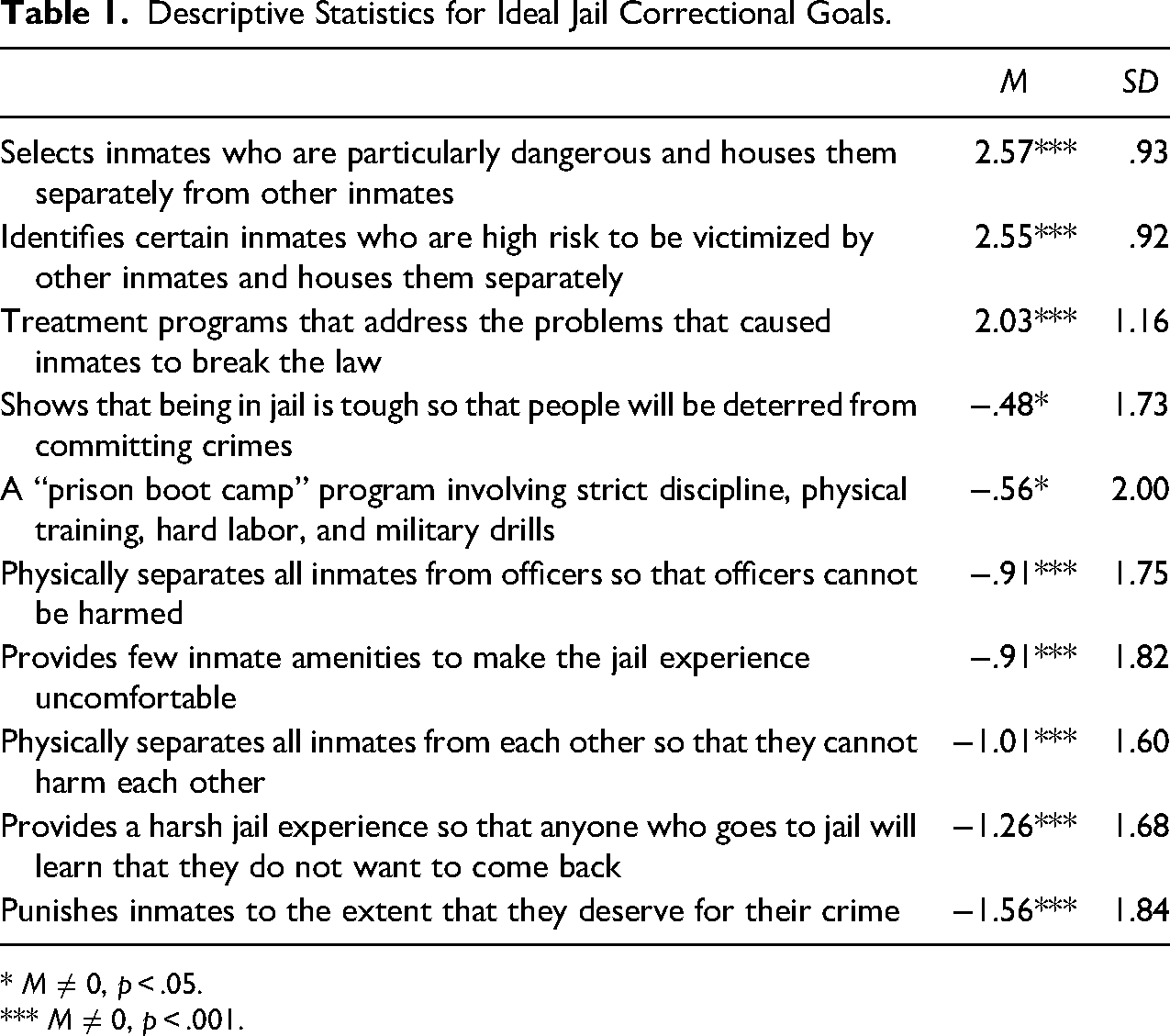
Tables 1–8 provide results for jail leaders’ assessments about whether features are desirable; that is, to what extent they are characteristic of an ideal jail. Regarding correctional goals (Table 1), respondents prioritized selective incapacitation to maintain jail safety, either by separation of people who are particularly dangerous or those who are especially vulnerable. In contrast, the third highest rating was not for a custodial goal but for rehabilitation. Notably, jail leaders were, on average, opposed to punitive goals, including making jails harsh—through boot camps or limited amenities—or seeking deterrence, collective incapacitation within the facility, or retribution.
Descriptive Statistics for Ideal Jail Correctional Goals.
* M ≠ 0, p < .05.
*** M ≠ 0, p < .001.
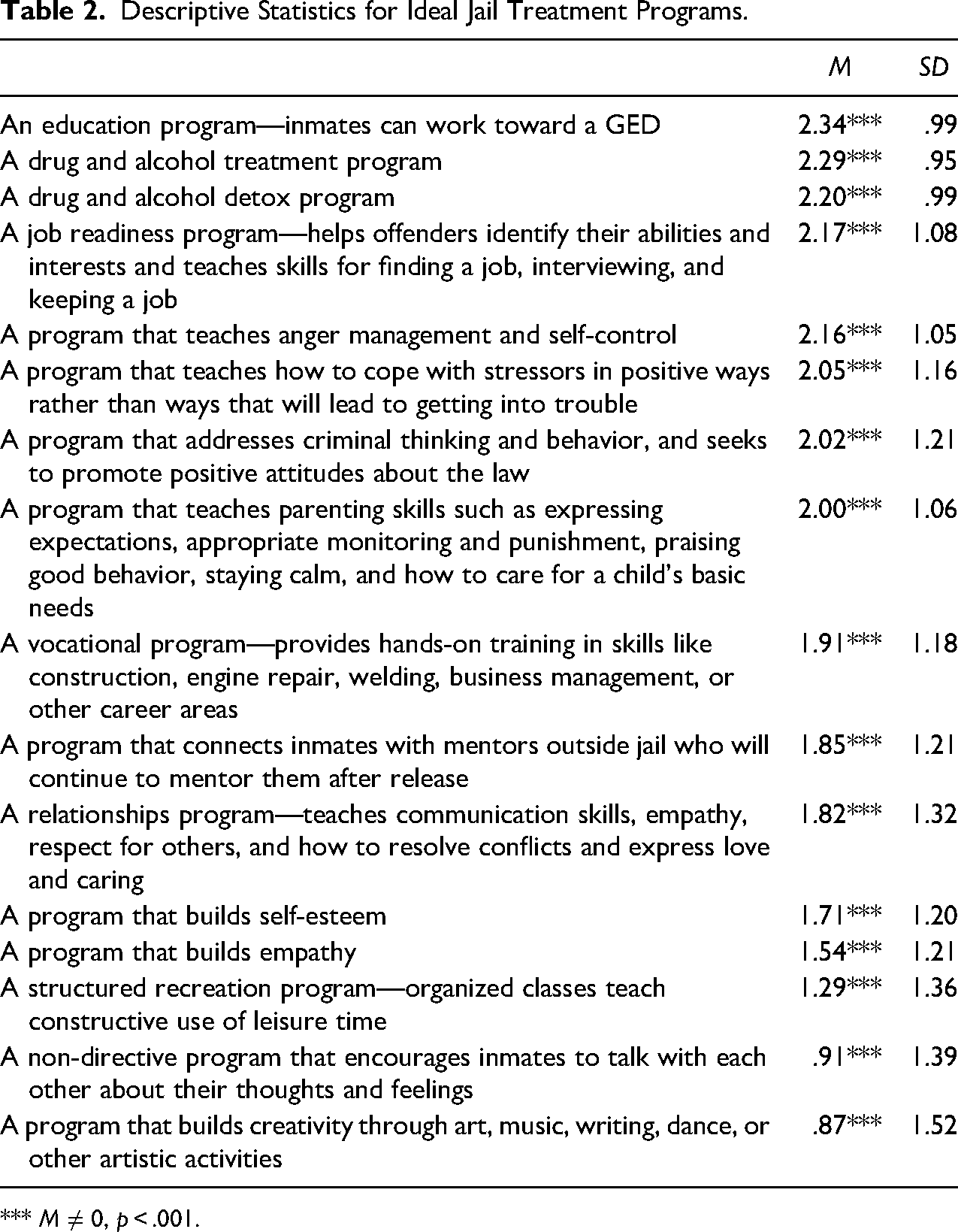
Descriptive Statistics for Ideal Jail Treatment Programs.
*** M ≠ 0, p < .001.
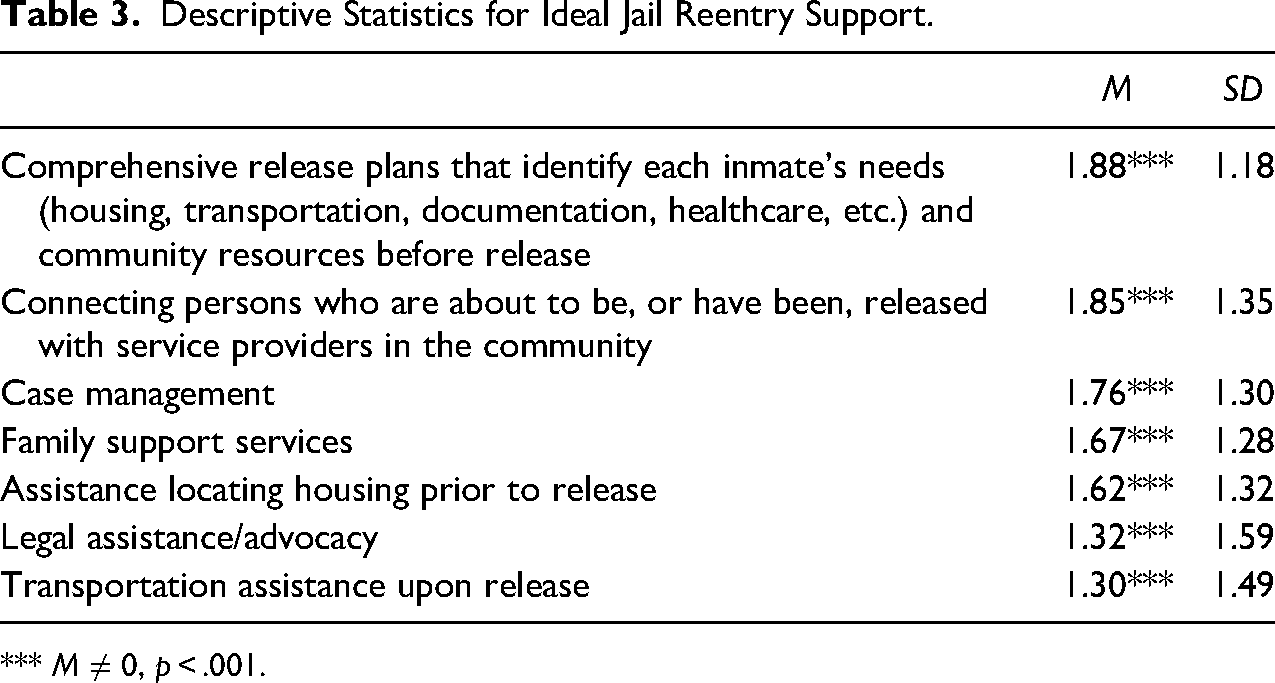
Descriptive Statistics for Ideal Jail Reentry Support.
*** M ≠ 0, p < .001.
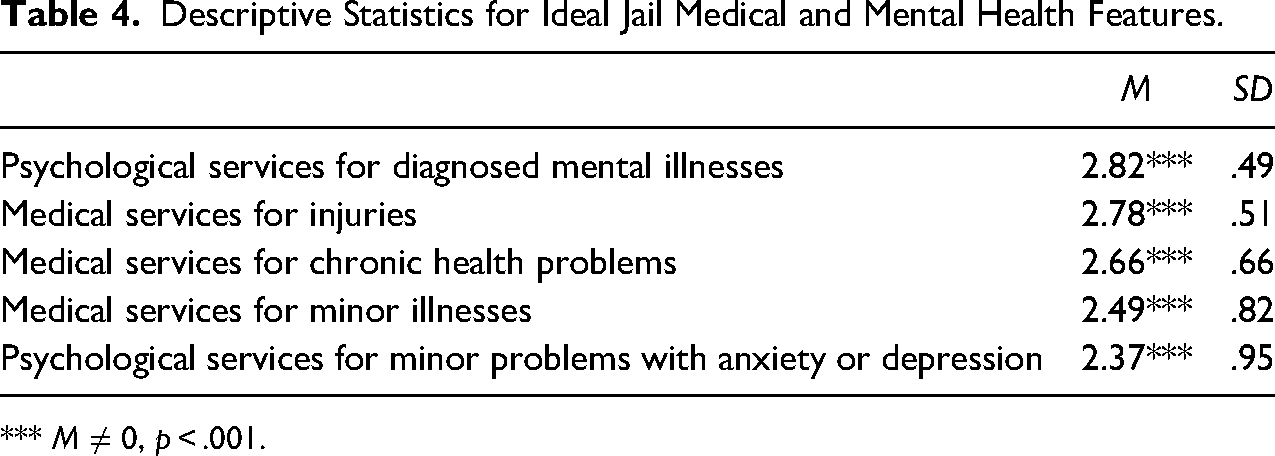
Descriptive Statistics for Ideal Jail Medical and Mental Health Features.
*** M ≠ 0, p < .001.
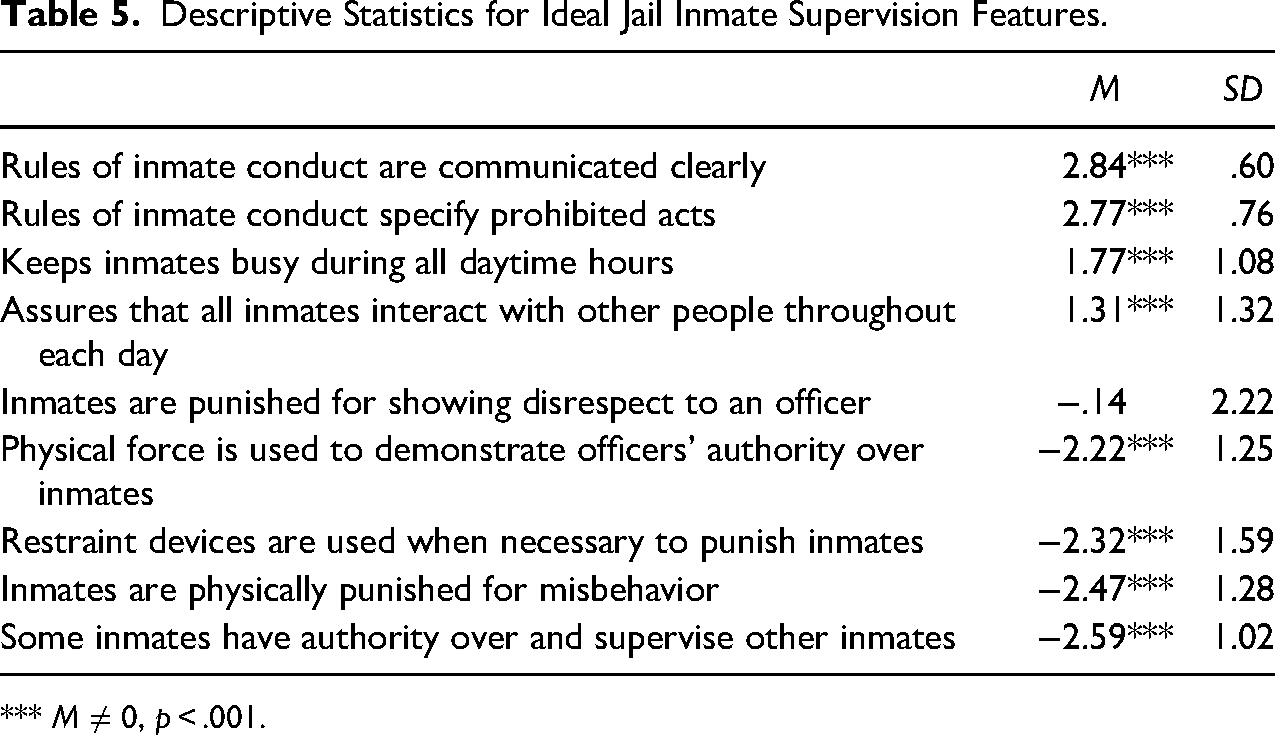
Descriptive Statistics for Ideal Jail Inmate Supervision Features.
*** M ≠ 0, p < .001.
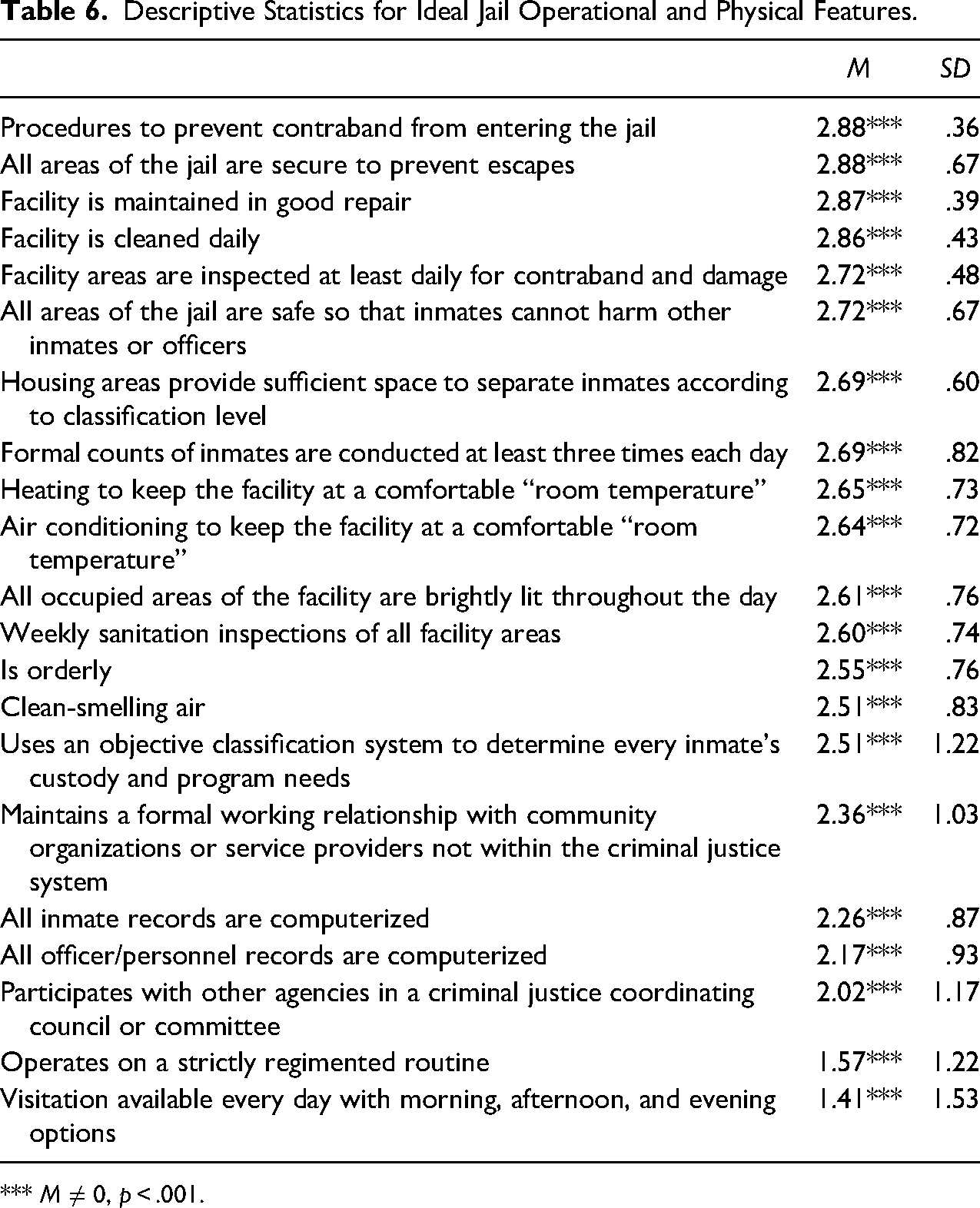
Descriptive Statistics for Ideal Jail Operational and Physical Features.
*** M ≠ 0, p < .001.
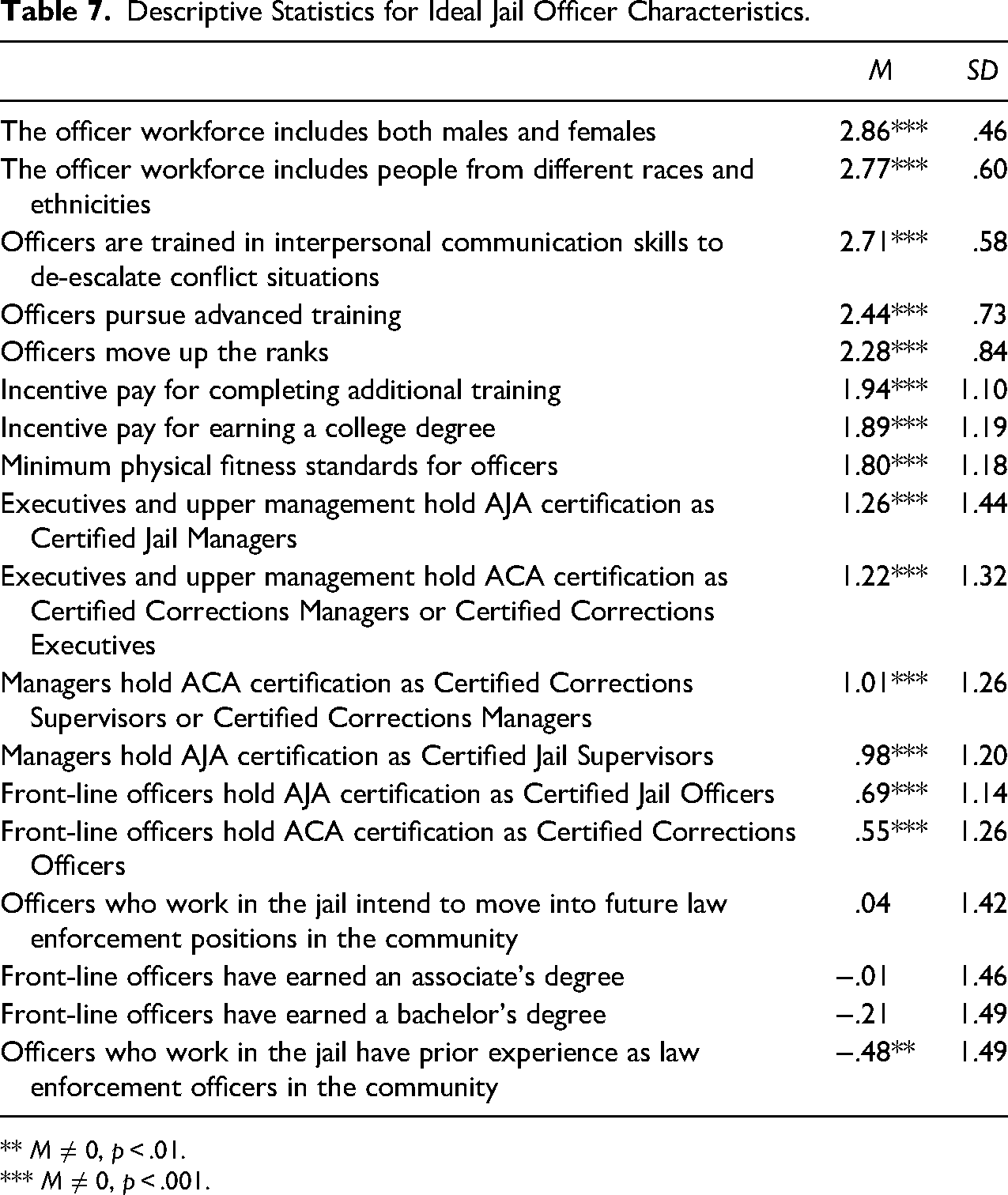
Descriptive Statistics for Ideal Jail Officer Characteristics.
** M ≠ 0, p < .01.
*** M ≠ 0, p < .001.
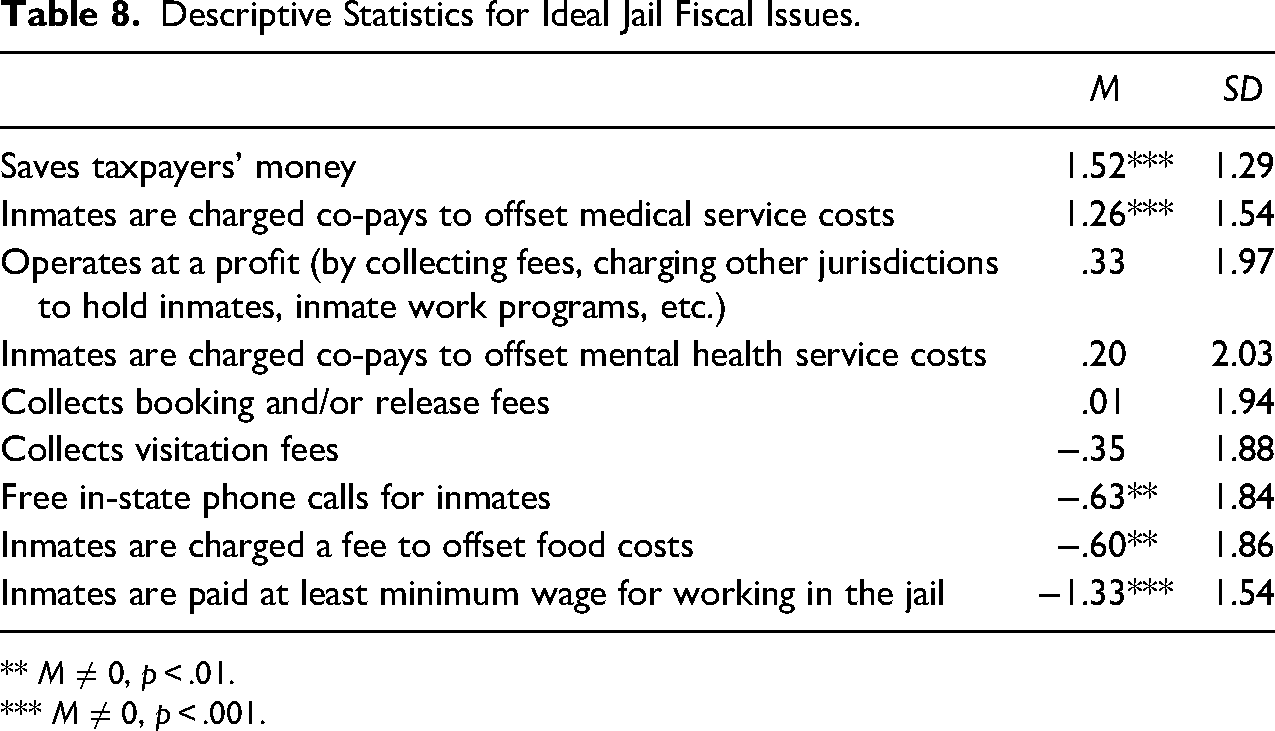
Descriptive Statistics for Ideal Jail Fiscal Issues.
** M ≠ 0, p < .01.
*** M ≠ 0, p < .001.
Table 2 displays results for several types of treatment programs. The programs rated included those that target the major criminogenic needs identified by Bonta and Andrews (2017). Jail leaders firmly endorsed these programs. High average ratings are notable for treatment programs that would address antisocial personality characteristics, antisocial cognitions, family and marital problems, education and employment, use of leisure time, substance abuse, and replacing antisocial with prosocial peers. The respondents also indicated support for programming that would target non-criminogenic needs (i.e., self-esteem) or that apply treatment techniques that are ineffective in reducing recidivism among offender groups (i.e., creativity and non-directive therapy; Bonta & Andrews, 2017).
Ratings for reentry support services are reported in Table 3. The respondents thought that these services should be included in an ideal jail. They were most favorable toward broad initiatives that would prepare detained people for release and connect them with appropriate community service providers. Command staff members were modestly in favor of the ideal jail assisting with housing, legal issues, family matters, and transportation needs.
Turning to Table 4, jail leaders reported that medical and mental health services for people in jail are essential. This view was particularly evident for serious and chronic problems, with means of 2.66 or higher. Even for minor conditions, the average ratings show belief that treatment is important. Moreover, the standard deviations for all items reported in Table 4 are small, revealing substantial agreement among respondents about prioritizing medical and mental health services.
The findings shown in Table 5 address several dimensions of inmate supervision that have previously invited criticism as mistreatment of jailed individuals (e.g., Jeffreys, 2018; Roth, 2018; Walker, 2022). In contrast to practices of seemingly arbitrary discipline, jail leaders strongly and consistently endorsed clear, specific rules of inmate conduct that are communicated unambiguously. They also expressed that the ideal jail would keep detained people occupied throughout the day and ensure interaction rather idleness and isolation. Respondents were ambivalent about whether people held in jail should be punished for disrespecting an officer, but they firmly opposed the use of physical force as a punishment or to demonstrate officers’ authority. They also asserted that an ideal jail would not use restraint devices as punishment, nor would it permit some people in custody to supervise others in the style of the “building tender” system (Marquart & Crouch, 1984).
Table 6 features several aspects of jail operations and the physical facility. Here, the participants expressed consistent opinions that custody concerns are essential in an ideal jail, including prevention and control of contraband, facility safety and security, regular counts of inmates, objective classification, and orderly operation. Professionalizing jail operations—cooperating with external criminal justice agents and other community-based service providers—and modernization through computerized record keeping were also important features of leaders’ visions of an ideal jail. Regimentation and extensive availability of visitation were supported more moderately. Results showed enthusiastic support for jail facilities that maintain adequate light, space, and ambient temperature and that are clean, well-maintained, not malodorous.
Table 7 reveals that command staff members believe the ideal jail should be staffed with a diverse, professional workforce. They value representation of males and females as well as people of different races and ethnicities. Further, there was substantial support for training, commitment to a correctional career path, and physical fitness standards. Certifications from national organizations were also endorsed, although the perceived importance of certification declined from command staff to supervisors to line officers. Notably, officers’ intent to move from corrections into a law enforcement position and college education for front-line officers were regarded as neither necessary to an ideal jail nor important to exclude, but leaders significantly, if only marginally, opposed hiring jail officers with prior law enforcement experience.
The final set of characteristics addressed fiscal issues. As noted in Table 8, there was moderate support for seeking to save taxpayers’ money and offsetting inmate medical costs by charging a co-pay. Several other features, however, yielded neither support nor opposition, including co-pays for mental health services, fees, and seeking to operate at a profit. Jail leaders tended to view two characteristics that would ease financial burdens on detained persons—free phone calls and paying a minimum wage for inmate work within the facility—as contrary to an ideal jail. However, they also opposed an additional burden requiring people in custody to pay fees to offset institutional food costs.
Beyond identifying the features that characterize an ideal jail, jail command staff were asked the degree to which this ideal exists among contemporary jails and how much progress can be achieved through concerted efforts over the next decade. Results are shown in Table 9. On average, respondents believed that about 4 in 10 features of an ideal jail are currently exhibited in jails across the U.S. Further, jails nationally can be improved to the point where they exhibit more than two-thirds of ideal features, a statistically significant increase, t (82) = 10.12, p < .001. Notably, the participants viewed their jurisdiction more positively, believing their jail facility currently matched, on average, nearly 60% of the characteristics of an ideal jail. Again, they perceived progress as possible. They estimated that their jail could reach 73% of ideal characteristics with 10 years of focused effort. This improvement also reached statistical significance, t (82) = 8.15, p < .001.
Perceptions of Jails’ Current Status, Prospects for Improvement, and Obstacles.
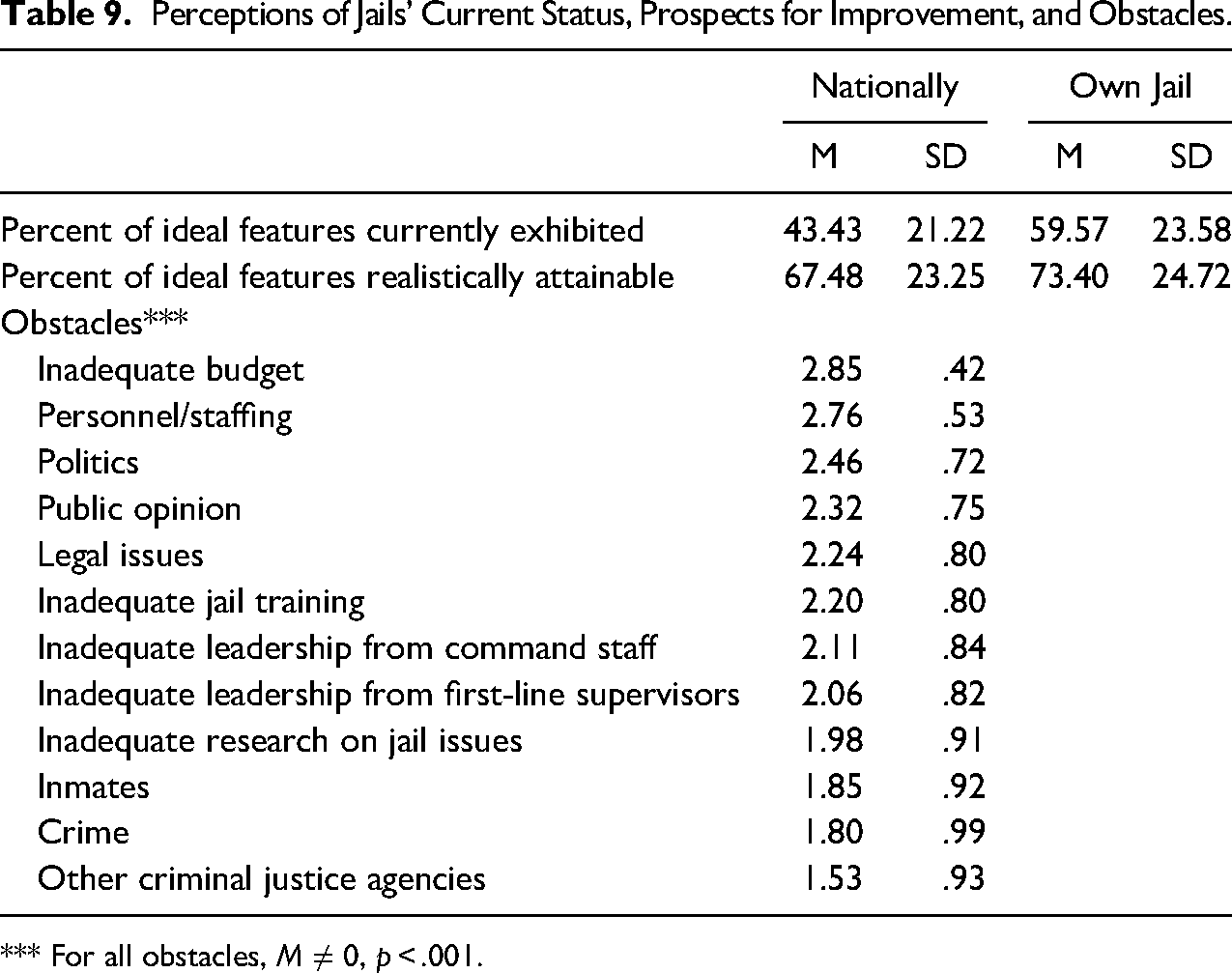
*** For all obstacles, M ≠ 0, p < .001.
Jail leaders’ optimism was tempered with recognition of challenges. As the averages reported in Table 9 illustrate, respondents were most concerned about resources, including sufficient budgeting, personnel, and political capital. Even so, they believed that progress for American jails would be impeded at least somewhat by each of the considerations presented in the survey. In the open-ended question, the jail leaders revealed some of the same considerations for their own jurisdiction. That is, inadequate funding was mentioned most often, followed by staffing issues. Also noted were aging physical facilities, politics, inadequate space, and leadership difficulties. Their candid answers demonstrated that they understand the challenges to progress as interrelated and complex. One respondent described the cascading effects of staff shortage and inexperience: Staffing is the root cause of all issues. Not enough training because [we] cannot afford the shift vacancy to allow [officers] to attend training. First line supervisors lack experience due to being promoted before their time but with short staff there is little choice. We're currently experiencing a high rate of retirements so a lot of time and resources are going into training up new hires. Our oldest physical structure is rapidly reaching the point of no longer being fiscally responsible to continue maintaining but we can't get the money from the County to start planning/building a new one.
Command staff members also believed that local jails continue to suffer from an image problem. Because politicians and the public have low expectations for jails, they are unwilling to provide additional resources. One participant noted that a key challenge is “educating the public so they understand the goals.” They continued, “Sadly, most people's vision of jails…come[s] from Hollywood movies.” Another concluded that “society has to change their expectations for jails to make any significant changes, but all of that is connected to funding in some way or another.”
Conclusions
American jails have been broadly and repeatedly condemned for “a long list of inadequacies,” including “housing, food, financing, overcrowding, sanitation, medical attention, cruelty, indifference, and non-segregation” (Moynahan & Stewart, 1980, p. 6) as well as forced idleness and insufficient attention to the safety and wellbeing of detained individuals (Dewan, 2022; Walker, 2022). It is undeniable that at some times U.S. jails have manifested the worst of America's obsession with incarceration. One hundred years ago, Fishman (1923) described numerous facilities rife with vermin, filth, and disrepair. Continuing the disrepute, recent news stories reveal jail officers’ abuse of people in detention (e.g., Blume, 2023; Thanawala, 2022). Recently, several authors have recounted the inhumane handling of people incarcerated in jails, particularly those with mental disorders (Jeffreys, 2018; Roth, 2018; Walker, 2022). These accounts, however, may not provide the full portrait of American jails and do not indicate what direction jails are likely to take. Is the trajectory of jails one of custodial convenience and continued malign neglect—or is there a route to conscientious progress? The current study sought to at least expand current understanding of the potential future of jails in the U.S. by detailing the vision of current jail leaders.
This study's analyses examined many individual features of jails. While this level of detail is useful, scanning across characteristics reveals several themes about jail leaders’ visions. First, custody is a clear priority; they firmly endorse jails that are safe, secure, and humane. The tenor of this priority, however, does not seem to be mere custodial convenience. That is, today's jail leaders do not appear to simply want a jail that is easy to run. Instead, they convey a professional desire for jails that meet their basic mission of detention in responsible ways. As well, the second theme to emerge shows participants’ emphasizing that jails should meet human service needs. The respondents strongly and consistently asserted that an ideal jail would provide rehabilitative programming, reentry support, and mental health and medical treatment for detainees, and coordination with community service providers. Jails’ high turnover rates, short stays for most people, and other operational realities present distinct challenges for program delivery (Austin, 1999; Lizama et al., 2014). Moreover, most research on the effectiveness of correctional rehabilitation has been carried out in community-based settings or in prisons (MacKenzie, 2006). Additional research is needed in the unique jail setting to identify what programs are effective and how they can best be delivered. A final emergent theme from the ratings of jail characteristics was a sense of professionalism. These jail command staff were invested and dedicated, and not indifferent to the needs and challenges of staff and people who are detained. They rejected brutality and the pursuit of punitive goals, embraced jail work as a career, and favored a clean, orderly, and supportive facility operation.
Overall, the results from the current investigation suggest jail leaders’ aspirations are for American jails to be progressive and professional. This preference contrasts with the continuing low reputation of jails and their recognition that achieving their vision will require overcoming numerous obstacles. Many of the challenges noted here have long beset local correctional institutions (Thompson & Mays, 1991). Even so, the optimism expressed by the participants in the current study suggests the possibility of continuous improvement for U.S. jails. As one respondent stated, “We always can and want to do more.”
Footnotes
Declaration of Conflicting Interests
The author(s) declared no potential conflicts of interest with respect to the research, authorship, and/or publication of this article.
Funding
The author(s) received no financial support for the research, authorship, and/or publication of this article.