




Abstract
This study explores the impacts of procedural justice on incarcerated offenders’ obligation to obey, and compliance with correctional rules and procedures in selected South African correctional centers. The Tylerian process-based regulation model holds that compliance with legal authorities is contingent upon some normative and instrumental factors. While these factors have been considered to shape compliance among inmates in correctional centers in Western societies, there is a dearth of research on compliance behavior among incarcerated offenders in correctional centers in transitional African societies, including South Africa. A cross-sectional survey of participants from selected correctional centers in South Africa assessed the effect of procedural justice and other exogenous elements on inmates’ obligation to obey and comply with correctional rules and procedures. The findings indicate, among others, that inmates who assessed correctional officials as procedurally just or fair were more likely to obey and comply with correctional rules and procedures. The implications of the findings for the effective management of incarcerated offenders are discussed.
Introduction
The importance of order in the effective management of correctional institutions has been widely reported in literature (Meško & Hacin, 2019; Maguire et al., 2019; Useem & Piehl, 2006; Reisig, 2001; Logan, 1993). Correctional administrators usually rely on inmates’ compliance for order to be maintained and sustained in the corrections environment (Jackson et al., 2010; Maguire et al., 2019). Although most correctional institutions have conventional mechanisms for maintaining order and enforcing compliance, they are typically coercive, or a combination of formal sanctions and rewards. However, these approaches have been found to be ineffective, and research does not give much credence to them (Nuño & Morrow, 2020; Bottoms, 1999; Reisig 1998; Sparks et al., 1996). In fact, a coercive approach to order maintenance in correctional environments has been found to breed hostility between inmates and correctional officials, as well as deepening the social distance between them (Meško & Hacin, 2019).
Contrastingly, research has shown that a normative approach that is premised on impartial and fair use of authority may be appropriate in gaining compliance and in achieving order in custodial institutions (Maguire et al., 2019). A normative approach exemplifies the procedures, daily attitude, or behavior of correctional officials towards incarcerated offenders in the custodial environment in terms of how they treat inmates. Fair treatment or conduct is widely reported to promote inmates’ perceived obligation to obey correctional officials (which is a proxy element of legitimacy), and in turn promotes voluntary compliance (Campbell et al., 2020; Sparks & Bottoms, 1995).
Studies have also documented that fair or impartial treatment, more so than instrumental factors, is a strong predictor of compliance behavior in correctional settings (Liebling, 2011). There is substantial evidence to suggest that correctional officials who are courteous or well-disposed usually have a valuable and sustained professional working relationship with inmates and, by extension, treat inmates in a procedurally fair manner (Campbell et al., 2020; Maguire et al., 2019). Beyond helping to create a healthy and safe custodial environment, such gestures and practices often stimulate inmates’ willingness to obey correctional officials, as well as their voluntary compliance with correctional rules and procedures (Beijersbergen et al., 2015).
It would be impracticable for correctional officials to execute their duties and maintain order in the corrections environment without corresponding voluntary compliance by inmates. Research has shown that a normative approach that is based on the stimulation of internalized motivation to voluntarily obey is a formidable long-term vehicle for promoting compliance and order in the corrections setting (Beijersbergen et al., 2015). While the use of sanctions as a control mechanism cannot be completely discarded, overreliance on such an instrument for enforcing compliance is ineffective, and will likely be counterproductive in the long run. Sparks et al. (1996) consider the use of sanctions as an external form of control (See also Maguire et al., 2019). Excessive use of sanctions in the corrections environment has also been found to breed misconduct and cynicism among inmates towards correctional officials. Misconduct in turn has been reported to promote recidivism (Gendreau et al., 1997). In contrast, adopting a normative approach that promotes procedural justice or fairness can help to promote a long-term feeling of obligation to obey, as well as voluntary compliance. The adoption of fair procedures by correctional officials has also been found to help reduce inmates’ reoffending after release from the corrections institution (Beijersbergen et al., 2016; Tyler, 2010).
Although research that explores the influence of procedural justice on compliance behavior among incarcerated offenders is gaining momentum in developed Western societies, there is a dearth of such studies in post-colonial and transitional African societies, and none in South Africa. This makes the generalization of the findings of procedural justice studies (as related to the corrections setting), conducted in Western developed societies to non-Western jurisdictions, very problematic. For instance, previous studies (from the West) held that normative factors that encompass procedural justice and obligation to obey, more so than instrumental factors comprising the risk of sanctioning, institutional performance, and distributive justice, have a significant effect on compliance (Tyler, 2006; Brunton-Smith & McCarthy, 2016; Maguire et al., 2019). These findings need replication checks in a transitional society such as South Africa, where the correctional context may be different, and the public less informed about correctional practices.
This study therefore attempts to fill the void in knowledge by investigating the factors that shape compliance behavior among incarcerated offenders in selected South African correctional centers. Further, it aims to test the effects of procedural justice and some exogenous factors on inmates’ obligation to obey, and compliance with correctional rules and procedures. The investigation is guided by three hypotheses:
Literature Review
Since Thibaut and Walker (1975) conducted groundbreaking research on procedural justice, there has been a proliferation of research on the significance of procedural justice in generating a spectrum of outcomes, including shaping how people form opinions about the decisions made by legal authorities (Pryce et al., 2017; Murphy et al., 2009; Lind & Tyler, 1998; Tyler & Huo, 2002; Leventhal, 1980). Noteworthily, Thibaut and Walker (1975) propounded the procedural justice theory and, according to them, procedural justice is largely influenced by process control; that is, people will likely perceive the decisions of authority figures as fair when they are allowed to participate in the process that led to the decisions (See also Gau, 2019).
Despite the merit of Thibaut and Walker's (1975) assumptions and contributions, their findings are not without criticisms. For instance, Lind and Tyler (1998) contend that from a group-based position, evaluation of the fairness of procedures applied by a legal authority before reaching a conclusion may also be shaped by certain interpersonal criteria, such as impartiality or neutrality, and confidence in authority figures, among others (see also Maguire et al., 2019). Bolstering this position, Tyler (2006) and others (Lind & Tyler, 1998; Tyler & Huo, 2002; Sunshine & Tyler, 2003) aver that people's evaluations of the procedural justice of legal authorities whenever they come into contact with them are usually shaped by two types of evaluation: quality of decision making, and quality of interpersonal treatment (see also Tankebe, 2009; Sunshine & Tyler, 2003; Blader & Tyler, 2003; Tyler & Blader, 2003).
The quality of decision making is essentially about the judgement people form about a legal authority figure based on the fairness and neutrality of the procedures adopted by such an authority figure when making decisions. It nurtures the impulse in people that the authority figure is neutral and unbiased in making decisions. Through this, subordinates may have a sense of belonging, and it reinforces confidence in them that their voice is heard. It also allows people (or subordinates) to give inputs into a decision before conclusions are made. However, allowing people to present their side of the story may not be sufficient to adjudge a procedure as fair; people also need to be assured and convinced that their views will be taken into consideration when decisions are made (Tyler, 2006).
Quality of treatment centers on the kind of interpersonal interactions that exist between people (or subordinates) and authority figures (Maguire et al., 2019). People's judgement of the procedural fairness or justness of legal authorities is often shaped by how authority figures treat them; that is, whether authority figures treat them fairly, politely, and with respect (Maguire et al., 2019). For subordinates, fair treatment by authority figures is critical. It is also a significant factor in eliciting obligation to obey, and compliance in the custodial environment.
The judgments formed by people about the quality of decisions made by authority figures and the quality of treatment (i.e., procedural justice) they receive from them are often considered to be different from those formed about the fairness of the outcomes of their encounters, particularly with regards to service(s) rendered (i.e., distributive justice) (Pryce et al., 2017; Maguire et al., 2019; Tyler, 2006). Distributive justice explains the type of judgement people form about a legal authority based on fair distribution of services or benefits. Distributive justice theory indicates that when people perceive the outcome of services and benefits received from a legal authority as fair, they are likely to comply with the directives of such a legal authority (Tyler, 2006).
Although procedural justice as a normative factor is reputed to shape decisions on obligation to obey and comply, instrumental factors have also been proven to play a significant role. Explanations of the significance of instrumental factors, and how they could influence people's decisions about obligation to obey and comply with legal authorities, are encapsulated in the deterrence theory (Sunshine & Tyler, 2003; McArdle & Ezren, 2001). In the context of this study, the deterrence theory holds that a credible threat of sanction or punishment will dissuade people from violating rules and procedures (Sunshine & Tyler, 2003). However, the decision to rescind from violating rules is often a calculated one, especially after a careful consideration of the consequences of aberrancy. According to Tyler (1990, p. 3), “people are viewed as shaping their behaviour to respond to changes in the tangible, immediate incentives and penalties associated with following the law – to judgments about the personal gains and losses resulting from different kinds of behaviour”.
In addition, from their theorization on the instrumental model, Sunshine and Tyler (2003) state that people's motivation regarding obligation to obey and comply with rules and regulations is mostly shaped by their assessment of the authorities’ performance and of their distributive fairness. This implies that correctional officials will secure the deference of inmates when they are perceived to be effective inthe following: (i) punishing offenders who break correctional rules and do not follow their directives, (ii) maintaining order in the corrections setting (performance), and (iii) ensuring that services are equitably distributed to all offenders without fear or favor (distributive fairness) (see Sunshine & Tyler, 2003; Pryce et al., 2017 for explanations in relation to the police). This study contrasts the effects of procedural justice with that of these three instrumental factors to explain incarcerated offenders’ obligation to obey and comply with correctional rules and procedures.
Notably, most of these models and findings have implications for compliance. However, despite prevailing criminological research on procedural and distributive justice on the police and the courts, limited studies exist on its application to corrections institutions. The few studies that have been conducted in the correctional settings were carried out in Europe and the United States of America (Reisig & Meško, 2009; Maguire et al., 2019). However, research on normative and instrumental variables that engender compliance in the custodial environment in a transitional African society setting is scarce; hence the need for this study.
The Relevance of Procedural Justice to the Corrections Setting
Although an abundance of research has been conducted on the effects of procedural justice in shaping compliance with the criminal justice system, most of these studies focused on the police and the court settings. However, fewer empirical studies exist on its effect on the corrections environment (Beijersbergen et al., 2016; Bierie, 2012; Brunton-Smith & McCarthy, 2016; Henderson et al., 2010; Hacin & Meško, 2018; Maguire et al., 2019). This conspicuous gap limits the possibility of generalizing procedural justice theory and findings across the constituents of the justice system. Additionally, the contexts and situation that guide such studies differ, and may not be complementary. For instance, unlike the findings from police studies and the court, the context of procedural justness or fairness (procedural justice) in correctional settings may likely be different. Previous research was concerned with how incarcerated offenders perceive correctional officials.
Additionally, individual-level characteristics or demographics of law-abiding citizens from a perception study in relation to the police and the court will likely be different from those considered in a corrections-centered study with inmates who are confined to the custodial environment. As such, incarcerated offenders may be predisposed to consider procedural justice differently from the way the general public does, owing to variations in the category of authority figures under consideration and different environmental or situational contexts (Harvey, 2007; Steiner & Wooldredge, 2008; Van der Laan & Eichelsheim, 2013). Tyler (2006) contends that people's judgement of procedural justice is shaped by an assortment of variables, including their previous encounters with legal authorities and the circumstances surrounding such encounters (i.e., the situational context). For example, incarcerated offenders, more so than the general public, are more likely to have had repeated contact and encounters with the criminal justice system (Maguire et al., 2019, p. 5). Those encounters and experiences, in addition to their incarcerated conditions, are likely to have a significant effect on their perceptions of correctional officials and the entire corrections environment (Maguire et al., 2019).
The situational context of the custodial environment is much different from the street or the justice system where the police and the courts operate. In comparison to the general public, whose experiences may be limited to their encounters with the police and the courts, confinement may enable incarcerated offenders to have robust knowledge of interactions with correctional officials and fellow inmates. These experiences are bound to shape their perception of procedural justice (Hacin & Meško, 2018), and such experiences are also likely to provide passable information about inmates’ view of correctional officials’ procedural fairness based on their daily experiences or encounters with them. From their interactions with correctional officials, incarcerated offenders also have ample opportunities to assess and compare their judgments of the procedural and distributive justice of correctional officials.
Although issues of procedural justice exist in the custodial environment or correctional setting, limited quantitative empirical studies have considered its effect on inmates’ obligation to obey and their compliance with correctional rules and procedures (Beijersbergen et al., 2015; Maguire et al., 2019). These studies indicated that inmates’ opinions about procedural justice are linked with lower incidences of misconduct. While operationalizing legitimacy as obligation to obey in a Slovenian study, Reisig and Meško (2009) found procedural justice to exert a significant negative effect on inmates’ misconduct.
From another country's correctional setting, Beijersbergen et al. (2015) considered the effect of the relationship between perceived procedural justice and anger on inmates’ self-reported and official records of misconduct using a longitudinal study of Dutch incarcerated offenders. Their findings indicated that incarcerated offenders who experienced higher levels of procedural justice at Time 1 were significantly less likely to get involved in any misconduct at Time 2. Conversely, anger mediated the connection between procedural justice and misconduct (Beijersbergen et al., 2015).
As indicated earlier, procedural justice theory holds that people's judgments about whether to acquiesce to obey the law or comply with the decisions of legal authorities are largely shaped by their assessment of the extent to which authority figures behave in a fair and impartial manner. Such normative judgments are considered to be a more important indicator of securing lawful behavior than alternative justifications such as distributive justice, risk of sanctioning, and institutional performance (Maguire et al., 2019). Procedural justice is fundamentally significant in the corrections environment where incarcerated offenders have long and regular encounters with correctional officials, and where the setting involves more repeated and severe interactions with correctional officers (as legal authorities). However, most studies on inmates’ perceptions or judgments about the procedural justice or fairness of correctional officials and how they shape compliance were conducted in Western societies, such as Australia, the United States of America, the Netherlands, and Slovenia. This study explores matters that rely on data from a sample of incarcerated offenders in male correctional centers (medium security) in South Africa.
The Present Study
It is important to state that this study contributes to the existing limited body of research on procedural justice in correctional settings. To the best of the researchers’ knowledge, there is no known study on inmates’ assessment of the procedural justice of correctional officials in post-colonial and transitional African societies to date. Hence, this study represents the first of its kind to empirically consider inmates’ assessment of the procedural justice or fairness of correctional officials and how it influences their obligation to obey and to comply with correctional rules and procedures, in a transitional African correctional setting, and indeed in South Africa. The conceptual model of key constructs of this study is presented in Figure 1.
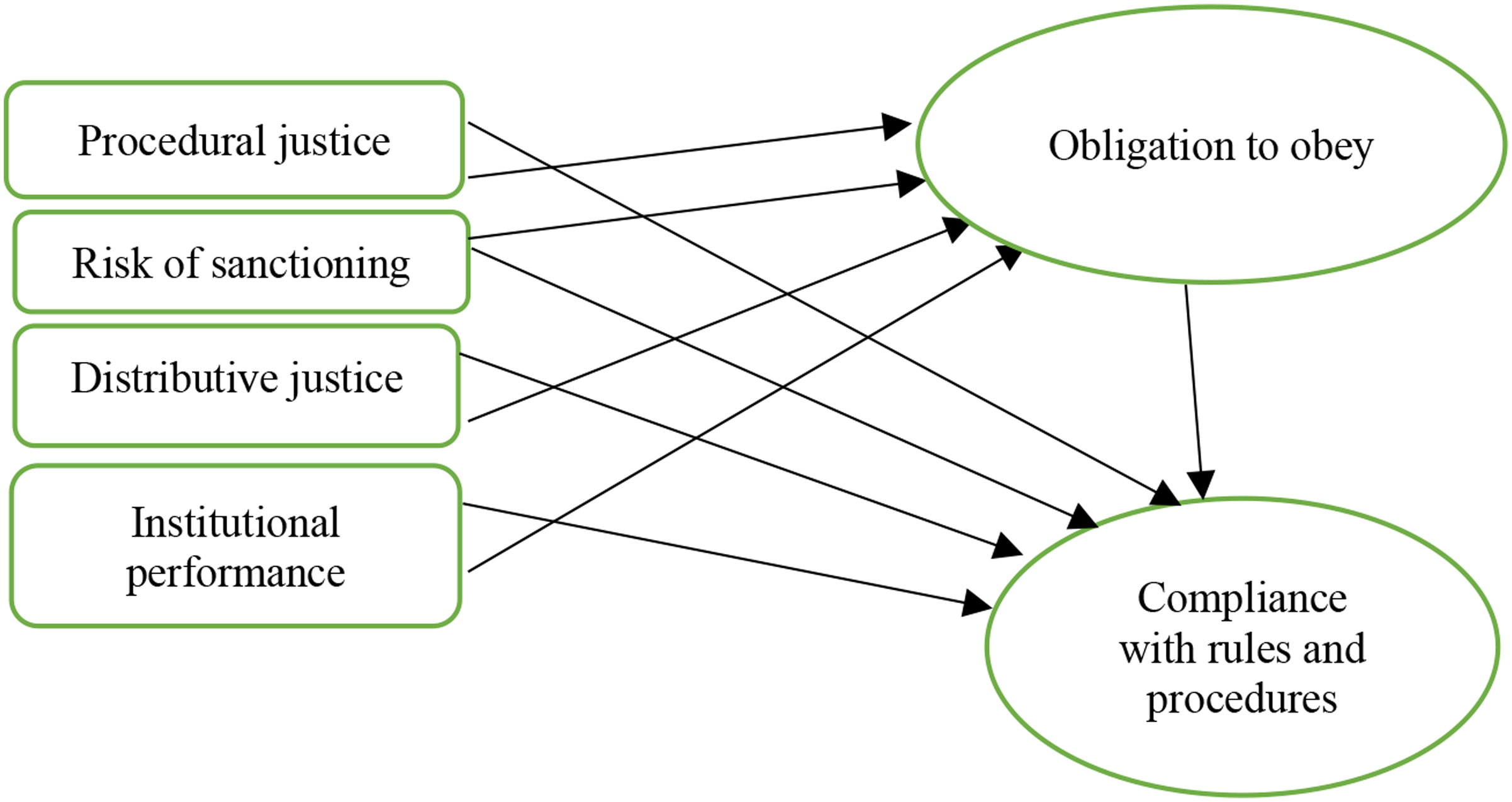
Conceptual model for the study.
Method
Data for this study were collected in the last quarter of 2020 from two male correctional centers (Boksburg and Zonderwater Management Areas) in the Gauteng province of South Africa. The choice of these sites was based on their strategic location – they are situated in the country's cosmopolitan centers. Unlike some other correctional centers, which are relatively dominated by inmates of superficially narrow racial or ethnic compositions, Boksburg and Zonderwater Correctional Centers are composed of inmates with ethno-racial diversities that are reflective of the rainbow nation status of South Africa, including foreign nationals.
Another justification for using these centers was to minimize cost, energy, and time, as well as to maximize safety for the research team due the impact of the COVID-19 pandemic. Moreover, the country was under partial lockdown when data collection commenced. Access to several correctional centers was denied owing to health and safety concerns.
Prior to data collection, a recruitment notification was made to the relevant authorities of the correctional centres, who, in turn, informed the study population. Permission was also secured from the authorities of the centres before participants’ recruitment could take place. 170 and 210 participants were recruited from Boksburg and Zonderwater Management Areas, respectively. However, of the 380 sampled, only 306 willingly took part, completed and returned the questionnaires, with a response rate of approximately 81%.
A convenience sampling technique was utilized to select participants for the survey from different housing blocks within each centre. Before questionnaires were administered, the study objective was communicated, including their consent, voluntary participation and right to withdraw without penalty. In addition, we informed the respondents of the confidentiality of their information and responses. The researchers also read, interpreted and explained some of the questions to some participants who requested for such assistance. The questionnaires were administered by the authors with the support of a research assistant.
Measures and Instruments
We (authors) utilized a range of instruments to test the study hypotheses. These instruments and their application to the study are explicated below. The outcome variables are measured as a composite. We also constructed a composite measure of five concepts reputed to shape compliance behavior. All instruments were measured on a four-point Likert-type scale.
The scale for compliance with rules and procedures ranged from 1 = never to 4 = often. A high score on this scale suggests willingness to comply with rules and procedures. Importantly, all scales were adapted from previous studies (see Beijersbergen et al., 2015; Maguire et al., 2019; Meško & Hacin, 2019; Pryce et al., 2017). The significance of these instruments to this study is explained below.
Compliance with Rules and Procedures
It assessed participants’ willingness to comply with correctional rules and procedures. The Cronbach's alpha was α = 0.80. A high score on this scale indicates a higher likelihood to comply with rules and procedures.
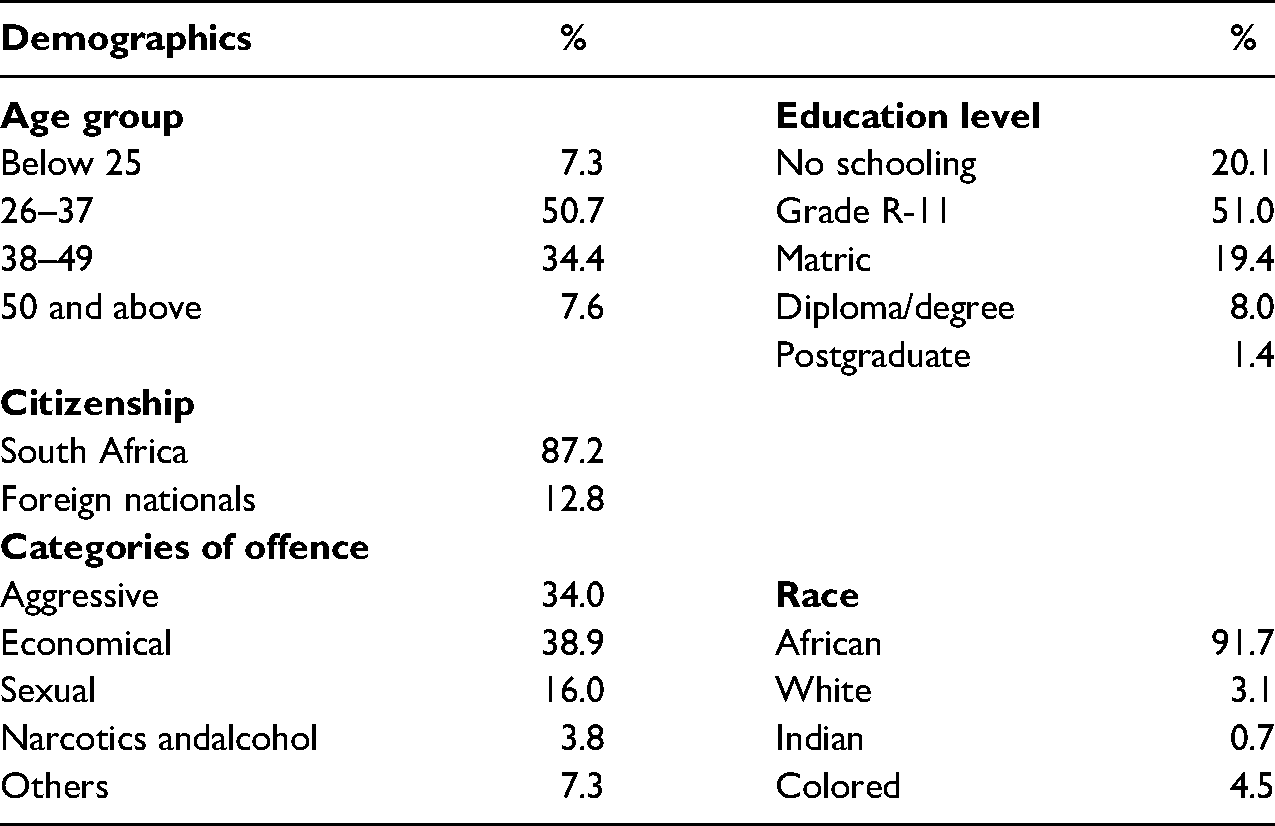
Demographic Composition Structure of the Sample
Procedural Justice
The scale assessed the procedural justice or fairness of correctional officials. The Cronbach's alpha was α = 0.88. A high score on this scale indicates that correctional officials used fair procedures when dealing with inmates and are perceived as just or fair by inmates, while a low score indicates that the procedures adopted by the correctional officials are perceived as unfair.
Obligation to Obey
It assessed the views of participants on their obligation to obey correctional officials. The Cronbach's alpha was α = 0.76. A high score on this scale indicates a greater perception of obligation to obey.
Risk of Sanctioning
This assessed the respondents’ perceived risk of sanctioning. The Cronbach's alpha was α = 0.75. A high score on this scale indicates a higher perception of risk of sanctioning.
Distributive Justice
This assessed the fairness of correctional officials in providing equitable services to all inmates. The Cronbach's alpha was α = 0.78. A high score on this scale indicates that correctional officials render services equally and fairly.
Institutional Performance
It is designed to determine the participants’ assessment of the performance of the correctional institution. The Cronbach's alpha was α = 0.82. A high score on this scale indicates that the correctional institution performed well.
Data Analysis
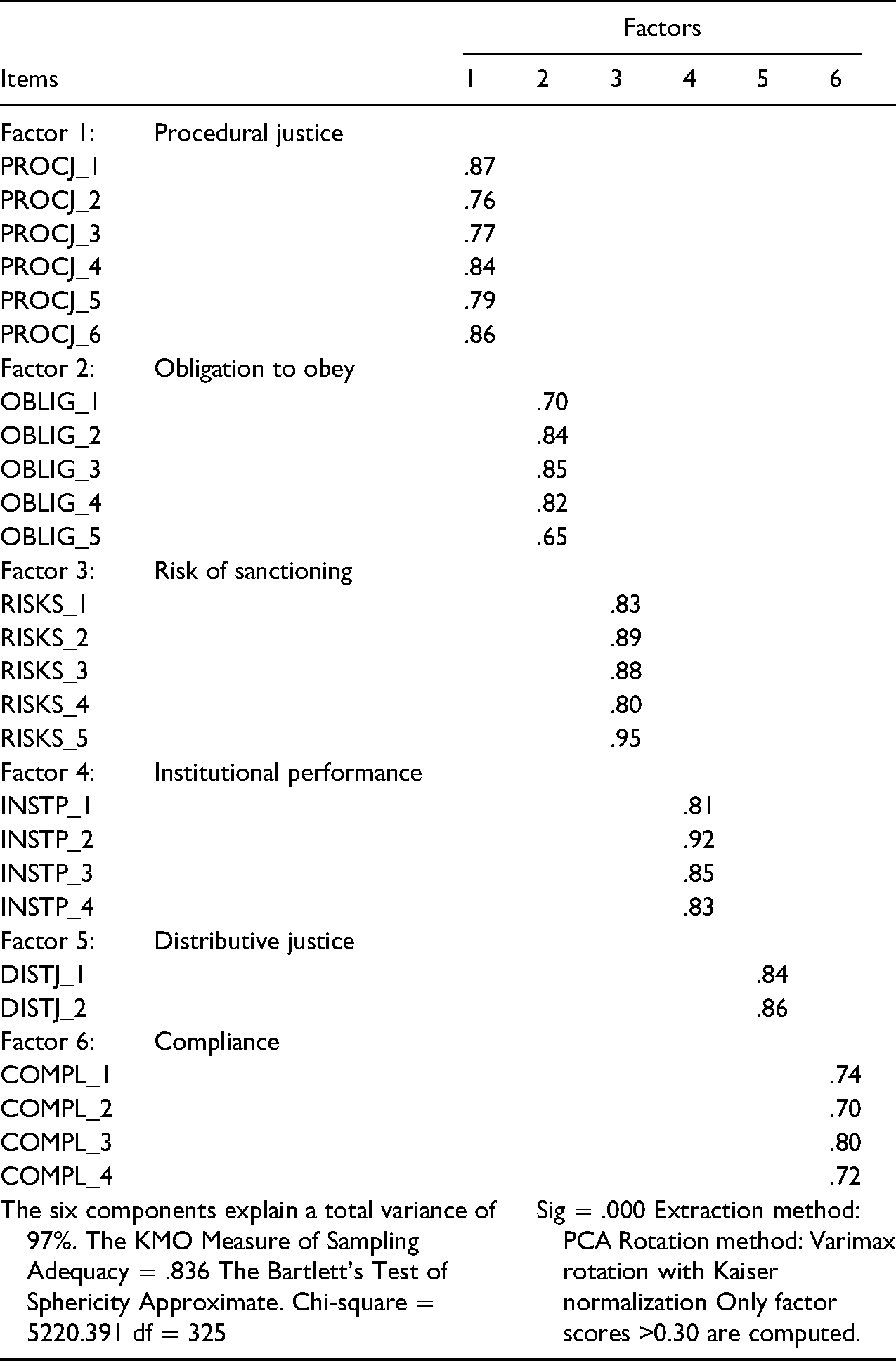
The data were analyzed using the Statistical Package for the Social Sciences version 27. Three main analyses were conducted: factor, correlation, and regression. Factor analysis was conducted in order to confirm the construct validity of all the scale measures. To achieve this, all the items in the six scales were subjected to principal component analysis (PCA) using varimax rotation (see Table 2). The correlation matrix shows many coefficients of .3 and above. The Kaiser-Meyer-Olkin (KMO) Measure of Sampling Adequacy value was .84, which exceeded the recommended value of .60 (see Kaiser, 1974). The significance of the scales was also revealed by Bartlett's Test of Sphericity, which also supports the factorability of the correlation matrix. The PCA revealed the presence of six components with eigenvalues exceeding 1, with a total of 97%.
Factor Analysis of Different Variables Used in the Study.
For the correlation analysis, a Pearson's bivariate correlation was conducted in order to evaluate the relationship between the scale variables. Preliminary analyses confirmed that none of the assumptions for conducting a correlation analysis was violated. Specifically, the correlation between the six constructs was within acceptable limits, and the singularity assumption was not violated. Moreover, since the independent variables were not exceedingly correlated with one another, the issue of multicollinearity was not evident. This was confirmed from the variance inflation factor values. The highest correlation value was 0.35, which is lower than the recommended value of 0.7 (see Pallant, 2010, p. 158).
For the regression analysis, ordinary least squares (OLS) regression analysis was conducted to determine the predictors of obligation to obey, as well ascompliance with correctional rules and procedures. The full analysis of the two models is discussed in the results section.
Results
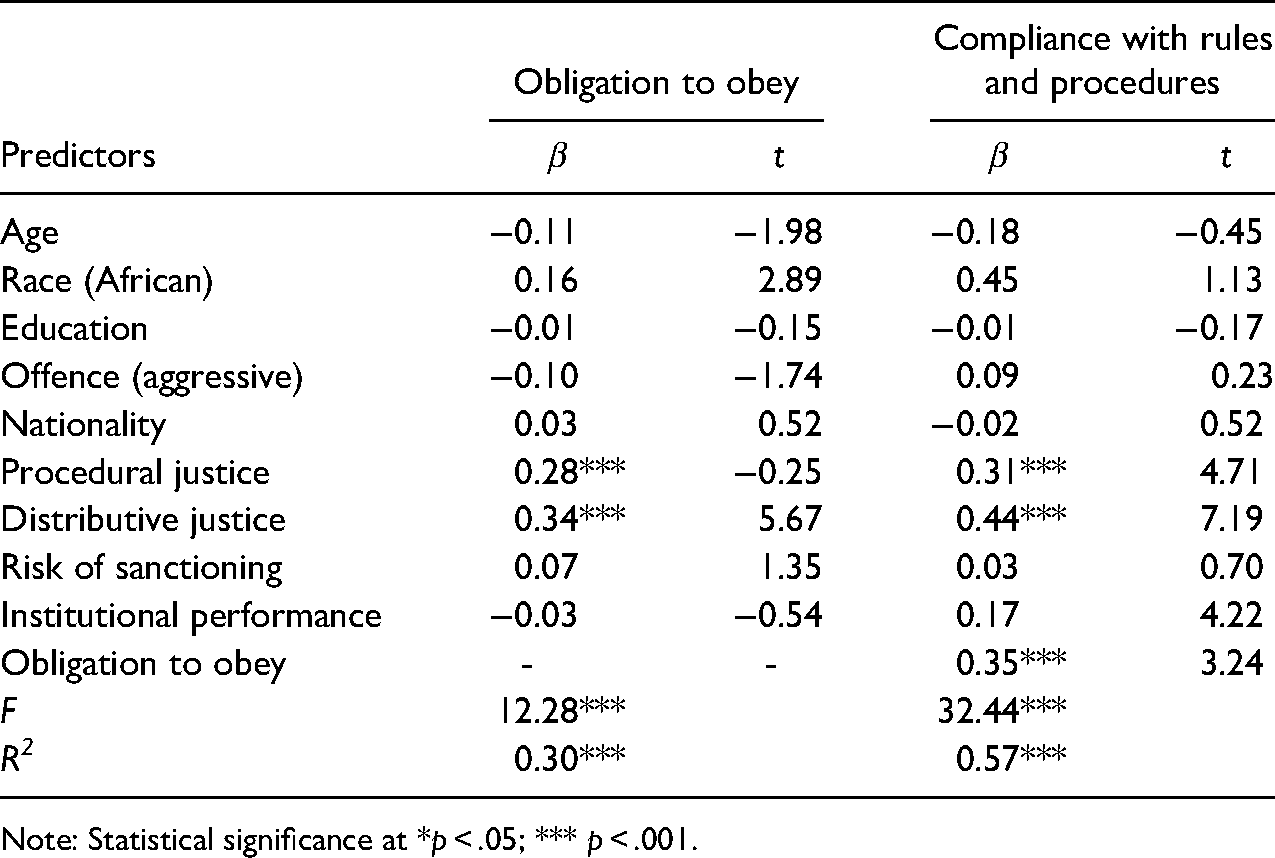
The aim of this study is to assess the effect of procedural justice and other exogenous factors on inmates’ obligation to obey and comply with correctional rules and procedures. Table 1 showed the demographic composition structure of the sampled participants for the study. Table 3 illustrates the bivariate (Pearson's) correlations between the scales and the descriptive analysis of the study variables, and Table 4 reveals the findings of the OLS regression analysis.
Correlations Between Variables and Descriptive Statistics.
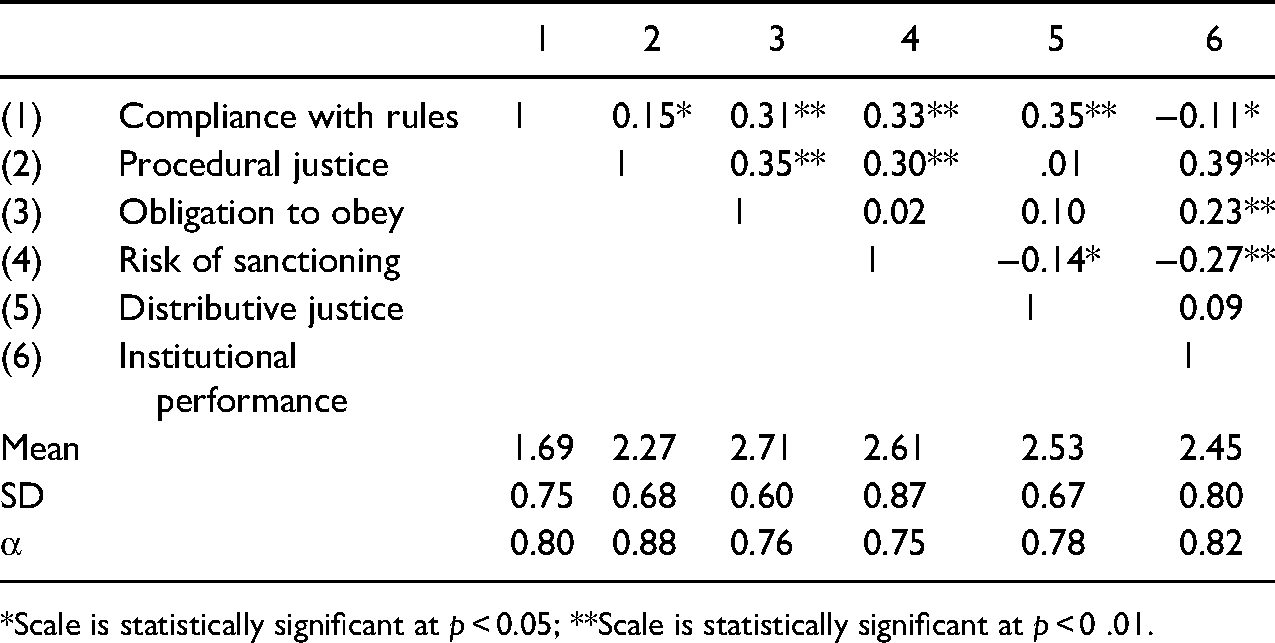
*Scale is statistically significant at p < 0.05; **Scale is statistically significant at p < 0 .01.
Regression Results.
Note: Statistical significance at *p < .05; *** p < .001.
In terms of Table 3, the analysis indicates that significant correlations existed between the variables. Specifically, apart from institutional performance, all other variables were positively correlated with compliance with correctional rules. Notably, distributive justice (r = 0.35, p < 0 .01) has the highest bivariate correlation coefficient with compliance with correctional rules and procedures, and the relationship is in a positive direction. This implies that as perception of distributive justice increases, compliance with correctional rules and procedures increases. Procedural justice (r = 0.15, p < 0 .05) and obligation to obey (r = 0.31, p < 0 .05) also have a significant bivariate correlation coefficient with compliance with correctional rules and procedures, and the relationship is in a positive direction. This implies that as perception of procedural justice and obligation to obey justice increases, compliance with correctional rules and procedures also increases. However, the bivariate correlation coefficient relationship between institutional performance (r = -0.11, p < 0 .01) and compliance with rules and procedures is significant, but in a negative direction.
Predicting Compliance Behavior among Incarcerated Offenders
An OLS regression analysis was conducted to establish whether procedural justice and obligation to obey will shape inmates’ compliance with correctional rules and procedures (see Table 4). Apart from the dependent variables, demographic variables such as age, gender, race, nationality, education level, and offence classification were also tested on the outcome variables. From the two models, only two variables were found to have asignificant positive effect on the outcome variables. Specifically, only procedural justice and distributive justice had a significant positive effect on inmates’ obligation to obey and willingness to comply with correctional rules and procedures. Surprisingly, none of the demographic variables predicted any of the outcomes.
From the first model, procedural justice (β = 0.28, p < 0.01) and distributive justice (β = 0.34, p < 0.01) had a significant positive effect on obligation to obey. This implies that inmates who perceived correctional officials as procedurally fair, and those who believe correctional officials provide equal service and support to inmates are more likely to obey their directives.
The result of the second model is similar to the first one. Both procedural justice (β = 0.31, p < 0 .01) and distributive justice had significant positive effects on compliance. It implies that inmates who perceived correctional officials as procedurally fair, and those who believe correctional officials provide equal service and support to inmates are more likely to comply with correctional rules and procedures. The result was significant and accounted for 30% [F (12,28) = 9.87, p < .001] R2 = .30 of the total variance in the analysis.
Additionally, obligation to obey (β = 0.35, p < 0 .01) had a significant effect on compliance with rules and procedures. Likewise, obligation to obey, more so than procedural justice, had a greater significant effect on compliance. It implies that those who say that they will obey and comply with correctional rules and procedures are more than those who say they will comply because they were treated fairly. These results underscore the relevance of obligation to obey in influencing inmates’ willingness to comply with correctional rules and procedures. The result was significant and accounted for 57% [F (12,28) = 32.44, p < .001] R2 = .57 of the total variance in the analysis.
Discussion
From a survey of incarcerated offenders in two male correctional facilities in the Gauteng province of South Africa, the researchers examined the effects of procedural justice and three other exogenous factors on inmates’ obligation to obey, and compliancewith correctional rules and procedures. The results have practical implications for enhancing compliance in correctional institutions, as well as theoretical implications for the process-based model of regulation.
The results of the study show that procedural justice is significant and positively related with obligation to obey and comply with correctional rules and procedures. These findings indicate that inmates who perceive correctional authorities as procedurally fair and just were more likely to obey and comply with correctional rules and procedures. The results fully support H1 (Perceived procedural justice will be significant and positively related to obligation to obey) and H2 (Perceived procedural justice will be significant and positively related to compliance). Notably, the results underscore the importance of procedural justice in shaping inmates’ obligation to obey and comply with correctional rules and procedures. If correctional officials adopt fair procedures in carrying out their daily tasks within a facility, the likelihood exists that inmates will perceive them as procedurally fair.
Drawing mostly from the Tylerian process-based model, previous studies in Western societies found procedural justice to have significant positive effects on inmates’ compliance and obligation to obey (Beijersbergen et al., 2015; Jackson et al., 2010; Maguire et al., 2019; Nuño & Morrow, 2020). For instance, Jackson et al. (2010) maintain that perceived fair treatment of inmates gives rise to inmates who are more compliant with correctional rules and obedient to correctional staff. Nuño and Morrow (2020) also found a significant positive relationship between procedural justice and obligation to obey and compliance.
This study represents the first attempt to empirically test the effect of procedural justice and other normative and instrumental factors in the correctional setting in post-colonial and transitional African societies, and, by extension, Africa. The researchers were, therefore, unsure of the potential findings when they set out to conduct this study. Notably, in contrast to the findings of Western-oriented studies (as specified above), this investigation found that distributive justice had a greater significant positive effect on obligation to obey and comply with rules and procedures than procedural justice. In fact, distributive justice had the highest significant value, and, by extension, the strongest predictor of obligation to obey and compliance with correctional rules and procedures.
Although it is possible for the application of the procedural justice theory to the corrections environment to have theoretical and contextual limitations, its strengths are undeniable, especially in fostering the obligation to obey and compliance among incarcerated offenders. However, procedural justice may not always be the strongest predictor of obligation to obey and compliance in correctional settings in all jurisdictions. For instance, unlike Western-oriented studies that reported procedural justice as the strongest predictor of obligation to obey and compliance in the corrections environment (see Nuño & Morrow, 2020), the findings here show contradictory result. This portends, albeit in a transitional society's correctional setting, that inmates may be more concerned about the equitable distribution of services in correctional facilities than about the procedural fairness of correctional officials.
The findings also indicate that inmates who show stronger feelings to obey and defer to correctional officials are more likely to comply with institutional rules. Unexpectedly, risk of sanctioning and institutional performance did not have any significant effect on compliance and obligation to obey. Although risk of sanctioning was a significant predictor of compliance in Western-oriented studies (see Maguire et al., 2019), this study's findings indicate that inmates may be more concerned about issues of procedural and distributive justice as opposed to being punished for wrongdoing. This also points to the imperativeness of procedural and distributive justice in fostering an internalized notion of obligation to obey and comply with correctional rules and procedures.
Surprisingly, none of the demographic variables predicted obligation to obey and comply with correctional rules and procedures. Although such outcomes are not really consistent with previous studies, the likelihood may exist that demographic variables may be of less importance to the sample of inmates who participated in this study. Moreover, the factor of masculinity could possibly play a role here. Since they are all male offenders, their views may be shaped by their scale of preference; that is, they may be more influenced by other factors on their scale of preference, such as the socio-economic and psychological impacts of incarceration. Such problems, coupled with their daily encounters with correctional officials and fellow inmates, could be bigger influencing factors oncompliance and obligation to obey than demographic factors such as race, nationality, and educational qualifications; to mention a few.
Study Limitations and Suggestions for Future Research
As common with most empirical research, this study is not free from limitations. Since it was essentially a cross-sectional survey of inmates from two correctional centers in the Gauteng province of South Africa, the results should be treated with caution. Considering the sample size, it will be difficult to make causal conclusions or generalize the findings to all correctional centers in the country. This is fundamental because the results do not represent the opinions of the entire country's incarcerated offenders. However, these limitations do not detract from the study's relevance and its contribution to the advancement of literature on the impact of procedural justice, obligation to obey, and compliance in the correctional setting; albeit in a post-colonial and traditional African corrections setting. Future research can adopt a longitudinal survey approach with a larger sample size, and consider other factors that were not covered in this study.
Conclusion
This study set out to examine the effects of procedural justice and other key instrumental factors on inmates’ obligation to obey and comply with correctional rules and regulations. Notably, the findings are imperative and have implications for corrections management in South Africa. The study offers some valuable contributions to corrections management literature by scrutinizing what to reaffirm and dispute in terms of the results of prior research conducted in Western societies. Importantly, these results provide evidence that the perception of procedural justice, although significant, is not the principal factor that incarcerated offenders consider when making decisions regarding their obligation to obey and comply with correctional rules and procedures. However, the study corroborates prior findings from the West on the importance of procedural justice in shaping inmates’ obligation to obey and comply with correctional rules and procedures. It illustrates that if correctional officials adopt fair procedures during their daily encounters with inmates and treat them with respect, inmates will in turn obey and comply with their directives. These implications portend that regardless of the wider embrace of procedural justice in shaping obligation to obey, and compliance in Western correctional centers, it would be imprudent to construe that it is the only or most reliable factor to address compliance deficits in all correctional centers.
Importantly, this study is the first to empirically test the effects of procedural justice and other exogenous factors on incarcerated offenders’ obligation to obey and comply with rules and procedures, in a South African setting, and indeed in a post-colonial, transitional, and African correctional setting. Distributive justice was found to be the most positive significant predictor of obligation to obey and comply with rules and procedures. Although most findings from prior studies did not really reflect this, it points to the interest of incarcerated offenders in South African correctional centers. What is proposed here is for correctional demonstrators, researchers, and policymakers in South Africa to develop contextual models that are suitable and adaptable to their settings in order to generate sustainable outcomes.
Footnotes
Declaration of Conflicting Interests
The author(s) declared no potential conflicts of interest with respect to the research, authorship, and/or publication of this article.
Funding
The author(s) received no financial support for the research, authorship, and/or publication of this article.