




Abstract
Refugees arriving in Western countries spend long periods, often over a year, as asylum seekers. We examine how the period affects asylum seekers’ institutional and interpersonal trust. Drawing on theories of need gratification, we suggest that several needs are unfulfilled during this period of existential limbo. Still, some aspects in the new society are positive, especially in Sweden, the host country of this study. To study these combined forces, we rely on repeated interviews with the same asylum seekers as well as other quantitative approaches. Results show that both types of trust are reduced over time, suggesting that the negative aspects take precedence. We also present results based on a matching analysis, which indicate that interpersonal trust at the beginning of the asylum-seeking process is higher compared to similar refugees in Jordan and Lebanon. Overall, our results show that trust can be highly malleable in certain circumstances.
Introduction
For the hundreds of thousands of asylum seekers arriving in democratic and affluent countries, the waiting period of the asylum process is associated with uncertainty (Brekke, 2004), lack of opportunities (Burchett and Matheson, 2010), higher rates of post-traumatic stress (Crumlish and O’Rourke, 2010), and lower quality of life in general (Laban et al., 2008). At the same time, and without denying the existence of adverse outcomes, seeking asylum in the West is also associated with positive aspects such as greater personal safety in the destination country (Institute for Economics and Peace, 2020), high-quality institutions bound by rule of law (Holmberg et al., 2009), and more trusting natives (Dinesen, 2012; Helliwell et al., 2016). This may be especially true for asylum seekers coming to Sweden, the destination country in our study, as the country has historically been particularly attractive to asylum seekers (Neumayer, 2004), has high ambitions regarding humane and legally secure asylum processes, and allocates large budget funds to match the ambition (Petrucci, 2016).
To date, most scholarly attention to the situation of asylum seekers targets their personal well-being (Carswell et al., 2011; Oda et al., 2017) and prospects on the labor-market (Guichard, 2020; Hainmueller et al., 2016). In this article, we focus on asylum seekers’ trust attitudes because they are central in how asylum seekers relate to the country in which they seek protection. High levels of trust in the destination countries’ political institutions and in unknown other people is conducive for pro-social and cooperative behaviors (Ostrom et al., 1992; Putnam, 2000). 1 Our purpose is to study how these fundamental attitudes are shaped by the length of the asylum process. Overall, prior research implies that longer waiting periods are worse for the individual, yet with the positive aspects in mind, it is not evident how these trust attitudes are shaped by waiting for asylum. What we learn from the dynamics of trust during this process can also improve the understanding of trust more generally, including its malleability in unusual situations.
Learning how time during the asylum process affects trust is methodologically challenging. Asylum seekers are a hard-to-survey population (Tourangeau et al., 2014), and in order to study change during the asylum process, a sufficiently large group of the same individuals need to be surveyed at least two times over time. In our study, we rely on a face-to-face recruitment interview of a large group of asylum seekers in Sweden (n = 1245), who at the end of the interview gave their contact information, and 2 months later were interviewed again online. Despite a recognition in the field that time aspects play a key role (Cwerner, 2001), studies that take them seriously are uncommon (Griffiths, 2014). To our knowledge, ours is the first to target trust attitudes by means of survey panels. 2
Using three complementary types of analysis of our original data, we document negative consequences of time in the asylum process on institutional trust and interpersonal trust. Institutional trust is measured with a question on trust in the Swedish Migration Agency and interpersonal trust with a question on generalized social trust. The negative change in interpersonal trust during the waiting period is perhaps the most noteworthy since some prior research has treated the concept almost as a personality trait, which moves only in extreme circumstances (Uslaner, 2018). The asylum-seeking process may be one of these situations, allowing for a study on this rarely tested proposition. More broadly, our results point to a trade-off between the government’s goals of making the right decision and a fast decision. The government’s more important goal—where it is erring on the side of being correct, as is evident by waiting periods of over a year despite large resources spent on the Migration Agency—takes a toll on how asylum seekers perceive institutions and ordinary people. Thus, our results support the widespread belief among scholars and policy experts (OECD, 2016) that time in the asylum-seeking process should be as brief as possible.
Theory and Previous Research
The Long Asylum-Seeking Process
Asylum seekers in Europe often must wait over a year before their application is attended to in earnest (Connor, 2017). The long waiting period could be exhausting and largely negative because multiple needs are unfulfilled or in short supply. In the migration literature, accordingly, the waiting period is conceptualized as a state of existential limbo, where they are not fully part of any society (Cabot, 2012; Jonzon et al., 2015). However, as developed below, the experience is not exclusively negative. The dual character of the experience is important for our understanding of trust formation processes. It means that we cannot make theoretically founded predictions about the relative strength of trust undermining and trust generating causal forces of the asylum process.
The situation of asylum seekers could be understood in relation to the theoretical literature on need gratification (Maslow, 1954), but also in relation to more recent empirical studies on needs (e.g. Tay and Diener, 2011). Unlike the hierarchical categorization of Maslow, these recent studies conclude that several types of need can work independently. For example, an individual in a difficult economic situation, but who is treated with respect is likely experiencing two countervailing forces.
While the literature on needs generally focuses on perceived well-being, we believe it is relevant also for attitudes on trust. Previous research has established that life satisfaction (or subjective well-being) is closely related to trusting attitudes (for reviews, see Esaiasson et al., 2020; Sønderskov and Dinesen, 2016). In the current context, we think of trust as a plausible down-stream consequence of the degrees to which important needs are satisfied. Against this background, it is important to understand some of the details of the asylum-seeking process in Sweden and discuss to what extent needs are met during this period.
Psychological Challenges of the Waiting Period
As for asylum seekers in Western countries, we believe that three need-related aspects may be especially pronounced and potentially detrimental for trust attitudes. First, asylum seekers are in a difficult economic situation. While the amount of financial support provided by the destination state varies across countries, it is lower than the social security of low-income and economically disadvantaged citizens. The material scarcity is also pronounced when it comes to housing quality, where state-run facilities are of a substantially lower standard (European Council on Refugees and Exiles, 2020). Studies from the Netherlands suggest that it is the lower material standards among immigrants, rather than cultural background that explain differences in life satisfaction among ethnic minorities (De Vroome and Hooghe, 2014).
Second, as mentioned, asylum seekers find themselves in prolonged limbo where they await a decision (Connor, 2017). Lack of closure and predictability undermines planning for the future, which is stressful even under normal circumstances (Kruglanski and Webster, 1991). This limbo might be especially draining because asylum seekers are isolated from the majority society. For example, according to Swedish policy, asylum applicants are not provided language training until their application is granted, which means that they are hindered from making sense of what is going on around them. This is just one example of how the host country makes it clear to asylum seekers that they are not yet part of the new society. Humans have an intrinsic need to belong, and when this need is unmet, people suffer in multiple ways (Baumeister and Leary, 1995; Cacioppo et al., 2011).
Third, even though most of the asylum seekers are in the prime of their lives, they lack opportunities in earning an income or in other ways expressing their worth. In other words, they are unable to express competence, which is a basic human need (Harter, 1978). Therefore, they get daily reminders of their low efficacy, which usually has strong negative effects on a range of factors (Bandura, 1982; Gecas, 1989). That these are serious concerns is also underlined by qualitative research conducted in the United Kingdom. Not being able to work or improve the situation reduces self-esteem and reinforces the outsider status of asylum seekers (Burchett and Matheson, 2010).
Not So Bad After All?
However, such potential fulfillment deficits are not necessarily associated with adverse out- comes. Part of that has to do with social aspects—people who are surrounded by individuals who are more fulfilled tend to be happier. That is, the context aspect is strong (Tay and Diener, 2011). In the same vein, research on interpersonal trust indicates that immigrants who migrate from a low-trusting country to a high-trusting context are generally more trusting (Dinesen, 2012). Such effects have been observed among individuals already granted asylum, but it is possible that asylum seekers are also affected by interactions with high-trusting natives. Similarly, the institutions of the Western destination countries tend to be of high quality (Holmberg et al., 2009). Positive encounters with these institutions could mitigate asylum seekers’ difficult limbo. Overall, there is recognition that asylum seekers are not just passively waiting but are staying active during this period. For example, they are often forming new friendships and relationships (Kallio et al., 2019).
Moreover, even if several of the asylum seekers’ needs may be lacking in an absolute sense, more vital others may have improved, where security is of particular importance. Arguably, the major reason asylum seekers fled their homes is that they were not safe anymore. Crime and insecurity exist in wealthy Western democracies too, but they are substantially safer. In these countries, asylum seekers are no longer facing civil war and persecution (Institute for Economics and Peace, 2020). If the conditions are right, the provision of security can generate feelings of gratitude to the host country (D’Cruz, 2014), which could affect trust levels, as the feeling of safety accumulates during the asylum-seeking process.
Yet another factor deals with how people make comparisons. Compared to the living standards of people in refugee camps, becoming an asylum seeker in a Western country could be perceived as a marked improvement. After all, in their review of how economic factors affect the vote, Lewis-Beck and Stegmaier (2000) conclude that the popularity of presidents is more affected by recent economic changes (e.g. in unemployment or gross domestic product (GDP)) than by the absolute levels of unemployment and GDP, suggesting that comparisons with the past plays a major role in the vote decisions. A similar relative improvement for asylum seekers concerns the welfare state. Even if economic conditions are worse than that of natives, the presence of a welfare state with government-provided health care may help in cushioning the blow.
In summary, there are several factors that are largely negative during the asylum-seeking process, but there are other factors that may counteract these adverse concerns. Next, we turn to the details of the Swedish asylum process because it is in this real-world context that the theoretical factors play out.
The Combined Effects of the Swedish Asylum Process
We can think of time spent as asylum seekers in Sweden as a treatment that affects multiple potential mediators. Some of these plausible mechanisms are mentioned above, like being in limbo and having a difficult economic situation. These examples focus on mechanisms that presumably decrease trust attitudes, but there are also others that may work in the other direction and increase trust attitudes. Since we do not have data on the mechanisms, we focus on the summed experiences of all the asylum-seeking experiences. That is, we are not studying mediation, or singling out certain mechanisms for an empirical test, but are instead concerned with how the combined experiences of being an asylum seeker affects two types of trust.
Formally, the experiences as an asylum seeker begin with the filing of an application for asylum at one of the Migration Agency’s application units in the three major cities Gothenburg, Malmö, and Stockholm. Ordinarily, a first-time asylum seeker reports their intention to the police immediately upon arrival in Sweden and are then referred to the nearest application unit. However, there are several other ways into the asylum process as well. For example, some asylum seekers arrive in Sweden on a tourist visa or reapply after staying in the country without formal permission during a 4-year limitation period.
Having filed an application, the asylum seeker is interviewed briefly about biographical information, the journey to Sweden, and their reasons for seeking asylum. Furthermore, he or she is fingerprinted and requested to submit identity documents. In return, the applicant is awarded a card that proves that the holder has applied for asylum and is entitled to stay in the country pending a residence permit decision. He or she may also apply for financial aid (almost everyone does, and the Migration Agency does not ask questions about financial assets), is given a debit card where the agency deposits the allowance, and is assigned a legal counselor. Furthermore, the asylum seeker receives practical information on, among other things, accommodation, the right to health care, and the schools for children. The asylum seeker can then choose between settling in one of the Migration Agency’s facilities (around 60% do), or arranging their own accommodation, often among relatives and friends or at the black market for second-hand rentals. In these and all further contacts with state institutions, the asylum seeker has the right to an interpreter.
Following these intense initial interactions with the Swedish state, the asylum seeker is left to wait for the Migration Agency’s review of their application, and the call for an “investigation interview.” This interview is crucial for the outcome of the process. Asylum seekers must, under the obligation of truth, give an account of their origin, their asylum reasons, the consequences of being forced to return, their health, and their professional background (Van Veldhuizen et al., 2017). At the third and final formal step in the asylum process, the asylum seeker is called to a new meeting where the Migration Agency representative informs whether the application has been granted and whether the residence permit is permanent or temporary, and what happens next.
The wait for the investigative interview is by far the longest period in the asylum process. The time between the investigative interview and the decision, while obviously stressful, lasts weeks rather than months. It is up to the asylum seekers themselves, and to individuals and voluntary organizations in the context in which they are located, to organize life during the waiting periods. Some asylum seekers manage to stay active while others are reduced to passivity (Kosyakova and Brücker, 2020). During the waiting period, obviously, asylum seekers have much time to ponder past experiences and worry, but also to make plans for their future in the securer, wealthier, and better organized new country of residence.
Clearly, there seem to be several causal forces in play during the asylum-seeking process. Some of them are detrimental to trust attitudes, whereas others are supportive. Because of that, we do not hypothesize which forces are the most influential.
Institutional and Interpersonal Trust
Institutional trust, the first outcome of interest, is the belief that state institutions such as the police, the bureaucracy, and the tax authority are fair and effective. It is theorized that the fairness and effectiveness of state institutions indicate the degree to which trustworthy behavior is the norm in society and the likelihood that norm violators will be sanctioned (Levi and Stoker, 2000; Norris, 2017).
A high level of institutional trust is important for the functionality of societies. It helps to generate legitimacy for authoritative decisions (Dalton, 2004; Marien and Hooghe, 2011) and enables the integration and participation of citizens (Levi, 1988). Trust in the impartiality and fairness of institutions on the output side of politics is particularly important as they impact directly people’s everyday life when implementing public policies (Rothstein and Stolle, 2008).
One of the most important factors in shaping institutional trust is the encounters people have with institutions (Van der Meer and Hakhverdian, 2017). That people are responsive to the institutional context is also demonstrated in a study of Swedes who moved abroad; migrants to countries with high-quality institutions become more trusting. A corresponding reduction in migrant trust occurs in countries with low-quality institutions (Dahlberg and Linde, 2018).
Interpersonal trust is our other central outcome of interest. This type of trust concerns an individual’s beliefs about the trustworthiness of unknown others. High interpersonal trust is associated with greater community participation (Putnam, 2000), better success at dealing with collective action problems (Ostrom et al., 1992), and many other noteworthy, beneficial outcomes (Sønderskov, 2011).
The determinants of interpersonal trust include multiple sources at the individual level. 3 Several authors suggest that it is largely, yet not solely, founded through early socialization by parents and in school. In fact, there may even be a generational component where parents pass on their levels of trust to the subsequent generations, as is suggested by US surveys among ethnic groups with a relatively high-trusting background such as the British and the Nordic (Uslaner, 2008). The deep roots of pro-social behavior are also seen in studies based on comparisons between monozygotic (sometimes called identical) and dizygotic twins, where variation in cooperative behavior appears to be partially based on genetic differences (Cesarini et al., 2008). Overall, lower interpersonal trust is present among people with low socioeconomic status, including individuals with lower income (Brandt et al., 2015).
Prior research has documented an increase in interpersonal trust among new immigrants who move to high-trusting societies, indicating that once people have become part of a new society, it changes how they view others. This research shows that migrants gradually adapt to the higher level of trust of the native population (Dinesen, 2012; Helliwell et al., 2016), and that the trust gap has largely disappeared among the immigrants’ children (Dinesen and Hooghe, 2010). While such studies have improved the understanding of what happens to trust among immigrants, it only explains the dynamics of trust once individuals are part of the normal, surrounding society. The large group of individuals who are currently applying for asylum is not present in the analysis, and we know little of what happens to people over a period that routinely lasts over a year (Gest et al., 2014).
A theoretical argument can be made for treating institutional and interpersonal trust as belonging to the same overarching construct: social cohesion (Chan et al., 2006). As we note above, both types of trust are associated with several desirable normative outcomes. Moreover, they are correlated, according to a large body of empirical research (e.g. Brehm and Rahn, 1997). Still, we maintain that it is meaningful to treat institutional and interpersonal trust as separate. There is an important distinction between the two in how trust extends. Institutional trust is a form of vertical trust, where the focus is on the hierarchical relationship between the individual and the state. Interpersonal trust is sometimes referred to as horizontal trust, which stresses that trust relates to other ordinary citizens. This type of distinction forms the theoretical basis for examining the relationship between them (Rothstein and Stolle, 2008), where there is evidence that institutional trust influences interpersonal trust (Rothstein and Eek, 2009). However, there is also evidence that suggests a reverse causal relationship, where interpersonal trust instead affects institutional trust (Dellmuth and Tallberg, 2020). Evidence is accumulating on the causal ordering of the two constructs, but the issue has not been entirely settled (Sønderskov and Dinesen, 2016). What seems to be clear, however, is that they are separate constructs and should be studied as such (Vallier, 2019).
Materials and Methods
Participants
We recruited participants between April 2016 and March 2017. During the recruitment, female and male interviewers were placed outside the Swedish Migration Agency’s facilities in Gothenburg and Malmö, and asked asylum seekers whether they wanted to participate in a survey about their thoughts and experiences. The interviewers wore clothing that clearly indicated that they were from a Swedish university. The interviewers emphasized that participation was voluntary and that responses would be confidential. Moreover, asylum seekers were informed that participation or particular survey responses would not influence the outcome of their asylum applications, and that the research team could not assist them in the ongoing process. We offered no monetary incentives for participation. Rather, we stressed that participation was an opportunity to express concerns and to share experiences, and that responses could give asylum seekers a collective voice about the asylum-seeking process.
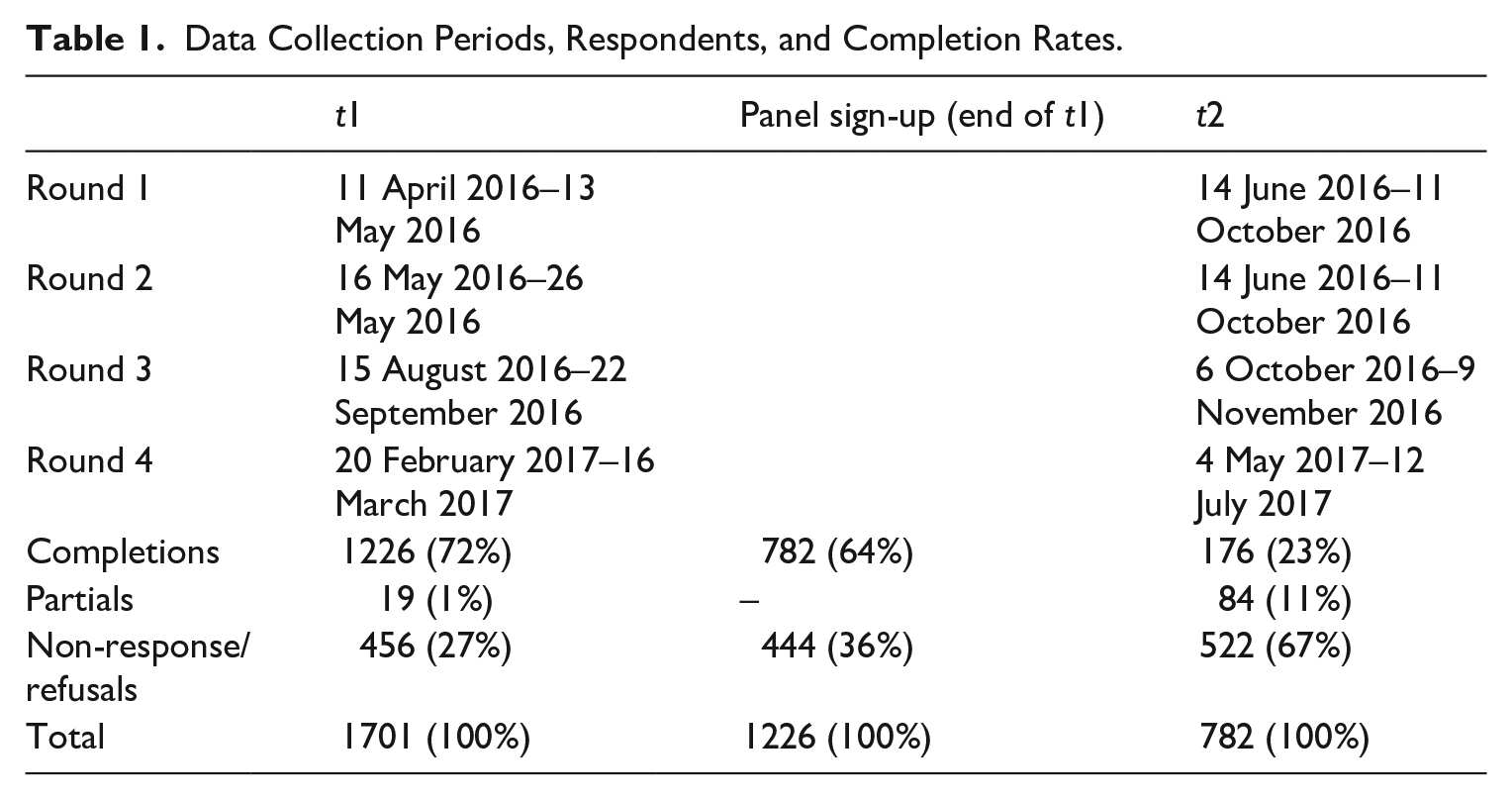
Of the 1701 asylum applicants contacted during the four rounds of recruitment, 1245 agreed to answer a recruitment survey (t1). The high cooperation rate (73%) could perhaps be understood in light of the face-to-face recruitment mode and the relevance of the topic to participants. 4 Of the around 450 asylum seekers who chose not to participate, interviewers recorded the presumed reason(s). Non-participation was related to not being able to speak Arabic or English (44%), lack of time (28%), low interest (25%), and low trust in the survey (9%).
Once interviewing began, relatively uncontroversial questions were asked by the interviewers, and potentially sensitive questions about trust were filled out by interviewees themselves. For this portion of the interview, the tablet used by interviewers was handed over to the respondents. At the end of the recruitment survey, respondents were asked whether they wanted to be part of web-based panel. Seven hundred eighty-two individuals agreed (64%) and gave their contact information (e-mail address or mobile phone number). We relied on Qualtrics as our survey tool.
The second round of interviews (t2) took place entirely online and was filled out by the asylum seekers without the assistance of interviewers. The invitation to the web-survey was sent out either via e-mail or text message based on the contact information given at the end of the t1 survey. In total, 176 individuals completed the survey and 84 partially completed it. Of the 782 who agreed to be part of the panel, 522 (67%) did not respond to any question. The timing of online interviews depended on the original recruitment date, with the last interview taking place in July 2017. Table 1 summarizes information about the data collection periods and completion rates. We conducted two additional survey waves, but these surveys have few valid responses, making precise estimates less reliable given our analytical approach.
Data Collection Periods, Respondents, and Completion Rates.
As Table 2 shows, a majority of our sample comes from Arabic-speaking countries (Syria and Iraq). The largest other groups at t1 include asylum seekers from Somalia (6%) and Afghanistan (4%), or report that they are stateless (5%). The mean age in the sample is around 30 years and a majority are men. The sample composition is similar to the population of asylum seekers in Sweden at the time. Official statistics show that 70% were coming from Arabic-speaking countries, 30% were female, and the average age was 31 years old (Swedish Migration Agency, 2021). Thus, on these statistics, our sample is more male, but similar on the two other factors.
Respondent Characteristics.
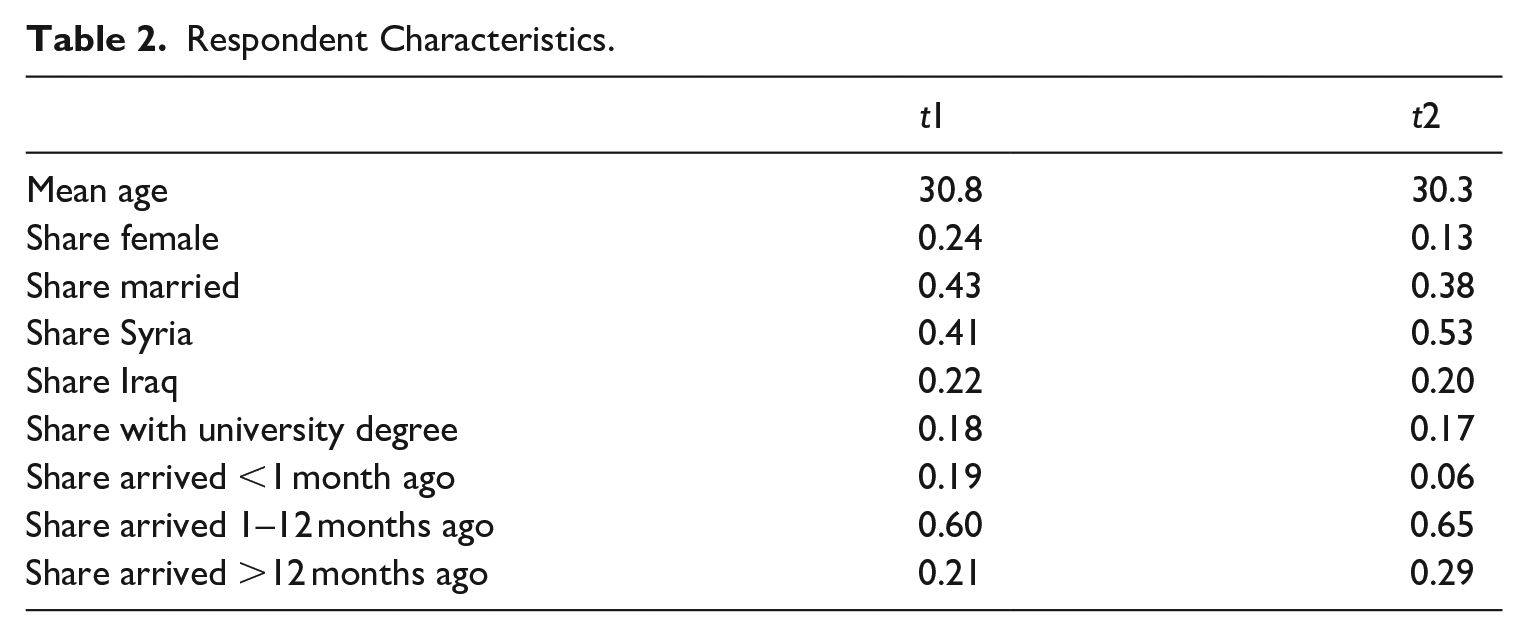
We present a full attrition analysis of the sample at t1 and t2 in the Online Appendix. While we do find that the sample is somewhat more Arabic and male at t2, we do not find evidence of strong effect heterogeneity with regard to the variables. Importantly, we handle any potential issues caused by attrition with our main analytical approach described below.
Measures
Institutional trust is operationalized with the following question: “If you think about the Swedish immigration officials, how helpful do you think they would be if you asked for help?” The measure has been recoded to range from 0 to 1, with higher values indicating more trust. We chose this operationalization of institutional trust because the Swedish Migration Agency is the only government institution that all adult asylum seekers have personal encounters with on multiple occasions during the process. For asylum seekers, it is the single most important state institution because it shapes their daily lives and ultimately decides on the outcome of their asylum applications. Consequently, we argue that people are more likely to have well-informed opinions about this institution compared to other state institutions.
Regarding the question wording about the perceived helpfulness of representatives for the institution, we draw on Levi and Stoker’s (2000) conclusion that this form of trust is made up of two components: “competence” and “good will.” To be perceived as helpful, the Migration Agency must be seen as both powerful and well-intended. When understood like this, responses to our survey question taps into the core meaning of institutional trust.
Interpersonal trust was measured by asking people, “Generally speaking, would you say that most people can be trusted or that you need to be very careful in dealing with people?” Answers were given on a 7-point scale with the lowest endpoint marking “Need to be very careful in dealing with other people” and the highest, “Most people can be trusted.” The responses have been recoded to range from 0 to 1 with higher values associated with higher levels of trust.
To measure time in Sweden, we asked, “When did you arrive in Sweden?” and gave the following eight response options: “Today,” “Yesterday,” “The day before yesterday,” “Less than 1 week ago,” “Less than 1 month ago,” “Less than 6 months ago,” “Less than 1 year ago,” and “More than 1 year ago.” Since some response options had very few respondents, we recoded the variable into three categories: less than 1 month ago, 1–12 months ago, and more than 12 months ago. The question was asked at t1 only.
Analytical Approach
Our data are unique in that it allows us to follow a hard-to-survey population over time. The panel data make it possible to study how the process of applying for asylum influences institutional and interpersonal trust.
Our main analysis takes full advantage of the panel structure by analyzing within-respondent changes between t1 and t2 for the different outcomes using a paired-samples t-test. With two time periods, this analysis is equivalent to a panel data analysis with fixed effects estimation. Importantly, this approach minimizes bias by controlling for all respondent-specific variables, like age, gender, and country of origin, by default (Wooldridge, 2010). The approach thus holds the sample constant between t1 and t2 and estimates “the effect of the passage of time” between t1 and t2, which is natural given our research questions. One drawback with this is that only the respondents who answered both panel waves are included in the analysis. Since the attrition rate between t1 and t2 is high (see Table 1), this limits the number of observations to about 130. Still, the fact that the approach minimizes bias by controlling for all fixed individual-level characteristics makes this our preferred analytical strategy.
As a complement to our main approach, we also conduct two additional analyses. First, we report the mean values for the complete sample for a specific outcome at t1 and t2, respectively. This approach provides more precise estimates than our main approach since it utilizes the maximum number of available respondents at each time point. We also believe it is an advantage to be as transparent as possible and simply presenting all data that we have. The high attrition rate is an obvious potential drawback with this approach; if attrition between t1 and t2 is systematic, this could bias the results. Our attrition analysis, presented in the Online Appendix, suggests that systematic attrition might be a problem with regard to the institutional trust outcome, but not for the interpersonal trust outcome.
As a second complementary strategy, we use a regression-based approach where we regress our outcome variables on the categorical variable measuring how long a respondent has been in Sweden (time in Sweden). This strategy has two main advantages. First, it gives us more variation in the independent variable since the time in Sweden variable ranges from respondents who arrived recently to respondents who arrived more than a year ago. Second, the strategy allows us to test for mode effects. This can be done by comparing the effect of the time in Sweden variable when we measure a specific outcome at t1 (face-to-face interviews) versus when we measure the same outcome at t2 (online). While we do not expect the coefficients to be exactly the same (since more time has passed at t2), we expect the general tendencies to be the same if mode effects are small. Put differently, in the absence of mode effects we expect the estimates to be similar regardless of whether respondents were interviewed face-to-face or responded online.
These three analytical approaches have different pros and cons. We believe that the main approach is the most natural in that it allows us to study the effect of time for individual respondents. The remaining two strategies utilize our data in different ways and include a larger share of the total sample. If the analyses show consistent patterns across strategies this would strengthen our confidence in the results.
Results
Panel Data: Within-Respondent Estimates
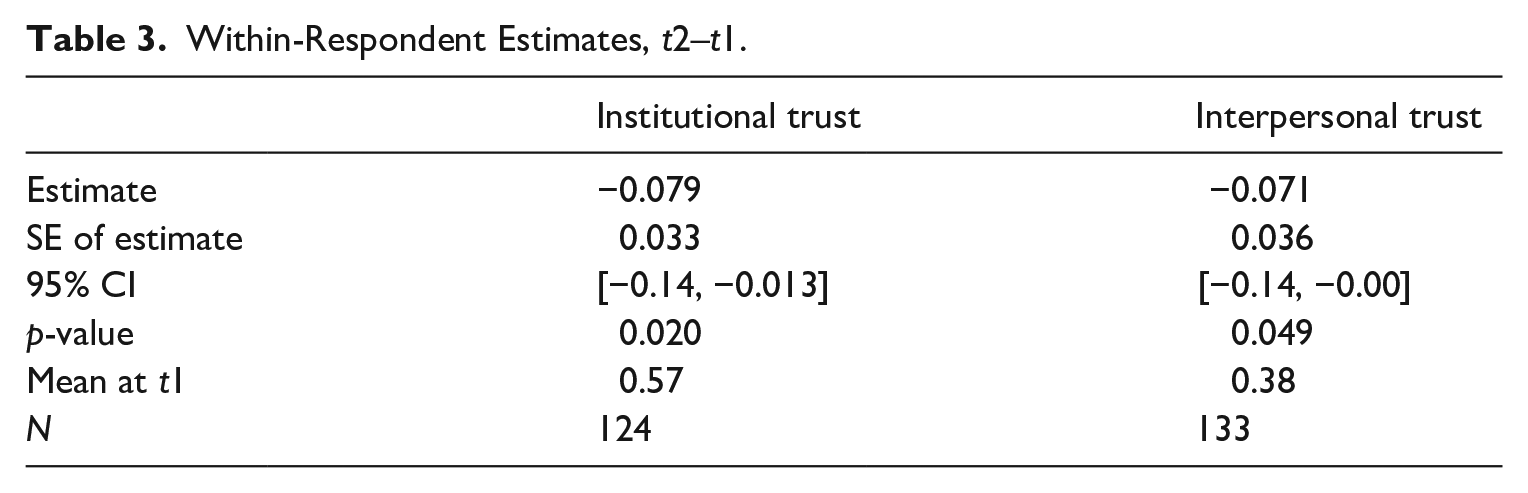
We start by reporting the results for our panel data where we analyze within-respondent changes. To estimate within-respondent changes, we computed a paired-samples t-test of the difference between t1 and t2. As described in the “Analytical Approach” section, the analysis is equivalent to a regular panel data analysis with respondent fixed effects. These results are displayed in Table 3. We also show the mean levels at t1 and t2 for the panel sample in Figure 1.
Within-Respondent Estimates, t2–t1.
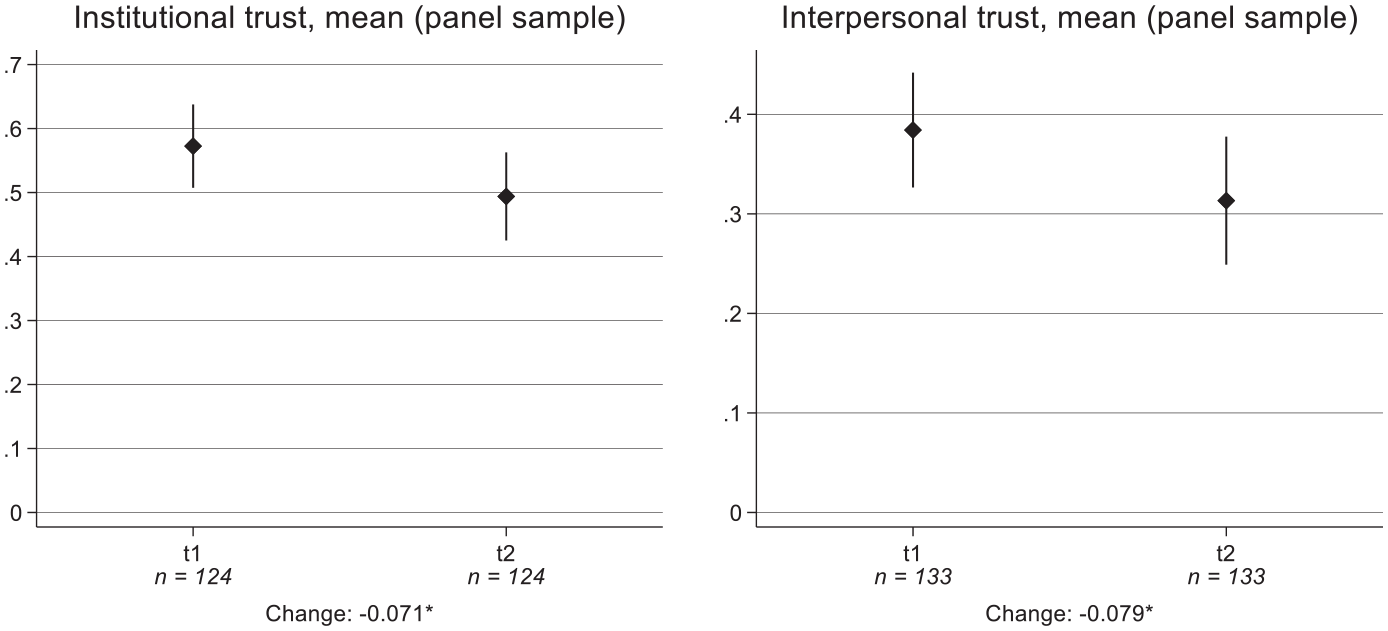
Mean Values at t1 and t2 for Panel Sample with 95% Confidence Intervals.
For institutional trust, which we operationalize as trust in the Swedish Migration Agency, we see a statistically significant decrease between t1 and t2: −0.08, t(123): −2.35, p = 0.02 (the mean level at t1 is 0.57). We see a similar pattern for interpersonal trust, showing a statistically significant decrease of −0.07, t(132): −1.99, p = 0.049 (the mean level at t1 is 0.38). Thus, these analyses provide strong evidence that respondents decreased both their institutional and interpersonal trust during the asylum process.
Complete Sample: Mean Level Comparisons of t1 and t2
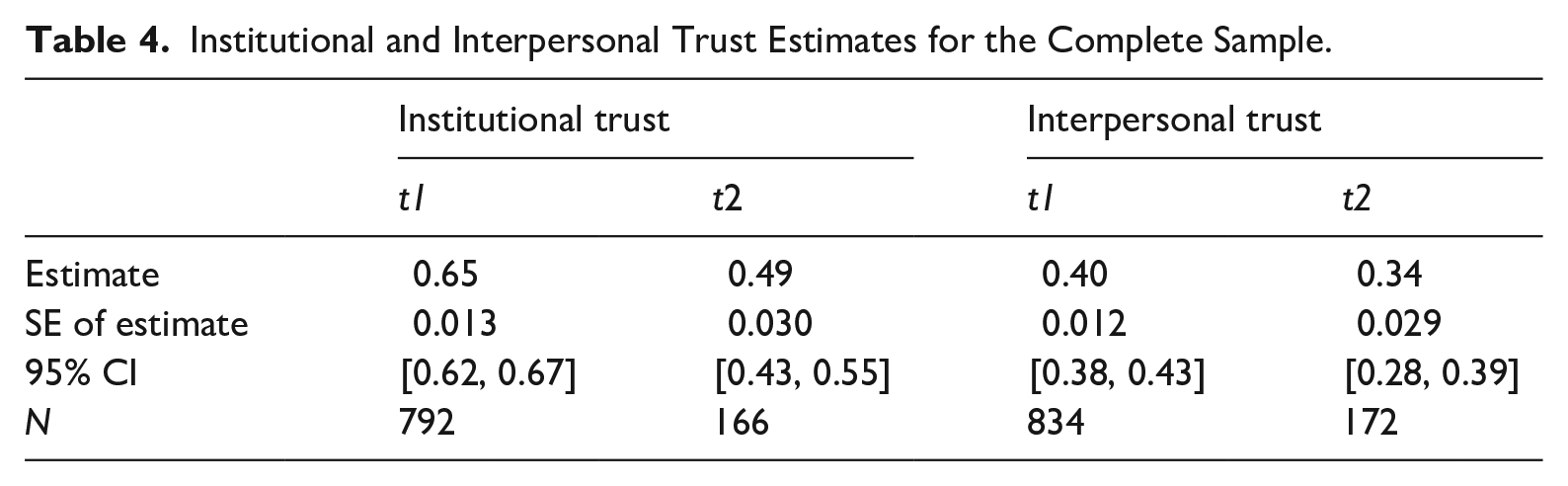
We recognize that the within-respondent analysis above is the most convincing way of analyzing change over time. However, the high attrition rate means that this analysis only utilizes part of the sample. Therefore, as explained in the “Analytical Approach” section, we also report the mean values for the full sample at t1 and t2 in Figure 2. Additional details are available in Table 4.
Institutional and Interpersonal Trust Estimates for the Complete Sample.
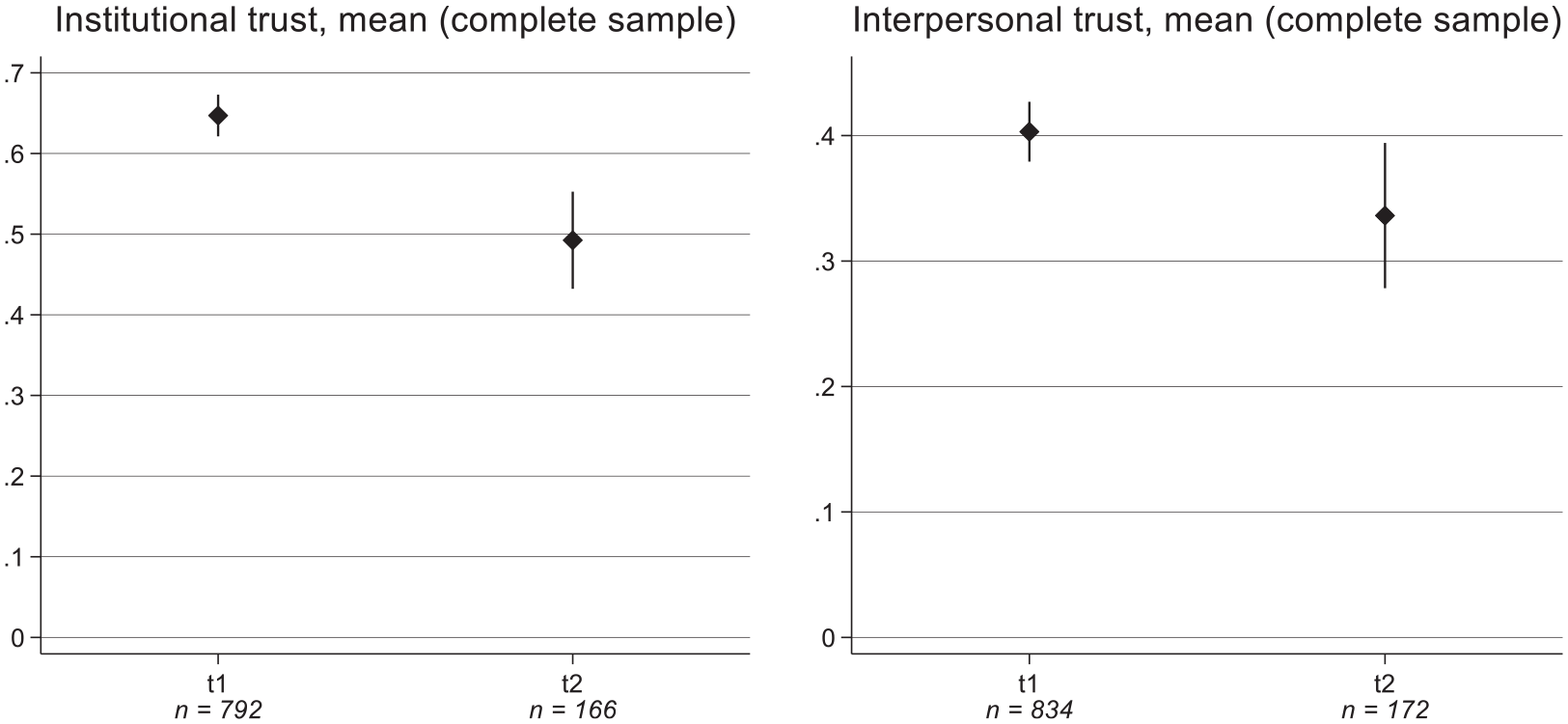
Mean Values at t1 and t2 for the Complete Sample with 95% Confidence Intervals.
The pattern is very similar to the panel analysis presented in Table 3 and Figure 1: for institutional trust, the mean level decreases from 0.65 to 0.49 (from 0.57 to 0.49 in the panel). For interpersonal trust we see a drop from 0.40 to 0.34 (from 0.38 to 0.31 in the panel).
What can we say about the absolute levels of trust in the sample? While it is hard to find a good direct comparison, the initial level of trust in Swedish institutions seems high, at around 0.6. Considering that the asylum seekers come from countries where institutional trust is notoriously low (like Syria and Iraq), this is an interesting observation. Although there are several interpretations to be made—for example, that self-selection affects who journeys to Sweden—the results are consistent with the possibility that the asylum seekers are differentiating between Swedish institutions and home country institutions from the outset of the asylum-seeking process.
Turning to interpersonal trust, we can make a more direct comparison. To get a reference group, we matched Syrian respondents in our sample to Syrian respondents living outside refugee camps in Jordan and Lebanon that were interviewed in the 2017 wave of the Arab Barometer (2017). We used exact matching and matched the two samples on sex, age, and marriage status (see Table 5 for details). For this analysis, we dichotomized the dependent variable to match the coding in the Arab barometer data. In our sample, Syrian asylum seekers have a probability of about 0.4 to say that most people can be trusted. This probability is only about 0.22 among similar individuals in the Syrian sample from the Arab barometer. Hence, this suggests that social trust is substantively higher among asylum seekers arriving in Sweden. While the evidence is far from conclusive, this complementary analysis also suggests that there is an immediate and strong effect of being in the Swedish high trust context.
Matching Estimates: Comparing Interpersonal Trust among Syrian Asylum Seekers in Sweden and Syrian Refugees.
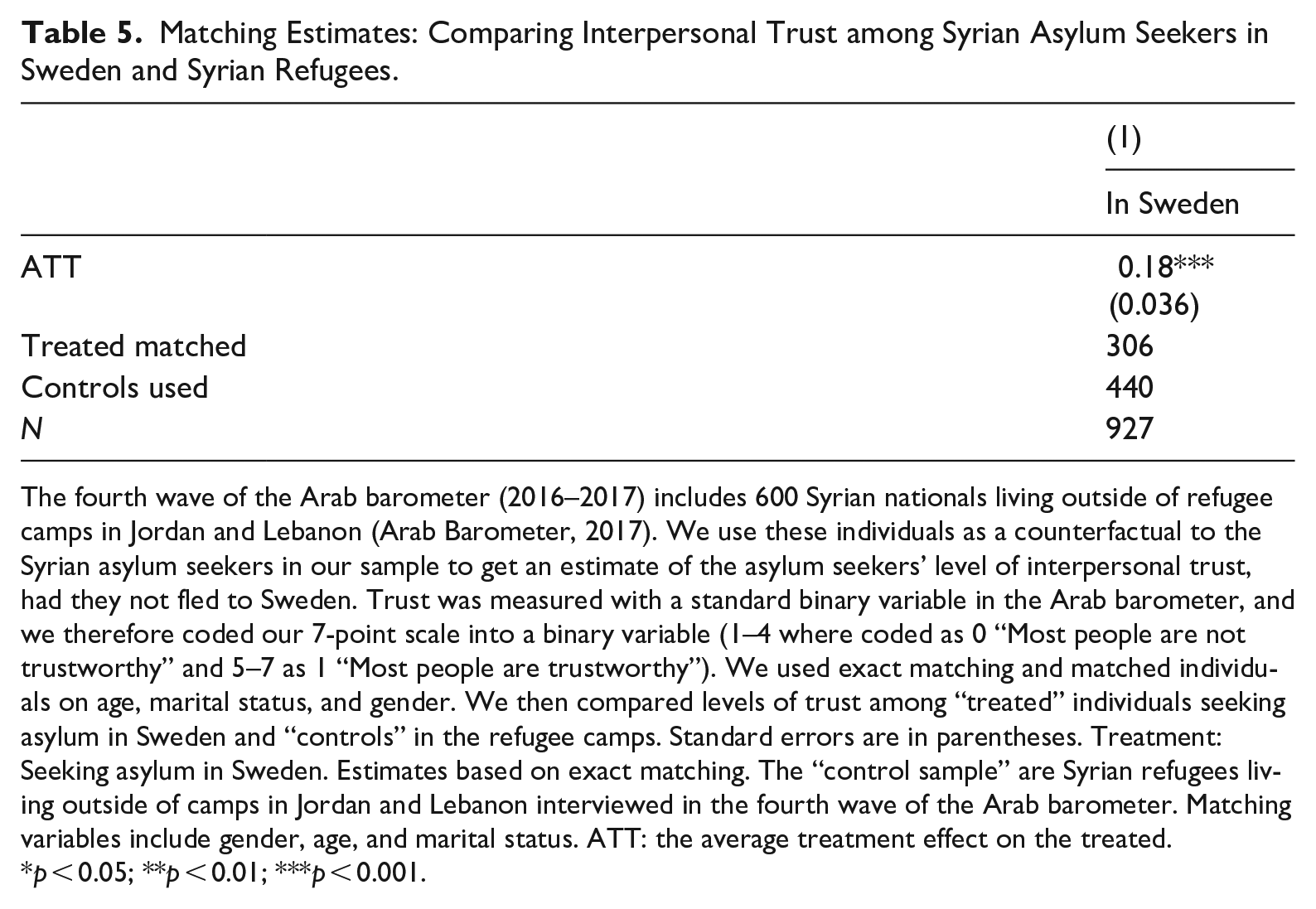
The fourth wave of the Arab barometer (2016–2017) includes 600 Syrian nationals living outside of refugee camps in Jordan and Lebanon (Arab Barometer, 2017). We use these individuals as a counterfactual to the Syrian asylum seekers in our sample to get an estimate of the asylum seekers’ level of interpersonal trust, had they not fled to Sweden. Trust was measured with a standard binary variable in the Arab barometer, and we therefore coded our 7-point scale into a binary variable (1–4 where coded as 0 “Most people are not trustworthy” and 5–7 as 1 “Most people are trustworthy”). We used exact matching and matched individuals on age, marital status, and gender. We then compared levels of trust among “treated” individuals seeking asylum in Sweden and “controls” in the refugee camps. Standard errors are in parentheses. Treatment: Seeking asylum in Sweden. Estimates based on exact matching. The “control sample” are Syrian refugees living outside of camps in Jordan and Lebanon interviewed in the fourth wave of the Arab barometer. Matching variables include gender, age, and marital status. ATT: the average treatment effect on the treated.
p < 0.05; **p < 0.01; ***p < 0.001.
Complete Sample: Cross-Sectional Regression Estimates
To complement the analyses above, we utilize the question about respondents’ time in Sweden. This gives us a different measure of time, where the variation in the variable ranges from a few days to over a year. As described above, the variable contains three different categories. While this measure is clearly different from the panel analysis, where we simply observe the passage of time, the basic patterns should be similar: longer time in Sweden should be associated with lower trust for the analysis to be consistent with the previous analyses. Observing similar patterns despite different operationalizations and analytical strategies would strengthen our confidence in the results. To estimate the effect of time, we regressed our outcome variables on the categorical time variable. We did this with both t1 and t2 outcome measures.
In addition, this analysis also allows us to address empirically the possibility that mode effects drive decreases in trust over time. Specifically, there is a risk that people interviewed face-to-face express higher levels of trust because of either social desirability or because they have had a pleasant interaction with an interviewer. Once respondents take the survey online, such potential factors are no longer present. Note that we try to mitigate mode effects by relying on professional interviewers in the face-to-face interview and having respondents fill out the trust questions on their own, much like they would in an online survey. If there are effects of the “time in Sweden” variable and they are roughly similar in both survey modes (online and face-to-face, at t1 and t2, respectively), it would provide evidence that mode effects are not strongly influencing our results. The regression coefficients from the analysis in Table 6 are presented graphically in Figure 3.
Ordinary Least Squares Estimates.
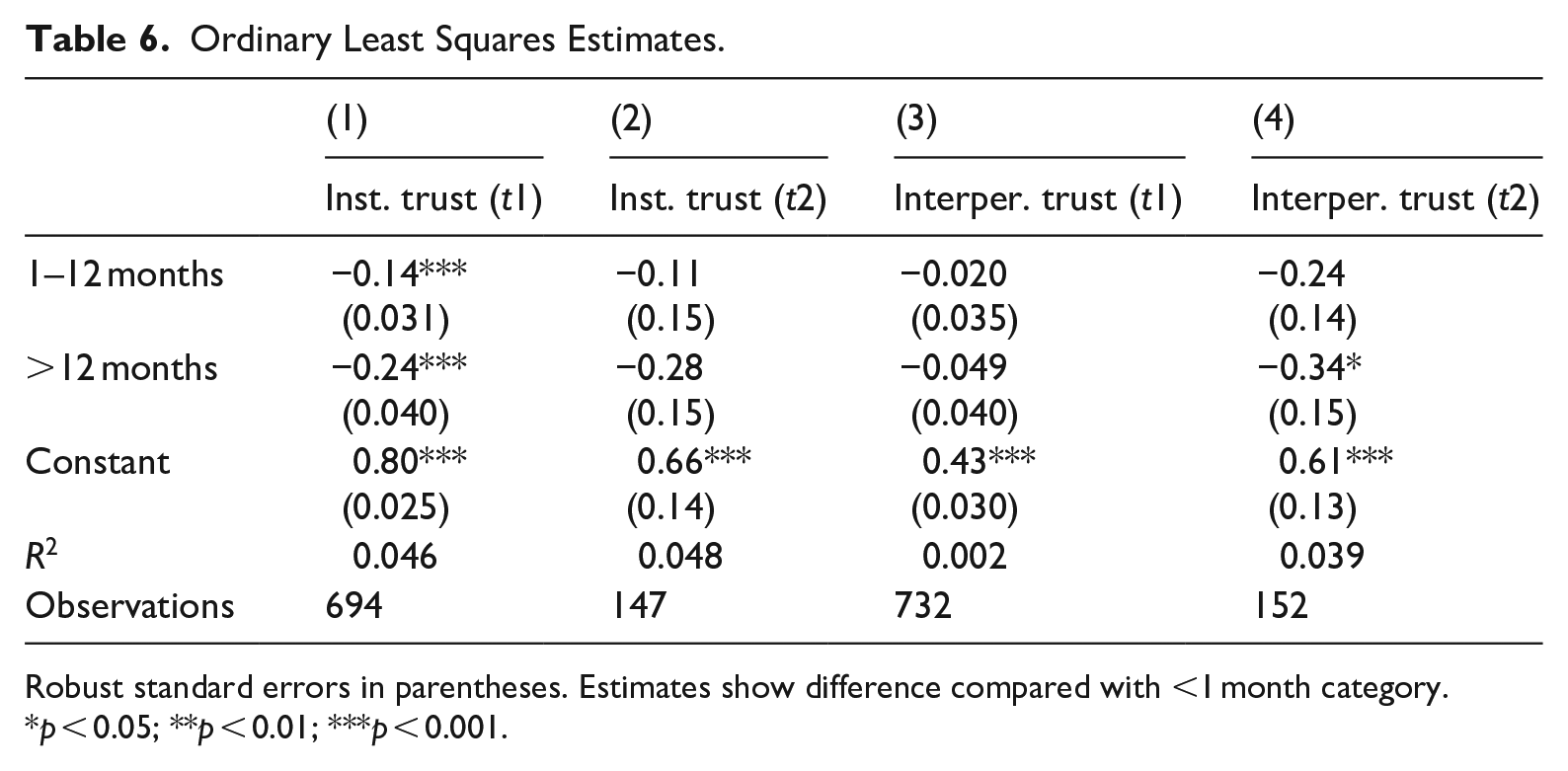
Robust standard errors in parentheses. Estimates show difference compared with <1 month category.
p < 0.05; **p < 0.01; ***p < 0.001.
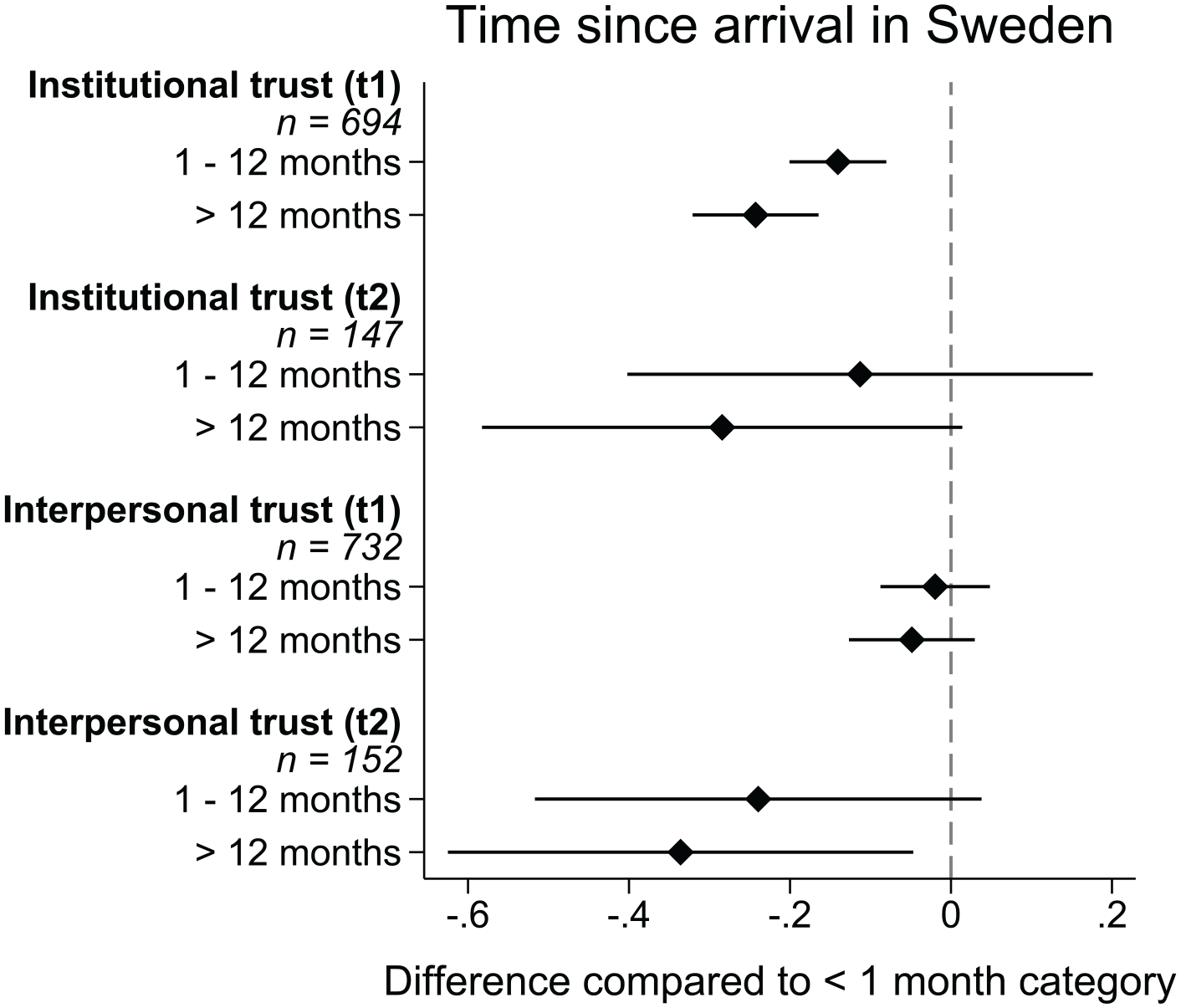
Institutional and Interpersonal Trust at t1 and t2 by Time in Sweden.
As shown in the graph, the results are in line with the panel analysis above: more time in Sweden is generally associated with more negative attitudes. Apart from interpersonal trust at t1, the estimates are also substantively large. For instance, respondents who arrived in Sweden over 12 months ago (at the time of the first interview) report institutional trust that is 0.24–0.28 lower than respondents who arrived recently. This equals trust levels that are around 30–40% lower than the initial high mean value in the sample. For a variable like institutional trust, this estimated decrease is dramatic. The existence of effects at t1 and t2 suggest that mode effects are not important in explaining these results.
While we do find the same pattern regarding interpersonal trust—more time in Sweden is associated with lower trust, both at t1 and t2—the estimates at t1 are less pronounced (and not statistically significant). The t2 estimates are substantively large and statistically significant. Because of the somewhat less consistent results on interpersonal trust, readers should interpret these estimates with more caution.
Summary of Results
Overall, our analyses tell a similar story: the long period in limbo in the Swedish asylum system has negative consequences for respondents’ institutional trust and interpersonal trust. While the individual analyses have different strengths and weaknesses, they point in the same direction. Most importantly, our panel design overcomes one of the most difficult problems with hard-to-survey populations since it allows us to observe the same population over time. For the analysis of within-respondent changes we can thus rule out differential attrition and selection effects as alternative explanations for the patterns we observe. This is a significant improvement over most previous studies and makes for an important contribution to the literature. The fact that these patterns are present when utilizing several different analytical strategies increases our confidence in the results presented above.
Our data do not allow us to conduct a detailed investigation of the different potential mechanisms that might drive these results. However, our dataset does include a measure of how satisfied respondents are with their housing arrangements at t2. We view this as an indicator of asylum seekers’ material situation. As described in the theory section, we expect a poorer material situation to be associated with lower trust. We find this relationship regarding institutional trust: poorer perceived housing quality correlates with the outcome variable at r = −0.25 (p < 0.01). 5 We do not, however, find the same relationship with regard to social trust. This is one indication that poor material conditions might be one factor driving the deterioration in institutional trust that we observe over time.
Conclusion and Discussion
We studied how the combined experiences during the time in the asylum process shape institutional trust and interpersonal trust, two concepts that are cornerstones in a well- functioning society (Levi and Stoker, 2000; Norris, 2017; Ostrom et al., 1992; Putnam, 2000). Both types of trust are negatively affected by time. This conclusion is based on several types of data analysis where our best evidence comes from the panel survey. We see the same pattern of results when we rely on already existing differences between asylum seekers in how long they have been in Sweden—asylum seekers who have been processed longer are also less trusting. Thus, in spite of several factors that could lead to improvements or to steady levels of trust during the process (e.g. greater physical safety than before), the negative aspects seem so pervasive that they take precedence.
These findings contribute to the field on asylum seekers’ own attitudes and experiences, where few studies rely on panel data, and, to our knowledge, none examine institutional and interpersonal trust. Thus, our study clarifies what happens to migrants before they become part of the normal society, and trust levels gradually increase again, as documented by Dinesen and Hooghe (2010). Our results suggest that previous literature needs to be qualified in the sense that the trust dynamics are non-linear. People who move from a low-trusting environment to a high-trusting context do not automatically and gradually increase their level of trust. Instead, the specific context in the high-trusting environment appears to play a meaningful role; it can both decrease and increase trust.
The literature on need gratification has identified several factors that influence well- being (Bandura, 1982; Baumeister and Leary, 1995; Cacioppo et al., 2011; Maslow, 1954; Tay and Diener, 2011). It would seem that fundamental needs such as physical personal safety (Maslow, 1954) are more likely to have been met among asylum seekers in Sweden compared to among individuals in refugee camps. From this perspective, it appears plausible that once basic needs are satisfied, trust attitudes should increase too. In fact, when we compare Syrian refugees in Jordan and Lebanon with Syrian asylum seekers in Sweden and make the samples as similar as possible with matching, interpersonal trust is markedly higher among individuals located in Sweden.
With appropriate caveats in mind, 6 it is possible that the positive aspects of coming to Sweden are noticeable more at the beginning of the asylum process. After this initial boost in trust upon arrival, once people are in the process, the negative aspects start chipping away at trust levels. Such a scenario, where recent life events and experiences are more influential than those in the past, is consistent with prior research on subjective well-being (Suh et al., 1996).
Our study is also a contribution to the literature on interpersonal trust more generally. As with institutional trust, there is agreement that social trust is generally associated with beneficial outcomes, but one source of contention is the relative stability of the concept. Some researchers emphasize the stability of trust throughout life and suggest that it is almost like a personality trait, whereas others maintain that trust beliefs are more continuously updated (Dinesen and Bekkers, 2017). But even among those who stress the stability of the trait leave open the possibility that it may change when people are in very unusual situations (Uslaner, 2018). This acknowledgment is rarely tested empirically. Becoming a refugee and seeking asylum arguably puts people in this type of exceptional situation. Indeed, our evidence indicate that interpersonal trust can be highly malleable in unusual situations. For those who study variability over time in personality traits, this is important information, as it indicates in what context even stable traits may change.
Sweden spends considerable resources on the Migration Agency and the asylum process. Despite this, and the employment of competent and impartial civil servants at the agency, our results show that institutional trust, operationalized as the helpfulness of the Migration Agency, is reduced with longer waiting times. Therefore, it appears that the ordinary factors that lead to high institutional trust are less effective on asylum seekers. This points to a trade-off for the state. The overarching goal is to make the correct decision, and it is willing to spend time to reach it. However, in trying to achieve that goal, it undermines a source of legitimacy among potential future citizens.
As for possible limitations and criticisms, besides the issue of survey mode already discussed in the “Results” section, there are some we have yet to address. One potential limitation is that we do not have information on the specific aspects we suggest should affect trust during the asylum-seeking process. That is, we are not showing these mechanisms at work. While we believe it would be worthwhile to study mechanisms in detail, the purpose of our study is to examine the overall effect of spending time in limbo as an asylum seeker, not the exact reasons. Still, we encourage future work on mechanisms, also because an improved understanding could potentially be used in devising a better asylum process.
A second limitation relates to generalizability of our findings. Our study is situated in Sweden and based on primarily Arabic-speaking refugees, and it is an open question as to what extent the effects of lengthy asylum processes on trust beliefs exist in other settings. Negative effects associated with the waiting period have been documented in multiple country settings (Burchett and Matheson, 2010; Hainmueller et al., 2016; Oda et al., 2017), and for that reason, we think it is likely that they would be similar on trust, but more work needs to be done to examine the impact of country differences.
A third issue concerns our operationalization of institutional trust. We ask respondents about their views on the Swedish Migration Agency, not institutional trust in general. As we explain above, this decision is based on our understanding that it is the key institution that asylum seekers have contact with throughout the process, and therefore have meaningful, updated opinions about. For this population, it is an institution of utmost important, but we acknowledge that it is presumably less so for other populations. Moreover, while we see effects on social trust based on a general question—suggesting that asylum seekers draw broad conclusions—it would be useful to further study the degree to which institutions in general are affected.
Supplemental Material
sj-docx-1-psx-10.1177_00323217221103728 – Supplemental material for Waiting for Asylum: Reduced Institutional and Interpersonal Trust
Supplemental material, sj-docx-1-psx-10.1177_00323217221103728 for Waiting for Asylum: Reduced Institutional and Interpersonal Trust by Jacob Sohlberg, Mattias Agerberg and Peter Esaiasson in Political Studies
Footnotes
Acknowledgements
We are grateful for the feedback and support from Kerstin Brunnberg, Mikael Hjerm, Linus Liljeberg, Henrik Malm Lindberg, Gunnar Myrberg, Joakim Palme, Kim Mannemar Sønderskov, Sara Thalberg, Kristof Tamas, Caroline Tovatt, and Amanda Wenzer. Moreover, we thank Maria Andreasson and the Laboratory of Opinion Research at the University of Gothenburg for help with the complex data collection. Valuable feedback was also provided by the reviewers and the editor.
Declaration of Conflicting Interests
The author(s) declared no potential conflicts of interest with respect to the research, authorship, and/or publication of this article.
Funding
The author(s) disclosed receipt of the following financial support for the research, authorship, and/or publication of this article: This work was supported by the Swedish Migration Studies Delegation.

Supplementary Information
A. Survey Questions
B. Attrition
Table B1. Predicting Participation in Both Panel Waves
Table B2. Predicting Trust Levels
Table B3. Predicting Change from t1 to t2
References
Notes
Author Biographies
References
Supplementary Material
Please find the following supplemental material available below.
For Open Access articles published under a Creative Commons License, all supplemental material carries the same license as the article it is associated with.
For non-Open Access articles published, all supplemental material carries a non-exclusive license, and permission requests for re-use of supplemental material or any part of supplemental material shall be sent directly to the copyright owner as specified in the copyright notice associated with the article.
