




Abstract
Community policing (CP) has been recognized as instrumental in addressing problems of safety worldwide. However, this initiative is of low effect in Nigeria as its practice decreases daily, despite CP technological innovations, reflecting a gap in understanding citizens’ awareness, concerns, and willingness to use technological solutions for community policing engagements. To address this, our study explores Nigerians’ awareness and concerns about CP initiatives, and uncovers insights regarding their willingness to use technology to support the programme. Surveying 1200 participants online from all six geopolitical zones, our findings reveal significant unawareness among citizens regarding key aspects of community policing, despite its potential to reduce crime, improve safety perceptions, and strengthen community-police relationships. Nevertheless, substantial proportions (86%) are willing to use technologies to participate in community policing engagements. This study serves as an initial phase in an ongoing Human Computer Interaction research endeavor focused on exploring the integration of technologies for community policing enhancement in Nigeria. The findings not only inform the trajectory of subsequent research phases but also offer valuable insights for policymakers aiming to enhance law enforcement practices and community engagement strategies in Nigeria.
Introduction
Nigeria is a multi-ethnic group, divided into 36 states (6 geopolitical zones) with about 220 million people (Suberu, 2023). The country is presently battling with hydra-headed form of safety challenges (Okonkwo et al., 2019). On the other hand, community policing, which is a promising strategy in curbing such challenges by getting the citizens involved, has not been effective (Onuoha et al., 2021).
Community policing stands as a cornerstone in modern law enforcement strategies, yet its effectiveness hinges greatly on the awareness, concerns and willingness of citizens to participate in the initiative (Cammett et al., 2024; Obi et al., 2024). This initiative is not merely a law enforcement tactic but a philosophy that emphasizes collaboration between police officers and the citizens, aiming to address underlying issues of crime and disorder. It is widely regarded as an effective approach to enhancing public safety and building trust between the police and citizens (Ojobo et al., 2024). Despite the global recognition of CP and existence of technologies like surveillance and social platforms in this context, CP practice decreases in the global south, more especially in Nigeria (Onuoha et al., 2021; O’Reilly, 2023), thereby resulting to low effect of CP within the global south region (Blair et al., 2021; Rukus et al., 2018).
Meanwhile, citizens who are supposed to be working with the police to achieve community policing objectives dislike and avoid the police (Drakulich et al., 2023; Girardi, 2022; Quinn et al., 2023). Surprisingly, many of those who show dislike for the police have not had personal encounter with the police, but show dislike based on what they hear from families or friends against the police or what they inherited, in line with the hate culture principle (Fisher, 2024). Reasons abound regarding why there is dislike for the police, consequently low participation in community policing. While some studies point at police brutality as a major set back (Nalla and Gurinskaya, 2022; Quinn et al., 2023), some point at lack of awareness and dialogue (Dlamini, 2023; Enang et al., 2022), and others point at lack of trust and accountability (Blair et al., 2021; Rukus et al., 2018). Also, people love freedom; freedom to do anything they want as humans (Theodoridis et al., 2024), including the good and wrong, but the police stand against the freedom to do the wrongs (Bäckström and Schwarz, 2024). Of course, why would one be over speeding in his own car and suddenly reduce the speed because the police vehicle is sighted in front? Why would one suddenly lower down the hand or cut the phone call when he or she sees the police while driving? These are very common actions which proves that the presence of the police startles wrongdoers and reduces their freedom to do wrongs (Bruus, 2024), thereby igniting a mild discomfort with the police presence. With the above in mind, some pertinent questions regarding why citizens do not participate in community policing have been responded to, but without any effective solution at the fore.
Despite the numerous studies in community policing, no research has examined the awareness and concerns of Nigerians, and their willingness to participate in community policing should the necessary digital technologies be provided. This remains a significant gap, which this study addresses. To achieve this, we conducted an online survey with 1200 Nigerians. Our findings reveal that Nigerians are not aware of some CP practices and never contributed to community policing as a known initiative, but are aware of some related policing activities like; some citizens secretly serving as informants to the police. Furthermore, findings suggest that Nigerians are willing to participate in community policing initiatives if the necessary technologies like body worn device and dedicated social platform are provided. The next phase of this research will be a further investigation to understand the device feature needs of both the Nigerian police and citizens, which will lead to a technologically enhanced solution that will enable community policing to thrive in Nigeria.
Contribution of study
This study. • Sheds light on the level of awareness among Nigerian citizens regarding community policing initiatives, which is crucial for policymakers in gauging awareness campaign strategies. • Unveils the willingness of Nigerians to support community policing with surveillance and communications technologies, thereby highlighting on the need for technological innovations in community policing in this context. • Reveals the perceptions and attitudes of citizens towards community policing which will aid in the development of tailored approaches to enhance community engagement. • Informs Human computer interaction (HCI) research on the need to design technological solutions towards CP improvement in Nigeria.
The next section (2) discusses some studies related to this work. Section 3 explains the methods of this study. While Section 4 presents the results, section 5 discusses the findings. Furthermore, Section 6 talks about the limitations of the study while section 7 and 8 concludes and highlights recommendations for further research respectively.
Related works
Community policing (CP) has garnered significant attention in both academic discourse and practical law enforcement strategies as a promising approach to enhancing public safety and building stronger police-community relationships. Studies have looked into key issues affecting community policing initiatives. For instance, Aston et al. (2023); Boehme et al. (2022); Kammersgaard et al. (2023); O’Reilly (2023) reported the lack of citizens’ awareness and participation as the bane of CP. Several studies have also pointed out gaps in knowledge among community members regarding CP objectives, and lack of orientation on citizens’ roles within community policing efforts as a challenge of CP (Fisher et al., 2022; Madsen and Kammersgaard, 2022; Zakimi et al., 2022). This limited awareness ultimately undermines the effectiveness of community policing programs. Numerous studies have highlighted the importance of engaging citizens in community policing initiatives (Echezu and Patrick, 2022; Padilla et al., 2023; Sani, 2022). Aston et al. (2023) underscored the pivotal role of community participation in crime prevention efforts, emphasizing the need for collaborative partnerships between law enforcement agencies and local residents. Similarly, Holliday and Wagstaff (2022), and Gill et al. (2014) conducted a comprehensive review of community policing programs and found that initiatives with higher levels of citizen involvement tended to be more successful in achieving their objectives. This underscores the importance of citizens’ participation in community policing. Researchers globally have consistently demonstrated the positive impact of community policing on crime reduction and safety perceptions (Aston et al., 2023; Madero-Hernandez et al., 2022; Nalla and Gurinskaya, 2022). Studies by Sani (2022) and Weisburd et al. (2024) show that neighborhoods with active community policing initiatives experience lower crime rates and higher levels of perceived safety among residents compared to areas without such programs. These findings highlight the tangible benefits of community policing in fostering safer communities and improving public trust in law enforcement.
Cultural and contextual factors may also influence citizen perceptions and attitudes toward community policing. In their study, Fenn and Karen (2022) found that cultural norms and historical experiences shape residents’ trust in law enforcement and willingness to engage in collaborative policing efforts. Understanding these nuances is essential for tailoring community policing strategies to effectively address the unique needs and preferences of diverse communities. Zhang et al. (2020) conducted an interview with 13 police and citizens to explore the experience of police-citizen relationship. They recommended that HCI researchers and designers of community policing technologies should build devices that will enhance digital trust between the police and citizens.
In the Nigerian context, several recent studies have explored various aspects of community policing and citizens’ engagement. A systematic review by Ike et al. (2022) on Public perspectives of interventions aimed at building confidence in the Nigerian police, revealed mixed attitudes toward police-community partnerships. A study by Okonkwo et al. (2019) investigated the role of traditional leaders in facilitating community policing initiatives in rural Nigerian communities, and highlighted the importance of local leadership in fostering trust and cooperation. Additionally, ongoing efforts by government agencies and non-governmental organizations (NGOs) aim to enhance community policing strategies and promote citizen participation in crime prevention activities. The Nigerian Police Force has implemented community policing pilot programs in selected regions, focusing on building partnerships with local communities and leveraging technology to improve communication and collaboration (Achoba and Irefin, 2023; Ogbu et al., 2023; Shittu et al., 2023). Similarly, NGOs such as the Centre for Peace and Conflict Resolution (CPCR) have launched community outreach initiatives aimed at educating citizens about their roles and responsibilities in supporting community policing efforts (Ricarte, 2022). Achoba and Irefin (2023) conducted an interview within a small locality called Ankpa in Nigeria, to assess citizen perceptions of community policing practices and experience of intercommunity security relations. The systematic literature review by Basilio et al. (2022) underscores its enduring relevance, drawing on over 50 years of scholarship that consistently highlights the role of community engagement in shaping trust, cooperation, and effective crime prevention. However, much of this scholarship is situated within the context of the Global North, where social structures, governance systems, and technological infrastructure differ significantly from those in Nigeria. This contextual gap limits the direct transferability of findings to the Nigerian setting, where socio-cultural dynamics, public perceptions of law enforcement, and infrastructural challenges may alter the applicability of community policing models. Furthermore, while existing literature in the Global North increasingly acknowledges the role of digital tools in strengthening police-community collaboration, there remains little empirical evidence on how technology may influence awareness, concerns, and willingness to participate in community policing within Nigeria.
This study therefore builds on the theoretical premise that community policing, as a participatory approach to social control, must be understood as context dependent. Specifically, it aims to fill this gap by investigating Nigerian citizens’ perceptions and readiness to engage with community policing initiatives facilitated by technological tools.
Methods
A descriptive research design approach (Siedlecki, 2020) was followed, after conducting an online survey (Callegaro et al., 2020) with 1200 citizens. The reason for the choice of an online survey method was because of geographical distance between the researcher who is in the United Kingdom and respondents who are in Nigeria. The survey was conducted in English language. The participants were recruited through Nigerian Facebook and WhatsApp Platforms. The 1200 participants were representatives of the 6 geopolitical zones in Nigeria. Two hundred persons represented each of the zones (South-East:Ebonyi, Enugu, Anambra; South-South: Delta, Bayelsa, Cross River; Southwest: Lagos, Ekiti, Osun; Northwest: Kano, Kaduna, Katsina; Northeast:Gombe, Adamawa, Yobe; North Central: Niger, Benue, Kwara). The selected states were in no preference or order but were selected because the respondents from these states accepted to participate in the study by clicking on the study link shared via different states Facebook and WhatsApp groups. Though the first persons that filled the form from each geopolitical zones were given £20 voucher, there was no incentive earlier announced on these social media platforms, as this helped to gather genuine participants with interest on the subject matter. Meanwhile, these selection criteria were important as the process gave no room for undue influence on the respondents since they were all total strangers to the researcher. The researcher informed all participants about the research with a little note accompanying the questionnaire link which was designed using google form. Additionally, there was a consent approval page that popped up as soon as the link is clicked by any respondent, revealing the details of the survey. The respondents all signed the consent page before proceeding to the questions page. A total of 1247 responses were returned, out of which 3 responses were dropped due to incompleteness during the screening process. Hence, 1244 responses were left. Furthermore, the screening process revealed the following strata of responses among the 6 geopolitical zones: South East-207, South South-203, South West-209, North East-215, North Central-205 and North West-205. With the plan to have the largest possible samples from each stratum and to give every response an equal chance of being included, a simple random sample of 200 responses were taken from each of the 6 geopolitical zones, using RAND () function in Excel. A total of 1200 records were presented for coding and analysis using SPSS, leaving out 44 records.
Reliability
Pilot Study was conducted on the questionnaire to check its communicability by a native English speaker. To measure if the items of the questionnaire agree, we used Cronbach’s alpha coefficient (Bujang et al., 2018), which resulted into a value of 0.785, hence, showing an acceptable reliability of the questionnaire. To validate the final version of the questionnaire, it was shared to 18 Nigerians who returned it via google form, and corrections were made. Furthermore, it was sent to two independent Human Computer Interaction researchers, who gave approval feedback. IBM SPSS was used to code and analyse the extracted data for targeted results as discussed in the next section.
Data analysis
The binomial test of proportion using Z-approximations on Likert scale data was adopted. Binomial test of proportion is a non-parametric test statistic used to analyze questions involving qualitative binomial mutually exclusive categorical responses (Agree/Disagree, Strong/Weak, Satisfied/Dissatisfied, etc.) (Goncalves et al., 2024; Roberts and Laughlin, 1996). To perform the binomial test of proportion using Z-approximations on Likert scale data, our data from Likert scales “Strongly Agree”, “Agree”, “Neutral”, “Disagree”, and “Strongly Disagree” were first reduced to the nominal level by combining all five categories into two categories of “ Agree ” and “Disagree” or “Satisfied” and “Dissatisfied”. This is a case of one sample binomial test (Jimenez-Mesa et al., 2023; Orsini et al., 2023). According to Mogey (1999), data from Likert scales can be reduced to the nominal level by combining all agree and disagree responses into two mutually exclusive categories of “Agree” and “Disagree”. The Binomial tests of proportion are common statistical procedures used after this transformation (Diamantopoulos et al., 2023; Sullivan et al., 2013). This is necessary to give the study empirical results and conclusions. Likert scores are then summarized using the mode for easy interpretations (Aguboshim and Otuu, 2022; Goncalves et al., 2024).
Results
This section presents the results of the study in partitions of satisfaction on community policing practices, awareness, importance, agreement with some practices, and willingness to use technology to support community policing.
Community satisfaction on community policing practices in Nigeria
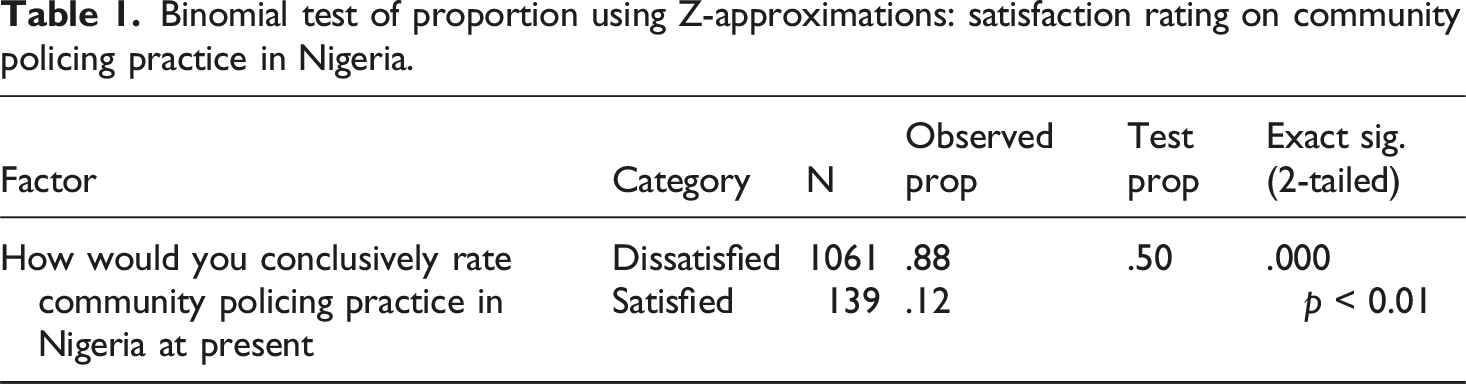
Binomial test of proportion using Z-approximations: satisfaction rating on community policing practice in Nigeria.
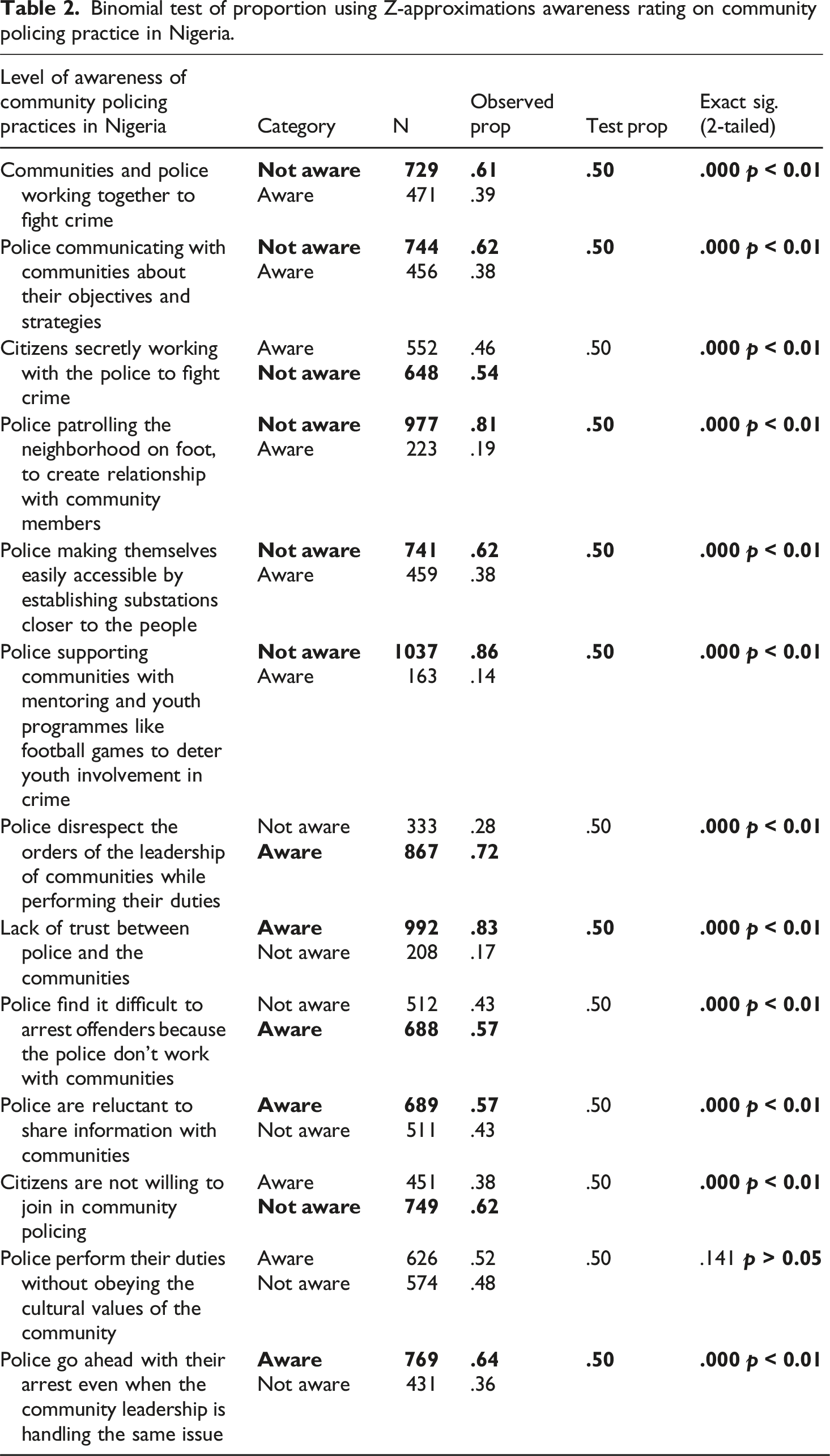
Binomial test of proportion using Z-approximations awareness rating on community policing practice in Nigeria.
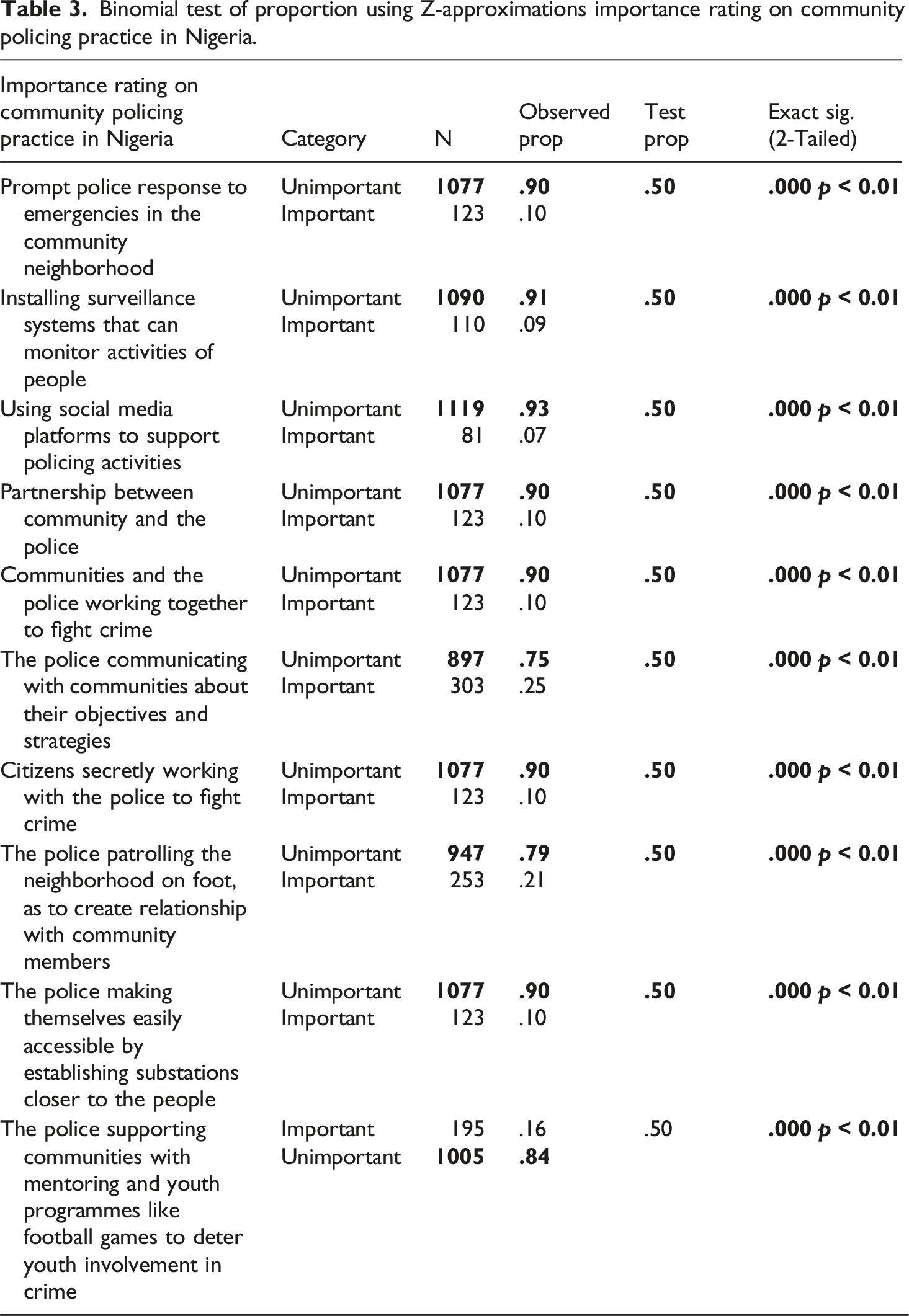
Binomial test of proportion using Z-approximations importance rating on community policing practice in Nigeria.
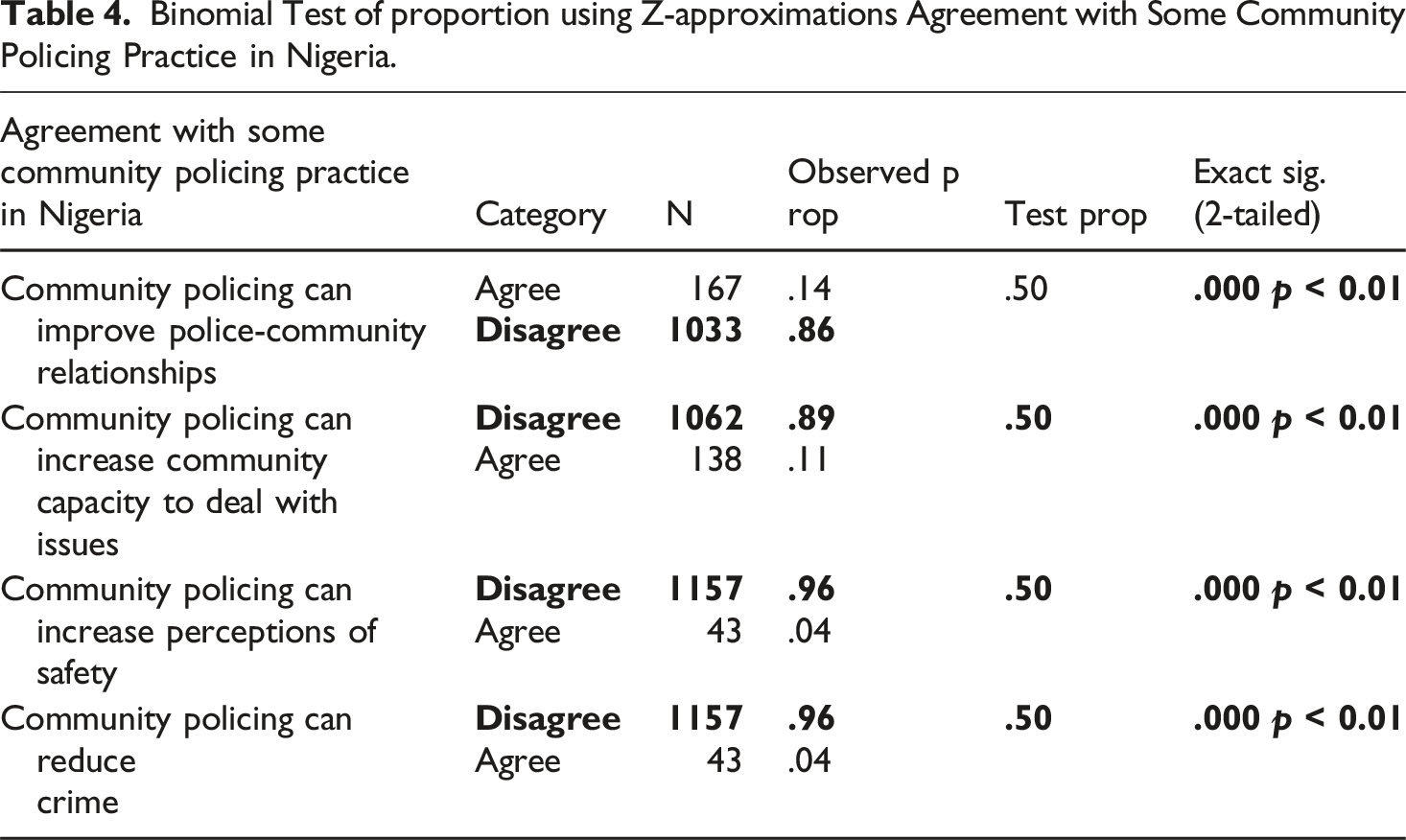
Binomial Test of proportion using Z-approximations Agreement with Some Community Policing Practice in Nigeria.
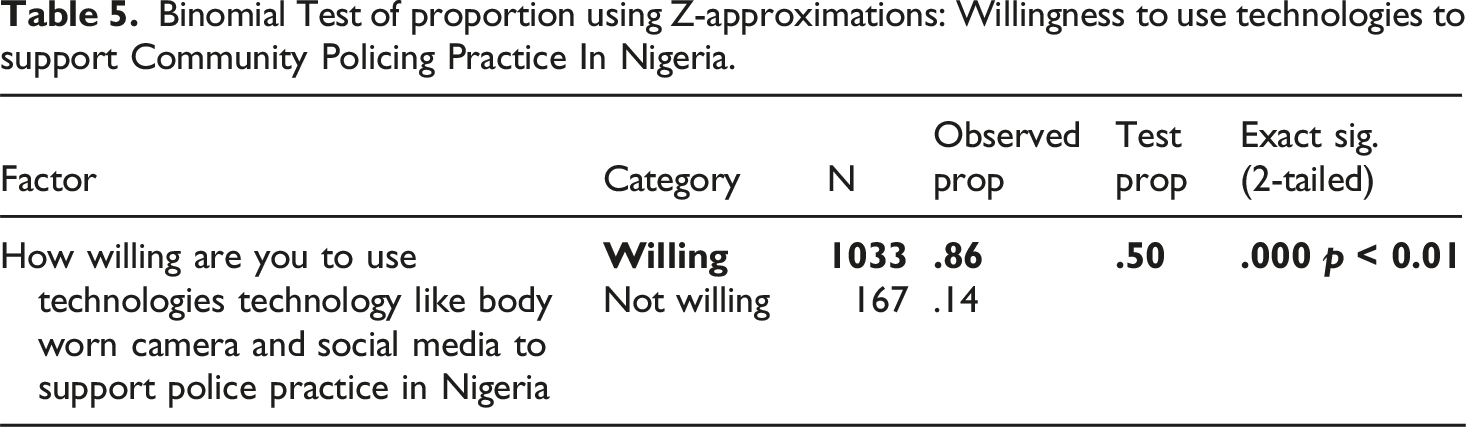
Binomial Test of proportion using Z-approximations: Willingness to use technologies to support Community Policing Practice In Nigeria.
Community awareness on community policing practices in Nigeria
The research question aimed to determine the levels of awareness among respondents concerning different facets of community policing in Nigeria and whether significant disparities existed in these awareness levels. Two hypotheses were formulated: the null hypothesis (H0) suggested that the proportion of respondents’ awareness regarding various facets of community policing would not significantly differ from the expected proportion of 0.50, while the alternative hypothesis (H1) proposed otherwise. Utilizing the Binomial Test of Proportion with Z-approximations, the study findings revealed substantial disparities in awareness levels.
Findings indicate a substantial lack of awareness among respondents regarding various aspects of community policing. Specifically, there is statistically significant unawareness regarding collaboration between communities and police to combat crime (p = 0.61, P = 0.50, p < 0.01), police communication with communities about objectives and strategies (p = 0.62, P = 0.50, p < 0.01), citizens secretly aiding the police in crime prevention (p = 0.54, P = 0.50, p < 0.01), and police patrolling neighborhoods on foot to build relationships (p = 0.81, P = 0.50, p < 0.01). Respondents also demonstrated a lack of awareness regarding police making themselves easily accessible through substations closer to people (p = 0.62, P = 0.50, p < 0.01), police engagement initiatives like mentoring and youth programs (p = 0.86, P = 0.50, p < 0.01), and citizens’ willingness to participate in community policing efforts or involvement (p = 0.62, P = 0.50, p < 0.01.
On the other hand, respondents demonstrated significant awareness regarding ‘police disrespecting the orders of the leadership of communities while performing their duties’ (72% awareness, p = 0.72, P = 0.50, p < 0.01), lack of trust between police and communities (83% awareness, p = 0.83, P = 0.50, p < 0.01), Police finding it difficult to arrest offenders because the police don’t work with communities (57% awareness, p = 0.57, P = 0.50, p < 0.01), and Police reluctant to share information with communities (57% awareness, p = 0.57, P = 0.50, p < 0.01), and police actions conflicting with community leadership, indicating a recognized issue in police-community relations (p = 0.64, P = 0.50, p < 0.01). Awareness of police adherence to cultural values was evenly divided (p = 0.52, P = 0.50, p > 0.05), suggesting no statistically significant awareness discrepancy on this aspect. Overall, the findings underscore significant gaps in awareness regarding various aspects of community policing practices in Nigeria, highlighting the need for awareness campaigns to improve understanding and collaboration between police and communities. Figure 1 demonstrates the awareness rating of different CP practices in Nigeria. Awareness rating of various community policing practices in Nigeria.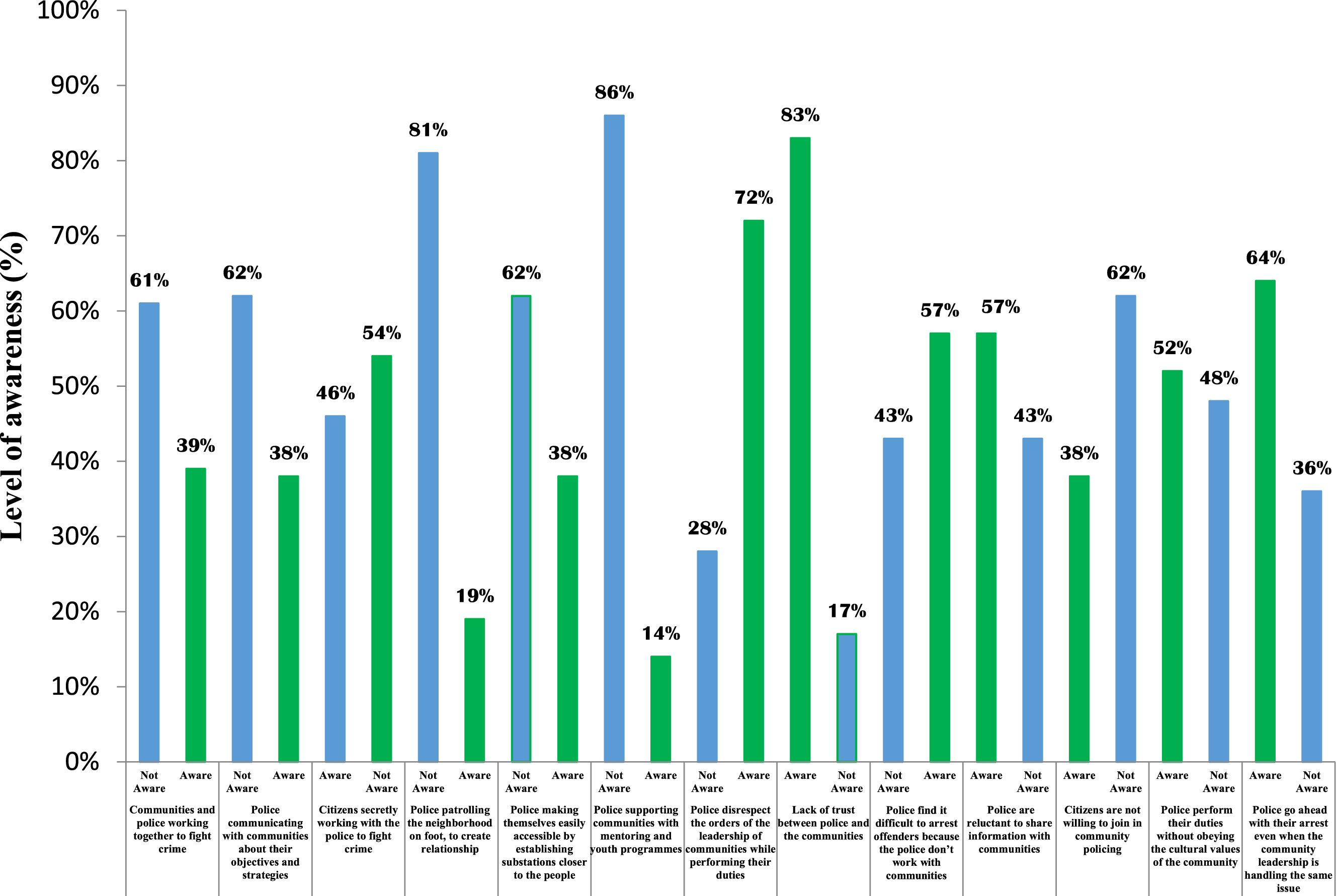
Community’s importance rating on community policing practices in Nigeria
The research question for community’s importance rating on community policing practices in Nigeria aimed to discern the perceived levels of importance among respondents regarding various factors related to community policing practice in Nigeria, along with identifying significant trends favoring the perception of unimportance. Two hypotheses were formulated: the null hypothesis (H0) posited that the proportion of respondents perceiving these factors as unimportant would not significantly differ from the expected proportion of 0.50, while the alternative hypothesis (H1) suggested otherwise. Utilizing the Binomial Test of Proportion with Z-approximations, the study uncovered a significant trend favoring the perception of unimportance among respondents regarding various facets of community policing practice in Nigeria.
Findings from a binomial test of proportions using Z-approximations indicate that across all factors, there is a consensus that these aspects are unimportant. Findings highlighted a consensus that these aspects were deemed unimportant, including prompt police response to emergencies (p = 0.90, P = 0.50, p < 0.01)., installing surveillance systems to monitor activities (p = 0.91, P = 0.50, p < 0.01), using social media platforms to support policing activities (p = 0.93, P = 0.50, p < 0.01), partnerships between the community and the police (p = 0.90, P = 0.50, p < 0.01), police working together to fight crime (p = 0.90, P = 0.50, p < 0.01), police communication with communities about their objectives and strategies (p = 0.75, P = 0.50, p < 0.01), and citizens secretly working with the police to fight crime (p = 0.90, P = 0.50, p < 0.01). Similarly, there was a significant perception that police patrolling the neighborhood on foot police patrolling the neighborhood on foot was unimportant (p = 0.79, P = 0.50, p < 0.01), and making themselves easily accessible through substations (p = 0.90, P = 0.50, p < 0.01) is also considered unimportant. Conversely, there is a significant perception that police supporting communities with mentoring and youth programs is unimportant (p = 0.84, P = 0.50, p < 0.01). These findings suggest a prevalent belief among respondents that various aspects of community policing practices in Nigeria are not of significant importance, indicating potential areas for improvement and policy focus. The awareness rating distribution of community policing in Nigeria is described in Figure 2. Awareness rating on community policing practice in Nigeria.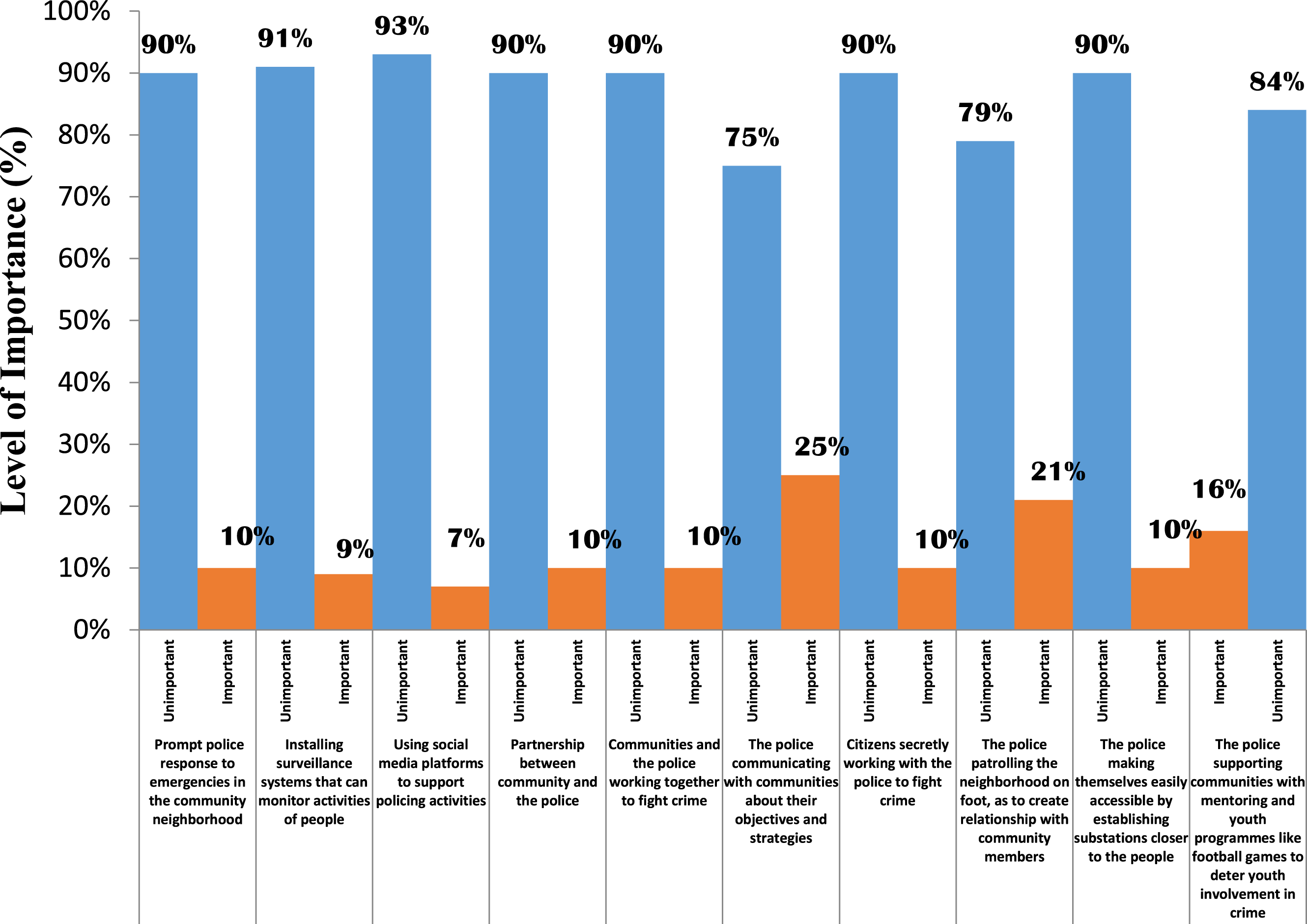
Agreement with some community policing practice in Nigeria
The question investigated here is the perceptions among respondents regarding the effectiveness of community policing in various aspects and whether there are significant trends favoring disagreement with its effectiveness. Two hypotheses were formulated: the null hypothesis (H0) suggested that the proportion of respondents disagreeing with the effectiveness of community policing in various aspects would not significantly differ from the expected proportion of 0.50, while the alternative hypothesis (H1) proposed otherwise. To test these hypotheses, the study utilized the Binomial Test of Proportion with Z-approximations.
The results revealed a significant trend favoring disagreement with the effectiveness of community policing across all factors examined. Notably, a prevalent belief emerged among respondents that community policing could not effectively improve police-community relationships (p = 0.86, P = 0.50, p < 0.01), increase community capacity to address issues (p = 0.89, P = 0.50, p < 0.01), enhance safety perceptions (p = 0.96, P = 0.50, p < 0.01), or reduce crime rates (p = 0.96, P = 0.50, p < 0.01). The findings indicated widespread skepticism regarding the efficacy of community policing in achieving its intended objectives, suggesting potential areas for improvement or the need to reassess community policing strategies to better meet community expectations and needs. The overall acceptance and agreement of community policing in Nigeria is presented in Figure 3. Agreement with some community policing practice in Nigeria.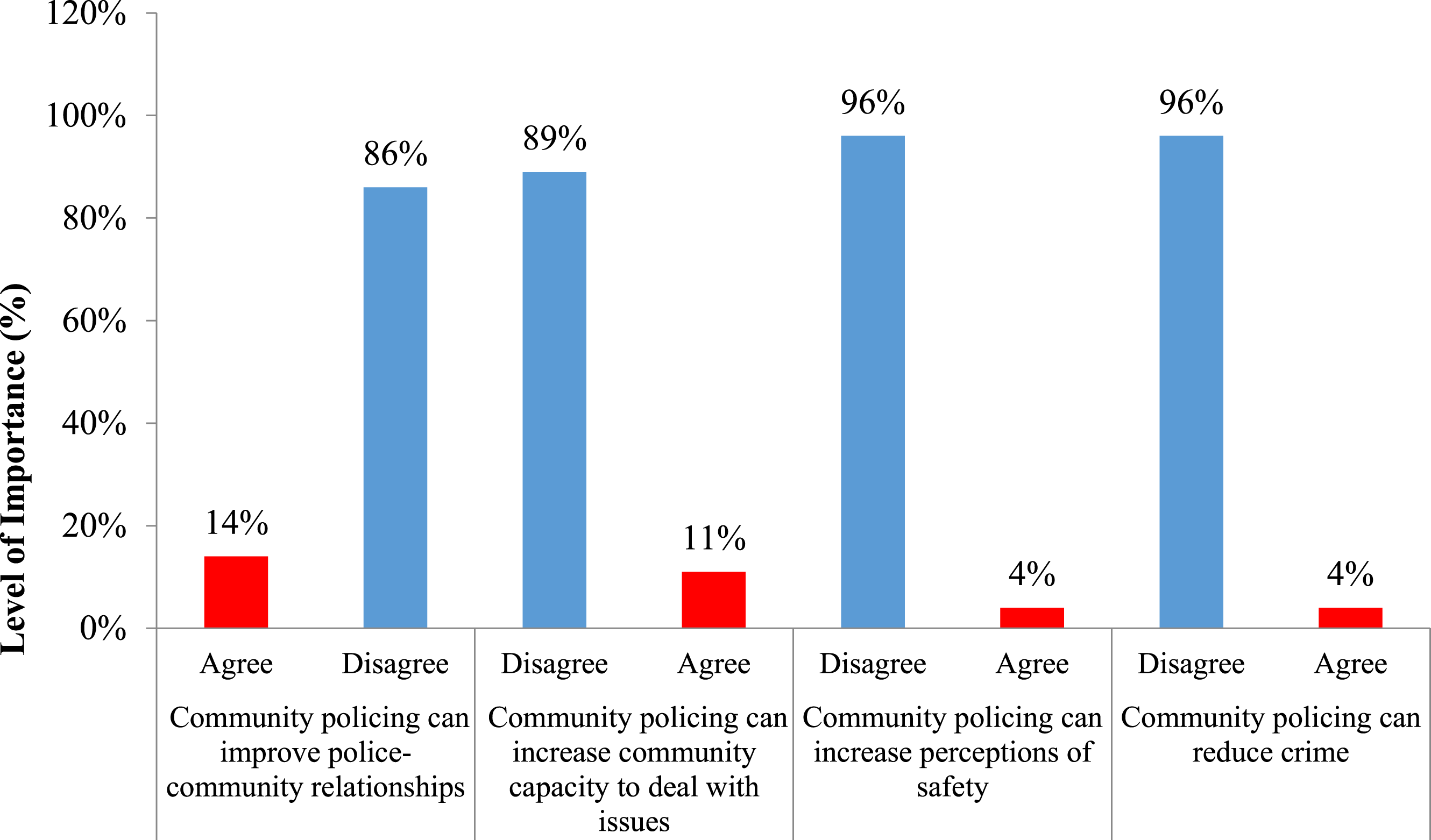
Willingness to use technology to support community policing practices in Nigeria
This analysis aimed to investigate if Nigerians are willing to support community policing if the enabling technologies are provided. Two hypotheses were posited:
Null hypothesis (H0): There is no significant difference in willingness to support Community Policing (CP) among Nigerians when enabling technologies are provided.
Alternative hypothesis (H1): There is a significant difference in willingness to support Community Policing (CP) among Nigerians when enabling technologies are provided.
The Binomial Test of proportion using Z-approximations was adopted to look at the observed proportions of willingness among 1200 respondents against a test proportion of 0.50.
Results revealed that 86% expressed willingness to use technology to support community policing, significantly deviating from the expected proportion of 0.50 (p = 0.86, P = 0.50, p < 0.01), indicating substantial willingness to support the strategy if technologies can be made available in this context.
Findings
Several significant findings regarding awareness, importance, agreement with various aspects of community policing practices and willingness of citizens to use technology for CP in Nigeria were revealed. For instance, there was substantial lack of awareness regarding collaboration between communities and police, police communication with communities about objectives and strategies, citizen involvement in crime prevention, and other key aspects. Also, a significant trend favouring the perception of low importance of community policing practice in Nigeria was observed. Across all factors examined, there was a consensus that police response to emergencies, partnerships between the community and police, among other aspects were unimportant. The results also showed widespread disagreement with the effectiveness of community policing across all factors examined, highlighting major concerns. Respondents generally expressed scepticism regarding the ability of community policing to improve police-community relationships, increase community capacity to address issues, enhance safety perceptions, or reduce crime rates. Furthermore, findings revealed high willingness of Nigerians to support community policing if advanced digital technologies are provided for use.
Implications of findings
The findings of the study have several important implications for the understanding and implementation of community policing in Nigeria as presented below.
Lack of awareness
The finding that Nigerian citizens are not aware of some community policing practices suggests a significant gap in public education and outreach. This lack of awareness may hinder the effectiveness of existing or future community policing initiatives. It underscores the need for a comprehensive public awareness campaign to inform citizens about the role, purpose, and benefits of community policing, which is crucial for its success.
Perceived irrelevance of community policing
The perception among citizens that community policing may not enhance police-citizen relationships reflects a deeper issue of trust and skepticism towards law enforcement in Nigeria. This could be linked to historical challenges with police misconduct or inefficiencies. Therefore, community policing strategies need to be tailored to address this trust deficit by showing how such practices can foster collaboration, transparency, and accountability between the police and communities.
Conditional willingness to participate
The willingness of citizens to participate in community policing, contingent on the provision of advanced digital technologies, highlights an opportunity to modernize and digitize policing efforts in Nigeria. It implies that the integration of technology such as mobile applications, surveillance systems, and real-time communication platforms could increase citizen engagement. This presents an opportunity for law enforcement agencies to leverage technology to improve the efficiency, transparency, and responsiveness of community policing efforts.
Policy and strategy adjustment
These findings indicate that policymakers and law enforcement agencies need to rethink their approach to community policing. Investments in digital infrastructure, combined with efforts to educate citizens about the importance of their involvement, could transform community policing into a more effective tool for crime prevention and community engagement. This would require not only financial investment but also strategic planning to integrate technology into policing in ways that resonate with local communities.
Building trust through modernization
Finally, the study implies that the success of community policing in Nigeria may depend on its modernization. Citizens’ openness to digital solutions suggests that trust in the police could be improved if the policing system demonstrates adaptability to contemporary technological advancements. This could help bridge the current gap between citizens and the police, fostering a more collaborative and productive relationship.
Discussion
The findings of this study reveal significant gaps in awareness and perceptions of community policing among Nigerian citizens, despite a high willingness (86%) to engage through technological platforms. This juxtaposition suggests that while there is an inherent openness to participating in community safety initiatives, a lack of knowledge about the practices and benefits of community policing hinders widespread adoption.
Awareness and perception challenges
The low level of awareness identified aligns with prior literature emphasizing the need for comprehensive public education campaigns to bolster understanding of community policing principles. Furthermore, skepticism and distrust toward law enforcement, rooted in historical and socio-cultural factors, may contribute to citizens’ perceptions of community policing as irrelevant or ineffective. Addressing this mindset requires transparent communication on police accountability and community engagement efforts to rebuild trust.
Technology as a catalyst for engagement
The high willingness to use technological solutions such as social platforms and surveillance devices indicates a promising avenue for enhancing police-citizen collaboration. Digital tools can facilitate real-time communication, foster transparency, and streamline reporting mechanisms, thereby overcoming some barriers of traditional community policing models in Nigeria that may be constrained by infrastructural and resource limitations. This aligns with the studies identified in the work of Basilio et al. (2022). However, the successful integration of these technologies depends on addressing concerns related to privacy, security, and equitable access.
Implications for policy and practice
Policymakers and law enforcement agencies should prioritize digital literacy and public awareness campaigns tailored to diverse demographic groups across Nigeria’s geopolitical zones. Innovations such as mobile applications, social media engagement, and community reporting platforms could significantly enhance participation and trust if implemented with cultural sensitivity and inclusivity in mind. Moreover, involving community members in the design and deployment of technological solutions may improve acceptance and ownership.
Limitations of the study
The survey conducted on Nigerian citizens’ awareness and concerns regarding community policing while insightful, has certain limitations that must be acknowledged. Firstly, the online survey method might have introduced sampling bias, potentially skewing the results by excluding segments of the population with limited internet access or digital literacy. Secondly, despite efforts to include participants from all six geopolitical zones, the sample may not fully represent Nigeria’s diverse socio-cultural and demographic landscape, limiting the generalizability of the findings. Thirdly, participants’ responses could have been influenced by social desirability bias or other factors, leading to potential overestimation or underestimation of certain attitudes or perceptions. Lastly, the survey questions and response options may not have fully captured the nuanced perspectives or depth of understanding regarding community policing among participants, thereby limiting the comprehensiveness of the findings.
Conclusion
The study highlights the importance of technological innovations in the success of community policing in Nigeria. It also unveils the significant disparities in awareness levels, willingness to use technology, perceived importance, and agreement with the effectiveness of community policing practices among Nigerian citizens. Despite recognizing potential benefits such as crime reduction and improved police-community relationships, respondents exhibited limited awareness and skepticism regarding various aspects of community policing.
Policymakers should prioritize initiatives aimed at enhancing community engagement and awareness regarding community policing practices, utilizing diverse communication channels and strategies tailored to different demographics and regions. Additionally, investing in training programs for both law enforcement personnel and community members can enhance understanding, skills, and collaboration in community policing efforts. Further research could explore innovative and culturally sensitive approaches to leverage technology effectively in enhancing security and community-police relationships, despite skepticism revealed in the survey. Longitudinal studies tracking changes in awareness, perceptions, and effectiveness of community policing initiatives over time would provide more nuanced insights and aid in evaluating intervention strategies. Lastly, accessing the users’ technological needs will be worthwhile at this point as to help in the design and implementation of such device in CP context for citizens and police engagements. Addressing these concerns will contribute to refining and implementing effective community policing strategies tailored to the needs and expectations of Nigerian communities, ultimately fostering safer and more secure environments for all citizens.
Footnotes

Funding
The authors received no financial support for the research, authorship, and/or publication of this article.
Declaration of conflicting interests
The authors declared no potential conflicts of interest with respect to the research, authorship, and/or publication of this article.