



Abstract
Police literature in the area of presocialisation for police recruits is sparse, with growing but limited empirical evidence as to its effect upon police performance and conduct. There are studies that measure the influence of police personality within recruitment processes, and subsequent studies that address the potential for misconduct prediction in serving officers, but this has not been developed to a level that justifies widespread operationalisation. This study investigates prior socialisation and motivation before police employment as potential predicting factors in exposure to misconduct investigation. The study represents a survey (n = 214) that was disseminated via social media to retired police officers in the United Kingdom (n = 94) and the United States (US) (n = 120). The participants were asked to disclose their prior socialisation to policing through family or friendship contact, alongside their prior motivations for becoming an officer. These were then compared to examine if that prior socialisation influenced motivation type, and then both sets of variables were compared with self-reported exposure to misconduct procedure by the participants. The results show that gender and the originating country are significantly correlated with exposure to misconduct investigation in both bivariate and univariate analysis. Males are more likely to be exposed to misconduct investigation, and those in the US are also more likely to be exposed to misconduct investigation. Variability of job content and economic motivations approach significance but may require large sampling to explore properly. These results show that aspects of motivation were less influential than geographic location and gender in determining exposure to misconduct investigation, and illuminate several avenues of future research in this area.
Introduction
Police misconduct prediction has garnered academic interest for decades. This research has been eclectic and sporadic, with many examples of different methodologies and approaches occurring over time in many different settings. Reichin et al. (2022) refers to this development as thematically atheoretical and discusses that the dominant methodologies employed by psychologists over time have helped to shape the misconduct research landscape. Misconduct in the case of this research is defined by the official application of misconduct proceedings within police organisations; as such, it is defined by the rules that are in place within the organisations themselves. Studies in this area are often underpinned by the use of psychological tools such as the Minnesota Multiphasic Personality Inventory (MMPI) (Arrigo and Claussen, 2003) and the NEO personality inventory (Claussen, 2003). Police personality, as a collection of latent constructs, has been studied specifically as a contributing factor to police misconduct (Armacost, 2003; Balch, 1977; Bennett and Greenstein, 1975; Gould, 2000; Ouellet et al., 2019; Skolnick, 1977). The correlation between police personality and predisposition towards misconduct has been investigated alongside more traditional contributing factors, such as gender, race, and occupational culture. This research has persisted and has recently shown methodological refinements that predict future misconduct (Nafisi, 2022; Twibell et al., 2022).
The drive behind this type of misconduct research is deterministic and seeks to put forward possible ‘solutions’ to misconduct, categorised by predictive modelling. The tools themselves are empirically informed and often well tested for reliability and validity, presenting what could be called a ‘quick fix’ to the problem of predicting misconduct within policing organisations. The use of these tools aims to identify the self-reported personality ‘type’ of people who commit misconduct prior to recruitment, with the aim of reducing the overall volume of misconduct over time. In theory, this approach can result in a method that relies on pre-emptive and preventative interactions which rely on prescient identification of tendencies towards wrongdoing. This represents a small slice of the popular Steven Spielberg (2002) film ‘Minority Report’ that was based on the novella by Dick (2002). This story concerns the prediction of crimes occurring through the merging of futuristic technologies and prescient individuals – a combination that certainly presents as dystopia. Although science fiction raises ethical quandaries concerning how what went before affects what will happen in the future, it ultimately raises difficult questions about individuals’ free will. These questions are complicated and rooted in deterministic philosophy, yet the utility of linking what went before with what will happen next could be viewed as incredibly useful to functioning police agencies. If police chiefs were given the option of predictive modelling for police misconduct, would they choose to take advantage of it?
Many assumptions underpin predictive approaches. Notwithstanding the usefulness of any possible early intervention, other multivariate factors have become backgrounded to methodologically psychological based approaches. The possible causal variables that went before are rooted in the notion of ‘importation,’ (Charman, 2017); what the potential recruit brings with them when they become a police officer. Although the thought of using such a prediction can be uncomfortable, other recruitment filters, such as criminal record checks, fitness tests, and medical assessments, are also an attempt to assess which characteristics and qualities are being imported; it is not a notion alien to current officer selection. Any attempt to use importation assessments can be perceived as reductionist, but ultimately pragmatic, raising difficult questions about the threshold that a policing organisation may set to refuse admission. If importation based literature reaches a level that could be construed as ‘reliable’ as an evidence for police agencies, then the need to rely upon post-recruitment organisational training and associated safeguards may reduce incrementally; if you can predict who will present a challenge before they join the organisation, then post-recruitment interventions may be less necessary Theoretically, it wouldn’t be impossible to filter out potential recruits during any recruitment process using algorithmic identifiers with added weights upon carefully chosen, differing types of accurately assessed variables.
In Klockars et al. (2004), there was a more holistic approach to identifying the factors influencing misconduct. The term ‘contours’ is introduced to attempt to address the complexity of police misconduct as a much wider phenomenon. This broader approach acknowledges that misconduct is not simply the product of internal cognitive processes assessed by tools such as the MMPI and NEO inventories but also relies on other personal and social conditions and the organisational environment. Within academia, this is essentially a ‘tale as old as time,’ with complimentary but often separate methodologies concerning embodied characteristics, interacting with the wider examined social world. With this interaction creating a rich landscape of literature on which to base this study, it is possible to assume that psychological tools may simply not be enough to ‘solve’ or accurately predict the police’s problem of misconduct (the authors address some of these studies in the following section). If this is the case, a wider and deeper understanding of other fields may contribute meaningfully and instrumentally to this debate. This study intends to do just that, using factors of social embeddedness (Granovetter, 2002, 2017) and motivation (White et al., 2010) to explore not only the predictive possibilities of psychological tools but also the potential importance of aspects of presocialisation with regard to misconduct. Therefore, this study aims to explore the potential addition of a further piece of jigsaw that may contribute to the prediction of future police misconduct.
Police misconduct
Empirical research on police conduct and misconduct can be traced to the seminal works of Punch (1985, 2000, 2009), Skolnick (2002), Kappeler et al. (1998) Bayley and Perito (2011), Walker (2012), Klockars (2000, Klockars et al., 2007, 2004) and most recently Alpert and Mclean (2021). Several highly publicised scandals have led to sustained pressure for changes in Western policing. Recent decades have generated the creation of some high-profile commissions such as the Warren (US Govt., 1964) and Christopher (US. Govt., 1991) Commissions, the Baroness Casey Review (2023), and more recently, the Policing in the 21st Century Commission (US Department of Justice, 2015). The US Commissions arose amidst several Consent Decrees, which created mechanisms of strict oversight for police departments deemed responsible for the egregious behaviours of its officers. The establishment of these Commissions concerned the individual behaviours of “bad apples” more than a systemic examination of the police organisation that produced the incidents in question. The Consent Decrees were used as a tool to reorganise the individual departments, relying on the findings of external evaluators, without considering individual organizational subcultures that enabled, to a large degree, the informal behaviours of its employees.
The most disturbing aspect of all recent attempts to reform police organisations around the world is best summarised by Alpert and Mclean’s article: “The more things change the more they stay the same…” (2021). Although Alpert and Mclean’s work focuses on Australian police forces, the events of 2020 in the United States clearly demonstrated that the situation in American policing is at least partially analogous to that in Australia. More recently similar accusations of police misconduct were directed towards the British police forces (Sweeting et al., 2021) in light of the ‘Me too’ movement; subsequently reinforced by the findings in the recent review by Baroness Casey (2023). It is fair to say that there is a crisis in confidence with regards to policing in the Anglosphere, and that this crisis relies to an extent, upon the exposed behavior of police officers themselves.
To define this behaviour, Klockars et al. (2004) introduced a theory of police misconduct which rests on an encompassing view of police integrity as “the normative inclination among police to resist temptations to abuse the rights and privileges of their occupation’ (Klockars et al., 2007: 1). Unlike the “rotten apple” theory of police corruption, which puts the root cause of police corruption on the characters of individual police officers (City of New York, 1994; Goldstein, 1975; The Knapp Commission, 1972) the theory of police integrity is grounded in the organizational view of police corruption developed by Herman Goldstein (1975); it postulates that a police agency’s level of police integrity is directly related to what the police agency does or does not do to maintain its integrity.
The first dimension of the theory directly links the nature and extent of a police agency’s organizational rules to police integrity. This dimension emphasises the importance of organizational rules prohibiting corruption, the way they are created by police administration and disseminated to police officers, and how supportive police officers are of these official rules. Therefore, a police agency with high integrity could be described as one that has official rules prohibiting police corruption, teaches its employees these rules, and consistently enforces them.
The second dimension is associated with the nature and extent of police agencies’ mechanisms of corruption control and police integrity. Possible corruption control mechanisms could vary from reactive mechanisms (e.g. internal investigations of corruption, application of administrative discipline to police officers who violate official rules) to proactive ones (e.g. training on ethics and integrity, use of early warning systems, and proactive investigations). Following the arguments developed in the second dimension, a police agency of high integrity is a police agency that has such control mechanisms established and utilises them regularly. Both these factors are organizationally embedded.
The third dimension connects the strength and extent of the code of silence with police integrity. The reality is that, because of the semi-military organisation of police agencies across the world, a code of silence exists in each police agency. However, to be identified as a police agency of high integrity, it must have a code that is neither strong nor covers serious forms of police corruption (Ivković, 2015; Kutnjak Ivković et al., 2020, 2022). The fourth dimension associates the influence of the social, economic, political, and legal environment in which a police agency operates with its level of police integrity. In a society in which laws prohibiting police corruption are enacted and enforced, external mechanisms of corruption control are effective, and norms intolerant of (police) corruption are ingrained in the local culture, police agencies are more likely to have high integrity (e.g. Ivković, 2015; Kutnjak Ivković et al., 2022). These two factors are at least partially embodied and could be the result of socialisation over time. In these areas, the interaction between presocialized variables and potential misconduct may exist.
When placed together, these dimensions provide an overall picture of complexity. Internal embodied characteristics, social and environmental conditions, and the wider organizational and political landscape all conspire together to facilitate or control misconduct. These obviously create prominent challenges for those attempting to predict future misconduct behaviours, which factors are genuinely causal, and are these factors contingent upon others in terms of relationships? Despite the empirical focus on the organizational contributions to police misconduct, in the aftermath of the Rodney King (Lasley, 1994) case, very much like in the aftermath of the George Floyd murder (Brantingham et al., 2022), the pendulum has swung firmly towards the individuals involved in high-profile defining events. This focuses on embodied factors, such as personality, police record, relative skills, emotional control, and potential racism. These narratives focus on individuals such as Derek Chauvin (Radebe, 2021) and exist among a magnitude of calls for wider organizational change; yet, as in years and decades past, the calls are not wholly based on empirical research and best practices. Instead, these calls for action can be driven by misguided and uninformed rhetoric, where slogans like: “defund the police”, “reimagine policing” or “abolish law enforcement” (Cobbina-Dungy and Jones-Brown, 2023) are used to spearhead changes with widespread implications that appear bereft of any empirically informed, clearly defined recommendations.
The current study adds to this previously discussed empirical body of knowledge on police misconduct, predicated upon a new exploratory angle. It further explores some of the embodied characteristics of individual police recruits that may identify a predisposition towards misconduct; these are based on presocialisation and the resultant motivation to enter into the police profession. Policing as a profession is often represented as a source of conflict between the community and its law enforcers, yet as Egon Bittner succinctly identified, we have the police because people recognise; “…something that ought not to be happening, and about which someone had better do something now” (1990: 249). The mere notion that something wrong is happening about which something needs to be corrected implies that there are indeed certain socially undesirable behaviours that need to be brought under some level of control. When this control is ultimately placed in the hands of individuals with undesirable attitudes, beliefs, and biases that influence their actions, there may be a rapid collapse of trust and legitimacy in the police profession.
The relevance of presocialisation to misconduct
Within the complex misconduct landscape previously described, a case must be made for the application of any measure of importation as a potentially useful lens through which to apply exploratory approaches. The theory in this study is based on the work of Granovetter (2017), who has inspired half a century of research into the level of social embeddedness of various labour markets. This theory has been used widely in labour market research (Elliott, 2001; Granovetter, 1988; Grieco, 1987; Lin and Dumin, 1986; Lin et al., 1981; Waldinger, 2005), with empirical evidence indicating a spectrum of social embeddedness within professions. The policing profession’s research canon alludes to notions of embeddedness in prominent studies such as Van Maanen (1973), Fielding (1988), Bennett (1984) and Conti (2006). In these texts, there is a discussion of officers being socially coached into the profession through a series of social interactions. These have been persistent in some cases, as officers raised in police families strive to become what their fathers, mothers, and even grandfathers and grandmothers were before them.
Other professions can be notoriously ‘sticky.’ Research indicates that academia (Fisman et al., 2018), medicine (Lentz and Laband, 1989), and even modern venture capitalists (Colombo et al., 2022) enjoy a high rate of patronage and social tie support. Social embeddedness theory posits that during periods of socialisation over time, norms, values, vital instrumental information, and opportunities are disseminated through varying levels of social contact. This leads to the generation of motivation that can be distinctly alien to those without access to these ties. In extremis, professions can become ‘closed,’ and operate an external, internal labour market (Manwaring, 1984). This is essentially where the future workforce is sourced from social contacts of the existing workforce. This has implications for the development of the social conditions within any organisation, as those recruits who are heavily presocialised offer the existing organisation a recruit with an extension of the values and norms that they have experienced while growing up. The theory of homophily (Mcpherson et al., 2001) adds further consequences, as empirical evidence suggests that anyone’s social contacts are much more likely to represent the same demographics that they themselves are a member of. This research indicates that the motivations for joining and remaining within a profession are, to some extent, socially constructed and influenced. Empirically, this represents a complex map of interconnecting, socially generated interactions over many years, which are very difficult to observe.
The extent to which presocialisation is relevant when drawing upon the policing labour market is unknown. It certainly provides some factors that may contribute to the subsequent performance of the officers recruited, and other studies have shown that personality can be mapped to the future performance of officers (Fabricatore et al., 1978; Richardson et al., 2007). These studies demonstrate the relevance of importation to the performance of recruited officers, an area ripe for further research. To some extent, the importance of social networks has been supported by recent misconduct research (Lauchs et al., 2011; Ouellet et al., 2019; Wood et al., 2019) that aimed to map or explore the social networks of officers involved in misconduct investigations. These studies evidenced not only active connections among police officers involved in misconduct but also illustrated some elements of social contagion, in which individual brokers will play varying roles and exert varying influence (Centola, 2015). If such socialisation has been shown to have some influence on police misconduct in these recent studies, then questions may be raised about where the presocialisation influence is generated. In other words, is presocialisation in this context, temporal in nature? If so, what does this presocialisation comprise of? These two questions essentially seek to situate the influence of presocialisation within the phenomenon of policing misconduct. Research suggests that it is important to the formation of values and norms, but when does this formation begin and where is it most influential with regard to the acts and investigation of misconduct within the policing environment?
It is therefore possible that aspects of presocialisation before joining the profession may play a role in the determination of future misconduct behaviours. One could speculate that a strong police household with corresponding morals and values ‘sets the scene’ for expected behaviour, and essentially results in a more seamless transition into becoming an officer. One could also speculate that such a household could hold onto old and defunct approaches and norms, passing them onto their children as being perfectly acceptable. Both of these scenarios are plausible, yet the research into predictive factors in misconduct previously mentioned resides in the embodied psyche – the testing of personality–and not in the mapping of social networks or the socially influenced motivations in potential police recruits. It is also possible that changing police education practices, such as the Police Education Qualification Framework (PEQF) (Tong and Hallenberg, 2018) in the UK, may also have an influence on police conduct and/or misconduct owing to a change in the established socialisation process. There is potential to explore this research gap and examine some aspects of presocialisation that may or may not influence future police behaviours.
Method
When deciding upon a focus for this research, it became clear that targeting defined areas of presocialisation was required. The first area was chosen to find out whether there had been influential, physical prior socialisation to the police profession through social contacts before becoming an officer, and the second was to explore whether the motivations created through that wider set of social influences were important. There are many varying degrees of presocialisation in any profession, so these two aspects begin to explore the potential of these variables as predictors of misconduct: • Motivation is generated through physical proximity to serving police officers within the family and friend network prior to becoming an officer (Hesketh and Stubbs, 2023; Stubbs et al., 2023; Stubbs and Tong, 2023). • The existence of socially and personally generated motivational factors for becoming police officers (Cox, 2011; Raganella and White, 2004; White et al., 2010; Wu et al., 2009).
There is a multitude of presocialisation factors that can be measured, such as wider social ties (Lin and Dumin, 1986), police media influence (Huey and Broll, 2015; Scharrer, 2010; Skolnick and McCoy, 1984), or prior contact with the police before application (unresearched at this time). As the educational change in some parts of the world mentioned previously is not uniform across the Anglosphere, this variable was excluded for the purpose of a comparative study. This list is non-exhaustive, and each area can contribute to understanding the propensity for misconduct later in service. The above factors were chosen because they have not been measured against the propensity for misconduct at this time, and the authors have had prior experience of research in those areas. There is a clear scope for this to be expanded, and further research in this area may yield insightful results regarding the relevance of importation for potential future misconduct.
Measuring aspects of importation
List of motivating factors that respondents were asked to rate.
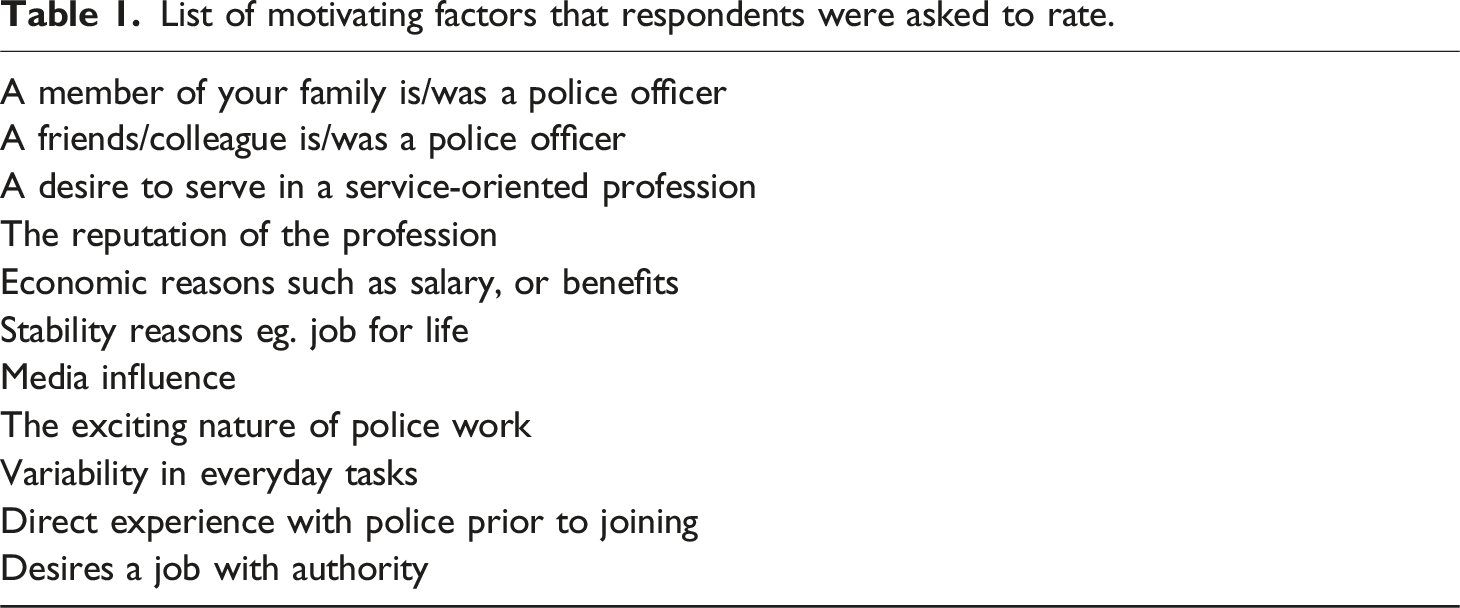
A sample survey is shown in Figure 1. Presentation of survey content.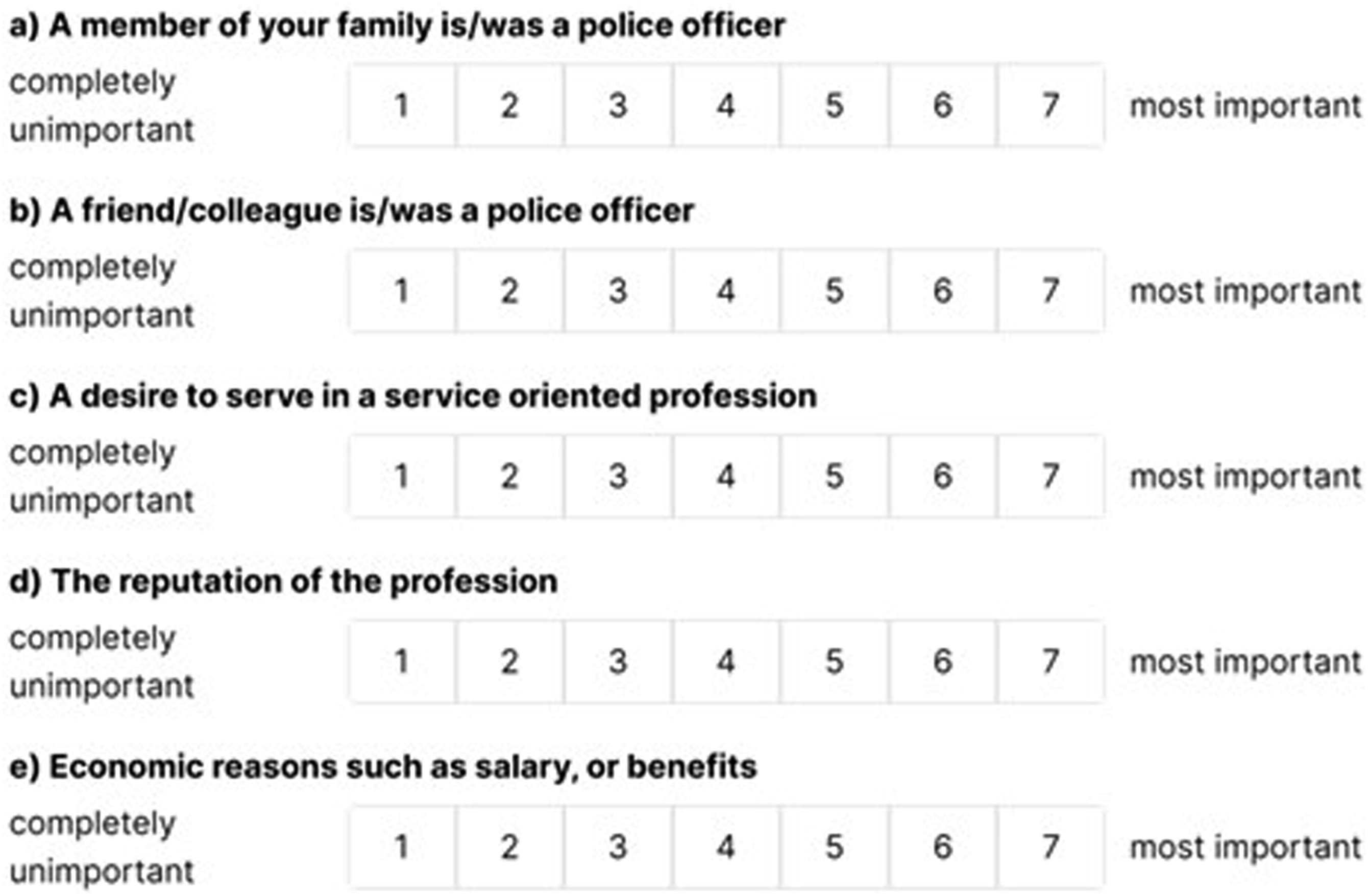
The visual presentation of the survey required the respondents to simply tap the number that corresponded to their choice, thus creating a profile of their respective motivation for becoming a police officer prior to joining the service.
Sampling and data collection
The convenience sample (Stratton, 2021) was recruited through social media, primarily Twitter (Now X. Corp) and LinkedIn. This sampling method was selected to explore the potential for further research in this area (ibid). The online survey link was distributed to the authors’ and serving police officer networks in the UK and US. This includes the police retirement groups on these media platforms. The inclusion/exclusion criteria were simply prior designation as a police officer that had retired. This sampling choice enabled the researchers to explore not only the time before they joined the police but also their exposure to misconduct throughout the life cycle of their time as an officer, irrespective of their length of service. The authors also received data from Ireland; however, the response rate was too marginal for inclusion. Convenience sampling as a non-probability sampling technique where participants are selected based on their ease of accessibility and availability to the researcher, has its acknowledged limitations. This method is used when other sampling techniques are neither feasible nor practical (Chang et al., 2023), as is often the case when sensitive topics are being researched. Studying police propensity towards misconduct, especially when the police profession is under the barrage of public scrutiny, certainly warrants the use of convenience sampling.
Following the completion of the motivation profile, respondents were asked if they had been investigated for misconduct. If the answer was yes, they were asked for the type of disciplinary action they were subject to, the sanctions they received, and the length of service at which these investigations had occurred. The survey was completed with a short demographic questionnaire containing gender, age at which they joined or exited the service, and ethnicity. Ethnicity was part of the analysis but was found to have no significance as a variable. The measurement of latent constructs was considered, but not pursued, at this exploratory stage. The results of this study should be used to further develop the methodology and consider their inclusion in further iterations.
The sample contained n = 228 respondents, with n = 29 female participants and n = 199 male participants, with n = 195 officers of white ethnicity. Of that sample, n = 4 female participants and n = 78 participants had been exposed to misconduct investigation, allowing the comparison between exposure to misconduct investigation and a life of service without being investigated. Although the measure of being investigated for misconduct is imperfect, it does not imply guilt as many officers were not deemed to have met the threshold for formal sanction; it does allow an amount of analysis with regard to potential for exposure to misconduct investigation. It is possible to narrow this focus to simply those officers who receive formal sanctions, but this would require a larger dataset for the findings to be reliable.
Results
The first part of the analysis uses country, gender, and motivation to join to predict disciplinary action. The second part uses Country and Gender to predict motivations to join. Since the analyses should move from simple to complex, each hypothesis was tested with two bivariate tests and then a full multivariate test. Because motivation is measured via a seven-point scale, it can be analysed as a categorical (nominal/ordinal) measure or numeric (interval/ratio) measure. In this case, they were analysed using both approaches for thoroughness.
Since exposure to misconduct was measured as a dichotomous variable, for the first part of the analyses, when each motivation to join was treated as categorical, a bivariate chi-square analysis was conducted. 1 This was followed by bivariate logistic regression, treating the motivation to join as numeric. Finally, a multivariate logistic regression analysis was conducted.
In the second part of the analysis, motivations for joining were again treated as categorical and then continuous, this time as a dependent variable, with Gender and Country as independent variables. Motivation was first treated as a categorical variable using bivariate chi-square analysis and then as a numeric variable using bivariate OLS regression analysis.
Only country and gender were statistically significant in the Bivariate and Full Multivariate models. Country was the most influential predictor, with officers from the United States being 475% more likely and Males being 272% more likely to receive disciplinary action. To test independence with regard to the Country and Gender variable finding, a Chi Squared analysis and a Bivariate Logistic Analysis were then completed.
Country independence test.
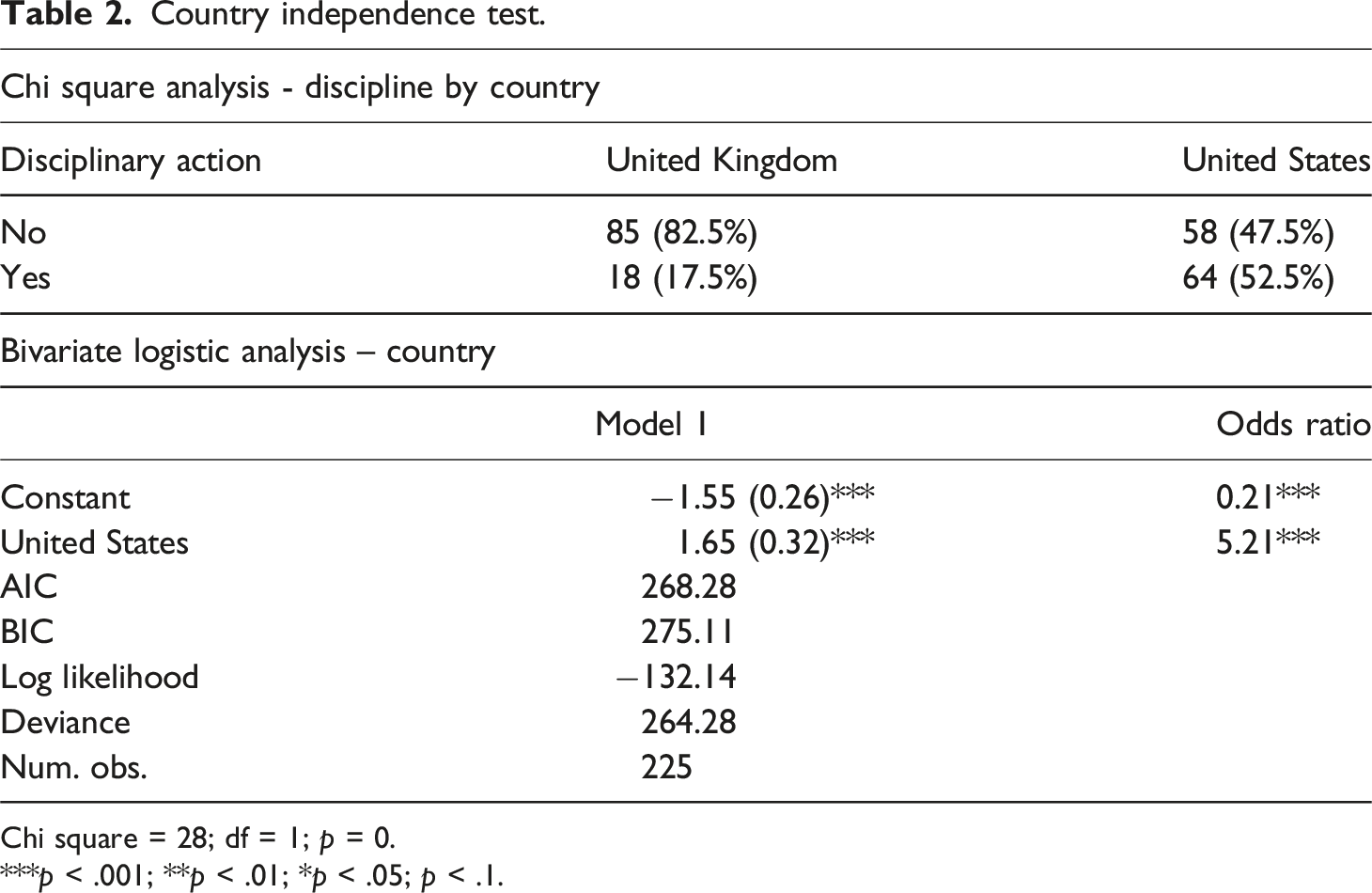
Chi square = 28; df = 1; p = 0.
***p < .001; **p < .01; *p < .05; p < .1.
Gender independence test.
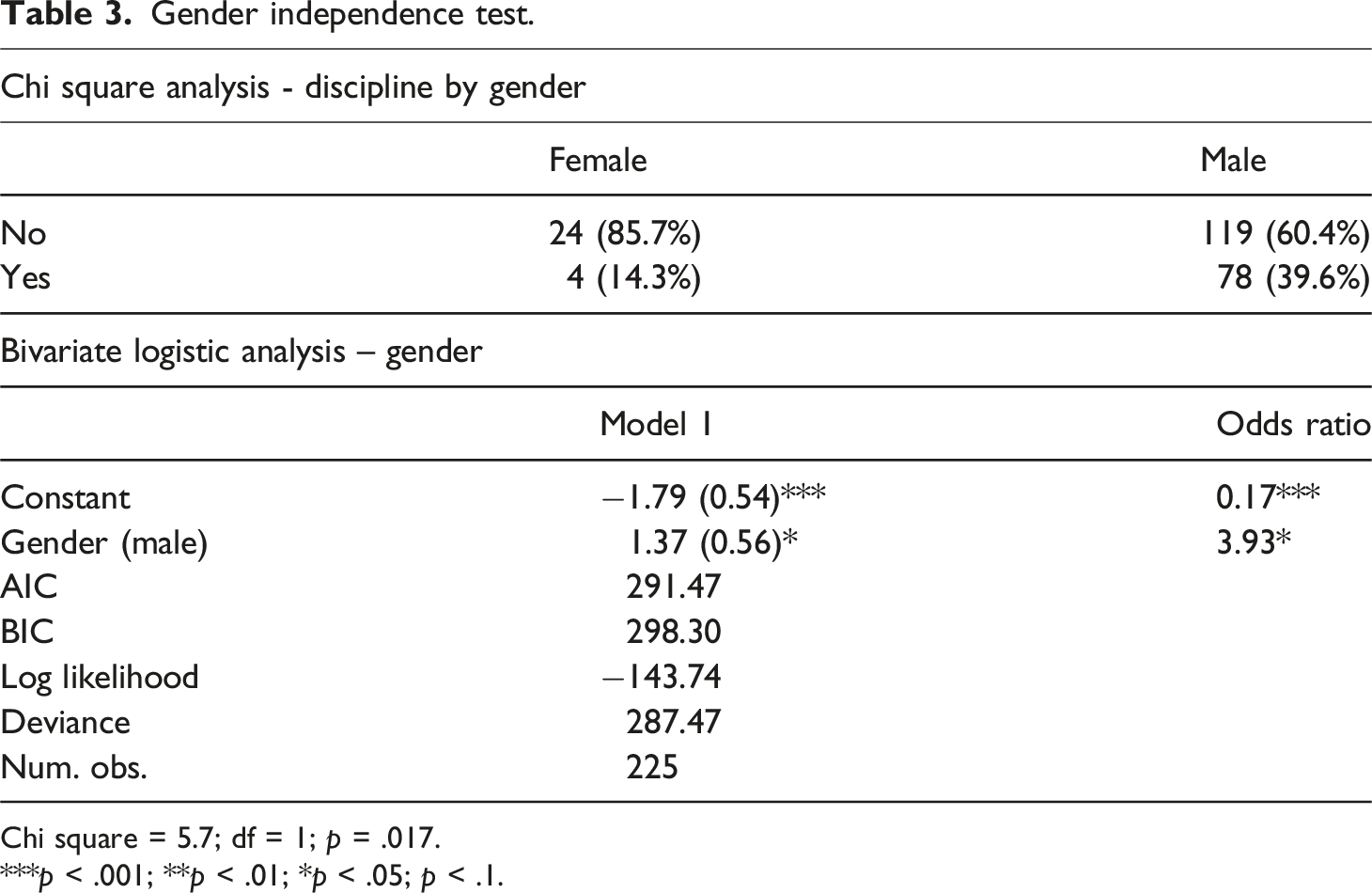
Chi square = 5.7; df = 1; p = .017.
***p < .001; **p < .01; *p < .05; p < .1.
Presents the full multivariate model.
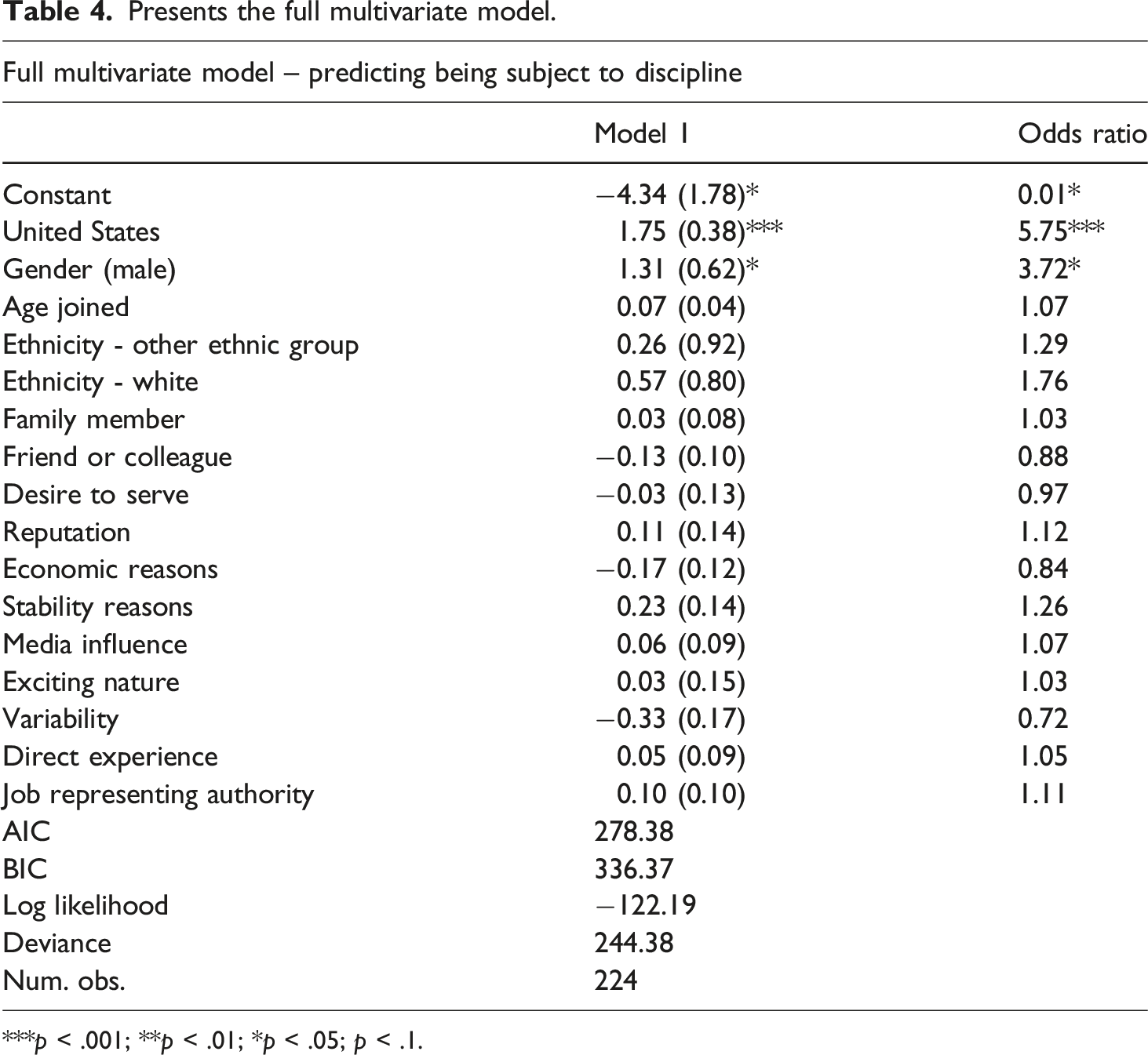
***p < .001; **p < .01; *p < .05; p < .1.
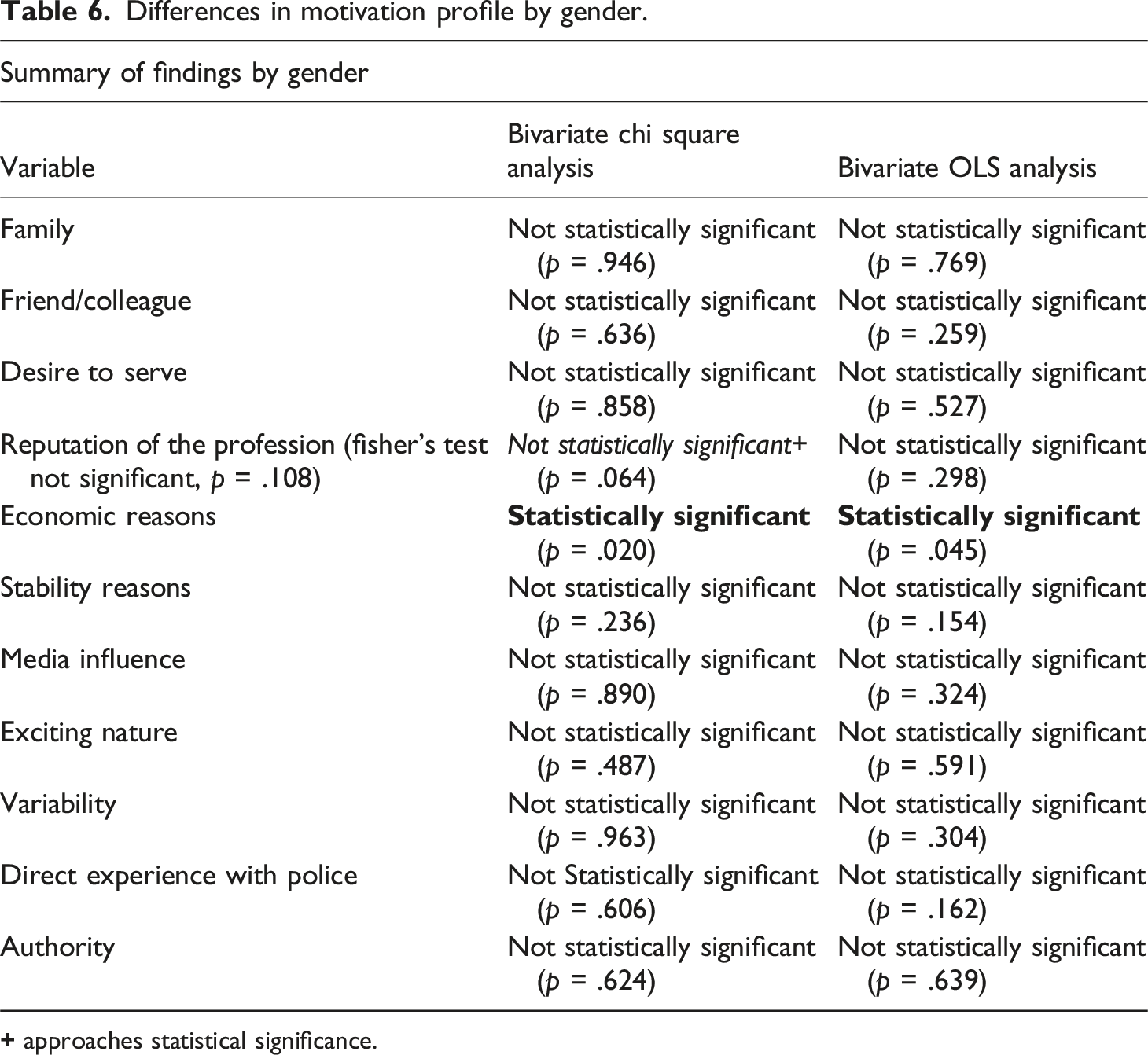
To investigate the relationship between motivation profiles and gender/country, further analysis was conducted to investigate the differences between country and gender in motivation profiles. Motivations were therefore used as the dependent variable to determine if there were Country or Gender differences in those motivations to join. Since the Motivations are measured on a seven-point scale, they can be analysed as a categorical (ordinal) measure using Chi Square or analysed as a numeric (interval/ratio) measure using a t test or Ordinary Least Squares regression analysis. Both the analyses were performed.
Differences in motivation profile by country.
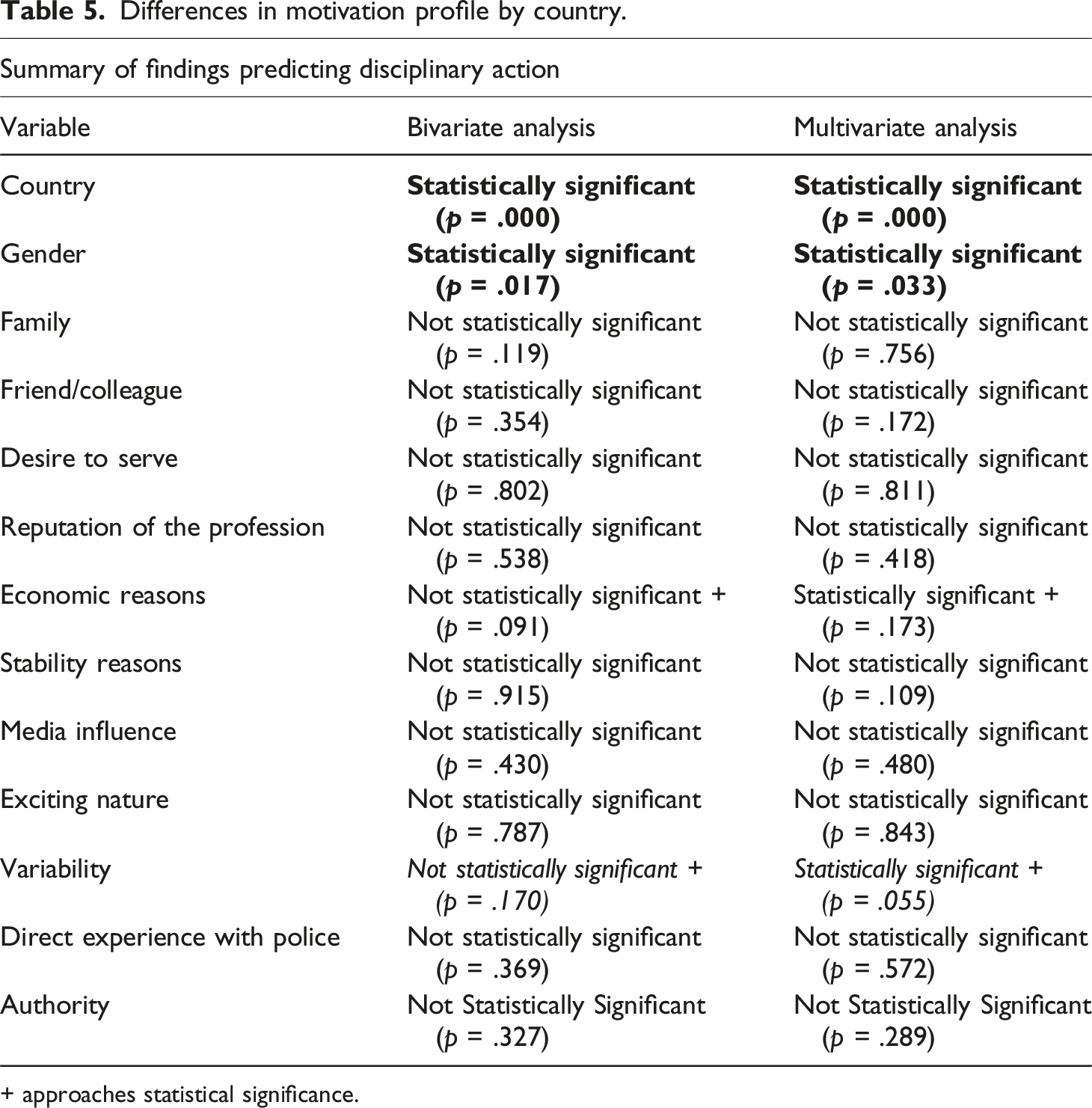
+ approaches statistical significance.
Differences in motivation profile by gender.
Results summary.
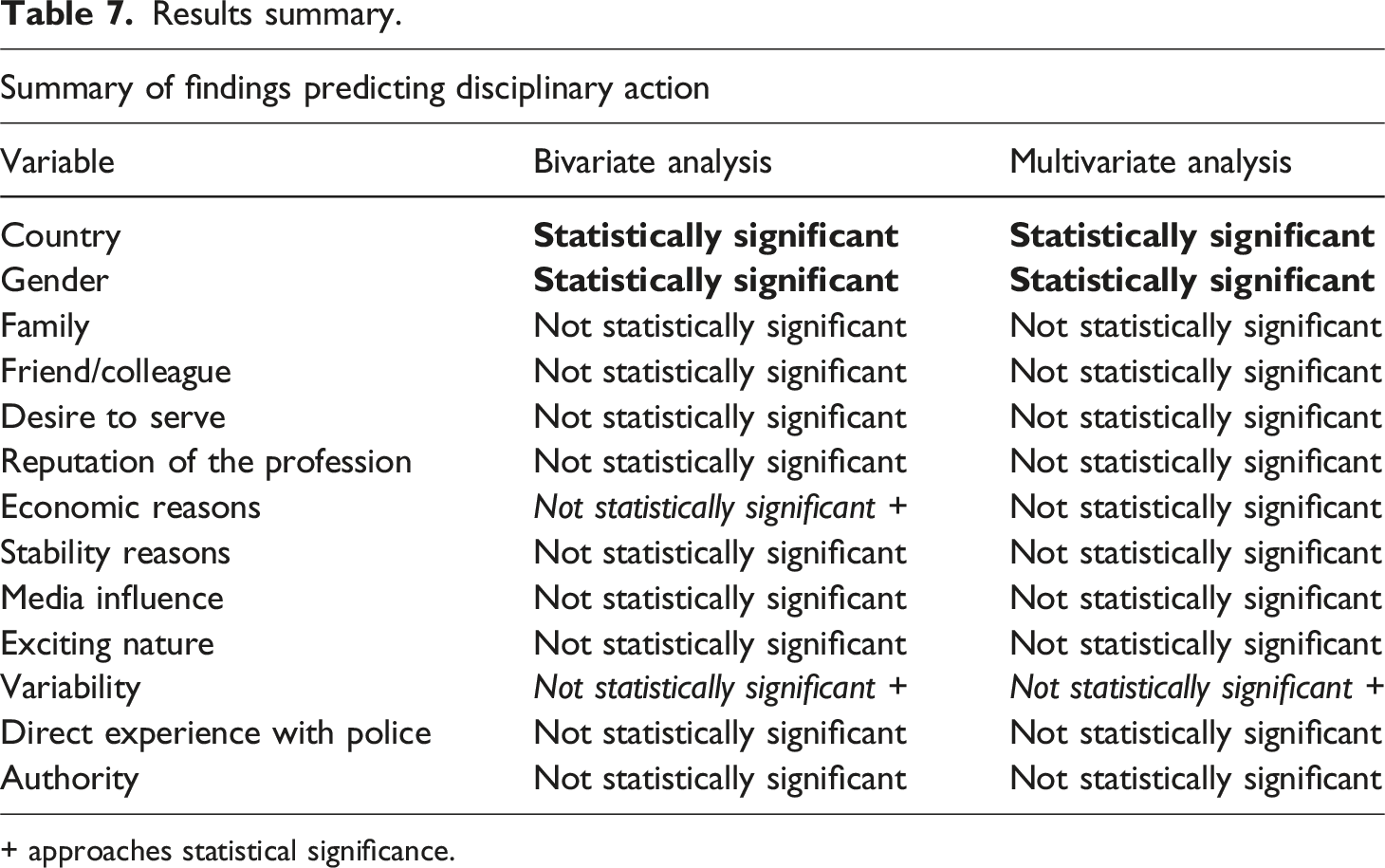
+ approaches statistical significance.
Discussion
The findings illustrate that some aspects of motivation may merit further investigation to predict misconduct. The results begin to illuminate a correlative connection between the motivation to join the police for the purposes of variability and economic reasons. Both these areas could be speculated upon as having connections with personality-based literature. For example, a wish to join the police because of variability may represent or be a result of the Big Five trait of ‘Openness’ (Zillig et al., 2002), and increased openness has been linked in psychological research to higher levels of risk-taking (Nicholson et al., 2006). The motivation of ‘Economic Reasons’ approaching significance is an interesting find, as it may be related to people becoming police officers who do not join for the purposes of vocation or service (as in the other motivational options), but for purely monetary reasons; this is a kind of motivation that will be difficult to correlate to psychological literature because it is based in social circumstances. These motivation findings may not be significant in a larger sample, but they are worthy of further research. It is also of interest to note that ‘Economic’ motivations were significantly more pronounced in the males across both countries, possibly reinforcing gender-stereotypical roles of the male ‘breadwinner’ in the population of sampled ex-police officers (Gonalons-Pons & Gangl, 2021).
There were two major findings across the entire sample related to geography and gender. The gender finding came because of demographic and not motivational investigation, but it is important to note that gendered presocialisation may be a very significant area of potential research in this area. Further analysis showed that the motivation profile differed by gender, which is in line with newer literature that also illustrates gendered differences in the propensity to report misconduct (higher risk of contact with investigation) (Cubitt et al., 2022), and gendered influences in serious misconduct exposure (Gaub, 2020). Both these studies were conducted in the New York Police Department (NYPD) and both indicate that there are differences in police misconduct with regard to gender. Although some argue that generalisation from NYPD-based studies is difficult due to the department’s relative size (Manning, 2009), they again indicate that this is a valuable area of study and, to some extent, offers a possible explanation for the results.
Motivation through family contact.
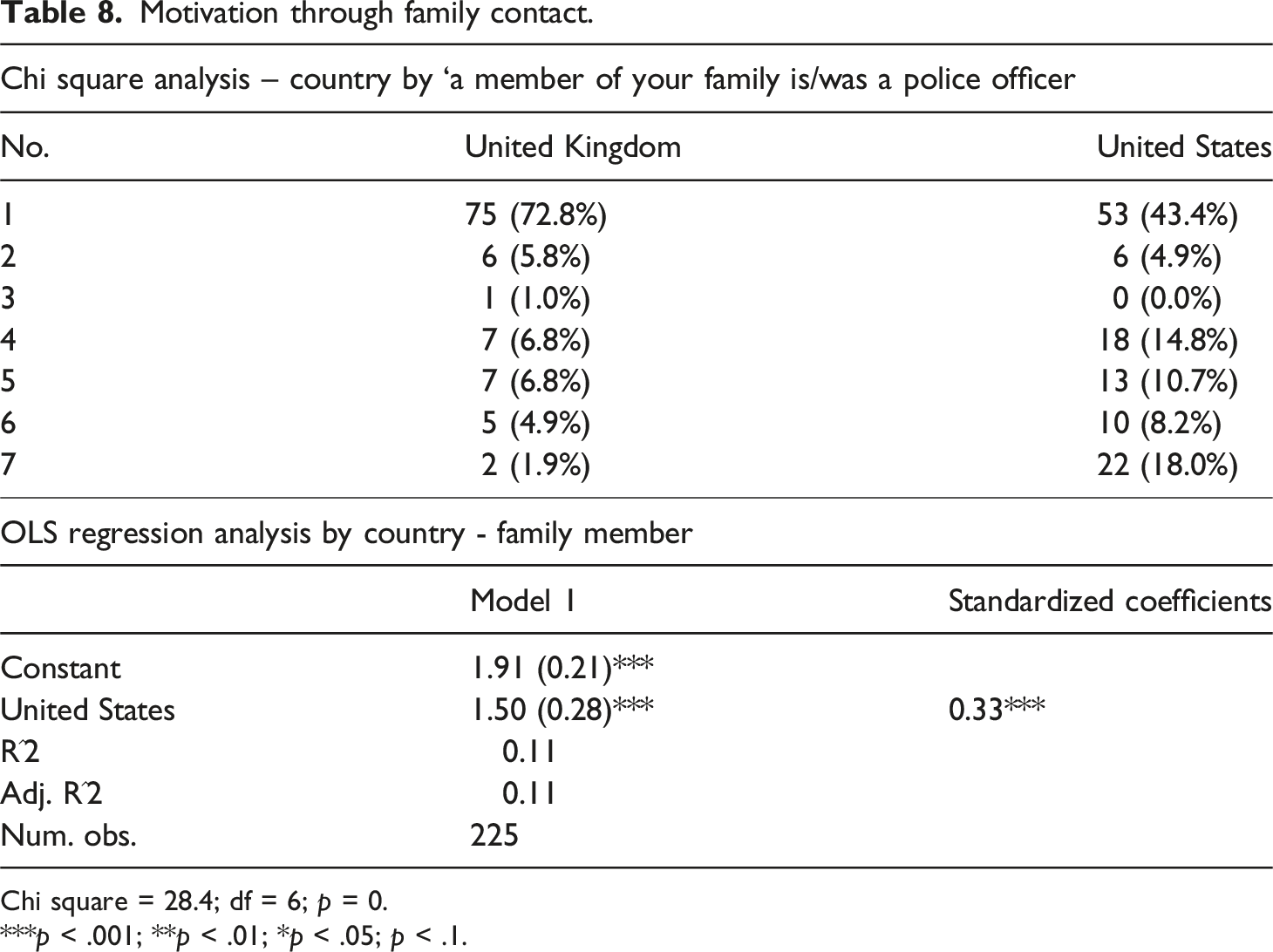
Chi square = 28.4; df = 6; p = 0.
***p < .001; **p < .01; *p < .05; p < .1.
Motivation through friend/colleague contact.
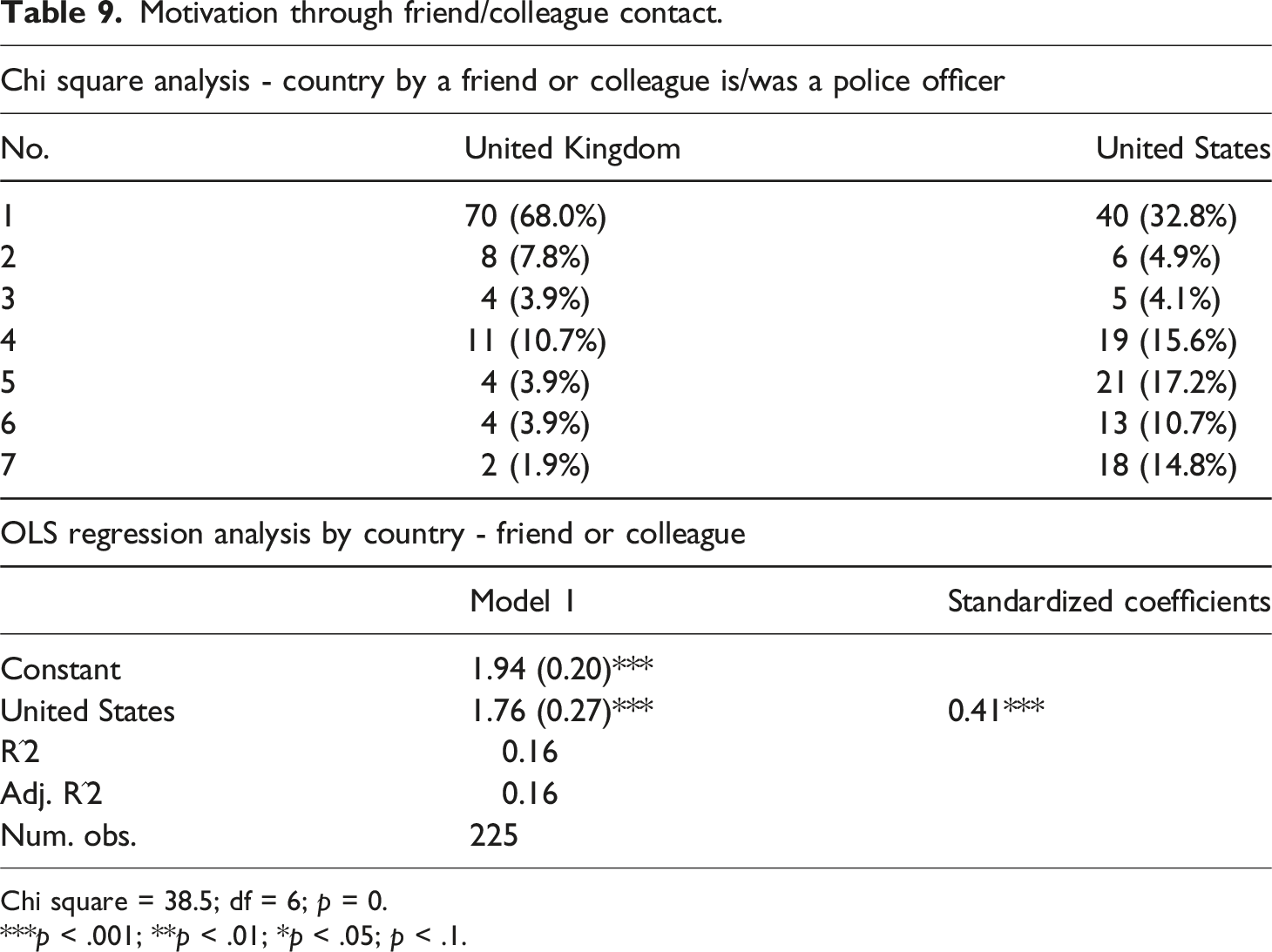
Chi square = 38.5; df = 6; p = 0.
***p < .001; **p < .01; *p < .05; p < .1.
Regarding the different dimensions of police misconduct discussed by Klockars et al. (2004), these results suggest that some areas of importation could be just as important as the environment in which recruits work. This is by no means definitive, but it could suggest that prior socialisation is an extra dimension that forces could consider minimising the instances of and opportunity for misconduct.
From a theoretical perspective, these findings point to four areas that are worthy of further investigation. 1. The findings indicate that some aspects of motivation as a part of presocialisation may be linked to exposure to misconduct investigation for police recruits. These include economic motivations and the variability of job responsibilities. 2. The differing levels of social embeddedness across both countries as a generator of motivation in new police recruits may also offer explanatory routes for hypothesising in relation to Alpert and McLean (2021) study on the strength and persistence of cultural behaviours. 3. Gender has played a significant role in this study and, together with other research, may indicate that a significant hope for addressing misconduct may lie in the more equal gendering of police forces. 4. The geography in this comparative study may act as a factor in determining perceptions of misconduct by serving officers in both countries. The difference between both geographic areas may, in some way, rely on how misconduct is understood and defined within each country.
Each of these four areas shows a level of promise, with more targeted geographic area-specific research possible in both the countries. With regard to the research question of whether aspects of presocialisation may be useful for the future prediction of misconduct, this study shows that aspects of motivation differ by region and gender and are then represented within the statistics as exhibiting predictive potential when split by these factors. When considered as a whole sample, the data are far less informative. With these separations in mind, it is possible to design future studies in each of the four suggested areas and begin longitudinal studies that consider the current motivations of police recruits. This could then be mapped into long-term future exposure to misconduct investigations for these participants. In order to link this research to the wider existing literature, it would also be possible to collocate presocialised motivations with psychological methodologies such as NEO and MMPI personality inventories. When conducted together, this would present a more complete picture of importation and thus allow a more complete base from which to work on future prediction of exposure to misconduct. At present, this link is absent from existing literature.
The aim of this study was to explore potential future research areas that could be employed to reduce police misconduct. Although importation is a complex phenomenon, it can be separated into its constituent parts and can be subject to measurement. In this case, insights into motivational profiles were more informative when split by gender and country, suggesting that motivation in isolation may not be the best predictor of exposure to misconduct when other variables are not present. However, when relationships are introduced between gender and country, motivational profiles are significantly different, allowing for improved interpretation of the links between them and potential exposure to misconduct. This finding illustrates that improving the connection between the available aspects of importation may offer improved insights. Essentially, this is not a groundbreaking finding in that more factors will offer improved insight. However, it is not simply the inclusion of more factors that will improve the potential for prediction but the inclusion of the right factors. With further investigation of importation as a phenomenon, it is possible to improve the predictive potential of a group of chosen, collocated factors, and essentially be able to offer police forces a limited but pragmatic approach to the potential to identify future risk in police recruitment cohorts. This may not be anything close to the predictive accuracy displayed in Minority Report, but it may be enough to assist with more informed choices in the hiring of new police recruits.
Limitations
This study was based on a convenience sample sourced from relevant social media networks; thus, it is highly likely to be limited in terms of wider statistical generalisation. This study aimed to explore a new theoretical base for investigating the prediction of misconduct and illustrated some potential avenues for further exploration without developing definitive outcomes. It is possible that, with a larger sample size of female participants and a more representative split in sample number across both geographic areas, there would be greater opportunity for more precision and enquiry. The study also illustrated a large disparity in exposure to misconduct investigation across both countries, which requires further investigation. This study directly examined the self-reported association with misconduct between the country’s samples, but simply using the word ‘misconduct’ without providing detailed boundaries around this term may have resulted in a lack of precision for the purposes of future generalisation. However, this aspect of the method requires further refinement. All the results also rely upon self-report, and thus may be subject to personal bias. Finally, most respondents had served for long periods as police officers, resulting in a survey relying on the accurate recall of motivations that, in some cases, were over 30 years old. This limitation should be considered when designing future research in this area, as it is likely that motivational profiles have evolved significantly, simply because society has evolved significantly (Cox, 2011). This limits the efficacy of the findings in the current context but does not nullify them; they still provide enough information to illuminate potential areas for future study.
Footnotes
Declaration of conflicting interests
The author(s) declared no potential conflicts of interest with respect to the research, authorship, and/or publication of this article.
Funding
The author(s) received no financial support for the research, authorship, and/or publication of this article.
