



Abstract
Providing strategic advice to the Senior Investigating Officer is a key element of the role of the Interview Manager in high-stakes crime investigations. However, no actual evaluation of such strategies has been undertaken. This exploratory study examined 15 interview strategies from three UK police forces in connection with high-stakes crime investigations. Overall, the analysis illustrated that the strategies were poorly designed, vague and lacked a cohesive structure. The study has provided an invaluable first insight into strategy design and implementation in the investigative interviewing arena. More research is required to focus on design and implementation of interview strategies.
Introduction
‘Sound strategy starts with having the right goal’. Michael porter (Hammonds, 2001).
The role of the Interview Manager (IM) is to (i) manage, (ii) advise, (iii) co-ordinate and (iv) evaluate investigative interviews for serious, complex or major investigations. The IM role should be conducted by highly skilled and experienced investigators who are likely to hold academic qualifications and share their time between the training environment, oversight responsibilities and working at the front-line on major investigations (Clarke and Milne, 2001). The role is currently described within the UK National Investigative Interviewing Strategy (NIIS) (ACPO, 2009) and identifies that the IM assists a Senior Investigating Officer (SIO) by managing the interview process. The NIIS includes the NOSs required for the role which are produced by Skills for Justice (SFJ) 2008. The NOSs (SFJ, 2008) outline that the IM must produce a documented interview strategy which will offer the Senior Investigating Officer strategic guidance for the management of witness and suspect interviews (see also NIIS, ACPO, 2009). To date, no research has examined the quality of such strategies in order to see whether they are actually meeting national standards and are fit for purpose.
What is a strategy?
The word strategy comes from the Greek word, strutegos, strictly meaning a general in command of an army (stratos, army; -ug, to lead) (Ronda-Pupo and Guerras-Martin, 2012; Evered, 1983). A strategy is a plan of action designed to achieve a series of objectives or a particular goal (Wheelen and Hunger, 2012). There is often much confusion about the difference between an interview strategy and an interview plan with both being often used interchangeably (Smith and Tilney, 2007). A strategy should set out the high-level overview of the police response and, as such, does not get drawn into tactical or operational detail. Each investigation is unique and, as such, should have its own tailored strategy. Strategy implementation is an essential factor of the strategic management process and turns the formulated strategy into a series of actions and results to ensure that the vision, mission and strategic objectives of the organisation are successfully achieved as planned (Thompson and Strickland, 2003). Significant research exists with regards strategy development in the business world (e.g. Jooste and Fourie, 2009; Pearce and Robinson, 2007). However, there is limited research within policing. From a policing perspective, guidance provided to police officers in the UK regarding the construction of an effective strategy suggests that the following should be addressed: (i) provide clarity of purpose; (ii) recognise public safety as a priority; (iii) reflect the multi-dimensional threat assessment in priority order; (iv) be achievable; (v) be dynamic to reflect changes in circumstances; and (vi) be specific to the operation (College of Policing, 2018).
Importance of an effective strategy
Interview strategies should always be constructed with an investigative mindset based on the core principles of open mindedness and the ability to be receptive to alternative explanations (Smith and Milne, 2018;COP, 2021). Knowing the purpose of the interview, outlined in strategies, impacts on questioning and interviewer behaviour, that in turn helps nurture an open-minded, flexible approach that then improves outcomes (Chin, et al., 2022). Investigative interviewers should know the purpose of the interview and the value of the information they obtain as an inflexible approach to the adopted interviewing style limits the effectiveness of the investigation (Stephenson and Moston, 1994). Miscarriages of justice cases have taught us that the alternative is ill-prepared interviews and tunnel vision resulting in unjust outcomes, with a lack of oversight which fail to transfer into improved workplace practices (Poyser, et al., 2018; Rossmo and Pollock, 2019; Bull and Milne, 2022). Thus, when strategies are ill-conceived and implemented with limited understanding a strategy could have a dysfunctional impact on the investigative process (Stelfox, 2008). Therefore, research needs to determine the quality of such strategies.
Barriers to the development and implementation of successful strategies
A number of factors have been found to demonstrate a disconnect between strategy development and strategy implementation (Hrebiniak, 2006). One such factor, poor or vague strategies, leads to potential inadequate execution which in turn leads to inferior outcomes (Ivančić, 2013; Hrebiniak, 2006). Hrebiniak (2006) suggested that strategy implementation is a process consisting of a series of integrated decisions to be actioned throughout the entire timespan of the project. This suggests that the interview strategy should be capable of providing strategic guidance throughout the time the suspect is in police custody, a product that is adaptable across time, an organic process. Strategy implementation should not be rushed and carefully managed to ensure effective execution within agreed time frames (Al-Ghamdi, 1998).
Organisational structures such as (i) lack of communication between management and those tasked with carrying out strategies, (ii) improper coordination including poor definition of tasks to be performed, and (iii) ineffective monitoring processes collectively contribute to strategy failure (Kalali et al., 2011). The strategy should highlight the above three points so that everyone knows exactly what is required of them. The IM role is to ensure that all interviews are conducted legally, ethically and to the highest standard, thereby protecting the integrity of the investigation, to safeguard the suspect’s human rights and the reputation of the organisation.
Strategic management process-putting into practice
The strategic management process (SMP) provides a basic model of strategy design and illustrates how four elements interact: (i) environmental scanning, (ii) strategy formulation, (iii) strategy implementation and (iv) strategy evaluation (Wheelen and Hunger, 2012) (Wheelen and Hunger, 2012). The SMP maps neatly the NOS requirements of the IM role (NOS SFJ, 2008; ACPO, 2009). With regards to environmental scanning, a key element of providing strategic interview advice centres on the IM assimilation of all the relevant information both internally and externally, from material statements and interviews already obtained from key witnesses and officers attending the scene. A sound understanding of current legislation and procedures (e.g. definition of murder including case law and Codes of Practice of PACE Act 1984) will need to underpin all advices provided to either the SIO or the interview team.
The strategy formulation phase requires the IM to coordinate the interview process by producing a series of briefings to key stakeholders engaged in the interviewing process which include custody management teams, appropriate health care professionals, legal advisers, interpreters and appropriate adults (see Vaughan et al., 2022c). It is critical to have the right interview teams deployed with the IM basing their decision on the skills, experience and suitability of the interviewer matched against the crime typology and suspect characteristics. Encouraging co-operative working relationships across teams aims to ensure successful strategy application. Effective communication creates a shared understanding of the aims and objectives of the strategy between senior management and those tasked with strategy implementation, the interviewers themselves.
The strategy implementation phase includes the monitoring of the interview process. This ensures the interview is conducted in accordance with current legislation, policy, procedures and codes of practice (e.g. Codes of Practice C, PACE Act 1984 (Home Office, 2019). Maintaining the progress of strategy implementation requires an IM to provide appropriate advice on the actions and steps necessary to complete the task whilst considering a range of a variety of working styles to result in the most effective and efficient execution of the strategy. During this phase, the IM should be in a position to monitor and maintain the collection, analysis and documentation of material obtained throughout the interview process and adapt the strategy as and if necessary.
The final phase is evaluation of the interview where strategy evaluation is an integral process of strategy management (Carpenter and Sanders, 2009). In a policing context, evaluation makes sure that the strategy is consistent with the investigative objectives and evaluates two key areas: information obtained and investigator performance (Bull and Milne, 2022). An analysis of the interview is undertaken to identify any necessary further actions including the potential to revise the interview objectives and if further interviews are required. The IM is additionally responsible for the provision of constructive feedback on interview team performance and overall quality assurance of the process (Bull and Milne, 2022).
The strategic management process requires a clear understanding of the relationship between all four elements. Vague and incomplete strategies could have an impact on the implementation efforts (Li et al., 2008), and poorly planned and designed strategies could have a significant impact on the actual conduct of the interview (Hrebiniak, 2006). In policing context, poor strategies create opportunities for miscarriages of justice.
IM training in how to develop an effective strategy
As can be seen, the IM role is multi-faceted and complex. However, it was not until 2007 that the National Police Improvement Agency (NPIA) introduced an Interview Adviser Development Programme (IADP) (this, however, is not a mandatory programme and UK forces 1 are still permitted to train their staff as they see fit). The IADP consists of five stages: (i) pre-selection and selection, (ii) distance learning, (iii) skills development – classroom phase, (iv) workplace development and assessment and (v) continuing professional development. Candidates entering the National programme tend to enter from either a ‘suspect’ or ‘witness’ domain (Vaughan et al., 2022a). In addition, a candidate should be able to demonstrate a propensity in performing the IM role (however, there is no formal entry requirement process for measuring the candidate’s knowledge and understanding of key elements of investigative interviewing). At the taught classroom stage, a case study, based on a murder investigation, develops over the 1-week training programme encouraging the candidate to assess relevant investigative material before constructing investigative interview strategies. Some training material accompanies this phase of the development programme which includes six separate PowerPoint presentations, one of which is the crime scene, and another discussed the next steps to be taken post-course (NPIA, 2007). Significantly no specific training literature or support material concerns how the IM is to formulate effective and competent interview strategies.
The current study
The aim of this exploratory study was to examine and rate interview strategies of real-life interviews developed by Interview Managers for high-stakes investigations with vulnerable suspects.
Method
Design
Real-world interview strategies were evaluated using a bespoke coding system. A purposive sampling method was applied due to the nature of the required sample, involving high-stakes investigations and by IMs being deployed. A sample of strategies was gathered in conjunction with their corresponding interview with a vulnerable suspect. For the research examining the quality of the interviews the vulnerable suspects see Vaughan et al., 2002c, 2022d.
Data
The sample of police interviews and corresponding IM interview strategies were provided by three UK police forces and included 25 with an IM involvement (unit of measurement = one interview regardless of number of interview sessions). Of the 25 that involved an IM, 10 interviews had no corresponding interview strategy as one had not been developed by an IM. This left 15 strategies for analysis. The strategies comprised 15 incidents including allegations of murder (n = 10), death by dangerous driving (n = 3) and rape (n = 2). Across the 15 interview strategies and associated interviews, there was 1 female suspect and 14 male suspects; 3 were identified as juvenile suspects and 12 as adult suspects. The outlined vulnerabilities were mental health (n = 10), age of the suspect (n = 3) and physical disability (n = 2). All of the interviews were visually recorded. The mean length of this sub-set of 15 interviews was 2 h and 51 min (shortest interview being 37 min and longest interview being 6 h). All IMs were male, with roles being Detective Sergeants (n = 5), Detective Constable (n = 8) and Police Constable (n = 2). The amount of experience in the IM role ranged between 1 and 6 years (M = 2.13, SD = 1.25).
Procedure
The procedure for the current study was similar to that outlined in Vaughan et al. (2022c) and Vaughan et al. (2022d). Ethical approval was obtained from the Faculty of Humanities and Social Sciences at the University ethics committee. The research was also registered with the College of Policing, UK. Access to the UK police was gained following an ‘introduction’ email which outlined the research, and this was sent to all England and Wales Police Force leads for Interview Management. The email contained two documents: (i) an organisational invitational letter which outlined the nature of the planned research and (ii) an organisational consent form. A nominated ‘gatekeeper’ was appointed by each participating force who had responsibility for communicating with the lead researcher. Confidentiality was of utmost importance; therefore, an anonymity guarantee was provided for those who agreed to participate.
Once the force agreed to take part in the research, the gatekeeper was responsible for collecting the required sample from their respective interview databases before supplying these to the lead researcher. Cases had to include a vulnerable suspect. Care was taken to ensure that the interview sample and associated interview strategies were not subject of continued proceedings and that they did not have any appeal processes currently ongoing. Therefore, the sample of interviews and interview strategies that were requested originated from cases investigated between January 2016 and December 2019. There have been no major changes in the UK since these dates regarding IM interview strategy development.
Coding
Coding system framework
A bespoke coding system 2 was designed specifically for the research. The 39 coded items aligned to the Skills for Justice, UK (2008) National Occupational Standard CJ301 and were subdivided into four sections: (i) strategic advice, (ii) interview co-ordination, (iii) interview monitoring and (iv) post-interview. Each of the 39 items were scored using Likert scales (1 being inadequate, 3 being fit for purpose and 5 being highly skilled). A further ‘not applicable’ category was included when items were not relevant to the assessment (Holman et al., 2004).
In addition, a Coding Manual was created for coders to follow. As part of coding training, one interview was selected at random and was coded by each coder independently to make sure that (i) each coder fully understood the coding scheme and (ii) the coding was well calibrated across coders. This training exercise confirmed that coders were able to follow the manual appropriately.
To establish inter-rater reliability, a selection of strategies (n = 4, 27%) were coded by an independent researcher and the lead researcher. Cohen’s kappa analysis showed there was a strong agreement (see Altman, 1990) across the two coders, K = 0.86, p < 0.001 (95% CI = 0.72–0.100).
Results
The results are presented in accordance with the four elements of the NOS for the IM role. First, the results focus on how the IM illustrates strategic advice within their strategy. Second, how the IM articulates how they co-ordinate the interview process is presented. Third, how the IM details how they will monitor the interview process is examined. Finally, how the IMs say they will undertake evaluation of the interview process is explored.
Provide strategic advice on the interview processes
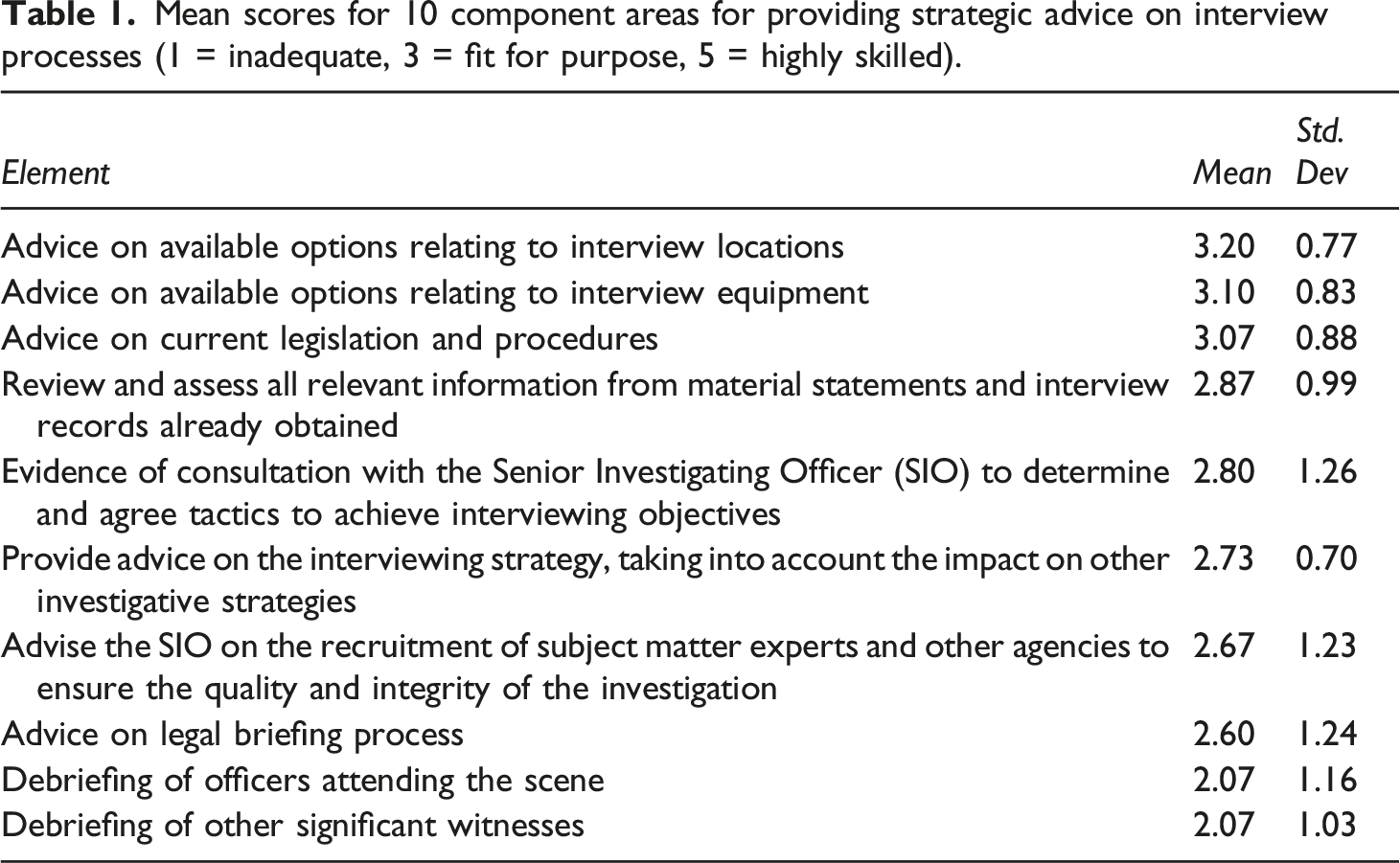
Mean scores for 10 component areas for providing strategic advice on interview processes (1 = inadequate, 3 = fit for purpose, 5 = highly skilled).
Co-ordinate the interview process
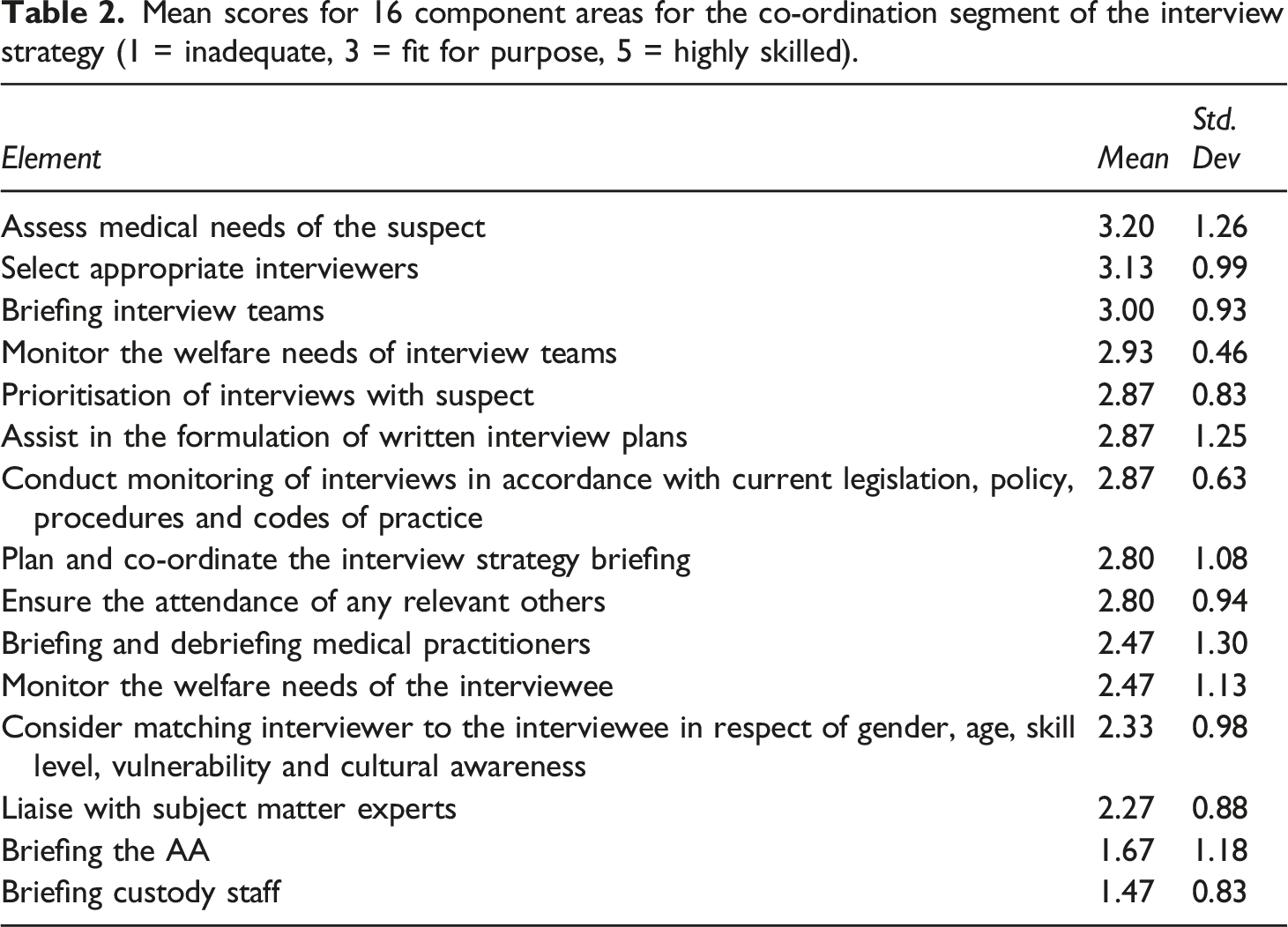
Mean scores for 16 component areas for the co-ordination segment of the interview strategy (1 = inadequate, 3 = fit for purpose, 5 = highly skilled).
Monitoring of interview processes
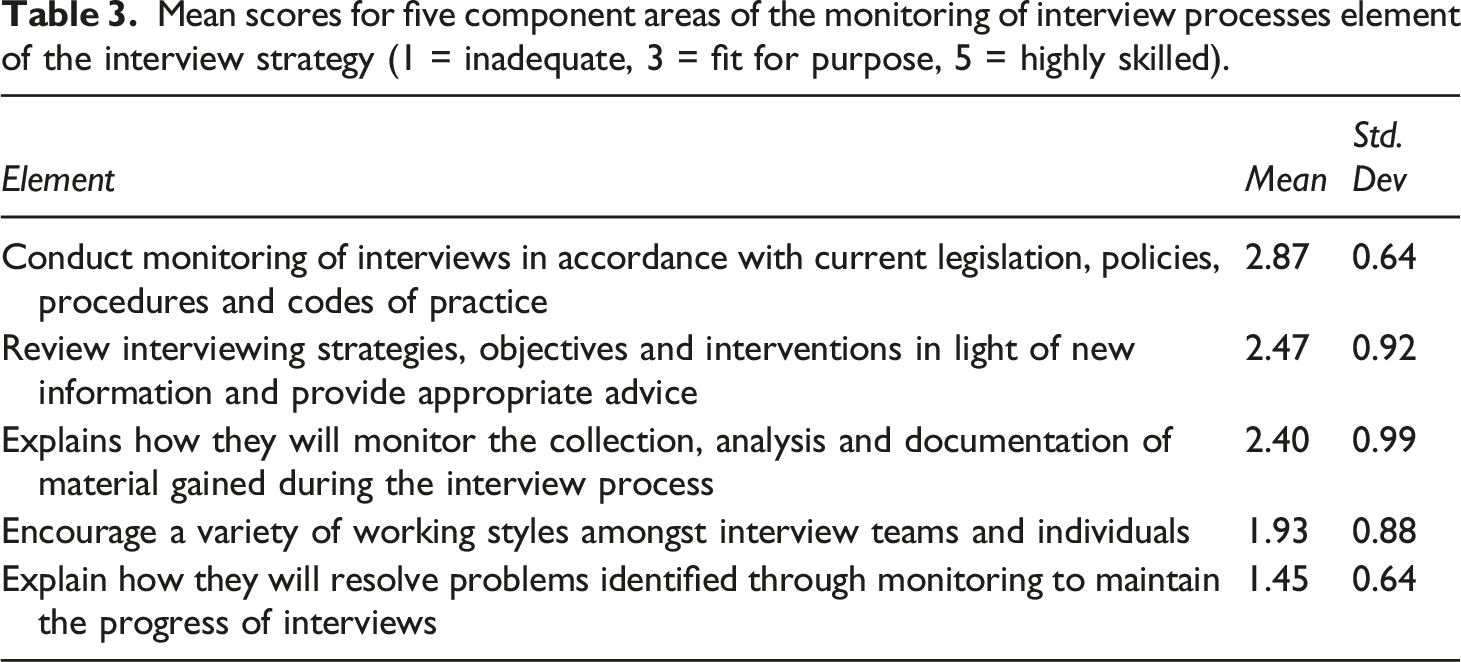
Mean scores for five component areas of the monitoring of interview processes element of the interview strategy (1 = inadequate, 3 = fit for purpose, 5 = highly skilled).
Evaluation of the interview process
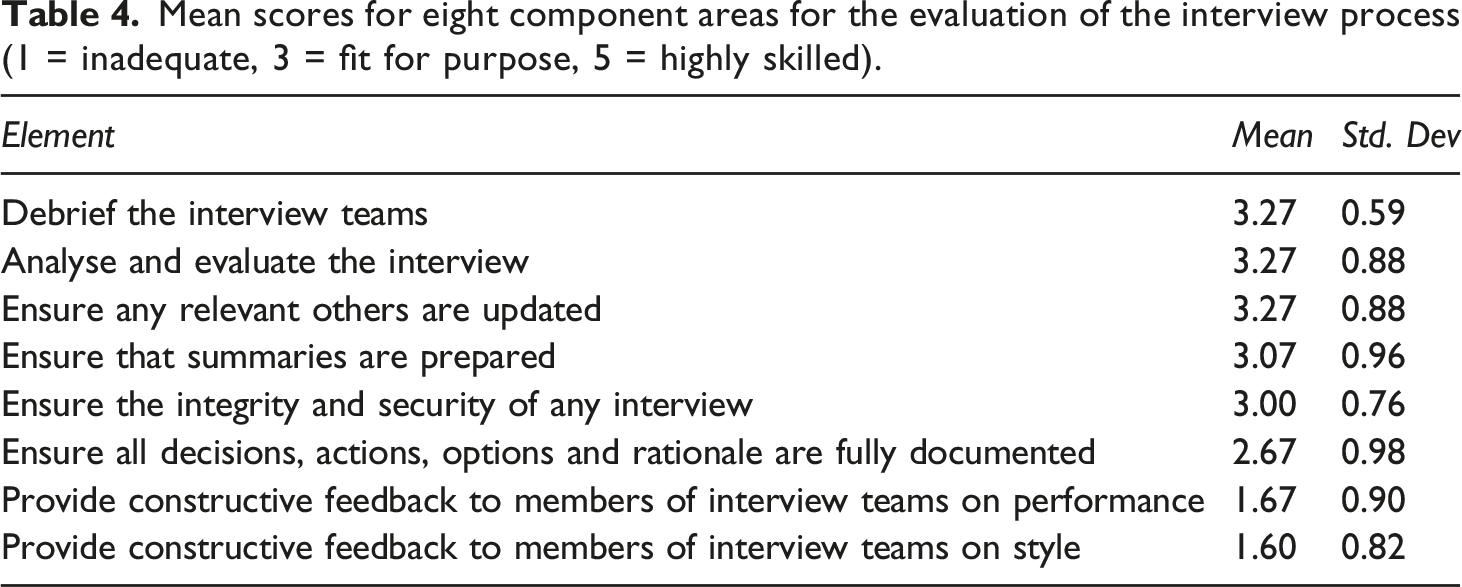
Mean scores for eight component areas for the evaluation of the interview process (1 = inadequate, 3 = fit for purpose, 5 = highly skilled).
Discussion
The aim of this exploratory study was to examine and rate interview strategies of real-life interviews with vulnerable suspects by IMs. The current study found that IMs did not always provide interview strategies. Specifically, of the 25 interviews where an IM was deployed, 10 were missing an interview strategy. The lack of a documented strategy should have been identified by the Senior Investigating Officer and rectified prior to the beginning of the interview. This is indicative of earlier research which identified that SIOs were reported as ‘rarely’ providing feedback on strategy development which would have identified that one had not even been completed (Vaughan et al., 2022a). Strategic management consists of two identifiable elements: (i) formulation and (ii) application. Logically, application follows formulation where one cannot implement, carry out or ensure completion of something until that something exists (Hrebiniak, 2006). Strategy development is required to ensure investigative interviewing processes are managed effectively (Smith and Milne, 2018).
There are four main sub-areas of an interview strategy including a total of thirty-eight sub-elements covering implementation, coordinating, monitoring and evaluation. Across all four areas none of the observed sub-elements of the NOS requirements received a mean score indicative of skilled or highly skilled. During the implementation stage, only 30% of the NOS requirements that had been included were rated as fit for purpose with these areas concerning logistic and legal advice. The main area of concern identified at this strategy-stage phase related to SIO liaison. Ensuring appropriate suspect interviewing is an essential practice (Van Beek et al., 2022) and one that require consultation between the SIO and IM (Cook, 2019). In major investigations, the SIO retains overall accountability for all of the decisions made throughout the course of an investigation, even when decisions are made by other colleagues including the IM (Cook, 2019). It is crucial that the IM evidences the agreed tactics to achieve the interviewing objectives. However, this was inadequately evidenced in the IM strategy. This resonates with strategy development in the business world, that identified poor and vague strategies had a contributory factor to inadequate role execution and inferior outcomes (Hrebiniak, 2006).
IMs need to plan and coordinate their strategies based on a sound understanding of the available relevant information including areas of offence details, suspect medical details, vulnerability and trauma issues and identifying information to ensure appropriate third-party involvement (e.g. AA, subject matter experts). Research has established that the identification of suspect vulnerability is problematic for police officers (Bath and Dehaghani, 2020). The sheer scale and complexities of suspect vulnerabilities have the potential to overwhelm an interviewer especially with the absence of guidance on how to identify and interview vulnerable suspects (Smith & O’Mahony, 2018). Therefore, when identified, this information should then be shared, to ensure all those engaged in the interview process carry out the requirements of the strategy effectively. This provides a safeguard especially for vulnerable suspects. However, it was identified that there were significant shortcomings observed in the sample strategies. The fact that the IM strategies were not rated as skilled or highly skilled at coordinating the interview process is concerning. IM strategies displayed inadequately documented areas including definition of tasks, vulnerability assessments, welfare monitoring and briefing of key individuals including custody staff, legal adviser, medical examiners and the interview team.
In all aspects of the monitoring process, the strategies were rated poorly with a failure to outline key areas of strategy development to safeguard the collection of information provided during the interview. No sub-element within this domain was deemed fit for purpose. Consequently, the strategy lacked a coherent approach to ensure the interview met ethical and legal requirements.
In terms of the evaluation of the interview process, there were some well-documented characteristics within IM strategies and were rated as fit for purpose in five of the eight elements making up this phase of the assessment. However, IMs were not rated as fit for purpose when it came to ensuring all decisions were fully documented. Criminal investigations are highly regulated, and thus every step should be documented and transparent (Fahsing, 2016, 2019). In the UK, all police officers are required to comply with the National Decision Model (NDM) (see COP, 2014) and are therefore accountable for their decisions and the provision of rational for those decisions. However, there remained shortcomings throughout the four domains of the strategy development surrounding the documenting of the IM decisions and rationale.
IMs were rated as inadequately outlining how they would provide constructive feedback to their interview teams. Feedback is critical for testing hypotheses on which the strategy should be formulated, as well as conducting performance reviews, and making necessary strategy adjustments if required (Kaplan and Norton, 1996). However, nurturing the development of interviewer behaviours by providing comprehensive performance evaluations have been seen as time-consuming and as a result the quality of feedback often ended up being sacrificed (Griffiths and Walsh, 2018). This lack of quality assurance mechanism supports the long-held views within policing that suggests that the police service would have operational difficulties in implementing an adequate supervision policy (Bull and Milne, 2022; Clarke et al., 2011; Stockdale, 1993).
Strategic management development is a very complex and long-term process which requires one to define, conduct and evaluate an applied strategy (Ivančić, 2013). What the current study has shown is that whilst overall the interviewing arena has been awash with research-based improvements, the role of the IM requires further research (Vaughan et al., 2022a, 2022b). This current research has illustrated the frailties of strategies constructed in high-stakes crime investigations due to poor, vague or even no strategy design. This could be due to a lack of guidance or a model to support implementation (see Vaughan et al., 2022e).
Limitations and future research
This present exploratory study is the first to be conducted in the UK that examined the role of an IM in respect of strategy formulation in high-stakes crime investigations. However, this study is not without limitations. Whilst three (of 43) UK police forces took part in the research and provided 25 interviews where an IM was deployed, only 15 strategies were actually written (i.e. 10 interviews were missing a strategy). It is acknowledged that greater participation of a larger number of IMs would have produced greater insight into the role of the IM and strategy development. Therefore, future research should aim to increase the number of strategies analysed. The current study was also exploratory in nature, developing a bespoke coding system based on NOS. Future research should include more in-depth analysis to better understand the context. Interviews with IMs about the development of their strategies using a structured interview methodology would be insightful.
Creation of a suspect strategy framework to aid the IM through what is a complex area of practice requirement is needed.
Conclusion
Miscarriages of justice are a result, in part, of ineffective investigative decision making and incompetent investigative interviewers (Poyser et al., 2018). IMs play a significant role during high-stake investigations providing strategic advice to the SIO on all interview matters based on their knowledge and experience to counter such poor practices, thereby providing a safeguard to the interview team and the vulnerable suspect. Presently, there is little National guidance on how interview strategies should be developed and shaped across the dynamic interface of an ongoing investigation. Thus, a researched-based training programme should be developed to include areas of strategy design and implementation to provide the necessary knowledge, skills and confidence to the IM to perform to the highest standard and not as been demonstrated in this sample, as just fit for purpose.
Footnotes
Acknowledgements
The author(s) wish to thank those police forces who contributed to the study by supplying interview strategy data for analysis and to those who acted as gatekeepers as without your participation and support this research would not have been possible.
Declaration of conflicting interests
The author(s) declared no potential conflicts of interest with respect to the research, authorship, and/or publication of this article.
Funding
The author(s) received no financial support for the research, authorship, and/or publication of this article.
Data availability statement
The data that support the findings of this study are available on request from the corresponding author. The data are not publicly available due to restrictions, for example, containing information that could compromise the privacy of research participants.
