




Abstract
The UK authorities have exponentially increased the number of counter-terrorism (CT) training activities being delivered by the Police Service to workers in crowded places. Counter-terrorism training events are designed to help prevent attacks by raising awareness to hostile reconnaissance, assist workers to cope at the time of an incident, and aid recovery after an attack. This focus group study provided a reality check of what is happening on the ground in sessions. Eight focus groups were conducted in significant crowded places (N = 55) and targeted workers who had already been in receipt of CT training. It found a paucity of evidence to indicate the effectiveness of CT training activities in improving the resilience of the public realm. Respondents supported the benefits of realistic and experiential training events closely related to their places of work. At the same time, they recounted how events were often poorly organised and delivered, with some CT practitioners lacking credibility. Sessions were often not based on learning need and were seldom evaluated. A series of recommendations are made to improve the credibility of CT products and their delivery, coupled with strategies to potentially aide evaluation and embedded organisational learning from events.
Introduction
There is an absence of evidence to suggest that the myriad UK CT training events that have been running for workers in the public realm since 2004 are fit for purpose and successfully enhance resilience. This is important, as the UK terrorist attacks of 2017 found, it is these workers, particularly security staff that will be the first on the scene of an emergency. These employees will be expected to help prevent, cope, and recover from attacks. This study is the first of its kind to adopt a focus group methodology, to reach out to front facing workers and their immediate managers in locations considered vulnerable to terrorism. Repeated shortcomings in CT training were also identified in the public inquiry into the Manchester Arena bombing (2021).
Chronology of UK CT training and awareness events since 2004.
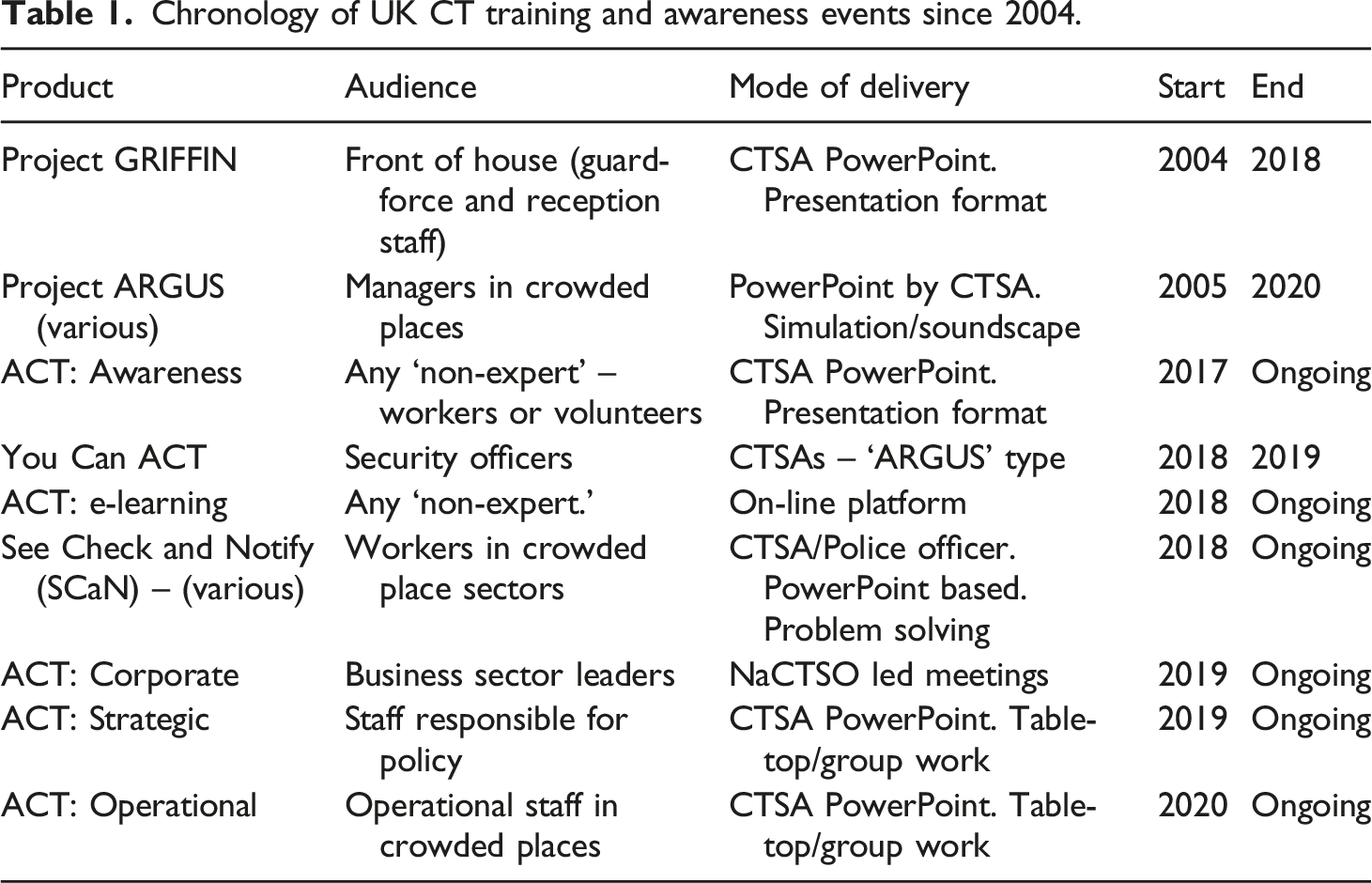
Summary of CT delivery per financial year.

Source: UK National CT Policing HQ in May 2020.
This focus group study investigated the experiences of the UK CT training audiences. These groups provided a reality check for what both the authorities and managers felt to be happening in events and sought to understand how the learning from CT training and awareness events can be successfully embedded in participating organisations. Focus groups have been found to be particularly useful in exploring and challenging contradictions between groups of people identified by Kitzinger (1994) who are, ‘living, working or socialising together’, and they maximised the opportunity to acquire a considerable amount of data from a broad range of subjects who varied in terms of age, gender, and occupation. It also allowed for the unique voices and experiences to be heard from participants in predominately ‘lower paid’, security, front of house or facilities roles (Coolican, 2014). It was also unlikely that these non-managerial and ‘lower prestige groups’ would otherwise have been released from the workplace for individual interviews (Winship and Repper, 2007). Participants may have been intimidated by a one-to-one interview format and freely sharing of experiences and anecdotes resulted in a greater variety of discussion than would be evident in an interview or questionnaire-based study. The groups sought to gain new insights and knowledge from the direct experiences of workers in crowded places to explore how the CT training they had attended was arranged, if their educational needs were met, and any attempts to subsequently embed organisational learning.
Method
Design and procedure
Breakdown of focus groups and locations.
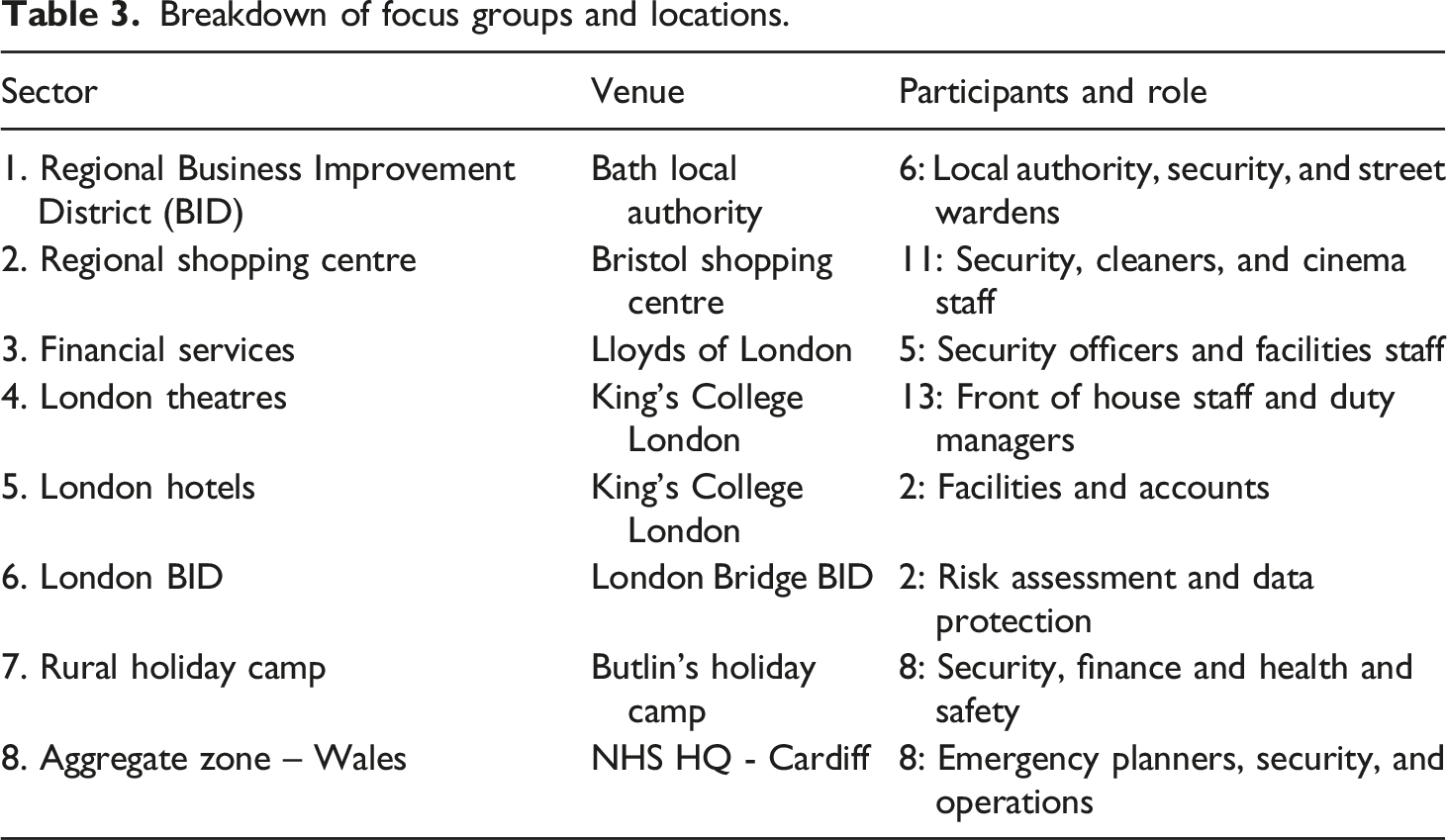
Participants were recruited through gatekeepers from the host organisations or trade associations, having previously confirmed that they had attended a CT training event. These gatekeepers circulated a call for participants email, replicating the content of the ethically approved Information Sheet and respondents were requested to reply directly to the author, to arrange attendance. The groups lasted between 90 min and two hours and were audio-recorded.
Participants
The sample of participants was 80% White British, with an average age of 40. There was a 42% female and 58% male sample, with the staff having been in their roles for an average of 6.5 years. Each participant was asked to complete a Participant Questionnaire after written consent had been obtained. Each subject was allocated a unique reference number (URN) which was only referred to throughout. Anonymity was preserved, which encouraged participants to talk freely.
Focus group discussion guide
The Focus Group Discussion Guide set out a framework for the moderator to explore key areas of interest, whilst allowing participants to discuss other topics and for their answers to be further probed. The semi-structured guide was built around the stages of arranging and delivering a CT training session, through to seeking to embed learning: 1) pre-event; 2) consultation at a business; 3) delivery in the workplace; and 4) the process to embed learning. Options for prompting and deeper exploration of emergent themes were inbuilt within the timings of each stage. Each participant was given a retail voucher to the value of £25 at the conclusion of the event.
Analysis
The focus group discussions were transcribed and thematically analysed following the six-stage interpretative analysis methodology of Braun and Clarke (2013): 1. Familiarisation – transcripts were firstly read, re-read, and annotated. 2. Initial coding – coding of interesting features across the whole data set. 3. Searching for themes – sorting the codes to identify themes. 4. Reviewing themes – tabulating patterns and accuracy across the whole data set, with important moments or comments in the data being noted and categorised. Emerging themes were married with quotations from the transcripts. 5. Defining and naming themes – explaining the content and naming themes. 6. Writing up – telling the story of each theme.
Results
The Participant Questionnaire is discussed first, followed by the most prevalent themes being reported from the groups, supported by appropriate quotes, coupled with sector and unique reference number.
The participant questionnaire
CT training events previously attended by focus group participants.
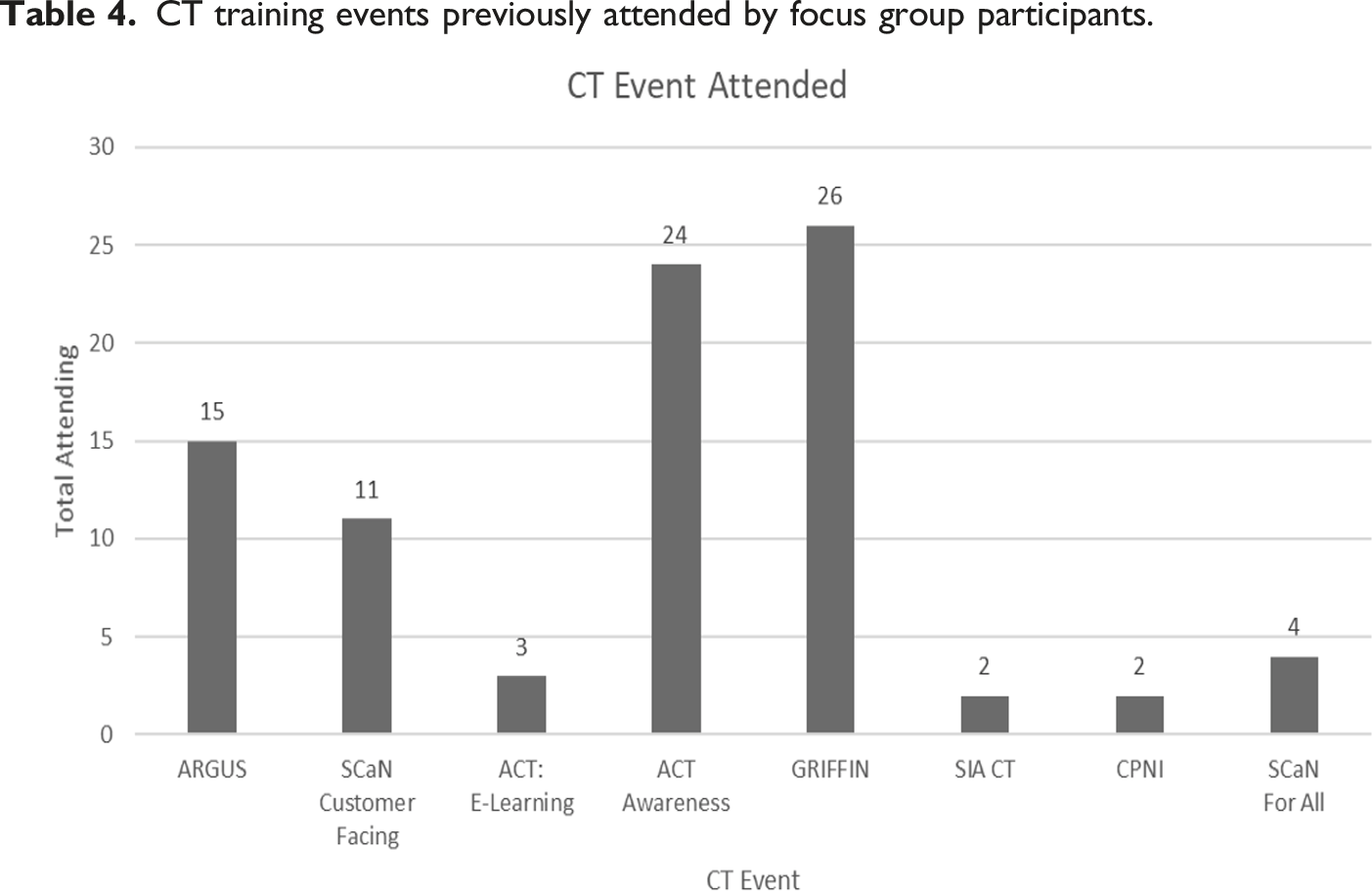
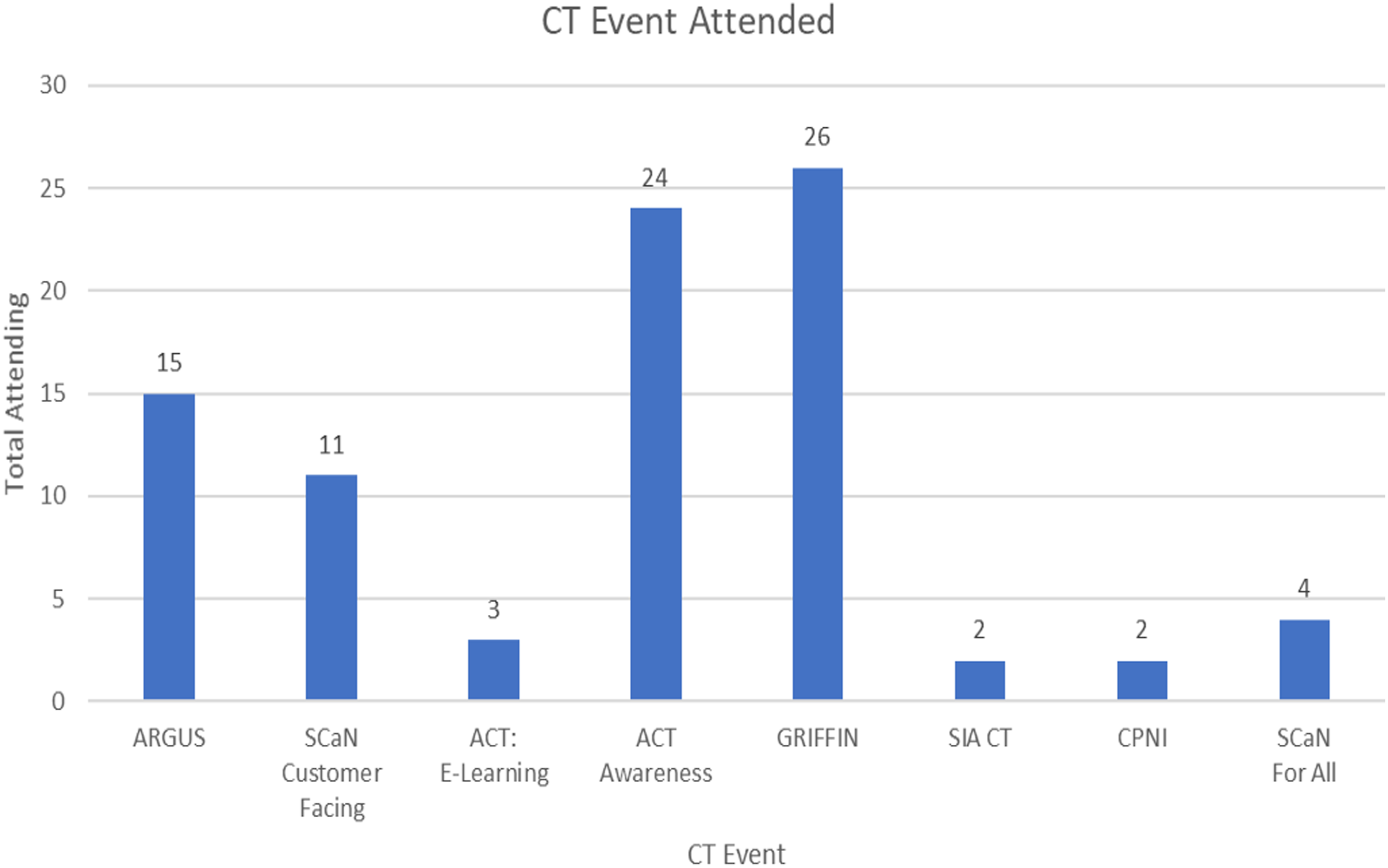
The highest attendance rates were for less interactive events such as GRIFFIN and ACT: Awareness, followed by Project ARGUS that had been running since 2004. A total of 38% of the sample had also attended two or more CT events. For example, of the 26 people that had attended a GRIFFIN session, 13 had participated in an ARGUS, 7 ACT derivatives, and 6 SCaN. 64% of people reported that they had only attended a CT event because they had been required to do so by their manager, and of these attendees, 25% had no clear understanding of the reason for their attendance. As such, it is difficult to identify whether participants had any specific training needs or learning objectives prior to attending. 58% of attendees reported that they believed the objective of their previous training events were merely to increase their ‘CT awareness’, rather than to acquire any specific skills for the workplace to improve resilience.
The challenges to running successful CT training events
A number of factors were shown to frustrate the efforts of CT practitioners to arrange training events. Firstly, at a basic level there was a low perception of threat in many places. For example, participant FG01P3 in the Bath BID area stated, ‘[.…] terrorism is not in the forefront of their thoughts every day’, and added: “Complacency is a killer, isn’t it? You…yeah…you just need to keep refreshing people.” (FG01P2)
Terrorist incidents were considered ‘incredibly rare’ (FG02P12 – shopping centre), with more pressing front of mind concerns for these groups being: missing people, drunk or aggressive customers, protesters, and sexual assaults. Secondly, the businesses that inhabit crowded places are far from a homogenous mix, ranging from sole traders to large corporate bodies. The wealthier business groups such as those in the City of London exhibited a greater appetite to invest and for their security officers to communicate and form closer relationships with local police teams. The London hotels (FG05) and theatre group (FG04) also funded proactive trade associations with venues in close radio contact and circulated photographs of problematic customers. Contrastingly, in retail environments (e.g. shopping centres) respondents indicated that any ‘working together’ was unstructured and spontaneous in response to a specific issue. Numerous examples were given of radio equipment left dormant or unused and a general lack of cooperation. In a major Bristol shopping centre, cinema workers confided that, ‘We’re very isolated in what we do’ (FG02P10 – shopping centre). Both they and the security officers they employ at busy times, had little awareness of the procedures related to evacuation points, bomb threat or fire. Staff genuinely feared the lack of awareness would lead to confusion at the time of a critical incident.
Clear benefits were identified from attending CT events, particularly ARGUS, which played an important role by drawing adjacent businesses together and helping to build collective resilience: “A really good team building thing, it kind of made ushers who were like, ‘I’m just here to sell ice cream’, just be a bit like, ‘Oh actually I’m part of a bigger thing’, so I think it’s that sort of camaraderie, the long-lasting effects.” (FG04P4 - theatres)
What was lacking was an ongoing, mentoring relationship with the CT practitioners to embed learning after events. A powerful example of how this could work in practice was found in Wales, where the merits of localism and co-operative were mentioned: “[….] it’s also about having a very trusted, very comfortable, very personal relationship with these organisations and we have single points of contact in South Wales Police that we can literally pick up the phone to 24 hours a day.” (FG08P5)
The close relationship had paid off in Wales, with the smooth running of the 2014 NATO conference in Newport.
In summary, these groups supported the delivery of immersive CT training, indeed the Federation of Small Businesses has repeatedly called for more support for, the ‘largely forgotten smaller businesses’, (FSB, 2017). These groups called for an ongoing and inclusive approach to CT training and rejected a potentially divisive two-tier approach highlighted as problematic by Durodie (2005), where wealthier enterprises demand greater attention. Respondents felt CT training should reflect local needs but also the benefits of collaborative working to improve wider community resilience.
The lack of a standard audience for CT training
Although Business Improvement Districts (BIDS) are endorsed by NaCTSO as a conduit to disseminate CT training, respondents in these groups reported that there could be poor communication between members: “I wouldn’t have said that we have a very amicable relationship.” (FG06P2 - BID)
In several places there was also found efficient existing multi-agency collaboration: “I chair the Cardiff Bay Business Group Partnership, we’ve got 30 plus businesses that actually come together and that training is jointly delivered, as number one has said, in relation to the links with the police, we’ve got great links. We have very dynamic meetings as we talk about safety, we talk about crime.” (FG08P3)
In Wales, a bespoke training message was also prepared in partnership with the CTSA: “You need to be quite specific around that, it makes people sit up and listen […] you do get a buy in.” (FG08P2)
In FG04 (theatres), FG03 (financial services) and FG05 (hotels) there were also examples of active trade associations that would provide efficient conduits to disseminate advice.
Other potential dissemination networks were also mentioned. In Bath, there were found to be over 50 volunteers that had previously attended a Project GRIFFIN event run by the CTSA team in the city. They were predominantly retired professional people who had both the time and motivation to help, and were receptive to further CT training: “We are out every day in the streets – talking to people. I mean it’s all about spotting hostiles and people doing reconnaissance and things like that.” (FG01P4 - BID)
Another participant volunteered transporting hospital transplant tissue and blood and suggested that members would all be willing recipients for CT training and were potential ‘semi-capable guardians’ in the public realm. These groups revealed one size of CT training might not fit all. The low threat perception and diverse nature of potential audiences re-iterates the importance of CT practitioners working hard to understand their community and working holistically with existing partners to disseminate advice around crime, or business continuity and wider community safety.
The unstructured nature of counter-terrorism training
A lack of control over attendance at events was highlighted as a key concern for focus group participants. The participant questionnaire established that 68% were uncertain of the reasons for their attendance, with no apparent training need, and 38% of the focus group participants had attended more than two similar CT training sessions. Cinema staff described how they were compelled by their manager to attend a ‘SCaN for All’ session in the cinema before work at 9a.m., but they did not know why. At the same location a security officer observed: “I’ve done so many ARGUS events I’ve lost track! To do scenarios and do the actual physical training, it would make more sense, get people more confident of actually dealing with it. And it’s like learning the same thing over and over again. And you can’t learn something you already know. Going back over and over is counterproductive.” (FG02P4)
There was no consideration of learning need, with the repetition of the same CT training event that was never practised in real life. Blanket emails were just sent out for ‘anybody that would like to attend the SCaN training’ (FG01P3). It was only in the rural holiday camp group that selection was based on learning need. This was exceptional, with the majority of groups from small and medium sized businesses, depicting a lack of any systematic approach to attendance, from both trainer and host organisation.
It was only in the larger organisations that meagre evidence was found of organisational change as a result of training events. In the City of London (FG03P5), a motivated manager regularly tested his team, ensuring they used ‘the power of hello’, taught in SCaN. In an international London hotel: “Every six months, different scenarios, check that they know their exits, multiple exits. One that came up quite frequently was active shooter training.” (FG05P3)
The gulf between the wealthiest corporate bodies and smaller businesses was stark. Unlike their smaller counterparts, larger businesses applied a process to training based on organisational need, but at the same time sought to rehearse the acquired skills. Motivated managers were also found who drove this testing and exercising.
Although the majority of respondents supported the view that some additional information about the event would be useful to share prior to attending, the majority of participants: “[…] were just turning up because they were told by managers it’s compulsory.” (FG03P6)
These finding re-iterate the chaotic organisation of events, which are compounded by the real-life working experiences of focus group participants. Workers, for example in a shopping centre are either too busy to complete an online pre-read and were sceptical about the merits of the whole e-learning concept. Three of many similar comments included: • “[….] we’ve got 15,500 staff in our organisation, I’d say probably a good half haven’t got access to IT, and for various reasons.” (FG08P4) • “Just tick A, B, C, D and that’s it, but are you actually taking in anything? And the answer’s no” (FG03P5). • “What would you rather do? Put me in the classroom” (FG03P6).
Participants understood that online saved money for employers, but these workers supported delivery as a group activity, but only if a session was facilitated by a trainer with proven credibility and knowledge, ‘to spontaneously answer questions’. (FG03P2 - Lloyds).
In short, it was found that CT training was at best unstructured and was often dependent upon motivated managers in larger corporate organisations to rehearse any learning. In the real world, e-learning was seen as a cheaper, but as these participants saw it, inferior alternative to realistic, facilitated learning. The next theme explores that nature of that learning experience.
Ambiguity about defining CT training
Focus group respondents felt that CT training was challenging to categorise: “I don’t think it really educated anyone, did it? [….] The ACT thing I went to was an awareness session.” (FG05P3 - hotels)
Both in shopping centre and hotel groups, participants felt sessions needed to be more interactive and not a ‘lecture’ (FG02 P4) commenting: “[….] it’s not until the exercise takes place and they see what happens during that exercise, how it can be improved and what training needs to be cascaded down.” (FG02P5 – shopping centre)
Participants expressed a preference for realistic training and the chance to test their knowledge in the workplace. These sentiments offer a challenge to the authorities to define exactly what NaCTSO are seeking to achieve in CT training, particularly with ACT. Any positive comments were confined to older events such as Project ARGUS that are in the process of being discontinued. A theatre worker recounted attending a CT event a week before an evacuation from Oxford Circus underground station in 2017, which was initially feared to be caused by terrorism: “The week before I’d been on the Project ARGUS training, thank God […] They did this amazing thing in the session where you would have to shut your eyes and then they played the soundscape of like a disaster and I was like, right, I’m there, I’m doing that. And it was fantastic and thank God I did because then I was like everyone’s running in and I was like, oh, I’ve envisaged this!” (FG04P9)
This practical example gives support to the ‘simulation’ type of event found with Project ARGUS, where students are ‘immersed’ in the sounds and sensory experiences of a real incident. Stand-alone and less realistic events such as ACT were considered to offer little opportunity for embedded learning. Across the groups, focus group participants favoured a clear structure to experiential training by a credible facilitator, tailored to the specific needs of their workplace. They wanted to understand why they were attending, the objectives for the session and undertake post event action planning.
The credibility of CT trainers
Any successful CT session were also repeatedly considered to be contingent upon the credibility of the facilitator, as well as the quality of the products they were delivering. There were positive comments: “He knew what he was talking about and stuff like that so it was really good. [….] That person would need to have credibility to answer questions.” (FG06P2 – London BID)
But there were also repeated concerns expressed as to if this was always the case in the current CTSA community, when balancing the level of real world versus practical policing skills. One focus group were damning in their comments about the delivery of an ACT: Operational event by NaCTSO staff. A selection of comments are shown below: (FG08): P8: “Other products have been well put together, but this one, literally somebody may as well have filmed it on their phone, it was really bad.” P4: “The underlying thing for me was the presenters and perhaps those who built the package had limited experience and they were trying to present to a room full of a lot of experience.” P1: “I think I got to the stage where you stopped asking questions because the answers were so inept you knew you weren’t going to get a sensible answer.”
This exchange serves as a microcosm of the finding from this theme. Namely, the need for CT practitioners to better understand their customers and how change can only be embedded in organisations through long-term relationships. This understanding ranges from the security knowledge across a site, not taking anything for granted, to appreciating that some businesses will need more help than others to change existing practices. Knowing the best product for each site comes with enhanced understanding and builds credibility amongst all stakeholders. In the theatre group: “[.…] often they’re so removed from operations that they were giving advice that’s completely unfeasible to an individual operator, particularly around evacuation.” (FG04P6)
Not understanding the needs of business and over-specified CT advice, serves to undermine the credibility of CT advisers. Success was seen with CTSAs who took the time to learn about their sites and tailored the training to need: “They went through a scenario of if you had someone with a gun [….] they anticipated where we would go, so we was like ok, go down towards the car park, and they went ‘Before you’ve even got there, we’ve now gone and set off vehicle bombs in the car park.’ So, they were anticipating our every move before we’d even thought it.” (FG07P7)
The investment of time by the trainer in finding out about the site in advance was valued by the participants and added to their credibility.
Finally, considerable evidence suggests that adult learners get much more from events if they are closely involved in the session (Knowles, 1984). These participants felt more involved if their unique skills and security expertise were utilised in training events: “If you’re a person used to security, you should have a wide understanding of what you’re actually getting into, cause just walking around looks easy, but trust me it’s not. You’re dealing with every Tom, Dick and Harry out there from druggies, spice-heads, knives, bottles, and you’re in it 24/7 every day, so that takes its toll - you should be involved.” (FG02P2 – shopping centre)
But in a cinema they felt excluded: “It wasn’t really specific for us as a cinema, would I go again? No.” (FG02P12)
As a result, the sessions had minimal benefit for attendees, as they were simply not engaged in the process. These examples emphasise the need for a skilled and credible facilitator, practiced in application of learning, to build a bridge between SMEs and the larger corporate sector, to include them in the conversation and prevent staff switching off.
Unquantified learning from CT events
From these focus groups there was clear doubt as if there was any learning at all from CT events and the below interaction sums up the tenor of responses: P2: “Being brutally honest, I felt like the training session was very much scaremongering, because the only thing that we took away from it was that if anything was to happen, that the people that respond to it are nowhere near, the response time is like a long time, grabbed a free pen and poured out…” P6: “I don’t think it really educated anyone, did it? It didn’t really achieve anything apart from common sense? You’re doing counter-terrorism to a bunch of 16-20-year-olds at 9 o’clock in the morning.” (FG02 – cinema)
Again, there had been a minimal relationship with the venue, or understanding of audience need, leading to a negative perception of the event, with little engagement or tangible learning.
Any examples of organisational change as a result of attending an event were random and even occurred outside the CT event: “When we had the Manchester Arena attack, as an industry we realised that actually it was the outgoing that was the big risk for us – we needed checks going in and out.” (FG04P10 - theatres)
Overall, it appeared that there is little consistent understanding of either intended or resultant outcomes from CT training events. The financial services group recounted that: P6: “My managers haven’t really approached me and asked me or anything like that, how it went, so I don’t think they’re really … I mean obviously they’re interested, but … not interested in what I’ve learnt.” (FG03P6)
Participants in these groups suggested that a formal action plan was essential, to be taken back to a nominated manager, coupled with ongoing CTSA contact: P5: “I also think that if they could come back afterwards, it would prompt the leadership to push it even more.” (FG07P5 – holiday camp)
This group is clearly calling for greater investment in follow-up on CT events by CTSAs, and a change from the current emphasis away from just delivery. This process begins with evaluation, but there was little evidence of this taking place: “[….] Nothing really evaluated, nothing thought through, it was just kind of – it was really a tick box thing.” (FG02P7 - cinema)
The financial sector group were even more damning: “[….] what the police are trying to achieve with those courses is to live their life easy …cause the police are not everywhere. They want us to be aware and to tell. And if what we have learnt is not internalised, is not completely fed in, well then it’s completely not working.” (FG03P2)
In another group: “Immediately after, it’s not the best time to evaluate whether you’ve learnt anything, I think a little bit more time needs to pass to see whether something’s sunk in.” (FG05P5 – London hotels)
The clear lack of structured evaluation was found in these groups, coupled with a call by participants for a step-change in approach to evaluation. They articulated the need for a sustained, long-term relationship between the authorities and business.
Post event organisational change and exercising
In the absence of management support, any organisational change was mainly attributable to committed and motivated individuals.
A bomb threat procedure was updated: “I did that myself, I saw it as part of my job. Both my managers attended and then they just left me to update all the procedures.” (FG05P3 - hotels)
A manager had resorted to developing her own search training: “So, I went back and devised this whole different thing and felt it was more important for the team to know their options and for them to be really secure in the exit and in hiding places and back of house.” (FG04P11 – London theatres)
To help facilitate workplace change, requires a high level of skill on the part of a CTSA, as there are enormous challenges in crowded places, such as the high turnover of low paid staff, which continually frustrates embedding learning: “[….] I don’t feel like they have a Scooby Doo what to do. We may train 20 people, next week 10 of them might be gone.” (FG04P12 – London theatres)
These findings reinforce the challenges of a rapidly changing workforce. The absence of attendance records also complicates attempts to follow-up on trainees enacting organisational changes. The theatre group unambiguously called for longer term help: [….] ‘Alright, well you told us earlier that the doors are closed or this [….]’ I think that’s what I would like. Talking about it is all jolly good but I want practical help.” (FG04P13 – London theatres)
With ongoing assistance, then across the groups, participants called for regular testing and exercising as the best way to validate learning within an organisation: “[….] both the cleaning and the security team that were on that shift at that time did an exercise where we went through a scenario of if a bomb threat had been called in. We should do it again cause of newbies who haven’t done it.” (FG02P3 – shopping centre)
These sentiments were replicated in the financial services group: “Project GRIFFIN is good. Project ARGUS is good. SCaN is good. But onsite exercising that’s better.” (FG03P4)
In the realm of exercising conscientious and motivated individuals again showed how this might work: “[….] so twice we’ve done ‘hide and seek’ with the front of house. So that’s a practical thing that they don’t feel really pressured about, they’ve found their own route and then obviously afterwards we’ve got the time to sit and chat and if anyone is upset or anything like that you’ve got time.” (FG04P2 - theatres)
These were comprehensive examples of shift managers taking forward the learning from CT events and devising exercises in their workplace. The dominant view across the focus group participants was that more testing and exercising was necessary in the real world to rehearse their teams and turn training words into action. Ongoing support was necessary to achieve any organisational change outside of larger corporations.
Discussion
With terrorism not a front of mind concern in many businesses, these respondents suggested that CT sessions can still achieve core objectives but should also better reflect the local needs of the community. This echoes the advice of Aquinas and Kraiger (2009) and Schein (2010) who highlighted the importance of understanding the priorities and organisational culture of business. Translating these findings into a UK CT training context, it indicates that CTSAs require the time, resources, and skill to form longer standing and trusted relationships at vulnerable sites. The benefits of building trust were supported by other research which found that enhanced trust increases the credibility of the advice being given and as a result the populace are more receptive to taking the advice (Pearce et al., 2013) and changing their behaviour (Rogers et al., 2013).
Educational theory emphasises the importance of participants in training needing to know what is expected of them in sessions, with agreed and achievable objectives related to their workplace (Moravec et al., 2010). CT training here was often unstructured and inconsistent in both organisation and delivery. Participants regularly had no clear understanding of the intended objectives of sessions (25%) attended more than one event (38%) and regularly attended with no understanding of what would be expected of them (64%) before, during or after events. The impracticality of workers being able to complete a training pre-read, also illustrates how NaCTSO are devising training with little understanding of customer needs or capacity. What suggestions were made by respondents to achieve improvements in the national CT programme? These groups expressed the belief that future events should not merely be a tick box exercise, but the learning objectives must be clearly aligned to the security needs of the business, with follow-up to embed learning. This recommendation chimes with the findings of Barker (2009) that workers need active help to make changes in their workplace, based on a relationship between the educator and employer.
Knowles (1984) and Kolb (2013) both outlined how adult workers thrive in education when training is aligned to the tenets of experiential learning and andragogy. These focus group participants expressed a strong preference for immersive training that encouraged joint problem solving. They reported that learning was enhanced when they were able to share their experiences and learning with colleagues, including volunteers and ancillary staff. Older CT products including Project ARGUS and SCaN that employed the immersive techniques were popular, but the new ACT products and e-learning were poorly received. These findings are supported by the research of Borodzicz and Van Haperen (2002) and Skryabina et al. (2020) who reported the benefits of using an immersive format for simulation exercises. Skryabina et al. (2021) found that healthcare staff who participated in a realistic simulation exercise just before the Manchester Arena attack, felt better prepared for the roles they fulfilled on the day of the incident.
There were some positive findings that offer insights into a pathway for future improvements. Although the performance of CTSAs was found to be inconsistent across the country, respondents reported that the credibility and knowledge of some was high, which led to the delivery of effective training sessions. Examples were provided of CTSAs finding innovative ways of engaging audiences. Their events were tailored to the needs of participants, the PSIA, and included training scenarios focussed on the security deficiency they found in their pre-event preparation. This points to a necessary change of emphasis by the CT community, away from just increasing delivery numbers to tick a box. They felt embedded learning should not merely be the province of motivated individuals in participating businesses. As such, they called for additional mentoring and help from CT practitioners, to achieve long term change as advocated by Borodzicz and Van Haperen (2002). Kitzinger (1994) advocated a structured evaluation mechanism, beyond just the delivery of events, and into the workplace. This was found to be virtually impossible without help, particularly in the private security industry, with high staff turnover and lack of standardised training or procedural understanding.
The greatest success in implementing the learning from CT training came when there were strong pre-existing relationships between public and private sector organisations. Schon (1987) suggests that optimal benefits from education come where there is a process in place that allows for reflection and action planning after training. In Wales (FG08) a process was found for structured and documented CT awareness as a ‘golden thread’ through all aspects of staff development, accompanied by reliable record-keeping and testing. Across the focus groups, participants recommended that exercising and testing should also involve the widest number of businesses and partner agencies associated with a crowded place, supported by Borodzicz (2005). A clear process for evaluation and exercising would help to transform ‘awareness raising’ into learning, with testing helping to embed organisational change.
Conclusion and recommendations
These focus groups supported the use of UK CT training sessions, that were in a realistic simulation and experiential format. Participants recommended that the events be delivered by experienced, credible facilitators with the knowledge to respond to audience questions in a trustworthy and informed manner. In spite of this support, only two examples could be provided (both in FG04 -theatres) of skills acquired in CT events leading to change in the workplace. The author makes the following recommendations to embed organisational learning and improve resilience.
Firstly, the identified trend from the Participant Questionnaire of attendees not attending CT events based on training need, and not understanding why they were there must be reversed, and control regained. Repeated attendance at the same CT event is untenable, requiring a national baseline assessment of historical delivery, to regain control for CT practitioners. Secondly, the starting point for re-establishing control should be the delivery of CT events being based on site vulnerability, grounded upon a properly completed risk assessment and part of an ongoing relationship, linked to the PSIA survey and coupled with evaluation and follow-up to embed learning. The conduit for this process must be an action plan following suitable reflection. Such plans would need regular follow-up and updating, documented by a CTSA and site manager.
Thirdly, these groups did cite limited examples of good practice, but there was also found to be inconsistent quality amongst the CTSA cadre across the country. To build trust and closer relationships across the private a public sector requires a nuanced approach, which based on the findings of these groups requires a higher calibre of CTSA. The CTSA staff must be qualified in adult education and skilled in influencing, to regain credibility. These skills will help them to deliver experiential and realistic events, regain control and maintain an ongoing relationship with sites to evaluate, mentor and facilitate organisational change. This training ability will enable them to identify and communicate the learning objectives to attendees prior to the start of the course. Fourthly, the newer ACT products were not found to be experiential or sufficiently interactive to promote group learning. The range of ACT products requires an urgent review of both content and delivery methods.
Finally, focus group participants felt that a closer partnership is required with local authorities rather than solely BIDS to alleviate the impasse that has set in around CT training. Examples were given in the groups of how existing partnerships, managed by local authorities in other areas including business continuity and emergency planning could provide additional impetus to CT training and aid closer partnership working. This cross-fertilisation is likely to be a more productive means to improve the resilience of the widest possible community, rather than just that of larger corporate bodies.
Footnotes
Declaration of conflicting interests
The author(s) declared no potential conflicts of interest with respect to the research, authorship, and/or publication of this article.
Funding
The author(s) disclosed receipt of the following financial support for the research, authorship, and/or publication of this article: This study was funded by the Avon and Somerset Constabulary. The views expressed are those of the author(s) and not necessarily those of the Avon and Somerset Constabulary. This study was funded by the National Institute for Health and Care Research Health Protection Research Unit (NIHR HPRU) in Emergency Preparedness and Response, a partnership between the UK Health Security Agency, King’s College London and the University of East Anglia. The views expressed are those of the author(s) and not necessarily those of the NIHR, UKHSA or the Department of Health and Social Care. For the purpose of open access, the author has applied a Creative Commons Attribution (CC BY) licence to any Author Accepted Manuscript version arising.
