



Abstract
An online survey (N = 2063) of women working either as police officers or non-sworn/warranted police staff addressed personal well-being and work-related factors during the first COVID lockdown in the United Kingdom from March to August 2020. Overall, 59% of all respondents reported being more stressed during the lockdown than they had been previously. A key factor in stress levels was the respondents’ organisational support measured by a computed index of trust, communication, and support (TCS). Those respondents having a positive orientation towards TCS were less stressed than those whose orientation was more negative. Findings differentiated the experience of respondents typed as front-line police officers, front-line police staff, police officers serving in support functions and police staff in support functions. Innovative COVID-19 working arrangements are highlighted as beneficial new practices worth retaining.
Introduction
This paper is the third in an interlinked series reporting some early empirical evidence of the impacts on police personnel during the COVID-19 pandemic experienced by police officers and non-warranted police staff in England and Wales. Results for the female officer respondents were reported in Fleming and Brown (2021a) whilst Fleming and Brown 2021b presented a comparison of police support staff who either worked from home or remained on the front-line. This paper focuses on women personnel, that is, police officers and police support staff and incorporates the dimension of home or front-line working.
The COVID-19 pandemic resulted in a slew of legislation restricting the movement of people within the United Kingdom (Crown Prosecution Service, 2020). Colloquially referred to as ‘the lockdown’, pandemic limiting restrictions initiated new patterns of work across several sectors as businesses, agencies and organisations sought to lessen the spread of COVID-19 including working from home, virtual team working and remote management of staff (Akkermanns et al., 2020; Alipour et al., 2020; Jones et al., 2020; Kniffin et al., 2021).
Perhaps unsurprisingly, the traditional gender inequalities associated with work, caring responsibilities and family commitments (Van der Lippe et al., 2011; Duxbury and Halinski 2018) are identified as stress factors as women seek to manage their multiple roles and increasing workloads (Fleming and Brown 2021a). Azcona et al. (2020) report the results of an international survey indicating that COVID-19 preventative measures are increasing women’s responsibility for the bulk of work to keep households going (i.e. household chores, care of children and family). Findings for the United Kingdom suggested that 17% of women strongly agreed that they had taken on a lot more of these responsibilities. This percentage placed the United Kingdom midway in an 18-country comparison.
That policing is a stressful occupation is well documented across a number of countries and jurisdictions (McCarty and Skogan 2013; Terpstra and Schaap 2013; Violanti et al., 2017; van der Lippe et al., 2011; Purba and Demou 2019; Duxbury et al., 2020; Queirós et al., 2020). We know that stress not only has negative consequences for police interaction with the public but also on their own physical and mental health and professional performance (Liberman et al., 2002; Houdmont and Elliot-Davis, 2016; Elliott-Davis 2018). In the context of policing the UK pandemic, Wetherill (2021) observed that difficulties included the scale of work that was required, the need for front-line officers to pace themselves and the sustained duration of managing the pandemic, as well as the roles and tasks required of police generally.
Front-line staff are those ‘in everyday contact with the public and who directly intervene to keep people safe and enforce the law’ (HMIC 2011:6). Wetherill (2021) noted the challenges for front-line staff with the introduction of the ‘Four Es’ policy as a way to police the preventative COVID-19 legislation: that is, Engaging – speaking to people and establishing their awareness and understanding of the situation; Explaining – educating people about any personal risks they are taking; Encouraging– offering guidance to individuals, suggesting they return home; Enforcing – as a last resort, removing a person to the place where they live, using reasonable force only if it is a necessary and proportionate means of ensuring compliance. Wetherill (2021) drew attention to the objections from the public over these restrictions and some confusion and frustration for police because of the continual changes in regulations. It should be noted that police staff have in recent years increasingly undertaken front-line policing roles. Betts and Farmer (2019: 56) found that police staff perceived that police forces’ ‘frame of reference’ was ‘officer-centric’ with senior leaders and indeed, government policy tending to focus on officer numbers rather than police staff or the total workforce. Such perceived attitudes generated feelings of second-class citizenship particularly when staff were doing the same work as officers. Betts and Farmer drew attention to the importance of supervisors’ and line managers’ support for officers and staff in maintaining their well-being. Clearly the welfare of police personnel, either warranted or otherwise, should have been paramount during the stressful events of COVID-19.
Research on police workers working through COVID-19 is gaining momentum across many disciplines and countries. Bio-medical scholars have looked at the traumatic impact of the pandemic on female police officers in Moscow (Soloviev et al., 2020). Medicine and health professionals consider police working in an ‘unprecedented medical health emergency’ (Papazoglou et al., 2020: 39). Other work with police assesses the potential impact on police services in Canada (Mehdizadeh and Kamkar 2020); United States (Stogner et al., 2020); Australia (Drew and Martin, 2020) and the Republic of Ireland (Rooney and McNicholas 2020), as well as identifying perceptions of workload and family conflict in Pakistan (Sadiq 2020). In summary, nearly all these commentaries point to deficiencies in leadership, support and communication as likely to exacerbate stress impacts on police personnel.
Some emergent findings reporting on the possible consequences of policing the pandemic identify stress, resilience, mental health issues and misconduct as possible responses (Stogner et al., 2020). Frenkel et al. (2020) found from an on-line survey of officers working in Austria, Germany, Switzerland, the Netherlands and Spain that psychological strain was predicted by maladaptive emotional regulation and that overall, women experienced greater strain than their male colleagues. Their results confirm that perceived poor communication and inadequate support are experienced as stressors during the pandemic. In the UK context, (Fleming and Brown 2021a) note rising levels of stress for women police officers during the lockdown, stress that is not just associated with increased home responsibilities and working through the pandemic, but also related to the broader organisational response to employees.
Theoretical framing
As mentioned above, adequacy of communication and organisational support for front-line workers during the pandemic have been identified as key issues in emerging empirical results (Frenkel et al., 2020; Labrague and de los Santos, 2021). Perceived Organizational Support (POS) is a helpful explanatory concept receiving considerable attention in the research literature (Rhoades and Eisenberger, 2002) and cuts across a range of disciplines, including health, psychology, business, and occupational health and safety (Fujishiro and Heaney, 2009). POS has three components: fairness of treatment, supervisor support, (which Rhoades and Eisenberger, 2002 note was the overall category of organizational treatment most strongly associated with POS) and organisational rewards (associated with workplace conditions). The fairness component overlaps with the concept of organisational justice, itself made up of several constituent parts. Colquitt et al. 2005 state that organisational justice is generally thought to represent people’s perceptions of being treated fairly. These authors distinguish between distributive, procedural and interactional justice with the latter associated with the perceived fairness and quality of treatment received during the enactment of organisational procedures and decision-making processes. If employees perceive that organisational procedures are just and fair and that their work contribution is valued, they are more likely to feel satisfied at work and experience a sense of well-being. Armeli et al. (1998) suggest that employees form a general perception concerning the extent to which their employer values their contributions and cares about their well-being.
Organisational justice is more of a cognitive appraisal, whereas the idea of supervisor support deriving from the POS position is more of an affective response. Rhoades and Eisenberger (2002) describe POS in terms of demonstrated caring and respect that fulfils the socio-emotional needs of employees. Additionally, evidence of POS’s socioemotional function comes from findings that POS was negatively associated with strains experienced in the workplace. In their review, Rhoades and Eisenberger suggest that supervisor support has been used interchangeably with organisational support and is generally taken to mean attempts to reduce aversive psychological reactions to stressors by providing material aid and emotional support. Myklebust et al. (2020) add a further element by proposing that people define organisational support as the organisation being positively or negatively oriented towards employees in helping them (or not) to cope with the demands of the job. In the criminological and police studies literature, earlier work emphasises the link between organisational factors, stress, commitment, job satisfaction and performance (Davey et al., 2001; Shane 2010; Nalla et al., 2011). Donner et al. (2015) link positive outcomes on these factors with police officers’ trust and sense of connectedness to their force. Moreover, a belief in procedural justice has been associated with police officers’ feelings of legitimacy in the performance of their duties and co-operation with the public (Bradford, 2014). This seems especially important during the policing of the pandemic and the successful operationalising of the 4 Es policing mandate. We wished to draw from both these theoretical constructs by conjoining aspects of being trusted by, and connected to the organisation, as well as the support being afforded to personnel through communicating with them about their health and welfare.
The current study
The broad remit of the current analysis was to explore the impacts on female police officers and police staff working during the period of the UK’s first COVID-19 lockdown period during March to August 2021. Impacts were considered in terms of the respondents’ personal well-being and their working patterns. The study was particularly interested in the interplay between the job category (officer or staff) and whether they had a front facing, that is, public interacting role (such as neighbourhood or investigative policing) or, played an office-based support function (such as HR, IT investigative support or criminal justice interface). We created a 2 x 2 typology based on role and job category. We developed the compound concept of Trust, Communication and Support (TCS) with reference to that which respondent found available during the lockdown. We wanted to focus on the supervisor support aspect of POS and its socio-emotional function. We hypothesised that a positive orientation towards organisational support would be associated with lower levels of stress and the converse that a negative orientation would be associated with higher levels of reported stress. We were unclear whether police officers or police staff might report greater stress levels; there are indications that the latter feel undervalued and so might perceive they enjoy less organisational support generally. Conversely, police officers have greater powers than their non-warranted colleagues and might face more difficulties in their interactions with the public. We were also interested in the post COVID-19 period and whether any of the new working practices that participants had experienced in lockdown were worth retaining after the pandemic.
Method
Sample
A generic online questionnaire survey powered by Qaltrics was distributed to a pilot sample of approximately 2000 police officers through the auspices of the Police Federation of England and Wales (PFEW) and to all police staff affiliated with the Union, UNISON during September 2020. A total of 463 police officers (a 23% return rate) and 2365 police staff across a range of police forces returned completed usable surveys. Due to a messaging error accompanying the PFEW survey which appeared to seek responses from women officers, only 18 policemen returned completed surveys. The number of returns from UNISON members is consistent with the Union’s own survey returns (Brown et al., 2018; Unison, 2016). For the purpose of the present analysis, 437 women police officers and 1626 women police staff were selected from the total sample of 2844 (10 respondents were classified as other and six respondents declined to give their designation as staff or officer).
Sample details.
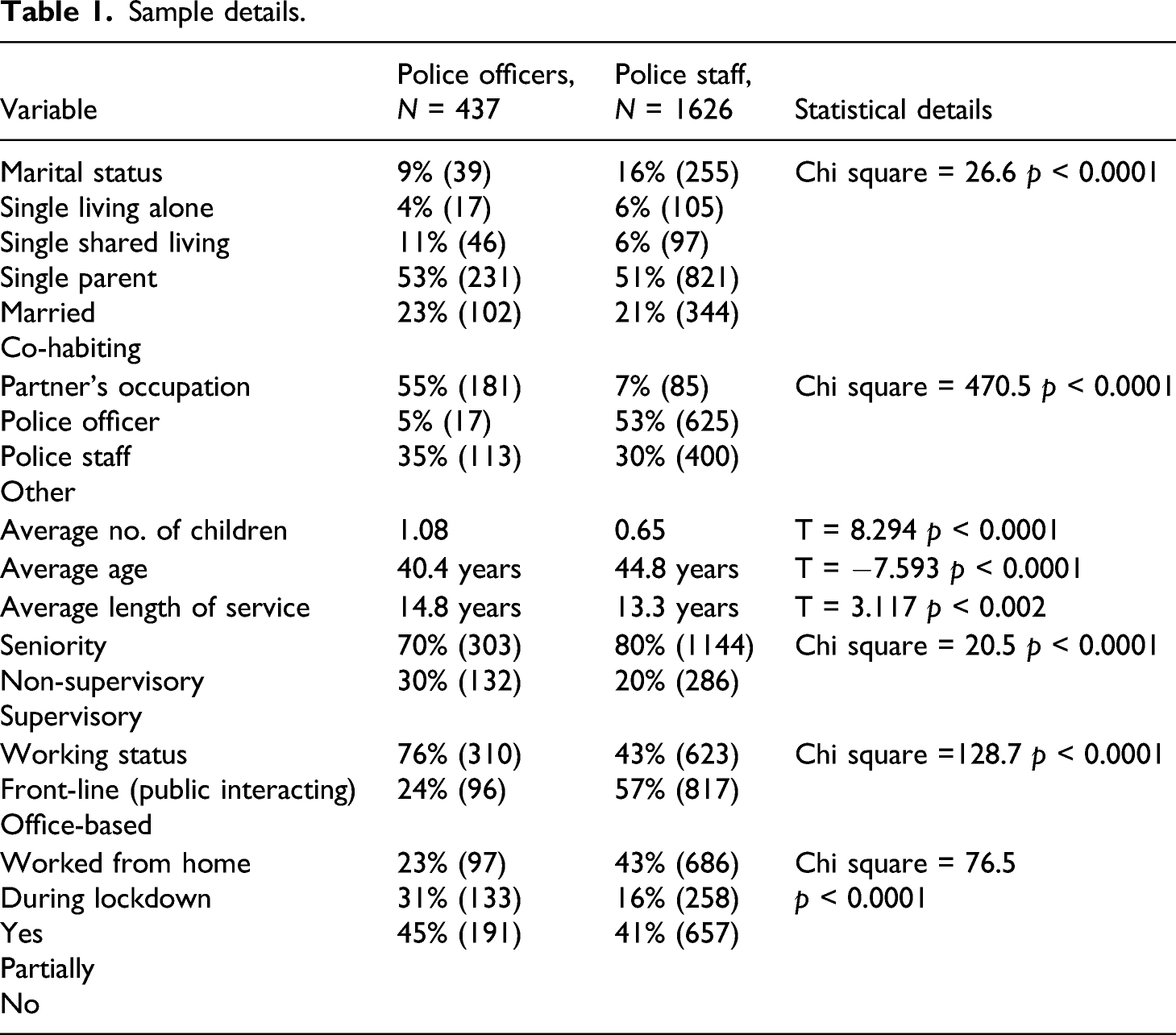
Four out of 10 police staff had a front-line role. These included 129 (8%) who identified as Police and Community Support Officers (PCSOs) and 184 (11%) designated officers who held duties and responsibilities in Custody and Detention, Investigation or Safeguarding and Public Safety. Similarly, 24% of the police officer sample were deployed in support functions such as Professional Standards, Finance, and Training Departments.
About one in four of all respondents worked from home during the lockdown with a further 19% doing so partially. The remainder stayed in their place of work. Police staff were more likely to work from home, 42% compared to 22% of police officers, with the same proportion of both officers and staff, one in four, remaining at their place of work. Other respondents worked partially at home.
We classified our respondents as front-line police officers; front-line police staff; office-based police officers and office-based police staff. ANOVA indicated that there were statistically significant differences in ages and length of service (F = 47.6 p < 0.000, F = 28.2 p < 0.000), respectively, with the latter being older with longer length of service. Sheffe range tests indicated no differences in lengths of service between officer and staff who were office-based or operational personnel (although length of service was statistically significantly different when considering all police officers and police staff together as shown in Table 1).
Survey questions
The survey sought views and experiences of working during the main lockdown period (March–July 2020) to chart the impacts of new ways of working during the pandemic with a view to providing ‘feedback and inform those in the Police Service who will be responsible for making key decisions about supporting officers and police staff as they assess new behaviours and working practices in the workplace and consider the long-term implications of COVID for police officers and staff’ (wording used in the introduction to the survey).
In all, there were 40 questions. These included demographic details and occupational characteristics such as role, rank or grade, whether working full-time or part time and whether their role was amenable to working from home. Participants were asked about the quality and patterns of their work before, as well as during the lockdown period such as increased hours, difficulty of work together with the amount of support received from their force and/or immediate supervisor or line manager and whether trusted by their supervisor. Questions also asked about aspects of home life during the lockdown such as home schooling, responsibility for domestic chores and care for elderly/vulnerable relatives. Health and feelings of well-being during the lockdown compared to previously were reflected in single item questions about physical tiredness, emotional energy levels and feelings of stress by means of a 5-point Likert scale of strongly agree (5) to strongly disagree (1). Worry about family was measured by 4-point scale from worry a lot (4) to not at all (1).
Because we wished to focus on the supervisor support and intra force communication aspects of POS and also reflect the trust component of procedural justice, we created a compound variable, ‘Trust, Communication and Support’ (TCS) made from one item about being trusted by line manager/supervisors, two items about being supported by a line manager and four items about quality of communication between the respondent and line manager/force in the context of their welfare/well-being during the lockdown. Each was scored on a 5-point Likert scale with one being strong agreement and five strong disagreement. The seven items had a Cronbach alpha reliability of 0.8. A score of seven was indicative of the strongest endorsement of a positive orientation and a total score of 35 was indicative of the most negative orientations.
Finally, the survey asked about preferences in the period of post lockdown recovery requiring q unitary response of yes or no:
To return to working in the way I did before lockdown
To do the same job as before but do some things differently
To request to work at home some of the time
To request to work at home all of the time
To consider changing my role within policing
To consider leaving the police
To consider taking retirement
The two open questions asked: Please can you briefly describe any new ways of working that were initiated during lockdown that you think are worth keeping in the post COVID recovery? Are there any other comments you would like to make about your working life during the pandemic?
Qualitative comments used in this paper have been drawn from the responses to these questions.
Ethical approval for the study was granted by the University of Southampton’s research ethics committee.
Results
Psychological impacts of working during lockdown
The survey asked about stress levels, physical tiredness, emotional energy levels and worry about family members during the lockdown compared to previously.
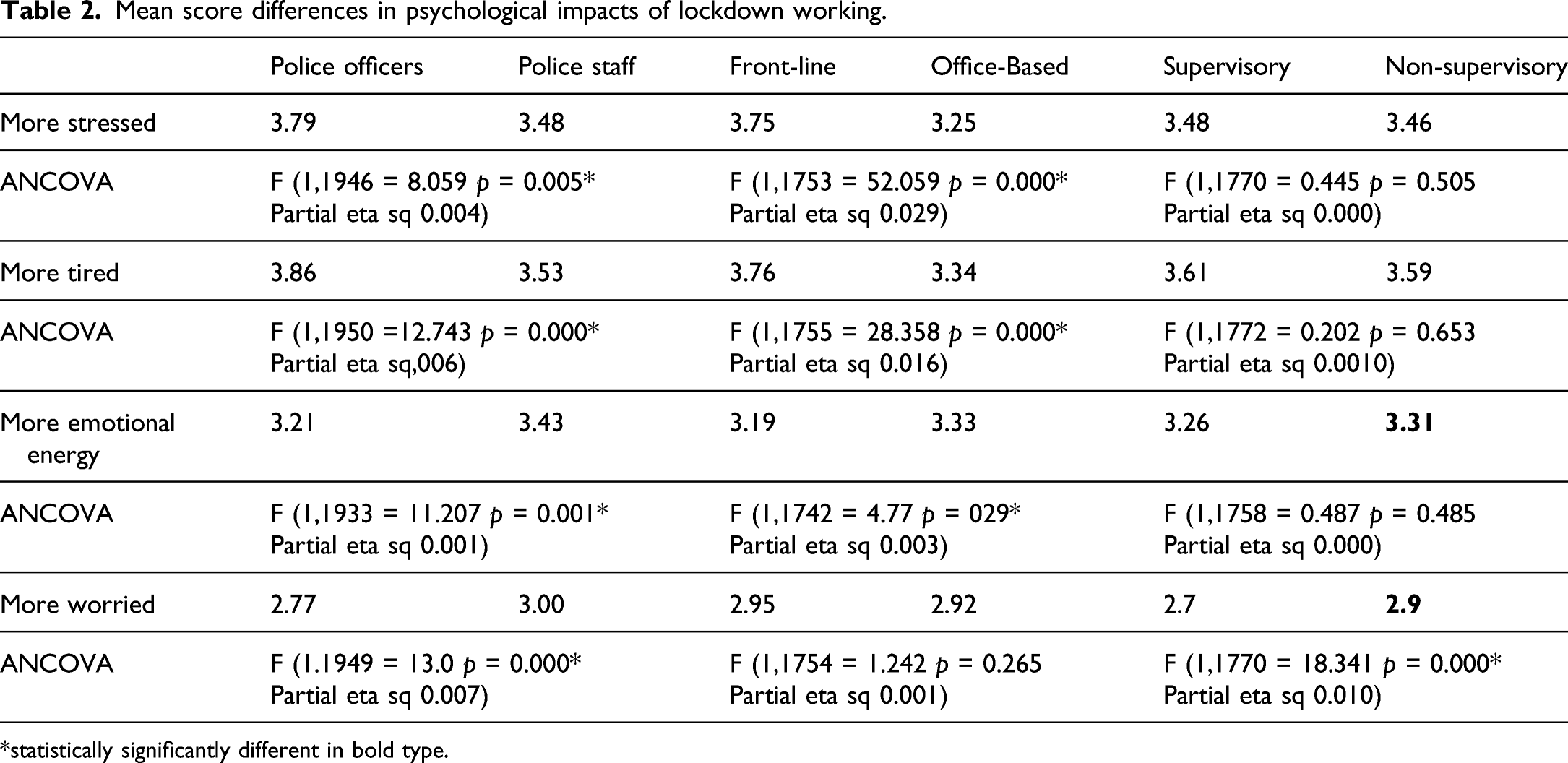
Overall, 59% of all respondents said they were more stressed during the lockdown than previously; 58% were more tired; and 25% said they had more reserves of emotional energy. Sixty nine percent were worried a lot or somewhat about the safety of their families.
Mean score differences in psychological impacts of lockdown working.
*statistically significantly different in bold type.
After controlling for these factors, overall, police officers reported being more stressed, more tired and having less reserves of emotional energy than police staff. The latter were more worried about the safety of their families than the former. All front-line respondents (officers and staff) were also more stressed, tired and emotionally depleted compared to office-based staff. Overall, seniority has less effect on reported adverse impacts; there was no difference in reported levels of stress or tiredness between supervisory and non-supervisory staff. Lower-ranked personnel were more likely to disagree that they had more reserves of emotional energy and were also more worried about their families during the lockdown.
Using the created typology combining the intersection of job category and work status, we explored psychological stress in more detail. This revealed that 32% of police front-line officers strongly agreed that they were more stressed during the lockdown than previously, compared to 28% of front-line police staff, 23% of office-based police officers and 21% of office-based police staff (chi square 71.13 p < 0.0001).
Comments derived from the open-ended questions revealed greater complexity of respondents’ stress experiences. Of note is the compound nature of those experiences in that job responsibilities interacted with the demands arising from COVID19 and personal circumstances. I felt very upset that I was actually given more work and responsibilities than prior to lockdown. This placed a lot of stress on me, especially whilst trying to juggle child care and home schooling. I feel like I was used because of low staffing levels to do roles that were not my responsibility. I felt extremely stressed and have really struggled to cope. I feel that there was extra pressure put on the staff remaining at work due to those who were self-isolating due to health implications. Staff were replaced with student police officers, who were unable to continue training due to COVID, this meant that the remaining custody staff also had to take on the role as tutor, which added to an already stressful work environment. I miss colleagues and the routine of practically going into work. This separates home and working life. It has been difficult to separate them during lockdown. We have been lucky with lockdown coinciding with good weather, going into the winter now I fear peoples mental health will suffer working from home as a result of not getting outdoors as much Absolutely love working from home. No daily commute adding 2 hours to my day, less pollution from me and no stress about parking issues. Quiet at home in my own office so less stress from noise and distractions. Able to manage a heavy workload within the Coroners service, files being completed well in advance of the predicted time scale. If quiet in the middle of the day can carry out household chores logging the time off on the time sheet so in theory doing a spilt shift being more productive for the police rather than sitting there and doing nothing in down time. Although this does not happen too often. Just love it!
Reactions to home working differed in that some respondents found losing the separation of home and work life difficult whilst others embraced being able to organise both from home.
We asked respondents whether they felt the lockdown was tougher for women compared to men. Overall, of all respondents 27% thought women had a harder time with only 1% thinking this was so for men; 72% thought it was equally hard for both men and women. More policewomen thought the lockdown experience was harder for women compared to police staff colleagues (36% and 24%, respectively, chi square 23.2 p < 0.0001). This coincides with the finding that overall, more police officers reported feeling stressed than police staff. The hardship experienced by women is exemplified by these comments about the additional burdens of childcare falling to them from two police officer respondents: I feel lockdown has highlighted the unequal share of childcare responsibilities within the home. Myself, and many of my female friends with young children, very much feel that our work came second to that of a male partner. I have noticed that I am taking the vast amount of responsibility in organising child care rather than my partner. There seems to be a lack of understanding of my need to commit to my job and it is always me that has to be flexible with my arrangements. I am lucky that my job role and supervisor are flexible enough to allow this to happen.
Work related impacts
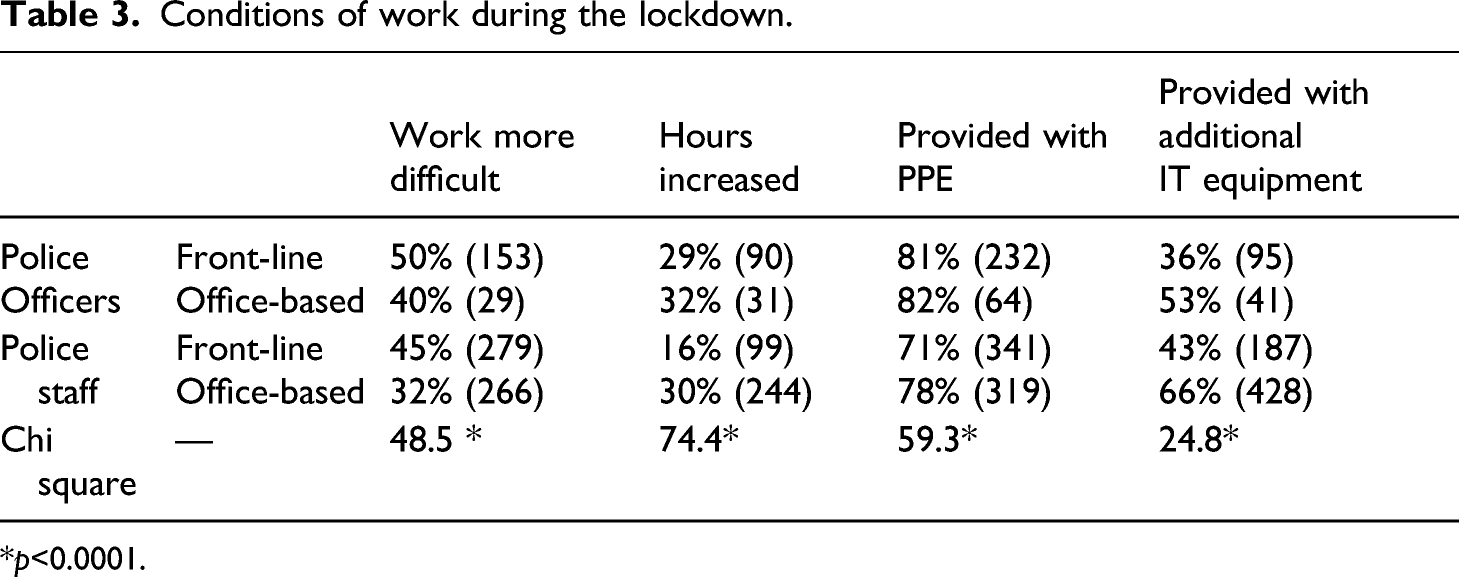
Conditions of work during the lockdown.
*p<0.0001.
The qualitative comments seem to indicate that some forces were initially slow in getting appropriate equipment to staff: I feel the force was also slow to react with getting PPE to the front line and offering support and guidance to front line officers who were still putting themselves at risk every day. I feel the emphasis was focused on the supporting departments who were working from home and those with children/dependants. My line manager was supportive and did what he could to help, but we were both working on common sense rather than any guidance. The pandemic caught us off guard and initially the Police Service failed to respond to the changes needed to keep staff safe in the workplace. Initially we were still sharing equipment including computers, mice and keyboards. We are still hot-desking in a 24/7 manned office, where the cleaner only visits once a week and never cleans the desk we are responsible for cleaning our own workstations before we start our shift. We have one shared kitchen space for a full floor of people that is cleaned once a day in the morning. Last week was the first time we were given maximum numbers allowed in each room. Comparing this to how my daughter has been treated who works in the private sector has been an eye opener. There appears to be a keen thinking of let’s return to ‘normal’ as soon as we can within my work colleagues. Our organisation was slow to organise IT equipment which initially made my job very unproductive and difficult. Once IT equipment was provided, it was much easier and less stressful to work from home. I will definitely look to work from home in the future and less time in the office
While it may be the case that there were many reasons for the shortage of equipment (global demand; distribution strain for example), it is the case that these officers experienced the shortage as stressful. The lack of perceived preparedness of police organisations and the sufficient availability of PPE were significant stressors for officers not just in the United Kingdom but elsewhere, particularly in the early stages of the pandemic (Frenkel et al., 2020; Stogner et al., 2020).
We also looked at the provision of webinars in which police officers/staff were involved. Before the pandemic these were little in evidence (10% had experience of virtual meetings and 8% webinars for training or briefings). These increased to 79% and 41% respectively during the first lockdown. These were not statistically different between the groups. When looking at training in the ‘four Es’, then front-line police officers were the most likely to have been given this (63%) compared to 41% of police staff front-line colleagues (chi square 44.7 p < 0.000). This could be taken as an indicator of greater priority being given to police officers than police staff serving in public facing roles. On the other hand, more office-based police staff received additional IT equipment than police officers.
Trust, communication and support – TCS
We employed our TCS index (which combined trust, supervisor and organisational support together with elements of organisational communication) to examine the links to reported stress levels experienced during the lockdown. Overall, as shown in Figure 1, the distribution of scores reveals a generally positive assessment of TCS with 58% of respondents scoring up to 14 that indicated strongly agree/agree across all seven items making up the scale. Distribution of trust, communication and support (TCS) index scores. TCS score (reading positive to negative assessment from left to right).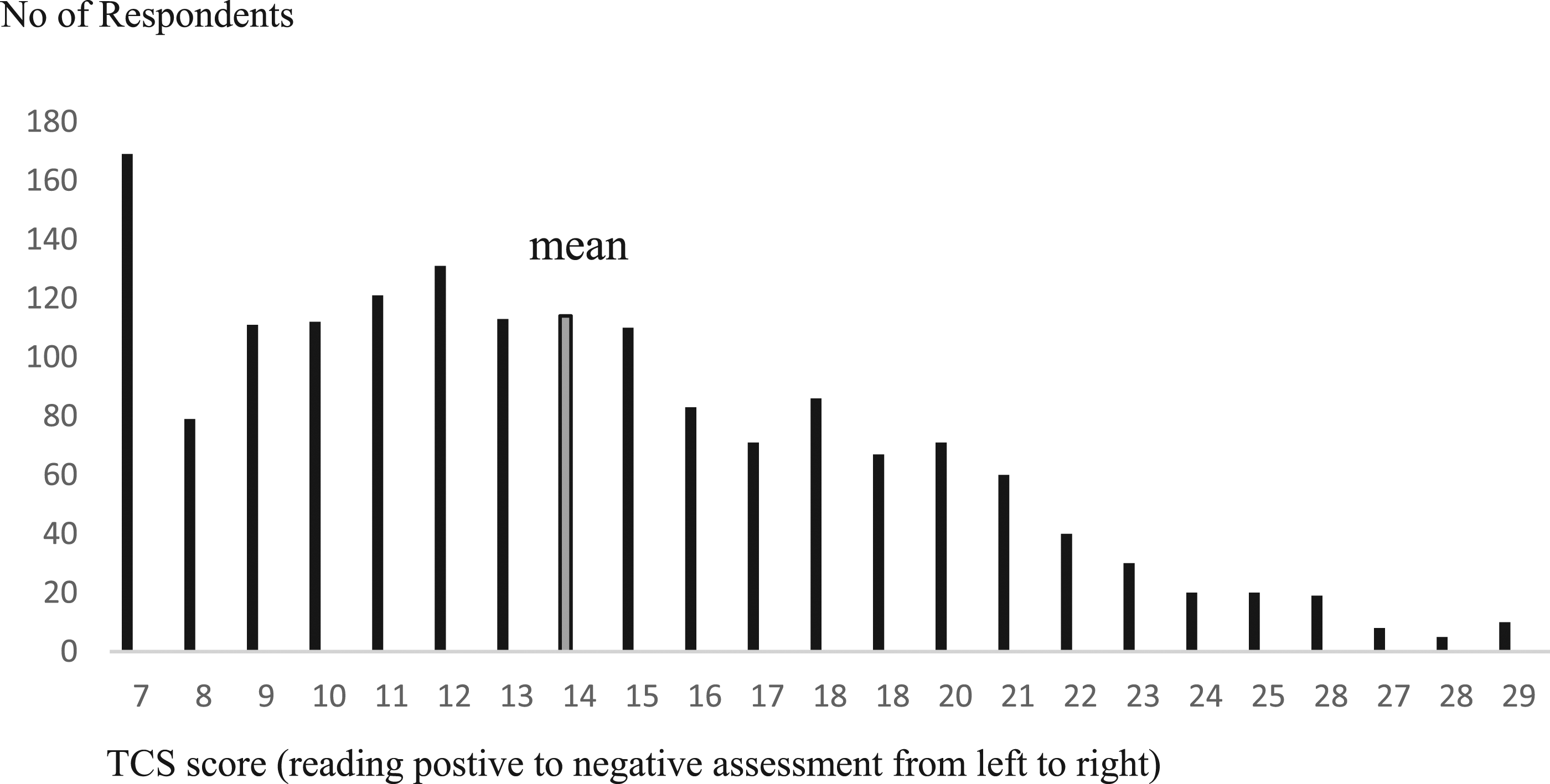
There were no statistically significant differences between police officers and police staff in their ratings of TCS. However, there was a significant difference between front-line and office-based staff (ANCOVA F (1,1434 = 16.880 p = 000 partial eta sq 0.012) with the former being least likely to believe in a positive orientation of organisational support. There is an overall statistically significant correlation (Pearson Product Moment = 0.318 p < 0.01) between TCS and reported stress levels. Those indicating a positive-orientated rating of organisational support reported least stress and those with a more negative orientation reported the most stress.
We calculated the reported stress levels for the four types of respondents by their working status in terms of whether their scores on our TCS index was positively, moderately or more negatively orientated (see Figure 2). This shows in all cases that there was an association between lower stress levels and assessment of a positive orientation for all group types. The type that had the highest stress levels in all three organisational support orientations were the front-line police officers. Office-based personnel (warranted or not) by and large were the least stressed across all organisational support orientations. Mean stress levels by assessment of positive, moderate and negative orientation on trust, communication and support (TCS) index. F-L = Front-line; O-B = Office-based.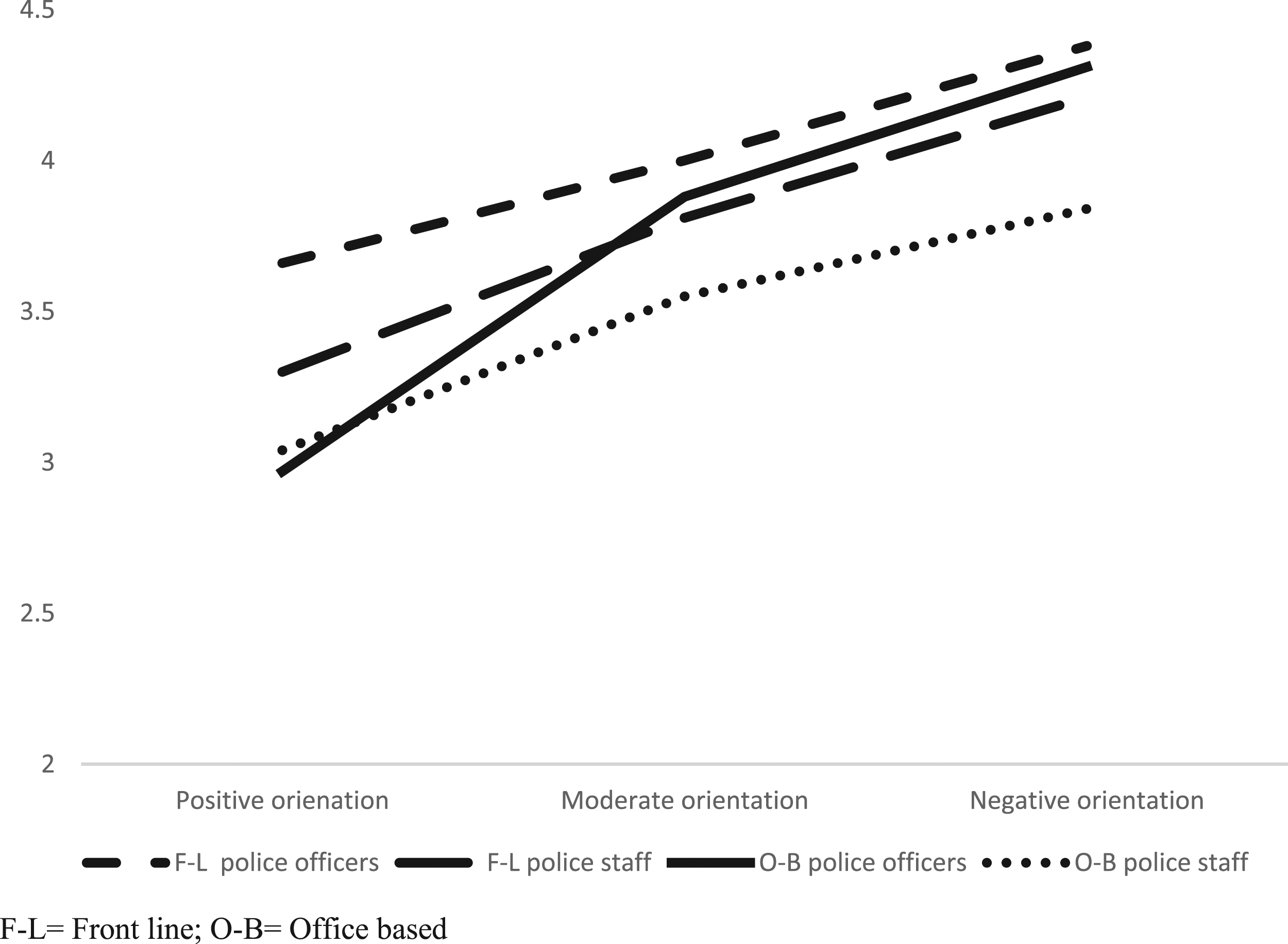
The differences in stress levels for groups rating organisational support positively was statistically significantly different (F (3) = 9.308 p = 000), as it was for those in the negatively rated orientation (F (3) = 3.908 p = 0.009). Those in each of the four categories who rated their organisational support as moderate did not statistically significantly differ in their stress ratings. Sheffe range tests indicated that in the positive assessment of TCS, police officers who were in front-line roles statistically differed from those in office-based roles. Similarly, front-line police staff differed in stress ratings from their police officer colleagues. In the negative orientation, the only statistically significant different groups were police officers in front-line roles compared to police staff who were office-based. In summary, where respondents rated their organisational support as poor, both police officers and police staff in front-line roles reported similar stress levels.
We can tease out a more nuanced reading of these quantitative results by looking at some of the qualitative comments: My force did not appreciate the stress I was under personally trying to manage the feelings of everyone including my children. Instead, the management decided to implement a new shift pattern (started sept) when no one even knows what childcare will be available to them over the coming months. My line managers has been outstanding however anyone above this has been disappointing. I have felt undervalued by my SLT
1
/Force - I have felt like my health and wellbeing has taken second place to the smooth running of my role - There has been a lack of understanding about exactly how much stress the staff have faced during this pandemic particularly as I am in a ‘high risk public facing role’ - Basically I feel like I am replaceable and should I get infected that would only be a problem for my SLT / Force - there has been no sympathy shown for not only the stress I have been under and my health but my family’s health has also been ignored - I would like to note that the approach my force took with assisting those staff who were shielding and clinically vulnerable was very supportive which reduced stress a great deal. I have felt isolated at times but i ensure daily contact with my team, but feel a little isolated in terms of interaction with my peers and line management. My stress levels have been greatly reduced and i feel i have a better work life balance than before - however I need to constantly check myself in this regard as it is too easy to become a slave to the laptop - working from home needs some discipline to ensure activity levels and interaction with others is maintained. I am definitely more productive and i am finding that my flexi hours are not building up so much as they did in the past
These observations not only confirm that front-line participants, both police officers and police staff, felt stressed, but also revealed the importance of direct supervisor support and a sense that the organisation as represented by more senior officers/managers were less caring.
Future impacts on working practices in post COVID recovery
Expectations in the post-COVID world.
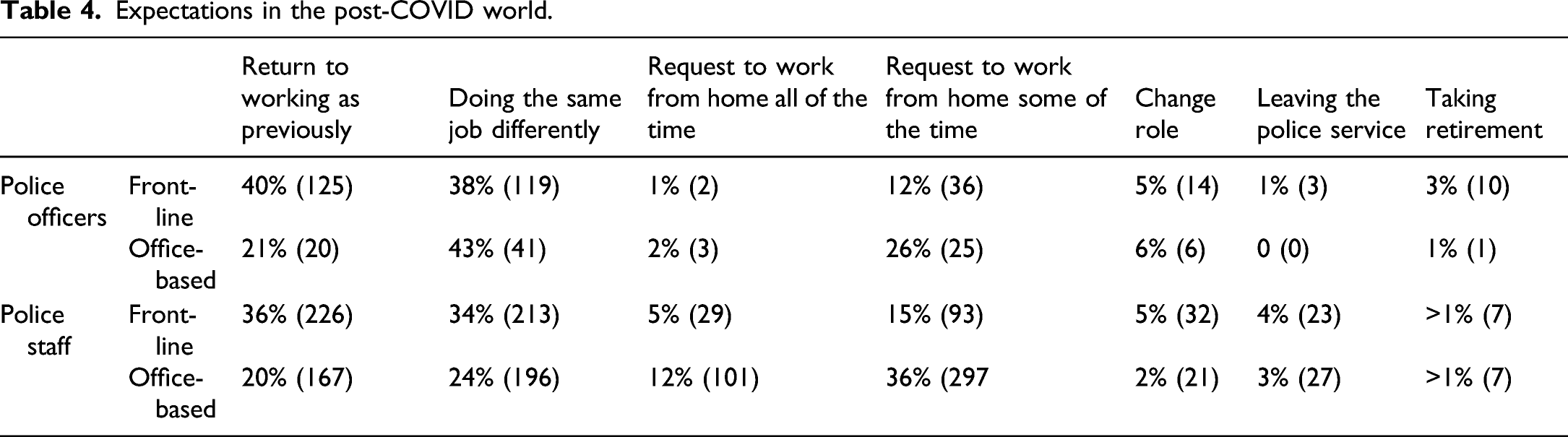
We asked respondents what innovations they felt they would like to retain once working life returned to ‘normal’ post-COVID. We themed open ended comments in the survey through NVivo. Five broad themes were derived from the first question about ‘new ways of working’. These are listed below with sample quotations from the qualitative comments: 1. Overwhelmingly, working from home (or at local sites) was favoured by participants as an initiative worth keeping in the post-COVID recovery The ability for the more vulnerable people to work from home - they have been completing crime reports and the odd intel submission. This has meant that the Criminal Records Bureau queue is sometimes very low, which means more time for the other jobs that we undertake. They have no interruptions and are able to complete the reports in a very timely manner. I don’t see why this can’t happen more often - seems like a good way to work. 2. Flexible/Agile working – with some form of blended home working and going to work if necessary Within my role, although the majority of it is front line as we are a specialised Team (tactical support team) I feel there could have been more flexibility and the offer of working from home, even just a few hours on occasions when paperwork and admin could have been completed at home. 3. Increased use of technology for work, internal/digital communication, public reporting, multi-agency telephone conferencing, online training/courses Skype for interpreters, saves time waiting for one in person as they can be used immediately Virtual meetings are much more useful and will save travelling time in the future. Would like to keep these. Bodyworn video suspect voluntary interviews as it was easier to get everything completed as quickly as possible. The additional process of being able to take witness statements over the phone has been heavily used to great effect when detainees are in custody or there are staff members that are working from home. 4. Managing incidents better without necessarily physically deploying staff Better management of calls coming in - being braver at telling the public that we would not be dealing with their ‘complaint’, when it was not about a policing matter (we managed the demand much better and ‘held the line’ on issues that are not within our remit) when lockdown began, we diverted a lot of demand to telephone resolution, and simply explained to people that we would not be attending During lockdown we were able to send more incidents to the Triage Hub rather than being deployed to and I think some of these are better placed with the Triage Hub, most noticeably was some domestics being taken on by Triage Hub rather than being managed by the control room. 5. Regular sanitisation and cleaning of work spaces/retain stringent hygiene practices at work Access to antibacterial wipes and hand sanitiser Cleaning of desk area, whenever desk area vacated sanitised, keyboards Vehicles cleaned and sanitised after use, vehicles finally felt clean to sit in More comprehensive cleaning routine
Discussion
This paper supports the established view across many disciplines that organisational support, in particular notions of trust and socio-emotional support and effective communication, is associated with decreased levels of employees’ stress. Our results align with Rooney and McNicholas (2020) who reported that perceived lack of support from their organisation by police officers in the Republic of Ireland compounded stress already elevated by policing virus restricting regulations. Baseline levels of reported stress were already relatively high in UK policing. In 2014, a stress survey of police staff by UNISON reported that 32% of police staff were stressed and 62% moderately stressed. The main reasons cited were increased workload, uncertainty over job security, concerns about cost of living and lack of support from management. The Police Federation’s Demand and Capacity Welfare Survey (2018) (Elliott-Davis 2018) indicated that 79% of officers said they had felt feelings of stress and anxiety within the previous 12 months, with 94% saying these difficulties were caused or made worse by their job. In the present analysis 67% (29% strongly agreeing) of women police officers and 57% (24% strongly agreeing) of women police staff said they felt more stressed than previously. In part, the COVID restrictions meant that 32% had responsibilities for home schooling their children and 42% said their workload of managing their homes in terms of domestic labour had increased. Workloads had also increased, as had working hours. A significant change was in the 38% of respondents who worked from home. Over half (57%) of office-based police staff worked totally from home. One in six police staff engaged in front-line roles remained at work compared to 52% of their police officer colleagues.
Drilling down into the qualitative comments in this study revealed the importance of clear instructions, material interest in the staff members’ and officers’ welfare and well-being and an appreciation of increased work and home burdens. This support was critical at the level of senior management teams as well as first line management. It is clear that the COVID-19 lockdown has had a profound impact on police officers/police/staff personal well-being and working life as exemplified by the few empirical surveys currently available. Frenkel et al. (2020), for example, observed that women in particular report high stress levels. Around six out of 10 of all our women respondents in this research strongly agreed/agreed that they felt more stressed in the lockdown than previously.
There were some differences between police staff and police officers in terms of the availability of equipment. Two thirds of police staff who were office-based said they were provided with additional IT equipment compared to just over half their equivalent police colleagues. When it came to PPE however, the situation was reversed with more front-line police officers being supplied with PPE compared to police staff colleagues who were also working in front-line roles. Similarly, proportionately more officers were given training in the 4 “Es” than police staff colleagues.
Previous research (e.g. Betts and Farmer, 2019) indicated a sense of ‘officer centricity’ experienced by police staff. Our research results revealed some commonality in experience between police officer and police staff front-line colleagues. So although police officers overall were more stressed than police staff, the picture is a little more complicated if role is also considered. Police officers who held support functions were the least stressed of our four types. Moreover, front-line respondents (whether staff or officer) reported more stress than those (staff or officer) in support functions. So the critical feature here is being in an interacting public facing role. Our qualitative data indicated some of the difficulties of ‘four Es’ as one front-line police officer graphically portrayed: All we got was abuse, assaults and media criticism. We were expected to stop people spreading the virus - with no PPE, and being spat at. people are stupid and most of the people who were misbehaving in lockdown didn’t care about anyone else - we were exposed to higher risks than NHS, and yet had to then go home and manage the changed world in our own private lives. it was hideous. it still is. Yet we have all carried on because we do and always do. My working life has been much harder and more stressful and relentless and more demoralising than I have ever experienced. we are asked to do things we cannot, and we get criticised for ‘failing’ to do what we are expected to do, but that we have neither tools nor powers nor ability to do - and the public are becoming more hostile, more rude and abusive and more selfish and uncooperative. it is grim out there and the upper ranks clearly have little idea of what we face on a daily basis.
Conclusions
There is little doubt that the COVID-19 lockdown has had a profound impact on police officers/police staff’s personal well-being and working life as exemplified by the few empirical surveys currently available. Frenkel et al. (2020), for example, observed from their international survey that officers experienced delays in provision of virus protection equipment and deficiencies in communication (both its lack and overload as stressful). Their officer sample wanted more support and better internal communication. From our measure of TCS which related to the trust and support respondents experienced, where this was lacking, greater levels of stress were reported. Interestingly, under conditions of a negative orientation towards TCS, front-line police officers and their front-line police staff colleagues report similar stress levels.
Rhoades and Eisenberger (2002) argue that where employees perceive positive organisational support and where their contributions are valued in the workplace, they are likely to reciprocate such support by higher commitment to the organisation and increased performance. Earlier, we noted the salience of fairness and the quality of treatment between managers and employees as pivotal to positive organisational support. This is particularly the case where decisions are made on behalf of the organisation without consultation, and trust between employees and management is paramount. In our study, two thirds of respondents in office-based roles (both police officers and police staff) indicated that they had a positive orientation to organisational support. Front-line police staff were the most likely to indicate a negative orientation to TCS. It seems paradoxical that police forces hitherto disinclined to be supportive of flexible or home working apparantly paid greater attention to these new working arrangements to the neglect of their front-line staff remaining at work. Respondents, both police officers and police staff, welcomed this newfound enthusiasm for more flexible working arrangements. There was positive endorsement to retain these practices in the post COVID era. Additionally, the exigencies of the pandemic made managing public demand more effective and ideas of triaging calls and routing enquiries to other agencies an attractive practice worth retaining. Respondents were also keen to retain virtual methods as one way to continue to do their jobs in a different way.
It is recognised that limitations to this study lie in the convenience sampling and its cross-sectional design. We were limited in the numbers of police officers we were able to contact which contributed to the disparity of numbers. We controlled for this statistically by adopting ANCOVA models. As a contemporary snapshot of officers and staff reactions to the first lockdown, we feel this has some important indicators for supporting staff during subsequent ones and learning the lessons for post COVID recovery (or indeed, further lockdown periods). We also acknowledge that there are published scales to measure POS (Rhoades and Eisenberger 2002), but we wished to construct a bespoke scale that contextualised experience during the pandemic and add a trust component to organisational support. Our scale combined trust with relevant aspects of organisational justice and perceived organisational support and had an acceptable reliability which justified its use for the present analysis. A particular strength of the study was the comparison by role (front/facing or office based) and personnel (officer or staff) which adds to the small number of papers taking civilian staff in policing into account.
In the worst public health crisis for decades, police in England and Wales are facing increased workloads, difficult public policing encounters and concerns about personal safety and wellbeing. This paper has shown that it is crucial that both police staff and police officers, particularly those with public facing roles should feel supported and trusted by their direct supervisors, senior management teams and their force through effective communication. Evidence presented here suggests that where this is not the case then personnel do suffer greater levels of stress.
Footnotes
Acknowledgements
The authors wish to thank Unison and the Police Federation of England and Wales for their assistance in distributing this survey and to the two anonymous referees for their helpful advice
Declaration of conflicting interests
The author(s) declared no potential conflicts of interest with respect to the research, authorship, and/or publication of this article.
Funding
The author(s) received no financial support for the research, authorship, and/or publication of this article.
