




Abstract
This study follows on previous research which investigated the comfort and types of bras worn by UK female police officers when wearing body armour and performing typical activities. This controlled study involved a cohort of 31 female police officers and investigated three main areas. Firstly the effect of professional bra fitting on size and comfort, secondly the effect of wearing an underwired bra or a sports bra on comfort and ability to perform certain actions, and thirdly the effect of an underwired bra and sports bra on key anthropometric data in relation to the fitting of body armour.
Keywords
Highlights
77% of participants were resized for an underwired bra and 87% for a sports bra
Cup size or under bust measurement does not influence where participants identified areas of rubbing and/or discomfort when wearing body armour
Bust to bust length, chest circumference and bust prominence are all statistically significantly greater for an underwired bra than a sports bra
71% of participants identified that when wearing a body armour, they will now be wearing a sports bra
Introduction
A previous study identified that within the Police service of England and Wales, female police officers wore a range of bras under body armour, with the predominant types being underwired and sports bras (Malbon et al., 2020). This paper further investigates the effects of both underwired and sports bra on comfort and fit of body armour for female police officers within a controlled group of serving female police officers.
Literature review
Within the Police service of England and Wales, female police officers make up 33% of the work force and are routinely issued with ballistic and/or knife resistant body armour suitable for their role (Home Office, 2019a). This body armour can be from a variety of suppliers and designs dependent upon individual police forces. However, all body armours supplied have been tested against and comply to the minimum performance specification defined in the UK Home Office standard for body armour (Payne et al., 2017). This standard includes several tests specific to body armour designed for a female form (known as formed armour).
Previous work has demonstrated that female police officers found body armour uncomfortable to wear, particularly around the breast area, and some actions such as self-defence techniques and driving a car were difficult to perform (Malbon et al., 2020). An investigation into female British soldiers wearing the OSPREY armour system, reported similar findings (Davis et al., 2020). This study identified that female soldiers experienced challenges in carrying out basic movements and being able to access personnel equipment worn on the person. However, they identified that OSPREY armour was originally sized based on male anthropometric data and was therefore not idealised for female anthropometric dimensions. While military and police body armour are designed to protect against different threats, the reported issues are similar in the both the studies identified, providing additional evidence that body armour for female wearers is not optimised.
The issues with personal protective equipment (PPE) not being designed or optimised for females is not unique to body armour. Research by McQuerry et al identified issues with apparel and PPE for female firefighters (McQuerry et al., 2019). They clearly identified that most of the personal protective clothing had been designed around male anthropometric data, which results in a lack of protection and a decrease in mobility. Within the construction industry, research has shown that PPE is similarly focused on male anthropometric data, resulting in badly fitting PPE, exposing female workers to additional safety hazards (Onyebeke et al., 2016).
This highlights further the issue that for previously male dominated roles, PPE must develop to cover a wider perspective of users, not only for variances due to gender, but also ethnicity.
The wearing of body armour and the limitations and discomfort this can cause to the wearer may be compounded for female users by additional factors, such as correct sizing and type of bra, bust size and changes to the natural properties of the body associated with ageing and physical condition (Coltman et al., 2017). Within the police service, armour that is tailored and issued to female officers has been available and tested in the UK since 1995 (Pettit, 1995).
Although female armour testing has been around since 1995 in the UK, the development of body armour designs for the female form has not progressed. Limited research has been published in the open literature into understanding factors which may affect the comfort and wearability of body armour.
The size and type of bra an officer wears are outside the control of the designer of a body armour. However, it may influence the key anthropometric dimensions of the bust depending on style and type of bra (Daanen, 2006). Within the open literature, there is little evidence regarding the effect of bra size on comfort under body armour. However, research into the effects of ill-fitting bras leading to the development of musculoskeletal pain inhibiting women from participating in physical activity does provide an insight into one potential issue (McGhee and Steele, 2010). The research determined that 85% of the participants in the study were deemed to be wearing the wrong size bra, causing pain during physical activity. However, they did not determine if correct fitting bras decreased the incidence of musculoskeletal pain.
Traditionally, in the UK, bra size has been determined by the relationship between the under bust and chest circumference measurements, giving a band size measurement and a cup size denoted by a letter. This cup size is determined through the difference between the under bust and chest circumference measurements (BS EN 13402-3, 2017). The more common method for determining bra size by professional fitters involves the assessment of the bra when worn to determine best fit for an individual.
Professional fitting and guidance for females when selected and adjusting bras has been shown to improve comfort (McGhee et al., 2010). A further study compared the use of professional bra fitters to the standard method of measuring describe above to determine the best method to provide optimal comfort and fit in an underwired bra (White and Scurr, 2012). This study determined that there were significant differences between the traditional and professional ‘best-fit’ bra sizes for a cohort of 45 participants, especially for larger bra sizes. However, this study did not identify if the professional ‘best-fit’ bra fitting gave an improvement in comfort or support for the participants.
While there is some evidence in the academic literature to suggest a large proportion of women are wearing the wrong size bra, more has been reported through the general press with reports stating that 70 to 100% of women are in the wrong sized bra (e.g. Davis, 2018; Moss, 2016; Perling and Colizza, 2019). While this does not necessarily have a scientific grounding, it does indicate that bra size may need to be consider as part of the approach to improving the comfort and fit of body armour for female police officers.
The design of individual parts of a bra may also affect fit, particularly for females with medium to hyper trophic (large) breasts (Coltman et al., 2018). They determined that the design and sizing of the underwire and front band of bras were poor, which may affect comfort and fit. This work did not consider the professional fitting of bras and how shape and form may influence the design of the bra that is best suited to an individual.
Breast pain has been associated to age, larger bra cup size and lower levels of physical activity (Scurr et al., 2014). Although this work was based on data collected from the general population and not by occupation. A significant correlation was reported with reduction in skin thickness from the age of 45 years and a decrease in breast skin elasticity from the mid 20’s years of age, reducing natural breast support (Coltman et al., 2017). While no data is available in the open sources related directly to the age range of female police officers, general data shows that over 44% of police officers in England and Wales are over 41 years old (Home Office, 2019b). It can be assumed that a percentage of these will be female and may be a factor associated with comfort of police body armour.
Physical activity without appropriate breast support has been linked to increased levels of breast pain particularly for larger breasted females (White et al., 2015). This work focused on upper kinematics during running and did not consider body armour or other clothing. It did establish a link between breast movement during activity and the need for greater breast support. This is of significance for female police officers when involved in physical activities such as self-defence.
The review of the literature highlights that there is not one factor that influences breast pain, but several factors that need to be considered to improve the comfort of female police officers when wearing body armour. The effect of different bra types also needs to be considered and how this may affect how the body armour fits the female form by understanding the key anthropometric dimensions.
The aims of this research are To determine if a professional fitted underwired or sports bra has any effect on the comfort of a female police officer while wearing body armour To determine what affect different bra types, have on key anthropometric data and how this may affect the sizing of body armour for female officers.
Method
A study was developed consisting of four parts Recruitment of female police officers to participate in the study A professional bra fitting session and the supply of an underwired and sports bra that were both best fit and style for the participant A 3D body measurement scan of each participant in the underwired and sports bra The completion of a three-part survey, pre-fitting and then post-fitting wearing each of the bras for a minimum of 10 shifts.
Ethical approval for the study was gained from (citation redacted to protect the blind-review process). Participants were provided with a briefing and provided informed consent for the study and were able to withdraw at any stage.
Recruitment of participants
Working with the local area representative from the Police Federation of England and Wales (PFEW) for Bedfordshire, Cambridgeshire and Hertfordshire Constabularies, female police officers were asked to volunteer to participate in this study. The study was supported by the Chief Constables of each police force involved, enabling the officers to attend bra fitting, and scanning during work time.
The following criteria were used in the selection of the participants for the trial willing and able to attend a professional bra fitting at either the Peterborough or Cambridge John Lewis and Partners department store
1
during a specified 1-month period willing and able to attend Cambridgeshire Constabulary Police Headquarters on 1 of 2 days for 3D body scan wearing only the bras supplied on their torso and willing to wear both bras for 10 shifts each under their normal uniform and body armour and complete a questionnaire.
The officers were not paid for participating in the study, but they were able to keep the bras supplied at the completion of the study.
The final selection of officers was completed by the PFEW representative resulting in a cohort of 31 participants.
Bra fitting
A previous study identified the most common styles of bras worn by police officers under body armour were underwired (71%) and sports (17%) bras (Malbon et al., 2020). For this study, each participant attended a professional bra fitting session and was fitted for a new underwired and sports bra. The participants did not necessarily see the same fitter; however, each fitter had been trained to the same standard by John Lewis and Partners and the following guidance was provided fit for an underwired and sports bra that is the best fit regardless of manufacturer and ensure the participant is comfortable and aware of how to adjust the bras for best fit.
At each bra fitting session, the fitter recorded the bra size, type, and stock number for both the underwired and sports bra selected. The participant was not issued with the bras at this time.
3D Body measurement scan
All participants were scanned in the near nude state using a Sizestream 3D scanning system 2 to provide a full body scan.
On arrival for scanning participants were issued with their two bras and assigned a unique ID. The bras were in new condition with sales tags still attached and had not been laundered.
The participant was provided with the following instructions on how to place themselves in the 3D scanner, shown in Figure 1, when they were ready to be scanned Stand upright facing forwards Feet, shoulders width apart centred on the reference line running perpendicular across the scanner floor Arms running parallel to the torso with the hands holding sliding adjustable grips, ensuring the arms remained straight throughout the scan
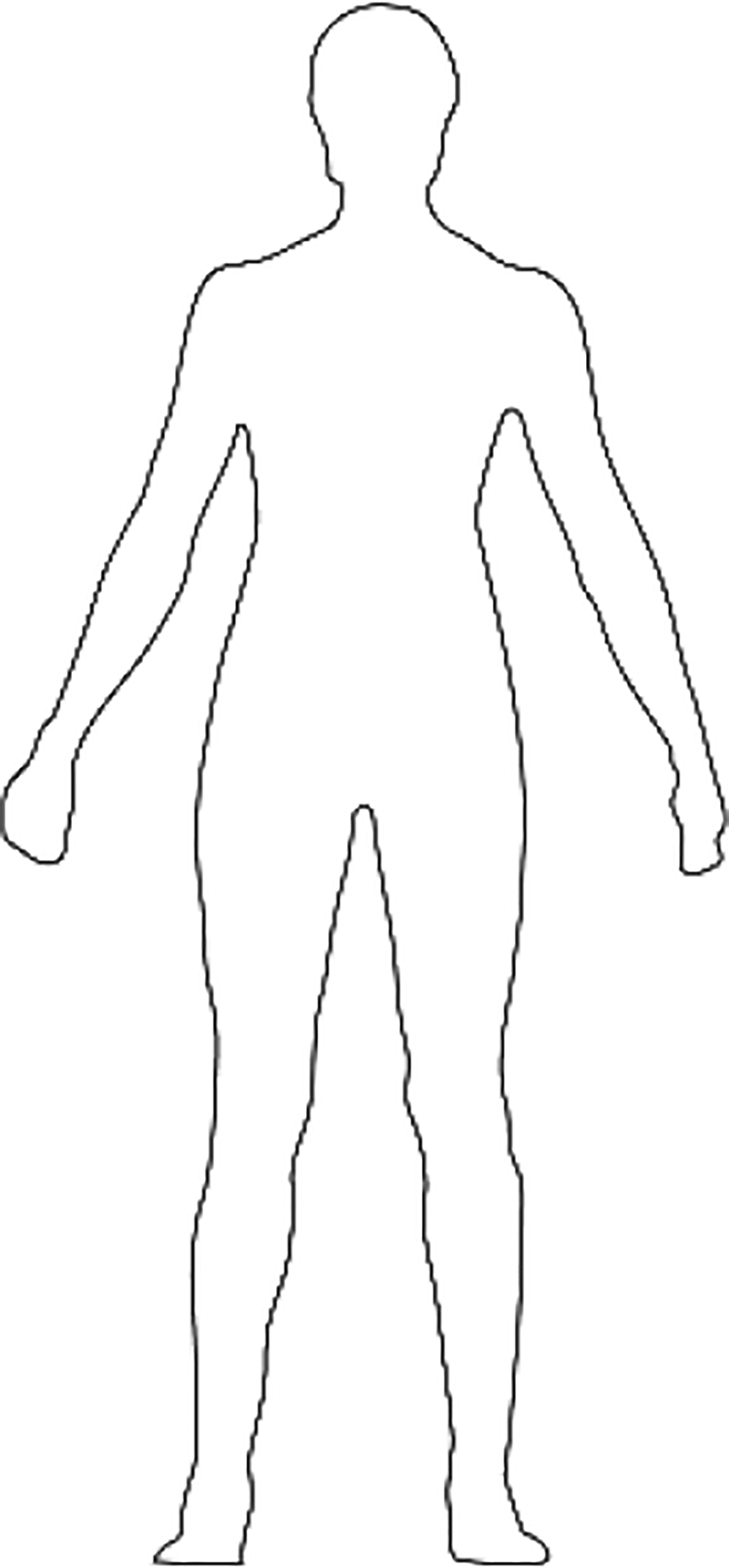
Posture adopted within 3D scanner.
For this study, participants were requested to remove their torso clothing and tie their hair up (if long). If the participant was wearing a skirt, they were asked to remove this for the scan to enable the system to acquire reference point from the crotch area, otherwise lower garments remained on during the scan.
On entering the scanner, the participant changed into one of the bras, placed themselves in the correction location and standing posture, confirmed which bra they were wearing, and they were ready to be scanned. On completion of the first scan, the officer changed into the second bra and the process was repeated. Each scan lasted approximately 3 seconds.
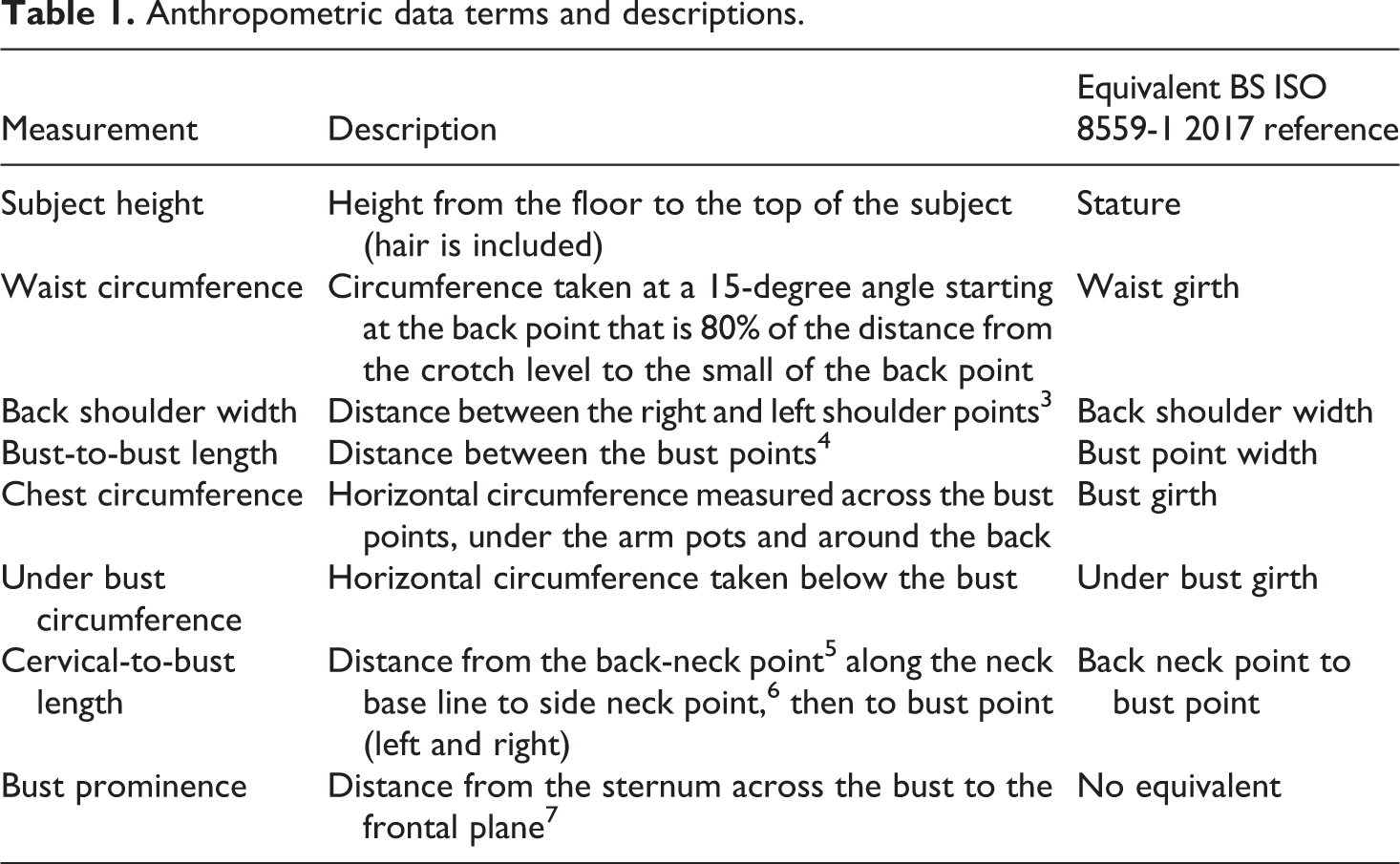
The measurements listed in Table 1 and shown in Figure 2 were recorded for each scan taken. Circumference measurements followed the contours of the body, height measurements were straight line distances.
Anthropometric data terms and descriptions.
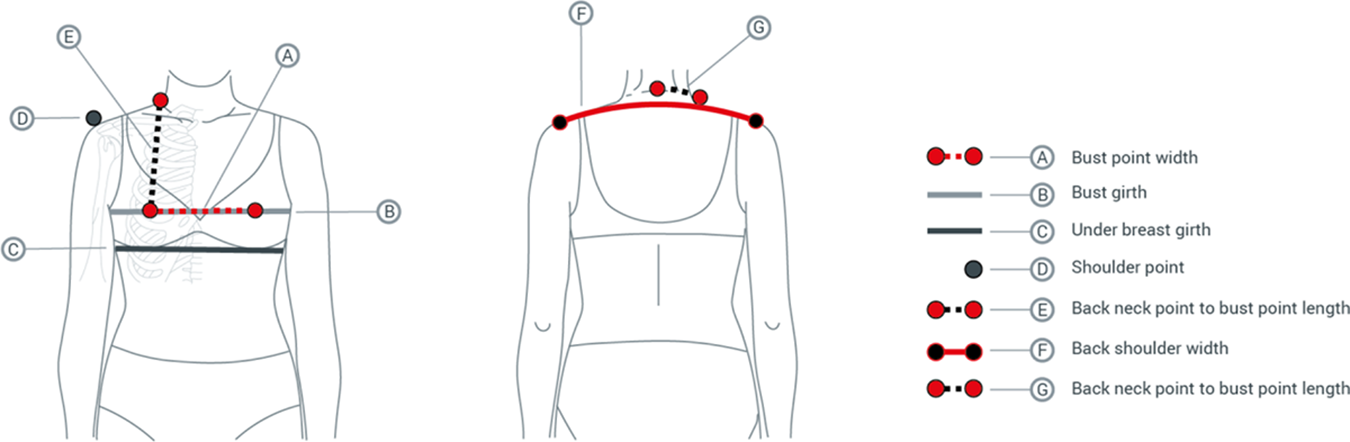
Anthropometric measurements.
Survey
A three-part survey was developed to capture relevant information at the following points in the study: pre-fitting of new bras to establish a baseline for each participant involved in the study post-fitting first bra after 10 shifts post-fitting second bra after 10 shifts
The survey was conducted using a web-based survey tool.
8
After completing the wearing of both bras, the participants were asked to answer two further questions What bra did you personally find most comfortable? What type of bra will you use from now on?
Data analysis
All data from the 3D body scans and post analysis were recorded in millimetres and rounded to the nearest integer. Where left and right hand side measurements were taken, a visual check was conducted to ensure the results were similar, differences greater than 50 mm were investigated and where they could not be accounted for all data for that participant was removed from the analysis.
All statistical analysis was conducted using SPSS. 9 For the paired sample t-test, checks for normality of data were conducted prior to analysis, ensuring no outliers and the data was normally distributed using Shapiro Wilks test for normality (p > 0.05)
All data collated for this paper can be accessed here (to be added prior to publication)
Results
Of the initial 31 participants who attend for bra fittings, 29 attended for a 3D measurement scan and completed the pre-fitting questionaire. Of these, after post scanning extraction of measurements, nine contained erronous data, where the body scanner was unable to determine the correct anatomical landmarks. The measurements for these participants were removed prior to analysis. Of the participants who completed the initial questionaire, 15 completed the survey post-fitting of the underwired bra and 19 post-fitting of the sports bra. Of these 12 participants completed both surveys.
Bra fitting
The largest number of participants, 38% (n = 11) stated they had been fitted for a bra in the last 2 years. The second largest was 24% (n = 7) who said they had been fitted for a bra sometime in the last 5 years. However, 14% said they could not remember when they were last fitted.
The distribution of UK bra sizes for pre-fitting and post-fitting for underwired and sports bra is shown in Figure 3 (n = 31). The distribution of UK bra cup size is shown in Figure 4. A summary of the data is provided in Table 2.
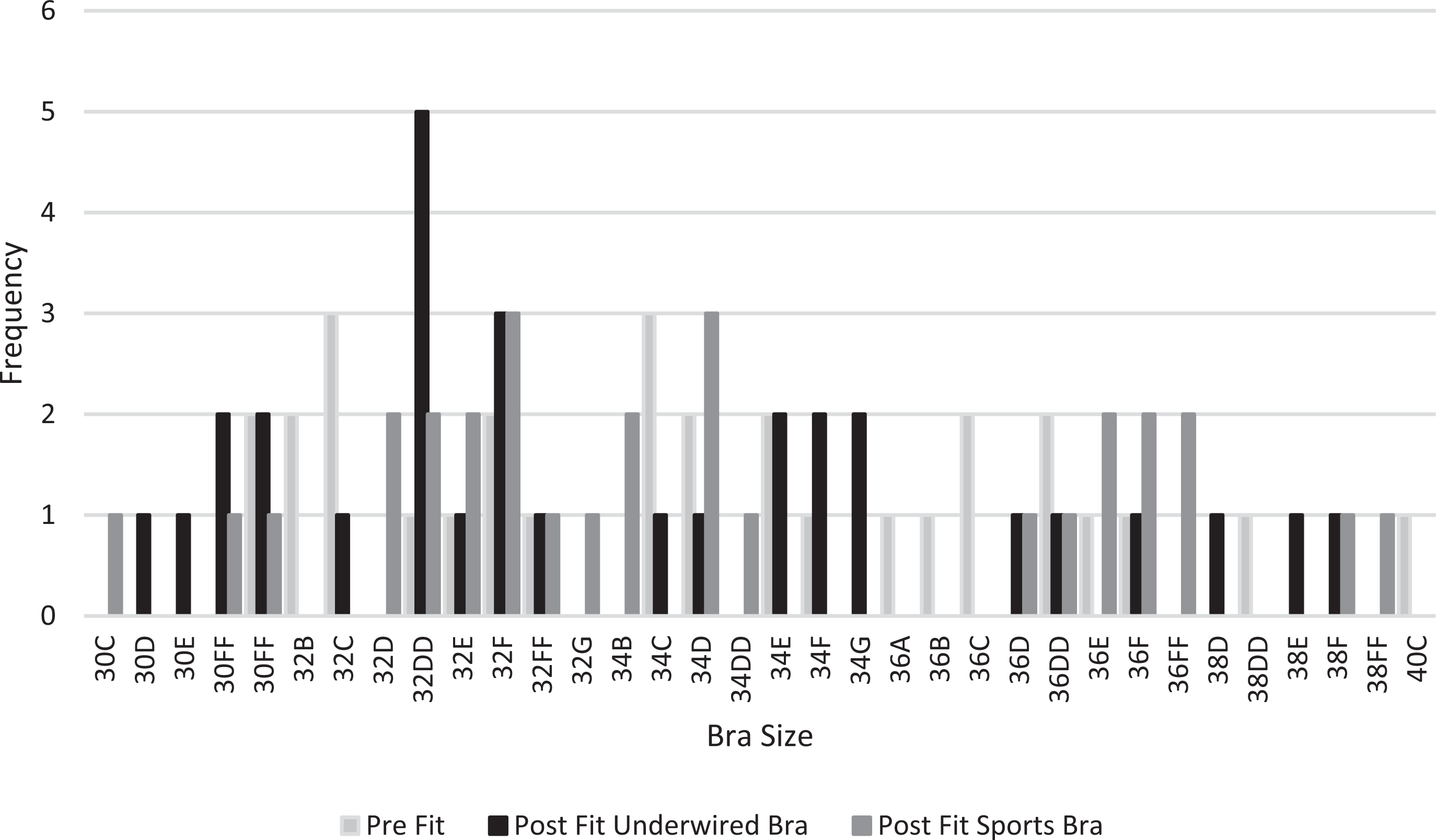
Pre and post-fitting UK bra size distribution.
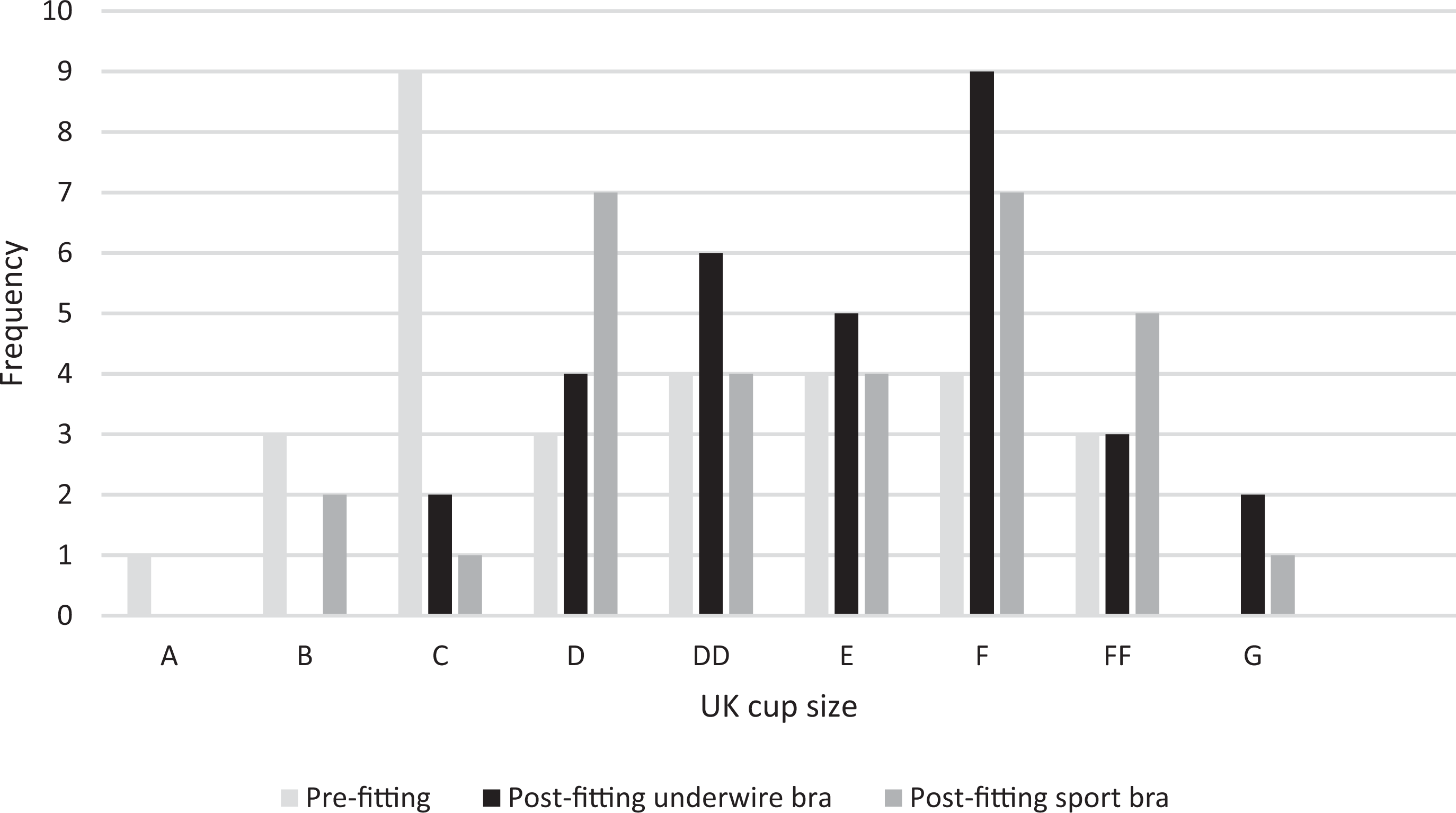
Pre and post-fitting UK Bra cup size distribution.
Summary of data of bra fitting outcomes.
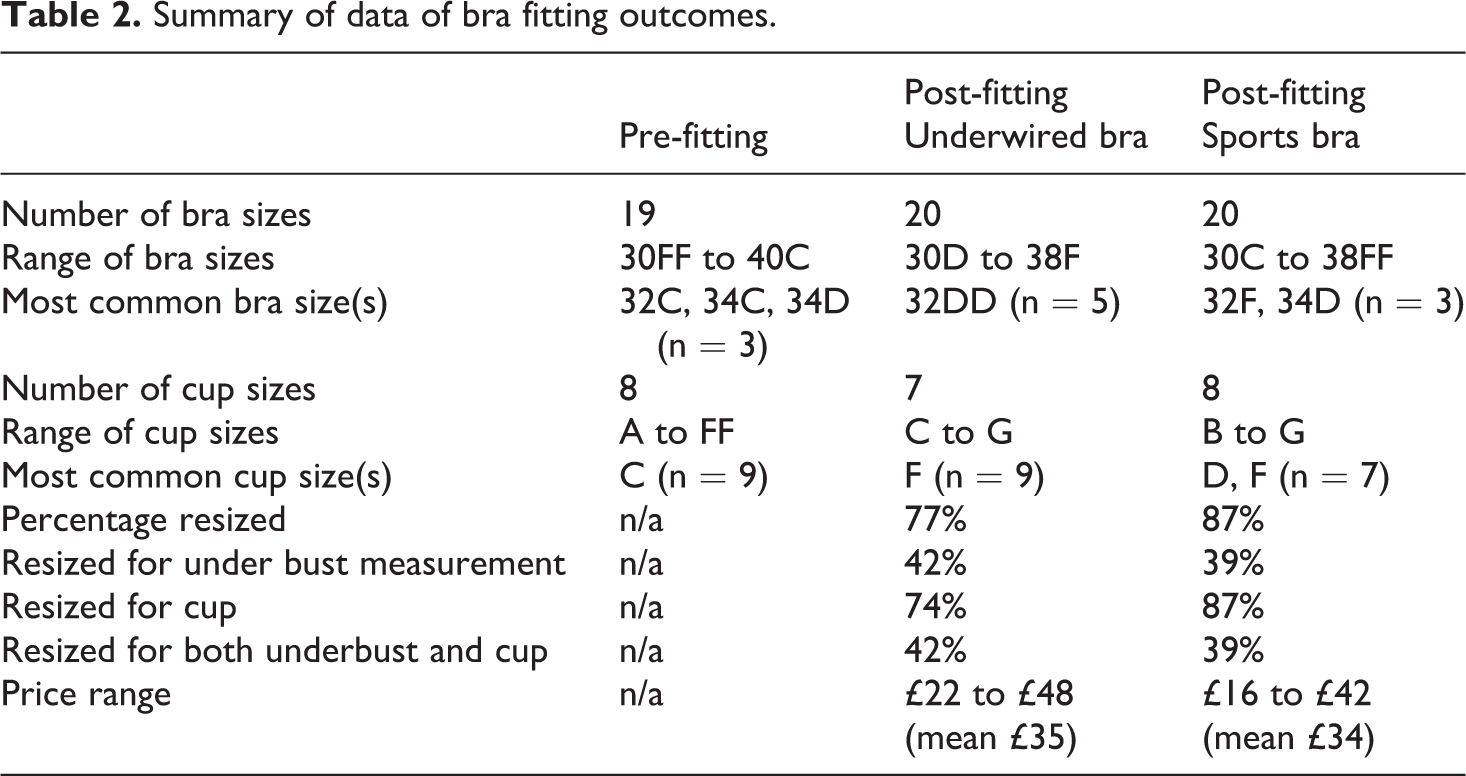
After professional fitting, 77% of participants were resized for an underwired bra and 87% for a sports bra, with the majority being resized for cup rather than under bust measurement. The resizing of the participants predominantly moved the range of cup sizes upwards, with no A cups or lower being supplied. There was a slight increase in the number of different bra sizes issued with a downward shift in the larger sizes.
Across the two bra types the mean price was similar, however price was not used in this study as a factor and is supplied for reference only.
3D Body scan measurements
The measurements listed in Table 1 were obtained for both bra types from the 3D measurement scans using the scanner system software. 10
Participant baseline anthropometric data
For each participant, their height, waist circumference and shoulder width was recorded (Table 3).
Summary anthropometric data.
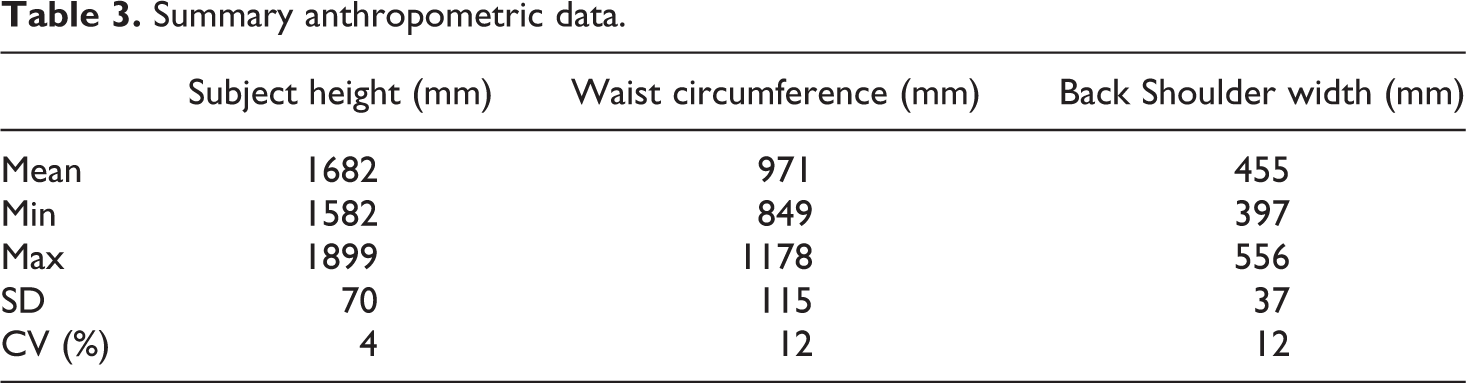
The baseline data demonstrated that the participants represented a range of body size and shape.
Bust to bust length
For each participant the bust to bust length was measured when wearing the underwired and sports bra, Table 4. A paired samples t-test was conducted to determine if there is a statistically significant difference between bust to bust length between the underwired and sports bra.
Summary data – Bust to bust measurement for underwired and sports bra.
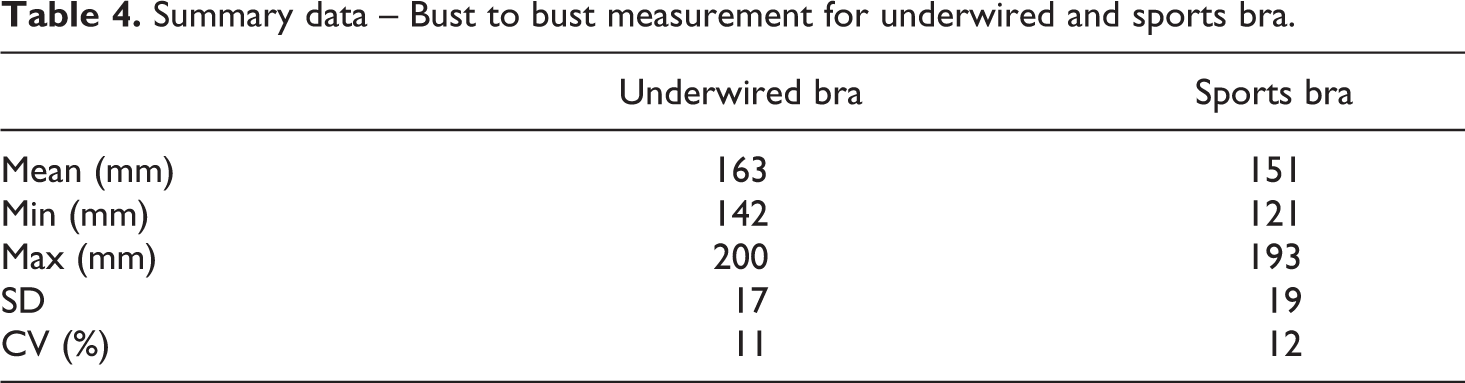
The paired samples t-test identified that when wearing an underwired bra that there is statistically greater distance between the bust points than in a sports bra, t(19) = 2.729, p < 0.05. This means that the breasts are held further apart when wearing an underwired bra compared to a sports bra. This difference may impact on how the armour sits across the breast and any airgaps that may form under the armour between the left and right breast.
Chest circumference
For each participant the chest circumference was measured when wearing the underwired and sports bra, Table 5. A paired samples t-test was conducted to determine if there is a statistically significant difference between chest circumference between the underwired and sports bra.
Summary data – Chest circumference measurement for underwired and sports bra.
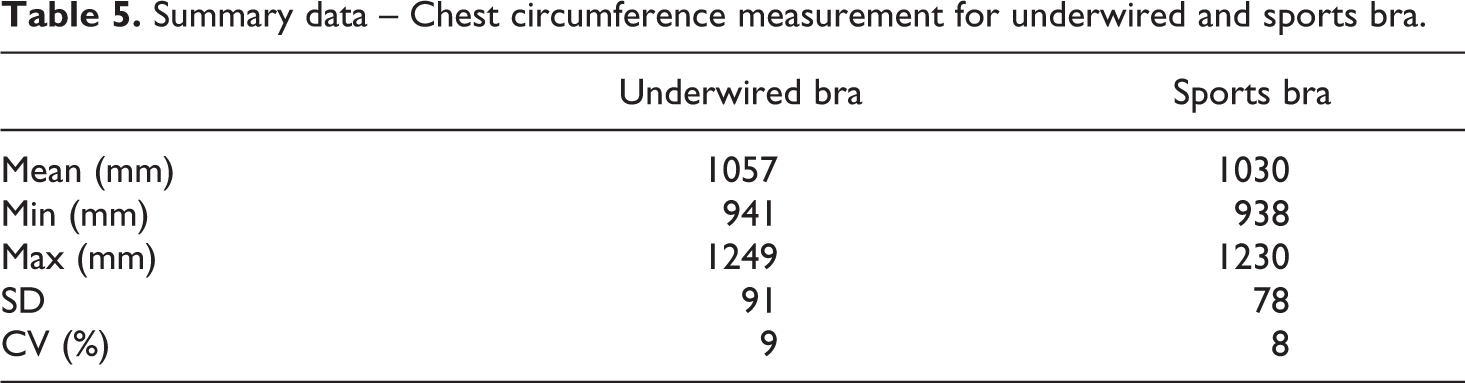
The paired sample t-test confirmed that the chest circumference in the underwired bra was statistically significantly greater than in the sports bra, t(19) = 3.303, p < 0.005. The mean difference between underwired and sports bra chest circumference was 25mm.
Under bust circumference
A paired sample t-test was conducted and identified that there is no significant difference between the underwired and sports bra. This was expected as it is not affected by bust volume in the same way as chest circumference is.
Cervical to bust point length
The cervical to bust point data is summarised in Table 6. When testing for normality, two data points were identified as erroneous. On further investigation of the original data it was identified that the measurement software had been unable to correctly identify the cervical point from the 3D body scan due to the participants hair obscuring part of the neck on the right-hand side. These data points were removed and the test for normality repeated which confirmed the data was normally distributed.
Summary data – Cervical to bust point measurement for underwired and sports bra.
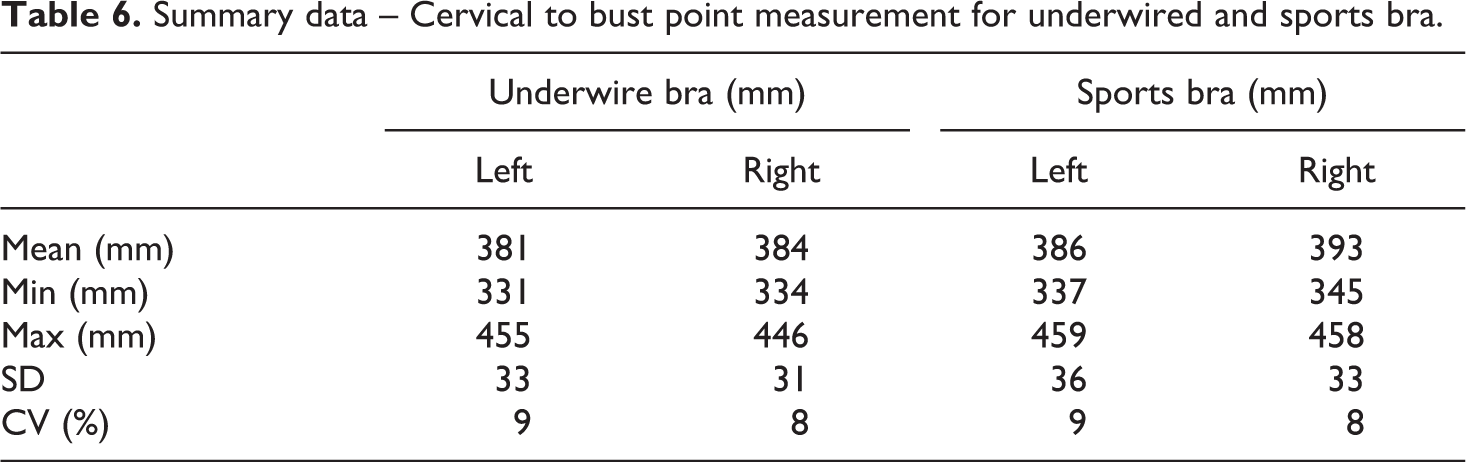
A paired sample t-test was conducted to compare cervical to bust point measurements on the left and right side within bra type and between bra type. The cervical to bust point measurements, both within bra type and between bra types were not statistically significantly different.
Bust prominence
Bust prominence data is summarised in Table 7. A paired sample t-test was conducted to compare left and right breast prominence within bra type and between bra type.
Summary data – Left and right bust prominence measurement for underwired and sports bra.
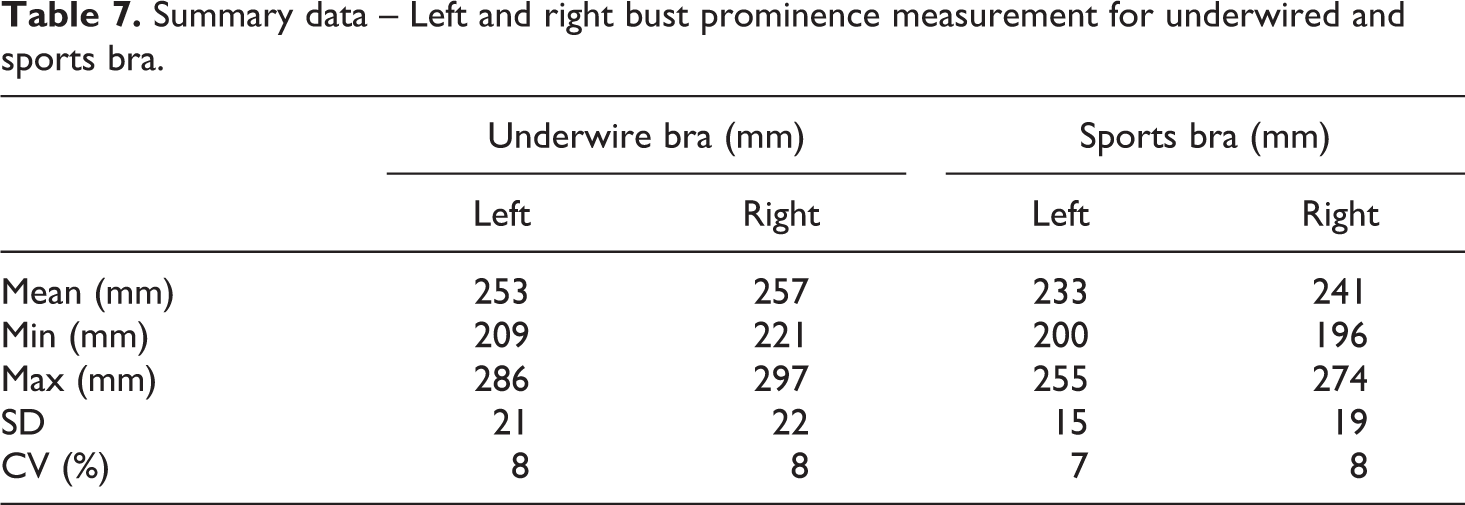
There was no significant difference identified between the left and right breast prominence when wearing an underwired bra. However, when wearing a sports bra, there was a statistically significant difference in breast prominence between the left and right breast, t(19) = 2.75, p < 0.05. There was also a significant difference in breast prominence when the left and right breast were compared between bra types, with breast prominence greater for both breasts when wearing the underwired bra, left breast, t(19) = 6.65, p < 0.0005, right breast, t(19) = 6.83, p < 0.0005.
The difference between the left and right breast prominence when wearing the sports bra may be due to the way the sports bra compresses the breasts to hold them more in place compared to the underwired bra, which tends to provide more uplift support and brings the breasts slightly closer together.
Survey data
As part of the survey participants were asked to state how often they had laundered their new bra and how many of early, late, or night shifts 11 they had conducted during the trial. The summary data for this is shown in Table 8.
Summary data – Number of times bras were washed and shifts worn during trial.
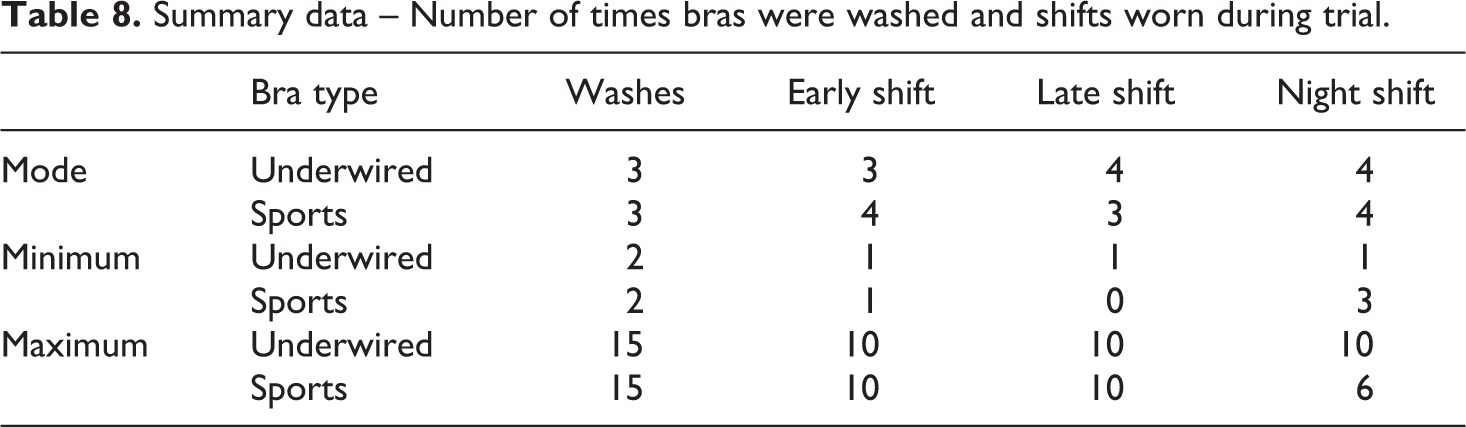
The most common number of each shift worked was evenly spread for both bra types and time of shift. While at least one officer conducted no late shifts the variation in shift pattern ensured that most participants trialled the bras at different times of day. The most common number of times the bras were washed was consistent between bras, this is important as it is known that fabric materials can be affected by machine washing in terms of the physical and mechanical properties of the materials used in the bra which could affect comfort (Gore et al., 2006). All participants washed their bras at least twice during the trial.
Areas of discomfort or rubbing
The areas identified by the participants as either rubbing and/or discomfort were compared for each stage of the trial. Not all participants complete all three surveys, therefore the data is presented as percentages of total respondents for each stage of the trial; Pre-fitting (n = 29), post-fitting underwired bra (n = 15) and post-fitting sports bra (n = 18). Only areas that had a recorded response were reviewed, shown in Figure 5
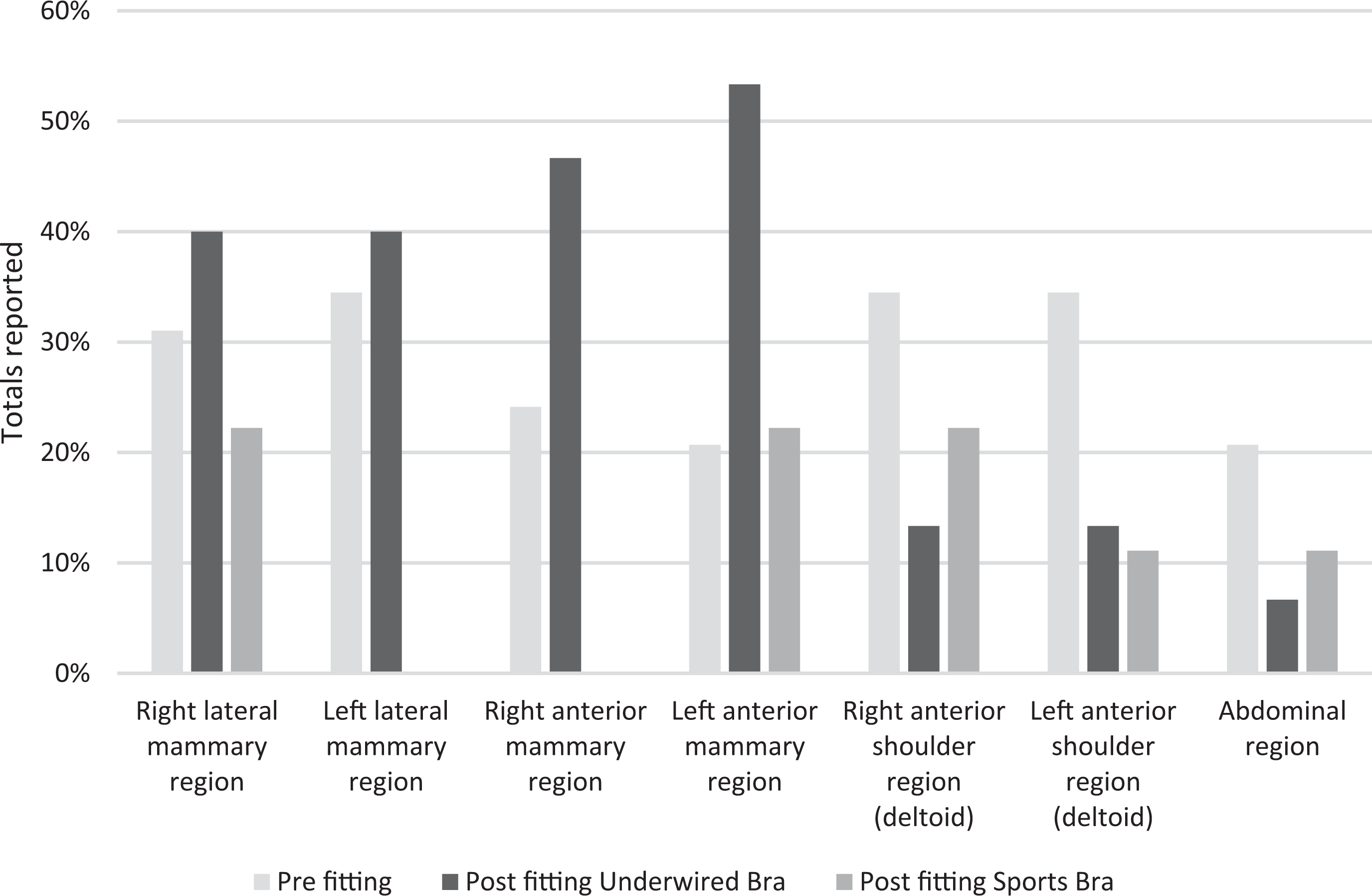
Total identified areas of rubbing or discomfort by pre- and post-fitting.
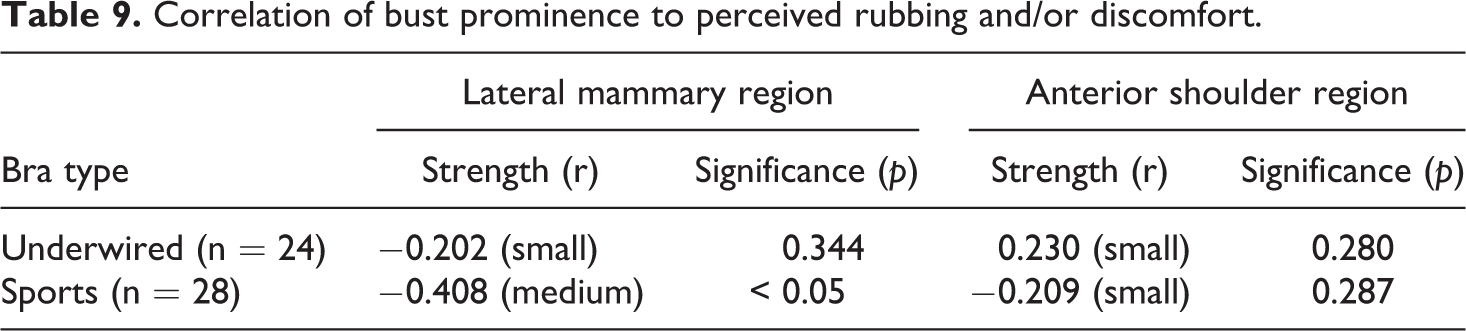
Further analysis was conducted on the data from participants who completed all three stages of the trial (n = 12) to investigate the effects of professional bra fitting on rubbing and/or discomfort, Figure 6. This data was then broken down by under bust size, Figure 7, and cup size, Figure 8, focused on the right and left lateral mammary regions and the right and left anterior shoulder regions to investigate if either of these factors has more of an effect. A further effect was investigated comparing bust prominence determined by the 3D measurement scans with rubbing and/or discomfort on the lateral mammary and anterior shoulder regions. For the purpose of this, the mean value for left and right bust prominence was calculated for each bra type, Table 9.
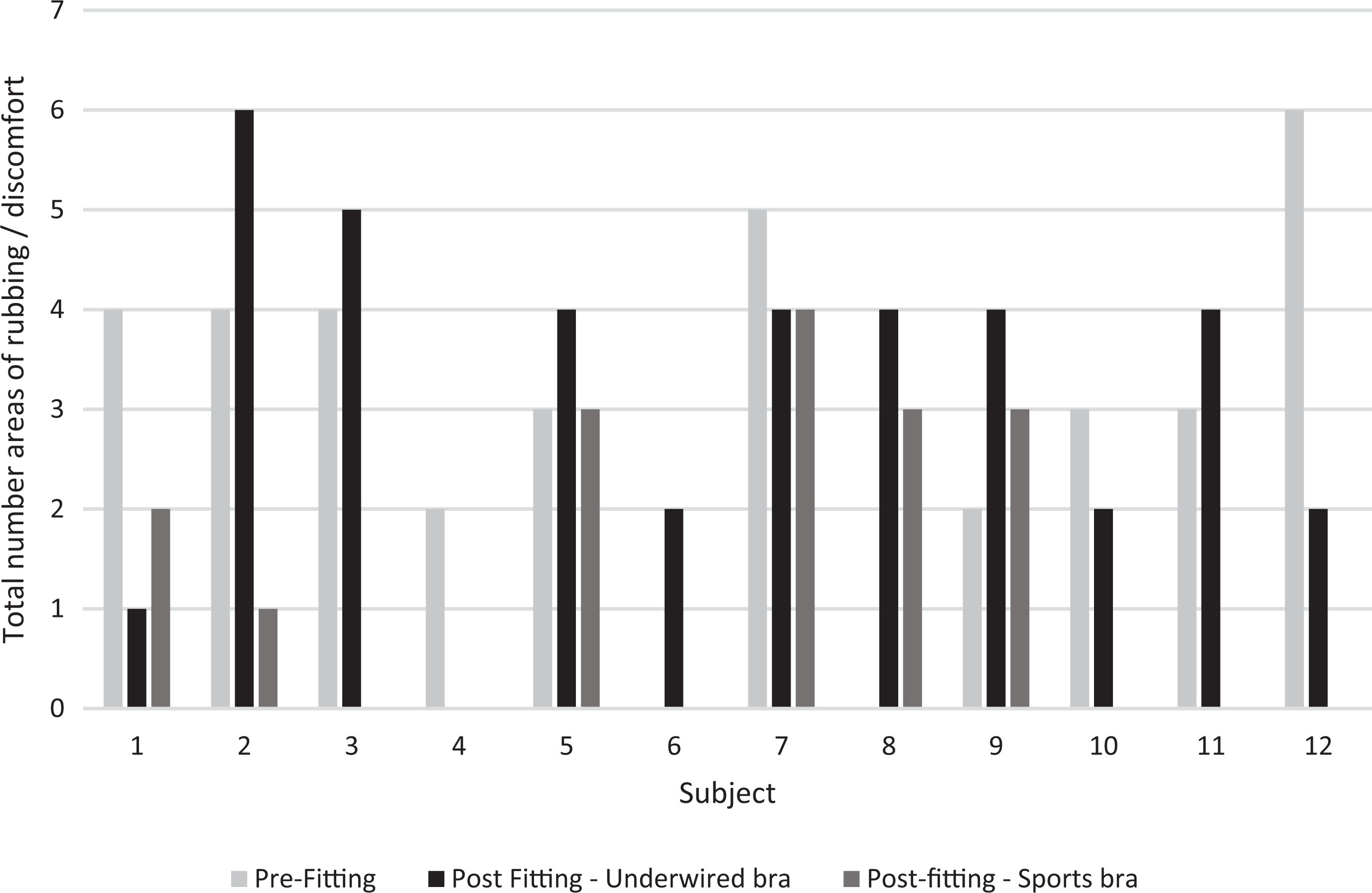
Comparison of pre and post-fitting effects on perceived discomfort and/or rubbing.
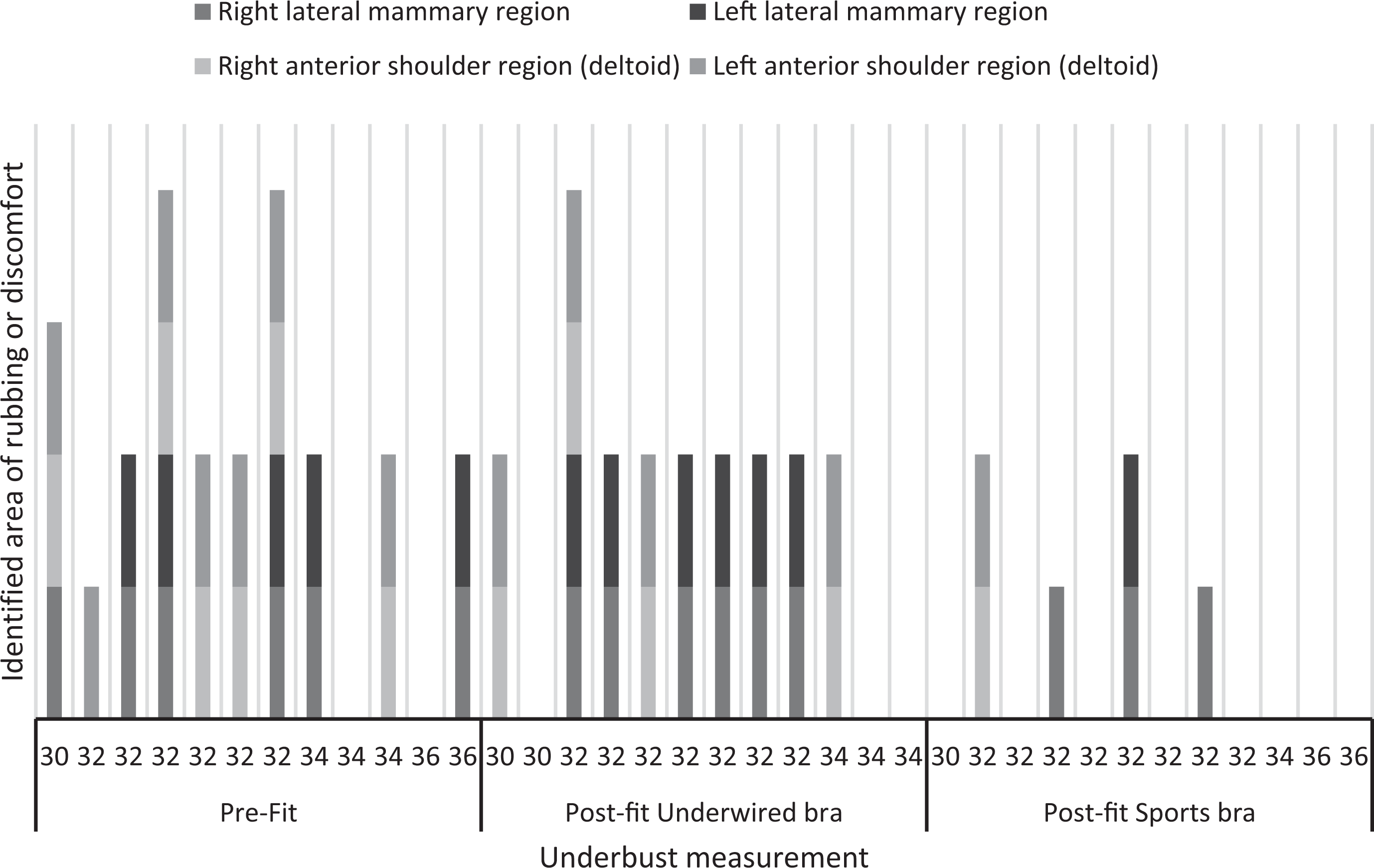
Under bust measurement effect on perceived discomfort and/or rubbing.
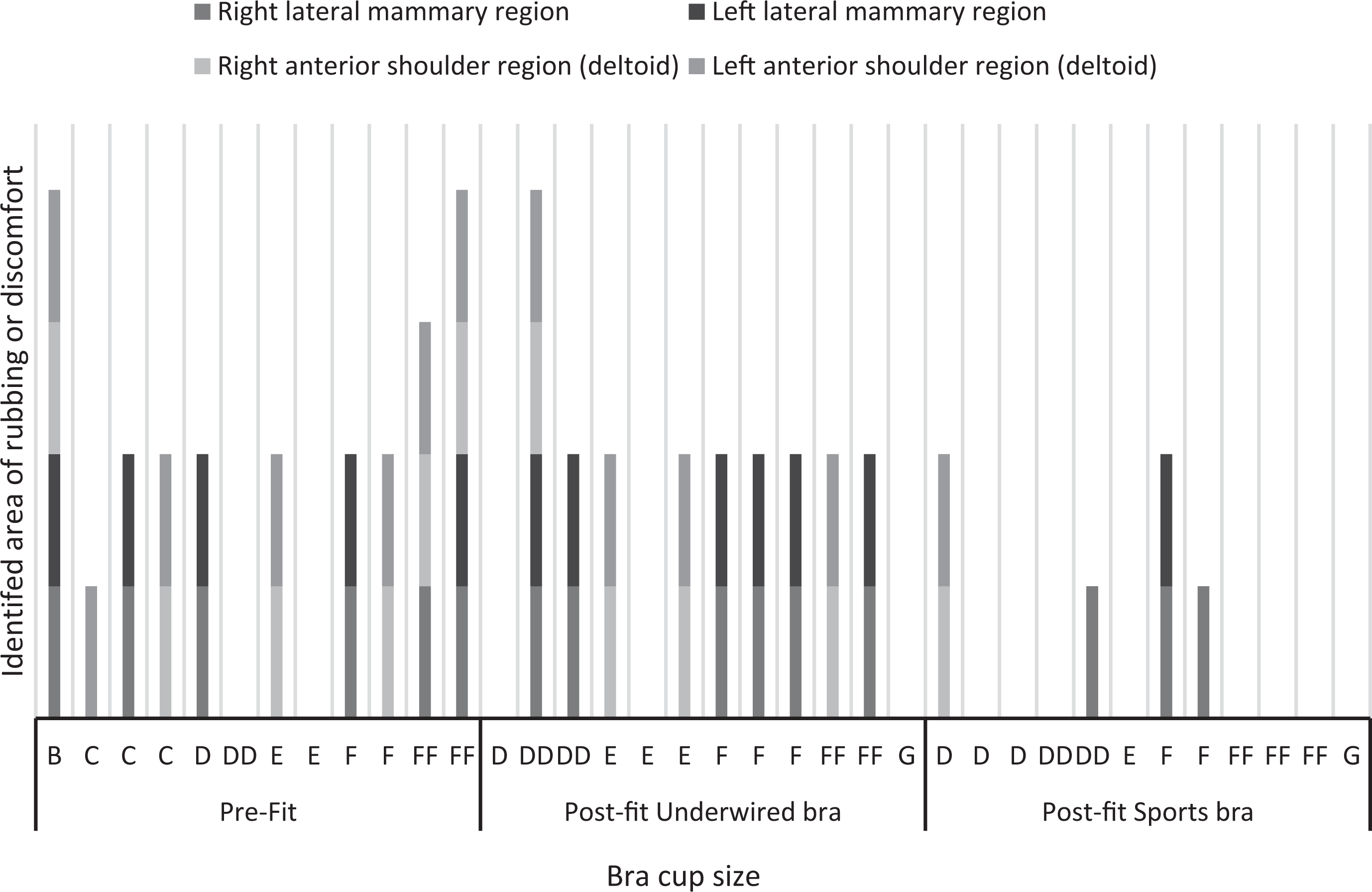
Bra cup size effect on perceived rubbing and/or discomfort.
Correlation of bust prominence to perceived rubbing and/or discomfort.
For all areas compared, Figure 5, all participants who responded identified that the sports bra had the same as or lower rates of rubbing and/or discomfort. However, with the underwired bra, for both the anterior and lateral mammary regions the levels of rubbing and/or discomfort increased. This may be due to the newness of the bras and wire moving the breasts together, as identified by changes in the bust to bust length, and any changes in cup size being unfamiliar to the participant. However, this was not investigated further during this study.
In Figure 6, seven of the participants reported that the underwired bra was more uncomfortable than the bra they were wearing pre-fitting. For the sports bra this was only for two of the participants, As previously highlighted this could be due to the newness and unfamiliarity of the underwired bra compared to the participants original bra.
When comparing rubbing and/or discomfort to under bust measurement and cup size, Figure 7 and Figure 8, no visible indication was identified that larger sizes have any relationship to greater reported levels of rubbing and/or discomfort. Of note is the reduction in reported discomfort and/or rubbing when trialling the sports bra against both the underbust and cup size measurements. The number reduced from 24 areas identified pre-fit to only six post-fit for the sports bra. The same affect was not seen for the underwired bra where the reduction was only four less reported areas. The same affect was not seen for the underwired bra.
The relation between bust prominence and perceived rubbing and/or discomfort was investigated using the Pearson Product-moment Correlation, Table 9. For the sports bra, there is a medium, negative correlation between increasing bust prominence and decreasing discomfort and/or rubbing for the lateral mammary region. This same trend of decreasing discomfort and/or rubbing is also present for both the anterior shoulder when wearing a sports bra and the lateral mammary regions when wearing an underwired bra. However, these are only small strength correlations and not significant. The lack of significance of these results could be due to the sample size being n < 30. Of interest is the positive correlation between the bust prominence and rubbing and /or discomfort in the anterior shoulder region for the underwired bra, indicating an increase in the identified areas of discomfort and/or rubbing. Although the data is not statistically significant, a further investigation was conducted. On review of the comments from the participants, several did identify that the straps of the underwire bra did ‘dig in’ around the shoulder and sides. This may be due to the design of the bras and width of the shoulder straps applying additional pressure to the shoulders.
The pre-fitting data does show for FF cup size a higher indication of rubbing and/or discomfort, but it also shows the same for a B cup with consistent levels for all cup sizes between. The data does support a visible reduction in reported rubbing and/or discomfort when the participants were wearing the sports bra.
Comfort when standing
The participants were asked to rank on a scale of very comfortable to very uncomfortable how they found standing when wearing body armour for both pre-fitting and then post-fitting in each of the bra types. Not all participants completed each survey and the data is presented as percentages based on the number of responses per survey, Table 10.
Summary data – Perceived comfort when standing in body armour by bra type as percentage of responses per stage of trial.
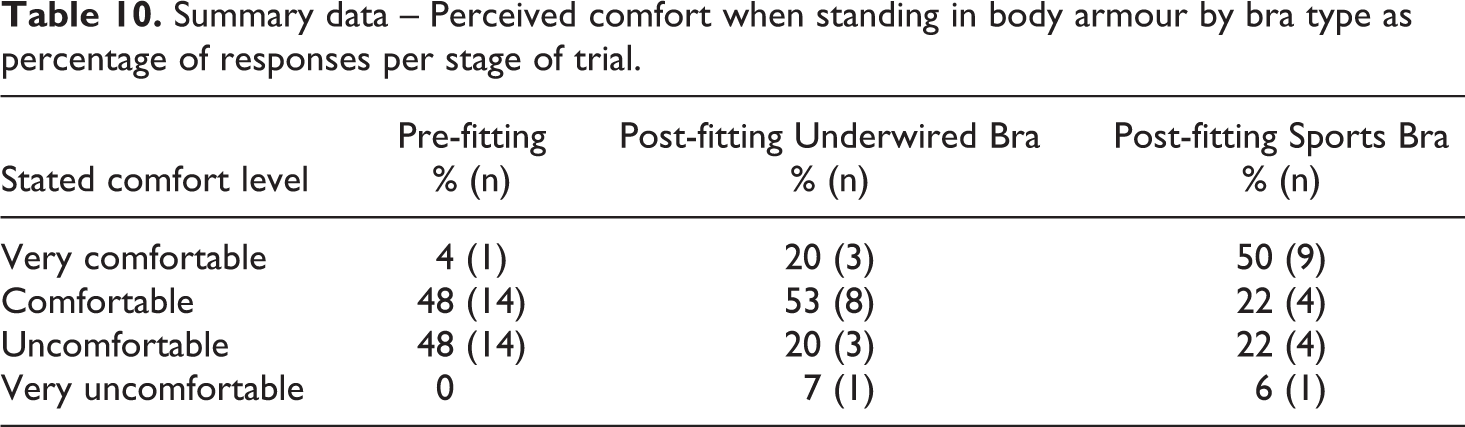
The percentage of participants who reported they were comfortable or very comfortable increased from 52% pre-fitting to post-fitting 73% for underwired and 72% for sports bra. Less participants reported that the bra was uncomfortable post-fitting, however for both the post-fitting underwire and sports bra, a single response identified the bra was very uncomfortable. On further investigation, these were not from the same participant. For the underwired bra, the participant pre-fitting was 32C and post-fitting was a 32D. For the sports bra, the participants size did not change pre to post-fitting from a 32F. For both participants, the bras had been washed three times and they had both done a similar range of shifts. In reviewing the comments, the participant who had been wearing the underwired bra identified that she did not normally wear an underwired bra for work and found it very uncomfortable. For the participant wearing the sports bra she identified she found it very tight in general which made it uncomfortable to wear and work in.
Level of difficulty to perform certain tasks
The participants were asked to rate from very easy to very difficult several different activities that they may perform during their normal working day. No guidance was given on what was defined as easy or difficult and was left to the opinion of the participant. Activities involving use of a TASER or firearm were excluded from the analysis as only one participant respond to this activity, Table 11.
Summary data – Perceived difficult in performing task in bra type as percentage of response per stage of trial.
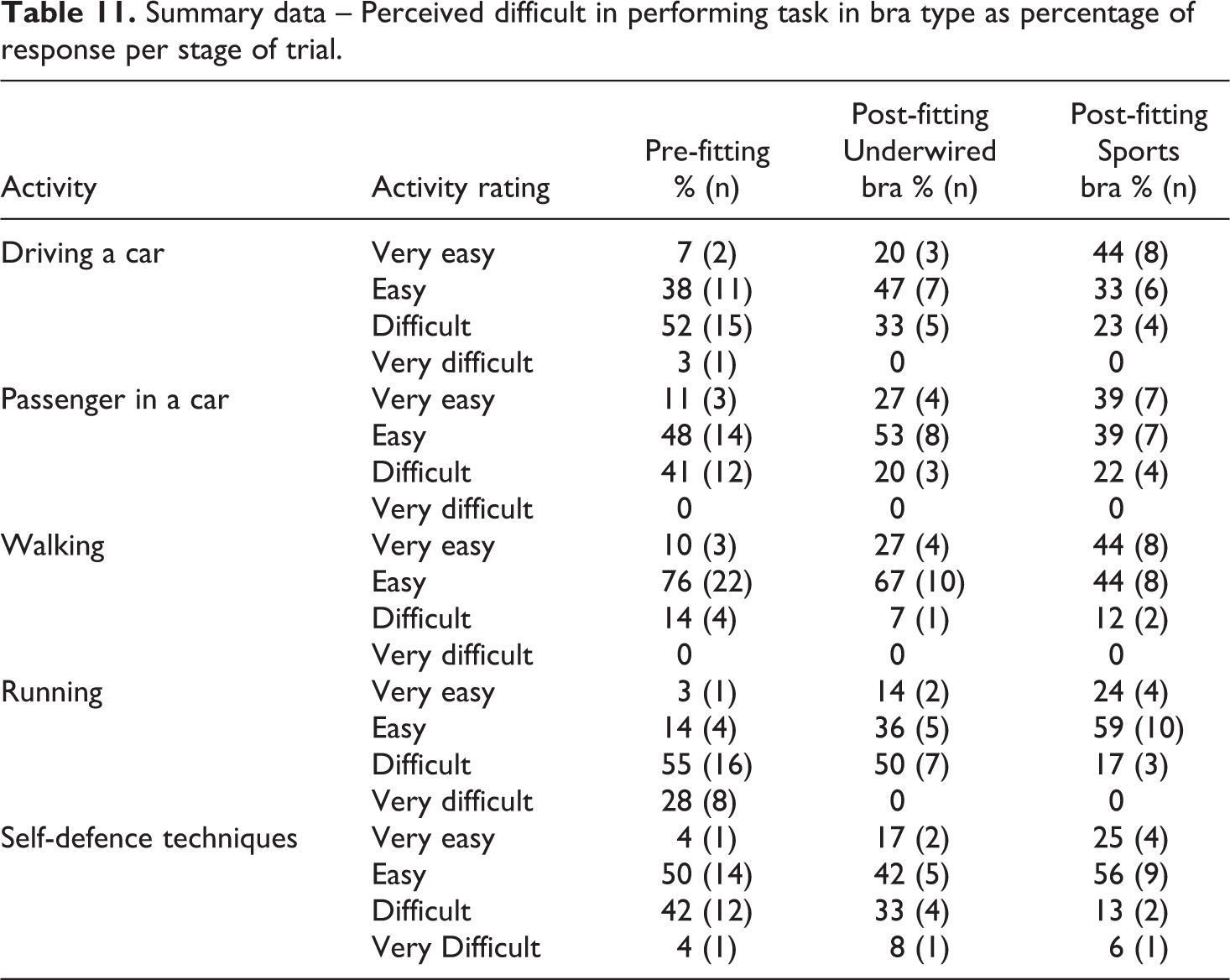
For all the activities, there was improvement in positive responses (easy and very easy) when wearing the professional fitted bras. The most notable change was for running, where pre-fitting 28% of the participants rated the activity as very difficult compared to no participants post-fitting. Additionally, 59% now rated this as easy in the sports bra compared to 14% pre-fitting. This was not unexpected due to the nature of sports bras being to provide support during physical exertion. For self-defence techniques two separate participants identified this as being very difficult, these were not the same who identified standing as being uncomfortable. The participant who identified it as very difficult for post-fitting underwired bra also identified the same level for the pre-fitting stage of the trial. However, the same participant found this activity very easy in the post-fitting sports bra. Both participants were larger cup sizes when compared to the under bust measurement, underwired being 32FF and sports bra being 30F.
Free text questions
The participants were asked three free text questions once they had completed wearing of both bras Any general comments Which bra was most comfortable? Which style of bra will you wear going forwards?
A summary of typical comments is shown in Table 12
Summary of free text comments post wearing of underwired and sports bra.
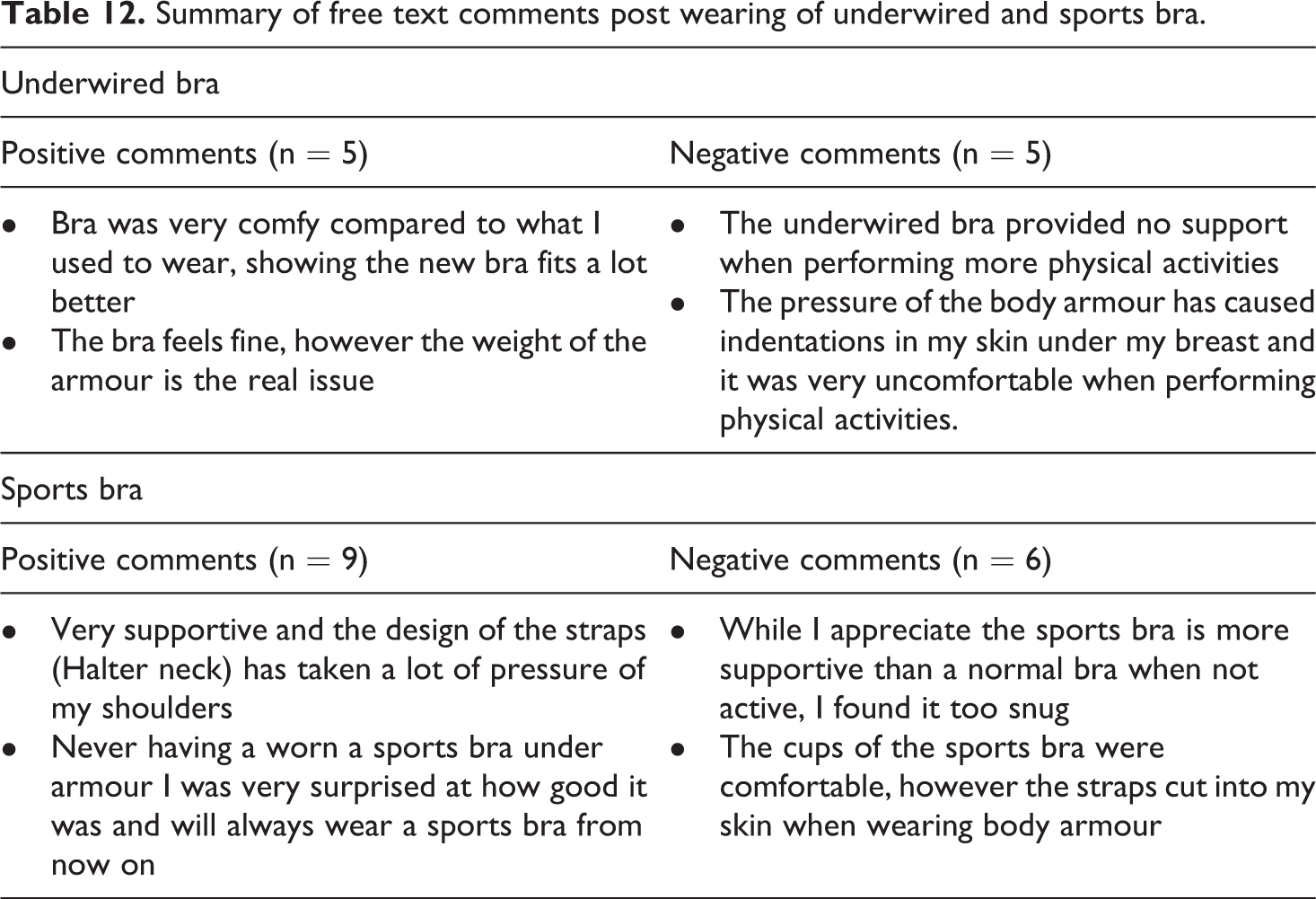
The comments summarised in Table 12 indicate that a sports bra is more supportive and comfortable performing physical activities however it can be a bit ‘snug’. There are several comments relating to the underwired bra marking the skin after wearing it, potentially due to the armour applying pressure to the straps and structure of the bra.
When asked which bra they found most comfortable, 71% (n = 15) of the participants stated the sports bra was. When asked which bra they would routinely wear under armour in the future, 71% (n = 15) stated they would be wearing a sports bra, whereas 14.5% (n = 3) would use the underwired bra. Of the participants, 14.5% (n = 3) stated they would be wearing alternative bras but did not specify the type.
Discussion
The purpose of this study was to understand the effect of two bra types on key anthropometric data relating to the breast and the effect that a professional fitted underwired or sports bra has on comfort for female police officers while wearing body armour.
The key findings from this study were bra type has a statistically significant effect on the shape and dimensions of the breast, which will affect how the body armour fits the body 77% of participants were resized for an underwired bra and 87% for a sports bra, and an individual does not necessarily wear the same size underwired bra and sports bra the wearing of a sports bra was reported as more comfortable compared to an underwired bra for most activities cup size, under bust measurement or bust prominence have no direct effect on level of reported rubbing and/or discomfort when wearing either an underwired or sports bra.
When considering the anthropometric data for the two bra types, there were three areas that showed a significant difference in measurements, bust to bust, chest circumference and bust prominence. In all of these, the underwired bra had the largest measurements. The significance of this is relevant during the design of body armour by a manufacturer. If a design is based on anthropometric data only considering underwired bras, a wearer who users a sports bra may find that the forming of the armour does not sit comfortably. Secondly, body armour is designed to sit close to the body to aid the dissipation of energy during a ballistic impact. It has been shown in previous work, that even small air gaps of 10 mm can increase the probability of a round perforating the armour (Tilsley et al., 2018).
The data collected in the research provides evidence that a large percentage of women after attending a professional bra fitting where identified as having been wearing the wrong size bra. This could be due to the participants just buying the same size bra without being refitted or using the traditional bra fitting system of the under bust and over bust measurements. The time since the participants were last fitted is also a factor in the change in bra size, with 62% not having been refitted in the last 2 years. With natural changes in body shape over time due to lifestyle choices, the effect of ageing on breast tissue and skin thickness it was anticipated that a percentage of participants would be resized as part of this study. Considering the percentage of participants who had been fitted in the previous 2 years to the number who were resized a during this study, raises questions over how they were fitted and potential variations in fitting process by different suppliers. It was also identified that it cannot be assumed that the same size sports bra and underwired bra will correctly fit. This is potentially due to variation in design and cutting of the bras between manufacturers and the data they are basing their designs on.
When considering the comfort of the bras and the ability to perform various actions, it is clear from the data that most participants found the sports bra most comfortable. There was a visible decrease in rubbing and/or discomfort identified when the sports bra was worn compared to the underwired bra. There was also increase in participants reporting that various actions were easier to perform when wearing the sports bra. This is most likely due in part to participants having been refitted and wearing bras that provided more support overall.
There was no visible connection between larger cup sizes, under bust measurements or bust prominence and identified areas of rubbing and/or discomfort. This was an unexpected outcome of the study, as it was believed prior to the start that larger breasts would be a factor. While there was a positive trend with regards to rubbing and/or discomfort on the shoulders when wearing the post-fitting underwired bra in relation to bust prominence, no other trends could be clearly seen. Some of the participants did identify that the underwire bra straps dig into their shoulders. This positive trend could be associated to an increase in breast volume, and hence weight, placing additional loading on the shoulders which is then exaggerated by the weight of the body armour on the shoulders.
Conclusions
This study has clearly identified that for female police officers, when wearing body armour, sports bras can improve the comfort. Going forward, 71% of the participants said they will be using a sports bra due to the overall improved comfort and support it provides them. Encouraging female police officers to be professionally fitted for new bras and trialling for themselves different styles of bras has been clearly shown to improve comfort. Over time and with age, breast shape and tissue strength changes, which can lead to the need for different support. Alongside this, natural changes in body shape due to lifestyle choices can also have a significant effect on cup size and under bust measurements.
When considering the design of body armour, it has been shown that key anthropometric data is different depending on the type of bra that is worn. This has effects on how the body armour is designed to account for the shape of the female form, as well as the number of different breast sizes there are. Guidance must be given that when measuring for body armour, a female ensures they are wearing the style of bra that they would normally use underneath the body armour as well as any additional clothing layers e.g. uniform top.
While standards for body armour have not been discussed in this paper, there will also be a need for these to potential adapt to support improvements body armour design for female wearers. Seeking a balance between risk and protection and enabling designers of body armour to be creative.
This researched has focused on female police officers, however this work may be applicable to all designers, specifiers, and wearers of body amour for females.
Footnotes
Acknowledgements
This paper forms part of Mr C Malbon PhD which is supported by the Centre for Defence Engineering, Cranfield University, Defence Academy of the United Kingdom, Shrivenham, UK. The Police Federation of England and Wales for their assistance with participant identification and for funding the bra purchase.Bedfordshire, Cambridgeshire, and Hertfordshire Police for enabling the participants to participate in this trial during working hours. The police officers who volunteered to participate in the trial. Ron Staples, Human Factors Integration Team, Ministry of Defence Police for the loan of the 3d scanner and support during the scanning John Lewis and Partners of Cambridge and Peterborough for supporting this work and providing the professional bra fitting service.
Declaration of conflicting interests
The author(s) declared no potential conflicts of interest with respect to the research, authorship, and/or publication of this article.
Funding
The author(s) received no other financial support for the research, authorship, and/or publication of this article: The purchase of the bras used in this research was funded by the Police Federation of England and Wales.
