




Abstract
County Line Drug Networks involve the transportation of drugs from urban hubs to out of city locations across the UK. County lines are a societal concern as they involve the recruitment of vulnerable individuals (adults and children), who are used as runners, exposing them to hazardous and often violent situations. This paper reports on a small scale study which provides a snapshot of the characteristics of nominals involved in county line drug network within a London Borough as well as the perspective of three expert practitioners who have substantial and detailed operational knowledge of how county line operatives work.
Introduction
Tackling county lines is one of six key priorities within the UK Government’s approach to Ending Gang Violence and Exploitation (Home Office Drugs Strategy, 2017). The UK Government (2019) defines ‘county lines’ as: gangs and organised criminal networks involved in exporting illegal drugs into one or more importing areas within the UK, using dedicated mobile phone lines or other form of “deal line”. They are likely to exploit children and vulnerable adults to move and store the drugs and money and often use coercion, intimidation, violence (including sexual violence) and weapons. (Rescue and Response Report Analysists, 2019: 7)
Research that has examined the way in which drugs are moved and the role of gangs within drug markets has and is continuing to evolve (Andell and Pitts, 2018; Densely et al., 2018; Robinson et al., 2018; Windle and Briggs, 2015a, 2015b). There is some evidence of an interchange between gang membership and individual gang members’ involvement in county lines (Windle and Briggs, 2015a, 2015b). The overlap/competition between gangs and county line drug networks (also referred to as CLDNs) and the fundamental principle underpinning county lines, the movement between urban and county locations, results in violence which occurs when ‘business’ interests, specifically those tied to the drug trade, are threatened (Storrod and Densely, 2016; Spicer, 2018), this violence and conflict often played out on Youtube and other social media platforms (Andelll and Pitts, 2018; Storrod and Densley, 2016).
Exploitation of vulnerable young people and adults is apparent in research which has sought to understand how CLDNs operate. (Windle and Briggs, 2015b; Robinson et al ., 2018; Spicer, 2018). Windle and Briggs (2015b) observe that many young people recruited in CDLNs have been in care and or, have been missing from home or care for long periods; they describe how young people are left in out of town ‘crack houses’ (a base for problematic drug users to consume crack cocaine), becoming out of town front line drug dealers. Studies undertaken to date reveal young people become entrapped into working, with little remuneration, and the use of debt bondage to retain control (Robinson et al ., 2018; Spicer, 2018). Harding (2020) observed that inexperience, naiveite and propensity to be outmanoeuvred and controlled means that young people recruited to county lines quickly fall into debt bondage; this in turn increases their vulnerability and concomitantly their risk of further exploitation. Vulnerable drug dependent adults are also exploited, recruited to sell drugs. These problematic drug users, who are socially excluded and lacking in social capital, often sell from their own homes on behalf of criminal gangs from major cities, unwilling to report victimisation to the police (Spicer, 2018; Robinson et al ., 2018).
Overall little empirical work exploring county lines has been undertaken (Janesh and South, 2018). Studies that have been undertaken have largely explored how county line drug networks have evolved and how they operate in Scotland (Densley et al., 2018) and Merseyside (Robinson et al., 2018); in six English localities, (Coomber and Moyle, 2017) a small coastal town (Janesh and South, 2018); and London (Windle and Briggs, 2015a, 2015b). A study undertaken by Spicer (2018) gathered the perspective of 10 police officers who had all been tasked with responding to county lines within their force, and Andell and Pitts (2018) report on a rapid assessment exercise which examined the multiagency response to county lines in a seaside town; Storrod and Densley (2016) examined how young people expressed themselves on social media. These studies have all used qualitative methods to explore county line activities from the perspective of those involved (‘gang members’, drug users and criminal justice agencies). This study adds to existing empirical knowledge by drawing on quantitative (police) data and interviews with three expert practitioners, exploring who is involved in county line activities, why they are involved and how they are being responded to from the perspective of Springtide, a London Borough beset with the multitudinous problem of being a significant exporter of county line drug networks.
Methodology
Research design
This mixed methods study draws on the authorised use of empirical (quantitative) data that captures a snapshot of county line drug networks from the perspective of a London Borough and is triangulated with the experiences of three expert practitioners working in the same Borough, to address the following research questions: What does the data collected in this study reveal about those involved in Springtide’s county line drug networks? What challenges do Springtide’s statutory actors face in responding to county lines?
Research setting
The London Borough of Springtide (LBS) is an inner London borough; children (up to the age of 18) make up approximately 10% of the population. Census data reveals a significant change in the ethnic profile of the borough; residents identifying as White British make up less than half of the population and Black Africans have replaced Black Caribbean’s as the largest BaME group (Springtide Council, 2017). Deprivation within Springtide is higher than in many other Local Authority areas (Springtide Council, 2017). At the time of the study Springtide operated a Serious Youth Crime Panel (SYCP) that sat weekly at the operational level and monthly at the strategic level. This panel was attended by the Police, Youth Offending Service (YOS), and the Borough’s Serious Violence Unit (SVU), with voluntary sector and statutory bodies also in attendance. The objective of the panel was to provide holistic responses to incidents of serious youth violence, county line drug networks and gangs.
Data collection
The quantitative data examined in this study were derived from the Springtide Police Multi Cohort Tracker (MCT), a document maintained by Springtide Police’s Gangs Unit who used it for intelligence-led operational responses to gangs, drugs and serious youth violence (SYV). The MCT holds data on several groups including those on the Springtide Gangs Matrix as well as those suspected of being involved in a county line. It is acknowledged that county line drug networks operate across county borders. Notwithstanding this, the Springtide Police Gangs Unit had confidence in the effectiveness of cross border systems of reporting between police forces. These systems facilitated the dissemination of intelligence from the ‘county’ force back to the ‘home’ force, enabling confirmation that the study group were indeed residents of Springtide
The MCT selection criteria for someone involved in a county line are: LBS inhabitants, arrested for drug trafficking offences outside of London and assessed to be part of a county line drug network by Springtide Police Gangs Unit; LBS inhabitants reported missing to Springtide Police’s Missing Persons Unit and the investigation assessment is that the person is in a county line drug network; LBS inhabitants identified by intelligence reports to be operating in county line drug networks.
For the purpose this study, each nominal on the MCT had an anonymised record created; this data was transformed to enable analysis of the following variables: Location of county line offending; Age; Gender; Ethnicity; School attended; Whether they have been a looked after child (LAC) in the previous 2 years; SYV (if they have been a suspect or victim in an incident); MPS Gangs Matrix status.
The study site is among the most diverse in the UK and the considerable number of BAME identifying as either Black Caribbean or Black African could not be replicated in many other sites. Thus, while ethnicity is cited as a potential driver for group offending and drugs networks (Grund and Densley, 2012: 400), inclusion of race as a determinative factor was not considered due to the disproportionate number of black young people featuring within the MCT, which can only be representative of the demographics of Springtide. Further, previous bivariate analysis suggests when relevant individual, familial and socio-demographic factors are accounted for, the significance of ethnicity in crime is eliminated (Loeber et al ., 2008: 202). Separate analysis of females was also considered. While females presented to an extent that may warrant discussion, the scope of this study did not permit it. This is reinforced by the assertion that female offending owes itself to manifestly different explanations (Jolliffe, 2013).
Semi-structured interviews
Semi-structured interviews were conducted with three expert practitioners as follows: A senior police officer (SPO) responsible for managing Springtide Police’s response to drugs, gangs and county line drug networks; A youth offending manager (YOM) involved in supervising the management of young offenders in Springtide; A senior local authority figure charged with tackling serious youth violence (SYVP).
Interviewees were purposively selected based on their extensive experience within the field of youth crime and insights into county line drug networks and were all members of Springtide’s’ Serious Youth Crime Panel (SYCP). Interviews were conducted and digitally recorded at the participants’ place of work. Using Braun and Clark’s (2012) framework, thematic analysis of the transcribed data was undertaken; this approach enables the researcher to identify, analyse and report patterns (themes) within qualitative data.
The researcher had previously held a senior role within Springtide Police, which had potential to limit the responses. However, in the context of interviewing this is counter-balanced by the researcher’s readiness to listen and elicit views from participants (Strauss and Corbin, 1998).
Ethical considerations
The management of data and participants is fundamental to the integrity of research. This is particularly pertinent in this study given the use of police intelligence, its confidential nature and potential consequences should that confidentiality be breached. To conform with legal obligations of handling sensitive data under the UK Data Protection Act 2018, an anonymised version of the MCT was constructed for use in this study. This entailed coding each name and removing all dates of birth and PNC identifiers. The Master MCT, containing the unedited data, remained within a sub-folder of the MPS computer system, with restricted user access to the offender management section of the Springtide Police Gangs Unit.
Findings
CLDN and Gang membership in Springtide
Those identified by Springtide police as being in CLDNs in 2017 totalled 278. The age range was 13- 43, mode age 19, mean age 20.3; 25% of those on the MCT were aged 18 and under (n = 71) (Figure 1).
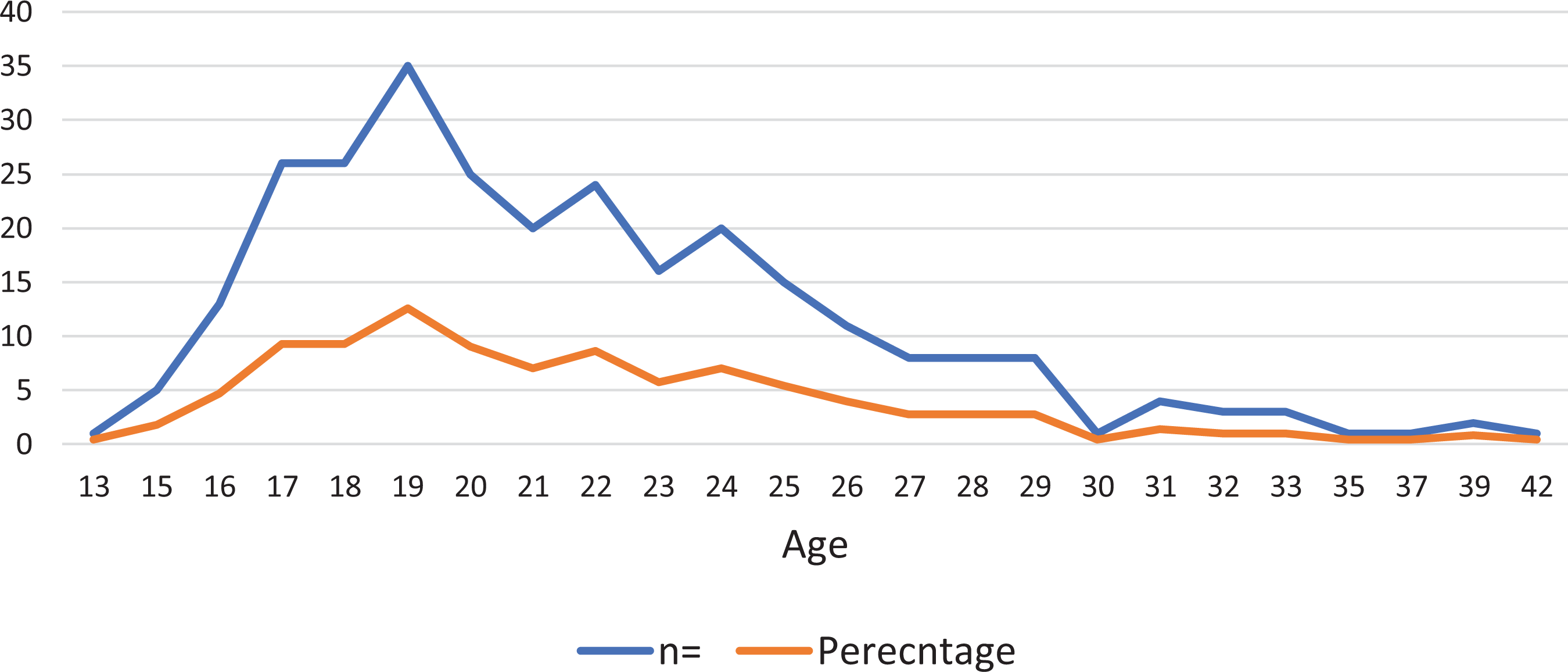
CLDN nominals by age.
Conversely, the number of individuals identified by Springtide police as being a member of a gang were much lower (n = 76), with a narrower age range (14–30). The mode age was similar (20 years) as was the mean age (20.4), although a higher proportion (35%) were aged 18 or under (Figure 2).
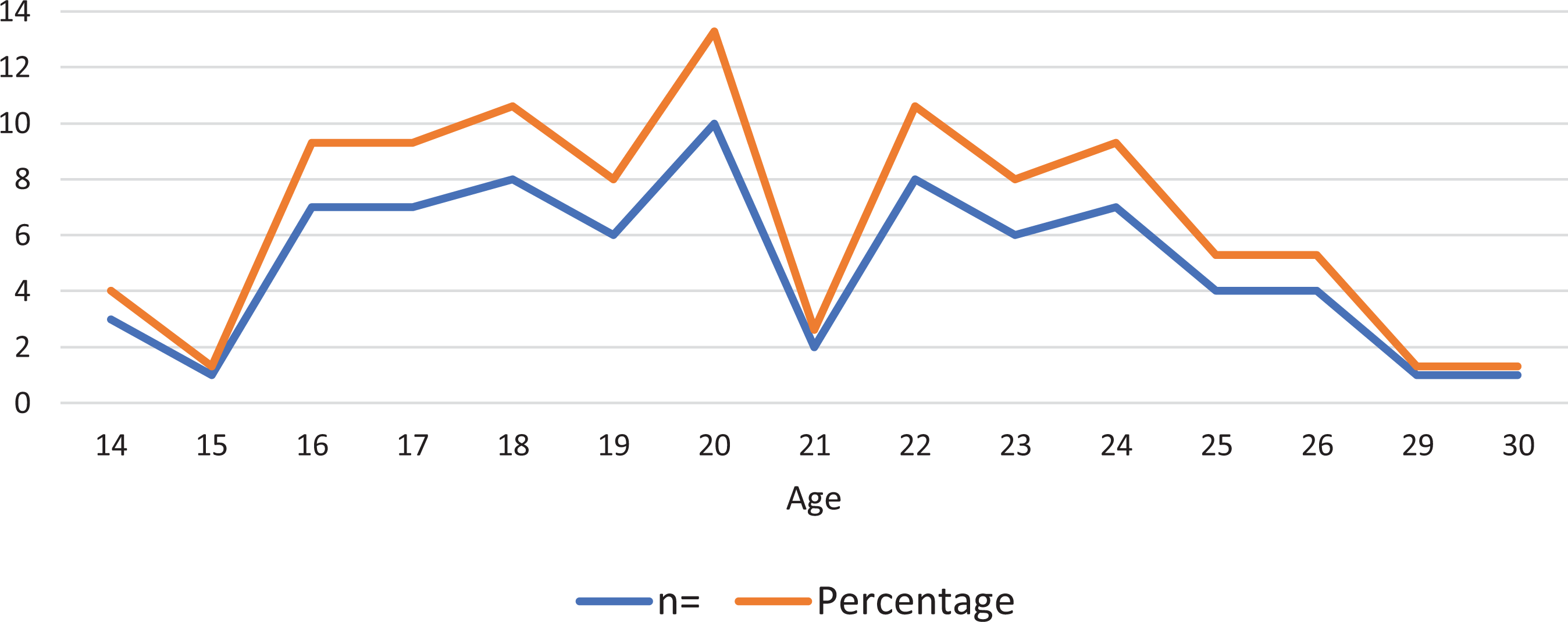
Springtide gang matrix nominals by age.
In both cohorts, offending begins in earnest at 16, and both gang membership and particularly county line involvement extends into adulthood; generally, gang membership recedes by the mid-20’s, while those in county lines continue into their early 30’s. The Head of Springtide’s SVUP suggested that being part of a gang was very much a generational matter: …Past a certain age, most of our clients would be embarrassed to admit that they were in that kind of gang thing to be honest.
The notion that gangs and county lines are not necessarily interrelated arose during the interviews. I’m not saying that a gang doesn’t present itself or people that are in a recognisable gang as per the Home Office definition, those individuals can be involved in ‘county lines,’ but they are not linked. [SPO] Some Gang members go on to ‘county lines. But I wouldn’t say that a whole gang is responsible for one county line…not every individual will be suited for county lines. [YOM] The SYVP noted that: ‘…there is something said by the kids – that “there is no war on drugs.” What they mean is business is business. You know. If you have a particularly well-disciplined line, you could have kids from nominally different gangs working on it.
Geography – County versus local
The central feature of CDLNs, the ‘movement’ of illicit drugs across counties is apparent in the MCT data. The spread of Springtide’s CLDNs is national, and includes locations in Scotland, Wales and Cornwall (see Figure 3). Numerous offenders operate in multiple counties (see Figure 4) and several counties present extraordinarily within the data
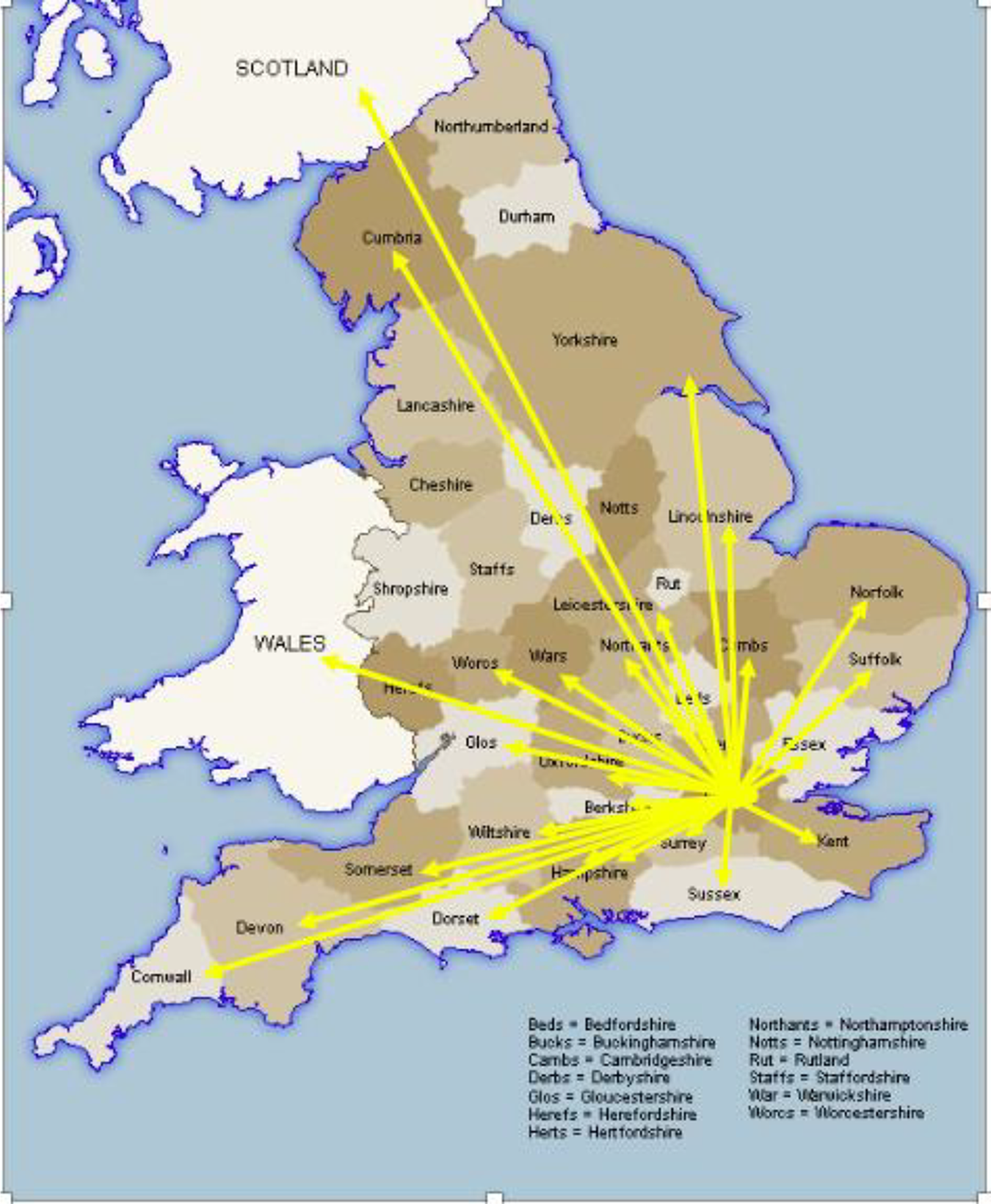
National reach of Springtide’s County Line Drug Networks.
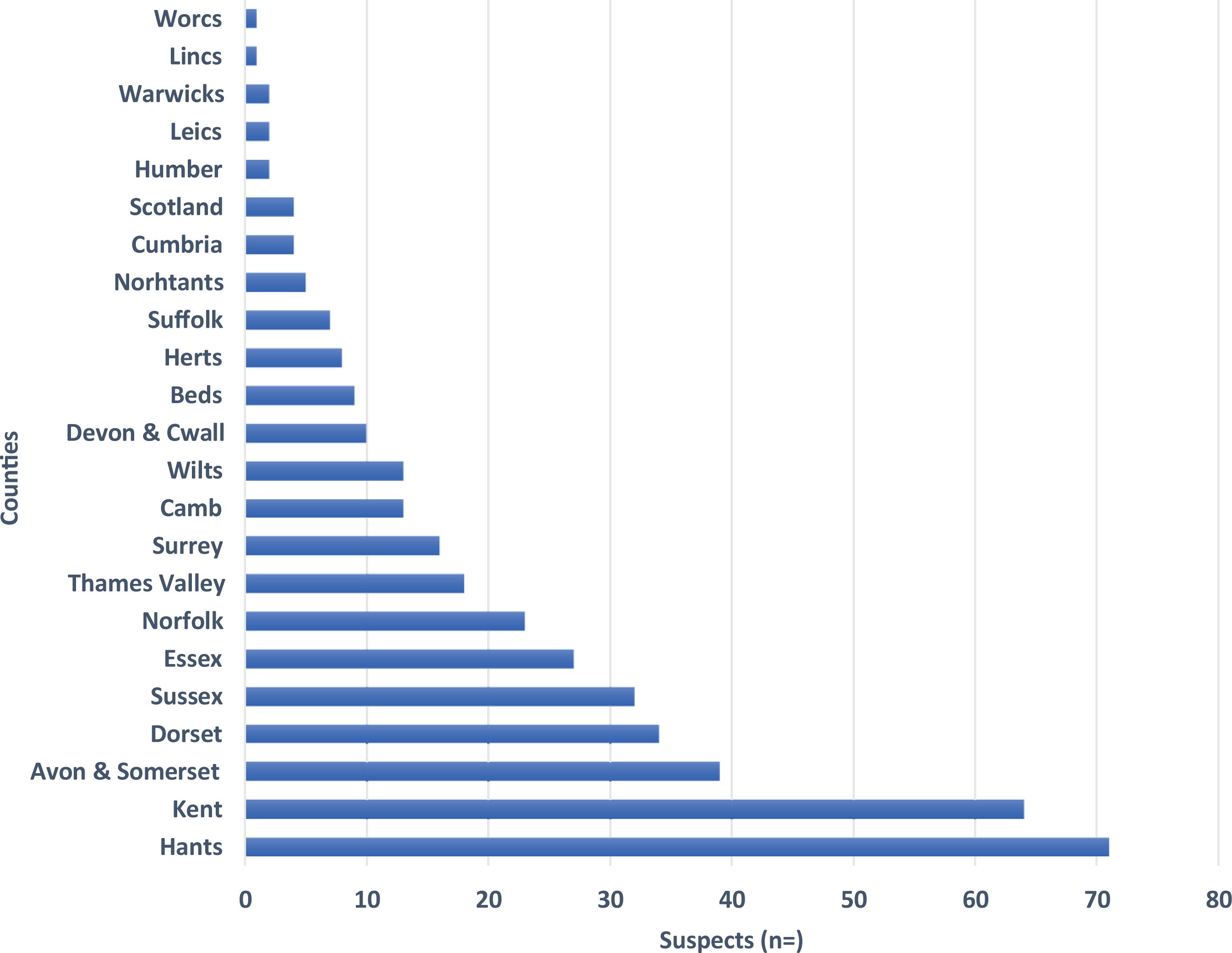
Springtide’s CDLN Footfall.
However, the defining of county lines as something distinct, based on this mobility was questioned by interviewees, who challenged how CLDNs have come to be defined., for example the senior police officer observed that, ‘I don’t think by a young person moving 60 miles as opposed to 6 miles puts them at any kind of less risk, quite frankly (SPO)’.
The SPO made the point that whether a young person was involved in a county line or a local drugs network within Springtide, the methodology of the crime, the inherent risks to the young person and the response from the police would be no different: You can’t tell me that there is a great deal of difference between a young person moving drugs between (two locations within the borough of Springtide) than there is between a young person moving drugs between Springtide to Southend. It is still a young person being exploited to traffic drugs to a different location. …appear to be living a normal life, they may be going to school still. They turn up for their YOT appointments. But once that is done, they work from five until one in the morning because it is very local, and they haven’t got to travel anywhere. That is the only difference. Everything else is the same. The grooming element, still probably vulnerable, still probably susceptible to being at risk of violence.
Victim, perpetrator dichotomy
Data from the MCT reveals the prevalence of violence within both groups (see Figure 5), indicating that gang members’ participation as perpetrators of serious youth violence (SYV) is much higher than nominals in the county line drug networks. Likewise, gang members were less likely to have been victims of SYVP.
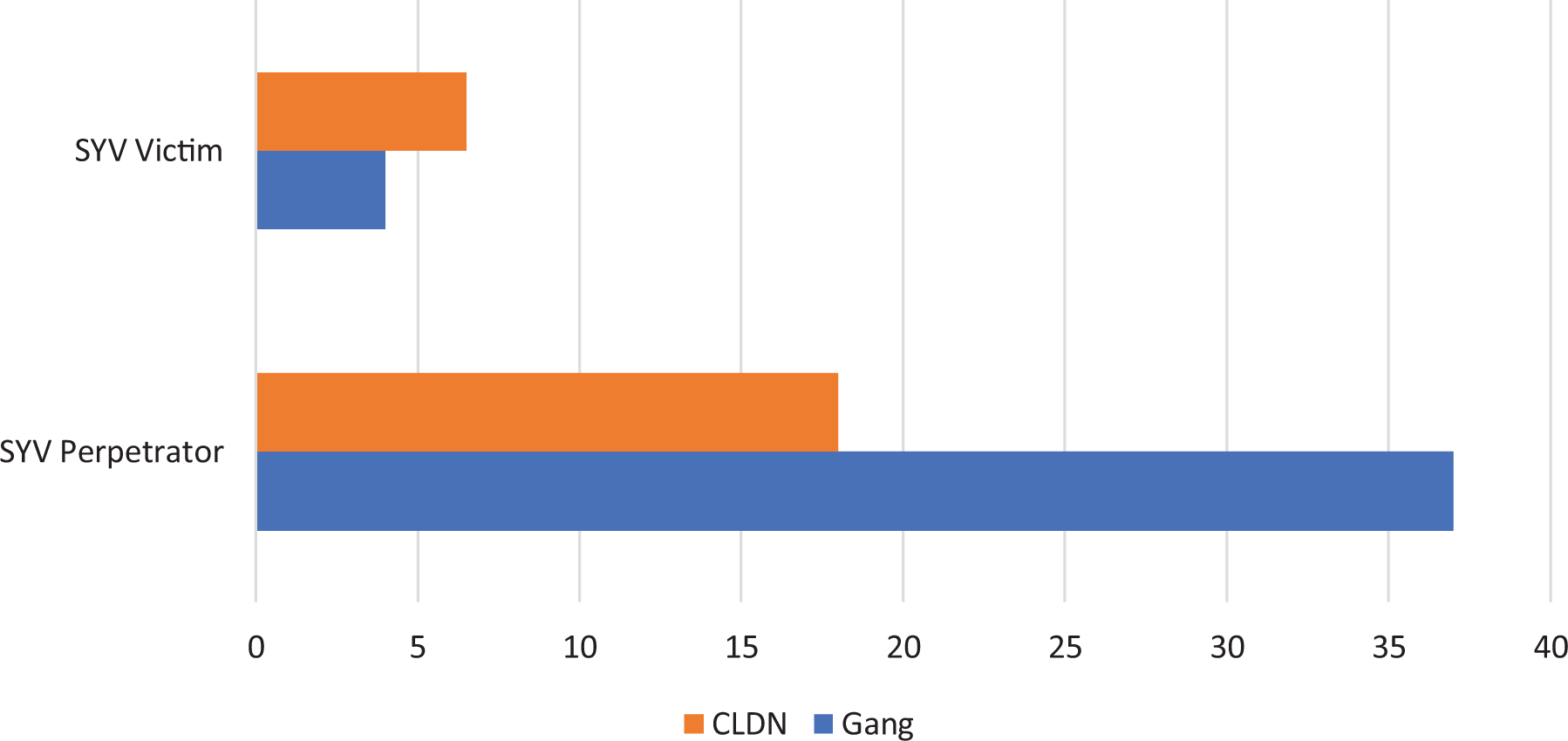
Percentage of nominals involved in Seroius Youth Violence (SYV).
Interviewees made reference to county line nominals as both the perpetrators and victims of violence, referring to one of the hidden features of county line drug networks, problematic drug users (PDUs). The interviewees recognised the inherent vulnerabilities of PDUs: and their exposure to harm by county line drug networks: ‘a 14-year-old, who is perhaps physically impressive is more than capable of disciplining a middle-aged drug addict in his flat’ (SYVP).
While not every 14-year-old within a county line drug network is necessarily ‘physically impressive’, it is a reality of county lines, that what appears within a data set as a child is actually someone potentially capable of extreme violence that poses a risk to themselves and others. The YOS manager explained how a young person convicted of dealing drugs saw the PDU market as ‘trash’, but acknowledged that individuals associated with county line drug networks are vulnerable, evidenced in the YOS manager’s encompassing approach to vulnerability: Everyone involved in county lines are vulnerable in my opinion. So, if you start with the people that are dealing drugs, distributing the drugs, they are vulnerable because they will be targeted by the gangs who want to steal their drugs. (YOM) (Vulnerability) means young people, or any individual actually, who has low emotional intelligence, low resilience, easily led by others, may have mental health issues, may have speech and language issues, may not have stable, trusting relationships with adults, appropriate adults, may not have stable lives as in schools not in place, poverty is quite high in their lifestyle, special educational needs, doesn’t have a diverse peer group. …your hands can be tied as you have got to deal with them for drugs…but having listened to other people that have worked in that sector such as the Children’s Society and the Human Trafficking (Foundation) my use of language and my opinion has changed.
Potential risk factors for association with county line drug network activity
Twenty seven percent (n = 76) of those in Springtide’s county line drug networks have previously been reported as a missing person, of which approximately two fifths have been reported missing on five occasions or more. Of the 31 previously reported as a repeated missing person, two thirds have been within local authority care within the last 2 years; additionally, two fifths of under 20 s in Springtide’s county lines have been a looked after child (LAC) within the previous 2 years. The MCT also demonstrated that nearly a third of those currently aged 17 and under had been excluded from school, which resonates with the experience of the interviewees: PRUs (pupil referral units) are hugely disproportionately represented in county lines and drug supply and missing children. [SPO] I would say, between 80% and 90% of [young people in PRUs], appear to be the ones that are on County Lines. [YOM] I am wary about drawing too tight a connection, because some of the people, who have caused us most anxiety, were excellent pupils, with good attendance rates. [SYVP]
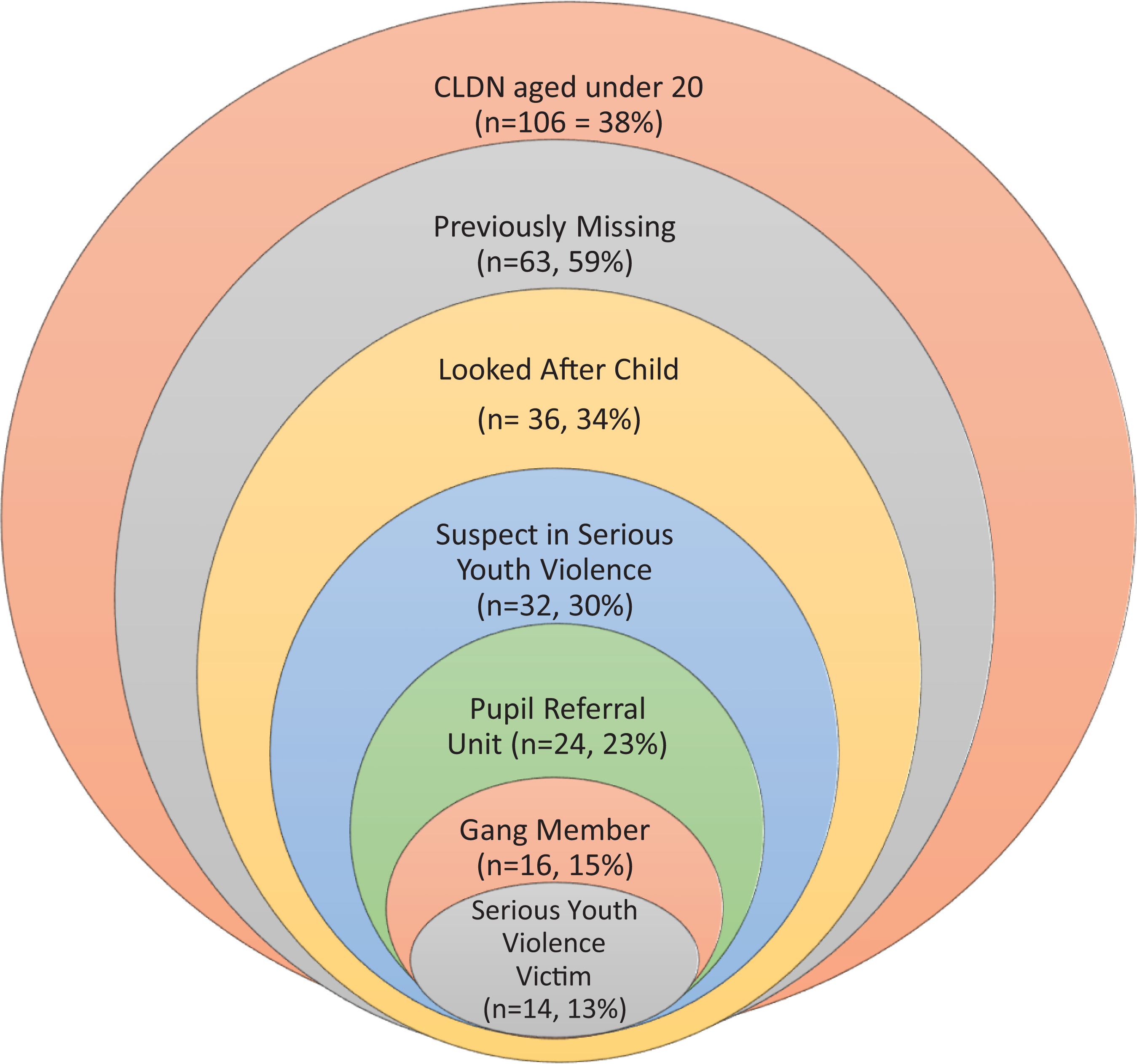
Analysis of risk factors of CLDN engagement for nominals aged 20 or under.
When discussing the link between poverty and county line offending, the Head of SVU observed that crack and heroin markets provide economic opportunity for those whose formal labour options are poor: (Poverty) is definitely a factor. I should just emphasize that, it only really looks a good option to people who have limited options…if Springtide had the demographics of Richmond, the pupils would not be going into this in such large numbers. (SYVP) somebody gets into a line through a friend, it is a simple as that…it is not a particularly difficult business model…there is this kind of mental image which safeguarding professionals will have, a demonic 40-year-old directly interceding with a young child, when it is in fact a franchising thing. I think it is becoming for some a rite of passage…I have been in conversation with young people that…haven’t been involved in any kind of criminality, who don’t carry knives, who haven’t sold drugs, they are being berated by others, and not being included into a social circle because they haven’t lived the same experiences as others. So, through social media they are being berated and disrespected and they are feeling isolated, so they are choosing to go down this route to be included with a certain type of people. [YOM]
Statutory challenges to effectively responding to County Line Drug Networks
The interviewees had first-hand experience of some of the statutory challenges of responding to county lines, as exemplified by the case of a 14-year-old female arrested outside London. A month later she witnessed the murder of a young man in Springtide. Both the victim of the murder and both suspects were all suspected of being involved in county lines. The SPO described how: …she had twenty plus people from different agencies in her life and…none of them were effectively communicating with each other. The only way we have successfully dealt with (county lines) is if we’ve had a problem so significant enough that we have had to have some kind of bilateral partnership with that force area… I know from direct feedback…that when (other forces) send things through to the Met, it does not get bounced back out again. It does not get fed into the right location. You have got the lack of information sharing particularly if it happens outside of London, we don’t get swift reporting. We had these agonizing chats over the (MSA). It simply doesn’t really fit into most of the instances because it is child on child and even when you have a more violent and predatory relationship, you are still talking about the relationship between a 16-year-old and a 14-year-old. (SYVP) I don’t think it [MSA] has sufficient attention to the issues young people are facing. I don’t think the legislation is easy to use. …they don’t want to talk about it because they feel that they will be informing, because they know we have to pass on information. So, it creates a big barrier to any intervention work around being on a county line. (SPO) Parents aren’t reporting them missing, so it is a problem. And sometimes the parents even know because they want to get a bit of money coming in to help pay for some bills or support their drug habits….
Limitations
A repeated charge levied at police data is its inherent flaws due to human error and preconceived attitudes, prejudices and exaggerations (Fraser and Atkinson, 2014; McCorkle and Meithe, 1998; Smithson et al ., 2012). Additionally, the MCT can only be reflective of the county line drug networks of Springtide. However, the database is derived from police indices that have been processed accordingly with MPS data standards. It is however acknowledged that how CLDNs operate within a London Borough compared to for example cities in the North of England or indeed Scotland will differ according to policing policy, geographical terrains and the differing racial and cultural demographics of these geographical locations. The historic structure of London street-gangs and their approach to illicit drug dealing (Pitts, 2008) is also a factor. An analysis of the impact of race / culture as a factor was beyond this small-scale study but does warrant further investigation within datasets.
A limitation of the study is also the small sample size, consequently it is not possible to draw any firm conclusions; statistical analyses to compare, for example gang and CLDN nominee profiles is not possible as the groups and their size are unequal. However, it is not the intention of this study to generalise findings, instead, it is to provide a description of the current intelligence, based on data and expert insights, into how county line drug networks are operating and how agencies are responding, within a London borough which is a significant exporter of county lines nationally (see Figure 3).
It is acknowledged that the perspective of those interviewed may reflect their own professional and personal values, but without this perspective the fuller picture gathered would not have been possible.
Discussion
The findings from the analysis of secondary data confirm that within Springtide, county lines are prevalent, extend across the country, involve individuals predominantly aged 16–23 years of age, but within a broad age range. There are some similarities with gangs in terms of age profile, but while gang membership within Springtide is lower than county line association, the proportion of young people (under the age of 18) in gangs is slightly higher. Gang membership is potentially more likely to be associated with being a perpetrator of violence, while association with county lines in Springtide is more highly associated with being a victim of violence.
Windle and Briggs (2015a: 1178) observed that drug dealing is separate to gang activity. However, due to the overlap between actors in gangs and CLDNs it is difficult to establish where a gang ends and an organised crime group (OCG) begins (Densley, 2012: 44–45), and while there is the potential for friction between gang membership and the business of selling drugs (Hallsworth and Young, 2004), the comment from the head of the SVU, that ‘there is no war on drugs. What they mean is business is business.’ suggests that economic drivers surpass the emotional drivers that are prerequisite for gang membership and associated affiliation.
The business model underpinning CLDNs is evident in studies that have examined their modus operands. For example, Spicer’s (2018) study of police officers’ found that a dominant narrative expressed by all participants was that CLDNs operated very similarly to legitimate businesses, with a desire to generate profit. Through recognised business practices those running the lines rapidly achieved brand recognition, thus competition from local dealers, if they had not already been scared off by intimidation or acts of violence, was quickly undermined due to the proficiency of the networks. Windle and Briggs (2015a, 2015b) noted those involved in county lines fulfilled different roles, including entrepreneurial, employee or sub-contractors. Robinson et al. (2018) noted a more diverse mix of younger, socially based, but still profit-driven, criminal groupings who compete for profits while Densley et al. (201) observed digital dealing for tech savvy youngsters. However it should be noted that CLDNs are not the only route of illicit drug supply within the UK, with different modes of illicit drug dealing operating according to the type and demands of the ‘consumer’ reported (Glenny and Lang, 2019). Nevertheless, drugs are a commodity and the nature of the heroin / crack markets are by virtue of the customer base more volatile and require a more hands on security of commodity response. Arguably therefore, few drug dealers who can sell drugs to a more affluent market of recreational users (cannabinoids, cocaine – not crack, synthetic drugs, etc) would trouble themselves with the more subterranean culture of crack and heroin markets. Indeed while a Home Office commissioned review of drugs (Black, 2020) found that heroin and crack markets have been overtaken by CLDNs in place of organised crime groups and gangs, the report also notes the increasing use of powder cocaine, particularly among while males under 30 years of age, and reports that (in line with the aforementioned business model and adaptability of CLDNs), that county lines are themselves starting to deal in powder cocaine.
Overall, this study supports previous research which suggests that gangs and CLDNs may be more distinct than the prevailing narrative implies (Windle and Briggs, 2015a, 2015b; Coomber and Moyle, 2017; Densley et al., 2018; Jaensch and South, 2018) evidenced by the limited cross-over between both groups and the interviewees’ corroborating observations. Explanation of collaboration between those in county lines speaks of financial motive usurping territorial rivalry. Indeed Harding (2020) conceptualises county line drug networks within a transactional framework of customer relationship management, and business decisions, whose central purpose is building competitive advantage, the emergence of county lines causing change and consequently flux within historical affiliations among urban street gangs. Further research may cast light on Densley’s assertion that gangs become OCGs or in this case county line drug networks (Densley and Stevens, 2014).
The picture of Springtide’s youth that emerges is one where young people are both victims and perpetrators of crime; there is symmetry in the age profiles of victims and offenders. What is also apparent from the data is that those associated with county lines present numerous vulnerabilities, namely high ratios of missing episodes, being looked after/in the care system, victim or perpetrator of serious youth violence and exclusion from education, which are all factors associated with increased likelihood of offending (Sturrock and Holmes, 2015). This is highly relevant as research shows a clear link between young peoples’ criminality and having negative perceptions about one’s future, with a link between youth deprivation and crime established (Alm and Estrada, 2018).
Findings from the study also suggest that exploitation in CLDNs does not present as a straightforward proposition and that peer led dynamics may be more prevalent. While some counter that young people in county line drug networks don’t realise their own exploitation (Densley, 2012: 55; The Children’s Society, 2019) there is a substantial counter-narrative that entry into drug markets is largely volitional with evidence that young people’s entry into county lines is peer led and not adversarial in most instances (McSweeney et al ., 2008; Sturrock and Holmes, 2015; Windle and Briggs, 2015a, 2015b). Harding’s (2020) observational study also supports the initial volitional/agentic involvement of young people in CLDNs, county line involvement offering young people a quick route to power, wealth and status, through which they rapidly acquire ‘street capital’(Harding, 2020: 271).
Conclusion
The social position of county lines is significant, the cultural milieu it inhabits representing a perceived threat to the sensibilities of non-urban populations. As illicit drugs increasingly fill the void of real market opportunities, the black economy becomes so normalised, as do the behaviours of those involved, that it becomes increasingly difficult to pursue those engaged in illicit drug markets. Indeed, what is becoming increasingly obvious is that the ‘war on drugs’ in its current form is providing ever more complex challenges for those fighting it. Low level organised crime has developed into an issue beyond conventional policing (Harfield, 2008).
Policing in its current form is struggling to adapt to what is effectively ‘disorganised crime’. As demographics and the nature of drug markets (enabled by technological advances) have evolved, it requires a whole mechanism on the part of the justice sector to respond accordingly. Laws need to be drafted, police and courts trained and educated, and assets and policies need to then follow.
The data from this study suggests that there is a significand crossover between county lines and local drug networks. However, notwithstanding that, there is a significant distinction too. The motivational factors for being in a gang and for being on a CLDN appear to diverge. Attributes that make an effective gang member do not necessarily make someone an effective member of a drugs network. This is borne out by the expert practitioners interviewed and also evident in differences in relation to exposure to youth violence.
Harding (2020) observed that for many young people, notably those with limited or zero work experience, involvement in CLDNs offers tax free profits, flexible working, mirroring the (already familiar) gig economy, indeed a key driver for affiliation with CLDNs is the lack of other viable employment opportunities in communities beset with disadvantage on a multiplicity of levels (Alm and Estrada, 2018). This is highly relevant as the NCA (2019) notes that the current county lines criminal business model thrives on the exploitation of vulnerable adults and children, with any vulnerability a potential target (NCA, 2019: 7). The question is how to disincentivise a young person from dealing drugs when faced with such scant alternatives to offer t (Hales and Hobbs, 2010: 29), scant alternatives that in the ‘new normal’ post coronavirus world we inhabit, are likely to increase, given the resultant global recession and attendant economic downturn that is likely to follow. As Pitts (2020) notes, it is likely that the ‘pool of availability’ [of young CLDN runners] (Harding, 2020) will grow, as history tells us that paradoxically, recession is associated with increased levels of illicit drug use.
Nevertheless, not all young people from disadvantaged communities engage with crime and specifically county line drug networks. Further research which illuminates factors that drive some young people to engage with county line drug networks, where others do not, would therefore be informative, the data used as a basis for a public health approach to minimising the youth violence associated with county line drug networks. Multi-agency collaboration has mitigated the threat posed by county line drug networks (NCA, 2019) and research which informs an interdisciplinary approach to early intervention with vulnerable adults and children would further inform multi-agency priorities and strategies for early intervention.
Footnotes
Declaration of conflicting interests
The author(s) declared no potential conflicts of interest with respect to the research, authorship, and/or publication of this article.
Funding
The author(s) received no financial support for the research, authorship, and/or publication of this article.
