



Abstract
Access to timely and reliable agricultural extension and advisory services (AEAS) remains a critical challenge for smallholder farmers across sub-Saharan Africa. Although AEAS play a central role in improving productivity and resilience, public systems are often under-resourced and unevenly delivered, particularly in remote and low-income regions. In Ghana's Upper West Region (UWR), high farmer-to-agent ratios and logistical constraints limit service effectiveness. As governments and development partners explore cost-sharing and market-oriented extension models, understanding farmers’ willingness to pay (WTP) for advisory services becomes increasingly important. This study examines the determinants of smallholder farmers’ WTP for AEAS in the UWR, with particular emphasis on household food insecurity and socio-economic characteristics. Data were drawn from a cross-sectional survey of 1033 smallholder households and analyzed using nested binary logistic regression models. The results indicate that food insecurity significantly reduces the likelihood of WTP. In contrast, female-headed households, households practicing joint decision-making, and those with access to remittances or farm credit were more likely to express WTP. Extended family structures and greater participation in agricultural labor were also positively associated with WTP. Notably, poorer households demonstrated higher WTP relative to wealthier groups. The findings highlight the importance of accounting for consumption vulnerability, financial access, and household organization in the design of cost-sharing extension systems. Policies that incorporate targeted subsidies, gender-responsive programming, and community-based delivery mechanisms may enhance inclusivity and sustainability in agricultural advisory provision.
Keywords
Introduction
Agriculture continues to underpin rural livelihoods and economic transformation across sub-Saharan Africa (SSA), employing a large share of the labor force and contributing significantly to national GDPs (e.g., Christiaensen and Demery, 2018; Jayne et al., 2014). In this region, smallholder farmers, who constitute the majority of agricultural producers, face persistent structural and environmental constraints that limit productivity and income stability (Lowder et al., 2016; Touch et al., 2024). These challenges include climate variability, soil degradation, pests and diseases, and volatile output markets. Given their heavy reliance on rainfed production systems, smallholders are particularly exposed to climatic and market shocks, making access to timely, credible, and context-specific agricultural information essential for productivity growth, risk management, and livelihood resilience (Touch et al., 2024).
Agricultural extension and advisory services (AEAS) are widely recognized as critical instruments for enhancing farm performance, accelerating technology adoption, and strengthening adaptive capacity among smallholder farmers (Anderson and Feder, 2007; Davis et al., 2012; Pienaah et al., 2024). In many SSA countries, extension has historically been delivered through publicly funded systems in which Agricultural Extension Agents (AEAs) act as intermediaries between research institutions and rural producers (Benson and Jafry, 2013; Kingiri, 2021; Mungai et al., 2024). However, public extension systems frequently operate under severe fiscal and logistical constraints, characterized by high farmer-to-agent ratios, inadequate operational budgets, and limited mobility (Ragasa et al., 2016; Swanson, 2008). As a result, service delivery is often irregular and insufficiently responsive to farmers’ heterogeneous needs, particularly in geographically remote or resource-poor settings (Hailemichael and Haug, 2020; Sennuga and Angba, 2021).
In response to these limitations, pluralistic extension approaches have expanded, incorporating non-state and community-based actors into the advisory landscape. These include Farmer-Based Organizations (FBOs), Farmer Field Schools (FFS), Village Savings and Loans Associations (VSLAs), Lead-Farmer Systems (LFS), farmer-to-farmer learning models, and digital advisory platforms (Abdu et al., 2022; Ochieng et al., 2022; Pienaah et al., 2024). Such arrangements seek to enhance outreach, relevance, and accountability by leveraging collective action, peer networks, and information and communication technologies. However, as extension systems transition from fully subsidized public provision toward cost-sharing and market-oriented models, questions of financial sustainability and farmer demand become increasingly central (Rivera and Alex, 2004). Despite this shift, empirical evidence on smallholders’ willingness to pay (WTP) for advisory services remains limited, particularly in low-income and food-insecure rural contexts.
This knowledge gap is especially salient in northern Ghana, where agriculture constitutes the primary livelihood activity, yet extension coverage remains constrained. In the Upper West Region (UWR) of northern Ghana, farmer-to-extension-agent ratios substantially exceed recommended thresholds, limiting the frequency and quality of contact between farmers and service providers. Recent empirical studies in northern Ghana similarly document persistent access gaps and uneven service quality, particularly among poorer and geographically isolated households (e.g., Anang and Asante, 2020; Pienaah et al., 2024). Structural factors, including inadequate rural infrastructure, limited digital literacy, and patchy mobile network connectivity, further restrict the effectiveness of both conventional and information and communication technologies-enabled advisory systems (Anang and Asante, 2020; Asenso-Okyere and Mekonnen, 2012). Although mobile-based platforms provide weather forecasts, market information, and agronomic recommendations, adoption and sustained use are often constrained by affordability, trust, and perceived value (Aker et al., 2016).
While policy discourse increasingly emphasizes participatory and demand-driven extension, much of the empirical literature in Ghana and SSA remains supply-oriented, focusing on program design, delivery modalities, and impact evaluation. Comparatively less attention has been devoted to demand-side determinants, including farmers’ valuation of advisory services and their willingness to contribute financially (Olum et al., 2020). Moreover, limited research has examined how socio-economic vulnerability, particularly household food insecurity, shapes farmers’ capacity and readiness to invest in productivity-enhancing services. Food insecurity not only reflects constrained resource endowments but may also influence risk preferences, planning horizons, and liquidity constraints, thereby affecting investment decisions. From an agricultural household model perspective, liquidity and consumption constraints can crowd out productive investments, especially among risk-averse households facing subsistence pressures (Finkelshtain and Chalfant, 1991; Singgh et al., 1986). Understanding these dynamics is therefore critical for designing inclusive and financially sustainable AEAS systems.
Rather than relying on a specific psychological framework, this study adopts an empirical demand-side approach informed by agricultural household and livelihood perspectives. Within this framework, WTP for AEAS is analyzed as a function of observable individual, household, and community-level characteristics. The analysis centers on the UWR of Ghana and focuses on participatory delivery platforms, including FBOs, FFS, VSLAs, and LFS.
A central contribution of this study is the integration of household food insecurity, conceptualized in terms of access, affordability, and dietary adequacy (Coates et al., 2007), as a key explanatory variable in WTP models. By explicitly incorporating food security status into the econometric specification, the study advances existing WTP literature, which has rarely accounted for consumption vulnerability as a determinant of demand for advisory services (Olum et al., 2020). We hypothesize that households experiencing higher levels of food insecurity are less likely to express WTP for extension and advisory services, even when they recognize potential long-term benefits.
Ultimately, by linking WTP to food security status and a range of socio-economic characteristics, this study provides evidence to inform the design of inclusive, demand-responsive, and financially viable extension models. The findings offer practical implications for policymakers, development partners, and researchers seeking to strengthen AEAS systems in low-income, smallholder-dominated contexts where both structural constraints and household vulnerability shape investment behavior.
Methodology
Study area and context
This study was conducted in Ghana's UWR, one of the five regions in the country's northern belt
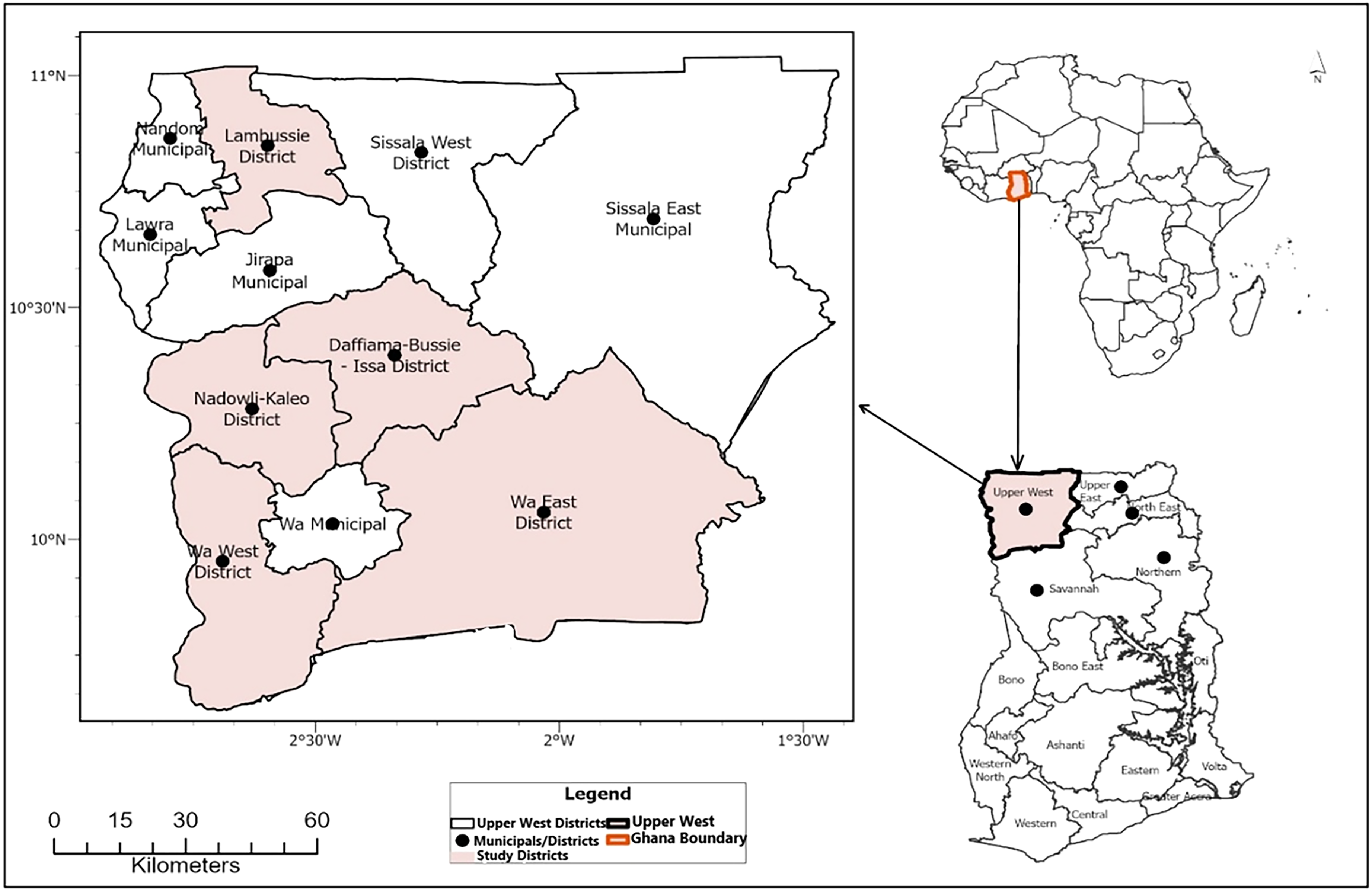
Map of Upper West region showing the study districts (author's construct).
Agro-ecologically, the region lies within the Sudan and Guinea Savannah zones and is characterized by a unimodal rainfall pattern from May to October. Average annual rainfall ranges from 840 to 1400 mm, while dry-season temperatures frequently exceed 35 °C (GSS, 2020). Rainfall variability and exposure to high temperatures contribute to production uncertainty and seasonal income instability among farming households.
Economically, the UWR is among the least industrialized regions in Ghana and faces significant development challenges. The region records a Multidimensional Poverty Index of 0.348, compared to the national average of 0.112, with approximately 65.5% of residents classified as multidimensionally poor (GSS, 2020). Poverty levels are particularly high in Wa West (61.9%), Wa East (48.7%), Lambussie (44.2%), Nadowli-Kaleo (40.6%), and Daffiama-Bussie-Issa (DBI; 38.7%), the five districts selected for this study (GSS, 2020). These districts were purposively selected to capture variation in socio-economic conditions, infrastructure, and agricultural production systems within the region.
Agriculture is the dominant livelihood activity across the selected districts, with common crops including maize, millet, cowpea, yams, and groundnuts, while livestock production serves as a complementary income source. Despite agriculture's central role, access to extension and advisory services remains constrained by high farmer-to-agent ratios and logistical limitations, limiting the regularity and depth of farmer–extension contact. Community-based platforms, including FBOs, FFS, and VSLAs, operate alongside public extension systems to supplement information delivery.
Given its high poverty incidence, climate vulnerability, and structural limitations in extension provision, the UWR provides a policy-relevant context for examining smallholder farmers’ WTP for AEAS.
Data collection
This study draws on data from a cross-sectional household survey conducted among 1033 smallholder farming households in Ghana's UWR between July 4, 2024, and July 4, 2025. The survey formed part of a broader research initiative examining postharvest food loss and rural livelihood systems in SSA. While related analyses from the larger project have been reported elsewhere (Pienaah et al., 2025; Pienaah et al., 2026), the present study utilizes a distinct analytical focus and therefore provides a standalone description of the sampling and data collection procedures.
Sampling strategy
A multi-stage sampling design was employed. First, five districts, Nadowli-Kaleo, DBI, Lambussie, Wa East, and Wa West, were purposively selected due to their high concentration of smallholder farmers, elevated poverty levels, and vulnerability to climate-related agricultural risks. Within each district, farming communities were selected using random sampling procedures to ensure geographic and socio-economic diversity. At the household level, systematic random sampling was applied. Enumerators began at a randomly selected household at the entrance of each community and subsequently surveyed every fifth household until the required sample size was achieved. Within each selected household, the primary male or female smallholder farmer aged 18 years or older was interviewed on behalf of the household.
Sample size determination
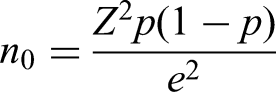
The sample size was calculated using Cochran's (1977) formula for estimating sample size in large or infinite populations:
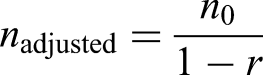
To account for a projected 5% non-response rate, the sample was adjusted as follows:
Survey administration
Data were collected through structured, face-to-face interviews conducted by trained enumerators fluent in local languages, including Dagaare, Sissale, Brifor, and Waale. The questionnaire was developed using established survey instruments and adapted to the local context. It included modules on agricultural production, access to extension services, household food security, income sources, and demographic characteristics. The instrument was pre-tested to ensure clarity, cultural relevance, and reliability. Interviews lasted approximately 45 to 60 min. Responses were recorded electronically on tablets and smartphones using Qualtrics software, enabling real-time data entry, encrypted cloud storage, and routine quality checks throughout the data collection period.
Measures
The dependent variable in this study is farmers’ WTP for timely AEAS. WTP was measured using a binary (dichotomous) response format. Respondents were asked whether they would be willing to pay for timely, relevant, and tailored extension and advisory services if they were reliably available. Prior to asking the question, respondents were provided with a standardized description of AEAS. These services were defined as expert guidance on crop and livestock production, pest and disease management, weather forecasting, pre- and post-harvest management, climate-related risks such as drought and floods, food loss reduction, and market information delivered at critical stages of the agricultural calendar (Blockeel et al., 2023; Dheebakaran et al., 2019). Service delivery platforms were described as including FBOs, FFS, VSLAs, LFS, farmer-to-farmer learning networks, local radio broadcasts, community information centers, mobile phone alerts, and group trainings. Following this explanation, farmers were asked: “Would you be willing to pay for such timely advisory services if they were made reliably available through one or more of these platforms?” Responses were coded as 0 = no (unwilling to pay) and 1 = yes (willing to pay). The binary response format was selected to reduce cognitive burden, particularly in low-literacy rural contexts, and to capture a clear participation decision consistent with contingent valuation approaches widely used in agricultural economics. This format allows estimation of the probability of WTP while minimizing strategic bias and unrealistic monetary bidding in settings where respondents may face difficulty specifying precise payment amounts. Other studies have also measured WTP in a similar context (Jia and McNamara, 2024; Paudel et al., 2019).
The focal independent variable is household food insecurity, measured using the Household Food Insecurity Access Scale (HFIAS) (Coates et al., 2007). The HFIAS consists of nine standardized questions assessing household experiences related to food access and affordability over the preceding four weeks. For each question, respondents reported frequency using four categories: never (0), rarely (1–2 times), sometimes (3–10 times), and often (more than 10 times). Responses were aggregated to generate a composite food insecurity score, which was subsequently categorized into four levels: food secure (0), mildly food insecure (1), moderately food insecure (2), and severely food insecure (3). Food insecurity was treated as a central explanatory variable because it reflects liquidity constraints and consumption pressures that may influence households’ capacity to invest in advisory services. The categorical food insecurity variable was included in all bivariate and multivariate regression models to assess its association with WTP while controlling for other covariates. This approach reflects recent empirical work by Kolog et al. (2023) and Pienaah and Luginaah (2024).
Following other contextually relevant studies on food security and climate change (Kansanga et al., 2025; Kolog et al., 2023), eighteen covariates were included to capture demographic characteristics, economic capacity, production scale, and structural constraints that may influence WTP. Age of the primary farmer was categorized into five groups (18–29, 30–39, 40–49, 50–59, and 60+ years) to reflect life-cycle stages relevant to farming experience, labor capacity, and risk orientation. Categorizing age enables identification of potential nonlinear generational differences that may not be adequately captured using a continuous specification.
Household size was categorized into three groups (1–4, 5–8, and 9+ members) to capture meaningful differences in consumption burden and labor availability among smallholder households. Larger households may simultaneously provide greater agricultural labor while facing higher food consumption demands. Categorization enables the detection of potential threshold effects in the relationship among household structure, food insecurity, and WTP.
Household wealth was measured using an asset-based index constructed from information on durable goods ownership, housing characteristics, and productive assets. Specifically, variables such as ownership of livestock, farm equipment, transportation assets (e.g., bicycles or motorbikes), housing materials (roofing and flooring types), and access to utilities were included in the index construction. Principal Component Analysis was employed to generate standardized asset scores. The first principal component was retained and used to compute a composite wealth score for each household. Households were then ranked and divided into ordered wealth categories based on the distribution of asset index scores. This approach captures long-term economic status and asset endowment more reliably than short-term income measures, which may fluctuate seasonally in smallholder agricultural settings.
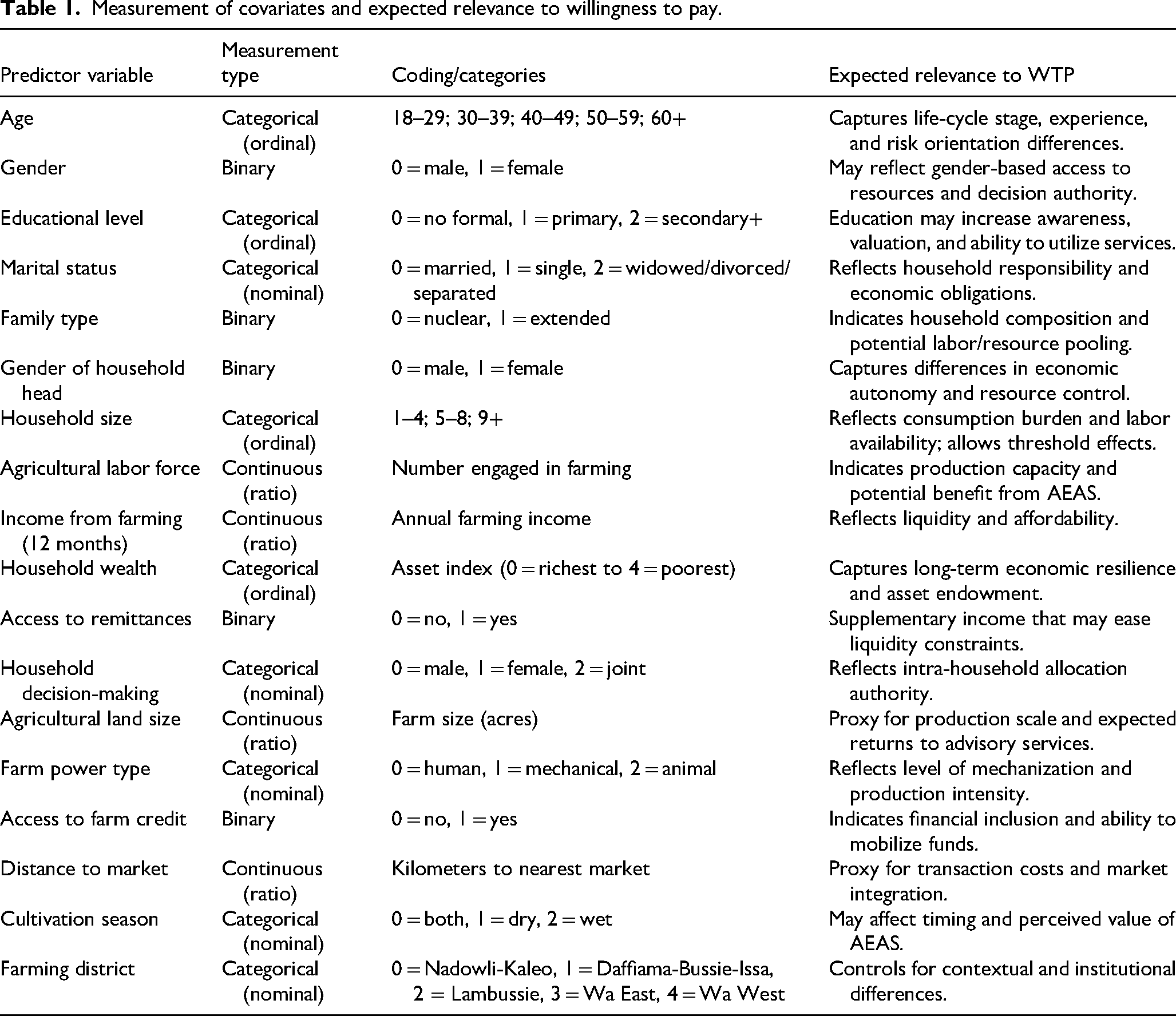
Additional control variables included educational level, marital status, family type, gender of household head, agricultural labor force, annual farm income, access to remittances, household decision-making structure, landholding size, farm power type, access to farm credit, distance to market, cultivation season, and farming district. These variables reflect economic capacity, financial access, transaction costs, and contextual conditions consistent with agricultural household and livelihood frameworks. Table 1 summarizes the measurement and coding of all variables included in the analysis.
Measurement of covariates and expected relevance to willingness to pay.
Data analysis
The data analysis followed a three-stage approach: univariate, bivariate, and multivariate. At the univariate level, descriptive statistics were used to summarize the characteristics of the study sample. Measures of central tendency and dispersion were reported for continuous variables, while percentages/mean were presented for categorical variables.
At the bivariate level, binary logistic regression was used to assess the independent association between each explanatory variable and the dichotomous outcome variable, WTP (1 = yes, 0 = no). Bivariate models were estimated to identify potential predictors and to examine the direction and magnitude of associations prior to multivariate modeling.
At the multivariate level, a nested binary logistic regression approach was employed to examine the combined and incremental influence of predictors grouped across three domains: individual-level factors (Model 1), household-level factors (Model 2), and farm/community-level factors (Model 3). Model 1 included individual characteristics such as age and gender. Model 2 introduced household-level variables, including income, wealth status, remittance access, household headship, and decision-making structure, while retaining individual-level predictors. Model 3 added farm and community-level variables, including access to farm credit, farm power type, cultivation season, and farming district, while controlling for all previously included variables.
The primary explanatory variable of interest, household food insecurity, was included in all three models to enable consistent assessment of its association with WTP as additional blocks of covariates were introduced. This hierarchical modeling strategy allows for examination of how the estimated effect of food insecurity changes when controlling for progressively broader sets of demographic, economic, and contextual variables. The binary logistic regression model follows the standard functional form adapted from Wang and Hu (2006):
To assess model reliability, multicollinearity diagnostics were conducted using the Variance Inflation Factor (VIF). All variables recorded VIF values below 2.0, indicating no evidence of problematic multicollinearity. Model fit was evaluated using pseudo-R2 statistics, the Akaike Information Criterion (AIC), the Bayesian Information Criterion (BIC), and likelihood ratio tests (see Table 4). Improvement in model fit was assessed across the nested models, with lower AIC and BIC values and higher pseudo-R2 values indicating better explanatory performance. All statistical analyses were conducted using Stata version 19.
Results
Univariate results
The univariate results in Table 2 indicate that approximately 56.8% of smallholder farmers reported a WTP for AEAS, while 43.2% indicated they were unwilling to pay. Regarding household food security status, 36.0% of respondents were classified as food secure, 17.9% as mildly food insecure, 37.1% as moderately food insecure, and 9.0% as severely food insecure. At the individual and household levels, the majority of respondents were married (86.4%), and nuclear family structures were most common (63.1%). Most households were male-headed (66.9%), and more than half (52.1%) had between five and eight members. In terms of economic characteristics, 30.0% of households were classified within the poorest wealth category, and 81.0% reported no access to remittances. Household decision-making was predominantly male-led, with 9.9% of households reporting female headship and a smaller proportion indicating joint decision-making arrangements. At the farm level, 82.3% of respondents relied primarily on human power for cultivation. Access to farm credit was reported by 51.0% of farmers. These descriptive statistics summarize the demographic, economic, and farm characteristics of the study sample and provide a foundation for subsequent bivariate and multivariate analyses.
Sample characteristics of smallholder farmers in northern Ghana.
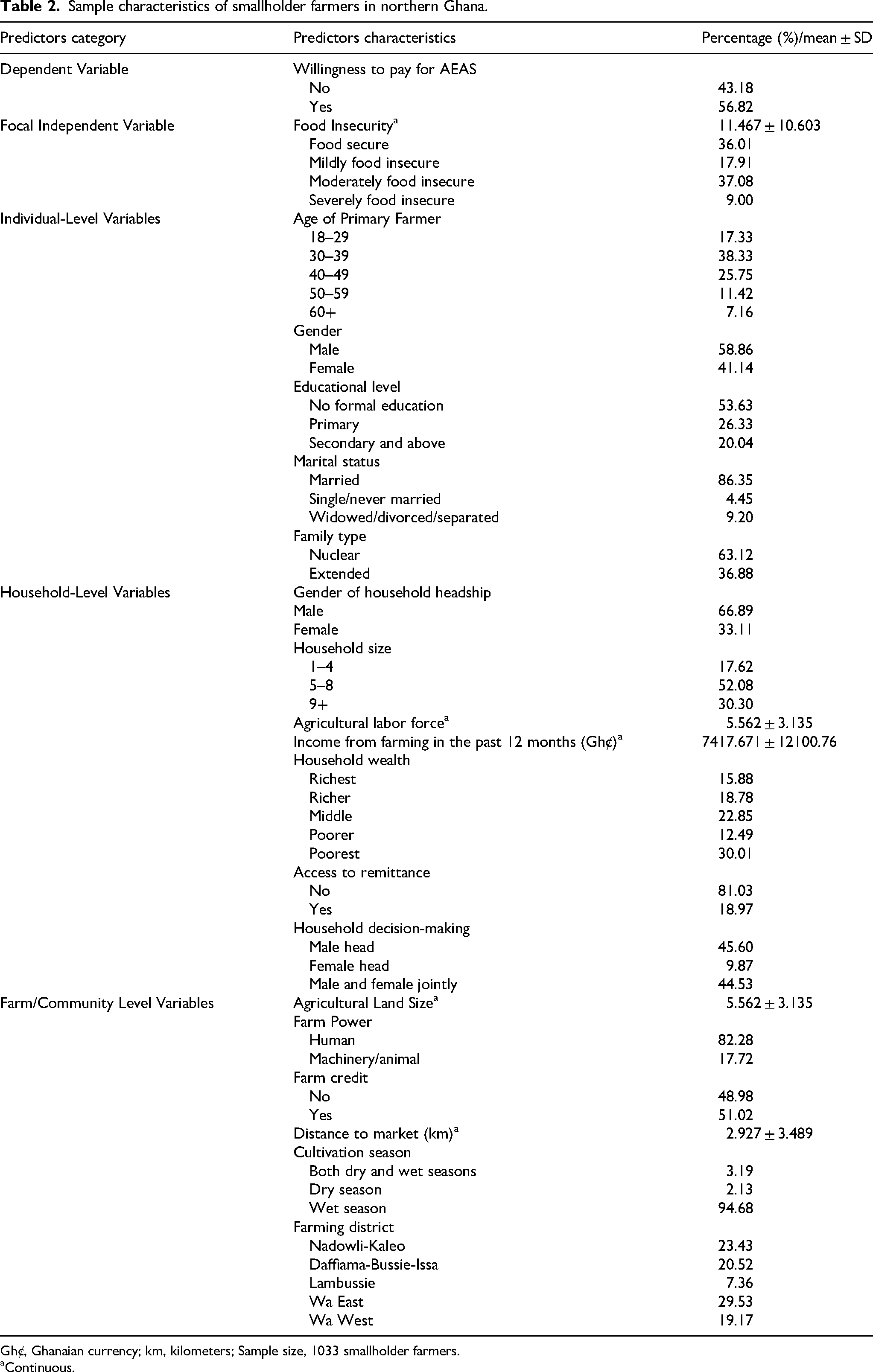
Gh¢, Ghanaian currency; km, kilometers; Sample size, 1033 smallholder farmers.
Continuous.
Bivariate results
The bivariate logistic regression results are presented in Table 3. Household food insecurity was significantly associated with WTP for AEAS. Compared to food-secure households, those categorized as mildly (OR = 0.440, p < .001), moderately (OR = 0.270, p < .001), and severely food insecure (OR = 0.226, p < .001) had significantly a lower likelihood of expressing WTP. At the household level, each additional member in the agricultural labor force was associated with a higher likelihood of WTP (OR = 1.090, p < .001). Income from farming was positively associated with WTP (OR = 1.000, p < .001). Compared to the richest households, those in the middle (OR = 0.592, p < .01) and poorer wealth categories (OR = 0.542, p < .01) had significantly lower odds of WTP. Households with access to remittances had higher odds of WTP (OR = 1.832, p < .001) compared to those without remittance access. Joint decision-making between male and female heads was associated with higher odds of WTP (OR = 1.135, p < .01) relative to male-only decision-making. At the farm and community level, farming exclusively in the wet season was associated with higher odds of WTP (OR = 1.872, p < .05) compared to farming in both dry and wet seasons.
Bivariate logistic regression results: correlates of willingness to pay for agricultural extension and advisory services.
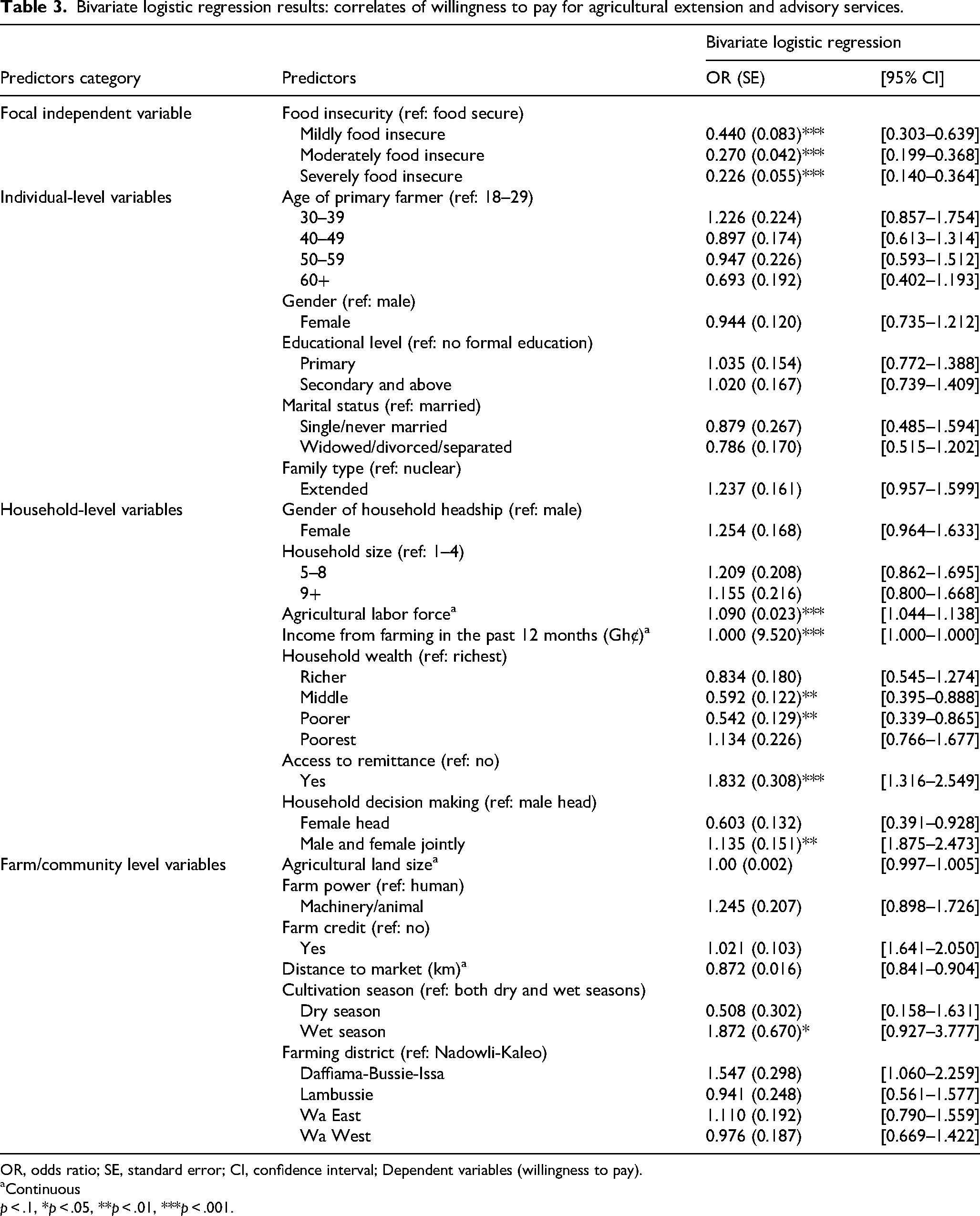
OR, odds ratio; SE, standard error; CI, confidence interval; Dependent variables (willingness to pay).
Continuous
p < .1, *p < .05, **p < .01, ***p < .001.
Multivariate results
The results of the nested multiple logistic regression analysis are presented in Table 4. In Model 1, household food insecurity was negatively associated with WTP for AEAS. Compared to food-secure farmers, those classified as mildly (OR = 0.418, p < .001), moderately (OR = 0.271, p < .001), and severely food insecure (OR = 0.183, p < .001) had significantly lower odds of expressing WTP. Farmers from extended family households (OR = 1.509, p < .001) had higher odds of WTP compared to those from nuclear families.
Nested multiple correlates of willingness to pay for agricultural extension and advisory services.
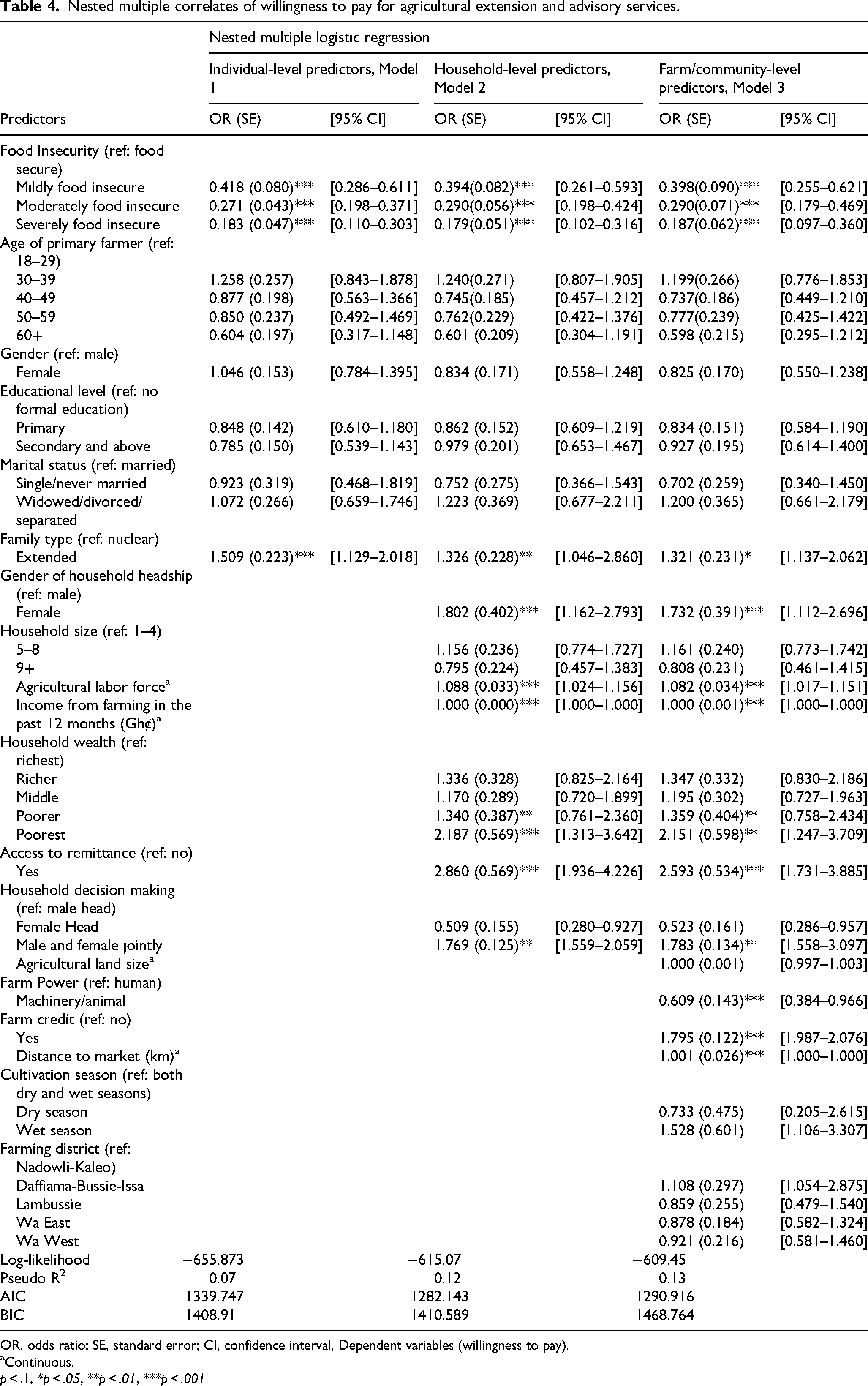
OR, odds ratio; SE, standard error; CI, confidence interval, Dependent variables (willingness to pay).
Continuous.
p < .1, *p < .05, **p < .01, ***p < .001
Model 2 added household-level characteristics. Food insecurity remained negatively associated with WTP: mildly (OR = 0.394, p < .001), moderately (OR = 0.290, p < .001), and severely food insecure households (OR = 0.179, p < .001) continued to exhibit significantly lower odds relative to food-secure households. Extended family structure remained positively associated with WTP (OR = 1.326, p < .01). Female-headed households (OR = 1.802, p < .001) had higher odds of WTP compared to male-headed households. Households reporting joint decision-making also had higher odds relative to male-only decision-making (OR = 1.769, p < .01). Agricultural labor force size (OR = 1.088, p < .001) and farming income (OR = 1.000, p < .001) were positively associated with WTP. Compared to the richest households, those in the poorer (OR = 1.340, p < .01) and poorest (OR = 2.187, p < .001) wealth categories had higher odds of WTP. Access to remittances was also positively associated with WTP (OR = 2.860, p < .001).
Model 3 introduced farm and community-level predictors while retaining all prior variables. The negative association between food insecurity and WTP remained consistent: mildly (OR = 0.398, p < .001), moderately (OR = 0.290, p < .001), and severely food insecure households (OR = 0.187, p < .001) continued to show significantly lower odds relative to food-secure households. Extended family households (OR = 1.732, p < .01), female-headed households (OR = 1.732, p < .001), and joint decision-making arrangements (OR = 1.783, p < .01) remained positively associated with WTP. Agricultural labor force (OR = 1.082, p < .001) and farming income (OR = 1.000, p < .001) again showed positive associations. The higher odds of WTP among poorer (OR = 1.359, p < .01) and poorest households (OR = 2.151, p < .001) relative to the richest group persisted. Access to remittances (OR = 2.593, p < .001) and farm credit (OR = 1.795, p < .001) were positively associated with WTP. Farmers relying on mechanical or animal traction had lower odds of WTP compared to those using human labor (OR = 0.609, p < .001). Distance to market showed a small but statistically significant positive association with WTP (OR = 1.001, p < .001).
Across all three models, household food insecurity remained a consistent negative predictor of WTP, while several household and farm-level characteristics were significantly associated with variation in WTP.
Discussion
This study examined the determinants of smallholder farmers’ WTP for AEAS in northern Ghana, with particular attention to the role of household food insecurity. The findings reveal a consistent pattern: food insecurity significantly reduces farmers’ likelihood of investing in advisory services, while access to economic resources and inclusive household decision structures increases it.
Food insecurity and investment constraints
Across all models, WTP declined progressively with increasing severity of food insecurity. Farmers in households that were mildly, moderately, or severely food-insecure were significantly less likely to express a WTP than those in food-secure households. This suggests that when households face consumption pressures, short-term subsistence needs take precedence over longer-term productivity-enhancing investments. These findings align with broader evidence from SSA showing that liquidity constraints and vulnerability limit farmers’ ability to adopt new technologies or engage with extension services (Aweke et al., 2021). Food insecurity is not only an outcome of low productivity but may also reinforce low investment in advisory support, thereby contributing to a cycle of constrained agricultural performance. In resource-limited settings, even relatively small user fees for advisory services may represent a significant opportunity cost for vulnerable households.
Household structure and gender dynamics
Extended family households were more likely to pay for AEAS than nuclear households. This may reflect resource pooling, shared labor responsibilities, and collective decision-making structures that enable greater flexibility in allocating funds for agricultural services. Evidence from Uganda and Mali similarly shows that multi-generational households often exhibit higher engagement with agricultural programs due to diversified goals and resource bases (Ledermann et al., 2024; Treleaven, 2023).
Joint household decision-making was also positively associated with WTP. Households in which men and women jointly participate in decisions may benefit from broader consultation and prioritization of agricultural investments. Studies in Mozambique and Ghana similarly report that inclusive decision-making arrangements are associated with higher uptake of agricultural and nutrition-related interventions (Antabe et al., 2025; Antabe et al., 2025; Atuoye and Luginaah, 2017).
Female-headed households were significantly more likely to express WTP for AEAS than male-headed households. Although women often face structural constraints in accessing land, credit, and informal knowledge networks, they may place greater value on formal advisory services that address information gaps and improve productivity. Similar patterns have been observed in West Africa, where women demonstrate strong responsiveness to accessible and context-specific extension services (Buehren et al., 2019; Midamba and Ouko, 2024). This finding underscores the importance of gender-sensitive design in extension programming.
Economic capacity and financial access
Agricultural labor force participation and farming income were positively associated with WTP, indicating that production scale and income generation capacity shape farmers’ valuation of advisory services. While the marginal effect of income was small, the consistent positive association suggests that liquidity influences investment decisions.
Remarkably, poorer and poorest households demonstrated a higher WTP relative to the richest group in multivariate models. This pattern may reflect stronger demand for productivity-enhancing information among more vulnerable farmers who perceive advisory services as an opportunity to improve yields and income stability. Similar observations have been reported in Malawi, where lower-income farmers showed strong interest in advisory services linked to market access and risk reduction (Food and Agriculture Organization [FAO], 2025).
Access to remittances and farm credit emerged as strong positive predictors of WTP. Remittances likely ease liquidity constraints, while credit access may facilitate participation in formal agricultural systems that require or encourage engagement with advisory services. Prior research in Ghana, Zambia, Uganda, Benin, and Ethiopia similarly demonstrates that financial inclusion enhances farmers’ participation in extension and innovation systems (Atuoye et al., 2017; Girma, 2022; Yegbemey et al., 2014).
Farm characteristics and market access
Farmers relying on mechanical or animal traction were less likely to pay for AEAS compared to those using human labor. One possible explanation is that more mechanized farmers may rely on alternative information sources, including private suppliers or peer networks. This suggests that advisory systems may need to tailor content to semi-commercial or mechanized farmers, emphasizing value addition, market intelligence, and cost-efficiency rather than basic agronomic support.
Distance to market was positively associated with WTP. Farmers located farther from market centers may face limited access to informal information networks and therefore assign higher value to structured advisory services. Evidence from Malawi and Tanzania similarly shows that farmers in remote areas are more receptive to mobile-based and group-based extension platforms (Mugizi, 2025; Tufa et al., 2024).
Overall, the findings suggest that WTP for extension services is shaped by a combination of vulnerability, resource access, household organization, and structural context. Policies aimed at cost-sharing in extension provision should therefore account for heterogeneity in food security status, financial capacity, and household decision structures. Targeted subsidies or differentiated pricing models may be necessary to prevent food-insecure households from being excluded from advisory support.
Limitations and directions for future research
Several limitations should be acknowledged. First, the cross-sectional design limits causal inference. Although significant associations were observed, the temporal direction of relationships cannot be definitively established. Second, the measure of WTP was based on stated preferences and may be subject to hypothetical bias. Future research could employ experimental or revealed-preference approaches to validate stated willingness under real payment conditions. Third, additional factors not captured in the survey, such as trust in extension institutions, prior experiences with advisory services, and perceived service quality, may influence WTP. Incorporating such variables in future studies would provide a more comprehensive understanding of demand for AEAS. Finally, the study focused on Ghana's UWR. While the region provides a relevant context for examining extension demand in high-poverty, climate-vulnerable areas, the findings may not be fully generalizable to other regions with different institutional or agroecological conditions. Comparative studies across regions and delivery platforms would help assess the scalability and inclusivity of cost-sharing extension models.
Conclusion
This study examined smallholder farmers’ WTP for AEAS in Ghana's UWR, with particular attention to the role of food insecurity and household characteristics. The findings show that food insecurity consistently reduces farmers’ willingness to invest in AEAS, indicating that immediate consumption pressures constrain demand for productivity-enhancing services. In contrast, access to remittances, farm credit, female household headship, joint decision-making arrangements, and greater household participation in agricultural labor were positively associated with WTP. These results suggest that financial capacity, household organization, and production engagement shape farmers’ valuation of advisory services. The study contributes to the growing literature on demand for extension services by demonstrating that economic vulnerability and intra-household dynamics are central determinants of investment decisions in advisory support. Extension systems that rely on cost-sharing mechanisms must therefore account for heterogeneity in food security status, financial access, and household structure. Designing AEAS models that are responsive to both agronomic needs and household-level constraints is essential for ensuring equitable access and long-term sustainability. Without such consideration, market-oriented extension reforms may risk excluding the most vulnerable farmers from the services intended to improve their productivity and resilience.
Policy implications
The findings of this study underscore the need for AEAS policies that are inclusive, financially sensitive, and responsive to household-level constraints. WTP was significantly lower among food-insecure households, suggesting that uniform cost-recovery models may risk excluding the most vulnerable farmers. Targeted subsidies, sliding-scale pricing, or partial fee waivers for food-insecure households may therefore be necessary to ensure equitable access to advisory services while maintaining system sustainability.
The results also highlight the importance of gender-responsive and household-inclusive extension strategies. Female-headed households and those practicing joint decision-making were more likely to express WTP for AEAS. Policies that strengthen women's participation in agricultural decision-making and enhance their access to information and financial resources may therefore increase engagement with advisory services. Integrating gender-sensitive outreach and ensuring that extension content addresses the specific needs of women farmers can improve both inclusivity and effectiveness.
Community-based delivery platforms such as FBOs, FFS, VSLAs, and LFS play a critical role in expanding outreach, particularly in remote and resource-constrained areas. Strengthening these local institutions can reduce transaction costs, improve trust, and facilitate peer learning, especially where public extension agents face high farmer-to-agent ratios.
The positive association between remittances, credit access, and WTP further suggests that financial inclusion policies can indirectly enhance demand for advisory services. Expanding rural credit schemes, supporting savings groups, and integrating extension with financial services may improve farmers’ capacity to invest in knowledge-based inputs.
Digital advisory tools, including SMS alerts, interactive voice response systems, and rural radio programming, offer opportunities to expand coverage and reduce delivery costs. However, investments in digital infrastructure, affordability, and digital literacy are essential to prevent widening inequalities between connected and disconnected farmers.
Finally, sustainable extension reform requires coordinated partnerships among public agencies, private providers, farmer organizations, and development partners. Blended financing models and collaborative service delivery arrangements can enhance efficiency while ensuring that advisory systems remain responsive to heterogeneous farmer needs.
Ultimately, extension policy must account for differences in food security status, household organization, and financial access. Cost-sharing mechanisms that fail to consider these factors may inadvertently exclude the very farmers most in need of advisory support.
Footnotes
Acknowledgments
We appreciate the contributions of smallholder farmers, research assistants, and community leaders throughout the research process.

Ethical approval and informed consent statements
This study was approved by the University of Western Ontario Non-Medical Research Ethics Board (NMREB) under Project ID 124838. Informed consent for this study was obtained for all participants through an implied consent process, as approved by the NMREB. Participation was voluntary. Prior to each interview, respondents were provided with a detailed explanation of the study's objectives, procedures, potential risks and benefits, confidentiality protections, and their right to withdraw at any time without consequence. No written signatures were collected to preserve anonymity. All data were collected anonymously and stored securely to protect participant confidentiality.
Funding
The authors disclosed receipt of the following financial support for the research, authorship, and/or publication of this article: This work was supported by the Western University's 2023 Western Strategic Support for Social Sciences and Humanities Research Council of Canada (SSHRC) Success funding (R3652A42 to Isaac Luginaah). Western University’s 2023 Western Strategic Support for Social Sciences and Humanities Research Council of Canada (SSHRC) Success funding (Grant Number R3652A42).
Declaration of conflicting interests
The authors declared no potential conflicts of interest with respect to the research, authorship, and/or publication of this article.