



Abstract
As digital technologies reshape agricultural systems across the Global South, smallholder farmers have become prolific data producers, yet remain largely excluded from decisions about how that data is governed, interpreted, or valorised. This paper examines the motivations and processes underlying agricultural data collection among smallholders, with a focus on both policy and digital drivers. Drawing on a systematic review of fifteen empirical and conceptual studies, the analysis reveals that data is primarily collected to serve the operational goals of donors, fintech providers, and agribusinesses, rather than the needs of farmers. The study identifies four intersecting dynamics: externally driven motivations for data collection, technologies that constrain farmer agency, governance models that centralise control, and empowerment outcomes that are often instrumentalised. These patterns are analysed through the lens of critical development theory, including Scott's ‘legibility,’ Jasanoff's ‘sociotechnical imaginaries,’ and Heeks's ‘data justice.’ The findings show that digital platforms often fail to provide clear mechanisms for consent, redress, or co-governance, instead relying on extractive logics that render farmers visible without granting them a voice. The paper calls for a shift from data extraction to inclusive data governance, emphasising participatory design, shared control, and farmer-led infrastructure as essential to meaningful empowerment of smallholders. By framing data not as a neutral input but as a site of power, the study contributes to emerging debates on digital sovereignty, platform justice, and the future of agricultural development.
Introduction
Across the Global South, smallholder farmers are increasingly integrated into digital infrastructures that mediate their farming practices, access to services, and engagement with markets. Smallholder farmers are commonly defined in academic literature as those operating on less than two hectares of land, often relying primarily on family labour and with limited non-farm assets (Graeub et al., 2016; Hazell et al., 2020). From mobile apps offering agronomic advice to blockchain-based traceability systems and remote sensing for crop insurance, digital agriculture is expanding rapidly in reach and ambition. These systems are typically justified by their potential to boost productivity, reduce transaction costs, and promote inclusion (Trendov et al., 2019). Nonetheless, the ways in which they collect, govern, and repurpose data remain uneven, opaque, and rarely driven by farmers themselves.
While platform-based systems promise to empower farmers with tailored advice, financial inclusion, and new market access, their governance logics often consolidate control in the hands of service providers, agribusinesses, or donors, leaving farmers with little insight into or power over how their data is used. Rather than redistributing decision-making, many digital platforms instead recast longstanding asymmetries in new technical forms.
This pattern reflects broader concerns in the literature about the political economy of digital infrastructures. Taylor (2017) argues that data systems, especially in development contexts, frequently encode asymmetries of visibility and value. Inclusion into these systems does not guarantee influence over them. Instead, what emerges is a data-driven form of governance, in which those collecting and processing data determine not only what counts as legitimate knowledge, but also who benefits from it.
Such systems are also shaped by what Jasanoff (2015) terms sociotechnical imaginaries: technologically mediated visions of progress that normalise certain values, behaviours, and futures. In the case of agriculture, these imaginaries favour efficiency, surveillance, and productivity over participation, negotiation, or justice. As digital tools render smallholder farmers increasingly ‘legible,’ they may simultaneously render them governable, but not necessarily empowered (Scott, 1998).
Despite growing investment and policy support, little is known about the actual dynamics of smallholder data governance. How are data collection efforts motivated and designed? What kinds of technologies are used, and how do they shape control over data flows? Under what conditions do farmers benefit, or lose agency, as a result?
To address these questions, this paper undertakes a systematic literature review of 15 key studies and policy reports published between 2015 and 2025. The review is guided by three core questions:
RQ1: What are the motivations and processes behind agricultural data collection from smallholder farmers in the Global South? RQ2: How do digital technologies shape these processes in terms of functionality, control, and access? RQ3: Under what conditions are farmers empowered or disempowered by current models of data governance?
In the following, Section 2 outlines the review methodology. Section 3 introduces the conceptual framework that links digital technologies, data governance, and empowerment. Section 4 presents the main findings, highlighting patterns across motivations, technological design, governance structures, and farmer agency. Section 5 situates these findings in broader debates on digital empowerment, platformisation, and inclusion. Section 6 concludes with implications for research, policy, and the future design of data systems in agriculture.
Methodology
Research design
This study employs a systematic literature review (SLR) to investigate how data practices in agriculture are motivated, technologically implemented, and governed in relation to smallholder participation. The SLR approach enables a structured synthesis of both academic and practitioner literature (Snyder, 2019), allowing us to critically analyse the underlying power relations and governance assumptions embedded in digital agriculture.
The SLR approach was selected to address a fragmented field of research, where technical evaluations of agricultural technologies often overlook issues of data justice, farmer agency, and institutional accountability. By combining structured review procedures with grounded thematic analysis, the study brings together insights from diverse contexts to illuminate systemic patterns and contradictions.
Data sources and search strategy
Literature was collected from three academic databases (Scopus, Google Scholar, and LibSearch) and supplemented with targeted grey literature from organisations such as FAO, GSMA, CTA, AgriLinks, and ITU. The initial pool of more than 5000 hits was generated through exploratory keyword searches and subsequently refined through a six-stage screening process involving Boolean operators, date restrictions, and thematic filters. Searches were conducted between February and April 2025 using Boolean keyword combinations, such as ('smallholder farmers’ OR ‘small-scale agriculture’) AND (‘data collection’ OR ‘data governance’) AND (‘digital platforms’ OR ‘mobile tools’). Only English-language documents published between 2015 and 2025 were considered. This process yielded 54 papers that were structured for assessment in Excel, of which 17 were excluded based on predefined criteria, leaving 37 relevant sources. From these, 15 core papers (12 academic and 3 grey literature) were selected for in-depth analysis, while the remaining 22 were retained as secondary sources providing contextual background. Figure 1 illustrates this selection process.
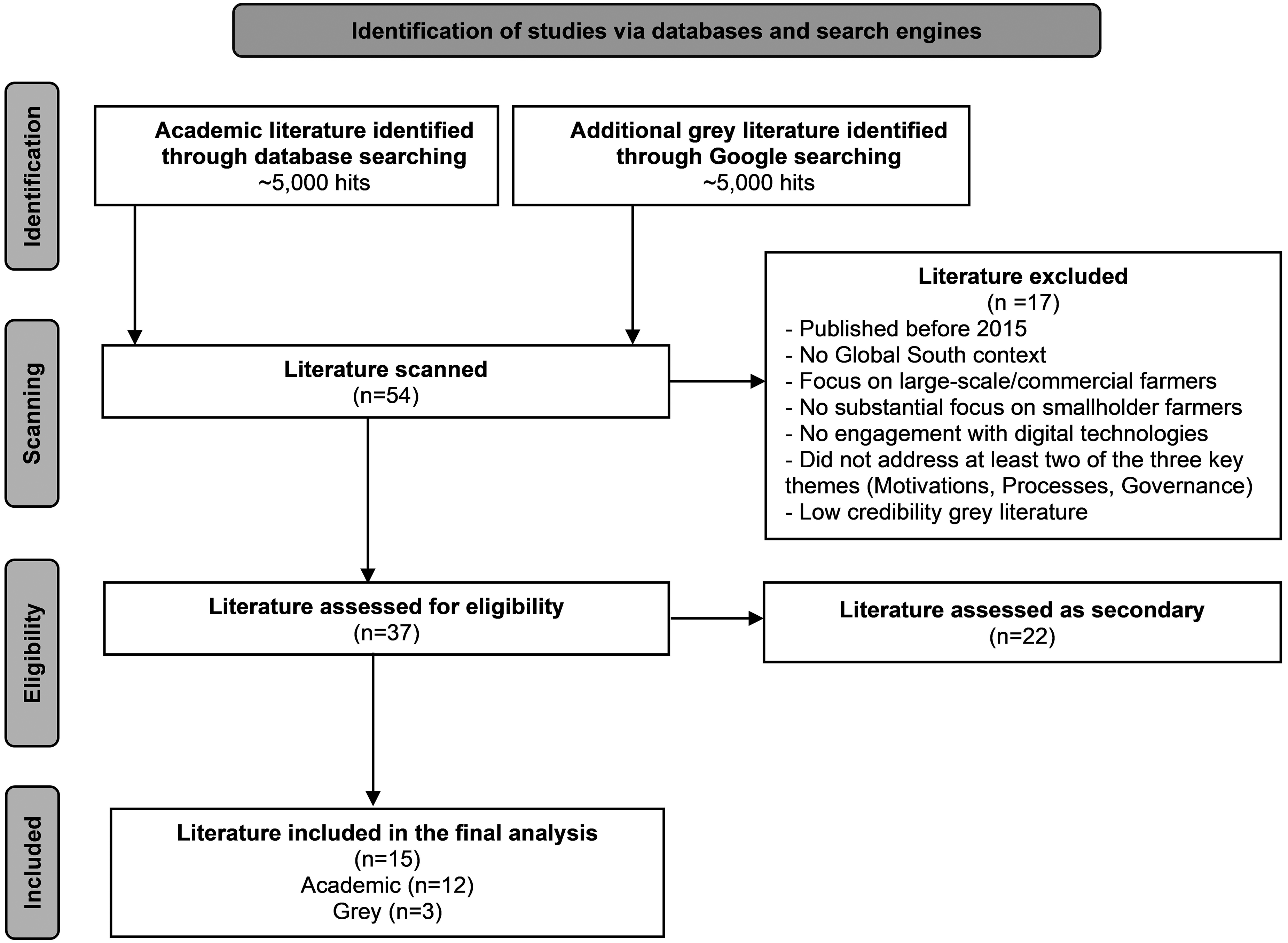
PRISMA flow diagram of the literature selection process.
Inclusion and exclusion criteria
Inclusion of papers was based on the following criteria:
Empirical or conceptual focus on smallholder agriculture in the Global South Substantive engagement with digital tools, data collection, data governance structures, or empowerment dynamics Peer-reviewed journal articles, high-quality grey literature, or policy-relevant technical reports
Excluded were studies focused exclusively on industrial agriculture, those lacking empirical grounding or conceptual engagement with governance or empowerment, and publications limited to technical performance metrics of digital tools.
Analytical framework and coding
A qualitative coding framework was developed to identify and interpret recurring patterns across the selected texts. The analysis proceeded in three stages: open coding, thematic clustering, and cross-case synthesis. Codes were applied at the paragraph level and organised into seven analytic categories:
Motivations for Data Collection Processes and Technologies Data Governance and Ownership Farmer Empowerment and Participation Power Imbalances and Disempowerment Ethical Issues and Risks Outcomes and Impacts
Coding was conducted in a structured spreadsheet matrix to allow cross-comparison and theme consolidation. The goal was not frequency analysis but conceptual depth, paying particular attention to implicit assumptions about participation, control, and empowerment.
Conceptual framework
This study draws on four interrelated concepts to critically examine the dynamics of data collection, control, and participation in digital agriculture: data governance, digital agricultural technologies, farmer-centric data governance, and smallholder empowerment. These concepts form a relational framework that enables analysis of both technical infrastructures and the strategic arrangements they represent.
Data governance
Data governance refers to the structures, rules, and practices that determine how data is collected, stored, accessed, and used. In the agricultural sector, data governance shapes power dynamics among key stakeholders, including farmers, governments, NGOs, and private platforms. Effective governance depends on clarity around data ownership, stewardship, and access rights (van Geuns et al., 2024).
In the Global South, however, data practices often emerge without robust governance frameworks. As a result, private actors frequently define the rules of engagement, raising concerns about data misuse, opacity, and asymmetrical benefits. Studies show that smallholder data is often harvested without meaningful consent and used primarily to serve the operational or commercial goals of agritech providers (Dittmer et al., 2025; Taylor and Broeders, 2015).
Following Taylor (2017), we view data governance as a political process, not merely about managing information, but about structuring relationships of power. Where governance is centralised, farmers become legible to others while remaining unable to influence how they are represented or profiled. This leads to what Heeks (2017) has described as ‘data injustices’: the exclusion, misrepresentation, or instrumentalisation of marginalised communities through digital systems.
Digital technologies in agriculture
Digital technologies in agriculture encompass a range of applications, including mobile applications, remote sensing, blockchain, and artificial intelligence. These tools are increasingly deployed to collect, process, and circulate farm-level data for a range of functions: improving yields, optimising input use, reducing transaction costs, enabling traceability, and facilitating access to finance and insurance (GSMA, 2020; Kamal and Bablu, 2023).
Digital tools are often presented as neutral enablers of development. Yet as Jasanoff (2015) argues, technologies are shaped by sociotechnical imaginaries: visions of progress integrated in system design. In digital agriculture, these imaginaries favour optimisation, measurement, and surveillance over negotiation, plurality, or care. While these tools promise efficiency and inclusion, they also shape who can participate in agricultural markets and under what conditions. The literature identifies concerns around invasiveness, accessibility, and interoperability, especially for smallholders with limited digital literacy and connectivity. Furthermore, platforms often exert logics of control and extraction, reinforcing the dominant position of agribusiness actors (Kos and Kloppenburg, 2019).
Farmer-centric data governance
Farmer-centric data governance is a rights-based approach that positions smallholders as co-stewards of their data rather than passive providers. It involves participatory design, transparent terms of use, shared decision-making, and mechanisms for accountability (Agyekumhene et al., 2020; van Geuns et al., 2024). Unlike platform-centred models that centralise power in digital intermediaries, farmer-centric approaches aim to redistribute control over what data is collected, how it is shared, and who benefits from its use.
These approaches exemplify a shift from extractive to negotiated data relations, not just collecting data about farmers, but building systems with and for them. However, they face persistent challenges: insufficient funding, limited technical infrastructure, low policy visibility, and political resistance from dominant platform actors (Cinnamon, 2020; Heeks and Renken, 2018).
Smallholder empowerment
Empowerment, in this context, refers to the capacity of smallholder farmers to actively shape how their data is used and to benefit from it. This includes both material outcomes (e.g., income gains, market access) and procedural rights (e.g., participation, voice, control). The literature warns that digital inclusion does not automatically translate into empowerment; in fact, it can reinforce exclusion if technologies are not tailored to the realities of smallholders (Choruma et al., 2024).
Moreover, empowerment is often reduced in digital agriculture to metrics like tool adoption or yield increase. This instrumental framing obscures more profound questions about autonomy, voice, and justice. As Scott (1998) warned, the state's pursuit of ‘legibility’ has historically involved stripping local knowledge systems in favour of abstracted, standardised forms. In the digital present, platform operators increasingly play this role, making farmers visible but not powerful.
Analytical relations
The aforementioned four concepts are analytically linked. Technologies enable data collection, but their effects depend on how data governance is structured. Data governance models, in turn, determine whether farmers are empowered, excluded, or exploited. Empowerment is not the inevitable outcome of inclusion; it depends on whether smallholders are active participants in the system or merely passive subjects within it. The literature suggests that gaps between rapidly advancing technologies and lagging inclusive governance threaten to widen existing inequalities.
To guide the analysis, we visualise these relationships in the conceptual framework in Figure 2. This framework provides an analytical lens for the subsequent findings. It allows us to assess not only what motivates data collection or how technologies are used, but also who benefits and under what governance models. The ‘GAP’ in Figure 2 draws attention to the conflicts where inclusive governance is lagging behind rapidly evolving technology. This highlights the need for better alignment between digital tools, regulations, and farmer participation.
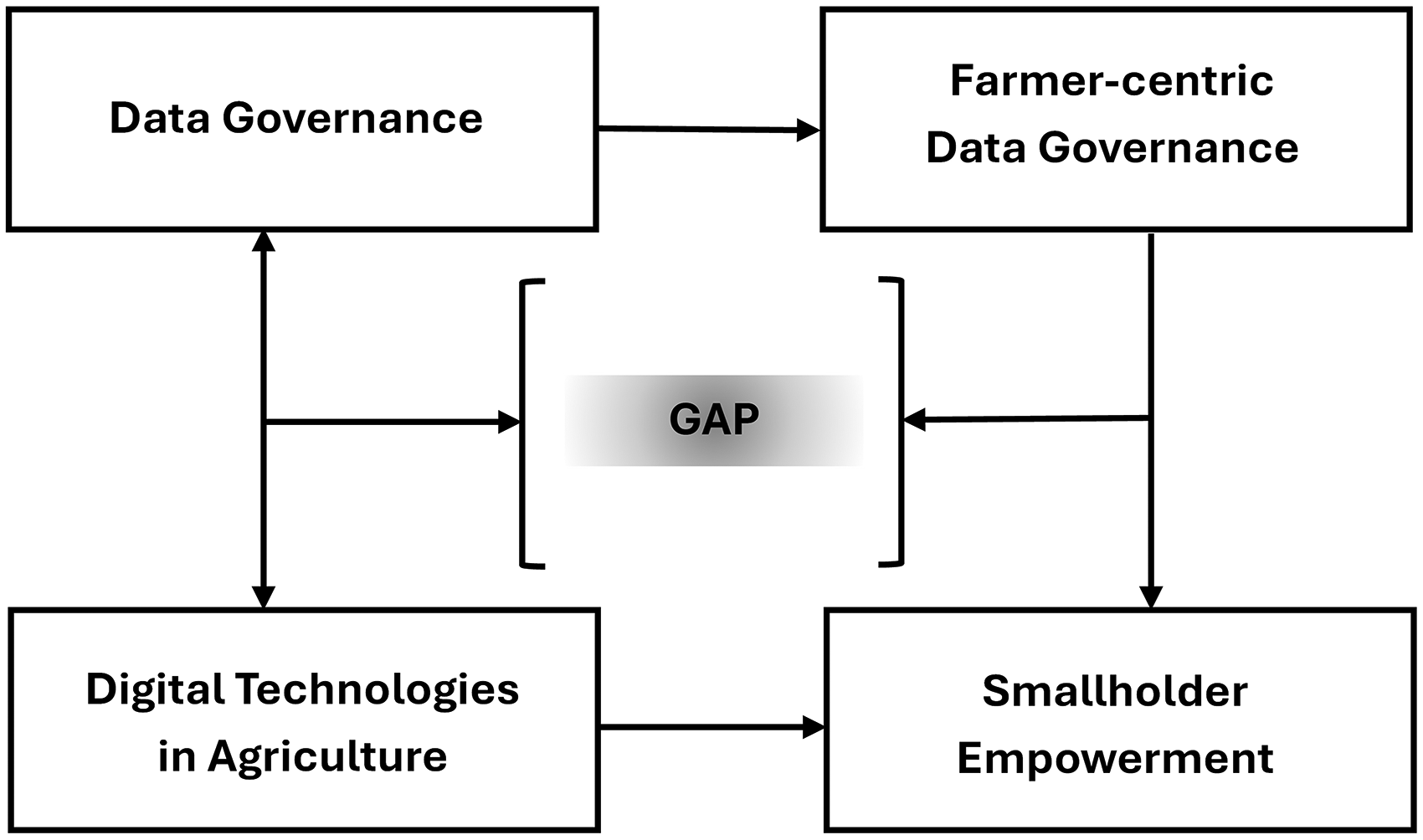
Conceptual framework: from data collection to empowerment.
Findings
The literature review revealed four key patterns in the landscape of agricultural data systems targeting smallholders in the Global South: (1) externally driven motivations for data collection, (2) the mediating role of digital technologies, (3) the dominance of extractive governance models, and (4) mixed and often unequal empowerment outcomes. Each of these themes reflects broader structural tensions in how data is collected, valued, and governed in smallholder agriculture.
Motivations for data collection
Across the reviewed literature, four primary motivations emerged for collecting data from smallholder farmers: Market Access and Traceability, Yield and Productivity, Finance and Insurance, and Climate Risk Management. These motivations typically reflected external institutional goals, not necessarily the priorities or requests of smallholders themselves. Figure 3 shows the number of papers in which these motivations are recurrently presented.
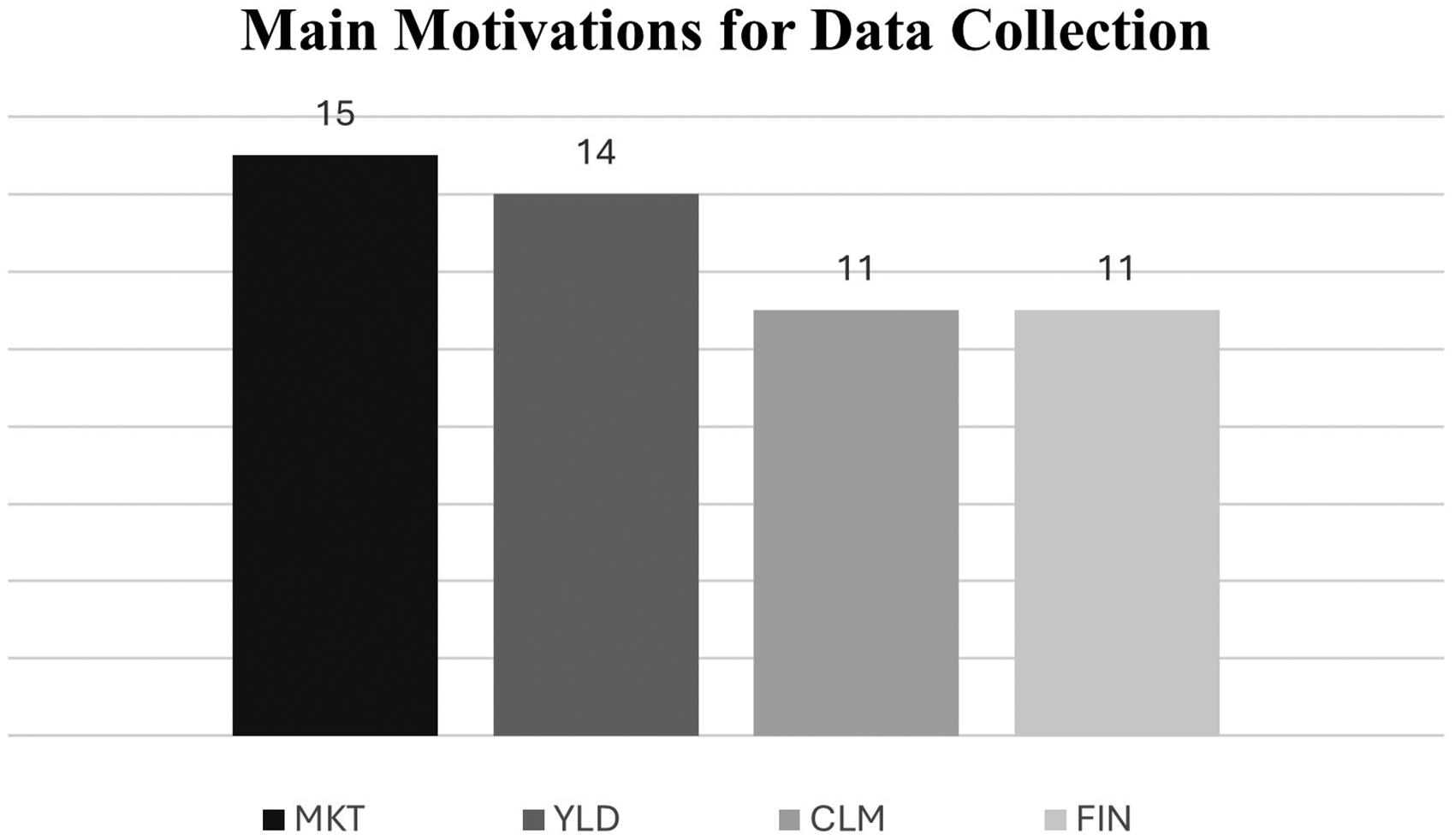
The main motivations for smallholder data collection as they appear in the analysed literature.
Market Access and Traceability (MKT): Improving market access is a key reason for collecting farm data, which is discussed in all fifteen publications. Digital platforms record agricultural activities and use this information to connect farmers directly with buyers, reducing reliance on intermediaries and lowering transaction costs (Kamal and Bablu, 2023; Sarku and Ayamga, 2025). Such data-driven connections increase competitiveness and enhance traceability in agrifood systems (GSMA, 2020).
Yield and Productivity (YLD): A central motivation for smallholder farm data collection is to increase yields and reduce input costs, with fourteen out of the fifteen core studies citing this as a key driver. Digital tools process this data to deliver field-specific insights that guide input use, improve efficiency, and reduce waste (Kamal and Bablu, 2023). These efficiency gains can also lead to higher incomes, lower environmental impacts, and greater productivity across the value chain (Kos, 2022; van Geuns et al., 2024; Yuan and Sun, 2024).
Climate-Risk Management (CLM): Data collection also aims to anticipate and adapt to climate and pest risks, another motivation highlighted by eleven of the core studies. Information on weather, pests, and farm conditions enables early warnings, adaptive advice, and climate-smart practices. This strengthens resilience and helps farmers mitigate losses from environmental shocks (Agyekumhene et al., 2020; Choruma et al., 2024; Dagne, 2021; Kos, 2022).
Finance and Insurance (FIN): Another motivation is to access credit, payments, insurance, and savings, with eleven of the fifteen core studies linking farm-level data to financial inclusion. Detailed agronomic and transaction records enable farmers to demonstrate creditworthiness, connect with lenders, and conduct secure transactions (Sarku and Ayamga, 2025; Dagne, 2021; Yuan and Sun, 2024). These data-driven economic identities also support microloans and transparent transactions, sometimes through blockchain technologies (Dittmer et al., 2025; Kos, 2022; Kos and Kloppenburg, 2019).
It is important to note that none of the studies reviewed systematically elicited smallholders’ own priorities or benchmarked digital tools against farmer-defined criteria. While many of the identified motivations, such as improving yields, accessing markets, or managing climatic risks, are broadly aligned with what farmers may value, these priorities were typically assumed rather than explicitly articulated by farmers themselves. This pattern is consistent with broader critiques of top-down digital development, where platform logics and externally defined objectives substitute for farmer-led needs assessment (Jasanoff, 2015; Taylor and Broeders, 2015). As a result, the alignment between institutional motivations and farmer priorities remains largely unverified within the current evidence base.
Technologies and data collection processes
The data collection process is deeply shaped by the design of the technologies involved. While often presented as neutral tools, platforms, and devices encode assumptions about what matters, who controls access, and how farmers are positioned. Four main categories of digital technologies emerged as core enablers of data collection. Figure 4 illustrates their appearance in the examined literature.
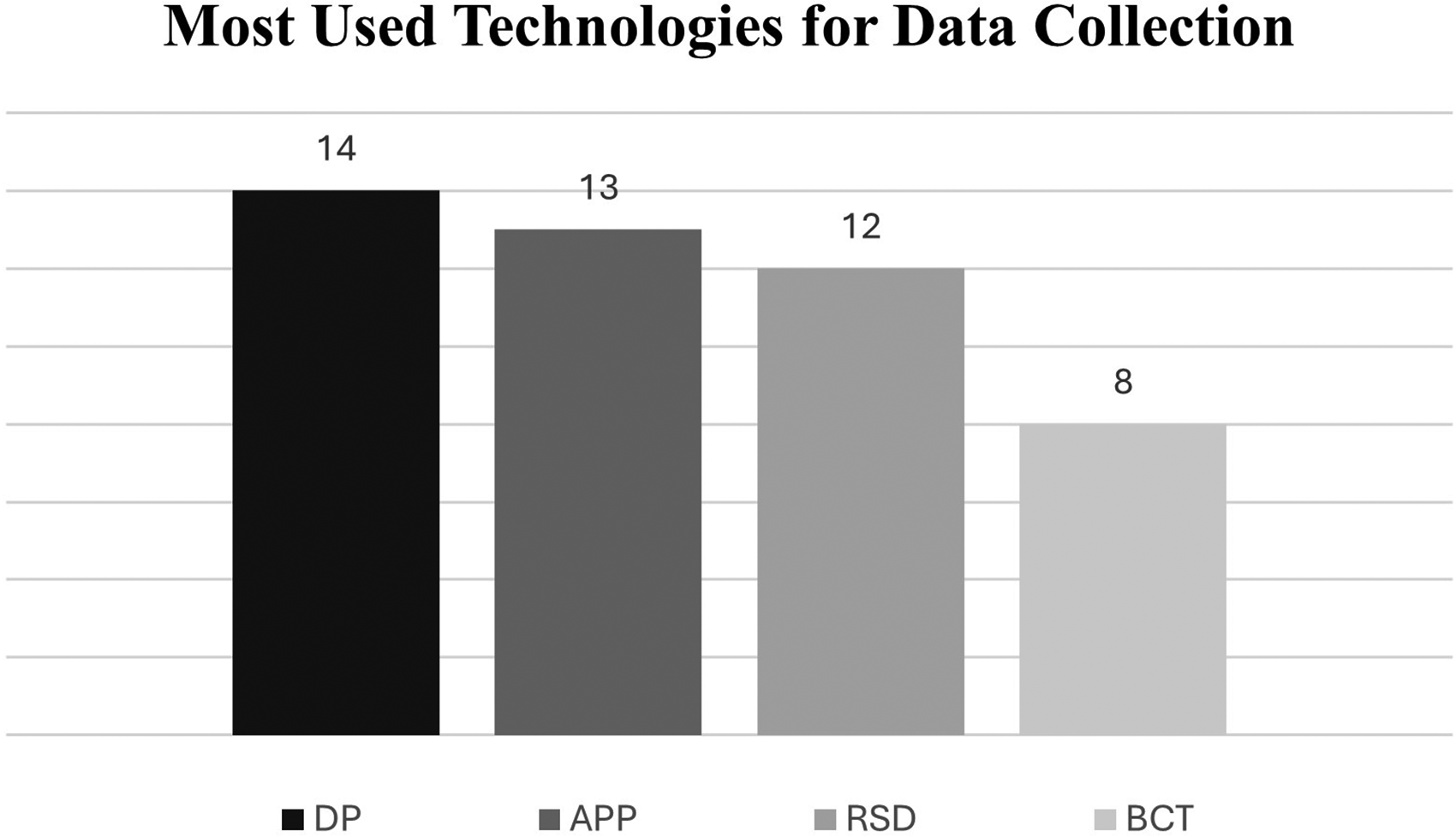
The most used technologies for smallholder data collection as they appear in the analysed literature.
Digital platforms (DP) serve as programmable infrastructures that connect information providers and users, offering weather forecasts, crop management advice, real-time data, market insights, credit access, and value-added services (Sarku and Ayamga, 2025; Agyekumhene et al., 2020; Choruma et al., 2024). While these platforms enhance transparency, direct market access, and service integration, their adoption is hindered by infrastructure limitations and design issues that may undermine farmer skills by favouring pre-defined market behaviours over traditional knowledge sharing (Dittmer et al., 2025).
Mobile applications (APP) collect user data to personalise experiences and provide farmers with timely weather, market, financial, and advisory services (Sarku and Ayamga, 2025; Kamal and Bablu, 2023; Choruma et al., 2024; Kos and Kloppenburg, 2019). They democratise access to information and help bypass geographical constraints (Yuan and Sun, 2024). Co-designed mobile apps enhance farmer voice and ownership, especially when they feature user-friendly interfaces and inclusive processes, helping address literacy challenges and fostering knowledge sharing and cohesion among farmers (Agyekumhene et al., 2020; Van Geuns et al., 2024).
Remote sensing and drones (RSD) capture detailed spatial and temporal data on land use, crop health, and environmental conditions, enabling precise, automated monitoring that improves input management, yield, and resource efficiency (Canfield and Ntambirweki, 2024; Choruma et al., 2024; Kamal and Bablu, 2023; Yuan and Sun, 2024). They also provide early warnings for pests and weather conditions, and help overcome infrastructural barriers in low-income areas (Kos and Kloppenburg, 2019; Taylor and Broeders, 2015).
Blockchain technology (BCT) uses decentralised ledgers to ensure transaction security and data accuracy, supporting trust and automation in supply chains through smart contracts (Kos and Kloppenburg, 2019; Yuan and Sun, 2024). Despite its potential for transparency, traceability, and reducing intermediaries, adoption remains limited due to high costs, low digital literacy, trust issues, and sustainability concerns (Dittmer et al., 2025; Kos, 2022).
While these digital technologies offer efficiency and scalability, the literature emphasises that their design and implementation often fail to align with the realities of smallholders, particularly for women, low-literate users, and those in remote areas. Across all technologies, control over data resides with developers or funders. Farmers are expected to input data but are rarely granted agency over how data is handled or valorised.
Governance models: who sets the rules?
Four different data governance models were identified from the examined literature. Figure 5 illustrates the number of papers in which these models were presented.
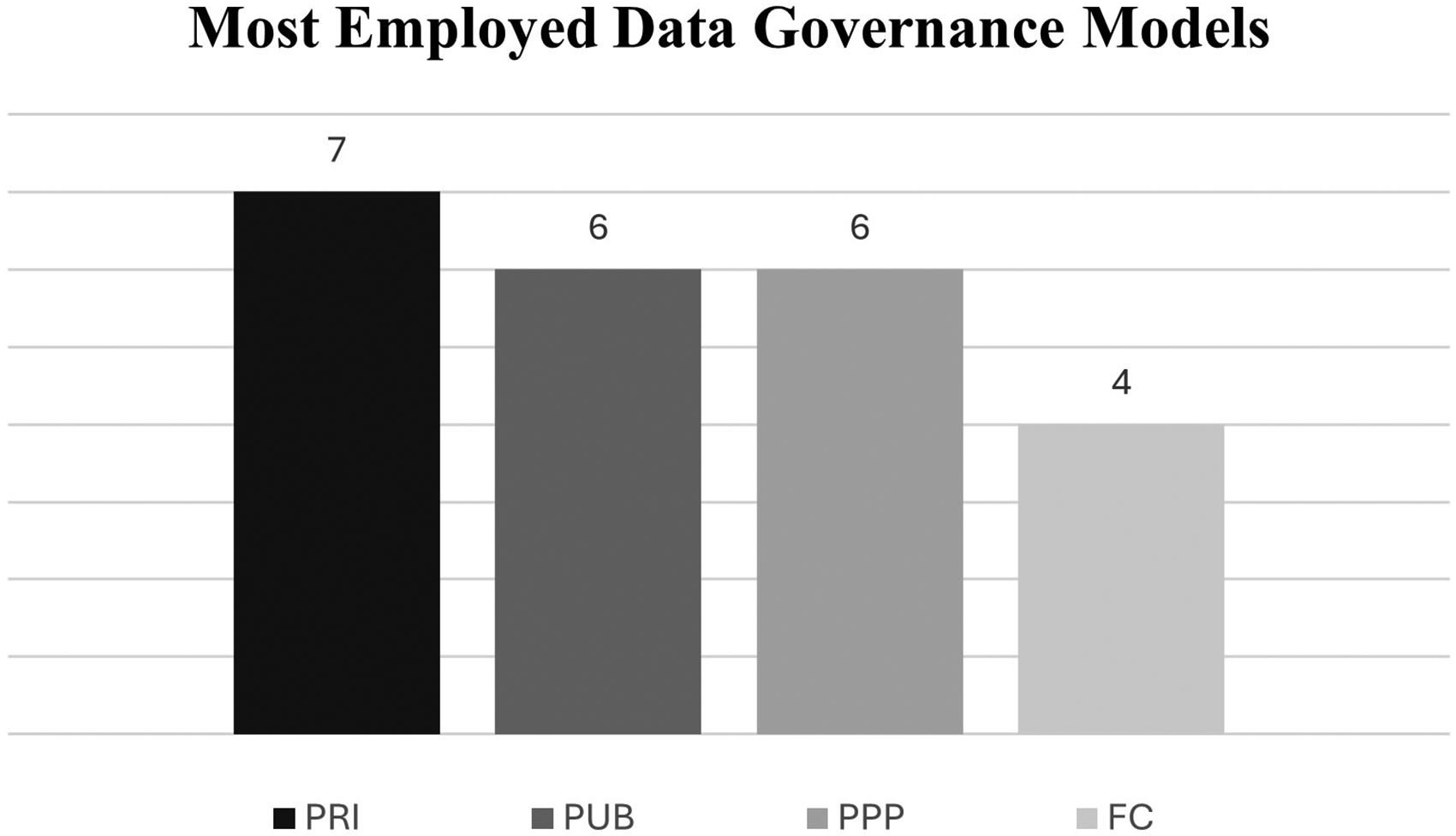
The most employed data governance models as they appear in the analysed literature.
Private-led models (PRI) give ownership and control to commercial firms, often limiting farmers’ access to benefits and raising consent and legal concerns over personal vs. non-personal data (Sarku and Ayamga, 2025; Dagne, 2021; Canfield and Ntambirweki, 2024). They can improve efficiency, but risk undermining farmer autonomy.
Public-led models (PUB) place control with governments, aiming to standardise data use and serve the public good, but weak regulations, limited capacity, and donors’ preferences for private start-ups hinder their effectiveness (Kamal and Bablu, 2023; Kos, 2022; Sarku and Ayamga, 2025).
Public-private partnership models (PPP) blend government oversight with private innovation, fostering collaboration and data access but risking regulatory capture and reduced farmer choice without strong legal safeguards (Choruma et al., 2024; Taylor and Broeders, 2015; Sarku and Ayamga, 2025).
Farmer-centric models (FC) shift ownership and decision-making to smallholders, emphasising co-design, participatory stewardship, and clear legal rights. These require sustained capacity building, policy inclusion, and farmer-led rule-setting to ensure benefits return to farmers’ communities (Agyekumhene et al., 2020; Dittmer et al., 2025; van Geuns et al., 2024; Yuan and Sun, 2024).
Overall, the findings point to a significant governance gap: while digital technologies are advancing rapidly, inclusive and equitable data governance mechanisms are not keeping pace.
Empowerment and disempowerment dynamics
Despite widespread discourse on ‘empowering farmers through data’, the evidence suggests a more ambivalent reality. While some digital systems provide farmers with useful services, empowerment is often instrumentalised and narrowly defined, focused on tool uptake or productivity gains rather than control, autonomy, or collective capacity. In the analysed literature, the following four issues were central.
Empowerment outcomes: Some digital tools have enabled better decision-making, improved access to markets and services, and increased awareness of rights and opportunities. In particular, co-designed apps and feedback-enabled platforms have the most empowering effects (Agyekumhene et al., 2020; Dittmer et al., 2025).
Many studies equated empowerment with increased access to digital tools or higher yields. For example, a platform that delivered timely weather forecasts was considered ‘empowering’ even though farmers had no role in choosing the data inputs, setting update frequencies, or shaping interface design. Empowerment was measured by output, not process. (Agyekumhene et al., 2020; Canfield and Ntambirweki, 2024; Kos and Kloppenburg, 2019).
Barriers to participation
Digital exclusion, driven by factors such as literacy, gender, infrastructure, or cost, remains a widespread issue. Digital tools often reinforce existing inequalities, with women and marginalised farmers disproportionately left out (Choruma et al., 2024; Kos and Kloppenburg, 2019).
Ethical risks
Informed consent is frequently treated as a one-time checkbox, rather than an ongoing process. The distinction between personal and non-personal farm data is blurry, and many farmers are unaware of how their data is monetised or repurposed (Canfield and Ntambirweki, 2024; Cinnamon, 2020; Heeks and Renken, 2018; van Geuns et al., 2024).
New dependencies
Some studies warn that digital tools may create new forms of dependency, especially when bundled services lock farmers into particular platforms or intermediaries. In the absence of strong legal protections, these arrangements risk deepening disempowerment (Dagne, 2021; Kos and Kloppenburg, 2019; Taylor and Broeders, 2015).
Ultimately, empowerment depends not on digital access per se, but on farmers’ capacity to understand, shape, and challenge the systems that govern their data. Without this, datafication risks reinforcing rather than resolving power asymmetries in the agricultural sector. Therefore, empowerment requires more than digital literacy training. It requires participatory design, feedback mechanisms, and collective governance that recognise farmers as rights-holders and co-creators (Canfield and Ntambirweki, 2024; Dagne, 2021). This must be contextually nuanced; digital tools that work for literate, male, cash-crop producers may exclude women or subsistence farmers, so empowerment efforts must integrate intersectional sensitivity and participatory methodologies (Choruma et al., 2024; Heeks and Renken, 2018; Kos and Kloppenburg, 2019).
Figure 6 summarises the four motivations for smallholder data collection in the Global South: improved yields, market access, finance, and climate risk management, which drive the adoption of digital tools such as mobile apps, remote sensing, platforms, and blockchain. While these tools enhance efficiency, empowerment depends on governance: top-down models tend to disempower, whereas co-designed, farmer-led approaches with fair benefit sharing create equitable and resilient digital ecosystems.
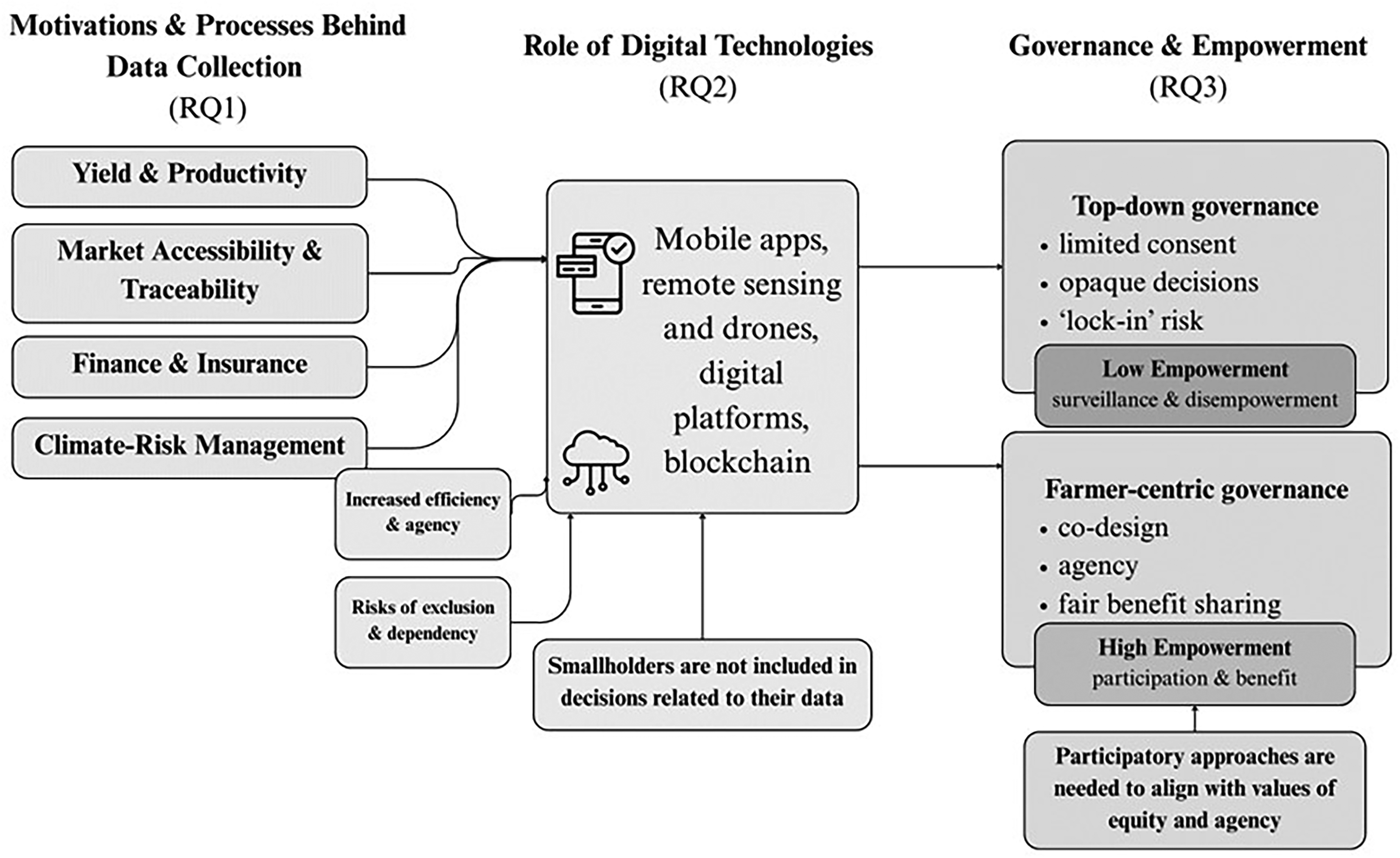
A visual summary of findings.
Discussion
This study aimed to examine why and how agricultural data is collected from smallholder farmers in the Global South, with a particular focus on digital technologies and data governance. The findings reveal a rapidly expanding digital infrastructure around agriculture. Mobile apps, platforms, drones, and blockchain are all positioned as enablers of inclusion, efficiency, and resilience. Yet, beneath this techno-optimist narrative lays a complex political economy of data that frequently excludes the very farmers it purports to empower.
Data as a driver of inclusion, or control?
At first glance, the motivations behind data collection, such as yield optimisation, financial access, and climate resilience, appear pro-farmer. However, the evidence suggests these goals are largely defined by external actors: platforms, donors, agribusinesses, and states, without systematically investigating how farmers rank these motivations, what trade-offs they face, or how they define successful implementations. Data is framed not as a means for empowering smallholders, but as a resource to be extracted, analysed, and monetised within platform ecosystems.
This reflects a broader pattern: while digital tools promise decentralisation, they often recentralise control in the hands of tech intermediaries. The dominance of private-led data governance models illustrates this trend. In most cases, farmers have limited insight into the flow of their data and the beneficiaries of its use. Despite growing emphasis on privacy and consent, comprehensive data management frameworks and thorough user education on data rights are still underdeveloped (Dittmer et al., 2025).
The governance gap: institutions lag behind innovation
Digital agriculture in the Global South is advancing faster than the regulatory and institutional frameworks required to govern it. While the literature offers examples of participatory and farmer-centric data governance models, these remain exceptions. Most digital initiatives continue to operate within top-down structures, with little attention to rights-based frameworks or collective data governance.
This data governance lag is particularly concerning given the asymmetry of power between smallholders and platform operators. As ‘datafied’ identities become a prerequisite for accessing credit, markets, and services, farmers risk being locked into digital dependencies that replicate colonial-era extractive logics, only this time through algorithms and user dashboards.
Despite widespread advocacy for participatory approaches in digital agriculture, several concrete barriers explain why farmer participation remains uncommon. Short project cycles and a pilot mentality lead to a focus on rapid deployment rather than iterative co-design with farmers (Canfield and Ntambirweki, 2024; Dittmer et al., 2025). Donor key performance indicators often prioritise scale and adoption metrics over process quality and meaningful stakeholder engagement (Sarku and Ayamga, 2025; Taylor and Broeders, 2015). Moreover, disciplinary and technical norms favour modelling, efficiency, and standardisation, frequently overlooking necessary relational work and co-creation efforts (Heeks, 2017; Taylor, 2017). Finally, legal uncertainty and the lack of institutional mandates for farmer representation contribute to default extractive models, as there are few requirements or incentives to enact participatory governance models that empower farmers effectively (Canfield and Ntambirweki, 2024; van Geuns et al., 2024). These systemic factors explain why researchers and implementers default to top-down models even when participation could enhance uptake and outcomes.
Towards an ethical and inclusive digital agriculture
This paper echoes calls in academia for ethically grounded, participatory data practices that go beyond technical fixes. It argues for reframing agricultural data not just as a productivity tool but as a site of contested power and potential transformation. To move in this direction, the following shifts are needed:
From extractive to participatory design: Where feasible, farmers should participate at key stages of technology development, from problem framing and needs assessment to interface piloting and governance feedback, despite practical barriers like survey fatigue, iteration costs, and logistical challenges in remote areas. This represents a direction toward more systematic participation, not a rigid checklist, given funding and implementation constraints.
From proprietary to open and interoperable systems: Data infrastructures must be built to support farmer control and portability, not vendor lock-in.
From individual to collective rights: Farmers should be supported in forming data cooperatives or community stewards that can negotiate on their behalf.
From techno-solutionism to socio-political reflexivity: Policymakers, funders, and researchers must recognise that digital tools are never neutral, and ensure that data justice, not just efficiency, guides innovation.
Conclusions and limitations
Conclusion
This paper has explored the motivations, technologies, and data governance structures underpinning agricultural data collection from smallholder farmers in the Global South. Drawing on a systematic review of 15 core studies, it has been shown that while digital agriculture initiatives promise inclusion and efficiency, they often reproduce asymmetrical power relations, positioning farmers as data sources rather than empowered agents.
The findings highlight four core motivations behind data collection: improving productivity, expanding market access, enabling financial inclusion, and supporting climate adaptation. These motivations are primarily driven by external actors, such as agribusinesses, donors, and governments, rather than by farmers themselves. Digital tools such as mobile apps, digital platforms, and remote sensing play a central role in facilitating data collection, but often lack user-centred design or transparent data governance.
Critically, most data governance models remain top-down and extractive, with limited farmer participation. While a handful of participatory and farmer-centric models exist, they remain marginal in a landscape dominated by proprietary platforms and weak regulatory oversight. As a result, smallholders face new forms of exclusion, dependency, and disempowerment, despite being hailed as beneficiaries of digital transformation.
This study contributes to debates on digital agriculture in the Global South by emphasising the importance of data justice, participatory governance, and context-sensitive design. It argues that technical innovations must be accompanied by institutional and ethical frameworks that prioritise smallholder rights, agency, and benefit, and by funding and methodological practices that enable and reward their sustained involvement.
Research limitations
While the systematic literature review strengthens the transparency and reproducibility of this research, several limitations must be acknowledged. First, restricting the review to English-language sources may have excluded relevant regional literature. Second, the analysis relies on secondary data and interpretations from published sources, which may not fully reflect smallholders’ lived experiences. The fast pace of digital innovation also means that some technologies and governance experiments may not yet be documented in the academic literature. Notably, the examined literature doesn’t report why substantial farmers’ participation is absent; this paper treats this as an empirical and structural question rather than assuming it is easy to implement. Finally, while grey literature offered current insights, its quality and methodological transparency varied, posing challenges to comparability.
Future research
Future research works on this topic should:
Investigate on-the-ground experiences of smallholders with digital agriculture tools, especially across gender, age, and class lines; Evaluate the effectiveness of farmer-centric governance models and data cooperatives in real-world settings; Explore regional differences in platform design, governance, and policy responses to data rights; Examine how emerging technologies (e.g., AI, IoT) are reshaping data practices and power dynamics in smallholder agriculture.
Empirical fieldwork, participatory action research, and critical design studies can offer valuable insights into how to build more equitable, inclusive, and farmer-centric digital agriculture ecosystems.
Footnotes
Acknowledgements
This study is part of a PhD trajectory which is co-funded by the School of Business and Economics at Maastricht University and Rabobank's Acorn programme.
In the scope of this work, we used Generative AI tools, namely, ChatGPT (GPT-5) and Grammarly, to improve the language.

Funding
The authors received no financial support for the research, authorship, and/or publication of this article.
Declaration of Conflicting Interests
The authors declared no potential conflicts of interest with respect to the research, authorship, and/or publication of this article.