



Abstract
The rising demand for animal-source food (ASF) is driving the intensification of livestock systems, increasing the need for high-quality feed resources, such as concentrate feed. This trend may reduce circularity through increased feed-food competition and disrupt nutrient cycles. To examine these dynamics, the present exploratory descriptive study assessed the circularity of livestock diets, using feed-food competition and reliance on external feed inputs as proxies. Diet compositions were characterized through interviews with livestock farmers (dairy cattle, dairy goats, pigs, and poultry), and the origins of external feed ingredients were traced through follow-up interviews with feed suppliers. Concentrate feeds had the highest inclusion levels in monogastric diets, indicating a strong dependency on off-farm sourced ingredients, while ruminants primarily relied on on-farm crop residues and feed crops. Poultry diets contained substantial amounts of food-competing ingredients (i.e. maize grain, fish meal, and soybean meal) resulting in higher human-edible protein (HeP) and human-edible energy (HeE) proportions compared to dairy goats, pigs, and dairy cattle (0.73, 0.24, 0.23, 0.09 HeP; and 0.62, 0.09, 0.14, 0.05 HeE, respectively). Protein-rich concentrates were mostly imported from the region (e.g. Tanzania, Uganda), while energy-rich ingredients were sourced nationally, regionally (i.e. East Africa), and globally (e.g. Ukraine). Feed additives (e.g. minerals and vitamins) were sourced globally. The widespread use of food-competing ingredients and reliance on external feed inputs underscores the need to shift to locally available, non-food-competing feed resources, especially in the poultry sector.
Keywords
Introduction
In Sub-Saharan Africa, circularity in livestock systems has traditionally been common practice, with crop residues, household waste, and by-products reused as feed, while manure was recycled as fertilizer (Duncan et al., 2023). However, with the rising demand for animal-source food (ASF) driven by population growth, economic development, urbanization, and shifting dietary preferences (Komarek et al., 2021), the intensification of ASF production is becoming a key focus of both governmental and non-governmental organizations. To meet the nutritional needs of high-producing animals within intensive systems, nutrient-dense concentrates are increasingly required (Oosting et al., 2022; Rockström et al., 2016), which may reduce the circularity of these systems.
While concentrate feeds often contain co-products from the food processing industry (e.g. maize germ, wheat bran), they also include ingredients that compete directly with human food consumption, such as maize grain and soybean meal (Mottet et al., 2017; Wilkinson and Lee, 2018). In regions where arable land is scarce and malnutrition is prevalent, prioritizing food production over feed production is essential for optimizing resource use and minimizing competition between food and feed, both of which are crucial for maintaining circularity in livestock systems (Oosting et al., 2022). Using human-edible crops for livestock feed is inefficient, as a significant portion of the energy and protein in these crops is lost during conversion into ASF (Van Hal et al., 2019). With the growing demand for food, avoiding such inefficiencies is essential, especially given that land is a finite resource.
Moreover, increased use of concentrate often requires the importation of feed into the farming system. When feed is imported rather than produced locally, it disrupts nutrient cycles, depleting nutrients in exporting areas while accumulating nutrients in importing areas (Wang et al., 2022). Many countries in Sub-Saharan Africa rely on cereal imports to meet their feed and food demands (Van Ittersum et al., 2016). In Kenya, a previous ban on genetically modified products restricted access to imports of high-quality concentrate feed ingredients (Owino, 2012). This restriction was lifted in 2022, increasing access to feed ingredients (Catherine et al., 2024). FAO (2020) provides quantitative data about commodity imports and exports and USDA (2024) complements these by identifying the main countries of origin, which for Kenya include Uganda, Tanzania, Rwanda, Burundi, and Zambia. However, limited documentation is available on the origin of specific feed ingredients, including the sourcing of feed additives such as vitamins and minerals, making it difficult to assess dependency on imported livestock feed ingredients in Kenya.
Braamhaar et al. (2025b) reported intensive and market-oriented farming in urban, peri-urban and rural areas in Nakuru County, Kenya, indicating a dependency on concentrate feed ingredients. This dependency is facilitated by the relatively easy access to agricultural supply stores (Migose et al., 2018; Van der Lee et al., 2020). The high stocking rates and focus on production of food crops rather than feed crops, may result in further dependency on external feed inputs (Braamhaar et al., 2025b). However, it is unclear what the diet composition of different livestock species is and how this diet composition affects circularity in terms of feed-food competition and disrupted nutrient cycles. Understanding these aspects is essential for ensuring resource efficiency of livestock systems.
This exploratory descriptive study aimed to assess the circularity of livestock diets, using feed-food competition and external feed inputs as proxies. To achieve this aim, we evaluated the diet composition of dairy cattle, dairy goats, pigs, and poultry in a Sub-County in Kenya and traced the origins of external feed resources.
Material and methods
A cross-sectional study was conducted on current livestock feeding practices, feed sourcing patterns, and the origin of external feeds. The first phase of the study was conducted in Njoro Sub-County, a peri-urban area of Nakuru County, Kenya. This area was selected because farms there typically have access to land, enabling them to produce feed crops. Nevertheless, since they have high stocking rates they depend on external feed inputs (Braamhaar et al., 2025b). Moreover, a diversity of livestock systems is present in Nakuru County (e.g. dairy cattle, dairy goats, pigs, and poultry). Based on findings from farm interviews conducted in Njoro, suppliers of external feed inputs were identified and subsequently interviewed in phase two to trace the origin of the feeds.
Farm selection
A diversity of livestock farming systems was selected, to create a picture of the reliance on external feed inputs in the entire livestock sector of Njoro. This diversity was ensured by including farms of different sizes (i.e. small, medium, large) and livestock types (i.e. ruminants: dairy cattle and dairy goats, monogastrics: pigs and poultry). The classification of small-, medium-, and large-scale farms for each livestock type was determined through a focus group discussion comprising livestock farmers, veterinarians, agrovets, brokers, extension officers, and academic staff from Njoro Sub-County (Appendix A). The farm sizes are representative of the farms found in Njoro Sub-county, while considerable variation exists at the national level. In total, 21 farms were selected and visited, including two large-scale dairy cattle, two medium-scale dairy cattle, two small-scale dairy cattle, two medium-scale dairy goat, one small-scale dairy goat, two large-scale broiler, one large-scale layer, two medium-scale poultry, two small-scale poultry, one large-scale pig, two medium-scale pig, and three small-scale pig farms. Dairy goats are relatively unpopular in Njoro Sub-County. Limited market demand has so far prevented the establishment of large-scale farms.
Interviews were conducted during farm visits by two of the authors (DB and CV), accompanied by a local Swahili-speaking expert who provided translation when necessary. Upon arrival, the study objectives were explained, and oral consent was obtained, permitting the use of collected data. Data collection involved note-taking during the interviews, farm observations, weighing of feed ingredients, and audio recordings to ensure accuracy and allow for later verification. Semi-structured interviews were used to gather detailed information on the current diet composition of producing animals, with a particular focus on external feed inputs and their suppliers.
All diet ingredients used in morning and evening feeding were weighed with an electronic crane scale (SBS-KW-300/100-O, Steinberg Systems, Berlin, Germany) and recorded accordingly. When farmers formulated their own compound feeds, a complete ingredient list with proportions in the whole feed was requested. All diet ingredients were subsequently classified as either farm-produced or externally sourced. To trace the origin of externally sourced feed inputs, the contact information of their suppliers was collected, allowing for follow-up on the origin of the ingredients.
Back tracing external feed inputs
The livestock feed supply chain was mapped starting from livestock farmers by identifying external feed inputs and tracing them upstream. Agricultural supply stores and compound feed manufacturers mentioned by farmers were interviewed. All actors located in Nakuru County were interviewed in-person and other actors were interviewed by phone. During these interviews, suppliers were asked to identify their ingredient sources. Compound feed manufacturers were specifically requested to provide a complete list of ingredients. However, most compound feed manufacturers withheld proportions of feed ingredients in the whole feed due to business confidentiality. This tracing procedure continued until the country of origin for each feed ingredient was identified or a dead-end was reached. Suppliers withheld information about the proportion of feed ingredients sourced from each of their suppliers.
Calculations and data analyses
Diet composition data were converted from fresh matter (FM) to dry matter (DM) based on the nutrient composition of individual ingredients, using standard feed and food composition databases such as Feedipedia (2024) and USDA (2025). For the compound feeds with undisclosed compositions, we used documented composition and nutrient values for different livestock types as documented in literature (Braamhaar et al., 2025a; Chia et al., 2019; Mutisya et al., 2021; Nawiri et al., 2024). The total diet crude protein (CP) and gross energy (GE) contents were expressed on DM basis, and were calculated from the CP and GE content of individual ingredients and the dietary proportions of individual ingredients. The feed ingredients were categorized into the following groups: feed crops (e.g. grass, maize silage), crop residues (e.g. maize stover, barley straw), waste-products (e.g. expired crops, discarded vegetables, kitchen waste), non-food-competing concentrates (e.g. maize germ, cotton seed cake, feed additives), food-competing concentrates (e.g. maize grain, soybean meal, fish meal), and others (e.g. molasses).
The human edibility of each feed ingredient was classified as either food-competing (human-edibility score 1) or non-food-competing (human-edibility score 0), following Mottet et al. (2017) and Van Riel et al. (2023). An exception was made for fishmeal. Although Mottet et al. (2017) classified it as non-food-competing and Van Riel et al. (2023) assigned it a human edibility score of 0.66 (considering both by-product and food-grade proportions), we considered fishmeal as food-competing because the small fish used in feed are also fried and consumed by humans in Kenya. Additionally, maize silage contains both food-competing (i.e. maize grain) and non-food-competing (i.e. maize stover) components; therefore, the human-edibility score was estimated using the harvest index of maize (0.38; Tittonell et al., 2005), which reflects the proportion of edible grain in the total biomass. The human-edible protein (HeP) content of the diet was calculated based on the human edibility score and the CP content of individual ingredients. The proportion of HeP relative to the total dietary CP content was then determined (Van Riel et al., 2023). Similarly, the human-edible energy (HeE) content was calculated based on the GE content of ingredients and used to calculate the proportion of HeE of the diet (Dentler et al., 2020).
External feed ingredients were categorized by their origin as local (i.e. Nakuru County), national (i.e. Kenya), regional (i.e. East Africa), or global. Descriptive statistics were used to analyze and present data on livestock diet composition, human-edible proportions, and feed sourcing patterns. Figures were created using RStudio (version 2024.04.2) and Adobe InDesign (version 20.1).
Results
Diet composition
The diets of ruminants predominantly consisted of feed crops (e.g. maize silage, Chloris gayana (Rhodes grass)) and crop residues (e.g. maize stovers, sweet potato vines), whereas monogastrics mainly received concentrate feeds (Figure 1). Poultry diets largely comprised of compound feeds (79% of the diet), while pig diets consisted predominantly of individually sourced concentrate feed ingredients (47% of the diet). Waste-products were fed to monogastrics, and included discarded vegetables (e.g. cabbage, carrots, potatoes), as well as kitchen and hotel waste.
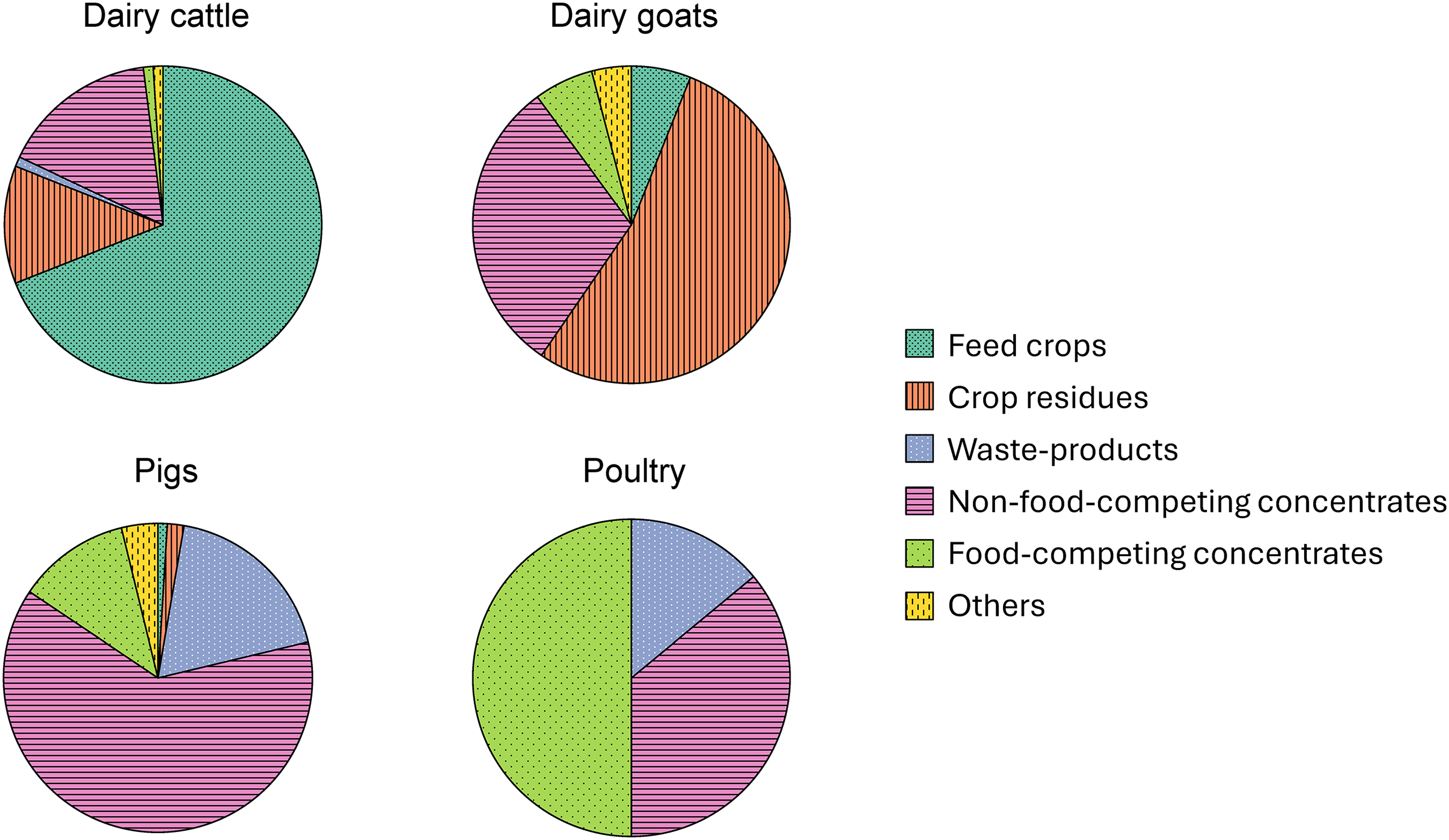
Diet composition (% on DM basis) based on feed categories for producing dairy cattle, dairy goats, pigs, and poultry.
Human edible protein and energy
Poultry concentrate feed contained substantial amounts of food-competing ingredients (50%; Figure 1) such as maize grain, soybean meal, and fish meal, resulting in high HeP and HeE proportions of the diets (Figure 2). Pig diets also included food-competing ingredients like maize grain, barley grain, and fish meal, though in lower quantities than poultry diets, resulting in comparatively lower HeP and HeE proportions. For ruminants, soybean meal was the sole food-competing ingredient in concentrate feeds. Due to a higher proportion of concentrate feed in goat diets compared to dairy cattle diets, goat diets exhibited higher HeP proportions. Maize grain in maize silage was the only other food-competing component in ruminant diets, besides concentrate feed ingredients.
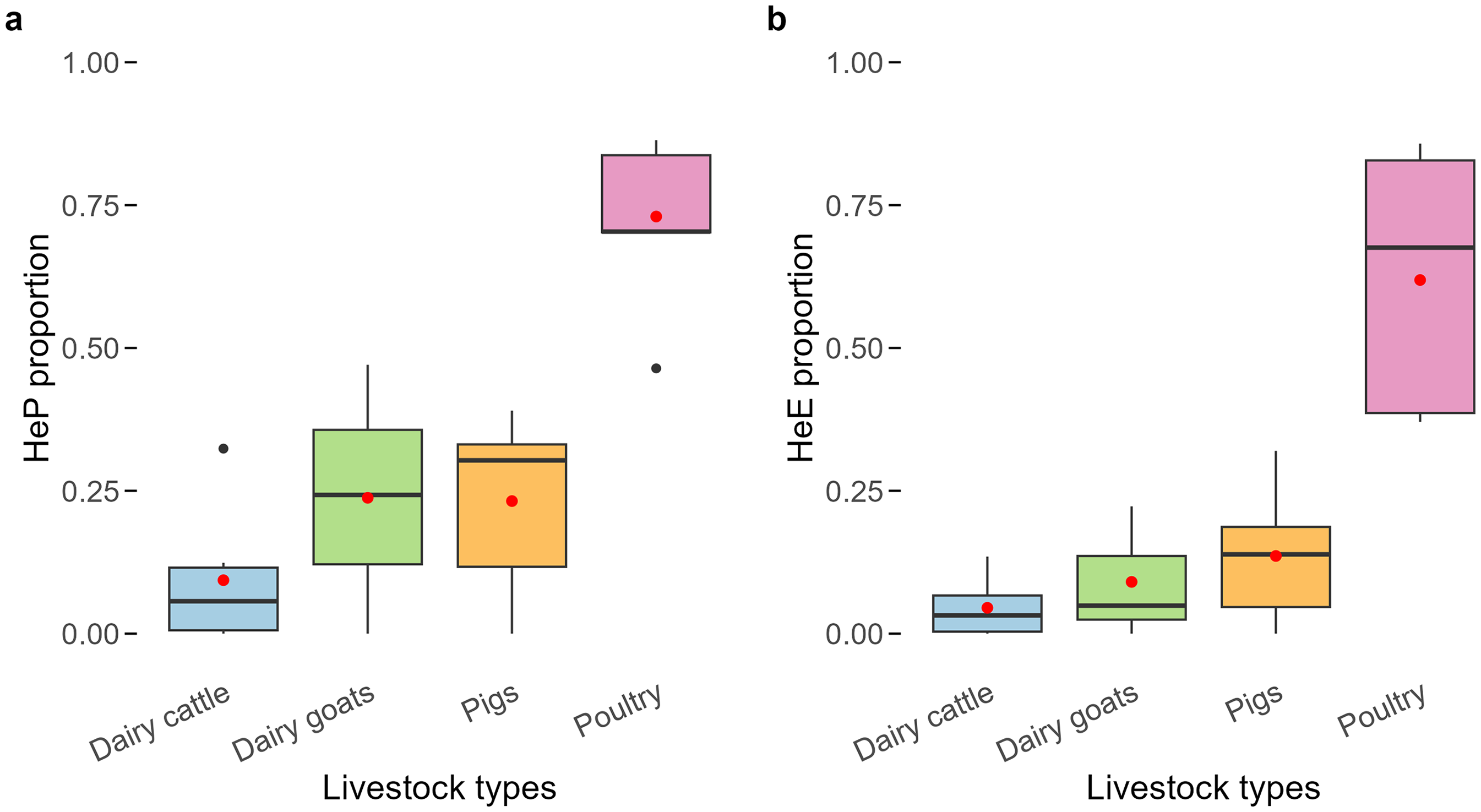
Proportion of human-edible protein (HeP) in total protein content (a) and human-edible energy (HeE) in total energy content (b) of the diets for dairy cattle, dairy goats, pigs, and poultry. Black dots indicate outliers, red dots represent averages, and black lines show medians.
Identification of externally sourced feed ingredients
For pigs, 52% to 100% of the feed was sourced off-farm, while for poultry this ranged from 48% to 100% (Figure 3). In contrast, external feed inputs were lower for dairy cattle (0–32%) and dairy goats (14–75%). For dairy cattle and goats, external feed inputs mainly consisted of concentrate feed (including feed additives). Pig and poultry external feed inputs were primarily concentrate feeds but also included other co-products from the food industry (e.g. blood, bread crumbs, molasses) and waste products (e.g. discarded vegetables, expired milk, hotel waste). The concentrate feeds consisted of protein rich ingredients (i.e. soybean meal, sunflower meal, rapeseed meal, cotton seed cake, fish meal), energy rich ingredients (i.e. maize grain, wheat grain, maize germ, wheat bran, wheat pollard) and feed additives (i.e. lime, salt, minerals, vitamins, toxin binder).
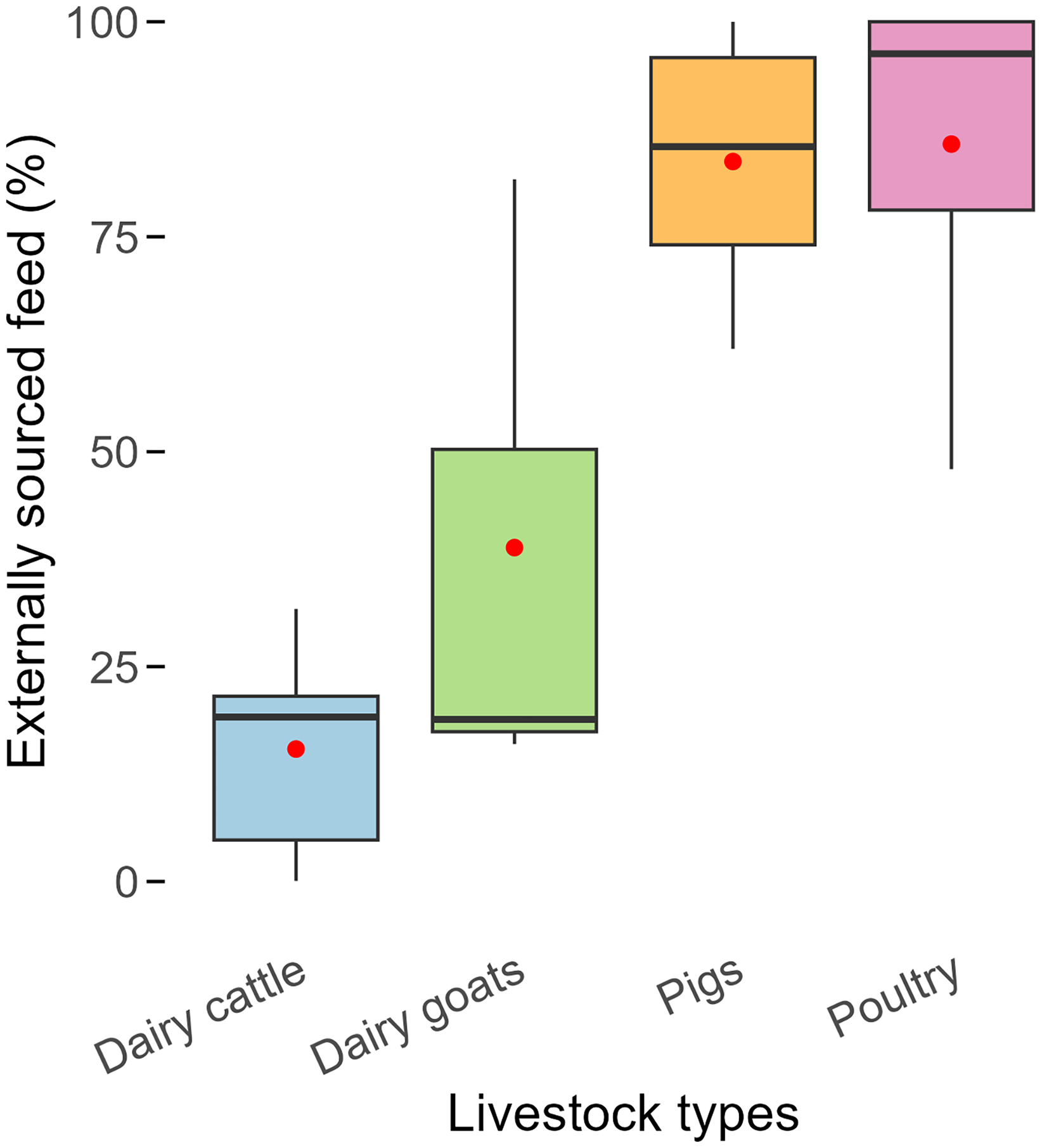
Percentage of feed sourced externally of the total diet of producing dairy cattle, dairy goats, pigs, and poultry. Red dots represent averages and black lines show medians.
Origin of external feed inputs
Local
All discarded vegetables were sourced locally. Hotel wastes came from hotels within Njoro sub-county, who sourced their food ingredients such as cabbage, beans, peas, potatoes, and maize flour at the local level. Additionally, products including blood, expired milk, and bakery waste were similarly sourced locally. However, ingredients used in bread-making originated from both national and global sources. Occasionally, maize grain and maize germ were also mentioned as locally sourced.
National
Fish meal, rice bran, rapeseed meal, molasses, bone meal, lime, and salt predominantly originated from Kenya (Figure 4(b)). Maize grain and maize germ were frequently produced within Kenya, while soybean meal and sunflower meal were only occasionally produced nationally. In contrast, only small portions of wheat bran and wheat pollard were produced in Kenya.
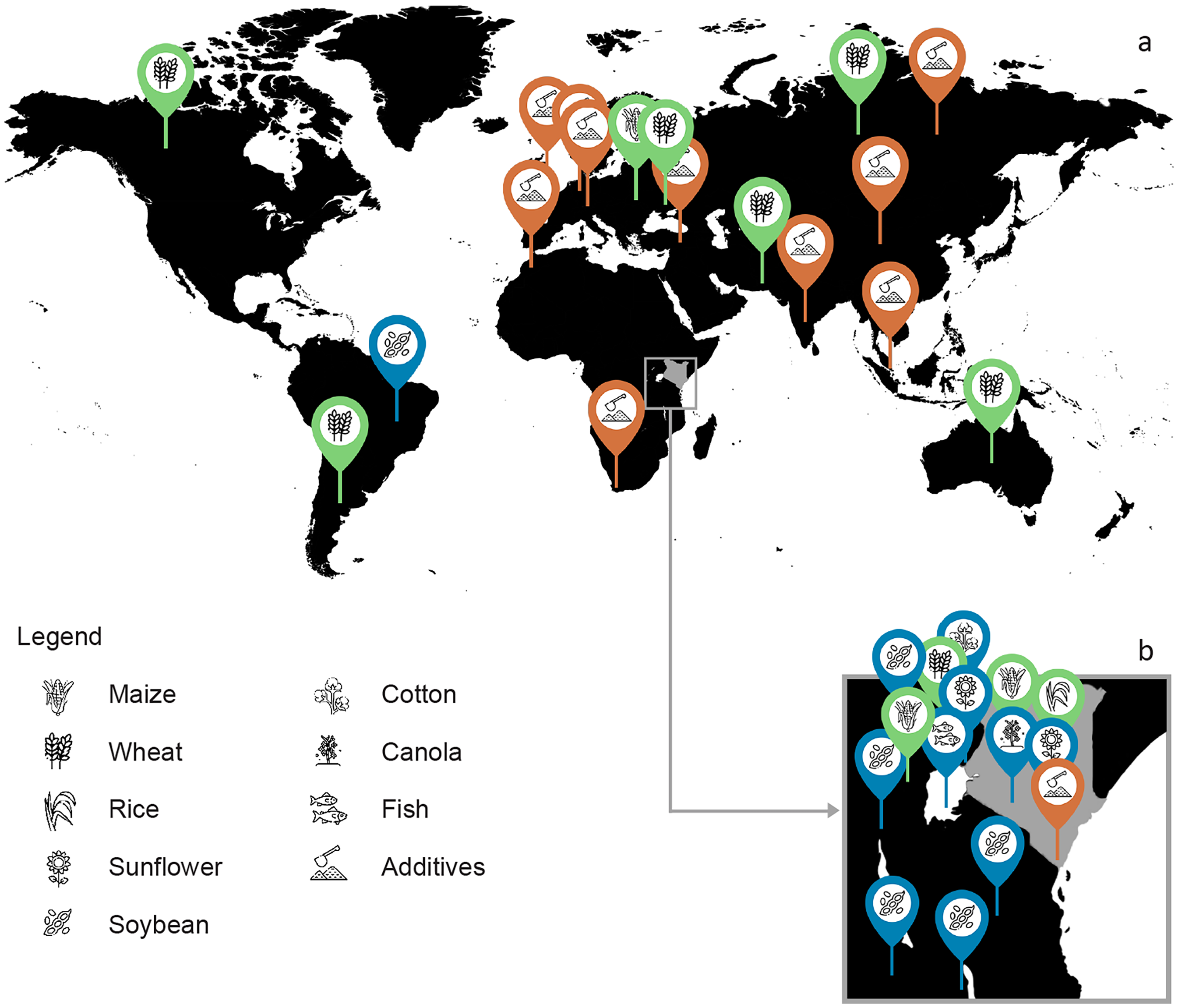
Global sourcing locations of concentrate feed ingredients used in livestock diets, including zoom-in on East Africa. Marker colors indicate concentrate feed type: Blue = protein-rich (i.e. sunflower, soybean, cotton, canola, fish), Green = energy-rich (i.e. maize, wheat, rice), Orange = additives. Icons sources from flaticon.com.
Regional
The majority of soybean meal, sunflower meal, and cotton seed cake were produced in East African countries (e.g. Rwanda, Tanzania, Uganda; Figure 4(b)). Fish meal was occasionally imported from the Tanzanian side of Lake Victoria. Additionally, Uganda supplied maize germ and some wheat bran and wheat pollard to Kenya.
Global
The majority of wheat bran and wheat pollard were imported from the global market (i.e. Argentina, Australia, Canada, Pakistan, Russia, and Ukraine; Figure 4(a)). Additionally, some maize germ was imported from Ukraine and some soybean meal also from Brazil. Many of the feed additives were sourced globally, including amino acids (India, Singapore, South Africa), mono- and di-calcium phosphate (China, Morocco, Turkey, UK), vitamins and minerals (China, Germany, Switzerland), toxin binders (China, Germany, Russia, UK), and lime (China).
Discussion
Dairy cattle in our study were primarily fed feed crops and crop residues. Two dairy farms sourced all feeds from their own land. While crop residues like maize stover are non-food-competing, feed crops such as maize silage compete with human-edible food due to the inclusion of maize grain. Traditionally, only stover was used, but increasing awareness of forage quality has encouraged farmers to produce maize silage to enhance productivity and bridge dry-season feed gaps (Creemers and Aranguiz, 2019). Although feed crops like grasses are not directly food-competing, cultivation on arable land rather than on marginal land may result in indirect feed-food competition (Garnett, 2011; Van Zanten et al., 2018). This study did not address such indirect competition, but it is interesting for further investigation.
Pig diets showed the greatest diversity in feed ingredients, incorporating different types of waste products, food crops, concentrate feeds, and other by-products. This finding aligns with observations from other research (Kagira et al., 2010; Mbuthia et al., 2015). However, while concentrate feeds were commonly utilized across all pig farming systems assessed in our study, earlier studies indicated a limited use of concentrates in pig production, particularly within more extensive production systems (Kagira et al., 2010; Mbuthia et al., 2015). The prevalent use of concentrates in pig production observed in Njoro Sub-County indicates a high degree of market integration, consistent with findings reported elsewhere (Braamhaar et al., 2025b; Van der Lee et al., 2020).
Pigs are well-suited for utilizing food wastes due to their ability to consume a wide variety of human foods, including liquefied materials, a practice historically established in pig farming (Boland et al., 2013; Zu Ermgassen et al., 2016). Farmers who use waste products (e.g. discarded vegetables, food wastes) as feed may initially find this approach economically appealing due to low input costs. However, our focus group discussion revealed that sourcing food waste can be labor-intensive and time-consuming, significantly increasing labor, particularly for small-scale farmers (Huynh et al., 2006). Participants further highlighted difficulties in achieving profitability when relying solely on concentrate feeds, resulting in some farmers to stop pig farming entirely. This illustrates economies of scale, enhancing economic efficiency as farm size expands, and encouraging farmers to continue exploring cost-effective feed resources.
The compound feed compositions used in our study, based on literature, contained higher proportions of food-competing ingredients (e.g. maize grain, fish meal, soybean meal) in diets for layers and broilers compared to those for dairy cattle and pigs, resulting in HeP proportions of 0.87, 0.70, 0.50, and 0.40 for compound feeds, respectively. Similarly, Wilkinson (2011) reported high HeP proportions for layer (0.65) and broiler (0.75) compound feeds. However, the HeP proportion for pigs (0.64) reported by Wilkinson (2011) was higher due to the substantial inclusion of cereal grains, while dairy cattle feeds in his study had a notably lower proportion (0.36) attributed to lower soybean meal content compared to the compound feed in our study. The high HeP content in poultry compound feeds, coupled with their significant inclusion rates, resulted in poultry diets comprising a substantial proportion of human-edible nutrients. This raises critical questions regarding the sustainability and role of current poultry systems within future food systems.
The HeP in dairy goat diets was unexpectedly higher compared to dairy cow diets, likely due to the higher proportion of concentrate feed in goat diets. This observation could be attributed to the fact that only three farms were visited, one of which had a particularly high inclusion of concentrate feed, skewing the average. Additionally, dairy goats have smaller rumens and are more selective in their intake, making them more reliant on high-quality feed inputs than dairy cattle.
In this study, we investigated the proportions of HeP and HeE in livestock diets to assess the contribution to circularity. Other studies expanded upon this concept by also incorporating the HeP content of animal-source products (ASPs; i.e. meat, milk, eggs), resulting in the calculation of the human-edible protein conversion ratio (HePCR; Hennessy et al., 2021). These studies demonstrated that dairy cattle have a more favorable HePCR than poultry and pigs, with values below one, indicating that dairy cattle produce more HeP than they consume (Hennessy et al., 2021; Wilkinson, 2011). Another alternative metric for assessing feed-food competition is the land-use ratio (LUR), which compares the HeP from crops cultivated on the land necessary to produce feed for 1 kg of ASP to the HeP directly contained in that 1 kg of ASP (Van Zanten et al., 2016). This metric similarly suggests that dairy cattle achieve a more favorable LUR than poultry and pigs, as long as only marginal land is used to produce feed for dairy cattle (Hennessy et al., 2021; Van Zanten et al., 2016). Considering these insights alongside our findings on HeP proportions, we can conclude that dairy cattle likely contribute the most to circularity among the livestock species when it comes to feed utilization.
Several studies have shown that reducing the use of food-competing feed ingredients in ASF production can lower land use and greenhouse gas (GHG) emissions (Schader et al., 2015; Simon et al., 2024). However, these environmental benefits may come at the cost of reduced overall ASF output (Schader et al., 2015). At the same time, ASF play a key role in addressing malnutrition in East Africa, as they provide high-quality protein and essential micronutrients such as vitamin D, vitamin B12, calcium, iron, and zinc (Bwibo and Neumann, 2003; Mertens et al., 2017; Temme et al., 2015). A modeling study in Nakuru County found that, under a circular feeding scenario based on non-food-competing feed ingredients, total animal source protein availability increased, despite selecting low-performing livestock breeds (Braamhaar et al., under review). While such a shift may improve food system circularity and protein output, it may also reduce feed efficiency and increase GHG emissions per unit of product, particularly when using ruminants, which emit more methane per unit of protein due to enteric fermentation (Gerber et al., 2013). Further research is needed to explore how circular feeding strategies can be optimized to balance nutritional benefits with environmental outcomes in Kenya.
Most of the maize (by-)products used in livestock feeds originated from within Kenya, which was expected given that maize is the country's staple crop and commonly consumed in the form of maize flour for the preparation of ugali (FAO, 2020). Milling maize flour generates co-products such as maize bran and germ, which are widely utilized as livestock feed. However, maize grain is frequently used in poultry feed, and maize silage is commonly fed to dairy cattle, thereby contributing to competition between feed and food (Gitonga and Ferrese, 2024). In countries facing food insecurity, such as Kenya, the use of food crops should be prioritized for direct human consumption rather than for animal feed, to prevent inefficient use of protein and energy through conversion into ASF (Oosting et al., 2022; Van Hal et al., 2019).
The high imports of other concentrate feed ingredients could be explained by the limited crop production potential due to relatively unfavorable agroecological conditions in Kenya (Oosting et al., 2022). In contrast, neighboring countries like Uganda and Tanzania offer better growing conditions and are key sources of high-protein concentrate ingredients. While international trade can improve environmental efficiency by enabling feed production in such favorable regions and by lowering prices (Koppelmäki et al., 2021), strengthening domestic feed production remains important for increasing resilience and reducing dependency on volatile international markets. Due to this dependency on imports of high protein concentrate ingredients, Kenya is highly invested in identifying novel protein sources that can be produced within the country, with insects gaining a lot of interest (Tanga et al., 2021). Several studies in Kenya have demonstrated the potential of insect-based feeds for various livestock and fish species, including pigs (Chia et al., 2019, 2021), chicken (Wamai et al., 2024), dairy cows (Braamhaar et al., 2025a), and tilapia (Mathai et al., 2024).
High dependence on externally sourced feed can lead to nutrient accumulation in the form of animal manure, potentially causing environmental issues such as eutrophication, acidification, and ultimately biodiversity loss (Uwizeye et al., 2020). Moreover, reliance on external feed resources may increase the risk of soil mining in the regions producing feed crops if nutrients are not properly replenished (Wang et al., 2022). While many feed crops are grown using synthetic fertilizers, which are themselves globally traded and decoupled from local nutrient cycles, a circular food system aims to reduce this dependency by closing nutrient loops and reusing organic nutrients locally. When livestock production is aligned with the local availability of non-food-competing feed resources, feed becomes the limiting factor, thereby reducing the number of animals that can be kept. This effect was also observed by Braamhaar et al. (under review), where livestock numbers dropped significantly when animals were fed exclusively on available non-food-competing feed resources. Such an approach could help prevent nutrient accumulation and lower GHG emissions (Sasu-Boakye et al., 2014).
This study provided an overview of diet composition and the origin of feed ingredients, and discussed their implications for circularity. However, the tracing of feed origins was done qualitatively, and no quantitative data were available on the exact volumes of feed ingredients in combination with their specific countries of origin. Some feed ingredients were sourced from multiple levels (i.e. local, national, regional, global), and it was not possible to determine the proportion of ingredients originating from each level. Further research is needed to obtain this information.
Conclusion
Livestock systems in Njoro Sub-County, Kenya, showed distinct differences in feed use and circularity. Dairy cattle effectively utilized non-food-competing resources such as crop residues and feed crops, often produced on-farm or locally sourced, resulting in low HeP and HeE proportions. Dairy goats had a higher inclusion of concentrate feed ingredients in their diet compared to dairy cattle, resulting in higher HeP and HeE proportions. Pigs have the potential to rely on local waste streams, but high labor requirements for sourcing these feeds limited their use, leading to greater reliance on concentrate feeds with higher HeP and HeE proportions. Poultry was highly dependent on external, food-competing feed resources (i.e. maize grain, fishmeal, soybean meal), raising concerns about the compatibility of current poultry systems with circularity. While maize was often produced within Kenya, other energy-rich concentrate feeds such as wheat were imported (e.g. from Ukraine). Protein-rich concentrates were commonly sourced from other East African countries, while feed additives depended on global supply chains. Imports of feed resources may lead to nutrient accumulation, highlighting the need for more locally produced non-food-competing resources and improvements in crop production.
Supplemental Material
sj-docx-1-oag-10.1177_00307270251369891 - Supplemental material for Circular agriculture in Kenya: Livestock diets depend on food-competing feed ingredients and on external feed inputs
Supplemental material, sj-docx-1-oag-10.1177_00307270251369891 for Circular agriculture in Kenya: Livestock diets depend on food-competing feed ingredients and on external feed inputs by Dagmar JM Braamhaar, Jan van der Lee, Carolien Vermeij, Bockline O Bebe and Simon J Oosting in Outlook on Agriculture
Footnotes
Acknowledgments
The authors express their appreciation to William Obonyo for his assistance with translation during data collection, and to the farmers, veterinarians, agrovets, brokers, extension officers, and academic staff from Njoro Sub-County, Nakuru County, for their valuable participation.
Authors’ contributions
DJMB did writing—original draft, visualization, methodology, investigation, formal analysis, data curation, and conceptualization. JvdL did writing—reviewing and editing, supervision, and conceptualization. CV did writing—reviewing and editing, investigation, methodology, and data curation. BOB did writing—reviewing and editing, supervision, and resources. SJO did writing—reviewing and editing, supervision, methodology, and conceptualization.
Consent to participate
Informed consent was obtained from all participants in this investigation, including consent for the results of this study to be published.
Data availability
The datasets generated in this investigation are available on request.
Declaration of conflicting interests
The authors declared no potential conflicts of interest with respect to the research, authorship, and/or publication of this article.
Ethical considerations
This study was approved by the Egerton University Research Ethics Committee (approval no. EUREC/APP/121/2021) on July, 5, 2022.
Funding
The authors disclosed receipt of the following financial support for the research, authorship, and/or publication of this article: This work was supported by Wageningen University Investment team “Connected Circularity”.

Supplemental material
Supplemental material for this article is available online.
References
Supplementary Material
Please find the following supplemental material available below.
For Open Access articles published under a Creative Commons License, all supplemental material carries the same license as the article it is associated with.
For non-Open Access articles published, all supplemental material carries a non-exclusive license, and permission requests for re-use of supplemental material or any part of supplemental material shall be sent directly to the copyright owner as specified in the copyright notice associated with the article.
