




Abstract
Digital tools are widely claimed to be global disruptive forces in agriculture that benefit smallholder farmers. While these tools have led to positive outcomes across multiple dimensions, there is a risk of exacerbating social inequalities, particularly for marginalized groups such as women and less educated farmers. Despite existing frameworks for digital inclusivity, challenges persist in operationalizing these guidelines, especially in addressing socio-cultural barriers such as digital literacy and willingness to engage. Here we synthesize principles for inclusive digital tools in food systems and provide innovative examples on how each of the principles has been applied in practice. While many digital tools demonstrate progress in engaging diverse farmers and enhancing access, other principles such as the responsible use of data and technology are less frequently addressed. The uneven distribution of innovations highlights the challenges in operationalizing these principles comprehensively. We call for a more holistic approach to digital tool development, one that not only bridges the digital divide but also empowers smallholder farmers by addressing the socio-cultural and technical barriers that currently limit their full participation in digital agriculture.
Keywords
Introduction
Digital tools and data-driven services have been developed to support sustainable food systems in low- and middle-income countries (LMICs), enhancing access to agronomic and climate information, coordinating markets, and facilitating access to crop insurance and credit (FAO and ICRISAT, 2022; Porciello et al., 2022). These tools have demonstrated benefits, including higher incomes (Sustainable Development Goal 1), improved yields (Sustainable Development Goal 2), and reduced environmental impacts (Sustainable Development Goals 13, 14, and 15) (Balafoutis et al., 2017; Fabregas et al., 2019; Porciello et al., 2022). Despite its potential, digitalization risks exacerbating social disparities, benefiting wealthier, less rural, and more educated farmers while offering little benefits to the most marginalized (Bronson, 2019; Coggins et al., 2022; Hoang and Tran, 2023; Mehrabi et al., 2021; Shelton et al., 2022). Women, in particular, may face disproportionate exclusion due to systemic gaps in education and employment, even though they often become more active users and benefit more than men when given access to digital tools (Hilbert, 2011).
Standards, guidance, and frameworks exist for digital inclusivity (Opola et al., 2023; PDD, 2024; WBA, 2020); however, their operationalization has lagged. Constraints to achieving inclusivity often include feasibility issues related to access, affordability, skills, and relevance (Deganis et al., 2021). Yet discussions around digital inclusion often focus on overcoming digital divides (i.e. differences in availability and affordability) (GSMA, 2024; Ng et al., 2021), while socio-cultural dimensions like digital skills and willingness to engage with digital tools receive less attention (Digital Future Society, 2019).
Digital inclusion is also not a one-size-fits-all concept; it is shaped by regional, technological, and user-specific factors. For example, farmers primarily cultivating cereal crops, which require minimal value addition, post-harvest handling, and marketing, may need information less frequently. In contrast, those growing cash crops and horticultural products require regular updates on climate conditions, market prices, and other dynamic factors. Information needs vary significantly, and when the content provided does not align with what farmers require, it is unlikely to be accessed or trusted, reducing the reliability of digital tools (Mittal, 2012). Policies aimed at closing the digital divide will only be effective if they are designed with local farming contexts in mind, as standardized approaches have proven ineffective in delivering agricultural information through digital platforms (Gong et al., 2024). Key elements of digital inclusion include access to digital tools and services, either individually or through community infrastructure, enhancing digital literacy and confidence through awareness, training, and capacity-building, and ensuring sustained engagement by providing economically valuable, up-to-date content. Reducing access costs and fostering collaboration among information providers can help minimize confusion and duplication. Bridging the digital divide requires customized strategies that consider information needs, access levels, digital literacy, and institutional support systems (Upadhyaya et al., 2019).
In seeking to catalyze more widespread implementation, we provide examples of innovations for a synthesis of principles for digital inclusion in food systems, demonstrating practical examples of innovations that have successfully addressed the aforementioned constraints. Through this synthesis, we aim to bridge the gap between theoretical standards and practical application, offering actionable insights for tool developers, policymakers, and practitioners dedicated to fostering inclusive food systems. The principles are based on a comprehensive review of the literature and expert consultations (see Figure 1 and Dittmer et al., 2024). Our analysis is based on recent literature and a reflection of our own experience with digital agricultural innovation processes within CGIAR and learnings from the Inclusive Digital Tools to Enable Climate-informed Agroecological Transitions (ATDT) project. As part of this work, we initially reviewed 61 digital tools with either agro-advisory or performance assessment functions and that had agroecological or climate change content or features (Burns et al., 2022). We expanded our scope to include any digital tools or resources relevant to smallholders in the agricultural sector. Tools were identified via Google searches, expert interviews and recommendations, and platforms such as the CGIAR Evidence Clearing House and Digital Agri Hub.
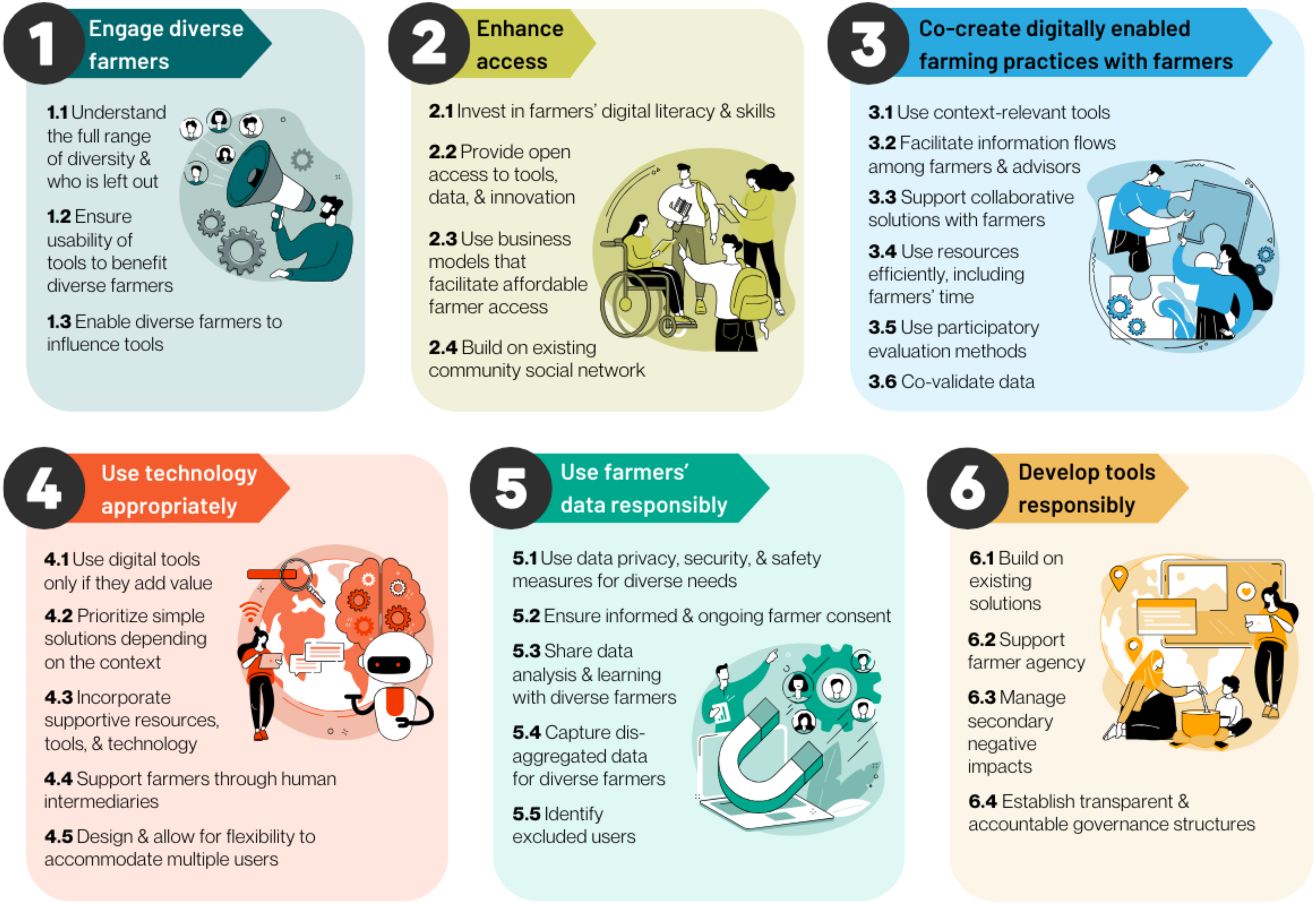
Principles for socially inclusive digital tools for smallholder farmers (Dittmer et al., 2024).
Digital innovations in practice
We provide below examples of innovative functions and features to demonstrate how each of the principles are currently being operationalized (Table 1; see Supplementary Materials for additional details). The examples aim to illustrate how various digital approaches and technologies can be tailored to meet the specific needs of smallholder farmers, ensuring that digital agricultural tools are accessible, relevant, and beneficial to diverse target users. By analyzing these innovations, we examine current trends, persistent challenges, and potential inflection points that could shape future developments in socially inclusive digital tools. The examples were obtained from publicly available documents online.
Principles for socially inclusive digital tools for agriculture with examples on how each has been operationalized. See Figure 1 for a description of the principles.
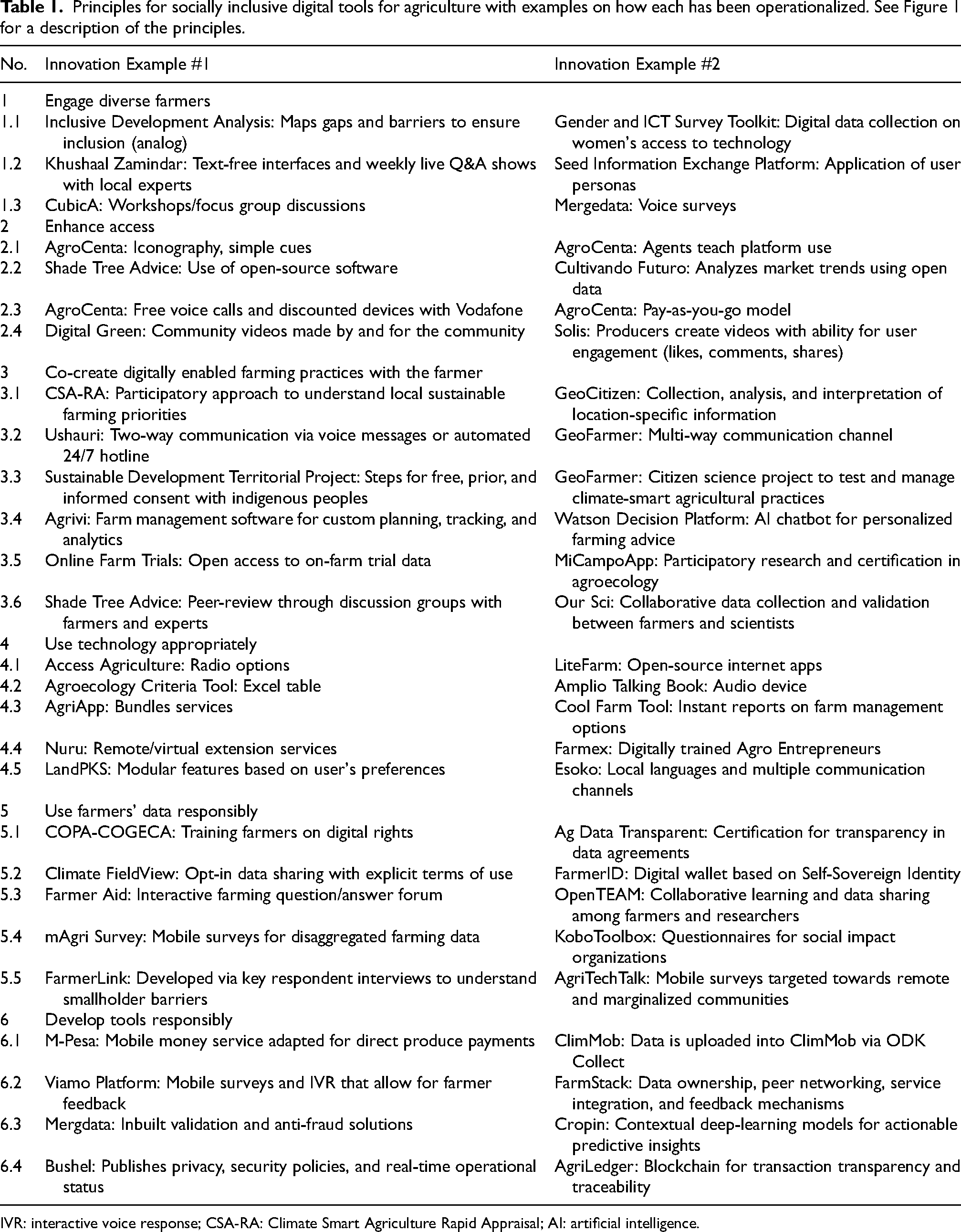
IVR: interactive voice response; CSA-RA: Climate Smart Agriculture Rapid Appraisal; AI: artificial intelligence.
Principle 1: Engage diverse farmers
A firm understanding of the target group and diversity of farmers in that group are needed to support tool access and relevance. Inclusive Development Analysis (USAID) exemplifies this by mapping marginalized groups through comprehensive data collection via paper surveys and focus groups, ensuring their needs are met in development programs. However, analog approaches may face scalability challenges in larger or more remote populations, particularly in contexts where digital data collection could reduce logistical constraints and increase efficiency. In contrast, the Gender and ICT Survey Toolkit (USAID) uses digital surveys and mobile data collection to understand women's access to technology, guiding project design to enhance inclusivity. The adoption of digital methods also demonstrates the potential to bridge gaps in real-time data collection, yet it may exclude communities with limited internet or mobile connectivity, underlining the need for hybrid approaches.
Services and related content must be tailored to support the target farmer group. The Seed Information Exchange Platform, for example, employed user personas and workshops during the design phase to ensure that its tools were both user-friendly and inclusive. Following implementation, Khushaal Zamindar employed text-free interfaces through interactive voice response (IVR) systems to accommodate low-literacy users. The IVR channel also hosts live shows where local experts address farmers’ questions on air each week, providing real-time, localized support. These examples highlight the value of accessible interfaces; however, they also reveal a reliance on high-quality expert engagement and robust infrastructure, which can vary significantly across regions. Incorporating farmers’ expertise is equally important, as demonstrated by CubicA's workshops and Mergedata's voice surveys, which actively gather feedback to refine and improve the tools. Yet, the challenge remains in how to systematically integrate this feedback into iterative design processes to ensure long-term user satisfaction and tool efficacy. Without clear mechanisms for integrating user insights into iterative design cycles, tools risk stagnation.
Principle 2: Enhance access
Going online can be confusing, difficult, and costly. Besides accessing physical devices and associated infrastructure, users must know how to navigate subscription fees, download software, create online accounts and more—all of which can make for a challenging experience. Digital literacy and skills are thus foundational for leveraging technology. AgroCenta employs a human-centered design with simple interfaces such as bold graphics and light text while also having agents available to directly engage with farmers, teaching them how to use the platform. While this dual approach enhances accessibility, it also introduces a dependency on human intermediaries whose availability may be inconsistent in scaling initiatives. If agent availability is limited, accessibility suffers.
Business models that are both affordable for farmers and designed for long-term success demonstrate sustainable tool development. AgroCenta's partnerships with mobile network companies to offer free voice calls and discounted devices, alongside its pay-as-you-go model, help bridge the cost barrier for many smallholder farmers. Although this approach lowers financial barriers, it raises questions about the sustainability of such partnerships if external funding or subsidies diminish over time. What happens when funding runs out? Will farmers be left with unaffordable tools? Open access to tools and data may be one solution to democratize information. Shade Tree Advice is built on open-source software, promoting transparency and collaboration while Cultivando Futuro leverages open data to provide market trends and facilitate direct sales, empowering farmers with timely market information. These models illustrate how inclusive strategies can make advanced technologies accessible to financially constrained farmers.
Building on existing community social networks is effectively demonstrated by Digital Green, which uses community-produced videos to share knowledge among farmers. Solis offers a similar model where producers create and share informative videos, mimicking a social media-like environment that encourages interaction through likes, comments, and shares. This social media-inspired design promotes engagement and peer learning but may inadvertently amplify misinformation or require significant moderation to maintain quality content. Engagement-driven models must additionally ensure that digital tools remain accessible to less tech-savvy farmers rather than catering primarily to early adopters.
Principle 3: Co-create digitally enabled farming practices with the farmer
The co-creation of farming practices among farmers, technical advisors, and researchers brings together diverse knowledge and perspectives to produce relevant and sustainable farming practices. Farmers context, interest, and goals should thus be reflected in the tool. Climate Smart Agriculture Rapid Appraisal employs a participatory approach to tailor climate-smart agricultural practices to local contexts. The GeoCitizen framework is a participatory system that integrates georeferenced surveys, geolocation of context-relevant information, and structured and transparent discussion and feedback loops to facilitate active citizen contributions and support processes of co-innovation. While these participatory methods ensure greater relevance and buy-in from farmers, they may face scalability issues. Farmers often have limited time, and engagement may decline without clear incentives. Additionally, power imbalances persist: are farmers genuinely influencing tool development and farming practices, or are they primarily consulted to validate pre-existing frameworks?
Facilitating information flows between farmers and advisors can drive better decision-making. Ushauri uses automated hotlines adapted to local contexts, while GeoFarmer employs multi-way communication channels among farmers, researchers, and extension services. Both approaches ensure that farmers have continuous access to expert advice and peer support. These open communication processes hold potential to support collaborative processes with and among farmers by engaging them and their broader networks. For example, farmers in Tanzania used GeoFarmer as a part of a citizen science project to test different climate-smart agricultural practices and collect feedback about their awareness, knowledge, and use of improved practices (Eitzinger et al., 2020). Such examples illustrate the potential of digital tools to engage farmers in research actively, yet sustaining long-term participation and trust remains a challenge.
Encouraging farmer participation in the evaluation of agricultural practices and decision-making enhances the relevance and impact of agricultural innovations (Gbangou et al., 2020). Participatory evaluation methods are employed by Online Farm Trials, which provides access to a wide range of free on-farm trial data, and MiCampoApp, which combines participatory research for decision support with certification for market differentiation of agroecological products. While these tools empower farmers, they also introduce complexities in managing data accuracy and ensuring equitable access to insights across different demographics. At the same time, digital tools developed via co-creation processes should be sensitive to farmers’ time and ultimately streamline their operations. Agrivi's farm management software optimizes tasks through planning, tracking, and analytics, while IBM's Watson Decision Platform for Agriculture uses artificial intelligence (AI) to provide instant insights and personalized farming advice. These advancements underline the growing importance of AI in agriculture but also raise concerns about algorithmic transparency and the potential for misuse of predictive analytics in decision-making.
As digital information becomes more prevalent and the potential for human error persists, the necessity to co-validate data among farmers and scientists becomes increasingly relevant. Shade Tree Advice validates recommendations not only by peer-review but also by discussion groups with farmers. Our Sci enables collaborative data collection and validation between farmers and scientists in a centralized platform. These methods foster trust and integrity in the data used for agricultural decision-making but may require substantial capacity-building efforts to train participants in data collection and analysis.
Principle 4: Use technology appropriately
Digital tools should only be used when they add value to an existing in-person process. Access Agriculture demonstrates how radio programs can be sufficient for farmers to voice their opinions, concerns, or suggestions. Digital tools may not add value if existing services are fit to purpose, for example, from open-source internet apps, such as LiteFarm. Digital solutions are therefore not always necessary, and low-tech alternatives can often meet user needs effectively. However, such approaches may be less appealing to funders focused on technological innovation, potentially limiting their scalability.
When digital tools are deemed necessary, simple solutions should be prioritized based on the context. The Agroecology Criteria Tool uses basic Excel tables for ease of interpreting performance assessment results, whereas the Amplio Talking Book delivers audio content for low-literacy users, supporting information accessibility without complex interfaces. These examples highlight the importance of balancing simplicity with functionality. While basic tools reduce barriers to adoption, they may not sufficiently address more complex needs, limiting their utility for advanced users or scenarios.
Incorporating supportive resources and technology can benefit farmers by providing efficient solutions to address multiple needs. For instance, the Cool Farm Tool, an Excel-based tool, generates dynamic reports on the impact of various farming management options. Meanwhile, more complex technology integration, as used by AgriApp, bundles crop production data, market information, and an online marketplace into a single comprehensive platform. Multifunctional tools that bundle services can add value but also pose challenges in ensuring user comprehension and effective integration of multiple features. Incorporating trusted human intermediaries, such as extension agents or trainers, can further assist farmers with inputting data or by providing coaching on how to use information generated by the tool. Nuru's remote extension services and Farmex's digitally trained “Agro Entrepreneur” illustrate how intermediaries can support farmers and invoke trust in the use of digital tools. However, most extension networks are male dominated, which can create discomfort, trust issues, and security concerns for female farmers. Female farmers exhibited less trust in male agents, partly due to poor relationships and, in some cases, unethical behavior (GSMA, 2023). Without intentional efforts to recruit and train female agents, digital tools risk reinforcing gendered barriers rather than breaking them down. Additionally, reliance on intermediaries may create bottlenecks, particularly if scaling efforts outpace the availability of adequately trained personnel.
Flexibility in tool design accommodates diverse user needs and ensures long-term success. The LandPKS mobile app offers customizable modules based on the user's land management needs. Esoko offers farmers weather information, agronomic advice, and market price information and linkages, through local languages and channels including short message service (SMS), voice SMS, IVR, and a call center. This adaptability and choice of familiar features ensure that digital tools remain relevant across different contexts and target user groups. These examples underscore the importance of tailoring tools to specific user contexts. However, ensuring consistent updates and support for such diverse features may strain developers’ resources over time.
Principle 5: Use farmers’ data responsibly
Digital technologies generate and store large amounts of data. Yet smallholder data privacy is often not well established (Shelton et al., 2022), thus creating an additional obstacle for them to engage with a digital tool. Teaching farmers about digital skills, such as in COPA-COGECA, allows them to better understand their data rights and responsibilities (Kaur et al., 2022). Ag Data Transparent offers a certification program in which legal agreements get a transparency seal if agricultural technology providers abide by the The Privacy and Security Principles for Farm Data. While these initiatives aim to enhance data governance, they also highlight gaps in enforcement and the challenge of educating farmers across diverse contexts about complex data policies.
Informed and ongoing consent is one element that allows farmers to understand and control how their data is being used, collected, or stored. Climate FieldView requires explicit opt-in mechanisms, ensuring that farmers are fully aware of how their data will be used and giving them the authority to withdraw consent at any time. FarmerID uses Self-Sovereign Identity, which enables farmers to manage their own digital identities and financial transactions within the agricultural supply chain. For women farmers, who are more vulnerable to digital exploitation, strong data protection measures are particularly crucial. Without safeguards against unauthorized data sharing or misuse, women risk exposure to financial fraud, cyberstalking, or exclusion from decision-making processes.
Sharing data analysis and learning with diverse farmers promotes collaborative knowledge-building and equips farmers with valuable insights to enhance agricultural practices and outcomes. Farmer Aid enables farmers to pose questions and receive answers from a community of peers and experts. OpenTEAM offers a more structured platform for collaborative learning and data sharing among farmers, researchers, and agricultural stakeholders, thus creating a collective knowledge base that can drive innovation and improve farming practices on a broader scale. Such platforms emphasize the potential of collective intelligence but may struggle with issues of equitable access and sustained farmer participation over time.
Capturing disaggregated data will allow tool developers and implementors to better understand why, how, and what types of farmers are being affected by digital tool solutions. Vice versa, such granular data enables the tailoring of digital solutions to address specific barriers faced by different farmer demographics. Gender-disaggregated data in the agricultural sector of LMICs, for example, is often scarce or fragmented, resulting in a significant lack of understanding and insights regarding female farmers (GSMA, 2023). The mAgri Survey specializes in mobile surveys that gather data specific to different farming practices and farmer groups, helping to identify unique challenges and opportunities within various communities. KoboToolbox is designed for more extensive data collection, often used by social impact organizations to capture comprehensive demographic information and socio-economic data to understand the broader context in which farmers operate, thereby enabling more informed and effective policy and intervention strategies. Disaggregated data can also be used to identify excluded target farmers and how to better reach them. AgriTechTalk, for example, uses mobile technology to target remote and marginalized farmers, allowing them to participate in surveys that gather insights into their specific needs, challenges, and perspectives.
Principle 6: Develop tools responsibly
Duplication of resources wastes time and money, so a firm understanding of the digital ecosystem and how a new digital tool would add value to this ecosystem should be fully understood. M-Pesa leveraged its established mobile money infrastructure to facilitate agricultural transactions, filling a gap by adapting a platform that farmers were already familiar with. ClimMob utilizes the ODK Collect app, a widely used tool for data collection in field research, for data upload, management, and statistics. By integrating with ODK Collect, ClimMob benefits from existing robust data collection features. Caution is needed when relying on pre-existing platforms as they may perpetuate existing limitations, such as access constraints in low-connectivity areas or the exclusion of less digitally literate users. Furthermore, such integrations may stifle innovation if developers prioritize convenience over exploring novel approaches.
Supporting farmer agency spans from creating feedback mechanisms to ensuring data privacy. The Viamo Platform provides farmers mobile-based surveys and IVR systems to give feedback on the effectiveness of various agricultural interventions and desired improvements, allowing for the continuous improvement of agricultural technologies. FarmStack empowers farmers by ensuring data privacy and ownership, networking among peers, integration with other services (e.g. financial, input suppliers, market access), and providing feedback mechanism on the services and support they receive. Although these features empower users, there are challenges in ensuring that feedback mechanisms are representative and actionable. In many cases, marginalized farmers may lack the resources or confidence to fully engage. Additionally, balancing privacy with the functionality of integrated services often requires complex technical and regulatory frameworks that may be challenging to implement effectively.
It is the responsibility of the tool developer and implementor to manage the negative impacts of digital tool use and their content. Such impacts include loss of important human interaction, online safety, excessive or irrelevant information, misinformation, or disinformation. Mergdata incorporates inbuilt validation and anti-fraud mechanisms to ensure data accuracy and protect farmers from fraudulent activities, respectively. Cropin utilizes mature AI-driven insights and machine learning models to provide predictive analytics and actionable recommendations. By leveraging advanced technologies, these tools enhance the reliability and effectiveness of agricultural operations. While these tools improve reliability, their reliance on advanced technologies like AI and machine learning may reduce transparency for end-users. Farmers often lack a clear understanding of the algorithms driving these tools, raising concerns about accountability and trust in their outcomes. Moreover, such technologies can inadvertently perpetuate biases or errors inherent in their training datasets.
Digital tool users should also have a clear understanding of how decisions are made and who is responsible for them. Bushel's public documents on privacy and platform operational status provide transparency, helping farmers understand how their data is being used and protected. AgriLedger uses blockchain technology to ensure transaction transparency and traceability, providing an immutable record of all transactions. However, transparency initiatives may not always translate into accessibility. Technical jargon or poorly designed user interfaces can make information incomprehensible to farmers, negating the intended benefits. Furthermore, blockchain-based systems, while transparent, are resource-intensive and may pose sustainability challenges, particularly in regions with energy constraints.
Towards digital inclusivity in food systems
The evaluation of various digital tools through the lens of principles for socially inclusive digital tools for smallholder food systems highlights both innovative advancements and notable gaps in current practices. These examples show that the principles are not merely theoretical or limited to wealthy countries but are actively applied across diverse contexts. Some principles, such as engaging diverse farmers and improving access, are well-represented across a range of tools. However, many principles remain under-addressed in existing digital tools. Principles related to the responsible use of farmers’ data, the appropriate use of technology, and co-creation with farmers were the least consistently addressed. While there is a growing emphasis on best practices for data privacy and consent, comprehensive strategies for data management and user education on data rights remain lacking. The principle of using technology appropriately is often overlooked in favor of more complex technological solutions that may not be necessary or beneficial for all contexts. Digital tools supporting co-creation with farmers were even fewer compared to those enhancing access or engaging diverse farmers. Even so, these tools primarily support elements of co-creation through participatory process features (e.g. multi-way communication, feedback mechanisms, collaborative data collection and validation) rather than directly incorporating elements that would provide technical advice or assess the performance of self-selected farming practices.
Our review thus reveals the challenge of addressing all six principles within a single digital tool. While tools like AgroCenta and Digital Green have made notable contributions by integrating multiple principles, such holistic approaches are rare. The uneven distribution of innovations may suggest that certain principles are more challenging to operationalize, potentially due to higher costs, greater complexity, or limitations in what digital tools alone can achieve. This underscores the need for greater awareness among tool developers, users, and oversight bodies about the importance of these principles for sustainable agricultural development. If funding entities create incentives and mandate adherence to these principles for the tools they support, digital tools can become both socially inclusive and impactful. Developing creative business models that align profitability with these principles will also be a game changer. Although achieving comprehensive adherence to all principles may be challenging in the short term, this goal can be gradually adopted as societal norms evolve. Flexibility in applying these principles may be necessary in contexts where trade-offs exist, but the overarching aim remains to move toward more holistic and inclusive digital solutions in agriculture. Tool implementers and developers must carefully evaluate and apply these principles based on the specific context and needs of their target user group.
Recognizing the nuances of digital inclusion, it is important to distinguish between technologies and practices that are directly oriented towards enhancing inclusion and those that achieve inclusivity as a secondary or indirect outcome. Direct inclusion-oriented technologies are purposefully designed with the explicit goal of addressing digital disparities, centering the experiences of marginalized farmers, and actively dismantling barriers to access and participation (Hafferty et al., 2024). These tools incorporate targeted user engagement strategies, adaptive interfaces, and mechanisms for continuous user feedback. In contrast, indirect inclusion technologies may provide benefits to diverse farmer groups but lack a systematic focus on inclusivity. For example, digital tool used in tandem with mobile networks to offer discounted devices and free voice calls lowers financial barriers but does not ensure long-term affordability if external funding diminishes. Similarly, tools that help farmers make informed decisions but do not directly address digital literacy gaps may limit their use. The distinction between these approaches has significant implications. Effectively addressing direct inclusion requires not only thoughtful technology design but also broader systemic support to ensure long-term accessibility, usability, and impact.
Thus, the successful implementation of inclusive digital tools in smallholder food systems requires coordinated efforts from multiple stakeholders. Ensuring sustained impact demands not only technological advancements but also policy support, investment, and farmer-driven innovation. As a rule of thumb, the adoption and success of any innovation should be dynamic, scalable, and involve extensive stakeholder engagement (García et al., 2016). Below we outline specific actions for key actors in the digital agricultural ecosystem with a focus on gender inclusion: tool developers, farmer support organizations, smallholder farmers, and policymakers. By delineating targeted strategies for each group, we provide brief recommendations for enhancing the adoption, usability, and effectiveness of digital tools in smallholder farming contexts.
Action for tool developers
Digital tool developers can increase effectiveness by creating simple, intuitive, and user-friendly tools that account for the low-literacy rates among smallholder farmers (Principles 1.2, 4.1, 4.2 and 4.5). Involving smallholder farmers in the product development process ensures that tools and their content are tailored to their specific needs (Principles 3.1 and 3.5) (Steinke et al., 2022). Coordination with farmer support organizations can increase smallholders’ understanding and education on using these technologies (Principles 2.4 and 4.4). Developers should also use alternative communication methods, such as visual aids or interactive tutorials, to enhance usability. Two-way communication and feedback mechanisms are encouraged (Principle 1.3 and 3.2).
For gender inclusivity, developers should integrate design elements that specifically reduce barriers for women farmers. This includes offering mobile-based services that do not rely on internet access (Principle 3.1), using voice-assisted technologies for low-literacy users (Principle 2.1), and designing content that acknowledges women's roles in decision-making and labor within farming households (Principle 1.2). Digital platforms should also incorporate social learning and peer-to-peer models to leverage women's existing networks for knowledge-sharing and capacity-building (Principle 3.2). In India, the Digital Green initiative has demonstrated how participatory video content tailored for women farmers can increase knowledge retention and participation in training programs. These videos, created by and for women in local languages, have proven far more effective than text-heavy advisory platforms (Lambrecht et al., 2023).
However, it is crucial for digital tool developers to recognize the potential risks associated with technology-driven farming models. Digital platforms, while promising efficiency and accessibility, may inadvertently contribute to the deskilling of farmers by prioritizing pre-defined market behaviors over traditional knowledge-sharing and social learning (Brooks, 2021). Farming is a collective process that integrates environmental adaptation and peer-based experimentation, but rapid technological changes and rigid digital platforms can disrupt this balance, eroding farmers’ ability to make independent decisions. Additionally, bundling financial and agricultural technologies together may restrict farmers’ choices, increasing their dependency on external providers while weakening informal risk-sharing mechanisms. Without careful design, digital farmer programs may lock smallholders into pre-structured market dependencies, benefiting agribusiness firms while reducing farmers’ autonomy. Developers should ensure that digital tools enhance, rather than replace, farmers’ capacity to engage in dynamic, locally relevant agricultural practices (Principles 2.4, 4.1, 6.1).
In the future, it would be beneficial if tools developers not only published their own claims about adhering to socially responsible principles, including the principles for social inclusion, but also if these claims were independently verified by third-party organizations within the industry (Principle 6.4). Independent audits on gender inclusivity in digital agricultural tools could ensure accountability. For example, certification mechanisms, similar to fair trade or organic labeling, could verify whether platforms actively reduce gender-based digital exclusion.
Action for farmer support organizations
Farmer support organizations play a bridging role between the farmer and the developer. In this role, they can better support co-creation between the farmer and the developer, advocate for vulnerable farmers, and advance the digitalization agenda by shaping the knowledge and behavior of smallholder farmers (Principles 4.3 and 4.4). They can promote digital technology adoption by sensitizing farmers to its benefits and providing digital literacy training (Principle 2.1) as well as foster co-creation by involving famers in piloting new technologies and farming practices (Principles 3.3, 3.4 and 3.5). Farmer support organizations can also partner with digital solution providers to pilot new technologies and negotiate better prices (Principle 2.3), making these technologies more accessible and affordable.
Farmer organizations should prioritize outreach strategies that specifically engage women farmers, including women-only training sessions, mobile-based advisory services tailored to women's information needs, and gender-sensitive participatory design approaches (Principles 1.2, 2.1, and 4.4). Partnering with local women's cooperatives and community leaders can help overcome socio-cultural barriers and ensure women's active participation in digital agriculture (Principle 2.4).
Action for smallholder farmers
Smallholder farmers can take a proactive approach to leveraging digital technologies for sustainable performance. By actively seeking and experimenting with digital tools, farmers can identify solutions tailored to their specific needs, addressing environmental and social issues associated with traditional farming practices. Participation in extension service training programs can enhance their IT skills (Principle 2.4), leading to increased productivity and more sustainable agricultural practices. Women farmers, in particular, can benefit from forming peer networks to share digital knowledge, participating in digital literacy programs, and advocating for their specific needs in the design and implementation of digital tools. If smallholders use these principles to negotiate their rights with tool developers and proactively seek tools that meet their needs, then they will take one more step into the digital world.
Action for policymakers
Policymakers must prioritize developing enabling infrastructure, particularly internet connectivity in remote areas, to harness the transformative potential of digital technologies in agriculture (Principle 2.3). Investing in training and education programs can equip smallholders with the necessary skills to use digital tools effectively. For women farmers, connectivity extends beyond physical infrastructure to include affordability and access, making subsidized data plans a crucial policy consideration. Conditional subsidies could be implemented where women farmers receive financial support for purchasing smartphones or digital services upon completing digital literacy training to ensure that access and knowledge-building happen simultaneously. Stringent rules on data collection, storage, and processing, such as in the EU General Data Protection Regulation, should also be considered to ensure that farmers’ personal and sensitive information is securely handled and protected (Principles 5.1 and 6.3). Providing incentives and subsidies can help overcome financial barriers, facilitating technology adoption and contributing to a more sustainable and efficient food systems.
Concluding remarks
In this article, we have illustrated examples of principles for social inclusion in action. The examples offer a detailed perspective on digital inclusivity, laying the groundwork for organizations to consider technological functions and features that best support smallholder inclusion. We argue that the uneven distribution of digital innovations reveals deeper systemic issues in how digital tools for smallholder agriculture are developed and deployed. While some principles, such as engaging diverse farmers and improving access, are widely addressed, others, particularly those emphasizing co-creation with farmers, responsible data practices, and the appropriate use of technology, remain underdeveloped. This imbalance reflects broader tensions between technological optimism and the realities of smallholder farming contexts. Without deliberate efforts to address these gaps, digital tools risk reinforcing, rather than mitigating, existing inequalities.
At its core, digital inclusion is not just a technical or logistical challenge but a deeply political and strategic act—one that frames how agricultural innovation is designed, implemented, and evaluated. By articulating principles for socially inclusive digital tools, we are engaging in a deliberate effort to influence the trajectory of digital agricultural development at the smallholder level. These principles do not merely suggest best practices but serve as a framework for assessing and shaping how digital tools operate within different farming communities. They define who gets to participate, how knowledge is created and shared, and ultimately, who benefits from technological advancements.
The discourse around digital tools often portrays them as neutral instruments of progress. However, as with any innovation, their development and adoption are shaped by power dynamics, institutional priorities, and competing visions for the future of agriculture. The articulation of principles for digital inclusivity is thus not a passive exercise but an intentional framing of what inclusive agricultural innovation can look like. Recognizing this framing as a political act allows for more transparent discussions about the values, trade-offs, and structural challenges embedded in digital transformation efforts.
In practical terms, providing inclusive digital tools to diverse smallholder farmers is necessary in addressing multiple Sustainable Development Goals. Digital tools are inclusive only when the delivered content or service reflects the users’ needs and contexts. While failure is an inevitable, and sometimes valuable, part of any iterative design process, offering new insights and perspectives, learning from and avoiding past failures can accelerate digital development efforts.
Our conclusion is straightforward: digital agricultural development can be inclusive at the smallholder level. To create this enabling environment, digital development actors must prioritize socially inclusive design to mitigate the risk of social inequities and enhance smallholder agency. In moving forward, we urge digital development actors to critically engage with these principles not as static guidelines but as evolving commitments that require continuous reflection and adaptation. Recognizing digital inclusion as both a technical and political endeavor will be essential in shaping the next generation of agricultural innovations that are not only effective but also just and equitable.
Supplemental Material
sj-xlsx-1-oag-10.1177_00307270251331644 - Supplemental material for Digital tool innovations for smallholder inclusion
Supplemental material, sj-xlsx-1-oag-10.1177_00307270251331644 for Digital tool innovations for smallholder inclusion by Kyle M. Dittmer, Sessie Burns, Sadie Shelton, Ciniro Costa Jr. and Eva Wollenberg in Outlook on Agriculture
Footnotes
Acknowledgements
This work was implemented as part of the CGIAR Research Program on Climate Change, Agriculture and Food Security (CCAFS), which was carried out with support from the CGIAR Trust Fund and through bilateral funding agreements. The CCAFS Program closed at the end of 2021. More information can be found on the CGIAR website  . The views expressed in this document cannot be taken to reflect the official opinions of these organizations.
Declaration of conflicting interests
The authors declared no potential conflicts of interest with respect to the research, authorship, and/or publication of this article.
Funding
The authors disclosed receipt of the following financial support for the research, authorship, and/or publication of this article: The Agroecological transitions for building resilient and inclusive agricultural and food systems (TRANSITIONS) programme is funded by the European Union through its DeSIRA initiative and managed by the International Fund for Agricultural Development (IFAD). This publication was produced by the Inclusive Digital Tools to Enable Climate-informed Agroecological Transitions (ATDT) Project under the European Commission grant agreement No. 2000003773.
Ethical considerations
This article does not contain any studies with human or animal participants.
Supplemental material
Supplemental material for this article is available online.
References
Supplementary Material
Please find the following supplemental material available below.
For Open Access articles published under a Creative Commons License, all supplemental material carries the same license as the article it is associated with.
For non-Open Access articles published, all supplemental material carries a non-exclusive license, and permission requests for re-use of supplemental material or any part of supplemental material shall be sent directly to the copyright owner as specified in the copyright notice associated with the article.
