




Abstract
Agri-food systems approaches have gained international recognition over the last years. The role of livestock—both in mixed crop-livestock and pastoral systems—in sustainable agri-food systems transformation remains contested. In this review paper we present new analyses of original data from an international livestock expert survey, a quantitative search in Web of Science, and a literature review to unravel the potential for livestock systems to sustainably transform agri-food systems through regenerating soils and restoring degraded landscapes. We (i) illustrate how livestock is important for people and planet alike; (ii) review how to harness livestock's potential for rehabilitation of soils and landscapes; (iii) demonstrate successful case studies of livestock solutions such as improved forages for cut-and-carry systems and grazing management; and (iv) identify four critical steps required for lasting change at continental scale. We conclude that livestock solutions can be key catalysts for sustainable agri-food systems transformation that merit accelerated public and private investments. More research is needed to develop concrete, operational and practical livestock solutions, and measure, monitor and report their contributions and progress toward the 2030 Agenda for Sustainable Development.
Introduction
The concept of agri-food systems transformation has gained momentum as a means to integrate agriculture, nutrition, livelihoods and environment, highlighting its central role in achieving the Sustainable Development Goals (SDGs). It has been recognized that stand-alone innovations can seldom achieve sustainability outcomes at scale. They should be embedded in a systemic theory of change to achieve progress towards the SDGs (Herrero et al., 2021a). A food system is defined as encompassing all actors and activities across production, storage, processing and manufacture, distribution, marketing, retail, consumption, and disposal of goods. A sustainable food system delivers food and nutrition in an equitable manner such that the economic, social, and environmental capital for future generations is not compromised (FAO, 2018a; HLPE, 2020). The food systems paradigm found its spotlight in 2021 within the Food Systems Summit, where Track 3 aimed to “Boost Nature-Positive Production at Scale” to (i) protect natural ecosystems against new conversions for food and feed production; (ii) sustainably manage existing food production systems to the benefit of both nature and people; and (iii) restore and rehabilitate degraded ecosystems and soil function for sustainable food production. 1
Loboguerrero et al. (2020) argue that global food systems must (1) reroute old systems into new trajectories; (2) reduce risks; (3) minimize the environmental footprint; and (4) realign the enablers of change, to enable us to reach the SDGs by 2030. Béné et al. (2019) identified 12 key drivers to change in food systems, including production and supply drivers such as technological innovations, agricultural intensification, climate change, soil degradation, and infrastructure; distribution and trade drivers including trade policies, food safety concerns and internationalization of private investments; and consumption and demand drivers such as urbanization, population growth, increased incomes and growing attention to diets and health. Although much has been achieved in terms of systemic views on transition in diets, livelihoods, social inclusion and equity, and environmental sustainability, concrete, operational and practical solutions to support sustainable food systems transformation remain limited. Pathways to scale practical solutions for sustainable food systems transformation are scarce (Brouwer et al., 2020), and critical trade-offs in complex food systems need to be identified (Mausch et al., 2020).
A central challenge facing agri-food systems is the closely intertwined nature of climate, land degradation and food security issues, outlined in The UN Special Report on Climate and Land. Climate change has adversely impacted food security and contributed to desertification and land degradation in many regions (IPCC, 2019). Globally, human use directly affects more than 70% of the global, ice-free land surface, with animal husbandry as the dominant land use. In Africa—the focus continent of this paper—65% of the total land area was classified as slight, moderate and severely degraded with country-to-country variations by 2000 (Stoorvogel and Smaling, 1990; FAO, 2000). In eastern and southern Africa, Rwanda and Ethiopia are the most seriously affected with over 25% of territory degraded, followed by Uganda, Kenya, and Tanzania with 17.6%, 18%, and 13% of degraded areas (FAO, 2000; Bai et al., 2008). Similar trends are observable in west Africa where degraded land has risen between 17% and 37% Ghana, Senegal, and Guinea (Bai et al., 2008). Rangelands are more affected, with more than 70% of rangelands degraded in Senegal, Mali, Burkina Faso, Niger, and Nigeria (UNEP, 2008). These degraded areas are continuously expanding into other parts of Africa (Mechiche-Alami and Abdi, 2020). The economic loss associated with land degradation in sub-Saharan Africa is estimated at $58 billion per year equivalent to about 7% of the gross domestic product and affecting about 180 million people (Nkonya et al., 2016).
Livestock, in rangelands and in mixed crop-livestock systems, play a central role at the food security-land degradation-climate nexus. Approximately 1.3 billion people or one-fifth of the global population depends on livestock for their livelihoods (ILRI, 2016). Yet, the role of livestock in sustainable food systems transformation remains contested (Herrero et al., 2021b). The livestock sector has various interactions with SDGs, with livestock interventions being both solution and problem depending on the context (Mehrabi et al., 2020). On the one hand, livestock is considered as a driver of land degradation and a contributor to climate change, thereby threatening food security. International livestock experts ranked land degradation by livestock systems as the most pressing environmental issue in Africa, followed by water use (Paul et al., 2020a). On the other hand, livestock can turn crop residues, byproducts, and food scraps into calories, contributing to a circular economy. Livestock's real land use is difficult to estimate as it is often integrated with crop production. Integrated crop-livestock systems are mostly situated in areas with high potential for crop production, where livestock synergistically supports crop production (Paul et al., 2020b). Furthermore, livestock production creates value in areas that are marginal or unsuitable to crop production (Jones and Thornton, 2009; Peden et al., 2009).
This review paper aims to unravel the potential for livestock systems to sustainably transform agri-food systems through regenerating soils and restoring degraded landscapes (Figure 1). We (i) illustrate how livestock is important for people and planet alike; (ii) review how to harness livestock's potential for rehabilitation of soils and landscapes; (iii) demonstrate successful case studies of livestock solutions such as improved forages for cut-and-carry systems and grazing management; and (iv) identify five critical steps required for lasting change at continental scale.
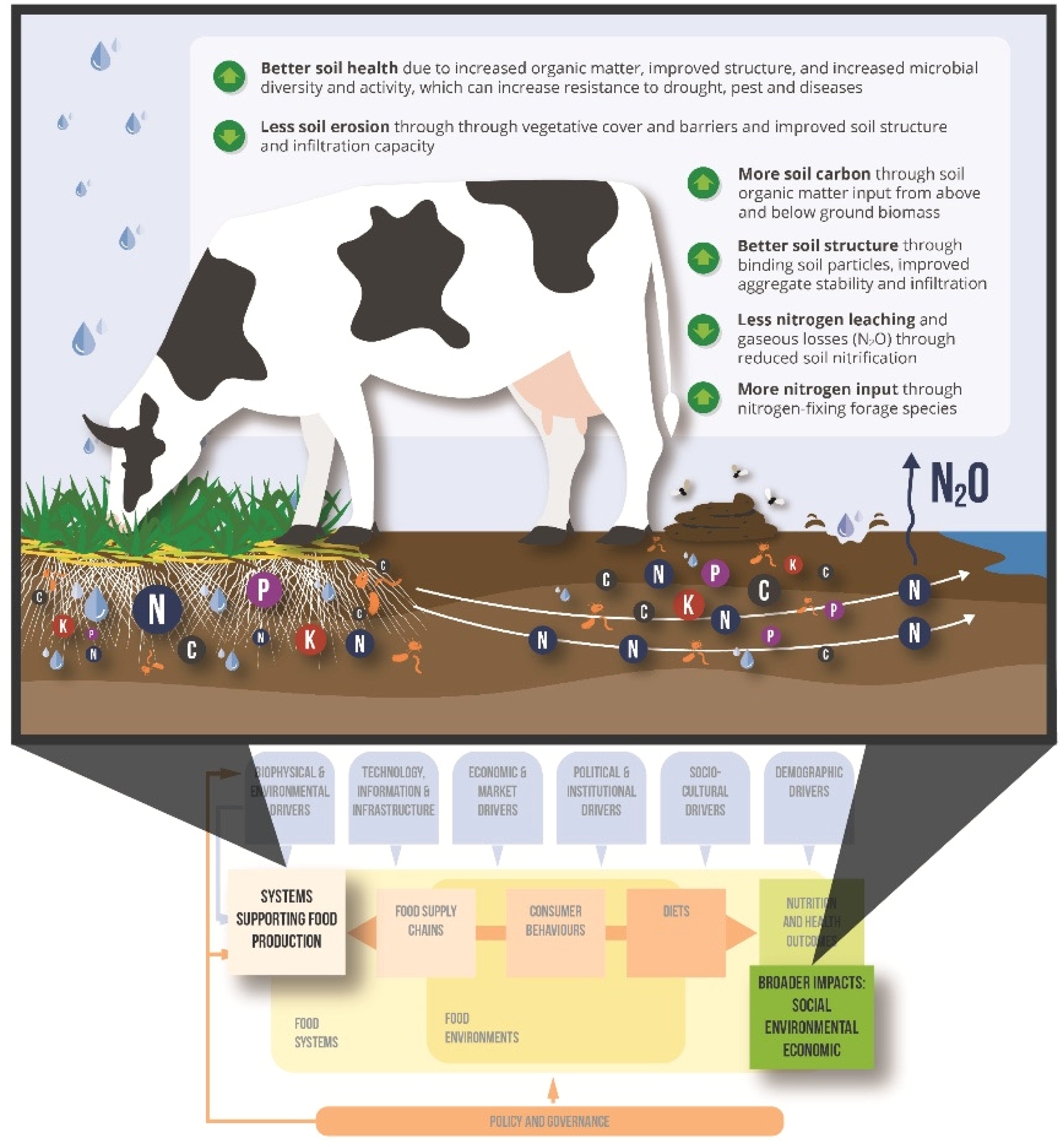
Livestock's potential role for regeneration of soils and landscapes within sustainable agri-food systems transformation. Livestock impact ecosystems that form part of systems supporting food production and influence environmental impacts.
Livestock are important for people and planet alike
Livestock fulfill essential livelihood functions for smallholder farmers across Africa. Animal Source Foods (ASF), such as milk and meat, are a critical component of a balanced diet and can improve nutritional outcomes, for example reducing stunting in children (Zaharia et al., 2021). In addition, livestock provide employment and income and a range of services such as draft power, manure, mobile assets, status, and insurance (Herrero et al., 2013a). Livestock contribute to SDG1 (end poverty), SDG2 (end hunger and achieve food and nutrition security), SDG3 (ensure healthy lives), and SDG8 (promote inclusive and sustainable employment and economic growth). We conducted an expert survey in 2019 with 94 experts from policy, research, and development with work expertise from Africa. Figure 2 shows how these experts ranked most important functions of livestock for smallholders in Africa, with highest importance being assigned to income provision, food/nutrition supply, asset creation, and social status (Figure 2).
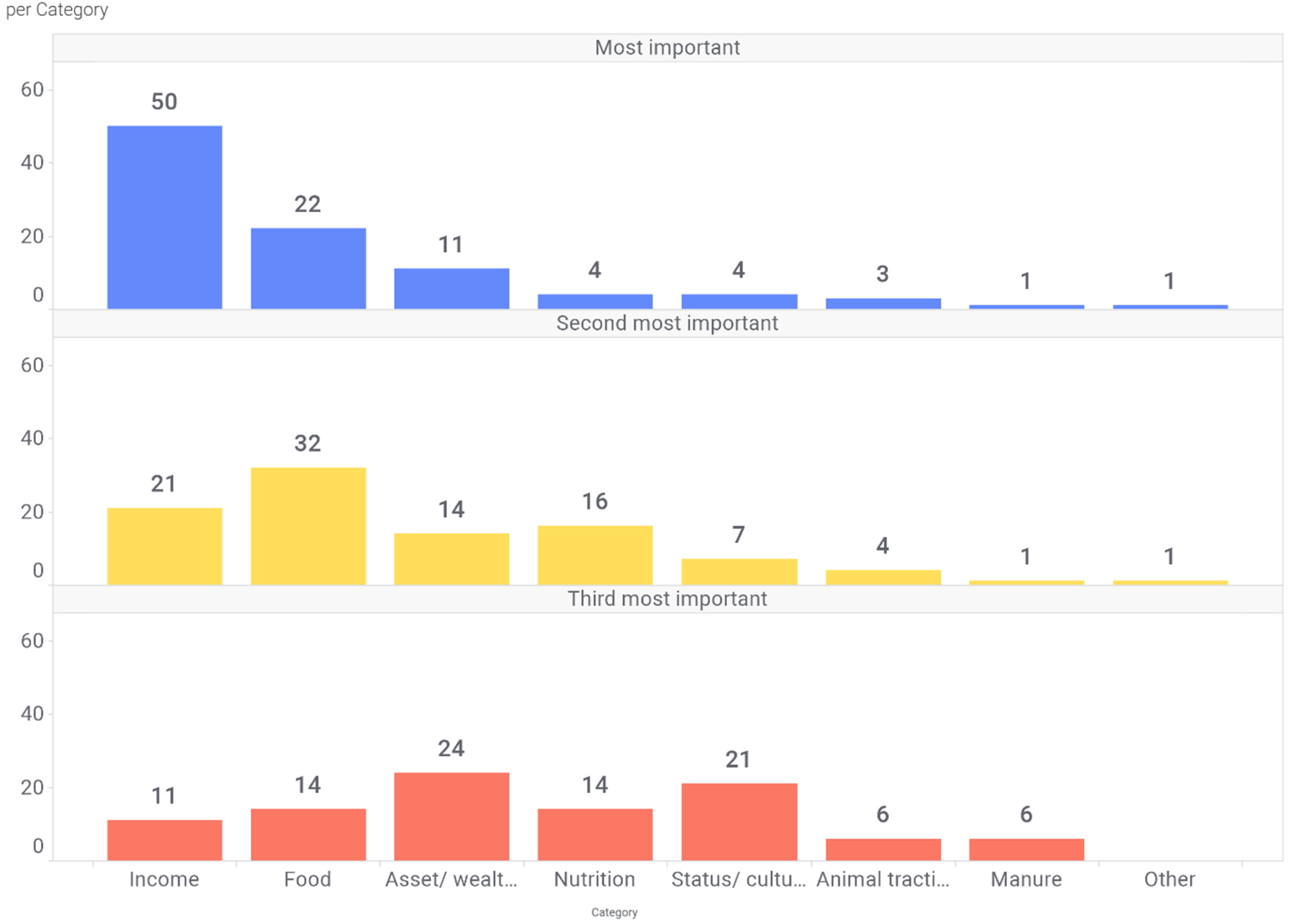
Most important functions of livestock in Africa ranked by international experts. Data stems from an online survey conducted among livestock experts from policy, research, and development from July to November 2019. A total of 260 experts from 67 countries participated, of which 94 indicated their main area of work and expertise is Africa. Detailed Materials & Methods are described in Paul et al. (2020a), and available online.
On the flip side, livestock production systems have a large environmental footprint. Globally, livestock approximately utilize 30% of the total ice-free land area (Geist and Lambin, 2002), emit 14.5% of total anthropogenic greenhouse gas (Adegbeye et al., 2020) and use about 44% of total agricultural water (Heinke et al., 2020) with low water productivity (Awulachew et al., 2010). When forests are converted to pasture or land for feed production, livestock production jeopardizes biodiversity (Gordon, 2018; IPBES, 2018; Creutzig et al., 2019).
Livestock systems vary from pure pastoralist to full crop-livestock integration (Sumberg, 2003). Livestock are key components of most of the varied production systems found in Africa, except root crop, forest, and tree crop systems (Figure 3). Large livestock populations live within the major farming systems in sub-Saharan Africa (SSA) and Middle East/North Africa: 107 million in Maize Mixed systems (east, central, southern Africa), 98 million in Agropastoral (semi-arid areas across Africa), 61 million in Highland Perennial (humid east African highlands), 45 million in Highland Mixed (mainly subhumid north-east Africa), and 43 million in Cereal-root crop Mixed (subhumid savanna zone west and central Africa). Livestock in different contexts serve different functions, play different roles in livelihoods, and vary in herd structure, breed composition, feeding, and management regimes (Robinson et al. 2011), reflecting differences in cultural, social, economic, and agro-ecological factors (Rufino et al., 2021). According to Dixon et al. (2020), the main environmental challenges in African farming systems include soil health and land related issues (Figure 3), which is largely in agreement with African experts’ opinion reported in Paul et al. (2020). We review the potential of solutions across all production systems with livestock components, including cut-and-carry mixed crop-livestock systems and grassland/rangeland agro-pastoral systems.
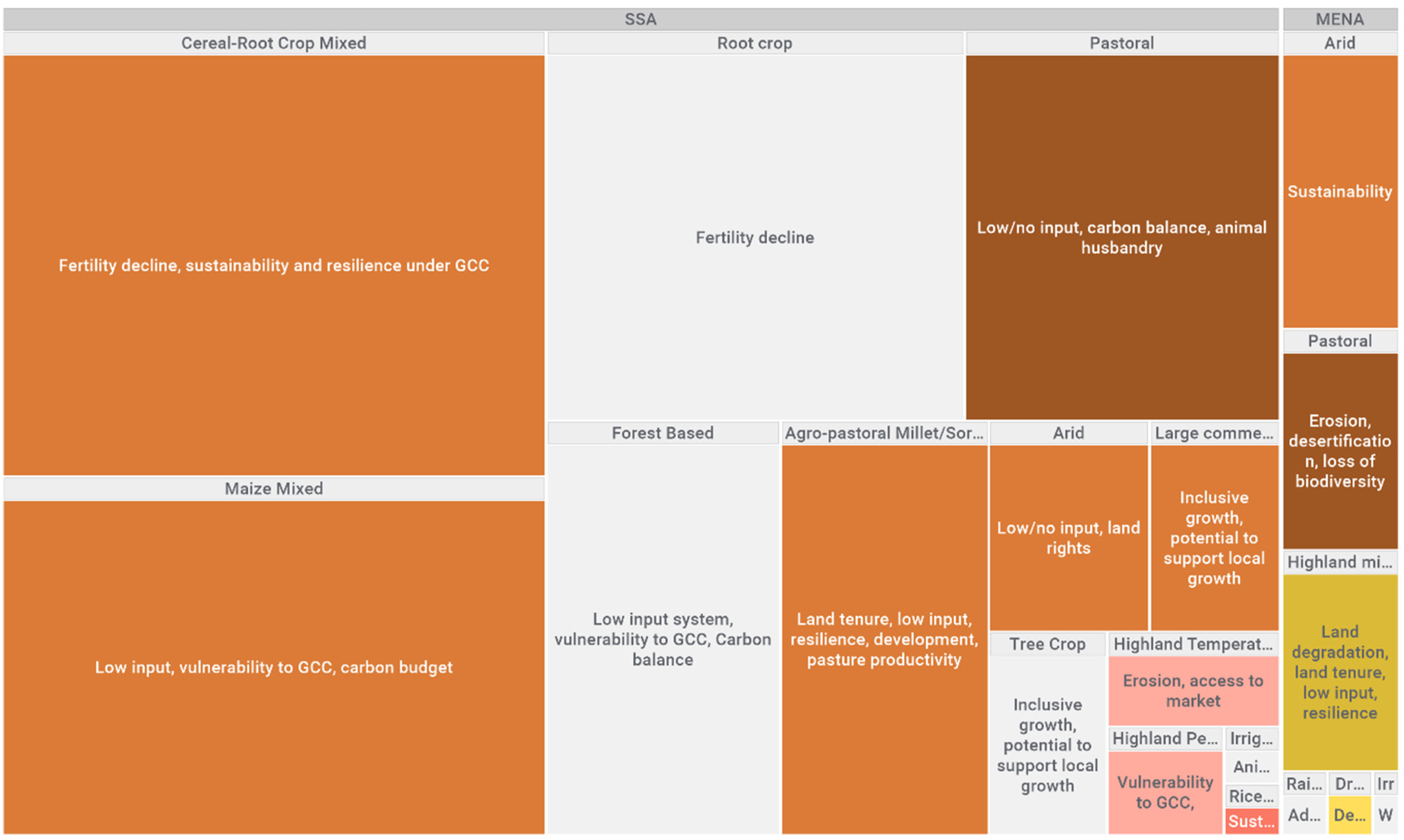
Farming systems in sub-Saharan Africa (left) and MENA regions (right) and most prevalent environmental challenges. The size of quadrants represents the combination of area and population under the respective system. Colors are suggestive for dominant livestock species within systems, with red-brown indicating cattle/dairy, brown cattle and camels, yellow sheep/goats, and pink various livestock including poultry (cattle, sheep, and goats), while the gray systems do not have major livestock components (data from Dixon et al., 2020). GCC: global climate change; MENA: Middle East and North Africa.
As a result of high population growth and diet shifts, the demand for ASF is rising quickly. Consequently, the importance of livestock production systems for food security, nutrition (Willett et al., 2019), livelihoods, and effects on the environment (Alexandratos and Bruinsma, 2012) is equally growing. This rise, however, has complex interactions with demographic changes, urbanization, climate change, education, and nutrition literacy. These factors are influencing taste, nutritional value, cost, convenience, source, animal welfare, and environmental sustainability—and they are increasingly influencing food choices and consumption patterns.
The ability of livestock systems to support livelihoods and meet the increasing demand for livestock products is further jeopardized by climate change (Godde et al., 2021). Heat stress is expected to have a direct negative impact (Rahimi et al., 2020, 2021). While indirect impacts are felt through, for example, (i) a mismatch between increasing water demand and decreasing water supply; (ii) increased pest and disease pressure as a response to changes in pathogen development, vector distribution, and disease transmission rates, oftentimes in combination with reduced disease resistance; (iii) biodiversity losses, both in terms of loss of habitats, plants, and animals and in terms of a reduced gene pool for future adaptation; (iv) changes in quantity, quality, and composition of feed resources; and (v) changes in overall system productivity and livelihood patterns (Gonzalez et al., 2022). Regions identified as the most vulnerable to climate change, such as sub-Saharan Africa and south Asia (Nilsson et al., 2022), are also regions where farmers and rural communities rely the most on livestock for food, income, and livelihoods, and where livestock is expected to contribute increasingly to food security and better nutrition. Adaptation will be needed if households are to cope with the multiple (inter-related) stresses of climate change, population growth, urbanization, globalization, etc. This requires not only considerable—public and/or private—investment but also real change in on-the-ground behavior. Despite their dynamism and importance, African livestock systems are frequently under-represented in policy and development, as well as under-researched and under-funded (Paul et al., 2020a). A quantitative literature search in the Web of Science illustrates the research interest and investment in Africa, livestock, and environmental issues between 1945 and 2018, using specific search strings for each environmental dimension. Figure 4 shows Africa's share of global publications on livestock and environmental dimensions over time. Although global interest in environmental issues around livestock accelerated in the 1980s and 2000s, Africa's share in the relevant scientific literature has steadily declined. While 22% of global livestock publications included Africa in 1945, this dropped to 0.9% in 2010 (Figure 4).
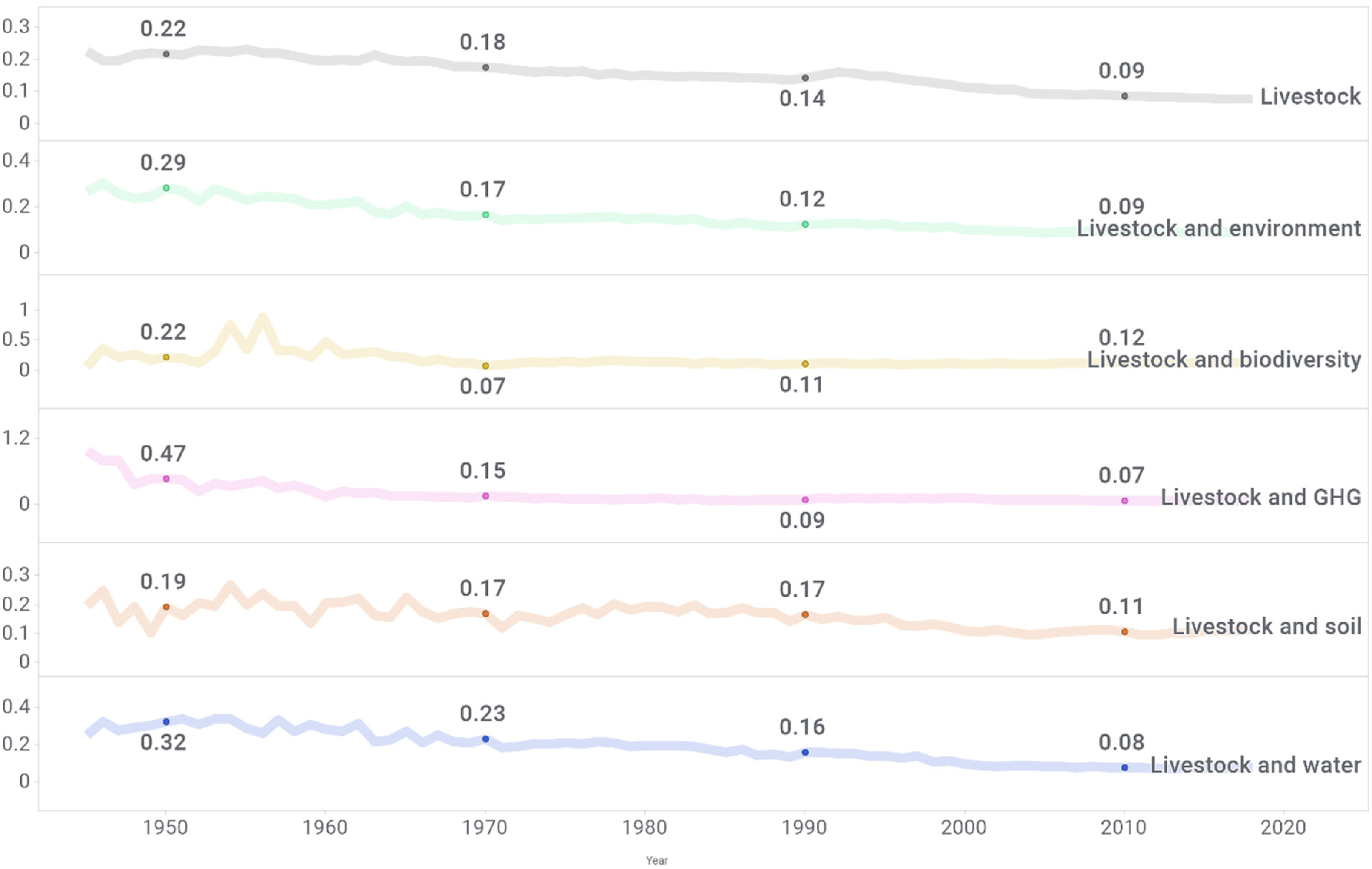
Total annual number of publications found in Web of Science between 1945 and 2018 on Africa, livestock and environmental dimensions as a share of global publications. Data stems from a systematic literature search conducted in November 2019. Consistent search strings were used to represent livestock and the environmental dimensions of soil, water, greenhouse gases, and biodiversity. Detailed Materials & Methods are described in Paul et al. (2020a), and available online.
Harnessing livestock's potential for regeneration of soils and rehabilitation of landscapes
Grasslands and grazing management
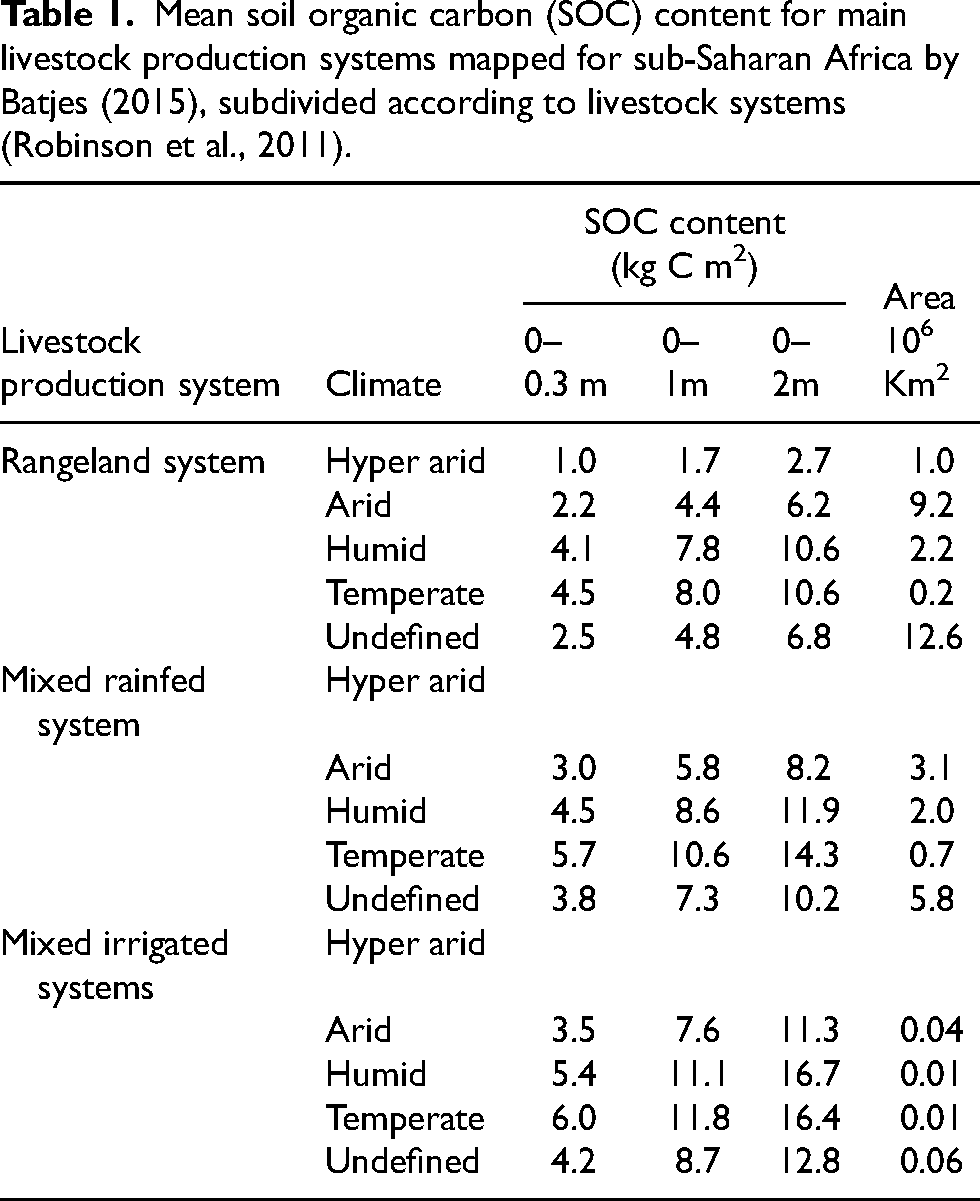
Well-managed livestock systems can increase carbon (C) sequestration, especially in grassland systems. Carbon and N cycling can be affected by livestock, but the effect depends on climate, soil type, intensity of grazing (McSherry and Ritchie, 2013), and whether livestock are browsers or grazers (Sitters and Andriuzzi, 2019). Grassland systems allocate high amounts of carbon to roots, leading to greater soil organic carbon (SOC) stocks (Terrer et al., 2021). Batjes (2004) estimates that grasslands in Africa have the potential to sequester between 7 and 42 Tg C/year. About 75% of 167 grassland studies reported average C stock increase of about 0.54 t C/ha/year (Conant et al., 2001). Tessema et al. (2020) identified only 23 studies on SOC sequestration in east Africa grasslands, indicating a need for investment in supporting research. Across these studies, SOC stocks in grasslands ranged from 3 to 93 Mg C/ha in the upper 30 cm of the soil profiles, and SOC sequestration rates varied between 0.1–3.1 Mg C/ha/year. Table 1 presents estimates of SOC content in SSA rangeland systems, mixed rainfed systems, and mixed irrigated systems.
Mean soil organic carbon (SOC) content for main livestock production systems mapped for sub-Saharan Africa by Batjes (2015), subdivided according to livestock systems (Robinson et al., 2011).
A global meta-analysis of the effects of grazing on soils (Lai and Kumar, 2020) observed that heavy grazing increased bulk density (BD) relative to ungrazed areas and reduced SOC, soil water content, NO3 and microbial biomass carbon at 0 to 10 cm and reduced SOC and total nitrogen (TN) at 0 to 30 cm depth. Moderate grazing significantly increased the BD, penetration resistance, and phosphorus (P) at 0 to 10 cm and decreased SOC, TN, and P at 10 to 30 cm. Light grazing significantly increased SOC (10.8%) and ammonium-N (NH4−N) (28.7%) at 0 to 10 cm implying that heavy grazing is more detrimental to soil quality than moderate and light grazing.
Reseeding of degraded grasslands with resilient grass-legume mixtures, maintaining appropriate stocking rates, targeted fertilization of grasslands, adaptive grazing management, and careful distribution of watering points help reversing land degradation (Taegue and Kreuter, 2020). Vegetative cover dissipates the energy of falling raindrops and plant tillers reduce the rate of surface water flow. Thus, maintaining adequate vegetative cover can reduce erosion and improve water infiltration (Lai and Kumar, 2020). A meta-analysis by McSherry and Ritchie (2013) showed that grass type and grazing intensity (both livestock density and length of grazing period) interact as key biotic drivers of grazer effects on SOC, independent of effects of precipitation and soil texture. At sites dominated by C3 grasses, grazing led to positive effect on SOC only at light grazing intensities and this effect became negative at moderate to heavy intensities. In contrast, for grasslands dominated by C4 grasses, grazing effects shifted from slightly negative at light grazing intensities to positive for moderate and heavy intensities (McSherry and Ritchie, 2013). As C4 grasses dominate grasslands in Africa and other tropical regions, moderate grazing might render tropical grasslands an important global carbon sink. Some studies have even reported increased soil C content under heavy grazing due to the shift in plant composition mainly to C4 grasses, which can allocate more carbon belowground (Reeder and Schuman, 2002). However, it needs to be acknowledged that the feasibility of improved grassland management techniques varies and depends among other reasons on land tenure systems and agreements between farmers and pastoralists.
Forages and manure management in mixed crop-livestock cut-and-carry systems
A spatial analysis of milk and livestock crop production versus estimated SOC sequestration potential for cropland areas reveals hotspot areas where increased forage intensification can deliver synergetic outcomes (Figure 5). Quantitative assessments based on an empirical model indicate that SOC sequestration potential is high in regions with high milk and livestock production, for example, in the highlands of Ethiopia, Kenya, and Tanzania. High manure application combines with high crop productivity in these highland systems to achieve the estimated SOC sequestration potential. In addition, the high milk production in these areas suggests that the animals are well fed with improved forages. A similar pattern of high estimated SOC sequestration potential is also observed in the regions with low milk production and high livestock density, for example, the Sahel region. While more manure application is likely to contribute to achieving the sequestration potential in these croplands, the low milk indicates limited and poor feeds for the livestock. In such areas, integrating improved perennial forages is likely to increase milk production and SOC. The analysis also reveals that there are large cropland areas where milk production and livestock numbers are low, with the SOC sequestration potential also being low. In these areas, forages may be underutilized and thus have a potential to reduce land degradation, while enhancing livestock productivity.
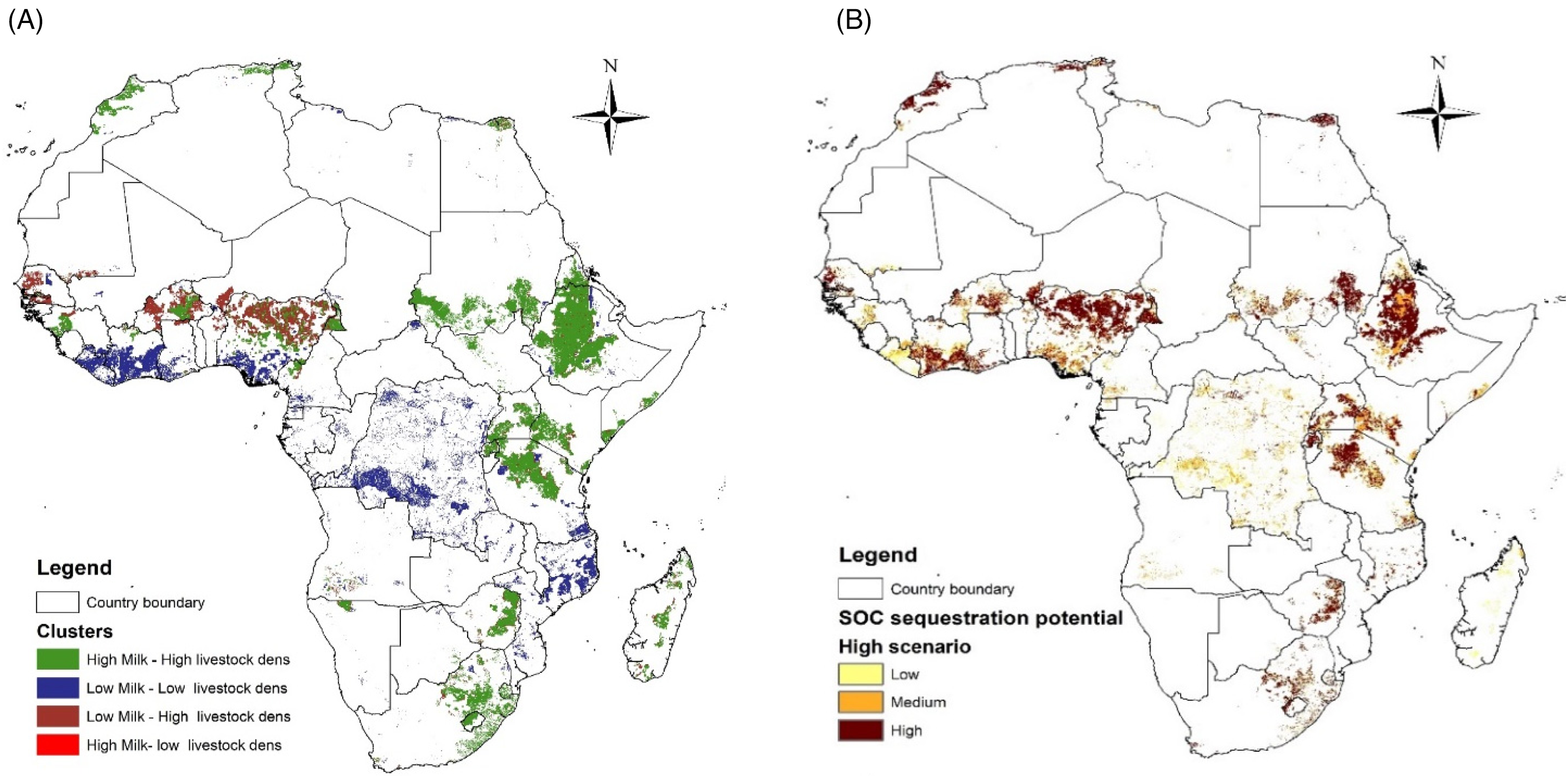
(A) Spatial extent of areas with high milk production and SOC sequestration potential. The colors indicate different region of production based on the annual milk production in kg and the livestock density numbers in Herrero et al. (2013b). The regions were defined using the bivariate LISA cluster map between milk production and livestock density in the mixed crop-livestock systems of Africa based on Robinson et al. (2011); (b) soil organic carbon sequestration potential for the mixed crop-livestock areas derived from the empirical model estimates of Zomer et al. (2017). An arbitrary classification of 0 to 500, 501 to 1000, and >1000 t C ha−1 was used in delineating the low, medium, and high sequestration potential regions considered in our study, respectively. The SOC sequestration potential considers a high scenario with increase in percent of SOC of 0.54 over a 20 year period in every area with croplands, considering the current available SOC in cropland soils (Zomer et al., 2017). LISA: local indicators of spatial association; SOC: soil organic carbon.
Limited per-capita land holdings, sustained adoption of high yielding livestock breeds, and commercialization of livestock products have necessitated an increase in controlled grazing management and establishment of improved forages. The improved forages include grasses like Pennisetum purpureum (now Cenchrus purpureus) and Brachiaria spp. (now Urochloa spp.), herbaceous legumes like Sylosanthes guianensis, Mucuna pruriens, dual-purpose food-feed legumes (mainly Lablab purpureus and Vigna unguiculata) and forage shrubs/trees for example, Calliandra calothyrsus, Sesbania sesban, and Leucaena trichandra (Place et al., 2009; Paul et al., 2020d). When integrated in suitable niches, improved forages play a crucial role in soil fertility management by reducing soil erosion, fixing nitrogen, supporting nutrient cycling, and improving water use efficiency and carbon sequestration. Improved forages can accumulate large amounts of C in the soil, particularly in the deep layers (Fisher et al., 2007). Except for forests, the potential of sown pastures and animal management to increase C stocks is higher than in other land uses (Mosier et al., 2004). A recent meta-analysis of 72 experimental studies conducted in east, west, southern, and central Africa over the period 1985 to 2015 (Paul et al., 2020d) showed that on average the herbage productivity of improved forage germplasm technologies is 2.65 times higher than the local control. Higher aboveground biomass implies more root yield and increased soil organic carbon from root exudation, lysates, and decomposition. Integrating planted forages into cropping systems halved soil loss, and increased SOC on average by 10% (Paul et al., 2020d).
Livestock gather nutrients from open lands through manure production. FAO (2018b) estimates that the global manure production from all livestock increased from 66 to 113 million tonnes (t) of N ( + 71%) from 1961 to 2014, with manure applied to soils increasing from 18 to 28 million t of N, and N input from manure left on pasture increasing from 48 to 85 million t of N. In Africa, the application rates of manure-N increased three-fold from about 9 million t of N in 1961 to 26 million t of N in 2014. Livestock manure represented over 90% of total N inputs in the 1960s and about 87% in 2014. In addition to N, manure is also an important source of P and K and other essential secondary and micronutrients. Animal manure enhances soil organic matter which improves soil water infiltration rates, water holding capacity, and cation-exchange capacity (Schoenau, 2006; Schjønning et al., 1994). Long-term experiments in west Africa indicate that additions of 5 to 10 t ha/year of manure are sufficient to maintain SOC close to the level of undisturbed savanna vegetation (Agbenin and Goladi, 1997; Mando et al., 2005).
Livestock and landscape regeneration restoration
Globally, grasslands are estimated to contain about 343 billion t of carbon, nearly 50% more than is stored in forests worldwide (FAO, 2017). Maintaining or enhancing this requires adjustment of grazing pressure by optimizing presence of livestock across landscapes, improving management of animals in pastoral and agropastoral systems, and integrating trees and pastures in silvopastoral systems. Tree incorporation in croplands and pastures results in greater net C storage aboveground and belowground (Montagnini and Nair, 2004), supports biodiversity conservation, and contributes to animal comfort and welfare through shade. The carbon sequestration potential of agroforestry systems ranges between 0.3 to 20 Mg C/ha/year aboveground and from 30 to 300 Mg/C/ha/year up to 1 m depth in the soil (Nair et al., 2009; Nair, 2011; Albrecht and Kandji, 2003). For silvopastoral systems, the estimated aboveground carbon sequestration potential ranges from 1.5to 6.55 Mg/ha/year (Kumar et al. 1998; Ibrahim et al., 2010). The presence of shrubs and trees in silvopastoral systems improves soil health (Rivera et al., 2013; Montoya-Molina et al., 2016).
Controlled grazing and crop-livestock systems establish forages in agricultural fields in the form of grasses, shrubs, and agroforestry trees. Such fodder species are fed to animals generating manure that replenishes nutrient stocks in soils (Larney and Janzen, 1996). When planted at certain spatial configurations within the landscape, grasses, and shrubs play other functions like soil conservation, habitat provision, recovery of degraded landscapes and nutrient cycling. For example, a series of studies in the Kenyan highlands, Ethiopian highlands, and Rwanda have shown that fodder trees, for example, C. calothyrsus and L. trichandra and grass species like P. purpureum reduce soil and nutrient losses especially when planted in contour hedges. Thus, arranged tree species reduced soil losses by between 50 and 150 t/ha/year, recycled leaching nitrogen and improved soil fertility and yield of associated crops (Angima et al., 2000; Franzel et al., 2014; Mutegi et al., 2008). Studies in western Kenya showed that planted fallows of fast-growing trees (C. calothyrsus, S. sesban) produced root length densities of >0.1 cm/cm3 to below 1.5 m soil depth and reduced soil nitrate at 0 to 2 m depth by 150 to 200 kg/ha within 11 months after their establishment (Jama et al., 1998). Further various fodder trees and shrubs can fix between 20 and 300 kg N/ha, which could play an important role in land recovery from nutrient mining (Nygren et al., 2012). As climate change and soil water losses get severe, the ground cover resulting from such fodder species improves soil water retention, enabling companion crops to grow with less moisture stress especially in the arid and semi-arid areas (van Noordwijk et al., 2021).
Livestock solutions for soil health and landscape restoration: Case studies
Three case studies illustrate the potential for livestock solutions across different production systems to contribute to soil health and landscape restoration and therefore sustainable food systems transformation.
Grazing management by Northern Rangelands Trust in Kenya
The Northern Rangelands Trust (NRT) is a network of community grassland and wildlife conservancies in central and coastal Kenya. In many of these conservancies, changing environmental, and socio-economic conditions have led to the loss of grassland biomass and, hence, degradation of soil and forage resources. The NRT supports community conservancies in their efforts to restore degraded range lands and generate new revenue streams to preserve pastoral livelihoods and increase habitat for wildlife. There are several revenue streams, such as value capture in the beef supply chain, tourism, and ecosystem services markets. In partnership with The Nature Conservancy, Native Energy, and Soils for the Future, NRT has developed a project to monetize soil carbon sequestration associated with grassland regeneration. Regeneration is achieved through the implementation of grazing management plans that limit grazing to once-per-year in any given area, which allows for recovery of grass cover and biomass and covers bare soil. This project, which is validated and verified with the carbon registry Verra, generates around 1,000,000 t of CO2e sequestration per year across 14 conservancies in central Kenya. In addition, the project is verified for biodiversity and human wellbeing outcomes through Verra's Climate, Community and Biodiversity standard. This project is one of the largest carbon market projects in Africa and the largest voluntary soil carbon market project in the world. The carbon project began in 2013, when the project partners developed a new protocol for monitoring soil C sequestration in extensive grasslands. This protocol (VM0032 under Verra) is available for use around the world and has already been adapted to be used in North America. Soils for the future are a technical contractor that developed and adapted the methodology. Native energy is a project development firm that is coordinating the sale of credits from the NRT soil carbon project. The first batch of credits—from 2016 to 2019—were verified and made available in early 2021, generating revenues for communities. Forty percent of net carbon revenue goes to support operating costs of the network of community conservancies, supporting their continued economic viability. Sixty percent of the revenues are allocated to social development projects proposed by the conservancies and agreed based on a collective decision-making process. Detailed impact assessment results are not yet complete, but both social and biodiversity impacts are being monitored and evaluated. The greatest challenge to this project is the impact of drought on grazing management plans. In drought years, pastoralists move their livestock further distances—usually outside of conservancy boundaries—to access pasture. While this is an adaptive livelihood strategy, it represents leakage outside of the project boundary thereby impacting range quality elsewhere. Thus, for carbon revenue to be generated, grazing management plans must be followed within the project boundary, which becomes challenging in drought years. Whether additional revenue streams incentivize the use of management plans under increasingly challenging environmental conditions is an important test of this case study.
Diversifying feed baskets with improved, planted forages in east Africa
Feed has been recognized as the highest cost driver in livestock production and forages are the cornerstone of livestock production. The Alliance of Bioversity International and CIAT responded in the early 2000s to the increasing need and opportunity for improved forages in eastern Africa through a systems approach addressing the entire path from discovery of novel forages to systems integration for livelihood and environmental benefits. The work explicitly connects to on-going market-driven sustainable intensification and diversification of systems, for example, for dairy and semi-intensive beef production. Having defined the demand pull and the benefits of improved forages on productivity, resource use efficiency and ecosystem benefits, suitable forages for different socio-economic and agro-ecological niches have been identified, with the initial focus on improved grasses of the genera Urochloa and Megathyrsus, with other grasses and herbaceous legumes being complementary. Legumes have particular benefits for water use efficiency, soil fertility maintenance and restoration, and climate change mitigation (Schultze-Kraft et al., 2018). However, experiences from other regions indicated that legumes require more intensive awareness creation and capacity building efforts. To make the benefits of improved forages widely available and affordable for a wide range of users, emphasis is being given to piloting and scaling through dairy cooperatives and Public Private Partnerships. For the latter, the Alliance is working with private seed sector partners since 2000, focusing on development and dissemination of bred Urochloa and Megathyrsus. For the time frame 2018 to 2037 this partnership develops seed supply systems in sub-Saharan Africa, with initial focus on Kenya, Uganda, Rwanda, Zambia, Madagascar, Tanzania, and Ethiopia. The Alliance is directly connecting with the private sector partner to identify demand for different production contexts and refine dissemination strategies, including complementary herbaceous legumes as livestock feed and for soil conservation as well as complementary grasses for different niches. The achievements currently realize ecosystem and livelihood benefits for about 40,000 farmers and aim to reach at least 100,000 farmers in the next 3 years.
Nutrient cycling in open grazing systems in southern Africa
Animal manure is an important nutrient resource in smallholder farming systems in southern Africa, particularly in north-east Zimbabwe where cattle ownership rates are relatively high. Farmers practice a mixed crop-livestock system with maize (Zea mays L.) as the dominant staple crop. Local and mixed cattle breeds are grazed in the rangelands during the day and corralled in the kraals at night where manure is collected and used to fertilize crops. In these systems, there is a net importation of nutrients from the rangeland to the arable land (Swift et al., 1989) increasing productivity so that cattle ownership has become an indicator of farm performance. This is partly due to the contribution of cattle manure to improved soil fertility and crop productivity (Zingore et al., 2011; Mtambanengwe and Mapfumo, 2005). At the landscape level, farms vary considerably in access to resources for crop production (Zingore et al., 2011). Farm typology studies have consistently shown cattle ownership to be an important indicator for resource endowment (Chikowo et al., 2014; Zingore et al., 2007a; Mtambanengwe and Mapfumo, 2005). Cattle manure is used exclusively by cattle owners as it is a nontraded commodity. The differences in ownership of cattle results in inequitable transfer of nutrients from communal rangelands to fields of cattle owning farmers. In addition, cattle freely graze stover left in the fields following harvest, leading to a net transfer of nutrients from the farms without cattle to farms with cattle. On average cattle owners use between 5 and 10 t manure per farm annually, which provides 50 to 100 kg N and 15 to 30 kg P per farm (Zingore et al., 2007a). Many farmers in the area use some N and P fertilizers, but the rates applied are lower than the recommended rates of 120 kg N ha−1 and 25 kg P ha−1 making the complementary use crucial for improving soil fertility and crop production. Fields that receive cattle manure are characterized by higher contents of soil organic matter, available P, bases, pH, and micronutrients than fields without manure application. Fields not receiving manure require large investments in inorganic and organic nutrients to restore productivity (Zingore et al., 2007b). Annual addition of manure at 10 t/ha is required to double maize yields from an average of 1 t/ha without fertilizer inputs to about 2 t/ha. Cattle ownership is about two per household in north-east Zimbabwe (Chuma et al., 2000). One livestock unit produces about 0.5 t of usable manure; therefore, the cattle manure available (<1 t per household) is below the amounts required to double maize yields. The limited availability of manure requires application in combination with other fertilizers (Vanlauwe et al., 2015). A recent comprehensive review on the role of fertilizers in building soil health acknowledges the short supply of manure but is cognizant at the same time of the critical importance that appropriate and targeted application of manure has within a proposed novel soil health framework. The review also draws attention to issues around nutrient transfer in relation to landscape restoration of rangelands and soil health of grazed cropping areas over the long term (Vanlauwe et al., 2023).
Critical steps toward change at scale
It has been difficult to realize gains at scale for the regeneration of soil health and land from livestock systems. We suggest four critical activities to support change that unlocks food systems transformation at scale. These are sufficiently clear to focus activities and broad enough to acknowledge the range of complex interactions and trade-offs.
Establishing a shared vision for desired future system states
The first step is a shared, context-specific vision of the desirable and potential gains for sustainable food systems transformation through livestock-based solutions as many livestock systems feature a mix of private and communally managed land. Identifying the range of actors—livestock owners, landholders, crop farmers, community leaders, suppliers, and local politicians—with significant legitimate interests will serve as a basis for identifying the long-term prospects for change. These will be influenced by power relationships which may evolve as systems change. For example, the value of land (in financial or social terms) may change significantly as conditions improve, favoring land title over livestock as an asset. Desirable and undesirable future states need to be agreed among a sufficient sector of communities to avoid disruptive local politics during later stages of change. Visions of a future state need to start with their current reality and consider the likely effects of climate change, demographic change and developments in market and supply chains.
Ensuring system function through monitoring of critical components
The functionality of the livestock systems depends on multidirectional interactions between healthy soils, animal feed, livestock health and management, and livestock markets. Failure of one of these components will impact negatively on others. Other external factors may also impinge on the system. For example, a major shift in price of imported feed could undermine the momentum for developing local feed systems. Temporary failure may not destroy relationships, for example a short-term drought may cripple seasonal feed supply but not reverse long-term benefits from developing integrated systems. Regeneration of soil health and land needs monitoring of all components, qualitatively at least, to ensure adequate investment to achieve community goals.
Fostering co-development of solutions and synergies between technical and social gains
The long-term development of livestock systems depends on a combination of dynamic and interacting technical and social processes. Technical insights that provide credible prospects for improvement interact with the approaches and expectations of the diverse stakeholders who care for the components of livestock systems. Hence only co-development of solutions can ensure resilient positive change. Soil health is the longest-term beneficiary and people will need markers as it improves to ensure they continue to invest in it. Overall, the system will gain from the knowledge growth embedded with people that helps them understand the dynamics of the system and respond accordingly. This is a fundamental requirement for long-term growth in the face of uncertain climates, markets and behavior.
Building long-term institutions for sustained impact
For scaling to occur, the social relationships that support the function of livestock systems and healthy soils need to evolve into norms and behaviors that support long-term impact. These are difficult to prescribe before systems have evolved, as farmers often innovate through processes of bricolage. Institutions rarely form prior to use, but basic factors for success of institution building could include:
Stable and coherent communities without damaging power inequalities; Clarity about future expectations and dangers for livestock systems and food systems transformation; Systems of measurement and evaluation for function of key components, land, soil, feed, animals, and product to help constant adjustment; Dynamic change processes to support adaptation to opportunities such as new markets or threats such as climate change or conflict. Farmer-centric change will be key in all system components; and Support from government (through policy), from suppliers and buyers through trust relationships and between actors within different parts of the system through written and unwritten agreements.
Conclusions
Livestock systems, both mixed crop-livestock and pastoral systems, cover vast areas of Africa and support tens of millions of poor people, who are facing major threats due to climate change, population growth, land degradation, and malnutrition. The ability of these systems to contribute to sustainable agri-food systems transformation and delivery of SDGs is being tested as never before. Despite their “reputation” to contribute to climate change and soil and land degradation, livestock systems also have large potential to contribute to land restoration, especially through forage and pasture improvement. Livestock's ability to regenerate soils and restore landscapes, thereby boosting nature-positive production systems, is a key ingredient for sustainable agri-food systems transformation. Development actors, funders, and policy makers can make livestock systems part of the solution by accelerating investments and reinforcing the programmatic role of livestock to regenerate soils and restore degraded landscapes. Realizing the potential of such solutions at scale will require to establish shared vision, prioritize critical entry points, foster synergies between technical and social gains, and build long-term institutions for sustained impact.
More research is needed to measure and monitor the contributions of livestock solutions to sustainable food systems transformation, and measure and report progress toward the SDGs. Applied and context-specific research can highlight components and principles to guide concrete investments by governments and stakeholders.
Footnotes
Acknowledgements
An international working group on Soil Health and Livestock Systems (SHLS) hosted by The African Plant Nutrition Institute (APNI) initiated the development of the review. Thanks to Wilson Nguru Maina for help with the maps presented in Figure 5. The research was conducted as part of the One CGIAR Mixed Farming Systems Initiative, which is supported by contributors to the CGIAR Trust Fund ( ).
).
Declaration of conflicting interests
The author(s) declared no potential conflicts of interest with respect to the research, authorship, and/or publication of this article.
Funding
The author(s) disclosed receipt of the following financial support for the research, authorship, and/or publication of this article: This work was supported by the CGIAR Trust Fund.