




Abstract
This study examines the impacts of the reduction in the network of private kill abattoirs on the delivery of public goods supported under the redesigned UK agriculture policy. An online survey was used to gather information about farmers selection and use of abattoirs, and a telephone survey of abattoir owners and managers complemented the farmer survey. Of the 300 respondents, 185 used abattoirs for private kill retail (PKR) services. 121 of these PKR farmers (65.4%) reported their PKR business as “essential” “or “very important” to the viability of their farm business. Seventy-five (41%) had no alternative abattoir, 21 of these 75 would have to close their PKR business if the abattoir they currently used closed, 22.7% would reduce their grassland area, releasing greenhouse gases, and 30% would stop farming native breeds, reducing the gene pool and conservation grazing environmental management options. 110 PKR farmers did have a viable alternative abattoir, but using it would increase livestock journeys, increasing greenhouse gas emissions and making it more likely farmers would need to use commercial rather than farm transport, further jeopardising animal welfare and biosecurity. Therefore, the continuing closure of private kill services threatens core government policy objectives. However, private kill services could be supported by government grant schemes, resolving confusion regarding food labelling, and reducing small abattoir costs by introducing “de minimis” derogation – as currently used on some Channel Island and mainland Europe abattoirs.
Introduction: UK agriculture policy in transition
Abattoirs are essential infrastructure for livestock farming. In Great Britain in 1970 there were 1146 abattoirs licensed to slaughter red meat livestock species, by 2000 the number had fallen to 404 (FAWC, 2003). 1 The rate of closure was similar across the UK: 68% in England (from 977 to 316), 50% in Scotland (from 90 to 44) and 57% in Wales (from 79 to 34). 2 More have closed since 2000. Between 2001 and 2017 a disproportionately high number of small- and medium-sized abattoirs closed (APGAW, 2020: their Figure 1, p. 11); and a further thirteen smaller abattoirs closed in the 18 months to August 2020. 3 In August 2020 only 213 remained trading in the UK (Figure 1).
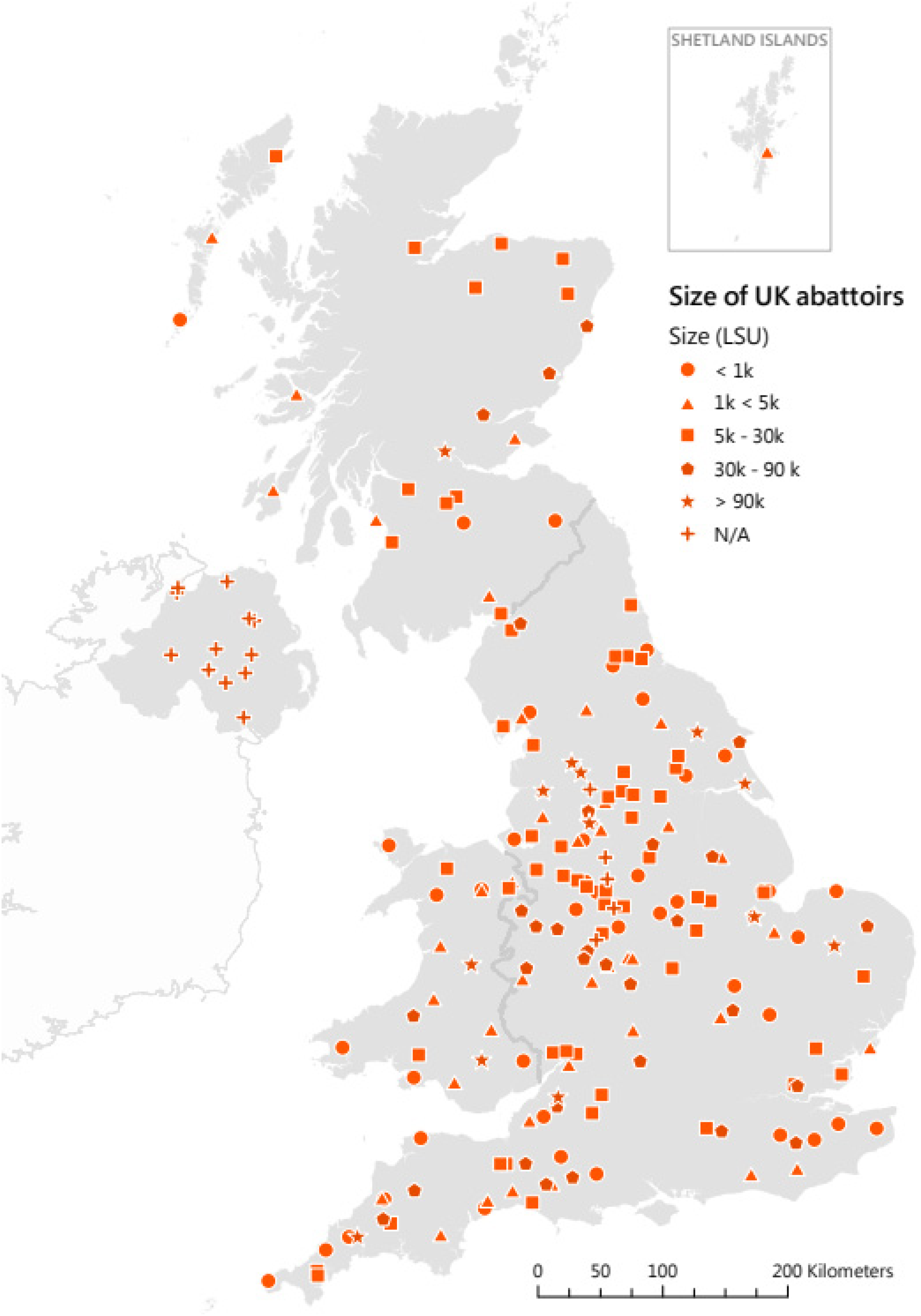
Location and size (measured by throughput in LSU/annum) of abattoirs licensed to slaughter red meat species (August 2020). (Spatialgraphic provided by Jess Hepburn).
Abattoirs have adjusted to these structural changes by increasingly specialising in the markets they supply (Kennard and Young, 2018). Large throughput abattoirs are generally locked into contracts to purchase livestock from dedicated farmer groups to directly supply multiple retailers. Other larger abattoirs purchase directly from farmers and livestock markets to supply UK and overseas wholesale markets. Smaller, low throughput abattoirs have increasingly specialised in private kill slaughtering and butchering services (APGAW, 2020: 1). Private kill is a service consisting of slaughtering for a fee livestock supplied by farmers who retain ownership of the carcase and offals. Farmers return to the abattoir to collect the carcase and offal, though some abattoirs offer a weekly service to transport carcase/joints to local distribution centre for collection by the farmer. After further processing as required, the produce is sold through their own and other local retail businesses. This small scale and largely local market, which helped to underpin the resilience of food chains during Covid-19 (UK Parliament, 2020), is entirely reliant on the availability of private kill slaughtering services.
A report published by the Farm Animal Welfare Council in 1983 warned that the closure of abattoirs would result in longer more complex livestock journeys, which would increase risk to animal welfare and threaten the continuing provision of local and specialist foods produced and supplied by specialist businesses (FAWC, 1983). Thirty-seven years later these concerns were echoed by the All Party Group on Animal Welfare report The future of small abattoirs in the UK (APGAW, 2020).
UK's reformed agricultural policy is based on the principle of using public money to support public goods (House of Commons, 2018; 4). The UK government recognises animal welfare as a public good, and wants to reduce journey times from farm to abattoir and improve animal loading and unloading facilities (APGAW, 2020; 1). Additional public goods the new policies aim to support include conserving of biodiversity rich habitats and the gene pool of native breeds, increasing carbon sequestration - to help offset greenhouse gas emissions, and to encourage the growth and prosperity of the rural economy (Defra, 2020a). This study uses survey evidence to examine how the further reduction in the provision of private kill slaughtering services will affect farmers’ ability to deliver these public goods (APGAW, 2020). Section two outlines the methodology used in the study. Sections three to five present findings of the impacts of further closure of small abattoirs on farm business viability, farm animal welfare and the provision of public good from land respectively. Section six discusses the implications for UK agricultural policy. Section seven concludes.
Survey methodology and descriptive statistics
Survey design and methodology
Information on how farmers select and use abattoirs was gathered through an online survey published between 14th April and 26th May 2020. It was designed to investigate the impacts of the closure of abattoirs farmers currently used on the viability of their farm business, animal welfare and land use. 4 Forty organizations were approached for assistance promoting the survey. Those which did not respond after 4 weeks were contacted again. A total of 21 organizations agreed to share the survey URL via their newsletters, social media streams and mailing lists, allowing the survey to be widely available to UK livestock farmers who finish red meat livestock species. A telephone survey of abattoir owners and managers complemented the farmer survey.
Descriptive statistics - respondents and their use of abattoirs
A total of 300 farmers completed the survey, though not all respondents answered every question, 185 of these respondents use private kill services. Respondents sent 104,382 LSU (livestock units) to abattoirs in the year ending 2020, of which 4522 (4.3%) were private kill stock. 5 It is not possible to establish the representativeness of this self-selecting sample because (i) there is no information on the underlying population of PKR farmers in the UK and (ii) although all abattoirs are subject to the same licensing and reporting regulations, there is no requirement to report the number of livestock slaughtered for the private kill market.
Table 1 combines the farmer survey results with responses from our telephone survey of UK abattoir managers or owners in August 2020 based on contact information supplied by the Agricultural and Horticultural Development Board (AHDB). The Table confirms the All-Party Group on Animal Welfare (2020: 10) finding that a higher proportion of smaller- and medium-sized abattoirs provide private kill services, indicating the threat posed by the further closure of small abattoirs on the locally finished, slaughtered, butchered and retailed red meat supply chain, and to the private kill retail (PKR) farmers who rely on this trade.
Private kill service provision in the UK (August 2020).
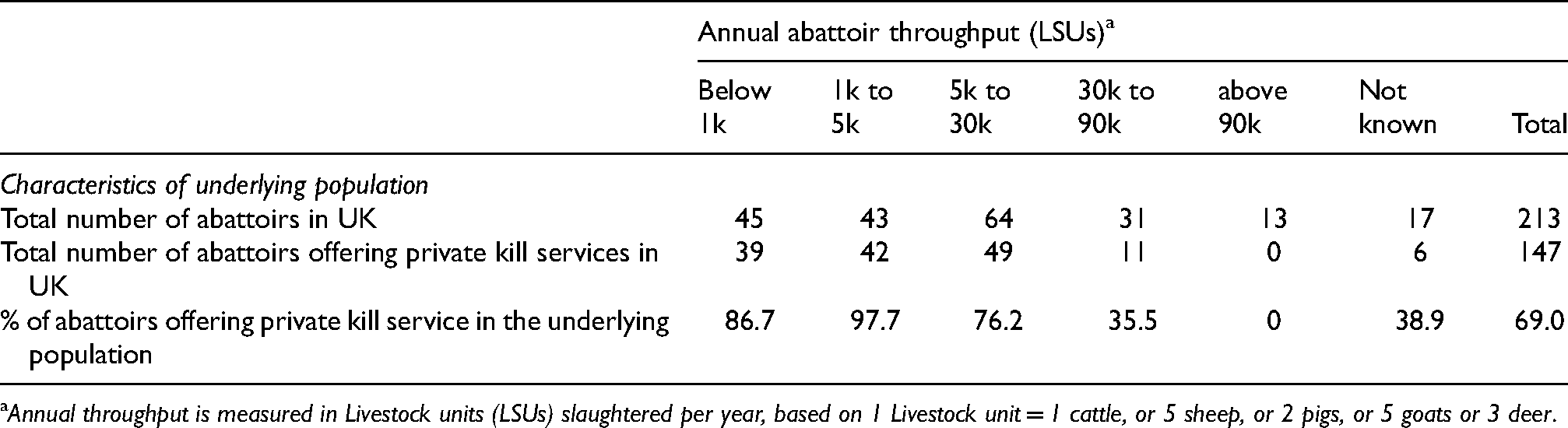
Annual throughput is measured in Livestock units (LSUs) slaughtered per year, based on 1 Livestock unit = 1 cattle, or 5 sheep, or 2 pigs, or 5 goats or 3 deer.
Survey findings – impacts of the reduction in the network of private kill abattoirs on farm business viability
Over half of the 300 respondents (185, 61.7%) used private kill services to supply their own retail business and other local retailers. Seventy-five of the 185 (41%) had no alternative commercially viable abattoir that they could use should the one they currently use close; 96 of the 185 (52%) had a single alternative abattoir, and 11 (6%) two or more. Moreover, 21 (18.3%) of the 115 Commercial Business (CB) farmers who were interested in developing their own PKR business were not able to because they had no locally suitable abattoir.
6
For example, a farmer who finishes 640 LSU/yr. commented, “I would love to find a way to meaningfully access my end market. The difficulties in finding a user friendly and local private kill or even intermediate butchery service are overwhelming.” (Farmer finishes 640 LSU/yr. mixed species, cattle and sheep).
Figure 2 shows that 44.9% of the 185 PKR farmers reported their PKR business to be “essential” to the viability of their farm business. These respondents sent an average of 88% of their annual production to private kill slaughter. The 20.5% who said their current abattoir was “very important” sold an average of 51% of their annual production through their PKR business.
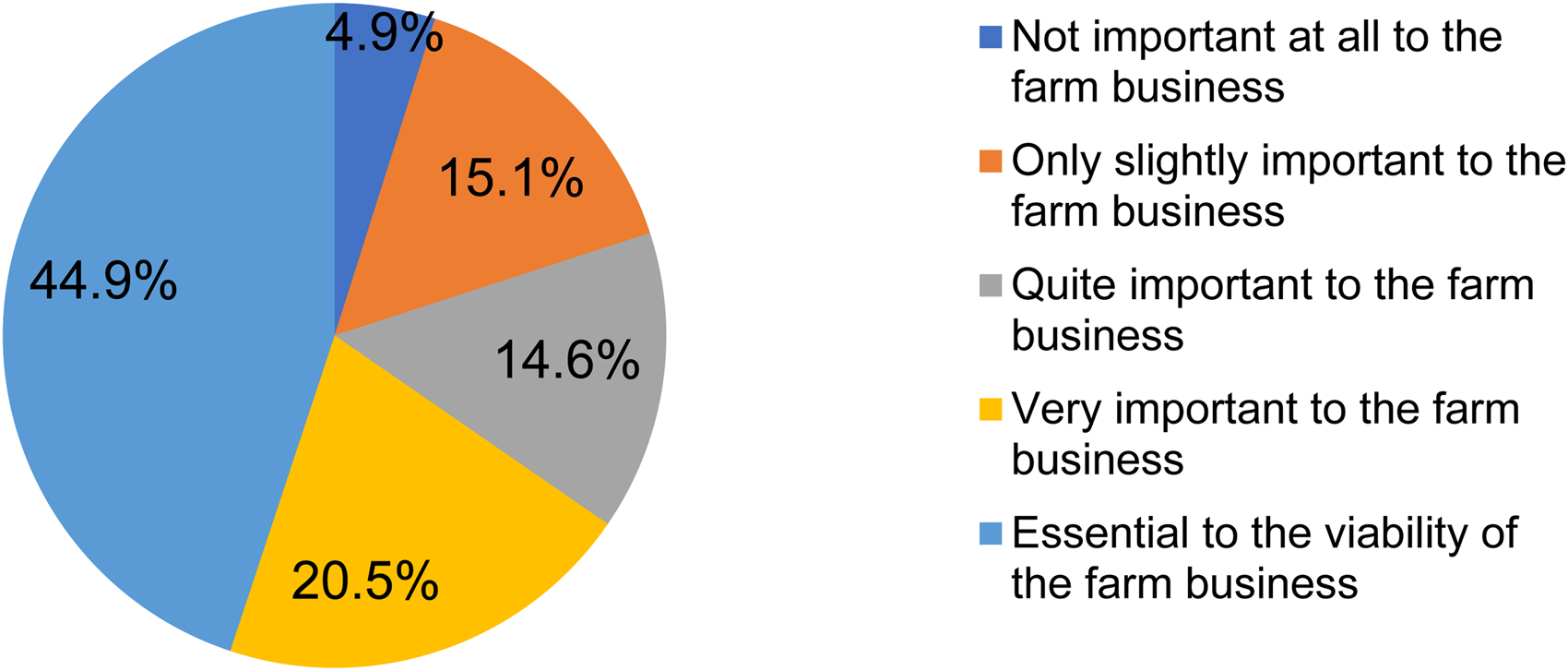
Responses to the question: ‘How important is the private kill retail business to the viability of your farm?’ (N = 185).
Data from a small sub-sample of respondents provides examples of the value PKR can add to a farm business (Table 2). Using various methodologies, respondents calculations clearly show the important contribution PKR can make to add value to livestock enterprises.
Details of mark-up achieved through by PKR by a sample of businesses.
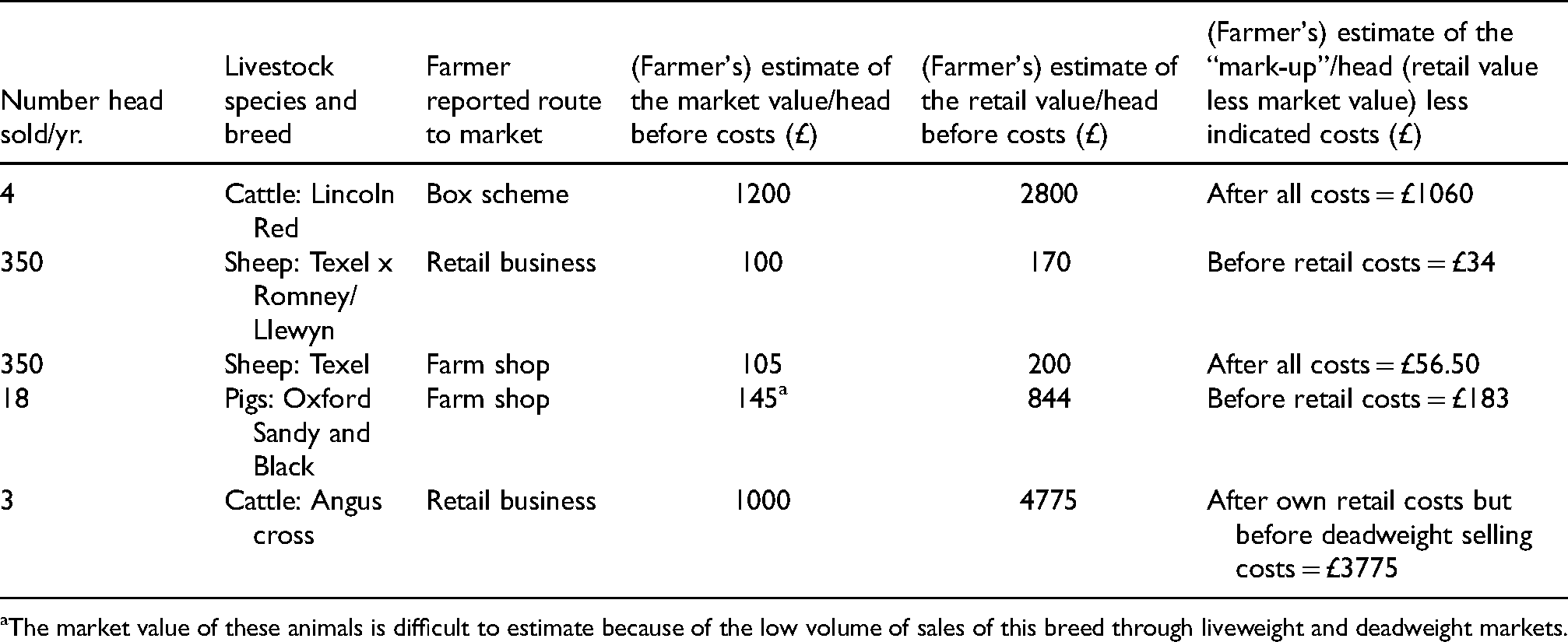
The market value of these animals is difficult to estimate because of the low volume of sales of this breed through liveweight and deadweight markets.
Twenty-one of the 75 PKR farmers (28%) who had no commercially viable alternative abattoir said closure of the abattoir they currently use would mean closing their PKR business. The level of uncertainty reported in Figure 3 reflects the difficulties such a hypothetical question raises. For example, an organic grower who PKR 230 LSUs/year, ‘We need an abattoir with an organic licence. None of the other abattoirs nearby have one. Would we travel 4 h to get one? We could put our stock on a lorry but could we get our carcases back? Or would one of the other abattoirs decide to get a [organic slaughter] licence?’.
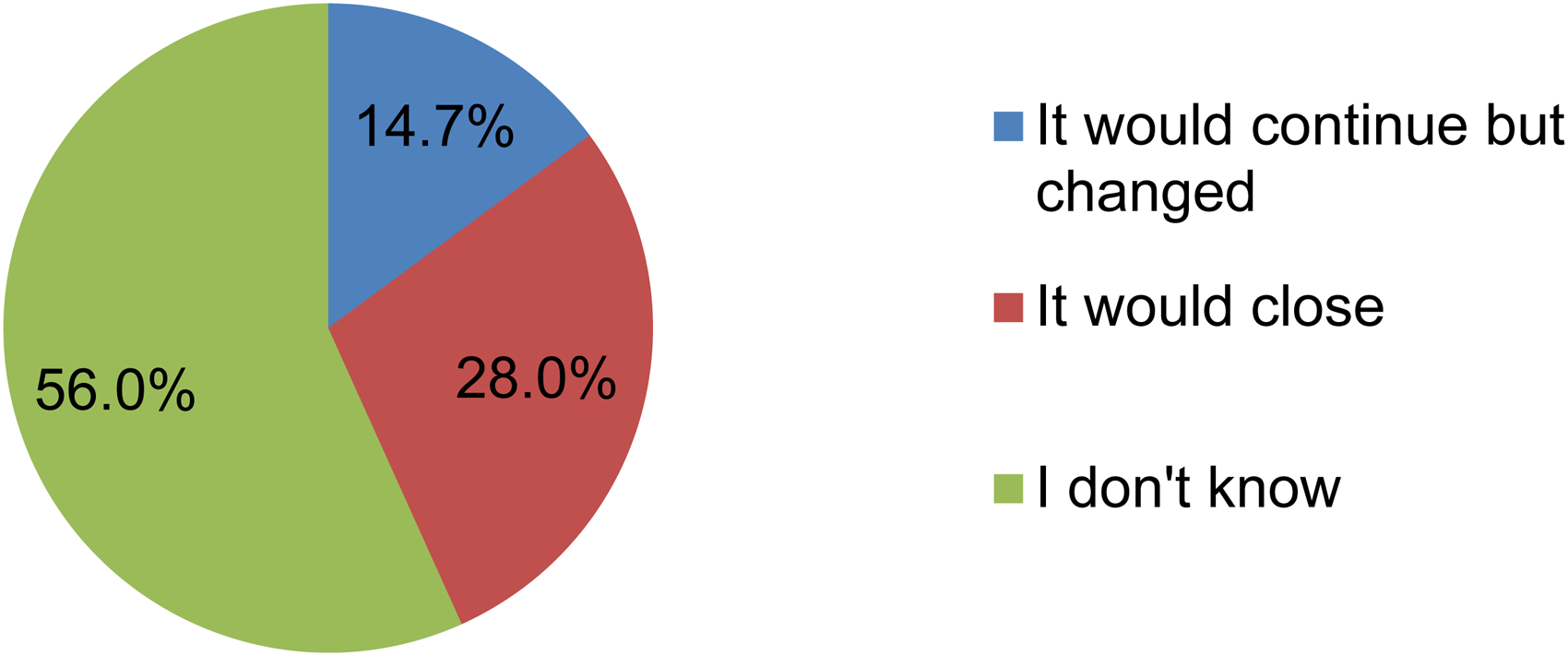
Responses to the question: ‘what would be the impact on your PKR business if the abattoir you currently use for private kill closed?’ (question asked to PKR farmers with no alternative abattoir (N = 74)).
Impacts of reduction in the private kill network on animal welfare
Table 3 shows the important factors farmers consider when selecting an abattoir. Highest among their confidence they will get their own livestock back, followed by the abattoir's animal welfare standards, distance from farm to abattoir, confidence farmers receive their own offal back, the personalised services abattoirs offers and the type and style of butchering available. A relatively high number do reclaim offal, and this can pose additional problems because it cannot be collected from the abattoir until the meat has been inspected. This means it is not generally possible for farmers to collect it from small abattoirs on the same day their livestock are slaughtered. Therefore, the further the abattoir is from the farm the higher the cost of making this additional journey, and this can make some abattoirs non-viable. The increased distance also increases greenhouse gas emissions associated with the PKR enterprise.
Factors that influence farmers’ choice of abattoir for their PKR business (n = 185). (Respondents could select more than one factor in their answer).
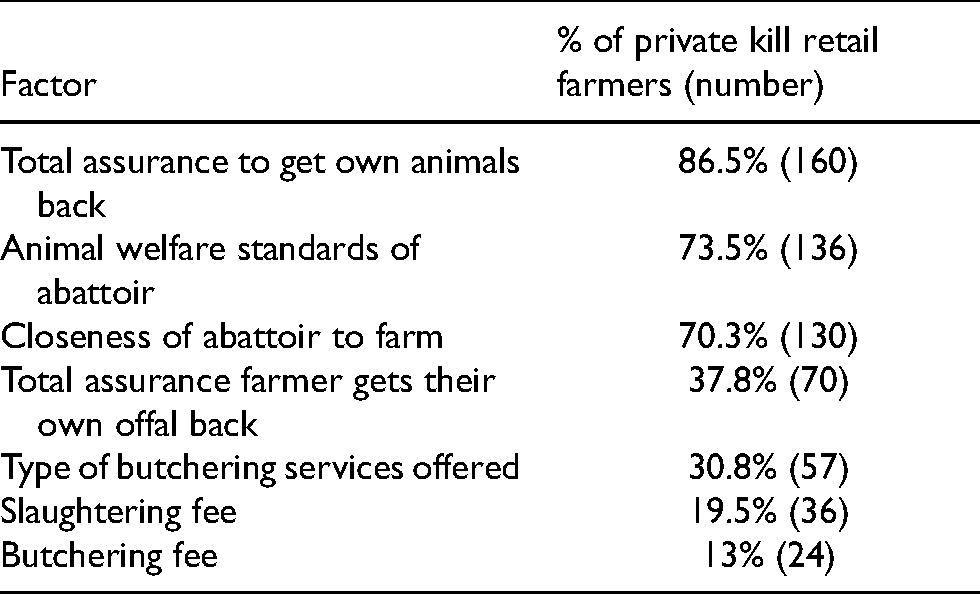
Table 3 also shows the lower importance placed on slaughter and butchering fees. It is for these complex reasons that some PKR farmers would not be prepared to use alternative abattoirs even if it was commercially viable to do so, for example, ‘[I] would dearly love a more local abattoir that has high animal welfare at its core’ (farmer slaughtering 46 mixed species LSU per year).
Ninety-two percent of PKR farmers (n = 170) transported livestock to the abattoir in farm vehicles, driven either by the farmer or farm staff. This aids loading, because animals are familiar with staff and the farm trailer, and because farm trailers are lower to the road than commercial hauliers so the loading ramp is less steep. It also allows stock to be loaded into empty trailers, reducing possible intimidation from any previously loaded animals. In addition to not mixing stock from different farms, the journeys are direct from farm to abattoir reducing the time spent in transport. The use by PKR farmers of farm staff and farm transport therefore enhances both animal welfare and biosecurity.
On average, PKR farmers made 13 trips a year to the abattoir, either taking livestock or collecting carcase and offal. The frequency of visits gives farmers regular first-hand opportunities to inspect abattoir operating procedures and processes, and to assess the attitudes and skills of the manager and abattoir staff. This additional oversight therefore helps ensure full compliance with animal welfare regulations and meat hygiene standards.
Figure 4 shows the average distance by road from “the
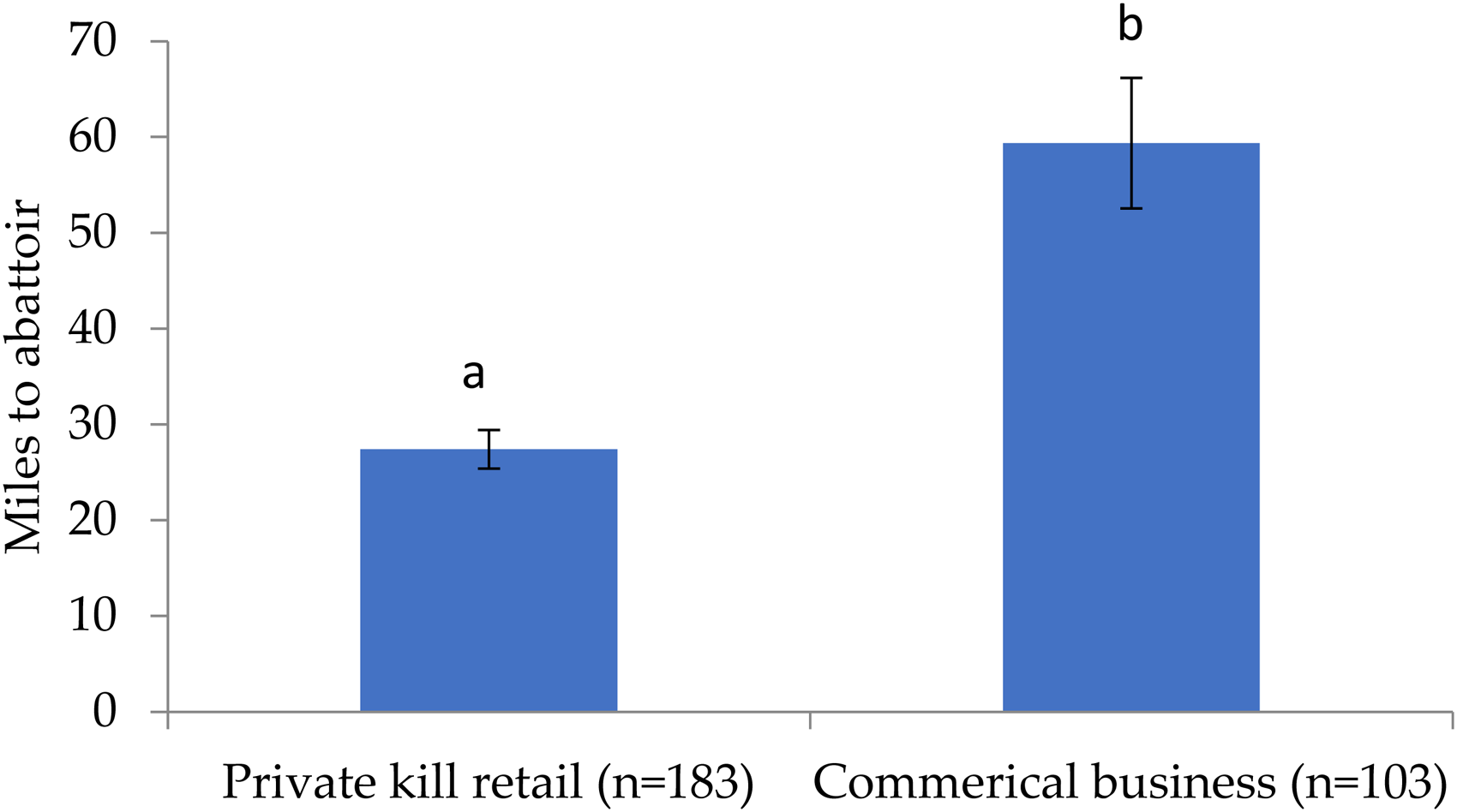
Average distance from farm to abattoirs for private kill retail (PKR) (n = 183), and commercial business (CB) (n = 103). (Different letters indicate a statistically significant difference as indicated by a one-way ANOVA analysis with post-hoc LSD (least significant difference) tests with a Bonferroni adjustment applied for multiple comparisons).
Figure 5 shows the distances to their current and alternative abattoir for 107 PKR farmers who had at least one alternative private kill abattoir. The estimated average increase in distance from farm to the new abattoir is 10 miles (i.e. a 20 mile round trip), which although relatively small is a statistically significant increase. It would increase the total miles travelled by a PKR farmer with an alternative abattoir (additional miles round trip times number of visits) by 372 miles/year, and the total LSU miles (additional distance times LSU slaughtered for PKR/year) by a total of 24,381, an average of 228 additional LSU miles for each PKR with an alternative viable abattoir.
Ninety-two percent of the 110 PKR farmers who had alternative abattoirs identified adverse consequences arising from changing abattoirs. These included higher transport costs (delivering livestock and returning to collect the slaughtered carcase or butchered meat and offals). For example, “More time spent. Driving animals there, getting back and then collecting offal and finally butchered meat” (Farmer supplies 5 LSU/year, cattle only).
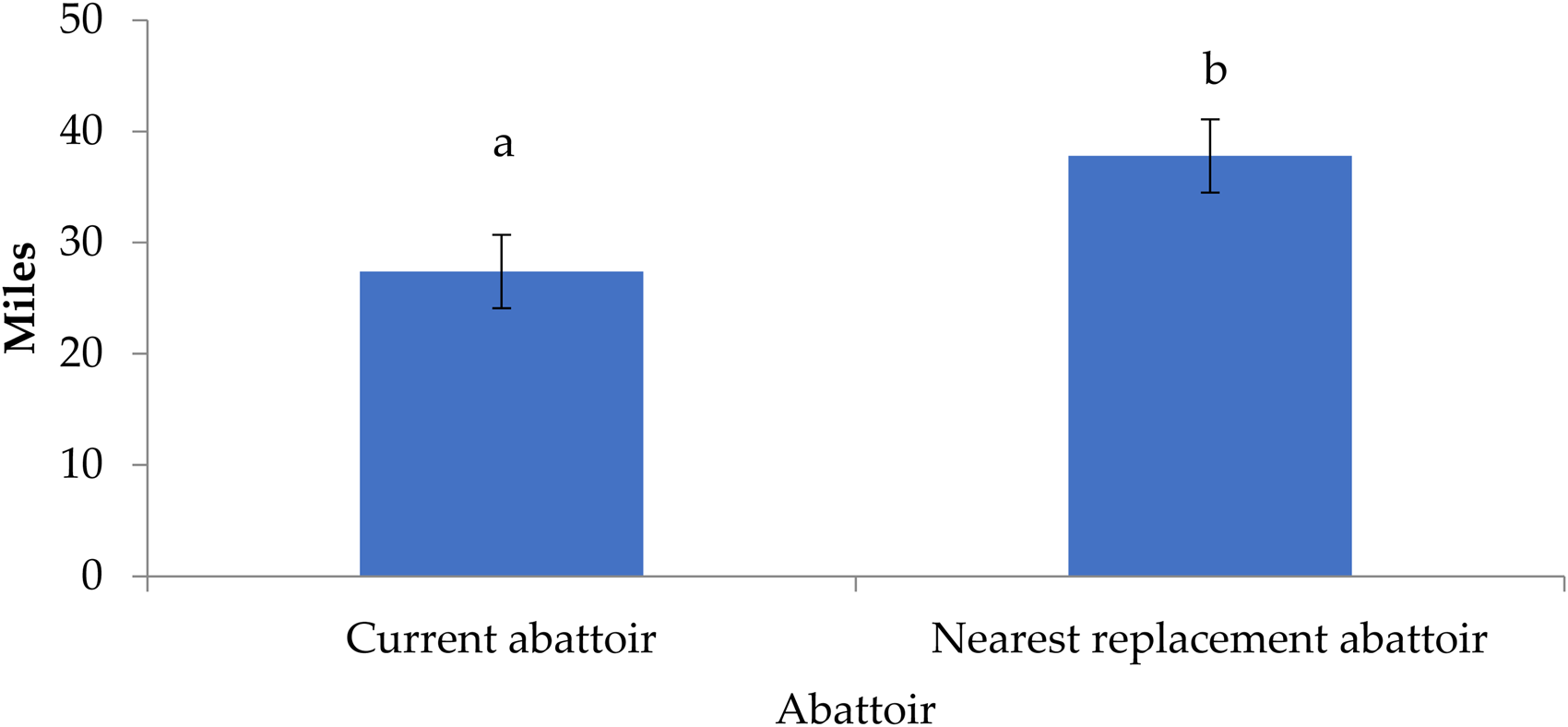
The change in the distance livestock would need to travel for slaughter if the abattoir currently used for private kill services closed (question asked to farmers with at least one alternative abattoir (N = 107)). The distance is significantly different (paired sample t test, p < 0.001, t = 3.95, SE = 2.15).
Impact of reduction in private kill network on provision of public goods from land
Figure 6 shows how the 75 PKR farmers with no alternative abattoir would change land use if the abattoir they currently use closed. Nearly 23% would reduce grassland to increase arable area. The resulting release of greenhouse gases (Drewer et al., 2017; Vellinga et al., 2004) adds to the additional emissions created by the need to take animals longer distances to alternative abattoirs, reducing the chances of achieving net zero carbon emissions by 2050 (Institute for Government, 2020), and the industry's goal of net zero by 2040 (NFU, 2019). 7 However, these impacts might be offset to some extent by the reduction in livestock farmed on farms with no alternative abattoir. 8
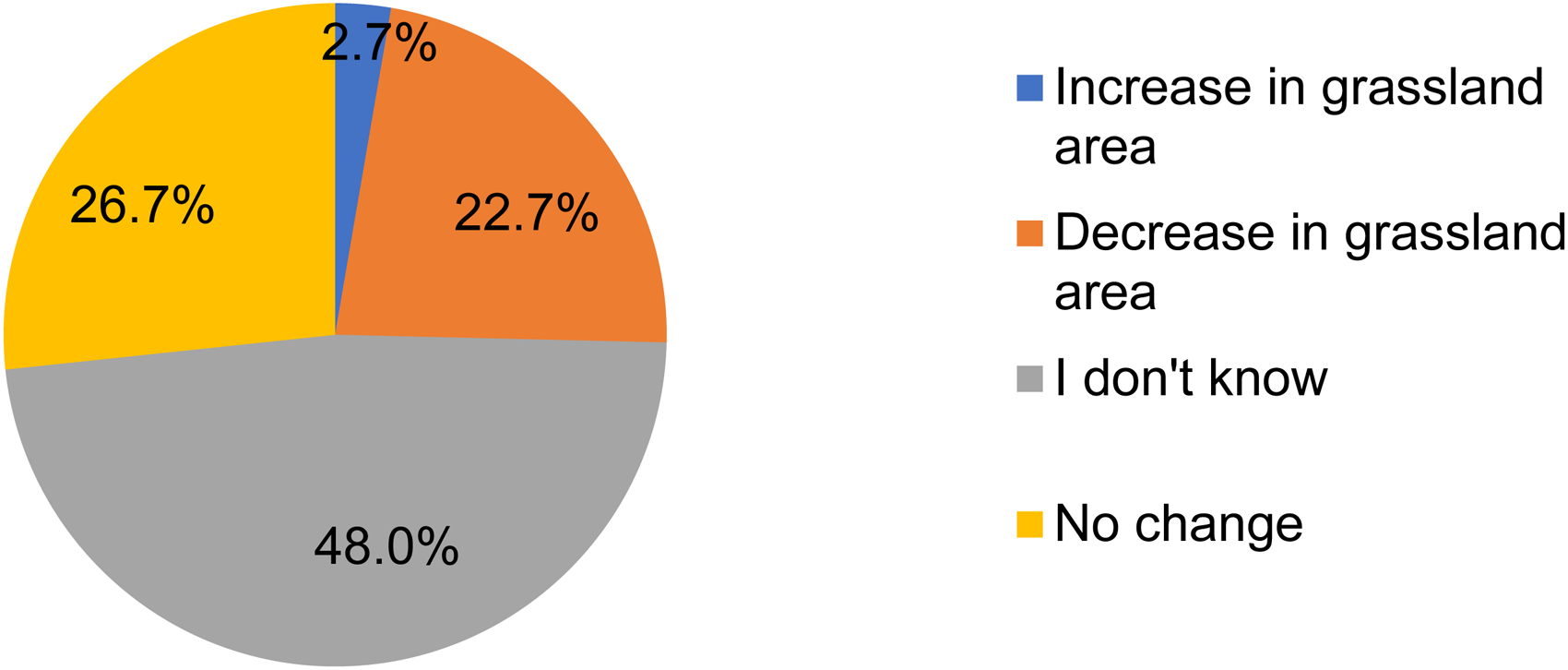
Responses to the question: ‘If your abattoir closed, how would it affect your land use?’ (question asked to farmers with
One hundred and forty one of the 185 PKR farmers (76.2%) finish and retail rare or heritage livestock breeds. Of the 75 PKR farmers with no alternative abattoir, thirty percent said they would have to change the breed(s) of livestock they farmed
9
for reasons including, ‘[We] wouldn't keep pedigree Red Ruby Devon's if no private kill option as live price is undervalued’ (farmer slaughtering 50 cattle LSU per year).
‘If the farm kept going [after our abattoir closed], we would have to supply the supermarket chain which means higher volume lower quality breeds’ (farmer slaughtering 250 mixed species LSU per year).
‘[We would] move away from native breed which we celebrate in our own meat boxes to more commercially acceptable’ (farmer slaughtering 38 mixed species LSU per year).
The Countryside Stewardship agri-environment scheme recognises the potential benefit of grazing natural or semi-natural grassland, heathland, wood pasture with native livestock species. For example, environment management option SP8 10 offers a level of support payment which reflects the reduction in profit incurred by using native breeds rather than more commercial livestock species to manage these vulnerable habitats.
Currently, many conservation graziers at least partly offset the loss of profit by marketing a proportion of the native breeds through local supply chains, for which they use private kill services. An example was provided by a conservation grazier who reared and private kill retailed 50 Hebridean sheep through local butchers. The breed's small carcases size means it has a value of £45/head when sold into the large-scale red meat supply chain, but the value increases to £150/head when sold through local butchers. After abattoir fee of £16/head and butcher charges of £30/head, the farmer is left with £104/head, a markup of more than 100% over the £45 value. This grazier had no alternative private kill abattoir. So if the abattoir he currently uses closed, he would have to switch to a more commercial breed, limiting habitat management options, as well as removing the opportunity for consumers to support this local conservation scheme through their market purchases.
Discussion
Implications of a reduction in the private kill network for farm business viability
Using public money for public goods is part of an agriculture policy designed to improve farm business resilience, create a competitive and thriving agricultural sector, and secure the growth and prosperity of the rural economy (Defra, 2020b: 51). This survey found that 44% of the 185 PKR farmers reported private kill services were essential or very important to their farm businesses, and 28% of the 75 PKR farmers without an alternative abattoir would cease farming if their abattoir closed. For example, ‘[abattoir name] is a small family run abattoir with high welfare standards. There is no other similar abattoir near us. If it closed, we would stop farming!’ (Farmer slaughtering 1.2 sheep LSU per year).
Others would switch to selling through the large-scale red meat chain, losing their product's distinctiveness and the added value in doing so, ‘We would reluctantly send our livestock into a larger processing abattoir and lose our “story"‘ (farmer slaughtering 20 cattle LSU per year).
On average, PKR farmers farmed fewer livestock than CB farmers. In their study Is there a future for the small family farm in the UK? Winter and Lobley (2016) argue that small farmers face a clear choice, “either to focus on a farming solution or to redeploy resources away from agricultural production” (Winter and Lobley, 2016: 4).
The continuing loss of private kill services as small abattoirs close removes one possible “farming solution”, and in doing so undermines the viability of many, and particularly smaller, farm businesses.
Implications of a reduction in the private kill network for the rural economy
The PKR trade allows farmers to add value to their livestock enterprise(s). By retailing to largely local consumers and rural food businesses this trade supports businesses and employment, and therefore is fully aligned with the government commitment to “strengthen the rural economy” (Defra, 202°c: p 7). A recent study estimated locally produced and sold food and drink (defining “local” as produce purchased within 30 miles of the point of production) to be worth £9.6 billion (ICF Consulting Services, 2016), of which £2.9 billion took place in rural areas. The same study estimated tourism expenditure on local food and drink in England to be £2.6 billion, with some 50% spent in rural areas. Reducing the private kill network reduces the value of this locally sourced and supplied market which will adversely affect the growth of the local economy.
The closure of abattoirs on islands can be a particular threat to the growth and prosperity of local economies, and may represent a direct threat to the viability of crofting farming systems. For example “The closure of the Orkney abattoir is stopping young families from moving here to include crofting in their economic activities. These are families with children that are needed for our community to thrive, and the parents in this situation usually take on part time seasonal work to support themselves. We have a shortage of such workers. I know of 2 such families who pulled out of croft/small-holding purchases in Orkney when they realised the situation with lack of abattoir.” (Farmer, 2.4 LSU/yr. all sheep).
Kennard and Young (2018) argue that differentiating locally produced and slaughtered products using a well-designed label could help support smaller abattoirs. For example, a carcase stamp could provide additional confidence to consumers that the produce they purchase fulfils their expectations (Kennard and Young, 2018: 34). However, the Campaign to Protect Rural England believe existing food labels are problematic, ‘In many locations local food was often not clearly defined or labelled leading to a perception of poor availability …. Shoppers may not know which food is local and cannot make an informed choice’ (CPRE, 2012: 44).
Defra's Our action plan on animal welfare (Defra, 2021c) acknowledges difficulties exist around food labelling, and wants to make it “easier for consumers to purchase food that aligns with their values. For example, by clarifying confusing and misleading terms” (Defra, 2021c: 13)
by exploring “complementary market interventions that could sit alongside labelling reforms to stimulate market demand for higher welfare products” (Defra, 2021c: 13).
Government-led intervention along the lines proposed by Kennard and Young would help secure the financial viability of smaller abattoirs and the farm businesses that rely on the private kill slaughter services they provide.
Implications of a reduction in the private kill network for animal welfare
The survey findings show that livestock slaughtered for PKR have significantly shorter journeys from farms to abattoirs (27.4 miles/45 km. compared to 59.4 miles/95 kms for CB livestock). The journeys are also less complex, use farm vehicles and staff, and avoid mixing livestock between farms. Respondents estimate a further reduction in private kill services would increase average journeys for PKR livestock by an average of 10 miles (i.e. 20 mile round trip). This adds costs, is likely to result in more PKR farmers using commercial transporters which will increase the complexity of livestock journeys and reduce farmer oversight of abattoir operating procedures. These findings therefore support a conclusion in the APGAW study, that “a well distributed network of small abattoirs reduces journey distances for a number of animals …. this strengthens a case for some financial support for small abattoirs through new funding outlined in the Agriculture Bill or other mechanisms” APGAW (2020: 2).
Animal welfare is particularly jeopardised by the closure of island abattoirs, which has already forced PKR farmers to ship livestock to the mainland for slaughter. For example “The abattoir on Orkney has closed. We’re looking to take our stock to Shetland, but that is a 7 h ferry crossing if they ever allow our sheep to enter the island, or to [name retained] abattoir on the mainland, again a 7 h ferry crossing then approximately 80 miles. … The closure has turned a quick 15 min drive to a small abattoir with superb handling and lairage into a hugely expensive 2 day trip away from the farm if we have to use [name retained].” (Farmer supplies 2.4 LSU/year, sheep only, 5 trips a year).
The FAWC report “Opinion on the Welfare of Animals during Transport” (FAWC, 2019) reported that “All forms of transportation may adversely affect the animal's welfare, but new evidence has been shown that motion at sea – including side-to-side or up-and-down movements – can cause increased stress in sheep and pigs” (FAWC, 2019: 43).
It recommended (pages 43–44)
reforms to prevent animals from being transported in severe weather and sea conditions where increased side-to-side or up–and-down motions may occur, that no animals are transported over the sea during Beaufort Wind Force of 6 or above, and that contingency plans (which would be the responsibility of the owner/transporter) should be required in the case of poor sea conditions.
Given the unpredictable nature of sea transport, it is difficult to see how contingency plans would always ensure livestock avoid severe weather conditions. The example of the six-day blocking of the Suez Canal which affected more than 20 livestock transporting ships and at least 92,000 livestock, many of them sheep (Insurance Marine News, 2021) being a case in point.
Therefore these recommendations make it highly desirable to open abattoirs on, for example, Orkney and the Scilly Isles. However, studies of island abattoirs (e.g. Houghton, 2011; SAC Consulting, 2013; SAOS & BitC Scotland, undated) all conclude that island abattoirs are simply too small to be viable without government support. The low throughput abattoirs on Guernsey, Jersey, Alderney and Sark (all below 1000 LSU/year) benefit from state funding, justified because they provide vital ancillary services which support the island's farming, economy and tourist sector, and enhance animal welfare by removing the need to transport farm animals by sea.
The abattoirs on Sark and Alderney are able to take advantage of “de minimis” derogation, (available in EU Directive 853/2004/EC (European Commission, 2004: 47)), which reduce their operational costs. This derogation permits slaughtering to be overseen by state veterinary officers based on the neighbouring island of Guernsey rather than being present to inspect the livestock and meat and offal in person. As a member of the European Union (EU), the UK chose not to apply this derogation. Leaving the EU gives it the opportunity to review that decision.
Implications of a reduction in private kill network for public goods from farmland
Defra's Protected Landscapes initiative (Defra, 2021a) directs public money to support farming in Areas of Outstanding Natural Beauty (AONB), National Parks and The Broads. Path to Sustainable Farming: An Agricultural Transition Plan 2021 to 2024 shows how this initiative will help farmers in these geographies to “diversify their income streams and lay the groundwork for our Environmental Land Management offer” (Defra, 2020b: 44).
To be supported, projects will need to deliver at least one outcome from the four themes: climate, nature, people, and place. The outcomes listed under the “climate” theme include; (i) more storage or sequestration of carbon, or both. Outcomes listed under the “nature” theme include; (ii) increase in the area of wildlife-rich habitat, (iii) managing existing habitats for better biodiversity outcomes, and (iv) increasing biodiversity. Under the “people” theme outcomes include; (v) delivery of greater public engagement in land management. And outcomes under the “place” theme include; (vi) reinforcing or enhancing landscape quality and character, and (vii) increasing the economic resilience of nature-friendly sustainable farm businesses - because of the contribution they make to a more thriving local economy. The survey findings show that PKR enterprises contribute to each of these eight “Farming in Protected Landscape” objectives. Indeed, Defra give PKR as a specific example of the type of projects “Farming and Protected Landscapes” seeks to support, namely “a locally branded food initiative that promotes the links between the product and the landscape in which it is produced” (Defra, 2021a).
The loss of public goods associated with the reduction in the private kill network provides good reasons to remove any geographical limitation on support for such schemes.
Size of the current network of abattoirs offering private kill services
Smaller abattoirs have specialised in providing private kill services. However, a small number of larger abattoirs also offer private kill (Table 1), and abattoirs which currently do not might start to do so as existing service providers cease trading. How many might do so is unknowable, but they would face significant barriers to do so. Most larger abattoirs are tied into long-term contracts to exclusively supply supermarkets, and their business model depends on large-scale throughput. This means few are willing to slaughter just one or two animals, which would be a particular problem for many PKR farmers. The need to guarantee 100% traceability increases the time spent on each carcase, which also reduces the number of livestock that can be processed in a day. This increases the abattoir's fixed costs per animal slaughtered and processed. In addition, many large abattoirs spread their carcase processing line over several sites (and in some cases countries), which means the range of skills needed to provide private kill services are not found under the same roof. This increases the difficulty and cost of guaranteeing traceability, and as PKR farmers take fewer livestock more frequently to abattoirs this increases administrative costs related to food chain information paperwork.
PKR farmer support for small abattoirs
“Slaughtering” is included as an “ancillary service” in the Agriculture Bill. This allows Government to target grant funding schemes to abattoirs (Sustainable Food Trust, 2020), helping end excessively long journeys to slaughter (Defra, 2021b). Any such scheme would need to take account of the general circumstances of small abattoirs revealed by Halliday's (2019) review of the (now closed) Scottish Government's Food Processing, Marketing and Co-operation (FPMC) awards. 11
Examples of support for small abattoirs might include expansion of abattoirs which slaughter pigs. Pig slaughtering has become very specialist, so that the ten largest abattoirs with licences to slaughter pigs process 99% of all pigs slaughtered in the UK (Franks and Peden, 2021; their Table 2.6, p 12). Many smaller abattoirs have ceased pig slaughtering due to the increased regulations and the cost of the specialist equipment this service requires, “Our last abattoir had to stop killing pigs simply because their stun machine did not send data to a computer so was deemed unfit by FSA (Food Standard Agency) even though it had been doing the job for yrs.” (Farmer supplies 3.5 LSU/year, pigs only).
This has resulted in some PKR farmers having no local pig slaughter services, “It is not easy to find abattoirs which do the complete package of slaughter and butchering cattle and pigs.” (Farmer supplies 5 LSU/year, pigs and cattle).
As a direct result fewer PKR farmers farm pigs, “We are completely satisfied with the service we receive from the abattoir. Unfortunately it has stopped taking pigs and so we no longer keep a herd of pigs.” (Farmer supplies 3.6 LSU/year, all sheep).
One hundred PKR farmers (69% who answered the question “what can government do to support PKR enterprises) believed government should support small, local abattoirs. For example, by funding new abattoirs and by helping relocate and modernisation inner-town located PK (private kill) abattoirs. They believed government should also reduce small abattoir's red tape and regulatory costs. These responses were typically motivated by the awareness of the benefits of smaller abattoirs for animal welfare, the environment, provision of choice to local consumers and enhanced food traceability. For example, ‘I believe it is essential we keep red meat supply chains local. It's good for welfare and it's better for the environment and it's good for food traceability.’ (Farmer of 34 mixed species LSU per year).
Conclusions
Seventy-five (41.2%) of the 185 PKR farmers who responded to the survey had no alternative provider of private kill services, twenty-one of these would close their PKR business if the abattoir they currently use closed. A further twenty-one (18.3%) of the 115 CB farmers wanted to develop their own PKR business, but were unable to because there was no locally suitable abattoir. These responses show the lack of resilience in the network of private kill provision available in August 2020, and the inability of the existing network to cater for existing demand.
The further closure of small abattoirs will increase average journey distances from farm to slaughter; make these journeys more complex; reduce the choice in butchering styles and practices available; reduce price competition between the remaining PK abattoirs (as the distance between private kill providers increases); and remove value adding opportunities from farmers. This will adversely affect rural employment and the growth in the rural economy. Fewer native breeds of livestock would be farmed, reducing the conservation of valuable gene pools, and reducing the environmental management options available for managing biodiversity rich habitats. All these outcomes run contrary to the government's declared agriculture and environmental policies.
Moreover, further reduction in the private kill network will drive out of business many farmers who typify the entrepreneurial culture the withdrawal of direct support payments is intended to nurture, and the closure of small abattoirs will undermine the resilience of the locally finished and slaughtered red meat supply chain, which Covid-19 demonstrated to be an important component of national food security.
The Agriculture Bill allows targeted support for smaller abattoirs. Grant schemes for example could be designed to help safeguard and expand the private kill network allowing more farmers to diversify into the PKR trade, enhancing farm business resilience - a core objective of the withdrawal of direct payments – and providing additional support to rural economies.
Leaving the EU offers the UK the freedoms to “do things differently”. Providing targeted grant schemes to smaller abattoirs as providers of key infrastructure, resolving confusion about food labelling, and introducing an equivalent to the “de minimis” derogation are opportunities to do things differently. Whether such opportunities are seized is a direct test of whether the freedom to do things differently actually results in doing things differently.
Footnotes
Notes
Acknowledgements
The authors would like to thank the farmers and abattoir owners and managers who completed the various surveys which underpin this study. Particular thanks to Christine Walsh and Rebecca Wright of the Agriculture and Horticulture Development Board for providing statistical information, and to Dr Jess Hepburn for creating the GIS maps. We gratefully acknowledge The Prince's Countryside Fund for financial support for this project. Our thanks to Drs Irina Davydova and Julia Cooper who read previous versions of this manuscript and to the comments of two anonymous reviewers. Any remaining errors and omissions remain entirely the responsibility of the authors.
Declaration of conflicting interests
The author(s) declared no potential conflicts of interest with respect to the research, authorship, and/or publication of this article.
Funding
The author(s) disclosed receipt of the following financial support for the research, authorship, and/or publication of this article: This work was supported by the The Prince's Countryside Fund.
