




Abstract
Understanding the combined effects of the biophysical, socioeconomic, and institutional components of a seed system can help to improve the effectiveness of seed system interventions. This study examined whether and how institutional factors are contributing to the inadequate supply of quality seed potato in Eritrea and identified where and how bottlenecks within the seed systems might improve the efficacy of seed potato interventions. The research methodology included semi-structured interviews with seed potato system actors, focus group discussions with farmers and local experts, a review of seed potato intervention program reports, farm visit reports, and other literature. The study identified some structural system failures that block the effective functioning of the seed potato intervention. The study recommendations include (i) investment in climate-smart technologies (such as water harvesting structures and new varieties) as well as for electricity supply in the high grades seed production center (ii) shifting the traditional supply-driven approach to a demand driven approach for greater participation of the actors in the seed potato intervention (iii) strengthening the human skill of the actors for greater interaction and collaboration between the different government actors and (iv) developing local strategies to encourage decentralized service provision systems. In the longer term, consideration should be given to greater private sector participation in sourcing and supply of seed and other inputs, even as a pilot-scale activity.
Introduction
Quality seed is among the critical agricultural inputs to increase productivity and production of crops (Kuruppu and Arwmmd, 2020). Seed systems are human mediated seed dispersal networks that support plant based agricultural production (Louwaars et al., 2011). A seed system is defined as “the network of stakeholders (people, organizations, and companies) involved in producing, planting and selling the seed (including vegetative seed) of a particular crop in an arbitrarily defined geographical area” (Andrade-Piedra et al., 2016). Seed systems include both the biophysical and socioeconomic systems, which encompass and link formal and informal seed sectors (McEwan et al., 2021a).
Potato (Solanum tuberosum L.) is a vegetatively propagated crop (VPC) that plays a key role in food security in developing countries. However, its seed system is complex bulky, highly perishable and hard to handle compared to true seed crops, mainly due to the unique biological and economic nature of its vegetative propagation (Almekinders et al., 2019; Bentley et al., 2018; McEwan et al., 2021b). Some of the major problems with VPC seed include: slow multiplication rates, which take a long time to attain a substantial volume of seed production while pests and diseases are easily carried across generations, resulting in seed degeneration. Successful VPC seed (including seed potato) system intervention requires a good understanding of the biophysical and social factors (McEwan et al., 2021a) as well as the capacity, roles and interaction of the seed system stakeholders (Andrade-Piedra et al., 2016).
In Eritrea, potato is considered a vegetable and income generating crop (Ghebreslassie et al., 2014), and is grown by approximately 5000 semi-commercial and small-scale farmers using irrigation systems on less than 15% of the total surface area of Eritrea (Ghebreagziabiher et al., 2021). In Eritrea, potato is planted on small farms (on an average size of about 0.5 ha) and is mainly concentrated in the highland (2001–2400 masl) and midlands (1700–2000 masl) with two to three growing seasons per year. Potatoes are directly sold to local markets after harvest in Eritrea.
In Eritrea, local potato varieties have largely disappeared and been replaced by foreign potato varieties which were sourced originally from European seed companies and have been multiplied across many generations as well as unofficial importation of varieties from neighboring countries such as Sudan. Local varieties fell out of favor with farmers due to late maturity, low yielder and less marketable (due to misshaped and rough tubers) (Ghebreagziabiher et al., 2021).
Despite the suitable climate conditions and use of high inputs (such as irrigation facility, fertilizers and chemicals), the national potato yields in Eritrea remain low, is estimated at 13 t/ha (MoA, 2019), which is less than the world (21 t/ha) and African yield averages (15 t/ha) but greater than the East African average yield (10 t/ha) in 2019 (FAOSTAT, 2021). The low productivity and production (≈30000 t/2400 ha) of potatoes in Eritrea is largely attributed to the use of low-quality seeds (MoA, 2019) due to the build-up of diseases and pests (mainly virus infection and blights) (Biniam and Tadesse, 2008; EIDP, 2019).
Over the past two decades the Ministry of Agriculture of Eritrea (MoA) has launched seed potato interventions in collaboration with development partners to increase the supply of quality seed. These include strengthening the national tissue culture laboratory, construction of centralized diffuse light seed potato stores, introduction of new potato varieties, building the skills and capacity of farmers and improving the coordination of the seed potato system (EIDP, 2019; Ghebreagziabiher et al., 2021). In these interventions, MoA participates in the direct distribution of seed tubers, limited chemicals, and fertilizers at subsidized prices to model farmers who are generally better resourced, experienced in seed potato production and also financially strong. The MoA also provides free services (storage, training, inspection, and technical guidelines) to these model farmers (EIDP, 2019). The reasoning underpinning this strategy was that MoA believed that resource-rich farmers could multiply the newly-imported certified seed or successive generation seeds more efficiently, so it could then flow to smaller scale farmers who grow potato for local consumption and are considered as resource poor farmers. However, the rate of progress with the intervention is too slow to satisfy the demand for quality seed potato (After 20 years of the intervention, the supply of quality seed potato has reached less than 10% of the total annual seed used) so it is timely to examine institutional and other factors within the design of the seed system that may be causing bottlenecks.
In Eritrea, the seed flow and seed delivery pathways are described below. Firstly, certified seed potato is imported by MoA in collaboration with development partners. Then the imported seed is multiplied by model farmers under the coordination of the MoA with next generation seed bought back from the model farmers for sale and distribution to other potato farmers. The model farmers are always selected by MoA on a seasonal basis to multiply, produce and sell seed. The seed is multiplied for a number of generations (G1, G2, G3, G4 … Gn) 1 until the seed degenerates or loses its potential (This is the stage where the final seed goes for ware potato production) (Ghebreagziabiher et al., 2021). The MoA is heavily involved in the seed marketing and distribution of the formal seed system. There is no policy supporting or regulating the links between the formal and informal seed systems.
In Eritrea, no formal certification exists. Instead, MoA established a locally accepted seed potato inspection and quality control guidelines. The seed inspection included cropping history, crop rotation, rogueing and laboratory test mainly for the virus incidences (mainly for PVY and PLRV) 2 for the first three generations (G1, G2, and G3). However, seed inspection for the succeeding generations such as G4, G5 … Gn is done only using visual assessments. The generation seeds are sold to farmers without labeling.
The agro-dealers, seed traders and seed companies are “absent” in the Eritrean seed potato system. Instead, the informal system involves wholesalers (who are largely involved in vegetable marketing), buy potato from potato farmers (mainly model farmers) and sell part of it as seed either to other model or small scale farmers. The potato farmers consider the seeds sourced from the wholesalers as poor in quality and more expensive than seeds sourced from the formal system. Overall, majority of Eritrean potato famers (>80%) rely on the informal seed system, sourcing their seeds from local markets, neighbors or other farmers. They rarely save their own seeds.
The design of any intervention to improve a seed system needs to take into account the local context, and the actors and institutions within the system. The seed potato intervention in Eritrea is not delivering the expected supply of quality seed potato. Therefore, this paper examines whether “system failures” exist in the seed potato intervention and how they might be addressed.
This study borrowed a system failure framework approach, developed by Woolthuis et al. (2005). The approach was developed mainly to analyze and synthesize policy innovation rationale or government interventions (Bleda and Del Rio, 2013). Gildemacher (2012) has already used the same approach to analyze and synthesize seed potato system innovations in East Africa (Ethiopia, Kenya, and Uganda). In this study, the framework specifically helps firstly, to identify the bottlenecks of the existing interventions and secondly, in identifying improvement options by which the seed system can be improved.
The framework has six categories of system failures including, failures in infrastructure, hard and soft institutions, strong and weak networks, and capabilities. Infrastructural failure occurs in the absence of sustained investment in critical infrastructures (such as ICT, road, energy, education, technology). Hard institutional failure occurs in the presence or absence of legal rules and regulations, which hinder innovation. Soft institutional failure refers to beliefs or absence of unwritten rules, which hinder innovation. Strong network failure occurs when too close ties exist between two actors that block new ideas from outside. Weak network failure occurs due to loose connection between actors. Capabilities (Human capacity) failure refers to the lack of technical and organizational capacity within the system to adapt to and manage new technology. The above definitions were adopted from Woolthuis et al. (2005).
Materials and methods
The study used qualitative data collection methods which are appropriate for higher-level (policy) decisions, as they can provide in-depth, detailed information and interpretation of any research topic (Smith et al., 2011) and describe settings in which policies will be implemented (Anderson, 2010). Information sources included: interviews with Eritrean seed potato stakeholders’, focus group discussions with potato farmers and local experts, review of seed potato intervention program reports, farm visits reports, meetings, and other literature. A study visit was also made to Kenya, including meetings with organizations in the seed potato system there to gather perspectives from a different country in East Africa.
The first author of this study was the coordinator of the seed potato intervention launched by MoA in collaboration with Irish partners (Teagasc, Vita & Gorta Self Africa) from 2015–2017. The aim of the intervention was to establish a sustainable seed potato supply system in Eritrea (Ghebreagziabiher et al., 2021). He had a good connection with stakeholders in the intervention and organized all meetings and visits to the intervention sites along with the technical staff. While issues of researcher positionality and bias had to be considered, this level of familiarity helped to bring the stakeholders together in the study. The selection process of the stakeholders and focus groups participated in this study is described as follows:
Semi-structured interview with seed potato system stakeholders
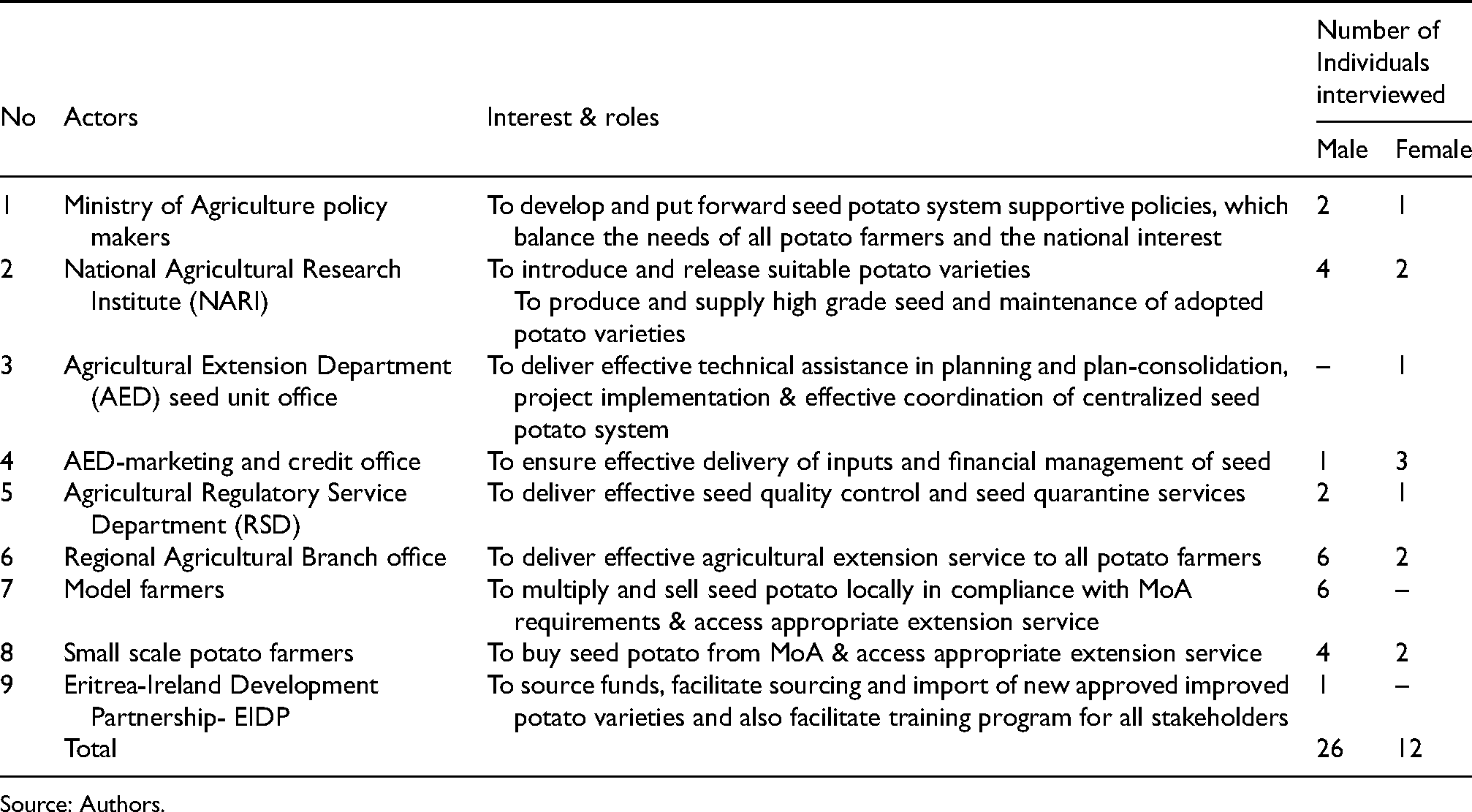
Local stakeholders in the seed potato system were identified through MoA staff consultation and seed potato intervention reports. The stakeholders interviewed included policy-makers, researchers, extension staff (technical and marketing and credit offices), seed inspectors, potato farmers, and the development partner. Thirty-eight (38) semi-structured interviews were conducted during July to August 2018 (Table 1). The individuals from each organization (mainly the MoA departments or offices) were selected in consideration of their work experience and contribution in the overall seed potato system and their ability to explore and identify local complexity as well as to develop and express ideas which might help to solve challenges at local and national level.
Category, interest and role of the interviewed actors.
Source: Authors.
The policy-maker interviewees included MoA officials involved in policy and seed regulations. The research (NARI) interviewees included horticulture (potato agronomy), plant protection (potato pathology) research and plant tissue culture laboratory staff. The extension (AED-technical office) interviewees were from the seed unit, crop development, horticulture (potato agronomy), plant protection (potato diseases and insects) offices. The AED-marketing and credit interviewees were from the agricultural input supply office, finance office and seed selling point (centralized seed potato store). The seed inspector (RSD) interviewees were from seed safety and quality control, plant quarantine and plant laboratory office. The potato farmers’ interviewees included both model farmers and small scale farmers from the two main potato growing regions of Eritrea (Figure 1). The two categories of potato farmers were selected in consultation with the Regional Agricultural Branch offices. The model farmers were selected randomly from their respective Regional Agricultural Branch offices which have a list of those farmers who are involved in the seed potato interventions. For small scale potato farmers, the study team was guided by Regional Agricultural Branch offices who selected farmers based on their willingness and interest to participate in the interview. One seed project officer was considered from the Eritrea-Ireland Development Partnership program office (EIDP). The time taken to complete the individual interviews ranged from 45 to 90 min.
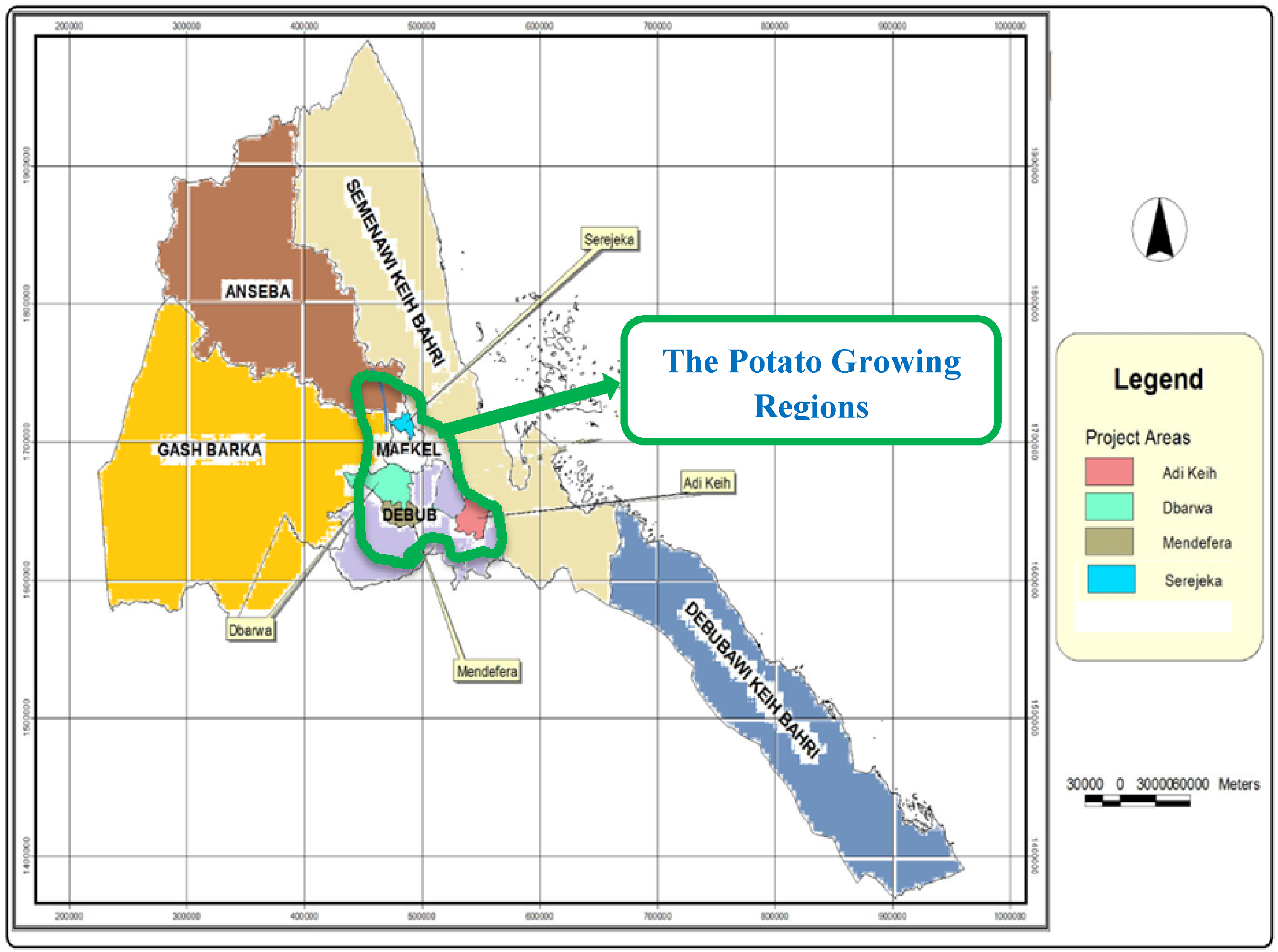
Map of the studied sub-regions. Source: Authors.
The stakeholders were asked their views in relation to:
- Bottlenecks that they perceive as hindering the overall seed potato system in Eritrea - Possible options to solve the bottlenecks
Table 1 summarizes the interest and role of interviewed actors. The public actors’ interest and role was derived from their institution mission statements. The information was sourced from the MoA planning and statistics office, NARI, RSD & EIDP reports, (Habtom, 2019, 2020). The potato farmers, and EIDP actors’ interest and role was derived mainly from the EIDP reports and extension agents’ consultation. The role of the first author of this study was to identify the interest of the actors, based on his experience during the seed potato intervention.
Potato farmers and local experts focus group discussion
Eight farmer focus group discussions were carried out in two potato growing areas in the high (2001–2400 masl) and mid-lands (1700–2000 masl). These high and midlands are the main seed and ware potato growing regions in Eritrea. Two regions (Debub and Maekel) and four sub-regions (equivalent to counties/districts) which include Serejeka, Adi-keih, Mendefera, and Dubarwa were involved (Figure 1). The Debub region alone contributes approximately 60% of the total national potato production annually (MoA unpublished report).
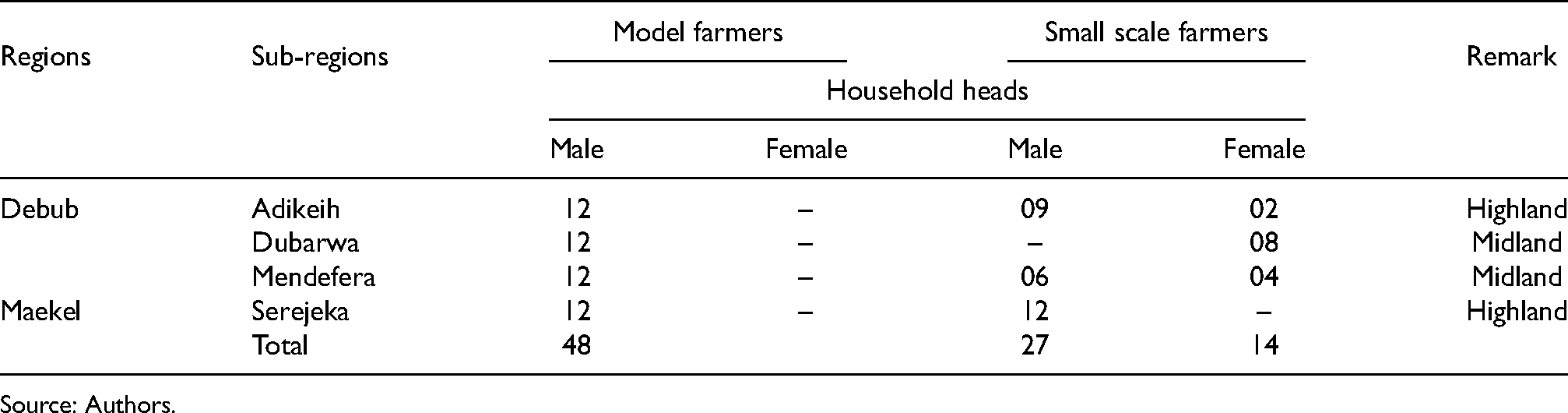
In each sub-region, both model and small scale potato farmers were identified for participation in consultation with extension agents and seed potato intervention facilitators. Two group discussions were therefore held in each sub-region. Typically, 8 to 12 potato farmers participated in each group and there were 89 farmers in total (Table 2).
Overview of composition of farmers’ focus group discussions .
Source: Authors.
Both male and female-headed households were considered in the selection in each sub-region but the number of males exceeded the number of females, reflecting the reality that far more male-headed households grow potato than female-headed households. However, the study team did organize one focus group in sub-region Dubarwa with only female-headed households (small scale potato farmers) to allow insights to be gained on how gender might influence perception and thinking. In the seed potato intervention, the number of female-headed household participants in all sub-regions was almost nil.
Each group discussion lasted for about 2 h discussing major bottlenecks that they experience in the seed potato supply system and their recommendations by which the seed potato intervention can be improved.
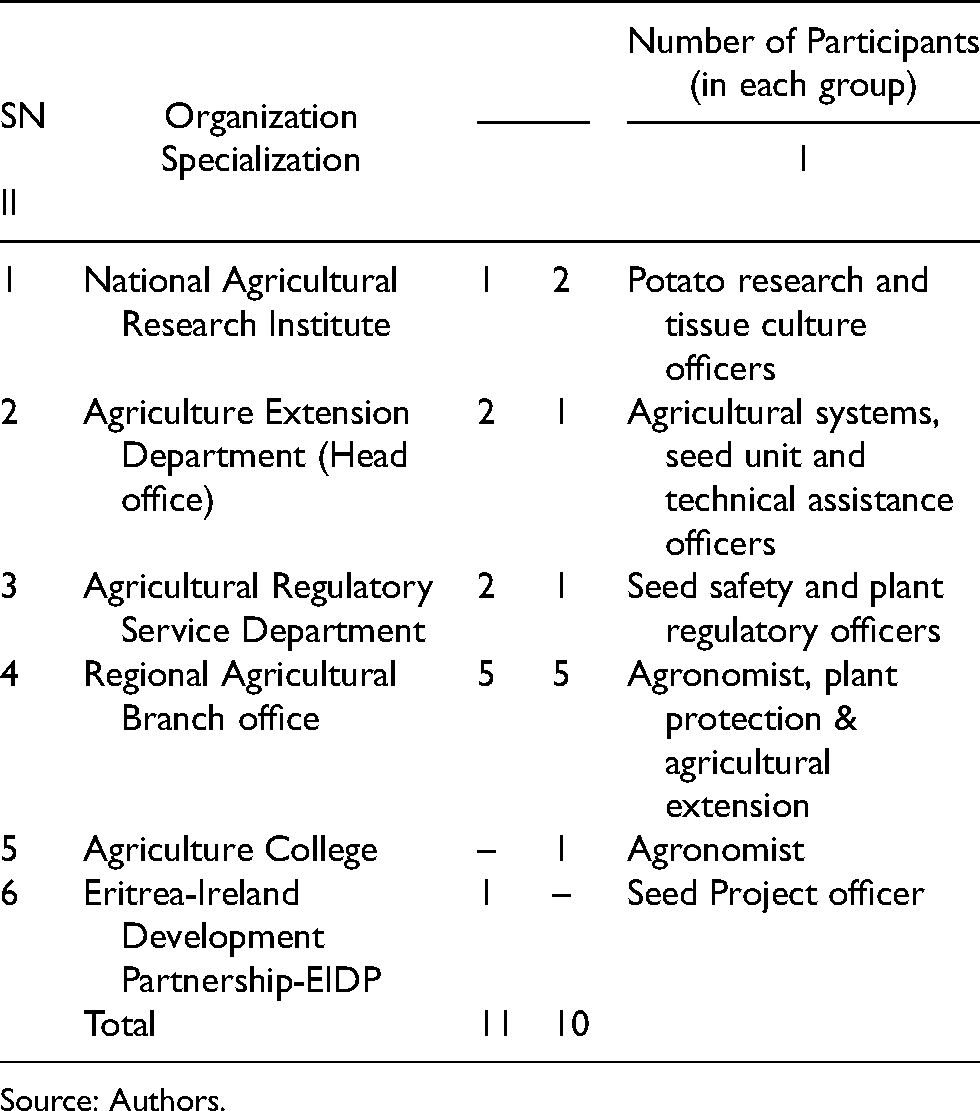
Focus groups discussion were also conducted bringing together local experts from different organizations such as research, extension, regulatory, agricultural college and EIDP. A total of 21 local experts participated; separated into two groups (Table 3). These focus groups discussed the main bottlenecks in the seed potato intervention as well as actions needed to improve the effectiveness of the seed potato intervention. The primary data gathered for this study was supplemented with additional information including seed potato intervention reports, potato farm visit reports and observation, RSD and local regional inspectorate staff meeting. These reports were used to verify findings from the primary data collection methods.
Overview of experts’ focus group discussions .
Source: Authors.
Results
The result of the stakeholders and experts and farmers focus group discussion are discussed below. The participants identified the bottlenecks that they perceive as hindering the overall seed potato system and suggested options to address these. The bottlenecks were organized according to the different types of system failure categories and are described below.
Infrastructural failure
The potato farmers’ interviews, farmers and experts’ focus group discussions perceived that seed and potato production is weakened by the combination of effects such as availability of irrigation water, pest pressure on farms and small and fragmented farmland. Eritrea is located in an arid and semi-arid region, where rainfall is low and erratic. This means that irrigation water is a requirement for potato growing and the Eritrean government has promoted the construction of water harvesting structures (such as dams). However, this study found that the water harvesting structures are inadequate and the farmers’ interviews and focus group discussion highlighted that there is high demand for land around the existing water harvesting structures. This is in consideration of the high value and profitability of a potato crop (Ghebreagziabiher et al., 2022, in revision). This presents a real challenge to keep the potato crop healthy. For example, seed and ware potato crops are cropped closely which leads to cross infection and disease build-up (mainly viruses). Moreover, the repeated planting of potato in the same plots in the small farms leads to disease infection which in turn leads to seed potato degeneration affecting the yield of potato negatively. The seed potato stakeholders have to recognize this challenge and consider options for investment in water harvesting structures, introduction of climate-smart potato varieties such as early and disease resistant and also grouping or clustering of farms to avoid cross infection between farms.
Most potato farmers have access to roads and some farmers also own or can hire transport facilities to sell their produce to local markets. However, 83% of the potato farmers’ respondents and all farmers’ focus group discussion noted difficulty accessing key inputs (quality seed, fertilizer and chemicals). While both categories of farmers have limited access to quality seed potato on a regular basis, small scale potato farmers suffer most according to their group discussion and majority of Regional Agricultural Branch office respondents. Similarly, both category of farmers have limited access to fungicides and fertilizers as both inputs are rarely available and expensive. This is a greater problem for small scale potato farmers because their purchasing power is lower than the model farmers (Habtom, 2019). The MoA/AED does provide some inputs at subsidized prices to model farmers to ensure they produce the required quality seed (MoA & EIDP unpublished reports). However, the model farmers noted that the supply is inadequate and consequently they buy additional inputs from the local markets at high prices. The AED headquarter respondents explained that government is committed to importation of agricultural inputs in collaboration with donors but it is limited and inconsistent mainly due to lack of hard currency (Habtom, 2020) and absence of private sector enabling environment for input importations.
Storage facilities for seed potato was considered a bottleneck by potato farmers’ focus group (75%) and the Regional Agricultural Branch (75%) respondents. In the informal seed potato system, potato farmers store their seeds using methods such as jute sacks, on concrete floors and or wooden boxes. In the formal seed potato system, in the absence of cold storage, the model farmers use centralized simple diffuse light store constructed by government and donors. These structures utilize indirect natural light and good ventilation by air flow to control excess sprout growth and associated storage losses. This kind of diffuse light store is considered economically viable and technically acceptable for small and medium scale potato farmers in tropical conditions (Babarinsa and Williams, 2015). In Eritrea, the government has constructed 7 stores with a capacity of 500 t in total (MoA unpublished reports). However, the capacity of the diffuse light stores is not adequate to keep the amount of seed tubers required per season (personnel communication: extension staff and store visit). The current seed potato intervention program has subsequently enabled model farmers to erect their own diffuse light stores on their own farm and a few individually owned diffuse light stores have been erected, helping to alleviate the problems of storage loss and expenses. Nevertheless, this has not penetrated widely to many farms, mainly because the land ownership policy disallows farmers from erecting any permanent structures. Both the experts’ focus groups confirmed the inadequate capacity of the centralized stores and that individuals are not generally allowed to erect their own stores to keep their seed tubers safely for planting next season. As a result, most farmers sell their produce to their local market immediately after harvest and have to purchase new seeds at high prices, when the next planting season comes.
Lack of transport was identified as one of the main bottlenecks in delivering effective service by the Regional Agricultural Branch (75%), AED seed unit (100%), RSD (100%) respondents and both expert focus group discussion. All the policy makers’ respondents noted that the three public stakeholders (NARI, AED & RSD) do not have their own transport facility to visit and supervise seed farms. The absence of the transport facility limits mobility of extension and inspectors resulting in limited access to extension and seed quality control services for potato farmers. The EIDP office provide transport facilities mainly to the technical committee composed of NARI, AED & RSD for key activities such as selection of farms for seed potato multiplication, seed inspection, yield estimation as well as training programs. However, the EIDP office has limited capacity (only two cars for a rural development program that addresses multiple sectors as well as seed potato) to provide transport service for extension workers and regional inspectors to monitor seed potato farms closely (personnel communication: EIDP office). Both expert focus group discussions highlighted that transport is key for extension workers and inspectors to solve problems (Baloch and Thapa, 2019). The Ministry of Agriculture has assigned new staff at village or site level to overcome the lack of transport, the experienced or skilled extension workers are still at central regional offices which is impossible to supervise seed farms closely.
The majority of NARI respondents acknowledged government commitment and investment to improve the efficiency of tissue culture laboratory at NARI to supply early generation seed (minituber in the case of potato). Electric power is an unavoidable element necessary for production of early generation seed under tissue culture technology. The NARI staff (both the research and tissue culture) noted that NARI still suffers from accessing continuous electricity supply and that power interruption causes a failure in production of high grade seed at the institution. Investment in solar energy could address this problem.
Hard institutional failure
The main challenge perceived by the model farmers’ interviews, model farmers and experts focus group discussion was the land ownership policy. In Eritrea, land mainly in the highlands and midlands (the main potato growing region) is declared as “state owned” since 1994 (IFAD, 2020). Under the existing landownership policy, firstly, an official land rent to individuals is not allowed but few model farmers rent land unofficially from neighbors or other farmers. Secondly, land is rotated among individuals of the society (village community) every seven years (Negassi et al., 2002) although now the rotation period has become unclear (EIDP, 2017). Arising from these two factors, farmers are not motivated to invest for long term. A model farmer in Mendefera stated “If a farmer knows he/she will move at some point to another farm, he/she is reluctant to develop their temporary land or enrich with fertilization, etc.” Farmers from Mendefera and Dubarwa felt the most restricted in their capacity to produce healthy seed due to small and fragmented farms.
The majority of the Regional Agricultural Branch and NARI respondents and majority of the members of the experts’ focus groups were dissatisfied with the centralized seed potato coordination, seed distribution system, and price setting strategy which was perceived to be overly bureaucratic. They explained that the centralized control of the seed potato system resulted in delays in seed distribution and seed deterioration before reaching potato farmers. They perceived that the MoA policymakers did not recognize the perishability of the potato crop (compared with wheat seed), and that its seed can easily deteriorate in the centralized seed potato stores awaiting the many different signatories’ on the required contract and payment documentation by AED. This was also supported by the 75% of the AED marketing and credit respondents as well as the EIDP respondent. They perceived that potato bulkiness and perishability makes seed potato coordination and distribution complex to handle and manage.
The majority of the Regional Agricultural Branch office and NARI respondents were also dissatisfied with the existing seed pricing strategy especially the practice of selling different class of seed tubers (e.g. new imported and successive generation seed classes) at the same price and time to potato farmers. This was considered unsustainable as the seed deteriorates with each successive generation due to the build-up of diseases. They suggested that AED did not recognize quality of seed as an important attribute when they set seed prices.
Soft institutional failure
The small scale potato farmers have a negative perception towards the existing seed potato multiplication initiative. From their perspective (specifically the female headed groups) the existing centralized resource flow operated by the AED is very slow and only providing a service to resource rich potato farmers. The female farmers’ focus groups stated “we are completely neglected in the existing seed potato intervention with no access to any services including quality seed from the MoA”. They complained about the “unfair” distribution of quality seed from MoA/AED to wealthier farmers. By contrast, all the model farmers appreciated receiving the seeds sourced from the MoA although they also complained about the slow process, the quantity they receive and the delayed delivery time.
Currently there is no scope for farmers to engage in the design or planning of the seed potato interventions. This was clear from all the expert focus groups and from the interviews with NARI respondents. The existing seed system could be characterized as supply driven service provision and this is not usually responsive to local needs. Farmer engagement in the seed potato interventions can best be described as passive. There is scope to consider a participatory demand driven approach to service provision. Participatory methods can increase farmer ownership of the technologies or services promoted by extension management (Habtom, 2019).
Strong network failure
The experts and the model farmers’ focus groups and two of the small scale potato focus groups outlined their disappointment in the extension services. Most of the extension workers, especially those deployed at Regional Agricultural Branch offices, spend most of their time in supplying seeds, chemicals and fertilizers to model farmers as well as in the collection of seeds harvested from the seed farms. They have close ties with model farmers in provision of inputs and collection of seeds but limited time spent on knowledge transfer. One extension agent stated “we are heavily involved on input distribution, this did not help us to think and discuss what knowledge farmers need in their potato production”. The experts’ focus groups and extension agent respondents suggested the formal seed potato system should prioritize extension and give the responsibility for inputs distribution to individual or private sector as is common in most countries. It may be possible to give the responsibility of inputs distribution to individuals or private sectors through establishment of private sector supportive rules.
Weak network failure
Two committees (steering and technical) were established to build interaction and facilitate the flow of information among actors for the success of the seed potato intervention. However, the experts’ focus groups indicated that the interaction among the public stakeholders (NARI, AED, and RSD) is not effective to ensure the delivery of efficient services to farmers. This was also raised by the Regional Agricultural Branch (50%) and NARI (50%) respondents. A similar response was provided in other study by Habtom (2019) who rated the linkage of the NARI, AED and farmers as less effective (rated 2.58 out of 5 Likert scale). Low or poor interaction between key actors will result in coordination breakdown (Sperling et al., 2013). The steering and technical committees have to recognize this failure.
Capability failure
There was acknowledgment and agreement among stakeholders that the seed potato intervention program has increased capacity among model farmers, especially in potato agronomy (EIDP, 2019), although most potato farmers would not be able to differentiate technical problems (e.g. between nutrient deficient and diseased plants due to viruses, fungus or bacteria) in their farms. The majority of the model farmers indicated that they have already developed some skill on seed management, agronomic practices (crop rotation, cultivation, irrigation and fertilization) and seed storage management. The majority of the Regional Agricultural Branch respondents indicated that the knowledge and skills of small scale farmers were considered to be far below that of model farmers because they have not been included in any training activities. The small scale farmer respondents acknowledge that there is very little “trickle down” of knowledge service from seed growers to small scale farmers.
Majority of the potato farmer respondents were unsatisfied with the extension service from the agriculture staff assigned at village level. Agricultural extension plays an important facilitation role in helping farmers find their own solutions to problems, and when farmers have considerable knowledge about agriculture that can be helpful in seeking solutions to farming issues through skillful facilitation. The experts’ focus group outlined that agricultural staff assigned at village level lack technical skill in potato disease identification and management. The seed potato intervention has trained approximately 180 agricultural staff (80% from Regional Agricultural Branch office including at village level) on seed potato management, potato agronomy, diseases and storage management and other related topics across the years (2015–2020) (EIDP, 2020). However, though the training was appreciated, some of the Regional Agricultural Branch respondents said that the training was too theoretical, dense information and inconsistent, and consequently its implementation is slow. The senior Regional Agricultural Branch respondents and the experts’ focus group noted that the staff assigned at village level are not knowledgeable in communication and facilitation skills to effectively interact with farmers.
The Regional Agricultural Branch (75%), majority of the RSD and NARI respondents and the experts’ focus groups noted that the RSD staff have limited skill (and associated confidence) to identify and diagnose potato diseases when conducting inspections on seed potato farms. The head of the RSD also admitted the limited skill at RSD. When the RSD joined the seed potato intervention in 2017, the RSD laboratory staff and regional inspectors were trained on different topics such as disease diagnosis and virus testing, using ELISA for potato virus detection (EIDP, 2019). So far, 55 RSD staff (21 in 2019) (Laboratory, regional inspection and quarantine offices) have been trained on seed quality control procedures, potato disease and diagnosis and seed certification and other related topics across the years (2015–2019) (EIDP, 2020). The training was provided in the main potato growing regions and seed potato intervention sites. Nonetheless, staff are not yet sufficiently skillful to confidently identify disease issues in a growing potato crop, due to lack of practice and field experience.
Discussion
The experts and the farmers who participated in this study expressed that the current seed potato intervention has the potential to provide quality seed potato security to Eritrea with targeted improvements in the institutional capacity, coordination of the overall seed system as well as some targeted investment. However, it seems that the Eritrean seed potato intervention was not designed in consideration of the unique biological nature of potato propagation with slow multiplication rates and disease susceptibility.
The “systems failure framework” allowed for an analysis and synthesis of the main systems bottlenecks in the seed potato intervention. All the actors suffer from the infrastructural, hard institutional, capability and weak network failures. The effective engagement of potato farmers suffers from infrastructural, hard and soft institutional failures. While there is an expressed openness and willingness to interact among the public actors in the existing intervention, the bottlenecks that prevent them from communicating and interacting with each other need to be recognized and addressed.
Achieving an effective seed potato supply in Eritrea requires more than the current technical intervention. Some attention has been given to improve productivity of potato, but there has been little attention to the biophysical, social factors, coordination or management of seed supply, distribution and marketing aspects. The stakeholder interviews and focus groups considered and discussed options to overcome these system failures. To date, interventions have favored the formal seed system which is predominantly public, centralized and bureaucratic. No attention has been given to the links between the formal and informal system. AED has the dominant role in seed supply decisions and control of resources (mainly for seed and inputs). This can be considered a top down approach with a linear supply-driven thinking approach and such a system is not supportive for the success of a seed potato intervention in developing countries, because of the potato's bulkiness, highly perishability and slow multiplication rate (Bentley et al., 2018). The authors suggested fostering cooperation, increasing farmer participation and a more decentralized service provision system that could be more responsive and efficient. Both Almekinders et al. (2019) and Andrade-Piedra et al. (2016) considered decentralization models as an option to break the bureaucratic networks, ease actions and enable farmers to participate in decision-making.
Potato farmers are passive actors in the current interventions, with small scale potato farmers largely ignored. There is no formal interaction between the model and small scale potato farmers. This study proposed some suggestions whereby both model and small scale potato farmers can be strengthened to interact and collaborate, and service provider systems should be decentralized so potato farmers can have easier access to inputs or information.
Both the AED (head quarter) and the Regional Agricultural Branch offices currently have a dual focus. The primary focus should be on non-material transfer such as knowledge transfer, extension service and serving as a bridge between farmers and research. However, in the current system, its role is diverted more on material transfer such as seed sourcing, distribution and marketing. This means they are not doing what similar actors perform in other part of the world (e.g. Kenya- ascertained through Kenyan Seed Potato stakeholders visit on November 2019) due to absence of private sectors or farmer organizations in the seed potato intervention in Eritrea. One suggestion from this study is to include the participation of the private sector, as a pilot scale activity, in seed potato and inputs supply and distribution, so that the extension focus can go to supporting farmer learning. Participatory extension program could then be designed and developed for both model/seed and small/ware potato farmers and allow the extension agents to build their capacity.
One of the roles of NARI in the seed potato intervention is to supply early generation seed (minitubers). Its effectiveness in the current intervention, is hampered due to infrastructural failure (consistent interruption of electric power) to produce the minitubers. This weakness requires substantial fundraising and investment.
The RSD is currently not delivering an appropriate seed quality control service. The study specifically highlighted that the RSD lacks human skill. This weakness is not helpful in building confidence when seed farms are inspected and approved by the regulatory agent, where the product is later sold to customers as quality seed. Therefore, this study advises to strengthen the human capacity of the regulatory organization through practical trainings and to introduce decentralized seed quality control strategies to supervise and inspect farms closely.
Conclusion
Potato is an economic crop in Eritrea. It is operated with high input and high output and it is considered as a highly profitable crop. Potato is grown under irrigation in specific areas of Eritrea almost throughout the year. Eritrean potato farmers are willing to use and pay for quality seed. Project interventions to improve the availability to quality seed is not achieving the desired results and any re-design of such interventions needs to take account of the whole system.
This study contends that a critical analysis of system failures in Eritrea's seed potato system can usefully engage stakeholders in identifying the main bottlenecks which hinder the success of the seed potato intervention. In consideration of the study's analysis and synthesis it is suggested that the seed potato stakeholders needs to make some adjustments and consider investment in the existing seed potato intervention so as to improve the availability of quality seed and link seed to more Eritrean potato farmers. A participatory demand-driven service provision approach could be designed to integrate the needs of both the model and small scale potato farmers. The strategy should integrate elements that build the present capacity of the technology and service provision system in which the critical requirements are summarized below:
- Investment on climate-smart technologies (such as water harvesting structures and new varieties) to boost the production of more healthy crop. - Design local strategies which allow grouping or clustering of farms to avoid cross infection between farms so as to produce healthy crop. - Greater participation of farmer beneficiaries in the strategic decision-making and evaluation - Linking access to seed as well as knowledge transfer to small scale growers - Increase the human capacity of potato farmers (mainly small scale farmers) to engage in the seed potato intervention and a practical training program for the public stakeholders (mainly extension agent and regulatory staff) to deliver and promote appropriate services (such as extension and seed quality control) - Invest in alternative electricity source (such as solar power) to improve the supply of high grade seed. - Decentralize the implementation of the extension and seed quality control as well as seed distribution decisions to the Regional Agricultural Branch offices or center. This can reduce the need of transportation, break the bureaucracy and eventually also prevent seed deterioration - Support development of local policies responsive to farmer's needs. These might include, inter alia, allowing farmers to erect their own stores, enabling private sectors or agro-dealers to participate in the input distributions. A good example for the latter could be a Kenyan seed potato system which has established local policies which allow private sectors to invest and participate in seed potato production, distribution and marketing
Footnotes
Acknowledgements
This research was performed as part of PhD dissertation. We wish to thank Teagasc for funding the Walsh Scholarship programme and VITA (a small NGO based in Dublin) for supporting the field work in Eritrea through institutional collaboration with University College Dublin of Ireland and National Agricultural Research Institute of Eritrea. We wish also to thank Irish Embassy in Nairobi-Kenya for funding the Kenyan Seed potato stakeholders visit. Specifically, we wish to thank Mrs Ann Markey (UCD), Mr Sean Gaule (Irish seed certification system), Dr Seamus Crosse and Mr Medhanie Mehari (NARI) for their contribution to perform this research. We are also grateful to the Eritrean Ireland Development Programme staff and Seed Potato Project technical committee members in Eritrea, local MoA staff, potato farmers interviewed and also Kenyan seed potato stakeholders.
Declaration of conflicting interests
The author(s) declared no potential conflicts of interest with respect to the research, authorship, and/or publication of this article.
Funding
The author(s) disclosed receipt of the following financial support for the research, authorship, and/or publication of this article: This work was supported by the Teagasc, Ireland through the Walsh Scholarship programme (grant number Ref No.: 2017022).
