




Abstract
Substantial efforts have been devoted to the promotion of Zero Tillage as part of a Conservation Agriculture based Sustainable Intensification agenda in the Eastern Gangetic Plains of South Asia, yet there is no clear understanding of the gendered implications of the required change in weed management practices from tillage to herbicides. Other geographies such as in Sub-Saharan Africa have shown evidence that transitioning to Zero Tillage may have unbalanced gendered implications that burden women with additional tasks or lead to lessening agency. To address this, a targeted in-depth study with both spouses was implemented in 24 households across Bangladesh, India and Nepal over a period of 5 weeks during crop establishment to understand the perceptions, responsibilities, and knowledge of household spouses who have adopted Zero Tillage systems. This data is used to compare their weeding responsibilities and knowledge between their Pre- and post- Zero Tillage uptake. Findings indicate that the switch to Zero Tillage contributed to substantial time savings in India and Nepal and did not lead to any reallocation or increased burden of roles and responsibilities to women in any of the surveyed localities, while knowledge on weed management practices were balanced among spouses. This research suggests that the gendered experiences of users of Zero Tillage systems and subsequent use of herbicides in investigated locations may differ from Zero Tillage user experience in other geographies, in that Zero Tillage use did not reinforce or deepen existing inequalities within households. This highlights that Zero Tillage may provide an inclusive agricultural development pathway in the Eastern Gangetic Plains of South Asia.
Introduction
The Eastern Gangetic Plains (EGP) of South Asia comprise the south eastern Terai districts of Nepal, the Indian states of Bihar and West Bengal and north eastern lowlands of Bangladesh. Compared to the Western Gangetic Plains (including the Indian States of Punjab and Haryana), the EGP has experienced more limited economic prosperity and is characterized by resource poor farmers, small land holdings, rain-fed agriculture, labour intensive cereal-based cropping systems and comparatively low agricultural productivity. Poverty, climate change, low literacy, seasonal migration and other institutional constraints add to the region’s challenges (Pokharel et al., 2018).
Considering these challenges, sustainable agricultural intensification is increasing in prominence and is now a stated priority for both government and development agencies across the EGP. Zero Tillage (ZT) as part of a Conservation Agriculture based Sustainable intensification (CASI) package has been one strongly researched and promoted set of practices to achieve sustainable agricultural intensification. CASI falls broadly into a philosophy that focuses on changed tillage management practices packaged around herbicides and zero tillage land preparation, crop diversification and crop residue retention (Brown et al., 2018).
The benefits of CASI in the EGP are now well established, especially the potential yield benefits that come from transitioning to CASI based systems in the EGP, alongside savings in water, energy, labour and production costs, increased net returns and reduced climate related emissions (Gathala et al., 2020, 2021). This confirmed previous studies in relation to the benefits of ZT for labour utilization, ponding and yield in Nepal (Pokharel et al., 2018), timely planting leading to increased yields (Derpsch et al., 2010), and labour requirements (Bell et al., 2019; Lai et al., 2012).
Despite the established benefits of CASI systems in the EGP, uptake remains limited. This is in part due to the relative novelty of ZT in the EGP, but also reflects constraining factors in implementation. Despite CASI systems being promoted with a weed management package that includes pre-emergent and post-emergent herbicides (Bell et al., 2019), weed management continues to be perceived as one such major factor by development partners. Bajwa (2014) found changing weed community dynamics and crop-weed competition made weed control the biggest challenge to CASI adoption by farmers, while Poddar et al. (2017) concluded that weeding topped the rankings of problems faced under a transition to a CASI system by farmers. Despite this, there is relatively little focused work on farmers’ perceptions of changing weed management practices and implications on household roles and responsibilities.
Challenges to weed growth and management under CASI are also differently borne by different household members. The literature body has begun to explore this but primarily with a focus on Sub-Saharan Africa. In Zambia, Baudron et al. (2017) found that CASI requires more effort in weeding, a task typically undertaken by females (as opposed to land preparation that is traditionally done by males). Herbicide use is a key factor contributing to achieving success under CASI systems (Brown et al., 2020), with evidence in Kenya suggesting that time saved by adopting CASI can have a significant impact on women’s time allocation, with freed time available to engage in other income generating opportunities (Kaumbutho et al., 2017). Likewise, Spaling and Vander Kooy (2019) reported that 71% of surveyed women experienced a decrease in labour required of them. In Malawi, CASI techniques when combined with herbicide use saved women around 35 labour days a season, yet due to unavailability or high costs of herbicide, farmers who adopted CASI relied on manual weeding, undoing such potential benefits (Farnworth et al., 2016). Likewise, Giller et al. (2009) found that extra labour required in place of the purchase of herbicides can lead to increased labour burden for women. Importantly, in Eastern and Southern Africa, tasks primarily assigned to men and women are not interchangeable due to existing sociocultural norms (Farnworth et al., 2016).
In exploring this in the context of the EGP, further complexities exist based on social and gender structures. Women’s participation in agriculture varies significantly in South Asia making it complex to view women as a homogenous category. Female farmers primarily contribute to labour intensive tasks such as paddy transplantation, weeding and harvesting in addition to the unpaid family care work, livestock, and other household management tasks (Pattnaik and Lahiri-Dutt, 2020; Sugden et al., 2014). Within the EGP, prevailing gender norms often restrict participation of women from upper caste (in India) or Muslim (in both India and Bangladesh) households to engagement in only post-harvest or livestock activities (Aregu et al., 2018; Sen et al., 2019). Yet participation in agriculture tends to increase under labour shortage and distress, often despite class, caste or economic status (Pattnaik and Lahiri-Dutt, 2020). This is particular true in households that have the Male spouse engaged in out-migration (Maharjan et al., 2012; Sen et al., 2019).
As yet, there is limited understanding of how gender norms in the EGP affect knowledge of and responsibilities for agricultural activities, particularly in relation to the uptake of CASI practices. In the Indian state of Haryana, ZT was shown to provide time and cost benefits, and was also broadly advantageous to women (Singh et al., 2007). Lai et al. (2012) found that when CASI practices were introduced in male-led households, there was much less need for ploughing and greater need for weeding, causing women’s workload to increase while men’s decreased, creating unequal implications and benefits based on gender. Beyond this, there are no studies that focus specifically on how gender interacts with ZT and changed weeding requirements and practices in any depth. This is particularly problematic as agricultural innovations that focus on productivity may potentially have unintended consequences that limit female farmers as they tend to lose control over resources traditionally managed by them once it becomes lucrative for men to take over the production and marketing activities (Berti et al., 2004; Doss, 2001).
Literature from South Asia and the EGP continues to focus heavily on the agronomic impacts of CASI and its implication on weed management, without interrogation of the humanised aspects of roles, responsibilities and agency exchange. Given the complex sociocultural and gendered context of South Asia, there is a clear need to also examine the impact of agricultural interventions on women’s labour burden and livelihood, particularly in light of the existing inequalities in agricultural and household workload (Gurung et al., 2005; Halbrendt et al., 2014). Hence, before continuing with the promotion and dissemination of CASI by government and development agencies, it is imperative to explore the gendered impacts on the roles and responsibilities within a household when a decision is taken to adopt CASI and the subsequent consequences in adapting to changing weed management practices. This study attempts to address this void, and in particular to explore if ZT in the EGP: [1] mimics the observed increased female burden (roles, time contribution, and responsibilities) experienced in Sub-Saharan Africa; and [2] encourages a gendered intrahousehold transferal of agricultural knowledge and understanding.
Methods
Site selection
Study locations were selected based on prior and current project engagement with communities who have been engaged in CASI activities since 2014. Before implementing the study, a pre-screening process was undertaken to identify households that: [a] intended to plant either maize or wheat during the 2019 Rabi (non-monsoon season) season; and [b] had both decision-making spouses engaged in crop management during first 5 weeks of post Rabi planting. The type of Zero Tillage implemented varied based on location. In Bangladesh, ZT was implemented via two-wheel tractor strip-till attachment, while in India and Nepal it was implemented though a four-wheel Zero-Tillage Multi-Crop planter attachment.
Three locations (Bhokhara, Sunsari, Nepal; Coochbehar, West Bengal, India; and Rangpur/Dinajpur, Bangladesh) were selected due to the presence of adequate numbers of households who have adopted ZT and maintain female engagement in agricultural practices. An effort was made to balance the study between maize and wheat Rabi crop preferences. Two communities in Rangpur/Dinajpur (Pirgunj and Birgunj) and one in West Bengal (Dinhata) were selected for Maize while one community each in West Bengal (Ghughumari) and Nepal (Bhokhara) were selected for Wheat. Only one node was selected in Nepal as the pre-screen indicated insufficient households to meet selection criteria in a second community accessible for this study.
Survey implementation
Using mobile phones, this study collected perception, quantitative and visual data to deeply assess weed identification and knowledge skills and changing roles and responsibilities due to ZT implementation. This was delivered via a ‘kobo collect’ Open Data Kit form and implemented through four purposively trained enumerators. Each facilitator was already working in the communities from which they collected data. Enumerators received training on the data collection process and basic photography skills, alongside provision of a manual of standard protocols to ensure ethical compliance throughout the study period. After site selection, enumerators conducted similar training separately with both male and female respondents in each location. At the end of the respondent’s training, written consent was granted by each respondent for the participation in the study as well as the use of their photographs. The only provision to respondents was the gifting of printed photos of their choice that were taken each week after they had completed their research activities.
Enumerators visited each site once on the same day of the week for 5 weeks, with the first instance 2 weeks post planting in each household’s ZT plot, providing each participant a separate mobile phone for the entire day to complete the required tasks. They were asked to visit the assigned ZT field during a suitable time independent of their spouse, identify the presence of plants that they did not sow in their assigned ZT plot (hereafter ‘weeds’) and pluck the weeds along with its roots and bring back for further discussion. Each participant was asked to take a ‘selfie’ and a photo from an assigned position and the interrow at their plot to ensure validation of participation, protocols and for contextualisation. The facilitator returned to each participant at the end of the day to complete a corresponding Kobo collect ODK survey instrument.
Survey instrument
The survey instrument provided a structure through which to conduct weekly discussions and was provided in either Bangla or Nepali, dependant on location. Discussions with each spouse wasconducted independently of each other, and took approximately 20 minutes per discussion each week for the five week survey period. It consisted of five sections: Section 1: Verification of field and protocol compliance assessed though photos of the ZT field, ZT interrow and ‘selfie’ with respondant in ZT field. Section 2: Respondent quantification of time spent, roles and responsibilities in field in the last seven days in the ZT plot. Section 3: Respondent quantification of time spent, roles and responsibilities in field in the last seven days in the ZT plot if it has been planted conventionally. Section 4: Discussion of weeds identified, including local name, uses, management implications and complexity of management, as well as likely abundance if the field had not been planted using ZT. Section 5: Solicitation of personal photo for printing after survey completion as a participant reward.
At no point were respondents asked to write anything. The facilitator asked questions verbally and either transcribed or voice recorded their response to the corresponding discussion items.
Data size, collection and analysis
The intention was to collect from five households in each of the five selected locations, though in Nepal only four households participated due to respondent attrition. This totalled 24 households and 48 respondents (both male and female household heads participated). The 24 pre-screened household level Kobo entries paired with 243 Kobo forms encompassing weekly weeds diary for a period of five weeks (there was attrition for two weekly inputs due to sickness in one household). A total of 868 weed photos were collected by respondents across all sites. All data was downloaded and analysed in Microsoft Excel. Three agronomists with regional expertise identified the scientific names of each weed for cross reference, and provided expert inputs to explain identified trends. Later the weeds and their local names identified by each participant during the five-week period were cross-checked with agronomist data to analyse the level of weed knowledge of the respondents.
Respondent demographics
In Bangladesh, the average age of the household head was 48 years and half had completed secondary education. Half of respondents were Muslim while the other half were Hindu. In all but one case, the male household head identified as the main decision maker. The average number of years of ZT use was two years and average cultivated land holding was 1.7 acres.
In India, the average age of the household head was 48 years and nine household heads had completed secondary education. Three households were General caste, two were Scheduled Caste and five were OBC. Half of the households identified shared decision-making, while the other half identified the male household head as the decision maker. The average number of years of ZT use was 4.6 years and average cultivated land holding was 1.5 acres.
In Nepal, the average age of the household head was 37 years and three household heads had completed secondary education. All respondents were from Minority Ethnic group. Only one household identified shared decision-making, while the remainder identified the male household head as the decision maker. The average number of years of ZT use was 4.3 years and average cultivated land holding was 1.4 acres.
Results
Time contributions to weed management in first 5 weeks
Across the 236 weekly entries made by respondents, only 3% incurred an increase in time spent personally weeding and only 2% incurred an increase in time spend supervising weeding. Overall, 61% of weekly responses indicated time was saved though ZT. Only 4 of 24 households experienced increased workloads in ZT systems (all were from Pirgunj community in Bangladesh and averaged 4 extra hours over the 5-week period). There was no indication that females were disproportionately burdened in any location (Figure 1).
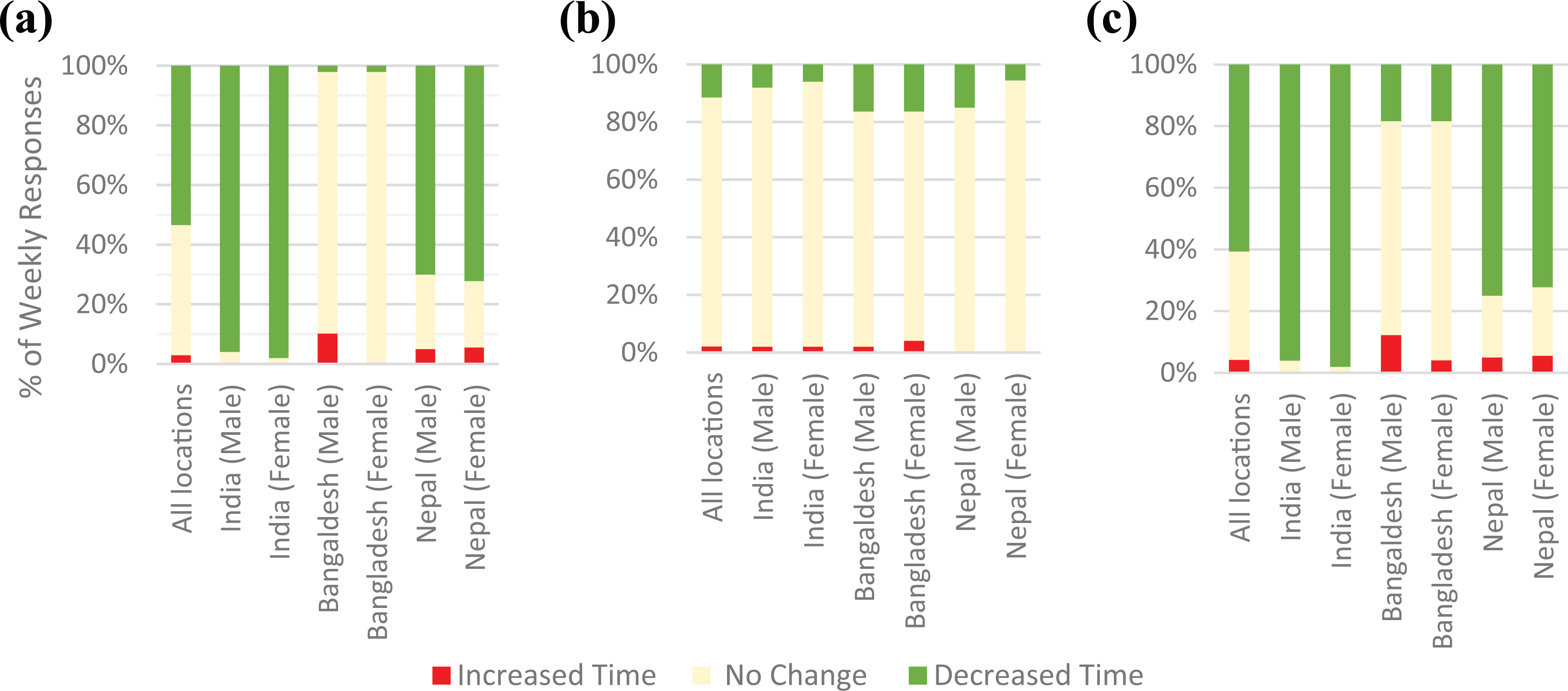
Time related outcome of ZT use compared to conventional systems.
Overall, the average total time spent weeding across all respondents reduced from 51.3 hours under CT to 7.7 hours under ZT in the first 5 weeks (a reduction of 85%). However, the amount of time saved varied greatly with the least benefit in Bangladesh where weeding time was already lower in conventional fields (with a reduction from 5.7 hours with CT to 3.1 hours with ZT), and the most in wheat systems in India (with a reduction from 131.7 hours with CT to 13.6 hours with ZT). Further analysis defined two separate scenarios: that of Bangladesh, and that of India and Nepal where: [1] the majority of weeding activities are supervisory in Bangladesh as opposed to personal weeding activities in India and Nepal; and [2] the time spent weeding being already comparatively low in Bangladesh in CT systems as opposed to India and Nepal (Figure 2).
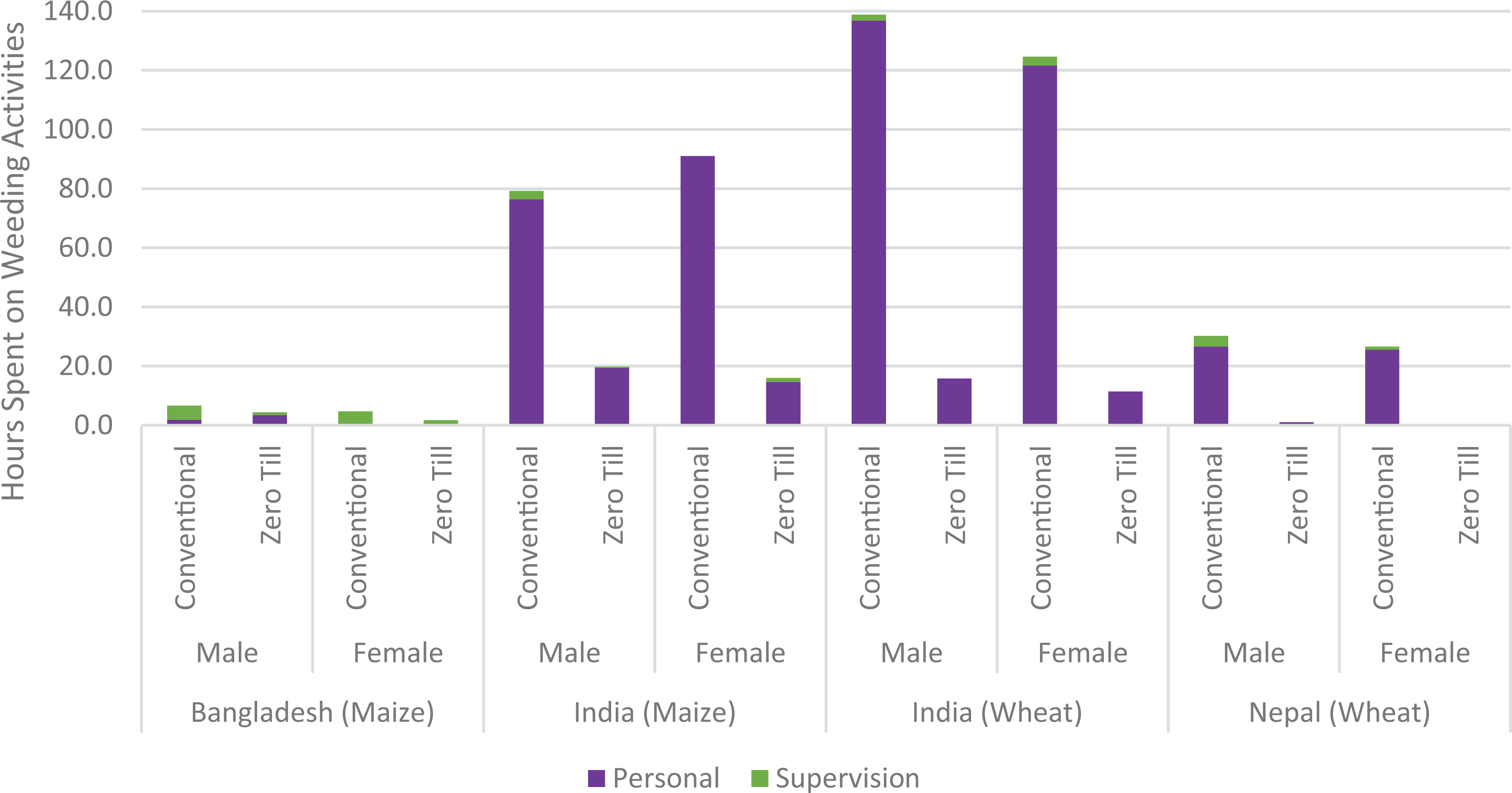
Comparison of total hours spent on weeding related activities in first 5 weeks post planting.
In Bangladesh, there was a transition for males from supervisory to personal weeding roles, though overall time spent on weeding activities still decreased. For Bangladeshi females, personal weeding time was eliminated and there was also a reduction in supervision time. Conversely, the scale of time savings and type of weed activities that dominated were vastly different in Nepal and India. In India and Nepal, personal weeding time (the majority of weeding time spent) was substantially reduced, and especially so in India. Savings were above 84% in all but one respondent, and in all cases, proportionally females saved more time than their male spouses though ZT implementation. In wheat systems, personal weeding time was eliminated for both male and female farmers.
This was confirmed by the perception data provided by respondents, where 94% of the 350 comparisons respondents made between CT and ZT recorded the same responsibility. Bangladesh respondents were nearly unanimous in indicating no changes in roles, both supervisory and personally weeding with the transition from CT to ZT. This suggests no inequitable reallocation of roles between male and female spouses, and especially no indication of reallocation of tasks from males to females.
Weed identification skills
Based on the scientific name of the identified weeds, substantial differences in weed identification skills between male and female respondents were evident, and males and females tended to identify different weeds in the same ZT fields. Of the 868 weeds submitted, 651 weed incidents were identified (i.e. an incident meaning either spouse identified a weed in a particular week), yet only 28% of weed incidents were identified by both spouses (Figure 3). This divergence in identification skills was more substantial in maize than wheat locations, and in Bangladesh compared to other locations investigated. In Nepal, males appear to have a higher likelihood of identifying weeds their spouse did not, but this gendered trend did not emerge in other locations.
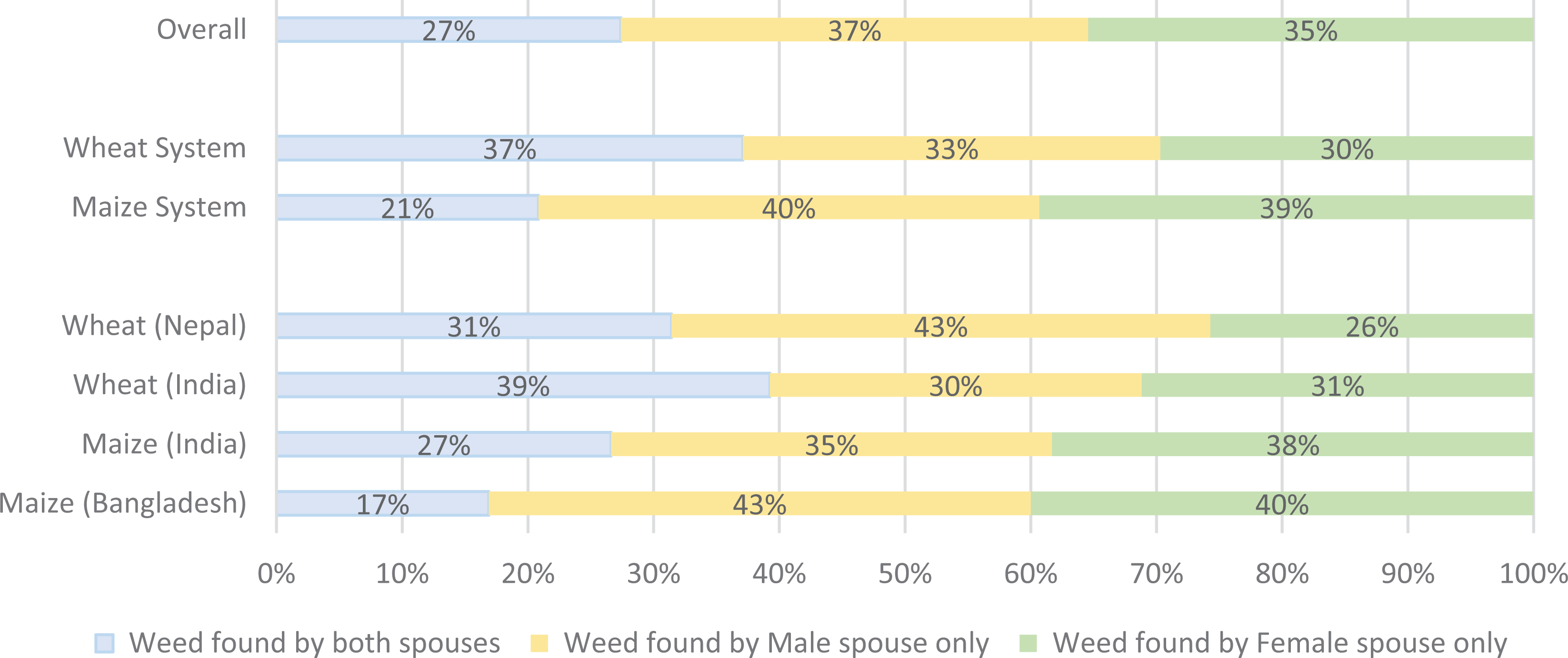
Identification patterns based on if both or only one spouse identified the presence of a weed in their ZT field. A higher proportion of plants found by both spouses (blue) indicated a higher common identification of the weeds present in their ZT field.
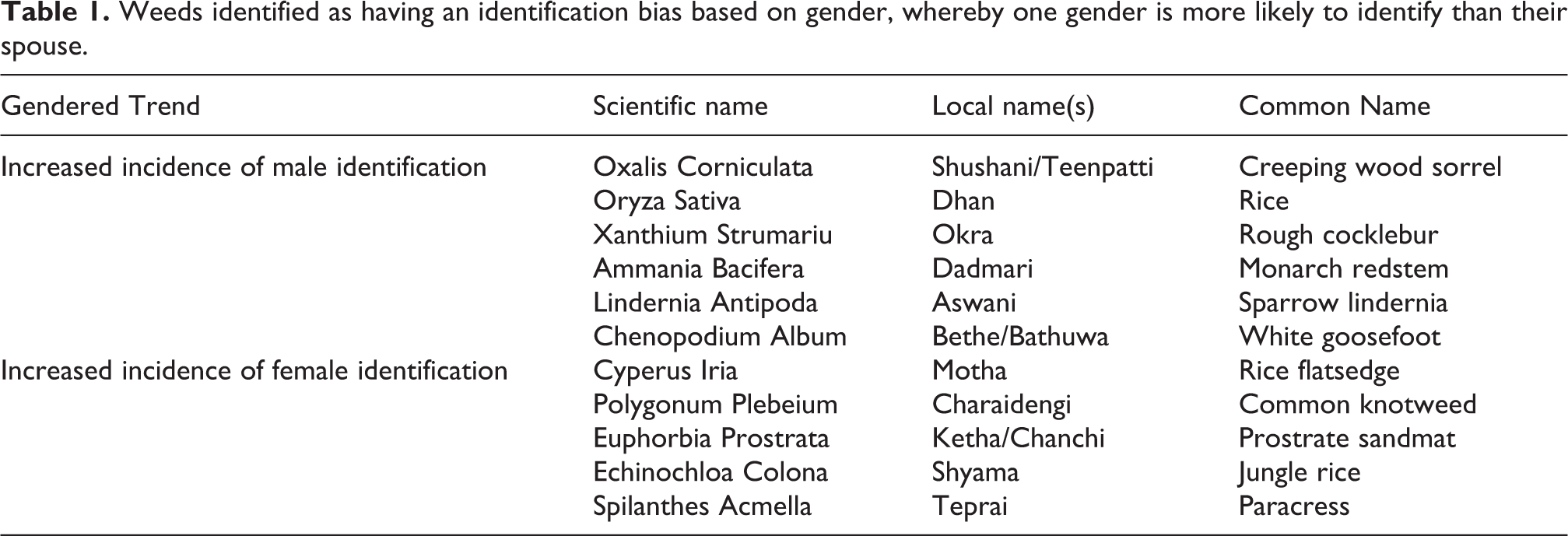
In terms of weed identification, there was a tendency for specific weeds to be identified by specific gender. Table 1 highlights the weeds found to have a higher rate of identification by a particular gender.
Weeds identified as having an identification bias based on gender, whereby one gender is more likely to identify than their spouse.
Attribution of local names to identified weeds
Respondents were not able to ascribe a local name to 27% of all identified weeds, suggesting a substantial knowledge gap in weed identification. This knowledge gap was more evident in maize (33%) as opposed to wheat (21%), and substantially higher in Bangladesh (37%) than other locations (24%).
In terms of gendered incidence of an inability to nominate a local name, there was no substantial difference between spouses (Male 29% vs. Female 25%). However, there was a noticeable gap between genders in Nepal (Male 18% to Female 35%), meaning females were twice as likely not to attribute a local name than their male spouses. The other three locations had minimal difference notable by gender in the inability to nominate a local name (Figure 4). This lack of overall understanding of weeds within their ZT plots is reinforced by 11% of responses being a dual identification (Where respondent identified two different weeds, though the expert agronomist identified it as the same weed). This highlights overall limited knowledge held by respondents in identification of weeds.
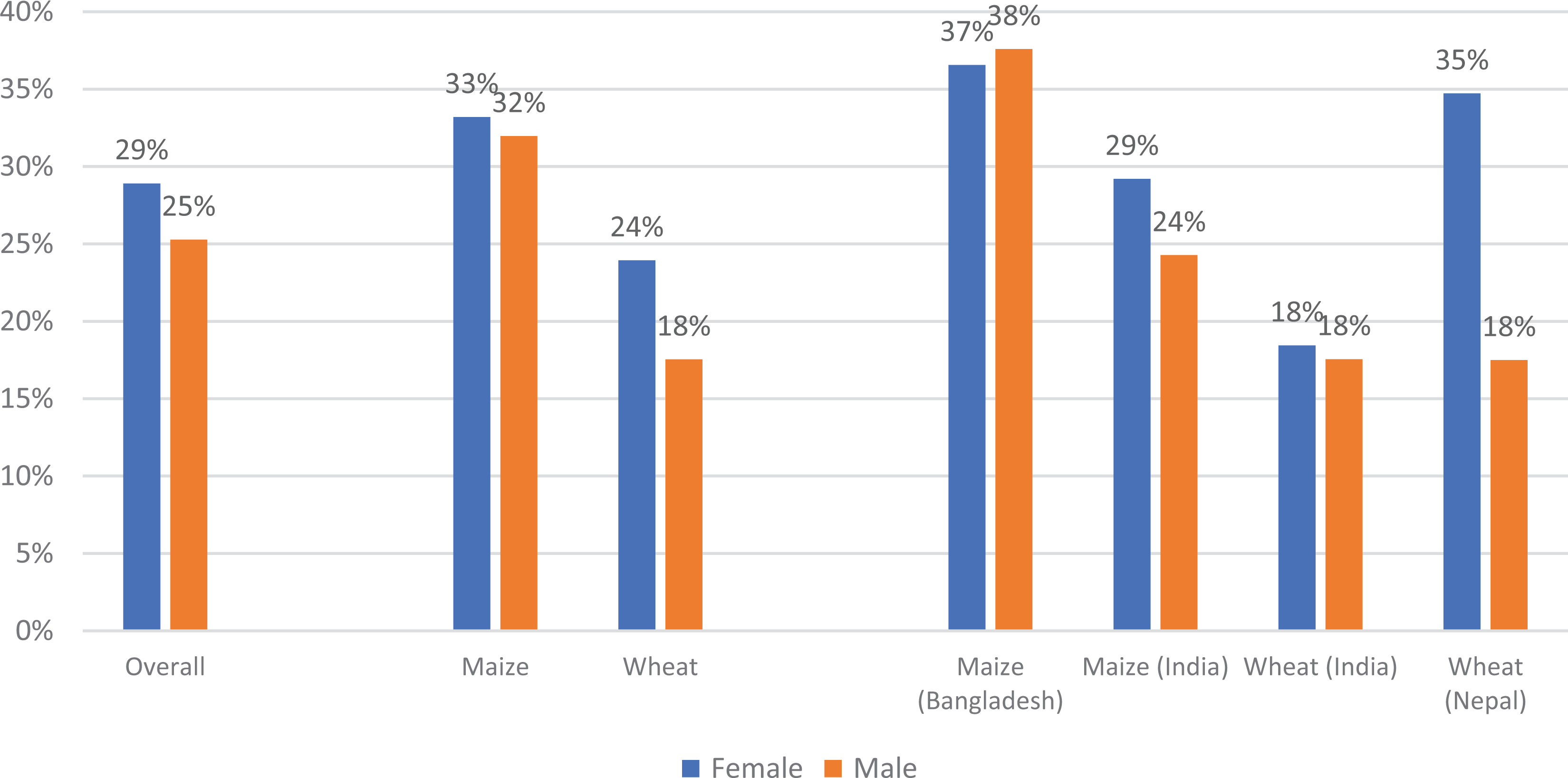
Incidence of an inability to nominate a local name to identified weeds, by gender.
An analysis of whether males and females called identified weeds by the same names indicated only limited variation between spouses. Spouses identified weeds by the same local name in 77% of cases. This did not vary across locations or by crop (all results were between 72% and 78%). When there was a difference in ascribed names, in 70% of cases both spouses were not able to identify correctly with an agronomist identification, suggesting that there is not a gendered divide in terms of knowledge on weeds in ZT systems.
Knowledge of herbicide use decisions
In terms of herbicide application, there was no difference between spouses in relation to the understanding of what chemicals were being sprayed in the first 5 weeks post planting in a ZT field, despite males almost solely having the role of herbicide application when this task was not contracted outside the household. Only one respondent in India in one instance identified a different application compared to their spouse, indicating that across locations knowledge tends to be equally held on herbicide use between spouses.
Perception of changed weed incidence
In Bangladesh 56% of weekly responses identified a reduction in the presence of particular weeds, yet no respondent identified these weeds as useful for other purposes. In India and Bangladesh, both male and female respondents were nearly unanimous that ZT did not lead to a loss of any useful weeds. Conversely, respondents were also asked to identify if the weeds they identified in their ZT fields were new because of ZT. India and Nepal were unanimous in perception that ZT did not lead to emergence of new weeds, while Bangladesh again had 68% of entries indicating new weeds. However, there was no special management required for these ‘new’ weeds. Finally, respondents were asked if identified weeds were becoming more common due to ZT systems, with <1% of entries indicating a particular weed has become more common due to ZT. This indicated that there was no noticeable change in weed populations experienced by respondents in changing from CT to ZT systems, likely also a reflection of nonselective herbicide use.
Discussion
Is changed weed management practice an inhibitor of the uptake of ZT?
Analysis of respondent’s perception and comparative estimation of time spent on weeding activities highlights overwhelmingly that respondents benefited from the implementation of ZT, regardless of their gender. While this research has a limited sample size and is targeted in specific communities, it does appear to contradict the common narrative that has emerged around weed management as a major constraint to the out scaling of ZT and CASI in South Asia (e.g. Bajwa, 2014; Poddar et al., 2017). This is most likely related to herbicide availability and normalisation of herbicide use in the target communities (Valbuena et al., 2012). Giller et al. (2009) argued that weeds are the ‘Achilles heel of CA’ due in part to a greater reliance on herbicides. Yet in a global analysis, Erenstein et al., (2012) argue that in more extensive systems such as in South Asia where labour constraints are also stronger and herbicides are more available and normalised, this is likely to be less problematic. It would appear that the respondents in this study tended to see available herbicide as a solution to their labour constraints and this is reinforced though their perceptions provided, which may also be a reflection of project support leading to improved connectivity to herbicide sources.
Does ZT shift labour burden from men to women?
South Asia has multiple levels of complexity in understanding the potential impact of interventions, based on social hierarchy and gender norms (Sen et al., 2019), and these results should be considered in this context. This is particularly evident in comparisons of Bangladesh to India and Nepal, where female participation in weeding was limited. Despite this, females in Muslim households in India still participated in weeding activities, consistent with the implications of labour constraints and class (Pattnaik and Lahiri-Dutt, 2020). Within this lens, an overall picture emerged that ZT did not appear to reinforce or deepen female burden. This is contradictory to the situation of ZT adding burden to females, particularly in sub-Saharan Africa (e.g. Baudron et al., 2009; Farnworth et al., 2016). Our respondents indicate that ZT saves substantial time in India and Nepal, and on balance more so for women than their male spouse. Females themselves did not identify additional roles or responsibilities or time contribution to weeding activities. While these results may not be extrapolated more broadly, it does provide an early indication that ZT uptake in the investigated communities may.
Does practicing ZT lead to a knowledge transfer that disempowers females?
Regardless of gender, respondents have overall limited understanding of the weeds that were in their ZT fields. Respondents often dually identified the same weed with different local names and were often unable to provide names for identified weeds. This indicates an overall information gap in how to manage weeds, at least partly likely to be related to the use of non-selective herbicides amongst a complex range of selective herbicide options (Singh et al., 2016). This was more strongly prevalent in maize systems, and in Bangladesh which likely reflects the relatively recent introduction of maize as compared to wheat in the region, as well as a tendency for weed management activities in Bangladesh to be supervisory, as compared to India and Nepal were personal weeding dominates. The results do indicate a need to increase extension efforts, particularly for maize but also for wheat considering the substantial knowledge gaps prevalent in both locations. There are currently no studies know to the authors that have explored farmer knowledge on herbicides in the EGP.
While gender did appear important to weed identification (particularly as males and females tended to identify different weeds in the same fields as their spouses), overall knowledge was limited and spouses did not tend to diverge in their knowledge, both in terms of weed identification and herbicide application. Where both identified a weed, there tended to be a common understanding of that weed, confirming similar levels of understanding and no gendered knowledge divide. Likewise, knowledge of what herbicides were used to control weeds was common, despite spraying being the domain of males. This is likely explained as chemicals tend to be mixed at the homestead with both spouses working together in the mixing process. This is important to ensure that all involved in weeding understand the chemicals sprayed in a field from a human health point of view. Overall, there appears not to be transfer in knowledge or ownership of weeding activities though ZT. While the study is limited in location and period of investigation, it does continue to suggest that ZT may provide an inclusive pathway to agricultural development in the EGP, though requires more extensive exploration for certainty.
Conclusions
This targeted and in-depth analysis indicates that ZT as part of a CASI based land preparation system can have substantial benefits in time saving in India and Nepal, and that in all study locations there was no indication of increasing burden to female spouses or creation of a gendered knowledge divide. This provides a first step towards understanding the inclusivity of ZT in the context of labour burden, of which there is currently little available literature for the EGP. These findings do indicate a potential divergence from other geographies that now warrants more in-depth analysis. It also highlights that extension efforts should target herbicide use as it becomes more normalised and will need to be provided to both male and female community members despite spraying being in the male domain in South Asia. The complex social and gender contexts of South Asia, paired with localised investigation mean that this study is a first step towards greater understanding of the inclusiveness of ZT as a development pathway.
Footnotes
Acknowledgements
Thanks go to those who assisted in data collection, including four enumerators (Prasanna Shrestha, Anup Kumar Gosh, Shyamal Kumar Das and Mijanur Rahaman), and Hom Gartaula for his review as part of the supporting project. The 48 respondents that gave their time for this research are also thanked.
Author contributions
The study conception and design was led by Brendan Brown with support of Emma Karki and Anjana Chaudhary. Material preparation, data collection and analysis were performed by Anjana Chaudhary and Emma Karki. Analysis was led by Brendan Brown with inputs from all authors. The first draft of the manuscript was written by Brendan Brown and all authors commented on previous versions of the manuscript. All authors read and approved the final manuscript.
Data availability statement
Anonymized Data can be made available on reasonable request.
Declaration of conflicting interests
The author(s) declared no potential conflicts of interest with respect to the research, authorship, and/or publication of this article.
Ethical approval
This research was passed by CIMMYT internal review ethics board and approved as low risk research (IREC-2019.010)
Funding
The author(s) declared the following potential conflicts of interest with respect to the research, authorship, and/or publication of this article: This research is funded by the Australian Centre for International Research via two projects (CSE/2011/077 and WAC/2018/221).

Participant consent statement
All participants obtained training as part of the consent process and written consent was obtained prior to participation.