




Abstract
Staying connected with a person who has died is a common phenomenon in bereavement, generally referred to as continuing bonds (CB). This can take multitudinous forms, a novelty being the utilisation of social media to strengthen the connection. This qualitative meta-synthesis collated research on digital CB to identify themes to help us develop an overarching understanding of how digital platforms are used to express CB and what impact this may have. A systematic search of four relevant databases (PubMed, PsycInfo, CINAHL and Web of Science) was conducted. Papers were exported to EndNote for screening; ultimately, seven papers were selected for thematic analysis. Five main themes were identified: Broadcast grief, Immortalized in tech, Reachable entity, Collective grief and Revolutionised grief. The included papers clarified reasons for the growing interest in sharing grief digitally, such as affirming relationships and the co-constructed maintenance of identity. These findings can inform modernisation of grief interventions.
Introduction
The loss of a loved one can cause unimaginable pain and often leaves those who remain with a desire to maintain contact with the person who died. Recent literature suggests that between 30 and 40% of widows engage in some form of after-death connection (Penberthy et al., 2023), whilst Foster et al. (2011) found that 97% of bereaved parents participated in meaningful bonds with their deceased child. The maintenance of the relationship with the deceased is often framed as continuing bonds (CB), a perspective originally presented by Klass et al. (1996) and further developed by Klass and Steffen (2017).
CB are multi-dimensional ongoing relationships with the deceased that aim to sustain a connection through communication, actions or a conscious belief (Klass et al., 1996; Root & Exline, 2014) as well as socially through shared activities that honour the deceased. CB can be demonstrated by the re-ownership of the deceased’s belongings, such as saving meaningful keepsakes (Klass et al., 1996), or through altruistic behaviours that respect the deceased’s legacy, such as setting up charities or memorials in their honour (Meert et al., 2005). In addition, this may include the awareness of the deceased’s influence on the bereaved’s present life such as adopting values and morals held by the deceased (Klass, 1993). Further, CB can manifest via a believed and/or felt reciprocal interaction where the deceased’s presence is sensed (Keen et al., 2013; Nowatzki & Kalischuk, 2009; Steffen & Coyle, 2011). Moreover, it has been recognised that the use of digital platforms to maintain the connection can be classified as CB (Bailey et al., 2015; Irwin, 2015; Kasket, 2017).
There is a growing qualitative literature on digital CB expressions, suggesting a rise in popularity for utilising digital platforms. For instance, many individuals choose to express their CB via social media platforms (SMP), personal blogs or other digital spaces (Kasket, 2012). Furthermore, the popularity of utilising digital platforms has grown immensely due to online memorialisation that can be accessed easily and remain without decay (Bailey et al., 2015). Equally, figures reveal there is a staggering number of memorial pages of the deceased’s once active accounts (Andrews, 2010), and there seems to be an increased appearance of digital postings, attempting to communicate, honour or reminisce to memorialise the deceased on SMP (Irwin, 2015; She et al., 2021). Similarly, Pennington (2013) noted many mourners will visit the Facebook page of the deceased to either share memories, engage in direct messaging or comment on previously posted pictures on the departed’s feed.
There have been several reviews on CB expression which offer varied findings on the promotion of adjustment to grief. While the CB model offers no presumptions that maintaining a bond with the deceased results in either successful or unsuccessful adjustment to the loss, research that has considered this, has often revealed mixed results (Stemen, 2020). To illustrate, evidence suggests that maintaining a bond with the deceased is often comforting and carries adaptive potential (Hewson et al., 2023). For example, internalized CB expression such as reminiscing and holding the belief that the deceased has had a positive impact on one’s life positively predicted posttraumatic growth (Lipp & O’Brien, 2022). Alternatively, there is evidence that CB can be associated with bereavement-related distress and complicate adaptation to loss (Field, 2008; Fraley & Shaver, 1999; Root & Exline, 2014). Similarly, evidence for CB expression via digital platforms is diverse. Researchers Williams and Merten (2009) reported salutary impacts such as increases in coping after a loss when individuals utilised SMP to continue communication with the deceased. Further, researchers Rossetto et al. (2015) suggested CB expressed via social media were associated with adaptive grief outcomes. This implies expressing CB with the departed via digital platforms may be helpful to support the emotional recovery of the bereaved (King & Carter, 2022). Conversely, Bell et al. (2015) reported the danger of reliance on the deceased’s social media profile, which could lead to an unhealthy obsession with the deceased. This result was echoed by Lipp and O’Brien (2022), who found that prolonged engagement with the deceased by posting messages or photos to digital spaces fostered intense emotions that impeded grief adjustment (Scholtes & Browne, 2015). However, no review has yet collated the qualitative literature on CB expression via SMP.
There is a growing body of qualitative literature on digital expressions of CB (Balk & Varga, 2017; Moore et al., 2019; Tan & Andriessen, 2021), but no meta-synthesis that has collated this knowledge has been published so far. Thus, this study aimed to address this gap in understanding and investigate how SMP are used by the bereaved during mourning according to qualitative research. Additionally, this study was interested in exploring how digital platforms facilitate CB with the deceased and what benefits, if any, this may have for grief. The results of this meta-synthesis can expand our knowledge of CB usage in digital spaces and how this contributes to the mourning process in successful or unsuccessful ways. Moreover, the findings of this paper may point to alternative technology-based grief interventions that can be utilised by clinicians working with loss and potentially associated conditions such as depression, post-traumatic stress disorder, and grief disorders as outlined in the DSM-5 (American Psychiatric Association, 2013; Melhem et al., 2013).
This research sought to address the following review question: “How do people use social media to maintain continuing bonds with those who are deceased?”. To investigate this question, two secondary queries were established: (1) How do social media facilitate the continuation of bonds with the deceased? (2) How helpful or unhelpful are digital expressions of continuing bonds for the bereaved? The secondary questions explored different features of digital expression, including both salutary and negative impacts of expressing CB online, contributing to the overall research focus.
Method
This study employed a qualitative research design, using secondary qualitative data from a range of studies on bereavement experiences. Four psychological databases were used for the systematic search, namely PsycInfo, PubMed, Web of Science, and CINAHL. The final search was conducted on February 18, 2025.
A series of search strings was developed, using appropriate Boolean terms, which were applied during the search process (Appendix A). The retrieved sources were exported and uploaded to EndNote for screening by two researchers. Two of the researchers (MK, ES) independently screened the first 50 records identified in the searches for the title and abstract screen. Inter-rater reliability was measured through Cohen’s Kappa (k) via SPSS, showing strong agreement between the two raters, k = 0.878 (95% CI, 0.75 to 1), p < .001). The remaining records were then divided between the two researchers for individual screening. Inclusion criteria required that papers were published research articles in English, used qualitative methodology entirely or partly through a mixed-methods design, involved participants who had experienced a human bereavement and that CB were the primary research focus. For the purpose of this study, CB were defined as enduring relations with the deceased, as described in the review by Root and Exline (2014).
Following the title and abstract screening, full-text screening was completed using the same procedure, with the addition of an essential requirement that the full-text papers were accessible in PDF format. Inter-rater reliability was again assessed using Cohen’s Kappa (k) before the remaining papers were divided for individual screening, yielding strong agreement between raters, k = 0.896 (95% CI, 0.77 to 1), p < .001).
Through independent screening of the remaining papers, it became apparent that there were many papers that specifically focused on the digital expression of CB, and it was decided to refine the focus of this study to expressions of CB via social media. Post-hoc screening criteria were as follows: • The research investigated digital CB. • CB expressions involved communicative social media platforms (Twitter, Instagram, Facebook and Snapchat). • Participants described how social media were used during mourning and/or observations of expressions on SMP.
Characteristics of Included Papers That met the inclusion Criteria
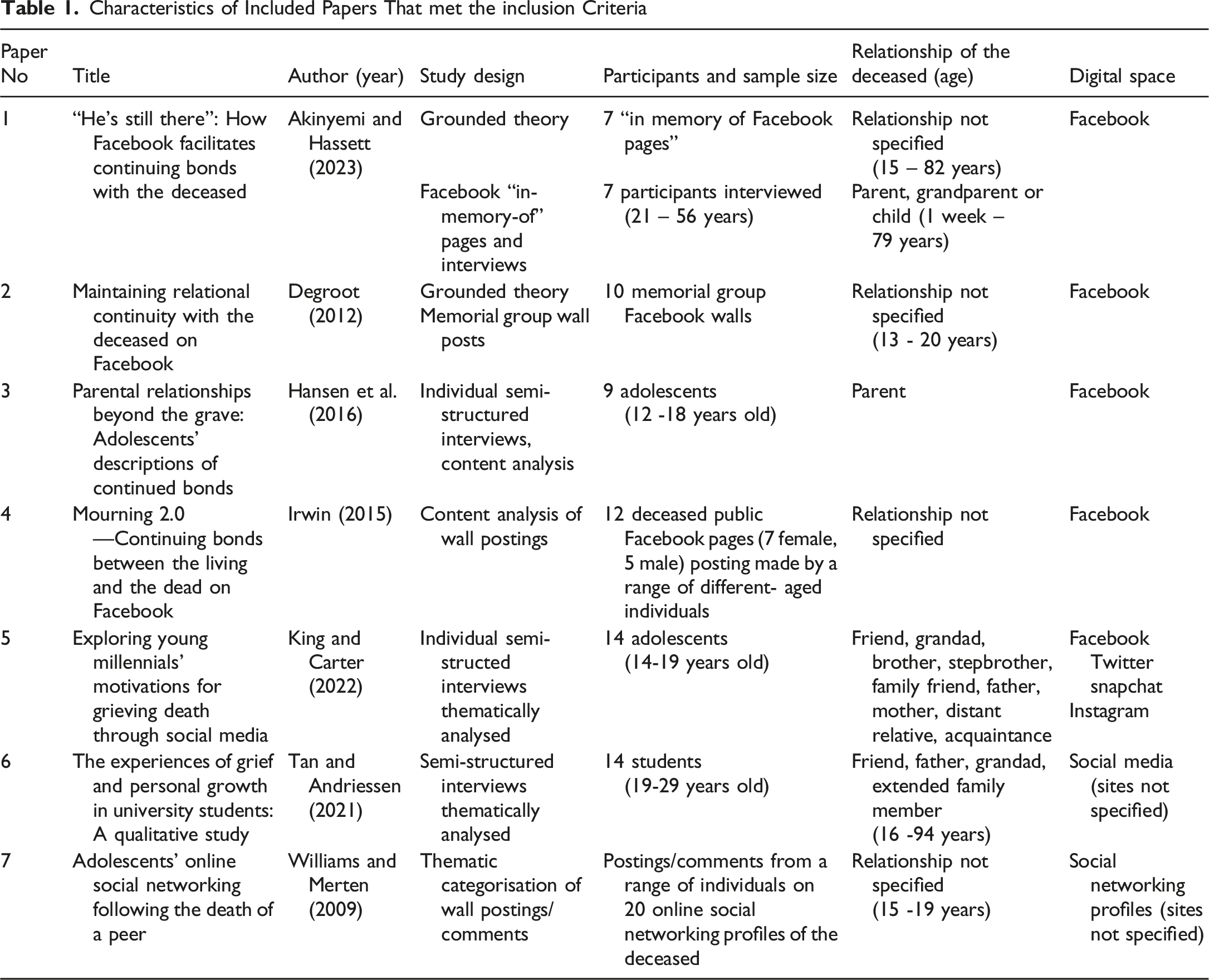
Two researchers screened papers jointly until a Cohen Kappa (k) > .80 was achieved at all stages of the screening to ensure there was a sufficient level of agreement on the papers that were included/excluded. If disagreements arose or the Cohen Kappa was < .80, further discussions were held until resolution was reached, and an additional subset of papers were then jointly screened until it fulfilled the > .80 Cohen Kappa threshold. The quality of the final papers was assessed prior to data analysis using the Critical Appraisal Skills Programme (CASP) criteria (Appendix B). The CASP checklist was completed following the criteria presented, and any discrepancies in a paper’s quality were discussed with a third researcher (KK). No papers were excluded based on CASP criteria, although comments regarding the relationship between the lead researcher and participants were discussed to obtain clarification.
Figure 1 illustrates this procedure via a PRISMA flow chart, and the final table of included papers can be found in Appendix C. PRISMA Flow Chart Illustrating the Selection and Exclusion of Papers at Each Stage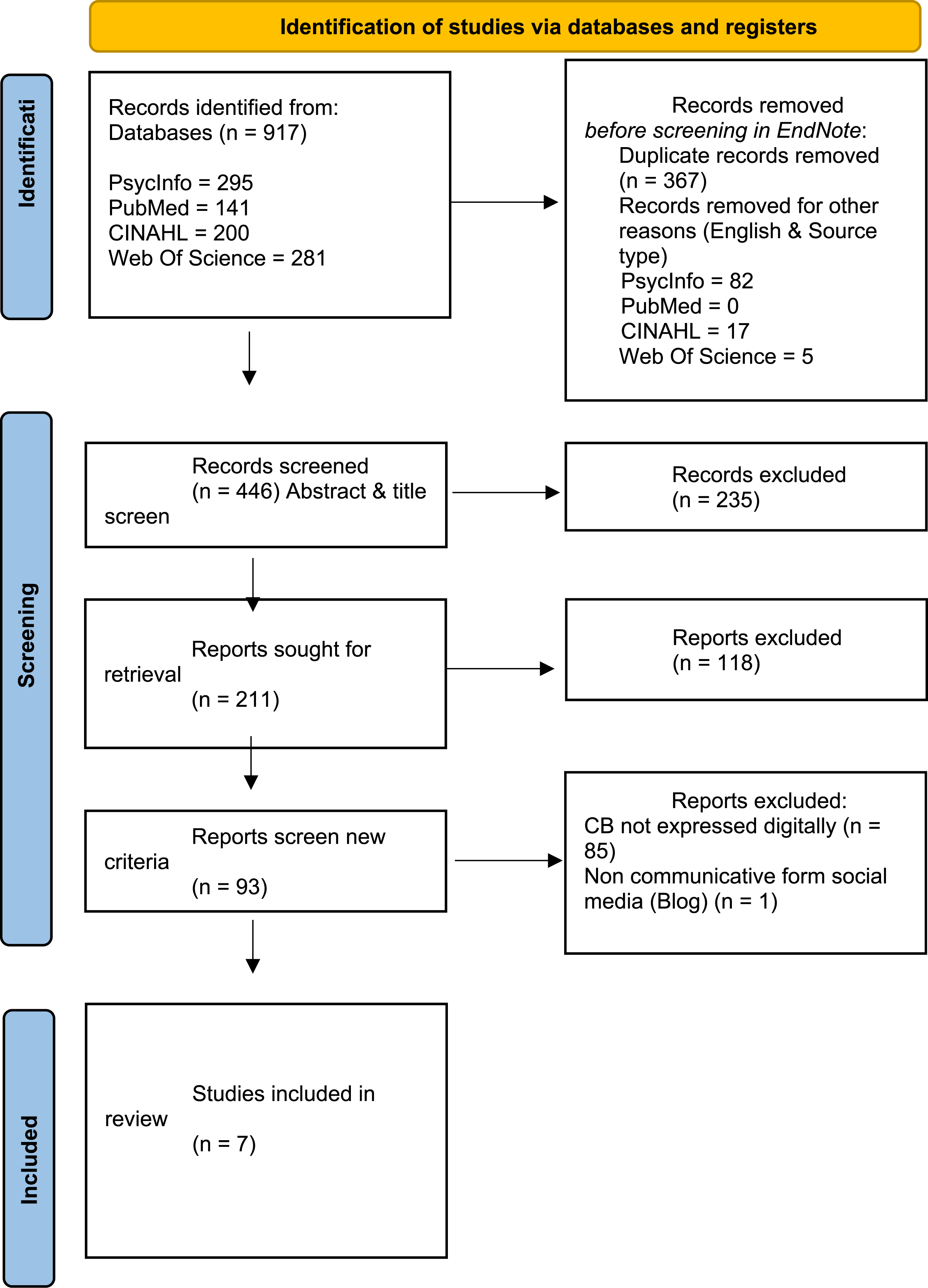
Synthesis
To our knowledge, this is the first meta-synthesis of studies exploring how digital platforms are used to express CB and how this may impact the bereaved.
A qualitative meta-synthesis was conducted using Thomas and Harden’s (2008) thematic synthesis technique to ensure high quality findings and a replicable analysis. This methodological technique enables researchers to yield novel interpretations of qualitative data through meta-thematic synthesis (Bartoş & Langdridge, 2019; Harden et al., 2006; Hossain et al., 2017). In particular, the approach by Thomas and Harden (2008) preserves the founding principles of systematic reviewing without sacrificing the richness derived from the qualitative findings. These structured stages allow for the synthesis and integration of multiple qualitative findings, advancing primary results to produce novel interpretations (Thomas & Harden, 2008). Importantly, Thomas and Harden (2008) describe “going beyond” the initial concepts as an essential distinguishing feature of this kind of synthesis (Britten et al., 2002). In accordance with Thomas and Harden’s (2008) thematic approach to a meta-synthesis, the included papers were converted into digital formats appropriate for NVivo 12, a qualitative data analysis and management software (QSR International Pty Ltd., 2020). All included studies had a combination of participants’ quotes, digital expressions taken directly from social media pages and authors’ interpretations. If these appeared in the “Results” or “Findings” sections of the paper, they were transcribed verbatim and uploaded into NVivo 12 (QSR International Pty Ltd., 2020). Extensive time was taken by the researchers (MP, ES) to familiarise themselves with the data by re-reading the results and findings sections before generating any codes. As outlined by Thomas and Harden (2008), the first analytical stage involved free coding of the original data, authors’ interpretations, participants’ quotes or digital expressions, line by line to develop initial codes (MP). This open coding resulted in a bank of generated codes, generally aligned with the authors’ original findings (MP). During the second stage, descriptive themes were constructed by grouping one or more relevant codes (MP). Then the descriptive themes were organised in a hierarchical structure, which was reviewed by the second and third researcher (ES, KK), who provided feedback. Following this, analytical themes were developed that advanced initial findings and addressed the secondary review questions originally set out (MP). This was achieved by identifying commonalities across findings and discussing themes in depth with all researchers (MP, ES, KK).
Results
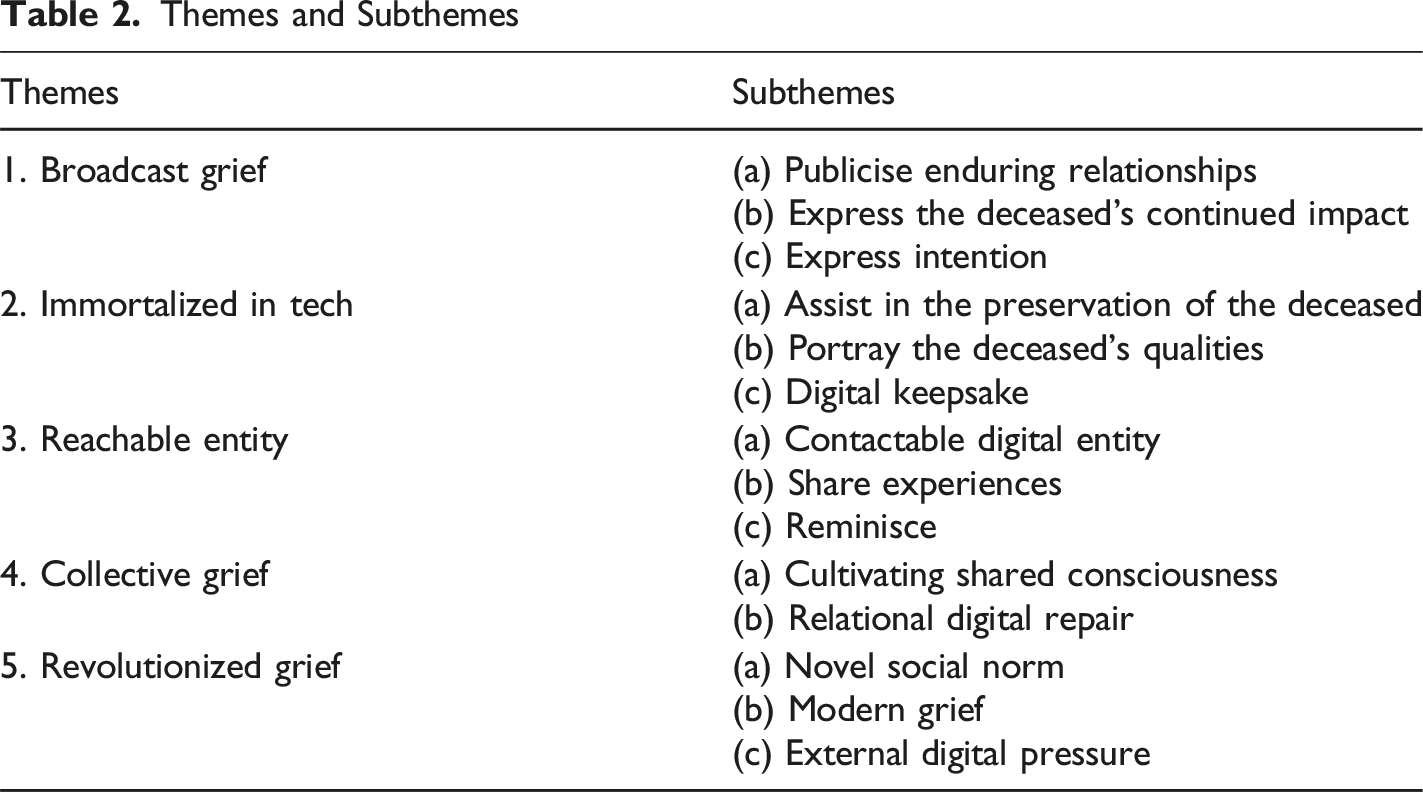
Summary of Themes
Themes and Subthemes
Data Extracts Abbreviations
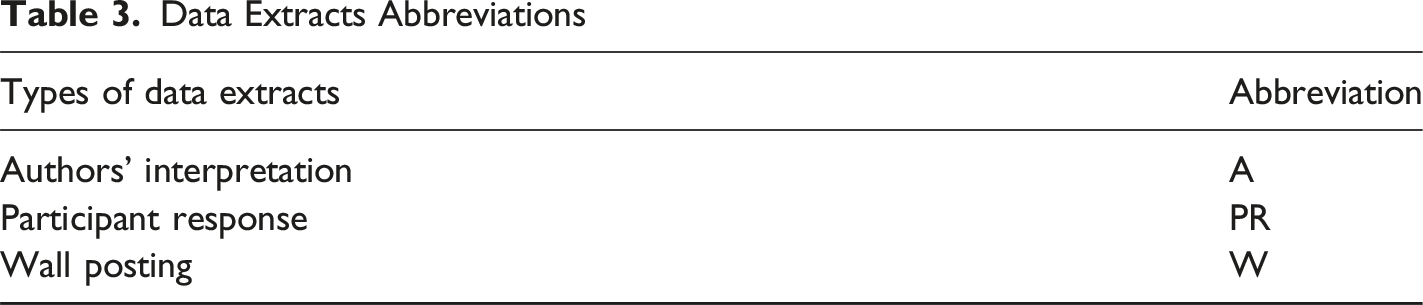
Figure 2 illustrates first exploring the personal impact of a death and how technology facilitates CB formation. Figure 2 further illustrates the effects on how distal networks are impacted such as one’s social circle and wider social constructs such as societal perceptions of grief. Thus, the following analysis is presented in line with Figure 2. Narrative of Analysis Section. Note. Figure 2 illustrates the ripple effect of bereavement across wider networks, with the black text representing these broader impacts. The white text highlights the main themes, which are discussed sequentially in the analysis section. The following analysis is presented in line with Figure 1, first exploring the personal impact of a death and how technology facilitates CB formation. This is followed by a discussion of the effects on how distal networks are impacted such as one’s social circle and wider social constructs such as societal perceptions of grief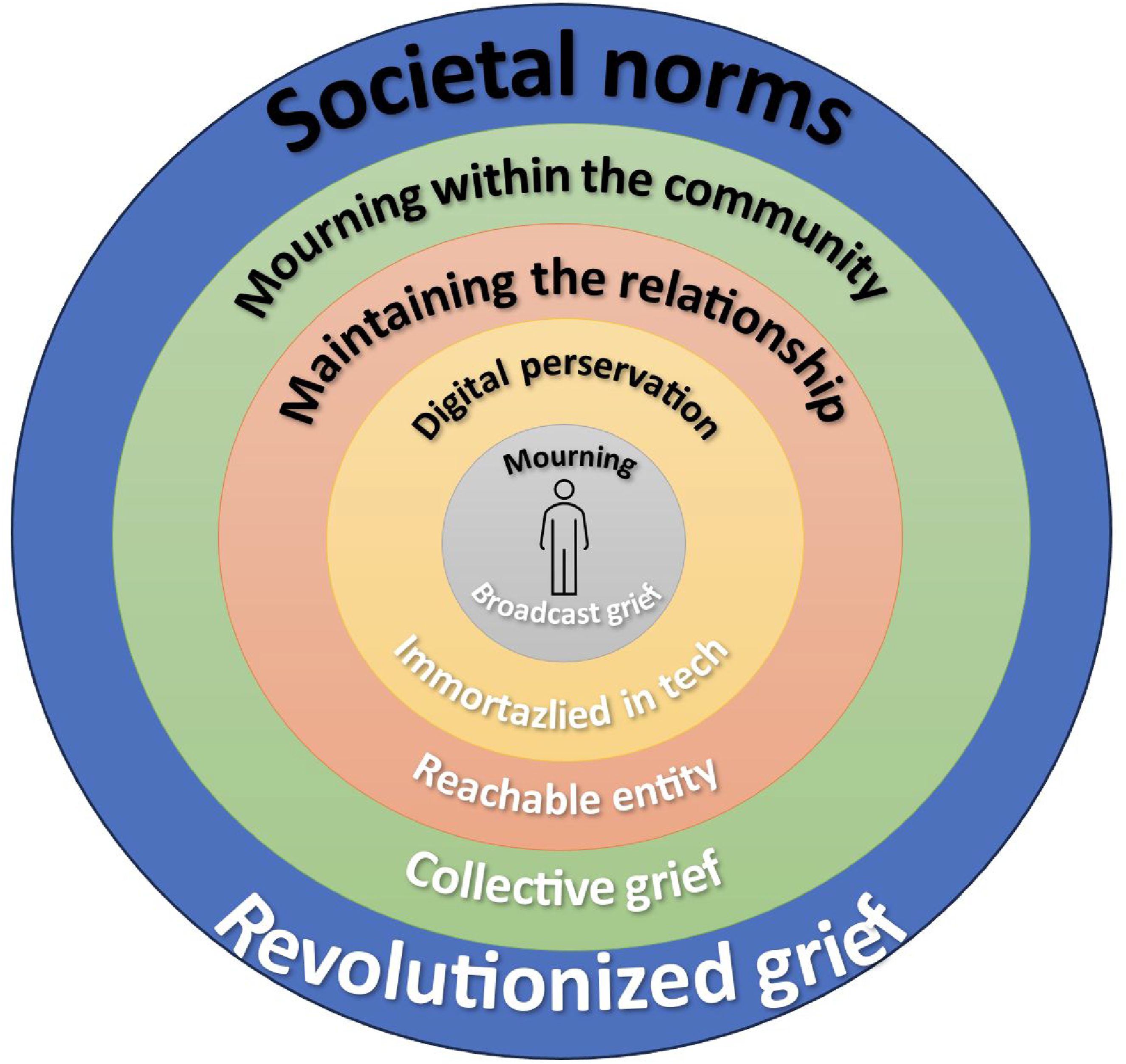
Analysis
Broadcast Grief
Most papers described SMP as providing users with a podium to broadcast their grief and bring the deceased to the attention of others. Consequently, grievers were provided a digital space to share their mourning, sustaining the deceased’s presence within the wider community. These public acts of remembrance can foster an enduring social identity of the deceased, which aligns with the continuing bonds model’s view that ongoing relational presence can be perpetuated internally and socially. This relates to the first sub-theme, Publicise enduring relationships. Extracts also revealed support for the sub-theme Express the deceased’s continued impact, showing that users shared how they are still influenced by the bereaved beyond the grave. Further, a common pattern across online posts was the airing of unfiltered wishes, reflected in the sub-theme Express intention, supported by users’ preference to publicise grief online, claiming they relish the freedom to post without restrictions (Walter, 2015).
Publicise Enduring Relationships
SMP enabled mourners to announce their ongoing association to the departed within the digital presence of their surrounding community. The act of typing out one’s sentiments and digitally publishing them facilitated positive responses internally, as users could project any pent-up emotions digitally. Additionally, this served the continuation of the bond, as emotions were being shared in a social digital context in which the audience could affirm the ongoing relationship. “the way of [saying] I miss you Dad, I love you Dad, erm and instead of just sort of saying it or thinking it, you share it on Facebook” (PR, pp-629, 1)
The act of articulating one’s emotions reflects how continuing bonds persist within the digital community. The quote above suggests the user felt compelled not only to affirm an eternal connection with the deceased but also to broadcast this bond publicly. This can be seen as the user aiming to address both the deceased and the wider digital audience through SMP. “I felt like the tiniest bit better just to know that I'm venting it out just to not keep it all in me even..” (PR, pp-573, 5) “I just find it hard to say my feeling to people and so social media was easier because I didn’t need to actually tell people face to face how I felt” (PR, pp-573, 5)
Furthermore, opting to express oneself digitally was recognised by most participants as “easier” than verbally communicating the extent of their emotions to others. It is well known that technology has altered how we communicate, and a growing preference to communicate via digital outlets has been observed (Gapsiso & Wilson, 2015). As highlighted by King and Carter (2022), SMP are often viewed as a diary or journal in which it is acceptable to disclose candid emotions.
Express the Deceased’s Continued Impact
Commonly, the bereaved would dedicate wall postings on SMP to air the deceased’s ongoing influence. These public declarations in the digital realm signify to other users and the departed that, irrespective of their physical absence, the deceased remain prominent within their lives. This public dialogue reflects the maintenance of a relationship, as the departed are still influential beyond the grave (Hewson et al., 2023). “I miss you & you are always still in my prayers and thoughts…”(W, pp-82, 7) “you are on my mind again tonight” (W, pp-138 , 4)
Additionally, some responses were in appreciation of the deceased’s continued impact and confirmation that they are still very much within their thoughts. This suggests SMP were utilised as an outlet for the bereaved to reinforce the notion that the deceased continues to influence them positively. “thank you. thank you for everything you’ve done for me and continue to do for me” (W, pp-137, 4) “you were in my dreams last night!!! Thanks for visiting me there!!” (W, pp-11, 2) “I think at least for me, writing to you on here. . . I want you to know that I still care about you.” (W, pp-82, 7)
The above extracts demonstrate a clear recognition of an ongoing connection that is maintained. Further, the expressions are suggestive of an attempt to reassure the departed their presence is still felt.
Express Intention
Express intention captures how the bereaved felt comfortable exposing their intense emotional impulses to reconnect digitally. Regularly, these emotive postings divulged the emotional pull of the bereaved, signalling once private wishes can now be openly expressed without fear of judgement (Layne et al., 2002). This longing for the deceased, which is usually highly individualised and kept private, was encouraged by SMP, as they seem to entice mourners to share their wishes for emotional closeness beyond death. What was once a solitary act has become collective action broadcast to other users. “Social media appears to facilitate this expression of love and care towards the deceased” (A, pp-572, 5) “I wish I could have said my last goodbyes” (W, pp-10, 2) “I just wish I could see you one more time to tell you how much you mean to me and you could just hold me one last time.” (W, pp-81 , 7)
Notably, these desires are transparently expressed across SMP, despite grievers previously being reluctant to share them for fear of being pathologized (Lindemann, 1944).
Immortalized in Tech
A mutual point raised across papers was that technology helped to preserve the deceased by maintaining the non-physical aspects of their being. Thus, the sub-theme Assist in the preservation of the deceased was developed. According to Cannelli and Musso (2022), social media profiles of the deceased enabled a digital archive that could be revisited by grievers, who found it meaningful to preserve a loved one’s entity. Additionally, mourners shared details about the deceased’s character and regarded their memorialised profiles and content as digital mementos. These findings are represented by the sub-themes Portray the deceased’s qualities and Digital keepsake. Therefore, SMP can be seen as partaking in a modern mummification process which enables the departed’s entity to be immortalised in the digital realm.
Assist in the Preservation of the Deceased
Some grievers noted that SMP aided in the digital preservation of the deceased by allowing unrestricted access to their online archive. This type of information can be viewed and interacted with, regardless of the profile user’s life status. “If you go on his Facebook page, he has a photo album of a picture of every celebrity he had met, and the caption is a story of what had happened” (PR, pp −360, 3) “And he told us, well, he did that with his Facebook so we could go on there and kind of [see] what his earlier life was like before.” (PR, pp-360, 3) “Still with us” (PR, pp - 631, 1) “it keeps him alive” (PR, pp - 631, 1)
Besides the above extracts showing SMP’s ability to preserve an individual’s legacy, it further demonstrates the bereaved intentionally built digital archives, with the hope that others would explore them to understand their history. Further, extracts suggest individuals can go beyond just reading a memory, almost re-experiencing the deceased’s past as they ‘kind of see’ it, especially when visual elements like pictures helped to enhance these memories and deepen the sense of connection.
Portray the Deceased’s Qualities
Repeatedly, extracts revealed that the bereaved chose to highlight personal qualities of the deceased to showcase positive traits they held. Usually, the postings demonstrated qualities that the bereaved loved about the deceased or had once cared for. Actively remembering the deceased’s positive qualities may help to strengthen the accessibility to that individual. This process can solidify and reinforce the relationship even after death. “You loved life, your friends, your family, your dog, your car.” (W, pp-80, 7) “while others explained to the deceased what they missed or loved about him or her.” (A, pp-138, 4)
Interestingly, some responses referred to feeling compelled, for example through stating ‘I just felt I had to’, suggesting there was some sort of expectation to post about the deceased’s positive qualities. “I just felt like I had to share her and how nice she was and that she was a nice person” (PR, pp-573, 5)
This person may have felt obligated to continue representing the deceased in a positive light, despite their physical absence. Potentially, this could suggest a perceived responsibility by the bereaved to post promotional content about the departed. Subsequently, the departed may possibly benefit from this inflation of their character.
Digital Keepsake
For many people, opting to utilise an individual’s social media profile as a ‘keepsake’ helped facilitate a relationship with the departed, despite the lack of physical tangibility. Customarily, grievers retained special items once owned by the deceased, sometimes referred to as ‘linking objects’, which maintain the presence of the departed and represent a CB (Field, 2006). To illustrate, the bereaved may keep a piece of jewellery belonging to the departed; however, evidence suggests that individuals are now integrating alternative digital formats as mementos to continue a bond (Hansen et al., 2016). For instance, different digital materials can be assigned special meaning and be used as mementos by the bereaved. “Then I Cant Help But Look At The Picture Of You That They Have Showinq Your Smile” (W, pp-136, 4) “explained they posted pictures, memories, videos and statements to continue bonds with the deceased” (A, pp-573, 5) “I love seeing people’s photo of him. I love seeing people erm sharing memories or putting something up. I mean sometimes people will share photos from 20, 30 years ago” (PR, pp-629, 1)
The above extracts suggest that grievers are not only using previously existing content, but they are also adding new material to this digital ‘memory box’. Notably, the distribution of physical personal keepsakes is usually limited to the immediate family through inheritance. However, SMP can offer an alternative, enabling the sharing of digital personified images, creative achievements and personal stories with multiple users.
Reachable Entity
Across the papers, it was evident that SMP provided a substitute entity which felt reachable for grievers. Repeatedly, grievers opted to directly address the dead which led to the development of the sub-theme Contactable entity. Furthermore, the majority of online interactions sustained communication through disclosing personal or joint experiences and recalling past events involving the deceased. Thus, to reflect subsequent findings, the following sub-themes were created: Share experiences and Reminisce. Despite the lack of physical presence, SMP act as though the deceased’s entity has been transferred, making it infinitely accessible.
Contactable Digital Entity
The directive manner used in digital posts suggests an ability to reach the departed. According to Kasket (2012), there has been a considerable increase in directive pronoun language, e.g. the use of ‘you’ to address the deceased on Facebook, compared to earlier digital “They posted notes to their friends on holidays, wishing a merry Christmas or a happy Valentines’s day.” (A, pp-11, 2) “Then I started talking about how much of a wonderful person you were. My [paper] was 6 pages long.” (W, pp-79 ,7) “‘Happy New Year [friend’s name], I’m sure you are having more fun da-da’” (PR, pp- 8, 6)
Moreover, the ability to post directly to the deceased seems to preserve the connection with the departed and to strengthen the relationship. “when you post I guess it feels like you are talking to them [...] it just feels like you are so it makes you feel closer to them” (PR, pp-574, 5) “she also spoke about writing posts in a way that was directed at her father, as a way of “contacting him” (A, pp-631, 1) “Because, I feel like writing on here is somehow going to enable my messages to get to you better.” (W, pp- 82, 7)
Thus, digital spaces provide evidence that bonds can be maintained both publicly and in private (Irwin, 2015). The above extracts suggest that typing to their beloved offers some sort of consolation, implying that their post may be acknowledged in some way.
Share Experiences
Most wall postings attempted to include the deceased in people’s current lives by discussing present day happenings. When people build connections with others, experiences are mutually shared to help develop and maintain a relationship (Student Space, n.d.). Extracts suggest that the bereaved aimed to continue this dynamic with the deceased despite the lack of physical presence (Williams & Merten, 2009). “We made it to southaven today. The first thing I did was take your urn picture and angel out.” (W, pp-139, 4) “1st period is so incredibly dull without you there. . .” (W, pp-81, 7) “i am having an INCREDIBLE summer in South Africa on a missions trip. you would love it here!” (W, pp-12, 2)
Reminisce
It was recognised across the papers that individuals used SMP to recollect past memories with the deceased. Previously, memories of the departed were shared verbally or in private thought (Root & Exline, 2014). However, SMP offer an outlet that preserves recollections, which would not suffer from the usual inconsistencies or the effects of time decay. “I commented on his last post that I think he is still a dear friend of mine who I don’t have in this life, but I have his memories in my mind” (PR, pp- 8, 6) “I still remember the first time I met you. I will always remember what you told me though, about finding the right person cuz I deserve the best!” (W, pp-82, 7) “I’ll always remember the good times we had in Cross Country, math class, fuckin around at the lunch table.” (W, pp-11, 2)
These extracts further highlight the normalisation of sharing memories of the deceased online. Thus, SMP can be seen to not only support the sharing of novel events but also intimate memories (Seyfi & Soydaş, 2017).
Collective Grief
This theme represents the social element that is fostered through collective mourning on digital platforms. Collective reminiscence may help reignite the deceased’s identity through the sharing of memories. This further strengthens a collective consciousness among the bereaved, as portrayed within users’ digital postings about past experiences with the deceased. Thus, the sub-theme Cultivating shared consciousness was created.
Additionally, the sub-theme Relational digital repair was developed from findings suggesting that mourners used SMP as an opportunity to defend or criticize the deceased’s actions. It was apparent that mourners were sharing content that represented interpersonal tension and conflict, highlighting the importance of the continued work on the relationship beyond death, allowing the deceased to be represented in a current social narrative.
Cultivating Shared Consciousness
One reason individuals utilised SMP seemed to be the desire to reignite the deceased’s identity by sharing their essence with others. This process can facilitate a collective continuation of the deceased through digital reminders of their being. Therefore, the online platform appears to help keep the deceased present in thought, fulfilling a desire for the griever. “so the reason we still do kind of post is to get people remember…to remember like who he was because obviously he was only young…a lot of his friends you know don’t really remember him” (PR, pp-574, 5)
When the bereaved choose to recollect online, their posts are not simply viewed by isolated individuals but shared within a digital community. In essence, the bereaved share posts that others can interact with, promoting the exchange of additional memories or new insights into aspects of the deceased’s identity that were previously unknown (Kasket, 2012). This action may enrich the mourner’s CB, as the relationship is transformed through alternative memories shared by other users. “When I think of you, David, I won’t think about all the times I was mean to you, or how your life ended so shortly. I’ll think about how silly you were, and how you would paint your nails hot pink because you said someone dared you” (W, pp-205, 2) “I’ll always remember the good times we had in Cross Country, math class, fuckin around at the lunch table” (W, pp-11, 2)
Relational Digital Repair
On a different note, findings suggested SMP provided an opportunity to challenge the shame associated with certain causes of death through working on the relationship publicly. Furthermore, digital spaces could act as public courtrooms where the bereaved can address and reprimand the deceased for their actions. This digital addressing powerfully signifies that the CB extends from a personal to a social realm. “I wish you could see how many people you’ve hurt. I know how alone you must have felt. I’ve been there. I tried 2 commit suicide, but I had the chance to correct my mistake.” (W, pp-80, 7) “Suicide is the most selfish thing anyone could do. . . because now everyone takes blame for something you did. Im sorry you were hurtin man. I really am. Im sorry if I ever said anything to hurt you. I cant believe your really gone. . . ” (W, pp −83 , 7)
The above extracts demonstrate that the relationship remains, while being reinforced through a digital realm. The bereaved appear to use this public forum to repair relationships as part of the development of their CB. By publicly addressing relational conflict, they can draw on the wider support of the digital audience, moving beyond an individualistic act of confiding in a journal. This aligns with Hedtke and Winslade (2004), who propose a “club membership” comparison, suggesting the deceased continue to be members of the bereaved’s relational network. Thus, deliberating on the actions of the deceased serves as a way of involving them in an enduring social narrative, while sharing complex emotions at the same time.
Revolutionised Grief
All papers supported a modernised grief movement that challenges traditional grieving practices to encompass more flexible, communal, and digital alternatives. In accordance with Walter (2007), grieving in contemporary Western society is typically privatised to individual thought or shared with only a limited number of individuals; however, through this revolution, mourners can engage in novel, shared grief practices. Furthermore, extracts suggested that sharing grief online can encourage social involvement and prompt additional expressions of CB, as reflected in the sub-theme Novel social norm. These findings suggest that revised adaptations of traditional grief practices can be made accessible via SMP, as recognised in the sub-theme Modern grief. Thus, this theme demonstrates the transformation of ingrained societal standards to more tolerant norms, facilitated through the assistance of SMP.
Conversely, some instances within this new norm caused individuals to feel pressured to conform, as demonstrated by the sub-theme External digital pressure.
Novel Social Norm
Nearly all extracts referenced a changed shared norm that was perceived as an appropriate response to a loss. The social rules that once governed grief expression have evolved significantly. For instance, implicit expectations stated that grief should be hidden, implying shame may be associated with bereavement (Harris, 2010). SMP have helped to remove the cloak masking grief, as the extracts below demonstrate a collective expression of open grief. Further, digital posting can contribute to the ongoing construction of the CB, by preserving the deceased’s presence within the mourners’ social world. Additionally, a “snowballing” effect is observed, as one post can prompt others to share their own grief and engage in further commemorative acts. As highlighted by Walter (1996), grief practices function to build a social biography of the deceased, reflecting how SMP facilitate the sharing of the deceased’s presence, expanding not only personal but communal narratives. In addition, this emerging norm encompasses not only posting about grief but also communicating both about and directly to the deceased and the wider digital audience. “And there are hundreds and hundreds of comments on his last post from his sister or his friends” (PR, pp-8, 6) “I was hardly posting anything, and then when I first saw my cousin post something about it, I was like ah maybe I should post something as well” (PR, pp-627, 1) “I dunno I just thought that’s what you’re supposed to put” (PR, pp-571, 5)
There was a high degree of conformity linked to this new norm, as some individuals implicitly believed it was the appropriate response. Conversely, some individuals found it challenging and were hesitant to comply, although they eventually conceded.
Similarly, compliance was influenced by observing others who had chosen to share publicly online, which shaped the actions of subsequent users. “all my friends we were all influencing each other [...] everybody was doing it everybody when somebody died would just post on Facebook” (PR, pp-571, 5)
Modern Grief
Papers revealed a mutual agreement that some traditional grieving practices have been modernised by SMP. This has transformed grief practices, such as visits to a cemetery, to include the supplementary act of viewing a deceased’s social media profile. Now SMP function as online cemeteries, respected as collective spaces for grief expression, enabling CB to be kept active. “Facebook now has like the biggest online cemetery so in a sense you’re not speaking to the grave but you sort of are” (PR, pp-574, 5) “his family’s and her continued communication online with their deceased son/brother indicates their willingness to supplement traditional rituals with new, technological ones” (A, pp-139, 4) “Some users also posted links to newspaper articles, obituaries, and YouTube videos of memorial services as well.” (A, pp-9, 2)
External Digital Pressure
Despite high compliance to the new norm of digital grief expression, some negative emotions were linked with it. Some individuals admitted feeling pressured to conform to the new standard or feared risking their grief being questioned by others. This suggests public validation was sought through performative grief expressions on SMP. “Interestingly participants also picked up on an element of pressure to post their grief and Selena even felt ‘compelled to post” (A, pp-572, 5)
Moreover, a genuine fear was apparent among mourners that their grief might be perceived as fraudulent or invalid if not made visible online. Hence, the bereaved felt social pressure to use digital expressions to air their CB and as a way to affirm and legitimise their grief to others. Furthermore, the act of posting helped establish this close bond with the deceased, which was perceived as a precondition for continuing the relationship. “I feel like if you didn’t post it people would just think oh it's fine she wasn’t that close to her anyway” (PR, pp- 572, 5)
Discussion
Due to a gap in pooled qualitative findings on CB expression online, a thematic meta-synthesis was conducted to explore digital expressions of CB via social media platforms (SMP). This research comprised of seven related articles investigating SMP and CB with qualitative methods, providing insight through five key themes: Broadcast grief, Immortalised in tech, Reachable entity, Collective grief and Revolutionised grief. Most individuals described specific features of SMP that enhanced an ongoing relationship with the deceased through perceived eternal preservation and the perception of the deceased as a reachable entity. Furthermore, sharing CB within digital spaces had salutary impacts, such as sustaining the deceased’s identity and affirming relationships beyond the physical realm. Despite these positive impacts, some bereaved individuals across the papers reported feeling pressured to share digitally or that not doing so would jeopardise the sincerity of their grief.
How do Social Media Facilitate the Continuation of Bonds with the Deceased?
The findings revealed specific qualities of SMP which enabled grievers to sustain and strengthen relationships with the departed. Notably, theme 3, Reachable entity, demonstrated that the bond was preserved through the platform, creating a channel perceived to be acknowledged by the deceased. Additionally, access to this channel was perceived as a direct connection to the deceased, enabling directional communication that was seen as favourable for enhancing the bond (Williams & Merten, 2009). Findings suggested that the social media profiles of the departed substituted as digital entities which could be interacted with by the bereaved (King & Carter, 2022; Williams & Merten, 2009). Despite the absence of a visible response from the deceased’s social media profile, it was enough for the bereaved to feel reassured that the interaction had been received. Similarly, SMP further actualised online interactions with the dead, as participants referred to the notion of typing out posts as a verifiable acts that were acknowledged by both the bereaved and the deceased. Similarly, SMP could be seen as substitutes for the deceased, offering infinite accessibility to other users, as demonstrated in theme 2, Immortalized in tech (Walter, 2015). Subsequently, the bond between the bereaved and the deceased can continue to flourish, as users express their CB by sharing experiences and reminiscing with the deceased. Importantly, publishing memories and discussing experiences with the departed was highlighted across papers as a common action that helped strengthen bonds (Irwin, 2015). One advantage of digitally expressing memories appears to be that it can shield recollections from time decay, allowing them to be revisited without distortion.
Another key aspect to SMP may be their ability to eternalise the entity of a loved one, so the presence can continue to be interacted with, as shown in sub-theme 2a, Assist in the preservation of the deceased. This was considered significant by the bereaved, as SMP were seen to immortalise the departed, enabling ongoing, albeit one-directional, interactions, as captured by theme 2, Immortalised in tech. Interestingly, SMP may function as archives that can be created by the individual and that remain impactful even after death. Similarly, publicly acclaiming the deceased’s traits was noted on several occasions, suggesting a posthumous benefit for both the deceased and other users who may encounter their profile. Consequently, through this modern mummification process, unique aspects of the dead can be preserved in a digital realm. Thus, regardless of geographical location or an individual’s state of existence, the relationship can continue through this immortalisation of the deceased’s entity within the digital realm.
Additionally, bonds were represented through digital expressions of the deceased’s continued impact in the bereaved’s life, as illustrated in sub-theme 1b, Express the deceased’s continued impact. Repeatedly, across papers, the bereaved dedicated posts that highlighted a loved one’s ongoing presence, representing an eternal bond (Irwin, 2015; Tan & Andriessen, 2021; Williams & Merten, 2009). As described by Klass (1993), an example of CB includes the recognition of influence the departed has on the bereaved, which may lead to the individual to alter their response in line with the deceased. Therefore, when the bereaved document their CB via SMP, it can signify an ongoing connect.
How Helpful or Unhelpful are Digital Expressions of Continuing Bonds for the Bereaved?
The findings illustrate how digital expressions can play a helpful role in sustaining CB for the bereaved, as reflected in sub-theme 1a, Publicise enduring relationships. Publicly articulating emotions on social media provided participants with an accessible outlet for expressing grief, often perceived as easier than in-person disclosures. These digital expressions enabled mourners to release emotions, experience a degree of psychological relief, and maintain an enduring connection with the deceased. Importantly, such posts extended the bond into the social realm, inviting acknowledgement and support from the wider digital community, thereby validating the mourner’s ongoing relationship. These findings align with research suggesting that SMP function as acceptable spaces for candid emotional disclosure, similar to a public diaries (King & Carter, 2022). Moreover, this reflects broader shifts towards digital communication in contemporary mourning practices (Gapsiso & Wilson, 2015). However, the public nature of these expressions may also introduce risks, such as exposure to unsupportive responses or insecurity about how one’s grief is perceived. Future research would benefit from investigating this phenomenon further, examining the balance between mourners’ comfort with public disclosure and the impact of audience reception on the CB.
Our research reveals beneficial factors for expressing CB online, including how public forums address unresolved issues that strengthen the relationship with the deceased, as represented in sub-theme 4b, Relational digital repair. Participants used SMP to confront painful circumstances, such as suicide, and to express regret or empathy in ways that reinforced the CB. This public processing aligns with Hedtke and Winslade’s (2004) “club membership” metaphor, which positions the deceased as a continuing member of the mourner’s social network and narrative, even in the context of complex emotions. Such expressions can be beneficial, reducing shame and inviting social support for relational repair. However, the public nature of these disclosures also introduces the potential for unhelpful outcomes, such as judgment or invalidation from others, which may intensify grief rather than alleviate it. Further exploration of how grief expressions are received by digital audiences would help clarify whether negative interactions hinder the maintenance of a CB. In addition, as these interactions occur in a public forum, if negative responses are witnessed by the bereaved’s wider social community, this could potentially influence how others maintain or disband their CB.
We found that SMP can support the bereaved through the creation of a maintainable digital entity, as illustrated in sub-theme 5a, Cultivating shared consciousness. Mourners appeared to utilise digital collective spaces to encourage others to reflect and share personal anecdotes, helping to sustain the presence of the deceased. Such communal sharing can foster a sense of ongoing connection for the bereaved, consistent with Walter’s (1996) view that remembering the deceased is a social process dependent on shared narratives. The salutary impact of SMP therefore lies in its capacity to transform individual mourning into a co-constructed act of remembrance, enabling grief to be both witnessed and supported within a wider network.
Our findings suggest that CB can be enriched through collective reminiscence, as illustrated in sub-theme, 4a, Cultivating shared consciousness. When the bereaved shared memories of the deceased in public digital spaces, this invited other users to contribute, e.g. by interacting with the post or sharing their own memories. In such exchanges, the CB can be enhanced either through maintaining an existing connection or by strengthening it through new insights. This aligns with Akinyemi and Hassett (2023), who argue that shared acts of remembrance foster collective reminiscence, enabling the CB to deepen and evolve through new shared information about the deceased’s life and identity. Conversely, the integrity of the CB could be threatened by the introduction of external perceptions that may conflict with the mourner’s view of the deceased, particularly if content is shared that harms the deceased’s identity or alleges misconduct. Thus, it could impede the bereaved’s ability to maintain a CB if external perceptions conflict with their internal representation of the deceased.
This study also found that some individuals made declarations of CB online purely out of pressure to conform to the novel social norm, as expressed in sub-theme 5c, External digital pressure. In light of this, it makes one question if the CB represented in this instance served to strengthen a relationship, as perhaps it might even damage a bond in such cases. In line with previous research, grievers can experience social pressure to conform to societal norms when mourning (Harris, 2010). Although evidence suggests a common surrendering to societal pressures, particularly around grief practices, little is known about the impact this may have on the remaining relationship. Therefore, further exploration of grievers’ experiences of social pressure and how this may impact the CB would benefit the bereavement field.
Limitations and Future Research
One limitation of this study was the limited number of papers retrieved that met the inclusions criteria. Consequently, these findings lack generalisability to the wider body of literature centred on this topic. However, the strict inclusion criteria allowed for selection of papers with a specific focus on SMP and CB, which was essential to meet the study’s main aims. Future research may adopt a wider focus, thereby including a broader range of studies.
An additional weakness of this research was that the included studies utilised diverse methodologies, reflecting the current state of the literature and consequently limiting the reliability of the present synthesis results. As the number of studies within this field increases, future syntheses may address this limitation by exploring a more methodologically consistent body of research.
Another weakness of this study was that the search strings generated during the initial systematic search were not related specifically to social media. The original terms chosen were an attempt to include broader concepts of bereavement in order to encompass all CB literature; only later were the remaining papers screened for specific social media expressions of CB. Future updated meta-reviews could benefit from expanding search strings to include social media terms, ensuring inclusivity and richer findings.
Further exploration could expand the literature by considering cultural factors that may influence whether SMP are used for mourning. Demographic variables such as age, may also influence the likelihood of engaging in CB maintenance online and shape whether these experiences are perceived as helpful or unhelpful. Understanding such factors could shed light on which groups are more likely to adopt this modern form of grief expression, and how their experiences may vary.
Conclusion
In conclusion, CB are increasingly expressed via digital channels to maintain a connection with the deceased (Kasket, 2012). This thematic meta-synthesis integrated qualitative literature on CB expression via SMP to identify themes related to digital expression of CB and how platforms facilitate ongoing connections with the deceased. Five themes were developed: Broadcast grief, Immortalised in tech, Reachable entity, Collective grief and Revolutionised grief. The majority of individuals described specific features of SMP that enhanced an ongoing relationship with the deceased, such as infinite preservation of their character, which remained contactable by the bereaved. Moreover, sharing CB digitally had beneficial impacts, promoting the co-constructed continuation of the bond within digital communities and preserving the deceased’s identity, thus maintaining relationships beyond the physical realm. Despite these positive impacts, some individuals across papers reported feeling pressured to share digitally or felt that not doing so would jeopardise the sincerity of their grief. These findings have significant clinical implications, suggesting that novel therapy interventions could utilise SMP to support individuals in processing bereavements. In addition, our findings can help clinicians working with clients who are bereaved through enhancing their understanding of how to better navigate the client’s grief both online and offline. Furthermore, the identified themes suggest avenues for exploratory analysis that can aid the expansion of our understanding of modern grief expressions. These results could also offer insightful perspectives to help digital platforms better accommodate modern grief practices. For instance, major SMP could adapt features to protect grievers, such as customisable privacy settings for grief-specific shared content. Likewise, SMP could introduce community-dedicated features to foster shared spaces that facilitate meaningful expression of CB. With greater knowledge and tolerance, professionals and societies can make better adjustments to support mourners and harness the therapeutic benefits of technology.
Supplemental Material
Supplemental Material - How do people use social media to maintain continuing bonds in bereavement? A qualitative meta-synthesis
Supplemental Material for How do people use social media to maintain continuing bonds in bereavement? A qualitatie meta-synthesis by Molly Price, Edith Steffen, Karina Stengaard Kamp
Footnotes
Acknowledgements
I would like to dedicate this paper to my family and partner who have continuously provided encouragement and always believed in me. Every hurdle I have tackled is without doubt due to the support I have received. I would like to credit my partner who has been my rock when times felt unsteady, it is your resilience that has inspired me to keep going. I’m extremely grateful for the unconditional love and support you have shown me through every high and low. I would like to offer a special thanks to my co-authors who have maintained belief and continually provided guidance that has enable me to weather this process.

Funding
The authors received no financial support for the research, authorship, and/or publication of this article.
Declaration of conflicting interests
The authors declared no potential conflicts of interest with respect to the research, authorship, and/or publication of this article.
Supplemental Material
Supplemental material for this article is available online.
Author Biographies
References
Supplementary Material
Please find the following supplemental material available below.
For Open Access articles published under a Creative Commons License, all supplemental material carries the same license as the article it is associated with.
For non-Open Access articles published, all supplemental material carries a non-exclusive license, and permission requests for re-use of supplemental material or any part of supplemental material shall be sent directly to the copyright owner as specified in the copyright notice associated with the article.
