




Abstract
This aim of the paper is to examine the bond between a bereaved sibling and a deceased sibling through a supernatural experience and its effects on meaning in life. The bond between siblings is unique and when a sibling dies, the loss can be challenging. Little research has been conducted on sibling bereavement and continuing bonds through afterdeath communication, where the deceased’s presence is still sensed. In this qualitative study, 18 participants responded to an electronic questionnaire. Narrative thematic analysis of the responses revealed three types of bond: strong continuing and transforming; supervisory spiritual; and detached affirmative bonds. The findings show that the bereaved siblings’ bonds with their deceased siblings changed. In conclusion, the deceased sibling was relocated in a way that was comprehensible to the bereaved sibling, which affirmed the latter’s sense of meaningfulness.
Introduction
This study examines the bond between a bereaved sibling and their deceased sibling through a supernatural experience and its effects on meaning in life in Finnish context. Research on sibling bereavement and continuing bonds through after-death communication (ADC), where the deceased’s presence is still sensed, is scarce (Exline, 2021). This study takes a step toward bridging that gap by examining the bond between the bereaved sibling and deceased sibling within the paradigm of continuing bonds, that is to appreciate that in bereavement the bond with the lost close one continues, but also transforms or may cease to exist over the journey of life (Klass et al., 1996; Mathijssen, 2018; Valentine, 2008). In Finland people most often die in hospitals or other care facilities, which makes death seem like something that happens far away—out of sight, out of mind and in Finnish culture, grief is often closely tied to traditional rituals and funerals but the idea of grief as a holistic, lifelong experience is also increasingly recognized. Research on experiences of the presence of the deceased in Finnish context reflect the continuation of emotional bonds in grief (Pulkkinen, 2016; Siltala, 2019; Vala, 2014).
Sibling grief is associated with significant physical and mental health effects, but it is still the least studied form of family bereavement. Siblings are an integral part of one’s past and present and the relationship and bond is naturally expected to continue throughout adulthood and into old age, but that is not always the case. Hence, sibling bereavement is challenging, as this relationship has characteristics of a unique bond. Siblings hold unique roles within the family that cannot be adequately filled with surviving siblings. The family is irreversibly changed. Deceased siblings continue to be a part of the surviving siblings’ lives, and the bond may continue between the bereaved and the deceased sibling even after death. (Park, 2005; Packman et al., 2006; Exline, 2021; Funk et al., 2018). Bereavement and grief have been comprehended in different ways: over time, the understanding has changed from lifelong agency to a taboo and to a task to be completed. Grief and bereavement have been seen as an illness and a process with stages (Averill & Nunley, 1993; Bowlby, 1980; Kübler-Ross, 1970; Stroebe et al., 2005). However, the turn of the 21st century brought a change in research as general thinking became more receptive to the idea of continuing bonds through life with deceased close ones (Klass et al., 1996; Walter, 1999). These bonds offer a sense of comfort, continuity, and identification. Therefore, it can be argued that losing a close one is a unique, meaningful holistic experience, which is tied to the prevailing context of the bereaved person’ life course and the cultural framework of death culture in society (Hockey, 1990; Packman et al., 2006; Valentine, 2008).
Children’s grief after the death of a sibling can be difficult for adults to acknowledge, as important as that would be. Sibling grief should be appreciated rather than overlooked, as often parents are seen as the primary mourners in grief after the loss of a child (Silverman & Nickman, 1996a, 1996b). A child may feel that they have not only lost a sibling, but a part of their parents, who are facing the most difficult bereavement. Hence there is a possibility that the parents are so caught up in their own grief that they cannot see the pain of their surviving child or children. Bereavement in adolescence may increase a sense of being different and somewhat an outsider and build up a fear of one’s own death. Also parents may not be able to fully enjoy sibling life experiences denied their deceased sibling, which may hinder the quality of life within the surviving children. As an adult, it may be challenging to find the right to grieve (White, 2006; Mallon, 2018; Funk et al., 2021). In the Finnish Lutheran-majority context, expressing grief after the death of a close one has traditionally concentrated on the funeral, but different ways to commemorate and keep a connection to the deceased have emerged (Vähäkangas, 2021).
The loss of a sibling is challenging, as it has attributes in common with all interpersonal relationships. The relationship with the deceased is influenced by the individual’s attachment style (Field et al., 2005). No matter at which point of life the death of a sibling occurs, the bereaved person needs to redefine their identity and family relations. This redefinition can be critical for individual meaning-making in cases where family members disclose bereavement experiences to each other and make shared sense of them. Siblings play a crucial role in identity development, through the way siblings define each other and understand the world around them. The death of a sibling means a loss of a playmate, confidant, role model, and friend (Packman et al., 2006; Park, 2005; Stroebe et al., 2005).
In coming to terms with the crisis, individuals search for meaning for their loss and meaning in their lives. Global beliefs provide a framework through which any encounter or situation is interpreted. In this study, meaning-making is considered to involve the processes by which global and appraised situational meanings are revised, and the changes in meaning structures are results of these processes. Meaning in life has positive and negative dimensions. On the positive scale, meaningfulness is comprehended as a fundamental sense of meaning and belonging, which leans on an evaluation of one’s life as coherent, significant, and directed. Crisis of meaning, in contrast, is usually experienced consciously. They are triggered by a violation of a sense of coherence and continuity and perception of one’s life as frustratingly empty, pointless, and lacking meaning. Crisis of meaning can arise due to critical life events, such as loss of a close one. (Park, 2011; Parker, 2005; Schnell, 2009).
After bereavement, many people believe that they have had a supernatural experience (ADC) with deceased close ones (Exline, 2021; Beischel et al., 2014). This study addresses supernatural experiences as phenomena identified as somehow beyond the natural or the ordinary (Walker, 1995). Supernatural experiences may be seen as religious or spiritual (Parker, 2005). Religious individuals’ life events, including ADCs, are likely to receive a religious explanation. Religion is defined here as the prime example of a belief system that shapes individuals’ understanding of the world, makes the reality of suffering understandable and bearable, and is the way individual copes with a stressful life event such as losing a close one (Ganzevoort, 1998a,1998b; Pargament, 1997; Saarelainen et al., 2020). Similarly, the term spiritual is comprehended here as reverence, openness, and connectedness to something of significance believed to be beyond one’s full understanding (Krippner et al., 2001).
We comprehend supernatural experiences as both a form of continuing bonds (Klass et al., 1996) and a process of meaning-making (Park, 2011). Such experiences may simultaneously reflect an ongoing relationship with the deceased and an effort to process and reconfigure the loss within a new, often emotionally charged framework. Although these theoretical perspectives are not often connected in previous literature, bringing them together enables a more nuanced understanding of how bereaved individuals sustain a sense of connection while reconstructing meaning in the bereavement process.
Aims
The purpose of this study was to examine the bond between bereaved siblings and their deceased siblings through a supernatural experience and its effects on meaning in life. To accomplish the task in hand the following research question is asked: What kind of bond emerges through supernatural experience between the deceased and bereaved and what kind of meanings does this bond hold?
Methods
Research Design
This is a qualitative study, designed to describe the subjective experiences of the respondents (Flick, 2018). There is a scarcity of research that focuses on the bond between bereaved and deceased siblings through a supernatural experience and its effects to meaning in life. The concept of continuing bonds is a useful theoretical framework for understanding how supernatural experiences impact the bonds between bereaved siblings and their deceased siblings.
Data Collection and Participants
The Demographic Profiles of the Participants.
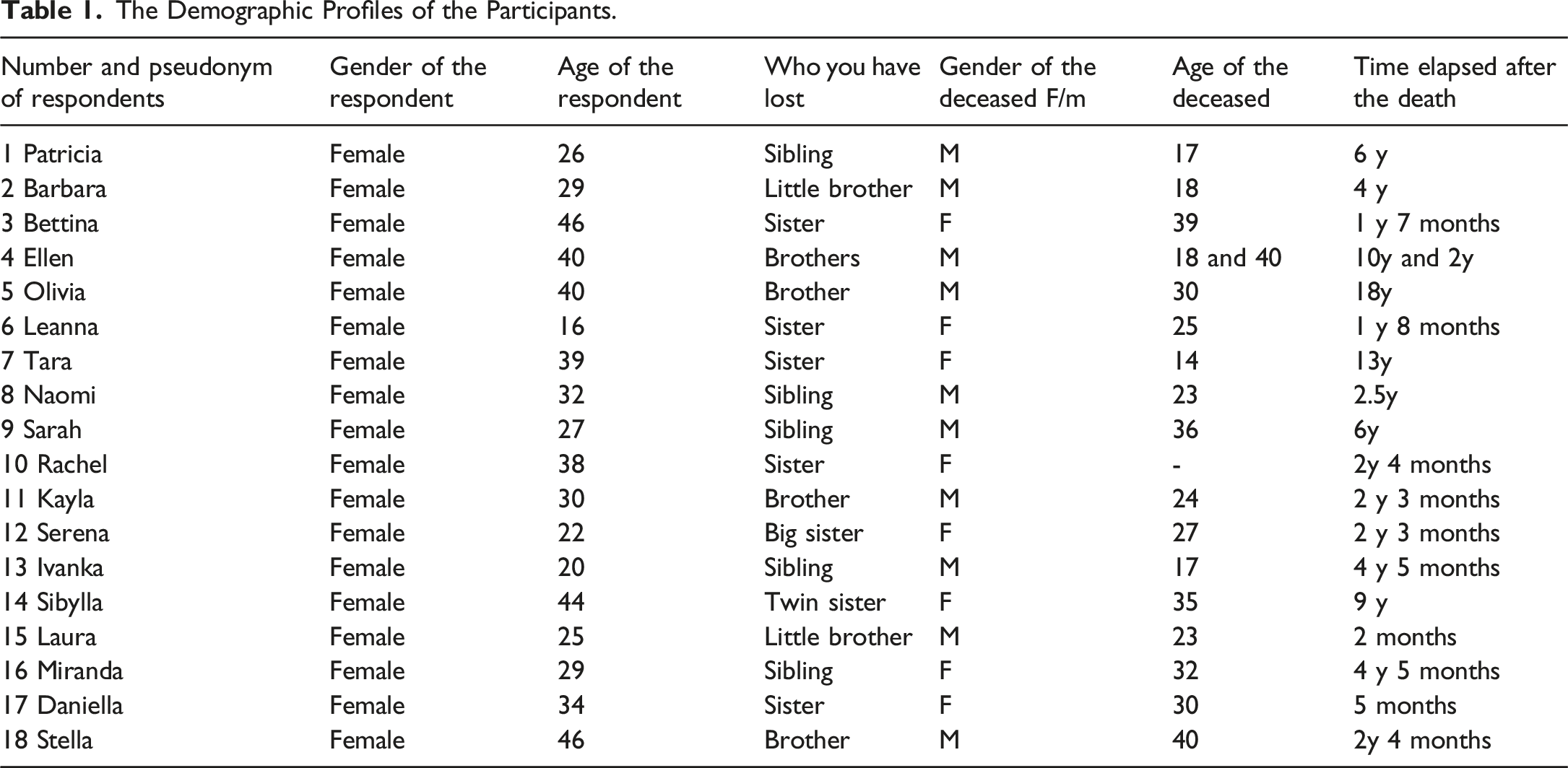
Second, respondents were asked to describe in as much detail as possible how they experienced the supernatural event after the death of a loved one (emotions, reactions, and the impact it had on the respondent). These narratives varied from a few sentences to page long descriptions. The data was gathered via Finnish bereavement organizations through their member emailing lists, websites, and closed Facebook groups. The data was collected via an electronic questionnaire, which was developed specifically for the study. Out of a total of 215 respondents, 21 had lost a sibling and of these, 18 are discussed in this study. All of these 18 respondents were women, and they were 16–46 years old when their sibling died. Time from the loss varied from two months to 18 years, but mostly between 2 to 5 years.
Researcher Reflectivity
Reflectivity and positioning are essential for researchers to remain aware of their role within the study (Ayton et al., 2023; Parkes, 1995), The data was collected by electronic questionnaire, which was completed without personal contact. This method minimized the researcher’s involvement and influence on the participants, although it left room for human error in collecting interpreting the responses. In some cases, the respondent filled in the wrong information and the wanted data was not obtained. There are four researchers contributing to this paper. One researcher (ALA) collected the data and is responsible for storing the data securely on the university server, another researcher (MK) analysed the data, and all four researchers have contributed writing the paper. Co-authorship gives the researchers more perspectives on the task in hand and strengthens the analysis.
Ethical Approval
This is a study of a sensitive area in human experience as it involves bereaved individuals. Ethical viewpoints were considered to prevent possible harm to the respondent (Parkes, 1995). The study did not require a statement from the Finnish National Board on Research Integrity as it complied with the guidelines for the responsible conduct of research (Finnish National Board on Research Integrity, 2023). The respondents received written information about the study and had an opportunity to contact the researcher before giving informed consent. Submission of the questionnaire was interpreted as the participant’s informed consent. Participation was voluntary and the participants could withdraw from participating at any phase of the research. Special attention was paid to ethical perspectives throughout the research process due to the sensitive nature of the topic and the vulnerability of the participants (Mallon & Elliott, 2021). The study’s cover letter included the contact information of both the researcher and the peer support organization, along with a note stating that participants in need of support could reach out to them if they wished to receive further support. To ensure confidentiality of the respondents the study was conducted anonymously and after the researcher (MK) had translated the data from Finnish to English, she assigned them English pseudonyms. The grief organizations and Facebook moderators were asked and granted permission to distribute the research briefing. The criterion for participating in the study was the loss of a sibling; the sibling’s age was not limited in the study. Participants were recruited through a peer support organization, with parents sharing the link to the survey form with those children and adolescents for whom they gave informed consent to participate.
Data Analysis
Thematic narrative analysis was the method used for the electronic questionnaire data. The analysis was carried out by the first author (MK) and discussed with the other members of the research team (ALA & AV & SMS) in all phases, until consensus was reached. The data was transferred from the electronic questionnaire to an excel sheet. It can be argued that all narrative inquiry is concerned with what is said, written, or visually shown, but thematic analysis especially focuses on the content. As the focus is on more than one person’s view, it is necessary to pay attention to categorizing the data. Hence, the analysis began with categorical-content reading of the data (Lieblich et al., 1998; Polkinghorne, 1998; Riessman, 2008). All the authors read the responses several times, to gain a general idea of the content and storylines. Some answers had a clearer plot than others, which focused solely on the experience itself without further elaboration. Then the authors considered the content of the answers in even more detail and categorized the data, finding the supporting themes, and using the bond between the bereaved and deceased as the unit of analysis (Riessman, 2008). Thus, the analysis was theory driven from the perspective of continuing bonds.
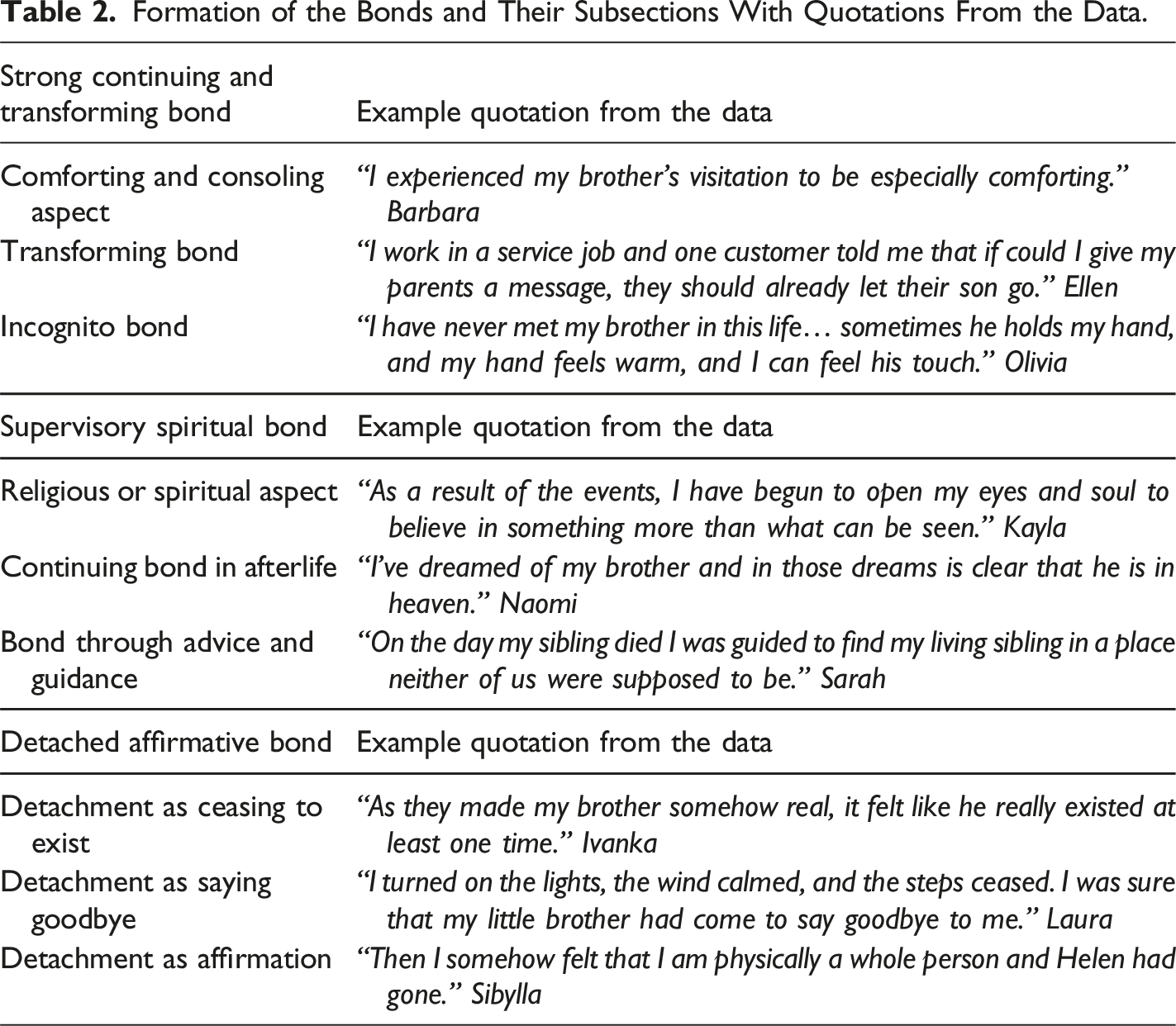
Formation of the Bonds and Their Subsections With Quotations From the Data.
Findings
The main themes arising from the data analysis, that is, the types of bereavement bonds are: strong continuing and transforming bond, supervisory spiritual bond, and detached affirmative bond. Based on the analysis, out of the eighteen respondents, seven fell into each of the first two main categories; strong continuing and transforming bond and supervisory spiritual bond, and four into the final main category; detached affirmative bond. The findings are structured as follows. Each of the three bereavement bonds is presented in its own subsection, including the subcategories that the main theme of the respective bond encases.
Strong Continuing and Transforming Bond
Within the strong continuing and transforming bond, three subcategories were found: the comforting and consoling aspect, transforming bond, and incognito bond. Aspects of comfort and reassurance in grief, as well as support in coping with the longing for the deceased sibling, are evident in all bonds in this category. For the majority of the participants, a strong continuing bond holds a comforting and consoling aspect, but some also described that their bond with the deceased transformed, while others described the meaning of the bond as somewhat concealed or incognito, but nevertheless soothing.
Comforting and Consoling
A strong comforting and consoling aspect can be seen in Barbara’s experience. Barbara lost her little brother in a sudden traffic accident and had her first supernatural experience with her deceased brother the following night. She narrates: Finally I told my brother that I think it’s time for him to go and he said to me, that’s right. I said that I understand that, and I gave him a permission to leave… I experienced my brother’s visitation to be especially comforting. The ambiance was somehow so deeply and purely reassuring that it carried me for a long time in the difficult times of grief… (Barbara)
The supernatural experience with her deceased brother gave Barbara strength in her grief and carried her through difficult times in bereavement. Barbara described how her brother’s visitation gave her comfort and peace and soothed her. Similarly, to Barbara’s experience, people have explained that when they have dreamed about a deceased sibling the presence associated with the dream in terms of physical sensation that survives for a long time afterwards is comforting and the idea that the deceased is still connected to them is vital and offers resilience in grief (Bonanno, 2009; Wray, 2003).
The idea that the deceased sibling is watching over and taking care of one even after death is experienced as comforting and consoling in grief. Leanna lost her big sister through a sudden illness and struggled with her grief at times. She found that the presence of her deceased sister eased and soothed her. She felt her sister is watching over her every step, decision, and moment. She narrates: A strong sense of my sister’s presence would come over me from time to time after her death…Of course, it caused an overwhelming sense of longing, but it also brought a sense of peace, helped with the grieving process, and made it feel like my sister was truly present—watching over every step, every decision, and every moment. (Leanna)
Having someone who watched over her and helped her that way calmed and helped Leanna even though her sister’s presence made Leanna miss her sister even more. In the difficult sensation of missing a close one Leanna seemed to find positive sides: she lets the bond continue between them so she can adjust to live with her grief and keep living her life. It could be argued that Leanna transitioned from loving in presence to loving in absence (Wray, 2003; Attig, 2010).
Transforming
The results show that the bond with the deceased can prevail but change, as can be perceived in Ellen and Bettina’s experiences of transforming bonds. Ellen narrates: At my brother’s funeral service, I watched him stand next to his coffin, he had normal clothes, but also big wings and he was holding a little boy’s hand, and he was three metres tall. After the funeral I somehow felt his presence at our house and my friend said the same sometimes. (Ellen)
Ellen’s supernatural experience of her deceased brother is vivid and specific, and she also have other people, who fortify her experience with their own. Ellen, who has lost two brothers, explains: I work in a service job and one customer told me that if I could give my parents a message, they should already let their son go…otherwise I have not had dreams or anything else of him, but I would like to as it would help the longing… Sometimes when I wake up it feels like someone has been beside me and I hope it was either of them. (Ellen)
In Ellen’s story the relationship with her brothers has transformed from one of interaction to one of memory. Also, there is an aspect of reaffirming, loving, and missing the siblings (Cohen et al., 2017; Packman et al., 2006).
Bettina, too, narrates how she interprets an odd event such as fire alarm blaring in the middle of the night as visitation of her deceased sister. She explains that she feels this was her sister’s way to greet her and remind her that she is still part of Bettina’s and her family’s lives. In Bettina’s experience it is noteworthy that this was single incident, which nonetheless left a strong feeling of connectedness.
Incognito
Lastly, in the incognito bond an aspect of the unknown can be seen in three of the participants’ stories. One of them tells as follows: I have never met my brother in this life, I was given up for adoption as a baby… ever since I found out that I indeed have a brother and then learned about his death, my scalp began to tingle from the left side and I had a feeling that he was beside me. (Olivia)
Olivia’s situation is rather unique as she never met her brother while he was alive, let alone after he had died. In Finnish culture, it used to be common to view the deceased, but over time and as society changed, this gradually became an unusual practice that people preferred to avoid. Nowadays, however, seeing the deceased is often considered a positive experience that makes the reality of death more tangible (Pajari, 2014). Olivia goes on to explain further: Also, sometimes he holds my hand, and my hand feels warm, and I can feel his touch. He often tells me things and I can talk to him. I also have very real and vivid dreams in which we are together. It has been like this almost daily for over 15 years. At first it was a bit confusing and scary for me, but always comforting. Nowadays it gives me solace in the midst of longing. (Olivia)
Olivia’s narrative supports the idea that bereaved siblings allow their deceased siblings to shape their lives and characters. In fact, some have noted that their wish to stay connected or reconnect to their deceased sibling is even stronger as they grow older. The death of an important person creates a demand for the bereaved to rediscover meaning by formulating new representations of the self, the other survivors, the deceased, and the relationships among them (Klass et al., 1996; Packman et al., 2006; Tyson-Rawson, 1996).
Therefore, in this study the supernatural experiences that fall into the category of strong continuing and transforming bond hold aspects of comfort and reassurance in grief and help with the longing for the deceased sibling. The supernatural experiences may be continual or only happen once but still leave a permanent imprint on the person who has those experiences as it is true for most of the respondents. Although the meaning of these experiences can be somewhat concealed, but they are comforting nonetheless as Olivia explains. This is also supported by Daniella and Particia’s narratives. The experiences are different from each other but hold a similar tone of reassurance.
Supervisory Spiritual Bond
The second category of bond identified in the data was the supervisory spiritual bond. Again, this has three separate subcategories: the religious and spiritual aspect, a continuing bond in the afterlife, and bond through advice and guidance. All these subthemes include a sense of supervision, but they differ in what binds the bereaved and the deceased together.
Religious and Spiritual
In Kayla’s and Stella’s cases, there is a change in how they comprehend the seen and unseen world and their bond with their deceased sibling has a religious/spiritual aspect. Kayla lost her brother and a year after his death she got into very poor health and was on the verge of dying. She was in hospital pondering whether to die or live when she felt her deceased brother and she elaborates: I felt my brother’s presence so strongly and this great feeling of love. It was not the ordinary world and its people around me anymore; only me, my dead brother and great love… When I felt my brother’s presence it was comforting. As a result of the events, I have begun to open my eyes and soul to believe in something more than what can be seen. (Kayla)
Kayla’s worldview changed. Also, Stella experienced such strong ADC phenomena that her attitude towards life has changed. She explains: These experiences have been so powerful that my entire outlook on life has changed. I now believe in life after death and have learned to appreciate my current life in a completely different way than before. These experiences have brought great comfort. (Stella)
She construes life as continuing after death and appreciates her own life more after the supernatural experience. Bereavement presents a spiritual challenge that can trigger new efforts to construe meaning (Balk, 1999). There may be a temporary struggle but as a new understanding of God or how spirituality matters in life is developed, the struggle is transformed into comfort (Wortmann & Park, 2009).
Afterlife
Belief in the afterlife preserves the bond between deceased and bereaved siblings. Naomi has a strong faith that gives her strength in grief. She explains her continuing bond in the afterlife: I’ve dreamed of my brother and in those dreams, it is clear that he is in heaven…I feel happy about these dreams as through them the Lord has given us the notion that our brother is indeed in paradise waiting for us there. (Naomi)
For believers, like Naomi here, death is not an abrupt end, but rather an adjustment to that person’s altered but continuing existence and the subsequent continuing relationship exists. In Finnish context and according to the Christian view in general, death is a transition from one community to another. It is not the end of everything, but the beginning of eternal life. (Benore & Park, 2004; Pajari, 2014). Naomi’s faith gives her hope for a reunion with the deceased and helps reduce death anxiety. It has been noted that a global belief in an afterlife may be a prerequisite to a belief in the continuing attachment with the deceased (Benore & Park, 2004).
If religion or spirituality is extremely important, the availability of spiritual or religious conceptualizations facilitates meaningful integration of the experience into an assumptive worldview, confirming the importance of meaning-making in connection with continuing bonds (Steffen & Coyle, 2011). All three of Kayla, Stella, and Naomi’s experiences show a religious or spiritual aspect in meaning-making.
Advice and Guidance
Several of the participants described their bond with their lost close one in terms of guidance and protection. In Sarah’s case supernatural experience is related to a warning and strong sense of guidance. Sarah explains: On the day my sibling died I was guided to find my living sibling in a place neither of us were supposed to be …I experience these moments of guidance as a very strong and compelling feeling. They act as a warning of something, and their meaning is to protect my close ones. (Sarah)
Sarah’s experience had an influencing aspect: she was getting guidance and maybe someway also seeking guidance from the deceased sibling (Packman et al., 2006).
The supervisory spiritual bonds guide the bereaved and give them comfort and strength. These supernatural experiences are viewed in a positive light even though they may have a warning tone in them. This is evident in Rachel and Serena’s experiences as Rachel feels guided when she was lost in the woods. She explains:
As I stood there in wonder, I noticed a bird on a tree branch. It took flight and landed on the next tree. I followed it, and again it hopped to another tree. This continued for a while until I realized the bird had led me close to the road—right to the spot where my car was parked…I wondered if the bird had been my deceased sister, with whom I had been incredibly close. (Rachel)
In Finnish mythology, a bird represents the soul of a deceased person (Butters, 2016), and it is noteworthy that Rachel does not describe otherwise anything spiritual in her narrative. Although she describes how she told her husband about the experience and he did not think anything of it, Rachel keeps watching birds while she is at their cottage and thinking of her supernatural experience.
Tara experienced a physical sensation of fear and malaise with intuition of evil on the moment of her sister’s death even though she did not know at the time that her sister had died. She narrates: At the moment of my sister’s death—which was only officially confirmed months l ater—I experienced an intense feeling of fear and physical discomfort. It wasn’t until the following morning that we received confirmation of the crime committed against my sister, so at the time I had no rational explanation for what I was feeling. (Tara)
In turn Serena explained that her deceased sister told her whom she should be careful with. Even experiences are comprehended as protective and the bond with the deceased is welcoming even though the experiences varied from feeling discomfort to happiness as Tara’s and Naomi’s stories indicate.
Spirituality within the bond is seen as aiding the bereaved sibling: on the one hand it gives them a new perspective as Kayla and Stella express in their narratives and on the other hand it fortifies what they already believe, which is present in Naomi’s narrative. It is important to give meaning to the experience of bonding with the deceased sibling and often that meaning was love.
Detached Affirmative Bond
The third type of bond with a close one in bereavement was a bond of detachment. There were different ways to let go: ties with the deceased close one were completely severed, there was a need to say goodbye after death, or there was a need for affirmation while letting go. In other words, detachment as ceasing to exist, detachment as saying goodbye, and detachment as getting affirmation.
Ceasing to Exist
Ivanka has lost her brother, and while he was alive, their relationship had been troubled and estranged. In her supernatural experience detachment serves to sever ties completely in the end. She describes how she perceived him: It was as if he would have roared with a grinding voice, but so distantly, that one could not truly hear it. I ran towards him holding my arms out in front of me ready to push the damned thing away and the vision disappeared immediately… Almost all my memories of him are dark, maybe it is that. But I did hang on to these phenomena, dreams and feelings, I wanted to believe in them, interpret them, experience more of them. (Ivanka)
In Ivanka’s narrative as brutal as it is, she feels strongly that she wants to hold on. She continues: As they made my brother somehow real, it felt like he really existed at least one time. Not anymore. I haven’t had dreams of him in years, and it is not permissible to talk about him. It is as if he never lived. (Ivanka)
Ivanka’s experience is clearly an example of an unhappy visitation, but still those moments of sense of a presence seem to be important and wanted. It is almost as if the bond between them only exists through these ADCs, even though later Ivanka feels as if the bond between them changes and detaches for good. Here it becomes evident that not everyone mourns, not everyone wishes to continue to bond with the dead, not everyone finds intense personal meaning in place, not everyone cherishes the past (Jonsson & Walter, 2017).
Saying Goodbye
In Laura and Miranda stories can be seen a farewell aspect as detachment that occurs via saying goodbye. Laura explains: I was going to bed and had already turned off the lights. There was only me and my cat in the apartment. A strong wind started to blow, and I heard footsteps inside the apartment. I turned on the lights, the wind calmed, and the steps ceased. I was sure that my little brother had come to say goodbye to me. (Laura)
In Miranda’s case she and her sister had promised to each other that the one who dies first tries to give a sign that all is well and in Miranda’s experience this came true for her. She narrates: …The music box is old, a gift from my grandparents years ago—the kind that has to be opened to play, and stops when you close it. It was closed, yet it still played its melody. The music box has never played on its own before or since…Looking back, my startled reaction felt silly, because I thought it was just my sister stopping by to say hello. We had once talked about trying to send a sign after death—whichever one of us went first. (Miranda)
Here, saying goodbye can be interpreted as the bereaved sibling (re)negotiating their relationship with the deceased sibling. From the ritual dynamics of separation, transition, and incorporation, they choose incorporation or getting some form of closure for their sibling’s death by incorporating the deceased sibling among the dead (Gennep, 1960; Mathjissen, 2018).
Receiving Affirmation
Lastly detachment occurs through affirmation. Sibylla describes her embodying experience of detachment from her deceased sister: I asked: “Where are you going?” She looked me deeply into my eyes and said: “I’m not going anywhere.”… When I woke up the world looked different, even though I was in my own bed. I thought to myself, what has changed in this space? Then I somehow felt that I was physically a whole person and Helen had gone. (Sibylla)
Sibylla feels her sister’s presence strongly and when waking up she suddenly feels different, the whole world feels different to her and she feels whole, but at the same time she senses that her sister has gone. This is another example of detaching from a bond and by doing so acquiring a sense of physical wholeness.
Here’s Sibylla’s whole world changes, she even feels physically different. It seems safe to argue that her identity shifts. Previous studies show that the continuing bond serves as a source of self-definition and self-worth by restoring identity within the relationship with the deceased and in some cases giving rise to new identity-related meaning (Steffen & Coyle, 2011). Here, however, it is the detachment that offers the change and wholeness of identity and worldview. Sibylla’s experience of detaching the bond makes it possible to transform the bond (Mathjissen, 2018) later in life, as her sister tells her that she is not going anywhere.
These detached affirmative bonds appear associated with a strong need to believe, interpret, experience, and give meaning to the supernatural experience, even if it was unpleasant. Although all the stories in this category described a breaking of the bond with the deceased, they were each unique. For Ivanka, supernatural experiences were the only way she could remember her brother, whereas Laura and Miranda felt they had received confirmation and an opportunity to say goodbye. For Sibylla, breaking the bond with her sister was a profound experience that changed the way she sees the world.
This aligns with a study of how continuing bonds appear to interact with meaning-making in response to loss: those bereaved who were able to make sense of the loss in personally meaningful terms experienced fewer symptoms of complicated grief (Neimeyer et al., 2006). Thus, giving meaning to the supernatural experience helps the bereaved siblings to make sense of their unique experience and of the loss of their close one even if it means saying goodbye and detachment from the bond between the deceased and bereaved.
Discussion
The aim of this study was to examine the bond deceased siblings have with their bereaved siblings and its effects on the former’s sense of meaning in life. The purpose was to understand what kind of bond emerges when the bereaved have a supernatural experience of the deceased and what meanings this bond holds.
Figure 1 shows how sibling bereavement causes a crisis of meaning that is often triggered by a violation of a sense of coherence and continuity. Critical life events such as bereavement disrupt a person’s fundamental sense of meaning and belonging (Stroebe et al., 2005). Through ADC, bereaved siblings make sense again by reforming their bonds with the deceased sibling in a way that gives them connectedness, comfort, change, guidance, affirmation, and a sense of the deceased sibling’s presence. While relocating the deceased sibling in their present life, the bereaved sibling is prone to experience changes in their own identity, attachment, and worldview. Reforming the Bond With the Deceased Sibling Through Supernatural Experience After Bereavement.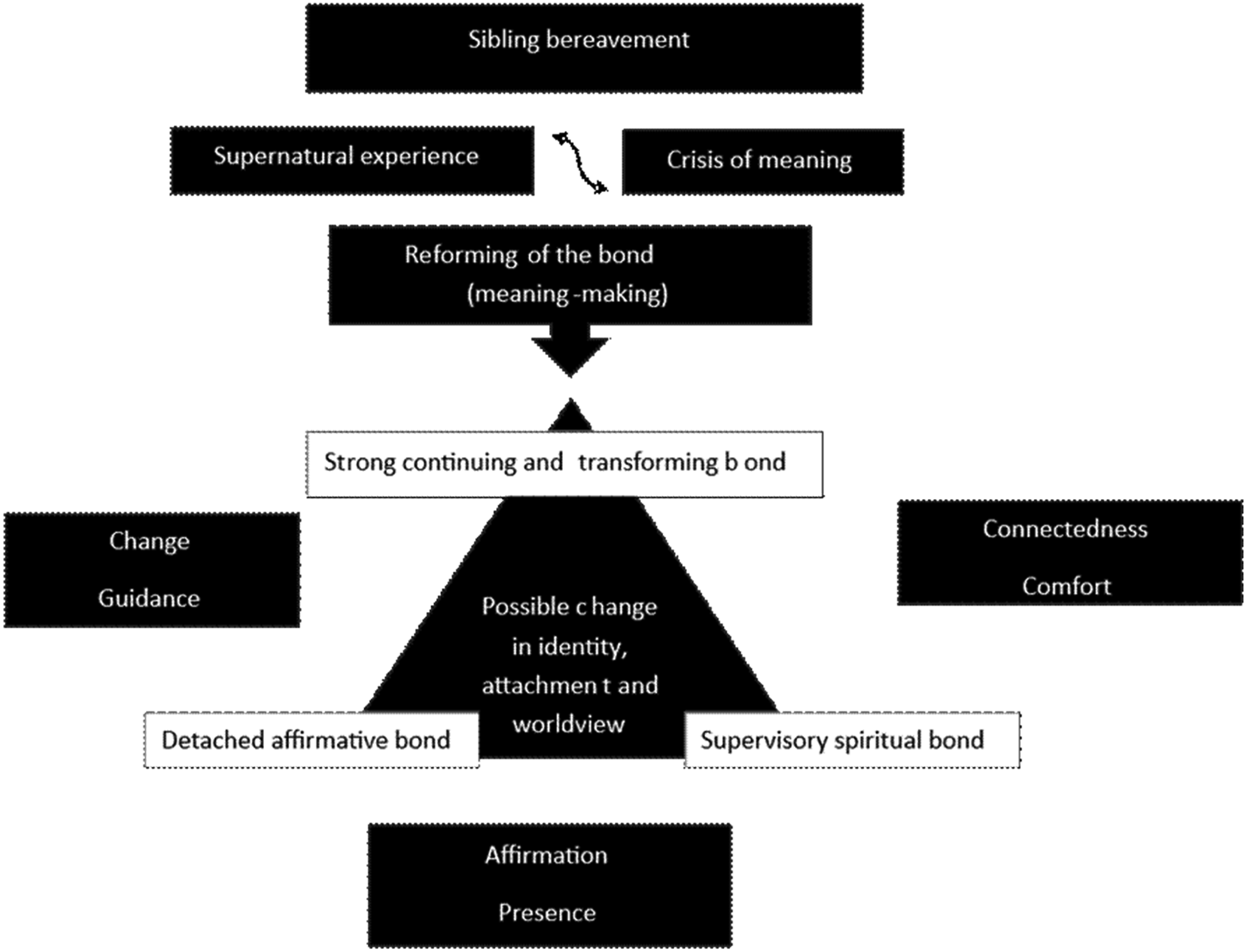
The thematic narrative analysis shows that respondents needed to make sense of the presence and ADC experience within a strong continuing and transforming bond. This study discovered that the bonds between the deceased and bereaved that emerged through supernatural experience are as various as the experiences themselves. The bereaved siblings need to hold on to and continue the bond, but also to let go.
Within the strong continuing and transforming bond there was a clear need to continue contact and hold on to hope that the supernatural experiences would continue. Having dreams of the deceased sibling communicating with them was reassuring, although the bereaved sibling was not always able to interpret what the deceased sibling was trying to communicate. Some surviving siblings were certain that the signs they received were communication and others were hopeful but not sure. All these experiences are supported by previous studies (Funk et al., 2018). On the one hand, the supervisory spiritual bond shows how surviving sibling believed to be reunited with the deceased sibling and is anticipating reunion in heaven. On the other hand, the supernatural experiences revealed a discourse of care and reciprocity that reflected a desire to integrate the dead into the lives of the living, as is also seen in previous studies of continuing bonds (Valentine, 2008).
Loving in absence fulfils the desire to still love the person lost without falling into the futility of desiring their return. It gives the deceased a continuing presence in the bereaved person’s life even without their physical presence. It helps the bereaved person to find meaning in suffering, offer them a new sense of wholeness and give a new shape to their daily life, as they carry the deceased with them into the next chapters of their life stories (Attig, 2010).
In this study, a strong continuing bond through a supernatural experience is comforting and consoling. It keeps the living sibling in touch with the one who died by engaging in specific actions such as thinking of the person, engaging in conversation, and asking the dead sibling for advice and guidance. Previous studies have found similar perceptions of the bond without supernatural experience (Mallon, 2018; Packman et al., 2006).
Our analysis shows that religion and spirituality preserve the bond. Experiences of meaningfulness are clearly related to the variety of beliefs, values, and commitments held by an individual (Park, 2005; Schnell, 2011). Bereaved people constructed new beliefs related to life after death even though their religious beliefs, like other basic beliefs, tend to be relatively stable. People confronting crises are thought to be more likely to reappraise their perceptions of situations to fit their existing beliefs than to change their religious beliefs (Pargament, 1997; Park, 2011). The participants that brought up religion and belief described it as vital and important. Some of the respondents in this study described a change in their worldview or idea of spirituality. In previous studies, many who experienced a sense of their lost close one’s presence found the experience provided comforting insights into ultimate concerns, and the majority drew on spiritual and religious frameworks in their sense-making. Many also saw the experience as leading to (further) spiritual and religious growth (Steffen & Coyle, 2011).
Finnish death rituals are closely tied to the Evangelical Lutheran Church of Finland, and compared to many other European countries, Finnish funerals can be considered traditional. The ceremonies emphasize the grieving process of the family and the individuality of the deceased. However, not everyone considers it appropriate to talk about death. Some believe that grief should remain a private matter, or something handled by the church—and that it should stay that way (Hakola, 2014; Pajari, 2014). In Finnish religiosity and spirituality, the difficulty of talking about it is also reflected in the scarcity of supernatural discourse. This was also evident in this study, where only a small portion addressed such experiences.
An interesting viewpoint not evident within this study is that the frequently reported experience of sensing the presence of the deceased can facilitate meaning-making after bereavement, as belief in a continued attachment with the deceased may constitute a death-specific religious belief, influencing the survivor’s appraisal of the loss and death in general (Benore & Park, 2004). Bonds with a deceased sibling need to be renegotiated: the bond may not always continue, may discontinue or otherwise be altered (Stroebe et al., 2005; Mathjissen, 2018).
The detached affirmative bonds found in this study show that discontinued bonds do exist. Although respondents had conflicting wishes as the experiences of discontinued bonds were daunting, at the same time these experiences were the only way to feel a connection to the deceased sibling. Moderate amounts of sibling conflict exist in even the most optimal sibling relationships, where this is balanced with support and closeness, but in instances where the sibling relationship was primarily ambivalent or conflictual, connection to deceased siblings may be disturbing or even frightening (Millar & Lopez-Cantero, 2022). This is true at least for one participant in the present study.
When a sibling dies, the surviving siblings still think of that person as one of their family. The bond itself is going to change – the task is to learn again how to be and act in the world without those close ones (Packman et al., 2006). Thus, some bereaved people may feel complete detachment from their deceased close one, in which case continuing bonds are not a necessary component of grief (Millar & Lopez-Cantero, 2022). For some others, it would seem necessary to work toward loosening a bond that is retained too closely. For others, precisely the opposite seems to be the case: they need to continue or enhance their connection to relocate the deceased person in their ongoing lives (Stroebe et al., 2010). Whether a bereaved person continues or relinquishes the bond with the deceased depends on the nature of their relationship, which is influenced by the individual’s attachment style (Stroebe et al., 2005).
The participants ascribed different meanings to their supernatural experiences. These experiences changed how they looked at the world. The bereaved siblings felt that their deceased siblings had delivered a message, guided them, and given them comfort and a sense of being loved. The ADCs made the deceased sibling more real, gave closure, initiated remembrance, and provided a strong sense of presence, all of which has been found in other continuing bonds research for decades (Walter, 1999). As in psychological concepts of continuing bonds, ADC reports also refer to a sense of continued connection with deceased close ones. Such connections could be framed in supernatural terms focused on an afterlife, but they are often framed psychologically, emphasizing memories, or a continued sense of attachment to a deceased person (Exline, 2021).
In other words, bereaved people will establish a changed bond with the deceased, and the lost close one is relocated through some form of meaning-making. The deceased sibling is relocated (attached or detached) in the bereaved sibling’s life in a way it makes sense and fortifies meaningfulness in their existence and relationships. To conclude, grief is part of the ongoing process of life and throughout their lives, bereaved people negotiate and renegotiate bonds with others, living and dead.
Limitations
This study has limitations concerning applicability as originally the data was collected on supernatural experience after losing a close one and was not directly interested in continuing bonds theory. However, the majority of the respondents brought up some form of a bond in their responses. Another point taken is that there was no possibility to clarify one’s answer after submitting it and thus, the responses have room for interpretation. While interpretation is part of every data analysis, l attention needs to be paid. This is why continuing bonds theory was used as a basis for re-analysis of the data.
One limitation of this study is that all participants were female. In Finnish tradition, women have typically taken on roles such as washing the body and assisting with practical matters when death occurs (Pajari, 2014), which may make it easier for them to process supernatural experiences related to death. The broad variation in both participants’ ages and the age at which their sibling died may obscure specific nuances of the sibling grief experience. Additionally, the study relied on a small set of qualitative data, which is not statistically representative. Factors such as participants’ age and gender may have influenced the outcomes. As a result, the findings cannot be considered valid or generalizable insights into the participants’ overall sense of meaning in life beyond the context of bereavement following the loss of a close one.
Concluding Remarks and Further Research
Supernatural experiences of a deceased sibling are positive and comforting for the bereaved sibling, and they give affirmation and guidance. ADCs offered participants the presence of the deceased, a sense of connectedness, and an opportunity for change. In cases when the bond is detached, breaking off the bond gives solace and strength. Interestingly, even when the visitation or sense of a presence is not pleasant, it is longed for as it is a way to make sense of a relationship that otherwise did not even exist.
Bereavement changes the bond with the deceased sibling and this change occurs through meaning-making. That is, the deceased sibling is relocated in a way that is comprehensible to the bereaved sibling and affirms the bereaved sibling’s meaningfulness. Meaning-focused coping seeks to reduce discrepancy by either redefining the meaning of the stressor itself (appraised meaning) or adjusting one’s broader global beliefs and goals: in both cases, the objective is to enhance the alignment between the perceived significance of the stressor and one’s overall sense of meaning (Park, 2011). Bereaved siblings cope by focusing on and redefining the meaning of the bond with their deceased siblings.
All in all, bereaved siblings need to make sense and give meaning to the supernatural experience of encountering their deceased siblings. This meaning-making and search for meaning is part of how bereaved siblings adjust to the crisis of meaning and convey their life as meaningful after a great loss, which in some cases alters their identity and worldview. These findings can be used to broaden the viewpoint of professionals who work with bereaved individuals. Previous studies suggest that an understanding which moves beyond conceptualizing post-death presence as a grief response or as a religious/spiritual experience is vital (Austad, 2015; Exline, 2021). ADCs are viewed as sources of comfort rather than as hallucinations or distressing responses to grief. From a psychological support and counselling perspective, it’s essential to understand how ADCs are experienced as an ordinary part during the grieving process (Vähäkangas et al., 2022). For example, taking it into account when educating grief group leaders and other professionals working with grieving people. Thus, it would become more permissible to discuss ADCs and that way the experiences could aid and alleviate the grieving process. This area of research requires further research using more diverse participant groups to deepen understanding across various demographic and cultural backgrounds as it is important to understand how ADCs may affect bereavement and attachment to the deceased.
Footnotes
Acknowledgements
We would like to thank Kate Sotejeff-Wilson for language revision.
Ethical Statement

Funding
The authors disclosed receipt of the following financial support for the research, authorship, and/or publication of this article: This work was supported by the Finnish Church Research Centre rDKIR/833/02.03.01/2019.
Declaration of Conflicting Interests
The authors declared no potential conflicts of interest with respect to the research, authorship, and/or publication of this article.