



Abstract
This qualitative study explores the economic impacts of bereavement from the perspectives of bereaved individuals and professionals supporting them in Ireland. Data from interviews with bereaved individuals and focus groups with professionals supporting them are analysed using inductive thematic content analysis. Results show there are identifiable groups, with pre-existing vulnerabilities, who are most likely to be severely economically impacted by bereavements. The economic hardship may be owing to direct loss of income arising from the deceased no longer financially contributing to the household, increased expenses associated with the funeral, and indirectly arising from the adverse impacts of grief. This hardship can reduce household incomes and create a complex and challenging financial situation, with long-term implications for workforce participation. While some support is available, it is often insufficient, which in turn contributes to household debt and financial strain. Future policies must mitigate the impacts and minimize inequalities.
Introduction
Approximately 80 people die in Ireland every day (30,000 annually), with each death directly impacting between four and ten people (McLoughlin, 2018). Grief following bereavement is a household shock that negatively impacts the family unit. The extent of this impact is determined by multiple factors, including the relationship between the bereaved individual and the person who has died; the cause and nature of the death; personal characteristics of the bereaved person; financial strain; and access to social supports (McLoughlin, 2018).
Heflin (2016) proposes a model of economic hardship that focuses on employment shocks, household formation shocks, residential income, the change in household size, and disability. Following a family bereavement, households can be susceptible to economic instability (in the form of income loss) as well as family instability (loss of a loved one from the home), leading to financial hardship. While many people adapt to these changes resulting from bereavement, a substantial proportion (20%) experience significant adverse impact (Aoun et al., 2020; Zisook et al., 2014).
A variety of factors negatively impact the financial situation of families post-bereavement (Bauchet & Evans, 2019; Deidda, 2015; Heflin, 2016). Firstly, end-of-life and funeral costs can lead to funeral poverty. Secondly, a change in a family’s economic circumstances, for example, where the main breadwinner has died, can leave households disproportionately financially insecure in comparison to other households. Thirdly, bereaved individuals may be unable to work due to their grief or may incur increased health care costs arising from the toll on their emotional, physical, and mental health. Therefore, bereavement may trigger disruptions in household employment and income, which in turn result in significant economic impacts for households, such as difficulty in covering basic needs and even, in some cases, bankruptcy (Bauchet & Evans, 2019; Deidda, 2015; Heflin, 2016).
Previous research suggests there are economic spillovers from the death of a child, or a partner, or indeed the unexpected loss of an older parent (Costa Ramón, 2020). Others document the need to minimize these spillovers as they can intensify individuals’ financial distress (Rauf, 2023). More recently, an analysis of bereavement in Japan concluded that grief correlates with serious psychological and physical effects necessitating an increased use of medical, pharmaceutical, and financial services (Becker et al., 2021).
At an individual level, estimates appear small, but on aggregate, given the number of bereaved individuals, the impact of grief can have significant economic costs for society (van den Berg et al., 2017). Furthermore, the magnitude of these economic impacts may vary across socioeconomic groupings as resilience and responses to bereavement are individualistic and often shaped by individual socio-economic factors (Aoun et al., 2020; Breen et al., 2018; Breen & O’Connor, 2011).
Previous research delineates the significant impact of bereavement and grief on individuals. However, the economic impacts of bereavement and the roles of support services in mitigating and/or minimizing these impacts are often overlooked, potentially leading to poorly developed support and government policies in this area. Therefore, this Irish study explores the economic impacts of bereavement from the perspectives of those impacted by bereavement and the professionals supporting them, with a focus on identifying those most at risk of adverse economic impacts, exploring the bereavement-related sources of economic hardship, and identifying support available to mitigate the economic burden of bereavement.
Methods
A qualitative approach, with a six-step framework (Braun & Clarke, 2006), was employed to explore the economic impacts of bereavement from the perspectives of bereaved individuals and professionals supporting them. Individual interviews captured the perspectives of the bereaved, and focus groups elicited the perceptions of professionals supporting bereaved individuals economically impacted by bereavement. Interviews and focus groups were conducted online, using Microsoft Teams. This study is part of a larger Irish study commissioned by The Irish Hospice Foundation and supported by a grant from the Department of Social Protection in 2021. Ethical approval was granted by the authors’ University’s Social Research and Ethics Committee in August 2021 (Number: 2021-120).
Sampling and Recruitment
To recruit bereaved individuals, researchers consulted with designated staff in recognized service provider organisations who interact with bereaved individuals. The sample population consisted of bereaved individuals (n = 7) aged over 18 years, who were economically impacted by bereavement in the past three years, to minimize recall problems.
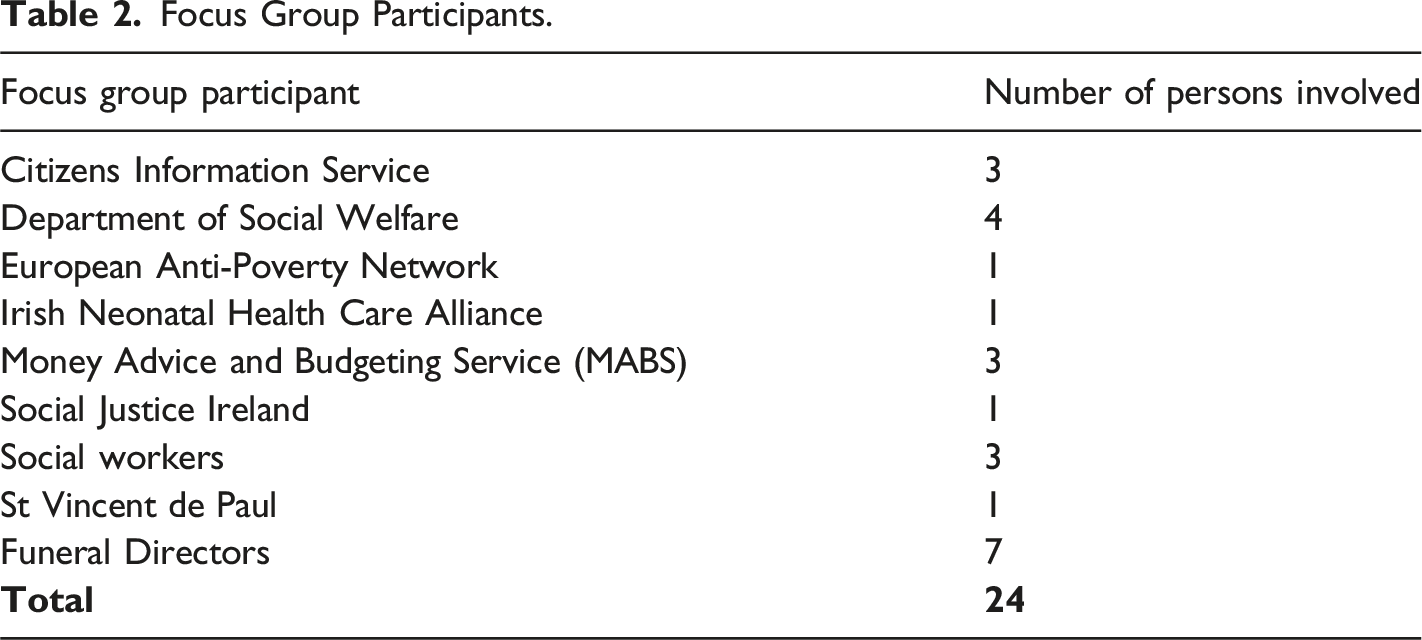
Focus group participants (n = 24) were recruited from staff at Irish service provider organisations (public, private, and voluntary sectors), wherein their organisation and/or they supported individuals economically impacted by bereavement in the past 3 years.
Topic Guides
A semi-structured interview guide (see Table S1 in Supplementary Information) was developed to explore how bereavement economically impacted the bereaved participant (Patton, 2002), drawing on Heflin’s (2016) multidimensional understanding of material hardship related to family and economic instability. It included questions about changes in employment status and performance at work, income, debt, living arrangements, household composition, health services use, spending patterns, and legal services use. A separate semi-structured guide was designed to elucidate the perspectives of professionals who support individuals economically impacted by bereavement.
Data Analysis
Thematic Analysis Phases.
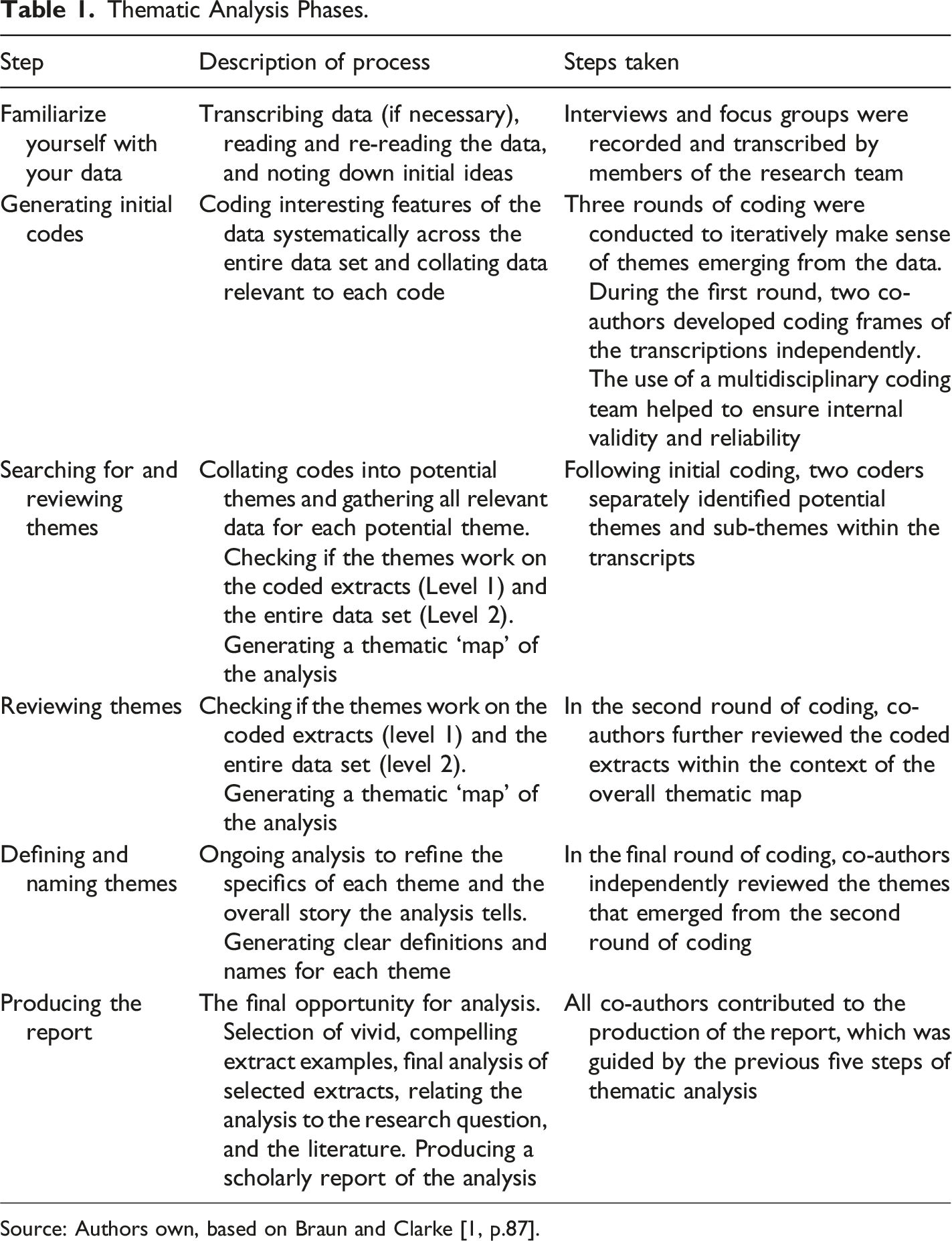
Source: Authors own, based on Braun and Clarke [1, p.87].
Results
Seven individual interviews were conducted. All participants were female, aged between 35 and 60 years of age. All were educated to secondary level or higher, and most (78%) were in paid employment (full or part-time). All individuals had lost either a child (at the peri-natal stage or after birth) (n = 4), a spouse (n = 2), or a parent (n = 1) in the previous three years. Quotes attributed to family members are identified as IP.
Focus Group Participants.
Participants stressed that bereavements are complex and multifaceted, as the death of a loved one is life-changing. They highlighted the importance of recognizing the emotional impacts of bereavement and how these impacts are intertwined with the adverse economic impacts of bereavement. Professionals in the focus groups expressed their beliefs that there will always be some form of economic impact for bereaved individuals owing to its associated costs. However, the impact is unequal across society.
The uneven financial impact of bereavement and grief is echoed throughout and highlighted in the themes that emerged in the analysis of the data. The results are discussed relating to: (1) identifying those individuals most at risk of adverse economic impacts following bereavement, (2) exploring the bereavement-related sources of economic hardship, and (3) identifying support available to mitigate the economic burden of bereavement. Plans for future support to mitigate the economic impacts of bereavement also emerged and are presented below.
Individuals at risk of adverse economic impact due to bereavement
Most bereaved individuals experienced some economic impact owing to the associated costs. However, scale and longevity are influenced by socio-economic factors. The study revealed specific demographic groups, such as the elderly; young widows; full time carers who left the labor force for caring duties; adult children still living in the family home; young children who lose a parent; co-habiting couples; households with legacy debt; and members of migrant communities, are particularly vulnerable.
Some of these groups, such as pensioners reliant on state pensions, can experience a substantial drop in household income and may have difficulty navigating the social welfare payment system, delaying access to entitled payments. The economic impact and associated emotional impact of bereavement can leave widowed individuals in a precarious position, without access to financial support. “A year and a half down the road, we still don’t have my mother’s pension sorted out.” (IP4).
Similarly, allowances for full-time carers cease 12 weeks after bereavement. Then carers need to make alternative arrangements, such as accessing Jobseekers’ Benefit. This is further exacerbated if they need to secure alternative accommodation because the family home needs to be sold. In these instances, these family members experience the loss of their loved one, their source of income, and potentially their home in a short space of time. “[I]f it was … an adult caring for her mum in the family home, when the parent dies, the rest of the family would want to sell the house and, in some cases, it can make the person homeless or trying to get accommodation.” (FGP3).
Among young families, the loss of one parent can reduce household income and increase childcare needs. Additionally, the emotional burden of supporting young, bereaved children can reduce the employment capacity of the surviving parent, leading to precarious financial positions. This situation is exacerbated when parents were cohabiting (i.e., not married), where legal rights and obligations differ, impacting social welfare entitlements. “You can imagine a couple with dependent children... they’re paying a mortgage, household, things for children, and so on. So, the death of one of those partners is going to have a very big impact on that household in terms of income and child support…the surviving partner may have to give up work or reduce their hours.” (FGP6)
Children and young people are particularly vulnerable following a traumatic death, where grief can be more complicated. “What’s the long-term economic impact, say for my eldest who’s not [age of adolescent]? This definitely had an impact on him. Will it longer-term kind of follow him through? And that’s something that we won't know obviously for years.” (IP1)
Members of migrant communities are also vulnerable to the economic impacts of bereavement. Undocumented migrants, who may already be in debt, have fewer entitlements and social supports, and can get lost in the system. A minority of the professional participants expressed concerns around legal and financial literacy amongst socio-economic groups most at risk of the adverse economic impacts of bereavement, which can make it difficult to navigate support systems.
Sources of Economic Hardship and Impact of Bereavement
Income and Employment Shocks
Bereavement can impact immediate and future earnings. Where the deceased person was the only or main earner in a household, there can be an immediate and permanent reduction in income, often without a commensurate reduction in expenses (referred to as “outgoings” in the quote below). “The income is halved but the outgoings is still the same and that has a huge impact on people.” (FGP10)
Following a bereavement, an employee’s access to compassionate leave from work depends on their employment contract, the organization’s custom and practice, and their employer’s discretion (Citizens Information, 2024).
Additionally, study participants indicated that individuals may delay their return to the workplace or may be unable to return to the same job or wage level before bereavement. While bereaved individuals are entitled to supplemental social welfare payments during this time, there is often a disparity between actual wages and these payments, leading to a reduction in household income. Household income may also be reduced before bereavement as individuals reduce their work hours to provide end-of-life care for their family member(s). “Like illness benefit… so people who are earning a good wage and find themselves through bereavement not being able to work, illness benefit is obviously a lot less than their wage might have been.” (FGP16)
Returning to the workplace and/or workforce is not a linear process. Individuals’ capacity to return to work following bereavement varies, depending on their physical and/or mental health, family circumstances, or work environment.
Upon return, bereaved individuals may struggle to cope in their working environment and must leave again or reduce their working hours. Households with children appear to be particularly affected. For example, a parent may be willing to return to work, but their return could be impeded by the need to stay at home to provide emotional support for children, and the practicalities associated with childcare provision and costs. “[T]he impact of the bereavement on the children can affect their ability to attend school and function in their world and then the parent needs to take time off work, maybe a year or two, to maybe re-stabilise the family in a way and be emotionally there to support them with say school refusal. I’m just thinking of the self-harming aspects, suicide ideation that some of the children would have.” (IP3)
Also, the nature of the job could influence an individual’s return to work. For example, those working in the childcare sector may not want to return to work after the death of their child. Some may retrain and begin a new career, impacting their income. Others may become less career-focused, adversely impacting their job performance and perceived interest in their job. Both situations have knock-on effects for career advancement and consequential earnings. Study participants suggested women were disproportionately affected in such situations compared to men. “It ended up being the job that suited me, and the boys’ best was a 19-hour week, one. Where I wouldn’t get caught for childcare, I would be able to work with the school, the job is very flexible as well.” (IP2)
Both children and adults can be significantly impacted by the loss of a parent due to the impact on the family unit, living, and financial arrangements. Moreover, these fundamental changes can have long-term implications for children’s educational and subsequent employment potential. “The family situation has changed, and it’s very much about changing schools, changing house, and just suddenly being aware of how limited money can be or the resources can be, not maybe even just money, but parents’ attention and things like that. Those secondary implications on them is a lot for them to sort through and deal with.” (FGP3)
Residential and Household Changes
For some individuals, costs can commence before death. Direct costs of end-of-life treatment (palliative and support care) and indirect costs such as lost productivity, childcare, etc., can occur for individuals as they care for their loved one, who can no longer contribute to the household economically. For example, a participant described caring for their partner: “I had to cut down to four days a week partly because I had so many hospital appointments and things like that and also just because I couldn’t ya know physically do it but to be honest I shouldn’t even have been doing four days a week, but I had to and that’s the whole thing, I still had a mortgage, we still had all our bills.” (IP6)
When accessing specialist national services for a family member who is at the end of life, travel and accommodation expenses can accrue for the household. In such situations, individuals often put the basic needs of their dependents ahead of their own when trying to balance the family budget. “I used to be sitting in the hospital for hours. And I wouldn’t even buy a sandwich because I didn’t have it [the money], as long as we had diesel in the car to get home, that’s all that mattered.” (IP2)
Other indirect costs amongst those caring for people at the end of life include deterioration of their own health and associated medical costs. Furthermore, these combined with anticipatory grief may generate an employment shock. Changing work arrangements from full-time to part-time or reduced hours, or leaving the workforce, can hamper productivity before the death of a loved one. Conversely, others may not be able to afford to stop working, signaling economic burden. “You’d find their main carer is exhausted and then they’ve let their medical conditions go… and then suddenly these suddenly rise to the surface. …, it’s just bills, bills, bills for them.” (FGP3)
These impacts can have long-term implications for younger adults, contributing to long-term health consequences, including mental health, and their subsequent earnings capacity. “We would see people coming into us in maybe their mid-20s, early 30s and they would have suffered a traumatic bereavement 10 years ago… [and they are on] disability allowance or social welfare whereas it might have been presumed given their relative position when the death occurred that they might have been earning reasonably good money but because of mental health issues and so on they’re not.” (FGP16).
Both children and adults can be significantly impacted by the loss of a parent due to the impact on the family unit, living, and financial arrangements. In some instances, this may require a family to sell the family home if they can no longer afford mortgage payments or to relocate to be closer to family support. These fundamental changes can have long-term implications for these children’s educational and subsequent employment potential. “The family situation has changed, and it’s very much about changing schools, changing house, and just suddenly being aware of how limited money can be or the resources can be, not maybe even just money, but parents’ attention and things like that. Those secondary implications on them is a lot for them to sort through and deal with.” (FGP3)
Funeral Costs
In Ireland, funerals hold strong cultural significance. “Culturally, for the Irish, we do funerals and send-offs really well. It’s just an interesting cultural aspect around how we send off people really well.” (FGP5)
Consequently, funeral costs can be substantial, driven by choice, preferences, and cultural expectations. Costs include the grave, funeral directors’, and disbursement costs such as flowers, grave digger, ceremony officiator, cremation, and hospitality services. Funeral directors indicated that the cost of a funeral varied from €5,000 to €10,000. While some costs are fixed, others vary owing to tastes and preferences and carry an emotional weight. For example, headstones are considered symbolic and can be expensive. “[T]his is the only tribute as a parent, that I can do something as a parent for my child is put up a headstone, and you want to get that right, you want to get the wording right, you want to get the right one… I spent tidy the text on the headstone.” (IP7)
Regional disparities can arise owing to property prices and local policies. Burial plots (graves) are influenced by land prices and demand, so more highly populated, expensive areas, like Dublin, can incur greater costs than more rural areas. Also, cultural expectations can be greater in some communities. For example, amongst members of the Irish Traveller Community, big, expensive funerals can be expected.
In such situations, funeral costs can rise significantly beyond an individual’s means, contributing to future economic difficulties. “[P]eople are in shock, they’re traumatised, they don’t know what kind of conversations they’re having with funeral directors and then they’re coming back into us with bills of ten, fifteen thousand, no idea where these expenses and costs came from and are completely overwhelmed.” (FGP5)
Where individuals and/or households are also facing long-term debt, additional funeral debts can be extremely stressful. This may be compounded when having to seek state support, which is available but through what some considered to be a complex process. “They now found themselves having to go to social welfare and look for an urgent needs payment or something like that, which is different criteria for eligibility around it, and that doesn’t make it easier.” (FGP5)
Support to Mitigate the Economic Impacts of Bereavement
Financial Support for Funeral Costs
Focus group participants indicated that people are determined to pay funeral bills, even when they are struggling financially. This may be out of respect for their deceased loved one and/or reflective of a cultural expectation that families should cover the cost of a funeral. Consequently, families prioritize funeral bills, even when they cannot afford to do so, and so end up in debt/further debt. “They’d nearly go hungry rather than [not pay it]. (FGP3)
A variety of funding mechanisms are used to pay for funerals. The deceased may have saved money specifically, made other financial arrangements, or the funeral may be paid from the person’s estate. Focus group participants drew attention to optional insurance plans available for funeral financing, such as “Life Savings Insurance” and “Death Benefit Insurance,” which require pre-registration and/or financial contributions. In the absence of these, the ability to pay is dependent on families’ economic circumstances. Where there is financial strain, alternative funds may be sought using credit cards, donations from charities, state supports, or their family / social networks (loans or “go-fund me pages”). Those having difficulty accessing credit or support may be forced to use a moneylender or access high-interest loans, which compound existing financial difficulties. “It varies, of course, but yeah, people can take on a lot of high-interest debt in order to cover the immediate costs and then of course that chases them or follows them into longer-term difficulty.” (FGP7)
Participants also indicated some examples of extraordinary support, such as families gifting a plot or funeral directors forgoing costs. In general, individuals who need financial assistance for funeral costs in Ireland can apply for the Exceptional Needs Payment through the Department of Social Protection. This replaced a once-off non-means-tested payment for funeral costs, the Bereavement Grant (€850). Now, each case is decided based on its merits by an official department representative (formerly Community Welfare Officer). Participants highlighted that the Exceptional Needs Payment does not cover total funeral costs.
Other Supports for Funeral Costs
As mentioned previously, the emotional significance associated with funerals can influence spending decisions. Having non-financial support, such as advocacy, can avoid and/or manage debt. As described by one participant, bereaved families may need someone to step in and give them “permission” not to go into debt to pay for the funeral. Often, these advocates are within their family and social network, or funeral directors may take on this role. People may also be directed to charitable supports, for example, the Irish Hospice Foundation Hardship fund. In extreme circumstances where families are facing long-term and short-term debt, they may engage with state organisations, like Money Advice Budgetary Services, which recognize the economic needs in communities and provide advice on how to manage finances and debt, and design budgets with the family. “[W]e’ve been kind of bridging a lot of conversations between families and funeral directors even around what a family can afford, the fact that we’re there advocating for them, saying that we’re accessing support, here, here and here and could they be mindful of that, and I think that funeral directors respond very well”. (FGP2)
Funeral director representatives were keen to increase awareness around their role in supporting bereaved families, and bereaved individuals acknowledged this support. While many struggled to pay funeral costs, none indicated instances of overcharging or lack of information. They also provided examples of good practice to support informed decision-making and budgetary control. For example, providing quotes at the outset enables revisions and cutbacks to avoid excessive unexpected bills. Having open and transparent discussions about costs and options reduces information asymmetries and worries. Training for staff on how to engage and communicate with bereaved individuals facilitates this good practice, as funeral directors need to be cognizant of the circumstances around the death and the economic situation. “The family sitting opposite from them, …are thinking “I’d like to know how much this is going to cost, but maybe he might think it’s inappropriate for me to bring up costs” so they’re both thinking the same thing.” (FGP6)
Future Financial Support
There was a consensus that the level of public financial support provided by the Department of Social Protection needs to reflect the actual costs facing families, including regional variation. “We’d really have to look at the costs of funerals and how that varies across the country to ensure the type of support is responsive to the actual costs that people are faced with.” (FGP4)
Other participants proposed that those supporting families before the death of their loved one could encourage families to think about the funeral budget in advance to avoid funeral debt. Many participants indicated failing to plan for bereavement was a cause for concern, owing to reticence to discuss death and dying, or due to the unexpected nature of the death. While difficult, having practical and appropriate discussions about death and dying could assist planning and help individuals prepare for the imminent economic impact. For those who have the financial means, this could involve getting insurance. “I know in my own role, I would often have that conversation with families where I’d say, look, have a budget in mind…what you can afford and kind of break that down with people, which they can find very helpful.” (FGP5)
In other instances, such discussions could include having both names on utility bills and bank accounts, to avoid arrears and ensure continued access to joint funds. The latter is linked to gender norms where household bills and bank accounts were traditionally in the male breadwinner’s name only.
Another suggestion from a charitable organisation supporting people who have been bereaved was the regulation of funeral directors to improve transparency, as is the case in the United Kingdom. “I personally feel that looking at the range of costs of funerals across the board, there should be some sort of regulation or price list, the same way there is with legal fees.” (FGP9)
Discussion
This study identified that the economic impact of bereavement in Ireland is multifactorial, which concurs with previous literature (Stephan et al., 2015). The physical, emotional, and psychological impact of bereavement, coupled with the individual circumstances of each person’s death, impacts families’ capacity and ability to respond to the adverse economic impacts. Furthermore, grief is not linear or time-limited.
The qualitative data collected in this study enabled us to examine whether the bereavement of a family member is linked to one or more sources of economic instability, leading to significant financial or economic impact on the individual, along with associated risk factors. In line with previous literature (García-Gómez, 2011; García-Gómez et al., 2013; Jones et al., 2019; Lenhart, 2019; Lindeboom et al., 2016; Maczulskij & Böckerman, 2019), we found bereavements led to residential changes, health, employment, and income shocks, which adversely affect households economically.
Specifically, this study identified that income shocks (arising from a reduction in household income or disrupted employment) can have a negative impact on health outcomes, including increased morbidity, psychological stress, and lower self-rated health status, consistent with findings reported elsewhere (Ohrnberger, 2022). Subsequently, the effects can become cyclical, as these adverse health outcomes further disrupt employment activity, negatively impacting the bereaved person’s health.
This study further identified a real risk of declining productivity rates, increasing poverty risks, and dependence on public services, concurring with the findings of Becker et al. (2022). These impacts vary depending on the relationship with the deceased and according to people’s circumstances, gender, age, health, the nature of the death, and workplace flexibility. Some of these effects can be mitigated through suitable social support programs and good quality social capital.
Much of the discussion with study participants around support focused on public support. However, formal support to alleviate the economic burden can also be delivered via workplaces and social policy. Workplaces are increasingly interested in retaining employees and supporting their well-being (Schoonover et al., 2023). The findings of this study suggest this should extend to supporting bereaved individuals returning to work and those experiencing anticipatory grief, to ease their transition and reduce gender inequalities. Unlike the death of a partner, there are no transfer payments or private pensions to replace lost earnings; therefore, parents are faced with the difficult reality of returning to work while also supporting their children through the bereavement process. Bereaved parents can benefit from practical arrangements (individualised time off, workplace accommodations to restore their productivity, etc.). However, for this to happen, as identified in other studies, workplaces need to understand the impact bereavement has on parents too (Schoonover et al., 2023).
For young children experiencing parental loss, their human capital investments and interpersonal skills development are impacted, with longer-term implications for labor force participation and future earnings (Jensen & Zhang, 2023). In both instances, given that most individuals will experience parental loss, even small effects on individuals have large aggregate economic impacts. Thus, the calls for support, including counselling, particularly for young children, emerging from this research are substantiated. Research participants here signaled that counselling services are available, but accessibility and affordability are key barriers to access.
In designing social security systems, transfer payments, and social support, decision makers need to be mindful that they reach the intended audience and avoid unintended consequences. Traditionally, in developed economies like Ireland, financial support is available for widows. However, there appears to be less emphasis on mitigating mental health impacts associated with bereavement, which, as evidenced in this study, can reduce labor force participation. It also contributes to increasing health care expenditure, which has been explored in previous literature (Meulman et al., 2023).
Leveraging on these commonalities, efforts are underway across Europe to enhance bereavement care by sharing knowledge and establishing links between policymakers. This approach should promote meaningful development of policy programs to reduce the societal costs of bereavement (Müller et al., 2025). Further research is warranted on the cost-effectiveness of such policies, programs, and targeted interventions in different environments.
This study identified individuals most at risk of adverse economic impacts owing to bereavement, most specifically the elderly; young widows; full time carers who left the labor force for caring duties; adult children still living in the family home; young children who lose a parent; co-habiting couples; households with legacy debt; and members of migrant communities. Overall, the findings concur with the previous Irish study by McLoughlin (2018), who identified that some bereaved individuals might need support in addressing financial issues associated with bereavement as the extent of the economic impact of bereavement is linked to the nature of the relationship between the person who has died and the bereaved person. Our findings also support the premise that individuals’ socio-economic status and wealth offer protection from poverty risk (Kung, 2020; Smith & Waitzman, 1994). However, given recent geopolitical events and the resultant cost-of-living crisis, more individuals and families are at risk of poverty (CSO, 2022). This, coupled with growing and ageing populations, the demand for public support throughout the lifecycle, including bereavement, will increase. Education to increase public awareness could incentivize planning for later life via private pensions and life insurance, which could ease some pressure.
Conclusion
There are identifiable groups, with pre-existing vulnerabilities, who are most likely to be severely economically impacted by bereavements. This may be owing to direct loss of income arising from the deceased no longer financially contributing to the household, increased expenses associated with the funeral, and indirectly arising from the adverse impact of grief. Regardless of the underlying source, the economic impact associated with bereavement can reduce household incomes and create a complex and challenging financial situation, with long-term implications for workforce participation. Unfortunately, deaths are unavoidable, and their impacts are near universal. Thus, it is important to understand the mechanisms of how deaths impact labor market outcomes and gender inequality, so future policies are fit for purpose.
Limitations
We acknowledge the relatively small sample in the study conducted during COVID-19. Given the sensitive nature of the topic, convenience sampling was relied upon. As a result, males and those in the 18–34-year age group are not represented in the sample. However, as females are more likely to be impacted than males (Duffy & Wild, 2023; Kersting et al., 2011; Schoonover et al., 2023), the sample is representative of those engaging with the support services. This pattern is likely attributable to risk factors associated with adaptability post-bereavement (Duffy & Wild, 2023; Miller, 2024). Owing to the unstructured format of the interviews, some of the topics were not thoroughly examined, for example, increased health care resource use and legal expenses.
Supplemental Material
Supplemental Material - A Qualitative Study on the Economic Impact of Experiencing Family Bereavement in Ireland
Supplemental Material for A Qualitative Study on the Economic Impact of Experiencing Family Bereavement in Ireland by Aileen Murphy, Edel Walsh, Nicola Cornally, Serena FitzGerald, Irene Hartigan, Daniel Nuzum, Jenny McDonnell and Caroline Dalton in Journal of Death and Dying.
Footnotes
Acknowledgements
Authors wish to acknowledge the funders (Irish Hospice Foundation and Department of Employment Affairs and Social Protection) and all participants who consented to the study.
Declaration of Conflicting Interests
The author(s) declared no potential conflicts of interest with respect to the research, authorship, and/or publication of this article.
Funding
The author(s) disclosed receipt of the following financial support for the research, authorship, and/or publication of this article: This work was supported by a research grant from the Irish Hospice Foundation and Department of Employment Affairs and Social Protection (Ireland) (Exploratory Investigation of the Economic Impact). Principal Investigators: Dr Caroline Dalton and Dr Aileen Murphy.
Ethical Approval
Ethical approval was granted by the Social Research and Ethics Committee at University College Cork in August 2021 (Log Number: 2021-120)
Consent to Participate
All participants provided written consent to participate in the study.
Consent for Publication
All participants consented to their anonymised data being published

Data Availability Statement
The data supporting the findings of this study are available upon reasonable request from the corresponding author.
Supplemental Material
Supplemental material for this article is available online.
Author Biographies
References
Supplementary Material
Please find the following supplemental material available below.
For Open Access articles published under a Creative Commons License, all supplemental material carries the same license as the article it is associated with.
For non-Open Access articles published, all supplemental material carries a non-exclusive license, and permission requests for re-use of supplemental material or any part of supplemental material shall be sent directly to the copyright owner as specified in the copyright notice associated with the article.
