



Abstract
Universities and researchers are increasingly interested in understanding and promoting the well-being of students. Bereaved students, in particular, face challenges related to grieving while studying, which can decrease their overall well-being. We conducted an online, cross-sectional survey design to investigate academic changes and support experiences post-bereavement and the influence of post-bereavement academic experiences on well-being and grades. A sample of 130 bereaved Australian university students participated. Nearly half of bereaved students indicated that their academic experiences were worse following bereavement and 30.4% had potential prolonged grief. Closeness to the deceased was a key indicator of increased grief severity and worsened post-bereavement academic experiences. As grief severity increased, student well-being decreased, and this relationship was strengthened when academic experiences worsened and when university connectedness was rated as higher. These findings suggest universities should include grief-specific resources to foster well-being in grieving students, as generic well-being supports are likely to be inadequate.
Introduction
Although time at university is often characterized as a time of considerable opportunity, growth, and challenges, researchers have highlighted there is a substantial percentage of university students who struggle with their mental well-being, particularly those who have recently suffered a death loss, also known as bereavement (Ebert et al., 2019; Gerowitz et al., 2022; Stallman & Shochet, 2009a; Tureluren et al., 2022). Although there is literature regarding the overall well-being of university students, less is known about the well-being of grieving students. Estimates of bereavement in colleges and university students are predominantly from the US, ranging from 35%–55% in the last 24 months since bereavement (e.g., Balk et al., 2010; Pollard et al., 2017; Varga et al., 2021). In Australia specifically, 22% of students are estimated to have experienced bereavement in the previous 24 months (Hay et al., 2024). This means that nearly a quarter of Australian university students are bereaved and could be at risk of poor mental health outcomes, poor academic outcomes, attrition, social withdrawal, and suicide risk (Balk et al., 2010; Cupit et al., 2016; Hay et al., 2024; Varga, 2015).
Across studies exploring university experiences post-bereavement, students have often reported declining well-being and academic achievement (Cousins et al., 2017; Cupit et al., 2016; Seah & Wilson, 2011). Cupit and colleagues (2016) found that a decrease in social activities, isolation from peers, and a decrease in campus involvement increased reported mental health difficulties post-bereavement. Supporting these findings, peer/social support has been associated with better academic and social adjustment, institutional attachment and a decrease in ongoing psychological distress following bereavement (Andersen et al., 2013; Cousins et al., 2017). Although the outcomes of academic and mental health difficulties post-bereavement are complex, previous researchers have highlighted some of the associations between academic experiences on well-being and academic achievement (Andersen et al., 2013; Cousins et al., 2017; Cupit et al., 2016). However, researchers are yet to determine how academic experiences might impact the relationship between grief and well-being and grief and academic achievement, specifically.
Academic difficulties are evident in studies where students’ grades decreased in the same semester in which they experienced bereavement (Cupit et al., 2021; Seah & Wilson, 2011; Servaty-Seib & Hamilton, 2006). Despite this, bereaved students often do not seek support offered by their universities (Andersen et al., 2013; Bhushan et al., 2011; Tan & Andriessen, 2021; Varga et al., 2021; Walker et al., 2012). Although universities often offer a sizable amount of academic and well-being services, there is a tension between the supports that are offered being underutilized, potentially due to barriers accessing the services (e.g., lack of awareness of services, long wait times for services), or that these services are inappropriate and not meeting the needs of bereaved university students (Glickman, 2021; Liew & Servaty-Seib, 2020; Spiccia et al., 2023; Tan & Andriessen, 2021). For example, most bereaved students do not think that they need counselling to manage their grief, but this is the most common support offered to bereaved students (Glickman, 2021; Liew & Servaty-Seib, 2020). Teaching staff are often in a useful position to respond to bereaved students, however students often hesitate to ask for support from staff and faculty (Al-Gamal et al., 2019; Glickman, 2021) Hedman (2012a) found that only 48% of bereaved students who sought faculty support found faculty responses to be empathetic, while 70% did not feel comfortable reaching out to faculty. The lack of help-seeking and discomfort of going to faculty potentially underutilizes an opportunity for students to be referred quickly to appropriate support/services when they are most in need.
University programs and initiatives, such as peer support groups and academic advisors, can potentially promote positive outcomes for bereaved students. However, there are also risk factors associated with students’ bereavement outcomes that are not as easily addressed. For example, previous findings have indicated that being closer to the deceased is associated with lower well-being and academic achievement (Cupit et al., 2021; Glickman, 2021; Liew & Servaty-Seib, 2018; Pollard et al., 2017). To add to this, researchers indicate that being female and closer to the deceased was associated with lower mental well-being (Walker et al., 2012). Experiencing a recent loss and experiencing multiple losses have also been associated with more severe grief symptoms and lower well-being (Schwarts et al., 2018). Although these predetermined risk factors cannot be changed, it is important to acknowledge any risks that may indicate a greater possibility of poor academic and mental health outcomes. By identifying students more likely to be at risk of poorer outcomes, universities are better able to identify students who are the most at risk of increased morbidity following bereavement.
It is important to remember that, although most students demonstrate remarkable resilience following bereavement (Schwartz et al., 2018; Walker et al., 2014), previous research findings indicate that the prevalence of grief complications and/or potential prolonged grief disorder (PGD) in bereaved students ranges from 0% to 13% (Balk et al., 2010; Glickman, 2021; Varga, 2015). PGD is characterized by intense and persistent grief symptoms with significant impairment in daily life (Lundorff et al., 2017). PGD can heighten the risk for student attrition and adverse outcomes associated with decreased well-being and poorer academic performance (Cox et al., 2015; Cupit et al., 2016; Varga, 2015). It is important to identify PGD in bereaved students because they are at greater risk for poorer outcomes regarding their academic and mental well-being. Further, understanding the relationships of grief severity with academic experiences and well-being is needed to better understand the experiences of students’ post-bereavement and where universities should target supports.
Universities are a significant part of students’ lives and can be vital for facilitating positive bereavement outcomes (Balk, 2010; Servaty-Seib & Taub, 2010). Following bereavement, students often reevaluate their priorities regarding their university experiences (Cupit et al., 2016; Tan & Andriessen, 2021; Walker et al., 2014). Some students shift their focus from studies and grades to life experiences and relationships (Mathews & Servaty-Seib, 2007; Tan & Andriessen, 2021; Walker et al., 2014), while others use their loss as a motivator to complete their studies (Cupit et al., 2016; Spiccia et al., 2023; Walker et al., 2014). Despite researchers highlighting that university environments may not always accommodate grief, there is a clear opportunity for universities to step in and support bereaved students’ well-being and academic experiences post-bereavement (Bakelants et al., 2023).
Understanding the student demographics and circumstances surrounding the death that are associated with more severe grief symptoms, lower well-being, and worsened post-bereavement academic experiences can assist universities in identifying students who may need additional support. Although there has been an increase in research exploring academic experiences, mental health, and grief complications in bereaved university students, there are no studies on the relationship between all three. Understanding the role of academic experiences on the relationships between grief and mental well-being and grief and academic achievement could potentially highlight the university-specific risk and protective factors for bereaved students’ mental health and academic achievement. We aimed to explore the differences in post-bereavement academic experiences, well-being scores, and grief scores based on demographics and death circumstances and if there are any changes in academic experiences post-bereavement in a sample of bereaved university students. Further, we aimed to understand the impact post-bereavement academic experiences have on the relationship between grief and well-being and grief and grades. Lastly, we aimed to further understand the support experiences of students’ post-bereavement; as well as the percentage of bereaved students that indicate potential PGD.
Method
Design
We conducted an online, mixed methods, cross-sectional survey design to investigate the relationship between academic experiences, grief symptoms, and well-being. We sought to determine the prevalence of potential PGD as well as changes post-bereavement.
Participants
Australian university students were invited to participate in the survey via a university student research participant pool and Facebook groups. This research was part of a larger study investigating bereavement in Australian universities; our findings on the differences in academic experiences and well-being between bereaved and non-bereaved university students are published elsewhere (Hay et al., 2024). Although participants reported on other types of non-death loss, of 574 students who accessed the larger survey, only 130 had experienced a death loss/bereavement in the last 24 months and were included in the current study. An a priori power analysis was conducted using G*Power 3.1.9.7 (Faul et al., 2007) to identify the sample size needed for a small/medium effect size when performing a moderation analysis. Cohen’s d was used to measure effect size, where values under 0.2 = small effect, values of 0.5 = moderate effect and values above 0.8 = large effect (Cohen, 1988). Our study was adequately powered; with a small/medium effect size of 0.2 power level of 0.80 and an alpha level 0.05, the minimum sample indicated for adequate power is 89.
Measures
Sociodemographics
Participants were asked to indicate their gender, Australian university enrolment, current grade average (CGA) out of 100, living arrangements, religious affiliation, and the number of death and non-death losses experienced in the last 24 months: death loss (human), pet death, divorce of parents, end of relationship, end of friendship, separation from a loved one (e.g., border restrictions due to COVID-19), and loss of a rite of passage (e.g., cancelled event/loss of planned travel).
The Warwick-Edinburgh Mental Health Well-being Scale
The Warwick-Edinburgh Mental Well-Being Scale (WEMWBS) was used to measure students’ psychological functioning and subjective well-being. Questions were answered using a 5-point scale from 1 (none of the time) to 5 (all of the time), on how they have been feeling in the last 14 days. Scores range from 14–70, with higher scores indicating more positive mental well-being. The scale is valid and reliable internationally and in Australia (Houghton et al., 2016; Lloyd & Devine, 2012; Tennant et al., 2007). Cronbach’s alpha within our data set was excellent at .91.
The General Help-Seeking Questionnaire
The General Help-Seeking Questionnaire (GHSQ) measured help-seeking intentions (Wilson et al., 2005). Participants were asked to indicate their intentions of seeking help if experiencing a “personal-emotional” problem. Questions were answered using a 7-point scale to indicate if they would go to any of the 11 sources presented (e.g., parent, friend, university counselling center) from 1 (extremely unlikely) to 7 (extremely likely) Scores range from 11–77, with higher scores indicating higher intentions to seek help from each source as well as an overall score of help-seeking intentions. The General Help-Seeking Questionnaire has been validated in university students, with adequate reliability and good validity (Silva et al., 2022). Cronbach’s alpha within our data set is questionable at .63.
The University Connectedness Scale
The University Connectedness Scale (UCS) (Stallman & Shochet, 2009b) measured the extent a student feels support and belonginess towards their university. There are 18 items all on a 7-point scale from 1 (not at all) to 7 (all the time) asking participants about their attitude towards their university. Nine items are reverse scored. Scores range between 18–126, with higher scores indicating higher levels of perceived belongingness and support. The scale presents with good validity and reliability among university students (Stallman & Shochet, 2009b). Cronbach’s alpha within our data set is acceptable at .78.
The Multidimensional Scale of Perceived Social Support
The Multidimensional Scale of Perceived Social Support (MSPSS) assessed overall levels of perceived social support. Students answered each of the 12 questions using a 7-point scale from 1 (very strongly disagree) to 7 (very strongly agree), regarding their level of social support. Total scores range from 20–84, with higher scores indicating higher levels of perceived social support. The measure’s reliability and validity in university students is good (Zimet et al., 1988). Cronbach’s alpha within our data set is excellent at .93.
The Self-concealment Scale
The Self-concealment Scale (SCS) measured the tendency to self-conceal, withholding a personally distressing secret, and apprehension about disclosure (Larson & Chastain, 1990). Participants answered 10 questions using a 5-point scale from 1 (strongly disagree) to 5 (strongly agree), regarding withholding personal information. Scores range from 10–50 with higher scores indicating higher self-concealment (Cramer & Barry, 1999). The scale presents good validity and reliability in a university student population (Cramer & Barry, 1999). Cronbach’s Alpha within our data set is good at .88.
Prolonged Grief Disorder-13-R
Prolonged Grief Disorder-13-Revised (PG-13-R) measured current grief symptoms. Participants answered 13 questions, with two “yes” or “no” questions on duration and impairment and 11 questions assessing cognitive, emotional and behavioral symptoms rated on a 5-point scale from 1 (not at all) to 5 (overwhelmingly). Summing the symptom ratings provides a score from 11–55, with higher scores indicating greater grief severity and scores over 35 and “yes” to questions 3 and 13 indicating probable PGD (Prigerson et al., 2021). The PG-13-R is valid and reliable in a university student population (Prigerson et al., 2021). Cronbach’s alpha within our data set is excellent at .91.
Post-Bereavement Academic Experiences
Post-bereavement academic experiences (PBAE) were measured with questions relating to students’ internal academic experiences and is part of a measure that was employed by Cupit and colleagues (2016). Post-bereavement academic experiences measures perceptions of internal academic changes in behaviors/abilities (e.g., “After the death did you see a change in your grade?” and “After the death did you see a change in class attendance?”). Questions were answered in the format of “improved/more,” “no change,” and “worsened/less.” Scores range from 7 to 21, with higher scores indicating worsened post-bereavement academic experiences. There are no current psychometric properties to report. Cronbach’s alpha within our data set is good at .82.
Participants were given the opportunity to add comments regarding their post-bereavement academic experiences at the end of the survey and responses were analyzed using conventional content analysis. A conventional content analysis is a qualitative method where themes are extracted directly from the data and summarized, guided by theory/research question (Hsieh & Shannon, 2005). Questions were “Since the death, did your priorities change?” Has university become more or less meaningful to you?” “Since the death, has your university experience changed? If so, how?” and “What suggestions do you have for what universities can do to help bereaved students?”
Procedure
The Human Research Ethics Committee of Curtin University approved the study. Students gave informed consent following presentation of an information sheet before proceeding to the questionnaire. University students completed the online questionnaire through Qualtrics, taking around 30 minutes to complete. After completing the survey, participants were directed to a page containing a list of support services and thanked for their participation. Participants either gained course credits if they were recruited from the university participant pool or were asked to provide an email to go into the draw to win 1 of 10 gift cards if they were recruited from other sources. Emails for the prize draw were kept separate from data.
Data Analysis
The quantitative data were analyzed using SPSS (version 29.0). Data collection occurred between February 2022 and June 2023. Five cases were removed out of the 130 respondents due to missing over 50% of data. After deletion, 125 cases were used in the analysis. Overall, only 0.7% of items were missing from the data set. Little’s MCAR test indicated that data were missing completely at random, χ2(1227, N = 125) = 1138.217, p < .966. As data were missing completely at random and data missingness was below 5%, expectation maximization was used on these missing data (Enders & Bandalos, 2001; Schafer & Graham, 2002). Effect sizes were calculated using Cohen’s d (Cohen, 1988). Assumptions were met for all analyses. Analyses used to address our research aims are described below.
Results
Loss Types and Prolonged Grief Disorder
Potential PGD, Types of Loss in the Last 24 Months, and Who Died (N = 125).
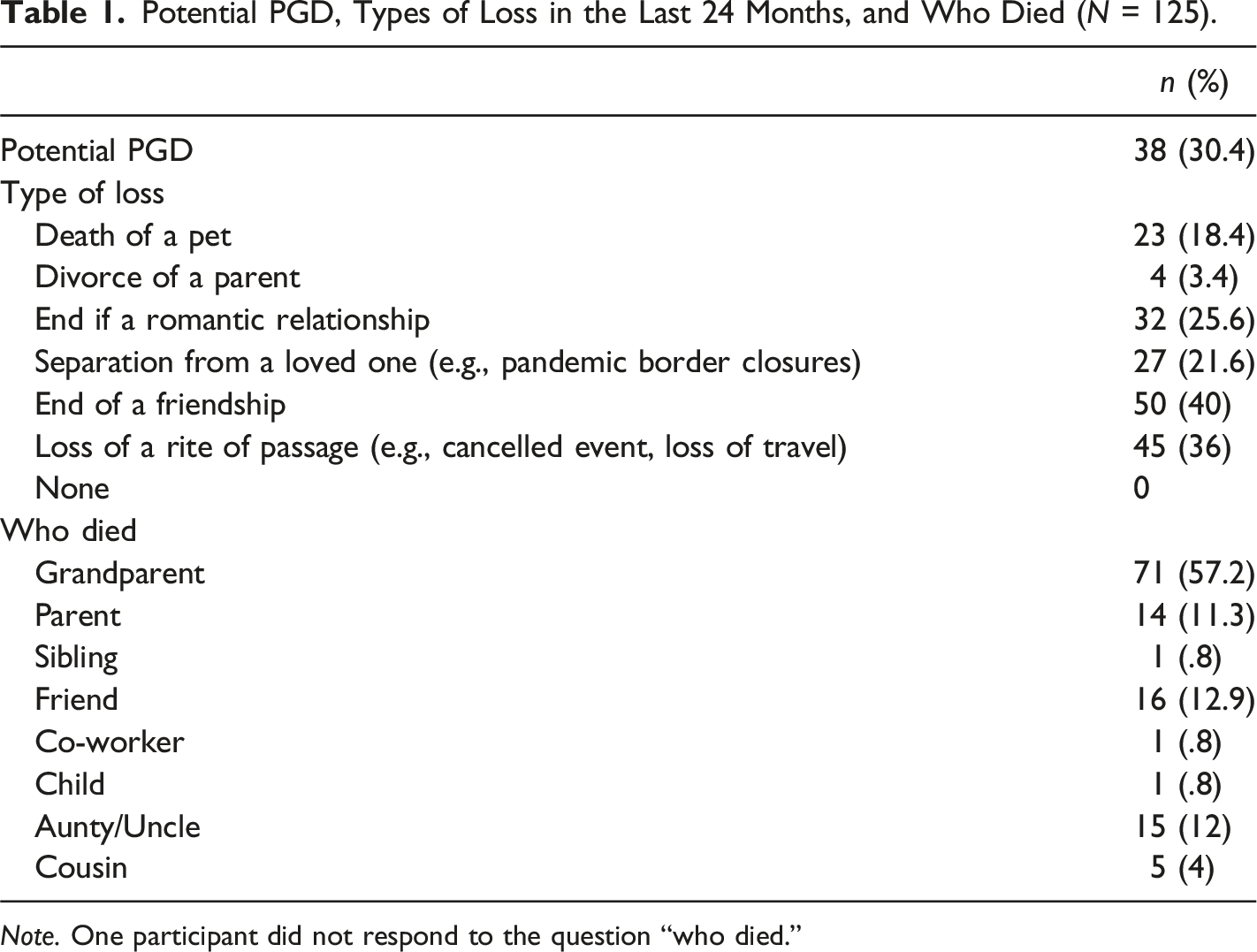
Note. One participant did not respond to the question “who died.”
Differences in Well-Being, Academic Experiences and Grief Severity Based on Demographic and Death Loss Characteristics
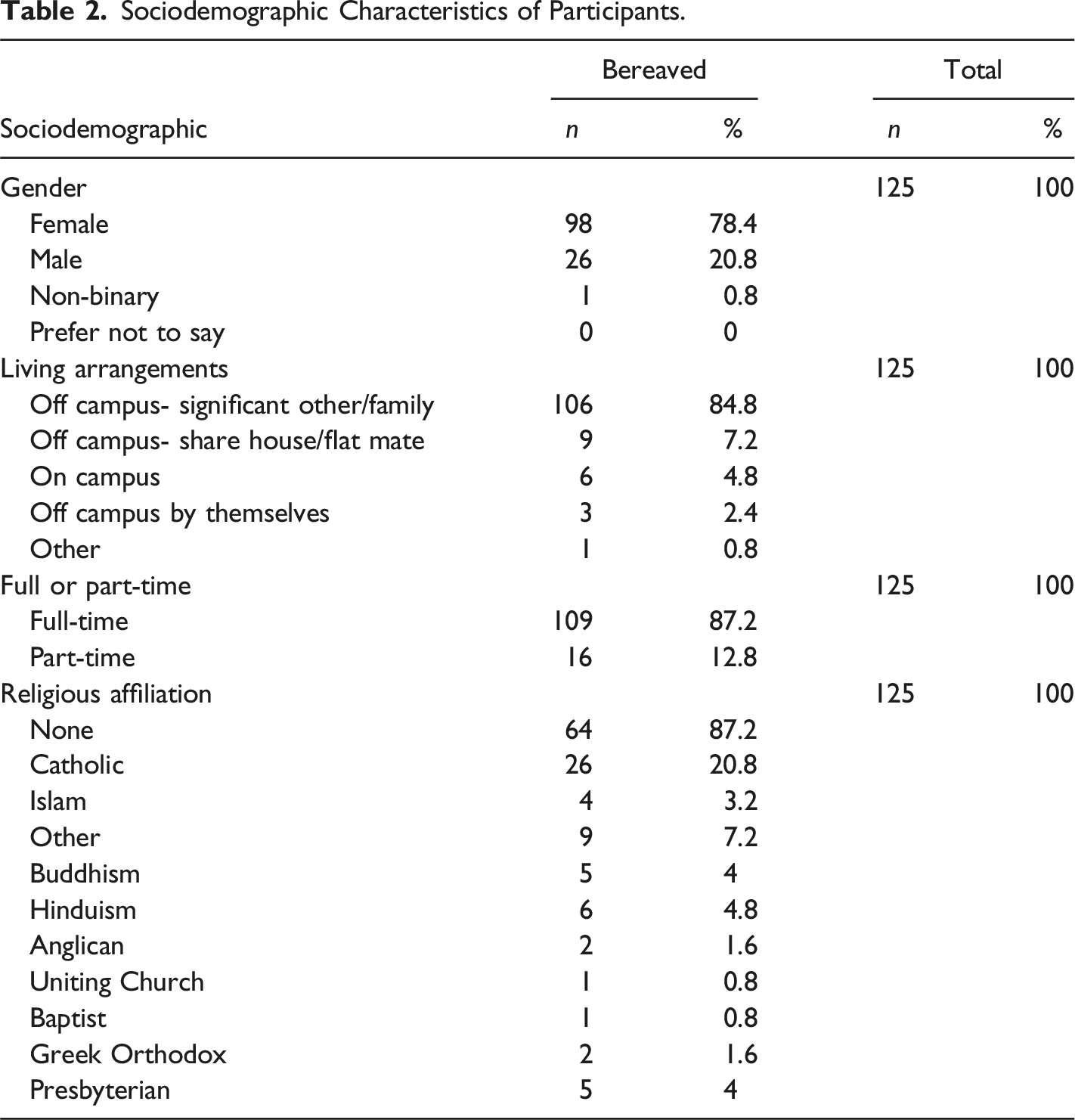
Sociodemographic Characteristics of Participants.
In order to determine if there were any experiences surrounding the death loss (number of death losses dichotomized as one or multiple, number of non-death losses one or multiple, time since death less than or greater than 6 months, closeness to the deceased high closeness or low closeness) that were associated with differences in prolonged grief scores, post-bereavement academic experiences, and well-being independent t test were conducted. Students who had one death loss (M = 27.42, SD = 10.20, n = 68) were more likely to have higher PG-13-R scores than students who had more than one non-death loss (M = 23.21, SD = 9.65, n = 57), t(123) = 2.357, p < .01, two-tailed, 95% CI [.675, 7.756], with a small effect size d = .166. Closeness to the deceased was dichotomized through a median split (Mdn = 4.00), where participants who responded 1, 2, or 3 were placed in the low group and participants who responded 4 or 5 were placed in the high closeness group (Cupit et al., 2016). Students who reported higher closeness to the deceased (M = 32.06, SD = 10.73, n = 44) were more likely to have higher PG-13-R scores than students who were in the low closeness group (M = 21.93, SD = 7.86, n = 81), t(123) = 6.052, p < .001, two-tailed, 95% CI [6.816, 13.443], with a large effect size d = 1.133. Students who were in the high closeness group (M = 17.92 SD = 2.82, n = 44) had worsened post-bereavement academic experiences than students who were in the low closeness group (M = 16.45, SD = 2.74, n = 81), t(123) = 2.826, p < .006, two-tailed, 95% CI [.439, 2.494], with a medium effect size d = .529. No other significant differences were found.
Changes in Academic Experiences Post-bereavement
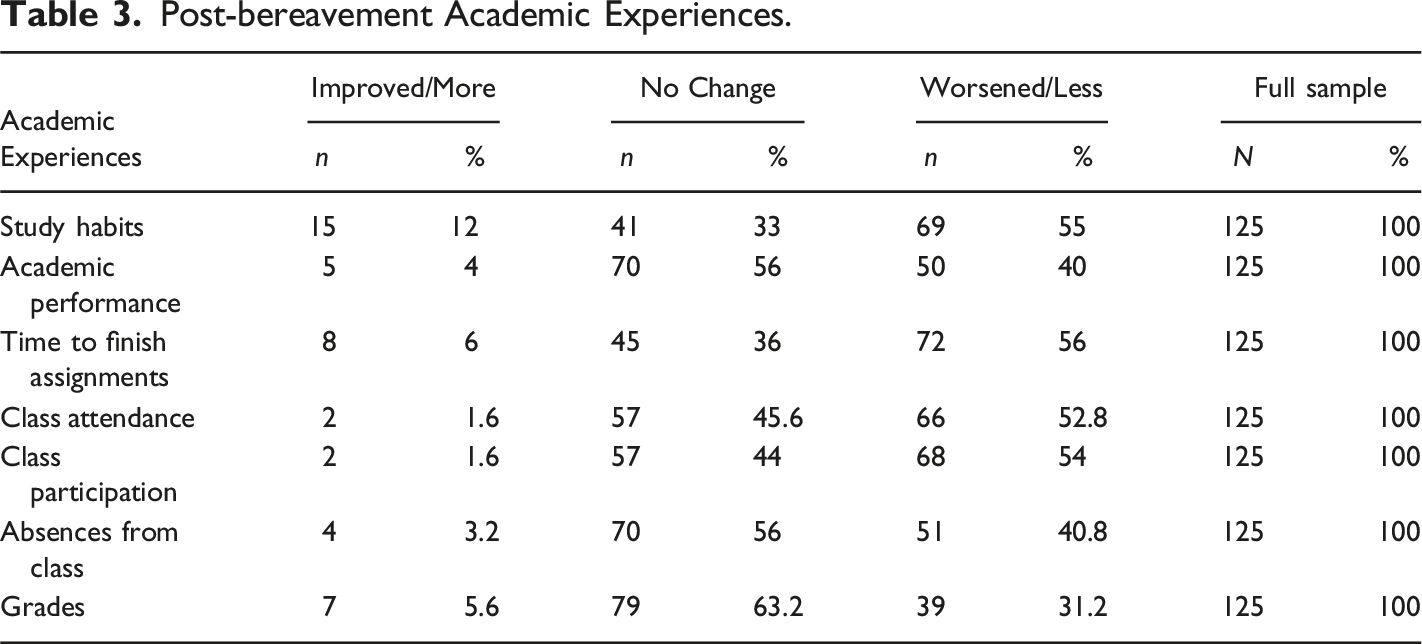
Post-bereavement Academic Experiences.
Changes in University Priorities Post-bereavement
Most (n = 108 out of 125, 86%) commented on changes in priorities. Overall, 58 (54%) university students reported priority changes since becoming bereaved. Thirty-three (31%) reported that university became less meaningful, 25 (23%) reported that university became more meaningful, and 50 (46%) reported no change. However, students indicated that these changes in priorities shifted over time. For example, one student said university was less of a priority leading to the death and surrounding the time of death, and then changed a couple of weeks after the death and became more meaningful due to the death. Students also indicated that, although their priorities towards university did not change, it became more difficult to put effort into university. Students who indicated that university became less of a priority post-bereavement commented that they instead prioritized making connections, relationships, and exciting experiences. Students reporting that university became more of a priority indicated they wanted to make the deceased proud or that the deceased wanted them to do well in university.
The Role of Academic Experiences on the Relationship Between Grief Severity and Well-Being And/or Grades
To test whether academic experiences moderated the relationship between grief severity and grades, five moderation analyses were conducted with post-bereavement academic experiences, help-seeking, perceived social support, university connectedness, and self-concealment as the moderator variables. None of the moderator variables moderated the relationship between grief severity and grades.
To test whether academic experiences moderated the relationship between grief severity and well-being, five moderation analyses were conducted with post-bereavement academic experiences, help-seeking, perceived social support, university connectedness, and self-concealment as the moderator variables. Associations between grief severity and well-being were not moderated by help-seeking, perceived social support, and self-concealment. University connectedness and post-bereavement academic experiences did moderate the relationship between grief severity and well-being. Each of these analyses is described below.
Examining whether university connectedness moderated the relationship between grief severity and well-being, revealed that, overall, university connectedness, grief severity, and the interaction variable could account for 20% of the variance in well-being scores, F(3, 121) = 10.06, p < .001, R2 = .20. Grief severity on its own was significant for explaining well-being scores (b = −.15, t(121) = −2.14, p = .034) and on average as grief severity increased there was also a small decrease in well-being. University connectedness had no relationship with well-being on its own (b = .11, t(121) = 1.51, p = .132) but, did significantly moderate the relationship between grief severity and well-being (b = −.03, t(121) = −5.11, p < .001; See Figure 1). The moderation effect on grief severity scores explaining well-being on low (n = 51), medium (n = 61), and high (n = 71) levels of university connectedness presented differently across levels. For students with low university connectedness, as their grief severity increased, they also had a small increase in well-being (b = .20, t(121) = 2.15, p = .032). For students with average (b = −.15, t(121) = −2.14, p = .034) and high (b = −.51, t(121) = −4.95, p < .001) university connectedness, as grief severity increased there was also a decrease in well-being. Moderation effect of UCS on PG-13-R and wellbeing. Note. ** indicates p values <.05, *** indicates p values <.005.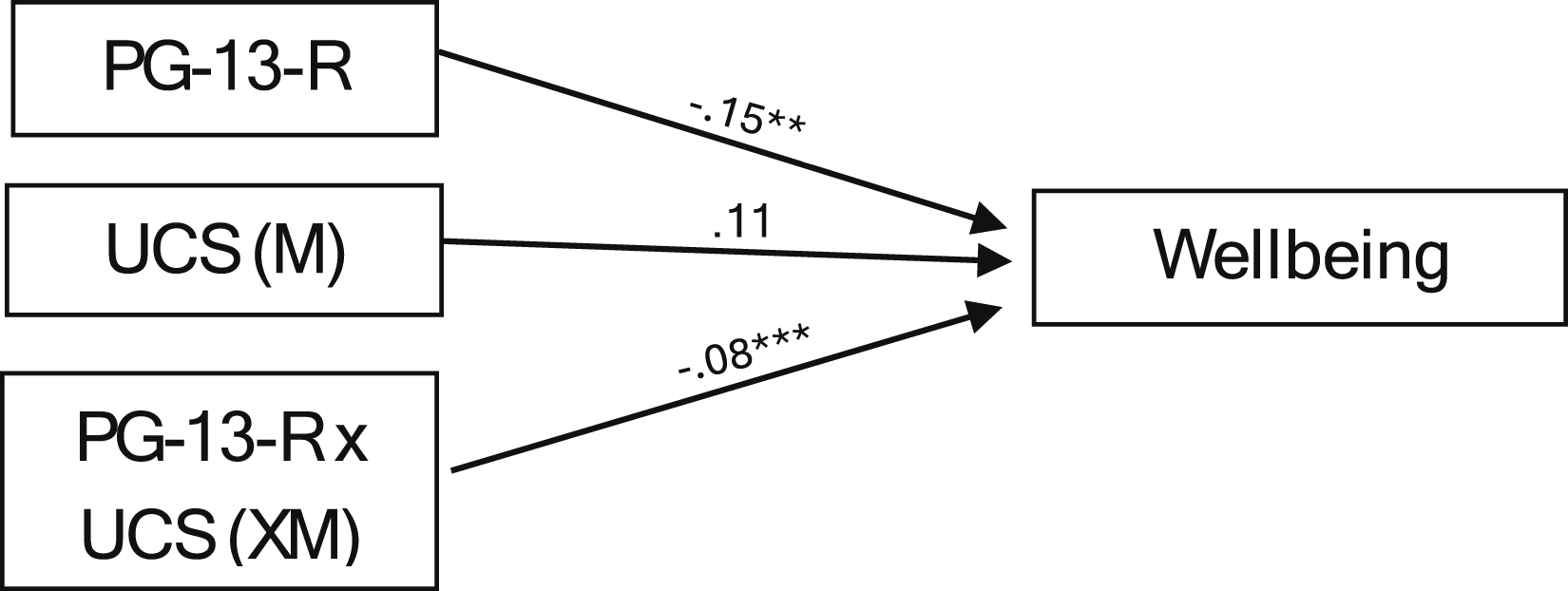
To examine whether post-bereavement academic experiences moderated the relationship between grief severity and well-being, a moderation analysis was run. Overall post-bereavement academic experiences, grief severity, and the interaction variables account for 8% of the variance in well-being sores, F(3, 121) = 3.59, p = .015, R2 = .8). Grief severity on its own significantly explained well-being (b = −.17, t(121) = −2.15, p = .034) and on average as grief severity increased there was also a small decrease in well-being. Post-bereavement academic experiences scores were non-significant (b = −.04, t(121) = −.15, p = .878) and did not have a relationship with well-being scores on its own. Post-bereavement academic experiences moderated the relationship between grief severity and well-being (b = .07, t(121) = 2.73, p = .007; See Figure 2). The moderation effects of grief severity explaining well-being on low (n = 14), medium (n = 17), and high (n = 20) levels of post-bereavement academic experiences presented differently across levels. For students who were more likely to indicate no change, as their grief severity increased, there was also a decrease in well-being (b = −.40, t(121) = −3.12, p = .002). For students with moderate levels of worsened post-bereavement experiences, as their grief severity increased, there was also a slight decrease in well-being (b = −.17, t(121) = −2.15, p = .033). There was no significant findings for students who indicated high levels of worsened post-bereavement academic experiences h (b = .04, t(121) = .44, p = .660). Moderation effect of PBAE on PG -13 -R and wellbeing. Note. ** indicates p values <.05, *** indicates p values <.005.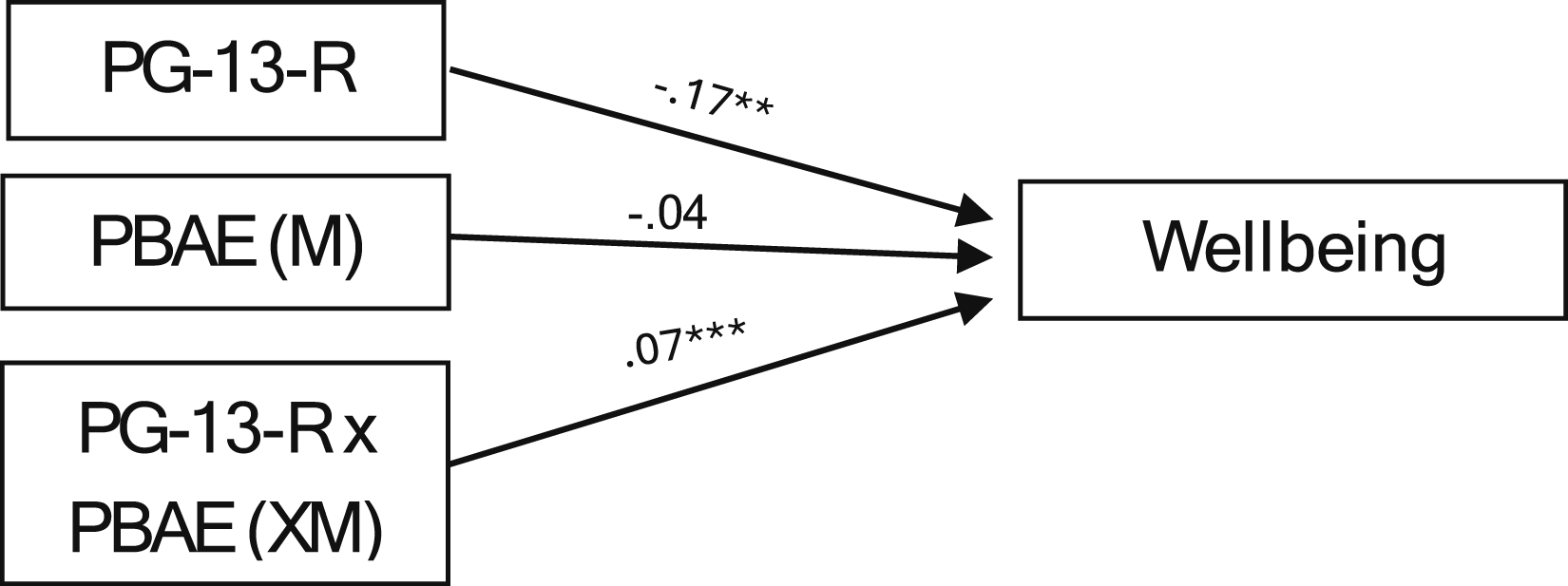
Post-Bereavement Support Use
The most sought source of support post-bereavement was family (n = 108, 86%), followed by friends (n = 88, 70%), social media (n = 86, 67%), off campus counselling (n = 16, 13%), religion (n = 15, 12%), books (n = 11, 9%), on campus counselling (n = 10, 8%), online support groups (n = 4, 3%), and in-person support groups (n = 1, 1%). Seventeen (13.6%) bereaved university students indicated that they talked to teaching staff when they were experiencing the most problems post-bereavement. Of the 17 students who did speak to faculty, the mean rating for how sympathetic their interactions were was 4.18 (SD = .80), out of five (5 = very sympathetic). However, the rating of comfort in speaking to faculty was 2.02 (SD = 1.21), out of 5 (5 = very comfortable). Thirty-five students (28% SD = .45) requested extensions for assignments or exams post-bereavement. One hundred students (80%, SD = .40), indicated that if their university had a bereavement leave policy that they would have used it. Almost all (n = 118, 94.4%, SD = .23) indicated that they believed universities should have a bereavement leave policy for students.
Most participants (n = 101, 81%) provided suggestions for how universities could better support students’ post-bereavement. Suggestions concerned flexibility post-bereavement, and access and awareness regarding supports specifically tailored for grief. Students suggested more flexibility on providing death certificates or removing the need to provide this altogether. Students reported that providing death certificates can be “traumatic,” “confronting,” and especially difficult if the death happened abroad. In addition to more flexibility in extensions, students might need them weeks or months following bereavement. Students suggested the option of pass/fail for certain assignments rather than graded so their overall grade was not impacted in the first few weeks following bereavement. Students also suggested alternative assignments particularly, in class or group assignments when they might not have the capacity the weeks following bereavement.
Students suggested that they would have benefited from access to supports that were specific to bereavement, such as a bereavement leave policy for attending funerals and assignment extensions, training for teaching staff in responding appropriately and empathetically when referring students on to grief specific resources, training for campus counsellors in grief/bereavement, and post-bereavement check-ups and offers of support. Overall, students emphasized that supports and responses needed to target grieving specifically rather than being about well-being in general.
Discussion
We aimed to see whether any demographics or death circumstances indicate students who are more at risk of higher grief severity, lower well-being, or worsened post-bereavement academic experiences. Like previous research, high closeness to the deceased was a key indicator of students at risk for higher grief symptoms and worsened post-bereavement academic experiences (Cupit et al., 2016, 2021; Glickman, 2021; Liew & Servaty-Seib, 2018; Pollard et al., 2017; Walker et al., 2012). This is not surprising given studies indicate students with high closeness to the deceased have more grief symptoms, are more likely to experience PGD, and have academic and mental health difficulties (Cupit et al., 2016, 2021; Glickman, 2021; Liew & Servaty-Seib, 2018; Pollard et al., 2017; Walker et al., 2012). Bereaved students in our study who identified as a religious affiliation were more likely to indicate potential PGD. Further research is needed to understand why identifying as religious could be a risk factor for prolonged grief. First, it is important to establish if these bereaved students were religious prior to their death loss, or if bereaved students who experience more severe grief symptoms turn to religion post-bereavement. One hypothesis for the risk for potential PGD could be that individual worldviews can be strongly based on religious values and ideas, which can be impacted while meaning making following a death (Davis & Nolen-Hoeksema, 2001). If an individual struggles to find meaning with the death in a way that aligns with their existing worldviews, they may experience more distress (Breen et al., 2018; Gillies & Neimeyer, 2006). Further understanding of the relationship between religious adherence and experiences of grief could serve to inform interventions for particular subsets of university students. Although university staff/faculty/campus counsellors cannot influence how close students were to the deceased, or if they identify as religious, they can use this information to recognize students at risk for worsened academic and grief outcomes and offer further support.
The number of students in our sample who scored in the range indicative of probable PGD was incredibly high (30.4%) compared to previous estimates in bereaved student samples (Balk, 2010; Glickman, 2021; Varga, 2015) and three times higher than that reported in the general population (Lundorff et al., 2017). This is concerning because previous studies have indicated that bereaved students who had higher grief severity were less supported and more depressed than bereaved students who had less grief severity (Al-Gamal et al., 2019). Whereas previous research indicates the limited use and benefits of on-campus counselling for bereaved students (Liew & Servaty-Seib, 2018, 2020), research by Wittouck and colleagues (2011), indicates that counselling had greater benefits for people with elevated grief severity. So, it may not be that offering counselling is unhelpful for all bereaved students but rather should be targeted at students experiencing elevated grief symptoms rather than the umbrella support that is usually offered following bereavement. Universities should consider follow up screening to assess grief severity in bereaved students to identify students who might need more support/would benefit from counselling specifically.
An interesting finding in the present study is that, whereas almost a quarter of students indicated university became more meaningful following bereavement, only 5% of all participants self-rated an improvement in academic experiences. Most students in our study indicated that their academic experiences either stayed the same or worsened following bereavement. Students mostly indicated worsened changes in their study habits, classroom participation and attendance, and the time needed to complete assignments. It is plausible that although university may have given a sense of meaning or control, that it does not necessarily translate into improved academic outcomes and although students may prioritize university endeavors post-bereavement, grief symptoms may impact their ability to perform and maintain their grades (Balk et al., 2010; Cupit et al., 2016; Hardison et al., 2005; Spiccia et al., 2023). These worsened academic changes may be partially explained by previous research findings where students report a decrease in motivation, concentration, and insomnia post-bereavement (Balk et al., 2010; Cupit et al., 2016; Spiccia et al., 2023). Bereaved students may not have the capacity to seek academic supports right away following the death, but universities can provide support by offering flexibility surrounding due dates and expectations regarding course work so bereaved students are able to maintain their grades, particularly in the semester of bereavement. These strategies are particularly important because the findings of this study indicate that worsened academic experiences following bereavement strengthens the influence grief symptoms have on well-being.
Out of the students who indicated a change in priorities post-bereavement most indicated that university became less meaningful. In line with previous findings, students who indicated that university became less meaningful also reported placing more importance on relationships, and meaningful experiences, over academic achievement (Mathews & Servaty-Seib, 2007; Tan & Andriessen, 2021; Walker et al., 2014). Students who reported prioritizing university more following bereavement indicated that they did so because they believed it is what the deceased person would have wanted, using their loss as a motivator (Cupit et al., 2016; Walker et al., 2014). So, although there is no denying bereaved students face challenges at university following bereavement, there is indication that university engagement can help foster resilience and a connection to the deceased- if universities provide a space that is conducive for a student to continue with their studies while grieving.
We found that academic experiences did not moderate the relationship between grief severity and grades. Most students indicated that bereavement did not affect grades, which could indicate the lack of a relationship between grief, academic experiences, and grades. Previous researchers have suggested that students suffering the most due to grief may have already withdrawn (Balk et al., 2010; Glickman, 2021). Potentially, the students in our sample were doing well academically and students whose grades drop following bereavement may have already withdrawn from their studies. Further research into students who have withdrawn due to grief could provide some insight into post-bereavement processes of students withdrawing and how universities can best support them (Balk et al., 2010; Glickman, 2021).
Our findings suggest worsened post-bereavement academic experiences strengthen the relationship between grief severity and well-being, in line with previous research that suggests worsened academic experiences have an impact on well-being following bereavement (Cousins et al., 2017; Cupit et al., 2016; Seah & Wilson, 2011). Interestingly, for students who had lower university connectedness, as their grief severity increased, their well-being also increased, which may indicate that students less connected to their university find support elsewhere (family/off-campus counselling). Furthermore, academic experiences may have less of an impact on grief and well-being for students who are less connected to their university. Additional findings also indicated that students whose grief is moderate/severe, as their university connectedness increased their well-being decreased. These findings suggest that, for students with moderate to high levels of grief severity, an increase in university connectedness is a potential risk factor for a decrease in well-being. If universities promote connection to university following bereavement in students who have moderate to severe grief symptoms, these efforts may backfire. Universities could prioritize support to students with moderate/high grief severity and high connectedness to their university, as this is where academic experiences impacted the relationship between grief and well-being the most. Bereaved students who already have higher university connectedness would most likely be more willing to seek support through their university. Bereaved students who have higher university connectedness may lack support outside of university (e.g., international students, students with less family support), and universities can fill this gap by providing support to students who are most likely to use and benefit from it.
Similarly to previous research, only a small percentage of bereaved students sought university faculty to aid them post-bereavement (Al-Gamal et al., 2019). Although, in contrast to previous findings indicating unempathetic and inappropriate responses from faculty (Bouldin, 2019; Hedman, 2012a, 2012; Seah & Wilson, 2011), students in our sample who went to teaching staff, reported empathetic responses. However, students across our whole sample did not feel comfortable going to faculty for support. Classroom size could inhibit students from feeling comfortable seeking support from teaching staff, being that lecture class sizes can be in the hundreds. Furthermore, the shift to online classes may reinforce the belief of being “just a number” while undertaking higher education, likewise adding to the discomfort of seeking support from staff. Interactions with faculty can be empathetic and meaningful in terms of referral to appropriate services. However, students must feel safe going to staff and faculty for support (Tureluren et al., 2022). Along with students’ discomfort in seeking help, faculty are also unsure of how to respond appropriately and what supports to refer to students (Bouldin, 2019; Liew & Servaty-Seib, 2020). Referring students to appropriate support is particularly difficult when most universities do not provide grief-specific resources (Cupit et al., 2016). Establishing a bereavement leave policy would mitigate the confusion for both staff and students in understanding exactly what to do/where to refer students following bereavement (Liew & Servaty-Seib, 2018). Such policies could be work in tandem with initiatives such as peer support groups, reflection spaces, and access to modules on student grief that are easily accessible for students and would enable them to access support without having to disclose their bereavement directly to teaching staff if they are uncomfortable doing so.
Limitations and Implications
Our study was cross-sectional, giving us information at only a certain point in time. Future longitudinal designs would be beneficial in understanding the long-term process and implications of bereaved university students. Selection bias can impact the generalizability of findings across populations. However, data was collected from 33 Australian universities broadening the generalizability of findings via ensuring the outcomes are not specific to any one university or region within Australia. It should also be noted that the data reported here were collected across a period of time where public health measures related to the COVID-19 pandemic were in place in some of the locations where participants resided. It is possible that these public health measures (e.g. lockdowns, closed university campuses, online learning only) could have impacted some of the findings, as students may have been less likely to seek support and be supported by staff, with the adjustment to online learning (Martin, 2025).
Additionally, research has indicated that factors relating to socio-economic status and cultural background can influence the severity of grief and its impact on academic experiences, with students from lower socio-economic backgrounds being disproportionately affected (e.g., Glickman, 2021; Paul & Vaswani, 2020; Varga et al., 2021). Although such analyses were beyond the scope of the current study, given that financial difficulties are the third most common reason Australian students proffer when considering withdrawal from study (behind stress and mental health; Quality Indicators for Learning and Teaching, 2024), future research should aim to collect this information to further understand the factors that put particular students at risk of a decline in well-being and academic outcomes. Our study relied on students self-reporting and retrospective answers at times, which may impact accuracy. With our mixed methods study design, we found that when students were allowed to explain their quantitative answers it provided more complexity to their answer. For example, when indicating priority changes regarding university, students could explain their answers further by clarifying that priorities changed over time post-bereavement. More qualitative interviews should be used to explore the lived experiences of grieving while navigating university.
Despite these limitations, our findings highlight some key areas that university institutions and administrative/teaching staff can improve to aid students who are post-bereavement. Our findings suggest that student integration and engagement with their university and academics may be key to positive outcomes for some bereaved students. Integration and academic achievement are key indicators of retention and academic success Brooke & Willoughby, 2015; Cupit et al., 2016; Tinto, 1993). However, for students with moderate to high grief severity, the culture and challenges post-bereavement that Australian universities currently present, are detrimental to their well-being. Universities need to address the experiences of students’ post-bereavement in-order for students to feel supported while undertaking their studies, or risk attrition.
Nearly all bereaved students indicated that they would have used a bereavement leave policy if their university offered one, and even more believed that students should have access to a bereavement leave policy. This is in line with previous findings, that indicated the usefulness of student bereavement leave policies/procedures in navigating university while grieving (Cupit et al., 2016; Liew & Servaty-Seib, 2018, 2020). As well as giving students post-bereavement the opportunity to easily access a service that is specifically targeted to them, having a bereavement leave policy/procedure would be ideal for administrative and teaching staff to be able to quickly refer students onto a specific grief service (Liew & Servaty-Seib, 2020). Student bereavement initiatives have mainly emerged in the US and include bereavement leave policies and student-led organizations, giving grieving students the option to join peer support groups, volunteering and, receiving mentoring from supportive administrative and teaching staff (Liew & Servaty-Seib, 2020; Fajgenbaum et al., 2012); as well as grief sensitivity training offered to administrative and teaching staff. However, much less has emerged in Australia to support grieving students in higher education. Australian universities implementing student bereavement procedures would be at the forefront of addressing calls for action in providing further support for grieving university students.
To conclude, our research highlights the potential for universities to implement strategies to promote a culture that holds space for bereaved students. Student integration is a key predictor for student success, however for bereaved students suffering the most, integration may be a risk factor for a decrease in well-being. Students feeling engaged with and supported by their university, are more likely to have positive outcomes regarding their mental health and academic achievement post-bereavement (Cupit et al., 2016, 2021; Seah & Wilson, 2011; Servaty-Seib & Hamilton, 2006). Universities should take on the suggestions given by bereaved students and provide support that is targeted specifically for grieving students, taking away the ambiguity of what supports are available and beneficial to bereaved students.
Supplemental Material
Supplemental Material - Well-Being and Academic Experiences in Bereaved University Students
Supplemental Material for Well-Being and Academic Experiences in Bereaved University Students by Ashton Hay, Daniel Rudaizky, Joel A. Howell, and Lauren J. Breen in OMEGA - Journal of Death and Dying.
Footnotes
Declaration of Conflicting Interests
The author(s) declared no potential conflicts of interest with respect to the research, authorship, and/or publication of this article.
Funding
The author(s) disclosed receipt of the following financial support for the research, authorship, and/or publication of this article: Ashton Hay is supported by an Australian Government Research Training Program Scholarship.

Supplemental Material
Supplemental material for this article is available online.
Author Biographies
References
Supplementary Material
Please find the following supplemental material available below.
For Open Access articles published under a Creative Commons License, all supplemental material carries the same license as the article it is associated with.
For non-Open Access articles published, all supplemental material carries a non-exclusive license, and permission requests for re-use of supplemental material or any part of supplemental material shall be sent directly to the copyright owner as specified in the copyright notice associated with the article.
