




Abstract
Bereavement during childhood impacts children’s wellbeing and biopsychosocial development. Research examining impacts and outcomes of childhood bereavement and supportive interventions has highlighted a myriad of factors that influence children’s unique, complex experiences of grief, necessitating a personalized, child-centred approach. Children’s grief support is underpinned by well-established grief theories studied primarily in adult populations, and stage-based developmental theories that characterise child development as “normative” and universal. We propose a rethinking that recognises: development in childhood as transactional, dynamic, and bidirectional; children as active agents; and social contexts influencing grief and development. This conceptualisation invites expanded understandings of: children’s grief in response to death and non-death losses; contextual, relational influences on children’s experiences of grief; ways that grieving children’s rights and agency are supported and thwarted in their daily lives; and opportunities for professionals, family and community members to support grieving children with compassionate curiosity and cultural humility to nurture grief-literate communities.
Keywords
Introduction
“There is no universal conceptualization of childhood nor is there a universal experience of grief. Grief is both a right and privilege, yet ones that are not afforded to all children.” (Traher, 2023, p. 16)
This paper was conceived and generated by a working group of 14 clinicians, researchers, and academics from nine countries: Australia, Belgium, Brazil, Canada, Germany, Israel, New Zealand, Scotland, and the United States. Our dialogue began during an in-person meeting of the International Working Group on Dying, Death, and Bereavement in Halifax, Nova Scotia, Canada, in October 2023. Whilst we had keen interest and deep investment in exploring and advancing the field of childhood grief in common, each of us brought our own perspectives, informed by our unique and varied personal, disciplinary, professional, and cultural contexts and experiences.
The opening quotation from Traher (2023) highlights the paradox between believing that grief is a natural experience that does not need to be pathologised, yet also needs our fulsome and compassionate attention at an individual child level. Our collective passion was ignited by our shared recognition of a missing central piece of the puzzle and our frustration with the inadequacies of existing conceptualisations of children and grief experienced during childhood.
In particular, we grappled with how heavily current grief support practice relies on stage-based developmental theories that are outdated, constrained and reflective of the predominantly White, male, middle class, neurotypical, North American and European children on whom these theories were based (Koller & Wheelwright, 2020). Further, well-established grief theories that have provided the basis for bereavement support programs and interventions for children, remain less well developed or integrated with foundational understandings of childhood and children’s experiences (Griese et al., 2018). We felt the need to be cautious to avoid translating ‘adult-model thinking to our understanding of children’ (Lytje & Dyregrov, 2024, p. 2).
Notably, empirical studies of childhood bereavement have largely focused on the perceptions, outcomes, and impacts of various factors on children, rather than foregrounding children’s active involvement, understandings of grief and related expressions of agency, and bidirectional influences on others in their lived experiences of grief. Thus, we set out to re-conceptualise grief in childhood.
In this article, the terms children and young people are used interchangeably, and along with childhood, refer to persons below the age of majority. We acknowledge that the term children may not seem to adequately include older young people or youths. We have used ‘children’ to maintain congruence with terms used in the field of Childhood Studies and in line with the definition of children in the United Nations Convention on the Rights of the Child (UNCRC) (United Nations Convention or the Rights of the Child, 1989). We wish to shift the conversation and our approach to understanding and supporting grieving children. In the spirit of a manifesto, we propose that there is a need for a paradigm shift to recognise and prioritise children as active moral agents in their experiences of grief.
We propose a conceptualisation emphasising agency and transactions in childhood grief as a core component. This will enable a more holistic, and complex understanding of grief as dynamic, transforming, relational, and bidirectional, which offers “unity in diversity” (Carnevale et al., 2021, p. 115). This approach -- centered on children and childhood – invites practitioners, family and community members to recognise their responsibility and engage with opportunities to explore each young person’s unique experience and needs, respond with compassionate curiosity and cultural humility, and nurture grief-literate communities.
We recognise that communities have long responded to grieving children in multiple organic ways at the point of trauma or loss as situations have presented themselves. Schools, for example, offer education about loss and grief and hold support sessions after students experience a loss. Peer support and trauma-informed responses can be adopted by sports teams and activity groups. Specialist bereavement counsellors specifically trained to support children are available. Grief-focused camps and support groups for children and their families have emerged. Web resources for grief education and support have sprung up. These initiatives have often evolved through civic and faith-based communities in response to local circumstances, identifying needs and marshalling responses often within very rapid time frames, when demands and needs are urgent. This community level response and organisation of support is a pattern seen in many places throughout the world, and represents a movement recently championed through the concept of Compassionate Communities (Abel et al., 2018).
In our virtual and written dialogue we have continued to wrestle with how deeply ingrained old developmental theories are in our own perceptions and discourses, demonstrated by the occasional, and inevitable stumbling back into familiar ways of describing children and childhood. Despite being a relatively large working group and committed to remaining critically reflexive, we recognise the significance of our positionality, privilege, and inherent biases in our work. We are striving to acknowledge the deep diversity in human experiences, cultural contexts and meanings. As a result, we are inspired to construct a more contemporary lens through which to understand childhood grief, emphasising the significance of our openness and humility as family and community members, practitioners, researchers, and academics.
Theoretical Framework
Children as Active Agents
Alongside the negative critique of universalised age-based theories of child development, Childhood Studies scholars have advanced ‘positive’ arguments for reimagining children as active moral agents, rather than immature and incapable ‘human becomings’ (Qvortrup, 1994).
Our conception of agency draws on Charles Taylor’s early critique of behavioural views of human action in mid-20th century Anglo-American psychology (Taylor, 1985). Taylor (1989) argued that these behavioural views concealed how persons are self-interpreting agents who continually discern what is meaningful in specific situations and act in terms of their understandings of what matters. For Taylor, agents are continually interpreting what matters in light of background ‘horizons of significance’ and ‘social imaginaries’, as the surrounding community shapes their understanding of their surrounding world and how they could or should navigate it (Taylor, 1989). Persons are relationally embedded. It is also important to note that behaviors and perceptions, as well as meanings derived from experiences are culturally influenced and mediated. Children receive knowledge and observe models of how to respond through a cultural and familial lens. This may serve to determine notions of what is ‘normal’ or acceptable when grieving, in turn setting standards by which pathological reactions are judged within the family unit (Shapiro, 2001).
In a concept analysis of children’s agency within the health literature, Montreuil and Carnevale (2015) concluded that ‘children’s agency could be defined as children’s capacity to act deliberately, speak for oneself, and actively reflect on their social worlds, shaping their lives and the lives of others. This definition entails that multiple forms of expression can be used to speak for oneself, including speech and bodily expressions, and that the capacity of children to enact agency is not dependent on adults as facilitators of agency’ (Montreuil & Carnevale, 2015).
Siedlikowski et al. (2022) identified three interrelated dimensions of children’s agency, which include: (a) aspirations, encompassing wishes and desires for themselves and others, including their broader society; (b) concerns, including for their own and others’ wellbeing, reflecting “thwarted aspirations or worries about their aspirations not being fulfilled” (p. 667); and (c) capacities, relating to abilities to discern, decide, act, confront, express, and make sense of moral concerns and circumstances. Although children’s agential capacity does not depend on adults, its expression is context-dependent and may be bolstered or thwarted by surrounding individuals, institutions, and circumstances (Siedlikowski et al., 2022).
As agents, children can also have views relating to their wishes for privacy and confidentiality (Noiseux et al., 2019). Children make choices all the time about what they wish to share, prefer not to share, what they will do, and how they believe their choices will impact others.
Transactional Model
A transactional approach provides an alternative to the age-based developmental framework that has been so dominant within our fields, and one that cannot be dissociated from agency. The transactional model of child development was proposed in Europe and the United States in the 1970s (Sameroff, 1975, 2009), to describe the reciprocal influences of nature and nurture. Whereas stage-based theories characterise children as immature and incapable, and development as ‘normative’ and universal, transactional models recognise development as a dynamic bidirectional interplay in which children, and their social contexts, mutually influence each other over time (Sameroff, 2009). By conceptualising children as active agents, and development as socially contextual and rooted in relationships, transactional models invite a more holistic examination of how bidirectional interactions contribute to similarities and variations in developmental trajectories (Carnevale et al., 2021).
Whilst transactional developmental models were described in the academic world in the 1970s (Sameroff, 1975), this way of viewing development is deeply rooted and embodied in many traditional cultures that give children the space to grow and develop relationally (Sarche & Whitesell, 2012). Sameroff (2009) understands children’s evolution through a lens of reciprocally amendable transactions between interdependent systems including extended family, peers, schools and community contexts. The centrality of transactions in the process of human development highlights the constant interplay between children and adults where each is affecting the other. In this model the environmental context is evolving rather than static, and is influenced by children, rather than positioning them as passive recipients.
As highlighted by Shapiro (2001), individuals construct a transactional self, influenced by elaborate interpersonal expectations from infancy, and continually evolve through a lifelong process of relational adaptation. As children interact with their family members, peers, teachers, counselors, and community members, they generate and respond to each other’s signals and cues. Through these interactions – the transactions – they co-create an environment that is influenced by their perceptions, reactions and responses to and from others, that changes over time. In this way, development is strongly influenced by such exchanges, as these transactions create the child’s world and the context of their evolving self.
Rich insights advanced by anthropologists of childhood examining children’s perspectives across cultural contexts (Bluebond-Langner & Korbin, 2007), as well as transactional conceptions of children’s development (Sameroff, 2009), have highlighted the importance of focusing on local contexts and children’s particular experiences, rather than age, towards advancing a ‘thick’ understanding of childhood diversities (Carnevale, 2020).
Family Context
Families are crucial in a transactional conception of childhood grief, as family members’ interactions, responses to, and expressions of grief influence children’s own grief experiences (Webster & Skeen, 2012), reflecting familial influences on children’s agential expression. Further, children’s grief unfolds within families that are themselves undergoing family development processes as they adapt and face new transitions following a loss (Shapiro, 1994; Walsh & McGoldrick, 2013). This occurs within a unique structural context with multiple factors contributing to the reorganisation of roles and responsibilities, creating dynamic and fluid adaptive responses among family members (Cait, 2005; Kissane et al., 1996, 2016; Nadeau, 1998; Walsh, 2003). Grief can commence before a death as family members face a life-threatening illness and make decisions about the manner or degree to which they prepare and include children. These decisions and processes are multi-dimensional and often made more complex by families’ experiences of historical and concurrent trauma (Fisher, 2003; Macpherson, 2009), all of which further supports or constrains children’s opportunities for agential expression.
Conceptualising Agency and Transactions in Childhood Grief
Although agency is very well-established within childhood studies, it has not permeated the health-related literature or our way of thinking in health care practice to the same extent. Stage-based developmental theory continues to shape practices in pediatric health care in many situations. By foregrounding agency, grieving is recognised as a fundamental human process that children have a right to experience and express in their own ways. That recognition demands from us more than our simple compassion.
In his description of moral agency, Taylor (1991) explained that by being human, we are all active agents and our agency is always morally oriented. We are always striving to understand what is right, what is good; that shapes the kind of aspirations that are meaningful. Significant loss and grief can disrupt a person’s sense of moral order, and the way in which they understand the world around them as good, right, safe, just, connected, or not (Attig, 1996). Whether the loss is the result of the death of someone close to them, their own or a family member’s serious illness or injury, or another cause, amidst the grief and sadness questions arise about “why is this happening?” This search for meaning in the context of childhood grief has important implications for the growing self.
We propose that in the wake of that massive disruption, responses of dying and grieving children are rooted in an agential quest to make sense of what has happened (Remke, 2005), just as they are with adults (Holland et al., 2006). Children’s expressions of agency, including their aspirations, concerns, and capacities (Siedlikowski et al., 2022), are central to their attempts to reconstruct social and moral order and make sense of their experiences in the face of loss and grief. Having agency means that they have aspirations in terms of how they reconcile the hardships they face; how they might want to right certain wrongs that they confront, and how they choose to share –or not-- what is happening to them in order to manage actions and relationships.
Although making or finding meaning can occur in many contexts, meaning-making and explorations of meaning in the context of palliative care and grief have commonly been part of a positive care discourse that conveys optimism, and privileges a patient-centered versus family-centered approach (Barnard et al., 2022). In contrast, our transactional perspective emphasises the relational nature of our experiences in grief, and our embeddedness in systems of meaning that are not our own choice. These systems of meaning shape our identities, help us find our footing and understand what we can count on in our disrupted worlds. Therefore, our conceptualisation centres children as they strive to make sense of their experiences in a transactional manner, interacting with those around them as part of an agential quest to reconcile a disrupted moral order, access comfort, and reshape their understanding of the world they are in. This requires concerned adults to actively elicit the perspectives of children and engage in meaningful dialogues regarding a current loss, reciprocally illuminating and reshaping their respective understandings.
Children are not only participants in transactions. They are actively involved in shaping and contributing to their experiences and contexts. The transactions between children and those around them can support or impede this process of reconstruction, as each interaction serves to encourage or discourage, acknowledge or disenfranchise individuals’ expressions of agency. This conceptualisation recognises that children have agency, which is an essential aspect of being; they influence, and are influenced by, every interaction with others and their environments.
With the recognition that every interaction with a child matters, there comes a responsibility to be aware of and responsive to their expressions of moral agency. As adults, we would then need to hold ourselves accountable for our actions, roles, and impacts on the experiences of children who are facing or managing grief, recognising that we either thwart or uplift their understandings of grief and related expressions of agency. Children command our respect and our support, our thoughtful engagement and our empathy: their voices require ethical recognition. Children are actively growing, learning, and developing, and so as a practical matter, the way they experience and come to understand grief will have significant ripple effects throughout their lives, and through the lives of others with whom they interact over time. We advocate for the recognition of children’s right to grief literate, well-informed interactions with caring others.
Rights of Grieving Children
In recent years, the rights of children have been affirmed and articulated in the United Nations Convention on the Rights of the Child (UNCRC, 1989). This provides a foundation upon which to establish the rights of grieving children in alignment with, and advanced by, an agential conception of childhood.
The UNCRC is the most widely ratified human rights treaty. To date, the only country yet to ratify is the United States of America (Parker & Crabtree, 2023; Wagner, 2021) with Sweden, Norway and Iceland examples of the few nations that have incorporated the UNCRC into domestic law. The UNCRC sets out the fundamental human rights due to every child in the form of 54 articles grouped into the categories: provision, protection, and participation (Hammarberg, 1990; Jörgensen et al., 2023). These rights include those related to: • participation (e.g., the right to be heard and to have ‘due weight’ attributed to their expressed views); • having all decisions that affect them to be based on their own best interests; • receiving information; • expressing freely with others what they learn, think and feel; • communicating in ways that are meaningful for them, and in alignment with their individual capacities.
The UNCRC is not without critics and tensions; Henderson-Dekort et al. (2022), Quennerstedt et al. (2018), and Sharma (2020) speak to the “ambiguity surrounding the terms rights, participation, best interests and capacity” (p.1). However, the UNCRC is the most comprehensive and universally acknowledged treaty and guiding document for children’s rights.
Article 12 is of particular relevance here as it emphasises ‘respect for the views of the child,’ specifying that ‘every child has the right to express their views, feelings and wishes in all matters affecting them, and to have their views considered and taken seriously’ (UNICEF, 1989). Article 12 has been further conceptualised for practice and research with the development of the Lundy (2007). This model presents four chronological, yet intertwined and overlapping elements: • Space: Children must be given the opportunity to express a view • Voice: Children must be facilitated to express their views • Audience: The view must be listened to • Influence: The view must be acted upon, as appropriate (Lundy, 2007, p. 933).
Cuevas-Parra (2022) has further expanded the Lundy model to include ‘intersecting identities’ to refer to children’s social identities, and ‘enabling environments’ which features “...competencies, methodologies, social contexts, inclusion strategies, accountability, safeguarding and sustainability” (Cuevas-Parra, 2022, p. 373). This elaboration aims to enhance and strengthen the domains of space, voice, audience and influence for children across multiple contexts.
While the UNCRC prompts adults to recognise and acknowledge children as rights-holders, as ‘beings’ not ‘becomings’ (Uprichard, 2008), children’s capacity, agency, and best interests are impacted by the beliefs, perceptions, and attitudes of adults. As each generation explores the world through a different lens to previous generations, it is necessary to situate each child as the expert in their own lived experiences.
Incorporating the UNCRC or Article 12 into research or the practice of providing bereavement support has been very little explored. In the health care context, children have described feeling they were provided with space and voice to participate in their health care; however, that they lacked an audience and influence, leading them to feel “…like they had no autonomy or power. This was mostly attributed to having decision-making taken away in what was often framed as being in their best interests” (Davies et al., p. 11). This has been described as “epistemological oppression”, where the ethical significance of children’s voices is systemically discounted through the dominance of age-based developmental models that characterise them as immature and incapable (Carnevale, 2020). The common emphasis in practice is to attend to children’s voices with support and compassion without also recognising these voices as morally significant expressions of agency that should be attributed ethical weight in determining their best interests.
Children’s Grief-Related Rights.
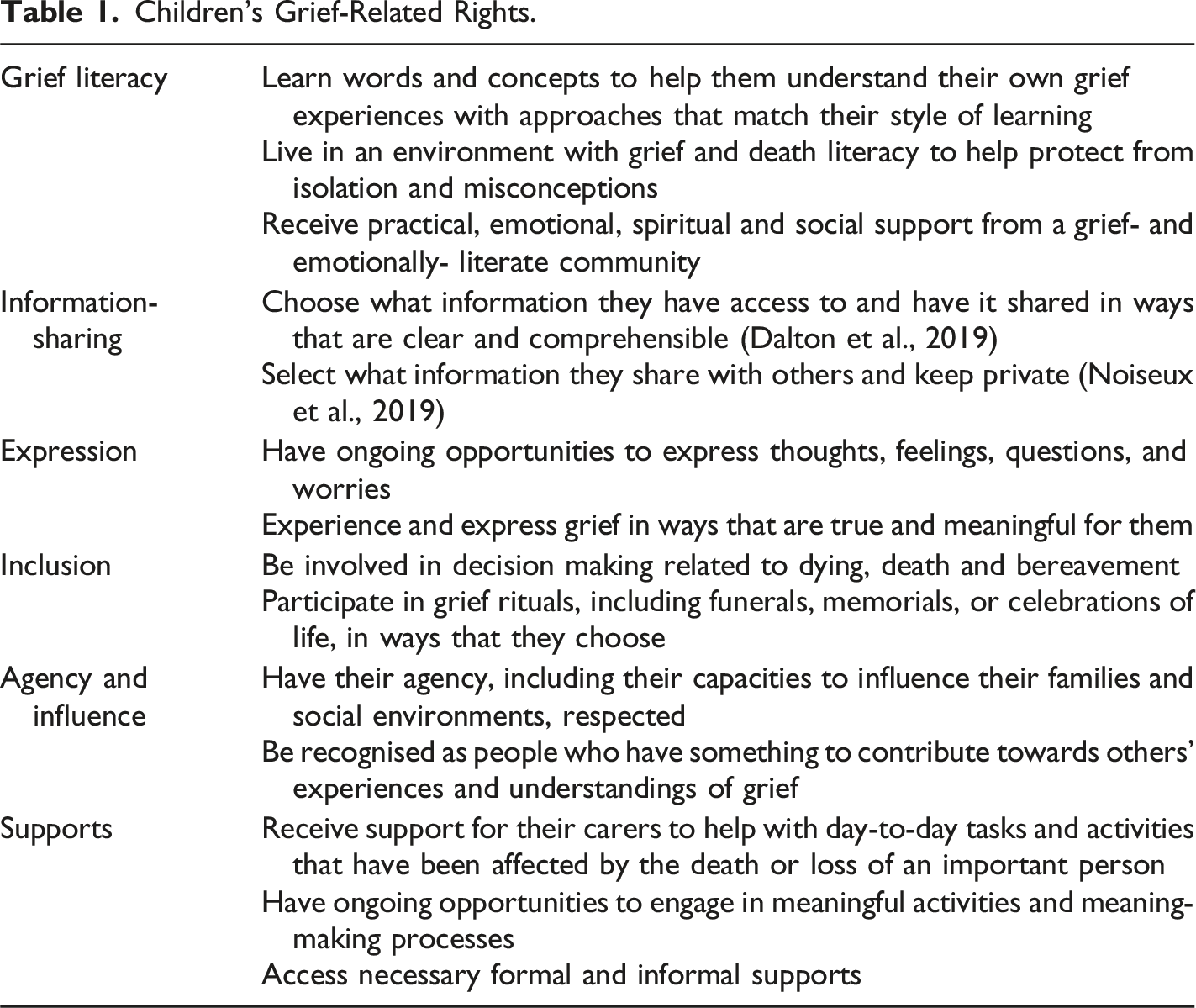
Supporting children’s grief experiences in these ways ultimately promotes children’s individual wellbeing. Such support will optimally promote opportunities for transactional learning in the context of each individual’s development. Respecting children’s rights in this manner can help ensure an individualised, child-centered and grief-informed understanding of their best interests.
Implications of Agency and Transactions in Childhood Grief
If we recognise children as active agents who mutually influence and are influenced by their close relationships, communities, and cultural contexts, it follows that their complex and unique experiences of grief will be both expressed and shaped in each of those contexts. Therefore, implications for supporting grieving children are relevant and applicable to all adults with whom they interact, whether they are family, friends, members of a shared community, educators, health care professionals, counsellors, or others. By equipping all the adults in childrens’ lives with a deeper understanding of grief and agency in childhood, comprehensive support can be provided by grief-literate, compassionate communities. We propose that adults support grieving children’s rights and agential expression by: leading, following, and listening; information-sharing and inclusion; making sense of their experiences; valuing play; and finally, research and policy recommendations.
Leading, following, and Listening to Grieving Children
Respecting children’s rights and agency requires adults to actively elicit and listen to children’s perspectives, concerns, preferences, and wishes, with a genuine desire to understand and honour their views (Lundy, 2007). However, legitimately creating “space” to express a view requires that adults sometimes take the lead to initiate conversations about death, loss, and grief, demonstrating our willingness to be open and vulnerable. Deferring to children with the perspective that, “we’ll talk about it when they bring it up,” places the onus on them to initiate daunting conversations, and disregards children’s tendency to engage in mutual pretense, mirroring the behaviours of adults in their lives. Instead, adults need to model how to engage in important conversations even if they feel uncertain or uncomfortable doing so.
After setting the stage and opening a dialogue, adults can respect children’s rights and agency by listening intently and shifting to follow children’s lead in terms of how much and which information they want to hear, when, where, with whom, as well as guiding the pace. This active listening also requires adults to treat children’s thoughts, feelings, questions, and concerns seriously. For example, when a child asks, “how will he pee in the coffin?” or “will worms crawl all over her?” they deserve a thoughtful response that recognises the child’s legitimate concern rather than treating it as “cute” and insignificant. Treating children’s questions as important and meaningful conveys respect and encourages them to express their thoughts and feelings as they arise.
Children also need adults to listen and follow their lead as they oscillate in their grief, alternating between focusing on and away from contrasting thoughts and feelings, or between play and distress, as they grieve (Stroebe & Schut, 2010). Rather than redirecting them to “be strong,” or “stay positive,” adults can ensure that children have the freedom to “puddle-jump” (Child Bereavement UK, ) in and out of intense moments of grief or oscillate back and forth between focusing on the present and future, and grieving and mourning the losses they have experienced (Stroebe & Schut, 2010). Caring adults can honour children’s agential expression in the choices they make about what, when, and how often to focus on different elements of their grief, how, and with whom.
In the absence of an understanding of grief in general and particularly in childhood, this oscillation is sometimes misinterpreted as denial or a lack of understanding of death; in contrast, a grief-literate approach recognises this process as a natural means of self-regulation amidst the emotional intensity of grief in childhood. Adults can support children’s capacities by recognising their behaviours as clues or expressions of their needs, and offering their supportive presence with children experiencing the full range of emotions they may have without trying to “correct” them.
Information-Sharing and Inclusion
Researchers examining parents’ feelings of relative comfort and preparedness to address their children’s questions and needs related to a family member’s serious illness have found that many parents struggle to take their children’s views into account prior to the parent’s death (Dalton et al., 2019; Eklund et al., 2020). Impulses to protect children from the immensity of grief often result in inadequate attention paid to the child’s needs and cues, for example, such that many avoid telling children about a parental or sibling terminal diagnosis until the end-of-life is near (Dalton et al., 2019; Stein et al., 2019).
Health care professionals are often positioned to advise and support parents in preparing their children for a family member’s impending death, with many parents seeking this type of support (Dalton et al., 2019). In addition to supporting parents with early discussions, health care providers are well placed to advocate for managing visitors in a manner that protects adequate one-on-one time for children and their dying parent or sibling, enabling children to say or do what feels important to them. However, a number of challenges have been reported, including health care providers’ lack of training, comfort, or familiarity supporting children’s participation in communication and decision-making as a parent’s death approaches, particularly in the context of family members’ grief, complex dynamics, cultural and communicative norms (Dalton et al., 2019). This is especially challenging when children are perceived to be overwhelmed by the experience (Morris et al., 2017; Philips, 2014).
Contrasting these protective intentions, children demonstrate their capacities through their play to actively engage in maintaining their relationships with dead loved ones and have the resources to resist harmful outcomes by creating positive biographical transitions before and after parental death when they have opportunities for support and inclusion (Turner, 2020). Children also have their own agential aspirations related to attending funerals and other rituals when adults question the appropriateness of their presence. For instance, children may wish to support a bereaved friend who they fear will feel alone; confirm that the person is ‘really dead’ and it’s not a mistake; feel the sense of security afforded by family gathering around them; or simply to take part in compelling, meaningful events within their family or community.
Children also have rights and preferences related to whether and what information about their experience they share with others, balancing the tension between a desire for others to be sensitive and supportive, while maintaining their own privacy (Canadian Virtual, 2022). When so much is beyond their control, grieving children can exercise agency and control over what they share and with whom (Remke, 2005). It is critical that others do not thwart children’s agency by sharing information with peers or community members -- even with protective intentions -- without exploring their own personal wishes and preferences, or to push children to express their most vulnerable thoughts and feelings before they feel able to do so.
It is clear that children have aspirations and capacities of their own, including to be able to shape their own narratives more than they are typically given credit for. To support these efforts, children have repeatedly expressed their desire to have access to information and a voice in decision-making in order for them to make informed and meaningful choices about their own involvement when someone is dying or has died (Chowns, 2013; Davies et al., 2024; Eklund et al., 2020). It is important to be responsive to each child’s unique preferences.
Making Sense of Their Experiences
Grieving children need to be met with compassionate understanding and feedback in their social environments. In the absence of caring others with whom children feel safe and comfortable to express themselves, feel heard, and supported, their attempts to make sense of a death or non-death loss in isolation can lead them to internalise harmful messages. For example, if children have not been invited to express their thoughts and feelings, even if the reasons for this are well-intended, they may interpret it as “nobody cares what I have to say,” “nobody talks about this,” or “I don’t matter.” If they do not have people around them modelling and talking about their own grief, they may imagine, “there must be something wrong with me if I am upset by this.” If no one is exploring their beliefs about life and death, helping them to navigate uncertainty, mortality, and vulnerability, children may feel, “anybody can die at any time, it seems like there’s no order or sense to the world around me.”
For those coming from communities or personal experiences that have taught: “good things happen to good people,” this death, loss, or sense of injustice disrupts the moral order, prompting reflections that may be internalised, such as, “why did this happen to me?” or “what did I do to deserve this?” When children are excluded from difficult conversations in an attempt to protect them, children’s agency, access to information and support are thwarted, leaving them to infer their own explanations. Often, this leads to feelings of being somehow responsible for an illness, death, or suffering. Facing this experience without caring adults to explore and clarify children’s perceptions and understandings can contribute to considerable emotional conflict or distress.
Caring adults in a child’s life can engage with them to support their making sense of these existential questions as part of a process that transforms over time. Contrasting an approach to “meaning-making” as a psychosocial intervention, this orientation to “making sense” emphasises and honours children’s rights to information and support, and their agential efforts and capacities to understand and grapple with complex information and great unknowns. This is an essential element and facilitator of grief literacy: offering a knowledgeable and compassionate presence and responses to children as they confront losses (Breen et al., 2022).
Valuing Play
Adults can support children’s rights and agential expression by creating and valuing opportunities to engage in play. Contrary to the dominant conception of play as a frivolous way of occupying or wasting time, or taking one’s mind off things, playfulness is an important, meaningful means of expressing agency (Hausfather et al., 2024). For example, adolescents have demonstrated that play can be revealing, creating an opportunity for expressing dimensions of agency that are systematically suppressed by social norms that devalue all that is associated with childhood as frivolous and unimportant (Hausfather et al., 2024).
We encourage the adoption of a practice-oriented recognition of play as a powerful transactional, reciprocal opportunity between children, but also children and older people. Play offers a means of making sense of stressful events that occurred by rehearsing or replaying them to process information; rebuilding a sense of control by reconstructing events in the way that a child may wish they had unfolded; expressing strong feelings or intense energy; finding comfort in familiar or imaginary play. Each of these forms of play can help children’s processing and adapting as they grieve, supporting the natural oscillation of grief and the development of a coherent narrative of their experiences. By engaging in, or observing children’s play, and by following their lead and paying attention to what is being expressed, adults have an opportunity to better understand children’s perceptions and needs.
Research and Policy
Current initiatives within childhood research highlight political dimensions of young people’s agency. Specifically, as agents, young people’s interests and capacities are not limited solely to matters that affect them directly. We have noted the growing involvement of young people as advisors or partners in the development of practices, policies and research that relate to the experiences of their broader communities. Initiatives including structural innovations like child/youth advisory councils, and youth led protests for environmental justice have demonstrated ways in which youth engagement can be promoted effectively and respectively, offering youth avenues for agency that go beyond mere tokenism. Furthermore, Lichtenthal et al. (2024) urge bereavement care and support be considered globally as a public health priority, both from an economic and resource perspective and as a public health issue. Recognising the benefits of pre- and post-death support and increasing grief literate compassionate communities benefits children. Alternatively, “the effect of inadequate bereavement care disproportionately disadvantages vulnerable groups, including those living in resource-constrained settings” (Lichtenthal et al., 2024, p. e270). We recommend that future development of practices, policies and research related to children’s grief should be undertaken with meaningful partnerships with young people.
Limitations
We recognise in this proposal that we speak from an extremely privileged position that is not accessible to many carers or supporters of children. We also appreciate that many carers and practitioners around the world instinctively take children’s agency as a given in their approach and in their communication with the children in their sphere of influence. However, we also recognise that there is a grave risk of inequality of adherence in the practice of respecting children’s rights.
Inequality is deeply embedded in the experience of childhood bereavement. Children born into the lowest income households are at greatest risk of being bereaved of a parent or sibling (Paul & Vaswani, 2020), as are those with racialised and historically marginalised status (Howard, 2023). They are also at greater risk of being unable to receive support to process grief due to racism and historically marginalised status (Bordere, 2019).
Whilst we have explored understandings of bereavement as an individual and family experience, it is also a universal experience which is profoundly influenced by social context, making this also a public health issue. We cannot present an empirically tested research hypothesis but we do wish to contribute to the debate and encourage readers to apply this to their own working contexts and share feedback with us to inform the continued evolution of our thinking.
Conclusion
While undoubtedly, the death of a parent or sibling causes considerable distress for children, the transactional model argues that an individual’s ability to adapt to challenges and problems arises from the transactions - interactions - that occur between them and their environment (Sameroff, 2009). As children navigate countless interactions, including the avoidances and silences surrounding death and grief, they constantly observe, consider, interact with, and influence their environment, through their conscious or unconscious choices about what to say, do, or express. This is at the heart of their agency.
To support grieving children, it is important to understand that every reciprocal transaction contributes to children’s interpreted and internalised narratives about grief and life. After a loss, it is critical to be aware of the fact that children do grieve, that they impact and are impacted by those around them, reflecting influences on their social environments at any and every age. Their impressions, the feedback they receive, the messages they interpret about what is and is not deemed acceptable by those around them, can have immediate and life-long influences on their thoughts, behaviours, emotional and physical wellbeing.
We propose that rather than placing the burden solely on children to seek support, adults have responsibilities to engage in a collaborative process whereby children have opportunities to express their interests and needs. Adults should also reinforce resources that inherently exist in communities to support grieving children and to empower those connections and relationships. Ultimately, acknowledging that in many contexts children’s rights to grieve may not be recognised (Traher, 2023), we encourage adults to uphold children’s agency in their grieving.
Footnotes
Acknowledgements
We would like to acknowledge the International Work Group on Death Dying and Bereavement (IWG) for bringing together clinicians, researchers, and educators to further collaborative knowledge generation. This article was conceived at the 33rd meeting of the IWG, held in Halifax, Nova Scotia, Canada, in October 2023, by the “Children, adolescents and grief” working group. We feel grateful and privileged for this rich opportunity to connect and collaborate.
Author Contributions
Conceptualization; G.B., C.-A.C., F.A.C., M.C., J.C., C.E.R., B.L., C.M., S.S.R., L.S., J.S., R.S., C.vB., and R.S; Writing—original draft preparation, C.E.R., M.C., C.M., S.S.R., F.A.C., G.B., C.-A.C., B.L., C.vB., and R.S.; Writing—review and editing, M.C., S.S.R., C.M., C.E.R.; C.-A.C., F.A.C., B.L., L.S., J.S., and C.vB. All authors have read and agreed to the published version of the manuscript.
Declaration of Conflicting Interests
The author(s) declared no potential conflicts of interest with respect to the research, authorship, and/or publication of this article.
Funding
The author(s) received no financial support for the research, authorship, and/or publication of this article.

Author Biographies