




Abstract
Capacity for death awareness and death anxiety in young people has been previously documented but the impact of Covid-19 is not currently known. Therefore, the aim of this study of this study was to explore young people’s experiences and responses to the Covid-19 pandemic. Qualitative data was collected from young people via a two-stage process across the United Kingdom: Stage One consisted of an online questionnaire; Stage Two comprised online semi-structured interviews. Responses for Stage One of the study totalled 120 young people; 9 of these were interviewed for Stage Two of the study. Thematic analysis of data identified four themes relating to young people’s experiences of the Covid-19 pandemic: death anxiety; mental health; normalising death; and identified support needs. Young people experienced heightened death anxiety due to the pandemic but death also became normalized for them and their mental health was negatively affected.
Background
Archaeological findings suggest humans have been influenced by death anxiety for hundreds, if not thousands, of years (Menzies et al., 2020). However, the Covid-19 pandemic produced a new wave of anxiety across the world (Menzies & Menzies, 2020). Resulting lockdowns and reports of increasing deaths reportedly triggered a range of mental health problems such as prolonged grief disorder, post-traumatic stress, loneliness, and death anxiety (Hards et al., 2021; Menzies & Menzies, 2020; Selman et al., 2020). During pandemics, the focus of healthcare professionals is often on fighting the spread of the disease and reducing the physical impact of it; mental health needs are often unseen or underestimated (Silva Junior et al., 2020).
Studies have shown the fear of infection from Covid-19 negatively impacted psychological wellbeing, which can be further exacerbated by factors such as increased vulnerability (Asmundson, 2020; Carvalhoe et al., 2020). Fear of the pandemic was seen to cause stress, anxiety, and depression in the general population, with a further increase in death anxiety (Menzies et al., 2020; Wang et al., 2020). Statistics around resulting suicide rate show a divergence: some countries, like South Korea and India, showed an increase in suicides during the pandemic (Silva Junior et al., 2020) while others do not show any evidence of increased suicides and actually indicated statistically significantly lower figures than the 2 years before Covid-19 (Office for National Statistics, 2022). However, little is known about the impact of the pandemic on death anxiety in children and young people.
The Covid-19 pandemic has presented a unique situation to undertand humanity because of the constant reminders of death (Menzies et al., 2020). Visual images of the pandemic became a powerful medium to communicate its impact to the public (Bonoti et al., 2021). These images communicated the spread of the pandemic and the number of infections and deaths in the population. Visual images, whether accurate or not, help address the public and convey meaning more easily and with greater effect than simply using written words (Joubert & Wasserman, 2020). Young people may exhibit more symptomatic psychological problems than adults, which may be exacerbated by these stories in the community and the media (Furer et al., 2007; Sowden et al., 2020). However, the impact of the media on the mental health of young people during Covid-19 is currently unknown.
Young people can have many questions about what happened and why following sudden or traumatic deaths (Webb, 2005). Circumstances like Covid-19 can also result in discussion of these deaths in some families (Weaver et al., 2021). Other families may shield young people from death to protect them or because parents feel they do not fully understand death (Brown & Sourkes, 2010). Death may be a difficult concept for children to understand (Bonoti et al., 2013). However, evidence suggests children as young as 7 years old understand something about the loss of someone (Speece & Brent, 1996; Webb, 2005). This understanding is affected by factors such as the child’s age, gender, and previous experiences of death (Bonoti et al., 2013). Increased capacity for death awareness has been reported in the general population (Schumaker et al., 1991) but any increase is less certain in young people. This is important because misunderstanding the feelings of young people may further complicate their death anxiety (Webb, 2011).
Death anxiety has been characterized by various features: an awareness of one’s own death and resulting anxiety and depression caused by the restriction of self-actualisation (Abdel-Khalek & Tomás-Sábado, 2005); a basic fear of death (Farahi & Khalatbari, 2020); and emotional distress and insecurity caused by recollections of mortality, including personal memories and thoughts of death (American Psychological Association, 2020; Jones et al., 2021). Reactions of young people to traumatic events are thought to be similar to those of adults: depression, regression, and physical and mental health problems, including post-traumatic stress disorder (PTSD) (Webb, 2005). Yet this is currently unknown in relation to Covid-19.
Rules and regulations, lockdowns, and increased deaths made the Covid-19 pandemic a disturbing time for children, young people, and their families (Donagh, 2020). Understanding the influence of Covid-19 on the experiences of young people is important to help understand their mental health. Therefore, our research aimed to provide new insights into the impact of Covid-19 on death anxiety and emotional stressors experienced by young people and to identify any support mechanisms they would find useful.
Method
Our study explored the views and experiences of children aged 9–10 as well as young people aged 12–16 years of age. Here, we report on the findings from data collected with young people. To meet the aim, the project had two main objectives: 1. To explore the perspectives of young people about death and dying as a result of the Covid-19 pandemic. 2. To identify support needs for young people experiencing death anxiety as a result of the Covid-19 pandemic.
Recruitment
The recruitment phase was split into two sequential stages: Stage One involved a self-written online questionnaire being made available to young people aged 12–16 in the United Kingdom via online forums. The questionnaire was pilot tested by eight young people to check for understanding and amended slightly to improve clarity. A snowball sampling method was adopted to reach young people in the required age group. The questionnaire focused on the collection of demographic data and the impact of the pandemic on their sense of well-being, as well as the contact they had with others outside their household. As questionnaires were completed anonymously, it is unknown whether any of the young people were known to the researchers prior to the study. No young person in Stage Two of the study had a prior relationship with the interviewer.
At the end of the questionnaire in Stage One of the study, young people were able to provide their email address if they wanted to be considered for a follow-up interview for Stage Two of the study. Providing their email address did not guarantee an interview but allowed for the study team to consider them for Stage Two. Semi-structured interviews were used to explore and expand some of the questionnaire responses. Interviews took place online at home and were conducted, recorded and transcribed by BH. Young people were able to pick their own pseudonym by which they wanted to be known as throughout the study.
Participants
Stage One
The final sample consisted of 120 young people, as outlined in Figure 1. Total responses from stage one of the study.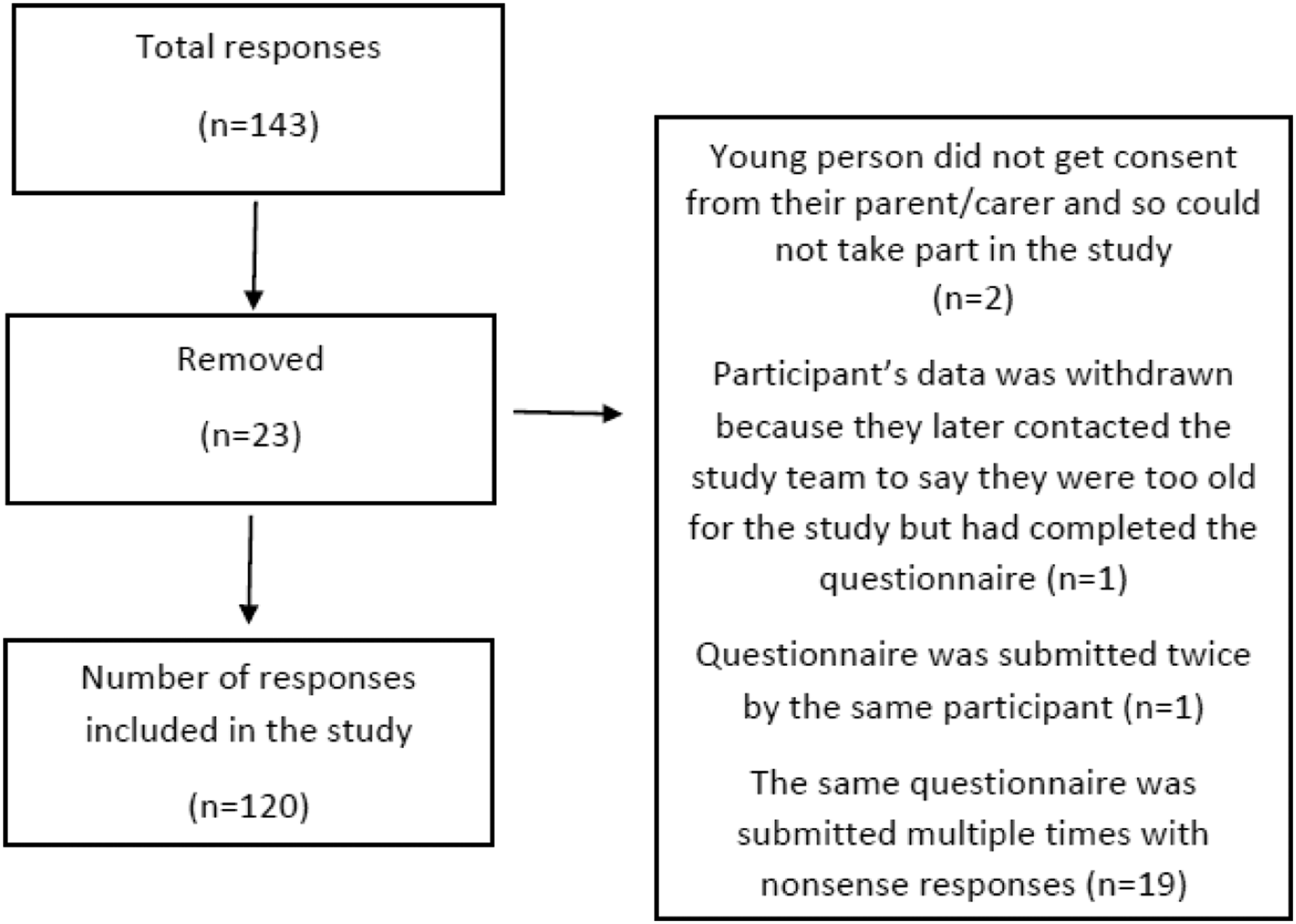
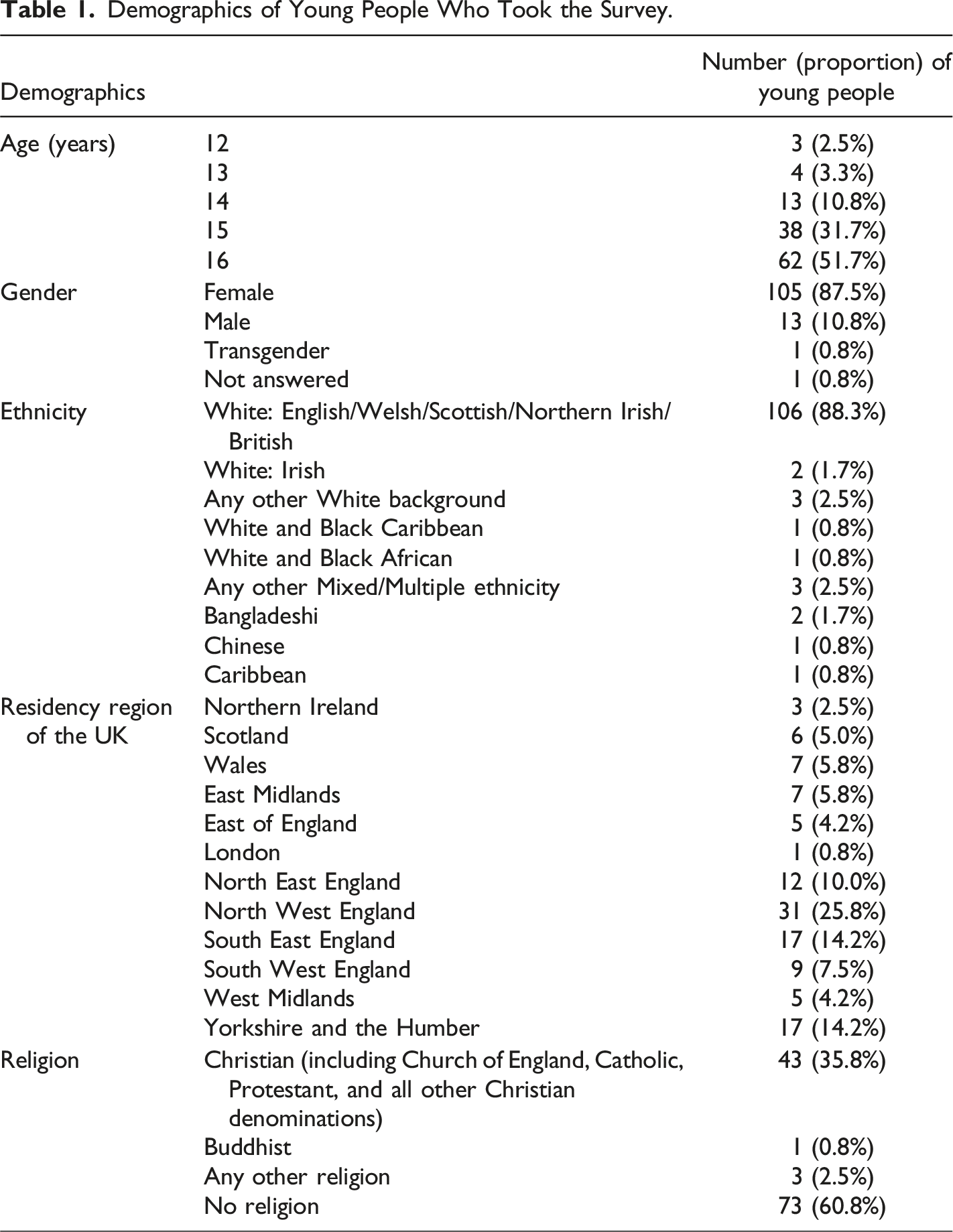
Demographics of Young People Who Took the Survey.
Stage Two
A total of 39 young people expressed an interest in being interviewed. All of them were emailed an invitation to arrange an interview. One young person declined, 12 expressed an interest in being interviewed, and the rest did not respond. Of those who said they would like to be considered for an interview, nine were interviewed for the study. The rest did not respond to contact.
The 9 young people interviewed comprised 5 females and 4 males. Ages ranged from 12 to 16 years old. Young people lived in different areas of the UK: Southeast England (n = 1); Southwest England (n = 1); Scotland (n = 1), Yorkshire and the Humber (n = 1); Wales (n = 2), and Northwest England (n = 3). Interviews lasted 20–25 min each.
Ethics
The ethically sensitive nature of this study and the challenges of conducting research during a pandemic were recognized, in addition to the potential for strong emotions to emerge. Young people were given participant information sheets at both Stages of the data collection process to outline the aims of the study, reassure anonymity and the right to withdraw at any time, as well as the opportunity to clarify any questions or concerns and outline the consent/assent process. Young people had to indicate they had parental consent to complete the questionnaire for Stage One of the study. For Stage Two, only one interview was conducted to recognize the points above. A parent was required to be with the young people to give their verbal consent before the interview took place and the young person had to give their assent to taking part. The young person then had the opportunity for the interview to go ahead with their parent present or with their parent in an adjacent room in the house. Young people were also given the opportunity to be interviewed with their camera off if they felt more comfortable not being on screen. No young person wanted a parent with them while being interviewed and they all chose to have their camera turned on. Post-questionnaire and post-interview support information was also provided to every participant to detail supportive organisations once the data collection process had finished. Approval from the authors’ University ethics committee was granted (HREC 3777) to collect data in Stages One and Two to reflect the social distancing measures during the pandemic.
Data Analysis
In this paper, we focus on students’ spoken narratives (n = 9) about their experiences of Covid-19 approximately a year into the pandemic. The authors independently read each transcript to identify relevant aspects of the young people’s narratives and generate an inductive coding scheme (Thomas, 2006). Codes were identified by colour coding the transcripts using Microsoft Word. During the process, additional codes were added and the coding was revised and refined. Both authors independently applied the final coding scheme to each transcript and disagreements were discussed and resolved. Four distinct themes were produced in relation to the research aim and objectives.
Results
Our analysis revealed some clear findings about young people’s experiences of the pandemic. These are outline by Stage of the study below.
Stage One: Questionnaire
In Stage One of the study, approximately one third (36.8%) of young people were in contact with people outside their household on a daily basis during the lockdowns, but over 1 in 10 (10.5%) said they were in contact with people less often than once a month. Those who maintained regular contact with others reportedly found this valuable for their mental wellbeing, although they reported missing the face-to-face contact during lockdowns.
The questionnaires indicated most young people (85.0%) had previous experience of issues around death and dying. This included the death, near death, or serious illness of family members and pets, and talking openly about death and/or bereavement at home. One young person reported having died in surgery and was “brought back.” The young people also had experience of seeing family members with a range of illnesses and diseases, such as cancer and Alzheimer’s Disease, prior to Covid. Therefore, death and dying was nothing new to these teenagers and they both experienced and understood issues around death, dying, and bereavement.
The majority of young people (n = 81) reported that the pandemic negatively affected their wellbeing, with comments such as feeling stressed, anxious, or depressed being common. There was also a positive correlation between those who had tested positive for Covid-19, or knew someone who had tested positive, and an increased death anxiety. Nevertheless, most participants (n = 86) did not search for support information and a further three stopped searching because the information was too emotionally difficult to manage. Of those who did search for information, six looked on social media or the television news and 12 spoke to someone they trusted (family or friends); eight young people searched for guidance about the lockdown rules, symptoms of Covid-19, how easily the virus spreads, and statistics. Another two people looked for information about school and exams. However, three young people reported that they stopped searching for information because it was too upsetting, two said they became anxious because they thought they had symptoms after feeling unwell and searching online, and a further two said they had not searched for information because of a lack of places to find accurate data and support.
Data revealed that younger participants (aged 12 and 13 years) were more likely to be unaffected by the pandemic and also less likely to search for information or talk to anyone about Covid-19. The older the participant, the more likely they were to be experience death anxiety and search for information about the pandemic. All of those who felt anxious or stressed about the pandemic, or who wanted access to more information and support, were aged 16.
However, it is important to recognize that the pandemic was positive for some young people (n = 10). These young people stated they were more relaxed, able to spend time at home with family, and did not have the stress of attending school. The remaining young people (n = 29) indicated a mixture of emotions. Most of these reported they were more positive at the beginning of the pandemic but experienced increasingly poor mental health as the pandemic continued or were positive about spending time with their family but were stressed because of schoolwork and a perceived threat from the pandemic.
Stage Two: Interviews
Our analysis revealed four themes about young people’s experiences of the Covid-19 pandemic: death anxiety; mental health; normalising death; and identified support needs. Care has been taken to best represent these views. Verbatim quotes, where selected, are taken to illustrate opinions of specific individuals, or are chosen to exemplify the point being made.
Theme 1––Death Anxiety
Young people described experiencing death anxiety during the pandemic. What started out as mild concern grew to an experience of significant anxiety as the number of people dying from Covid-19 increased exponentially: “[I felt anxious and overwhelmed because of] the death rate going up. You get to see that. You just see that the death rate is going up. it’s just all quite scary, I think” (Lucy, female, aged 15).
Similarly, Xander felt that reporting by the media about the death toll due to Covid-19 was anxiety-provoking: “I remember one of the worst things for me [during the pandemic] was the death counter. Just seeing that, it’s just so blunt. A death counter” (Xander, male, aged 16).
Xander perceived deaths resulting from Covid-19 as happening elsewhere and to other families but were nonetheless disturbing. The stark reality for young people was that Covid-19 was affecting them much more than they had anticipated. While many young people were becoming increasingly aware of the death toll resulting from Covid-19 and who was affected by it, others felt unable to fully engage in the rituals following death and this created a sense of unease. Mia explained the impact of her Aunt dying during lockdown: “We weren’t allowed to go [to the funeral] because it was in that weird stage where only six people were allowed to go to funerals so went on Zoom. It was strange. It didn’t feel right, like it didn’t set in properly because it was just on Zoom” (Mia, female, aged 16).
The sense of unease and anxiety experienced by young people was heightened as they became aware and noted the rising death rate due to Covid-19, which was exacerbated by turning their attention to media reportage of the pandemic. For some young people, death as a result of Covid-19 was a reality that was affecting their families and created an awareness of the impunity of the virus and whom it might impact, thereby increasing death anxiety: “I don’t think [big news sources] portray it [the pandemic] very well. This is a very serious, big issue that has control of our lives. It’s gone on for so long. They use some of the wrong terms or they don’t go into detail or they go into detail about the wrong things. And also, they only talk about Covid and all the big issues like that’s all that exists” (Red, female, aged 15).
The amplified level of awareness and anxiety around death was evident in almost all young people interviewed and there was a consensus about the focus of some of these worries. Those young people interviewed expressed a real concern about family members and friends getting Covid-19 and prioritized those close to them over themselves: “[I caught Covid.] It didn’t really affect me but I didn’t want my parents to get it. I heard that it didn’t really affect children as much, so I was fine. [I was more worried about] people around me” (Thomas, male, aged 12, lines).
The increase in death anxiety caused by the pandemic, possibly fuelled by the role of the media, impacted on the mental health of young people and this was apparent through both the information they shared in the interviews and the emerging conversations and emphasis in the interviews.
Theme 2––Mental Health
Some participants reflected on the impact on pre-existing mental health issues which were exacerbated by the pandemic. For example, Bella said she felt frustrated about her peers not keeping to lockdown rules. These instances were a trigger for Bella’s existing anxiety and led her to accessing support. While the presence of the social worker represented formal support, the contribution of the school was invaluable to Bella. She knew there was a member of staff she trusted and with who she could talk through her concerns and frustrations: “…if it’s not her [social worker], it’s my Head of Year because me and her have got a really good trust thing. She’s one of the only people I trust and I can sit there for hours talking to them about people annoying me during this pandemic” (Bella, female, aged 15).
Other young people, such as Mia (female, aged 16), felt that their mental health deteriorated during lockdown: “[I experienced loneliness and isolation during the lockdown.] It probably was mostly just not being with people [sic]…[You] might have poor mental health anyway. When you're out doing things, you can have fun, you can do those things. When you're at home, every day with just your own company, it can get to you, can’t it” (Mia, female, aged 16).
There were instances where young people felt mental health problems were recognized by their school and in wider society. While Mia felt her experience of feeling depressed was exacerbated by the seriousness of the pandemic, other students felt mental health problems were not taken seriously enough by schools. For example, Xander spoke about general, rather than personalized, communication which was sent to students which he thought was patronising. Mia also felt mental health problems were treated differently from physical health problems, leading to some young people not feeling as though they fitted in with their peers: “Even though people are becoming more aware [of mental health issues] it’s still not taken that seriously, is it? Like if I said to someone “I’m depressed, can you help me?” then they wouldn’t really take it as seriously as I said, “I’ve got a broken leg. Can you help me?” (Mia, female, aged 16).
While some young people did not always feel supported, Red spoke about the impact of adapting to home schooling during lockdown and a combination of factors on her mental health. She had previously lived with one parent but had moved to a different town to live with her other parent shortly before the pandemic, which involved being further away from both school and her friends. She felt this change in her personal circumstances, coupled with the lockdown at the start of the pandemic, had a negative impact on her mental health: “I think [my feelings were] a bit of a combination because the school thing, online wasn’t handled very well. I just had to settle in living here full time after being in different homes for ages and then there was school trip that got cancelled and I was [on] a bit of a downer” (Red, female, aged 15).
Therefore, the pressure of school and keeping up with education created additional anxiety for young people. A combination of online classes and a greater emphasis on independent learning led to some students reporting studying and motivating themselves affected their mental health. Others, like Xander, found it difficult to ask for help and did not want to be a liability. Xander acknowledged a number of problems troubled him and impacted his mental health. Despite having a supportive network of friends and family, it appeared from Xander’s interview that he lacked self-worth and he explained the difficulty for him was finding someone to talk to without feeling he was an inconvenience: “I have cried in front of teachers before at school so it’s not a particularly new experience. But I almost got a sense during that, everyone is going through their own stuff at the moment so I shouldn’t burden other people with my troubles as well. Like, Miss Smith has got an entire year to manage. In home learning, I shouldn’t come to her with my problems. She’s got enough on her plate” (Xander, male, aged 16).
For many young people the Covid-19 pandemic has impacted on their mental health and sense of well-being. Many participants in this study explored their heightened anxiety during the Covid-19 pandemic. Yet, as they emerged from the Covid-19 pandemic and returned to school, several reflected on a situation that has become normalized.
Theme 3––Normalizing Death
Young people described their anxiety and concerns over facing death themselves or those of others in their families, their friends and those of deaths in the media. As the pandemic continued and the UK surfaced from the various lockdowns, young people returned to school. Yet their interviews suggested there was a shift in their attitude to death and dying and that, for many of them, death had become normalized: “Right at the start, we were very worried and concerned about people, but as it went, it’s just been normalized now” (Lucy, female, aged 15).
Some young people felt the normalisation of death and dying could be attributed to the accounts in the media and the constant reporting of the effects of the pandemic. “Maybe because it [death] was so oftenly mentioned [sic], this is how many people have died, it became sort of trivialized, you know. It just became a number. And then, at the same time, you’re trying to remind yourself these are people. But, when you say these are people, that makes you sad” (Xander, male, aged 16).
Mia believed that this normalization had become a part of day-to-day life, just like mental health and everything else that had been happening: “I think definitely a lot of people have [experienced anxiety and worry] but it’s not something that people talk about, because it is normal now, it’s not bad. It is normalized, like the whole death thing” (Mia, female, aged 16).
While many participants considered death through a different lens following the pandemic, some did not think of death any differently. Buddy felt his perception of death hadn’t changed because of the pandemic: “I feel like [death and dying is] still just a part of life, but I feel sometimes it’s really unfair. But, as many people will say, life is unfair” (Buddy, male, aged 14).
Some young people believed friends are more approachable and understanding than parents. Discussing issues with friend helped them to contextualize their feelings and share experiences: “I don’t think I would talk to my parents about that. If I was really concerned about something, I’d definitely start talking to my friends about it because I’m sure they share similar concerns to me sometimes” (Lucy, female, aged 15).
The combination of the impact of the pandemic on mental health and the normalisation of death meant that young people were aware of support needs.
Theme 4––Identified Support Needs
Two young people also mentioned that the specialized, trained background of counsellors was a reason to access professional support. Lucy said her school provided specific support for mental health and there was also a nurture room students can go to. Similarly, Eleanor reported her school have actively sought to tackle students’ mental health difficulties: “My school, they’ve realized a lot of things so they’ve actually started in investing more money in mental wellbeing” (Eleanor, female, aged 14).
Some young people felt the relationship they have with their parents was not strong enough to allow them to approach their parents for support. However, many young people felt parents are an important part of their support mechanism because of the loving relationship and level of trust between them: “If I had any concerns myself, I’d go straight to my Mum” (Xander, male, aged 16).
However, most young people said they would feel comfortable sharing their worries with someone they don’t know. Some felt that this would be preferable to sharing their worries with family or friends: “Obviously [a stranger doesn’t] know you personally so they can’t judge you, so I think that really helps people” (Bella, female, aged 15).
Other possible mechanisms for support that young people mentioned included the internet and mobile phones. Both can provide a level of anonymity and immediate, easy access for young people in an age of technology: “I think [support provided on mobile phones or the internet] would useful because it’s accessible for everyone” (Red, female, aged 15).
Therefore, having a relationship with someone was important for some young people when seeking support, whereas trust was one of the most important considerations when looking for support. This has implications for practice because counselling support was appealing for some young people due to the anonymity of talking to a stranger and the professional training counsellors have undertaken. Most young people reported they are confident to ask for help and support if they felt they needed it, but support from someone they trust, whether parents, friends, or a counsellor, was identified as a key consideration for providing support. Having immediate and accessible support was also identified as an important aspect of support.
Discussion
Participants shared diverse views and experiences of the Covid-19 pandemic. Key findings relating to death anxiety were apparent in the following areas: increasing death anxiety and the need for more targeted and specific mental health support. Data from the study revealed the pandemic heightened death awareness and death anxiety across different age groups of young people. There did not appear to be any differences in the way genders experienced death anxiety, which contradicted previous research (Fortner & Neimeyer, 1999; Schumaker et al., 1988), although more females than males participated in the study. Furthermore, no link was found between geographical area of residence in the UK and the level of death anxiety. This contradicts previous research which concluded people living in deprived areas experienced higher levels of death anxiety and poor mental health (Basu, 2021). Our study also adds to the existing literature about the impact of age of young people on death anxiety: young people in their mid-teenage years were acutely aware of the risk of illness or death from Covid-19, while young people in their early teens were less sensitive and more accepting of the situation around them.
Our study adds to current knowledge base around the possible correlation between mental health and death anxiety (Menzies et al., 2019) by indicating young people’s death anxiety can not only negatively impact mental health but also exacerbate existing mental health problems. Similarly, our data suggests an increased exposure to death and dying during the pandemic also normalized these experiences. While normalising death might be beneficial to help young people understand and cope with their experiences and issues around grief (Menzies & Menzies, 2020), our study indicates a danger that death may be trivialized and so loses meaning for young people. Consequently, there was the reported feeling that people’s lives might also lose value.
The majority of young people involved in the study had previous experiences of death, which is likely to have shaped their attitude towards it (Bonoti et al., 2013). However, in agreement with previous research (Menzies & Menzies, 2020; Weaver et al., 2021), a combination of the intensity of information, and the close proximity and risk of serious illness and death, during the pandemic led to an increase in death anxiety in young people. Conversely, increased exposure of information about the pandemic also led to normalisation (Bear & Knobe, 2017; Menzies & Menzies, 2020). While young people felt news was revealing and informative, images and stories also made high death rates a usual occurrence. This had the effect of creating new mental health problems and aggravating existing mental health problems. The emergence of mental health problems, both existing and new, highlighted the need for support structures.
Previous research indicates anxiety coping mechanisms, such as searching for meaning, endorsing the generally held beliefs of others, or suppressing personal thoughts (Menzies & Menzies, 2020). Young people mentioned all of these in our study. Young people spoke about the importance of good relationships, whether with teachers in schools or with parents, to help them share their thoughts and feelings. This finding fits with previous research which indicated relationships with family, close friends, or professionals are effective for moderating negative reactions to death (Mikulincer, 2018). Trust was a key aspect of these relationships (Donagh, 2020; Webb, 2011) and this study identified they can be developed by personalized communication and adults being approachable and empathetic. Young people reported substantial support offered by some schools and parents, such as greater investment and focus on mental health and wellbeing and building trust through effective communication. This study found that young people felt specialized mental health workers should be trained to help demonstrate that schools and wider society both recognize and take their mental health problems seriously.
It is important that young people are not forgotten following the Covid-19 pandemic (Sinha et al., 2020), although there’s no evidence in this research of the neglect and abuse mentioned by Green (2020). Instead, our findings indicate the Covid-19 pandemic has provided the opportunity to understand the needs of young people and reimagine mental health support for them (Basu, 2021).
This study has addressed a gap in knowledge by helping understand the impact of the Covid-19 pandemic on the death anxiety of young people and support needs have been identified as a result. These findings are important for educators, parents, and those supporting and seeking to understand young people in any way, such as youth workers, counsellors, and psychologists, as they grow, develop, and comprehend the impact of the pandemic. Ensuring access to appropriate support will help engage young people where and when they need it most. A more proactive approach to young people’s wellbeing includes a greater focus on and training and education of all professionals working in educational contexts (Rowling & Holland, 2000). Key elements of trust, professional knowledge and experience also need to be considered as part of determining current support needs and how these can be developed for young people.
Limitations
There are several limitations to this study. The number of young people who were interviewed was relatively small due to the pandemic and difficulty reaching them. Zoom fatigue could also have contributed to fewer than expected young people participating in Stage Two of the study. A thematic review is aimed at, and supports, identifying relevant themes in the data but the varied nature of the interviews can make it difficult to identify themes and synthesize the information. Therefore, a potential for bias by over-representing one or more young people, or themes, remains a possibility. Furthermore, young people may not experience events the same way and data analysis may have represented a personal bias as there are multiple ways to analyse and explain data (Porter, 2007). These limitations were minimized by careful coding and sorting of data and discussion of potential themes between the researchers. A rigorously designed study also helped to minimize limitations.
Conclusions
Young people expressed a variety of views and responses to Covid-19. Participants in their mid-teens felt death anxiety had been increased by media coverage. Stress, anxiety, and depression were heightened if they had existing mental health problems and feelings about death had become normalized. Improved access to mental health services would allow young people to work through their anxieties and develop effective coping mechanisms. Services should be built on developing effective relationships and trust to allow young people to communicate confidently in a safe and non-judgemental environment. Conversely young people in their early teens felt they got enough support from their parents and no additional support was needed. Further research would be beneficial to explore the long-term impact of the Covid-19 pandemic on the mental health of young people; to appraise the role of professionals in the existing support available; and to test and evaluate professional training and alternative support mechanisms.
Footnotes
Acknowledgments
The authors share responsibility for the work. Both had access to the full data set and take responsibility for the integrity and accuracy of the data. We would like to thank the young people who took part in the study and their parents for giving permission for their involvement.
Declaration of conflicting interests
The author(s) declared no potential conflicts of interest with respect to the research, authorship, and/or publication of this article.
Funding
The author(s) disclosed receipt of the following financial support for the research, authorship, and/or publication of this article: This work was supported by the Open University’s Covid related research committee.
Ethical Approval
Approval from the Open University ethics committee was granted (HREC 3777) was granted in December 2020.