



Abstract
Guided by family communication patterns theory and terror management theory this mixed-methods investigation explored how parents (N = 112) of young children (ages 3–6) described the way they would discuss death when it comes up in conversations. Responses were coded inductively, resulting in four themes: explanations that death is inevitable, explanations that death is in the distance, the use of religion to frame discussions of death, and finally, discussing afterlife connections to deceased family members. Logistic regression analyses were used to evaluate whether parents’ conformity or conversation orientations were associated with the frequency with which parents discussed death with their child and the content of parent vignette responses. Quantitative analysis revealed parents’ conversation orientations were associated with the frequency with which they discussed death with their child and conformity orientations were associated with parents’ use of religion and discussing afterlife connections to deceased family members in their responses.
Keywords
Parents Anticipated Discussions about Death with Young Children
Death is a fundamental inevitability of human existence, but also a topic that often instigates a sense of anxiety, terror, or worry among persons (Solomon et al., 1991). Most pre-existing research on discussions of death with or among family members have focused on end-of-life conversations in medical or hospice settings (Fine et al., 2010; Kronaizl, 2019), or in counseling and bereavement support groups working with school aged, adolescent, or adult populations (Currier et al., 2008; Keeley et al., 2014; Rosner et al., 2010). A substantial body of work has explored children’s cognitive capability to understand and grasp the concept of death, aspects of which begin to occur as early as age 3 (Kenyon, 2001; Kronaizl, 2019). By age 6, children appear to be fairly sophisticated in their integration of both biological and religious understandings of death (Menendez et al., 2020). Few studies, however, have empirically explored how, within families, adults would navigate speaking with young children (ages 3–6) about death and bereavement during this critical time period (Renaud et al., 2013).
Empirical research has consistently demonstrated that death is commonly encountered by children both within their families (Burns et al., 2020) and through media consumption (Bridgewater et al., 2021; Lee et al., 2014). Furthermore, many parents and adults report struggling with how to discuss death, and often express different concerns, beliefs, or attitudes than professionals about what might be appropriate to discuss regarding the content or nature of such discussions (for example in school or healthcare contexts: Kronaizl, 2019; Mcgovern & Barry, 2010). In an effort to assist professionals and other adults in aligning their approaches, the present study sought to gain an understanding of how parents would self-report their own approaches to talking about death with their young children should the topic arise and how family communication patterns might inform such conversations (or the lack thereof).
Children’s Bereavement and Exposure to Death
Children under the age of 18 are not immune to the exposure and the influence of deaths of a close person. Each year in the United States, one out of every 14 children under age 18 is expected to experience the death of a close family member (parent or sibling), with an estimated 4.9 million youth bereaved in 2019 (Burns et al., 2020). Furthermore, exposure to deaths is not limited to humans in children’s lives. Books and films also expose children to the concept of death, with 76% of recent blockbuster animated children’s films indicating or including a death (Bridgewater et al., 2021; Lee et al., 2014). Though the prevalence of death in animated children’s films may prompt important discussions about death, some scholars have expressed concerns that it may also contribute to misunderstanding death if portrayals are predominately fantastical or unrealistic (Bridgewater et al., 2021; Nguyen & Rosengren, 2004). There remains a ubiquitous need to engage children in conversations about death, which previous investigations have found can help them cope with loss and reduce anxiety related to death, especially in the aftermath of bereavement (Christ, 2000; Slaughter & Griffiths, 2007).
Parents’ Choices to Engage with or Avoid Discussions of Death
Recent research has found that parents who choose to discuss death openly with their children believed there were emotional, intellectual, and social benefits to doing so, such as being able to express emotions, increase the child’s faith, or strengthen relational bonds (Zajac & Boyatzis, 2020). Similarly, previous research has found children who reported discussing death with parents, siblings, or peers were likely to have more positive judgments regarding death and displayed no negative body reactions, such as shivering or sweating, to such discussions as compared to those children who rarely or never discuss death with others (Yang & Chen, 2006). In contrast, children who have not discussed death with others were more likely to believe that death was bad and scary (Yang & Chen, 2006). Across multiple previous studies, parents who decided not to discuss death and dying with their children reported doing so to protect them and feared discussing the topic would create emotional stress for their child (Silverman et al., 1995; van der Geest et al., 2015; Yang & Chen, 2006). Other parents struggled to maintain a balance between openness and avoidance, disclosing information selectively by weighing the immediate needs and children’s emotional wellbeing (Toller & McBride, 2013). When discussing death with a child, scholars have also found that parents who discuss continuing relationships (or the opportunity for reconnection in an afterlife) with deceased family members tend to feel more satisfied with the conversation (Renaud et al., 2015). These studies revealed parents’ differing decision-making processes when their children were exposed to death. We argue that it is also worth investigating parents’ reasoning and the complex decision-making processes behind decisions to discuss death with a child, even in anticipated situations, given that deaths are universal and unavoidable among living creatures. Beliefs and intentions are some of the most proximal and consistent determinants of actual behavior (Montaño & Kasprzyk, 2015). Parents’ reflective thoughts indicate their personal and cultural beliefs that guide them in practical actions, which, in this investigation, involve discuss deaths with their children someday in the (near) future, if not already.
Factors that Influence Parents’ Anticipated Discussions
Parents might not initiate conversations about death. Often, children are the catalysts for discussion around death when they ask parents death-related questions (Gutiérrez et al., 2019; Rosengren et al., 2014). When children do ask questions about death, they often focus on the biological component of death (e.g., how it happens, what it means). However, parents frequently draw on religious explanations in their responses (Bridgewater et al., 2021; Gutiérrez et al., 2019). Such responses are likely to result from parents’ belief systems, and these parents might want to shield children from disturbing information related to biological responses, or the fact that they underestimate children’s ability to comprehend biological processes (Bluebond–Langner, 1978; Gaab et al., 2013).
Studies with older children (ages 8–14) have consistently found that parents’ religious views are critical in informing the content of discussions about death (Kreicbergs et al., 2004; Toller & McBride, 2013; Zajac & Boyatzis, 2020). Even among non-religious theistic parents of terminally ill children, religious explanations of death often provide comfort and help relieve parents’ fear and anxiety (Cai et al., 2020). Parents’ religious beliefs shape their reasoning system about death and dying and influence how they discuss death with their children (Cai et al., 2020; Panagiotaki et al., 2018; Renaud et al., 2013; Van der Geest et al., 2015). Despite the indispensable need of engaging children in conversations about death, historically, such conversations have been relatively rare in contemporary society, though more recent investigations have demonstrated changing patterns in the prevalence of such conversations. About 4 decades ago, Crase and Crase (1982) interviewed highly educated parents about their perceptions of death education with their young children. They found that all parents believed it was important to help children understand death-related events and avoid explanations that confused or caused fear in children. Most parents, however, did not indicate that they would proactively discuss deaths with their children and disapproved of their children’s teachers doing so. In a recent study of American parents with children between 8 and 14 years old, Zajac and Boyatzis (2020) found that 80% of families in their sample discussed death more than once a week, and children initiated the conversations more than half the time. However, it remains unclear how parents would approach discussions around death, especially with very young children when deaths are not immediately upon them, and which aspects of family communication may shape these processes.
Theoretical Frameworks
In seeking to address this gap in the literature, we drew on family communication patterns theory and terror management theory. Family communication patterns theory holds that families vary in the extent to which they encourage discussion about a wide array of topics (conversation orientation), and the extent to which they stress a climate of homogeneity of attitudes, values, and beliefs (conformity orientation; Koerner et al., 2017). Put simply, families that have a strong conversation orientation discuss a large range of topics with one another, including potentially difficult, contentious, or upsetting topics (e.g., death, politics, and discrimination), whereas those individuals with weak conversation orientation either infrequently engaged in discussions on any topics, or they stick to a narrow set of “safe” topics (e.g., the weather, Koerner et al., 2017). Simultaneously, families can also vary in their conformity orientation. Families with a strong conformity orientation require or expect all family members to adhere to or endorse the same attitudes, beliefs, and values (e.g., all affiliating with the same political parties or practicing the same religion), whereas families with a weak conformity orientation accept and tolerate the expression of diverse or competing attitudes, beliefs, and values among family members (Koerner et al., 2017).
Both aspects of family communication patterns may determine 1) whether, 2) the way, and 3) the extent that death may be discussed with young children. Many adults avoid conversations with young children about death and dying either because they fear causing unnecessary worry or emotional distress, underestimate children’s ability to process or understand death, or are otherwise uncomfortable with the subject (Kronaizl, 2019; Longbottom & Slaughter, 2018). Such avoidance increases the likelihood that families with a weak conversation orientation may be unlikely to engage with the topic of death with young children, or to do so only briefly. At the same time, conversations about death and dying provide a particularly salient context for reinforcing attitudes, values, and beliefs that parents might expect to share with their children. Children between 3 and 6 years old have been shown to utilize both cognitive and affective dimensions of knowledge to understand death (Menendez et al., 2020), including biological cause and process, as well as sociocultural perspectives that are usually influenced by parents’ religious systems (Astuti, 2000; Gutiérrez et al., 2019; Watson–Jones et al., 2017). Thus, the content of conversations about death may be particularly framed by family conformity orientations.
Terror management theory holds that individual attempts to cope with death draw on the co-creation of (1) a cultural worldview that provides persons the ability to either literally or symbolically transcend death (often manifested through faith, and the adherence and measuring up to some commonly shared set of social values; Pyszczynski et al., 1999; Solomon et al., 1991) and (2) self-esteem that enables individuals to believe that we are living the way we should be living. The creation of a cultural worldview is often accomplished through conversations that draw upon religious symbols, rituals, and social practices (a concept that aligns with the idea of conformity orientation from family communication patterns theory). Additionally, the dual process theory of proximal and distal defense implies that defense systems are present to help us cope with death (Pyszczynski et al., 1999). For example, proximal defenses often occur due to conscious thoughts of death and they involve viewing death as an event that occurs in the future, which is a cognitive mechanism that enables an individual to purge the thought of death from their mind. Distal defenses, on the other hand, occur after unconscious thoughts of death (e.g., the knowledge that all living creatures dies, that death is inevitable). Distal defenses may include viewing oneself as a valuable member of the world. Terror management theory applies to the present study as we suspect that parents will draw upon cultural worldviews, self-esteem, and the use of proximal and distal defenses as they elaborate upon the way they would talk about death to their child.
Current Study
Drawing on family communication patterns theory and terror management theory, the current study utilized a mixed-methods survey utilizing both closed and open-ended items to explore the way parents of very young children (ages 3-6) would discuss death with their child. Specifically, we sought to evaluate the following research questions: (1) How do parents of young children (ages 3–6) anticipate discussing death with their child should it come up? (2) Whether family conversation and conformity orientations are associated with variations in parents’ intended responses, including both the frequency and nature of conversations about death?
Methods
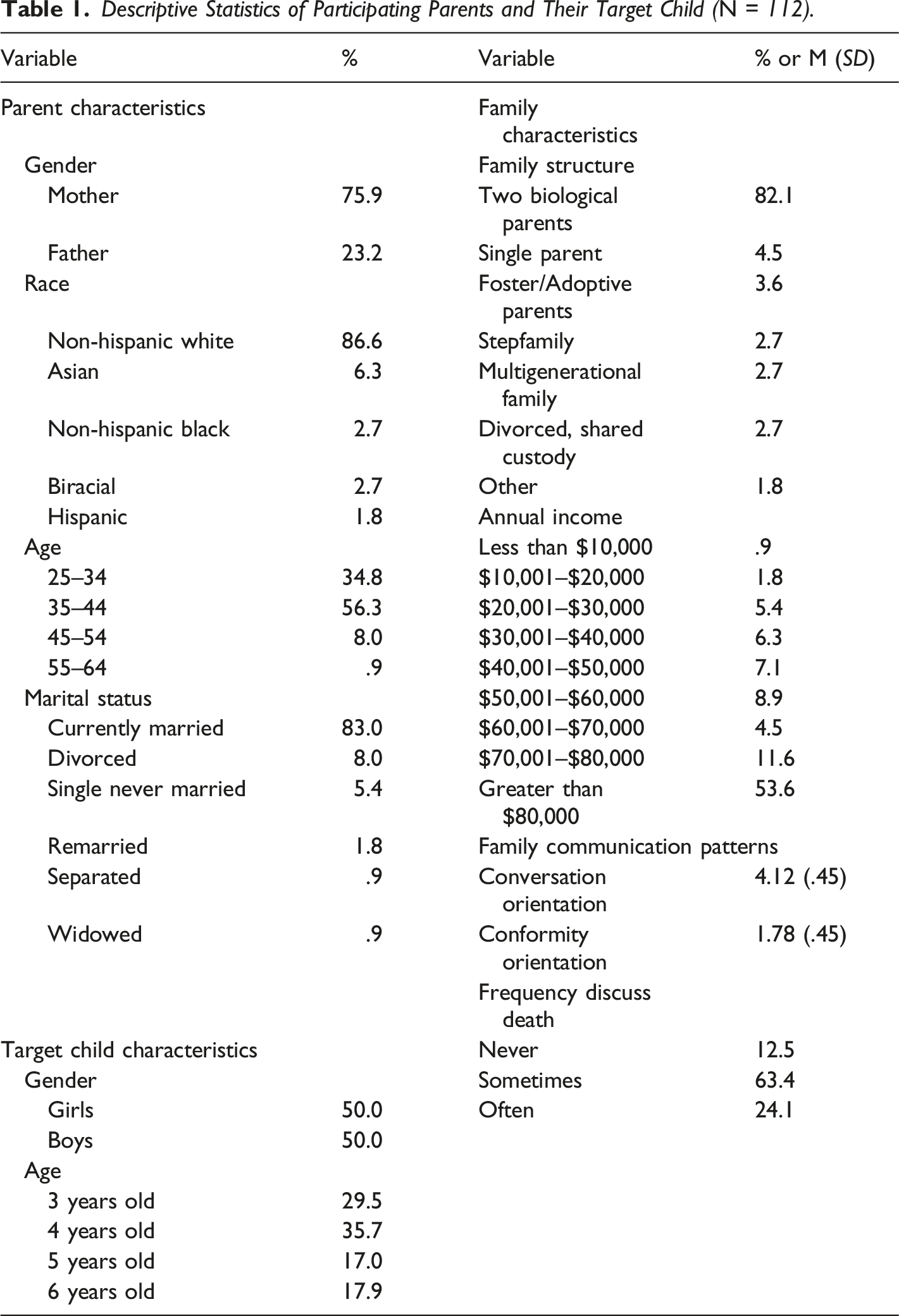
Descriptive Statistics of Participating Parents and Their Target Child (N = 112).
Measures
As part of the survey, parents were asked to provide demographic information including their own age and gender (0 = women; 1 = men), as well as the gender of the target child, their current marital status, with whom their child lived (e.g., family structure), their household income, and their self-identified ethnoracial identity. This investigation also draws on parents’ responses to a measure of family communication patterns, a single-item asking about the frequency with which they discussed death and dying with their child, and an open-ended written response regarding the way they would talk about death with their young children after reading a hypothetical scenario (as part of the larger study, similar questions and vignettes had also been provided about various other topics throughout the course of the survey).
Family Communication Orientations
Two dimensions of family communication patterns were assessed: (1) conversation orientation, and (2) conformity orientation. To assess these dimensions, we utilized the revised Family Communication Pattern Instrument (Ritchie & Fitzpatrick, 1990). The measure consists of 26 items rated on a 5-point Likert-type scale. Items were framed so that parents were reporting on the nature of such patterns within their family of procreation (rather than family of origin). Participants reported the extent to which they agreed with each item describing their family on a scale ranging from 1 (strongly disagree) to 5 (strongly agree). Of the 26 items, 15 items reflect the family conversation orientation (α =.817, example item: “In our family, we often talk about our feelings and emotions”) and 11 items represent the family conformity orientation (α =.834, example item: “I often say something like ‘you should give in on arguments rather than risk making people mad’ to my kids”). A composite score was created by averaging the 15 items for conversation orientation, and another composite score was created by averaging the 11 items for conformity orientation.
Parents’ Discussions of Death with Children
A single quantitative item asked parents to report the frequency they had discussed death with their children with three response options of 1 (never), 2 (sometimes), and, 3 (often). Later in the survey, parents were also asked to provide open-ended responses to a hypothetical scenario related to death. The vignette was developed based on research team members’ own experiences with discussions around death that arise in childcare settings, as well as from common challenges and experiences described in the pre-existing literature (e.g., Crase & Crase, 1982; Kronaizl, 2019; Longbottom & Slaughter, 2018) and it was phrased as follows:
“Your child comes home from school where they found out their friend’s grandmother died. Your child tells you their friend told them everyone dies. Your child then says they don’t want to die and that they are scared of death. What do you say to your child?”
Participants were then provided with a textbox in which they could type out their response to the prompt.
Data Analysis
In line with Creswell and Creswell (2018) convergent mixed-methods design process, though data were collected simultaneously, data analysis unfolded in multiple stages. In the first stage, open-ended responses to the vignette (i.e., responses to Parents’ Discussions of Death with Children) were systematically coded in an effort to identify themes and patterns in the way parents described discussing death and dying with young children. Subsequently, in a second stage, quantitative analysis of the survey questions and quantitatively transformed coded vignette responses were conducted in order to evaluate how family communication orientations were associated with the frequency with which parents reported discussing death with their child and the presence or absence of coded themes in parents’ responses to the hypothetical vignette scenario.
Stage 1: Qualitative Coding of Parents’ Reactions to Scenario on Death
Responses from the scenario were coded inductively using a constant comparative method (Corbin & Strauss, 2015). To begin, select members of the research team first open-coded responses independently with a subsample of 20 responses from parents in order to identify initial codes that were grounded in the language of participants. For example, the response “we would talk about God and Heaven” was given the code talk about God and Heaven and a response that read “This is when we talk about Heaven and our belief in God and that we will see family members again oneday” was given codes of talk about heaven and our belief in God and we will see family members again 1 day. In a subsequent meeting, members of the research team compared their codes and discussed discrepancies until full agreement was reached among all members of the research team regarding the appropriate assignment of codes to the subsample of responses. Following this step, members of the research team worked to group codes into higher-level categories and eventually, broad themes based on similarity and/or by drawing on concepts from the existing literature. For example, the codes talk about God and Heaven and talk about heaven and our belief in God were combined into a shared category initially labeled Heaven and which combined with other similarly or conceptually related categories such as belief in God and Jesus into the broad theme we ultimately labeled “Religion.”
Once this process was completed, a preliminary code book was developed with labels for each category or theme and brief definitions that explained the concept and any potential dimensionality of it. Dimensionality refers to the variations within concepts that provide either specificity or explain the range of some aspect of the concept (Corbin & Strauss, 2015). As an example, “Religion” had dimensionality in the extent to which it was drawn on within the parents’ responses (some, not at all) and the specific religion it reflected (in our sample, most frequently Christian or, occasionally, humanistic traditions). Therefore, these aspects were attended to throughout the coding and analysis processes. Next, the full research team utilized the preliminary code book to independently code all 112 responses to ensure consistency in coding and interpretation, including those research team members not actively involved in the initial open-coding process. In an iterative process conducted over several meetings, members of the research team discussed any disagreements or refinements of codes, categories, themes and/or codebook definitions until 100% agreement was achieved across all categorizations of parent responses. Throughout the later components of this process, a matrix display created in Microsoft excel was utilized as a tool to assist in viewing and interpreting patterns in responses, codes, and dimensionality across the entire array of responses (Miles et al., 2013).
Stage 2: Quantitative Analyses
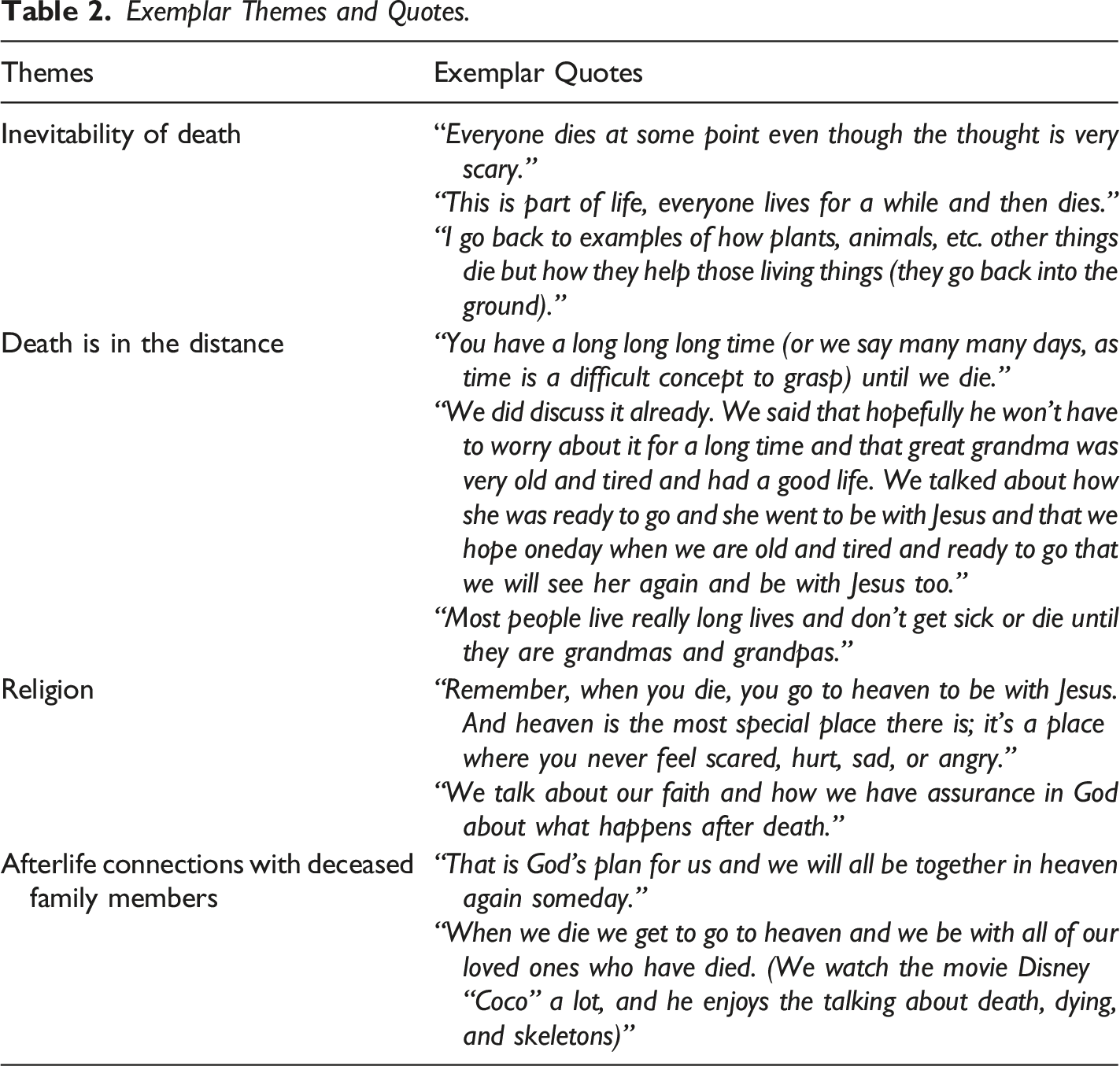
Exemplar Themes and Quotes.
Results
Qualitative analyses of parents’ open-ended responses to the vignette identified four major themes in the way parents discussed death with young children (See Table 2 for a list of themes and exemplar quotes). The first and most prevalent theme identified involved explanations of the inevitability of death, which occurred in 57 (50.9%) of parent’s responses. These responses were characterized by parents affirming or elaborating on the fact that everyone (and/or every living thing) eventually does die.
The second most prevalent theme in responses involved explanations that death is in the distance, which was mentioned in 46 (41.1%) of parents’ responses. Generally, this sentiment was indicated by parents saying that death only (or at least predominately) occurred in later life. In these responses, parents often indicated death was not something they expected to occur to their child, or themselves anytime in the near future.
The third most common theme identified was the use of religion to frame discussions of death, which was present in 39 (34.8%) of parents’ responses. This theme was coded any time parents made mention of drawing on their religious beliefs or specific religious concepts (such as Angels, God, Heaven, or Jesus) within their responses. Given the homogeneity of our sample, nearly all responses that received the religion code in our data involved figures and concepts associated with Christianity.
Finally, the least frequent theme identified was the use of afterlife connections with deceased family members, which occurred in 29 (25.9%) of parent’s responses. This code frequently co-occurred with the religion theme and usually involved discussion of a reunification with deceased family members in heaven, though it occasionally was assigned to not-explicitly religious connotations of “seeing them (the deceased) again” someday.
Of the 112 responses coded, 13 participants did not have any of the four major content themes assigned to them. This situation occurred when parent’s either indicated in their open-ended response that they “had no idea” how they would handle the situation, or described some way in which they would attempt to quickly dismiss the child’s question by imploring their child to “not worry about it” or finding a way to “change the topic.” These parents’ approaches to these conversations, thus, appeared to involve finding ways to avoid them.
Multinomial Logistic Regression Examining Frequency of Discussions
Adjusted Ordinal Logistic Regression Models for Frequency of Discussing Death, Dying, and Afterlife with Child (N = 112).
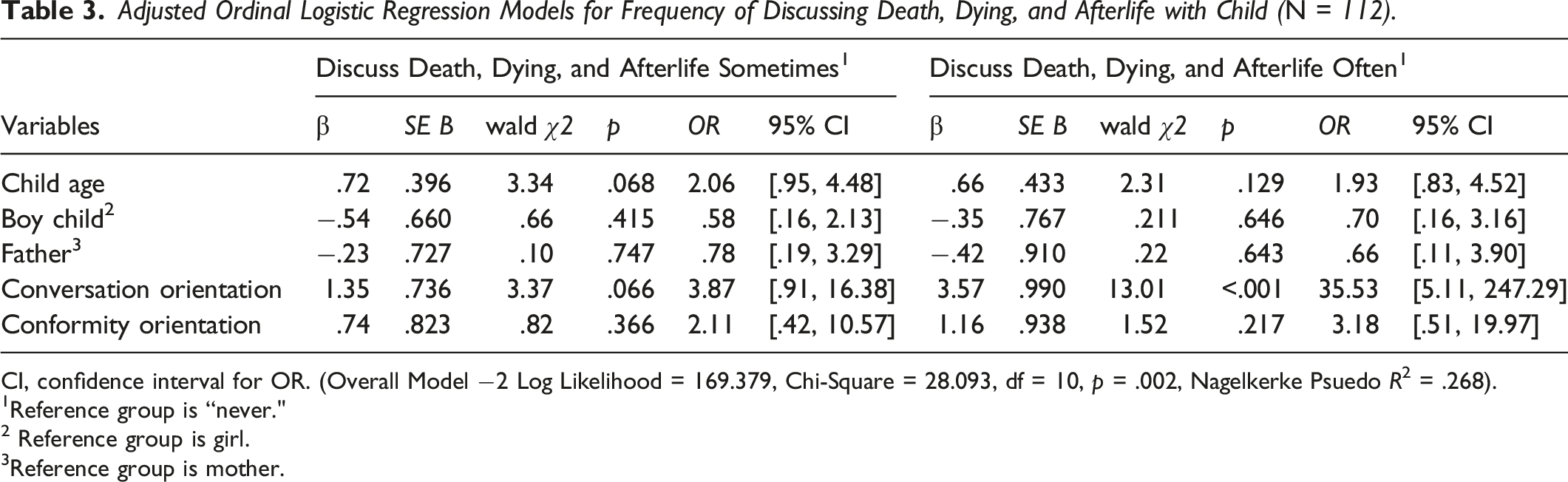
CI, confidence interval for OR. (Overall Model −2 Log Likelihood = 169.379, Chi-Square = 28.093, df = 10, p = .002, Nagelkerke Psuedo R2 = .268).
1Reference group is “never."
2 Reference group is girl.
3Reference group is mother.
Logistic Regressions Examining Content of Hypothetical Discussions
Logistic Regression Analysis for Explanation of Death is Inevitable in Hypothetical Response to Child (N = 112).
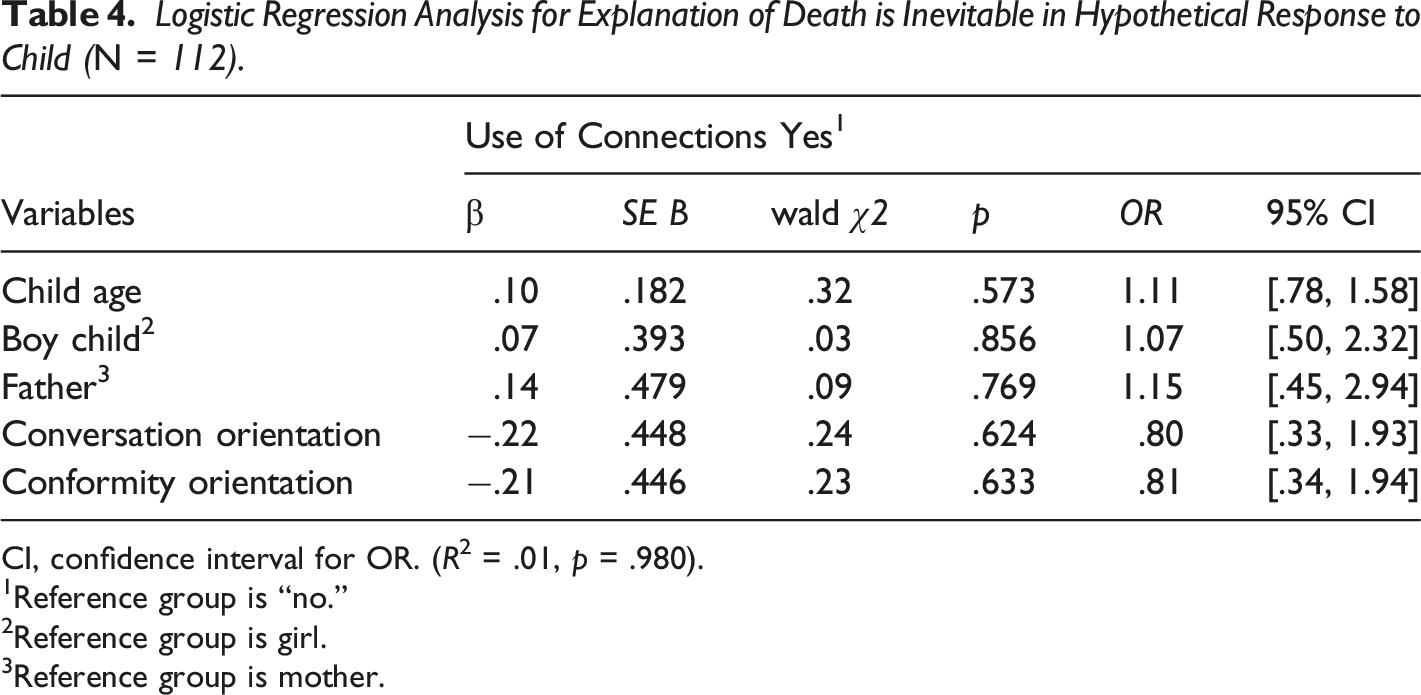
CI, confidence interval for OR. (R2 = .01, p = .980).
1Reference group is “no.”
2Reference group is girl.
3Reference group is mother.
Logistic Regression Analysis for Explanation of Death is in the Distance in Hypothetical Response to Child (N = 112).
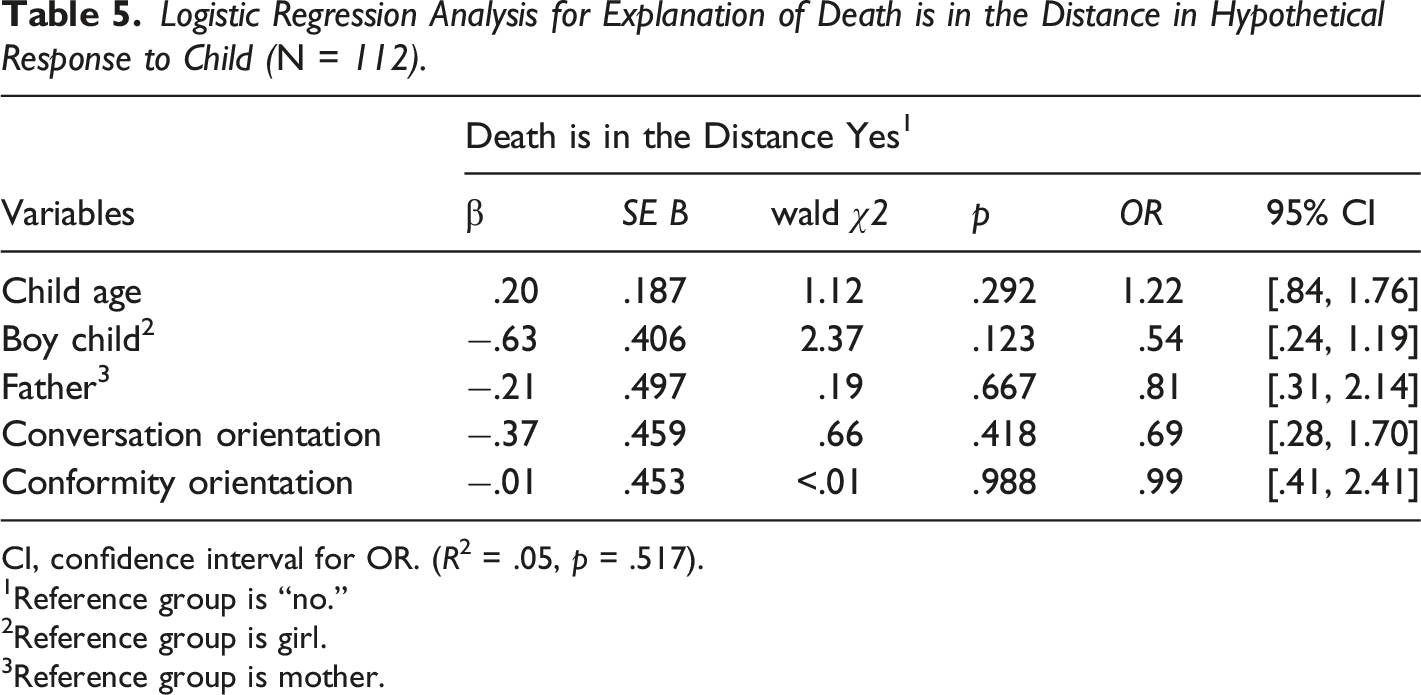
CI, confidence interval for OR. (R2 = .05, p = .517).
1Reference group is “no.”
2Reference group is girl.
3Reference group is mother.
Logistic Regression Analysis for use of Religious Language in Hypothetical Response to Child (N = 112).
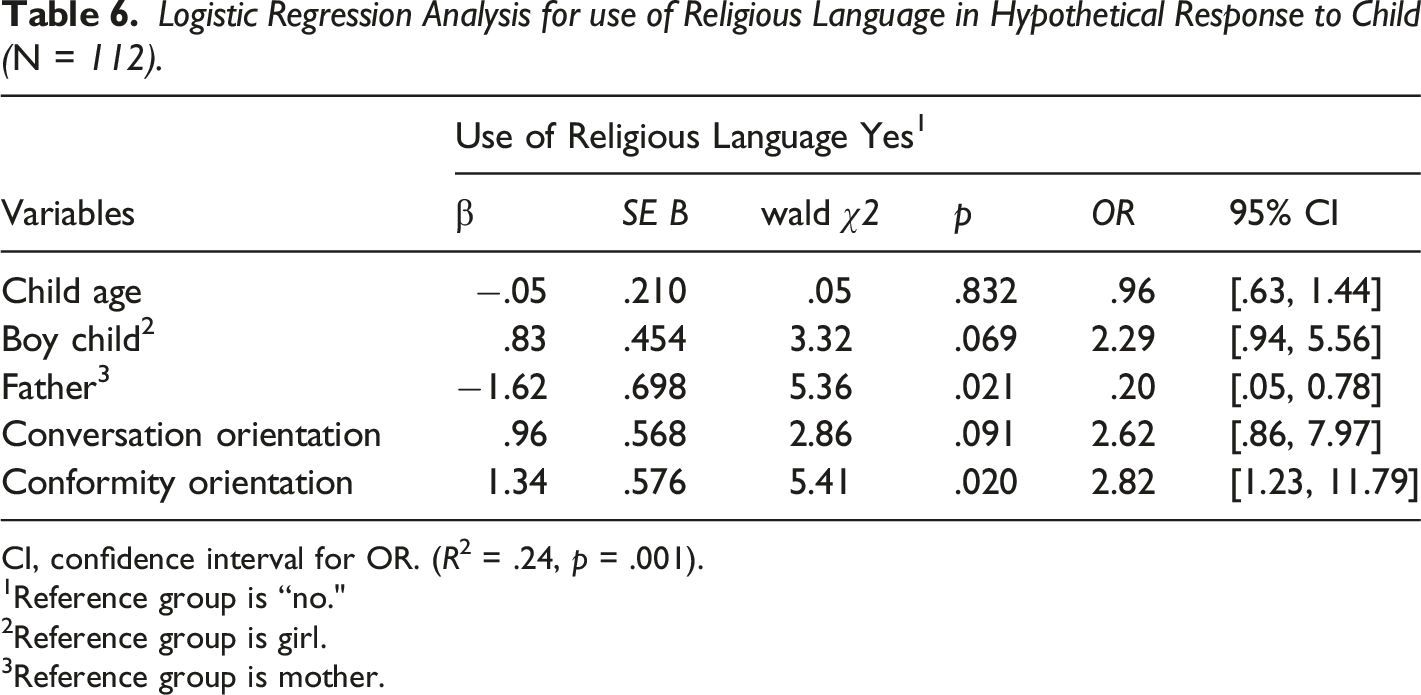
CI, confidence interval for OR. (R2 = .24, p = .001).
1Reference group is “no."
2Reference group is girl.
3Reference group is mother.
Logistic Regression Analysis for use of Afterlife Connections in Hypothetical Response to Child (N = 112).
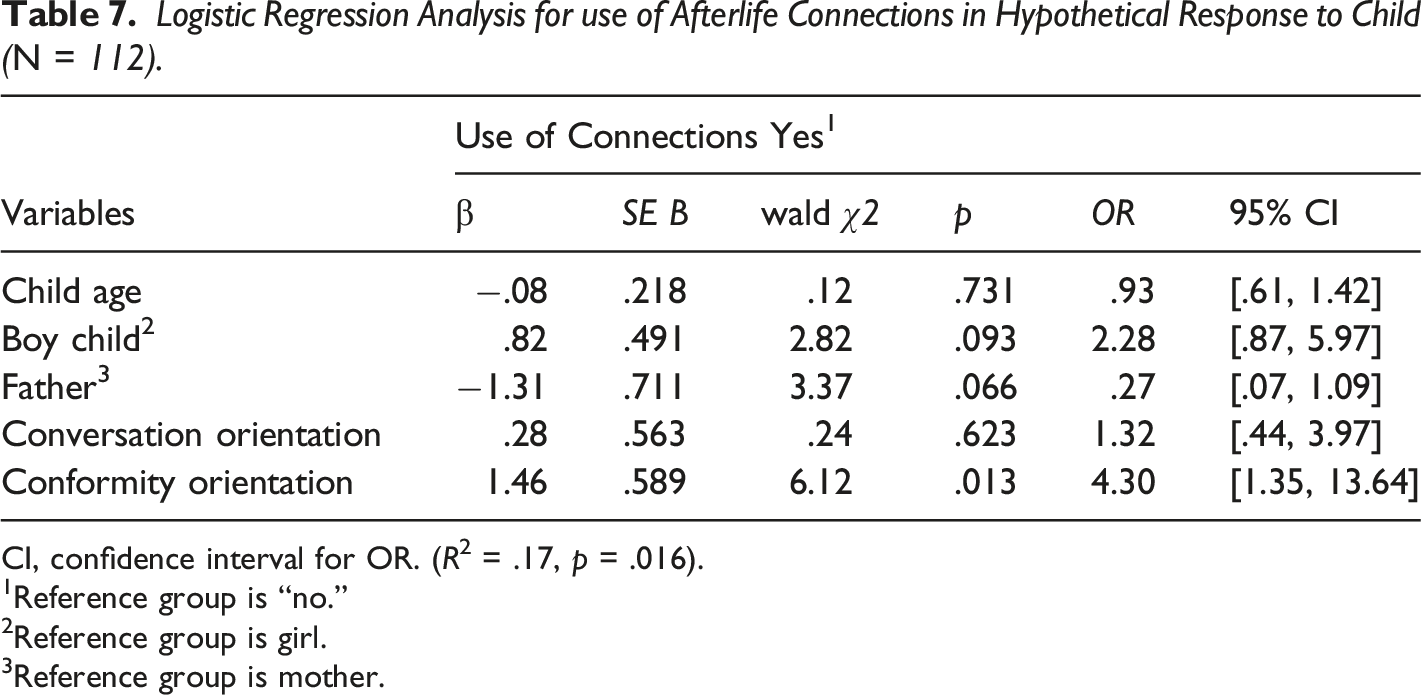
CI, confidence interval for OR. (R2 = .17, p = .016).
1Reference group is “no.”
2Reference group is girl.
3Reference group is mother.
Discussion
Our investigation of the way parents expect they would engage with their young child in discussions about death, should the topic arise, revealed four major themes in parents’ responses: discussing the inevitability of death, discussing death as something in the distance for their child or family, the use of religion, and discussing afterlife connections with deceased family members. Our logistic regression results revealed that family communication orientations were associated with both the way parents would discuss death with their very young children, and the frequency with which they engaged in such conversations. The gender of parents appeared to play a role as well, with fathers in our sample being less likely to use religious language when discussing death with their child than mothers. In previous research with U.S. individuals who participated in the General Social Survey, differences in religiousness have been found to be primarily a gendered phenomenon among Christians (Schnabel, 2015). Specifically, Christian men have been found to be less likely to engage in religious practices and beliefs or strongly identify with their religious affiliations as compared to women (Schnabel, 2015). Given that most participants in our study identified as Christian, this gendered finding in the use of religious language aligns with these findings of differences in religiousness broadly found using nationally representative samples.
Findings from this study also appeared to align with concepts and expectations proposed by both terror management theory and family communication patterns theory. Conformity orientation was associated with strong endorsement of religious themes (i.e., discussing an afterlife and using religious language) and conversation orientation was associated with frequent discussions of death. A main tenet of terror management theory is that individuals use a cultural worldview (such as religion) to offset fears associated with death (Pyszczynski et al., 1999). Participants used proximal defenses, such as telling their children death occurs in the future (i.e., death is in the distance), when confronted with the question of how they may discuss death with their children. Individuals who use religion to make sense of death may feel comfortable with the concept of death. Indeed, a study that surveyed parishioners at a church found that those individuals who had strong faith in God and an afterlife were less likely to report death anxiety and more likely to report death acceptance than individuals without strong faith (Harding et al., 2005). Additionally, these findings may be strong among those individuals who endorse religions that emphasize the potential of a peaceful afterlife, such as Christianity (Tapanya et al., 1997).
Parents’ Discussions on Death with Children: Main Findings
The present findings appeared to compliment or align with the existing research on parent-child discussions around death. Parents’ discussions of the inevitability of death aligns with the concept of universality, which has gained considerable attention from scholars interested in the age at which children can first grasp the concept that all living things die (Longbottom & Slaughter, 2018; Panagiotaki et al., 2018). Cognitive scholars have demonstrated that prior to age 5, children have already started developing a sense of universality about death (Rosengren et al., 2014; Slaughter, 2005). Interestingly, despite our vignette specifically eliciting discussion about this topic (with the child explicitly stating, “their friend told them everyone dies”), only about half of parents’ responses affirmed the idea that death was an inevitable or universal experience. When such affirmation was present, it was not unusual to be complimented by the death is in the distance theme, with parents often seeking to reassure their child that death would not occur anytime soon for them or their parents. Within these responses, parents frequently indicated that death was something that primarily happened to the elderly. It is likely that parents want to protect children from fear or anxiety, even though previous research shows that open communication about death helps reduce children’s fear and anxiety about death (Slaughter & Griffiths, 2007).
The prevalence of religious content or discussion of afterlife connections to deceased others may reflect participating parents’ intention to shield children from knowing the biological process of death or parents’ underestimation of children’s ability to understand the biological processes of death (Bluebond–Langner, 1978; Gaab et al., 2013). Piaget’s cognitive development theory (Piaget, 1936) proposes that children ages 3–6 are at the preoperational stage when they usually focus on only one aspect of a situation at a time and they lack sophisticated logic or abstract reasoning ability. It is worth exploring the meaning of children’s thoughts about death before and after conversing with parents about the topic, considering the prevalent first-hand experience of bereavement and exposure to death through media. Previous research has demonstrated that explaining death with religion helps relieve parents’ fear and anxiety around death, and it is likely that this process may have been driving some of the patterns identified in the open-ended responses (Cai et al., 2020; Renaud et al., 2015).
Regarding family communication patterns theory, our results demonstrated that conversation and conformity orientations within families were associated with changes in both the frequency and content of discussions about death with young children in our sample. Parents who reported a high conversation orientation, and thus an increased likelihood to discuss a wide variety of topics within their family, were also very likely to report that they often (as compared to never) discussed death with their young child. After accounting for other variables in our model, each one unit increase in the conversation orientation composite was associated with individuals being 35.53 times more likely to discuss death often as compared to never with their child. This finding speaks to the reluctance that many families and adults may face in discussing death, which is an inevitable part of life. Perhaps, as terror management theory would indicate, this avoidance occurs because of the fear and worry death invokes (Solomon et al., 1991). It also seems that parents with high levels of conformity orientations expected to use the opportunity provided within the vignettes as a way to transmit social and cultural values related to their religious beliefs about death and an afterlife.
Implications for Practitioners
Insight into the way parents discuss death and bereavement with young children and the factors associated with the content of parent-child conversations can provide parents, community educators, and clinicians with important tools to assist in the navigation of the “difficult topic” of death (Kronaizl, 2019). As predicted by terror management theory, our findings suggest that many parents, particularly those who have high conformity orientations in family communication, believe they would draw on religious imagery or symbolism that addresses transcending death (e.g., references to heaven, a better place, and reuniting with family) should the topic of death come up in a conversation with a young child (Solomon et al., 1991). Though some previous research suggests such symbols can help buffer negative emotional or physical responses to loss (Renaud et al., 2013), other research has pointed out that more concrete and biological explanations are often easier for young children to comprehend (Longbottom & Slaughter, 2018; Kronaizl, 2019).
When working with children and families in the context of loss or bereavement, important adult caregivers (parents, educators, social workers, child life specialists, etc.) should consider children’s developmental stage, while simultaneously being careful about making decisions on the basis of children’s age alone. Family communication styles are associated with the way (and whether) parents engage in conversations about death and parents’ preferred approaches are likely rooted in their belief systems. In order to better help families navigate conversations about death, professionals should respect family value systems and be conscious of child and family characteristics. Discussing the biological concepts of life cycles might benefit children’s understanding and comprehension of death (Longbottom & Slaughter, 2018), whereas more religious content may benefit adults’ sense of comfort and satisfaction with such conversations (Renaud et al., 2015). Healthcare providers, religious advisors and others who work with families may consider evaluating family communication patterns formally or informally to anticipate the way families prefer to navigate discussions around death with their children and to assist in targeting interventions for variable audiences.
Limitations and Future Directions
Though the theory-driven and mixed-methods approaches utilized in this study provide valuable insight into the way parents intend to navigate discussions of death with young children should the topic arise, it is important to recognize that the generalizability of findings from this investigation are limited by the convenient nature and homogeneity of the sample. Because participants were recruited from childcare centers in a Midwestern college town, it is likely that the emphasis on Christian language and ideas about death and the afterlife reflect the local culture and may be substantially variable in other towns, countries, and cultural contexts. Although family communication patterns may operate in a similar format in other contexts, the way death is perceived (e.g., as a difficult topic or not) and the specific cultural values communicated about it are likely context specific. Future research in other settings and with alternative or more heterogenous samples could help to better elucidate which aspects of discussion about death with young children are similar or more variable across contexts.
The second major limitation of this study was the hypothetical and constructed nature of the vignette presented to parents. Because the vignette was hypothetical, our findings can only ever represent intentions. Although intentions are often a critical precedent of behavior, they vary from the way parents actually respond in the real-world (Montaño & Kasprzyk, 2015). Our vignette was grounded in consistent research findings that humans frequently experience fearful views of death (Greenberg & Arndt, 2012; Solomon et al., 1991) and that children’s early experiences of bereavement most frequently involve the death of grandparents (Renaud et al., 2015). Nevertheless, the communication of the child’s fear and concern, and the death of a specific family member, such as “a grandmother” may also have primed some of the responses from parents. The description of the death of an alternative (and perhaps younger) family member or social contact or the expression of emotions from the child likely would have prompted different hypothetical responses from parents, which ought to be more fully investigated in future research.
Conclusion
This study helps expand our understanding of family dynamic in discussing death with very young children. Parents are guided by their cultural beliefs in responding to children’s questions related to death by discussing religious interpretations of death and afterlife as well as the inevitability and presumed distant nature of death. Family communication patterns help us understand (1) whether, (2) the method, and (3) the frequency that parents are motivated to discuss death with their young children. Practitioners should consider parents’ cultural beliefs and family communication patterns when working with families to help children understand difficult topics, such as death and loss.
Footnotes
Declaration of conflicting interests
The author(s) declared no potential conflicts of interest with respect to the research, authorship, and/or publication of this article.
Funding
The author(s) disclosed receipt of the following financial support for the research, authorship, and/or publication of this article: This work was supported by the Illinois State University Provost’s Office.
