



Abstract
Mortality salience refers to a state of conscious awareness of death and the inevitable conclusion of life, associated with psychological terror. The COVID-19 pandemic generated increased awareness of illness and death, and effectuated changes in death cognitions and people’s experiences around psychological or sociocognitive domains of media and life goals. To understand these changes, this study administered the Multidimensional Mortality Awareness Measure (Levasseur et al., 2015) to 103 emerging adults in India, post which 6 participants proceeded for a semi-structured interview exploring pandemic experiences, news consumption and goal prioritization, to examine specific areas in relation to death cognition. The thematic analysis demonstrates psychological effects, and discusses developments in health and death-related psychological processes. Focus on career goals and health maintenance, cautious news consumption and disadvantageous impacts on mental health are seen, significant in navigating healthcare measures for emerging adults, as we move forward into this ‘new normal’.
Introduction
‘Though the physicality of death destroys us, the idea of death saves us’ (Yalom, 2008, p. 7). Mortality salience is understood as a state wherein an individual experiences awareness of death and the inevitability of the conclusion of their life. Elevated levels of mortality salience have been propositioned to affect several biophysiological, psychological and sociocultural aspects of functioning (Pyszczynski et al., 2015). The advent of the COVID-19 pandemic has led to a heightened sense of chaos, terror and awareness of our own mortality (Pyszczynski et al., 2020). This awareness has a crucial role in determining the psychological impact of the pandemic.
The concept of mortality salience was developed by Greenberg et al., 1986, although the ideas of mortality awareness and death cognition have been discussed in different ways in the field of psychology and elsewhere. One of the most influential theoretical perspectives is the Terror Management Theory (Greenberg et al., 1986). According to this theory, awareness of the inescapable nature of death can give rise to significant terror and anxiety in an individual. It can also influence aspects of human thought, behaviour and emotion (Pyszczynski et al., 2015). This terror arising from the realization of mortality salience may be managed through various buffer mechanisms and defence systems. For example, maintenance of self-esteem, in congruence with the individual’s worldview as well as institutional worldview, may act to mitigate the associated dread.
Mortality salience is influenced by, and interacts with, several idiosyncratic aspects of an individual’s life. It is also estimated to become salient in natural contexts of community trauma and disasters (Weems et al., 2016). The COVID-19 pandemic presents such a situation where there is a prevalent, omnipresent and persistent awareness of death and mortality.
Mortality salience is a unique predicament of human existence that has been studied extensively, in different ways. A major advancement in this field of enquiry came with the concept of refusal to acknowledge our own fragility and mortality, discussed in the book ‘The Denial of Death’ (Becker, 1977). Thereafter, other theoretical viewpoints have been proposed, empirically studied and refined.
Mortality Salience and Consumption of News/Media
Consumption of news and media is an area that is examined in this study, in order to understand our interactions with news in relation to mortality salience. The role of media in providing consumers with access to meaningful content and life contemplation, was examined in a study by Rieger (2017). People may look for confirmation of their own worldviews in the media, and this can also lead to existential questioning owing to induced mortality salience, such as in the depiction of tragic events in the news (Klimmt, 2011, as cited in Rieger, 2017). Media with content of tragedy has been proposed to act on the needs for terror management more efficiently than other content.
Another important aspect is the portrayal of coping mechanisms by groups that can help in dealing with mortality terror. Pan et al. (2019) investigated news viewer’s emotions and evaluations in the context of mortality awareness and found that story evaluation was enhanced, along with an increase in negative emotions. Alongside this, based on the news of immigrant perpetrators, social group differences were found to have a significant effect on the news viewer’s evaluations. In another study, death cognition was found to increase prejudice towards outgroup members, based on the exposure to news related to terrorism (Das et al., 2009).
Mortality Salience and Prioritization of Goals
The domain of goal prioritization is also explored in this study, with the aim of understanding the role of death terror in the shaping of goals and behaviours. Fung and Carstensen (2006) found that the motivation to derive emotional meaning from life can become increased, when an individual is faced with sociocultural events that prime the vulnerability of human existence. They considered the events of the Severe Acute Respiratory Syndrome (SARS) epidemic in Hong Kong, as well as the acts of terrorism that occurred in the United States of America on September 11, 2001.
An important variable to be considered is the time perspective, as mentioned in the Socioemotional Selectivity Theory (Carstensen, 1993, as cited in Fung & Carstensen, 2006). The focus on emotionally meaningful goals in the presence of death distress and mortality awareness leads to a shift in goals and the relative importance of goals may differ as a function of perceived time. Based on temporal contexts and stage of life, the goals that the individual perceives as important may also differ (Chu et al., 2018). Chen et al. (2018) explored the collaboration of the perspectives of terror management and socioemotional selectivity, and found that older adults generally prioritized the goals that were more emotionally meaningful than younger adults, alongside those that affirmed their own worldview. This process of prioritization would be more intense when mortality salience was primed.
COVID-19 Implications
In the context of the COVID-19 pandemic, research on the effects of mortality salience is already underway. According to Menzies & Menzies, 2020, death anxiety in this context is relevant as a causal role in other mental health conditions and interventions such as Cognitive Behavioural Therapy techniques can be realigned to focus on the mechanisms of mortality-related terror. Another study considered COVID-19-related fear and anxiety from the perspective of attachment and its role was found to be moderating the experience of distress and fear of loss of loved ones to the pandemic (Steele, 2020). Mukhtar (2020) examined the role of media and news on psychological health domains during the pandemic. For example, an increase in misinformation and inaccurate data could exacerbate mental difficulties during trying times. In addition to this, an enquiry of nurses as healthcare workers found that altruistic acts featured as a major self-coping mechanism for many of the participant nurses (Sun et al., 2020). A study by Smith and Gibson (2020) identified several important themes, where the role of pre-existing worldviews and identities was considered in the response towards the COVID-19 pandemic. On the other hand, new groups and norms are also emerging at present, owing to factors such as shared opinions about the pandemic and public health advisory compliance (Maher et al., 2020, as cited in Smith & Gibson, 2020).
The aforementioned studies emphasized the role of mortality salience in the present pandemic context. However, there is currently a paucity of information and a lack of comprehensive understanding of how these different factors are interacting, especially in the Indian context. Thus, the present study aims to explore these domains and generate a thematic understanding of the effects of mortality salience and the pandemic on the psyche in the context of the COVID-19 pandemic, especially for the Indian context.
The researchers hope that the findings of this study will enhance our understanding of the psychological effects of the pandemic and aid in developing interventions and rehabilitative measures, for the purpose of combating the psychological consequences of COVID-19, as we move forward into this ‘new normal’.
Methodology
Participant Selection
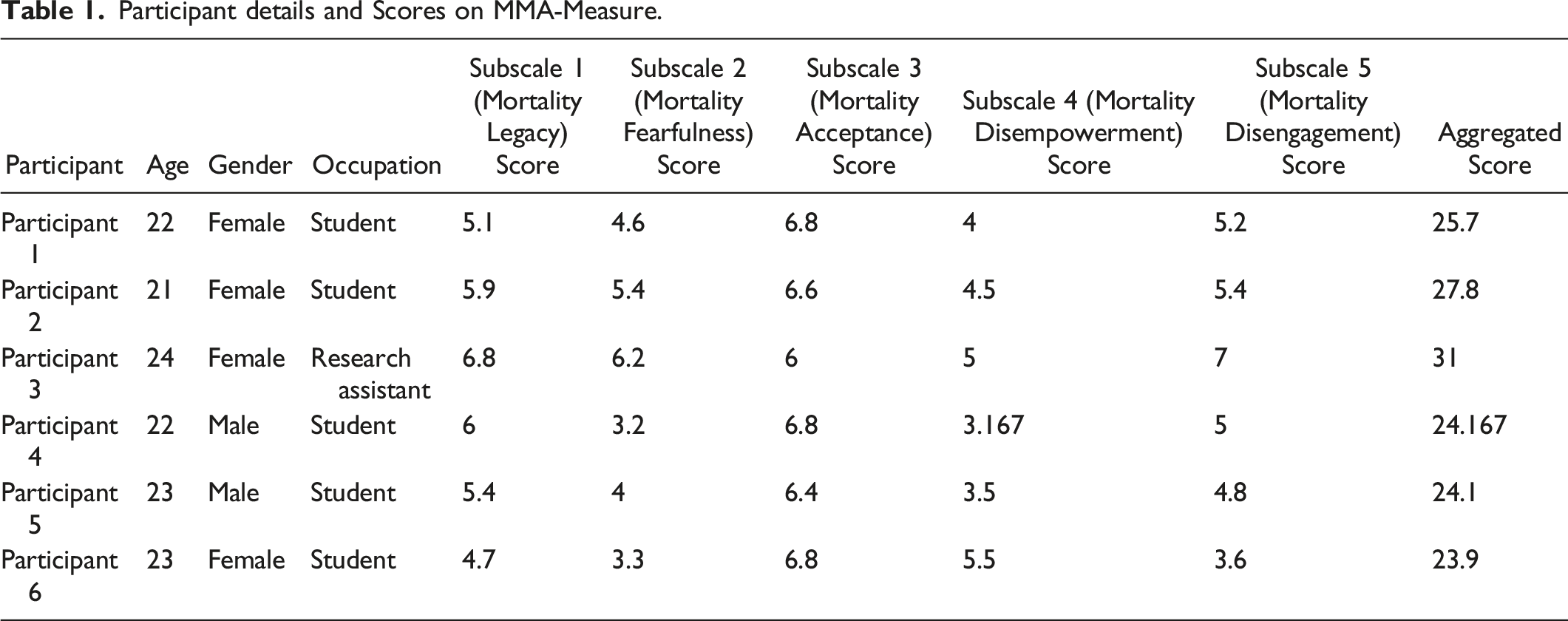
The sample for the present study comprised participants from the population of emerging adults in India, between the ages of 18 and 25 years. To select the final participants for the sample, 103 participants, in this age group, were administered the screening tool, the Multidimensional Mortality Awareness Measure or the MMA-Measure (Levasseur et al., 2015), through an online platform.
The MMA-Measure is a self-report questionnaire, put forward by Levasseur et al. (2015), which assesses mortality awareness along five different domains, namely, Mortality Legacy, Mortality Fearfulness, Mortality Acceptance, Mortality Disempowerment and Mortality Disengagement. A total of 36 items are used to assess these domains using a five-point Likert scale. The internal reliability of each domain of the MMA-Measure falls in the acceptable level, with Cronbach’s Alpha coefficients ranging from 0.59 to 0.87. In addition, construct validity of the five-factor model and the measure subscales was supported, on the basis of bivariate and multivariate correlational analyses with other variables(McDermott & Lafreniere, 2015).
. The 20 individuals who received the highest scores of mortality salience along the dimensions of the measure were selected and approached for the study, out of which six participants gave informed consent to participate in the interview. The participants were then presented with a sociodemographic sheet, in order to obtain relevant information such as demographic identifier features and details about neuropsychiatric conditions or treatment, if any.
Participant details and Scores on MMA-Measure.
Interview and Analysis Process
Following this, a semi-structured interview was conducted in English for each participant, via telephonic or video calling medium. The interviews were recorded, with the consent of the participants, using an application for recording. Data collection was concluded after theoretical saturation was attained.
A semi-structured interview schedule was used for the collection of qualitative data. The questions focused on the aspects of (i) experiences during the COVID-19 pandemic, (ii) death awareness and impact of mortality salience, (iii) media and consumption of death-related news and messages, (iv) death system and sociocultural communication regarding death, and (v) goal prioritization in relation to time perspective. The interview guide had been validated by three experts in the field.
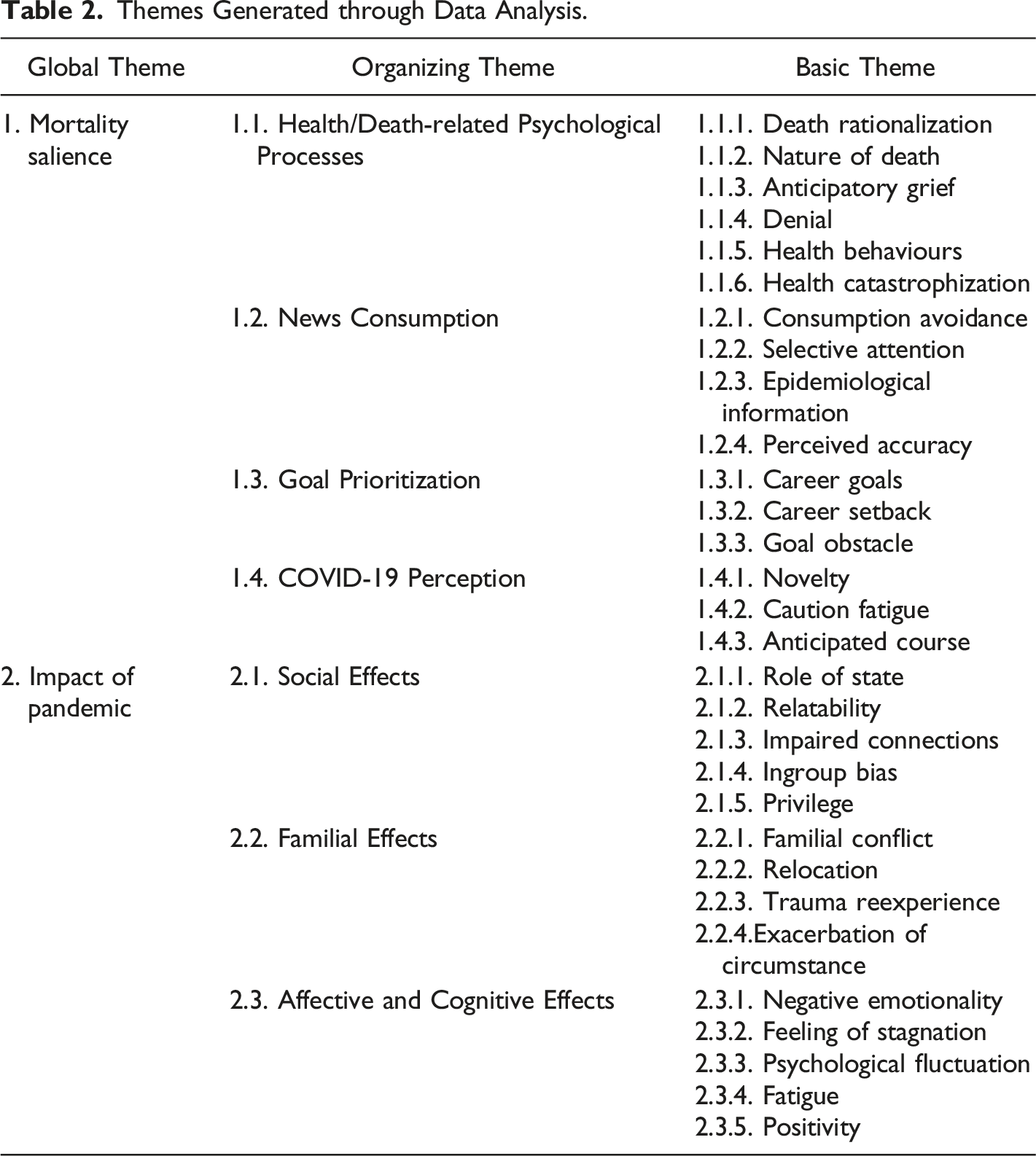
Themes Generated through Data Analysis.
Results
Analysis of the data led to the generation of a thematic network, based on the nature of the participants’ responses. 30 basic themes were generated, alongside seven organizing themes that further fell into either of the two global themes of (i) Mortality Salience and (ii) Impact of Pandemic. The results indicate two major areas of impact: the psychosocial effects of the COVID-19 pandemic as well as the areas impacted by the present levels of mortality salience, including the variables of goal prioritization and news consumption (Figure 1). Thematic Network for the Study. Note. Basic Themes, Organizing Themes and Global Themes generated through thematic analysis of the data.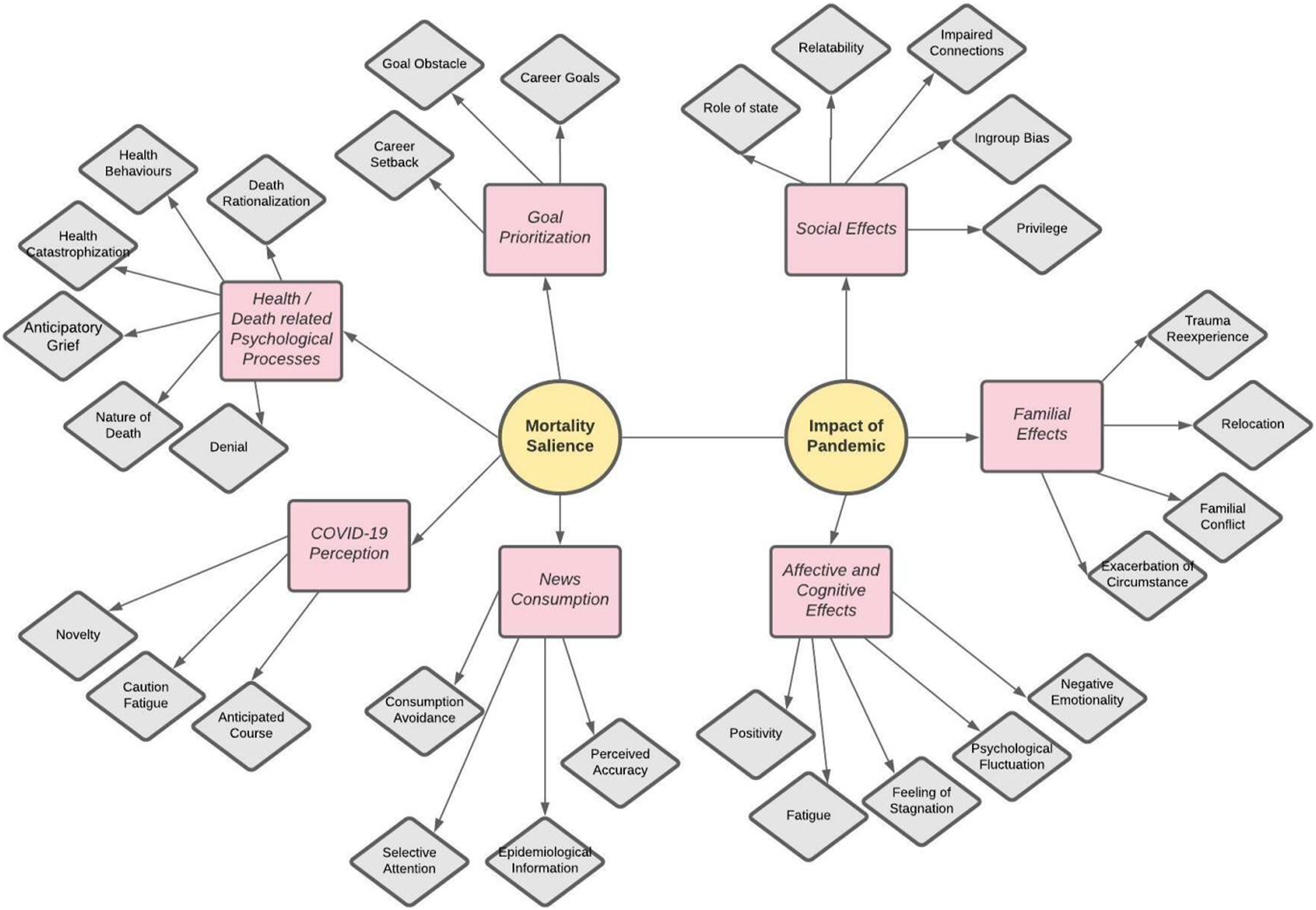
Discussion
Mortality Salience
The global theme of Mortality Salience refers to the variables associated with the changing levels of death anxiety in the lives of the present group. These factors are impacted by mortality awareness and are associated with mechanisms arising due to mortality salience defence systems.
Health/Death-related Psychological Processes
Health/Death-related Psychological Processes include the different psychological and behavioural reactions of individuals to the pandemic situation. Here, attempts at and preoccupation with health maintenance are coded, along with death cognitions and reactions to such death cognitions.
Death rationalization. This theme refers to the defensive processes using which individuals attempt to make sense of and explain death-related processes. The minimization of perceived threat to life by intellectualizing the issue has also been coded here. For example, a participant reported that, ‘So now I think that OK, death was just a part of life, because everyone goes through that life cycle and everyone moves on. Death is inevitable, basically. So, this is what is my current understanding about death’.
Nature of death. The nature of death as a theme refers to the distinction that is made in the type of death, to determine the nature of processing of the death and the grief involved. Participants mentioned that ‘natural’ deaths are considered more acceptable, such as death owing to old age, as compared to a death that was unexpected or ‘not natural’, such as deaths owing to COVID-19. For example, a participant reported that, ‘A age related death, then with time, it’s like ok. Initially there is a sense of loss but with time people rationalize it, … better that they had a peaceful death. If the death is tragic, the grief period increases’. This is supported by a study that demonstrated how grief levels of bereaved after death owing to COVID-19 were higher than those wherein the death had occurred owing to natural causes (Eisma et al., 2021).
Anticipatory grief. Anticipatory grief talks about the predictive experience of grief during the COVID-19 pandemic. This includes grief of self and also grief of loved ones while discussing the participant’s own death prospects. For example, a participant reported that, ‘Had the fear also, because, fear that something will happen to me, I will die, but more than that, was that how will my mother react … used to think, how will she react, I hope nothing happens to her’.
Denial. This theme refers to the distractions and defence processes that individuals and their loved ones engage in, when faced with death cognition during the COVID-19 pandemic. This includes mentions of a lack of death experience and disassociating oneself from the prospect of health threats or dying and the topic of death itself. For example, a participant reported that, ‘But then, when the idea of her getting the disease comes into the picture, she’ll be like, totally denying, like no, it can’t happen to me, can’t happen to my family. We are immune’. This form of selective ignorance and denial can have profound impacts, as seen in processes of groupthink such as the illusion of invulnerability, that were found to lead to resistance to health mandates at a group level during the pandemic (Forsyth, 2020).
Health behaviours. The theme of health behaviours mentions the varieties of health-related behaviours and actions that individuals are engaging in. Participants have mentioned sanitary, distancing and precautionary measures for safety, which are being maintained at an ‘optimum level’, for safety. Furthermore, a focus on health maintenance and increased attention towards health was reported. For example, a participant reported that, ‘I feel that the chances are low only. Because whenever I go out, I sanitize regularly and after coming back, I take a bath. So I feel that there are less chances of me getting infected’. A survey of 1226 Americans demonstrated that 95% of the individuals of the same age cohort as the participants in the present study were engaging in social distancing measures to a large extent (Altman, 2020).
Health catastrophization. Under this theme, instances of catastrophic thought processes about the health status of self and loved ones are coded. There are various forms of ‘what if’ statements in relation to illness or death of self, family and loved ones, expressed by the participants themselves or by others in their vicinity. For example, a participant reported that, ‘My attention was too much on my health. Less positive, more negative. So I was feeling what if I have cancer and, I hope it doesn’t happen … what if I am going to live another 4–5 months only’. Similarly, a study on the Indian population found an association between levels of stress, knowledge of the virus and catastrophic thought processes (Dubey et al., 2020).
News Consumption
News Consumption includes different aspects related to the form of news consumption that individuals are engaging in. The type of news they are engaging with, the manner of engagement and their perception of the news are factors that are relevant here. Their perception of COVID-19-related news is also categorized under this domain.
Consumption avoidance. This theme refers to the manner in which individuals are avoiding consumption of news pertaining to the COVID-19 pandemic and also distracting themselves from doing so. The participants reported high levels of consumption when the pandemic started, and with time, consumption was significantly reduced and avoided. Many individuals also demonstrated satisfaction with this decision, which was taken actively by them, and mentioned how they feel that excessive consumption of COVID-19 news ‘should’ be avoided. For example, a participant reported that, ‘Beginning, every morning I used to check, I think from March to August (2020). I would check news about what is going on, how many people are affected … after August, I completely stopped reading the news and getting any updates’. A survey by Fletcher et al. (2021) mentioned that levels of news avoidance increased as the pandemic progressed in the United Kingdom, around May 2020.
Selective attention. Selective attention categorizes all instances of biases in our attentional and cognitive processes that lead us to pay more attention to specific forms of news. This was found to occur in different ways. On the one hand, selective attention towards catastrophic news stories and events, and the subsequent affective consequences were demonstrated. On the other hand, many individuals also engaged with news that mentioned recovery and ‘positive’ outcomes when infected with the SARS-CoV-2. This information was given importance in shaping their perception of the threat posed by the pandemic. For example, a participant reported that, ‘I should be able to deal with this well. Because a lot of people … someone I know who was about the age of 60/65, he and his wife both got infected and they both are now doing well’.
Epidemiological information. This theme is indicative of the type of news content that people are engaging with, along with general avoidance of other content. The participants reported keeping themselves updated on information about the number of COVID-19 cases, the number of active cases and the general state of progress of the pandemic in the country or specifically the state where they are residing. News that talked about state-issued guidelines and regulations are also mentioned here, but any extra information has been described as ‘not needed’. For example, a participant reported that, ‘So, I just scroll through it, I see that ok, this is the number you know, these many are the deaths, these many are the new cases, these many are the recovered cases and that’s all’.
Perceived accuracy. The theme of perceived accuracy refers to the individual’s perception of the reliability and authenticity of the news that they have been receiving or engaging with. The participants mentioned a perceived increase in the number of ‘junk news’ sources, including biased news reports, conspiracy theories and inaccurate depictions of the events occurring in the country. Unscientific remedies that are posed as solutions to prevent or even cure the viral infection are also being shared. For example, a participant reported that, ‘It’s become a tool for propaganda … I do rely on news, but not to the extent that it’s, I don’t take it as it is. Like, this is written in the news, it must be true’. This factor can affect how the individual views the pandemic. In a similar vein, a study in Nigeria emphasized on the role of perceived accuracy in the perception of information regarding the COVID-19 pandemic (Erinoso et al., 2021).
Goal Prioritization
Goal Prioritization includes aspects of individual’s experiences and interactions with their goals during the COVID-19 pandemic. The focus on career goals among this age group of the population has been coded, along with an exploration of the consequences of the pandemic situation on the prioritized goals.
Career goals. This theme describes the prioritization of career goals by many members of this age group, even during the COVID-19 pandemic. A focus on such goals can be observed in the different instances of the temporal ordering of goals, as both long-term and short-term career-oriented goals are taking precedence over other types of goals. For example, a participant reported that, ‘Short-term goal is to spend more time on studying on a daily basis and have a routine and do the things that I wish. My long-term goal is to clear this course and start working’.
Career setback. Career setback is a theme that illustrates the frequent mentions of obstacles to career goal attainment in relation to the pandemic. This includes academic postponements, uncertainty, changes and even financial losses that have affected the achievement of career-oriented goals. For example, a participant reported that, ‘Yeah, I think the most anxious I have been, in all of this, has been about my career. The 1st thing I would want to sort out in all of this, would be my career’. Akkermans et al., 2020 mention the COVID-19 pandemic as a factor associated with ‘career shock’ for people worldwide.
Goal obstacle. This theme categorizes other types of barriers to the attainment and progress of goals that the present situation has posed. Participants mentioned interpersonal and family-oriented goals, but aspects such as social distancing have acted as significant obstacles. Moreover, the associated stresses lead to the feeling of not being ‘ready’ for relationships, despite having congruent goals. For example, a participant reported that, ‘So of course there’s a lot of anxiety, a lot of uncertainty around achieving these goals or moving towards these goals even’.
COVID-19 Perception
COVID-19 Perception categorizes the instances that demonstrate the manners in which individuals are understanding or making sense of the COVID-19 pandemic. It includes individual predictions of the course of the pandemic and factors affecting the response to it, over time.
Novelty. This theme explains how individuals relate the impact of COVID-19 on society and their lives, based on the novelty of the situation. The aspects of the pandemic that bring new experiences, new lifestyle changes and new threats to life, as seen in frequent mentions of ‘new strains’ of the virus, are indicated, along with new pressures on the participant’s coping mechanisms. For example, a participant reported that, ‘COVID-19 was unknown, and people do feel scared from unknown things. Because we do not know anything about it’.
Caution fatigue. This theme describes the process of habituation and getting accustomed to the constant threat of the virus. Participants explained that the importance of the pandemic in their minds reduced, alongside reduction in fear as they got ‘used to’ it and its significance also reduced when compared to other stressors such as career and financial setback. For example, a participant reported that, ‘After a point of time, I got used to it. At first, I felt like it was very risky. Even though I still feel that it is risky, I kind of got used to it. That’s the difference I guess’. This process of fatigability in COVID-19 risk perception is also linked to the maintenance of mental well-being, as demonstrated by Li & Lyu, 2021.
Anticipated course. Anticipated course mentions individuals’ perception of the course that the pandemic will take over a period of time. Participants describe their predictions of the progress over time, with both positive and negative sentiments associated with this predicted course. There is some perceived uncertainty regarding the future of the pandemic, but there are some mentions of positivity in terms of anticipating a short-term course for the situation. For example, a participant reported that, ‘Maybe, by the end of the year, the vaccines will be out and hopefully COVID goes away’.
Impact of Pandemic
The global theme of the Impact of Pandemic refers to the varied effects that the COVID-19 pandemic has had on the lives of emerging adults in India. It includes different psychological and interpersonal domains for an individual that have been influenced by the present context.
Social Effects
Social Effects includes the social, cultural, interpersonal and political impacts of the pandemic on individual lives. The increased emphasis on state processes and deficiencies in social and interpersonal functioning are mentioned here. The solidarity being experienced in coping with COVID-19 also falls under this domain.
Role of state. This theme refers to the enhanced emphasis and importance that is being placed on state processes. Participants indicated an increased awareness of political processes, consumption of news and information related to government affairs, and a general focus on state-associated institutions such as hospitals. For example, a participant reported that, ‘Especially because at that time I was very politically hyper aware … That really affected me. I was really sad about how our systems work. Already poor are more vulnerable to disease and government is also doing nothing for them’. Lim et al. (2020) have also emphasized the role played by trust in the government in the adoption of pandemic-related behavioural change in Singapore.
Relatability. Relatability describes how the shared experience of the pandemic by all citizens of society led to the development of feelings of solidarity and a shared threat. Participants mentioned the situational similarity and the associated challenges that are being faced by one and all. For example, a participant reported that, ‘But it was a positive that, it’s something and we all are stuck and we all are struggling and everyone’s life is at stake maybe, and we all are sailing in the same boat’.
Impaired connections. This theme can be understood as individuals’ understanding of a relative loss of social connectivity. Participants mentioned relationship issues and difficulties in interpersonal functioning that were connected to the COVID-19 measures such as the imposition of lockdowns and the regulations of social distancing. For example, a participant reported that, ‘Lack of social contact has been something which has been really hard, it has hit me really hard … been feeling a very acute need to be around my friends, or people in general, but I haven’t been able to’.
Ingroup bias. Ingroup bias explains the increased preference that individuals demonstrate towards members of their own social group, in comparison to members from other groups. Prejudice towards members of other ethnic groups, countries and geographical areas, was demonstrated. Alongside this, the bias of perceived safety with familiar or known people, was also observed. For example, a participant reported that, ‘At the part of India, I am happy. But looking at a larger picture, there are lot of deaths … People are more dumb in developed countries. They are not following rules formed by government’. The polarization of ideologies is linked to the increase in bias during the pandemic (Burke et al., 2013, as cited in Pyszczynski et al., 2020).
Privilege. Privilege is a theme that includes the enhanced awareness of their own privileges and advantages that the pandemic situation has instilled in individuals. The acknowledgement of one’s privileges and the associated mental states such as feelings of guilt are explored, as is the mental rumination in trying to make sense of one’s entitlement. For example, a participant reported that, ‘That’s just my privilege, that I don’t know, I’m grateful, but at the same time, when I think about it, it also hurts because you know, I’m after all privileged, so what problem can I have?’ Psychologists have been bringing attention to the occurrence of pandemic survivor guilt and privilege, as well as their consequences (Taibbi, 2021).
Familial Effects
Familial Effects includes the far-ranging effects that the COVID-19 pandemic has been having on the family systems and relationships of individuals. The change in circumstances and the detrimental effects of this change are included in this domain.
Familial conflict. Familial conflict describes the frequency of conflicts in the family system during the pandemic. The participants expressed disruptions in family communication patterns, fights and associated emotions such as anger and resentment, and conflicts often linked to the pandemic. For example, a participant reported that, ‘My mother taking it very seriously and father taking it very casually was a problem for me because that would lead to them fighting and then I’ll get very frustrated … I’ll get angry and then we’ll also fight’. Family conflict was even linked to suicidal ideation for participants, also demonstrated by Hoekstra (2020).
Relocation. This theme elaborates on the change in living situation owing to the shifting of residences that occurred as a result of the COVID-19 pandemic. Participants described both intracity and intercity relocation and the associated change in perception of the pandemic. For example, a participant reported that, ‘Along with that, we also had to change our house, because of finances. Because we live in a rented place, and that was too expensive for us. So, during the COVID-19 Pandemic, we had to shift homes’.
Trauma reexperience. Trauma reexperience refers to the retraumatization and experiences of trauma and abuse by some individuals during these times. Participants have described experiences of domestic abuse, trauma and sexual harassment linked to changes in living situations and family dynamics. For example, a participant reported that, ‘My dad was, he was really crossing, there were a lot of sexual crossings from his end … Even after coming here, it’s not like it has entirely gone away. The after effects are still present, or visible’. Similarly, a study in South Africa linked childhood trauma to the presentation of depressive symptoms and effects on COVID-19 risk perception during the pandemic (Kim et al., 2020).
Exacerbation of circumstance. This theme refers to the deterioration of previously unpleasant or inadequate familial situations. The increases in familial burden, such as a family member’s illness or financial worries, as well as feelings of isolation and depressive symptomatology owing to separation from loved ones, have been categorized here. For example, a participant reported that, ‘My father’s job … had to leave. After that, he worked in 2-3 other places but from there, he didn’t get salary. You can imagine, if you don’t get salary for so long, then what the financial condition can become’.
Affective and Cognitive Effects
Affective and Cognitive Effects include different consequences of the COVID-19 pandemic and the resultant socioeconomic situation on the emotional states and thought processes of individuals. Fluctuations in mental states and mental exhaustion have been mentioned here. The emotions evoked owing to stress associated with the pandemic can also be categorized in this domain.
Negative emotionality. This theme codes all mentions of negative and distressing emotions and mood states. A prevalence of feelings of hopelessness and helplessness has been noted, alongside feelings of guilt, worthlessness, resentment, fear, anger and even suicidal ideation. Individuals also reported feeling ‘stressed’ when discussing the majority of experiences related to the pandemic. For example, a participant reported that, ‘Mentally I would say, there’s a lot of turbulence going on, there are bouts of anxiety, there are bouts of depression, although there’s no clinical diagnosis, as of now, but, there are, you just know’.
Feeling of stagnation. This theme is indicative of the thoughts and emotions that are associated with a feeling of stagnancy in life. Participants mentioned a feeling of being stuck in an unfavourable situation, with a sense of mundanity and ‘not going anywhere’ in their life. The experience of getting affixed to a routine that was not perceived to be contributing to their life goals was also evident. For example, a participant reported that, ‘After this semester is gone, next what, there was a lot of thought that was going on … all the deadlines that I have met, personally, they are pretty useless for me, because I didn’t move anywhere, I’m still there’.
Psychological fluctuation. Psychological fluctuation refers to the frequent changes in cognitive and emotional states that are experienced in association with the pandemic. This includes reports of feeling like they are on an ‘emotional roller coaster’, with recurrent changes in mood states. Along with this, thought processes related to the pandemic are often contradictory and chaotic in nature. For example, a participant reported that, ‘That phase where, some days I’m like, OK, this will pass, and some days, I’m like, this is a mess, stagnant, this is not going anywhere … one day it’s all OK, and the other day, nothing is working out’. This presentation of mixed emotions can play an important role in pandemic-related behaviours as well, as demonstrated by Oh & Tong, 2021.
Fatigue. In the context of the thematic network, fatigue can be understood as mental exhaustion and tiredness, in relation to the pandemic. Although physical lethargy is evident, participants mentioned instances of psychological exhaustion and difficulty in getting the motivation and energy to engage in work or even to engage in self-care. For example, a participant reported that, ‘I sometimes didn’t feel well and it takes more time to do things than usual’.
Positivity. The theme mentioned here refers to the patterns by which individuals attempt to gain access to sources of positivity in their emotions and thought processes, and through their behaviours and actions. Many participants reported a positive future orientation, with a focus on sources of positive emotions such as hope, for fostering resilience and coping. For example, a participant reported that, ‘Lot of people who were very relaxed, very rational about it, they kind of gave me a very positive outlook. Positive in the sense that it is going to get over positive and not that, this pandemic is good positive’. A study by Israelashvili, 2021 emphasized the presence and importance of positive emotions in the process of resilience against the pandemic.
Mortality Salience and Pandemic Impact
The results of the thematic analysis demonstrate the psychological impact of the death awareness being brought forth by the COVID-19 pandemic. Coping with death anxiety has become more strenuous than usual owing to the current circumstances (Pyszczynski et al., 2020). Death thought accessibility has increased and has been linked to increased psychological distress during the pandemic (Ahorsu et al., as cited in Menzies & Menzies, 2020). When combined with the situational factors that are undergoing transformation for different individuals, such as economic, sociopolitical and intrapersonal alterations, this leads to changes on a variety of levels. For example, people’s interactions with different processes are affected, as observed in the avoidance of death-related news consumption, which can be linked to the fear of death and death anxiety induced by exposure to such COVID-19-related news.
With respect to goal prioritization, certain goals have been theoretically connected to the defence systems of mortality salience (Pyszczynski et al., 2020). Health behaviours can also serve as goals, as a method of proximal defence. Evidence suggests that individuals may attempt to manage distressing death thoughts by formulating goals focused on improving health and following pandemic guidelines (Altman, 2020). Thus, minimization of the threat of COVID-19 is a major motivational force in goal selection. Even career goals, which are thought of as self-serving goals, can be linked to the drive for achievement and ideas of a meaningful life, thereby providing symbolic immortality, under the realm of the Terror Management Theory (Pyszczynski et al., 2020). These findings point towards the connection between the mortality salience of the COVID-19 pandemic and the myriad impacts that the pandemic is having on lives.
Implications and Conclusion
As of September 25, 2021, at 4:51 pm, there had been 4,739,364 deaths worldwide owing to the COVID-19 pandemic (Dong et al., 2020). These numbers have been increasing for a year and have been predicted to increase in the near future as well. In this exceptional scenario, people have been living in a state of increased awareness of illness and death. To understand the impact of this state on mental health, behaviour and life experiences, the present study collected data regarding mortality salience and associated factors in the Indian population of emerging adults. It explored how increased cognition and comprehension of their own mortality and death can influence an individual in a myriad of ways.
For the emerging adults of India, career-related goals have been found to come to the forefront, and selective and careful consumption of news media has been observed. Psychological processes can include a focus on health maintenance with anticipatory fear and grief. When considering the pandemic, social relationships can be seen to have been impacted, whereas issues in familial systems may have been compounded. The mental health of individuals in this scenario is riddled with fluctuations and negative affect, that necessitates increased attention to the health and well-being of the youth and emerging adults in India.
Furthermore, the findings from this study can be utilized in the field of mental health practice and research to build on our current understanding of the psychological effects of this crisis. For example, despite evidence pointing towards focus on interpersonal goals during times of death awareness and the general notions of sociocultural collectivism, the finding related to career prioritization can be investigated further and put into practice. These results can also be extended to other fields, such as in navigating different sociopolitical mechanisms, to aid us in management of the pandemic, in the wake of the second wave in India. For example, retraumatization during the pandemic can be corroborated with accounts of an increase in domestic violence in India as well as globally (Krishnakumar & Verma, 2021), which emphasizes the need for a call to action on a societal level.
The present study was limited to emerging adults from an urban background. It also excluded anyone who did not have a foundational understanding of the English language. In the future, this research can be broadened to other social strata and to other age groups in the Indian population. Further exploration of the findings can help us to monitor new developments in these areas, in order to generate a cohesive understanding of the psychological anthropology of death in the times of coronavirus.
Footnotes
Acknowledgments
The authors acknowledge the institutional support and the contribution of all the participants in the research process. They also thank the authors of the screening tool for granting permission for its use in the study.
Declaration of Conflicting Interests
The author(s) declared no potential conflicts of interest with respect to the research, authorship, and/or publication of this article.
Funding
The author(s) received no financial support for the research, authorship, and/or publication of this article.
