



Abstract
The current study sought to ascertain the impact of inter-parent conflicts on teenage psychological distress, social and academic adjustment and examine the suicide ideation during the COVID-19. The results found to be alarming as 22% of the individuals displayed suicidal tendencies, with 9% having attempted suicide once, 4.6% having tried suicide twice, and 11% stating that they were likely to do so again. Therefore, the media and the government might host awareness programs and counseling initiatives to promote mental health and prevent suicidal behavior. Moreover, parents may be educated on community level, about the effect of inter-parental arguments on the mental health of their children.
Introduction
During the COVID-19 pandemic, humans around the globe are experiencing enormous stress of health and economic constraints that impact family life (Lebow, 2020). Unprecedented measures have been adopted to curb the proliferation of COVID-19. For instance, closure and minimization of active hours for shopping malls, educational institutes, and social gatherings encourage work from home (Wilder-Smith & Freedman, 2020). Furthermore, because of the lockdown, children were unable to access playgrounds, campus-based classrooms, or more extensive social activities, all of which have a negative impact on the psychological well-being of children and parents. Parents have also diminished their social and cultural relations, as well as their physical activities. Many parents are compelled to do work from home to fulfill the basic needs and manage the distance education of their children. This period is also accompanied by job loss and an increased unemployment rate in Pakistan with high risk of poverty (Shafi et al., 2020). Hence, this situation is highly associated with well-established risks for both parent’s and child’s mental health issues besides irritable parenting and increased couple conflict (Dinh et al., 2017).
The existing literature manifests that pandemic lockdown has increased the rate of family conflicts and psychological problems in Pakistan (Malik & Naeem, 2020; Mukhtar, 2020) and internationally (Boserup et al., 2020; Fisher et al., 2020; Nelson et al., 2020). Staying at home could prevent the spread of COVID-19 but not guarantee the safety of adolescents. In this regard, they are confronted with a risk of dangerous virus outside along with inter-parental issues at home. Pakistan is ranked fifth among the most populous countries having consanguineal family system with several generations living together. Therefore, practicing social distancing poses a challenge to the mental health of entire family members (Rana et al., 2020). Everyone, living in the same house, whether it is a nuclear or joint family, could aggravate the chance of conflict between two key people in the home. The disruptions caused by the pandemic influence families in general. These factors, on the other hand, disproportionately affect households experiencing health and social inequities, such as a lack of financial and social resources, crowded living quarters, and limited access to technology and the Internet. The combination of these stressors has resulted in an increased domestic violence, and recent research indicates that children have been exposed to more crying and physical punishment since the pandemic began. Therefore, children have been disproportionately affected in the pandemic (Gassman-Pines et al., 2020).
Parental marital quality has a more significant impact on the adolescents’ psychological well-being. For instance, the positive parental marital quality leads to the high psychological well-being of children, whereas a negative marital quality leads to low psychological well-being (Wahyuningsih et al., 2020). Hence, inter-parental conflict is defined as a negative relational bond between parents (Ribar, 2015). It is a significant area of study in family psychology. Additionally, it encompasses a wide range of parental behaviors, that varies from verbal disputes to physical violence (Shek & Liang, 2017). Thus, the family context is a crucial determinant of subjective well-being. In general, parents play a central role in the lives of their children. Nevertheless, family relationships may have a significant impact on the family’s climate. They are the foundations of encouragement, direction, and love throughout the life cycle, including childhood and adolescent years (Larsen & Eid, 2008). In addition to that adolescence happened to be the period of vulnerable changes and rigorous challenges (Kobak et al., 2017). The relationship between parent and child has been consistently recognized as a primary mechanism by which the impact of inter-parental conflict on children is processed (Erel & Burman, 1995; Rhoades et al., 2012). The earlier studies have evidenced the detrimental effects of physical, verbal, or domestic abuse on children’s mental health (Osofsky, 2003). Therefore, it is necessary to understand the impact of disputes between parents and constituent chronic environmental adversity that might risk children’s mental health and future development (Harold et al., 2017). It is estimated that around 25% of psychological problems occur in adolescence (Lu et al., 2018).
Additionally, students with psychological problems are more likely to have social and academic adjustment issues (Richardson et al., 2012). The coronavirus pandemic has not only altered the teaching-learning process in educational institutions but also affected the relationship between teachers and students tremendously. Due to pandemic, colleges were forced to conduct all interactions with students through online modalities. A study revealed that around 65% of students in Pakistan had been experiencing the online mode of learning for the first time in their lives. Accessibility, lack of suitable devices, and social issues represented by lack of communication and interaction with teachers and peers were reported as the main challenges that students faced (Noor et al., 2020).
The research highlighted that the pandemic has a more significant effect on children and young people’s mental health as compared to the older adults. The research also highlighted the increase in suicidal thoughts and self-harm during pandemic (Zhang et al., 2020). Suicide is the leading cause of death among adolescents worldwide (Esposito-Smythers et al., 2022). According to the report, New Zealand’s initial response to the novel coronavirus pandemic included a strict lockdown. Thirty percent of respondents reported moderate to extreme psychological distress; 6% reported suicidal ideation; 2% made suicide plans; and 2% attempted suicide. Suicide rates were highest among those between the ages of 18 and 34. During the lockdown, slightly less than 10% of the participants had direct experience with family disputes (Every-Palmer et al., 2020).
Additionally, the economic recession and traumatic events aggravated the suicidal rates (Chang et al., 2013). The apparent reason for this lies in the fact that COVID-19 creates a burden that might lead to compromised community-based support, employment insecurity, housing instability, and increased domestic violence (Mahase, 2020). In some countries, access to highly lethal suicide methods such as firearms and pesticides could be increased because of insensitive or irresponsible media coverage of suicide deaths linked to COVID-19 (Gunnell et al., 2020).
The few studies that have been conducted on past pandemics and COVID-19 left parents and children largely unexplored (Brooks et al., 2020). For example, in a preliminary study conducted in China during COVID-19 pandemic, terror, clinging, inattention, and irritability were the most severe symptoms for younger children. (Jiao et al., 2020). However, mechanisms that could explain which COVID-19-related risk factors put children at greater risk of adverse outcomes have not been explored. Similarly, the relationship between COVID-19 lockdown and parental well-being or inter-parental conflicts on children’s academic and social adjustment has been barely studied up to authors’ best knowledge. To support children’s health in these difficult times, a better understanding of family processes, protective and risk factors in the home environment may be investigated (Wang et al., 2020).
Aims of the Study
In order to fill this gap, as suicide has taken a terrible toll on our society for a variety of reasons, yet during the pandemic, prevalence of inter-parental conflicts and suicidal ideation are very new trend and not well documented up to authors’ best knowledge. The purpose of the present research was to examine the impact of inter-parental conflicts during COVID-19 lockdown on the mental health of adolescents in Pakistan. Thus, the study specifically examines adolescents’ psychological distress, social and academic adjustment problems, and suicidal ideation (Figure 1). Hypothesized model of inter-parental conflict, psychological distress, social adjustment problem, academic adjustment problem, and suicidal ideation; solid lines representative path between factors.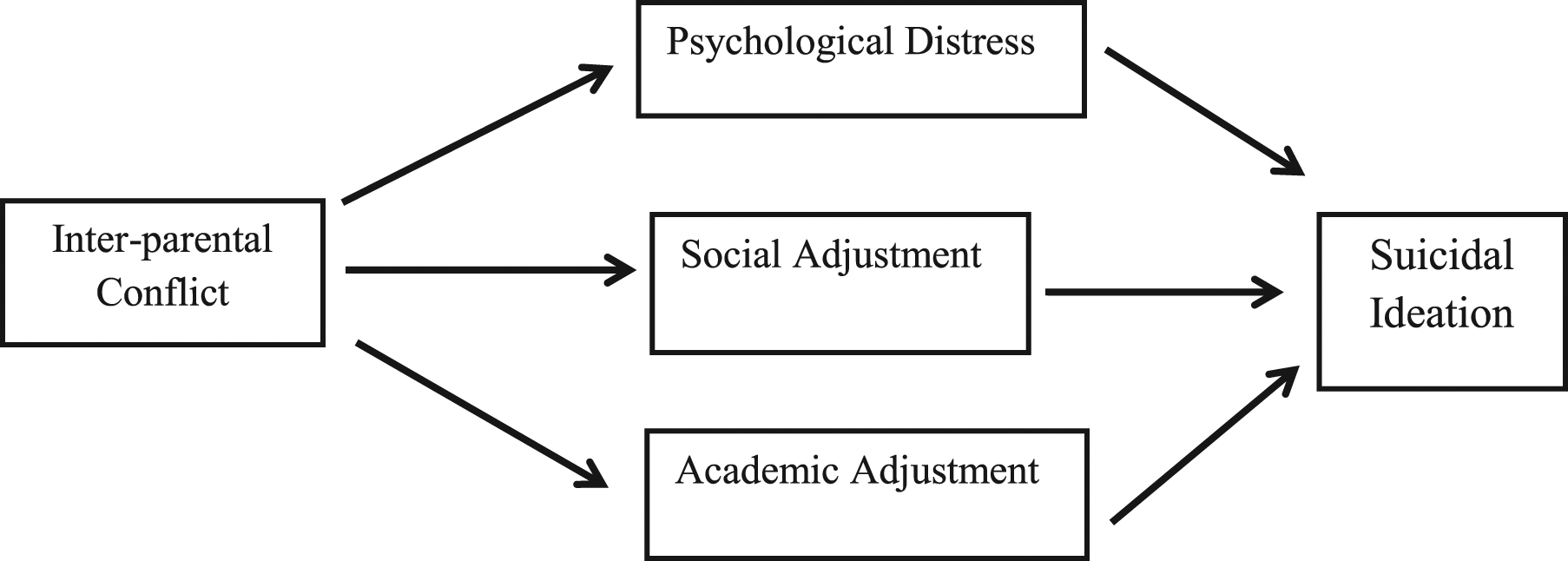
Research Design
The opted research design for the present study was relational. The researchers investigated the connection between a child’s experience of inter-parental conflict, psychological distress, academic and social adjustment issues, and suicidal ideation and their prediction. The data was collected from students of different institutions through informed consent from participants belonging to the Punjab province of Pakistan. The present study has been carried by using on the instruments for five different variables.
Population and Sample
The current study’s population consisted of students belonging to Grades 10, 11, and 12 from different areas of the province of Punjab, Pakistan. Owing to time and resource constraints, the study’s sample was selected using a convenient sampling technique since the data was obtained during the COVID-19 time frame. The sample of 305 students was selected by using G power analysis. The rate of response was 82.7%. This study excluded 64 incomplete survey questions. Every ethical precaution was followed throughout the data collection. Informed consent was obtained from the institutions and the participants.
Research Instruments
The following instruments have been used in the study. The demographic sheet was created to examine various demographic variables such as gender, age, educational level, and family system.
In 1992, Grych, Seid, and Fincham developed the Children’s Perception of Inter-Parental Conflict Scale (CPIC). This measure is often used by researchers, studying inter-parental conflict and its effect on children’s personalities. The scores range from 51 to 153, with higher scores showing a child’s experience of inter-parental conflict (Grych et al., 1992).
The Kessler Psychological Distress Scale (K10) is a straightforward tool for assessing psychological distress. The K10 scale consists of ten questions about emotional states, each of which has a five-level response scale (Kessler et al., 2003).
This study used Baker and Sirk’s Student Adaptation to College Questionnaire (SACQ) items to assess students’ social and academic adjustment. The questionnaire is a psychometric validated instrument used by many universities and colleges to measure the students’ response to their college experience (Baker & Sirk, 1989).
In the current study, the suicidal behavior questionnaire (SBQ-R) was used to measure suicidal ideation of the adolescents. This scale was developed by Osman et al., (2001). It is a five-point self-administered scale. Additionally, it has four items.
Statistical Analysis
Statistical analysis was carried out using both descriptive and statistical methods. Reliability and Regression analyses were applied on the collected data.
Results
Socio-Demographic Characteristics of the Sample (N = 241).
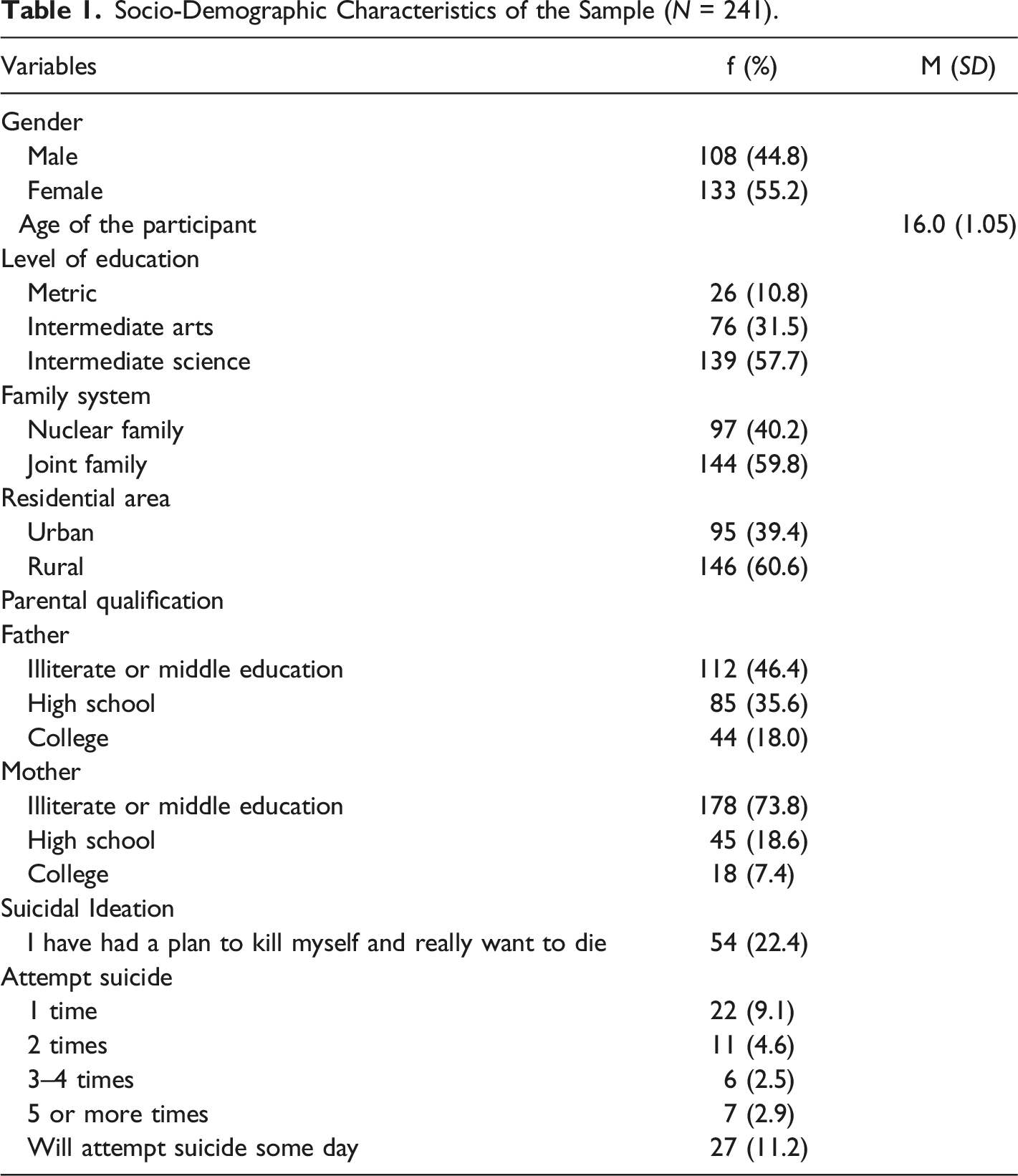
Table 1 depicts the distribution of the total sample by gender, education, age, family system, residential area, and parental education. The gender distribution consists of 44% of the males, whereas 55% of the females as shown in the above table. The sample’s age range was 15–19 years, and the mean age of the participants’ was 16 years (M = 16.0, SDV = 1.05). Most of the participants were in college, with the main subjects being Biological Science (57%), Arts and Humanities (31%), and Metric (10%). Approximately 60% of the respondents belong to rural areas and live in a joint family system, whereas 40% of them belong to nuclear family system living in urban areas. Furthermore, on the scale of parental qualification, the fathers of 46% of the respondents were found to be illiterate or just had middle school qualifications Similarly, around 35% of the respondents’ fathers attended high school, whereas only 18% of respondents’ fathers had a college education. Similarly, on the scale of mother qualification, 73% of the respondents’ mothers were illiterate or just had middle school qualification. Apart from this, almost 18% respondents’ mother attended high school while only 7% of the mothers had a college education. On the scale of suicidal ideation, adolescents revealed that 22.4 per cent had a plan to kill themselves and indeed intended to die; 9 per cent had attempted suicide once; and 4.6 per cent had attempted suicide twice. On the question of whether they will try suicide again, 11 per cent stated that they are likely to do so.
Reliability of Construct
The reliability, convergent validity, and discriminative validity tests are typically used before the initial processing of experimental data to establish the degree of consistency among several measurements of a variable (Hair et al., 2014). This study conducted the tests such as the reliability (i.e., Cronbach’s alpha), composite reliability (CR), and validity of each construct (i.e., average variation extraction [AVE] and maximum shared variance [MSV]).
Cronbach, Composite Reliability, and Average Variance Extracted.
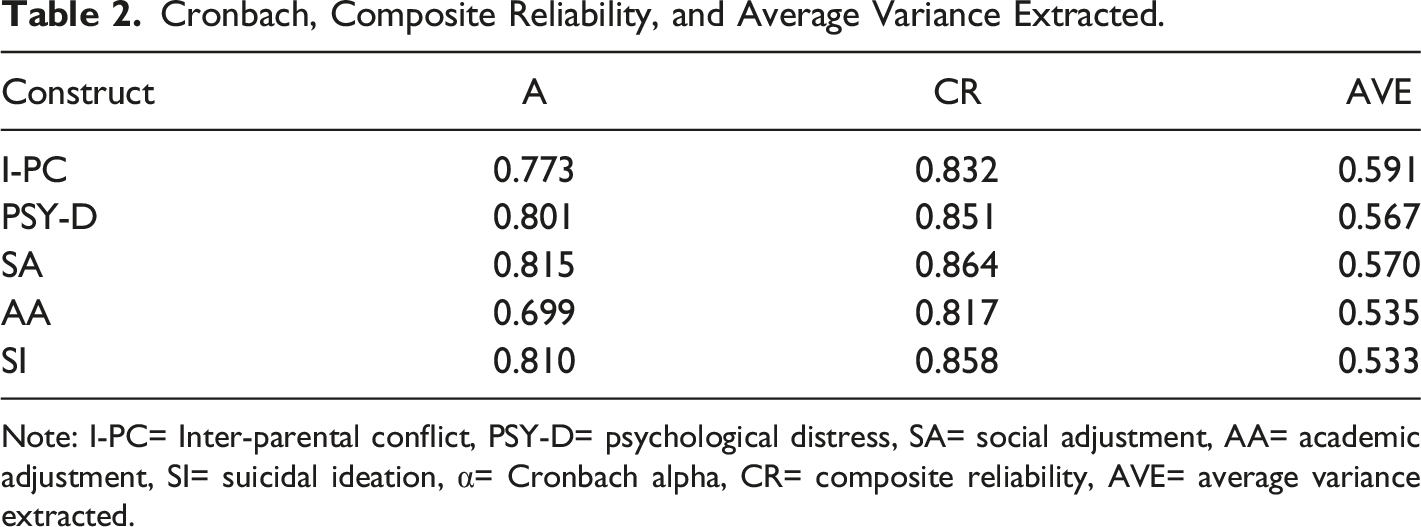
Note: I-PC= Inter-parental conflict, PSY-D= psychological distress, SA= social adjustment, AA= academic adjustment, SI= suicidal ideation, α= Cronbach alpha, CR= composite reliability, AVE= average variance extracted.
Table 2 describes the alpha values of the scales. The alpha values are described as moderate (α = 0.77) for inter-parental conflict, (α = 0.69) for academic adjustment, and excellent (α = 0.80) for psychological distress, (α = 0.81) for social adjustment, and (α = 0.81) for suicidal ideation. The composite reliability values were more significant than 0.70, and the average variance that was extracted is in the range of 0.50. It became evident that scales have acceptable convergent validity.
Regression Analysis
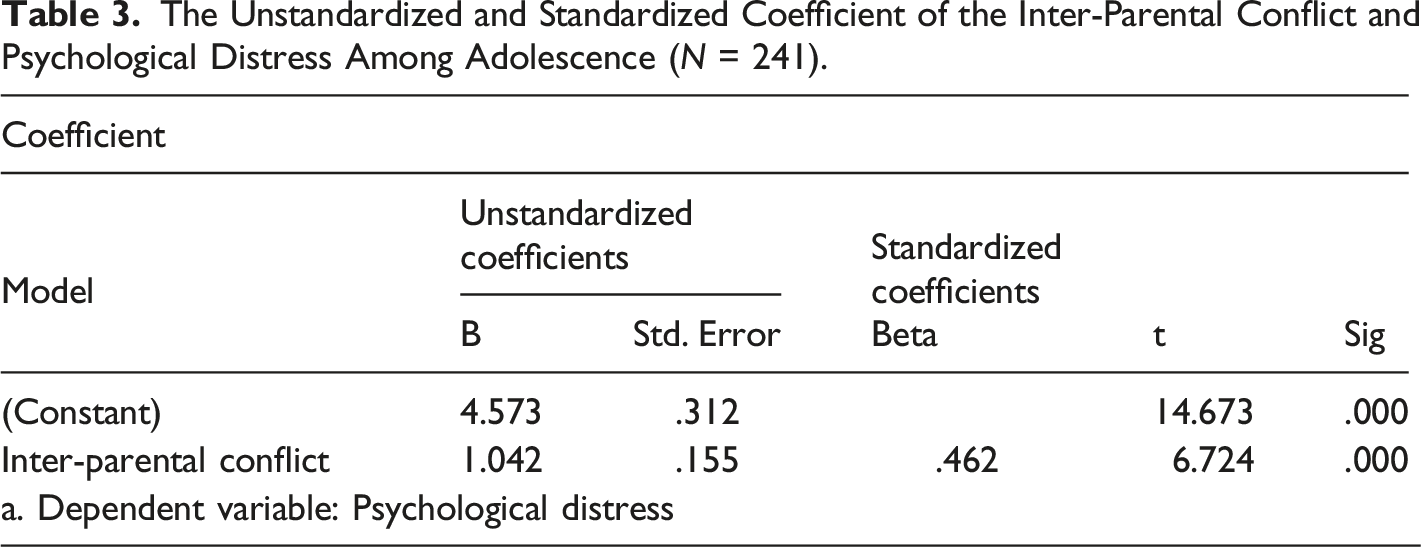
A simple linear regression was calculated to predict psychological distress among adolescents based on inter-parental conflict in COVID-19. A significant regression result was found (F (1,167) = 45.218, p .000), with an R2 of 0.213. R-value is 0.213, which means 21.3% of the adolescents predicted psychological distress is due to inter-parental conflicts in the period of COVID-19. Adolescents’ psychological distress increased by 1.042 due to inter-parental conflicts.
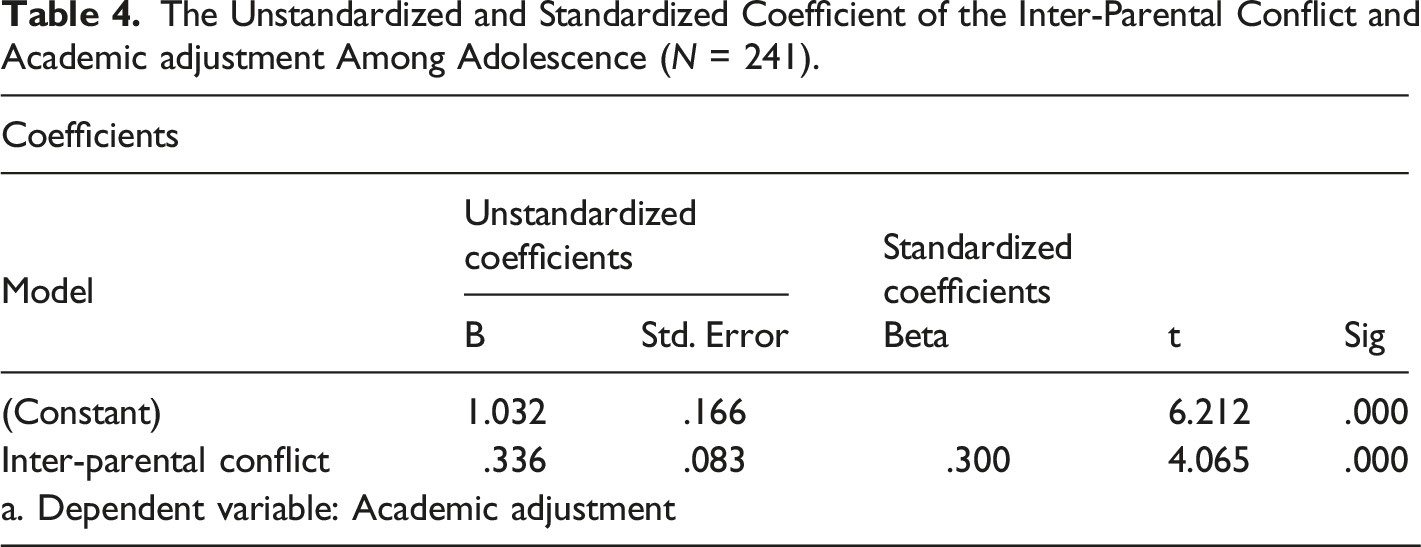
A simple linear regression was calculated to predict academic adjustment problems among adolescence based on inter-parental conflict in the period of COVID-19. A significant regression result was found (F (1,167) = 16.524, p .000), with an R2 of 0.090, which means 9% of the variation among adolescents predicted academic adjustment problems are due to inter-parental conflicts in the period of COVID-19. Thus, adolescents’ academic adjustment problems increased 0.336 due to inter-parental conflicts.
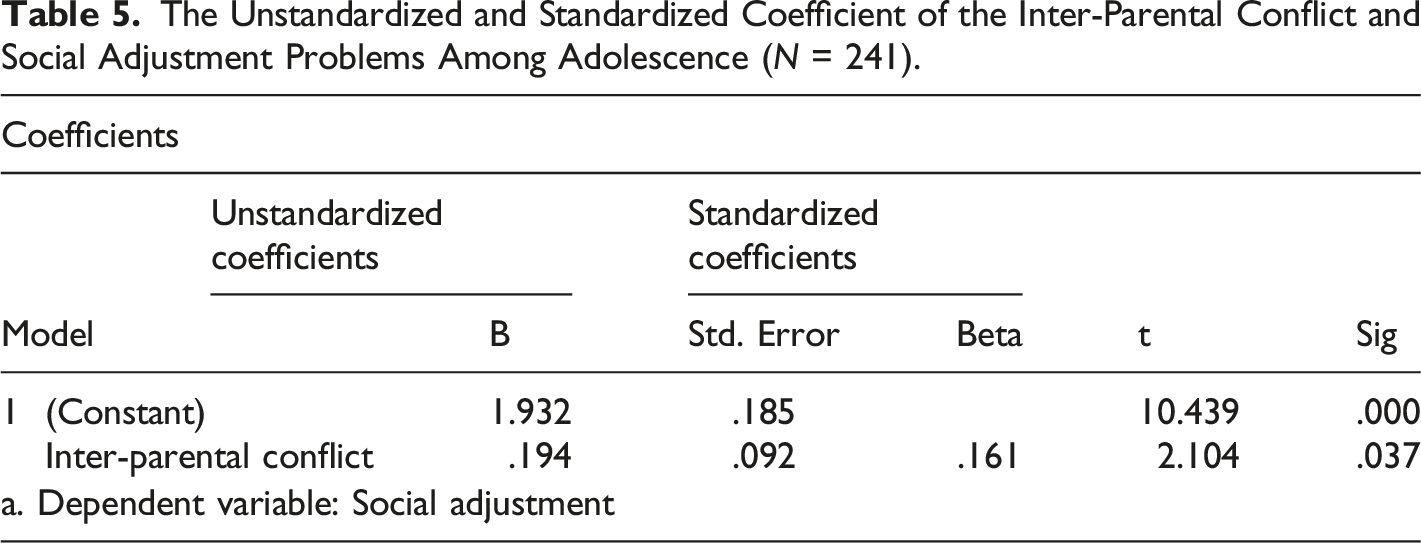
A simple linear regression was calculated to predict social adjustment problems among adolescents based on inter-parental conflict in the period of COVID-19. A significant regression result was found (F (1,167) = 4.426, p .037), with an R2 of 0.161, which means around 16.1% of adolescents predicted social adjustment problems are due to inter-parental conflicts in the period of COVID-19. Eventually, adolescents’ social adjustment problems increased up to 0.194 due to inter-parental conflicts.
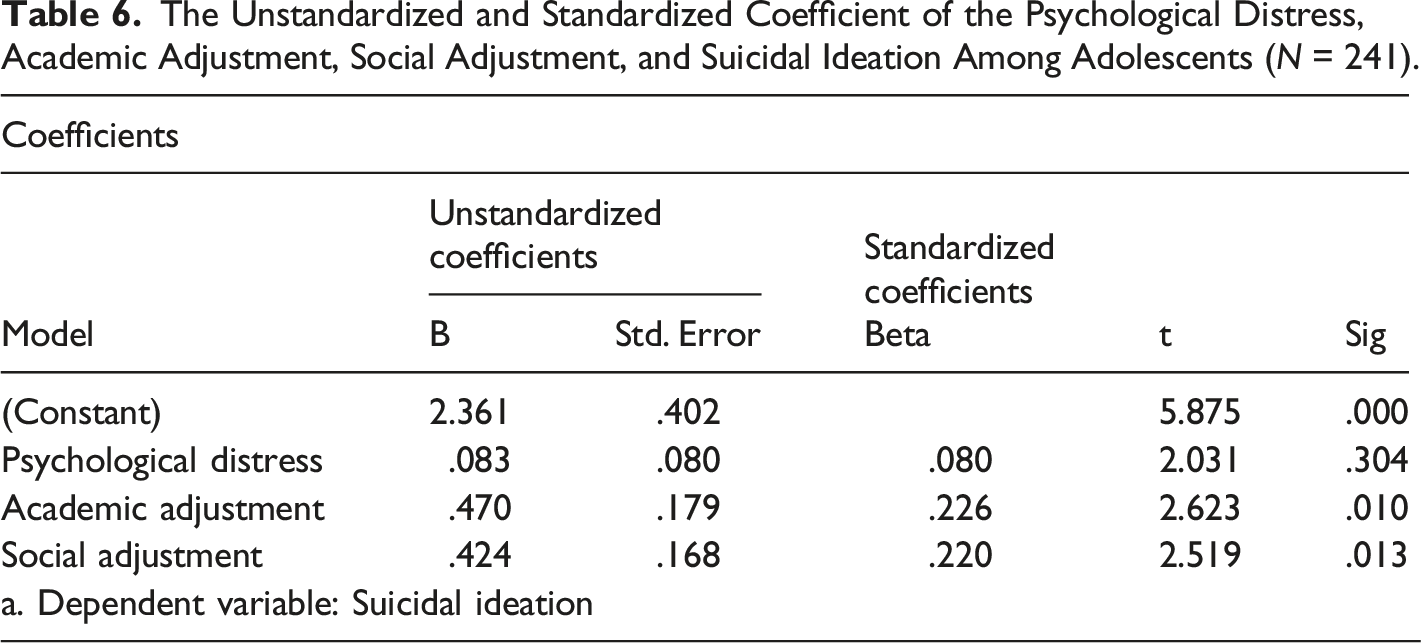
Suicidal ideation was predicted using a multivariate linear regression model based on psychological distress, academic adjustment problems, and social adjustment problems. There was a significant regression result (F (3,165) = 3.048, p < 0.030), with an R2 of 0.229, which means 22.9% suicidal ideation increased due to the social adjustment problems and academic adjustment problems among adolescents during the COVID-19 period.
Discussion
The rapid spread of COVID-19 has had an adverse effect on the general population and some vulnerable subpopulations such as infected patients, their close connections, and frontline health care workers (Mushtaque et al., 2021). Due to COVID-19, the world is experiencing significant health and economic strain that has impacted the families (Lebow, 2020). For instance, it has raised the number of family disputes and mental health issues in Pakistan and other countries (Boserup et al., 2020; Fisher et al., 2020; Malik & Naeem, 2020; Mukhtar, 2020; Nelson et al., 2020). Inter-parental conflict is described as the manifestation of unpleasant affective feelings between parents. In this regard, inter-parental conflict is a significant predictor of behavioral and emotional adjustment issues in adolescents. Nevertheless, inter-parental conflicts affect many elements of life, including adjustment and self-concept.
The Unstandardized and Standardized Coefficient of the Inter-Parental Conflict and Psychological Distress Among Adolescence (N = 241).
The Unstandardized and Standardized Coefficient of the Inter-Parental Conflict and Academic adjustment Among Adolescence (N = 241).
The Unstandardized and Standardized Coefficient of the Inter-Parental Conflict and Social Adjustment Problems Among Adolescence (N = 241).
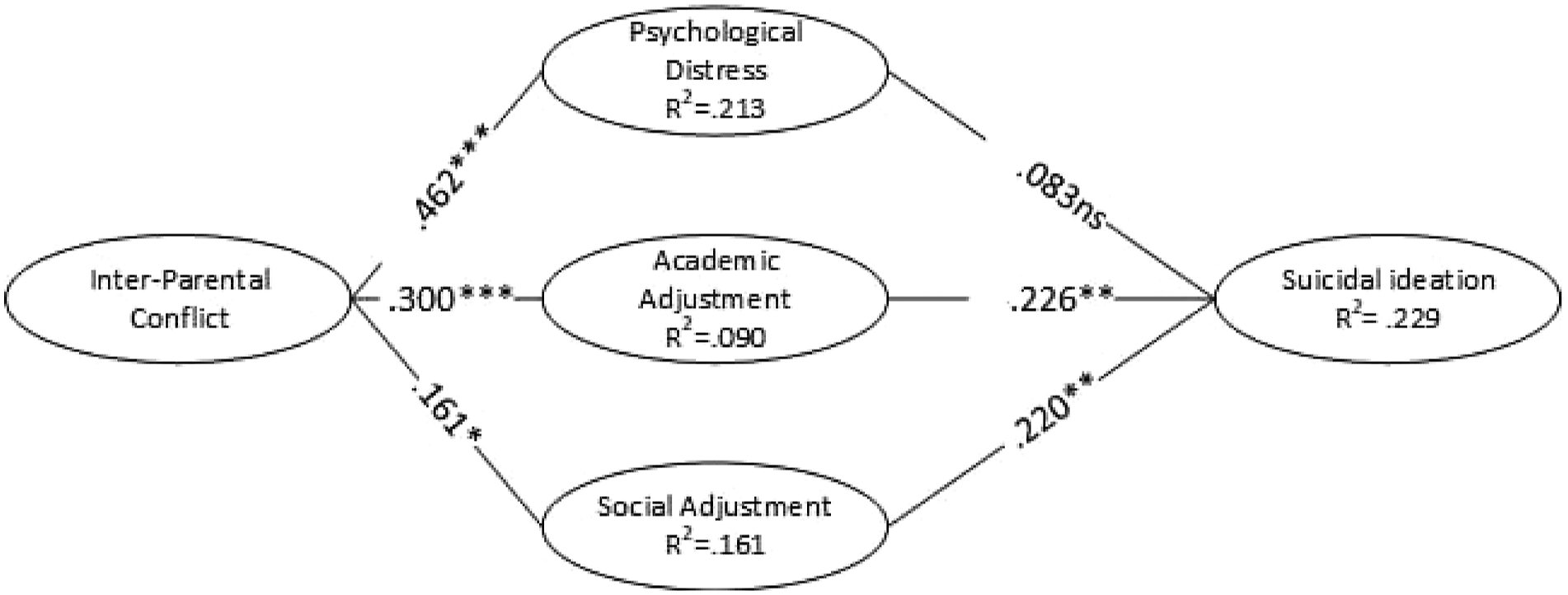
The data shows the unstandardized regression coefficient. The first set of data represents the total effect, whereas the second set of values represents the direct effect. p .05*, p .01**, and p .001***.
The Unstandardized and Standardized Coefficient of the Psychological Distress, Academic Adjustment, Social Adjustment, and Suicidal Ideation Among Adolescents (N = 241).
A majority of the sample in the present study belong to rural Pakistan, living in a joint family arrangement and hence has low literacy parents (see Table 1). These characteristics impact psychological distress, academic performance, and social adjustment, particularly during times of lockdown. According to one study, students had insufficient conditions to attend online classes at home because there was no quiet study space and gadgets for taking online classes. Hence, they had been facing problem in adopting a new learning mode, which posed a significant obstacle in their academic adjustment (Mushtaque et al., 2021). Another study conducted by Syed et al. (2009) revealed that around 46% of the children suffer negatively in their future lives because of their childhood experiences with parental disagreements. Physical violence affects 23% of the population, and language abuse between parents affects 49%. According to other research, the Pakistani setting reports higher violence against women in marriage, particularly in rural regions. In contrast, metropolitan regions have a significant tendency of aggression on both sides, causing greater harm and increasing the possibility for antagonism. Consequentially, 53% of the youngsters exhibit violence, 41% exhibit poor academic performance, 33% experience loneliness and sadness, and 7% attempt suicide (Fortgang et al., 2021).
The current suicide reports from Pakistan are not only tensing the country but also raising concerns in other developing and underprivileged countries throughout the world. Globally, it is projected that 55 per cent of the population lacks adequate social protection. Hence, these losses will ripple across communities, affecting education, human rights, and basic food security and nutrition in the most extreme circumstances (UNDP, 2020).
Conclusion
Parents are a child’s entire world. A child will only rely on and look to them in times of trouble, but if they are not stable in their connection and confident in themselves, the child will remain hopeless and powerless. If a child is subjected to clashes and harsh arguments regularly, he or she will develop a negative attitude that might lead to the dark side of life, such as depression, isolation, or suicidal ideation. All aspects of the individual, such as psychological, social, and physical, will suffer greatly and they will tend to do the same. As in the study, 11% of teenagers disclosed that there is a probability of attempting suicide again. This study looked at suicide thoughts among adolescents in Pakistan at the start of the COVID-19 outbreak. Hence, the present study discovered a significant rate of inter-parental conflicts, social and academic adjustment issues, and suicide ideation, raising the notion that COVID-19 has emotional and psychological effects on parents and young adults.
Limitation and Future Suggestions
The data was created by participants’ subjective reports of their experiences and emotions. Moreover, it was also collected cross-sectionally, that might create uncertainty in the consistency of suicidal thoughts over time. The current study used an online self-report methodology, which may be susceptible to social desirability and memory recall biases. The fact that the survey was conducted online may have boosted the authenticity of the results as compared to offline and/or face-to-face surveys.
Effective solutions are required to help young adults’ mental health. During the COVID-19 pandemic, adolescents should be aware of the treatment choices available to them. There is a need to design the extent to which awareness and counseling initiatives to promote mental health and prevent suicide ideation during and after the pandemic. Parents should be encouraged to take part in such research activities. Other aspects, such as parents’ education and job position, should be evaluated in the context of their conflicts. To maximize the generalizability of findings, future studies should be undertaken on a larger sample size. The government should hold such workshops or seminars at the community level to educate parents to avoid family disputes affecting their children’s mental health.
Footnotes
Declaration of Conflicting Interests
The authors declared no potential conflicts of interest with respect to the research, authorship, and/or publication of this article.
Funding
The authors received no financial support for the research, authorship, and/or publication of this article.
