



Abstract
Background
This article demonstrates the innovative practice of using a card game to teach participants about Advance Care Planning (ACP) and palliative care in Thailand via Zoom during the COVID-19 pandemic.
Aims
To assess the feasibility of using online workshops to conduct sensitive topics of palliative care and death and dying.
Methods
The interactive online workshops were conducted after imposition of the COVID-19 restriction and national lockdown in Thailand between March and September 2020. The sessions were conducted via Zoom meetings and Facebook secret group. Trained facilitators plus one IT team member hosted each workshop. Participants were given an anonymous post-course evaluation with open-ended written feedback form. Content analysed was used.
Results
Eleven sessions were conducted. 103 participants joined the online classes. Participants gave an overwhelmingly positive of the workshops, emphasising on: (i) convenient; (ii) social connectedness during the lockdown; (iii) bichronous element of the activities.
Keywords
Advance Care Planning (ACP) is “a process that supports adults at any age or stage of health in understanding and sharing their personal values, life goals, and preferences regarding future medical care” (Sudore et al., 2017, p. 826). It ensures that individuals receive the care they prefer, honours their autonomy, and adheres to person-centred care (Walach & Loughlin, 2018). ACP is one of the elements of palliative care and requires training to be carried out efficiently (Clark, Gardiner, & Barnes, 2018). The process involves iterative discussion and a series of actions conducted over time, such as discussing end-of-life care preferences and completing/revising an Advance Directive (AD) (Rietjens et al., 2017). Previous research has shown that ACP could improve patient outcomes, increase family communication and satisfaction with care, and reduce unnecessary hospitalization (Borgstrom, 2020; Kernick et al., 2018; van Wijmen, Pasman, Twisk, Widdershoven, & Onwuteaka-Philipsen, 2018). Still, despite several benefits, initiating the ACP and discussing its process is still challenging due to sociocultural and policy barriers that vary between countries (Phenwan et al., 2020), especially since many cultures view death and dying as taboo (Liu et al., 2021).
Additionally, the concept of filial piety, where family’s wishes could dominate and/or override other people’s wishes, influences East Asian countries and, to some degree, Southeast Asian countries (S. Y. Cheng et al., 2020). This often results in patients’ voices and their wishes being dismissed, as family members might discuss end of life plans with health care professionals (HCPs) without patients being involved in their future care. This also applies to Thai culture, where talking about death is perceived as a bad omen and is, therefore, discouraged (Phenwan et al., 2019). Furthermore, policies and a lack of ACP awareness could also potentially impede ACP discussion and implementation. For example, in Thailand, the National Health Act was passed in 2007 to enable any Thais to legally create AD that will cover future medical plans and preferences for end-of-life care (Phenwan et al., 2019). However, the ACP discussion and AD uptake are still low amongst Thais due to the lack of ACP and palliative care awareness among the public and HCPs (Nilmanat, 2016; Suvarnabhumi et al., 2013), as this Act was established prematurely before implementing palliative care as a part of national policy in 2012 (Nilmanat, 2016). As a result, both HCPs and members of the public might not be fully aware of the concept of ACP.
To mitigate these gaps, the Peaceful Death group 1 - an NGO that acts as an education body that aims to raise the awareness of death and dying and ACP in Thailand- has been conducting ACP workshops throughout the country for members of the public and HCPs (Phenwan et al., 2018, 2019). One training program to increase ACP awareness utilizes a card game, Life Unlocking Card Game, to talk about death and dying. Gamification in ACP is an emerging method that has been increasingly popular, as it creates a safe environment to discuss sensitive topics via gaming elements (Liu et al., 2021). This concept was implemented in this card game to allow participants to address sensitive topics, such as ACP, death, and dying. Originally, the card game was designed for face-to-face activities due to its sensitive content and the potential need for peer support. However, Thailand went into national lockdown in March 2020 due to the COVID-19 pandemic. As a result, Thais were encouraged to stay at home to reduce the COVID-19 infection rate, and most face-to-face activities and mass-gathering events were prohibited. Curfews were also imposed and breaking the restrictions was punishable by law. Thus, online activities became the only alternative means of interaction.
Still, this drastic 180-degree shift from physical to virtual activities posed several challenges. Since participants' engagement and interaction with others could potentially differ from the traditional face-to-face activities, how could the facilitators efficiently monitor participants in the online context where they are not in close physical proximity?
To answer these challenges, the online approach should be assessed in terms of its practicality to virtually discuss sensitive topics via card games. Therefore, a Quality Improvement (QI) report was needed to further strengthen and assess this project's usefulness. QI aims to ensure that any activities conducted are safe, effective, patient-centred, timely, efficient, and equitable (Choudry et al., 2016).
This quality improvement report describes the feasibility of conducting online workshops using a card game to facilitate ACP education in Thailand, considering the feedback from participants who took part in the workshops.
Methods
Life Unlocking Card Game (Kem Phi ̀ k̄hi Chīwit) Overview
The card game is a standardized, validated tool that comprises questions revolving around ACP and death and dying (Phenwan et al., 2019). Questions were conceived and revised from the existing literature. After the conception, pilot games were tested for six months with stakeholders (HCPs, members of the public, volunteers). Consequently, the questions were revised based on stakeholders’ feedback to improve the conciseness. The revised card game consisted of 64 questions grouped into four subcategories: 1) Emotional respite; 2) Relationship issues; 3) Death and dying issues; 4) ACP. The card game has been used widely by both members of the public and HCPs and was well-received by participants (Phenwan et al., 2018).
The gamified element was designed to facilitate the discussion on sensitive topics (van Gaalen et al., 2020). This approach proved to be successful in creating behavioural changes in sensitive topics within non-game environments (Liu et al., 2021).
The activity was designed as a face-to-face small group discussion to enhance in-depth dialogues between participants in a safe environment. Trained facilitators lead the sessions by picking up the questions and discussing them in the group. Each participant then takes a turn to discuss their answers, with the sessions usually lasting 1.5 to 2 hours.
Online Workshops Overview
Thailand went into national lockdown in March 2020 to mitigate and control the COVID-19 pandemic. All face-to-face activities, such as lectures or workshops, were prohibited, and the residents were advised to stay at home. Therefore, workshop activities were revised based on discussions during team meetings to adhere to such restrictions. As a result, a series of online workshops were conducted between March and September 2020 instead. The online workshops were announced through several social media channels (see Figure 1) to raise ACP and palliative care awareness and assess the feasibility of using online workshops to address sensitive palliative care topics, including death and dying. Those who were interested could express their interest to join via Google Form. Life Unlocking Card Game was used to facilitate the discussion during the workshops. Inclusion criteria were: i) being over 18 years old, ii) having a device with access to the Internet, iii) participating in the workshop throughout the whole period, iv) having a Facebook account, v) being able to communicate in Thai or English. Exclusion criteria were: i) inability to participate for the entire period, ii) not having access to the Internet connection, iii) not having a Facebook account, iv) inability to communicate in Thai or English.

Recruitment Advert (in Thai).
Instead of the synchronous activities where participants would engage in the discussion in real-time, a bichronous element was added to these online workshops. This approach aimed to utilize the advantages of both the synchronous and asynchronous approaches (Martin et al., 2020). Participants could engage in real-time activities leading to an in-depth discussion with facilitators who could enhance and guide the process. Additionally, the asynchronous element meant that they could also be involved in some activities in their own time to allow the participants to reflect on the questions longer, if necessary. Facilitators would raise a daily question using this approach, and participants could answer these questions each day for fourteen days. Additionally, they partook in two online meetings on day seven and day 14 to discuss their answers with others.
Pre-Workshop
Once registered, participants were invited to join a Facebook secret group and received instructions on joining the workshop and using Zoom. An 18-page handbook was also distributed to participants before the session. The handbook included an overview of the card game, instructions on joining the Facebook secret group, and instructions on using Zoom.
Zoom is a videoconferencing software adopted to conduct the workshops due to its intuitive design, ease of use, and security (Holloway et al., 2020; Rucker et al., 2020). Participants could download the software on their devices and join the session for free. Preliminary Zoom meetings with facilitators were also conducted for those who required support to use the software to enhance the adherence to this project. Participants could also withdraw from the project at any time without reason. Facilitators who hosted these online workshops had been involved in this card game since its conception. They regularly conducted face-to-face card game workshops; thus, they were aware of the facilitation process and the questions. In addition, post-game debriefs were held regularly to reflect on and improve the process.
Workshop Activities
The workshops were structured into a 14-days event, as follows (see Table 1).
Workshop Activities.
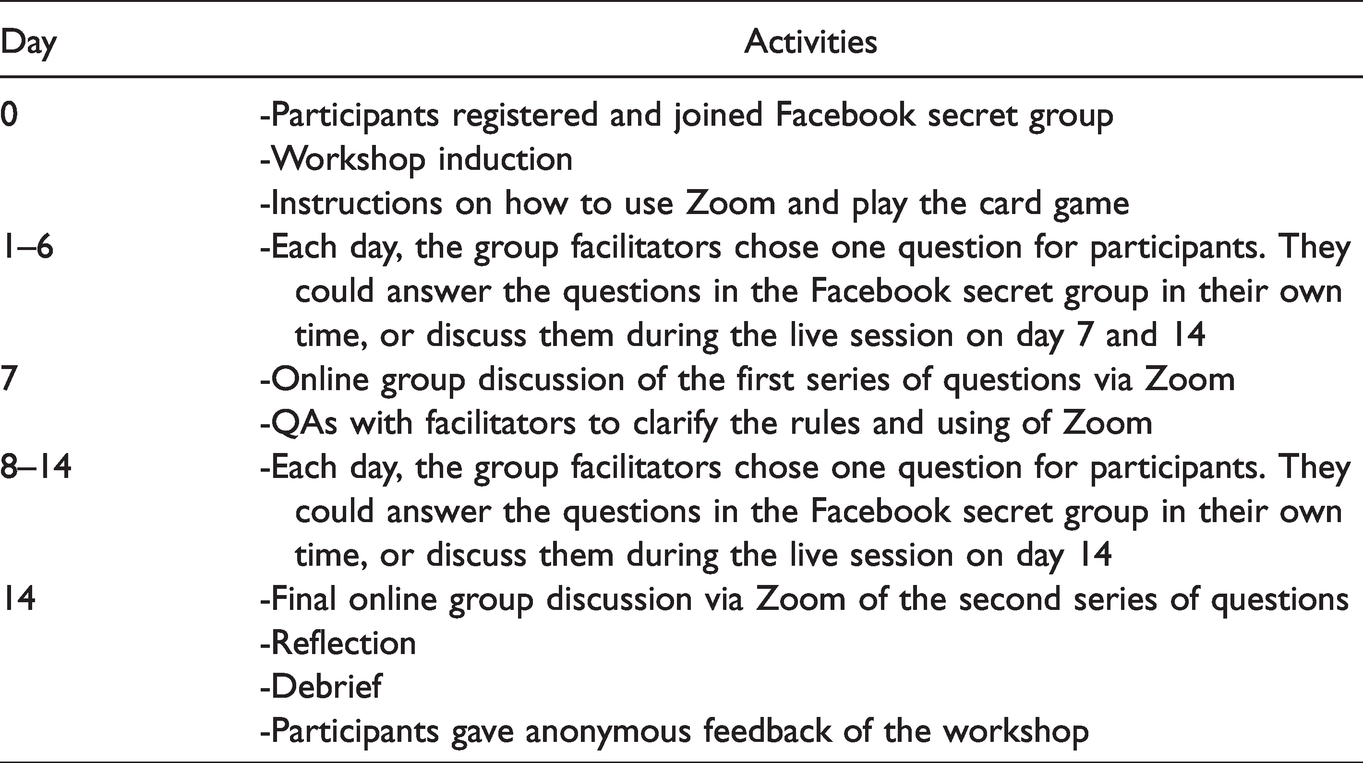
On days 7 and 14, one to two trained facilitators and one IT team member hosted the workshop: facilitators raised a series of questions from the card, and participants would discuss and exchange their opinions on that topic. Day 7 activity focused on Q&As with facilitators to clarify the rules, discuss the first series of questions, and ensure that participants could use Zoom. This aimed to enhance participants’ adherence to the workshop schedule. Day 14 activity focused on discussing the second series of questions, reflecting on what the participants learned in the workshop, revising/creating their ACP, and debriefing. The sessions lasted 60 to 90 minutes.
Post-Workshop
All candidates were given an anonymous post-course evaluation. The feedback provided by the Peaceful Death team was used to improve the upcoming team debriefing sessions. Reflection-in-action was used during the debriefing process (A. Cheng et al., 2017).
Data Analysis
The content analysis method was used (Erlingsson & Brysiewicz, 2017). Demographic data were collected using the Google Form. Participants’ anonymous feedback was kept in a separate file along with the notes from facilitators. The data sources included participants’ anonymous feedback, notetakers’ anonymous feedback, and meeting summary files. The results were organized thematically. Feedback was created in the form of a word cloud, and Atlas.Ti software was used to accommodate the analysis.
Results
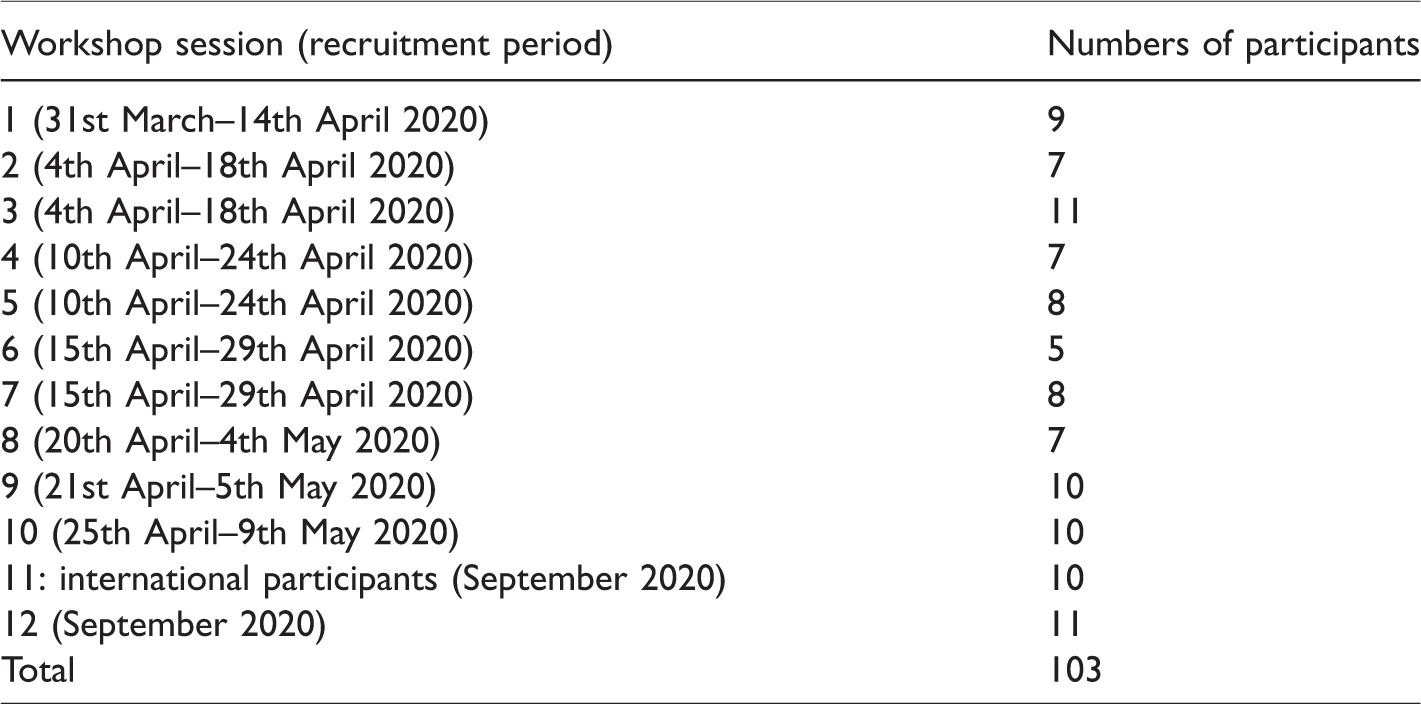
Eleven sessions were conducted. One hundred nine participants registered for the workshop, and six withdrew due to other commitments, resulting in 103 participants (medical and dental students, doctors, dentists, the public) from across Thailand joining the online workshops (see Table 2). Most participants knew about the workshop from family or colleagues or joined previous face-to-face workshops.
Workshop Details and Numbers of Participants.
Participants’ Feedback on the Workshops
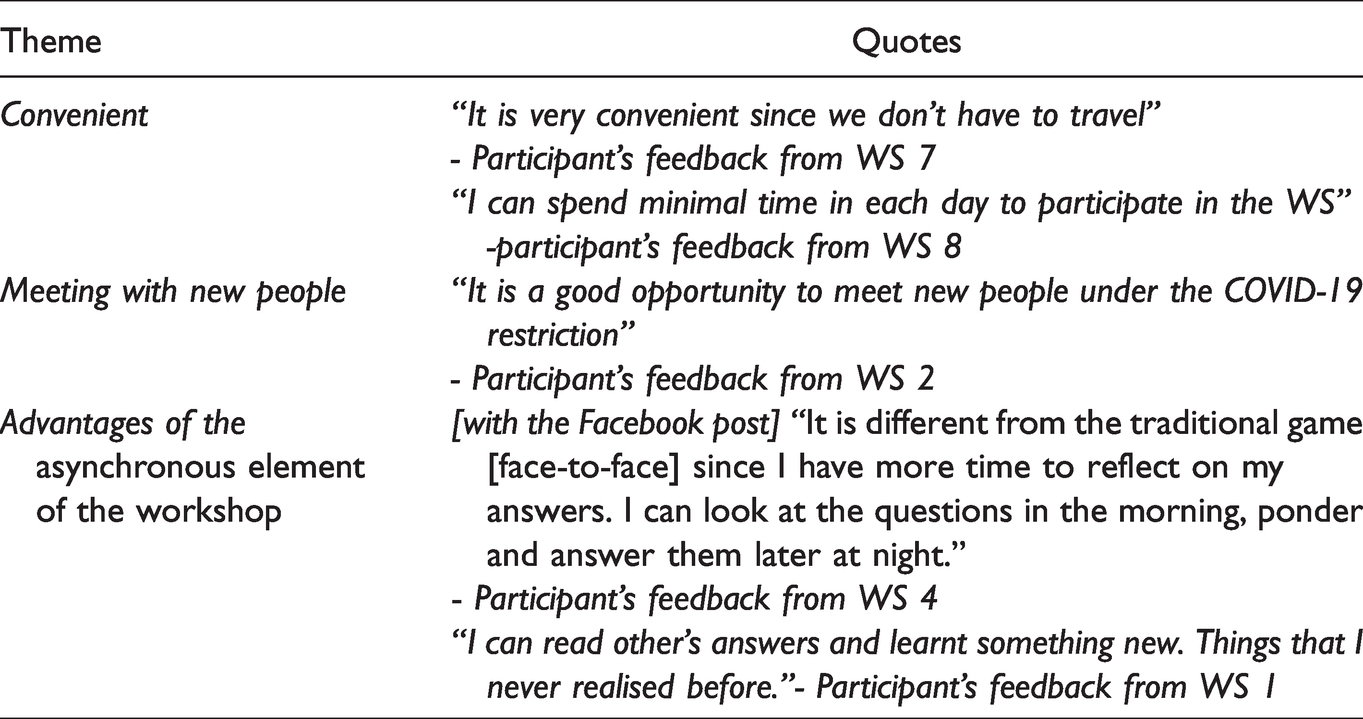
The feedback received from participants was overwhelmingly positive. Participants emphasized the convenience of joining the workshop virtually, along with the opportunity to connect with others during the national lockdown. Additionally, participants also benefited from the asynchronous element of the workshop since they could participate in their own time and have more time to reflect on the questions that were asked by facilitators (see Table 3).
Participant’s Feedback on Online Workshops.
Participants’ reflections from the workshops were categorized into two major themes: 1) ACP is multifaceted and iterative, and 2) ACP needs to be discussed and shared with others.
ACP is Multifaceted and Iterative
Participants reflected that the workshops made them realize that ACP covers a broader aspect of individual care, beyond medical and end-of-life. For example, these selected quotes demonstrated that ACP, in participants’ view, needs to be planned in detail to achieve that: The question that made me think really hard was “Is your home a good place to die?” There are so many aspects that I need to prepare [so that I can achieve that]: how exactly will I prepare my house? How will I communicate that to my family? How would they feel about my wishes?—Anonymised participant’s feedback from WS 7 [the question] “What is a good death?” is very insightful [to me]. Death is a loss so it should not be even counted as good? The question lingers in my head [as in what does it really mean to me].—Anonymised participant’s feedback from WS 7 I have my ACP in place. After the workshop, I have to revise it [my ACP] since there are things that I don’t realise before.—Anonymised participant’s feedback from WS 9 When I read others answers in the Facebook posts, I understood that death is very contextualised and individualised. There are many aspects that I did not think before.—Anonymised participant’s feedback from WS 3
ACP Needs to Be Discussed With Others
Apart from a better understanding of the ACP process, participants also reflected that they need to communicate their wishes to others since family members or their HCPs may not be aware of what they want: I have been mindful [of death and dying and my ACP]. My child has already finished the university so there is nothing else that I am worried about. *But* this WS makes me realise that I never talk about my ACP with my family [hence I need to do that]. I also need to finish my AD.—Participant’s feedback from WS 8 The most useful aspect I got from this [WS] is that your death is not solely yours [and it will affect others]. I asked a question from [the card game] with my husband [“will you tell your loved ones that you are dying? Why or why not?”] and he told me that he wanted to know about that too so that he could prepare [himself]. We then had a long talk that there was no need to prepare that when we were dying. We can do it right now.—participant’s feedback from WS 5
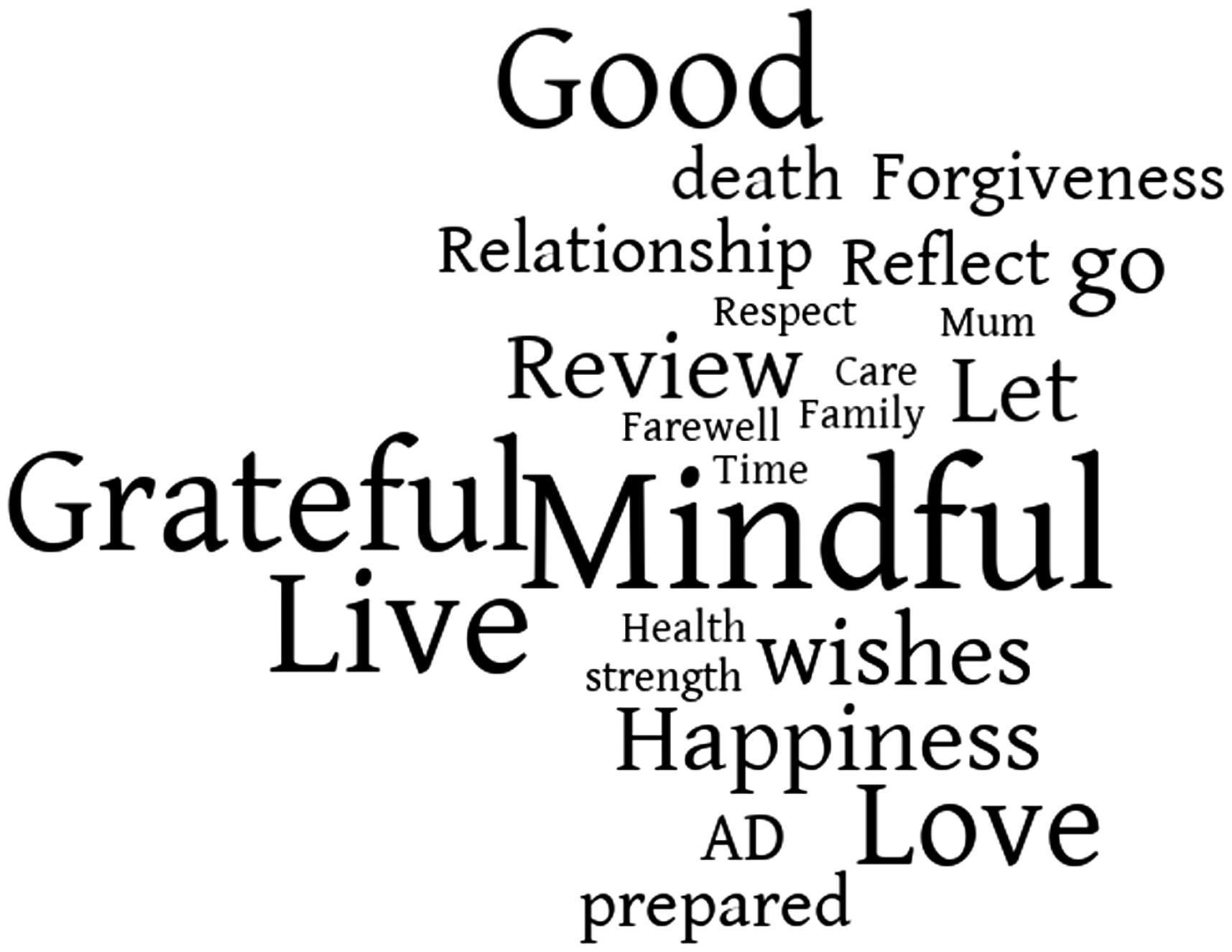
Word Cloud of Participants’ Most Frequently Mentioned Words Post-Workshops.
Post-Workshop Actions
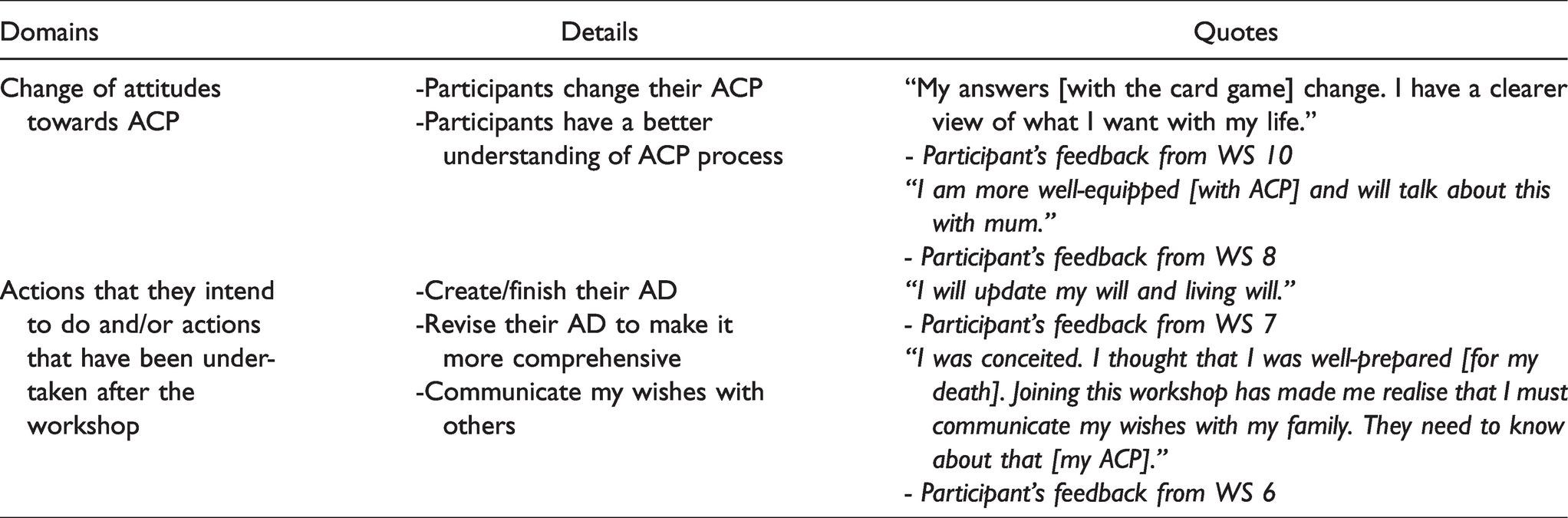
Open-ended feedback post-workshops revealed that some participants either changed attitudes toward ACP or intended to create or revise their ACP and discuss their wishes with others (see Table 4).
Participants Change of Attitudes and Actions Post-Workshops.
Feedback From the Facilitators
Facilitators commented that discussions in workshops varied depending on the participants in that session. For example, in one session in which participants were colleagues, the discussion was minimal due to the hierarchy within their organization. The team also reflected that Zoom is suitable for conducting this online interactive workshop since Zoom has various functions that can accommodate the process: shared screen function, real-time interactions, and ease of use by a layperson. Compared to traditional face-to-face workshops, the online interactions between participants were similar or even better in some sessions. However, extensive preparations were essential for these online workshops. Clear communication and establishing rapport while creating a safe online space between team members and participants were also necessary.
Discussion
This article addressed the feasibility of conducting online workshops on ACP education amongst Thais and gathering their feedback. It was evident that it was possible to conduct online ACP education activities with the public even though this project was vastly different from previous studies conducted in real-time with face-to-face activities concluded within one session (Phenwan et al., 2018, 2019). All activities for this project were held online and comprised both synchronous and asynchronous elements. The activities were restructured into a series of fourteen-day sessions. By moving the projects to the online space, the team could adhere to the social distancing restrictions while delivering novel ideas, which has never been done before. Feedback from participants revealed extra insights into online activities that emphasize: convenience, social connectedness during the pandemic, and additional benefits of asynchronous element of the workshops.
First, workshops provided convenience to participants and the team. Online activities provide a huge benefit of removing geographical restrictions from participants (Deakin & Wakefield, 2014; Lo Iacono et al., 2016). In this project, participants came from several areas across the country and could join the session with ease; in fact, some participants lived in rural areas and could not join traditional face-to-face sessions usually conducted in Bangkok and urban cities. Therefore, they could partake in these workshops without such barriers. Furthermore, hard-to-reach populations benefit from this method, for example, participants with restricted mobility (bed-ridden people, people with disabilities) could easily participate in the workshops virtually. This method proves promising since the team could reach out to more diverse groups of participants who do not have physically abled bodies and were potentially excluded from the previous events due to the physical and logistical restrictions. Apart from that, we found that participants were more willing to share their thoughts in online workshops compared to physical face-to-face workshops. We hypothesized that since participants joined the workshop from their home, which is their physically and emotionally safe space, they were more willing to express their thoughts (Lo Iacono et al., 2016). In addition, members in the workshop did not belong to social circles of friends and colleagues; thus, they were more willing to share their opinions without risking oversharing with their peers. This pattern was observed in one session where participants were colleagues from an organization with a clear vertical hierarchical structure. Specifically, they were less engaged in the activities and contributed less to discussion compared to other groups who previously did not know each other. Additionally, from the team’s perspective, online workshops were more time-cost efficient. Team members did not have to travel or book the venues and hosted the events virtually instead. This proved to be another great benefit, as proposed by Deakin and Wakefield (2014).
Second, another feedback from participants emphasized the benefit of meeting with new people. When this feedback was further deconstructed, it unveiled that participants used this virtual event as one strategy to continue their social interactions with others outside their household during the lockdown. To clarify, during the height of the national lockdown, curfews were imposed nationally. People could not leave their households after 10 pm, and they could not travel locally except in extreme circumstances. Failure to comply would immediately result in social sanction and was punishable by law. This immediate physical and social restriction affected Thais’ health and well-being, which is yet to be fully assessed (Triukose et al., 2021). Furthermore, the suicide rate increased by 53% during the first wave of the pandemic, further showing the detrimental effects of restrictions. As a result, these online workshops might have provided a secondary benefit to participants by combating social isolation and loneliness, which was hugely prevalent during the pandemic (Hwang et al., 2020). Additionally, several participants stated that they still keep in touch with their peers after the workshops and are more engaged with raising public awareness of ACP. This could be defined as the “critical consciousness” moment when the participants’ reflexive and interactive engagement in ACP training led to the co-creation of new changes and actions afterward (Seymour et al., 2013).
Third, the bichronous element of these online workshops proved to be successful and practical since the online activities held advantages from both synchronous and asynchronous approaches (Hewson, 2015; Martin et al., 2020). For the synchronous session, facilitators could support participants in real time or use probing techniques for in-depth discussion. The strategy was useful to ensure participants’ comfort and safety since the topics of discussion were considered potentially sensitive. For the asynchronous aspect of the workshops, the great advantage was that participants could engage in the activities in their own pace (Martin et al., 2020). This was demonstrated when participants had more time to reflect on deeper answers on the proposed questions that were posted on Facebook. After that, they could choose: to share their answers in the Facebook secret group; discuss the answers in the live sessions; do both. This extra flexibility offers more control for participants to engage in the sessions with their preferred methods (Salmons, 2016; Sundstrom et al., 2016). In addition, it reduces the power relation between the facilitators (who were in control of the activities) and participants (who were led by facilitators). Participants could get involved in the online activities to a degree that they felt comfortable with. The advantages of our workshops were similar to those discussed in the scoping review that assessed the feasibility of the Web-based ACP programs (van der Smissen et al., 2020). However, our QI reported additional advantages of the synchronous element of the ACP training program as opposed to the web-based programs, which were asynchronous by nature. Furthermore, articles included in van der Smissen et al.’s review mainly came from the USA. As such, this QI provided additional insight from an emerging country, Thailand, that has never been assessed before.
Post workshops feedback further revealed changes in attitudes towards ACP. Several participants mentioned that they initiated and revised their ACP. This was similar to Portz et al.’s finding, which showed increased ACP uptake amongst patients during the COVID-19 pandemic (Portz et al., 2020).
However, whether this change in ACP stemmed from the workshops that aimed to enhance individuals’ understanding of ACP, from the effects of COVID-19 that amplified the need to future-proof our future, or from a combination of both is still unclear. We hypothesized that workshops contributed to changes in ACP attitudes amongst participants because the effect of the first wave of the COVID-19 pandemic in Thailand was less drastic compared to other countries at the time. Therefore, participants might not have felt the urge to create their ACP in response to the pandemic. This assumption should be verified in future studies.
When writing this manuscript (April 2021), Thailand already experienced another surge of COVID-19 cases. Consequently, most face-to-face activities were, again, prohibited. However, due to the positive feedback on this project and current social distancing restrictions, the team will resume the activities online and continue to revise the process to optimize the effectiveness of this method.
Recommendations
The online workshops program is an alternative method that enabled facilitators to provide ACP education during the pandemic when social distancing was being implemented. However, due to the different nature of online and offline activities, several suggestions are recommended.
Before the workshop, clear communication from the team is essential to create a mutual understanding of the nature of the activities and the extent to which participants need to be involved. Furthermore, ground rules and netiquette emphasizing confidentiality and safety must be communicated and comply with respective legislation. Additionally, instruction and support are critical for participants to navigate the software and join the activities efficiently.
During workshops, facilitators must be aware of the chosen technology to ensure participants’ comfort, safety, and group dynamic. Due to the limited face-to-face support for participants due to physical proximity restrictions, facilitators must also be mindful of the potential psychological distress. A support and distress protocol for such event is also recommended (Dempsey et al., 2016). Debrief sessions amongst the team members ensure that any arising challenges can be addressed and mitigated.
Implications for the Future Studies
This QI report describes the initial feasibility of a new approach utilizing online ACP education. Nevertheless, studies with robust designs are still needed to enhance our understanding of this novel approach. For instance, prospective studies that follow the participants over a longer period might provide additional insights into the ACP gap between preferred and received care of participants. Alternatively, Randomized controlled trial studies that compared online and face-to-face training (ACP uptake, ACP changes, participants feedback) is also recommended. Finally, studies that would assess the feasibility of these workshops with HCPs who are stakeholders of ACP discussion are also needed to ensure its practicality the scalability of the training programs (Chan et al., 2019).
Strengths and Limitations
To our knowledge, this is the first QI report that provides the feasibility of an online ACP education program in Thailand. It is also the first report of the findings of the workshops conducted with the public. However, this project has several limitations. First, the online approach is not appropriate for everyone. Despite the argument that online methods are more inclusive and accessible to more people, the participants should nevertheless possess some degree of digital literacy and the ability to use technology (Hewson, 2015). Older adults or those with physical disabilities may find joining online events difficult, especially without extensive support or someone to assist them (van Deursen & Helsper, 2015). The team mitigated this issue by providing extensive support during the preliminary sessions before the workshop. Second, the sessions are facilitator-dependent; thus, the entire process depends on facilitators’ skills to establish rapport, negotiate between participants, and navigate and guide through the proposed questions. The Peaceful Death team facilitators have been conducting card game workshops continuously since their conception. Therefore, they could lead online workshops without difficulty. Furthermore, the team also had one IT team member to assist with any unexpected technological issues. Third, the card game’s questions were heavily contextualized to Thai culture. The feedback from non-Thai participants indicated that discussion around death and dying and ACP is rather uncommon in many countries. Non-Thai participants also mentioned that most questions were very context-specific; thus, this group did not relate to and did not feel engaged in the activity compared to Thai participants. The discussion and feedback from this special session of non-Thais will be further analysed in an upcoming study. Pilot testing in other contexts or countries is needed to ensure that the questions are culturally appropriate and relevant. Fourth, our report lacked participants’ key demographic data, namely their education status, health status, prior experience with ACP, that might have affected their ACP awareness and eagerness to engage with ACP activities. Still, workshops were designed as a series of education training sessions. As such, these data were not gathered from the participants. Future studies are still needed to assess factors that affect participants’ eagerness to engage with ACP activities.
Conclusions
This online workshop project demonstrates that it is feasible to conduct workshops on sensitive topics, such as ACP and death and dying, with Thais. The bichronous element of the workshops was utilized and proven to be practical and successful. The results showed that the learning outcomes and participants’ feedback were not inferior to the traditional face-to-face sessions. Further investigation to assess the scalability of these workshops, along with their effects, is forthcoming.
Supplemental Material
sj-pdf-1-ome-10.1177_00302228211032735 - Supplemental material for Using Zoom and Card Game to Conduct Advance Care Planning Classes: An Innovative Practice
Supplemental material, sj-pdf-1-ome-10.1177_00302228211032735 for Using Zoom and Card Game to Conduct Advance Care Planning Classes: An Innovative Practice by Tharin Phenwan, Thanarpan Peerawong, Wanna Jarusomboon, Ekkapop Sittiwantana, Chararinchorn Satian and Sojirat Supanichwatana in OMEGA—Journal of Death and Dying
Footnotes
Ethics
This study was exempted by the institutional review board of Prince of Songkla University (REC.63–536-7–1).
Author Contributions
Workshop design: Ekkapop Sittiwantana, Wanna Jarusomboon, Chararinchorn Satian.
Data analysis: Tharin Phenwan, Thanarpan Peerawong, Ekkapop Sittiwantana, Chararinchorn Satian.
Manuscript revision and writing: Tharin Phenwan, Thanarpan Peerawong, Ekkapop Sittiwantana, Sojirat Supanichwatana, Wanna Jarusomboon, Chararinchorn Satian.
Declaration of Conflicting Interests
The author(s) declared no potential conflicts of interest with respect to the research, authorship, and/or publication of this article.
Funding
The author(s) received no financial support for the research, authorship, and/or publication of this article.

Note
Author Biographies
References
Supplementary Material
Please find the following supplemental material available below.
For Open Access articles published under a Creative Commons License, all supplemental material carries the same license as the article it is associated with.
For non-Open Access articles published, all supplemental material carries a non-exclusive license, and permission requests for re-use of supplemental material or any part of supplemental material shall be sent directly to the copyright owner as specified in the copyright notice associated with the article.
